
NIL
NIL is changing college sports; for better or worse?

HUNT VALLEY, Md. (TNND) — It’s been nearly four years since the NCAA enacted a new policy allowing college athletes to profit from their name, image and likeness, and just a few weeks since a federal judge opened the door for college athletic departments to pay athletes directly.
Much of the details are still being worked out in the courts. Key components like roster limits, scholarship limits and payment pools are still up in the air.
As is a governing body to oversee all of these new rules, since most current regulation is a patchwork of state laws, legal settlements and NCAA rules.
But, we are starting to see the impacts of college athletes getting paid – and what it means for the enterprise as a whole.
Depending on who you ask, the historical shift is: long overdue for athletes who’ve spent thousands of hours grinding for their craft; late to the party in terms of global sports; the official death certificate for amateurism and the “student” side of “student-athlete”; or, an inevitable reality that has to run wild before it gets reined in and regulated.
To the league itself, it’s a positive step.
When a judge granted preliminary approval for a framework for schools to pay athletes, NCAA President Charlie Baker said it would “help bring stability and sustainability to college athletics while delivering increased benefits to student athletes for years to come.”
The push for college athletes to get paid spans decades, with legal challenges and legislative efforts dating back to at least the early 2000s. Which is surprising, considering the NCAA has been a multi-million dollar industry for several decades, and a multi-billion dollar industry for about a decade.
That disparity is due to the idea of “amateurism,” a word many experts and analysts use when they cite concerns about completely commercializing college sports. That idea goes back more than a century, to 1800s England, where sports were only for the wealthy, and the working class didn’t want them to be able to pay their way to victory.
“I don’t want to say [amateurism] is going to die, but it will certainly be the commercial aspects that are going to permeate,” said David Hedlund, the chairman of the Division of Sport Management at St. John’s University. “I think we’re going to see and hear less and less about amateurism, and college sports are going to look more like professional sports, or a training ground for professional sports.”
The idea that sports are for enjoyment and the love of the game rather than money is a noble one. And players can love the game and make money off their talents at the same time.
But many experts say amateurism has long been dead; the NCAA was just, for whatever reason, the last organization behind the International Olympic Committee to let it die. It’s part of an effort to keep pace with the rest of the world. Overseas soccer and basketball players are spotted when they’re 12 to 14 years old, and go pro when they turn 18.
“We’re in a global marketplace,” said Matt Winkler, a professor and program director of sports analytics and management at American University. “We sort of have to keep up with the other nations if we want to strive and have those great moments in sports for our Olympic teams and our World Cup teams and so forth.”
Coaches have long been compensated, and universities have long profited off their sports teams.
“The money has always been there. It’s just a lot more front-facing now, I think, than it’s been in the past,” Hedlund said.
Some sports analysts say it was quite front-facing in this year’s NCAA Men’s Basketball Tournament.
March Madness was devoid of any significant upsets or Cinderella teams. For the first time in five decades, every team that made it to the Sweet 16 came from a power conference, including all four No. 1 seeds and all but one No. 2 seed.
And, every team that made it to the Final Four was a No. 1 seed.
ESPN analyst Stephen Smith said NIL deals and the now no-limits transfer portal are to blame for why mid-major programs didn’t see much success, and top-tier schools prevailed.
“If there was no NIL, if there was no portal and you have the mid-majors go 0-6 in the second round, please, we ain’t sweating that,” Smith said. “But when you’re able to point to rules that have been implemented that ultimately shows itself to have inflicted upon the game itself, that’s dangerous.
“College basketball as we knew it – which, to me, is all about March Madness – will cease to exist. Because there’s no madness.”
Experts say there is a serious question mark about the current state of how much colleges can pay to entice players, and how many times players can be enticed enough to transfer.
But not all believe it has to be the death of March Madness or competition in college sports. After all, there’s still Division 2 and 3 universities.
Richard Paulsen, a sports economist and professor at the University of Michigan, said it’s hard to gauge the impact of NIL deals and the transfer portal on competition. Because while the top ten or so power schools may be able to offer the most money to the elite players, there’s still a lot of talent out there.
“The top schools have an advantage in getting the A-level talent, but some of the players that might have sat on the bench at a top school previously could be enticed away with NIL money coming from a second tier school,” Paulsen said. “So I think the impact on competitive balance is maybe a little bit less clear.”
Paulsen says, as a professor, he is worried about the impact NIL deals – particularly million-dollar ones – can have on the students themselves, some 18, 19, 20 years old. It raises the question, does a teenager or young adult need this much money?
Shedeur Sanders is 23 years old, and his NIL valuation at the University of Colorado was roughly $6.5 million. Granted, he’s the son of NFL Hall of Famer and head coach for Colorado Deion Sanders.
But, his 2024 stats were top five in completion percentage, passing touchdowns and yards. Several analysts had him as the top prospect in the 2025 NFL draft, but he slid down to the fifth round, shocking much of the sports world.
Various reports place blame on other reasons – maybe he took more sacks than he should have, maybe NFL executives see traits we can’t see, maybe he bombed interviews with the managers, maybe it had to do with his Hall of Famer dad. And he certainly wouldn’t be the first prospect to get picked later than expected and prove all the teams that passed over him wrong.
But, he’s also losing money by going pro. The iced out, custom “Legendary” chain he wore on Draft Day reportedly cost $1 million.
“It is at least worth noting that five years ago, he wouldn’t have had the online presence that he had, and that could have turned off some NFL teams,” Paulsen said. “Without being in the rooms, I don’t know if it did, but that is possible, and it’s not something that would have been possible even five years ago.”
It begs the question, is it even worth going pro for these top-tier college athletes with insane NIL deals?
In the NBA, new data shows it may not be. The league announced last week just 106 players declared early for the 2025 draft. It’s the fewest since 2015. The number typically hovers around 300.
The drop in early entrants could be lingering effects of the extra COVID year.
But, next year, ten schools will pay their rosters somewhere in the neighborhood of $10 million, including several million dollars per top player. That’s far more than the players would make if they were a second-round draft pick in the NBA.
Winkler said the combination of competitive rosters and the scope of these NIL deals has more to do with this drop in early declarations.
“These deals are getting so big that unless you’re going to be a first round draft choice, maybe if you’re going to be kind of a lottery pick or a top 10, 15 pick, it would be better for you to exhaust your eligibility on a major team, because you’re going to make more,” he said.
So, it might be financially advantageous for athletes to wait on the pros. Some announcers were even suggesting Sanders should go back to college if the NFL didn’t deem him ready for the show. (NCAA rules prohibit him from doing so anyway; he declared for the draft and signed with an agent).
But what about the fact that these players, who become millionaires, are still students?
Schools are working to provide resources for these athletes so they can get advice on what to do with their wealth, so that they don’t spend it irresponsibly. Which is not to assume all of them would; it goes without saying this money could greatly benefit an athlete who grew up in poverty and change the trajectory for his/her family.
But Paulsen says he worries about the “student” side of “student-athlete” when we start talking about millions upon millions of dollars and students transferring to whichever school offers them the most. Sometimes credits don’t transfer; sometimes players could feel pressure to fulfill their NIL commitments over their studies, when the stakes are that high.
At a young age, these players are under an unprecedented amount of pressure, from their coach, from their family, from their financial adviser, from social media, from broadcast exposure, from stakeholders, from the tens of millions of people who can now legally bet on them.
“Players should be able to leave bad situations, absolutely, and I certainly support players’ autonomy and chasing financial benefit from their athletic talents,” Paulsen said. “But if we’re going to call them student athletes, we should have some emphasis on the student part of that too. Some of these rules that are helping the athlete are hurting the student.”
One of those rules, he says, is the transfer portal. But in addition to harming the students’ academic careers, experts say this also takes a toll on teams and fans of those teams.
Take Nico Iamaleava for example. The star quarterback abruptly parted ways with Tennessee over an alleged compensation dispute with the school’s collective. He demanded an NIL readjustment to $4 million to keep playing for the Vols, and when they said no, he transferred to UCLA, though it’s unclear if they met his demands.
The exit shocked his teammates in Knoxville, with one of his receivers and defensive backs, Boo Carter, telling reporters, “He left his brothers behind.”
But the new pay-to-play system does also beg the question of school loyalty, not just for the players, but the fans too.
Paulsen says roster continuity, players spending all four years playing for one team, has been an endearing feature of sports like women’s college basketball, when you look at the legacies, for example, Caitlin Clark built at the University of Iowa, or Paige Bueckers at the University of Connecticut.
“I do think there’s definitely some extent to which all this player movement can have negative consequences,” he said.
But, some experts doubt fans of teams need to see the same or similar team year to year.
After all, this past NCAA Men’s March Madness Championship between Florida and Houston – the one ESPN’s Smith said featured no madness at all – scored 18.1 million viewers on CBS. That’s up 22% from last year’s championship, and the biggest audience since 2019.
The Final Four games, featuring all No. 1 seeds, ranked as the most-watched games in eight years.
In other words, so far, so good when it comes to college sports fandom.
One thing broadly agreed upon among experts is that competition must remain intact. The Florida-Houston matchup was a nailbiter.
“The biggest thing that would kill sports is if there is no competitive balance,” Hedlund said. “It is known when you have a really great team being a not-so-great team, if the great team probably will win, people don’t want to watch.”
People still appear to be watching. If they stop, one could assume the NCAA would change its course, or it’d be out of all its money too.
Plus, these experts expect regulation soon – possible measures like transfer restrictions, collectively bargained salary caps, conference realignment to avoid concentration, turning athletic departments into LLCs, putting degree completion into bylaws and evening out the number of roster spots, among other rules.
Experts say: be patient, wait for the legal fights to run their course, and wait for the brightest minds in sports – and Congress – to come up with a solution that pleases the players, teams, coaches, schools and fans.
“This is fundamental to the success of sports, so we just need to figure out what rules, what regulations, what governing bodies, how do we facilitate this?” Hedlund said. “We don’t want to ruin sports. That’s what’s at stake here.”
Winkler says it all comes down to the most “hardcore” stakeholders: fans and alumni. If the SEC and Big 10 just ganged up and created their own Premier League and college sports turned into checkbook sports, it could threaten that school pride.
“This year, we definitely saw cracks in the system,” Winkler said. “If the best athletes just go to the top, are [fans] rooting for an inferior product? Are they still going to have that affinity for their school, their team, their degrees, and people that are doing it? This is really going to test that.
“[Schools] have two key pressure points: keep getting a lot of money from TV so you can fund your athletic department, and keep alumni, fans and donors still feeling as engagedThere’s a lot to be worked out in the next several months and probably the next year to really get a boiler plate idea of what the rules and regulations need to be.”


PHOENIX (AP) — Freshman Ebuka Okorie scored a season-high 32 points to help Stanford beat Colorado 77-68 on Saturday night in the Hall of Fame Series at Mortgage Matchup Center.
Okorie made 6 of 13 shots with two 3-pointers and 18 of 21 free throws for the Cardinal (10-2). He entered averaging 21 points per game.
Benny Gealer hit three 3-pointers and scored 13, adding three steals for Stanford in a third straight victory. Chisom Okpara scored 11 but made only 3 of 12 shots and 4 of his 10 free throws.
Barrington Hargress had 16 points and six assists to pace the Buffaloes (10-2). Sebastian Rancik totaled 14 points and eight rebounds, while reserve Isaiah Johnson scored 11.
Rancik and Hargress both had nine points by halftime to help Colorado build a 35-33 lead.
Hargress followed his 3-pointer with a fastbreak layup, and the Buffaloes took their largest lead at 29-22 with five minutes left. Gealer had 3-pointers on both sides of one by Ryan Agarwal, and the Cardinal used a 9-2 run to tie it 33-all. Felix Kossaras scored with 1:37 remaining for the final points of the half.
Gealer hit a 3-pointer to tie it 37-all, sparking a 9-0 run for a six-point lead, and the Cardinal led for the final 18:20. Oskar Giltay scored to give Stanford its largest lead at 65-49 with six minutes left.
Up next
Stanford: Hosts Cal State Northridge on Saturday.
Colorado: Hosts Northern Colorado on Dec. 28.
___
Get poll alerts and updates on the AP Top 25 throughout the season. Sign up here. AP college football: https://apnews.com/hub/ap-top-25-college-football-poll and https://apnews.com/hub/college-football

As many feared would happen, No. 6 seed Ole Miss completed dominated No. 11 seed Tulane 41-10 in its College Football Playoff First Round matchup Saturday night.
For weeks, college football fans have called for change to the CFP, which would keep Group of Five teams out. At the minimum, in still a rule that would prevent two Group of Five teams from making the College Football Playoff, which Tulane and James Madison both did this season.
The first game featuring a GO5 team was completely uncompetitive, as Ole Miss led 41-3 late into the fourth quarter until Tulane finally found the end zone with four minutes remaining. No. 12 seed James Madison will clash with No. 5 Oregon Saturday night in Autzen, providing one last chance for these such teams to prove they belong.
Late in the Ole Miss/Tulane broadcast Saturday night, ESPN’s Jesse Palmer pleaded with the sport of college football to limit GO5 schools’ inclusions into the Playoff.
“Listen, I’m all about inclusivity and I’m fine with one Group of Five team making it into the 12-team (Playoff),” Palmer said. “That team deserved to be Tulane. They won the best Group of Five conference and beat Duke, the eventual ACC Champion. But as a fan, I want to see the other 11 teams that have a legitimate chance of winning a National Championship.”
Jesse Palmer wants to cap the GO5 participation at just one team
“I think having seen Notre Dame in person this year, I think you (referring to broadcast partner Joe Tessitore) and I both feel that Notre Dame had a legitimate chance to compete for a National Championship,” Palmer continued. “I don’t know if James Madison really does. As we keep talking about and keep working towards getting the 12 best teams in the Playoff, I do think you have to cap the Group of Five participation at just one team.”
In the first iteration of the 12-team College Football Playoff last season, the Mountain West Conference’s Boise State earned the GO5 bid into the bracket. Unlike this season, the top four ranked conference champions earned a First-Round bye, before it was changed. The Broncos clashed with No. 6 Penn State in their Quarterfinals matchup and were blown out 31-14, adding even more fuel to the fire in the argument.
If James Madison is to get blown out Saturday night, chatter regarding the subject matter will continue to grow louder and louder. You can now add Jesse Palmer‘s name to the list of public figures calling for change to the College Football Playoff.
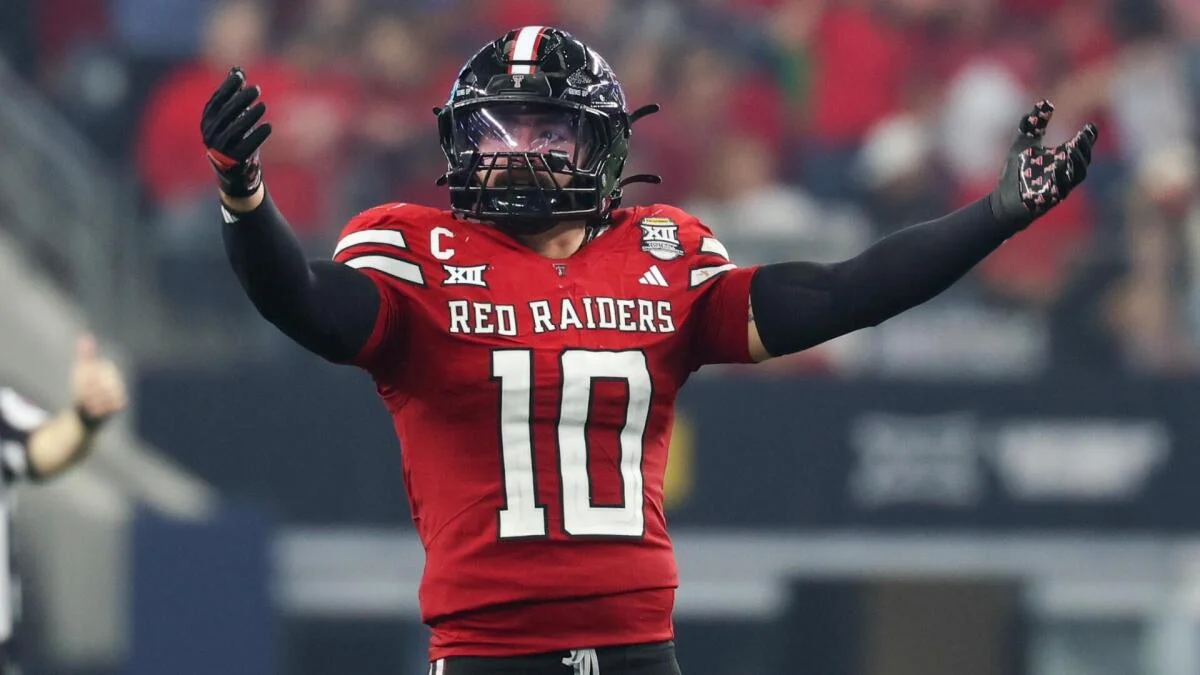
The quarterfinals of the College Football Playoff are upon us, which means the four top seeds will finally get their postseason campaigns underway after a lengthy break following conference championship weekend.
No. 4 Texas Tech waited the longest to officially learn its quarterfinal opponent. But given that No. 5 Oregon entered the first round as a three-touchdown favorite over No. 12 James Madison, the Red Raiders likely got a head start preparing for the Ducks. Despite a spirited effort from the Dukes, Oregon overwhelmed the Sun Belt champions to set up the expected Orange Bowl showdown with Texas Tech — a matchup that could be one of the best games of the entire Playoff.
There’s a fitting symmetry to the pairing. Oregon, once college football’s “new money” program, will face the NIL era’s fastest riser in Texas Tech. The Ducks have established themselves as a consistent national contender over the past two decades, while the Red Raiders poured major resources into their program and surged to the top of the Big 12 this season as a result.
In many ways, Oregon represents a blueprint for how a program like Texas Tech can build sustained excellence. On New Year’s Day in Miami, the Red Raiders will get a chance to show they’ve already closed that gap.
For two programs long defined by high-powered offenses, the defining trait of this season has been dominant defense. Both teams have been excellent offensively — they’re both top 10 nationally in scoring — but their defenses have been the engines of their success. As a result, both offenses will face a significant challenge trying to move the ball consistently in this matchup.
What to know about Texas Tech
The Red Raiders earned the No. 4 seed by riding one of the nation’s best defenses to a dominant season in the Big 12. Aside from a midseason stumble at Arizona State, Texas Tech bullied its way through the conference, including a pair of blowout wins over BYU that cemented a top-four finish in the CFP rankings and secured a first-round bye.
Texas Tech’s defense ranks among the elite nationally, finishing third in scoring defense at 10.9 points allowed per game — trailing only top seeds Indiana and Ohio State. All four of the Red Raiders’ AP All-America selections came on the defensive side of the ball, including first-team honors for linebacker Jacob Rodriguez and EDGE David Bailey.
That star-studded unit will be tasked with slowing an Oregon offense that found its rhythm in the second half of the season and finished ninth nationally in scoring at 38.2 points per game. When the Ducks have the ball, it will be a true strength-on-strength battle. Oregon ranked 14th in rushing offense at 218.4 yards per game, while Texas Tech finished No. 1 nationally in rushing defense, allowing just 68.5 yards per game.
Oregon faced two other top-10 defenses in 2025 and failed to crack 21 points against either — scoring 18 in a win over Iowa and 20 in a loss to Indiana. The Iowa game was played in a downpour, but Indiana held the Ducks to 81 rushing yards on 30 carries. Expect Texas Tech to study that film closely in hopes of replicating what the Hoosiers did up front with their own ultra-talented front seven.
The biggest question for Texas Tech is whether its No. 2 scoring offense can hold up against Oregon’s stout defense. The Red Raiders overwhelmed the Big 12, but in their biggest games — against Utah and BYU twice — the defense led the way. Oregon represents another step up in competition, and Behren Morton, Cameron Dickey and the rest of the offense will need to bring their A-game.
What to know about Oregon
The Ducks did what was expected in a convincing first-round win at home, overpowering James Madison to set up a heavyweight clash in the Orange Bowl.
The challenge for Oregon will be creating space for its playmakers against a hard-hitting Texas Tech defense. Against James Madison, the Ducks enjoyed a clear speed advantage and exploited it throughout the game. The margins will be far tighter against the Red Raiders.
Oregon typically sets up the pass with the run, but that approach may be flipped against Texas Tech. Quarterback Dante Moore could be asked to shoulder more of the load early, using the passing game to loosen the Red Raiders’ front and open opportunities on the ground.
Saturday night’s game against James Madison saw Oregon get almost anything it wanted offensively. That will not be the case on Jan. 1, but Moore looked sharp throwing the ball. His confidence and willingness to push it downfield will be critical if the Ducks’ offense is going to have success against Texas Tech.
Defensively, the question is whether Oregon can create negative plays to knock Texas Tech off schedule. The Red Raiders would prefer to lean on the run game and avoid putting too much on quarterback Behren Morton. Despite a strong overall defensive season, Oregon ranked near the bottom nationally in havoc metrics, finishing with 57 tackles for loss (113th in FBS) and 23 sacks (81st).
Texas Tech’s offense stalled early at times against Utah and BYU, largely due to backfield pressure. While both defenses eventually wore down after spending extended time on the field, the blueprint for slowing the Red Raiders is clear: generate pressure and speed up Morton’s decision-making.
Oregon has been steady defensively all season, but it may need to be more creative in manufacturing the disruption necessary to give Texas Tech problems.
Odds below via FanDuel Sportsbook.
Orange Bowl odds, prediction
I expect a highly competitive game in Miami between the Red Raiders and Ducks as I think there are a lot of similarities between these two teams. Both defenses are excellent and when at their best, the offenses can put up points in bunches. To me this game comes down to which offense can create more explosive plays in a variety of ways, because both defenses are so talented and so good at adapting in-game. I give the Ducks the edge in that department thanks to Moore and see him leading Oregon to a bit of quarterfinal revenge after last year’s dud in the Rose Bowl. PICK: Oregon -1.5
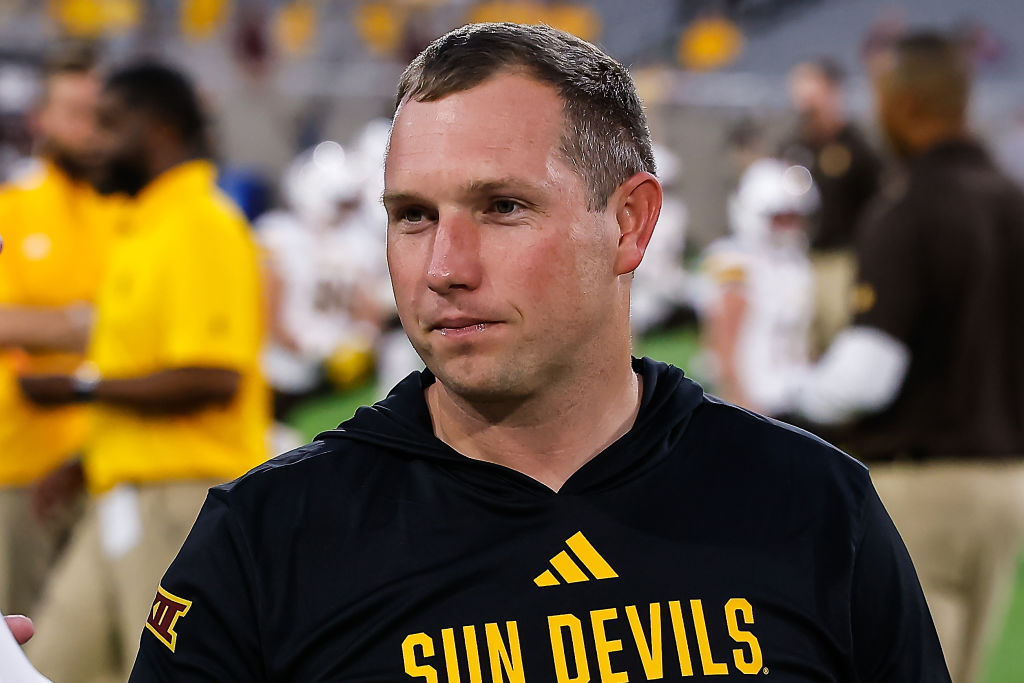
If Sun Devil fans want to stay competitive in the Big 12, they better pony up the big bucks.
Arizona State Sun Devils head coach Kenny Dillingham has enjoyed quite a successful tenure so far in Tempe.
After his first year in which his squad put up a dismal 3-9 record, Dillingham went to work and completely flipped the fortunes of the ASU football program, posting a 19-7 record over the last two seasons, including a Big 12 championship and a College Football Playoff berth.
For his efforts, Dillingham recently received a massive extension and larger salary pool for his assistants, fending off the circling Michigan Wolverines in the process.
Though I’m sure Dillingham is happy to be staying in the Valley of the Sun and is thrilled with his new paycheck, the 35-year-old head coach was recently chatting up the local media and stumping for a different kind of payday.
It’s easy to look at Dillingham saying these things and see him as greedy or ungrateful, but he’s spot on, and the sad reality is that this is the new norm for the sport of college football.
The name of the game is roster building and retention, and if you want to compete in the Power 4 leagues and consistently make the College Football Playoff, you had better pony up some serious dough.
A sum like $20 million might seem like a ridiculous demand, but that’s a pretty reasonable number in today’s NIL arms race.
The Texas Techs of the world are going to do whatever it takes to win, and if Dillingham wants the Big 12 to run through Tempe and not Lubbock, then he is doing the right thing by lobbying for some of those billionaires living in Arizona to stroke a check.
It’s disgusting and gross and goes against everything that college football used to be about, but this junk isn’t going anywhere, so you either adapt or die.
Dillingham is adapting, now we will see if the big money players will follow his lead.
Because if they don’t, things could get very dark very soon for the Sun Devils.
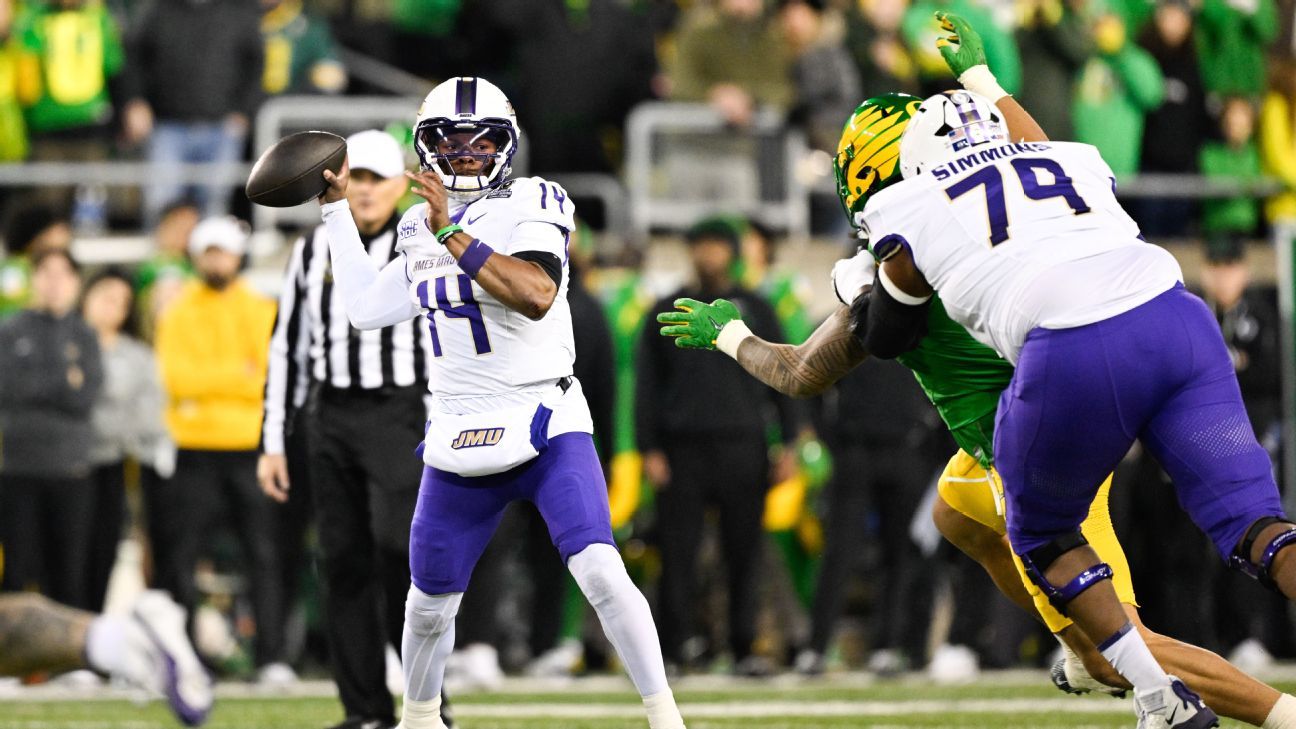
And then there were eight.
The 2025-26 College Football Playoff is here, and Saturday evening has given us our fourth eliminated team of the playoff in the James Madison Dukes. So what happens now?
We’ll tackle big questions, recruiting outlooks, portal and offseason priorities and even offer predictions for next season for every eliminated squad.
Jump to:
James Madison | Tulane
Texas A&M | Oklahoma


2025 record: 12-2
Biggest question moving forward: Can JMU make it three-for-three on coaching hires? Curt Cignetti reached the top of the mountain in the FCS and led JMU to a stellar start at the FBS level. When he left for Indiana, Bob Chesney arrived and delivered equally impressive results, getting the Dukes into the College Football Playoff. Now, Chesney is off to UCLA, and James Madison turns to Billy Napier, a coach with a history of success in the Sun Belt but who is coming off a disastrous turn at Florida. JMU’s goal has always been to measure itself against its peers rather than the upper echelon of college football, but 2025 offered a taste of the good life, and it’s now on Napier to continue to build toward that again in 2026 and beyond. The job of winning consistently at the Group of Five level has never been harder, and JMU’s aspirations have never been higher. — David Hale
Recruiting outlook: The Dukes emerged as one of the Sun Belt’s premier programs under Cignetti and Chesney, and there’s no reason to think they’ll fall off moving forward with Napier in charge. James Madison’s latest class is led by three-star cornerback Kamden Jennings, an undersized but explosive defensive back from Alpharetta, Georgia. He’s joined in the program’s secondary class by cornerback Kyle Bynes and safety D’Kwan Thomas, while defensive tackle Cory Simon arrives as a high-upside prospect. Within a deep wide receiver class, three-star Ben Whitver marks an intriguing addition with Power 4 measurables at 6-foot-2, 190 pounds. — Eli Lederman
Biggest portal priority: When Cignetti left to take over at Indiana after the 2023 season, he and his coaches took 13 players with them to Bloomington, many of whom became program leaders and All-Big Ten performers. How many Dukes will choose to move across the country to UCLA with Chesney? Alonza Barnett III, Wayne Knight, Sahir West and the rest of their top returning players have big decisions to make now, and Napier will do what he can to hold this roster together before shifting his focus to reloading in the portal. The combination of graduating seniors and potential portal defections in January likely means JMU’s starting lineup will feature lots of new faces to open the 2026 season, but Chesney’s tenure proved this program can quickly recover from a coaching transition and get right back to Sun Belt contender status. — Max Olson
Under-the-radar offseason priority: James Madison has played 40 games in three years at the FBS level, so there’s a certain level of expectation that the dominance will continue. Expectations can be dangerous, however. On its third coach in five years, maintaining high standards can be tough. With so much success, bigger schools are waiting to pick off the best talent, as is life in the Group of Five these days. But even on top of all that, so much continuous winning can breed a level of apathy when the locker room is also changing rapidly — with new players arriving and expecting the same results without fully appreciating what went into achieving that historic success. Just in the Sun Belt, App State, Coastal Carolina and Napier’s former team, Louisiana, have all had their stretches at the top, but tumbled back to earth. Reenergizing JMU after reaching what feels like a new mountaintop in 2025 will be a critical job for Napier in Year 1 on the job. — Hale
2026 prediction: JMU’s 2026 schedule looks inviting. The Dukes get a Liberty team that has been down as of late, a UConn team in the first year with a new coach and a Virginia Tech team that will just be getting its sea legs under James Franklin. Run the table out of conference, and this year showed the door is wide open for a playoff berth. The Sun Belt isn’t likely to struggle in 2026 quite as much as it did in 2025, but JMU still seems to be the clear front-runner. To aim for a second straight playoff bid is reasonable, even if realistic expectations should focus on winning the Sun Belt again and hoping the other dominoes fall into place from there. — Hale
2025 record: 11-3
Biggest question moving forward: Tulane has handled challenging coaching transitions before, going from longtime boss Willie Fritz to Jon Sumrall without any significant backslide. But Sumrall leaves a significant void as he leaves to become the head coach at Florida, and though promoting Will Hall as his successor creates some immediate stability, Hall will have to reprove himself as a program leader after a very rough end to his tenure at Southern Miss. The expectations have changed at Tulane, which is 33-13 since the start of the 2022 season. The program is set up not to revert to its pre-Fritz struggles. But the American Conference will remain a challenge, especially with significant investments at programs such as South Florida and Memphis. Similar to a lot of Group of 5 CFP teams, Tulane will lose a lot, both to graduation and the portal, and Hall and his staff will need to identify a new quarterback, replenish the offensive line and replace key defenders such as Santana Hopper and Sam Howard. — Adam Rittenberg
Recruiting outlook: The Green Wave’s 2026 class faded late, with five decommitments after Nov. 18 amid coach Jon Sumrall’s departure for Florida, headlined by the exit of four-star wide receiver Trez Davis. Still, Tulane is set to add some intriguing talent in 2026. In three-star signee A.J. Westfield, the program has its highest-ranked defensive tackle since the Green Wave landed defensive tackle Alfred Thomas and Jeffery Johnson in the 2018 class. Offensive tackle Aiden Martin and guards Tylan George and Andre Amos Jr. will provide reinforcement on the other side of the line of scrimmage. And in the skill positions, first-year coach Will Hall will have three exciting newcomers to work with — wide receivers Keyshaun Coleman and Gary Hadley Jr. and tight end Colby Simpson. — Eli Lederman
Biggest portal priority: Like any Group of 5 program going through a head coaching transition, Tulane will likely have a lot of work to do when the transfer portal opens Jan. 2. We’ll see how much roster attrition newly promoted coach Will Hall and his staff endure now that the season is over and players have Power 4 opportunities to consider. The Green Wave lost a dozen transfers to P4 programs last offseason, and all-conference defensive lineman Hopper has already announced he plans to enter the portal next month. Players who have a chance to go to Florida will have a tough time turning down those lucrative offers. There are also a bunch of freshmen on this roster who played big roles in 2025, including Jamauri McClure, Javin Gordon, Reese Baker, E’zaiah Shine and Zycarl Lewis Jr. If the new staff retains some players over these next few weeks, that’d be a good place to start. — Max Olson
Under-the-radar offseason priority: The defensive line will be an area to watch, with Hopper already heading out and others possibly to follow, but Tulane also must fortify its depth on the offensive line. First-team all-conference guard Shadre Hurst would be a massive retention, but if he moves on, along with seniors Derrick Graham, Jack Hollifield and Jordan Hall, Tulane will have to devote a lot of energy toward building around its lone returning starter, right tackle Reese Baker. Hall and Hollifield were valuable additions in last year’s portal, and Tulane should be an attractive destination for transfers with the offensive system likely not changing too much under Will Hall. — Rittenberg
2026 prediction: The Hall hire will be closely scrutinized, as Tulane prioritized continuity over candidates with more appealing credentials. Hall knows the place well after two stints as a Green Wave assistant, and he had success as a head coach earlier in his career at West Alabama and West Georgia, before the struggles at Southern Miss (14-30). Tulane’s 2026 schedule features nonleague road trips to Duke (former Tulane QB Darian Mensah is back to lead the Blue Devils) and Kansas State, as well as conference games at Army and South Florida. Given the turnover with the coaching staff and roster, Tulane is probably a seven- or eight-win team. — Rittenberg
2025 record: 11-2
Biggest question moving forward: Mike Elko loses both coordinators, with OC Collin Klein heading to his alma mater to be the head coach at Kansas State and DC Jay Bateman joining new Kentucky coach Will Stein to run the defense. Elko has opted for continuity in both roles, promoting co-OC and wide receivers coach Holmon Wiggins to take over playcalling duties and elevating Lyle Hemphill, Elko’s associate head coach for defense, to DC. Hemphill has worked with Elko since his days at Hofstra in 2006, and also served as his defensive coordinator at Duke, rejoining his staff earlier this year. Wiggins, however, is more of an unknown since this will be his first role as the coordinator. But his impact on A&M’s offense over the past two years is evident in the receivers he has identified and developed, from the additions of Mario Craver and KC Concepcion to the development of Ashton Bethel-Roman. — Dave Wilson
Recruiting outlook: The Aggies stocked up on elite defenders for another cycle on their way to landing the nation’s No. 6 class. The headliner is five-star athlete Brandon Arrington (No. 18 overall), a star sprinter from San Diego who is expected to play cornerback and could contribute on special teams from the jump. Arrington will be joined by another pair of top 100 cornerbacks in Victor Singleton (No. 56) and Camren Hamiel (No. 85) in a Texas A&M class filled with nine ESPN 300 defenders. The Aggies beat in-state rivals to an intriguing running back prospect over the summer in four-star rusher K.J. Edwards (No. 50). And Mike Elko is already rolling in the 2027 cycle, too, entering the offseason already holding onto pledges from seven members of the ESPN Junior 300, led by No. 3 dual-threat quarterback Jayce Johnson and a trio of top 70 defensive backs between JayQuan Snell, Kamarui Dorsey and Raylaun Henry. — Lederman
Biggest portal priority: Texas A&M has done an excellent job of evaluating talent in portal recruiting under Elko and finding players who fit. Last year, the glaring need was wide receiver, and the duo of Concepcion and Craver far exceeded expectations. This time around, the focus probably starts up front. Expect the Aggies to be in the mix for the top offensive tackles available as they try to find an SEC-caliber big man to take over for four-year starter Trey Zuhn III and two-year starter Dametrious Crownover. They’ll likely look into blue-chip defensive linemen as well to keep building on what this D-line achieved in 2025, and a linebacker could be needed as well if Taurean York goes pro. Craver has already re-signed to return in 2026, but there will be many more difference-makers available at wide receiver when the portal opens on Jan. 2. — Olson
Under-the-radar offseason priority: The Aggies were just 15 of 24 on field goal attempts this season, including getting a 22-yarder blocked by Jared Zirkel, who began the year as a kickoff specialist, against Miami, in a game where every point mattered. Randy Bond, the Aggies’ starting kicker, was 12-of-19 this season. The Aggies signed kicker Asher Murray out of Shreveport, Louisiana, who was 18-of-22, with a career long of 56 yards in his high school career. Elko said during his signing day news conference that Murray has a chance to be a weapon for the Aggies. — Wilson
2026 prediction: Quarterback Marcel Reed returns, but after a season in which he showcased his development, he also struggled down the stretch against South Carolina (until he played brilliantly in the second half), Texas and Miami. He’ll need to find another gear if the Aggies hope to repeat their historic 2025 season. Another 11-1 regular season looks difficult with a regular season that ends with a five-game slate that includes trips to Alabama, South Carolina and Oklahoma and home games against Tennessee and Texas. A 9-3 season looks to be challenging but also a success in the SEC’s new nine-game lineup. — Wilson
2025 record: 10-3
Biggest question moving forward: Oklahoma made important investments in its offense after the 2024 season, adding quarterback John Mateer and coordinator Ben Arbuckle from Washington State, wide receiver Isaiah Sategna III from Arkansas and other reinforcements. The Sooners now need to see the unit take a sustained step forward, or advancing in the CFP will become increasingly difficult. The offense was extremely limited during OU’s stretch run, even in wins against Alabama, Missouri and LSU. If not for superb defense and special teams, OU would have missed the CFP for a fifth consecutive season. Arbuckle will get another chance to truly upgrade the unit, and if Mateer returns rather than entering the NFL draft, the Sooners will have some beneficial continuity. OU’s offense has been hit hard by injuries in recent years, and getting Mateer healthy along with the running back room gives the unit a chance for a true breakthrough in 2026. The Sooners need to get their run game out of the 100s and ideally into the top 35 next season. — Rittenberg
Recruiting outlook: The Sooners enter the offseason prepared to add ESPN’s 16th-ranked recruiting class in 2026. The gem of coach Brent Venables’ latest class is five-star defensive end Jake Kreul (No. 25 overall), a technically-advanced edge rusher from Florida and Oklahoma’s fifth five-star signee over the past four cycles. The Sooners secured a pair of intriguing offensive additions just before the early signing period between No. 5 running back Jonathan Hatton Jr. (No. 71) and four-star wide receiver Jayden Petit (No. 178). Bowe Bentley, ESPN’s No. 2 dual-threat passer, was a priority target for Oklahoma offensive coordinator Ben Arbuckle, and he should be viewed as a potential quarterback for the Sooners when he joins the program in January. — Lederman
Biggest portal priority: Assuming Mateer bypasses the NFL draft and returns in 2026, it’ll be interesting to see how general manager Jim Nagy and the Sooners attack this upcoming January portal cycle to surround their QB1 with more premium help on offense. Expect the Sooners to go out and get proven starters at tight end and wide receiver to complement their returning playmakers and help Arbuckle’s offense take the next step in his second year. Linebackers could potentially emerge as a major need for Venables’ defense if Kip Lewis and Kobie McKinzie enter the draft and if Owen Heinecke can’t get an NCAA waiver for an extra year. Sammy Omosigho will need to step up if starters depart at that spot, but he will certainly need more help. — Olson
Under-the-radar offseason priority: Oklahoma should bring back a chunk of its depth chart on offense for 2026, but the Sooners — just like any contending team — could always use more experience on the line. The team will lose second-team All-SEC guard Febechi Nwaiwu and veteran right tackle Derek Simmons, and it needs to invest around returning players such as Michael Fasusi, who started all but three games at left tackle as a freshman. The Sooners also need playmakers for Mateer, as wide receiver Deion Burks and tight end Jaren Kanak move on and Sategna, a fourth-year junior, is a candidate to leave for the NFL draft. — Rittenberg
2026 prediction: Oklahoma was far from dominant — the Sooners won four SEC games by seven points or fewer — but showed it could hold up in a challenging SEC schedule and earn a CFP spot, albeit short-lived. The personnel picture should continue to improve in Norman, and Oklahoma should bring back enough to be in the CFP mix again. There are some significant questions about an offense that stalled out too often, though, and will be challenged early next season with Georgia (road), Texas (neutral) and Michigan (road) all within the first five games. The middle portion of the schedule softens a bit before Oklahoma closes with two CFP teams, Ole Miss and Texas A&M, in Norman and a trip to Missouri. Another 10-win season is possible, but I’ll say 9-3 for Oklahoma and very much on the CFP bubble. — Rittenberg
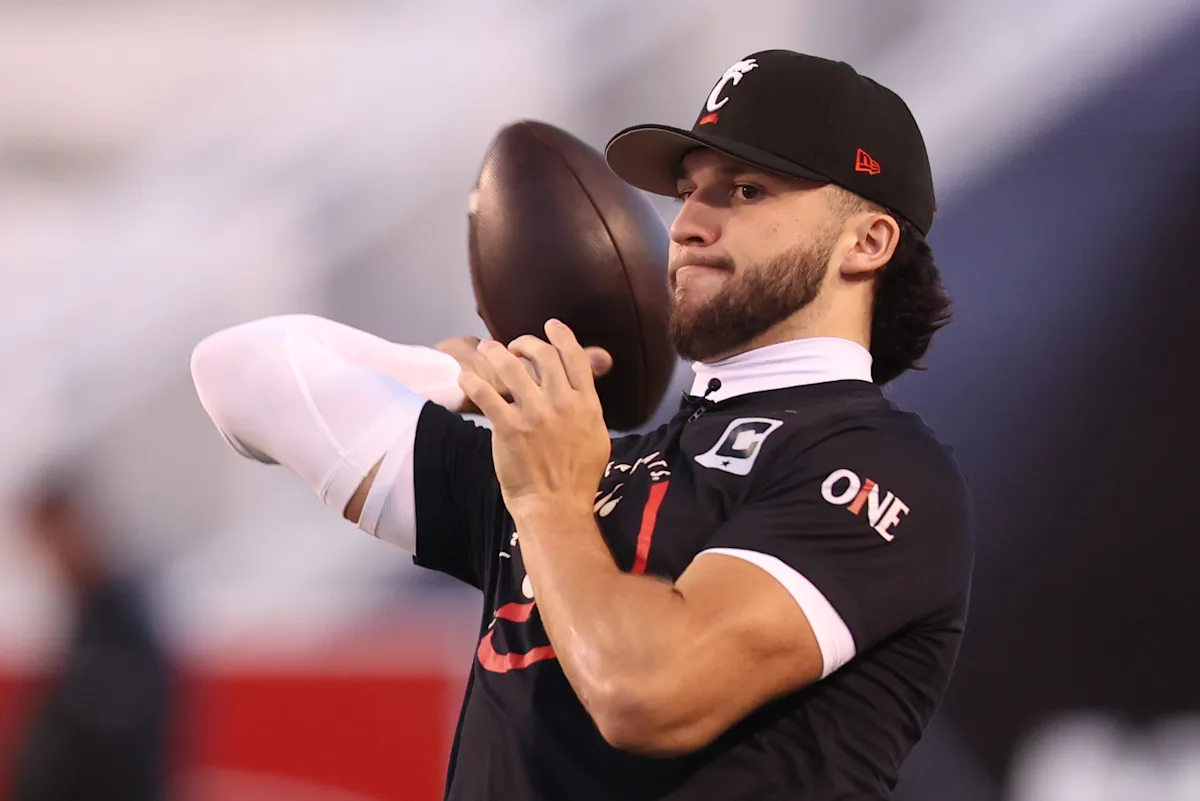
If you thought the NIL transfer market in college football already was out of control, just wait until the upcoming battles next month for the top quarterbacks looking to switch schools.
ESPN college football insider Pete Thamel believes the dollar figures during the January cycle could be as much as $5 million for one season.
Advertisement
“This market looks robust already, guys,” Thamel said Friday on College GameDay ahead of Alabama’s playoff win over Oklahoma. “You’ve got Cincinnati’s Brendan Sorsby at [the top], Nebraska’s Dylan Raiola, TCU’s Josh Hoover went in [this week], you have Arizona State’s Sam Leavitt, Florida’s DJ Lagway.”

Cincinnati Bearcats quarterback Brendan Sorsby (2) warms up before the game against the Utah Utes at Rice-Eccles Stadium. Rob Gray-Imagn Images
“So I made some calls today, guys, and sources told me the tip-top of this quarterback market, financially, could reach $5 million for one season. Look, it’s supply and demand. You have all those guys. Sorsby’s been linked early to Texas Tech. Dylan Raiola, there’s some smoke to Louisville, although maybe a [College Football Playoff] team jumps in late there. There have been early links between Indiana and Hoover, assuming that [Heisman Trophy winner Fernando Mendoza] goes pro.”
Thamel also noted that CFP programs such as Oregon and Miami are likely to be looking for a new quarterback for 2026, as well as LSU, with new coach Lane Kiffin looking to make a splash.
“Look, this is what’s going to drive the market,” Thamel said. “Oregon may lose [draft prospect] Dante Moore. Miami will be in the quarterback market again. So will LSU. So, when you really take a look at what could drive this quarterback market, it’s going to be the most expensive in the history of college football.”
Advertisement
Thamel also pointed out that seven of the past nine Heisman winners landed at those schools through the transfer portal, including Mendoza, who moved from Cal to Indiana for this season.
The main transfer portal window is open from Jan. 2-16.

Freshman Ebuka Okorie scores season-high 32 to lead Stanford over Colorado 77-68

Jesse Palmer calls for changes to limit G5 schools’ inclusion amid Ole Miss blowout of Tulane

TWRA Youth Fish Art Contest Now Open

Oregon vs. Texas Tech set for Orange Bowl: Preview and odds for CFP quarterfinal

Centennial Cougars beat Champlin Park Rebels – The Rink Live

Dodge County falls to Proctor/Hermantown in a ranked Class A girls hockey game

“The Struggle Never Really Ends”: When Ross Chastain Revealed the Dark Reality of Funding in NASCAR

2025 All-Area Volleyball: Meet the complete team | Sports

After Signing Extension To Stay At Arizona State, Kenny Dillingham Sounds Off

Volleyball Wildcats face Texas A&M for national championship

2025-26 College Football Playoff: What’s next for each eliminated playoff team?

A-K Valley athletes of the week: St. Joseph’s Bella Bartolovic, Springdale’s Robby Simmen

The staggering NIL figure that transfer portal QBs are expected to cost

Commanders young RBs – The Athletic
TWRA Youth Fish Art Contest Now Open

First Tee Winter Registration is open

Fargo girl, 13, dies after collapsing during school basketball game – Grand Forks Herald

CPG Brands Like Allegra Are Betting on F1 for the First Time

F1 Las Vegas: Verstappen win, Norris and Piastri DQ tighten 2025 title fight

Sycamores unveil 2026 track and field schedule

Two Pro Volleyball Leagues Serve Up Plans for Minnesota Teams

Utah State Announces 2025-26 Indoor Track & Field Schedule

SoundGear Named Entitlement Sponsor of Spears CARS Tour Southwest Opener

Redemption Means First Pro Stock World Championship for Dallas Glenn

Bowl Projections: ESPN predicts 12-team College Football Playoff bracket, full bowl slate after Week 14

Jo Shimoda Undergoes Back Surgery

Texas volleyball vs Kentucky game score: Live SEC tournament updates

Robert “Bobby” Lewis Hardin, 56

How this startup (and a KC sports icon) turned young players into card-carrying legends overnight

Indiana’s rapid ascent and its impact across college football






-
 Motorsports2 weeks ago
SoundGear Named Entitlement Sponsor of Spears CARS Tour Southwest Opener
-

 Motorsports2 weeks ago
Donny Schatz finds new home for 2026, inks full-time deal with CJB Motorsports – InForum
-

 Rec Sports2 weeks ago
Black Bear Revises Recording Policies After Rulebook Language Surfaces via Lever
-

 Rec Sports2 weeks ago
How Donald Trump became FIFA’s ‘soccer president’ long before World Cup draw
-
 Sports3 weeks ago
Men’s and Women’s Track and Field Release 2026 Indoor Schedule with Opener Slated for December 6 at Home
-
 Rec Sports2 weeks ago
David Blitzer, Harris Blitzer Sports & Entertainment
-
 Motorsports2 weeks ago
JR Motorsports Confirms Death Of NASCAR Veteran Michael Annett At Age 39
-
 Motorsports2 weeks ago
Rick Ware Racing switching to Chevrolet for 2026
-
Sports2 weeks ago
Elliot and Thuotte Highlight Men’s Indoor Track and Field Season Opener
-
Sports2 weeks ago
West Fargo volleyball coach Kelsey Titus resigns after four seasons – InForum