
NIL
NIL is changing college sports; for better or worse?

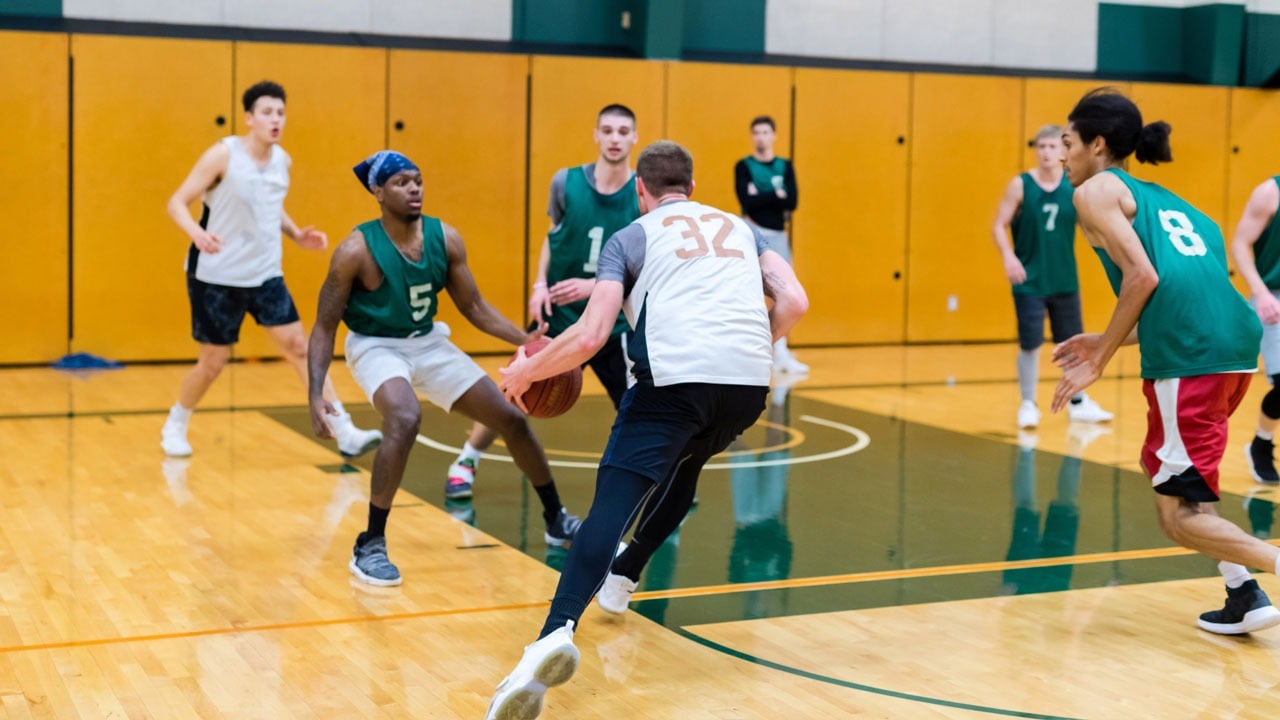


HUNT VALLEY, Md. (TNND) — It’s been nearly four years since the NCAA enacted a new policy allowing college athletes to profit from their name, image and likeness, and just a few weeks since a federal judge opened the door for college athletic departments to pay athletes directly.
Much of the details are still being worked out in the courts. Key components like roster limits, scholarship limits and payment pools are still up in the air.
As is a governing body to oversee all of these new rules, since most current regulation is a patchwork of state laws, legal settlements and NCAA rules.
But, we are starting to see the impacts of college athletes getting paid – and what it means for the enterprise as a whole.
Depending on who you ask, the historical shift is: long overdue for athletes who’ve spent thousands of hours grinding for their craft; late to the party in terms of global sports; the official death certificate for amateurism and the “student” side of “student-athlete”; or, an inevitable reality that has to run wild before it gets reined in and regulated.
To the league itself, it’s a positive step.
When a judge granted preliminary approval for a framework for schools to pay athletes, NCAA President Charlie Baker said it would “help bring stability and sustainability to college athletics while delivering increased benefits to student athletes for years to come.”
The push for college athletes to get paid spans decades, with legal challenges and legislative efforts dating back to at least the early 2000s. Which is surprising, considering the NCAA has been a multi-million dollar industry for several decades, and a multi-billion dollar industry for about a decade.
That disparity is due to the idea of “amateurism,” a word many experts and analysts use when they cite concerns about completely commercializing college sports. That idea goes back more than a century, to 1800s England, where sports were only for the wealthy, and the working class didn’t want them to be able to pay their way to victory.
“I don’t want to say [amateurism] is going to die, but it will certainly be the commercial aspects that are going to permeate,” said David Hedlund, the chairman of the Division of Sport Management at St. John’s University. “I think we’re going to see and hear less and less about amateurism, and college sports are going to look more like professional sports, or a training ground for professional sports.”
The idea that sports are for enjoyment and the love of the game rather than money is a noble one. And players can love the game and make money off their talents at the same time.
But many experts say amateurism has long been dead; the NCAA was just, for whatever reason, the last organization behind the International Olympic Committee to let it die. It’s part of an effort to keep pace with the rest of the world. Overseas soccer and basketball players are spotted when they’re 12 to 14 years old, and go pro when they turn 18.
“We’re in a global marketplace,” said Matt Winkler, a professor and program director of sports analytics and management at American University. “We sort of have to keep up with the other nations if we want to strive and have those great moments in sports for our Olympic teams and our World Cup teams and so forth.”
Coaches have long been compensated, and universities have long profited off their sports teams.
“The money has always been there. It’s just a lot more front-facing now, I think, than it’s been in the past,” Hedlund said.
Some sports analysts say it was quite front-facing in this year’s NCAA Men’s Basketball Tournament.
March Madness was devoid of any significant upsets or Cinderella teams. For the first time in five decades, every team that made it to the Sweet 16 came from a power conference, including all four No. 1 seeds and all but one No. 2 seed.
And, every team that made it to the Final Four was a No. 1 seed.
ESPN analyst Stephen Smith said NIL deals and the now no-limits transfer portal are to blame for why mid-major programs didn’t see much success, and top-tier schools prevailed.
“If there was no NIL, if there was no portal and you have the mid-majors go 0-6 in the second round, please, we ain’t sweating that,” Smith said. “But when you’re able to point to rules that have been implemented that ultimately shows itself to have inflicted upon the game itself, that’s dangerous.
“College basketball as we knew it – which, to me, is all about March Madness – will cease to exist. Because there’s no madness.”
Experts say there is a serious question mark about the current state of how much colleges can pay to entice players, and how many times players can be enticed enough to transfer.
But not all believe it has to be the death of March Madness or competition in college sports. After all, there’s still Division 2 and 3 universities.
Richard Paulsen, a sports economist and professor at the University of Michigan, said it’s hard to gauge the impact of NIL deals and the transfer portal on competition. Because while the top ten or so power schools may be able to offer the most money to the elite players, there’s still a lot of talent out there.
“The top schools have an advantage in getting the A-level talent, but some of the players that might have sat on the bench at a top school previously could be enticed away with NIL money coming from a second tier school,” Paulsen said. “So I think the impact on competitive balance is maybe a little bit less clear.”
Paulsen says, as a professor, he is worried about the impact NIL deals – particularly million-dollar ones – can have on the students themselves, some 18, 19, 20 years old. It raises the question, does a teenager or young adult need this much money?
Shedeur Sanders is 23 years old, and his NIL valuation at the University of Colorado was roughly $6.5 million. Granted, he’s the son of NFL Hall of Famer and head coach for Colorado Deion Sanders.
But, his 2024 stats were top five in completion percentage, passing touchdowns and yards. Several analysts had him as the top prospect in the 2025 NFL draft, but he slid down to the fifth round, shocking much of the sports world.
Various reports place blame on other reasons – maybe he took more sacks than he should have, maybe NFL executives see traits we can’t see, maybe he bombed interviews with the managers, maybe it had to do with his Hall of Famer dad. And he certainly wouldn’t be the first prospect to get picked later than expected and prove all the teams that passed over him wrong.
But, he’s also losing money by going pro. The iced out, custom “Legendary” chain he wore on Draft Day reportedly cost $1 million.
“It is at least worth noting that five years ago, he wouldn’t have had the online presence that he had, and that could have turned off some NFL teams,” Paulsen said. “Without being in the rooms, I don’t know if it did, but that is possible, and it’s not something that would have been possible even five years ago.”
It begs the question, is it even worth going pro for these top-tier college athletes with insane NIL deals?
In the NBA, new data shows it may not be. The league announced last week just 106 players declared early for the 2025 draft. It’s the fewest since 2015. The number typically hovers around 300.
The drop in early entrants could be lingering effects of the extra COVID year.
But, next year, ten schools will pay their rosters somewhere in the neighborhood of $10 million, including several million dollars per top player. That’s far more than the players would make if they were a second-round draft pick in the NBA.
Winkler said the combination of competitive rosters and the scope of these NIL deals has more to do with this drop in early declarations.
“These deals are getting so big that unless you’re going to be a first round draft choice, maybe if you’re going to be kind of a lottery pick or a top 10, 15 pick, it would be better for you to exhaust your eligibility on a major team, because you’re going to make more,” he said.
So, it might be financially advantageous for athletes to wait on the pros. Some announcers were even suggesting Sanders should go back to college if the NFL didn’t deem him ready for the show. (NCAA rules prohibit him from doing so anyway; he declared for the draft and signed with an agent).
But what about the fact that these players, who become millionaires, are still students?
Schools are working to provide resources for these athletes so they can get advice on what to do with their wealth, so that they don’t spend it irresponsibly. Which is not to assume all of them would; it goes without saying this money could greatly benefit an athlete who grew up in poverty and change the trajectory for his/her family.
But Paulsen says he worries about the “student” side of “student-athlete” when we start talking about millions upon millions of dollars and students transferring to whichever school offers them the most. Sometimes credits don’t transfer; sometimes players could feel pressure to fulfill their NIL commitments over their studies, when the stakes are that high.
At a young age, these players are under an unprecedented amount of pressure, from their coach, from their family, from their financial adviser, from social media, from broadcast exposure, from stakeholders, from the tens of millions of people who can now legally bet on them.
“Players should be able to leave bad situations, absolutely, and I certainly support players’ autonomy and chasing financial benefit from their athletic talents,” Paulsen said. “But if we’re going to call them student athletes, we should have some emphasis on the student part of that too. Some of these rules that are helping the athlete are hurting the student.”
One of those rules, he says, is the transfer portal. But in addition to harming the students’ academic careers, experts say this also takes a toll on teams and fans of those teams.
Take Nico Iamaleava for example. The star quarterback abruptly parted ways with Tennessee over an alleged compensation dispute with the school’s collective. He demanded an NIL readjustment to $4 million to keep playing for the Vols, and when they said no, he transferred to UCLA, though it’s unclear if they met his demands.
The exit shocked his teammates in Knoxville, with one of his receivers and defensive backs, Boo Carter, telling reporters, “He left his brothers behind.”
But the new pay-to-play system does also beg the question of school loyalty, not just for the players, but the fans too.
Paulsen says roster continuity, players spending all four years playing for one team, has been an endearing feature of sports like women’s college basketball, when you look at the legacies, for example, Caitlin Clark built at the University of Iowa, or Paige Bueckers at the University of Connecticut.
“I do think there’s definitely some extent to which all this player movement can have negative consequences,” he said.
But, some experts doubt fans of teams need to see the same or similar team year to year.
After all, this past NCAA Men’s March Madness Championship between Florida and Houston – the one ESPN’s Smith said featured no madness at all – scored 18.1 million viewers on CBS. That’s up 22% from last year’s championship, and the biggest audience since 2019.
The Final Four games, featuring all No. 1 seeds, ranked as the most-watched games in eight years.
In other words, so far, so good when it comes to college sports fandom.
One thing broadly agreed upon among experts is that competition must remain intact. The Florida-Houston matchup was a nailbiter.
“The biggest thing that would kill sports is if there is no competitive balance,” Hedlund said. “It is known when you have a really great team being a not-so-great team, if the great team probably will win, people don’t want to watch.”
People still appear to be watching. If they stop, one could assume the NCAA would change its course, or it’d be out of all its money too.
Plus, these experts expect regulation soon – possible measures like transfer restrictions, collectively bargained salary caps, conference realignment to avoid concentration, turning athletic departments into LLCs, putting degree completion into bylaws and evening out the number of roster spots, among other rules.
Experts say: be patient, wait for the legal fights to run their course, and wait for the brightest minds in sports – and Congress – to come up with a solution that pleases the players, teams, coaches, schools and fans.
“This is fundamental to the success of sports, so we just need to figure out what rules, what regulations, what governing bodies, how do we facilitate this?” Hedlund said. “We don’t want to ruin sports. That’s what’s at stake here.”
Winkler says it all comes down to the most “hardcore” stakeholders: fans and alumni. If the SEC and Big 10 just ganged up and created their own Premier League and college sports turned into checkbook sports, it could threaten that school pride.
“This year, we definitely saw cracks in the system,” Winkler said. “If the best athletes just go to the top, are [fans] rooting for an inferior product? Are they still going to have that affinity for their school, their team, their degrees, and people that are doing it? This is really going to test that.
“[Schools] have two key pressure points: keep getting a lot of money from TV so you can fund your athletic department, and keep alumni, fans and donors still feeling as engagedThere’s a lot to be worked out in the next several months and probably the next year to really get a boiler plate idea of what the rules and regulations need to be.”

Jan. 7, 2026, 11:51 a.m. CT
BATON ROUGE — Cincinnati transfer quarterback Brendan Sorsby was at the top of every school’s list that needed a quarterback, and LSU football was included in that.
New LSU coach Lane Kiffin and his program was one of the fortunate two to get Sorsby on campus for a visit, which he did this past weekend. It was then LSU made its Name, Image, Likeness marketing and revenue sharing deal to him which was upwards of $4.5 million altogether, Yahoo! Sports reported Wednesday.
Sorsby signed a contract with Texas Tech, the other school he visited this past weekend, that is believed to be at least $5 million total, according to the report.
The 11-page deal from LSU was made through the university’s multimedia rights partner, Playfly Sports Properties detailed how the compensation was Sorsby was going to be structured during his one year with the football program. For Sorsby, $3.5 million was going to be handled by NILSU MAX, an independent entity formed in affiliation by Playfly and LSU athletics while “likely at least $1 million” would’ve come from LSU’s revenue sharing cap money.

If NILSU MAX couldn’t fulfill the guaranteed amount of $3.5 million to Sorsby, it was contractually obligated to come up with the money using his name, image and likeness on promotional materials as well as organizing a “limited amount” of autograph signings and appearance, per the contract.
There were also incentives tied to the proposed deal to Sorsby which included a $500,000 bonus should he win the Heisman Trophy and $200,000 for winning the Maxwell Award, which is presented annually to college football’s top player. Quarterback Joe Burrow is the most recent LSU player to win the award back in 2019.
What’s interesting about LSU’s proposed deal to Sorsby is how does it fly with programs supposedly operating under a revenue-sharing pool, which is marked at $20.5 million?
The College Sports Commission, the industry’s new enforcement agency, and NIL Go signs off on third-party contract for student-athletes, determining if the deals have a “valid business purpose” and that they do not exceed an established “range of compensation.”
But the agency was only started this past June. So it’s unclear if NIL GO would have approved the deal or not as there’s very little precedent at this time.
Kiffin and LSU are still in the market for a quarterback out of transfer portal. Arizona State transfer signal caller Sam Leavitt was on campus for a visit the last two days and LSU has reported interest in Washington quarterback Demond Williams.
It’s unknown what proposed deals to those quarterbacks would look like — likely not as high as LSU’s offer to Sorsby as he was the top player in the transfer portal at his position. But the one guarantee if the offer would be competitive.
Cory Diaz covers the LSU Tigers for The Daily Advertiser as part of the USA TODAY Network. Follow his Tigers coverage on Twitter: @ByCoryDiaz. Got questions regarding LSU athletics? Send them to Cory Diaz at bdiaz@gannett.com.
Does college football need fixing? That could be argued.
It’s inarguable that there are broken aspects to the sport (see the calendar), but at the same time, the sport is gobbling up as much money as it ever has.
As I reflect on the last year, I’ve come up with two whacky ways I think college football could improve on some of its issues. I stayed away from the calendar and the portal because everyone at this point knows something has to give there.
1. NIL-Incentive-Based Preseason Bowl Games
I’m typing this out with a quad box on my TV that features three bowl games (this was written on Dec. 31), so just know if the bowl system doesn’t innovate, I’ll still be here for it.
With that said, there is no denying that the bowl season has been losing its luster over the past decade or so. So, let’s try to find a way to spruce things up. My suggestion (which I don’t think is necessarily original): move them to the next preseason.
That may sound all sorts of backward, but is it more backward than a team having to turn down a bowl because they don’t have enough players to field a team? Is it more backward than a handful of teams going into bowl season with cobbled together coaching staffs because their coach left for another job?
Here’s my idea: Based off conference finishes, teams will be slotted into bowl games to start the next season. Using the Texas Bowl as an example, say it hosts the third-place finisher in the Big 12 and the fifth-place finisher in the SEC (would’ve provided a Utah vs. Texas matchup based on this season’s results). Then, the Texas Bowl’s sponsor would have to pony up some money (how much, I have no idea) for some NIL during next season’s games.
You could argue that the roster that makes the bowl should get the NIL, which I won’t put up much of a fight arguing about, but it going to the next season’s roster would benefit the program going into the offseason. Coaches would be able to recruit the portal with, “Oh, and we’re in the X Bowl, which pays out X.” Maybe it would also be enough to keep some of the players undecided about hopping in the portal to stay in a spot.
It’s a reward to the program for having a good season that they now have the extra recruiting tool and a reward for players in that they get paid. AND it provides The College Football Playoff committee more potentially relevant interconference data points come the end of the year. It’s a win-win-win, as far as I’m concerned.
Things that would need to be figured out:
For one, a lot of teams already have nonconference games scheduled way in advance, so you’d have to deconstruct some of those deals.
Secondly, teams ineligible for a bowl would have a relatively quick turnaround to get a game scheduled. But basically every other college sport puts schedules together much quicker than football, so I think you’d be able to work around that.
2. Region-Based Promotion, Relegation
From a fun idea that could somewhat realistically be implemented smoothly to something that is bat-poop crazy that the powers that be would never agree to.
This prompt is sort of two in one, as it would take conferences realigning (again) plus the implementation of a European soccer-esque promotion-relegation system.
Starting with the conferences, nothing makes sense anymore. USC is in the same conference as Rutgers, despite the two schools having about a 40-hour drive between them. Cal and Miami share a conference despite having about a 45-hour drive between them.
I say the conferences should come together (already not going to happen) and divide schools up based on geography. Not just the Power Five, either. The American Conference hosts UTSA (San Antonio, Texas) and Army (West Point, New York). Conference USA has New Mexico State and Delaware. Those leagues don’t have the TV revenue to afford such travel expenses as easily.
So, the Power Five returns (welcome back, Pac-12!), and each of those league’s get paired with a Group of Five conference. The winner of the Group of Five conference and the last-place team in the Power Conference would switch leagues (or potentially play a winner-take-all postseason game?). Base media rights payouts would be uniform across the P5 leagues (again, never going to happen) and in the G5.
Let’s say it’s Pac-12/Mountain West, Big 12/American, Big Ten/MAC, SEC/Sun Belt and ACC/Conference USA.
I still think the college football regular season means a lot, but this would only add to that for literally every team. There’s even intrigue for teams having bad seasons. A late November game between two teams that are 2-9 might be must-see TV.
Aside from helping with travel costs for schools and fans, the regionality of things would also bring back some rivalries and create others.
Take the state of Texas, for example. There are six Group of Five programs in the Lone Star State, and those six schools are in three difference conferences. Rice (Houston, Texas) shares a conference with Temple (Philadelphia, Pennsylvania) but not with Sam Houston (Huntsville, Texas). I imagine a lot of players on those G5 Texas teams know one another and would probably very much like to prove that their college team is better than someone they grew up playing in high school. Same for regular students. Say Joe and Bob grew up as friends in Dallas. One went down to Texas State for college and the other went to North Texas. That game has a new level of care to it for bragging rights over your buddy.
Things that would need to be figured out:
Money means this idea is dead on arrival. Schools in the Big Ten or SEC right now would have no interest in sharing their portion of the pie, even if it was for the betterment of the sport. Could you imagine one of those Big Ten teams who woke up on third base despite basically never being relevant in football agreeing to a system that could have them relegated to the MAC? No way. College Football Playoff payouts to the league would have to be big with the regionality of things. The more teams that league gets in, the more money that league gets to divvy among its schools.
Promotion-relegation also isn’t as smooth an idea in college sports as it is professional sports because of A, the transfer portal, and B, eligibility. If a Group of Five team was good enough to win its league, the difference in P5 media rights money and G5 media rights money would need to be enough for the G5 team to retain at least portions of its roster rather than the whole thing getting blown up, forcing an underfunded team into a stronger league while having to replace a large chunk of the roster. But even if that money is enough for rising G5 schools to retain their rosters, what if that G5 school was filled with seniors?
Then would anyone belong to any conference anymore? Or is it sort of like the NFL but rather than AFC and NFC its Big 12, SEC, etc.?
It’s messy, there is no doubt, but if somehow the whole system was reset, I think this system would be a ton of fun.
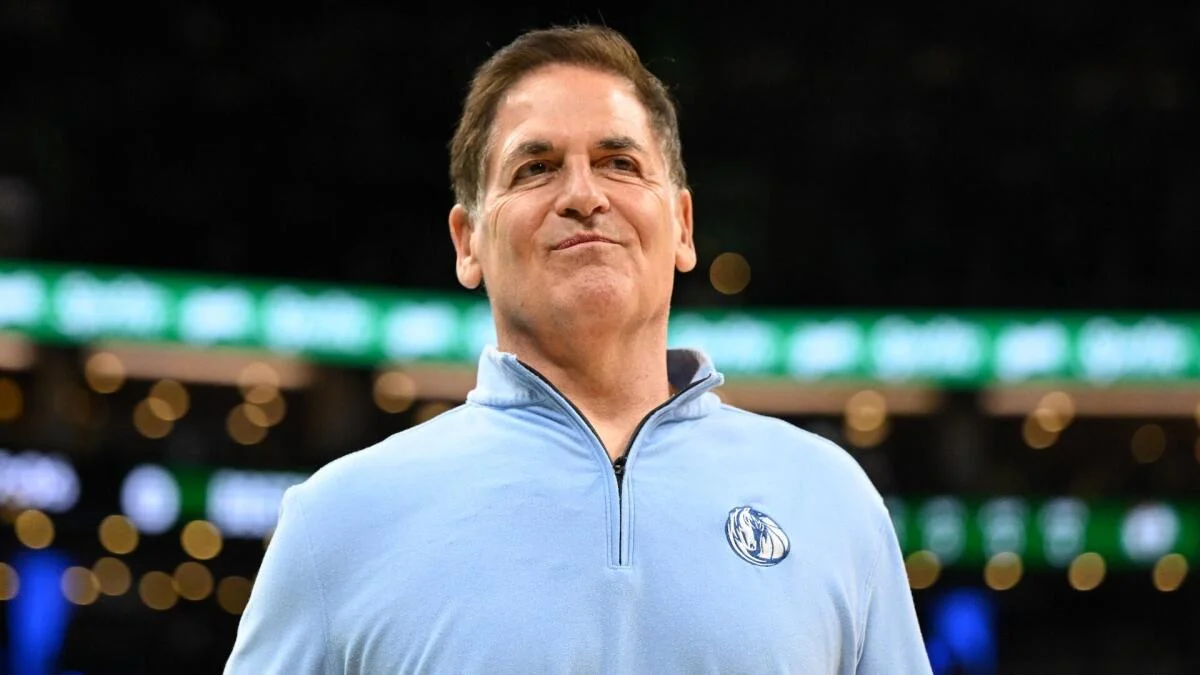
Indiana’s ascendence to the top of the college football world is nothing short of stunning, as Curt Cignetti arrived in Bloomington and immediately turned into a contender. Cignetti’s displays a powerful ability to get buy-in from all levels of the program, from players to the administration to boosters, tapping into Indiana’s alumni base to get the Hoosiers closer to the nation’s top programs in spending.
Among the alumni that Cignetti convinced to invest in the program is billionaire Mark Cuban. The investor and now-minority owner in the Dallas Mavericks has plenty of cash on hand after selling the majority stake in the Mavs, and after never giving to his alma mater’s athletics department previously, Cuban made back-to-back major donations to help the Hoosiers compete in the portal.
Cuban confirmed he sent in another donation prior to the opening of the transfer portal on Jan. 2, telling Front Office Sports he “already committed for this portal.” While he wouldn’t confirm how much he gave, he did hint that it was a bigger gift than last year — “Let’s just say they are happier this year than last year.”
That investment from Cuban and others has already paid major dividends for the Indiana program. After a playoff berth in 2024, the Hoosiers improved even further in 2025, landing the No. 1 overall seed in the College Football Playoff after an undefeated season and winning the Big Ten championship. They’re now the favorites to win it all and will look to punch their ticket to their first national title game in a rematch with No. 5 Oregon on Friday night in the Peach Bowl.
The transfer portal played a huge role in Indiana’s success, as Cignetti brought much of his James Madison team with him in addition to a number of key players via the portal — most notably Heisman Trophy winning quarterback Fernando Mendoza.
While the on-field focus remains the Ducks, the Hoosiers are aggressive once again in the portal for 2026. Indiana’s put together another big portal haul, ranking fourth in 247Sports’ transfer portal class rankings, putting Cuban’s money to good use by landing nine commits. The headliners so far are TCU quarterback Josh Hoover and Michigan State wide receiver Nick Marsh, as they look to reload at key positions on offense to stay on top of the Big Ten.
The NIL era continues to be wild.
Since the NIL era began in college athletics back in 2021, the landscape of college sports has often been described as ‘The Wild, Wild West.’ As we enter 2026, that phrase doesn’t do the current situation any form of justice. There were at least some laws in the Wild, Wild West.
While there are rules – it would be more accurate to just call them guidelines – when it comes to what you can and can not do regarding NIL, they very much feel optional at this point in the proceedings.
Newly appointed Florida head coach Jon Sumrall recently joined Jonathan Hutton and Chad Withrow on OutKick’s Hot Mic and gave a very real example of just how little sense said NIL guidelines make.
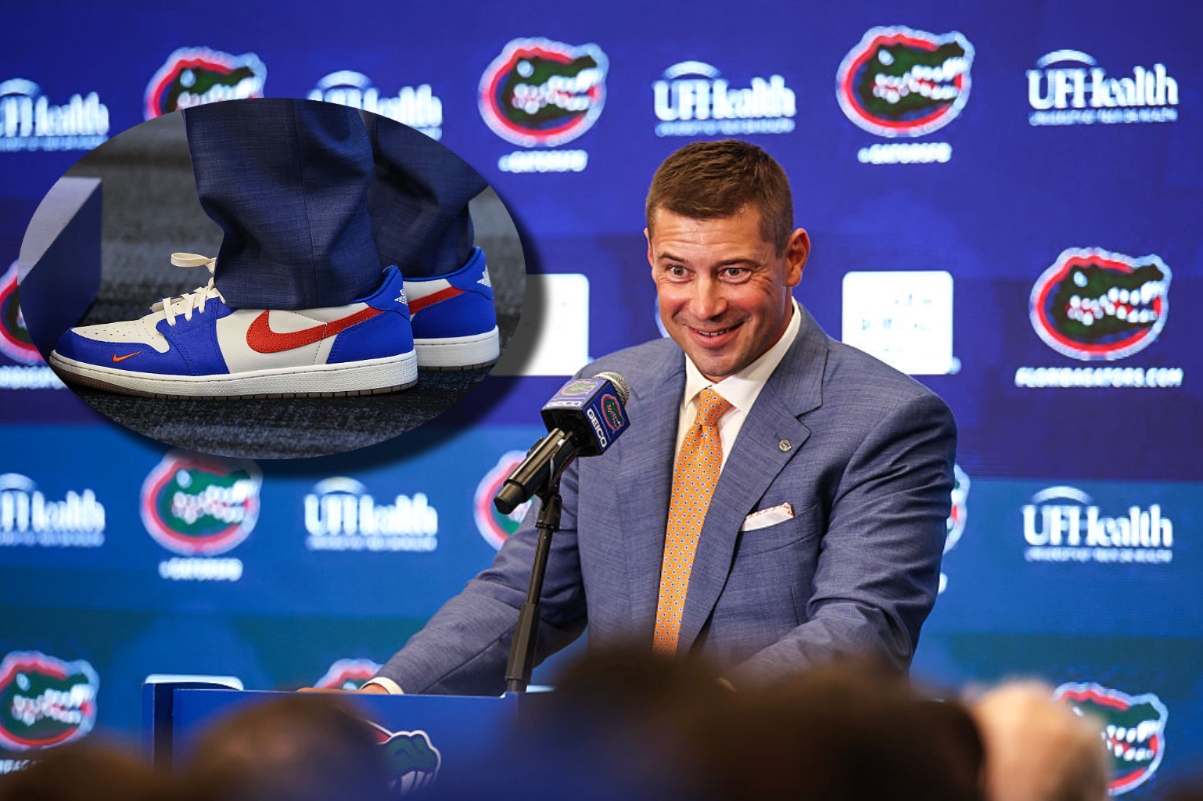
With Florida being sponsored by the Jordan brand, one would imagine that Sumrall could hand out as many pairs of shoes as humanly possible to players after their careers wrap up in Gainesville. But no, that isn’t the case at all.
“We give out Jordan Brand shoes here, because we’re a Jumpman school,” Sumrall noted. “So, that’s like a cool, hip thing. And I’ve got all those Jordans on my desk here, but we can’t give them to the players after their careers are over because the monetary value is too great. It’s called an extra-benefit.”
“I’m like, the shoes are worth a couple-hundred bucks, I don’t know maybe a couple thousand bucks, I don’t know how much they’re worth. But, we’re already paying these dudes. Why can’t we give them these shoes?”
That’s a valid question, coach.
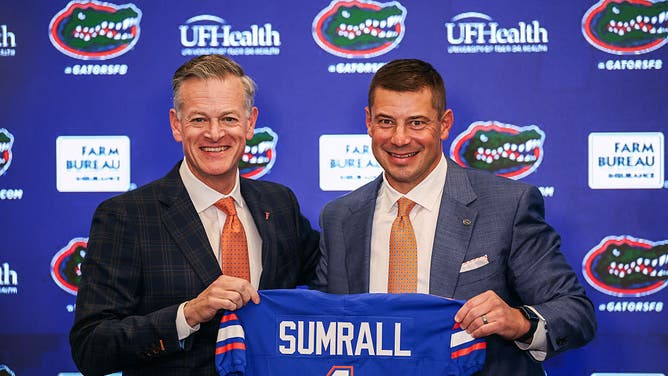
Jon Sumrall being introduced as Florida’s next head coach. (Photo by James Gilbert/Getty Images)
Many players are being paid six to seven figures per season to play, and are paid that sum regardless of performance, but handing out a pair or two of shoes that your team is already sponsored by is a no-no.
Good luck trying to make that make any sense.
The funniest piece in all of this is that someone at Florida likely had to tell Sumrall shortly after he was hired that he wasn’t allowed to hand out shoes. The look on his face when he was told that had to have been priceless.

A fresh NIL deal signed last week is now at the center of a potential legal battle as Washington challenges the quarterback’s attempt to leave football program.
Demond Williams Jr. signed a new NIL contract with Washington just days ago to return for the 2026 season as the Huskies starting quarterback. On Tuesday night, the football program was shocked to see on social media that Williams had announced his intentions to enter the transfer portal.
In a post on Instagram, Williams said that entering the portal was “best for me and my future” where he proclaimed that he was now planning on leaving Seattle.
But there’s one big problem for the quarterback, and it all centers around the revenue-sharing contract he signed with the school.
Trinidad Chambliss’ Ole Miss Future Hinges On NCAA Waiver — New NIL Deal Raises Stakes With Potential Lawsuit
His announcement came as a shock to those within the Washington football building, according to multiple sources. When you consider the fact he just signed a new deal, it’s not hard to imagine the reactions within the program.
Sources also told OutKick that the school has no reason to let Williams out of his agreement, which could end up carrying a heavy financial burden if taken to court. Right now, Washington is exploring its options when it comes to legal remedies around the situation.
The crux could come down to whether Washington will now have the rights to his NIL, meaning he would not technically be able to sign the same type of agreement with a different school. This could also mean the Huskies would own Demond’s rights pertaining to NIL, which could lead to Williams paying the school a substantial amount of money to play somewhere else next season.
After passing for over 3,000 yards and 25 touchdowns last season, the Huskies negotiated a new deal for Williams, which he had signed within the past week.
Now, we could have a major battle playing out while the transfer portal continues to produce interesting storylines, along with seven-figure deals.
In the case of Washington, the school uses a template that is provided by the Big Ten in signing Demond Williams. If you remember, this is the same type of agreement that Wisconsin used two years ago when signing Xavier Lucas.
Wisconsin Accuses Miami Of Tampering With Xavier Lucas, Has Full Support Of Big Ten
The Wisconsin transfer ended up leaving Madison, and then enrolling at Miami as a non-student athlete in hopes of skirting the contract.
The school said that Xavier Lucas entered into a ‘binding two-year NIL agreement’ with Lucas, along with a deal also executed between the DB and the Badgers collective.
Washington Prepared To Legally Fight To Uphold Contract
For Demond, the school could come after him for liquidated damages in this case. According to multiple sources, Washington is prepared to fight this through legal remedies, while also looking into other schools for potential tampering.
One prominent NIL attorney spoke with OutKick on Tuesday night, and had this to say about where we are now in terms of contracts with schools, compared to past years.
“This isn’t like it was when you were dealing with collectives and funneling money. You are now dealing with legitimate contracts and legitimate attorneys or general counsel from major universities. The stakes are larger, which means the liability is greater.
“If you don’t have real attorneys from the players’ side reviewing your contract, you’re opening yourself to potential litigation.”
Jon Sumrall Has A ‘Common Sense’ Way To Fix College Football, Hopes To Replicate Ole Miss’ NIL Strategy
Also, officials at Washington are gathering evidence that another school made contact with Williams after he had signed his new deal with the Huskies.
Even though this does play out behind the scenes every so often, this has been a hot-button topic around athletic departments on Tuesday night. There have been plenty of threats made by athletes, through their representatives, in these cases before pertaining to negotiations.
But, having an athlete sign a deal, and then potentially be shopped around in this era might not end up turning out how Demond Williams might’ve hoped.
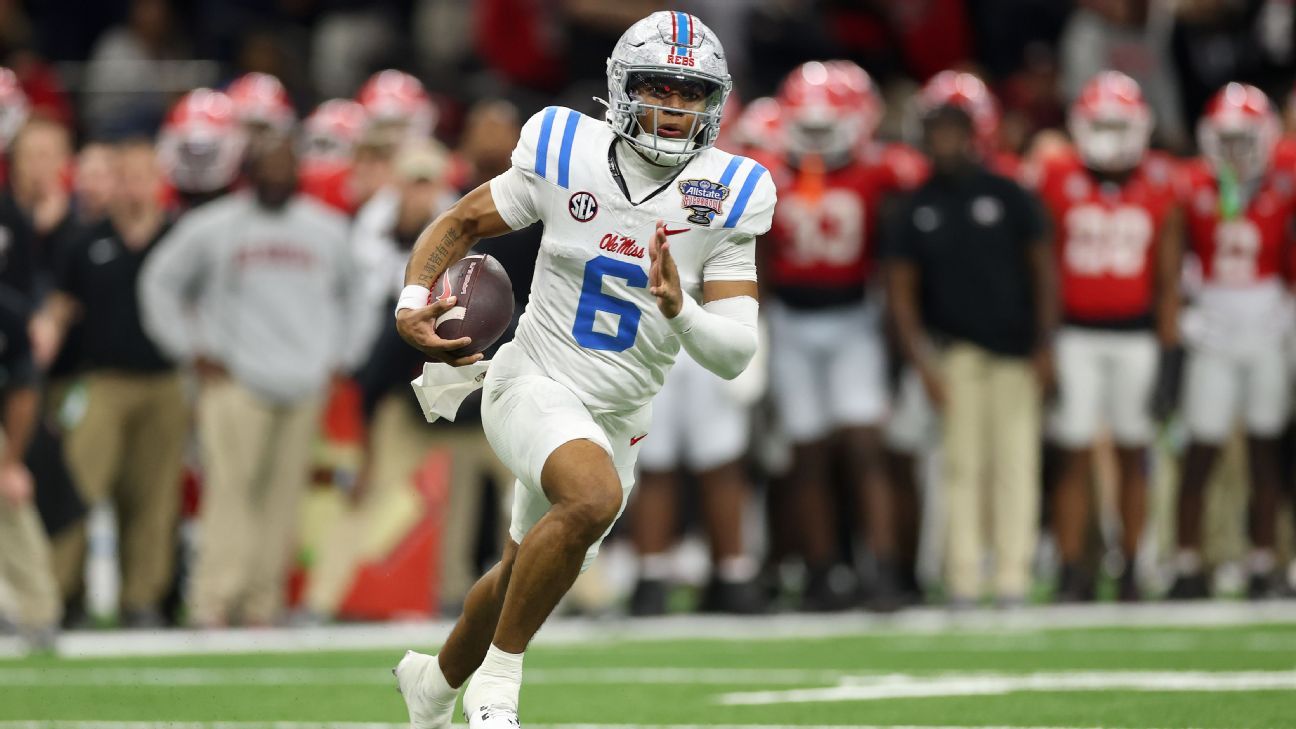
SCOTTSDALE, Ariz. — Quarterback Trinidad Chambliss already agreed to a deal to return to Ole Miss next season. Now, he has to wait to see if he’ll be eligible to play.
Chambliss, one of the breakout college football stars of 2026, filed a medical redshirt waiver for a sixth year of eligibility on Nov. 16. He has yet to receive a definitive answer from the NCAA, although it gave a verbal denial for the waiver in December.
“It has been a little frustrating,” Chambliss told ESPN on Tuesday ahead of the Rebels’ College Football Playoff semifinal Thursday against Miami. “But I can’t let that overtake what my mindset is right now and that’s to win a football game and beat Miami. So I would say I’m a little frustrated, but I can’t let that take over me.”
Chambliss is coming off one of the season’s defining performances in one of its wilder games, as he threw for 362 yards in a 39-34 quarterfinal win over Georgia, which included 20 fourth-quarter points for the Rebels. If he were to return next season, he’d be set to earn millions of dollars, something he didn’t get when he left Division II Ferris State for Ole Miss last year. Entering the season, he was slated to back up Austin Simmons.
Chambliss’ lawyer, Tom Mars, mentioned in a letter to the NCAA on the quarterback’s behalf that his client would “suffer irreparable harm” if he’s not granted the waiver. The crux of Chambliss’ case is that he’s asking for a medical redshirt year from his sophomore season at Ferris State. He supplied 91 pages of medical documents that showed he was battling a respiratory issue and hired Mars to help his case. The NCAA is seeking contemporaneous notes that detail his care.
Mars expressed his frustration with the pace of the case to ESPN on Tuesday night.
“It’s been more than seven weeks since Ole Miss provided the NCAA with all the information they needed to make a decision,” he said. “If the NCAA believes its bylaws clearly required more than what was provided, or that the information wasn’t sufficient to justify a waiver, one has to wonder why they still haven’t made a decision.”
Mars said that he and other lawyers have been working for the past week on immediate contingency plans in the event the waiver is denied.
When asked by ESPN how he’d plead his case to the NCAA, Chambliss responded: “I would just say we have evidence and we have an actual reasoning. There’s some kids that don’t have a reasoning on why they should get another year. And I mean, I have an actual case.
“It’s legit, and I hope that they can find whatever in their hearts or in their minds that they can see that and see that I’m a great guy. I’m all for college football and I feel like this year has proven that I’m good for college football and I think that I should deserve another year.”
Chambliss also reflected on what the money in the contract he agreed to with Ole Miss would mean to him and his family.
“It would mean a lot,” he said. “Not everything is about money, but that sure does help. And for me to be in the position that I’m right now, all the hard work and sacrifice that I put in to get to where I am right now, I feel like I’ve earned that. And I feel like with the waiver being approved, I’ve earned the right to have the success or whatever comes with it. And that if it’s NIL or any other things, then so be it.”
Chambliss’ public commitment to return to Ole Miss for 2026 provided another mile marker of momentum. This all came a few weeks after the school appeared fragile in the wake of Lane Kiffin’s departure to LSU.
But two CFP wins and a flurry of returners such as Chambliss, star tailback Kewan Lacy and a handful of star defensive players have fortified Ole Miss for the future.
“We’re committed to him and I’ll leave that to the legal people, who have kind of looked into the case, and whether or not it has legs,” Ole Miss quarterback coach Joe Judge said. “And obviously they felt very strongly about it. So when they told us like, ‘Hey, this is something that absolutely should be ruled in his favor.’ Then we said, ‘Let’s be committed to our player and back him up.'”

“The dream was always Gonzaga”: Former Mead star Teryn Gardner’s journey comes full circle | All Gonzaga Sports

North Charleston Secures $4.5M for Youth Baseball Complex in Underserved Neighborhood

Greeny Announces Addition to 2026 Spring Roster

Spring Mountain Motorsports Near Pahrump Drives Local Economy and Traffic

Olympic Gold Medalist Benita Fitzgerald Mosley named Chief Executive Officer of the U.S. Center for SafeSport
How much LSU football offered transfer portal QB Brendan Sorsby

Chris Poole Stepping Down as Head Volleyball Coach

ARCA Menards Series Kicks Off 2026 Season with Daytona Pre-Race Practice Over 70 Drivers, 40 Teams Expected to Participate – Speedway Digest

NIU Athletics 2025 Year in Review

Pepperdine Extends Men’s Volleyball Head Coach Jonathan Winder

Reilly Named Finalist for Honda Sport Award for Volleyball – University of Nebraska
Two Crazy Ideas to ‘Fix’ College Football

Texas Tech posts another record semester in classroom

Broncos Announce 2026 Beach Volleyball Schedule

Hendrick Motorsports makes feelings clear on Steve Phelps – Motorsport – Sports

SoundGear Named Entitlement Sponsor of Spears CARS Tour Southwest Opener

Donny Schatz finds new home for 2026, inks full-time deal with CJB Motorsports – InForum

David Blitzer, Harris Blitzer Sports & Entertainment

DeSantis Talks College Football, Calls for Reforms to NIL and Transfer Portal · The Floridian

#11 Volleyball Practices, Then Meets Media Prior to #2 Kentucky Match

Rick Ware Racing switching to Chevrolet for 2026

Maine wraps up Fall Semester with a win in Black Bear Invitational

Nascar legal saga ends as 23XI, Front Row secure settlement

Stempien to seek opening for Branch County Circuit Court Judge | WTVB | 1590 AM · 95.5 FM

Ross Brawn to receive Autosport Gold Medal Award at 2026 Autosport Awards, Honouring a Lifetime Shaping Modern F1

Princeton Area Community Foundation awards more than $1.3 million to 40 local nonprofits ⋆ Princeton, NJ local news %

Sunoco to sponsor No. 8 Ganassi Honda IndyCar in multi-year deal

Downtown Athletic Club of Hawaiʻi gives $300K to Boost the ’Bows NIL fund

North Florida Motorsports Park led by Indy 500 Champion and motorsports legend Bobby Rahal Nassau County, FL

WNBA’s Caitlin Clark, Angel Reese and Paige Bueckers in NC, making debut for national team at USA camp at Duke





-
 Rec Sports3 weeks ago
Princeton Area Community Foundation awards more than $1.3 million to 40 local nonprofits ⋆ Princeton, NJ local news %
-

 Sports2 weeks ago
Badgers news: Wisconsin lands 2nd commitment from transfer portal
-

 Rec Sports5 days ago
Five Youth Sports Trends We’re Watching in 2026
-
 Sports3 weeks ago
Badgers news: Final Four Game Thread vs. No. 1 Kentucky Wildcats
-

 Sports2 weeks ago
Is women’s volleyball the SEC’s next big sport? How Kentucky, Texas A&M broke through
-
 Sports3 weeks ago
Four From Women’s Volleyball Named to College Sports Communicators Academic All-District Team
-

 Rec Sports2 weeks ago
NBA, Global Basketball Community Unite for World Basketball Day Celebration
-
 Rec Sports3 weeks ago
Refugee-Focused Youth Sport Initiatives : Moving for Change
-
 Rec Sports3 weeks ago
Youth Sports Business in 2025: The Year the Industry Grew Up
-
Rec Sports3 weeks ago
Inside the NWSL’s first combine: Can the league create a more robust pathway for American talent development?