
NIL
Ole Miss' Golding details what Rebels look for on recruiting trail and in the transfer portal


OXFORD — Ole Miss has had tremendous success in the transfer portal during the Lane Kiffin era.
Perhaps even more pointedly, the Rebels’ success in recruiting — both in the portal and via the high school ranks — has ticked up precipitously since Pete Golding left Tuscaloosa for Oxford.
It’s not coincidence. There’s a plan.
Kiffin, Golding and Co. know what they’re looking for in the portal. In some ways, it’s obvious — the Rebels want talented players who can compete and thrive in the Southeastern Conference. In other ways, however, it’s more complicated than that.
“The tape evaluation is easy,” Golding said Thursday following Ole Miss’ practice. “Y’all can watch the tape and say, ‘Man, he’s a good player.’ No. 1, it’s a football intelligence standpoint. He was in English. Now he’s coming here and it’s fixing to be French. Does he have the ability to process it and get on the field and show you the same things he was doing? No. 2 is what system is he in? A lot of systems have baseline certain characteristics that make them good players. You can move them to a different spot and they’re not a good player anymore because it’s not the same system. We’re specifically looking for certain traits.”
The Ole Miss defensive coordinator is beginning his third year with the Rebels after a long stint with Nick Saban at Alabama. In Tuscaloosa, the Crimson Tide recruited five-stars by the bushel. Ole Miss has taken a different approach under Kiffin. At both places, chemistry and culture were paramount.
“When most guys aren’t playing where they are, there’s a reason,” Golding said. “A lot of times in the portal there’s this five-star recruit, this highly-recruited player who didn’t pan out and never played. There’s a reason he didn’t play, whether he’s not athletic enough, not fast enough or didn’t have a high enough football IQ to understand the defense.
“We don’t take guys in the portal that weren’t starters where they were at, No. 1. Obviously, if you’re not good enough to play for them, you’re not good enough to play for us, regardless of what team you’re on.”
Another thing Golding said the Rebels emphasize in the portal is fit — on the field and off of it.
“Is this someone players want to be around?” Golding said. “We put a lot on our players when we bring a guy in on an (official visit) and they’re hanging out with him. We get their feedback before we ever take a guy because they actually hung out with him outside this building and saw some true colors.
“There are some people that love football and there are some people who love football for what it can do for them. The paycheck looks good, the car is good and the condo is better and they’re going to the country club with the coaches and they’re doing all those things, but at the end of the day, when shit gets hard, they don’t love football. They start running from it.”
Last season, Ole Miss was first in the SEC — and second nationally — in scoring defense. Nine starters are gone from that team, including first-round draft choice Walter Nolen, second-round pick Trey Amos and third-round choice Princely Umanmielen. The Rebels also lost linebacker Pooh Paul and defensive lineman JJ Pegues to the draft.
That defense, Golding said, proved to high school recruits and portal transfer targets alike that they could come to Ole Miss, compete in the best conference in college football and still lead the SEC in defense.
Of course, what happened last year means nothing this fall. A replenished defense will have to prove its own mettle.
“That was last year,” Golding said. “That was the thing when we had our first spring meeting. The legacy of that team is over. This defense hasn’t done anything. The standard is the same but we have to come to work every day. We have enough talent in the room. We have some tough guys in that room who have a high football IQ, love to compete and play football. We have the same kind of guys right now.”
Ole Miss returns to the practice field Friday. The Rebels open the season Aug. 30 at home versus Georgia State.
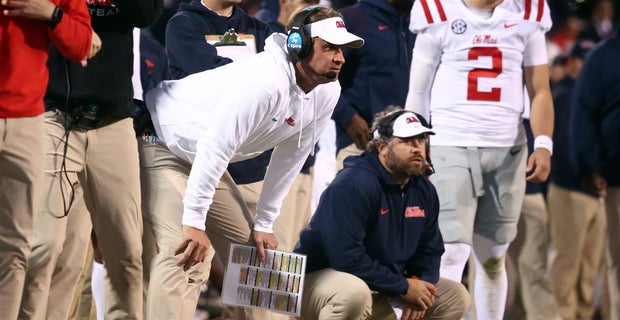
Keeping it real: Golding said the quiet part out loud on Thursday, admitting what everyone knows is the case in this era of college football. Relationships matter, sure, but the deciding factor is often money, whether in comes in the form of revenue sharing, NIL or some combination thereof.
“Every recruit’s going to tell you the relationship’s the most important thing and you’re going to give them a thousand examples of the guy that recruited them is not even there when they signed,” Golding said. “…There’s the business side of it. You might like this new boss you’re interviewing with but if they only offer you half the money, you’re not going, I don’t care how much you like to drink a beer with him. It’s not going to matter.”
It’s why handling recruiting losses the right way matters now more than ever. Two years ago, when Amos was in the portal from Louisiana-Lafayette, Golding lost out to Alabama. Golding told Amos, a star cornerback, Alabama wasn’t going to play him in front of future NFL standouts Kool-Aid McKinstry and Terrion Arnold. A year later, when Amos entered the portal again, Golding got his man.
“I’m not getting pissed off when a guy picks Oklahoma over us,” Golding said. “I’m upset. We have to do a better job recruiting and we have to do a better job selling it, but it’s not like I’m going to tell him, ‘Kid, go to hell.’ It’s best of luck to you. We’re here. You know where to find us. Obviously that day comes for everybody.”
Leftovers:
— On Jaylon Braxton:
“We’ve played him at both spots since he’s been here. He came in rehabbing an injury, so we started him at free safety in the spring to learn that position because it’s a harder spot because he’s never played it. In the summer, he worked nothing but corner.”
Braxton will play different spots, based on who is healthy. His versatility is a huge benefit for the Rebels.
“He’s got an elite skill set. He’s got a really high football IQ. He’s just getting back now to where he’s healthy.”
— On Kam Franklin:
“I think Kam, probably, from a defensive standpoint, has the biggest improvement from Day 1 to where he is now. Obviously, from a film evaluation standpoint from high school, we knew he had the tools. …I think he’s really heavy-handed. I think he’s got more twitch than people think and his length becomes a problem.”
Golding said Franklin could move into the role left vacant by Jared Ivey’s departure to the NFL.
“He’s playing himself into an every-down player, which is really exciting.”
— On Princewell Umanmielen:
“Princewell is very heavy-handed. …He can line up as a six-technique over the tight end. He can line up as a five-technique over a tackle. He can put his body, somebody in B-gap and you can try to move him on third down to get the matchup you want because he can be a problem. I think right now he’s more of an every-down player at this time than his brother (Princely) was at that time.”

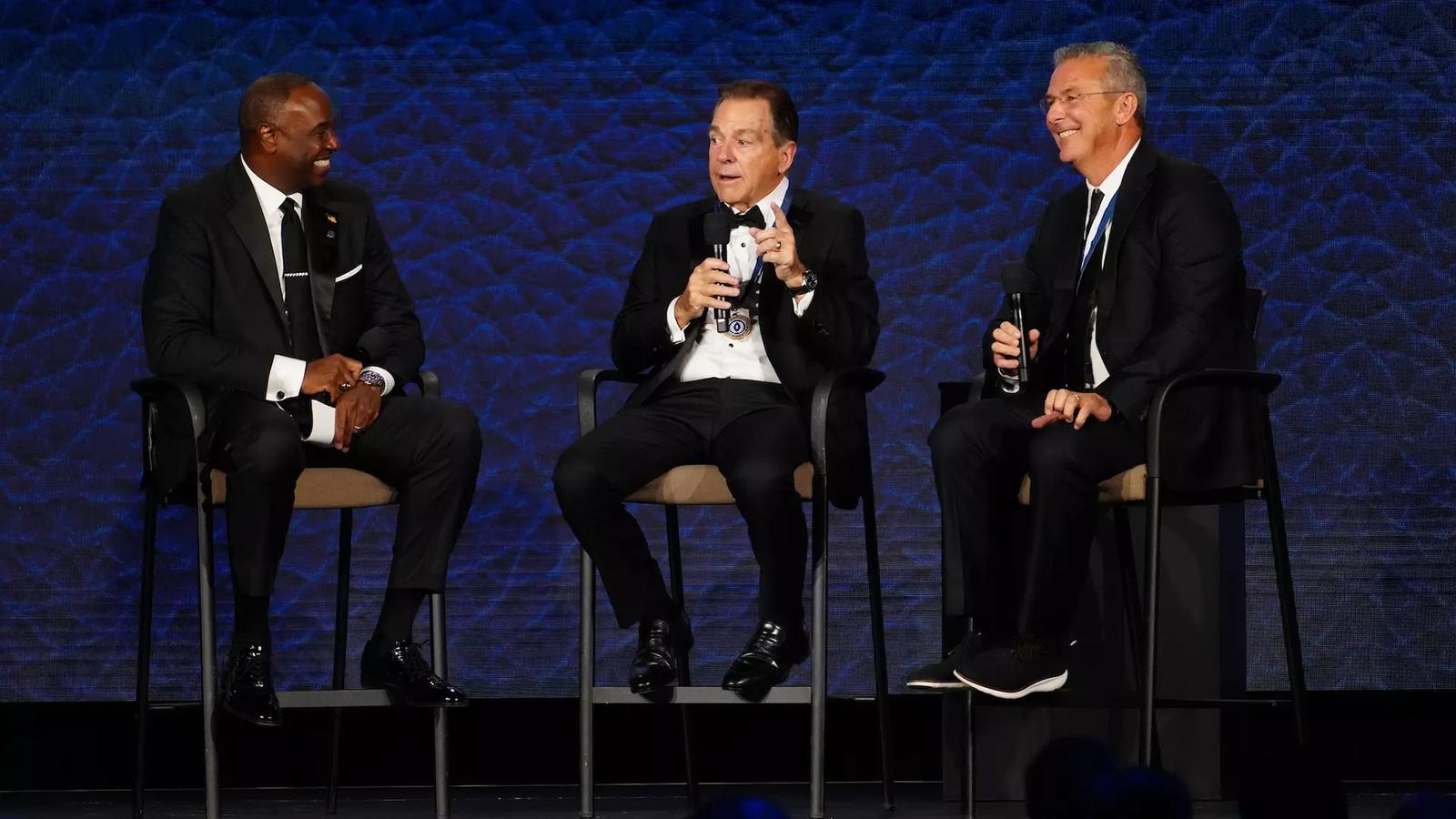
COLUMBUS, Ohio – The Bellagio Resort & Casino played host to an all-star cast of history’s greatest football legends and the sport’s most promising student-athletes during Tuesday night’s 67th National Football Foundation (NFF) Annual Awards Dinner Presented by Las Vegas.
More than 1,800 people attended, and countless more watched on ESPN+ as the star-studded 2025 NFF College Football Hall of Fame Class received college football’s ultimate honor. The NFF also honored 16 of the game’s top student-athletes, who collected postgraduate scholarships as members of the 2025 NFF National Scholar-Athlete Class Presented by Fidelity Investments. More than 50 previous NFF Hall of Fame inductees returned, and 125 colleges and universities sent representatives to attend the fabled affair.
Urban Meyer, the third-winningest coach in Division I history who led Ohio State to a national championship, three Big Ten Conference titles and seven wins over Michigan during a seven-year tenure as head coach, was among the class of 22 inductees: 18 first-team All-America players and four standout coaches.
Meyer coached the final game of a coaching career that places him alongside legends on Jan. 1, 2019 at the Rose Bowl in Pasadena, Calif. His Buckeyes defeated Pac 12 champion Washington, 28-23, to cap a 13-1 campaign.
Meyer’s Ohio State Buckeyes were, for seven seasons, on top of the college football world. The team won the inaugural College Football Playoff national championship in 2014 and won Big Ten Conference titles in 2014, 2017 and 2018. His teams never finished worse than first in the Big Ten’s divisional standings, and his Buckeyes were dominant in Big Ten games with a best-ever 7-0 record vs. Michigan and a 54-4 overall record in Big Ten games, including an NCAA record 30 consecutive conference victories.
His Buckeye teams were 83-9 overall, including the sixth unbeaten/untied season in school history in 2012 (12-0), a record-tying 14 wins in 2014 and the two longest win streaks in school history: 24 and 23 games.
Meyer’s 17 seasons as a head coach featured a record of 187-32 that positions him with the third-highest winning percentage in college football history at .853, trailing only Hall of Fame coaches Knute Rockne and Frank Leahy.
Off the field, Meyer’s development of players included “Real Life Wednesdays,” a series of speakers – CEOs, money managers, pro athletes, etc. – who addressed the team in life experiences and pursuits to ensure they were prepared for life after football.
Beyond football, Meyer has made a lasting impact through civic service, serving on the boards of the Veterans Golfers Association, Folds of Honor, and the Tim Tebow Foundation. He and his wife established the Urban and Shelley Meyer Fund for Cancer Research at Ohio State’s Comprehensive Cancer Center.
Meyer earned a bachelor’s degree in psychology from the University of Cincinnati (1986), lettering one season (1984) with the Bearcats as a defensive back. While launching his coaching career as a graduate assistant with the Buckeyes, he earned his master’s degree in sports administration from Ohio State in 1988. Meyer’s coaching career also includes assistant positions at Illinois State, Colorado State and Notre Dame. He was the head coach of the Jacksonville Jaguars in 2021.
He is a member of the Utah Athletics Crimson Club Hall of Fame, the Greater Cleveland Sports Hall of Fame, and the Ashtabula County Football Hall of Fame. He currently serves as a host and analyst on FOX’s Big Noon Kickoff.
Ohio State Head Coaches in the College Football Hall of Fame (8)
Name – Years at Ohio State Inducted
Urban Meyer – 2012-18 2025
Jim Tressel – 2001-10 2015
John Cooper – 1988-2000 2008
Earle Bruce – 1979-87 2002
Woody Hayes – 1951-78 1983
Francis Schmidt – 1934-40 1971
John Wilce – 1913-28 1954
Howard Jones – 1910 1951

Notre Dame has seen its College Football Playoff hopes dismantled, has declined its bowl game, and watched its relationship with the ACC deteriorate, all in the last few days.
And now, the man in charge of Notre Dame athletics has revealed he had a conversation with the commissioner of the SEC.
“The only commissioner I’ve spoken to, and I’ve had a couple of great conversations with him, is Greg Sankey,” Bevacqua said of the SEC commissioner.
He added: “Greg and I talk all the time. I can’t tell you how much I admire Greg and his leadership.”
What Notre Dame is interested in
Before you start thinking that Notre Dame is about to join a conference, think again.
Bevacqua said his conversation with Sankey had nothing to do with the Irish finally forsaking its independence, but about the structure and format of the College Football Playoff in the years to come.
Being left out of the playoff tends to inspire teams to re-think what the playoff should look like.
“Gave him my viewpoint on the process. He shared some thoughts that he had with me that, obviously, are between Greg and me,” Bevacqua said.
“Format? Greg knows. They all know how I feel about the format. Put the process aside. The format, being, you know, four teams, twelve teams, fourteen teams, sixteen teams, a thousand teams?”
What should the playoff look like
Okay, maybe not a thousand. How about sixteen? That seems to be the new sweet spot from Notre Dame’s perspective. And it could be for others, too.
“It should be sixteen teams, in my opinion, with five automatic qualifiers and eleven at-larges,” he said.
“Think about this year. If we had four teams, it would have been perfect. I don’t think anybody would argue that those aren’t the right four teams that are one through four, right, the way they’re playing. Texas Tech, Ohio State, Indiana, and Georgia… Sixteen would have been perfect. Notre Dame, Texas, Vanderbilt, you know, who else is in there.”
Expansion would cover all the problems
Bevacqua said that the particular metrics the playoff selectors use will necessarily change as each season brings its own unique situations.
The answer to compensating for those year-by-year situations is to simply expand the format and allow for more teams to have a chance.
“You know, year by year, you’re never going to have the same data points each year. It’s never going to work out perfectly, whether you have four teams, twelve, fourteen, or sixteen,” he said.
“What I like about sixteen is it does create more opportunity, it does create more narratives around more schools and yet preserves the integrity and importance of the regular season, and I think that’s one of the greatest things college football has going for it.”
What about the regular season?
Notre Dame’s head man doesn’t think expanding the playoff will have a negative impact on the regular season.
“The regular season is more important in college football than it is in any other sport by a mile…College football? I mean, hey we see it,” he said.
“We saw it last year. We saw it this year. We knew last year, when we lost to NIU? We had no wiggle room. Every game was a bowl game. Every game was a CFP game. This year, after we lost in the last second to A&M? Zero room for error.
“Turns out, we didn’t even have zero room for error. But, I think sixteen teams, with that five and eleven breakdown, is the way to go. And I think a vast, vast majority of people in the CFP management room feel the same way.”
Read more from College Football HQ
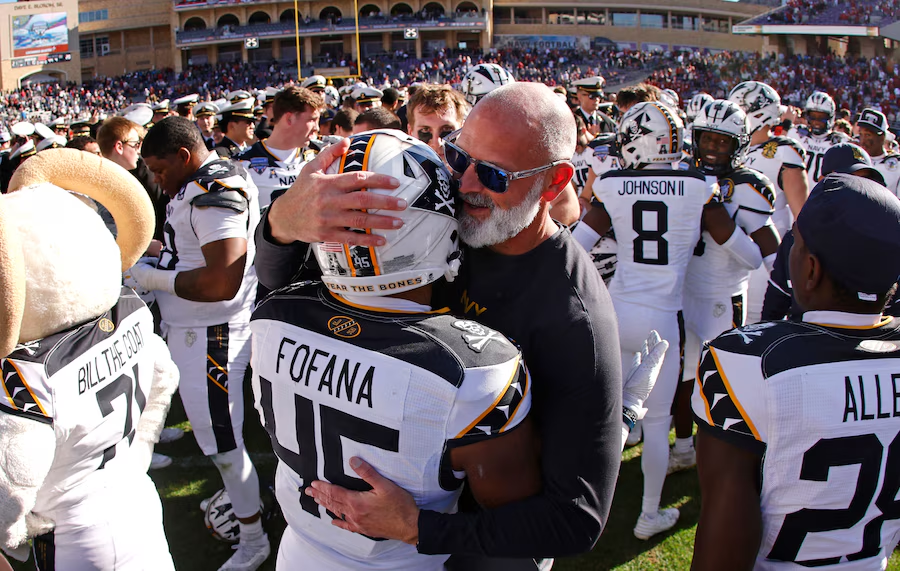
A month after Brian Newberry arrived at the Naval Academy in 2019 to begin his tenure as defensive coordinator, his wife, Kate, gave birth to their first child. A second one followed. The Newberry family has grown in Annapolis, and Newberry’s career has grown with it.
Newberry, in his third year at the helm of Navy, is on the verge of becoming the first coach to lead the Midshipmen to consecutive 10-win seasons in their history.
“That says it all in terms of his leadership and the culture he’s developed,” Navy athletic director Michael Kelly said.
Newberry and Kelly emphasized that the eyes of America will be on the players on the field for the 126th Army-Navy game Saturday at M&T Bank Stadium. But there may be a few athletic departments looking toward the sideline at the 51-year-old head coach who has orchestrated Navy’s return to prominence.
Not that Newberry plans to go anywhere.
Annapolis, Newberry said, feels like home, even though it’s far from his native Oklahoma. And, given the shifting nature of the sport, the sure-footedness offered at Navy — a program intent on developing leaders internally, without the free-for-all transfers that have gripped other schools — makes it an ideal spot for Newberry.
Where else would he rather be?
“It’s a special place and it’s one of the best jobs in the country, because of the kind of young men we have, because it still is, truly, a developmental program,” Newberry said. “Annapolis is a great place to live. You feel like you’re somewhere important. And you get into coaching to make an impact and a difference.
“Understanding that you’re impacting young men who are going to be officers and go serve our country, that gives you a little more meaning and responsibility as a coach. It really is important to me.”
There are few places that can offer Newberry such an existence.
As change buffets college football, Army, Air Force and Navy stand in the eye of the storm, untouched by the gales of the new world. There are no name, image and likeness sponsorships for service academy athletes.

While many programs rely on the transfer portal to inject talent into the roster — adding as many “free agents” as they lose each offseason — Navy builds from the ground up.
“We’re unicorns in college football today,” Newberry said.
Added Army coach Jeff Monken: “We just are who we are. Nothing’s really changed for us. It’s business as usual.”
This is part of the allure for Newberry at Navy. He has coached across the college football landscape, from Division III Washington & Lee to Division I minnow Kennesaw State. Now he leads Navy, a position he has held since Ken Niumatalolo was fired at the end of the 2022 season, and there’s no reason in his mind to move.
Newberry has friends at Power 4 schools. They have the supposed benefits of large NIL coffers and the transfer portal. And yet “there’s a great sense of frustration that has come” at those programs for coaches, Newberry said.
“It should be transformational, right? It’s become a lot more transactional at that level,” Newberry said. “We don’t have that at the Naval Academy.”

The players aren’t the only ones to participate in the merry-go-round of college football, of course. They’re just the newest to benefit from it. Coaches have jumped between programs for decades, going back to when advertising the size of a weight room was the primary recruiting tool for players rather than which school had the most money to offer. The coaching sagas are ongoing, as seen by LSU’s high-stakes pursuit of Lane Kiffin.
Newberry says he is not eying such a move, even though his considerable success at Navy could draw suitors and a significant raise; according to USA Today he made $1.8 million last season, ranking in the middle of the American Athletic Conference but lower than any Power 4 coach.
“I’ve never been a guy who chases jobs, necessarily,” Newberry said. “I’ve always tried to be where my feet are and make the best of a situation and enjoy the people I work with and enjoy the young men I get to coach and build relationships and all those things. That’s what’s important to me. And I’ve been beyond fortunate to be at the Naval Academy.”
Newberry’s first year, replacing the winningest coach in program history in Niumatalolo, was middling. The Midshipmen finished 2023 with a 5-7 record, their fourth straight losing season. That, some came to expect, was as good as things would be in the new world order following the NCAA’s 2021 decision to change its rules to allow athletes to make NIL money.
With it came questions regarding how the service academies might keep up.
The answer: Newberry led Navy to a 10-2 record in 2024, capped by a win over Oklahoma in the Armed Forces Bowl. Entering the Army-Navy game, Navy holds a 9-2 mark. Army has prospered, as well; the Black Knights posted a 12-2 record last year and are 6-5 in 2025.
Kelly believes Army and Navy are thriving because they are outliers.
“But for us it’s not so much the benefit aspect of it; it’s the player stability and lack of player movement, the fact we can be a true player development program, build year to year to year, and build that sort of team unity,” he said. “I can’t believe it’s coincidence that both Navy and West Point have had such great success these last few years.”
Blake Horvath, who has established himself as one of the greatest quarterbacks in Navy history, knows the recruiting rankings won’t flash high grades for players who sign with the service academies. The difference, however, is the longevity — the culture built with players who are there for the long haul.
“I think the biggest thing is, when this was all coming around, the first few years it was like, ‘Oh, it’s passed the academies by. The academies will never be good again because of this,’” Horvath said. “And I think we’ve all proven that wrong, just because, if anything, it makes us stronger. We develop, we have better bonds, we know each other better, we have a culture that is continuous and doesn’t get lost in different transfer portals and other things.”
Newberry thinks, in a sense, the transfer portal is helping Navy’s recruiting. There are schools that seek out the experience of transfer players to maintain a high level of performance, but that focus limits opportunities for high school players on the fringes of big-time college consideration.
“What that’s allowed us to do is recruit a little higher-caliber player than we have in the past,” Newberry said. “We can be a little bit more selective. It’s still difficult to recruit at the Naval Academy. We’re still competing against Army and Air Force for the majority of our recruits. I think that pull is stronger now than it ever has been, and we’re starting to look a little different.”
A few years ago, becoming the head coach of a program was far from Newberry’s mind. He enjoyed calling defensive plays at Navy, and as he watched all that was required of Niumatalolo, he wondered if he even wanted the added responsibility.
He had two young kids; did he really want 100 more under his direct purview?
“I didn’t know if I wanted the responsibility of it all,” Newberry said. “If I could manage juggling a family with being a head coach and all that entails, and work-life balance.”
But watching Niumatalolo and Brian Bohannon before him at Kennesaw State showed Newberry he could have that and “still do things the right way.”
And he feels that Navy, too, does things the right way.
“This institution really speaks for itself in a lot of ways,” Horvath said. “And I think he’s in the perfect place for him and what he tries to do for our team. And the bigger thing is building a staff that really preaches a program that he wants to build, it’s the same thing. So I think what he’s been able to do and what we’ve been able to do for our program is immeasurable.”
Except, perhaps, it’s measured most heavily on one game per year. The eyes of the country will be on Army and Navy. And they’ll be on a head coach who “never in my wildest dreams” thought he’d be here.
NIL
Diego Pavia promises to donate all his NIL money to a G5 team if it wins the national championship

Vanderbilt quarterback Diego Pavia has never lacked confidence or conviction. He proved it again this week with one of the boldest statements of the college football season.
Appearing on The Pivot Podcast, Pavia argued that the College Football Playoff should truly consist of the 12 best teams in America. He doesn’t believe this year’s Group of Five participants, Tulane and James Madison, have any real shot at winning it all. Then, he took it a step further.
SUBSCRIBE to the On3 NIL and Sports Business Newsletter
“It’s a 12-team Playoff. Put every team that’s good,” Pavia said. “If a G5 team wins it, I would donate whatever I got in NIL back to that team. I would do that, if a G5 team ever wins it.”
Alas, Pavia’s frustration is rooted in Vanderbilt’s narrow miss of the postseason despite a historic 10–2 season. The Commodores finished at No. 13, falling outside the field of 12 and behind programs like Notre Dame, BYU and Texas.
The irony is that those teams would’ve kept Vanderbilt out, even automatic bids did not exist. Still, for a program that just delivered its first-ever 10-win regular season, being left out stings. And Pavia, one of the nation’s most electric players, has not been shy about voicing that disappointment.
His appearance on The Pivot was part of a whirlwind week as the elder quarterback continues his media tour ahead of Saturday’s Heisman Trophy ceremony. Pavia was named one of four 2025 finalists, joining Indiana’s Fernando Mendoza, Ohio State’s Julian Sayin and Notre Dame running back Jeremiyah Love in New York City.
No national title, but can Diego Pavia win the Heisman?
During the interview, Pavia also opened up about what the Heisman moment means to him. It’s something he has dreamed about since childhood.
“I still remember Johnny winning it,” he said, recalling Johnny Manziel’s iconic Heisman victory. “I used to watch Johnny’s tape. … I want that to be me one day. Now, it’s coming full circle.”
All told, Pavia’s rise has been nothing short of remarkable. He led the SEC in total offense with 4,018 yards and accounted for 36 touchdowns while carrying Vanderbilt to the brink of the Playoff.
He also became just the fourth SEC player in the last 30 years to top 250 passing yards and 150 rushing yards in a single game. That put him in a group headlined by Manziel, Jayden Daniels and Tim Tebow.
Whether Pavia wins the Heisman or not, he has already cemented his place as one of the most compelling characters in college football. He’s fiery, fearless and unapologetically competitive, and now he’s willing to put his NIL on the line to prove a point.
— On3’s Alex Byington contributed to this article.

The Penn State coaching search didn’t go exactly as planned, but the Nittany Lions ultimately landed a potential strong hire in 46-year-old Matt Campbell, luring him away from Iowa State.
Campbell delivered Iowa State’s most successful stretch in program history over the last decade, winning seven games in eight of his 10 seasons in Ames, Iowa, including four of the Cyclones’ 12 eight-win seasons all-time and their first 10-win campaign, an 11-3 finish in 2024.
Still, questions linger about whether Campbell can compete with Big Ten elites like Ohio State, Michigan, Oregon and Indiana on the recruiting trail.
Iowa State posted high school finishes of Nos. 55, 55, 42, 39, and 59 over the last five cycles. It signed just one top 75 transfer class during his tenure (No. 59 in 2025).
CBS Sports‘ College Football Insiders weigh in on whether Campbell can elevate his game with Penn State’s resources, or if the Nittany Lions should brace for more tough sledding against the Big Ten’s best.
“Not long after the Penn State job opened, we talked to someone close to Matt about whether he’d be a fit,” said John Talty on Tuesday’s episode. “That person mentioned him not really having to mess with NIL and the transfer portal that much at Iowa State.

Last night, Slaton and 15 others were inducted into the College Football Hall of Fame during the 67th National Football Foundation (NFF) Annual Awards Dinner at the Bellagio Resort & Casino in Las Vegas.
According to the NFF release, more than 1,800 people were in attendance and the event was also streamed on ESPN+.
Slaton broke onto the scene during his freshman year in 2005 when he went from fourth on the team’s depth chart to scoring a school-record six touchdowns in West Virginia’s five-overtime 46-44 victory over Louisville and later setting a Sugar Bowl rushing record with 204 yards in the Mountaineers’ stunning 38-35 victory over Georgia.
He was named the game’s offensive MVP.
Slaton’s record lasted nine years before being topped by Ohio State’s Ezekiel Elliott in 2015 against Alabama when he ran for 230 yards.
His best season at West Virginia came in 2006 when he rushed for a career-high 1,744 yards with 16 touchdowns, while also catching 27 passes for 360 yards and two scores to earn unanimous consensus All-America honors. He was second in the nation in all-purpose yardage, fourth in rushing yards per game and tied for 12th in scoring.
His best single-game performance was his 215 yards rushing and 130 yards receiving in the Mountaineers’ 45-27 victory over Pitt in 2006.
Slaton’s junior year in 2007 saw him eclipse 100 yards in a game six times and finish with another 1,000-yard rushing season, his third at WVU.
In 36 career games, the Levittown, Pennsylvania, resident rushed for 3,923 yards and a school-best 50 touchdowns. His rushing yardage total ranks fifth in school history despite skipping his senior year to enter the NFL Draft.
“When the dust settles, all of the hard work you put in will show off,” Slaton said during Tuesday afternoon’s press conference. “Everybody from that 2005 season on the team and the people of the state, they surround you and help make you become a better player for them.”
West Virginia won the 2006 Sugar, 2007 Gator and 2008 Fiesta Bowls and produced an impressive 33-5 record during Slaton’s three seasons in Morgantown.
“I’m most proud that all of the guys are still friends,” he said. “We’re still a family and I think that’s why football is one of the best team sports that you can play. I’m proud that the guys I grinded with have remained great men, great human beings and great fathers. I appreciate that.”
Slaton played five NFL seasons with the Houston Texas and Miami Dolphins, rushing for 1,282 yards and scoring nine touchdowns during his rookie season in 2008, but a severe nerve injury affecting his right arm and causing numbness curtailed his professional career.
Today, he lives in Houston, Texas, with his wife Kimberly and their two sons.
Slaton now becomes the 14th player with West Virginia University ties inducted into the College Football Hall of Fame. Linebacker Darryl Talley was the most recent inductee in 2011.
Among those in Las Vegas representing West Virginia University in support of Slaton were coach Rich Rodriguez, athletics director Wren Baker and president Michael T. Benson.

Urban Meyer Enshrined into the College Football Hall of Fame

Rowan Women’s Indoor Track and Field opens season in New York – The Whit

Kerrigan Habing Named AVCA DII All-Americans Honorable Mention

Volleyball Ends Postseason Award Run with Two Earning AVCA Honorable Mention All-American Honors

Asunción Paraguay; Bangkok, Thailand; and Santiago, Chile invited into a Targeted Dialogue for the Youth Olympic Games in 2030

Mason Athletics to Host National Girls and Women in Sports Celebration with Carnival on Jan. 31

Wright Steps Down As Head Beach Volleyball Coach

JJ Gabriel, the 15-year-old Manchester United forward breaking records and creating a buzz

PRI Show races to Indy

SoundGear Named Entitlement Sponsor of Spears CARS Tour Southwest Opener

Major college football program reveals talks with SEC amid expansion speculation

Colonels Claim Four ASUN Performer of the Week Honors

Katelynn Oxley to Join Women’s Basketball Roster for Remainder of 2025-26 Season

Nabwe Wins Seventh Career Big Ten Weekly Honor

Kimm, LaPlant and Thompson Earn AVCA All-America Honors

First Tee Winter Registration is open

Fargo girl, 13, dies after collapsing during school basketball game – Grand Forks Herald

CPG Brands Like Allegra Are Betting on F1 for the First Time

Volleyball Recaps – November 18

F1 Las Vegas: Verstappen win, Norris and Piastri DQ tighten 2025 title fight

Two Pro Volleyball Leagues Serve Up Plans for Minnesota Teams

Sycamores unveil 2026 track and field schedule

Utah State Announces 2025-26 Indoor Track & Field Schedule

Redemption Means First Pro Stock World Championship for Dallas Glenn

Texas volleyball vs Kentucky game score: Live SEC tournament updates

Bowl Projections: ESPN predicts 12-team College Football Playoff bracket, full bowl slate after Week 14

How this startup (and a KC sports icon) turned young players into card-carrying legends overnight

Jo Shimoda Undergoes Back Surgery

Indiana’s rapid ascent and its impact across college football

Robert “Bobby” Lewis Hardin, 56

 Why a rising mid-major power with an NCAA Tournament team opted out of revenue-sharing — and advertised it
 NBA Legend Michael Jordan to Join NBC Sports as Special Contributor
 Falcons mailbag
 Portal Update – Basketball and Gymnastics Take Hits
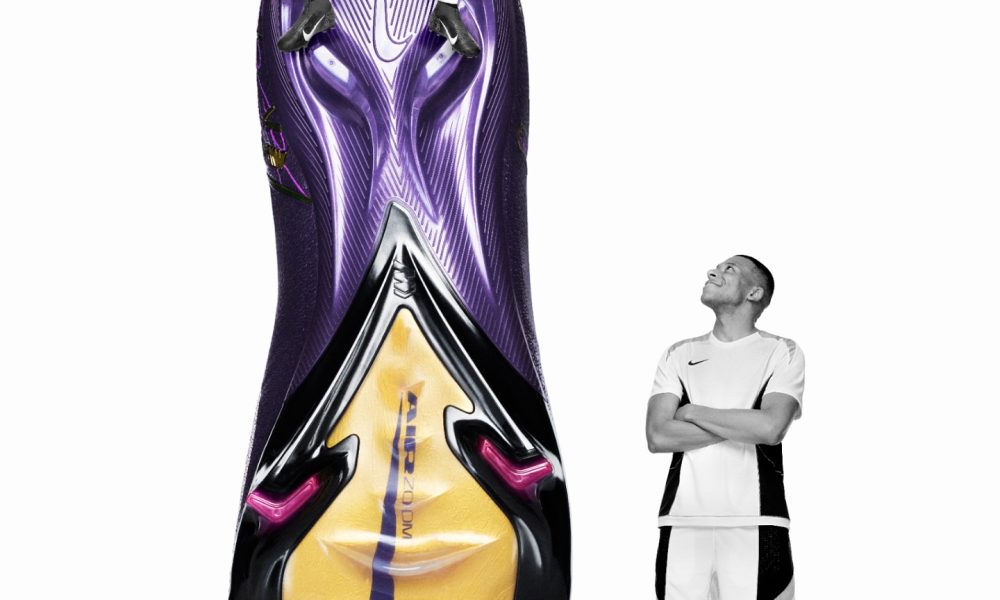 has always dreamed in Mercurial. Now his initials are on the boots.
The new Kyl…
has always dreamed in Mercurial. Now his initials are on the boots.
The new Kyl…
-
 Rec Sports2 weeks ago
First Tee Winter Registration is open
-
 Rec Sports2 weeks ago
Fargo girl, 13, dies after collapsing during school basketball game – Grand Forks Herald
-
 Motorsports2 weeks ago
CPG Brands Like Allegra Are Betting on F1 for the First Time
-
 Motorsports2 weeks ago
F1 Las Vegas: Verstappen win, Norris and Piastri DQ tighten 2025 title fight
-
 Sports2 weeks ago
Two Pro Volleyball Leagues Serve Up Plans for Minnesota Teams
-
 Sports2 weeks ago
Sycamores unveil 2026 track and field schedule
-
 Sports2 weeks ago
Utah State Announces 2025-26 Indoor Track & Field Schedule
-
 Motorsports2 weeks ago
Redemption Means First Pro Stock World Championship for Dallas Glenn
-
 Sports2 weeks ago
Texas volleyball vs Kentucky game score: Live SEC tournament updates
-
 NIL1 week ago
Bowl Projections: ESPN predicts 12-team College Football Playoff bracket, full bowl slate after Week 14