
Rec Sports
Park City youth soccer tournament to take over Wasatch Back

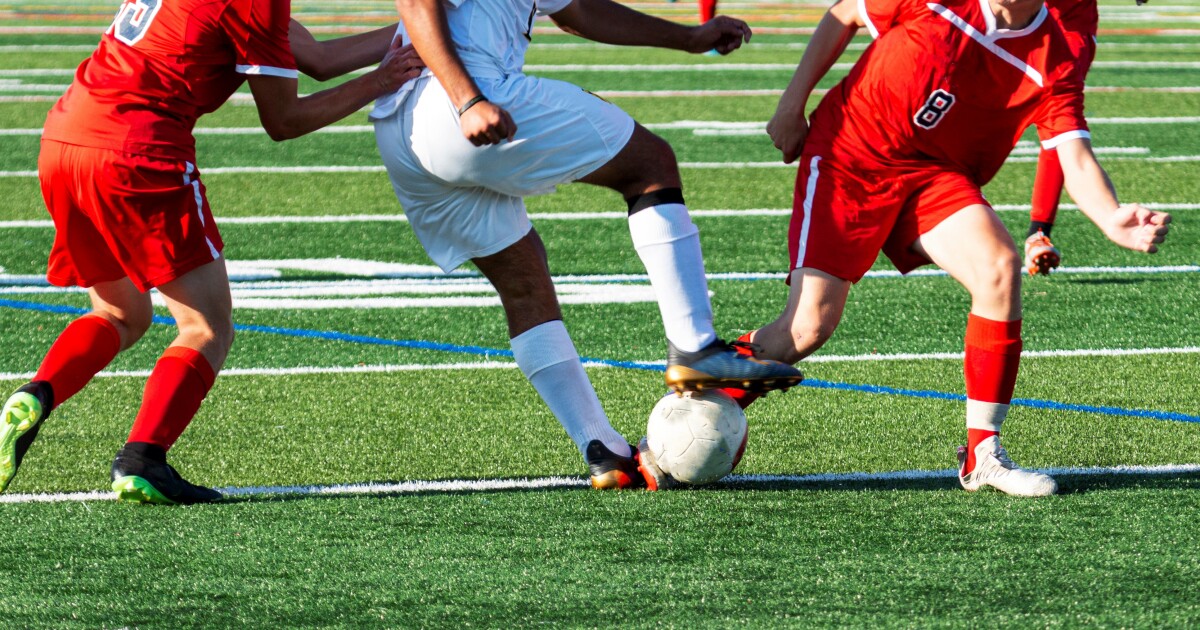
Starting July 24, youth soccer teams from Arizona, California, Colorado, Idaho, Montana, Nevada, Wyoming and Utah will begin round-robin play in Summit and Wasatch counties.
Tournament director Cora Reddan said 41 fields at 13 venues will host games in Park City, Oakley and Heber. Those include local parks and fields at schools in the Park City and Wasatch County school districts. Reddan said this year teams will also play at Park City’s City Park.
Park City Soccer Executive Director Shelly Gillwald said a quarter of the games will be played within Park City limits.
“Kimball Junction, the I-80 / [U.S.] 40 and I-80 / [state Route] 224 exits are impacted, grocery stores, fast food, so the local community should probably plan ahead with their trips to the grocery store, maybe the gas station,” she said on KPCW’s “Local News Hour” July 21. “But in terms of the traffic, Cora has it really, really well spread out around the Wasatch Back, so it’s not as scary as it sounds.”
FULL INTERVIEW: Park City Soccer Club Executive Director Shelley Gillwald and tournament director Cora Reddan on KPCW’s Local News Hour
Gillwald said the round-robin part of the tournament will be played over two days starting with 64 brackets.
“The different age groups are divided into these different brackets,” she said. “Within that, they’ll have three games that they’ll play, and then that will determine their ranking, and whether they go on to semifinals or finals.”
The semifinals and finals games are Saturday. All games are free to watch.
Park City Soccer Club’s Extreme Cup Tournament has raised almost $1.2 million through team entry fees since its inception in 2005.
Gillwald said the funds go to the club’s financial aid scholarships.
“This past year, we gave away over $170,000 in need-based financial aid to kids, enabling them to play,” she said. “That covered 117 players last year.”
The Park City Soccer Club has about 600 players spread across 38 teams from ages eight to 18. This year, Gillwald said 126 of those need financial aid.

Rec Sports
Washington Nationals continue youth movement; set to hire Phillies’ Ani Kilambi, 31, as GM: Source
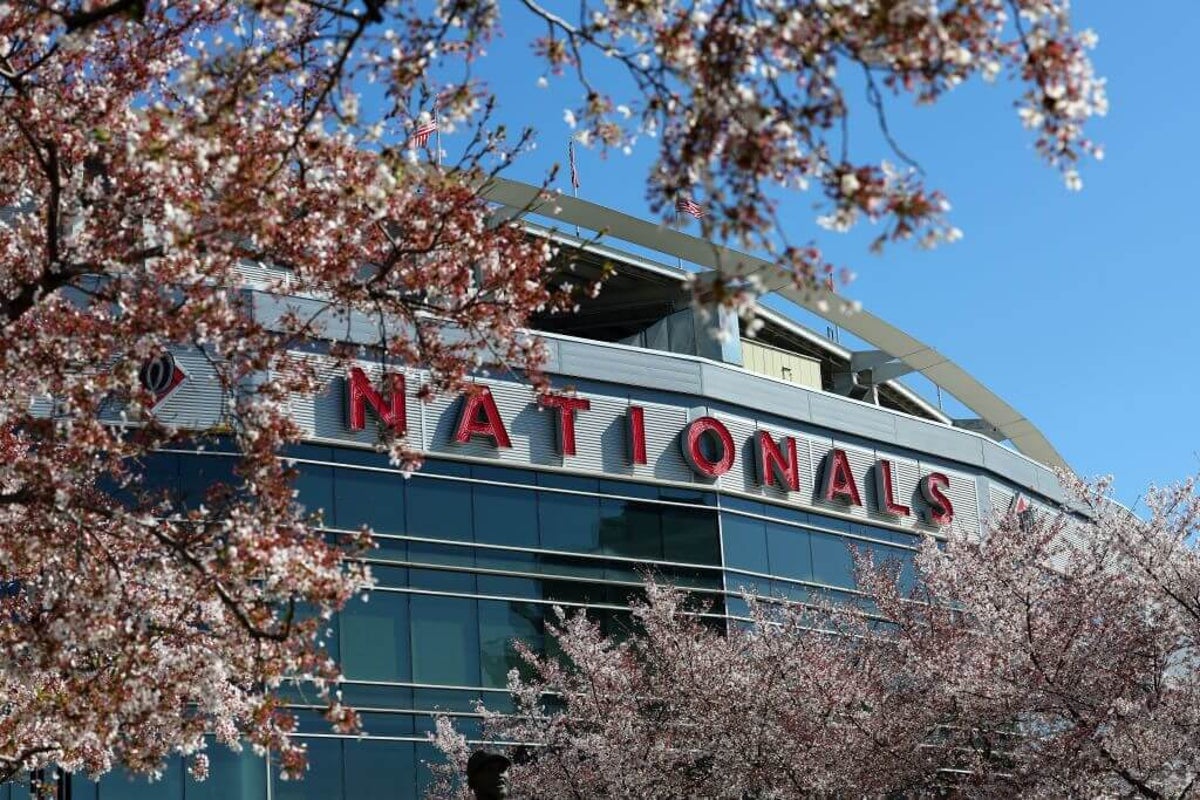
Fresh off naming three people 35 years old or younger to significant positions within the organization, the Washington Nationals continue an offseason trend of hiring young. This time, the club is set to name 31-year-old Ani Kilambi as its general manager, a league source told The Athletic’s Matt Gelb on Wednesday.
Phillies are losing assistant GM Ani Kilambi to Washington Nationals, who are hiring him as GM, as @JeffPassan reported. Kilambi oversaw club’s R&D department. He’ll be one of the youngest GMs in baseball.
— Matt Gelb (@MattGelb) December 17, 2025
Kilambi, who previously served as the Philadelphia Phillies’ assistant GM, began his career as an intern with the Tampa Bay Rays in 2015. A graduate from UC Berkeley, Kilambi spent multiple years in Tampa Bay’s R&D department before joining the Phillies in 2021 as a 27-year-old.
The Nationals, who finished the season with a 66-96 record, the third-worst mark in baseball, fired president of baseball operations Mike Rizzo and manager Dave Martinez before the All-Star break. At the time, the Nationals (37-53) were just days away from selecting the No. 1 pick in the draft, which they eventually used to select shortstop Eli Willits.
By late September, the club had hired 35-year-old Paul Toboni, an assistant GM for the Boston Red Sox, to be its top decision maker. A month later, Blake Butera was tabbed to be Washington’s manager, making the 33-year-old the youngest MLB manager in over 50 years. The youth movement didn’t stop there, as Simon Mathews, a 30-year-old former assistant pitching coach with the Cincinnati Reds, was hired to be the organization’s pitching coach.
The oldest member so far of the new-look Nationals? Bench coach Michael Johns, who is 50, but carries nearly 20 years of professional coaching experience.
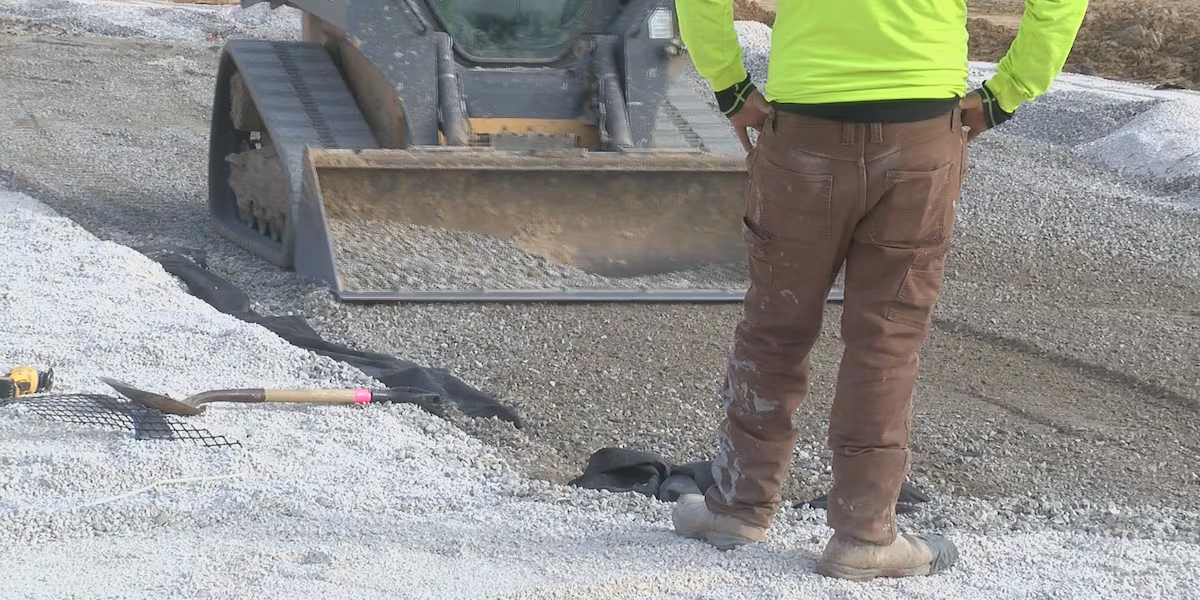
CAPE GIRARDEAU, Mo. (KFVS) – Crews are laying turf on the first fields at Cape Girardeau’s new youth sports complex, marking major progress on a $4.5 million project expected to open in early 2026.
The five-field complex, located next to Shawnee Park Sports Complex, is designed for baseball and softball players ages 8 to 15.
Parks and Recreation Director Doug Gannon said the expansion meets growing demand for tournament play.
“Travel sports is really gaining popularity, and Cape Girardeau is a very popular destination for travel sports,” Gannon said. “We’re going to have the opportunity to draw much larger tournaments. We’re going to be a much more appealing destination for tournaments.”
The facility will feature artificial turf in the infields and natural grass outfields, reducing rain delays and rescheduling.
Recreation Division Manager Scott Williams said the upgrade will help guarantee games even after heavy rain.
“The artificial turf will bring the ability, if we have any rain that occurs during a tournament, as soon as it stops raining with minimal time for drainage, it will be ready to play,” Williams said.
Tournament growth is already underway, with events scheduled nearly every weekend from mid-March through October.
Some weekends could bring 80 to 90 teams to southeast Missouri.
“Good things happen when people come to town for these types of events,” Gannon said. “They stay in hotels, they eat in restaurants, they shop at convenience stores, they buy gas locally.”
The complex will boost the local economy and position Cape Girardeau as a regional sports hub.
The project is scheduled for completion in time for the spring season.
Copyright 2025 KFVS. All rights reserved.
The Central Connecticut women’s basketball team dropped a competitive Youth Day game, 69-66 o visiting New Hampshire on Wednesday morning at Kaiser Hall. The Blue Devils committed just eight turnovers and shot 40 percent from the field in their final home game of the calendar year.
Jessica Farrell led the Blue Devils in scoring for the second consecutive game, netting a career-best 19 points. Lucia Noin tallied 16 points, and Kiyah Lewis rounded out the double-digit scorers with a dozen.
Score: UNH 69, CCSU 66
Records: CCSU (0-10), UNH (4-7)
Location: Kaiser Hall | New Britain, CT
-
UNH pushed its lead to four, 17-13 with :48 ticks left in the first period before Cierra Pearson knocked down a triple on the Blue Devils final possession of the period to close within a point
-
Central shot 47.4 percent from the field in the second quarter, scoring 12 of the first 14 points to take a 27-19 advantage on a Nicora Patrick basket with 6:58 remaining before halftime and forcing a UNH timeout
-
The run continued out of the stoppage of play, and the lead expanded to 11 points on a Farrell triple with 4:28 remaining in the first half, 32-21. A Noin basket with 3:20 to play in the quarter put the lead back to double digits for the final time as UNH closed the period on an 8-2 run to climb within 36-31
-
The Wildcats opened the second half with an 11-4 run to put them in front 42-40 at the 4:27 mark. Lewis converted a conventional three-point play to give CCSU a 43-42 lead 41 seconds later, the last Blue Devil advantage of the game. UNH scored the next nine points and finished the period with 11 of 15 points to take a 53-48 lead into the final period.
-
UNH scored nine of the first 11 points in the fourth quarter, opening its largest lead of the game, 62-51 with 7:37 to play in the final period, when Eva DeChent scored in the paint
-
The Blue Devils made their next three baskets, with a triple from Lewis a layup from Noin and a layup from Kayla Henry, all in 73 seconds. That was the start of a 9-0 run that Henry closed with a basket at the 3:53 mark to close within 62-60
-
The squads traded baskets on the next two possessions, before Henry drained a pair of free throws with 2:23 to play to draw the Blue Devils event, 64-64.
-
Elizabeth Lavoie knocked down a three-pointers on the next UNH possession to put the Wildcats in front for good, despite a pair of Farrell free throws with 1:50 to play and a pair of looks in the final seconds
40.0 – The Blue Devils shooting percentage for the game, the best of the season, as they knocked down 26-65 and were good on 43.8 percent, also a season-best 7-16 from behind the arc

The Aspen Institute’s State of Play 2025 report finds that youth sports participation has recovered from the COVID pandemic, but expensive club programs have hampered recent gains.
The cost of youth sports has increased by 46 percent since 2019, according to Aspen Institute Project Play research. Relatedly, significant access gaps persist among youth from both upper- and lower-income families.
Still, overall participation rates rebounded, with 55.4 percent of youth ages 6 to 17 playing sports as of 2023, with more kids and adolescents engaged in organized play than at any time since 2019, according to the federal government figures. Even more kids played organized sports in 2024, according to data from the Sports & Fitness Industry Association (SFIA).
Aspen Institute notes in its report that there were concerns that a rebound would not happen. During the economic recession of 2009, youth sports participation rates declined and did not recover because municipal budgets were cut, local recreation programs were affected, and private sports providers flourished, favoring families who could afford to pay to play.
“The rebound in participation since the pandemic is a credit to all who have innovated to improve access to quality sports programs,” said Tom Farrey, executive director of the Sports & Society Program, in the report’s introduction. “But we’re going to need leadership to ensure that as more money flows into the space, the needs of children — all children — are prioritized in the development of policies, practices and partnerships shaping what is still a disjointed landscape.”
The participation themes in the Aspen Institute’s State of Play 2025 report include progress made on the U.S. government’s Healthy People 2030 national goal of having 63 percent of kids playing sports by 2030, continued momentum in casual sports participation, an uptick in young Latinos playing sports, robust participation gains in girls flag football and boys volleyball, and ongoing access challenges facing kids from low-income households.
Fourteen States Reached 63 Percent Youth Sports Participation Target
The federal government’s national public health goal to have youth sports participation reach 63 percent by 2030 is being championed by Project Play through 63X30 roundtable organizations. According to a government study, the National Survey of Children’s Health, 55 percent of kids played organized sports, up from 54 percent in 2022.
Fourteen states and the District of Columbia reached the 63 percent mark. They include Vermont (72 percent), South Dakota (69 percent), New Hampshire (68 percent), Massachusetts (65 percent), Iowa (65 percent), Minnesota (65 percent), Washington D.C. (65 percent), Colorado (65 percent), North Dakota (64 percent), Nebraska (64 percent), Rhode Island (63 percent), Wyoming (63 percent), Maine (63 percent), Hawaii (63 percent) and Montana (63 percent). Nevada (43 percent) had the lowest participation rate, followed by Delaware, Florida, West Virginia, and Texas. Each of those states ranked among the lowest for female participation.

Casual Forms of Organized Play Surging
In 2024, there was a six percent increase in the number of kids ages 6 to 17 who played a team sport at least once compared to 2023. No matter the age, participation in casual play among kids increased by 6 to 7 percent in both the 6 to 12 and 13 to 17 age groups. All tolled, 65 percent of kids age 6 to 17 tried a sport at least once in 2024, an increase from 59 percent in 2021 and the highest on record tracked by the SFIA dating to at least 2012.
At the same time, core sports participation (i.e., regularly playing a sport) increased for the third consecutive year among kids ages 6 to 12. And for the second straight year, regular sports participation for kids ages 6 to 12 reached its highest level since 2015. However, teens ages 13 to 17 continued to play sports regularly at lower rates, with participation dropping by 3 percent in 2024.

Participation Among Latinos Grew Faster Than All Demographics
According to data reported by the SFIA, in 2024, 65 percent of kids of Latino descent ages 6 to 17 tried sports at least once over the previous 12 months, a higher rate than Black and White kids in the same age bracket. The SFIA noted that the gains were attributed to greater representation of Latinas in college and pro sports, a trend that followed Latino youth being seen playing sports at lower rates than their peers for many years.
Sports Participation rates among Latina girls rose from 39.5 percent in 2019 to 48.4 percent in 2024, outpacing the growth of non-Latina peers, according to “Unlocking the Growing Power of Latino Fans,” a research report published by McKinsey Institute for Economic Mobility. The firm attributed those gains to the work of many organizations, including the Ella Sports Foundation, Girls on the Run, Sports 4 Life, and the Women’s Sports Foundation.
Still, there remain challenges.
According to the SFIA, Latino parents cite scheduling conflicts more often than non-Latino households as a barrier for kids to play organized sports. Also, research by the McKinsey Institute and the U.S. Soccer Federation found that kids of Latino and Black descent are three times more likely than White kids to stop playing soccer because they feel unwelcome on the playing field.

Girls Flag Football and Boys Volleyball Are Exploding
From 2019 to 2024, flag football was the only team sport tracked by the SFIA to experience growth in regular participation among kids ages 6 to 17, increasing by 14 percent over those five years. Tennis and golf increased as individual sports, according to separate data shared with the Aspen Institute. Declines were found in baseball (down 19 percent), tackle football (down 7 percent), soccer (down 3 percent), and basketball (down 2 percent).
In 2017, flag football surpassed tackle football as the most played form of football among kids 6 to 12. The gap continues to widen at that age: 4 percent played flag football in 2024 vs. 2.7 percent who played tackle. Among kids ages 13 to 17, tackle football (6.4 percent) remains more popular than flag football (2.8 percent). Nonetheless, the number of high school kids who played 11-man tackle increased in three of the past four years, a trend not seen since the mid-2000s.
Flag football’s growth is largely attributed to the NFL, which has invested more in the sport, as some parents delayed or walked away from tackle due to the risk of brain injuries and shifting U.S. demographics. Flag football is expected to gain a boost from the sport’s debut at the 2028 Los Angeles Olympics.
Meanwhile, volleyball participation is growing faster than any other high school boys’ sport, with a 13 percent increase in 2024/25, according to the National Federation of State High School Associations. Boys’ roster numbers increased by 51 percent over a six-year period, reaching 95,972 spots in 4,303 schools during the 2024/25 play season.
Volleyball is nearing the Top 10 most-played high school boys’ sports, trailing No. 10 swimming and diving by 23,000 roster spots. A decade ago, the gap between boys’ volleyball and swimming was 83,000. What has changed is the partnership between the First Point Volleyball Foundation and the American Volleyball Coaches Association to help sanction volleyball in new states. Over the past six years, nine states have added varsity boys’ volleyball to their curricula, including Oregon, Kentucky, Indiana, Utah, Colorado, Michigan, Minnesota, South Carolina, and Missouri.


Lack Of Access Among Low-Income Youth Is Limiting Growth
In 2012, 35.5 percent of kids ages 6 to 17 living at home with household incomes under $25,000 regularly played sports, compared to 49.1 percent in homes earning $100,000 or more, a difference of 13.6 percentage points.
By 2024, the gap was 20.2 percentage points, according to SFIA data. Federal data tells a similar story about disparities due to household income. In 2023, kids living in the lowest-income homes played sports at half the rate of those from the highest-income group.
The Aspen Institute’s national survey of youth sports parents found that kids from the wealthiest households play their primary sport more frequently than their peers in community-based settings, schools, travel teams, and independent training. Kids living in homes with earnings of $100,000 or more were twice as likely to play travel sports as those in homes earning under $50,000.

Trends To Watch
The study identified 10 youth sports trends to watch for 2026:
- How high can youth sport costs go?: The average U.S. sports family spent $1,016 on their child’s primary sport in 2024, a 46 percent increase since 2019, according to the Aspen Institute’s parent survey in partnership with Utah State University and Louisiana Tech University. Driving up the costs are higher spending on team registrations, travel and lodging for non-local play, and individual camps and private instructions to improve athletic skills.
- Can the Children’s Bill of Rights in Sports create shared expectations?: Adoption in 2025 by the U.S. Conference of Mayors, National League of Cities and National Recreation and Park Association lays the groundwork for using the Bill of Rights as a guiding framework to anchor the country’s youth sports ecosystem in the human rights of children. Developed by the Aspen Institute with a working group of human rights and sports policy experts, the Children’s Bill of Rights in Sports offers eight principles recognizing that all youth should have the opportunity to develop as people through sports.
- How will NIL change the incentives? While college athletes earn the most attention for name, image and likeness (NIL) deals, 44 states and Washington D.C. allow NIL agreements for high school students. potentially changing the non-scholastic sports experience for middle school ages and younger. Aspen Institute wrote in the study, “Adding the potential of NIL money in real-time brings new variables to how families view sports.”
- How will AI reshape youth sports? Using artificial intelligence-powered video analysis, wearable sensors and analytics platforms, sports providers are potentially offering families a more personalized and engaging experience. But AI also carries concerns about costs, data privacy, balancing technology with personal coaching, and time commitment for younger children.
- How will SCOTUS rule on transgender athletes? With heightened scrutiny around transgender participation in sports, the Supreme Court will be hearing two cases examining if state laws restricting participation in girls and women’s sports to those born female violate the equal protection clause of the 14th Amendment or Title IX.
- Has pickleball now captured kids? The number of children ages 6-12 who played pickleball at least once in the past year doubled over a two-year period, reaching 2.2 million in 2024. Teenagers 13-17 increased their pickleball participation by 157 percent over two years. Among casual pickleball players (defined as playing one to seven times in a year), children ages 6-17 play at a higher rate than adults ages 45-64. Older adults are still the most popular core participants (playing at least eight times a year).
- Can all these mega-facilities thrive? Increasingly, commercial real estate and local economic development officials view America’s expensive relationship with youth sports as a revenue generator. In 2025, Ocoee, Florida approved development of a 159-acre youth sports and hotel complex, called The Dynasty, valued at up to $1 billion. Youth Sports Business Report predicts that by 2030 only two distinct tiers of sports offerings will be available for families – premium destination experiences such as The Dynasty and community-based recreational programs.
- What’s the role of states in regulating youth sports? In August 2025, Illinois Gov. J.B. Pritzker signed into law the Illinois Youth Sports Commission, the nation’s first statewide commission focused on quality, access and equity in youth sports. California Gov. Gavin Newsom similarly signed legislation that could lead to the creation of a department to support and regulate youth sports in his state.
- Can the Presidential Fitness Test be revived? The standardized exercises used to measure students’ physical fitness for more than half a century until 2013 are planned to return thanks to President Donald Trump’s executive order. Administered by Health and Human Services Secretary Robert F. Kennedy, Jr., it’s not clear when the test will return or which exercises will be measured.
- How will gambling impact youth sports? While no major sportsbooks offer odds on the Little League World Series, which features children ages 10-12, the same is not true for unregulated, overseas sportsbooks. Aspen Institute describe gambling and youth sports as not a “new phenomenon, just a growing concern.” In the Aspen Institute’s 2018 State of Play Mobile County (Alabama) report, 26 percent of surveyed youth said they had played in a game where adults bet money on who won or the final score.
Image courtesy Under Armour
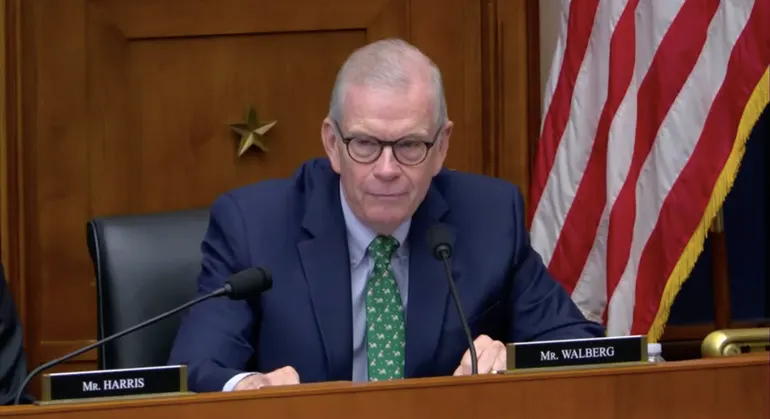
Federal Republican lawmakers on Tuesday suggested that increasing students’ access and participation in sports could help stem school and gun violence, as Democrats pushed back on whether that’s a viable solution. The disagreement came on the heels of a fatal mass shooting at Brown University that occurred on the eve of Sandy Hook Elementary School massacre’s 13th anniversary.
“This is a hearing on school safety,” said House Education and Workforce Committee Chair Tim Walberg, R-Mich. Walberg spoke during a hearing titled “Benched: The Crisis in American Youth Sports and Its Cost to Our Future,” held by the subcommittee on Early Childhood, Elementary and Secondary Education Subcommittee. Walberg chairs the full committee.
“If we did this right again, we would have less violence in schools,” Walberg said. “These are the types of things that will change [the] perspective of kids and what they do in life itself. So this is a hearing on gun violence.”
While Democrats and witnesses agreed that access and affordability are barriers to youth sports participation,they disagreed with Republicans over its potential to address school shootings. Studies have shown that youth sports participation is linked to better attendance, graduation rates, and academic performance.
“As important as sports participation is for kids, there is a much more pressing crisis at hand that the majority needs to recognize,” said subcommittee ranking member Rep. Suzanne Bonamici, D-Ore. “We know what happened over the weekend.”
Saturday’s shooting at Brown University killed two students and injured nine others. In K-12, there have been 230 school shootings in 2025 as of Dec 16, according to the K-12 School Shooting Database, which tracks anytime a weapon is brandished with intent to harm on school grounds.
That number puts this year on track to fall well below last year’s 330 school shootings. Last year became the first year since 2020 that school shootings hadn’t broken a record high. Still, however, the 330 school shootings recorded in 2024 marked the second-highest number since 1966 and fell only 19 below the all-time high of 349 recorded in 2023.
“This subcommittee has held several hearings this year, but we have not had a single hearing related to gun violence,” nor has the committee marked up a bill this year on school gun violence, said Bonamici. “We can talk about the other issues as much as we want — reading, math, CTE, screentime, student privacy, sports. None of that matters if children are shot and killed.”
Witnesses at the hearing, however, stressed that better access to school sports could help improve student mental health, academics and outcomes. They reported anecdotes of students being less likely to engage in violence or commit crimes when after-school time is filled with sports activities.
“If you can calm yourself down when you’re in an anxious state, you’re a better athlete. If you can calm your anger down when you’re hypercompetitive, you’re a better athlete,” said Steve Boyle, co-founder and executive director of 2-4-1 Care, Inc., a nonprofit organization that partners with school districts to provide sports opportunities.
John O’Sullivan, another witness and founder and CEO of the Changing the Game Project, said, “We have to keep as many kids as possible, as long as possible, in the best environment possible. ” His organization advocates for parents and coaches to become better participants in kids’ sports.
Democrats remained doubtful and pushed for a hearing specifically on gun violence.
“While sports are important for school safety, we have to have a hearing on this committee to address school shootings and the safety of our children in American schools,” said Rep. Jahana Hayes, D-Conn. “I know that my constituents expect something more than to just normalize school shootings and teach our children how to shelter in place.”
Hayes and other lawmakers on Sept. 12 sent a letter to Walberg and full committee ranking member Bobby Scott, D-Va., seeking a hearing before the end of the year on school shootings, and she said she received a response saying her concerns were “noted.” The letter was sent in wake of shootings at a Catholic school in Minnesota and a Colorado high school.
“We need meaningful action to keep our students, teachers, and schools safe and a plan to address the underlying causes of gun violence,” the letter said. “This Committee has the ability to bring together experts and individuals with firsthand experience to help develop federal legislation that implements school security upgrades, invests in mental health services, creates evidence-based crisis and threat assessments, and fosters a positive and trusting school environment.”
The subcommittee has no hearings currently scheduled on gun violence or school safety, according to its calendar.
Congress in 2022 passed the Bipartisan Safer Communities Act in the wake of the Uvalde, Texas, mass shooting, the first significant gun safety legislation that also included school-based mental health measures in nearly three decades.
The funding provided to district mental health programs by that legislation, however, was put on pause and in many cases revoked by the Trump administration as it reviewed grants for potential diversity, equity and inclusion initiatives. The administration revoked about $1 billion in grants related to mental health earlier this year as a result, according to court documents.
Last week, the administration distributed a lesser amount — $208 million — to recipients who applied under a new grant application with updated requirements. These grants limit funding to the training of school psychologists only, instead of also funding school counselors and social workers, who often provide student mental health supports.
Rec Sports
Russia may return to international football after four-year absence in new FIFA youth tournament
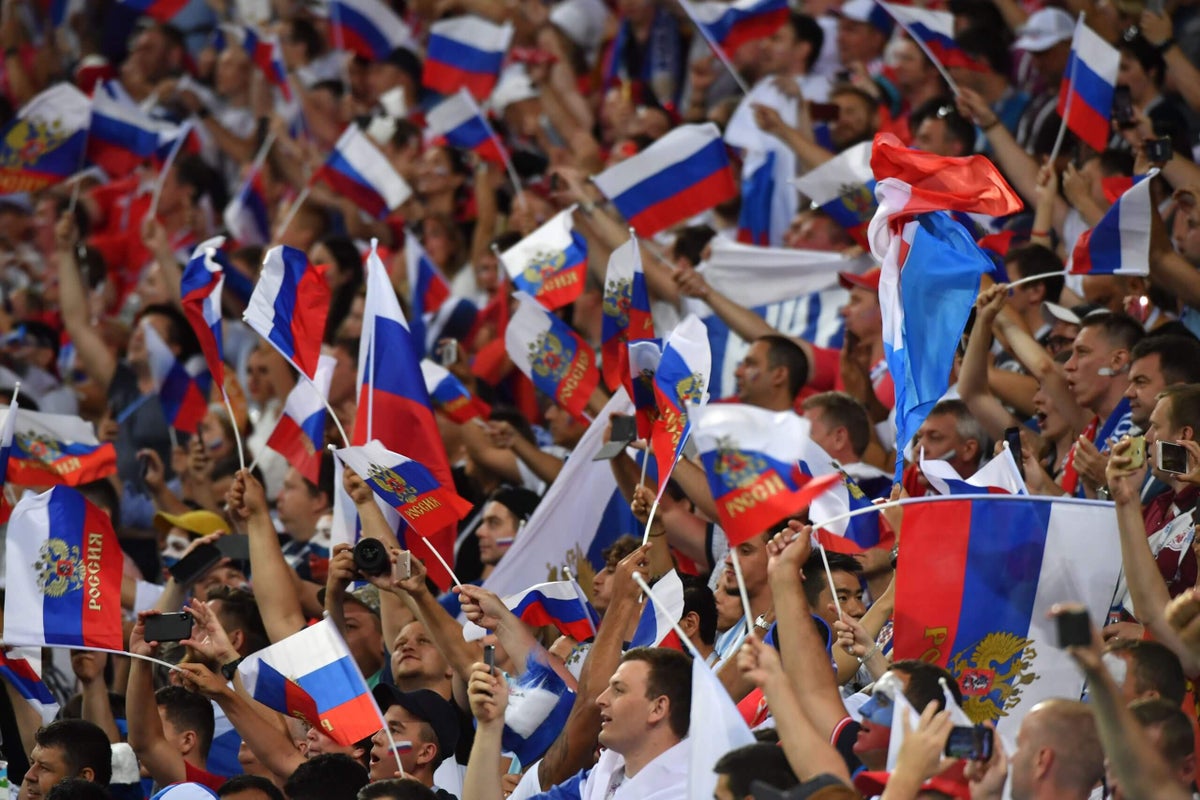
Russia may return to international football after a four-year absence from FIFA-sanctioned competitions after world soccer’s governing body announced a new under-15 competition which will be “open to all member associations”.
Russia’s national teams and domestic clubs have been suspended from participating in FIFA and UEFA (the governing body of European football) competitions since the nation’s illegal, full-scale invasion of Ukraine in February 2022.
The Russian Football Union (RFU) appealed against the bans, but the Court of Arbitration of Sport upheld the decisions.
The RFU, however, is not suspended — they are still a member nation of both UEFA and FIFA. It is the country’s football teams, rather than its governing body, that have been suspended.
On Wednesday, FIFA’s Council announced the creation of an “under-15 festival-style tournament…that will be open to all 211 FIFA member associations”.
The first boys’ tournament will be held in 2026, with an edition for girls to be staged in 2027.
The governing body said each member association, which includes Russia, would be invited to participate in the tournaments.
Any readmittance of Russia, however, is likely to be dependent on the ongoing war in Ukraine.
In April, FIFA’s president Gianni Infantino spoke of his hope that Russia could be reintroduced to the football fold “soon” – adding that any return would signify that “everything was solved” in relation to events in Ukraine.
Last week, Infantino said in an Instagram post that he “supported” participation of athletes, and “especially young athletes”, in events regardless of the political situation of their country”.
He added: “Sport provides an access to hope, and a way to show that all athletes can respect the same rules and one another.”
Since February 2022, Russia have been excluded from the qualification process for the men’s World Cup in 2022, and the nation did not take part in the qualifiers for either the European Championship in 2024, governed by UEFA, or the 2026 World Cup.
The nation’s club sides have not participated in the Champions League, Europa League or Conference League — all overseen by UEFA.
When approached by The Athletic, a UEFA spokesperson said the organisation’s stance on Russia would not change until the conflict in Ukraine had ended.
UEFA’s Executive Committee (EXCO), its decision-making body — responsible for making decisions and overseeing competitions — will next meet in February 2026.
In 2023, UEFA reversed plans to reinstate Russia’s under-17 side in the relevant youth European Championship in 2024 following significant pushback from member associations, including England’s Football Association.
UEFA had initially said in their reasoning for reinstating under-17 teams that “children should not be punished” for the conflict and that football “should never give up sending messages of peace and hope”. Under UEFA’s initial plan, proposed matches would have been conducted without the Russian flag, anthem, or kit, and would not take place on Russian territory.
Last week, the International Olympic Committee (IOC) recommended athletes from Russia and Belarus should be allowed to compete under their national flags and emblems at youth level.
Russian and Belarusian competitors have been banned from competing under their countries’ flags at Olympic and Paralympic events since 2022.
At the 2024 Paris Olympics, the IOC permitted some Russian and Belarusian athletes to compete under the “Individual Neutral Athletes (AIN)” team, which had no symbolism of national anthems, badges or flags.
The IOC also said that Belarus, which has diplomatically supported Russia’s invasion of Ukraine, should no longer be restricted from hosting international events, although Russia should remain barred from doing so.
Belarus most recently competed in European qualifiers for the 2026 men’s World Cup, finishing bottom of Group C behind Scotland, Denmark and Greece, but the nation is not allowed to host UEFA or FIFA matches.

Tom Lubnau, Scott Ortiz: Like It Or Not, NIL Money Is Critical To UW’s Future

Utah State Volleyball Quartet Named to CSC Academic All-District Team

Ptacek, Zelenovic Named AVCA All-Americans

Colorado Volleyball Pin Attacker Ana Burilovic Named AVCA All-American

Washington Nationals continue youth movement; set to hire Phillies’ Ani Kilambi, 31, as GM: Source

How Smart Technology Is Transforming Online Gaming

Half of coaches polled have college football powerhouse winning national championship

Cassidy Hartman earns AVCA All-American Honorable Mention staus

$2.3 Trillion Giant Makes Stunning NASCAR Power Play With Chase Elliott for 2026

Kentucky Volleyball Final Four Watch Party Set for Thursday at Drake’s Lansdowne – UK Athletics

Florida Volleyball Adds Three Transfers to 2026 Roster

Predicting landing spots for the Top 5 college football transfers (Dec. 17)

“I’m Lucky To Be At A Volleyball School”

Louisell Named AVCA All-American – James Madison University Athletics

No. 3 Volleyball Faces No. 1 Pittsburgh in Final Four – Texas A&M Athletics

First Tee Winter Registration is open

Fargo girl, 13, dies after collapsing during school basketball game – Grand Forks Herald

CPG Brands Like Allegra Are Betting on F1 for the First Time

F1 Las Vegas: Verstappen win, Norris and Piastri DQ tighten 2025 title fight

Volleyball Recaps – November 18

Sycamores unveil 2026 track and field schedule

Two Pro Volleyball Leagues Serve Up Plans for Minnesota Teams

Utah State Announces 2025-26 Indoor Track & Field Schedule

Redemption Means First Pro Stock World Championship for Dallas Glenn

Jo Shimoda Undergoes Back Surgery

Texas volleyball vs Kentucky game score: Live SEC tournament updates

SoundGear Named Entitlement Sponsor of Spears CARS Tour Southwest Opener

Bowl Projections: ESPN predicts 12-team College Football Playoff bracket, full bowl slate after Week 14

How this startup (and a KC sports icon) turned young players into card-carrying legends overnight

Robert “Bobby” Lewis Hardin, 56

 NBA Legend Michael Jordan to Join NBC Sports as Special Contributor
 Why a rising mid-major power with an NCAA Tournament team opted out of revenue-sharing — and advertised it
 Falcons mailbag
 Portal Update – Basketball and Gymnastics Take Hits
 has always dreamed in Mercurial. Now his initials are on the boots.
The new Kyl…
has always dreamed in Mercurial. Now his initials are on the boots.
The new Kyl…
-
 Motorsports3 weeks ago
Jo Shimoda Undergoes Back Surgery
-
 Motorsports1 week ago
SoundGear Named Entitlement Sponsor of Spears CARS Tour Southwest Opener
-
 NIL2 weeks ago
Bowl Projections: ESPN predicts 12-team College Football Playoff bracket, full bowl slate after Week 14
-
 Rec Sports3 weeks ago
How this startup (and a KC sports icon) turned young players into card-carrying legends overnight
-
 Rec Sports3 weeks ago
Robert “Bobby” Lewis Hardin, 56
-

 Motorsports3 weeks ago
Pohlman admits ‘there might be some spats’ as he pushes to get Kyle Busch winning again
-
Sports3 weeks ago
Wisconsin volleyball sweeps Minnesota with ease in ranked rivalry win
-

 Motorsports1 week ago
Donny Schatz finds new home for 2026, inks full-time deal with CJB Motorsports – InForum
-

 Motorsports3 weeks ago
Increased Purses, 19 Different Tracks Highlight 2026 Great Lakes Super Sprints Schedule – Speedway Digest
-

 Rec Sports2 weeks ago
How Donald Trump became FIFA’s ‘soccer president’ long before World Cup draw