
NIL
Paul Finebaum believes Colorado will be ‘painfully boring and perhaps even mediocre’ in 2025


At Big 12 Media Days on Wednesday, Colorado head coach Deion Sanders called for the NCAA to place a cap on teams’ NIL spending on rosters. During an appearance on First Take on Thursday, ESPN’s Paul Finebaum criticized Sanders for complaining about other teams’ spending.
“In a perfect world, of course, I agree, but we don’t live in a perfect world in college football, which is one reason it makes it so bizarrely interesting,” Finebaum said. “I find it just a tad bit interesting and maybe a slight bit hypocritical that Deion Sanders after his two great players — I mean, we’re not just talking about good players in terms of Travis Hunter, one of the best players in modern college football history — as they depart, suddenly, Deion wants a cap.
“Can you imagine what Travis Hunter would have been worth and would Deion have been in favor of a cap then? Of course not. So, Deion is simply trying to tell the media, ‘Hey, let’s talk about something other than my football team, which is going to be painfully boring, and perhaps even mediocre this year.”
Finebaum’s final note is harsh, but Colorado realistically won’t have an easy path in front of it this fall. The team is returning just eight total starters from last season, and lost starting quarterback Shedeur Sanders and 2025 Heisman Trophy winner Travis Hunter to the NFL Draft this offseason.
Nonetheless, Colorado didn’t allow outside criticism to stop it last year. After an underwhelming 2023 campaign, many analysts questioned Deion Sanders’ ability to lead the program to success.
Sanders silenced his doubters in 2024 by leading Colorado to a 9-4 overall record and a 7-2 mark in conference play. Now, Sanders will look to shock his critics once again with a set of fresh faces. Of course, Sanders believes it’d be easier to accomplish his goals if he weren’t facing teams with far greater spending budgets.
“I wish there was a cap,” Sanders said. “Like, the top-of-the-line player makes this and if you’re not that type of guy, you know you’re not going to make that. That’s what the NFL does. The problem is, you’ve got a guy that’s not that darn good, but he could go to another school and they give him another half a million dollars. You can’t compete with that. It don’t make sense.
“You talk about equality … all you have to do is look at the playoffs and see what those teams spent, and you understand darn near why they’re in the playoffs. It’s kind of hard to compete with somebody who’s giving $25, $30 million to a darn freshman class. It’s crazy.”


Following a 2025 season full of coaching changes, one of the biggest gigs in the game still remains open. The Michigan Wolverine football program fired head coach Sherrone Moore after two seasons at the helm after he took over for Jim Harbaugh, leaving the team in need of a need coach for the second time in three years.
What’s tricky for Michigan is the timeline. Since Moore’s firing was credited to non-football reasons and came at an abrupt moment, the Wolverines are hopping on the carousel after everyone else already has a seat. Lane Kiffin made his big move, the SEC had half-a-dozen teams total make a coaching swap, and even Penn State, a conference rival for Michigan, finally found a solid fit in Iowa State’s Matt Campbell.
But that doesn’t mean the Wolverines’ leadership won’t aim high. They reportedly had the head coach of Alabama, Kalen DeBoer, as one of their options at the outset of the search. Even prediction markets like Kalshi reflected a sentiment that DeBoer would be in the mix in Ann Arbor. At least, that’s if he wanted to be.

As of Sunday evening, Alabama fans can rest easy knowing their second-year head coach is all the way painted in Crimson from head to toe and ready for a big postseason run. After speculation had bubbled to the social media streets, DeBoer shut it down with the following statement:
“My family and I are very happy in Tuscaloosa and remain extremely grateful for the support of President (Peter) Mohler, Greg Byrne, the Board, and so many others,” DeBoer said, according to Yea Alabama, the school’s official fan experience page. “We have an incredible opportunity in front of us, so my sole focus is on Alabama football and our preparations to play Oklahoma in the College Football Playoff.”
Kalen DeBoer, Alabama working on extension to $87 million contract
If a statement wasn’t enough to convince fans of his loyalty and Alabama’s as well, the two sides are reportedly entered in contract extension talks, according to On3’s college football insiders, Chris Low and
“Kalen DeBoer and Alabama are in ongoing talks about an extension, but nothing has been agreed upon or signed,” On3 posted on X Sunday evening. DeBoer is already signed for quite a while Ahead of his first season, 2024, DeBoer arrived from the West Coast and inked a deal worth $87 million over eight seasons. He’d still have six more years left on that contract after wrapping up this College Football Playoff run.
However, as has been the case for many coaches mentioned in rumors for other jobs, the schools may just want to re-sign another deal to signal to fans that no, their man is not going anywhere for now.
More on College Football HQ

Six days after Notre Dame missed the College Football Playoff, the Fighting Irish’s absence is still a point of conversation. During Saturday’s Kentucky vs. Indiana basketball game, Dick Vitale and Charles Barkley shared their reaction, calling out the CFP committee in the process.
Vitale, of course, wears his Notre Dame fandom proudly. He spoke out on social media shortly after the final rankings came out this week, when the Fighting Irish became the first team out of the CFP while Miami jumped up to No. 10 due to the head-to-head matchup between the two teams.
As ESPN showed a promo for this year’s College Football Playoff, Vitale made his thoughts clear. He argued Notre Dame deserved to be in the bracket, especially considering the Irish were in that position throughout the five weeks of CFP rankings shows.
“I’m so frustrated looking at that, Notre Dame not in there,” Vitale said on the broadcast. “Notre Dame deserved to be in.
“Five weeks in a row, we have a show on ESPN where we give the Top 12 teams, make a big thing out of it every Tuesday. Big show. Here comes the committee. Bottom line is, they were all five [weeks] in the Top 12. Then, all of a sudden, bumped.”
Charles Barkley: ‘You could see’ Notre Dame absence coming
Charles Barkley agreed with Dick Vitale, expressing his disappointment with Notre Dame’s absence. However, he said it might not have been entirely surprising considering the penultimate rankings announcement. The Fighting Irish dropped to No. 10 while Alabama moved to No. 9. BYU sat at No. 11, putting a team between Notre Dame and Miami, therefore avoiding the head-to-head discussion.
That said, Barkley argued Notre Dame is a different team than it was when it played Miami in Week 1. As a result, he thought the Irish should have been in the field.
“I actually agree with you. … I was disappointed,” Barkley said. “But you could see it coming in the last couple polls. They were creeping up on Miami. And my biggest problem with the whole thing, everybody’s talked about head-to-head. First of all, that was in August. … They were very close games [against] A&M and at Miami.
“But your team is not the same in August as it is in December. Notre Dame is playing as well as anybody in the country other than Indiana and probably Ohio State. And I don’t want to leave out the [Georgia] Bulldogs. Kirby Smart, that man can really coach.”

The 2025 Heisman Trophy race is in the books, and now the college football world can turn its attention to the 2026 Heisman Trophy race. There, it should be a highly competitive race with several players set to return who look like candidates for college football’s top award.
Ahead of the 2026 season, CBS Sports took a look at those candidates. That included sorting them into two categories. That’s the top Heisman contenders for the 2026 season and other names to know for the race. Of course, there’s plenty of room for surprises beyond that too.
Several players who CBS Sports lists could be on the move next season. That includes in the Transfer Portal or going into the NFL Draft. So, with the offseason just around the corner, there’s time for things to change.
Top Heisman contenders in 2026
Arch Manning, QB, Texas Longhorns
Texas Longhorns quarterback Arch Manning got his first action as a starter in 2025. That moment had been highly anticipated since he was in high school and it came with mixed results. Still, with another year of experience, he very well could contend for the Heisman Trophy.
Of course, Manning does have the option to enter the NFL Draft. That’s not what most people anticipate, though, as returning to Texas for another season should help him improve that stock. Certainly, being a Heisman winner wouldn’t hurt either.
Julian Sayin, QB, Ohio State Buckeyes
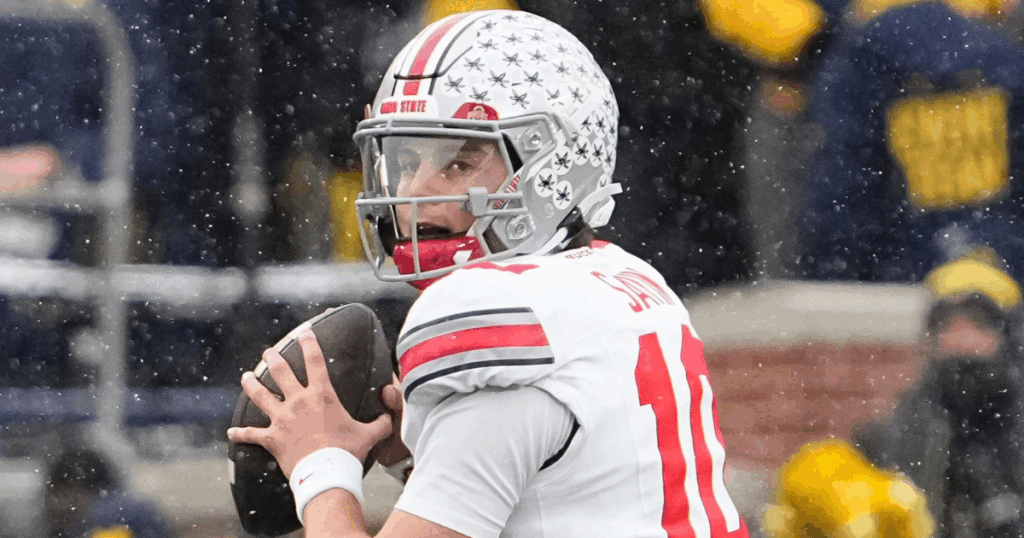
It was a disappointment in New York for Ohio State quarterback Julian Sayin. A Heisman finalist this season, he didn’t end up going home with the hardware. Instead, he’ll have to refocus on the College Football Playoff and winning on the field.
As a redshirt freshman, Sayin was a Heisman finalist. He’ll be back again in 2026 with added experience that is almost impossible to find in college football. So, there’s no reason why he can’t win.
Jeremiah Smith, WR, Ohio State Buckeyes
Coming into the 2025 season, Jeremiah Smith was commonly thought of as the best receiver in all of college football. He wouldn’t end up winning the Biletnikoff Award or being a Heisman finalist, though he was still thought of as the most talented receiver in the country.
Just a sophomore, Smith will be back next season and will, once again, be among the most thrilling players in the game. The only concern is whether or not he and Sayin will steal Heisman votes from one another.
Marcel Reed, QB, Texas A&M Aggies
Marcel Reed has been a revelation at quarterback for Texas A&M. The Aggies’ signal caller led Texas A&M to the College Football Playoff and has made them a legitimate threat to win the national championship. He’d use both his arm and legs to get there too.
As one of the most exciting players in the game who plays on a massive stage in the SEC, Reed is going to have the spotlight on him in 2026. If he plays up to his capability, he’ll be in the Heisman conversation once again. There’s no reason to think he can’t win it too.
Jayden Maiava, QB, USC Trojans
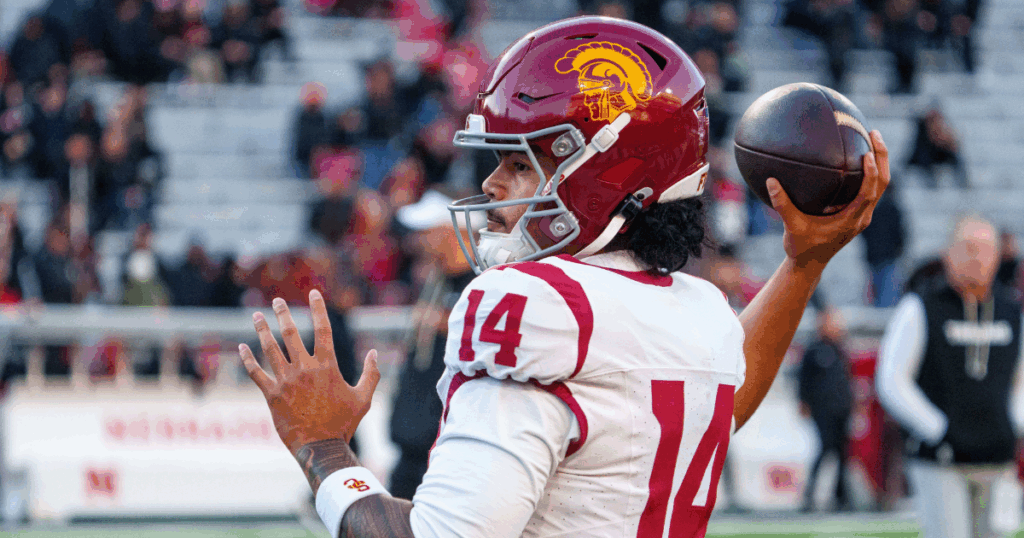
After taking over as the USC starter late in 2024, Jayden Maiava would hit his stride in 2025. Now, he and head coach Lincoln Riley are looking for a way to build on that once again.
If there is one thing that Lincoln Riley has found success doing it’s developing quarterbacks and explosive offenses. That’s led to Heisman Trophy success, including at USC. So, it’s not unfair to have high expectations for next season.
Other names to know
Ty Simpson, QB Alabama Crimson Tide
Alabama quarterback Ty Simpson is eligible to turn his attention to the NFL Draft next season. If he chooses to return to college, though, Simpson is going to be viewed as one of the best quarterbacks in the entire sport. He could very well even be a Heisman contender.
Gunner Stockton, QB, Georgia Bulldogs
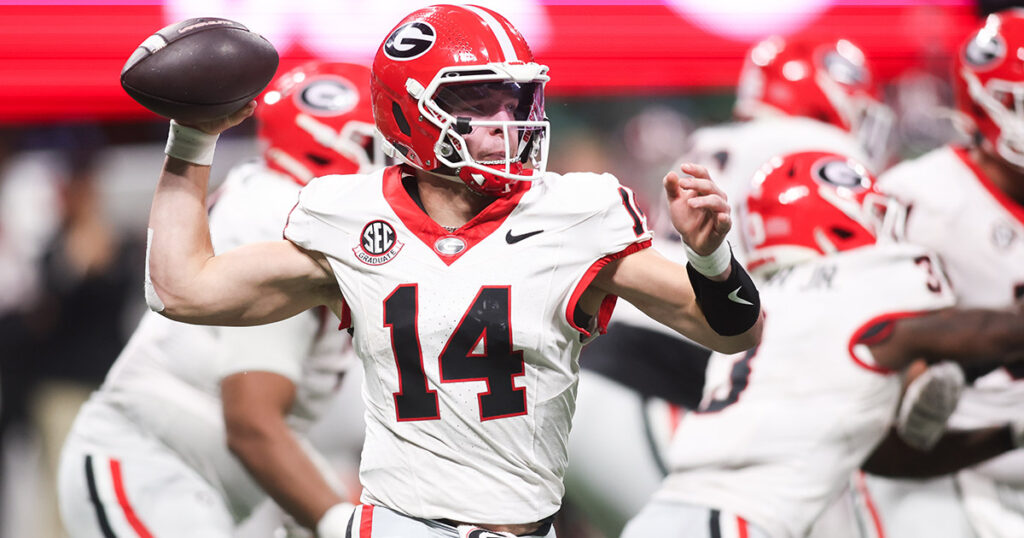
Georgia managed to win the SEC and a first round bye in the first season Gunner Stockton led the Bulldogs as their starting quarterback. He’ll likely be back next season with much higher expectations from the jump. So, he could feasibly end up in the Heisman race more so than he was in 2025.
Drew Mestemaker, QB, North Texas Mean Green
There is a chance that Drew Mestemaker could be a transfer this offseason, as his head coach is on his way to Oklahoma State. That comes after the pair combined for a phenomenal season at the Group of Five level. With more attention on him from the start, regardless of where he’s playing, the Heisman isn’t out of the question.
Sam Leavitt, QB, Arizona State Sun Devils
For the past two seasons, Sam Leavitt has been vital to making Arizona State one of the best teams in the Big 12. Now, there are rumblings that he could transfer. Regardless of where he ends up, Leavitt should be a Heisman contender.
Ahmad Hardy, RB, Missouri Tigers
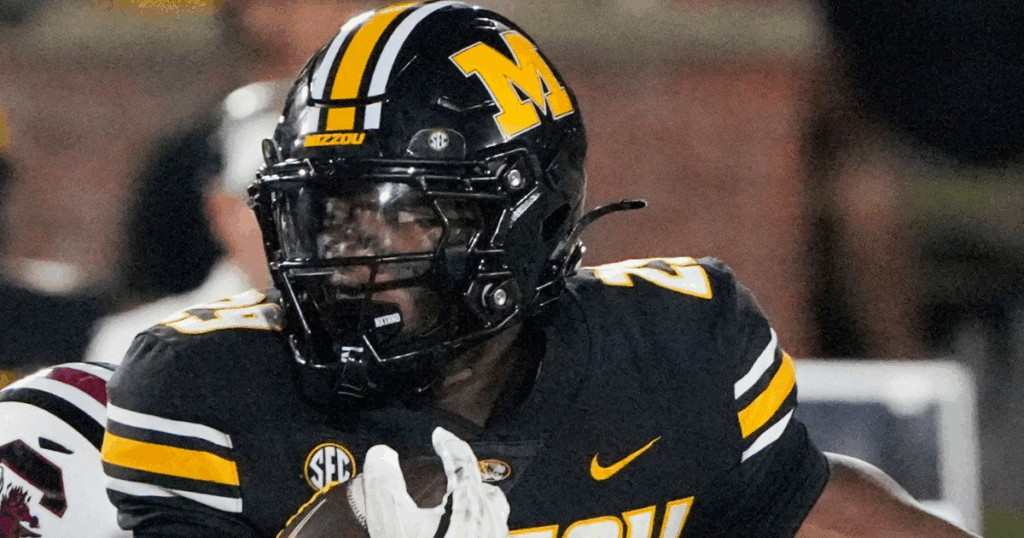
The Missouri Tigers managed to find one of the best running backs in the entire country this season, bringing in Ahmad Hardy. He’d rush for 1,560 yards and 16 touchdowns in 2025. If he can build on that in 2026, the Heisman may not be able to ignore his success.
Kewan Lacy, RB, Ole Miss Rebels
Another running back to keep an eye out on for the Heisman race next season is Kewan Lacy. The Ole Miss running back had 20 rushing touchdowns this year. That’s hard to ignore, but it’s also hard to replicate.
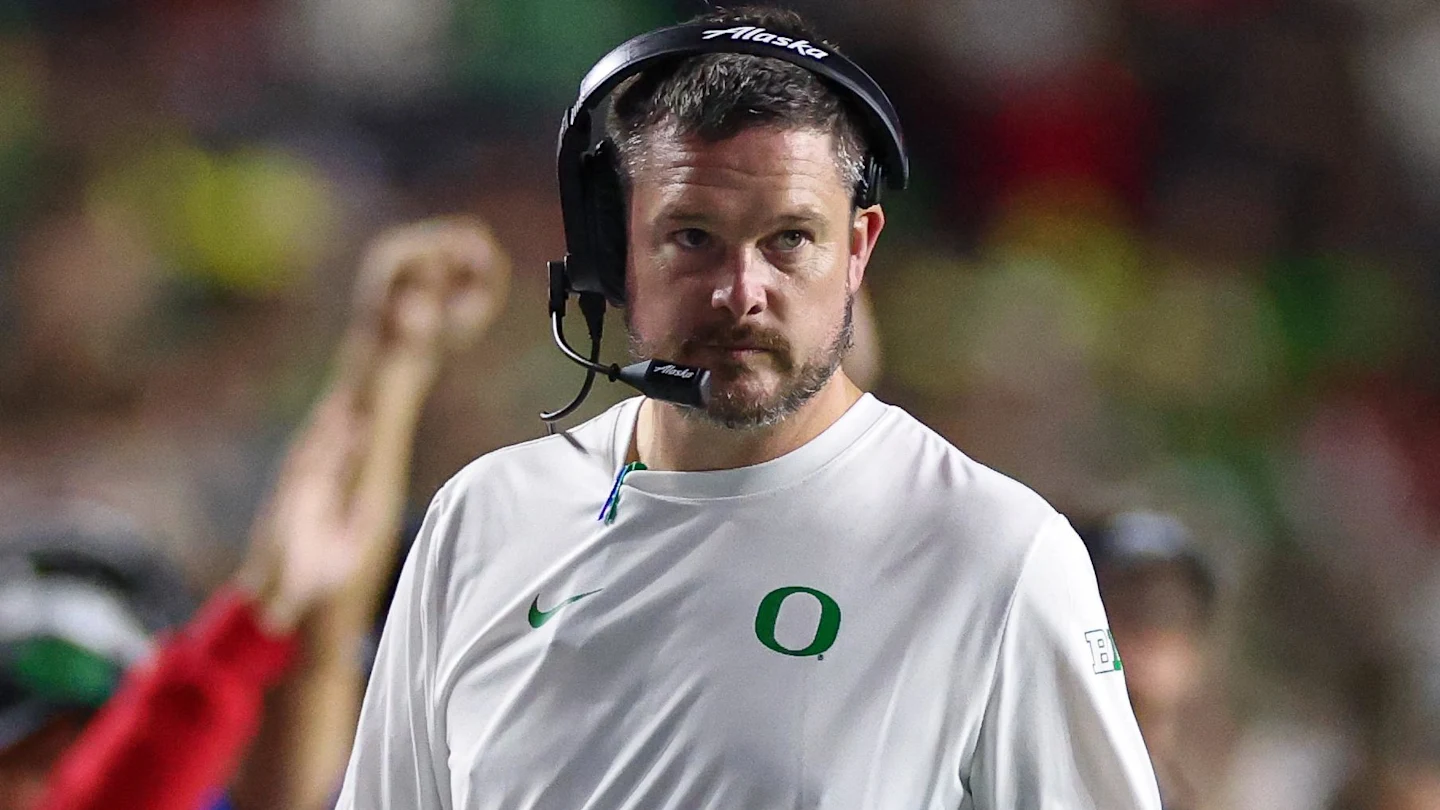
Dan Lanning has been asked many times since 2022 if he’d leave the Oregon Ducks for another head coaching job. While rumors have swirled pertaining to college football openings, a position in the NFL is something that could’ve lured Lanning away from Eugene in the past.
But the Ducks’ coach revealed on The Inner Circle Podcast that his former aspiration of coaching at the professional level is old news.
Dan Lanning Remains Committed to Oregon

Lanning spoke about how he started writing his career goals on his mirror when he was at Arizona State.
“I still put my goals on my mirror,” he said. “No. 1 best father on staff, best husband on staff, man of integrity, Christian, five recruits.”
Lanning, who was a graduate assistant for the Sun Devils, wanted to become a full-time employee. He checked that off the list by getting hired as the on campus recruiting coordinator.

“My next goal on there was head coach, 35. I thought that was really important to me,” Lanning said. “Well, I became the head coach at Oregon at 35. Next goal on there is NFL coach. That ain’t on my goal board no more. It’s off my board. It’ll never be up there again like that.”
Oregon hired Lanning as its football head coach on December 11, 2021, after he won as National Championship as the Georgia Bulldogs defensive coordinator. He’s quickly made a name for himself as one of the top young college football coaches.

Despite Lanning’s name getting thrown around as a candidate for vacancies like Alabama in 2024 or LSU in 2025, he’s remained vocal that Eugene is where he wants to be.
“I truly believe this will be my last job,” Lanning said. “The secret to that is I gotta win. Now do I coach as long as Nick Saban did? I don’t know about that.”
MORE: Weather Concerns Begin For Oregon’s Playoff Game vs. James Madison
MORE: Three Reasons Why Oregon Could Be The Most Dangerous Playoff Team
MORE: Oregon Ducks Projected to Make Program History In 2026 NFL Draft
SIGN UP FOR OUR NEWSLETTER HERE!
Dan Lanning Opens Up About Finishing His Career at Oregon
Staying with the Ducks seems to have additional meaning for Lanning beyond just his loyalty to the program. He said his family plays a major role in why he wouldn’t take an NFL job.
“It used to be a dream, but dreams can change,” Lanning said. “When we took this job, two of my kids had lived in eight states. And you realize, dang, like is that fair to them?”
“So, we took this job, I made a promise to my kids that you’re going to graduate from the same high school. You’re going to graduate from the same middle school,” he continued. “Like, those things are way more important to me than getting the opportunity to coach in the NFL.”

Lanning coached at six different schools from 2011 to 2021 before taking the job at Oregon. He’s coached the Ducks to a second consecutive College Football Playoff this season.
No Oregon head coach has spent more than five full seasons with the program since Mike Bellotti coached from 1995 to 2008. Lanning can change that in 2026.

As Fernando Mendoza put the finishing touches on a Heisman Trophy-winning season, he signed an NIL deal with adidas. Shortly after he won college football’s highest honor, the brand paid tribute.
Adidas released a video honoring Mendoza after he won the Heisman on Saturday night. The brand paid homage to his viral quote following the Big Ten Championship when the IU quarterback told FOX Sports’ Jenny Taft, “The Hoosiers are flippin’ champs.”
SUBSCRIBE to the On3 NIL and Sports Business Newsletter
Throughout the year, Mendoza not only became one of the biggest stars on the field, but one of the top names in the sport. He has a $2.6 million On3 NIL Valuation as Indiana soon prepares for the College Football Playoff as the No. 1 seed.
Just before IU took on Ohio State in Indianapolis, Mendoza announced his high-profile NIL deal with adidas. He is the latest college football star to partner with the Three Stripes, joining Ohio State receiver Jeremiah Smith and Nebraska quarterback Dylan Raiola, among others.
“Excited to share that I’ve accepted an opportunity to join adidas!” Mendoza wrote in a LinkedIn post. “I’m very grateful for everyone who has supported me along the way and excited to bring my passion for sport, leadership, and work ethic to the Three Stripes. Let’s get to work.”
More on Fernando Mendoza’s Heisman season
Mendoza led the nation with 33 touchdown passes this year while completing 71.5% of his passes for 2,980 yards, to just six interceptions. Additionally, his $2.6 million On3 NIL Valuation ranks No. 5 in college football and No. 7 in the On3 NIL 100, the first of its kind and defacto NIL ranking of the top 100 high school and college athletes ranked by their On3 NIL Valuation.
Fernando Mendoza beat out Vanderbilt quarterback Diego Pavia for the award, garnering 643 first-place votes and 2,362 points. Pavia got 189 first-place votes and 1,435 points. It’s the latest chapter in a special season for the former Cal star, who helped lead Indiana to its first outright Big Ten title since 1945.
After the announcement, Mendoza delivered a passionate speech. As he wrapped, he had a message for young athletes who think they’re not getting enough attention or are ranked high enough.
“The truth is, you don’t need the most stars, hype or rankings,” Mendoza said. “You just need discipline, heart and people who believe in you. And you need to believe in your own abilities. I hope this moment shows you that chasing your dreams are worth it, no matter how big or impossible they seem.”
NIL
Charles Barkley on NIL, transfer portal: ‘You should not have the ability to get a better offer every year’

NBA legend Charles Barkley has not been shy about his thoughts on NIL and the transfer portal. During Saturday’s Kentucky vs. Indiana broadcast, he candidly discussed the landscape again.
Barkley called the game on ESPN alongside Dick Vitale, the first of two games they will work together. Vitale called for “stability” in college basketball – and college sports as a whole – because of the amount of player movement via the portal. He used Indiana as an example since new coach Darian DeVries virtually built the program from scratch.
Advertisement
SUBSCRIBE to the On3 NIL and Sports Business Newsletter
While Barkley acknowledged he’s in favor of athletes making money through NIL, he also called out players staying more than their four years of eligibility. In addition, he disagreed with the idea of athletes being allowed to seek better offers after every season.
“No. 1, I’m not opposed to players getting paid,” Barkley said on the broadcast. “I always want my players to get treated fairly. But I can’t remember the last time I heard the word, COVID. Some of these guys have been in college for six or seven years. If you’re in college for six or seven years, your name better be, ‘Dr. Somebody.’ You should not still be playing college basketball after six or seven years.
“But you should not have the ability to get a better offer every year. That’s not fair to any school that you are affiliated with because I can’t even do that. None of us can do that, take a better – Amazon, anybody or FOX Sports can come and say, ‘Well, we’ll give you more money and you can leave after every year.’ That’s not fair. … We’ve got to put some guardrails on these sports.”
Advertisement
One of the other new parts of the college basketball landscape is G-League players seeking eligibility. The NCAA has changed its approach regarding players who played in the G-League, arguing they were not professional athletes in a way the old rule said. Instead, if those players are within five years of their high school graduation, they could become eligible unless they went through the NBA Draft process or signed an NBA contract.
To Charles Barkley, that’s another area that needs fixing. He does not think former G-League players should be able to play college basketball.
“We’ve got guys playing in the G-League coming back to college sports now,” he said. “I don’t think that’s fair.”

Nebraska volleyball’s season ends with loss to Texas A&M in regional finals

$87 million college football coach comments on rumor he’s leaving for Big Ten team

Texas A&M defeats Nebraska volleyball in NCAA tournament

Nebraska volleyball loses to Texas A&M in regional final
Wisconsin volleyball vs Texas score today: Live updates, channel

Crookston School Board to meet Monday (12/15) – KROX

Dick Vitale, Charles Barkley call out College Football Playoff committee over Notre Dame snub

Texas A&M volleyball beats Nebraska game score: Replay updates

2026 Heisman Trophy: CBS Sports names front-runners for the college football’s top award

Texas hosts Wisconsin with Final Four berth on the line

Dan Lanning Reveals Reasoning Behind His Loyalty to Oregon
Texas A&M volleyball vs Nebraska game score: Live updates

Jimmie Johnson delivered retirement confession by LMC driver – Motorsport – Sports

Live Discussion Nebraska Volleyball vs Texas A&M

Bulldog Indoor Track and Field Teams Find Success at CSS Opener

First Tee Winter Registration is open

Fargo girl, 13, dies after collapsing during school basketball game – Grand Forks Herald

CPG Brands Like Allegra Are Betting on F1 for the First Time

Volleyball Recaps – November 18

F1 Las Vegas: Verstappen win, Norris and Piastri DQ tighten 2025 title fight

Two Pro Volleyball Leagues Serve Up Plans for Minnesota Teams

Utah State Announces 2025-26 Indoor Track & Field Schedule

Sycamores unveil 2026 track and field schedule

Redemption Means First Pro Stock World Championship for Dallas Glenn

Jo Shimoda Undergoes Back Surgery

Texas volleyball vs Kentucky game score: Live SEC tournament updates

Robert “Bobby” Lewis Hardin, 56

How this startup (and a KC sports icon) turned young players into card-carrying legends overnight

Bowl Projections: ESPN predicts 12-team College Football Playoff bracket, full bowl slate after Week 14

Indiana’s rapid ascent and its impact across college football

 NBA Legend Michael Jordan to Join NBC Sports as Special Contributor
 Why a rising mid-major power with an NCAA Tournament team opted out of revenue-sharing — and advertised it
 Falcons mailbag
 Portal Update – Basketball and Gymnastics Take Hits
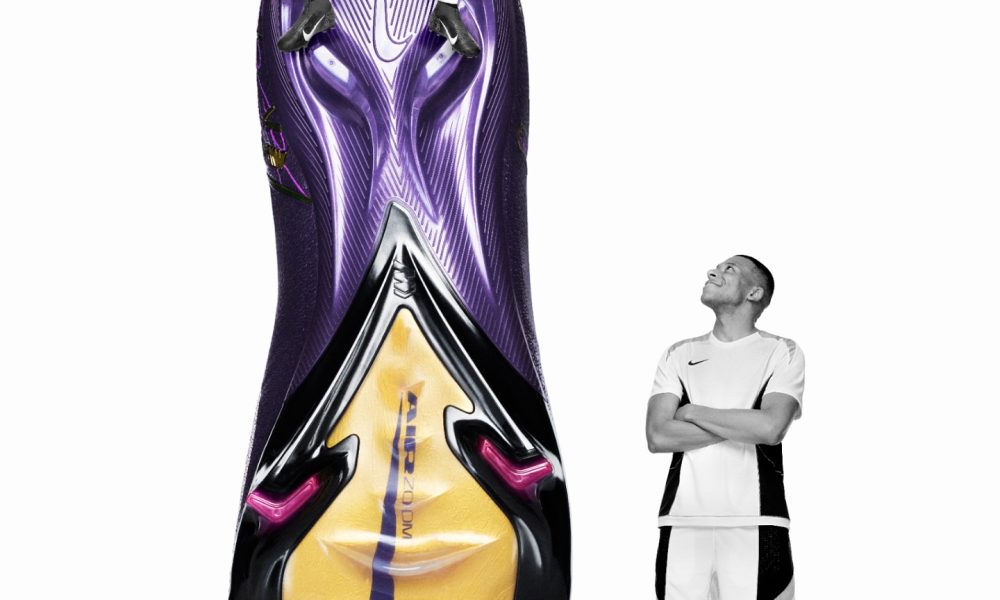 has always dreamed in Mercurial. Now his initials are on the boots.
The new Kyl…
has always dreamed in Mercurial. Now his initials are on the boots.
The new Kyl…
-
 Rec Sports3 weeks ago
Fargo girl, 13, dies after collapsing during school basketball game – Grand Forks Herald
-
 Motorsports3 weeks ago
CPG Brands Like Allegra Are Betting on F1 for the First Time
-
 Sports3 weeks ago
Two Pro Volleyball Leagues Serve Up Plans for Minnesota Teams
-
 Sports3 weeks ago
Utah State Announces 2025-26 Indoor Track & Field Schedule
-
 Sports3 weeks ago
Sycamores unveil 2026 track and field schedule
-
 Motorsports2 weeks ago
Redemption Means First Pro Stock World Championship for Dallas Glenn
-
 Motorsports2 weeks ago
Jo Shimoda Undergoes Back Surgery
-
 Sports3 weeks ago
Texas volleyball vs Kentucky game score: Live SEC tournament updates
-
 Rec Sports2 weeks ago
Robert “Bobby” Lewis Hardin, 56
-
 Rec Sports2 weeks ago
How this startup (and a KC sports icon) turned young players into card-carrying legends overnight