
Rec Sports
Promino Expands Fastbreak Partnership, Activates at The Penn Relays and Key Summer Competitions


May 06, 2025 9:57 AM EDT | Source: Promino Nutritional Sciences, Inc.
Burlington, Ontario–(Newsfile Corp. – May 6, 2025) – Promino Nutritional Sciences Inc. (CSE: MUSL) (OTC Pink: MUSLF) (FSE: 93X) (the “Company” or “Promino”) is pleased to announce it is extending its successful partnership with Fastbreak AI through summer 2025. Following a surge in direct-to-consumer sales and audience engagement from February’s round one activations, Promino will now continue to offer sampling at major athletic showcases including the just concluded Penn Relays.
The Penn Relays draws more than 120,000 athletes, coaches, and parents from across the country, offering Promino™ – NSF Certified for Sport® a unique opportunity to connect directly with a national base of youth and collegiate athletes. This is the first of five Fastbreak-organized events Promino will participate in throughout the spring and summer of 2025, with additional opportunities being considered based on performance.
“Our initial Fastbreak events exceeded our expectations, kickstarting Promino’s direct-to-consumer business with meaningful increases in traffic and sales,” said Vito Sanzone, CEO of Promino. “Promino patented protein drink has low calories, no sugar, no dairy and is fully plant-based. These attributes and our taste profile make Promino an obvious choice for all athletes, which is why we align with Fastbreak AI for live sampling and the technology platform to drive same-day sales.”
Fastbreak Connect, the AI-driven platform behind the partnership, enables brands to seamlessly activate live experiences at high-traffic youth sports events and provides actionable data on sampling and consumer engagement. Used by global brands, Fastbreak Connect reaches over 850,000 youth athletes annually and powers activations at more than 10,000 tournaments across the United States.
“Promino is doubling down on what we believe is one of the most powerful marketing channels: youth sports,” added John Stewart, CEO of Fastbreak AI. “Fastbreak Connect gives brands a way to build meaningful relationships and activate in a space that cuts through the noise of traditional marketing. The results Promino has driven, both in sales and engagement, are a testament to their vision. They recognized early on that youth sports aren’t just another weekend activity, they’re a brand loyalty engine.”
Promino’s participation at The Penn Relays and other upcoming events will include product sampling, athlete content capture, on-site retail promotions, and exclusive offers via Fastbreak’s digital engagement programs.
About The Penn Relays
The Penn Relays, hosted annually by the University of Pennsylvania since 1895, is the oldest and largest track and field competition in the United States. It brings together more than 15,000 participants and over 120,000 spectators for three days of high-level competition and community celebration, making it a premier platform for sports brand activations.
About Fastbreak AI
Fastbreak AI delivers the leading artificial intelligence platform for tournament operations, brand activations, and sponsorship optimization. Its Fastbreak Connect program allows brands to engage youth athletes and families through turnkey sampling campaigns backed by real-time performance analytics. Visit www.fastbreak.ai to learn more.
About Promino
Promino is an innovative and research driven Canadian nutraceutical company specializing in the development of patented and science-based products for the global consumer packaged goods market, with a portfolio focused specifically on muscle health. Promino’s lead product, Rejuvenate Muscle™ Activator, is a patented proprietary formulation that is clinically proven to assist in the building, rebuilding, restoration and rejuvenation of natural muscle mass. Promino also offers Promino™, an elite performance supplement for both professional and amateur athletes to accelerate muscle recovery, build strength and accelerate recovery from injury. Promino was founded in 2015 and is located in Burlington, Ontario.
For more information about Rejuvenate Muscle™ Activator and where to purchase, visit www.rejuvenatemuscle.com.
Promino™ – NSF Certified for Sport® brand ambassadors include NHL Stanley Cup™ Champion Jack Eichel of the Vegas Golden Knights and MLB Legend and Toronto Blue Jays 6x All-Star José Bautista.
To learn more about Promino, visit www.drinkpromino.com.
Forward-Looking Statements
This news release contains “forward-looking information” and “forward-looking statements” (collectively, “forward-looking statements”) within the meaning of applicable Canadian securities legislation. All statements, other than statements of historical fact, are forward-looking statements and are based on expectations, estimates and projections as at the date of this news release. All statements that address activities, events, or developments that the Company expects or anticipates will, or may, occur in the future, are forward-looking statements, including statements regarding the Company’s business prospects, potential growth in the functional beverage market, future trends, plans and strategies. In some cases, forward looking statements are preceded by, followed by, or include words such as “may”, “will,” “would”, “could”, “should”, “believes”, “estimates”, “projects”, “potential”, “expects”, “plans”, “anticipates”, “continues”, or the negative of those words or other similar or comparable words. In preparing the forward-looking statements in this news release, the Company has applied several material assumptions, including, but not limited to, that protein supplement market growth will continue as anticipated by the Company, and that general business and economic conditions will not change in a materially adverse manner. These forward-looking statements are based on reasonable assumptions and estimates of management of the Company at the time such statements were made. Actual future results may differ materially as forward-looking statements involve known and unknown risks, uncertainties and other factors which may cause the actual results, performance or achievements of the Company to materially differ from any future results, performance or achievements expressed or implied by such forward-looking statements. Although the forward-looking statements contained in this news release are based upon what management of the Company believes, or believed at the time, to be reasonable assumptions, the Company cannot assure shareholders that actual results will be consistent with such forward-looking statements, as there may be other factors that cause results not to be as anticipated, estimated or intended. Readers should not place undue reliance on the forward-looking statements and information contained in this news release. The Company assumes no obligation to update the forward-looking statements of beliefs, opinions, projections, or other factors.
No stock exchange, securities commission or other regulatory authority has approved or disapproved the information contained herein.

To view the source version of this press release, please visit https://www.newsfilecorp.com/release/250979


ROCHESTER, Minn. (KTTC) – The Rochester City Council approved a bid totaling more than $53 million to Knutson Construction for phase one of the city’s new regional sports and recreation complex in a 5-2 vote Monday night.
The project will use voter-approved funds from the 2023 sales tax extension to develop a 160-acre site on the southeastern edge of the city. The $65 million allocated from the sales tax extension will fund phase one of the project, the outdoor facilities.
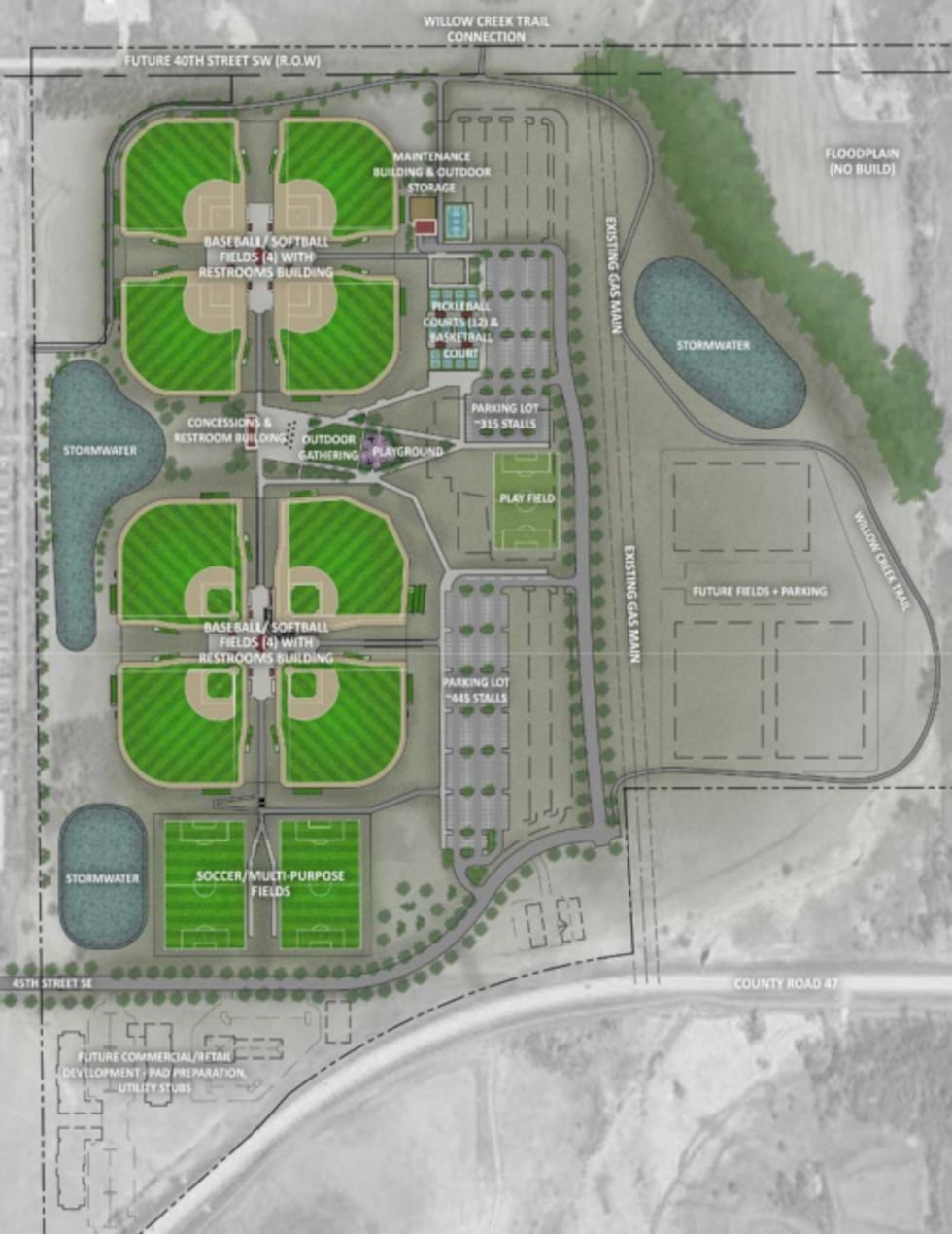
The latest outdoor project plans include a mix of eight turf and natural grass baseball fields, two rectangular multipurpose turf fields, 12 pickleball courts, an outdoor basketball court, concessions/restrooms, gathering areas, a playground, and bike trails connecting to the Willow Creek Trail. Additional features could be added or changed if extra funding becomes available during construction.
“There’s a lot of hard work done here. There’s a lot of people in the community excited about this project. Southeast Rochester needs something to activate that space. That’s a great spot for a facility like this, and I’m happy that we are going forward in that area with this,” Ward 4’s Andy Friederichs said.
Indoor phase funding remains uncertain
Funding for phase two of the project, which would include indoor facilities, has not been secured. After estimates for both indoor and outdoor facilities doubled in cost, approximately $60 million more is needed for the indoor phase.
City staff said they are currently talking with Rochester Community and Technical College to possibly provide the indoor facilities on its campus.
Ward 2’s Nick Miller and Ward 6’s Dan Doering were the two votes cast against the bid proposal. Doering made a motion to table the project and work toward a full project scope for the indoor phase with RCTC, but the motion did not receive a second from the council.
Mayor Kim Norton said if she could vote, she would have seconded Doering’s motion. Norton said she has been disappointed with the overall project outcome.
“We could have waited and prioritized the things the community wanted and expected, which were indoor facilities, rather than sinking $65 million, plus or minus, into an outdoor facility that is only available for use for limited times in good weather,” Norton said.
The city expects a phased opening starting spring of 2027, with full completion in spring of 2028.
After approving the bid proposal, the council also approved a five-year contract with a firm known as ‘Sports Academy’ to operate, manage, and market the facilities for future use.
Find stories like this and more, in our apps.
Copyright 2025 KTTC. All rights reserved.
Rec Sports
Effects of neuromuscular versus plyometric training on physical fitness and mental well-being in male pubertal soccer players
Participants
The sample size estimation was computed using G*Power software (version 3.1.6). Based on findings from a related study from, Hammami, et al.18 who examined the effects of NMT on 15-m CoD speed (Cohen’s f = 0.48) in highly-trained male youth soccer players (Tier 3), an a priori power analysis with a type I error of 0.01 and 90% statistical power was computed. The analysis indicated that 20 participants would represent a sufficient sample. For the purpose of this study, we recruited a total of 24 trained male pubertal soccer players from the same team. These players were randomly assigned to either a NMT (n = 13) or a PT group (n = 11) (Table 1). All participants had 4 ± 0.2 years of organized soccer experience and played in various positions, including defenders, midfielders, and forwards, ensuring a comparable skill and positional distribution across groups. All physical tests were conducted on a third-generation synthetic soccer turf at the soccer academy of Takelsa, Nabeul, Tunisia, under standardized conditions.
Following McKay, et al’s .19 classification of athletes’ training and performance calibre, our participants can be categorized as Tier 2 (trained/developmental) athletes, with at least 4 years of systematic soccer training experience. It is important to note that both experimental groups followed the identical regular soccer training program, supervised by the same coaches. The NMT and PT groups specifically incorporated two weekly PT or NMT training sessions (Table 2). To account for individual development, each participant’s biological maturity status was estimated using the maturity offset method, based on the prediction equation of Moore, et al.20.
Before study participation, players and their legal representatives received information on the study procedures and goals, potential risks, and benefits. Informed consent was obtained from both, the legal representatives and the players. This study adhered to the latest version of the Declaration of Helsinki, and the protocol received approval from the Local Ethics Committee of the National Centre of Medicine and Science of Sports of Tunis (CNMSS-LR09SEP01) prior to study commencement. None of the participating players suffered before (6 months) and during the study from psychological, musculoskeletal, neurological, or orthopedic disorders.
Procedures
A week before the study began, all players attended a familiarization session to become accustomed with the fitness tests and PT as well as NMT exercises. Players assigned to NMT and PT received specific instructions on proper exercise techniques. All participants completed the physical fitness and psychological assessments in a fixed order across sessions. Standardized rest periods were provided between tests to minimize fatigue and ensure consistent testing conditions. The same test sequence was used during pre- and post-testing. Test instructors were unaware of group allocation. To minimize potential fatigue effects on cognitive performance, athletes first completed the five-jump test (FJT), followed by the 15-m CoD and the 20-m linear sprint speed tests, with standardized rest intervals between trials. The mental well-being, emotional intelligence, and attention assessments were then conducted after ensuring adequate recovery time.
Before the physical fitness tests started, all participants conducted a standardized 10-min warm-up including balance exercises (forward/backward beam walking and single-leg stances on unstable devices), submaximal running drills (skipping), and landing drills (snap downs and single-leg drop squats). A 5 min rest period separated each test, with a 3-min rest between individual test trials21. For the physical fitness tests (FJT, CoD, linear sprint), the best out of two trials was recorded for statistical analysis. For the cognitive, somatic anxiety, self-confidence, attention and emotional intelligence assessments, only one trial was performed. All attention and emotional intelligence tests were administered individually in quiet, controlled rooms, under the supervision of trained researchers, to ensure standardized conditions and minimize potential distractions.
A passive control group was not included in this study because it is unethical to not allow young athletes to train for a certain period of time22,23. Since authors from previous studies have already shown that NMT is generally effective for fitness enhancement in young pubertal soccer players10,18, our main goal was to directly compare the specific effects of NMT versus PT.
Anthropometrics
Body height was measured using a wall-mounted stadiometer (Florham Park, NJ) and body mass with an electronic scale (Baty International, West Sussex, England). To estimate body composition, we measured the sum of skinfolds using Harpenden’s skinfold calipers. Subsequently, we non-invasively assessed biological maturity using the maturity offset method according to Moore, et al.20, which has demonstrated consistent prediction errors across both adult and adolescent populations. Accordingly, athlete’s chronological age and body height were included in the following regression equation:
Maturity offset = 27.999994 + (0.0036124 × age × height)20.
Physical fitness tests
Proxies of muscle power
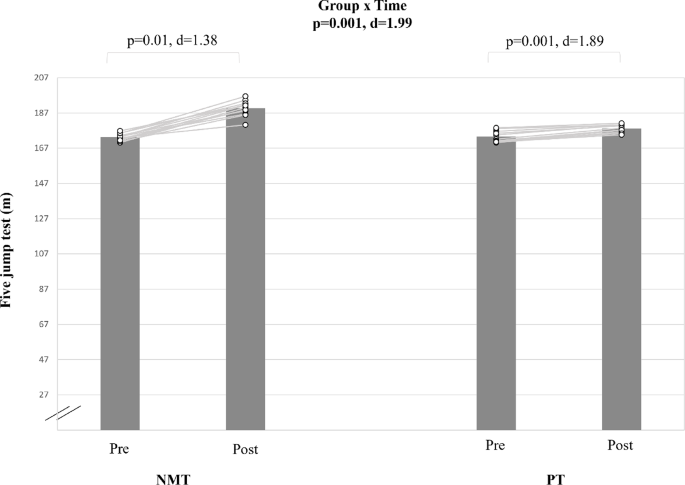
The FJT was used as a proxy to estimate muscle power, following the guidelines of Chamari, et al.24. Players started the test in standing position with both feet flat on the ground and performed five alternating left and right leg bounds, aiming to cover the maximum possible horizontal distance. As dependent variable, the horizontal jump distance was tested to the nearest centimeter using a tape measure. This test has previously shown high test–retest reliability, with an ICC of 0.91 for youth soccer players25.
Change-of-direction (CoD) speed
CoD speed was measured using the 15-m CoD test. Athletes began with a 3-m linear sprint before entering a 3-m slalom section marked by three 16-cm high pylons, spaced 1.5 m apart. After navigating the pylons, athletes cleared a 0.5-m hurdle positioned just beyond the final pylon26. As dependent variable, the best time out of two trials was to taken to complete the test. The 15-m CoD test has demonstrated excellent test–retest reliability, with an ICC value of 0.9326.
Linear sprint speed
For the 20-m linear sprint speed test, players sprinted as fast as possible from a starting line. The sprint time was automatically recorded using photocell gates (Brower Timing Systems, Salt Lake City, UT, USA; accuracy of 0.01 s) positioned 0.4 m above the ground. Each player completed two trials and rested for 5 min between trials. The best (shortest) time was used for further analysis. This test has previously demonstrated excellent test–retest reliability in young soccer players (ICC = 0.97)27.
Mental well-being tests
Tests for the assessment of anxiety and self-confidence
Participants’ competitive state anxiety was tested using the Competitive State Anxiety Inventory-2 (CSAI-2). The Arabic translation of the questionnaire, validated with 13 items by Boudhiba, et al.28 was applied. The CSAI-2 is a widely recognized tool for assessing multi-dimensional anxiety in athletes within competitive environments. This inventory evaluates three core components. First, cognitive anxiety which reflects worries and negative thoughts about performance (e.g., “I am concerned about this competition,” “I am concerned about choking under pressure”); second, somatic anxiety that pertains to the physical symptoms of anxiety, such as increased heart rate or muscle tension (e.g., “I feel nervous,” “I feel tense in my stomach”); and third, self-confidence which represents an athlete’s belief in his ability to perform successfully (e.g., “I feel at ease,” “I am confident I can meet the challenge”).
Participants responded to each item on a 4-point Likert scale, indicating “how do you feel right now” from “not at all” to “very much so.” Each of the three subscales (cognitive anxiety, somatic anxiety, and self-confidence) consists of 13 items. The scores for these items were summed to provide an intensity level for each component. This tool offers valuable insights into how these psychological factors interact with physical fitness, providing a robust framework for tailoring interventions to reduce anxiety and boost self-confidence in young athletes. The translated CSAI-2 included 13 items and it has previously demonstrated excellent test–retest reliability in youth athletes with ICC values of 0.94 for cognitive anxiety (CA), 0.87 for somatic anxiety (SA), and 0.79 for self-confidence (SC), respectively29.
Tests for the assessment of emotional intelligence (EI)
Emotional intelligence (EI) was assessed using the Psychometric Emotional Competence (PEC) scale. Participants responded to 50 items on a 5-point Likert scale (1: strongly disagree, 2: disagree, 3: neutral, 4: agree and 5: strongly agree). The PEC measures both intrapersonal emotional competence (understanding one’s own emotions) and interpersonal emotional competence (understanding others’ emotions) as separate constructs. The instrument also provides a global score representing overall emotional competence. The PEC has previously demonstrated excellent reliability with ICC values ranging between 0.90 and 0.98 for all of the studied items30.
Tests for the assessment of attention
The d2 test was used to evaluate participants’ selective attention, concentration, and mental speed, and is widely recognized for its reliability and validity. The test demonstrates excellent reliability, with ICCs ranging from 0.95 to 0.98 across variables27, and strong criterion, construct, and predictive validity28. The test consists of 14 lines, each containing 47 letters, including the target letters “p” and “d” with 1–4 small marks. Participants were instructed to quickly scan each line and cross out every “d” with exactly two marks, while ignoring all other letters and symbols. Each line was completed within 20 s. The dependent variable was the total d2 test score, calculated as the number of correctly identified target letters minus the number of errors, reflecting attention and concentration performance.
Training programs
Both training programs lasted 8 weeks and were integrated into the players’ regular in-season soccer training from February to March 2025. Prior to the intervention, all participants followed a typical in-season routine consisting of five weekly soccer training sessions (Tuesday–Saturday), with Sunday designated for competition and Monday for recovery. None of the players had previously participated in NMT or PT programs, ensuring that both training modalities represented novel exercise stimuli for all participants. Each 90-min session began with a standardized 15-min dynamic warm-up (including dynamic stretching, submaximal running, acceleration and deceleration drills, and jump–landing tasks). On Tuesday and Thursday, 30-min blocks of NMT or PT replaced an equivalent portion of the regular soccer-specific training. After these sessions, players performed 40 min of soccer-specific drills, consisting of 20 min of technical and tactical exercises and 20 min of small-sided games with or without goals. On Wednesday, Friday, and Saturday, players completed 70 min of soccer-specific drills following the warm-up (35 min of technical/tactical work and 35 min of small-sided games). All sessions concluded with a 5-min cool-down (Table 2).
NMT primarily included five exercises designed to improve balance, strength/power, linear sprint and CoD speed as well as agility. Players performed 3 sets of 5–10 repetitions for each exercise, with a rest of 60–120 s between sets and exercises31. To ensure progressive overload, the rate of perceived exertion (RPE) was adjusted every two weeks using a 0–10 OMNI scale. During weeks 1–2, we targeted an RPE score of 3. During weeks 3–4, an RPE score of 5–6 was programmed, and during week 8, the RPE ranged between 7 and 8. All NMT exercises were conducted directly on the soccer pitch (Table 3).
The PT program comprised bilateral and unilateral jump-landing exercises performed in vertical, horizontal, and lateral directions, emphasizing the SSC. The general structure and progression of the plyometric exercises were adapted from Bogdanis et al. (2019), who examined the effects of bilateral and unilateral PT on physical fitness. While the current study drew on that framework for plyometric exercise selection, the overall training design was expanded to specifically target performance components relevant to youth soccer namely, strength, muscle power, sprinting, CoD speed and agility. The intensity, volume, and progression of the exercises were prescribed following established PT guidelines for youth athletes37, ensuring an appropriate load to induce neuromuscular adaptations while minimizing injury risk. Each session included exercises performed in sets and repetitions consistent with prior youth PT interventions, with progression over the 8-week period to maintain adequate training stimuli. More specifically, exercises included drop jumps from a 20-cm drop height, horizontal jumps and lateral hops. Each session involved 3–4 sets of 6–12 repetitions for the three different plyometric exercises (Table 4). Progression was ensured by increasing foot contacts and varying exercise complexity. Participants were instructed to perform all exercises in the SSC at maximal effort and with minimal ground contact time.
Total training volume and intensity (overall time and effort spent training) were similar between PT and NMT. Training was supervised by qualified coaches and experienced sport scientists to ensure safety and effectiveness throughout the study period.
Statistical analyses
Data are presented as group mean values and standard deviations (SD). After data normality was confirmed using the Shapiro–Wilk test, a MANOVA was applied to detect baseline between-group differences. A 2 × 2 analysis of variance (ANOVA) with repeated measures was computed on the factors group (NMT, PT) and time (pre, post) to determine training effects. Post-hoc tests with Bonferroni adjustments were conducted to identify group-specific pre- to post changes. Effect sizes for main time and group effects as well as group-by-time interactions were taken from the ANOVA output (partial eta squared transferred to Cohen’s d). Within-group Cohen’s d effect sizes (ES) were also calculated using the equation: d = (mean post − mean pre-) / mean SD.
The effect size d can be classified as small (0.00 < d < 0.49), moderate (0.50 ≤ d < 0.80), and large (d > 0.80)32. Pearson’s correlation coefficients were computed to assess potential associations between selected measures of physical fitness and mental well-being in pubertal soccer players. Correlation coefficients were considered trivial (r < 0.1), small (0.1 < r < 0.3), moderate (0.3 < r < 0.5), large (0.5 < r < 0.7), very large (0.7 < r < 0.9), nearly perfect (0.9 < r < 1.0), and perfect (r = 1.0)33. The level of significance was established at p < 0.05 and SPSS 20.0 was used for statistical analyses (SPSS Inc., Chicago, IL, USA).
Rec Sports
Parts of Cleveland in the dark after thieves steal thousands of feet of streetlight wiring

Slavic Village in Cleveland is grappling with safety concerns as copper thieves leave neighborhood streetlights dark, affecting businesses and even youth sports.
CLEVELAND — Large sections of Cleveland’s Slavic Village neighborhood have been left in the dark for months after thieves ripped out thousands of feet of copper wiring from city streetlights, according to city officials and residents.
When a 3News crew visited the area, we saw it firsthand. As soon as dusk fell, most streetlights along Broadway Avenue stayed off. On one side of the street, lights flickered on; on the other, darkness.
Residents and business owners say the outage has changed how they move through the community — and they’re worried about safety.
“It kind of affects me in a way because customers don’t want to walk in here and walk out and it’s a dark spot outside,” said Rami Odetallah, owner of Smoker’s Studio. “They don’t want to get robbed or whatever it is.”
Ward 12 City Councilwoman Rebecca Maurer says she was stunned to learn thieves were behind the problem.
“Oh my gosh, we have been struggling for the last six months in Slavic Village with thefts of copper wires that have been connecting all the streetlights along Broadway,” Maurer said. “Four thousand feet of copper wire is what we have been told has been ripped out of underground conduits between the different street lights.”
City leaders say about 70 poles along Broadway Avenue were damaged. While some repairs have been made, thieves appear to be breaking into pull boxes and ripping out wires containing scrap metal like copper.
The darkness has even sidelined youth sports: The Southside Seahawks football team stopped practicing at Morgana Park this fall because there were no lights. Coach Jamal Sanni says they hope to return under the lights soon.
Maurer says she’s pushing Cleveland Public Power for answers.
“We need to get these street lights turned back on and we need CPP to offer the neighborhood clarity about whether they’re going to re-line all that copper wire, whether they restring it,” she said. “Give the neighborhood a date that we can be accountable to and make sure that these lights get turned on by 2026.”
3News reached out to Cleveland Public Power for comment, but has not yet heard back. In the meantime, Maurer says she wants a full investigation into the thefts.
Rec Sports
St. Louis CITY SC Earns Two 2025 MLS Club Awards for Accessibility and Youth Fan Engagement Efforts

Major League Soccer is recognizing St. Louis CITY SC for its commitment to inclusivity as well as its efforts to engage the next generation of soccer fans. CITY SC has won two of the thirteen Mark Abbott MLS Club Business Awards: Youth Fan Engagement Initiative of the Year for the club’s kids-first approach at St Louis CITY2 matches at Energizer Park, and Engagement & Inclusion Club of the Year for the club’s best-in-class accessibility programming.
CITY SC was one of nine clubs to win an MLS Club Business Award, and one of only three to claim multiple honors. Vancouver took home three, while St. Louis and Atlanta earned two each.
“We’re a club that was created with the ultimate goal of serving its community, so winning two awards that recognize our pursuit of excellence in engaging with our young fans and people with disabilities fills us with pride,” said Diego Gigliani, President & GM of St. Louis CITY SC. “I’m grateful to the MLS and its clubs for the recognition, and especially to our staff for constantly seeking innovative ways to bring our purpose-led vision to life”.
Youth Fan Engagement Initiative of the Year
With a re-imagined, family-first approach, the club’s CITY2 experience is designed to cultivate the next generation of CITY fans.
With most matches happening on Sunday afternoons or early evenings, CITY2 matchdays are family focused, featuring interactive experiences including kid PA announcers and anthem singers; family-friendly pricing on tickets and food and drinks; a “Supporter’s Camp” with drums, flags and tambourines for kids; face painters and interactive activities on the concourse; and post-match autographs with players on the pitch. This season, the club welcomed the first family-oriented CITY2 sponsor, the Saint Louis Zoo.
This redesign is driving significant impact, with CITY2 hosting the top five MLS NEXT Pro crowds of the 2025 season, including the MLS NEXT Pro record-breaking attendance of 12,263 achieved in May.
Engagement & Inclusion Club of the Year
In Energizer Park, CITY SC strives to be the most inclusive and accessible club for fans of all abilities. CITY was the first MLS team to debut Touch2See, an AI-powered assistive technology for blind- and visually-impaired fans. The stadium was also the first stadium in the U.S. to participate in Hidden Disabilities Sunflower program, where all Guest Services staff members are trained to help recognize and accommodate hidden disabilities like autism, diabetes, MS and PTSD.
In continued advocacy, this year CITY worked with organizations such as the Disabled Athletes Sports Association (DASA) to raise interest in accessibility in sports venues and adaptive sports, which culminated in kids from DASA serving as a Player Pals for a 2025 match and CITY SC players participating in a local power wheelchair soccer scrimmage.
Rec Sports
Vegas Golden Knights Foundation and Three Square Food Bank Will Host Holiday Drive-Thru Distribution For Families
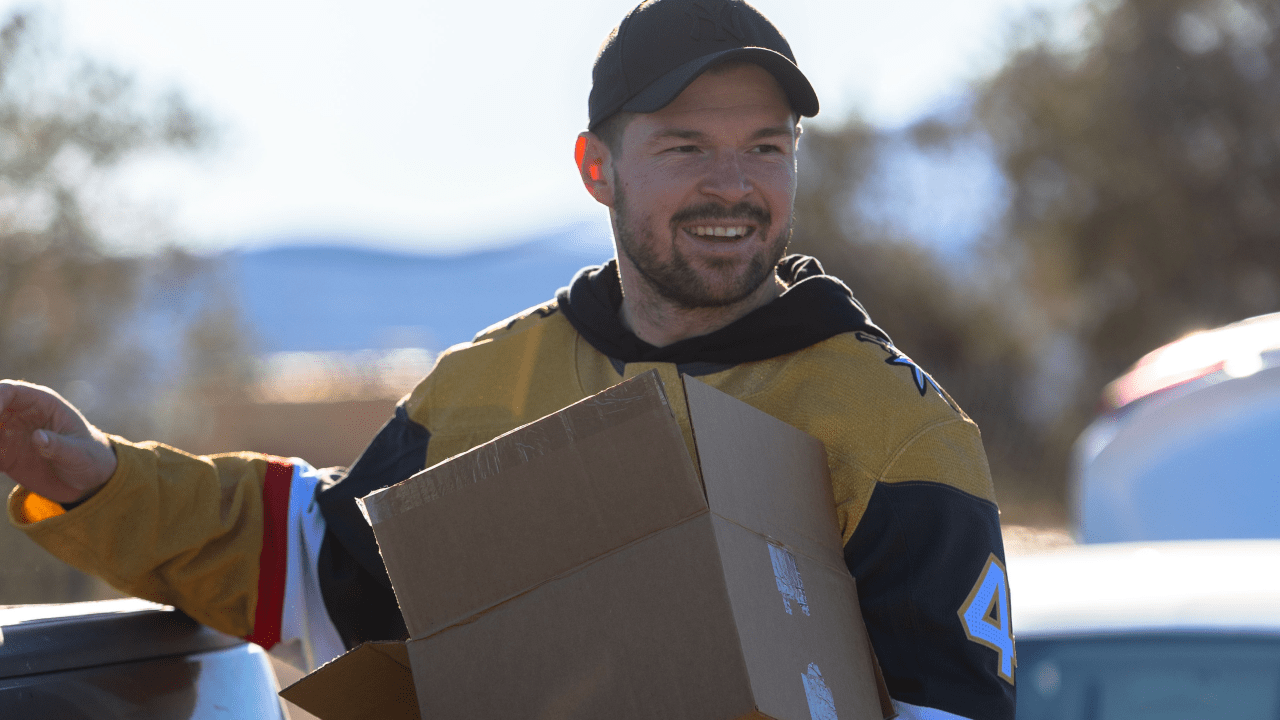
VEGAS (December 8, 2025) – The Vegas Golden Knights and the Vegas Golden Knights Foundation have partnered with Three Square Food Bank to host a special holiday drive-thru food distribution for families as a part of the Holiday Knights of Giving initiatives.
On Wednesday, December 10, beginning at 10 a.m. PT, members of the Golden Knights organization and significant others from the team will be packing cars with food at Desert Breeze Community Center (8275 Spring Mountain Rd) to assist Three Square as they serve local families in need during this holiday season. Only one household is permitted per car, and families are asked to ensure their trunks are empty for volunteers to place food boxes safely and quickly.
ABOUT THE VEGAS GOLDEN KNIGHTS
The Vegas Golden Knights are a National Hockey League franchise owned and operated by Black Knight Sports and Entertainment LLC. Established by Owner and Chairman Bill Foley and his family, the Golden Knights were the most successful expansion franchise in North American professional sports history in 2017-18 and won the Stanley Cup in 2022-23. For the latest news and information on the Golden Knights visit vegasgoldenknights.com and follow the team on Facebook, X, Instagram and TikTok.
ABOUT THE VEGAS GOLDEN KNIGHTS FOUNDATION
The Vegas Golden Knights Foundation supports exemplary Las Vegas non-profit organizations that make a positive impact in the local community, with a focus on the following pillars: Education & Youth Sports, Military & First Responders, and Health & Wellness. The Foundation raises money through various events and in-game efforts, including a 51/49 Raffle, jersey and memorabilia auctions and other initiatives to engage fans. For the latest news and information on the Vegas Golden Knights Foundation, follow the foundation on X and Instagram.
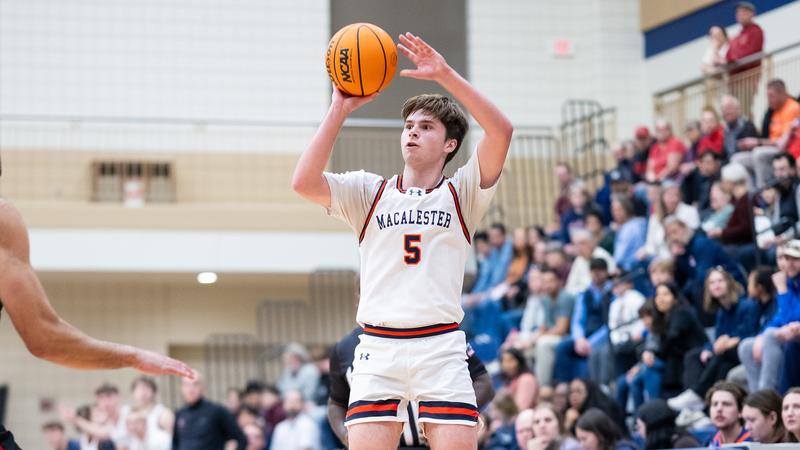
ST. PAUL, Minn. – The Macalester College men’s basketball team defeated Martin Luther College in a back-and-forth non-conference game Monday night in the Leonard Center, coming out on top, 85-80. The Scots even their record at 5-5 on the season, while the Knights drop to 4-7.
Macalester opened the game with a 12-5 run, with senior forward Noah Shannon (Northfield, Ill./New Trier) scoring four points over the first 5:17. After the teams exchanged baskets, first year guard Jamal Randle (St. Paul, Minn./Great River School) hit a three-pointer for a 10-point lead, 17-7. Later in the half, a three-pointer from senior forward Ryan Brush (Bellevue, Wash./Bellevue) gave the Scots a 31-25 edge with 3:18 remaining in the half. Martin Luther used a 9-2 run to take its first lead of the game, 34-33 with 1:12 on the clock. First year guard Owen Walther (St. Louis, Mo./John Burroughs School) closed out the scoring in the first half with a three to send Macalester into halftime with a 36-34 lead.
After the Knights tied the score early in the second half, the Scots went on a 13-4 run sparked by a pair of threes from Walther and another by first year guard Noah Hamburge (Minneapolis, Minn./Minnehaha Academy) for a 52-43 advantage with 14:44 remaining. A conventional three-point play by Shannon later in the half made it a 10-point game, 59-49 at the 12:42 mark. On two occasions Martin Luther came within five points, only to have Brush and Walther each answer with a three-pointer, with Walther’s trey making the score 70-62 Macalester with 6:08 left.
Walther drained his fifth three of the game after a pair of Knights’ free throws, but Adam Loberger answered Walther with a three of his own to make the score 73-67 with 4:36 to play. Martin Luther continued to hack away at the Scots’ lead, with a basket by Thomas Balge and a conventional three-point play from Benjamin Vasold pulling the Knights to within one, 73-72 with 3:10 remaining. The lead was still down to one, 75-74 when Walther struck again from deep for a 74-78 advantage. On its next possession, Martin Luther scored again, only to have Brush nail a three-pointer to put Macalester on top, 81-76. Benjamin Pearson scored and was fouled, hitting the free throw to cut the lead to two, 81-79 with 22 seconds left, but the Scots made their free throws down the stretch to close out the win, 85-80.
Macalester made 14-of-33 (42.4 percent) from three-point range and converted 11-of-13 from the free throw line for the game. Shannon led the Scots with 21 points and six rebounds, hitting eight of his nine attempts from the charity stripe. Walther drained 6-of-9 from beyond the arc to finish with 18 points, and brush was 4-of-8 from deep en route to 16 points. Sophomore guard Joaquin Aguillon (San Rafael, Calif./The Branson School) dished out a career-high nine assists to go with eight points. Pearson led Martin Luther with 24 points.
Macalester plays a MIAC at Carleton on Wednesday, Dec. 10 in the final game of 2025. Tip-off is set for 7:00 p.m. in Northfield, Minn.

Rochester moves forward with outdoor sports complex as indoor phase remains unfunded

Effects of neuromuscular versus plyometric training on physical fitness and mental well-being in male pubertal soccer players

Watch Nebraska volleyball vs Kansas: TV channel, time, streaming

Tyler Tomassi Driving Daytona Truck Season Opener for MBM Motorsports – Speedway Digest

Parts of Cleveland in the dark after thieves steal thousands of feet of streetlight wiring

SEC powerhouse named the most-watched college football team of 2025 regular season

Liberty League Performers of the Week for December 8

Sheehan, Parker, Jones and Munson Among the NJAC Athlete of the Week Winners

St. Louis CITY SC Earns Two 2025 MLS Club Awards for Accessibility and Youth Fan Engagement Efforts

The Most Egregious Double Standard in Sports

Vegas Golden Knights Foundation and Three Square Food Bank Will Host Holiday Drive-Thru Distribution For Families

Men’s Basketball: Macalester Holds Off Knights for 85-80 Victory

New Balance Foundation Pledges $9.2M for Massachusetts Youth Sports and Development Programs

Youth substance abuse prevention program looks to athletes to spread the word

Want To Avoid Having A Troublesome Teen? Get Boys Involved In Youth Sports, Study Says | Health and Wellness

First Tee Winter Registration is open

Fargo girl, 13, dies after collapsing during school basketball game – Grand Forks Herald

CPG Brands Like Allegra Are Betting on F1 for the First Time

Volleyball Recaps – November 18

F1 Las Vegas: Verstappen win, Norris and Piastri DQ tighten 2025 title fight

Two Pro Volleyball Leagues Serve Up Plans for Minnesota Teams

Utah State Announces 2025-26 Indoor Track & Field Schedule

Sycamores unveil 2026 track and field schedule

Redemption Means First Pro Stock World Championship for Dallas Glenn

Texas volleyball vs Kentucky game score: Live SEC tournament updates

Bowl Projections: ESPN predicts 12-team College Football Playoff bracket, full bowl slate after Week 14

Indiana’s rapid ascent and its impact across college football

How this startup (and a KC sports icon) turned young players into card-carrying legends overnight

Pohlman admits ‘there might be some spats’ as he pushes to get Kyle Busch winning again

Jo Shimoda Undergoes Back Surgery

 Why a rising mid-major power with an NCAA Tournament team opted out of revenue-sharing — and advertised it
 NBA Legend Michael Jordan to Join NBC Sports as Special Contributor
 Falcons mailbag
 Portal Update – Basketball and Gymnastics Take Hits
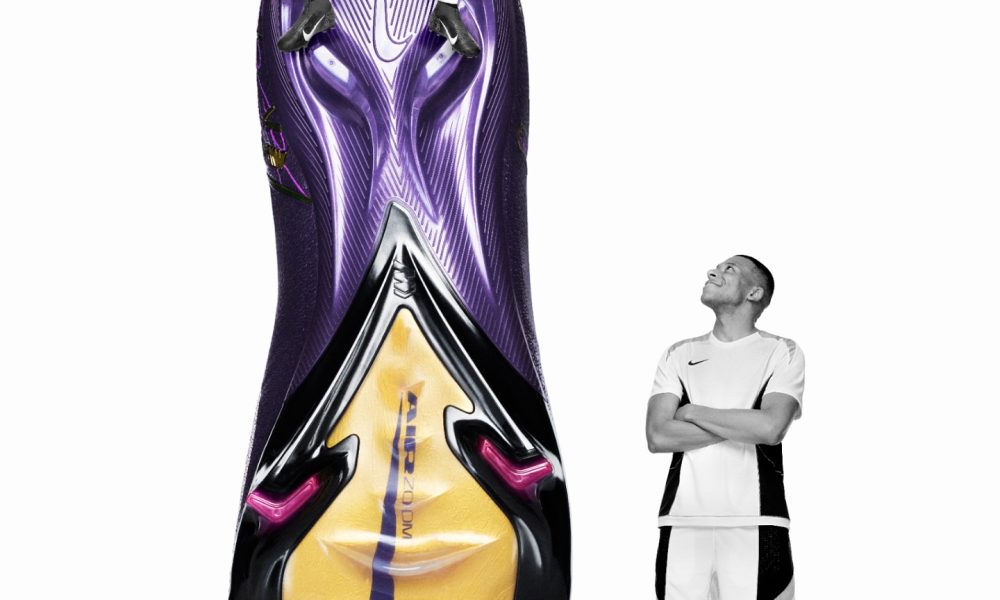 has always dreamed in Mercurial. Now his initials are on the boots.
The new Kyl…
has always dreamed in Mercurial. Now his initials are on the boots.
The new Kyl…
-
 Rec Sports2 weeks ago
First Tee Winter Registration is open
-
 Rec Sports2 weeks ago
Fargo girl, 13, dies after collapsing during school basketball game – Grand Forks Herald
-
 Motorsports2 weeks ago
CPG Brands Like Allegra Are Betting on F1 for the First Time
-
 Motorsports2 weeks ago
F1 Las Vegas: Verstappen win, Norris and Piastri DQ tighten 2025 title fight
-
 Sports2 weeks ago
Two Pro Volleyball Leagues Serve Up Plans for Minnesota Teams
-
 Sports2 weeks ago
Utah State Announces 2025-26 Indoor Track & Field Schedule
-
 Sports2 weeks ago
Sycamores unveil 2026 track and field schedule
-
 Motorsports2 weeks ago
Redemption Means First Pro Stock World Championship for Dallas Glenn
-
 Sports2 weeks ago
Texas volleyball vs Kentucky game score: Live SEC tournament updates
-
 NIL1 week ago
Bowl Projections: ESPN predicts 12-team College Football Playoff bracket, full bowl slate after Week 14