
NIL
Retirement Hasn't Stopped Bo Jackson's Net Worth From Growing


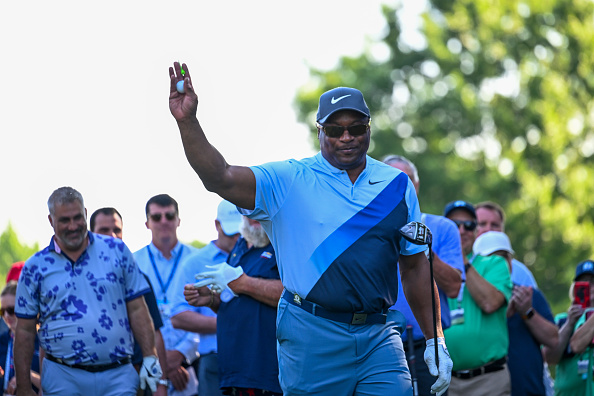
Where did Bo Jackson go to college?
Jackson attended Auburn University, where he won the Heisman Trophy in 1985 as the best college football player in the nation.At the height of his career, Jackson became one of the most marketable athletes in the world. His endorsement deals, particularly with Nike, made him a cultural icon. The famous “Bo Knows” campaign, which launched in 1989, promoted Nike’s cross-training shoes and became one of the most successful sports marketing campaigns in history. Jackson’s deal with Nike reportedly paid him between million and million per year at its peak.
Bo Jackson’s Athletic Career And Earnings
In addition to his sports facilities, Jackson has invested in the food industry. He co-owns N’Genuity, a food distribution company that supplies meals to government agencies, military bases, and commercial businesses. The food service industry, particularly those with government contracts, provides stable and long-term revenue, making this one of his most profitable ventures. While exact figures on N’Genuity’s revenue are not publicly available, similar food distribution businesses generate millions annually.
Jackson’s career in both leagues was cut short due to a severe hip injury in 1991. Although he attempted a return to baseball, his mobility was never the same, leading him to retire from professional sports in 1994. By the time he left professional athletics, he had earned an estimated million in salary from both the NFL and MLB combined. However, his most lucrative earnings came from endorsements and post-career investments.
Bo Jackson’s career began at Auburn University, where he won the Heisman Trophy in 1985, solidifying himself as one of the best college football players of his time. Despite being selected as the first overall pick in the 1986 NFL Draft, he initially turned down the Tampa Bay Buccaneers due to a contract dispute and instead pursued baseball, signing with the Kansas City Royals. His first contract with the Royals included a million signing bonus and additional incentives.
Endorsements And Sponsorship Deals
Despite his wealth, Jackson has remained deeply involved in philanthropy. He founded Bo Jackson’s Give Me A Chance Foundation, which provides scholarships and resources for underprivileged youth in sports and education. He has also been active in Alabama’s tornado relief efforts, personally helping raise millions of dollars to rebuild affected communities.
What businesses does Bo Jackson own?
Jackson owns Bo Jackson’s Elite Sports, a multi-sport training facility, and co-owns N’Genuity, a food distribution company supplying government agencies and military bases. He also has real estate investments in multiple states.
Business Ventures And Investments
Jackson continues to use his platform to mentor young athletes and business professionals, ensuring that his legacy extends beyond sports and wealth. His focus on giving back to the community further solidifies his reputation as not just an athlete, but a leader and role model.
Like many high-net-worth individuals, Jackson has built a substantial real estate portfolio. He owns multiple properties across Alabama, Illinois, and California, with real estate investments contributing significantly to his overall wealth. In Alabama, he owns land and residential properties near his hometown of Bessemer, which have appreciated in value due to regional development.
His primary residence is in Burr Ridge, Illinois, an affluent Chicago suburb. Homes in this area range from .5 million to million, with Jackson’s estate value currently unknown. Additionally, he has invested in commercial properties, leasing them to businesses in industries such as fitness, retail, and hospitality. His real estate holdings provide a mix of passive income and long-term asset appreciation, reinforcing his financial stability.
Real Estate Investments And Wealth Growth
With a combination of endorsements, business ventures, real estate investments, and past earnings from sports, Bo Jackson’s estimated net worth in 2025 is million. While he never earned the massive contracts seen in today’s sports landscape, his ability to strategically invest in stable businesses and long-term assets has allowed him to maintain his wealth decades after his athletic career ended.
Jackson has also explored private equity and investment opportunities, particularly in sports technology and fitness. He has invested in companies focused on athletic performance, fitness training, and wellness, diversifying his income sources beyond just branding deals.
Philanthropy And Community Impact
Does Bo Jackson still make money from Nike?
Yes, Bo Jackson still earns royalties from Nike, particularly from retro sneaker releases and licensing agreements tied to his name and brand.
Unlike many former athletes who struggle financially after retirement, Jackson leveraged his brand and earnings into long-term financial success. With multiple revenue streams, including endorsements, real estate investments, and business ventures, he has maintained a strong financial standing. But how much is he worth today? Let’s explore his career earnings, business endeavors, and financial growth before revealing Bo Jackson’s net worth in 2025.
What Is Bo Jackson’s Net Worth In 2025?
Bo Jackson remains one of the most legendary multi-sport athletes of all time, having excelled in both professional baseball and football. His unparalleled athleticism and dominance in two major sports made him a household name in the late 1980s and early 1990s. However, an injury ended his football career prematurely, forcing him to pivot toward business and other ventures.
The Lasting Legacy Of Bo Jackson’s Financial Success
Beyond Nike, he also secured sponsorship deals with Gatorade, Pepsi, AT&T, and Upper Deck. Each of these partnerships contributed significant earnings, with Gatorade and Pepsi reportedly paying six-figure annual endorsement deals. His long-standing relationship with Nike continues today, as the company occasionally releases retro versions of his signature sneakers, generating additional royalties for him.
Frequently Asked Questions
In 1987, Jackson finally made his NFL debut with the Los Angeles Raiders, playing as a running back while continuing his baseball career. By 1990, he was earning ,00,000 annually from his Raiders contract, though this was a secondary source of income compared to his baseball earnings. His best MLB contract came with the Chicago White Sox in 1991, where he signed a three-year, .15 million deal.
Bo Jackson’s financial story is one of smart investments, brand longevity, and strategic business decisions. Despite an early exit from professional sports, he capitalized on his fame through endorsements, real estate, and successful business ventures. His estimated million net worth in 2025 reflects his ability to build sustainable income streams beyond his athletic career. Through his investments, philanthropic work, and mentorship, Jackson has solidified himself as not just a sports legend, but also a business-savvy entrepreneur with a lasting impact.
Jackson has successfully transitioned from sports into business, ensuring financial stability through multiple revenue streams. One of his most notable ventures is Bo Jackson’s Elite Sports, a multi-sport training facility that provides professional-level coaching to young athletes.










NIL
The College Football Playoff Committee took the messy route, but still landed on the right bracket
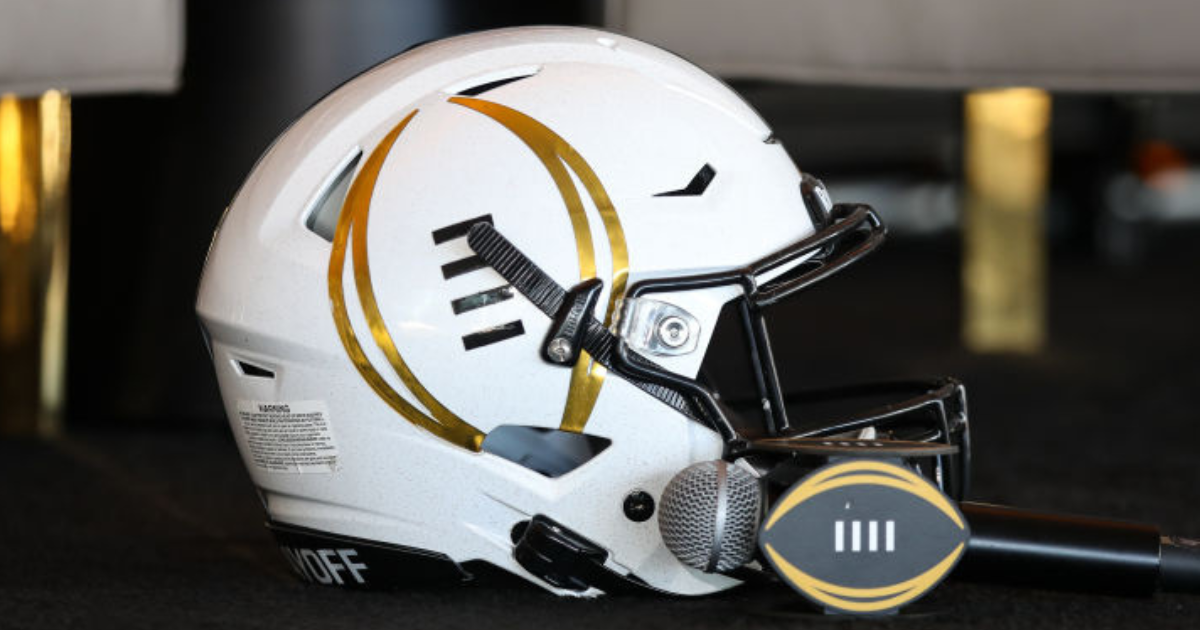
If you want to hammer the College Football Playoff Committee for taking the scenic route on the way to the final bracket reveal, go ahead. That wasn’t the path many of us would have taken, especially if the goal were to set a clear expectation of what the final CFP bracket would look like.
Through more than a month of nationally televised CFP rankings shows, the Committee insisted on keeping Notre Dame slotted ahead of Miami. It didn’t matter that Miami possessed a head-to-head win and an identical record. The Committee told us repeatedly that it felt Notre Dame was better. As a result, we believed that’s what the people in that conference room in Grapevine, Texas, would do at the end.
They didn’t. On Sunday, when the final bracket featured Miami and not Notre Dame, it caused confusion and frustration. No, it was a shock. People couldn’t fathom how two idle teams could be flipped on Selection Sunday when neither team played during championship weekend.
We’ll get into why that happened later, but here’s the important thing: It’s not about the journey, it’s about the destination. And the destination was unequivocally correct. The games still matter and the notions of what we — or the people on the Committee — think would happen in the future didn’t come into play, even if we spent the last month thinking they would.
Miami couldn’t have been left out of the bracket while maintaining the integrity of the games. Had the CFP Committee included Notre Dame and not Miami, what they think would have taken priority over what happened on the field. Notre Dame and Miami’s resumes were similar enough that the result of the game had to matter the most. It couldn’t be ignored. It wasn’t.
If it wound up being ignored, that would have thrown the selection process into a chaotic world where the Committee members could veer from the guardrails — the games – and do whatever they want. So for at least another year, we get to live in a world where the CFP Committee leaned on the results of the games more than personal notions.
If you want to get into why the CFP Committee made this harder on themselves, that’s fine. They could have ranked Miami higher from the get-go, which would have stripped away all of the shock and confusion Notre Dame fans are feeling right now. The Committee made this harder for no reason.
So what’s the explanation for how the jump happened?
“Not until they really got to close proximity — side by side — with the move with BYU were we able to evaluate just those two teams. We always had someone between them,” CFP Committee chair Hunter Yurachek said on ESPN’s broadcast.
It’s all nonsense. How the CFP Committee could ignore the result of that game until its final deliberations doesn’t really make sense. If you’re questioning the process, please do it. There are plenty of holes to poke. But poking the process after the results are right is much better than poking the process after unjust results.
That brings us to Alabama, which got in despite losing to Florida State at the beginning of the year and getting blown off the field by Georgia in the SEC title game Saturday. Why didn’t Notre Dame and Miami go? How did Alabama get in still? Well, it all came back to who you beat.
Yes, Alabama had one more loss than Notre Dame. But its strength of schedule — which ranked No. 11 in comparison to Notre Dame at No. 42 and Miami at No. 44 — carried the day. Contrary to the propaganda the SEC dispersed last year about being penalized for playing tougher schedules, Alabama was actually forgiven for the extra loss because it beat Georgia during the regular season. That’s the benefit of playing in a tougher conference. You get a mulligan.
People have reason to be upset because of the unorthodox path the CFP Committee took.
But leaving Miami out in favor of Notre Dame would have been a miscarriage of justice. Feelings would have taken precedence over results, which ultimately means seasons could be simulated and teams could be slotted based on data.
This CFP Committee, more than others in the past, felt erratic. It felt like this Committee could have done something unconventional. But at the end of the road, it did what was right.
Even if you’re angry, be happy about that.
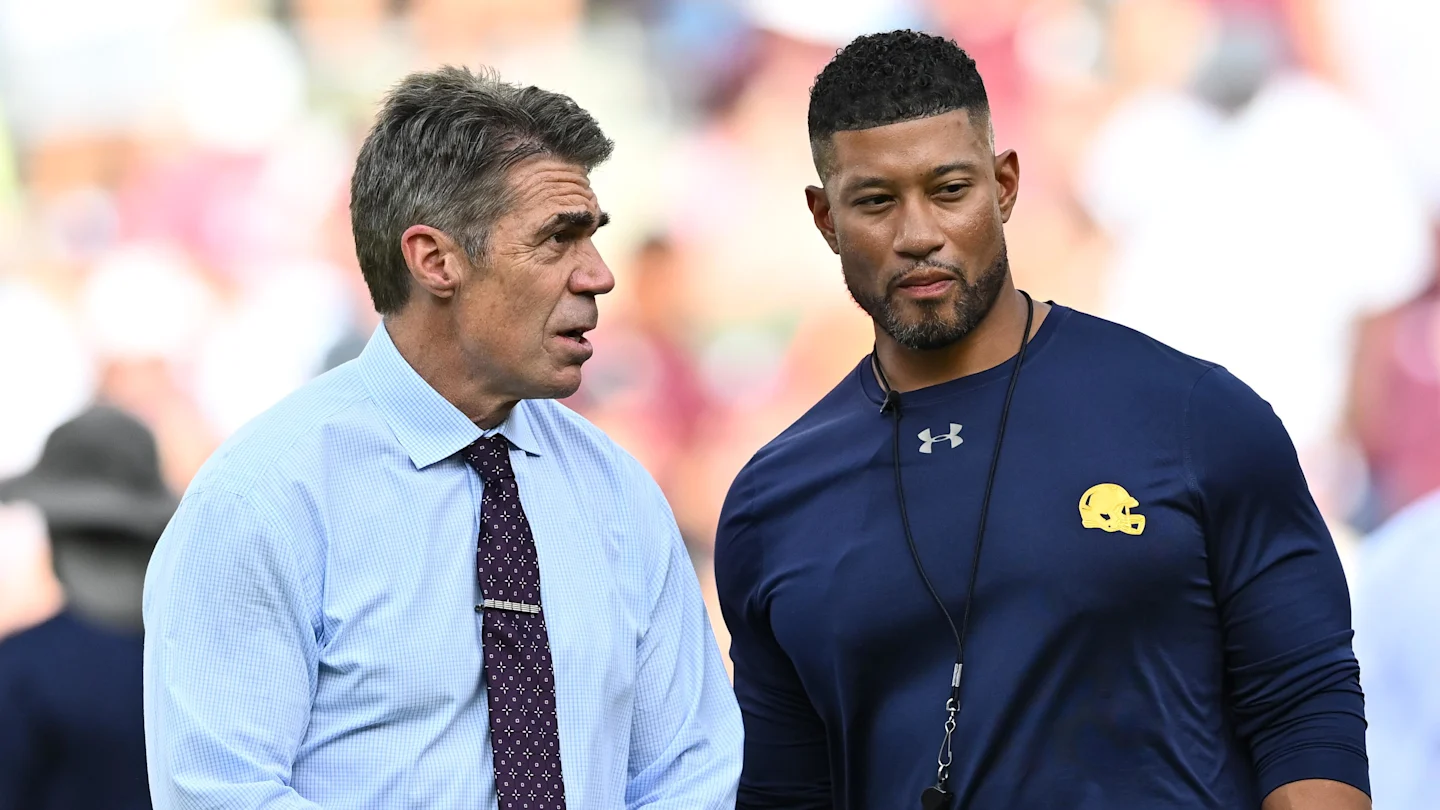
Whatever decisions the College Football Playoff selection committee eventually make, there seems to always be some form of controversy, and the 2025 bracket was no different after a consequential decision between Miami and Notre Dame.
With that controversy in mind, ESPN college football announcer Chris Fowler believes the playoff format and selection process could undergo yet more reform in the future.
More change could be on the way
“This is a bracket that’s going to be talked about forever. And not just because Notre Dame got excluded. But because of the framework that created the choices that the committee had to make,” Fowler said on Sunday’s selection show.
Fowler pointed to the “tweak” the College Football Playoff made a year ago, when it ended the confusing distinction between seeding and ranking, and believes another structural alteration could follow after this year’s dilemma.
“There’s going to be something more than a tweak going forward because all of a sudden, inclusivity, which most people in the sport think is a pretty good idea…
“Inclusivity sounds good until teams like Notre Dame and Texas and Vanderbilt get squeezed out. Then people have a serious problem with it.” he said.
Notre Dame felt it coming
Schools take a brave face in public when they have a chance to make the playoff, but the reality behind the scenes is often a little more nerve-racking.
Fowler added: “This is one we’re going to talk about for a long, long time. If you’re Notre Dame, you’re crushed. They were worried about this.”
“I know they projected confidence, but there was a lot of unease on the part of Marcus Freeman and others because they saw them drop last week and now in consecutive weeks without playing, they have dropped in the rankings. And it ends up costing them despite a 10-game winning streak to finish the season.”
Miami over Notre Dame was the right call
Notre Dame had been ranked ahead of Miami in the College Football Playoff rankings until Selection Day itself, when they swapped the Irish for the lower-ranked Hurricanes at the most crucial moment.
Still, despite whatever criticism there may be around the selectors’ decision-making process or timing, what happened on the field still should trump everything else, the ESPN veteran says.
“I have no problem with Miami getting in based on the head-to-head, even though it was early in the season,” Fowler said.
“They won that game at the line of scrimmage… That was real. It was a late field goal that won it, but it still matters. And I think has to matter, or there’s no incentive to schedule any kind of meaningful non-conference game.
“That’s not the committee’s job to protect that, or the committee’s job to protect with a sentimental eye [the] conference championship games, but those are also in danger, as we know, going forward.”
Read more from College Football HQ
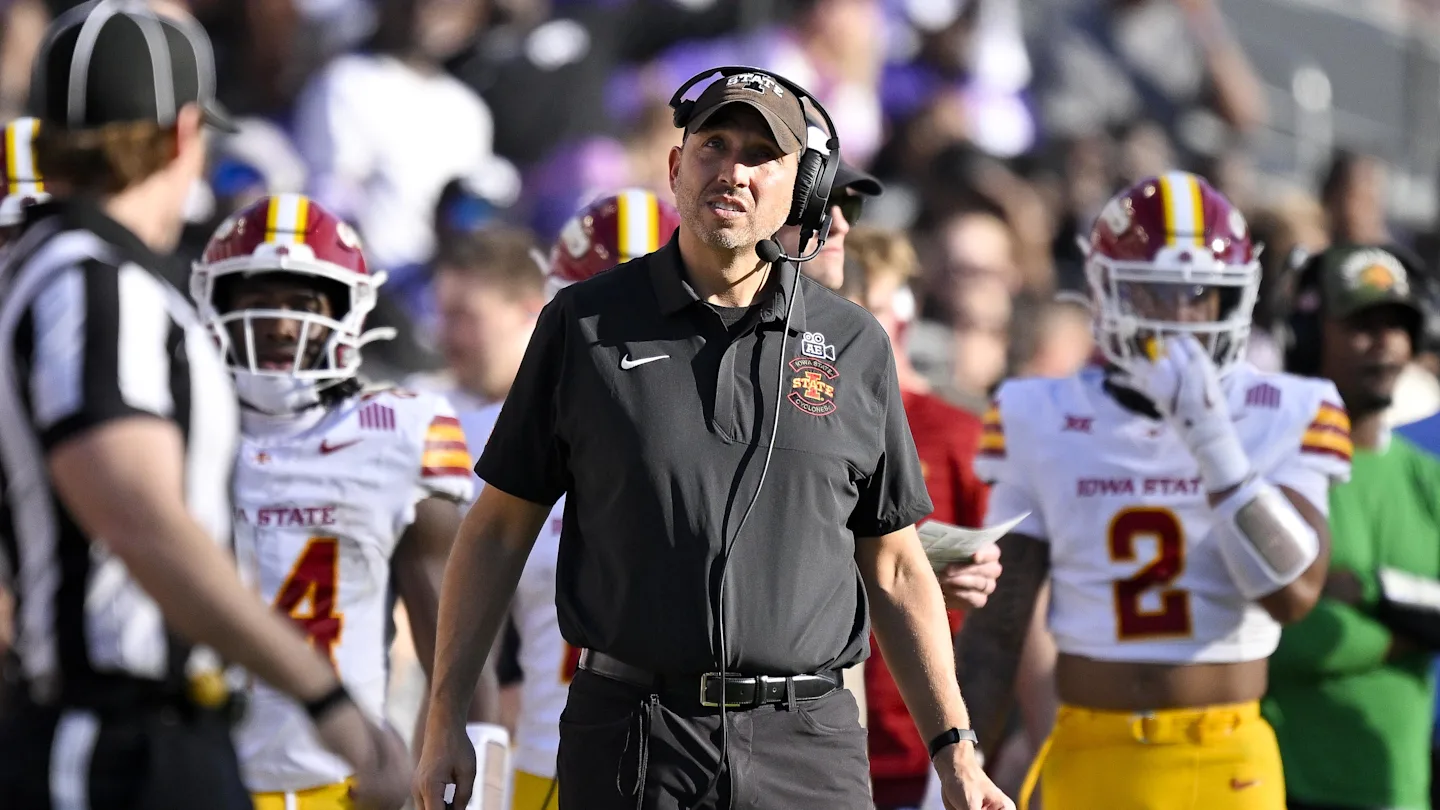
The Iowa State Cyclones will not play a postseason bowl game after all.
Iowa State (8-4) has reportedly declined a bowl bid as the program moves immediately into a coaching transition that accelerated this week, multiple people familiar with the situation told On3.
The decision arrived after Matt Campbell accepted the Penn State job, and Iowa State named Washington State’s Jimmy Rogers to replace him.
The Sun Belt fined Marshall $100,000 after it withdrew from the Independence Bowl in 2024 because of a mass player exodus.
The Big 12 itself has fined member schools previously in 2025 for other infractions, so financial penalties or public reprimands are within the conference’s authority.
The Big 12 will formally review Iowa State’s decision and consult with bowl partners to determine a potential fine or punishment.
Iowa State turns down bowl bid, sources told @On3sports. Cyclones are 2nd Big 12 team that was bowl eligible that opted not to play & could be subject to a league fine, source saidhttps://t.co/oRbPrNx5PJ pic.twitter.com/e8uSvvxc2u
— Brett McMurphy (@Brett_McMurphy) December 7, 2025
The Cyclones opened the 2025 season 5-0 and at one point reached the national rankings, but a four-game midseason slide pushed them off that path.
The team recovered with late wins over TCU, Kansas, and Oklahoma State and reached bowl eligibility with a 20-17 road victory at TCU on November 8.
The season finished at 8-4 overall and 5-4 in conference play.

The reported decision to decline a bowl is tied directly to off-field upheaval.
Campbell’s move to Penn State and the subsequent arrival of Rogers left Iowa State confronting immediate questions about who would coach a bowl game, which assistants would stay for postseason preparation, and how roster availability might be affected amid late-season transfers and staff turnover.
Initial reporting cites those uncertainties, along with the program’s desire to pivot quickly toward building for 2026, as the rationale for opting out.
This choice comes on the heels of a similar development earlier in the week: Kansas State, another bowl-eligible Big 12 team, informed the conference it would not accept a bowl invite.
Read More at College Football HQ
- Nick Saban sends strong message on head coach replacing James Franklin at Penn State
- ‘College GameDay’ announces celebrity guest picker for SEC Championship game
- Kirk Herbstreit reacts to ESPN College GameDay’s historic reveal
- Andy Reid reportedly involved in coaching candidate rejecting Penn State
Updated Dec. 7, 2025, 6:24 p.m. ET
- Notre Dame has declined to participate in a bowl game after being left out of the College Football Playoff.
- The team was passed over for the CFP in favor of Miami, a team that defeated the Irish during the season.
Let me see if I’ve got this straight. The team that gets more help, more deference from the College Football Playoff and the bowl system than any other, is taking its ball and going home.
Well, boo-freaking-hoo.
No bowl game for Notre Dame, everyone. They’ll show that CFP selection committee who’s boss.
They’ll walk right out of the bowl system, and into the loving, waiting arms of self-pity. Which, of course, tracks.
You’ve got to be kidding me.
Notre Dame lost to Miami, and lost the CFP argument. Not only that, the Irish have beaten no team with a pulse, and had no argument that could stick.
No amount of whining and complaining is going to change it. Certainly not a statement released four hours after the CFP did the right thing by choosing the Canes over the Irish, one that humbly thanked friends, family and fans and declared the team was “hoping to bring the 12th national title to South Bend in 2026.”
How about finishing 2025 first?
How about toughen up, hop on a plane to beautiful Orlando and play a grinder of a bowl game against a tough, physical BYU team that — I know this is going to shock you — is also upset about not reaching the CFP.
To say nothing of the life-sized Pop-Tart that awaits the winner of the best non-CFP game of the postseason.
This Notre Dame move just smacks of elitism, of we’re better than you and your playoff and we’re going to prove it. Only there’s one teeny-weeny problem: The CFP does’t need Notre Dame.
The games will go on, a national champion will be crowned and another year will be added to the last time Notre Dame won it all. Which is 1988, in case you’re wondering.
Just how long ago was that? It was also the same year Indiana last beat Ohio State before Saturday night’s monumental moment in the Big Ten Championship game.
That game, that specific night in Indianapolis — merely 130 miles from South Bend — should be a defining statement for Notre Dame and any other blue-blood college football program of the past. The game has changed, drastically.
What was once elite, can easily no longer be. What was once the worst program in college football — with the right hire and whole lot of NIL cash — can be its best.
College football doesn’t need Notre Dame like it used to, doesn’t need the charm and glory and pageantry of the Four Horsemen and Touchdown Jesus and those magnificent gold helmets. Get over yourself, Irish — it’s a new world.
The quicker Notre Dame figures it out, the quicker it realizes every game, every moment on the field, is another chance to convince high school and transfer portal players to come play in the freezing Midwest and try to win a national title for the first time in nearly 40 years.
Young men aren’t interested in taking a stand against anything. They’re invested in making money by playing football, and if you’re really fortunate, maybe somewhat interested in graduating from the same school.
Decades ago, there was an unwritten rule at Notre Dame that prevented the school from playing any bowl game outside the major bowls. But there was a dirty secret behind it.
It wasn’t that Notre Dame was standing on principle, and only wanted to extend a season for players if it meant a major bowl game. It’s because by playing in a bowl game, television-friendly Notre Dame was elevating the status of other schools.
Especially if the Irish lost.
But now there’s another not-so-secret reality for Notre Dame: BYU doesn’t need the Irish. Nor does any other program in college football.
Nor does the CFP or the bowl system or any blue-chip player. The ACC still does, but that’s why Notre Dame is in this mess in the first place.
The best part of the temper tantrum is Notre Dame has been revealed to be just another team, just another program trying to find its way in the ever-changing college football world.
One that isn’t waiting around for the Irish anymore.
Matt Hayes is the senior national writer for USA TODAY Sports Network. Follow him on X at @MattHayesCFB.
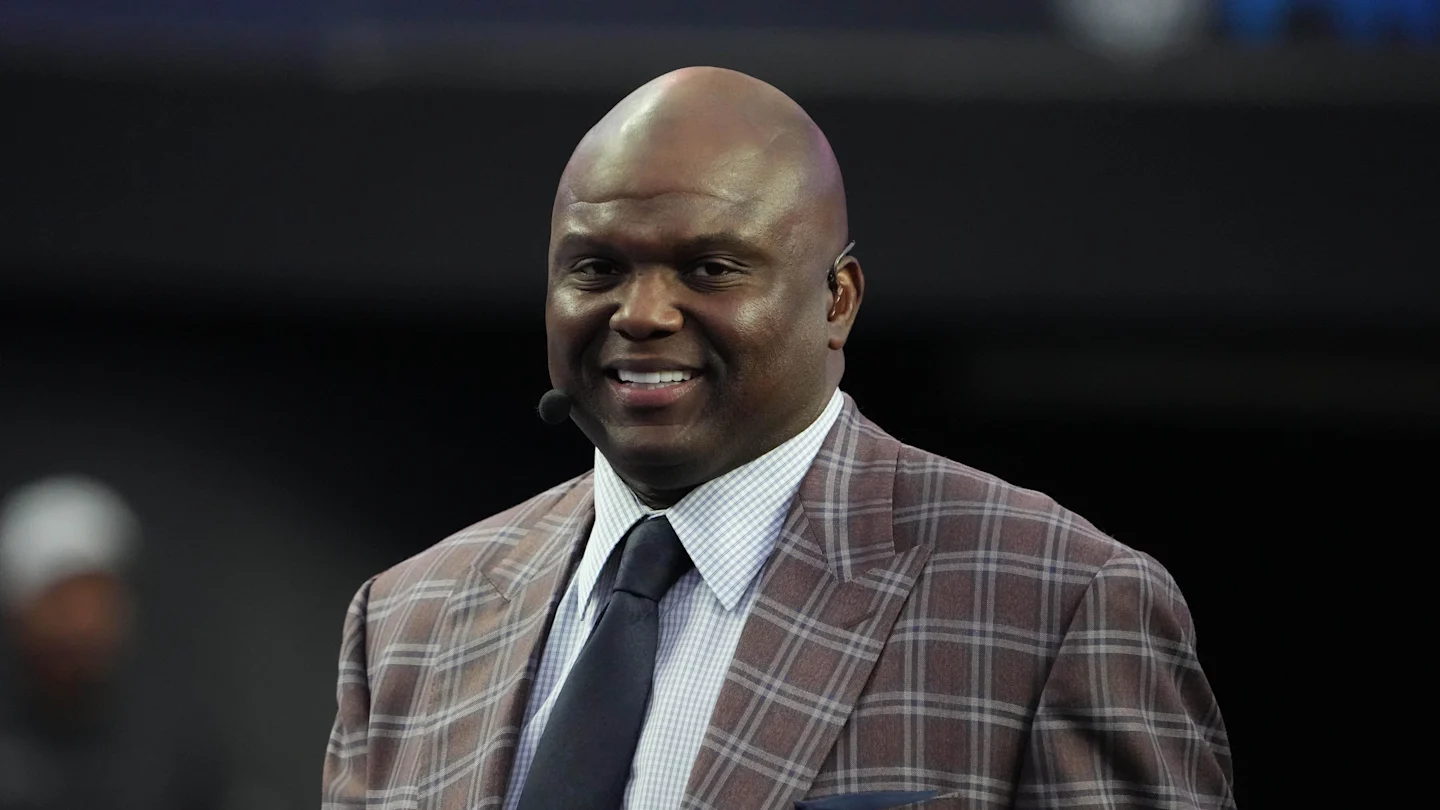
The College Football Playoff has changed basically everything about college football. If there was any doubt on that front, Sunday’s bowl selection situation provided plenty of proof. Several lower-tier power conference teams turned down bowls, leading to several previously ineligible 5-7 teams being offered bowls only for those teams to turn down bowls. But that whole fiasco was a relatively minor issue compared with the day’s biggest story.
Booger McFarland Goes Old School
While ESPN analyst Booger McFarland has covered college football for over a decade and a half and is aware of all the new shifts in the game, he is at heart still something of an old-school guy. Behind the successful broadcaster lies a nasty former defensive lineman who is nicknamed “Booger” after all. And McFarland’s sensibilities were justly set askew by the Notre Dame Fighiting Irish.
Notre Dame Drops Out
After being the first team out of the College Football Playoff field, Notre Dame turned down an opportunity to play in a bowl game. Reportedly offered a slot in the Pop Tarts Bowl against a BYU team that was the second team out of the CFP field, the Irish instead decided to take their metaphorical ball and go home. Enter Booger with some truth bombs.
Booger’s Thoughts
Weak move https://t.co/IaTK1ufIVl
— Booger (@ESPNBooger) December 7, 2025
McFarland elaborated in another Tweet, stating, “I understand Notre Dame being upset about the playoff but to throw a pity party and not play in a bowl game is quite a new precedent for a 10-2 football team.” In yet another Tweet, he sarcastically suggested that Notre Dame’s behavior was “really teaching the kids a great lesson.”
Florida State Stayed In
This situation is virtually unprecedented. In 2023, an undefeated Florida State team was turned down by the then-four team CFP. Amid much hand-wringing, No. 5 Florida State ended up in the Orange Bowl, where they (without starting QB Jordan Travis due to injury) were waxed 63-3 by Georgia. That said, embrassing as that performance was, Florida State did show up and play the game.
Other Bowl Dropouts
Kansas State and Iowa State also both turned down bowl bids. 8-4 Iowa State is in the midst of a coaching transition after Matt Campbell headed to Penn State and new coach Jimmy Rogers is newly hired. Likewise, Kansas State saw Chris Kleiman retire and Collin Klein begin his own tenure. Both schools were reportedly fined $500,000 by the Big 12 for turning down bowl bids.
No other team has had the audacity to say “CFP or bust” like Notre Dame. Whatever tweaks the CFP will make after a controversial season, to have teams diving out of bowls over a perceived slight is an issue that will certainly be considered. It doesn’t sound like Booger McFarland will forget Notre Dame’s decision anytime soon.
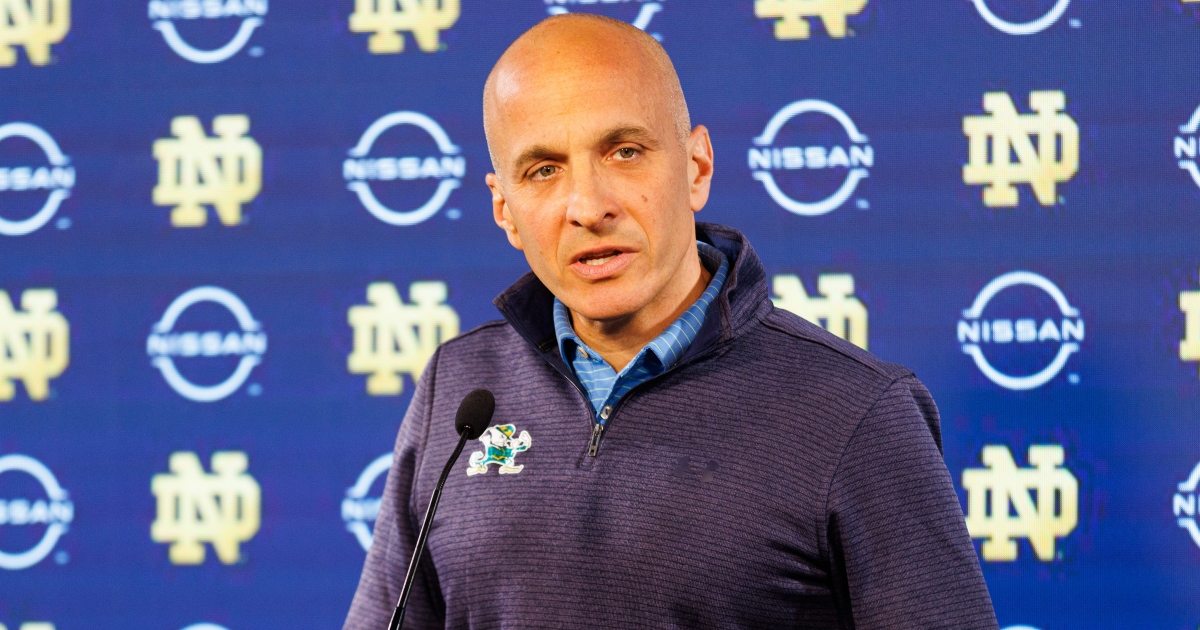
There was no way everyone was going to be happy with the final College Football Playoff rankings. In the wake of the conference championship games, it was clear that three teams, Notre Dame, Miami, and Alabama, were competing for two at-large spots. In the end, it was the Irish who got left out.
In the wake of that snub, Notre Dame athletic director Pete Bevacqua ripped the selection committee, calling the rankings an “absolute joke.” Further, he’d add that the program is shocked to be left as the First Team Out.
“My feelings and the feelings here are just shock and, really, an absolute sense of sadness for our student-athletes,” Pete Bevacqua told Yahoo Sports on Sunday. “Overwhelming shock and sadness. Like a collective feeling that we were all just punched in the stomach.”
Notre Dame had entered the weekend ranked ahead of Miami, despite losing to the Hurricanes in Week 1. At No. 10 and with the Hurricanes at No. 12, the Irish sat right on the cut line. That all changed over the weekend, as BYU lost, dropping them in the rankings. That led to a direct comparison between Notre Dame and Miami, which is when head-to-head finally became a factor. Meanwhile, Alabama lost over the weekend but didn’t slip from No. 9 at all.
For Notre Dame and Bevacqua, it was inexplicable. In fact, the College Football Playoff even feels stolen to them.
“There is no explanation that could possibly be given to explain the outcome,” Bevacqua said. “As I said to Marcus [Freeman], one thing is for sure: Any rankings or show prior to this last one is an absolute joke and a waste of time. Why put these young student-athletes through these false emotions just to pull the rug out from underneath them having not played a game in two weeks and then a group of people in a room shatter their dreams without explanation? We feel like the Playoff was stolen from our student-athletes.”
Hunter Yurachek, the chair of the selection committee, spoke on ESPN shortly after the rankings came out as well. There, he did his best to explain the decision-making process.
“The first move in that (decision-making process) was we felt like the way BYU performed in their (Big 12) championship game with a second loss to Texas Tech in a similar fashion was worthy of Miami moving of them in the rankings. And once we moved Miami ahead of BYU, then we had that side-by-side comparison that everybody has been hungering for with Notre Dame and Miami,” Yurachek said on ESPN.
“And when you looked at those teams on paper, they’re almost equal in their schedule strength, their common opponent, the results against their common opponent. But the one metric that we had to fall back on again was the head to head. I charged the committee members to go back and watch that game again, the Miami-Notre Dame game because it was so far back, and we got some interesting debate from our coaches on what that game looked like as they watched it. With that in mind, we gave Miami the nod over Notre Dame in that 10th spot.”
ESPN’s Rece Davis would counter, wondering why this was the first time head-to-head seemed to matter in this discussion. However, again, Yurachek explained it wasn’t discussed until BYU fell from No. 11, making them directly next to one another in the rankings. That process would seemingly become the issue that Davis took issue with. Given that Bevacqua feels the Playoff was stolen from Notre Dame, it appears that frustration isn’t unique to him.
Bevacqua would go on to explain to ESPN that there is frustration with the process. On top of that, they’ve not yet considered what their bowl future is going to look like.

The College Football Playoff Committee took the messy route, but still landed on the right bracket

Lando Norris breaks down in tears after winning F1 world championship – Motorsport – Sports

Wearable Gaming Accessories Market Growth Outlook

Kentucky set to host volleyball regional

Marko defends promotion of ‘mature’ teen Lindblad

Major changes predicted after controversial College Football Playoff decision

Three Orange County football teams go for CIF state championships –
El Paso volleyball player Giselle Gandara named MaxPreps All-American

TOYOTA GAZOO Racing World Premieres GR GT & GR GT3 — TradingView News
Cal Petersen gives back to youth hockey with the Iowa Wild

Bump, set, spike: Dinos teach students of all skill levels volleyball during unique one day camp

Auto racing legends honored | Local

UW-Oshkosh volleyball celebrates first national championship | WFRV Local 5

Gaming CEO says Cyprus is ‘rocket fuel’ for global tech growth

Major college football program declines bowl game bid after losing head coach

First Tee Winter Registration is open

Fargo girl, 13, dies after collapsing during school basketball game – Grand Forks Herald

CPG Brands Like Allegra Are Betting on F1 for the First Time

Volleyball Recaps – November 18

F1 Las Vegas: Verstappen win, Norris and Piastri DQ tighten 2025 title fight

Two Pro Volleyball Leagues Serve Up Plans for Minnesota Teams

Utah State Announces 2025-26 Indoor Track & Field Schedule

Sycamores unveil 2026 track and field schedule

Redemption Means First Pro Stock World Championship for Dallas Glenn

Texas volleyball vs Kentucky game score: Live SEC tournament updates

Bowl Projections: ESPN predicts 12-team College Football Playoff bracket, full bowl slate after Week 14

How this startup (and a KC sports icon) turned young players into card-carrying legends overnight

Indiana’s rapid ascent and its impact across college football

Pohlman admits ‘there might be some spats’ as he pushes to get Kyle Busch winning again

Robert “Bobby” Lewis Hardin, 56

 Why a rising mid-major power with an NCAA Tournament team opted out of revenue-sharing — and advertised it
 NBA Legend Michael Jordan to Join NBC Sports as Special Contributor
 Falcons mailbag
 Portal Update – Basketball and Gymnastics Take Hits
 has always dreamed in Mercurial. Now his initials are on the boots.
The new Kyl…
has always dreamed in Mercurial. Now his initials are on the boots.
The new Kyl…
-
 Rec Sports2 weeks ago
First Tee Winter Registration is open
-
 Rec Sports2 weeks ago
Fargo girl, 13, dies after collapsing during school basketball game – Grand Forks Herald
-
 Motorsports2 weeks ago
CPG Brands Like Allegra Are Betting on F1 for the First Time
-
 Sports3 weeks ago
Volleyball Recaps – November 18
-
 Motorsports2 weeks ago
F1 Las Vegas: Verstappen win, Norris and Piastri DQ tighten 2025 title fight
-
 Sports2 weeks ago
Two Pro Volleyball Leagues Serve Up Plans for Minnesota Teams
-
 Sports2 weeks ago
Utah State Announces 2025-26 Indoor Track & Field Schedule
-
 Sports2 weeks ago
Sycamores unveil 2026 track and field schedule
-
 Motorsports2 weeks ago
Redemption Means First Pro Stock World Championship for Dallas Glenn
-
 Sports2 weeks ago
Texas volleyball vs Kentucky game score: Live SEC tournament updates