NIL
Richard Pitino explains how he’s building Xavier’s roster in the NIL era


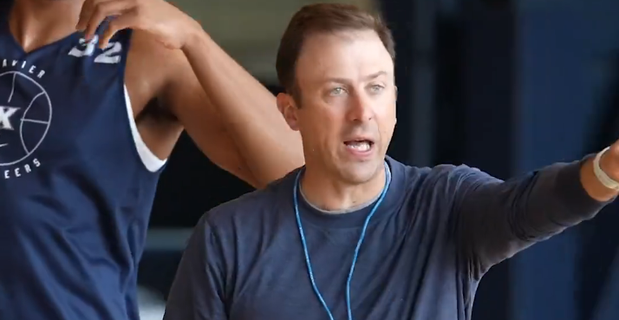
Richard Pitino is entering his first season at Xavier with the challenge of leading a roster that doesn’t return a single scholarship player. All 12 are newcomers, and even in an era of constant roster movement, the scope of this reset stands out.
“Year one is hard,” Pitino said on his recent coach’s show on 55KRC. “Now, people think you can flip it quicker because of the transfer portal, and you certainly can get a lot of players in a short amount of time. But I would just caution everybody to understand that we’re trying to build a sustainable program. Normally, when a coach leaves, the players all leave. That’s just everywhere. All my players in New Mexico left. They didn’t return anybody.”
That reality has led Pitino to balance short-term needs with long-term development, and he admits the debate around whether to still invest in high school recruits is constant.
“The decision everybody’s trying to make right now is, do you take any high school kids?” he said. “I was in four different gyms in two days just picking other coaches’ brains. I still think you should recruit high school kids. It’s a matter of the investment you make. Nobody wants to hear it, but it’s like pro sports now. You’ve got to decide how you want to allocate everything. A lot of my best players in New Mexico were high school kids who grew in the program. I still want to do that, with an understanding that we’ve got guys in our program we want to keep and, in the spring, there are valuable players we can add as well.”
The transfer portal has become the driving force for roster-building across the sport. For Pitino, the system is far from perfect, but he recognizes the leverage players now have.
“Until there are buyouts, I don’t think the number of transfers will decline,” he said. “People always make the argument that coaches can leave. I can promise you we can’t leave as much as people think, because when you sign a contract it’s fair to both sides. That’s the way it should be. It should be fair to Xavier, and it should be fair to me. Right now it’s really one-sided, all towards the player. They shouldn’t apologize. The players shouldn’t, because it’s the greatest deal they’ll ever get in their lives. But they’re allowed to move on. So you treat it year to year while you try to build a culture, with hopes you’re building a program guys want to stay and be part of.”
With NIL and the ability to transfer freely every year, some wonder how coaches can still hold players accountable and coach them hard. Pitino said the new financial layer has made it more clear-cut for him when it comes to how he treats his players.
“I’m meaner to them because they make a lot of money,” he joked. “Like, screw you guys, I’m not going to baby you. I’m half kidding, but I’m kind of serious. People ask me all the time, do you find it hard to be hard on them? No, I do not. I find it way easier, because we’re compensating them heavily. I don’t want them to apologize for it, but I want them to appreciate it and also understand the responsibility that goes with it. There are people who give their hard-earned money to support Xavier, and that’s going to those guys. So those guys have a responsibility off the court, in the classroom, in the community, and also on the court as well.”
When he boils it down, Pitino says every roster decision now comes back to financial fit. “The number one thing we look for is, who can we afford? That’s the biggest thing, as crazy as it sounds. You have to figure out what they’re looking for and can you afford them? What’s important to them, and where do you want to invest your money? Guys with a bigger body of work are less of a risk, but you also need young, hungry guys who are willing to get better. You’ve got to put together a team. You try to forecast it.”
Pitino continued about NIL: “It’s everything right now. Once they get here, not a whole lot has changed, but in order to acquire players and retain players, you need a healthy NIL budget. We’re really grateful for the people who work so hard to contribute to that. You always want more. The hard part is finding the truth. You want to be competitive in it, but nobody has to disclose how much they spend. Nobody really knows. You’ve got to fact-find as much as possible because you want to be competitive in your league. For the Big East, not having football, I don’t know if it makes it easier, but it’s in its own way different because you don’t have to share funds with football.”
Every player is different. And while the financial aspect drives a lot of the process, there’s still other visions that Pitino and his staff sell recruits on.
“NIL is very important, but that’s definitely not what we talk about the most,” he said. “You have to have it. You’re not going to get players if you don’t have a competitive NIL. We talk about (a player’s) vision, where he fits in, how we think he will flourish in our style of play. You talk about the tradition of Xavier, winning in the NCAA tournament, being in the Big East, being able to play at Cintas Center in front of an amazing fan base. It’s a feel thing. You get them on campus, and they know, OK, I can become the best version of myself, whether it’s one year, two years, three years.”