Connect with us
https://yoursportsnation.com/wp-content/uploads/2025/07/call-to-1.png

Rec Sports

Rising Use of Steroids and Other Performance-Enhancing Drugs Carries Risks

Published

on


While historically tied to athletes cheating in their respective sports, the specter of performance-enhancing drugs (PEDs) has found its way into local gyms and youth athletics. As the scope of PED use grows, so do healthcare provider concerns, as problems associated with the dangerous drugs spill into their practices. An estimated 3 million to 4 million Americans use unregulated and unsupervised PEDs – more than the number of U.S. patients with type 1 diabetes. However, the estimate is likely a significant undercount. Federal health agencies do not keep statistics on adult PEDs use – in contrast to other illicit drugs – leaving researchers and providers to approximate the problem’s scope.

“PED use is probably more widespread than we would assume,” said Derek Stokes, assistant professor and sports medicine physician in the Department of Physical Medicine and Rehabilitation at the CU School of Medicine. “I would say that it’s problematic and it’s a significant growing public health concern, not only in competitive athletes, with much of the media attention focusing on those stories, but also in recreational athletes at your local gym and even high school student athletes.” 

As their use expands, understanding the perplexing world of PEDs – which include far more than steroids – is critical for users, providers and parents. The multi-billion-dollar industry raises significant mental and physical health concerns, preys on people through social media and fuels negative body image issues, experts say. 

What are PEDs and are they safe? 

“I think when people hear ‘steroids’ or ‘PEDs,’ they think of exogenous – external and supplemental – testosterone, but it can actually encompass several drugs,” said Ben Hill, PharmD, an assistant professor in the Department of Clinical Pharmacy at the Skaggs School of Pharmacy and Pharmaceutical Sciences.

“For example, in shooting sports or archery, they would consider a beta blocker a performance-enhancing drug. They have a medical use in treating heart conditions, but they can also be used to slow the heart rate to make shooting easier and more accurate.” 

From anabolic steroids to insulin, the scale and diversity of drugs and products used to promote muscle growth and enhance image are numerous and evolving, making staying updated a continual struggle for experts. 

PEDs: Controlled substances

All testosterone-based products and anabolic steroids are listed as Schedule III drugs under the Controlled Substances Act. That means providers can prescribe only limited amounts at a time and all refills require written approval. Possession without a prescription is also illegal, carrying fines and potential incarceration depending on the offense. Trafficking the drugs brings stiffer penalties. The United States has also made periodic updates to legislation regarding PEDs, which last expanded in 2014.

“Our scientific understanding is being outpaced by the clinical or public use of these PEDs,” Stokes said. “Scientists are working as fast as possible, but we also need to make sure that providers, including primary care physicians and pediatricians, have adequate educational exposure to these topics to identify risk behaviors in patients early on.”

Because many PEDs are produced in murky, underground markets, users have little insight into safety or ingredient integrity, whether they buy products online or through “medical spas or clinics” that offer compounded versions. 

“Unless you have specific high-quality tests being done on those products,” Hill said, “you can never say for sure what you’re going to be receiving or putting into your body, on top of risking infection through injectable drugs. A fancy website doesn’t mean it is reputable, especially if it is advertising that you can bypass your doctor and all these regulations.” 

PED terminology 

PED users have a series of colloquial terms for the drugs and their use: 

  • Stacking: using a combination of drugs and supplements simultaneously to further push bodies to achieve a response (while also increasing health risks).
  • Cycling: switching on and off from one PED to another to give the body breaks from a single PED.
  • Pyramiding: gradually increasing dosage amounts.

A shrouded problem boosted by social media 

The reasons behind the high use of these dangerous products are multifaceted, according to Emily Hemendinger, MPH, LCSW, an assistant professor of psychiatry at the CU School of Medicine. But they center around a societal conception that ties worth to physical appearance – a notion that technology has made inescapable, she said.

“Our algorithms are flooded with influencers, athletes and other public figures selling the latest supplements to lose weight, enhance our cognitive functioning or even reverse aging. They are touting the supposed benefits of these drugs without understanding the dangers they pose.”

When existing emotional issues are combined with use, it creates “a perfect storm,” Hemendinger said.

“These drugs are frequently used by people who are unhappy with their appearance, have lower self-esteem and self-worth, and who may have co-occurring mental health conditions,” Hemendinger said. Many users consider more traditional efforts – exercise combined with diet and nutrition – insufficient or too slow, she said.

PED use poses widespread physical risks

The list of PEDs’ potential physical effects is long and can ultimately spiral from “mild” headaches and nausea to strokes and cancer. The products are even more dangerous in youth.

“From a pediatric standpoint specifically, premature growth-plate closure can be an issue, which will stunt height development,” Stokes said. “Delays to puberty can cause big issues, and rapid muscle gain on developing bodies can overload the tendinous points leading to significant injuries.”

Environmental factors, such as Colorado’s high altitudes, can also play a role in physical effects from PEDs, Hill said. Testosterone or synthetic testosterone can increase red blood cell count, especially hemoglobin and hematocrit, he said. “If you start thickening your blood, you’re at a higher risk of having a clot form that can induce heart attacks or strokes, especially at altitude.” 

In her practice, Alice Barnes, PT, DPT, SCS, sees another group that might be interested in PEDs: those recovering from a sports injury. 

A medical need, but dangerous availability 

Despite the raft of online vendors (many underground) for performance-enhancing drugs, some products (such as testosterone) still have a medical purpose for patients when taken under supervision and with the right testing support. For example, low testosterone in those of male-born sex could trigger decreased libido, sexual dysfunctions, depressive episodes, tiredness or fatigue. 


He emphasized: Several FDA-approved testosterone-boosting drugs are sourced from reputable providers and help fix an underlying condition to get a patient back to a healthy baseline. “Those with low testosterone undergo regular lab monitoring to avoid these side effects,” Hill said. “Taking these drugs without talking to your primary care provider can lead to a risk of pretty detrimental side effects when you are at a normal level of testosterone.” 


A significant challenge for healthcare providers, however, is the ease of access and attendant opportunities for misuse.


“I just got on Google last night and typed in various anabolic steroids and clicked shop,” said Derek Stokes, assistant professor of physical medicine and rehabilitation at the CU School of Medicine. “These could ship directly to me without any input from a medical professional. It’s a big issue because this is a wild west of unregulated sources combined with an ease of access.”

“I see adolescent and adult athletes at our practice, from those on their high school teams to those running the Leadville 100 and professional organizations such as the U.S. Tennis Association,” said Barnes, a lecturer and associated faculty member in the University of Colorado Physical Therapy Program, who specializes in sports and athletic physical therapy.

“After an injury, the conversation ends up being, ‘Well, how do I get back faster?’ And as providers, we have to help ask patients important questions around: ‘How are you fueling? What does your nutrient timing look like? What types of foods are you putting into your body?’ We have to tell patients they can’t rely on these products for recovery or enhancement.”

Another scenario Barnes sees: When PEDs themselves lead to injuries. “A lot of times with PEDs, you may see an immediate response. However, you’re going to have an overall decrease in your lean muscle mass as it gets broken down, which opens the door for injuries. If you combine that with a false sense of security when it comes to unsustainable and fast increases in strength, endurance, recovery and other physical abilities, you might be at a further risk of injury when you are supposed to “cycle” off these drugs ” she said.

PEDs can create a heavy mental load 

“We need to take a step back and think a lot about the long-term health impacts – both physical and mental – in order to address this issue,” Stokes said. “On the mental health side, there’s such a potential for a larger pattern of impulsive and risk-taking behavior – alongside illicit drug use, especially in young males.”

Hemendinger agreed, and said the risks of PEDs only exacerbate existing mental health issues and do not address the underlying conditions. “Use of these drugs can be related to body image distress, perfectionism and eating disorders, all of which will only worsen with the continued use. The same can be said for aggression, irritation, depression and anxiety,” she said. 

Since these drugs can affect the neurotransmitter pathways in the brain, sleep patterns, movement, emotions, appetite, sexuality and learning are all impacted, Hemendinger said. All these changes stack up while the root cause or reason for taking PEDs in the first place could be reduced and better addressed by speaking with a therapist or psychiatrist, she said.

Fighting back against marketing

While it can be difficult to avoid falling for PED marketing tactics and influences, Hemendinger says there are a few steps to take to practice body acceptance and neutrality. First step, balancing your social media use and realizing when those feeds aren’t serving you.  


“You have to start by acknowledging that our culture is obsessed with appearance, winning, and achievement,” Hemendinger said. “Focusing on those things won’t help you in the long run. From there, recognizing when you are being critical of your body and performance and naming those as thoughts, not the truth, while practicing what you are grateful for with your body to shift the function of exercise to less around physical appearance and letting go of comparisons to other ‘ideal’ bodies.

Stokes emphasized that education about PEDs is even more important for youth – and that support networks of parents and peers play an essential role in their behaviors. 

“With younger populations, a lot of times it’s peer pressure and normalization around these drugs,” Stokes said. “There’s a thinking of invincibility, that these side effects and growth and development delays won’t happen to them. So we need the coaches and adults in their lives to be present and a safe outlet. Role models alongside peer support are huge in stopping these behaviors.”

Experts: Solutions lie in trust and guidance for better long term health

So how can providers, coaches and parents help? Have open, honest and non-judgmental discussions about PED use and body acceptance, the experts said.

“We’re movement specialists,” Barnes said. “How do we help our patients think about the way we move, take care of their bodies and reach their goals in a healthy and sustainable way?” Conversations should include everything from protein timing and training schedules to integrating mental health support during recovery, she said. 

And open conversations, whether it’s providers or parents, must include listening, Stokes said. “It is important to explore why they are using PEDs. What are their goals? Strength? Self-esteem? Performance? Knowing that can be key to understanding how to guide them to healthier and safer pathways for those same goals.”

Barnes has one such patient she started such a conversation with. 

“I have an adult athlete that had a bilateral quad tear that was sent to the hospital for rhabdomyolysis – a serious injury where your muscles break down and toxic pieces of your muscle fiber can enter your bloodstream,” Barnes said.

“He sustained this injury playing pickleball, which is uncommon. After looking at his lab numbers, we had to have a conversation asking, ‘Are you cycling on and off steroids? That’s going to affect your tendon health. I think that’s great that you feel strong and look great at the gym, but is it functional? You’re a dad of three. You have to be able to run around with your kids.’”




Link

Continue Reading
Click to comment

Leave a Reply

Your email address will not be published. Required fields are marked *

Rec Sports

Meet Long Beach’s newest sports powerhouse: SATO’s Drone Soccer program

Published

on


What began as California’s first drone soccer team has made breakthroughs in the sport to become the gold standard of academic and competitive success in Long Beach within just three years of its founding. 

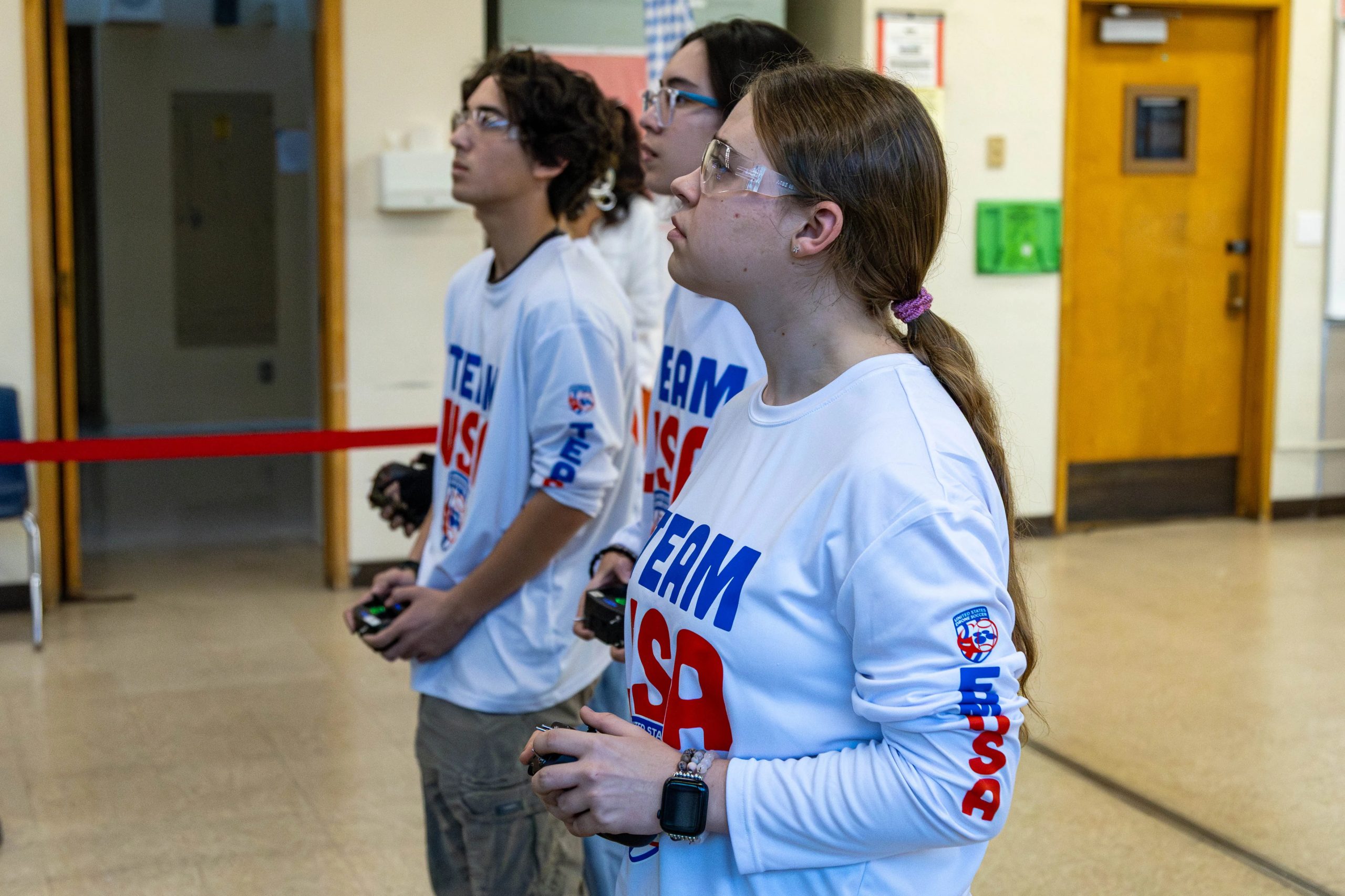
The SATO Academy of Mathematics and Science Drone soccer team represented the United States during the 2025 Fédération Aéronautique Internationale (FAI) World Drone Soccer Championships in China from Nov. 15-18, where the team placed fourth in the 40 centimeter section and fifth in 20 centimeter matches. 

“It’s honestly mindblowing because I didn’t think we were gonna get that far,” said Kira Black, president of the SATO Drone Soccer Club and the team’s goalie.

SATO Drone Soccer head coach Albert Gallo founded the program after he heard about the U.S. Drone Soccer League and subsequently pitched the idea to the principal, who “absolutely loved it,” he said. Gallo then began pitching the program to kids he taught in his engineering class during the 2022 school year, and it has grown ever since. 

Drone soccer consists of four defenders and one designated attacker (the drone with red stripes). The attacker’s goal is to go straight through the goal ring to score points for their team. (Samuel Chacko | Signal Tribune)

Drone soccer is a five-on-five sport where the aim of the game is to score as many goals as you can by driving a “striker drone” completely through the opponents goal. Two members of each team are designated as the “striker” and “goalie” as the match is broken up into three, three-minute sets. The team who scores the most goals wins each set, and whoever wins two sets wins the match.  

The SATO Drone Soccer program is broken up into two senior-led official teams they send to tournaments, “Mushu” and “Dragon Fire.” The two separate groups of seniors have been on the team since its inception at SATO. The school also has a separate club for students to join recreationally. 

“I told them [the professional players from Mushu and Dragon Fire] from the beginning that, ‘you guys are the pioneers of this sport,’ we’re rewriting playbooks [and] we’re writing strategies.”

– SATO drone soccer coach and team founder Albert Gallo

SATO’s drone soccer team has been dominating the U.S. drone soccer sphere since its inception.

Since starting the program in 2022, they’ve placed first in the U.S. Drone Soccer Championships in 2023 and 2025, and earned a second-place finish in 2024. Multiple members of the program have received recognition from the United States Drone Soccer Association. 

Most recently, team Mushu won the U.S. Drone Soccer Championship on May 3, 2025 and had the opportunity to represent the U.S. National Team in China. 

The SATO Drone Soccer Club talks with one another just before being dismissed at their 7 p.m. practice on Dec. 9, 2025. (Samuel Chacko | Signal Tribune)

“I’m extremely proud of our students and our pilots, I couldn’t have done it [without] my wife helping me, the principal of the school helping, the district helping us finance the equipment. Seeing all that growth is very satisfying,” Gallo said. 

Drone Soccer originated in South Korea in 2016 from the research team in CAMTIC Institute of Technology, but the first tournament in the U.S. started in April 2021 in Colorado, with the United States Drone Soccer Association formally launching near the end of 2021. 

SATO’s Drone Soccer program has helped students apply the skills they learn in STEM classes as well as build their communication and teamwork skills.

“I’ve made a bunch of new friends just by being in the club, I’ve been more social, I’ve been a better communicator,” Black said. 

As their success has catapulted them into a Long Beach sports powerhouse, the team’s goals have shifted from just having fun to placing first in every single tournament they enter. 

Kira Black, senior and president of the SATO Drone Soccer Club, talks with the team on Dec. 9, 2025 as they draw up different types of formations during their last practice. (Samuel Chacko | Signal Tribune)

SATO’s program has also helped influence other schools across the United States. According to the U.S. Drone Soccer Association, U.S. Drone Soccer has reached 300+ schools and organizations, serving 5,000+ students in 38 states.  

The team has also been instrumental in getting other drone soccer teams in Long Beach started, allowing the Millikan High School drone soccer team to practice at SATO and loaning them drones to use. 

Albert and his wife, Andrea Gallo, are co-founders of California Drone Sports, which holds camps, coaching clinics and helps fundraise for schools with the goal of continuing to expand, promote and support drone soccer programs throughout California. 

Even with all of the success as one of the pioneers of drone soccer in California, the team faces challenges on the horizon. 

Twelve seniors from the official teams will soon be graduating from SATO, which means more than half the program is leaving. Gallo’s main goal is restructuring the team while maintaining their competitiveness, he said. 

SATO Drone Soccer Club head coach and team founder Albert Gallo poses with the team’s awards, trophies and a signed team USA shirt on Dec. 9, 2025 in Long Beach. (Samuel Chacko | Signal Tribune)

“I’m gonna miss these kids the most because there’s 12 of them,” Gallo said. “[To] see them go on to do great things is gratifying, but it’s also the knowledge base that is leaving.”

The other challenge is finding money to get students to international tournaments. During the tournament in China, donations from the Long Beach Airport and Supervisor Janice Hahn were divided between hotel rooms and equipment, while the students’ parents paid for the flights to China. 

“I heard there’s a tournament coming up in April in France and I would love to take a team, but where do we find the money? You could probably find money for hotels and food but who’s gonna pay for the flights?” Gallo said. 

Gallo said they’re hoping to have an invitational on Jan. 31 and host a regional competition on March 21.

“I would love to fill the stands with more fans and more people wanting to come,” he said. “[The March 21 event] would be great just for people to come out and watch and see what drone soccer is about.”

For more information about their program and events, follow SATO’s Drone Soccer Club on Instagram.

Samuel Chacko

Samuel Chacko

Photojournalist


Samuel Chacko is an award-winning photojournalist from Long Beach, California. Samuel currently works as a freelance journalist for multiple publications and he is a class of 2025 Cal State Long Beach graduate. Samuel loves watching sports (the Ravens and the Yankees) and taking photos.
Check out more of Samuel’s work here: https://samuelchacko.com/ 


Link

Continue Reading

Rec Sports

Officer Jack passes away | Local News

Published

on


“His sudden passing will be felt deeply by all who knew him.” That’s what the East Alton Police Department posted on social media, Friday, following the death of Officer Jack Stalcup on Christmas Day.

The 69-year-old Stalcup had served in various capacities with EAPD since his retirement as a South Roxana police officer. He served 32 years there.

East Alton Police say Stalcup also worked with parks and recreation to coordinate youth sports and volunteered with village events.

Visitation is from four until seven Tuesday afternoon at Mark’s Mortuary in Wood River. The funeral service will be on Wednesday at eleven.


Link

Continue Reading

Rec Sports

Playing sports isn’t cheap – Lake County Record-Bee

Published

on


A friend sent me a photo of Mt. Holly in Michigan. Funny thing is, that’s where I first learned how to ski with my brother and my parents. I wore two pair of heavy socks and a pair of red rubber boots. My feet froze and I don’t remember having fun. Just being cold.

Mt. Holly opened in 1956, I was 8 years old and my brother was 10. My parents were in their early 40s. I’ve always thought that they were brave to begin a sport like skiing in their 40s.

But in Michigan, you either huddle by a fire or get out and enjoy the snow. My family enjoyed the snow.

I remember wearing an old pair of my mom’s ice skates. They weren’t figure skates just plain white skates. I always thought that if I had had figure skates I could have been a contender. But no, I ended up skating on my ankles with absolutely no support. I was the worst skater in the neighborhood.

Skiing was about the same. My brother got a pair of Head skis, great ones available at the time, and I skied on a pair of wooden skis until I was 16. It was after my brother died that I inherited his skis. At 6 feet 3 inches, his skis weren’t for me at 5 feet 7 inches. They completely ruined my skiing. But that’s what I got.

It’s my belief that if your children are going to participate in a sport, they should have the tools/equipment to do so, even though it’s not always easy as equipment is expensive.

Maybe my parents knew I was clumsy. But then they must have known that I persevered for decades in skiing, even after a ski accident that caused a spinal injury. Not in skating though as I never skated on a pair of descent skates.

Renting equipment helps while learning to ski.

My friend Mabel said, “Being one of the parents in the stands for wrestling competitions was like watching paint dry because it would take forever with only two wrestlers wrestling at a time. It was boring and I’d take a book. If my son didn’t make it to the next level, I’d have to stay, for it was a team sport, even for the parents as it wasn’t good sportsmanship to dip out. Rah, rah, rah.”

One friend told me they were dirt poor when she was a kid, and she tried soccer but wasn’t good at it. But she found her love for horses through her dad, a horse trader, so she rode horses and still does.

MoneyFit had great tips on how to budget for youth sports.

Rather than buying all the equipment at one time, get the most important gear, i.e. helmets and cleats for football and skates and helmets for hockey.

Many sports stores have used gear. As with clothing, kids outgrow equipment so it’s a good idea to check with sport stores in your area for items. Also, teams have gear-swaps. If your child is moving up an age bracket, there are others also moving up and leaving their equipment for a child behind them.

Comments on Reddit say that Rec Leagues are much more affordable than competitive sports travel/clubs. Rec Leagues also provide great coaching and skill building for players.

Several comments said the players’ parents should look at helping the team with coaching and other volunteering, plus consider working at events to raise funds for the team to offset the cost of their child/children’s sports.

I have three great grandsons and I’m sure (knock wood) their parents are planning wisely as all three are playing sports.

What’s a girl to do?…guess it’s time to start a “sports fund.”

Lucy Llewellyn Byard welcomes comments lucywgtd@gmail.com


Link

Continue Reading

Rec Sports

How Young Athletes Can Join Fairfield’s Basketball Jamborees

Published

on


127 Sports Intensity (FBC) will host their annual boys & girls Basketball Jamborees at Fairfield High School, in January. Girls divisions are set for Saturday, January 24th, with the boys divisions on Saturday, the 31st. Mike Schmidt, at Fairfield High, is looking for girls & boys who’d like to participate & play in the Basketball Jamborees. Please contact Athletic Director Mike Schmidt, at Fairfield High School, at www.fairfieldeagles.com, & then get set to JAMBOREE! Go Eagles!!


Link

Continue Reading

Rec Sports

Wilmington High Roundup: Wrestlers host annual Sons of Italy tournament | Sports

Published

on


The Wilmington High wrestling team hosted its annual Sons of Italy tournament last weekend.

Before the Sons event, Wilmington competed at the Wakefield tournament. 

In Wakefield, both Ma­son Kwiatkowski (157 pounds) and Jonathan Pa­natta (hea­vyweight) placed sixth. Samuel Beaudoin (106) and Joshua Lopez (140) picked up some good wins also.

Last year, Wilmington finished 3-12 overall in dual meets, but return plenty of experience with captains Kwiatkowski and junior Theo Bryson leading the way.

Other top returners in­clude senior heavyweight Jonathan Panatta, junior Adam Saied at 165 and sophomores Domenic Bo­nanno, Ronan O’Shea, Beaudoin, Rafael Hernan­dez, Joshua Lopez and Colby O’Brien.

Newcomers include so­phomore Gabriel Andrade and freshman Jordan Wedge.

“We have a great group of second-year wrestlers that we are confident will make an impact on the team’s performance,” said WHS coach Kevin Ri­ley. “Samuel Beaudoin, Jo­shua Lopez and Colby O’Brien all picked up some quality wins at the varsity level and we are excited to witness their continued pro­gress. Adam Saied and our junior captain Theo Bry­son are now upperclassmen. They are both looking to rebound from a previously shortened season due to in­jury. We are excited for their return. Our heavyweight, Jonathan Pa­natta is looking to build upon a great junior year picking up several quality wins in­cluding success at the Lowell Holiday Tourna­ment. Our senior captain, Mason Kwiatkowski is fo­cused on making his final year his best yet. He produced a lot of quality wins for the team last year and they look forward to his leadership for the 2025-2026 season. We welcome David Watson to our coach­ing staff. 

Coach Watson brings a vast amount of wrestling experience and family pe­digree to the table and we are fortunate to have him. We are also fortunate to have former standout wrest­ling alums Evan Walsh and Ken Adams back as assistants. Both Coach Walsh and Adams bring college level experience to the table which is invaluable.”

Gymnasts ready

The Wilmington High gymnastics team is ready for a solid season.

The Wildcats will be led by seniors Sienna Brick­man, Maddie Plurad and Lexie Masters this season.

Juniors on the team in­clude Jordan Haering and Isabelle Maiella while so­phomores are Emma Cal­lahan, Martina Andreeva and Lindsay Fontana.

Freshmen on the squad consist of Emmy Rada, Kel­li Tkachuk, Isaure Pretot, Janice Ryou, Grace Call and Lily O’Connor.

Three eighth graders will compete with the Wildcats including Gia Slusher, Tea­gan Sullivan and Liora Dashevsky.

“We hope to have a great season,” said WHS coach Kristen Hannon. “We have our returning captains Lexie and Maddy, who are entering their senior season. Along with our other senior Sienna returning, we have our new junior captain Emma returning; as well as our other juniors Jordan, Isabelle and sophomores Martina and Lind­say. We have the po­tential to use a variety of our talented kids in the all-around or at least to fill in the gaps where needed on other events. We hope to keep up the success and momentum we have had from this past season, while building for the future.”

Swimmers optimistic

The Wilmington High swim team is partnering with North Reading this winter with coach Jim Boyle as the head coach.

The squad was 1-5 last season, but is looking forward to improving this year.

Senior Ella Dong and junior Cole Falk are the team captains while other returning letter winners for the Wildcats include senior Vijay Cudia, senior Declan Savage, senior Jon Mehr, senior Gabby Lat­son, junior Cooper O’Shea, junior Kyle Griffin, junior Angelia Vo, sophomore Stella Michaud and freshman Emily Falk.

Promising newcomers are freshmen Alita Nguan­siri, Ruby Davidson and Molly Bagtaz along with eighth grader Vasili Lis­tapod.

“Our goal is to continue growing the team while becoming increasingly com­petitive within the Cape Ann League,” Boyle said. “We have several swimmers with the potential to qualify for Sectionals and States, led by junior Cole Falk, who aims to build on his top-five finishes in the 200 freestyle and 100 butterfly at last year’s state championships.

Girls hockey drops opener

The Wilmington Girls Hockey is starting in a new co-op opportunity with Wakefield this season.

The team will be led by senior captain, Vivien Sa­voie, who was the squad’s leading goal scorer last season.

Also returning are goa­lie, Emma Allard, forwards Dani Chillemi and Olivia Raposa and on de­fense, Emma Ebert.

Freshmen Kelsie Mor­row and Riley Lopes are exciting new additions as well as sophomore Rita Bishop, who is coming off of being out with an in­jury last year.

Woburn beat Wakefield/Wilmington last Saturday evening, at Stoneham Are­na, 3-0.

Allard had 29 saves on the day.

“Yes, she (Allard) was tough to beat, last year (with Stoneham/Wilming­ton), and we put a lot of shots on her,” said Wo­burn coach Steve Ken­nedy. “I would have liked to have seen more offensive production, but they (Warrior Cats) were a good team.”

Wilmington/Wakefield’s best chance came from Savoie as she had a last-second breakaway in the middle stanza.


Link

Continue Reading

Rec Sports

Shorthanded Orange drops Holiday Classic opening game to Incline, Nev. –

Published

on


Orange’s leading scorer Friday night Ivan Kim in the tournament opener. (PHOTOS: Tom Connolly, For OC Sports Zone).

Orange’s boys basketball team got off to a slow start and couldn’t recover, falling to Incline High of Nevada 52-32 in an opening round game of the 60th annual Orange Holiday Basketball Classic Friday at Orange.

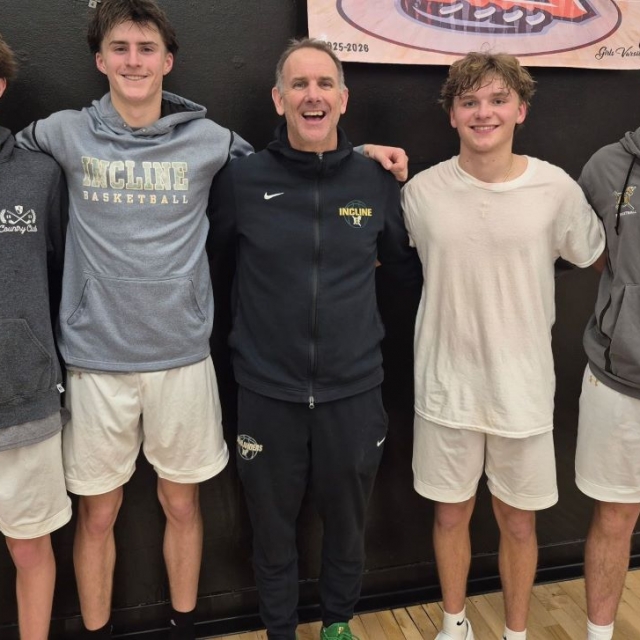
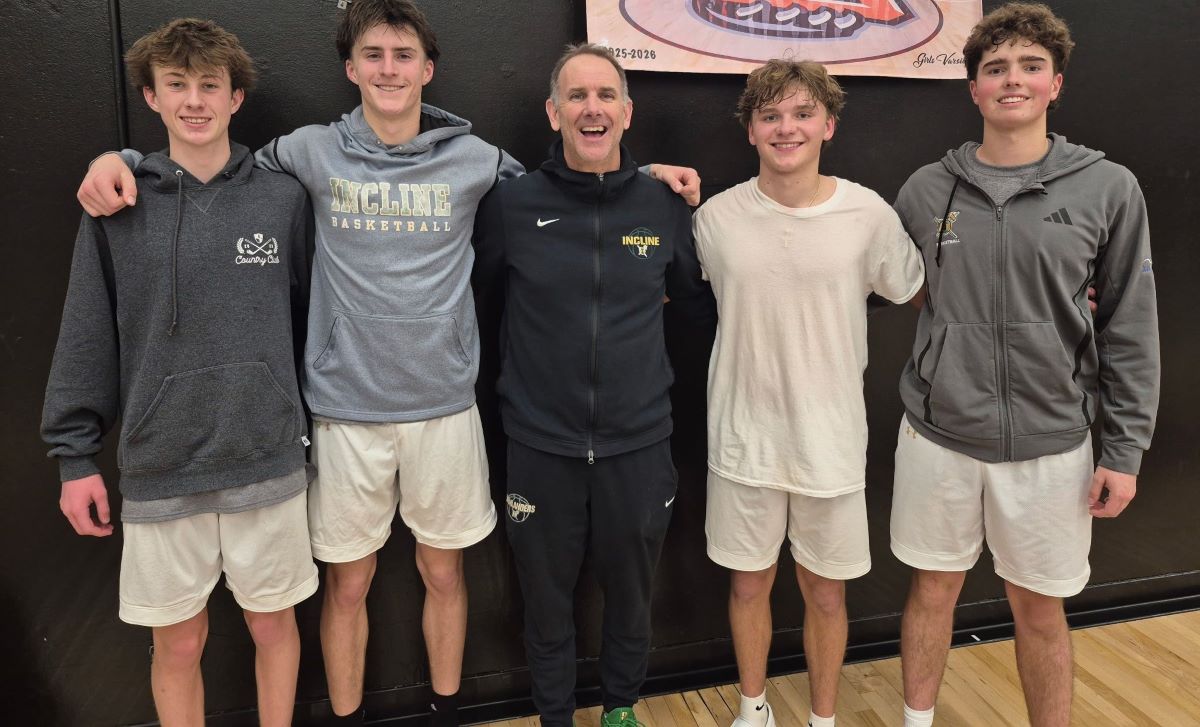
Incline forward Halen Hanson led all scorers with 17 points to help the team snap a five-game losing streak and improved its record to 4-6 while Orange (5-9) lost its third consecutive game.

To see additional photos, click on the first photo:

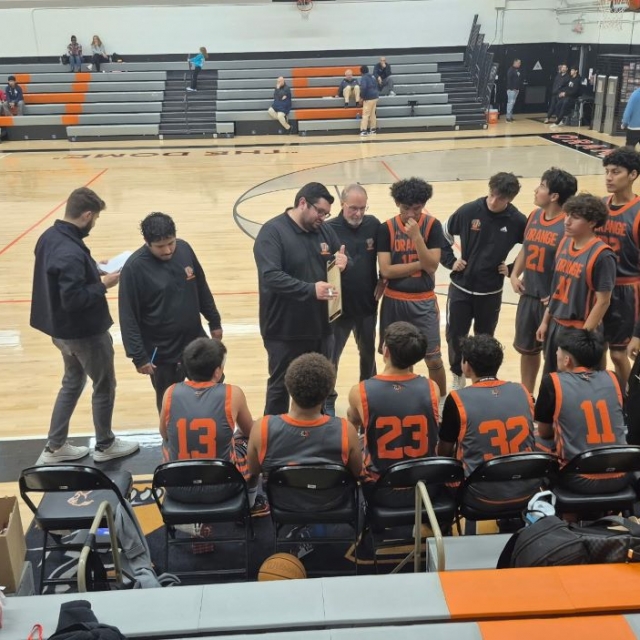
“We lack basketball awareness and making adjustments,” said Panthers Coach Jake Rhodes, who was missing four players due to sickness and unavailability. “We’re not shooting well. I think we’re shooting something like 18 percent from the 3-point line. We can’t continue to try and shoot over taller opponents in the paint. We must push through this and be focused on the fact that the team comes first.”

The Panthers fell behind 14-7 in the opening quarter but held Incline scoreless over the final 3:40 of the quarter and added baskets by Sebastian Nunez and Fernando Reyes to cut the lead to 14-11 after eight minutes of play.

Both teams didn’t shoot well in the second quarter. The Panthers were held to two baskets by Anthony Randle and Ivan Kim in the quarter but still only trailed 23-15 at halftime.

Orange’s shooting woes continued in the third quarter as the Panthers didn’t sink a bucket until Alex Villa nailed a 3-pointer with 1:12 left in the quarter, but Orange trailed 36-21 after three quarters and the Highlanders cruised to a victory.  

“Shooting has been our big problem,” said Panthers assistant coach Rob Nasman. “Our defense is improving but as a team we’re still having too many lapses and we’re giving up too many second chance points.”

Orange forced 13 turnovers in the game but was never able to draw any closer than 10 points of the lead in the second half. 

“We didn’t have the energy today; we need to come out with more energy,” said Ivan Kim , who led Orange with 13 points. “We know we’re better than this and we know what we are capable of, but we have to prove it.”   

The Highlanders were consistently able to drive into the lane for layups and limited Orange to one shot on the offensive end. Incline also outrebounded the Panthers and moved the ball efficiently.   

“Tonight was the best job we did all season getting Lucas MacDonald the ball in the key,” said Incline’s coach Tim Kelly. “We need to get him the ball more in the paint for him to be effective. We are still trying to find our identity as a team.”

“We did good getting back on defense, moving the ball, rebounding and getting key baskets,” said Hanson, who scored 10 points for the Highlanders.  

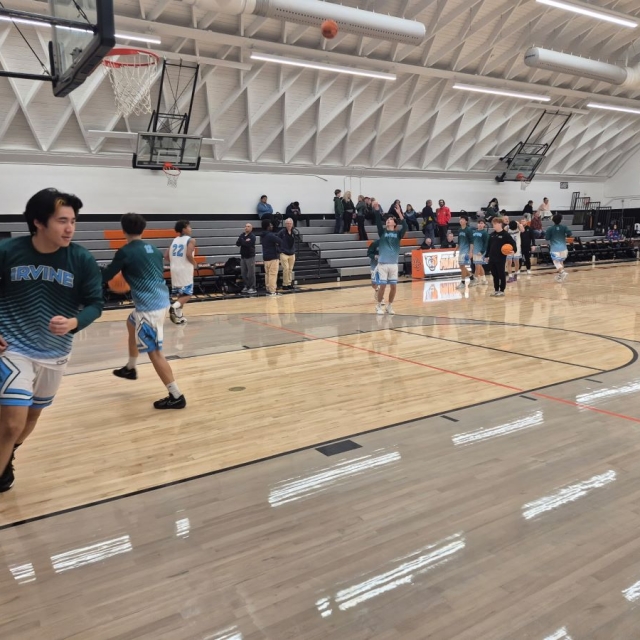
In other tournament games, Fullerton defeated Boulder City, Nev. 54-42 and Shadow Ridge topped Irvine 50-49.

Notes:

—Orange will play Shadow Ridge of Nevada on Saturday at 6 p.m. while Incline faces Irvine at 7:30. 

—The Orange Holiday Basketball Classic is the longest running Christmas basketball Tournament in Orange County. The event started Friday, including boys’ and girls’ divisions with the girls championship game scheduled Tuesday at 6 p.m. The boys’ final will follow at 7:30 p.m. on Tuesday night.

—In the boys division, Pool A consists of Incline, Nevada; Irvine, Orange and Shadow Ridge of Nevada, Nev. Pool B will include Boulder City, Nevada, Cerritos, Fullerton, and Long Beach Wilson.

—In the girls division, Pool A includes Apple Valley, Laguna Hills, Montclair, and Valley Christian. Pool B includes Cabrillo, Fullerton, Irvine, Orange.

—Incline’s coach Tim Kelly is the son-in-law of former Servite football coach Larry Toner. Kelly said his son, John Paul Kelly, is currently an eighth grader and is a skillful basketball player who plans to relocate to Southern California next season and attend Servite or Mater Dei and play basketball.

—Incline High School is in Nevada on the north shore of Lake Tahoe.  


Link

Continue Reading

Most Viewed Posts

Trending