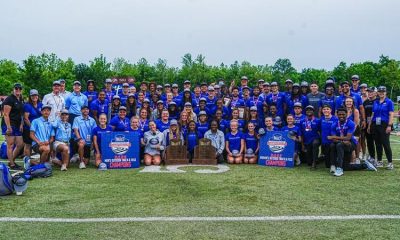
• After two wins in a row, the Hull High School Football Team fell to Cohasset, 28-7, on Thanksgiving Day at home. The Pirates finished their season with a record of 4-7.
• Hull High’s winter sports season gets under way in only a few weeks. The Boys Basketball team begins the 2025-26 year on the road against Calvary Chapel Academy in Rockland on Friday, December 12 at 5:30 p.m. and then plays Rockland at home on Monday, December 15 at 6:30 p.m. (JV at 5 p.m.). The Girls Varsity team begins on Wednesday, December 10 at West Bridgewater at 4:30 p.m., and then will play Calvary Chapel Academy in Rockland on Friday, December 12 at 4 p.m. The JV squad will be at Rockland on Tuesday, December 16 at 5 p.m. The first meet for the Boys and Girls Indoor Track teams will be on Monday, December 15 at 4 p.m. at the Reggie Lewis Center in Boston.
• For the full schedule for each team, visit https://www.arbiterlive.com/Teams?entityId=10611.
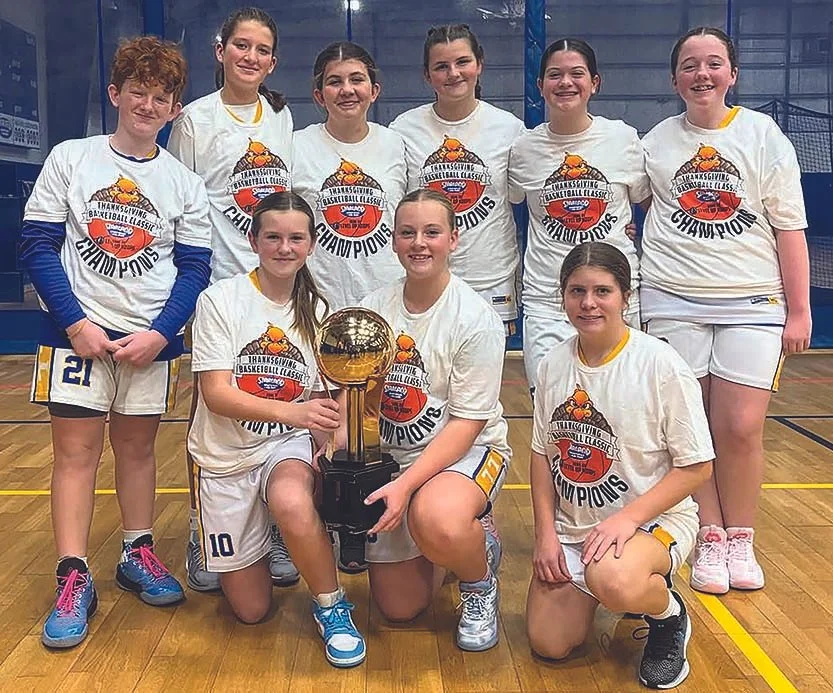
• Coaches, league organizers, and superfans – We need your help to report the scores and results of the latest events in Hull’s sports world! Please send local sports news and photos to sports@hulltimes.com. Deadline is Wednesday at noon. When providing details of the games or races, please be sure to include the sport/team, the players’ full names, and the final scores. When sending photos, names of those pictured are greatly appreciated, as well as who should get credit for taking the photo.
The Crafty Gemini Makers’ Market and Youth Biz Fair will be held on Saturday, Dec. 6, and Sunday, Dec. 7, in Alachua.
This free event will take place from 10 a.m. to 4 p.m. on Saturday and 11 a.m. to 4 p.m. on Sunday at Legacy Park Multipurpose Center (15400 Peggy Rd., Alachua).
Join a special two-day event celebrating creativity, community, and the next generation of entrepreneurs. Shop local, support young business owners, and score unbeatable deals on sewing supplies, fabric, and machines
Become A Member
Mainstreet does not have a paywall, but pavement-pounding journalism is not free. Join your neighbors who make this vital work possible.
Patterson Joint Unified School District (PJUSD) has been awarded a $25,000 Adaptive Sports in Schools Mobility Grant from the Bridgestone Americas Trust Fund to expand adaptive athletic opportunities through the Adaptive Sports Expansion Program. This investment supports PJUSD’s efforts to expand inclusive athletic programming for students with disabilities.
The Bridgestone Americas Trust Fund supports public schools seeking funding to start or expand adaptive sports programs and increase access to adaptive equipment for children and youth. This grant provides PJUSD with resources to help reduce barriers and strengthen inclusive athletic opportunities for students with disabilities, reflecting the district’s ongoing commitment to inclusivity.
Central to the PJUSD Promise, which focuses on integrity, perseverance, inclusivity, innovation, and excellence, is ensuring that all students, including those with disabilities, have access to enriching, supportive experiences that promote physical wellness, confidence, and connection.
Since launching our districtwide Special Olympics program in 2023, student participation has grown significantly, including the addition of a Junior Special Olympics for transitional kindergarten students. With support from the Bridgestone grant, PJUSD will expand this work by launching a new Fall soccer event serving students with disabilities from kindergarten through the adult transition program, complementing existing Spring and TK events to create year-round inclusive athletic programming.
The grant will fund upgraded adaptive basketball and soccer equipment, wheelchair exercise packs, mobility-focused fitness tools, and sensory and adaptive supports for diverse student needs. It will also support professional development for staff through the California Association for Health, Physical Education, Recreation and Dance conference to strengthen their ability to deliver inclusive, adaptive physical education instruction. These investments will allow more than 250 students across 12 moderate to severe special education classes to participate more fully and confidently in physical education and adaptive sports.
To find out more about the Adaptive Sports in Schools Grant or other District events, initiatives, and programs please visit www.patterson.k12.ca.us or call Neil Vento at (209) 895-7771.
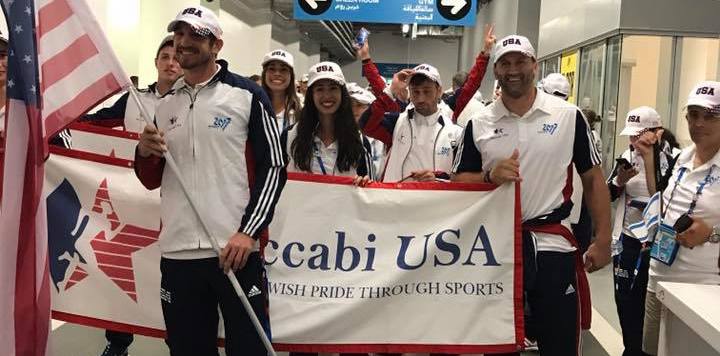
Players must get themselves to one of five US cities and then take a team flight to Tel Aviv. The trip includes a one-week tour of Israel, team preparation in Israel, and competition.
All athletes in the youth sports brackets can qualify for a scholarship, and athletes can learn about that when they contact the team. Each athlete also gets a fundraising site and can get tax-deductible donations.
This is a unique opportunity available for young Jewish rugby players who not only want to play rugby internationally but want to connect with their heritage.
Interested players or parents should contact John Delport at johndelport78@gmail.com to apply or learn more.
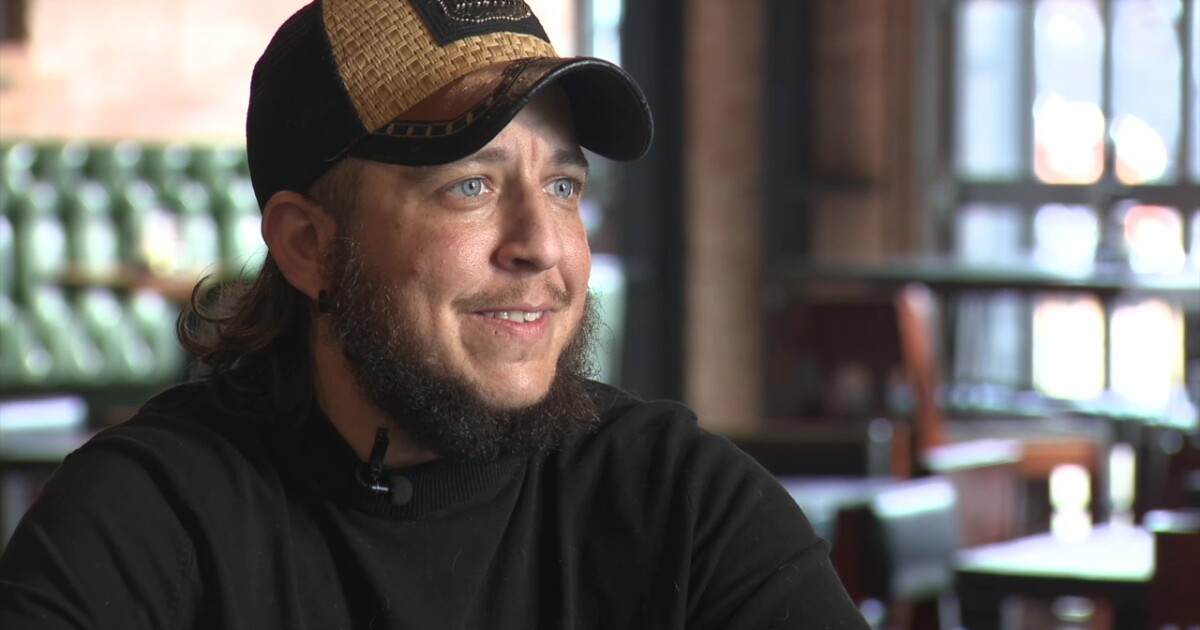
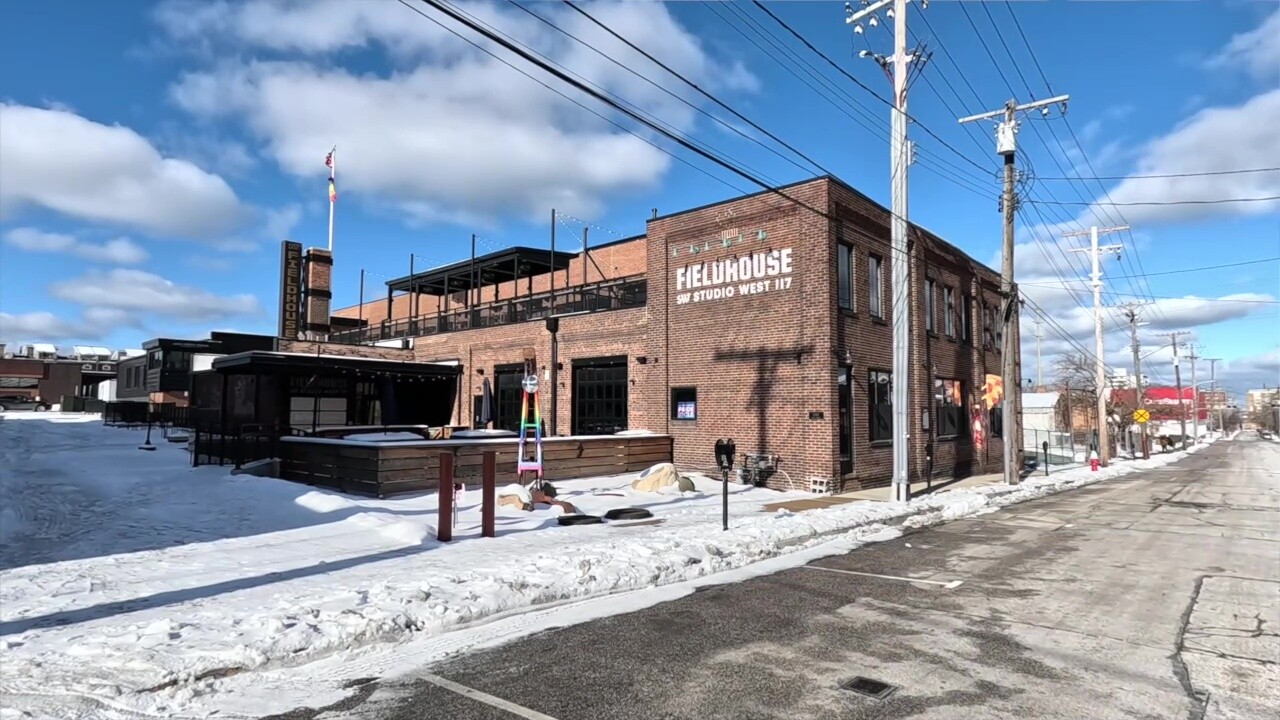
LAKEWOOD, Ohio — For Sam Anderson, the Fieldhouse at Studio West 117 was a lifeline.
When the LGBTQ haven opened in late 2022, Anderson was going through a divorce and adjusting to single parenthood. At the Fieldhouse, he found a job – and a support system, a community that became both friends and family.
“I bonded with people that I met at a very dark time in my life,” Anderson said. “And Studio kind of saved me.”
Now the Fieldhouse is set to close at the end of this month. The management says the money coming in ultimately wasn’t enough to pay the bills. Court records show that an out-of-state investment firm sued the developers in July over unpaid debt on the property. On Nov. 25, a court-appointed receiver took over the Fieldhouse at that lender’s request.
Just a few days later, the owners announced their decision to shut the doors on Dec. 28.
Studio West 117 Fieldhouse closing
RELATED: Studio West 117 Fieldhouse will close in late December
“I actually broke down and cried,” said Anderson, who handles maintenance at the Fieldhouse and built the DJ booth and the stage platform. “I still get emotional about it. It’s hard.”
Anderson is trans-male and the father of a 5-year-old. He threw a birthday party for his son in the Fieldhouse courtyard. And he’s watched other transgender parents bring their kids to the building for youth sports programs, summer camps and other activities.
“Studio West, out of all the LGBT facilities that I’ve known or been associated with, has had the largest support for the trans community,” said Anderson, who fell in love again at the Fieldhouse and ultimately married his wife, who is also transgender. “There’s more trans staff here than I’ve ever seen at any other place.”
Dennis Spronck/News 5
Fieldhouse employee and patron Sam Anderson talks to News 5 reporter Michelle Jarboe in the restaurant at the complex.
Current and former Fieldhouse employees, customers and supporters describe an ambitious project that developers Betsy Figgie and Daniel Budish poured their hearts into. But the hurdles – the lingering effects of the pandemic, high construction costs, interest-rate spikes and fissures within the LGBTQ community – ultimately were too much to overcome.
Budish didn’t respond to a request for comment. Figgie, who is handling the gradual wind-down at the Fieldhouse, declined an interview request.
“It’s very heartbreaking. Very, very heartbreaking,” Chelsea Brennan said Thursday.
An electrical contractor, Brennan did some work at the Fieldhouse project early on. She’s also been a patron there for lunches, dinners and shows.
“I felt celebrated – not only in my own self-awareness, but in everyone else’s,” said Brennan, a transgender woman. “I could show up unapologetically. Didn’t have to answer questions. Didn’t have to explain myself. And never was interrogated for who I was.”
Dennis Spronck/News 5
Chelsea Brennan (left), a patron and supporter of the Fieldhouse at Studio West 117, talks to News 5 reporter Michelle Jarboe.
She said there’s nothing else like the 24,000-square-foot complex, which includes a gymnasium, a restaurant, a community kitchen, a pizza kitchen and a rooftop bar.
“Daniel and Betsy put their reputation on the line, as well as their money,” Brennan said of the developers. “And yes, things came up short because the business wasn’t here.”
But, she added, “how many other people are going to put their reputation on the line and take that chance for the LGBT community?”
‘It’s for everybody’
The Fieldhouse was the first big construction project in a much larger plan to create a broadly inclusive district at the Cleveland-Lakewood border.
The developers own several other properties, including the former Phantasy Entertainment Complex at Detroit and Hird avenues and a large parking lot across the street, where a tire and battery shop once stood.
Though the properties were all part of the Studio West 117 vision, they are all owned by separate companies. Public records show that the developers owe more than $160,000 in real estate taxes across the portfolio. But the recent litigation and receivership are specific to the Fieldhouse.
Dennis Spronck/News 5
The Fieldhouse at Studio West 117 opened in 2022 as the first major piece of a much larger redevelopment project around Detroit and Hird avenues in Lakewood.
The defaulted debt is from a mortgage originally provided by Truist Bank, which filed a lawsuit against the developers in Geauga County in 2023. In early 2024, Truist sold the judgment – the right to collect on the debt – to Summit Investment Management, based in Colorado.
Now Summit, which invests in distressed debt, is trying to get what it can out of the deal. Court records show the developers owe more than $10.7 million in principal, interest and fees. Summit and its attorneys did not respond to inquiries from News 5.
In late November, Cuyahoga County Common Pleas Court Judge Steven Gall agreed to appoint a receiver – an outside expert – to take control of the Fieldhouse and maintain it during litigation.
The receivership could lead to a sale of the property. But it’s too early to say when that would happen.
The receiver, Mark Abood, said he wasn’t involved in the decision to close the complex.
“That was the owner’s decision,” he said Thursday.
Abood, a senior vice president at the Colliers brokerage in Cleveland, knows people who frequent the Fieldhouse to play pickleball. He was amazed to learn about all the other activities that happen at the facility, from twice-monthly free community meals to health and education programs to winter sports leagues, weddings and drag shows.
“It’s not just pickleball,” Abood said. “It’s not just a bar and restaurant. It’s not just a safe gathering place. It’s not just an entertainment venue. And it’s not just, by the way, for the LGBTQ community. It’s for everybody. It’s really a feel-good place for everyone to enjoy. And I’m hopeful that it will be back open at some point soon.”
That’s what Anderson wants to see, too.
“There’s good and bad with everything,” he said, acknowledging that some people who initially supported the project later walked away because they disagreed with how it was executed and managed. “But there’s a lot of people that did find good and enjoyed this facility. And I can only hope that someone buys it – and utilizes it for what it was.”
Dennis Spronck/News 5
A Pride in the CLE sign hangs in a window at the Fieldhouse at Studio West 117.
‘It can be great’
Other patrons and partners echoed that in emails, phone conversations, text messages and posts on social media.
Marisol Martinez once worked as a security coordinator at the property. She started a Latin Night series that moved from the former Phantasy complex into the Fieldhouse after the project opened. Now she’s planning a final Salsa Lounge event there on Dec. 27.
The Fieldhouse gave Martinez a place to speak up and support other Latina members of the LGBTQ community – setting an example she didn’t have when she was younger.
“It was everybody of all colors, races, ages. And that was important,” she said. “It brought the whole community together.”
Sara Continenza, the founder of a nonprofit called Food Strong, has worked with the team at Studio West 117 on community-gardening and cooking programs. In late 2022, that partnership was featured in a New York Times story about the Fieldhouse, with the headline “Cooking Up a New Gay Neighborhood.”
Continenza said it’s disappointing to see the project fizzle. “It’s sad that there isn’t a massive LGBTQ-plus initiative like this anymore,” she said.
The developers tackled some interior demolition and environmental clean-up work at the Phantasy complex. They razed the old NTB building across the street and cleaned up that property, turning it into a parking lot and future development site with help from a state grant.
But most of what they hoped to create hasn’t happened – yet.
“I hope that what they brought to this community somehow will continue,” Brennan said. “It’s so much needed in the LGBT community.”
Sitting in the restaurant at the Fieldhouse, where employees are counting down the final days, Anderson echoed that.
“If you have the means to save this place, it can be great,” he said. “We’ve seen it be great.”
Michelle Jarboe is the business growth and development reporter at News 5 Cleveland. Follow her on X @MJarboe or email her at Michelle.Jarboe@wews.com.
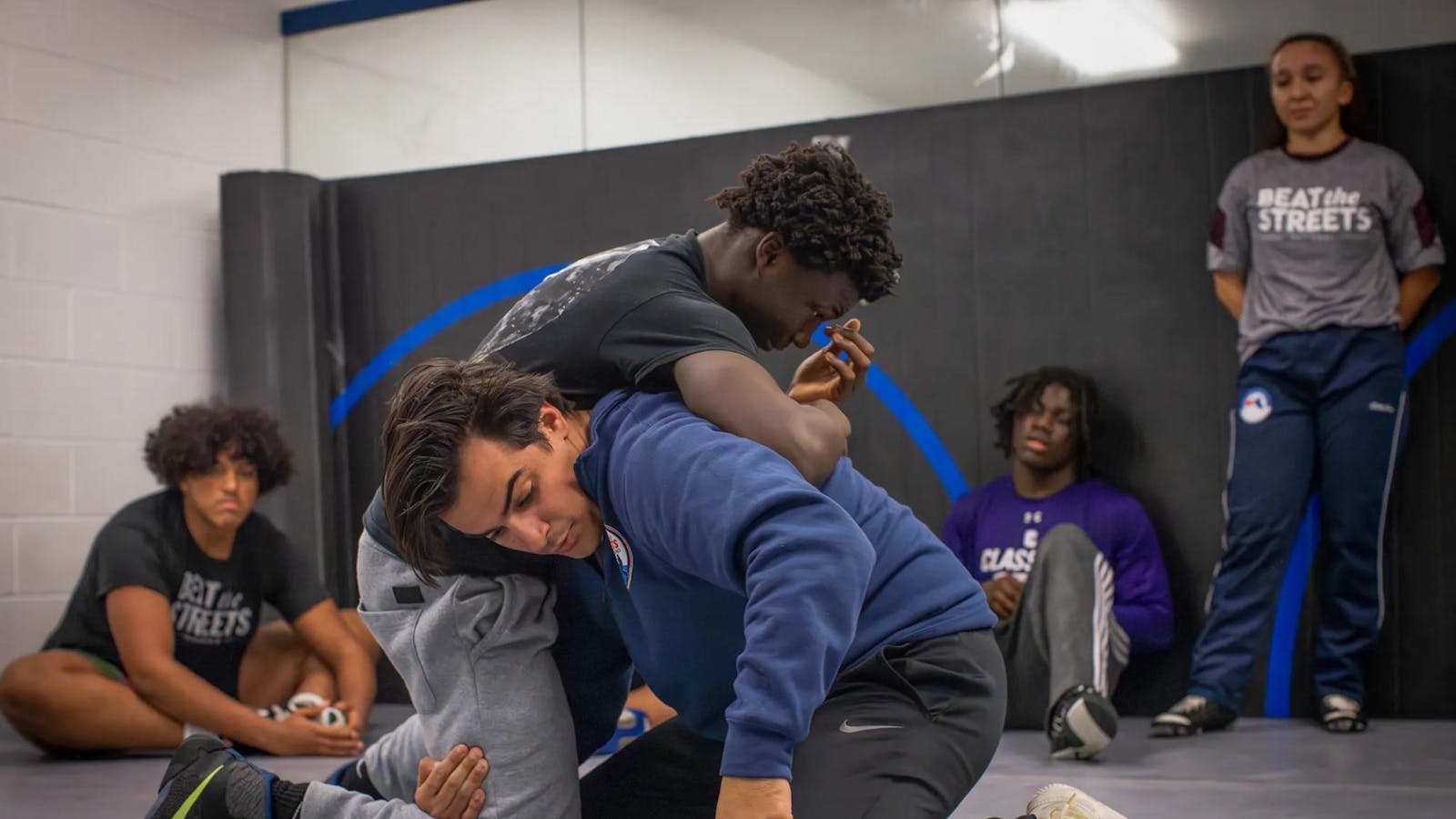
Last month, over a dozen wrestlers from Beat the Streets New England’s Roger Williams Middle School program gathered on the mats for their first competition ahead of this winter’s wrestling season.
“The second they step onto the mat, you can see their whole mood change. That’s where they come alive. That’s where their confidence starts to grow,” Coach Maricruz Flores wrote in a message to The Herald. Many of the wrestlers from Roger Williams placed, “which was such a powerful moment for them.”
While victories on the mat are a highlight for many athletes, the cost-free nonprofit youth wrestling program aims to improve students’ academic readiness, self-esteem and mental health.
The Providence chapter of Beat the Streets New England was founded in 2013 by Brown wrestler Billy Watterson ’15. The program has since seen immense success and popularity, regularly partnering with the Providence Parks and Recreation Department and the Providence Public School District to serve hundreds of students each year.
“It’s really interesting to see where these kids take it,” said Silas Murray, the program director of the Providence chapter. “Some of them want to be a champion. Some of them want to do it for friends. Some of them want to do it because they’re getting bullied. Some of them just enjoy the space.”
“Wrestling itself has a lot of intrinsic benefits,” explained Brett Poirier, the director of operations for the program. “What our program really prides itself in is being able to take those intrinsic benefits and giving real-life experience that helps the kids use them.”
Students in the program do not pay for travel costs, registration fees, uniforms or food, according to Poirier. The program is funded through multiple sources, said Poirier and Murray, including donors and the Rhode Island Interscholastic League — a local youth sports league.
Typical Beat the Streets practices begin with 30 minutes of journaling, job readiness training or conversations around goal-setting, Murray said. Wrestlers also learn about financial management, including “saving money for college,” said Josiah Mazariego, a wrestler with the program at Nathanael Greene Middle School in the PPSD.
Mazariego said the program helps with his homework, and that he also reaches out to the coaches when he needs help with school.
Prins Santana, a wrestler at Nathanael Greene, added that the “program has helped me boost my confidence by winning … and has helped me with mental health (by learning to) think positive, focus on one goal and don’t quit.”
After this mental warm-up, the students then move to the mats, where they receive instruction, run through drills and play games. Each program holds two to three practices a week. Students also enter weekly competitions and attend national tournaments in the hopes of boosting the team’s ranking.
Flores also took part in Beat the Streets when she was a PPSD student. “I was dealing with a lot at home,” she wrote. “Beat the Streets became like a second family. It was the place where I felt safe, supported and understood.”
Now, as a coach, she aims to ensure that her role is more than “teaching wrestling techniques or passing down information,” Flores explained. “They come to you with everything, and you do everything you can to guide them. Coaching these kids isn’t just a job, it’s one of the most rewarding experiences I’ve ever had.”
On Saturday, wrestlers from Beat the Streets will compete in the Birchwood Tournament in North Providence. “The best teams and some of the best individual kids will be there, so (the kids) are very excited to put their skills to the test,” Murray said.
In January, Beat the Streets New England plans to host a regional tournament. Wrestlers from various Providence and Boston programs will be competing against each other to name each city’s champion, and a regional champion. Murray said his team has been planning the event for the past three months by getting donors and board members involved, “so these kids can feel exactly how they should: like superstars.”
Erick Mazariego, Josiah Mazariego’s father, explained that ranking in a national tournament could mean getting “exposed to coaches from different states that could provide a way to a prep school or a private school where they’ll reach out” with scholarship offers.
This trajectory can open the door to college-level wrestling. Past students from the Providence chapter of Beat the Streets are currently wrestling at Rhode Island College, American University and Johnson and Wales University, according to Murray.
By guiding students academically and supporting them personally, Poirier said that “we’re trying to make sure that our kids go forward in the best light possible.”
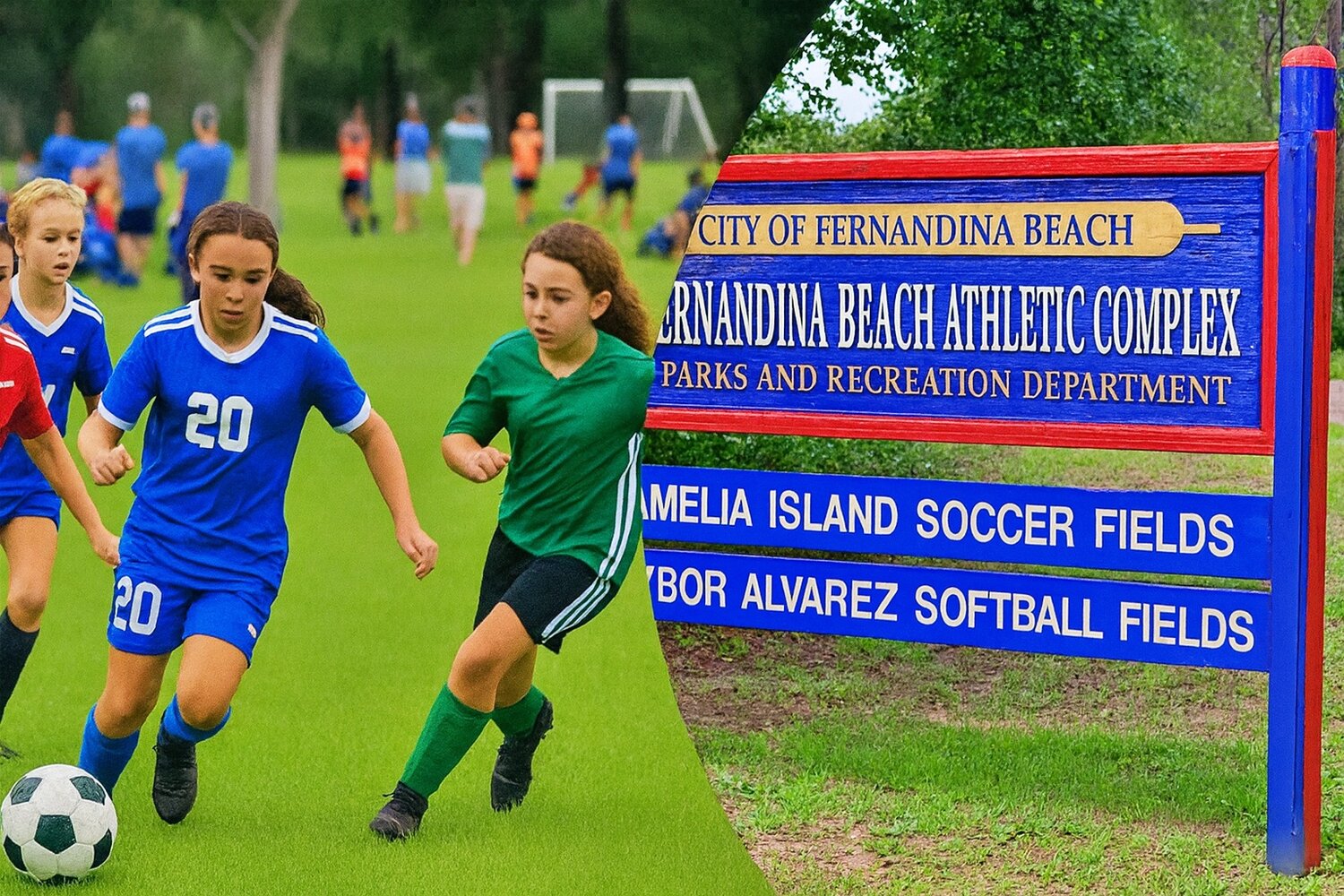
Fernandina Beach city commissioners again pondered the future of youth soccer and the long-uncertain fate of the Ybor Alvarez Sports Complex during a workshop last Tuesday, confronted by escalating land costs, complex FAA regulations, and a narrowing timeline to find a replacement home for more than 800 local players.
The 40-minute session — which ran over its scheduled time — laid bare the competing pressures shaping the decision: federal aviation requirements, sharply rising land appraisals, Nassau County’s pledged but time-limited funding, and the city’s struggle to identify 15 usable acres on an island where land is scarce and expensive.
Commissioners ended the session with consensus on three points:
They need more detailed financial analysis.
They want a town hall with youth sports organizations.
The issue will return for a dedicated workshop of its own.
Because of time limitations, youth soccer officials spoke of the urgent need for a decision to be reached when the city commission convened its regular meeting.
They described years of uncertainty, shrinking field access, and the looming possibility of cutting hundreds of children from the program if the city does not act soon.
Program president Scott Lomond told commissioners the organization has been “in limbo” since plans for a new facility “were on the books in March of 2024.” He said the soccer community’s prevailing emotions mirror the city’s broader frustration: “Trust and fear, and that is the feeling of our community in the soccer program.”
Youth Soccer President Scott Lomond
Lomond said the program now serves “just under 800 youth,” with “roughly 60% of them … in the 32034-zip code.”
Field shortages have forced games and practices across multiple sites: “We also use, right now, Nassau Crossing … and we use Hickory as well because we don’t have the space currently, particularly around the lighting,” Lomond said.
He warned that relying on the county’s developing complex is not realistic. “We don’t see as an organization that the county is an option,” he said, adding that he was told city teams could get “pushed off the fields out there from time to time.”
After years of waiting for a decision, Lomond urged commissioners to stop delaying: “For me, you know, ultimately, we need you guys to make a decision and move forward … Another month, we’ll run out of time.”
Airport Manager Nathan Coyle began the workshop discussion with a deep review of the FAA deed restrictions governing the city airport property — rules that ultimately determine whether soccer and softball can remain at Ybor Alvarez.
He explained that when the federal government returned airport land to the city after World War II, it came with permanent obligations under the Surplus Property Act.
“Those federal obligations we’re referring to go back to when we took the airport back from the federal government, when we got those deed-restricted obligations to the property,” he said.
Coyle emphasized repeatedly that the FAA requires fair-market compensation for any non-aviation use, and that long-term recreation facilities cannot be protected without either a formal lease or a full release of federal obligations.
Commissioner Genece Minshew summed up the community’s confusion: “All this stuff with the FAA and airport is very convoluted and weird, but it is what it is.”
The workshop reaffirmed that the city must address the federal obligations before improving or retaining the Ybor fields — and that failing to act opens the door to future aviation development on the property. As Coyle cautioned, any non-aviation use “should be at fair market value,” and past arrangements no longer apply.
The city’s most pressing challenge is financial. Capital Projects Manager Glenn Akramoff confirmed that the newly updated appraisal valued the 15.2-acre soccer/softball parcel at $3.5 million, up from last year’s $2.2 million estimate.
He explained that the appraisal reflects a significant increase in per-square-foot land value.
“Then we had an increase of 53%,” he said of the latest appraisal.
The fair-market lease value for the same acreage is now estimated at $315,000 a year — a steep climb from the days when the city paid $100,000 annually under a prior informal arrangement.
This mirrors reporting from an earlier Observer article, which noted the land appraisal had surged and that to keep the fields, “the city is required to buy or lease the property with the money going into the city’s airport fund.”
The city is still eligible for Nassau County’s $1.7 million contribution for soccer fields, but the clock is ticking. Akramoff reminded commissioners: “That timeline is July of ’27 that we need to have construction done on a replacement at this site.”
Concept drawing showing development of new hangars on existing soccer fields and soccer moved to the current location of softball fields.
That money can be used either to purchase Ybor Alvarez property or to help build fields elsewhere, but not both. Prior county correspondence stressed the funds must support relocating soccer fields because “the Board … is in full support of this joint project for the benefit of all of its citizens.”
Commissioners discussed the possibility of redirecting the funds to support expansion of the new county soccer complex in Yulee — an option outlined in past Observer stories and again during the workshop.
Akramoff and Parks Director Scott Mikelson presented four relocation or replacement paths, each with significant trade-offs:
1. Purchase the existing softball-field side and rebuild soccer fields on that section of the tract.
Pros: Most familiar site; less long-term disruption; design concepts already completed.
Cons: High cost — purchase plus $2–2.5 million for construction. “Where do we get the money for all this?” Commissioner Tim Poynter asked. “It doesn’t seem viable right now.”
2. Hickory Street Park (Interim Use Only)
Mikelson was candid about its limitations: “There is no existing lighting … parking is minimal … and the field sizes are not complete full-size fields.”
Commissioners agreed it cannot serve as a permanent home.
3. County Collaboration in Yulee
The Yulee Sports Complex offers significant space and room for expansion.
“It enables the entire organization to be together … but how do we bridge them from here to there?” Commissioner Joyce Tuten asked.
4. A 20-acre City-Owned Parcel Near the Airport
While promising on paper, a large portion sits in the runway protection zone and is not available for use.
“No property or persons in the RPZ,” Coyle reminded commissioners. “So, you would not …” allow fields or parking there.
Mayor James Antun said he agreed this site is “probably the most expensive option as well.”
The tract is also heavily wooded and was removed as a viable option.
City commissioners differed on whether to buy the land — but agreed that more study is required before a decision could be reached.
Three areas of concern dominated the commissioner’s comments:
“Buying back property from ourselves — it just doesn’t even make sense.” said Commissioner Poynter, reiterating concerns first expressed in past workshops.
— The need for more analysis
Commissioner Minshew urged deeper study to “Take the top three … down another couple levels and come back with more specifics on money and timeframes and interest.”
— The need for community Input
Minshew said, “We need to start figuring out how to get that input into this process … so that the community can really understand what the financial implications are that we’re up against.”
Vice Mayor Darron Ayscue delivered perhaps the most pointed warning.
“If we abandon that (Ybor Alvarez property), they’re going to become hangars … that whole entire area is going to become concrete,” he said, adding that if the city does not protect the acreage now, “we’re going to lose a 15-acre … piece of land.”
Commissioners acknowledged soccer’s rapid growth and the strain on facilities.
“We need to have a good understanding … of what does the demographic population look like in terms of growth … because my feeling is the majority of the growth is already off-island,” Minshew said.
Mayor James Antun closed the workshop with a summary of the emerging follow-up items.
“We have consensus that we want more information, that we want a town hall, and we want this to come back for another workshop.” he said.
The city needs to reach a final decision early in 2026 to meet FAA and county deadlines.