NIL
Rutgers, Big Ten Winners in Landmark House v. NCAA NIL Settlement

On June 6th, the U.S. District Court for the Northern District of California approved the House V. NCAA settlement, a 2.8 billion-dollar agreement to provide back pay over the last ten years to over 400,000 student-atheltes who competed from 2016 to the present. Moving forward, the settlement allows schools to pay upwards of 20.5 million annually in revenue directly to athletes, essentially ending amateurism in college sports.
The Big Ten, already one of the two richest conferences in college sports, will benefit even further with this agreement. The conference brought in 928 million in 2024, with its twelve longest-standing schools receiving 63.2 million each, with Rutgers receiving slightly less at 61.5 million.
Yes, Rutgers runs an overall operating deficit and paying athletes up to 20.5 million dollars from a revenue-sharing pot certainly doesn’t help offset the department’s net losses. Softening the losses from high operating expenses and facilities upgrades is a problem for incoming President William F. Tate IV and the soon-to-be hired new athletic director to figure out.

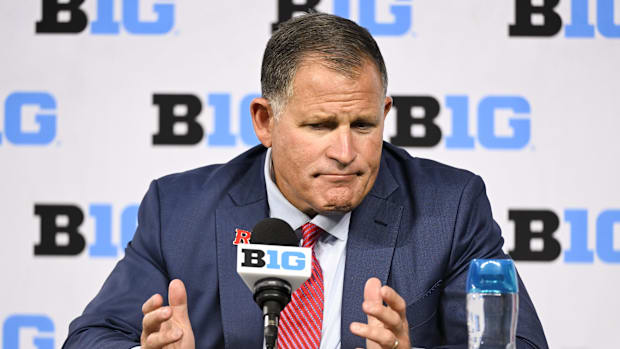
For the Big Ten and Rutgers, this is clearly a win and serves to make the conference more competitive moving forward.
“We look forward to implementing this historic settlement designed to bring stability, integrity, and competitive balance to college athletics while increasing both scholarship and revenue opportunities for student-athletes in all sports,” said Tony Petitti, Big Ten Comissioner, in a statement.
The settlement also establishes the new College Sports Commission to implement the settlement and oversee Name, Image and Likeness (NIL) deals and roster limits. The committee will be charged with investigating any violations of the rules.
Of course, Rutgers and the Big Ten aren’t the only winners. Athletes in football and basketball stand to benefit the most financially, but even those competing in non-revenue sports have opportunities, particularly at schools who don’t invest significant money in football – like Cornell in men’s lacrosse or Vermont in men’s soccer.
With winners, also comes the losers. In theory, having a clearinghouse in place should eliminate multi-million dollar, pay-to-play bidding wars for the top available defensive end in the transfer portal but time will tell how this all plays out practically.
To nobody’s surprise, the biggest losers are the Group of Five schools from the AAC, CUSA, MAC, MWC, and Sun Belt. These schools will be more challenged than ever to compete at the highest level with the Goliaths and it makes one wonder if they don’t split off into their own football entity in the near future.
At the end of the day, for Rutgers head cocahes Greg Schiano of football and Steve Pikiell for men’s basketball, revenue sharing with athletes only helps their case as they attempt to recruit at a high level in the modern lanscape of college athletics.
Rutgers Scarlet Knights Stay Hot on Recruiting Trail by Landing Florida DB
Rutgers Star Predicted to Land With Former Champion in NBA Draft Blockbuster
Rutgers Star Ace Bailey Receives High Praise Before 2025 NBA Draft
Greg Schiano Looks to Strike While the Iron is Hot as Rutgers Faces Important Weekend in Recruiting Scene