
Podcast
Sam Presti built a great Thunder team once. Then he did it again — his way


The bye-bye game was only six years ago.
That famous moment in Portland Trail Blazers lore, with Damian Lillard hitting a series-ending bomb over Paul George, also doubled as the nadir for the Oklahoma City Thunder. Eliminated from the 2019 NBA playoffs in five games for a third straight first-round exit, with an aging team and bloated salary cap that also paid a whopping $61.6 million in luxury tax while playing in the nation’s 47th-largest TV market, the Thunder appeared to be at an impasse.
Advertisement
It seemed like Lillard was waving bye-bye to an entire era in Oklahoma City, one that disappointingly ended without a title, and that it would be a long, painful journey to contend again. In a sense, he was: Russell Westbrook and George never played another game for the Thunder.
But as it turns out, Lillard was also waving hello to a dramatic rebirth, one that liberated Thunder team president Sam Presti — now in his 19th season at the helm — to paint his Mona Lisa. If the Thunder, as many expect, prevail in the NBA Finals over the Indiana Pacers, this season will serve as both the first-line item on Presti’s Hall of Fame resume and the thing that ensures his eventual induction.
What happened since April 2019 has been one of the fastest and most complete rebuilds in NBA history. Starting from a spot where they seemed completely screwed, the Thunder took only half a decade to post the Western Conference’s best record with the league’s youngest team. One year later, they are massive favorites to claim the franchise’s first title in Oklahoma and set up to be favorites again and again and again for years into the future.
That rebirth is as much philosophical as it is about talent.
If you go in the way-back machine, the Thunder’s origin story is the greatest three-year draft run in NBA history. Presti’s career with the franchise began in Seattle three weeks before the 2007 draft, when he was then a 29-year-old wunderkind blowing people away as he worked his way up the San Antonio Spurs organization. (Even then, it was obvious to anyone who met him that he was destined to run an NBA franchise.)
He drafted Kevin Durant and Jeff Green in 2007, Westbrook and Serge Ibaka in 2008 and James Harden in 2009. Green was eventually traded for Kendrick Perkins, but allowing for that swap means that, in three years, Presti drafted the top five players on an NBA Finals team and three future MVPs.
Advertisement
Those picks, along with Reggie Jackson at No. 24 in 2011 and Steven Adams at No. 12 and Andre Roberson at No. 26 in 2013, were amazing, but in time, they became just as much a philosophical prison.
In hindsight, you wonder if those Thunder teams became good too fast. They were caught in win-now mode with great individual players who didn’t necessarily fit great together. They ran through two coaches who were fine but also didn’t move the needle for them, and they took too long to find the right center. (Flunking Tyson Chandler’s physical in 2009 remains an all-time sliding doors moment in NBA history.)
And as much as they talked about not skipping steps, the specter of losing Durant or Westbrook meant they started taking shortcuts, too — taking 14 cents on the dollar for Harden rather than trading Westbrook at the peak of his value, most notably, and later with moonshots on Enes Kanter Freedom, Carmelo Anthony and Dion Waiters.
Here’s the thing: If you talk to people who know and have worked with Presti, (or talk to Presti himself, for that matter), it’s clear what gets his blood pumping. It’s not the Durants and Westbrooks, but the high-character, cerebral, team-first grinders. This is a guy who cut his teeth in the prime of Spurs culture, one who gave Kenrich Williams a four-year, $27 million extension after a season in which he averaged 7.4 points and 4.5 rebounds for a 24-win team.
That’s important, because to me it’s why this version of the Thunder feels so much more organic than the Durant-Westbrook one. Presti’s platonic basketball ideal was nothing like his own team but a lot like his former one, the 2014 “beautiful game” Spurs squad that smoked his Thunder in the conference finals. (We’ll get back to that San Antonio squad in a second.)
Version 1.0 of Presti’s Thunder was an overwhelming talent haul with a basketball team taped together around it; the whole was never greater than the sum of the parts, and at times was substantially less. Westbrook, in particular, was an off-the-charts athlete and a ruthless competitor; he was also stubborn to a fault and difficult for any other on-ball players to thrive alongside. The enduring image of the tail end of that era is a young Domantas Sabonis marooned at the 3-point line watching the Russ Show.
This time, it feels completely different: From top to bottom, it’s Presti-ball come to life. The core of the team is a dozen different versions of Kenny Hustle, just with some having more talent than others.
In one sense, we have an easily available answer for how the Thunder rebuilt so quickly: The Paul George trade. Forget all the other goodies the Thunder still have coming from the LA Clippers; the first two assets in the deal were Shai Gilgeous-Alexander and the pick that became Jalen Williams. That and one tank year that produced Chet Holmgren were enough to give the Thunder a championship core.
Advertisement
That answer is far too reductive, however, for the process that led the Thunder here. The three things that stand out about Presti’s Thunder 2.0 rebuild were 1) stacking the draft-pick deck so heavily in the Thunder’s favor that they didn’t need to be perfect, 2) getting the right coach to share the vision and implement everything and 3) doubling down on the types of people they brought in as much as the talent.
It so happens that they hit on the Jalen Williams pick, which was one of the five that had come from the Clippers in the George trade. But Presti also never stopped hustling, making a series of other trades to ensure the Thunder had a massive stockpile of first-round picks, nearly all with at least some potential to hit at the top of the lottery.
Notably, even as it became clear that Gilgeous-Alexander would be a much greater star than initially envisioned, Presti stayed patient and kept making deals to enhance his odds of hitting big on talent.
The ultimate tell was his willingness to give up an honest-to-goodness first-round pick in Dallas’ P.J. Washington trade in exchange for an unprotected swap in 2028. There’s a risk Presti might end up trading a late first for bupkus, and in the short term, he might inadvertently have helped the Mavericks upset his top-seeded team in the 2024 postseason. But in his eyes, he hadn’t landed the plane yet, so the upside outcomes were worth it.
To see this in practice, consider that the Thunder acquired the pick just before Jalen Williams in the 2022 draft and fired three lower-value future firsts into the sun to take Ousmane Dieng … and it doesn’t matter. The whole point of accumulating six lottery picks between 2021 and 2024, as the Thunder did, is that perfection is no longer required. Build your chip stack high enough, and you can lose a few hands.
They’re not done, either. Oklahoma City has a redshirted lottery pick (Nikola Topić) ready to roll come summer. The Thunder will have two first-round picks this month, at No. 15 and No. 24; most likely have three first-round picks in 2026; and still have two in 2027 and 2029. They also have the aforementioned pick swap with Dallas in 2028 and one with the Clippers in 2027. If that wasn’t enough, their second-round-pick inventory remains hilarious; they have 14 available from 2028 to 2031.
That’s 10 first-round picks in five years, and nine of them are likely to be other teams’ picks, not their own mid-dynasty choice at No. 29 or No. 30. They could draft seven Aleksej Pokuševskis and it won’t matter one iota if they hit on the other three. (More realistically, they likely will deal some of these for either future trades or move-ups in the draft to keep the loaded-dice party going even further into the future.)
Advertisement
The second element of all of this was hitting on the right coach, and Presti was deeply fortunate that the best candidate was already in his building in assistant coach Mark Daigneault. (Partly, we should note, because the Thunder gave him an unprecedented five-year run of reps coaching their G League team. The G has quietly been an awesome incubator of coaching talent.) Of course, that fortune wouldn’t have mattered if Presti didn’t have the stones to promote him after one total season on an NBA bench, and the two have formed a symbiotic partnership ever since.
I asked Daigneault about this last weekend and about the challenges of the coach-GM relationship as a team goes from the bottom to the top. His lengthy answer underscored how fully integrated every level of this rebuild feels, and how important it was that, this time, Presti was as comfortable with the people as he was with the talent.
“When I started as the head coach, I already had six years in the organization,” Daigneault said. “We had seen each other over the course of a long period of time in a lot of different situations, so there wasn’t a relational feeling out process there. It was a continuation of an existing relationship that we had. … The communication between those two positions is essential, and I think that comfort helped with that.
“And then … a lot of those challenges come from philosophical differences. And I was raised here in professional basketball. Like, I didn’t work anywhere else in pro basketball prior to coming here. I didn’t know much about professional basketball before I came here. And so my entire philosophy in professional basketball was underneath the umbrella of the Thunder organization.
“A lot of it is stuff I’ve learned from Sam and learned from being in this organization in terms of understanding that these organizations are robust, and it’s not just you coaching your team. You’re part of a large ecosystem of developing players and developing a team, and you’re executing a large strategy for an organization. Those are things that have to exist in order to be a sustainably successful team in the NBA.”
Daigneault’s promotion, however, is also one example of the larger trend line and the third item I mentioned above. Again, the Thunder were deeply fortunate that Gilgeous-Alexander was available in the George trade, but it’s no accident that OKC targeted him in the deal.
Remember those 2014 Spurs? SGA is the closest thing to Tim Duncan since Tim Duncan, a zero-maintenance superstar who, even coming out of Kentucky in the 2018 draft, had as many superlative exclamation points in his background reports as any draft prospect I can remember. (I was working for the Memphis Grizzlies at the time, and we did extensive research since we had the fourth pick that year.)
Advertisement
Of course, it goes way beyond Gilgeous-Alexander, Williams and Holmgren. That 2019 reset may have made it easier to win in other aspects of team-building. Remove all the first-rounders and Oklahoma City’s player-acquisition resume in the last half decade is still a huge success; luck is always a factor in this, but a lot of it gets back to focusing less on hazy-outline projects and more on targeting Presti’s type of guys.
The other two players on this roster who were acquired by trade were the aforementioned Kenrich Williams and Alex Caruso — classic grinders in the Presti mold (and, in Caruso’s case, a do-over after the Thunder let him slip out the door in the Westbrook era). OKC hit on a late draft pick (Aaron Wiggins at No. 54 in 2021), a waiver claim (Isaiah Joe in 2022), an undrafted development project (Lu Dort in 2019) and a cap-ballast trade throw-in (Kenrich Williams in 2020). None of these guys had 40-inch verticals or set scouts salivating as they went through the layup line.
The Thunder used cap space to absorb contracts and get more picks year after year, including using one to move up to select Cason Wallace in 2023, until they finally found the perfect free-agent piece (Isaiah Hartenstein) to round out their team. They somehow traded Josh Giddey for Caruso without surrendering a draft pick.
Even their biggest recent misstep came with a giant opportunistic side benefit. The 2024 trade for Gordon Hayward didn’t work on the court, but it doubled as one of the great stealth salary-dumps in recent annals, shedding this era’s one mistake contract (Vasilije Micić), Dāvis Bertāns and little-used Tre Mann and — at a cost of only two future seconds — giving the Thunder the necessary cap space to sign Hartenstein and extend the deals of Joe and Wiggins.
You might wonder, after two decades in the same place, if finally winning a championship might spur Presti to ride off into the sunset, Bob Myers-style. Nobody I talked to can envision this happening. Behind the designer glasses is a ruthless competitor whose reaction to beating you four times in a row is to try to beat you even worse the fifth time.
He’ll get those chances and then some over the coming years. No team in the last dozen years has been more set up for a Spursian two-decade run of dominance than this one, not even the Golden State Warriors and Boston Celtics. Presti doing it from the ashes of the bye-bye game only makes it all the more impressive.
(Top photo of Shai Gilgeous-Alexander and Sam Presti: Zach Beeker / NBAE via Getty Images)


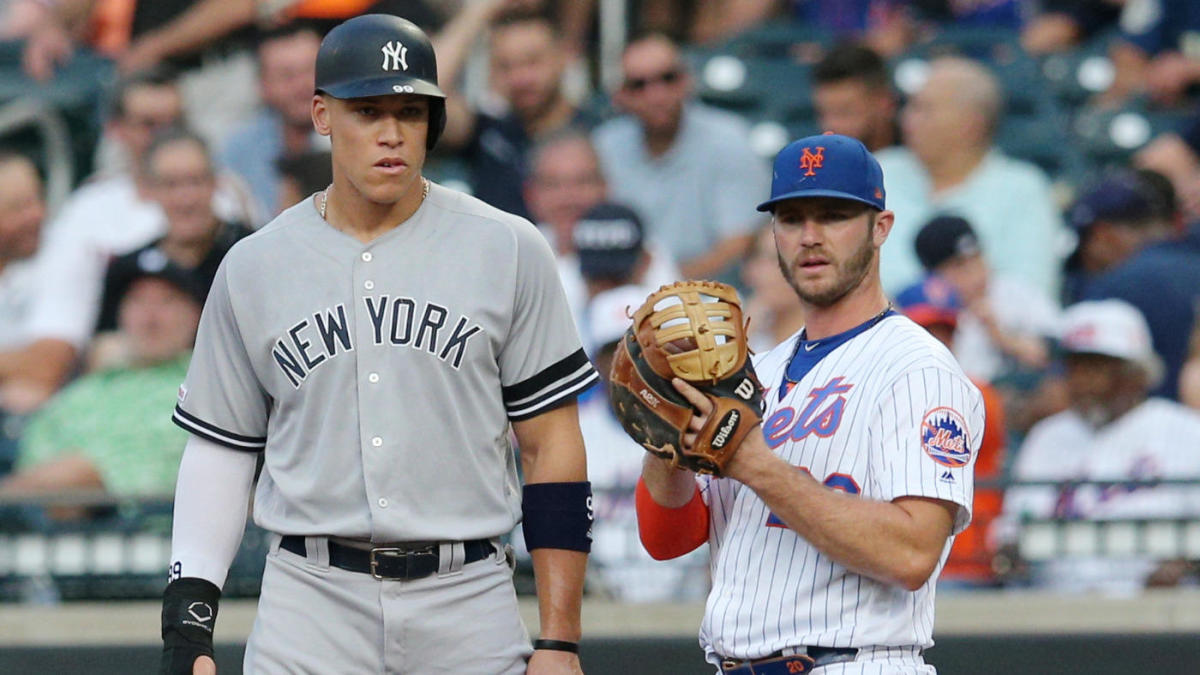

As the clock wound down in a recent contest, the Golden State Valkyries’ Veronica Burton and Kaila Charles swarmed Paige Bueckers on the perimeter to deny the Dallas Wings rookie from even getting off a shot. The 3.2 remaining seconds ticked away, and the ball remained in Bueckers’ hands as the buzzer sounded.
Advertisement
That type of attention has become common for Bueckers in her debut WNBA season, especially as the firepower in the Wings rotation has thinned because of injury — eight of 12 players on the opening-night roster have missed seven or more games — putting more offensive burden on her. Bueckers has also proven increasingly capable of dissecting single coverage and has demanded star-level defense.
“She lets the game come to her, and she takes what the defense is giving her all over the floor,” Wings coach Chris Koclanes said. “She doesn’t get sped up, and it’s really impressive for a rookie in this league to be able to maintain her own speed and tempo.”
But the game was already in hand when the Valkyries corralled Bueckers at the 3-point line. Golden State led by nine and the heightened defense wasn’t because the game was in balance; it was because Bueckers needed one more point to reach double digits, as she had done in every prior game of her rookie year.
With Dallas long since removed from postseason contention and playing out the string over the second half of the season, these are the stakes for Bueckers. She hasn’t been put in position to chase wins; she can only pursue individual accolades while the Wings build for the future. Nevertheless, despite a constantly changing supporting cast, Bueckers has thrived, putting herself in conversation for one of the best debuts in league history.
Bueckers has been the leading rookie scorer every month of the 2025 season, and her average of 18.9 points is seventh in WNBA history among rookies. With three games left, a late surge could move Bueckers past her teammate Arike Ogunbowale, who is sixth on the list at 19.1.
Paige Bueckers in August:
🪽 20.3 PPG | 3.7 RPG | 5.0 APG
🪽 44-point performance: highest by any W player this season
🪽 @Kia Rookie of the Month#KiaROTM | #WelcometotheW pic.twitter.com/Cx09czcFhi— WNBA (@WNBA) September 3, 2025
As was the case during her college career that culminated in a national championship at UConn, Bueckers has been efficient in the process of scoring at a high volume. Among rookies who have averaged at least 17 points per game, Bueckers is sixth in field-goal percentage at 46.7. The only two guards in front of her are Chennedy Carter, whose first season came in the friendly offensive environment of the WNBA bubble, and Cynthia Cooper-Dyke, who was a 34-year-old rookie during the league’s inaugural season.
Bueckers has been an elite playmaker as well. She is on pace to finish the season as one of 12 rookies to ever average five assists per game, and one of two to pair that with 15 points, joining Indiana Fever star Caitlin Clark.
Advertisement
Clark became the standard-bearer for rookie guards during her historic 2024 season, and her production is the only realistic point of comparison for Bueckers. Sue Bird and Diana Taurasi were also first-year All-Stars, but neither displayed the same combination of elite scoring and creation as Clark and Bueckers. The new generation of rookies has the advantage of playing in a more offensive-minded league. Still, their numbers relative to the rest of the league stand out.
The last two No. 1 picks both delivered individual historic moments. Bueckers tied a rookie record last month with 44 points against the Los Angeles Sparks, on a night when she started alongside two players who were signed midseason to hardship contracts. Clark set the single-game assist record of 19 about midway through last season.
But Bueckers trails Clark in most of the counting stats: 18.9 to 19.2 in points, 3.7 to 5.7 in rebounds, and 5.3 to 8.4 in assists. Other than points, those differences cannot be explained by the extra two minutes Clark averaged as a rookie. The major advantage Bueckers possesses is in turnovers, where her 2.1 per game is significantly better than Clark’s 2.8.
Bueckers has a better overall field-goal percentage, but since so many of Clark’s shots came from 3-point range, the Fever guard’s effective field-goal percentage (which weights the point value of each field goal) of 52.2 percent bests Bueckers’ mark of 50.4. Clark also shot better from 3-point range (34.4 percent to 33 percent) despite attempting them three times as frequently.
Those box-score numbers don’t fully account for the surrounding situation of each rookie. Clark’s assists, for example, were easier to come by with All-Star Aliyah Boston in the middle of the floor; the 2023 No. 1 pick was the recipient of 105 of Clark’s helpers, or 2.6 per game. Both Clark and Bueckers had an All-Star guard sharing the backcourt in Kelsey Mitchell and Ogunbowale and a relatively similar level of talent on the rest of the roster, at least to start the season, but Dallas didn’t have anyone resembling Boston.
Another feat for PB5 🙌
Paige Bueckers joins Caitlin Clark as the second rookie in WNBA history to record 500+ PTS, 150+ AST, 100+ REB, and 50+ STL in a season. #WelcometotheW pic.twitter.com/G1rooMRgLo
— WNBA (@WNBA) August 23, 2025
Although Bueckers had a worse net rating than Clark (minus-5.0 compared to minus-2.4), her on-off differential has been better in her rookie season. The Wings are 8.1 points per 100 possessions better with Bueckers on the court, demonstrating her impact, even if it hasn’t translated to victories. Win shares favor Bueckers as well, and she can build on her 3.5-3.0 lead in the final three games.
Advertisement
However one chooses to assess the statistical impact of Bueckers and Clark in their first years, there is one point of comparison that works in Clark’s favor. Bueckers’ production has come in the context of a largely meaningless season, as Dallas hasn’t even spent one day in playoff position. Clark and the Fever, on the other hand, rallied from a 2-9 start to pursue a postseason berth.
That is the next frontier for Bueckers: not be a spoiler, but to play in games of real consequence. Clark’s rookie season ended with a big chasing her on the perimeter as she launched a 3-pointer because a playoff win was on the line. Bueckers’ rookie season could be lost to history if Dallas doesn’t put her in that position sooner than later.
(Photo of Paige Bueckers: Ron Jenkins / Getty Images)
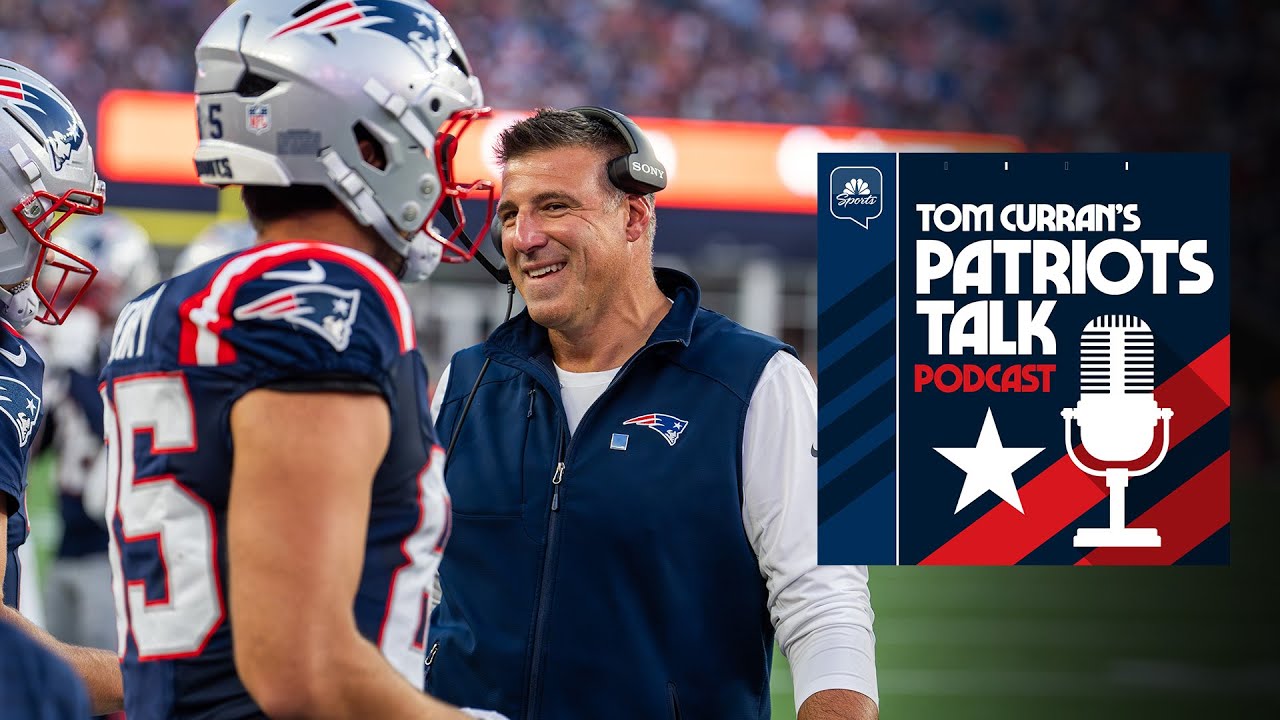
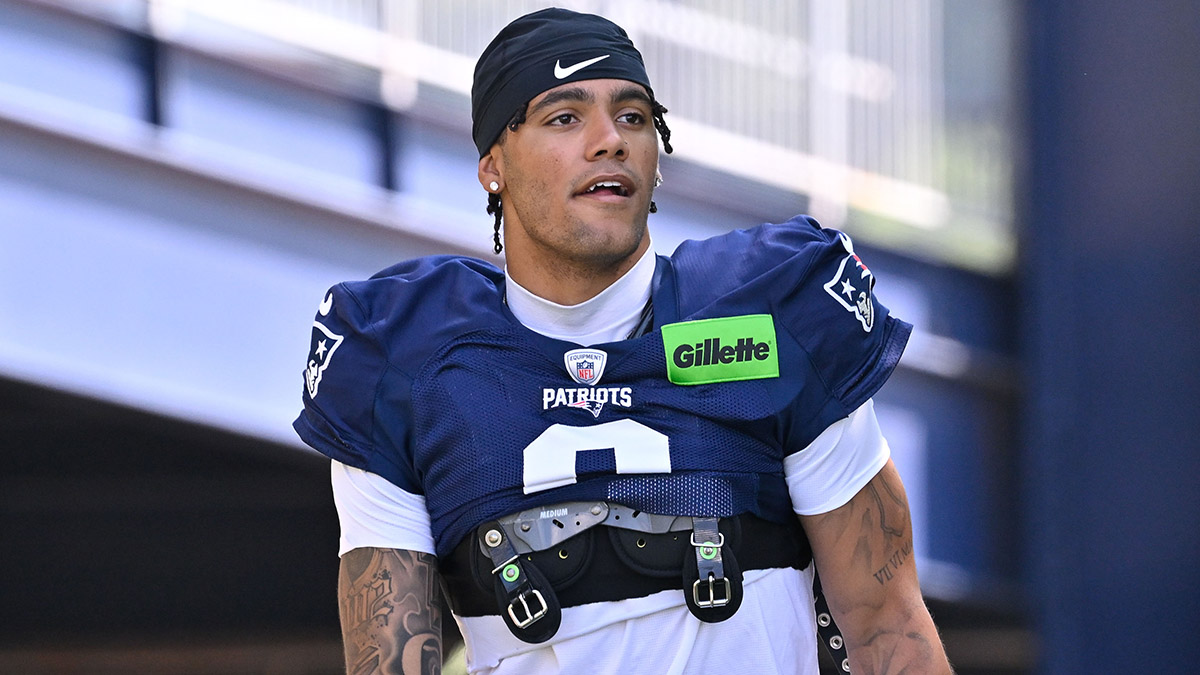
FOXBORO — Christian Gonzalez quietly folded and put away some of the clothing in his locker at Gillette Stadium.
While his Patriots teammates prepared for a fully-padded practice just four days before their season opener, the third-year corner did not. He understood the plan for him on Wednesday was to do some conditioning work on the side and not much more.
“I’m working,” he said softly.
Gonzalez is inarguably his team’s best player. He was named a Second-Team All-Pro last season after routinely matching up with and shutting down opposing No. 1 receivers. He was expected to be one of the linchpins of Mike Vrabel’s defense in 2025, allowing for extensive man-to-man looks and aggressive calls for pressure because of his lock-down coverage skills.
But after Gonzalez missed Wednesday’s practice, his status for Sunday’s game is in doubt, despite Vrabel not ruling him out. Gonzalez hasn’t practiced since injuring his hamstring on July 28.
“He’s continuing to work,” Vrabel said prior to the practice, “and he’ll do some stuff on the side, but I’m not going to rule anybody out. … We’ll continue to work and treat and make sure that we’re doing everything that we can to help him, and he’s doing everything he can to get back out on the field. That’s the only update I have right now.”
Gonzalez rode a stationary air bike on the upper fields behind Gillette Stadium while his teammates practiced on the lower field. He pedaled under the watchful eye of assistant strength and conditioning coach Brian McDonough before pausing and watching the action on the fields below.
“I mean, I do like where he’s at from an engagement standpoint,” Vrabel said. “We’ve been through this with other players, and I like where he’s at from that standpoint. In the meetings, locked in, following along at practice, which is difficult. To think that a player that’s not in there can follow along, I’ve been through that as a player and a coach, and I think he’s done a nice job of being able to do that.”
While Vrabel surely would like to have Gonzalez for Week 1 against a Raiders offense that features second-year standout tight end Brock Bowers and former Patriots wideout Jakobi Meyers, he didn’t indicate that he would be rushing Gonzalez back onto the field, either.
When asked if it was important for him to allow players to get back to “100 percent” before returning to the field, Vrabel shed some light on his thought process.
“I mean, I don’t use percentages,” Vrabel said, “but, again, I’ll remind you what we talked about as far as, when I try to make decisions about players and returning, one, can they make it worse? Can they, two, protect themselves?
“We can all say what we want about this game, but it’s violent, and can you protect yourself? And can you do your job up to the standard that we expect and that the player is used to? So, those are the things that I’ve tried to use when making decisions. Maybe I’ll add some to that, but that’s what I’ve tried to use in my other experience in this position.”



- Loading stock data…


Andy Roddick’s journey back to tennis began during the COVID-19 pandemic, when Tennis Channel asked him to remotely appear on studio programming while the sports world was shut down.
“I didn’t really play. I would come [to the U.S. Open] to do corporate work once a year, and that was it,” Roddick recently told Sports Business Journal. “Tennis Channel was great because I could do it from home. My one thing was, I never wanted the game to control my geography ever again.”
Five years later — and 13 after announcing his retirement from play on his 30th birthday — Roddick has established a pillar of the tennis media ecosystem on his own terms with his “Served” podcast.
Launched in January 2024 with veteran producer Mike Hayden and journalist Jon Wertheim, the show began with ambitions as simple as “a fun side project that I thought no one would listen to,” in Roddick’s words. But since its debut, the show has garnered more than 150,000 YouTube subscribers, 185,000 social media followers and 3.5 million audio downloads while attracting marquee sponsors such as Amazon Prime (2025 French Open, U.S. Open), Mercury Financial (2025 Wimbledon) and ServiceNow (live shows at the upcoming Laver Cup) for events. It also joined Vox Media’s network of sports podcasts last year.
As it’s grown, “Served” has earned bona fides with tennis diehards for long-form interviews with Rafael Nadal and Andre Agassi; laid-back but incisive analysis of tennis’ entire calendar of events (not just the Grand Slams); and the versatility to dig deep into topics such as, in an early sitdown with longtime IMG Tennis agent/executive Max Eisenbud, the economics of tennis player development.
“What makes him special, specific to his podcast, is his ability to transcend the deep tennis insiders, but also the casual tennis fans,” said Eric Butorac, a former doubles player on the ATP Tour and the USTA’s senior director of player relations and business development.
“He’s [Roddick] exactly like he was on tour. You walk into the locker room, and you just hope he’s sitting there, because he’s going to be jabbering away, super engaged, super competitive. … It’s the same way when I turn on ‘Served.’”
Served Media — the media company atop “Served” co-founded by Roddick and Hayden — is now a seven-figure revenue business. Since the debut of its eponymous podcast, it has launched a women’s tennis-focused show hosted by Kim Clijsters, daily recap program hosted by Hayden, active social and newsletter channels, and a merchandise line, with yet-to-be disclosed plans for further content expansion.
“We thought there would be a lane for it for, like, super nerds,” Roddick said. “But I don’t know that we thought it would grow like this.”


RALEIGH, N.C. — NC State needed a fourth-down stop in the red zone to survive, but came away with a 24-17 win over ECU to start the season. The Wolfpack (1-0) finished with 423 total yards behind CJ Bailey’s 318 yards passing with one touchdown through the air and one on the ground.
Cory Smith and Michael Clark share their thoughts after the game, including Bailey’s performance, Wesley Grimes’ career night, Hollywood Smothers’ solid outing, and the defense’s up-and-down night. Get all of that and more on the latest Postgame Podcast.
CLICK HERE TO TRY THE 75% OFF TRIAL TODAY!
Listen to the full podcast below and subscribe on iTunes, the Google Play Store or find us on Spotify by searching for “Pack Pride Podcast” under the podcasts section.
Not a VIP subscriber to Pack Pride? Sign up now to get access to everything R. Cory Smith, Michael Clark and the entire Pack Pride team have to offer on all things NC State and access to the No. 1 site covering the Wolfpack.
Sign up for FREE text alerts to get breaking news on commitments, decommitments, transfers, injuries, coaching changes and much more with our NEW text alert system available to all registered users and VIP subscribers. Click Here to become a FREE registered user and Click Here if you are already a VIP subscriber.
Want the latest news on NC State delivered right to your email? Subscribe to the Pack Pride newsletter here. It is free and a great way to get daily updates on NC State football, basketball, baseball, recruiting and more delivered straight to your inbox.

- Loading stock data…

NASCAR star was pardoned by president after months in prison – Motorsport – Sports

Ed Orgeron on SEC paying players before NIL: ‘We used to walk through the back door with the cash’ – Tar Heel Times

What is the projected NIL value of a top DB & DL?

Purdue Volleyball Adds ACC All-Freshman Outside Hitter to 2026 Roster

How does a Q-Collar work?

JMU Loses All 11 Starters From College Football Playoff Season

Top 3 transfer portal landing spots for 4,000-yard quarterback Drew Mestemaker

Germie Bernard responds to Alabama being cheered against in College Football Playoff: ‘Nobody wants to see Bama win’

Wink Martindale discusses Michigan vs Texas, state of college football in Citrus Bowl press conference

NIL Agents Laid Out In No Uncertain Terms The Handcuffs Shackling Petrino from UA to UNC

Texarkana’s Wacha family builds something bigger than a camp

Petaluma Police Arrest Suspect For Hate Crime Targeting Former Globetrotter and Youth Coach

Eckols Funeral Home » Jewel Annette Devall RodgersEckols Funeral Home

Parks and Rec to offer youth swim lessons at Bemidji State

Inconsistency costs Tesoro in loss to St. Anthony at Ringo Bossenmeyer Holiday Classic –

SoundGear Named Entitlement Sponsor of Spears CARS Tour Southwest Opener

Donny Schatz finds new home for 2026, inks full-time deal with CJB Motorsports – InForum

Jo Shimoda Undergoes Back Surgery

Black Bear Revises Recording Policies After Rulebook Language Surfaces via Lever

Bowl Projections: ESPN predicts 12-team College Football Playoff bracket, full bowl slate after Week 14

Robert “Bobby” Lewis Hardin, 56

Men’s and Women’s Track and Field Release 2026 Indoor Schedule with Opener Slated for December 6 at Home

David Blitzer, Harris Blitzer Sports & Entertainment

How Donald Trump became FIFA’s ‘soccer president’ long before World Cup draw
Wisconsin volleyball sweeps Minnesota with ease in ranked rivalry win

Michael Jordan’s fight against NASCAR heads to court, could shake up motorsports

JR Motorsports Confirms Death Of NASCAR Veteran Michael Annett At Age 39

Rick Ware Racing switching to Chevrolet for 2026

Increased Purses, 19 Different Tracks Highlight 2026 Great Lakes Super Sprints Schedule – Speedway Digest

DeSantis Talks College Football, Calls for Reforms to NIL and Transfer Portal · The Floridian





-
 Motorsports3 weeks ago
SoundGear Named Entitlement Sponsor of Spears CARS Tour Southwest Opener
-
 NIL3 weeks ago
DeSantis Talks College Football, Calls for Reforms to NIL and Transfer Portal · The Floridian
-
 Sports2 weeks ago
#11 Volleyball Practices, Then Meets Media Prior to #2 Kentucky Match
-
 Motorsports2 weeks ago
Sunoco to sponsor No. 8 Ganassi Honda IndyCar in multi-year deal
-
 Motorsports2 weeks ago
Nascar legal saga ends as 23XI, Front Row secure settlement
-

 Motorsports3 weeks ago
North Florida Motorsports Park led by Indy 500 Champion and motorsports legend Bobby Rahal Nassau County, FL
-
 Sports2 weeks ago
Maine wraps up Fall Semester with a win in Black Bear Invitational
-

 Motorsports3 weeks ago
Accelerating Inclusion: Breaking Barriers in Motorsport
-
 Rec Sports2 weeks ago
WNBA’s Caitlin Clark, Angel Reese and Paige Bueckers in NC, making debut for national team at USA camp at Duke
-

 Motorsports3 weeks ago
Summit Racing Equipment | Error 410: Resource Gone