
Sports
Setting up a major track meet At Hayward Field

The following transcript was generated using automated transcription software for the accessibility and convenience of our audience. While we strive for accuracy, the automated process may introduce errors, omissions, or misinterpretations. This transcript is intended as a helpful companion to the original audio and should not be considered a verbatim record. For the most accurate representation, please refer to the audio recording.
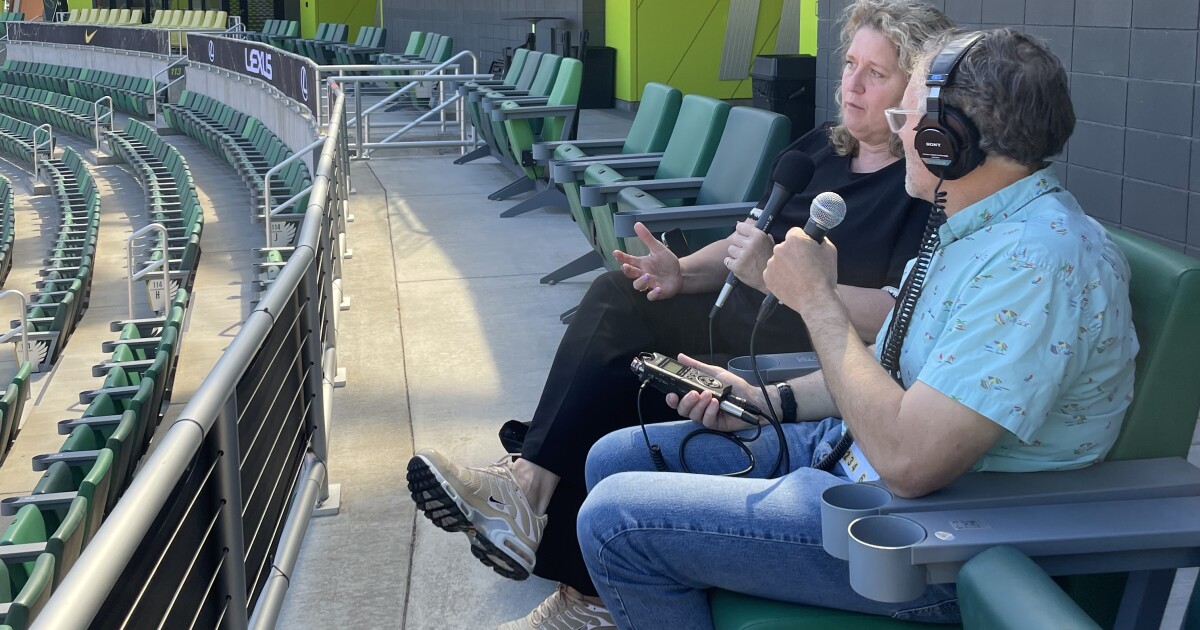
MICHAEL DUNNE: I’m Michael Dunne. Obviously, there’s a lot of movement at a track meet, running, jumping, throwing and lunging, but behind the scenes, there’s an almost incalculable amount of moving and moving parts to set up a major track meet like the Prefontaine classic at Hayward Field today on the show, we’ll bring you conversations with the folks at Track Town USA, in charge of all that pre, during, and post movement, from making sure the athletes are comfortable to ensuring all the technology is firing to taking every measurement possible so the hurdles, pads, cages, starting blocks and more are in the exact right place at the exact right time. It’s organized chaos on the track and in the field. In short, it’s a race to make sure all the other races come off without a hitch. What you just heard were the footfalls of a track athlete getting in some practice laps before running in Eugene’s signature track event, the Prefontaine classic. But before this and more than 300 other elite athletes take their marks another small army of staffers and volunteers for Track Town USA get to work making sure the PRI and every other track meet at world famous Hayward field goes off as planned. I met Jody Smith, Chief Operating Officer of TrackTown USA, at Section 115 overlooking Hayward Field, and asked her how she and her team work with the individual teams and athletes setting up for a track meet.
JODY SMITH: We really work with their athlete representatives, and we actually book all their travel and make all those arrangements for them. So, we are actually getting them here, and not only from where they live and throughout the entire world, but then once they come into either Portland or Eugene, we’re getting them from the airport to their hotels, and then while they’re here, all their meals, all their transport, all their services are provided by us.
MICHAEL DUNNE: I know you said you love the details, so let’s, let’s get into the details a little bit in terms of, okay, let’s say like we’re here today before the Meet happens. Kind of walk us through the logistics of setup in terms of, you know, a day like today, before the Meet begins. How many people are going to be here doing this setup? Kind of, what are their main responsibilities of getting this, this hallowed field, ready for competition?
JODY SMITH: We break this down into different groups. So, we have a venue team that is focused on building the infrastructure and the overlay to have the tents you see on the fields outside or on the Marshfield district that will have for all the folks coming in to buy, retail, enjoy food, etc. They’re worried. They’re worried about the permitting. They’re worried about whether they have all the tables and chairs, etc. We have a brand team, as you look out as a venue today, that makes it look that special for the Prefontaine to celebrate the 50th so all the signage and decor, not only in Hayward field, but throughout the city, we have a sports team that is focused on getting the field of play and the competition ready, so making sure we have all the equipment, the timing company, the supplies that we need to conduct the competition, organizing, the technical officials. On top of that, we have a team that’s on the services side that’s making sure that the athletes have the information and know what to expect when they arrive. And then there’s a whole group dedicated to the transport and the catering, etc. And last but not least, we have a marketing team and a communications team that’s really focusing on telling the stories of the event.
MICHAEL DUNNE: One thing that I always love about Hayward Field is, in addition to being this grand facility, but it exists in a community, in a neighborhood, and I’m wondering too, talk about the coordination with Eugene police and with all the other entities.
JODY SMITH: So, we’re really lucky to have tremendous community partners, and we couldn’t deliver this event without those partners. First and foremost is the venue owner, the University of Oregon, and their team in athletics and campus. They are crucial to all the work that we have to do here at Hayward field and supporting us through those processes, of course, the city of Eugene and the city of Springfield and traveling County, they’re really helpful in those services that come from the city, whether it’s parking police, etc. And then I’ll partner on this too and deliver the event as the Oregon Track Club. So, we really rely on those community partners in order to have those with the items go well.
MICHAEL DUNNE: How does it work? I guess, you know, people might be familiar with the term the load in. I mean, obviously a lot of it is loading in athletes. But, I mean, talk about that, you know, as, as you say, your kind of, you know, the road is closed in front of the facility. Talk about how you manage, 300 athletes coming in. And of course, that represents, I don’t know how many support staff. It’s a lot of folks coming to town. How do you manage that, that herd, if you will, of people?
JODY SMITH: Certainly. I’ll talk about two parts. So, the load into the people and the athletes. There’s, you know, 300 athletes, but there’s about 500 people. So, their support staff, their coaches, their physios, their publicist, etc. They’re all coming into town too. So that’s the load into the people. And we have a team of about at this point, blossomed around close to 30 to 40 that are probably focused on that between full time staff and key vendors and partners to deliver the services the load into the venue, which is more about trucks and big infrastructure. So we got a broadcast coming in. We have Swiss timing and omega coming from overseas, and they’ll come with a couple semis, you know, speaking about the load in, there’s a lot of large groups that come in. There’s a lot of tech that comes in, so from our broadcast to our timing to our display boards. So those are big movements of stuff. And then we have, we work with local tent vendors that we’ve worked with for 15 years almost now. They’re really familiar, but it is a process to get all those tents put up and the tables and chairs, and hopefully it all is seamless and easy. There’s always surprises, but we have another team of about 20 people dedicated to that.
MICHAEL DUNNE: I’m glad you brought that up. You know, the Prius kind of Center Stage for track throughout the world. Talk about it in terms of, you know, managing famous people, managing their publicists, but also sort of, you know, obviously making sure that everybody, every athlete, feels like, I don’t know, they’re kind of special.
JODY SMITH: So certainly, you know, as you talk about who’s coming, we have over 48 gold medalists from the Olympics, close to 100 Olympic medalists and 14 world record holders that are coming in. Each one is different and, and, and we want to make sure we rise to whatever level of service they expect. But that’s true of all 300 athletes for us. So, we try to make sure that we do it not just for the ones that are in the news, but the ones that are maybe just having their first professional event. So, we make sure that we create those services that are for all but also, of course, we’ll do some things tailored, because we do ask of them while they’re here to be a partner in telling their stories and promoting the event.
MICHAEL DUNNE: Talk about the moving parts for a track meet and what it takes to get everything ready, and especially because, you know, for many of us, you know, spectators, it’s like, okay, they just go out and, you know, set up the hurdles. But I imagine, because obviously everything has to be sort of ratcheted down to the millimeter, talk about those logistics of getting sure that everything not only is in place, but is in place to a standard of such a high degree.
JODY SMITH: Well, this is something I’m really excited to talk about and very proud of. So, we are blessed to have the most beautiful Track and Field facility in the world as kind of our base, right? We start with the best, right? We also have the best crews in the world. In my humble opinion, the folks that deliver the Prefontaine are the ones that are delivering the events all season long. As you mentioned, regardless of the weather, they’re out there doing that role. So, they know exactly what they need to do and how to do it, and they’re very seasoned and very professional at it. So, we have that starter, the moving parts, that layer on top is really this, how we make it look. So, we add the look and feel. We add more elements. We’re bringing back these heritage athletes. We’re bringing back the alumni workforce, just like someone would plan out a minute-by-minute script. We actually do the same way for how athletes come from when they first check in to when they compete, we have a a movement and timing that is to the second and in coordination with our broadcast partner and our in stadium show to help make sure that all of that goes as planned and we have the best chance To celebrate the best moments on the field of play, because there is a lot going on, and we want to make sure we provide timings to showcase, hey, right now we’re going to bring you over the shot put to see, you know, an attempt at a world leading throw. So, with that said, when things don’t go as planned, you have to pivot in multiple ways to ensure we get back on track. So, the sporting area of track and field is complex because it is multiple events going on at the same time, and they all have to come together to form one event.
MICHAEL DUNNE: You brought up, something that I’m interested to kind of pursue is, when something goes wrong or something doesn’t go as planned. If you could reach back into your memory and at a meet was, is there, is there a particular of something that happened, where you’re like, wow, we really have to scramble now to try and accommodate this challenge.
JODY SMITH: Well, it’s always weather, okay? It’s often the weather. I think we can all remember those very hot days in 2021 after coming off of the COVID restriction, and we witnessed 114-degree days here in our city. And that was the last day of the Olympic trials, and we had to literally end the competition, go away and come back that night, due to the amount of movement of volunteers, contractors, athletes, etc. For that to happen, it took everybody to make that occur. But I will also say that night, when we all came back, was one of the most exciting nights of track and field here at Hayward field, with coal Hawker in the 1500 punching his ticket to the Olympics, with Sidney McLaughlin setting a world record, and we had the whole place lit up. Because nothing is more spectacular than Hayward at night. So often in the worst moments come the best times.
MICHAEL DUNNE: Especially someone like yourself that has to conduct so much. What does success look like when you know that everything has come off? What does it describe the feeling or just describe, sort of, you know, maybe there’s a post event meeting with your team, kind of, what does that look like and feel like to you?
JODY SMITH: Success is in the athletes faces, and is when they’ve had a chance to perform at their best. And that’s not just the person winning the races. It’s across the board, and it’s seeing them then connect with our spectators and our young fans and creating that energy between them. Because if they’re having fun and doing well, then we’re all having fun and doing well. So, to me, that is the mark of success. And within the team, it’s the same thing too. You know, we’re all going to come into this pretty exhausted, but then the first person jumps or throws or runs, and you see something spectacular, and you’re like, that’s why we do this. And you have to remember that, because there’s moments in the way you’re like, wow, it’s two o’clock in the morning, and I’m putting, you know, stickies on labels on an envelope, but it’s so we are all about making sure we’re doing the things. So, when the athletes get on the field to play, they just have to go out and compete.
MICHAEL DUNNE: Can you go to a track meet, another track meet, and be a fan? Or do you, do you kind of look at it and kind of critique what’s happening?
JODY SMITH: I think that’s true in every career I’ve been in, so to speak. But I can be a fan 100% and I can sometimes be a fan and shut off worrying about, hey, this could have been. This could have been. This could have been. It’s not but sometimes you do go, wow, if we had only done, you know, this kind of thing. But I’m going to go back to that answer so I can absolutely go to a track meet and be a fan. And you know, because athletes compete in all sorts of places, they’re just fun to watch, and what they do is really spectacular and beyond what most of us can think about doing with that. Said, when I go to an event, yeah, sometimes I have to shut off the event mind and just enjoy the competition and not think of what I would do if I had a chance to work on this competition.
MICHAEL DUNNE: Jody, my last question for you is this, we’ve talked about what a phenomenal place. This is Hayward field. Maybe, if you could share with us, maybe, some of your favorite comments you’ve ever got from either athletes or other colleagues of yours at other institutions. You know when they came here for the first time, is there a comment that you can remember that they said to you that filled you with pride, but also with an understanding of what a kind of almost like a, you know, a sacred honor it is to help manage this venue.
JODY SMITH: I hear that a lot. When they first arrive and kind of see it, or when you first walk out of the tunnel, I think it’s a really special moment, because it is unique in the sport to kind of have that welcome to the stadium, so to speak. But what to me is not just what we do as a hallmark of TrackTown USA and our events in Hayward Field. It’s about our spectators and our fans and how they get behind the athletes. So I think you’ll hear it time and time again, I heard them as I came around the corner, as I was preparing for my last attempt. I mean, they feel that power and energy behind them, and that lifts them, I think, to achieve better marks and better times. And that’s what’s fun, and that’s what I think is special about here, and that’s what I hear a lot.
MICHAEL DUNNE: Jody Smith, thank you so much for taking to us.
JODY SMITH Thank you.
MICHAEL DUNNE: Eli Rosen-Duran, Event Manager here at Hayward Field, you manage a lot of the tech. And I think that’s probably an area that fans don’t really see. Talk about how important technology is, both in terms of, you know, obviously the Meet logistics, but then also in sort of communication for the team.
ELI ROSEN-DURAN: So I mean, tech is huge among both our internal and then all the fans and everything for our internal team. Of course, this meet is still a little day that we run a lot on paper, so people always have to be out printing things. And then, of course, the whole track and field, statistics and times and marks and distances and start lists, and that all comes via technology like all the timing, company, results, company services.
MICHAEL DUNNE: What are some of the biggest challenges with technology, making it all fit, making it all work. What are, you know, obviously, I imagine there’s, there’s so many requirements for WiFi and internet, talk about some of those biggest challenges that you have to overcome?
ELI ROSEN-DURAN: Honestly, yeah, because getting to WIFI we built a whole media section out in our back turf rec field, and there’s something out there the rest of the time. So, we got to go run all these internet services out there for all these photographers that got to upload gigabytes of files to the web, and all these reporters that got to get their news out published. So, we built a whole temporary infrastructure of Wi Fi and hardline internet for these guys.
MICHAEL DUNNE: I know a kind of a fairly recent piece of technology. I think it’s called the Wave light? Talk about that, because I think that’s fascinating, and I imagine that adds a whole other element for spectators.
ELI ROSEN-DURAN: So the wave light has been something over the last few years, that it is a light system that goes around the track, and it’s 400 lamps that go under the inside track curb, and it’s programmed to run practically with the racers, so it stays at a steady pace, and the Meet directors and the coaches and the athletes kind of determine what that pace is going to pace is going to be. Say for a mile. If they’re trying to break some records, they go set at that record pace, and the athletes go off and chase it. And so it’s been huge, especially in record setting races where they’re chasing a record, and the athletes will pull up alongside this light, and then you can see them pull out in front of it. And the fans really engaged with that. Seeing the athletes beat the light sort of makes sense, because they’re beating the record, and you know, instantly, without having to wait for the results about what happened.
MICHAEL DUNNE: What are some of the other technologies that help enhance both the in-stadium experience for the spectators, but also on TV.
ELI ROSEN-DURAN: Oh, there’s definitely a couple. The timing company that comes out here, omega Swiss timing, they have a couple technologies. Major one for the track athletes is chip tracking. So, they have little chips on their bibs, strapped to their chest that down to the millisecond they know where they are on the track. So, it’s huge about knowing the current speed of how fast they’re going, all the projected times. And then you could watch it and say, if there’s a clump of people you know, who actually is in first, instead of thinking like, Hey, I think it’s number seven that’s out in the lead right now when everyone’s wire to wire. So, the chip tracking, I think, is really neat technology, and we use it in the stadium on our scoreboards, and it goes to the TV graphics as well. On throws, they have virtual markers out in the field, about, hey, who has the best throw right now? Who’s one, two and three? So when someone goes for a javelin toss or a shot put, then you know right where it lands, looking on TV about what their mark might be, instead of waiting for measurements to come in from the laser.
MICHAEL DUNNE: When do you kind of go in, make sure the technology is installed, testing. Kind of take us through, sort of your timeline, you know, pre, during and post meet.
ELI ROSEN-DURAN: So pre meet, I’m in an office year round, and kind of start querying with our technology partners. So, we bring in a lot of technology partners, broadcast team led, board team, a timing company and network services out here at University of Oregon, about hey, these are the plans we’re looking at. This is how we’re looking to lay it out. And then we go back and forth, get some agreements going, get a timeline going about, all right, about two weeks or so ahead of time, we’re going to start being on site. We’re going to start loading in everyone’s gear together, start setting it up. And so, we go from an office time to a delay. Delivery and a build out, and then we get to set up and start testing all this technology. And that’s where we are right now. We’re about three days out from the event and all the technologies got delivered, and then it’s time to start setting it up and lighting up some boards, plugging in some cameras. And so, our TV trucks got parked here yesterday. We got them all powered up, and then they’re starting to plug all their wires in the stadium. So, over the next few days, we’ll start seeing some video feed shoot across and by Friday, the day before the meet, we’ll have a test rehearsal, just pretty much of making sure everyone’s gear on the timing front, the broadcast front, the video board, the wave light, that it’s all plugged in and working like it should. So, Saturday we have no issues.
MICHAEL DUNNE: To the best of your ability, give me some numbers. Like, I don’t know how many feet of cable are necessary to put, you know, a meet together. How many people are responsible for technology, just anything that kind of contextualizes folks who have always just been spectators, but I’ve never, sort of seen the, you know, kind of the inside baseball, if you will.
ELI ROSEN-DURAN: I can absolutely tell you about that. So, as we speak, I know our TV crew is running about 3,000 feet of cable to get up to their commentary position. Luckily, this being a new stadium, there’s wires that got put in everywhere. So, I can’t even speak how many wires are within the stadium, but the broadcast team will have about 100 people on site managing the NBC broadcast show, along with World feed, all their commentators, cameramen. It was three semi-trucks of TV trucks that pulled in the timing equipment came on about three semi-trucks as well, and that got shipped all the way from Europe, where it was timing the last diamond league meets and so that crew, Omega comes in with about 30 people as well to go set up these three full trucks worth of gear.
MICHAEL DUNNE: Eli Rosen-Duran, Event Manager for Track Town, USA, really appreciate you spending some time and talking with us.
ELI ROSEN-DURAN: Yeah, you too. Enjoyed it. Thank you.
MICHAEL DUNNE: That’s the show for today, all episodes of Oregon on the record are available as a podcast at KLCC.org. Tomorrow on the show, we’ll talk with Oregon Attorney General Dan Rayfield, who, along with other state AGs, is in a pitched battle against some of the Trump administration’s legally questionable executive orders. I’m Michael Dunne, and this has been Oregon On The Record from KLCC. Thanks for listening.

Sports
UAPB Track & Field Student-Athletes Among Top UAPB Chancellor’s Medallion Recipients at Fall 2025 Commencement
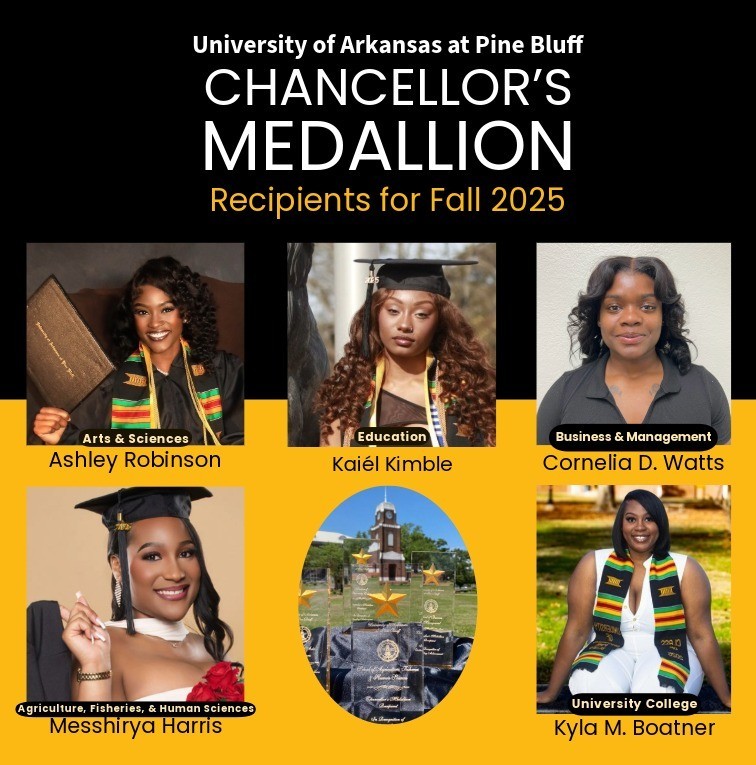
The University of Arkansas at Pine Bluff (UAPB) honored five graduates with the Chancellor’s Medallion at the Fall 2025 Commencement Ceremony on Saturday, December 13, 2025. The Chancellor’s Medallion is UAPB’s highest academic honor, awarded to the top graduate from each school based on cumulative GPA. The ceremony is available on UAPB TV.

Notably, the top three overall recipients, Ashley Robinson, Kaiél Kimble, and Cornelia D. Watts, who earned the highest GPAs among all these graduates, were also Golden Lion student-athletes from the UAPB Track & Field program, exemplifying excellence both in the classroom and in competition. Among them, Kaiél Kimble reached another milestone: completing the UAPB ROTC program and being commissioned as a Second Lieutenant (2LT) in the United States Army.
“These students represent the very best of UAPB—academic excellence, leadership, perseverance, and service,” said UAPB Chancellor Anthony Graham, Ph.D. “Their achievements reflect the strength of our academic programs and the dedication of our faculty and staff.”
Fall 2025 UAPB Chancellor’s Medallion Recipients

School of Arts and Sciences
Ashley Robinson
- Hometown: West Palm Beach, Florida
- High School: Herbert Morrison Technical High School & Seminole Ridge Community High School
- Major: Criminal Justice
- GPA: 3.922
- Career Goal: Robinson will join the United States Air Force to begin her career in criminal justice. Her long-term goals include federal investigative work as a crime scene investigator or serving with the FBI or DEA.

School of Education
Kaiél Kimble
- Hometown: Humble, Texas
- High School: Atascocita High School
- Major: Health & Kinesiology, Minor in Military Science
- GPA: 3.789
- Career Goal: Following graduation, Kimble was commissioned as a Second Lieutenant (2LT) in the U.S. Army after completing the ROTC program at UAPB. She plans to serve as an Army officer while pursuing her long-term goal of coaching collegiate track and field.

School of Business and Management
Cornelia D. Watts
- Hometown: Houston, Texas
- High School: Klein Forest High School
- Major: Business Administration, Concentration in International Business
- GPA: 3.710
- Career Goal: After completing her Track & Field season, Watts will begin her professional career with Amazon as an Area Manager and hopes to explore global opportunities.

School of Agriculture, Fisheries, and Human Sciences
Messhirya Harris
- Hometown: Marianna, Arkansas
- High School: Marianna High School
- Major: Agriculture/Agricultural Business
- GPA: 3.473
- Career Goal: Harris will complete esthetician school and begin her career as a full-time esthetician, with plans to further her education in nursing and specialize in advanced aesthetic and corrective procedures.

Division of University College
Kyla M. Boatner
- Hometown: Dermott, Arkansas
- High School: Dermott High School
- Major: General Studies
- GPA: 3.194
- Career Goal: Boatner plans to complete the UAPB Master of Arts in Teaching program and earn certification as an elementary school teacher.
UAPB congratulates the Fall 2025 graduates and applauds the Chancellor’s Medallion recipients for their academic achievements, leadership, and commitment to excellence.
Sports
Track and Field Competes at Art Kadish Elm City Challenge: Zacarolli Sets School Heptathlon Record

RESULTS
NEW HAVEN, Conn. | The Farmingdale State College indoor track and field teams competed Friday and Saturday at the Art Kadish Elm City Challenge, with the Rams’ men’s squad placing fourth (49 points) behind a winning, school-record performance in the heptathlon by freshman Ethan Zacarolli (Hillsdale, N.Y.), while the women’s contingent tied for 10th place.
Zacarolli won the men’s heptathlon with a score of 4,550 points, which topped the previous FSC record of 4,038 points set by Nicholas Lourenco in 2023.
Also pacing the Rams’ efforts were freshmen jumpers Jaden Cesar (Queens, N.Y.) and Christian Destine (Rosedale, N.Y.). Cesar’s leap of 13.48 meters (44-2.75) in the triple jump was good for third place, while Destine’s long jump of 6.69m (21-11.5) placed fifth.
On the women’s side, junior pole vaulter Mishell Delgado (Bronx, N.Y.) earned fifth-place points for Farmingdale State, clearing a height of 2.50 meters (8-0.25) on her second jump of the afternoon.
Farmingdale State is back in action during the new year on Saturday, January 10, when it travels to Middletown, Conn., for the Wesleyan Winter Invitational.
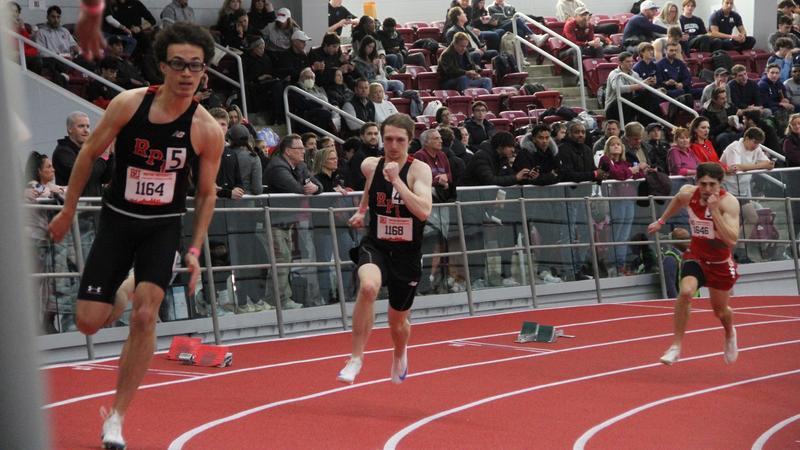
HANOVER, NH – The Rensselaer Polytechnic Institute (RPI) men’s track & field team produced a standout performance at the Dartmouth December Invite on Saturday, registering numerous top-five finishes across sprints, jumps, hurdles, and throws in an all-around strong showing in early-season competition.
RPI’s jumpers once again led the charge, starting with sophomore Oliver Herrick, who finished runner-up in both the high jump (1.80 meters) and triple jump (13.53 meters). In the high jump, Herrick was joined by senior Calvin Chang in fourth place at 1.75 meters. The Engineers dominated the triple jump event, occupying four of the top five places. Senior Evan Boyd landed in third at 12.74 meters, followed by Jack Notaro in fourth (12.28m) and Caius Leung in fifth (12.06m).
In the horizontal jumps, Ervin Owusu claimed second in the long jump with a leap of 6.49 meters, while Dillen Owusu and Evan Boyd rounded out the scoring in fourth (6.12m) and fifth (5.98m), respectively. The pole vault squad also had a strong outing, as Shawn Keenan cleared 4.55 meters to place fifth and Moss Dengler added an eighth-place mark of 4.25 meters.
The Engineers’ sprint and hurdle groups delivered several high finishes in the short-distance races. In the 60-meter dash, five RPI athletes placed in the top eight: Alexander Flynn placed second in 7.19 seconds, just ahead of Jack Catelotti (3rd, 7.22), Francis Grasso (4th, 7.23), Gabe Sicurella (7th, 7.27), and Rafael Steiner (8th, 7.38). Flynn added a third-place finish in the 300 meters with a time of 36.31 seconds. Steiner and Catelotti followed closely in fifth (36.46) and sixth (36.66), with Grasso finishing eighth (36.86).
In the hurdles, Chris Kay ran 8.86 seconds to take third in the 60-meter hurdles, while John Bellini (4th, 9.28), Caius Leung (6th, 9.72), and Jack Currie (8th, 10.12) helped the Engineers control the finals heat. In the 500 meters, RPI had three athletes in the scoring group: Richard Biase (6th, 1:11.68), Jack Gips (7th, 1:11.96), and Samuel Aubut (8th, 1:11.97), all finishing within tenths of a second of one another.
RPI’s throwers were equally dominant in both the shot put and weight throw. In the shot put, Paul Sussman led the Engineers with a fourth-place throw of 13.42 meters. He was backed by Tristan Mangin (5th, 13.12m), Logan Gamlin (7th, 12.15m), and Arthur Hrycak (8th, 11.96m), giving RPI four of the top eight marks.
In the weight throw, Colby Grove recorded a third-place finish with a mark of 14.96 meters, with Sussman (4th, 14.66m), Max Fetah (5th, 14.62m), and Eric Mulqueen (6th, 14.58m) close behind in a tightly packed leaderboard.

IOWA CITY— At the Jimmy Grant Alumni Invitational hosted by the University of Iowa Saturday, Central College men’s track and field senior Gunner Meyer (senior, Fairbank, Wapsie Valley HS) broke the program’s all-time record in the men’s 60-meter hurdles.
Meyer clocked in at 7.92 seconds, the fastest time by any Division III athlete so far this season. He’s the first Dutch athlete to go under the eight-second mark. He placed third in the meet behind a pair of Hawkeyes.
Men’s triple jumper Kale Purcell (fifth year, Holton, Kan.) also matched the school record with a leap of 48 feet, 6 inches to win the meet.
Alivia Roerdink (junior, Tiffin, Ohio, Hopewell-Loudon HS) ran the second-fastest women’s 800 meters time in school history, crossing the line in 1 minute, 37.81 seconds. She placed fifth.
In the women’s 60-meter prelims, Ava Parkins (junior, Monmouth, Ill., Burlington Notre Dame HS [Iowa]) clocked in at 7.70 seconds to share second place on the program’s all-time list. It also makes No. 8 nationally. She didn’t run the finals after qualifying in seventh. She also finished third in the 300 meters in 39.55 seconds.
Mary Gustason (senior, Marion, Linn-Mar HS) was third in the women’s 200 meters in 26.10 seconds.
Central will reset after the student’s winter break with the Dutch Athletics Classic the next competition on January 16, 2026.

NEW HAVEN, Conn. – On Friday and Saturday, the University of Hartford men’s indoor track & field team competed in their first two-day meet of the season placing in 2nd out of 11 teams in the Art Kadish Invitational hosted by Southern Connecticut State University.
Rapid Recap:
- Senior Destinee Majett (Brick Township, N.J.) headlined the Hawks throwing for a massive personal best in the women’s weight throw taking second place hitting a distance of 15.09 meters. Majett moved to third all-time in the event in program history with the throw.
- Junior Jordan Murphy (East Hampton, Conn.) would also make her mark in the meet breaking the meet record for the pentathlon with a score of 3292.
- Senior Madison DiPasquale (Wallingford, Conn.) finished second in the women’s shot put event hitting 12.33 meters.
- Freshman Caroline McGinnis (Windsor Locks, Conn.) placed 8th in the women’s long jump at a distance of 4.85 meters.
- Freshman Jaya Pichay (South Windsor, Conn.) had a great showing in the 55 meter dash. Pichay finished the preliminaries in 4th place at a time of 7.47, before racing to a 5th place finish in the event at a personal best time of 7.43.
- Freshman Leah Valentino (Beacon Falls, Conn.) placed in first for the Hawks in the 600 meter at a time of 1:50.20.
- In the 55 meter hurdles event junior Caroline Crocker (Bernardston, Mass.) placed in second at a time of 8.48 seconds which was a new school record. Sophomore Tamara Greene (Hartford, Conn.) followed in fourth place at a time of 8.67 seconds.
- Freshman Maeve McGinnis (Windsor Locks, Conn.) scored points in the high jump competition coming in second clearing a height of 1.55 meters.
Up Next:
The Hawks will head to winter break returning to action on January 24th, competing at Wesleyan University.
For the latest information on Hartford Athletics follow the Hawks on Facebook, Instagram, X, and YouTube.
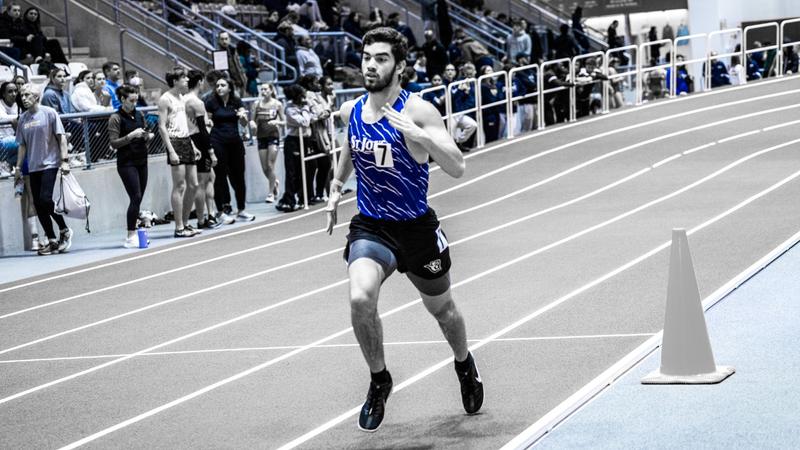
GORHAM, Maine – The Saint Joseph’s College men’s track and field team turned in a statement performance at the USM Alumni Open on Saturday, highlighted by two school records from freshman standout Stephen Pierre, a relay victory, and multiple New England Division III qualifying marks in the jumps and hurdles.
“We brought great energy and effort today and were rewarded with some impressive marks. Our ability to cover events with talent and depth continues to grow and will be a key to our success at the conference level,” said Head Coach Mike Burleson.
“The caliber this group is competing at right now makes me incredibly proud,” added Associate Head Coach Troy Hendricks. “To be dropping school-record performances on just meet two of the season speaks to how bought-in they are. I’m excited to see the work they put in over winter break and where that momentum takes us when we come back at the start of the new year.”
SPRINTS AND RELAYS
Junior Jacob Schmader (Limington, Maine) and senior Noah Batoosingh (Scarborough, Maine) led a strong effort in the 300 meters, finishing third (36.82) and fifth (37.57), respectively, to pace the sprint group on the flat 200-meter oval.
Freshman Eli Benjamin (Rochester, N.H.) competed in the 55-meter dash, clocking 7.01 in the prelims to place ninth overall in a tight field.
Saint Joseph’s grabbed a win on the track in the 4×200-meter relay, as Batoosingh, sophomore John Read, freshman Eli Benjamin, and Schmader combined to run 1:34.17, crossing the line first and continuing the early-season momentum from the Elm City Classic.
In the 4×400-meter relay, the quartet of junior Aidan Mills (Ontario Center, N.Y.), sophomore Isaac Keresey (Pittsfield, Maine), junior Emilson Zoccolo (Lewiston, Maine), and sophomore Harrison Fields (Gray, Maine) placed second in 3:42.01, closing the meet with another strong relay showing for the Monks.
MID-DISTANCE AND DISTANCE
Senior Brayden Grant (Rochester, N.H.) turned in a solid performance in the 500 meters, placing fifth in 1:18.19.
In the 1000 meters, Mills led the way with a fourth-place finish in 2:55.79, followed by Fields in eighth at 3:03.49 and senior Kyle Benson (Biddeford, Maine) in ninth at 3:12.55, as the Monks continued to build depth through the middle-distance group.
Keresey posted one of the top distance marks of the day, finishing second in the mile with a time of 4:31.81, while Zoccolo added a 13th-place finish in 5:07.57.
In the 5000 meters, senior Jacob Pelletier (Augusta, Maine) clocked 16:04.76 to place fifth, and teammate Alexey Seredin (Peaks Island, Maine) ran 16:49.95 for 11th, giving Saint Joseph’s a strong presence in the longest event of the day.
HURDLES
The 55-meter hurdles proved to be a major highlight and a key event for the Monks.
Pierre, competing in his first collegiate hurdles meet, broke the school record and placed second in the final in 7.98, hitting the New England Division III provisional standard. Read followed in third at 8.01, also meeting the provisional standard, as the pair delivered a big 2–3 finish in the final.
The prelims were equally impressive, with Pierre (8.17), Read (8.21), and junior Tudum Monday (Lewiston, Maine) (8.24) all achieving New England Division III provisional qualifying times, giving Saint Joseph’s three hurdlers at championship-caliber level just two meets into the season.
JUMPS
Pierre produced another breakout performance in the long jump, where he broke his own school record and won the event with a mark of 6.81m (22′ 4.25″), an automatic qualifier for the New England Division III Championships. His series also included jumps of 6.78m and 6.71m, showcasing impressive consistency at a high level. Junior Devonte Prom (Portland, Maine) added a strong fifth-place finish at 5.75m (18′ 10.5″).
In the triple jump, Monday won the event with a mark of 13.03m (42′ 9″), good for a New England Division III provisional qualifying performance. Junior Christopher Godefroy (Windsor Locks, Conn.) placed fifth at 11.64m (38′ 2.25″), while Peters finished seventh with a best of 10.96m (35′ 11.5″).
In the high jump, Benjamin continued his strong start by clearing 1.83m (6′ 0″) for second place, while sophomore Martinho Codo (Lewiston, Maine) jumped 1.73m (5′ 8″) to finish fourth.
THROWS
The Monks’ young and deep throws group continued to gain momentum across both the shot put and weight throw.
In the shot put, sophomore Anthony Vasquez (Westbrook, Maine) led the way with a ninth-place finish at 10.07m (33′ 0.5″), followed by senior Alexander Greslick (Windham, Maine) in 10th at 9.80m (32′ 2″). Freshman Brandt Bishop (Marblehead, Mass.) threw 9.10m (29′ 10.25″), classmate Daven Duquette (Berlin, N.H.) recorded 9.07m (29′ 9.25″), and fellow freshman Cameron Gonyer (Berlin, N.H.) added a mark of 7.99m (26′ 2.75″). Junior Gabryel Balch (Strafford, N.H.) rounded out the group at 7.31m (23′ 11.75″).
In the weight throw, Vasquez placed fifth with a throw of 9.75m (32′ 0″), Gonyer finished sixth at 9.73m (31′ 11.25″), and Duquette took seventh with 9.60m (31′ 6″). Greslick added an eighth-place mark of 9.48m (31′ 1.25″), while Balch finished 10th at 9.09m (29′ 10″), giving Saint Joseph’s five athletes over nine meters and valuable early-season depth in the event.
FULL RESULTS
Men’s 55 Meters
Men’s 300 Meters
Men’s 500 Meters
Men’s 1000 Meters
Men’s 1 Mile Run
Men’s 5000 Meters
Men’s 55-Meter Hurdles (Prelims)
Men’s 55-Meter Hurdles (Finals)
Men’s 4×200-Meter Relay
-
Batoosingh, Read, Peters, Schmader – 1:34.17 (1st)
Men’s 4×400-Meter Relay
-
Mills, Keresey, Zoccolo, Fields – 3:42.01 (2nd)
Men’s High Jump
Men’s Long Jump
Men’s Triple Jump
Men’s Shot Put
Men’s Weight Throw

UAPB Track & Field Student-Athletes Among Top UAPB Chancellor’s Medallion Recipients at Fall 2025 Commencement

New Central girls coach wants his players to have fun playing basketball | Western Colorado
Heisman winner Fernando Mendoza, Indiana football emerges as superpower

Fernando Mendoza wins the Heisman Trophy as college football’s top player :: WRALSportsFan.com

Here’s how much money Heisman Trophy finalists Mendoza, Pavia and Love made from NIL deals this season

Donald Trump Looks at Federal Government While Hinting at NIL Changes Amid ‘Disastrous’ Run

Track and Field Competes at Art Kadish Elm City Challenge: Zacarolli Sets School Heptathlon Record

Men’s Track & Field Records 35 Top-8 Performances at Dartmouth December Invite

Rising $54 million college football HC linked to major NFL coaching vacancy

Summit Racing Equipment | Error 410: Resource Gone

Meyer takes down Central 60-meter hurdles record

Larry Larson, Lyle Barnett Secure First Two Invites For 2026 King of The South Invitational

Hawks Women’s Track & Field Have Strong Showing at the SCSU Art Kadish Invitational

NASCAR Cup Series lands one new driver for 2026

Saint Joseph’s Men Turn in Record Jumps and Relay Win at USM Alumni Open

First Tee Winter Registration is open

Fargo girl, 13, dies after collapsing during school basketball game – Grand Forks Herald

CPG Brands Like Allegra Are Betting on F1 for the First Time

Volleyball Recaps – November 18

F1 Las Vegas: Verstappen win, Norris and Piastri DQ tighten 2025 title fight

Two Pro Volleyball Leagues Serve Up Plans for Minnesota Teams

Sycamores unveil 2026 track and field schedule

Utah State Announces 2025-26 Indoor Track & Field Schedule

Jo Shimoda Undergoes Back Surgery

Redemption Means First Pro Stock World Championship for Dallas Glenn

Texas volleyball vs Kentucky game score: Live SEC tournament updates

Robert “Bobby” Lewis Hardin, 56

How this startup (and a KC sports icon) turned young players into card-carrying legends overnight

Bowl Projections: ESPN predicts 12-team College Football Playoff bracket, full bowl slate after Week 14
Wisconsin volleyball sweeps Minnesota with ease in ranked rivalry win

 NBA Legend Michael Jordan to Join NBC Sports as Special Contributor
 Why a rising mid-major power with an NCAA Tournament team opted out of revenue-sharing — and advertised it
 Falcons mailbag
 Portal Update – Basketball and Gymnastics Take Hits
 has always dreamed in Mercurial. Now his initials are on the boots.
The new Kyl…
has always dreamed in Mercurial. Now his initials are on the boots.
The new Kyl…
-
 Rec Sports3 weeks ago
First Tee Winter Registration is open
-
 Rec Sports2 weeks ago
Fargo girl, 13, dies after collapsing during school basketball game – Grand Forks Herald
-
 Motorsports3 weeks ago
CPG Brands Like Allegra Are Betting on F1 for the First Time
-
 Motorsports3 weeks ago
F1 Las Vegas: Verstappen win, Norris and Piastri DQ tighten 2025 title fight
-
 Sports3 weeks ago
Two Pro Volleyball Leagues Serve Up Plans for Minnesota Teams
-
 Sports3 weeks ago
Utah State Announces 2025-26 Indoor Track & Field Schedule
-
 Sports3 weeks ago
Sycamores unveil 2026 track and field schedule
-
 Motorsports2 weeks ago
Jo Shimoda Undergoes Back Surgery
-
 Motorsports2 weeks ago
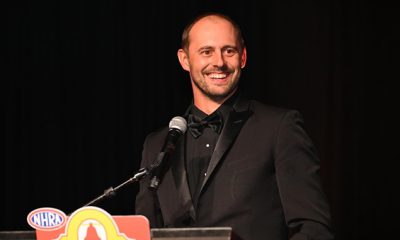
Redemption Means First Pro Stock World Championship for Dallas Glenn
-
 Sports3 weeks ago
Texas volleyball vs Kentucky game score: Live SEC tournament updates