
Technology
Sportradar expanding slot offering, deepening focus on Asian markets: Oscar Brodkin

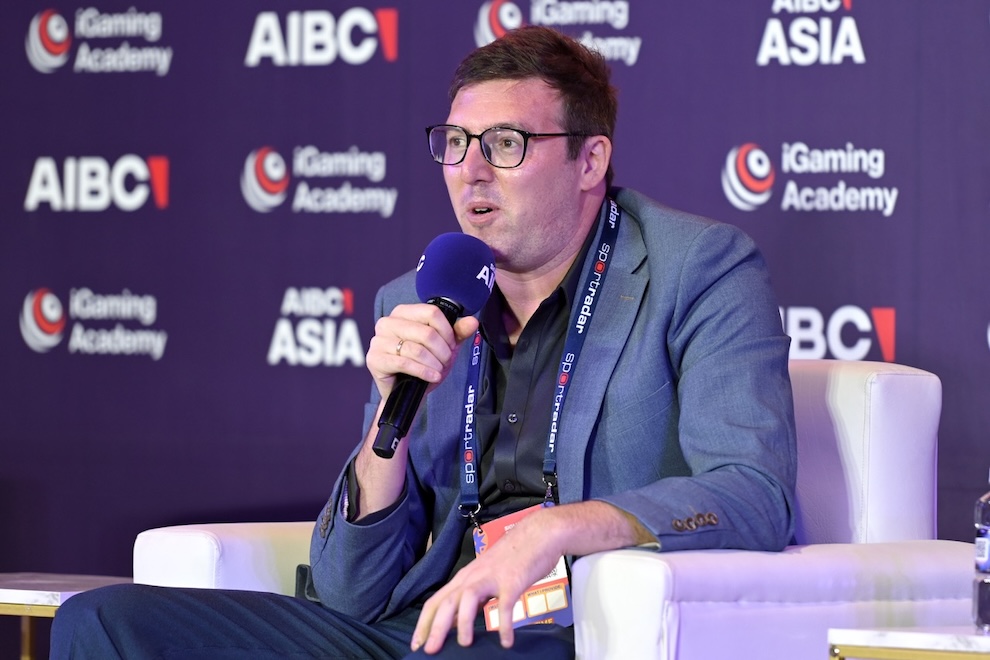
Global sports technology firm Sportradar AG is charting new ground in the online sector, making use of its proprietary slot games and data-platform capabilities to meet growing market demand, including in Asia. Oscar Brodkin (pictured), Sportradar’s managing director for Asia Pacific, gave the insights in an interview with GGRAsia. He outlined the company’s strategic expansion in the online slot gaming segment, and the firm’s approach to the regional market.
Sportradar is known primarily for its sports data and trading services, collecting and analysing sports data for bookmakers, national and international sports federations, and media companies. The company is now turning its expertise toward digital gaming, namely casino games developed in-house.
“Traditionally, we didn’t do slots,” stated Mr Brodkin. “But we bought a company several years ago, and we have now integrated it into our Asia business development strategy.”
“The slot games we are making are taking off. We have about 40 of our own games now,” he added. He was speaking on the sidelines of SiGMA Asia 2025, a trade show and conference for the online gaming industry held earlier this month in the Philippine capital, Manila.
The company says its casino games – with a “mobile-first approach” – include “rich visuals and thrilling bonus features,” offering also customised themes to its clients.
Mr Brodkin noted: “If the Philippine market likes a specific type of slot, we have our own studio where we can make the game.”
“I’m quite proud of it because it’s not easy to get into the slots industry. We are starting to distribute it in Asia, which is a very competitive market,” he added.
The slot offering is described as a component of Sportradar’s strategy of diversification. The company has developed original games, including titles such as “Gold of Egypt”, a one-reel slot that Mr Brodkin said merges elements of crash-style games with classic slot mechanics.
“People are really enjoying this type of game,” said the executive, noting that the format reflected preferences for more interactive gameplay.
Mr Brodkin said the initial push would be done via existing slot games that have been successful in other markets, such as Europe. The company has been working to launch new titles developed specifically for Asian markets.
Sportradar’s slot offering “is already live with a licensed operator in the Philippines,” which the managing director said he could not identify by name.
Creating competitive slot content was no small task, observed Mr Brodkin. “It has to look perfect. You need to get to a place where people say: ‘it looks good, and I quite like playing it,” he explained. “It’s taken a long time to be able to compete with other companies in the market.”
A full-stack approach
Sportradar’s expansion is backed by what the group terms its end-to-end ecosystem that already supports major global sportsbook operators. The firm states that its approach spans the entire value chain, from user acquisition and marketing, to odds generation, platform integration, player retention, and data-driven personalisation.
“We offer betting solutions, media solutions, and sports performance analytics. Pretty much everything via our platform,” Mr Brodkin told GGRAsia. “There aren’t many companies in the world that do the whole value chain from start to finish.”
“We started off in the beginning with [compiling] pure data and the odds to go with that, but it [the business] has completely changed over the years,” noted Sportradar’s representative. “The bookmakers … now focus on marketing, live chat, and branding, and settling the payments, while we do everything else” on their behalf, he added.
The services include also developing customised platforms for Sportradar’s clients, as more services are outsourced, he explained.
According to Singapore-based Mr Brodkin, retention of customers “became massively important,” with a “need to give them the content they want, including bonusing at the right time”.
He added: “All of that is predictive, or as I like to call it, prescriptive. Artificial intelligence [AI] is prescriptive, telling you what to do.”
This infrastructure is being supported by tools such as Sportradar’s Managed Trading Services (MTS) framework, which allows the group’s clients to manage their sportsbook offering “with a range of integrated trading tools, analytics, and risk management features”. The MTS also supports the capability for operators to trade any third-party content, according to Sportradar.

Also central to the group’s ecosystem is “ad:s”, Sportradar’s marketing and advertising platform, which is said to use behavioural analytics to target specific player segments.
Last year, the company added digital audio channels to its “ad:s” offering, and extended its reach across ‘digital-out-of-home advertising’ – the latest generation of outdoor advertising screens.
“This enables betting operators to engage with more customers by serving relevant adverts via two of the fastest-growing media channels,” stated the firm.
“Alpha Odds” is another tool powering the group’s sportsbook offering: an AI-driven platform that the firm says “adapts to real-time liabilities, predicted changes, customer behaviour, and live market data,” helping to “increase turnover and boosts profit margins”.
In April, Sportradar announced that Alpha Odds was expanding to cover cricket.
Multifaceted strategy
Sportradar states that its approach to Asia is multifaceted, involving local partnerships, regulatory engagement, and targeted content development. The region’s diverse regulatory landscape presents both challenges and opportunities, but the company is confident in its ability to navigate it.
“We’ve grown from a pretty small business” in Asia, “to quite a large one,” stated Mr Brodkin. “We deal with licensed and regulated bookmakers, and we’ve taken on some massive projects. A big one was – two years ago – when we partnered with the Taiwan Sports Lottery.”
According to the executive, Sportradar also serves clients in Australia, in the Philippines, and is ready to make significant inroads into other jurisdictions.
“Asia is only partially regulated. So, when the rest come, we are nicely set up” to enter markets via use of “multiple languages, multiple product features,” Mr Brodkin told GGRAsia.
He added: “There’s been a lot of progress in laying the groundwork for legalisation across Asia. Some [jurisdictions] are going fast towards legalisation, and Thailand is definitely one, which is very encouraging.”
Mr Brodkin also highlighted Sri Lanka and India as markets to watch, though each country is advancing at its distinct pace.
The company’s Asia strategy also includes localised content development and third-party integration. The executive however said that Sportradar would “not develop odds” for every single sport, as that would “not be scalable”.
“What we’re starting to do is open up third-party odds. So, we let the professionals do their job and create the best odds, which we integrate within our platform, and distribute to our clients,” he explained.
Mr Brodkin added: “We are going to use third-party [providers] for some sports in Asia. You just have to know the trends, and … decide what are the right sports for the right customers in the right areas.”
The company aims to positioning itself as a one-stop provider for its clients. “We’ve studied and learned how Asia works,” Mr Brodkin concluded. “If someone wants to outsource their platform to us, we can do it with a personalised product.”

Technology
ASUS Republic of Gamers Presents Next-Gen Gaming Innovations, Commemorates 20 Years of Gaming Excellence at CES 2026
ROG showcases world-first technologies, next-generation gaming systems, and visionary collaborations that redefine gaming experiences
KEY POINTS
-
Two decades of gaming leadership: At its Dare to Innovate virtual event, ROG celebrates 20 years of fearless experimentation and bold innovation
-
Expanding gaming horizons: High-performance gaming innovation from Zephyrus laptops, Crosshair motherboards, Swift OLED monitors and more
-
Cross-domain collaborations: ROG, Kojima Productions combine signature peripherals and the Flow Z13-KJP
-
World’s first dual 16″ screen gaming laptop: ROG raises the bar of innovation to a whole new level with the pioneering Zephyrus Duo
LAS VEGAS, Jan. 5, 2026 /PRNewswire/ — ASUS Republic of Gamers (ROG) today announced its Dare to Innovate virtual event at CES 2026, unveiling the next chapter of its vision for gaming performance, design, and culture. The showcase celebrates 20 years of fearless innovation, highlighting breakthrough technologies that empower gamers and creators, while reinforcing ROG’s commitment to redefining gameplay, creation, and competitive performance worldwide.

A wide range of next-generation technologies across ROG’s gaming ecosystem is on display, including laptops, desktops, motherboards, and peripherals ― all engineered with world-first features and advanced capabilities that elevate performance and immersion.
On this 20-year milestone, ROG reflects on a legacy defined by bold concepts, pioneering engineering, and an unwavering dedication to its global community. From the groundbreaking Crosshair motherboard in 2006 to today’s cutting-edge gaming platforms, every milestone embodies the spirit of For Those Who Dare, a commitment to challenging conventions and redefining what gaming hardware can achieve.
Continuing this legacy, the ROG Lab embodies the heart of ROG’s experimental spirit, transforming ideas into tangible breakthroughs. This year’s showcase unveiled engineering advancements from the Lab, combining performance, thermal mastery, and user-focused design to elevate how gamers play, create, and connect.
ROG also extends its influence beyond technology into culture through global co-branding partnerships that merge gaming with music, fashion, art, and entertainment. Collaborations with creators and iconic franchises, including Kojima Productions, empower players to co-create within a growing, cross-domain ecosystem, reinforcing ROG’s role in shaping gaming identity and community worldwide.
ROG remains committed to pioneering the future of gaming, transforming daring visions into experiences that inspire every player to push beyond boundaries. Attendees at CES 2026 in Las Vegas can explore the latest ROG creations firsthand at The Venetian Expo, Level 3, San Polo #3403, from January 5 to 8, 2026.

Digital gaming continues to evolve at a remarkable pace, and much of that momentum is coming from technologies that sit beneath the surface. Blockchain may not dominate headlines the way big releases or subscription shifts do, yet it increasingly shapes how players pay, own, and move digital assets across ecosystems. Developers are watching these shifts closely because the expectations forming today often become industry standards tomorrow.
Players have grown used to seamless digital transactions, whether they’re purchasing cosmetic packs or moving funds between entertainment platforms. That comfort is now extending to crypto‑enabled services, particularly in areas where fast settlement and transparent transfers matter. Some entertainment categories, including platforms such as Ethereum online casinos, illustrate how blockchain-based payments are becoming a practical alternative rather than a novelty. These examples help frame how gamers might come to expect the same kind of fluidity in mainstream titles. And as more players experiment with varied digital payment rails, studios are paying attention to how these habits could influence in‑game systems.
The Rise of Blockchain-Backed Payment Options Across Modern Gaming Platforms
 Studios exploring blockchain payments aren’t necessarily chasing hype; they’re reacting to a widening ecosystem. The Web3 gaming sector was valued at $25.63 billion last year and is projected to surge to $124.74 billion by 2032. That long‑term growth outlook signals that payment experimentation in gaming isn’t slowing down.
The appeal for developers is straightforward: blockchains can handle microtransactions, cross‑platform rewards, and user‑to‑user transfers with fewer intermediaries. For players, the value comes from speed and clarity, especially when moving funds between platforms that don’t traditionally “talk” to one another. That combination of utility and consistency adds weight to the idea that blockchain payments could soon feel as ordinary as digital wallets did a decade ago.
Developers Are Leveraging Crypto Infrastructure for In-Game Economies
Ownership has become a defining issue in modern gaming, especially as digital libraries expand and cross‑platform play becomes the norm. Some teams are experimenting with blockchain-based IDs, tokens, or asset registries to give players a stronger sense of permanence. Ubisoft’s blockchain‑integrated releases from last year hinted at how publishers might use distributed ledgers for identity systems rather than speculative assets, making the technology more functional than flashy.
Market momentum supports this approach. Data from CoinLaw places the global blockchain gaming market at $21.6 billion in 2025, reflecting how many players are engaging with tokenized assets and decentralized economies. That figure underscores how digital ownership has become more than a niche experiment.
When implemented with care, crypto infrastructure can support predictable, player‑friendly marketplaces where items maintain consistent histories and transparent value. This matters because it could reduce fraud, stabilize in‑game trading, and help teams build cohesive economies that last across sequels or updates. The challenge lies in making the tech invisible enough that players benefit without needing to think about consensus models or wallet mechanics.
Where Crypto Entertainment Fits In: From Streaming Integrations to Emerging Models Like Ethereum Casinos
 Crypto-enabled entertainment doesn’t exist in isolation; it’s increasingly brushing up against mainstream gaming habits. Streamers have already experimented with token-gated communities, blockchain reward drops, and audience‑driven item giveaways. These integrations quietly shift expectations around what digital ownership should look like, especially when viewers can carry items or achievements into other community spaces.
Platforms using crypto payments, including models similar to those found on the Ethereum casino side of the entertainment industry, show how frictionless transfers and transparent balances appeal to users who want quick access without traditional payment delays. For game studios, these behaviors serve as a test case for what players may expect from in‑game marketplaces or cross‑title inventories.
What’s more, these experiments hint at a broader trend: entertainment platforms are blending, and payment systems are blending with them. The line between playing, watching, and collecting is thinning, and blockchain often sits in the background, enabling that shift.
What These Shifts Signal for the Future of Player Experience and Industry Standards
If the current trajectory continues, the next wave of digital gaming could revolve around portability and permanence. Players increasingly expect items, progress, and identity markers to travel with them, even as they jump between devices, subscription models, or entirely different worlds. Blockchain’s role here won’t always be visible, but it will be foundational.
Studios face a balancing act. They need to incorporate emerging tech without overwhelming players with complexity or triggering backlash tied to past Web3 missteps. Yet the appetite for secure, consistent, and interoperable systems is growing. Developers who meet that demand—quietly, thoughtfully, and with a focus on player value—could set the tone for the next decade of game design.
In practice, that means treating blockchain not as a selling point but as supporting infrastructure. Successful implementations will feel intuitive, not experimental, and they’ll prioritize long‑term reliability over hype. As more publishers adopt these tools to streamline payments, protect assets, and enhance cross‑platform continuity, blockchain’s influence on gaming will likely move from occasional talking point to everyday expectation.
Related

With the gaming community set to converge on Barcelona, Voltage is addressing the industry’s most pressing payment challenges head-on.
Attendees at ICE can visit stand 4L52 for a firsthand look at how Lightning Network technology enables instant, near-zero-fee deposits and withdrawals, eliminating chargebacks and unlocking new revenue streams.
The company’s platform empowers online casinos, sports betting, and social gaming operators to move value instantly and globally, bypassing the high costs and slow settlement times of traditional financial rails.
“Our platform is built to solve the real-world challenges of high fees and slow withdrawals that directly impact player experience and operator margins,” said Graham Krizek, CEO of Voltage. “At our booth, we are demonstrating that Lightning Network transactions are not just theoretical, but are a practical, scalable tool for increasing retention and profitability, available right now.”
At ICE, the Voltage team will conduct consultations showcasing how operators can:
- Increase margins with Lightning’s minimal transaction fees.
- Eliminate chargeback risks with Bitcoin’s irreversible transactions.
- Enable instant coin packs and rewards for seamless player engagement.
- Access global markets without intermediaries or currency barriers.
Voltage’s enterprise-grade infrastructure allows iGaming companies to integrate Bitcoin and stablecoin payments without the complexity of building it themselves, providing a seamless experience for both the operator and the player.
Operators, developers, and media attending ICE Barcelona 2025 are encouraged to visit the Voltage team to get hands on and discuss how to integrate instant payments into their platforms.
Fast Track, the leading CRM technology provider for the iGaming industry, today announced that Greco, the gameplay risk management company acquired in February 2025, has now transitioned to become a core Fast Track product.
Following a successful period operating as a standalone business, Greco is now scaling fully under the Fast Track product umbrella. This marks a strategic step in expanding Fast Trackʼs platform beyond engagement execution into value-led optimisation, with a specific focus on helping operators scale bonus strategies with greater precision and control.
Founded in 2021 as a joint venture with Fast Track, Greco introduced a new approach to gameplay risk modelling through its proprietary Gameplay Risk Engine (Greco). The technology enables iGaming operators to model theoretical player value, detect behavioural anomalies and make smarter, data-driven decisions around bonus allocation and gameplay exposure.
As part of Fast Track, Greco becomes a foundational component alongside Fast Trackʼs real-time CRM, AI-driven gamification and natural language products.
“This has always been about building something bigger than the sum of its parts,” said Simon Lidzén, CEO and co-founder of Fast Track. “Greco adds a powerful new dimension to our platform.
“By bringing it fully under Fast Track, we can help operators scale their bonus strategies with the same sophistication they apply to CRM strategies – backed by real-time data, intelligence and world-class execution.”
As Greco becomes a core Fast Track product, it will be delivered with the same world-class service, reliability and pace of innovation that Fast Track customers expect. The offering will be complemented by an expanded service layer designed to help operators optimise and scale both CRM strategies and bonus strategies, working from one central system.
Grecoʼs co-founders, Ozric Vondervelden and Ed Dickerson, remain actively involved as the technology and team transition into Fast Trackʼs broader product organisation.
With this move, Fast Track continues to evolve its platform to support iGaming operators in digitalising operations, delivering true 1:1 experiences and shifting from promotion execution to scalable, value-driven player engagement.
Meet Fast Track at ICE
Fast Track will showcase the new Greco-powered product in action at ICE Barcelona, from 19-21 January. Operators are invited to visit the Fast Track stand to see how gameplay, risk, intelligence and CRM orchestration come together to scale smarter bonus strategies.

HKC Corporation’s showcase is anchored by the introduction of several flagship products. The HKC M10 Ultra is promoted as the first monitor to utilize an RGB MiniLED backlight system for enhanced color and brightness control. It would appeal to professional graphic designers, video editors, and game developers. The KOORUI S4941XO is a large-format OLED screen with a high refresh rate aimed at immersive simulation gaming. Finally, the ANTGAMER ANT275PQ Ultra stands as an LCD monitor with an exceptionally high refresh rate for competitive esports.
Collectively, HKC Corporation’s display products demonstrate the company’s technical focus on advancements in panel construction, backlight engineering, and integrated image processing software.
Image Credit: HKC Corporation
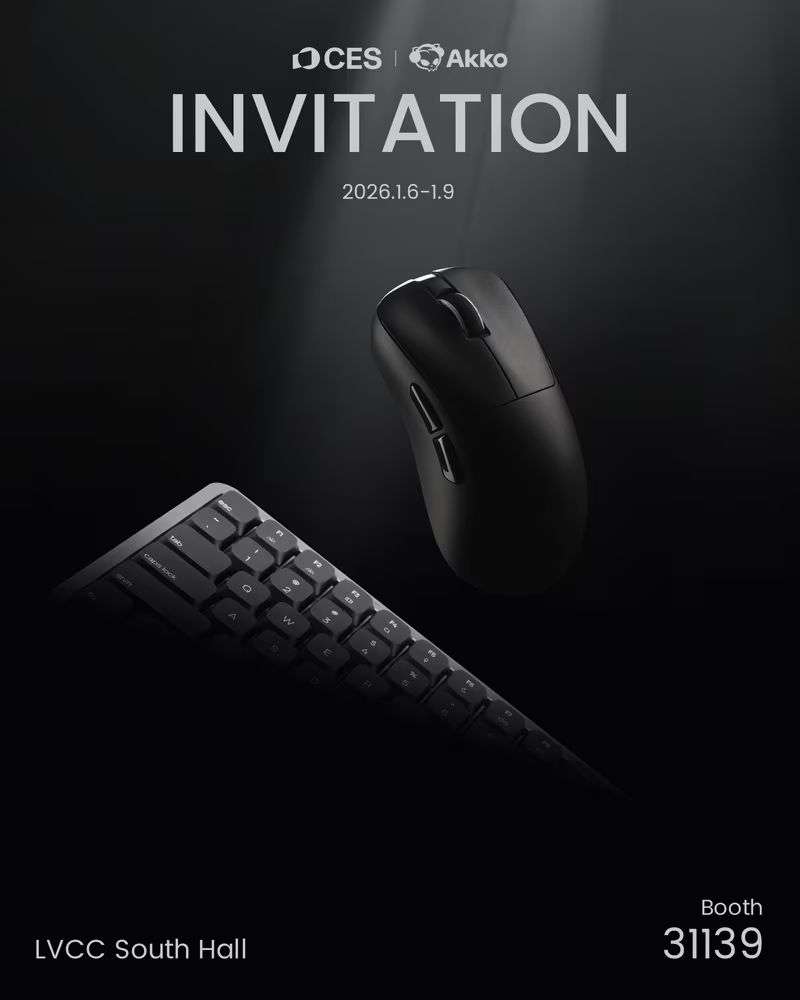
At CES 2026, Akko calls attention to three distinct series — the Nest, the Dash, and the Framer. The brand highlights the Dash as its “most advanced mouse to date.” This computer peripheral weighs just 39 grams and boasts the PixArt 3950 sensor for ro-grade precision and stability. Nest, on the other hand, is a right-hand ergonomic style, while the Framer is for entry-level gaming.
In addition to the high-performance computer mice, Akko is also highlighting new keyboards — including the aluminum rapid assembly magnetic-switch keyboard MOD007v5 HE and the Year of the Snake Keyboard — as well as the M1 V5 TMR technology by Akko’s sister brand MonsGeek.
Image Credit: Akko

Spartan Club Athletes of the Week for Jan. 5: Anand Dharmarajan & Mya Hartjes

Trinidad Chambliss strikes NIL deal with Ole Miss, awaiting NCAA decision

FSC Athletics Update – January 5

All 6 Wisconsin volleyball outgoing transfers have found new homes

Quinasia Abercrombie Named PBC Women’s Basketball Player of the Week

Trinidad Chambliss strikes NIL deal with Ole Miss, awaiting NCAA decision

Walton Named A-10 Player of the Week for Third Time

Tony Stewart named Chili Bowl grand marshall

Daren Lucas Named President of the Motorsports Hall of Fame of America

Cadillac Formula 1® team announces star Chinese racer Zhou Guanyu as reserve driver

Yamaha Names New Senior VP and President of Motorsports Division

College Football Playoff Predictions: Nick Saban’s Coaching Tree on Display at Semis

UC Athletes Participate In Prestigious Indoor Meet

Little League Launches SAFE Program Framework and Annual Compliance System

18th District lawmakers propose youth sports safety bill

SoundGear Named Entitlement Sponsor of Spears CARS Tour Southwest Opener

Donny Schatz finds new home for 2026, inks full-time deal with CJB Motorsports – InForum

David Blitzer, Harris Blitzer Sports & Entertainment

DeSantis Talks College Football, Calls for Reforms to NIL and Transfer Portal · The Floridian
Elliot and Thuotte Highlight Men’s Indoor Track and Field Season Opener

#11 Volleyball Practices, Then Meets Media Prior to #2 Kentucky Match

Rick Ware Racing switching to Chevrolet for 2026

Colleges ponying up in support of football coaches, programs
West Fargo volleyball coach Kelsey Titus resigns after four seasons – InForum

Maine wraps up Fall Semester with a win in Black Bear Invitational

Nascar legal saga ends as 23XI, Front Row secure settlement

Ross Brawn to receive Autosport Gold Medal Award at 2026 Autosport Awards, Honouring a Lifetime Shaping Modern F1

Stempien to seek opening for Branch County Circuit Court Judge | WTVB | 1590 AM · 95.5 FM

Sunoco to sponsor No. 8 Ganassi Honda IndyCar in multi-year deal

Women’s track and field athletes win three events at Utica Holiday Classic






-
 Motorsports3 weeks ago
Ross Brawn to receive Autosport Gold Medal Award at 2026 Autosport Awards, Honouring a Lifetime Shaping Modern F1
-

 Rec Sports2 weeks ago
Princeton Area Community Foundation awards more than $1.3 million to 40 local nonprofits ⋆ Princeton, NJ local news %
-

 NIL3 weeks ago
Kentucky AD explains NIL, JMI partnership and cap rules
-

 Sports3 weeks ago
Beach Volleyball Unveils 2026 Spring Schedule – University of South Carolina Athletics
-

 Sports2 weeks ago
Badgers news: Wisconsin lands 2nd commitment from transfer portal
-

 NIL3 weeks ago
College football program loses 25 players to transfer portal
-

 Sports2 weeks ago
Is women’s volleyball the SEC’s next big sport? How Kentucky, Texas A&M broke through
-

 Rec Sports3 weeks ago
Refugee-Focused Youth Sport Initiatives : Moving for Change
-

 Rec Sports2 weeks ago
Youth Sports Business in 2025: The Year the Industry Grew Up
-
Rec Sports2 weeks ago
Inside the NWSL’s first combine: Can the league create a more robust pathway for American talent development?