Youth and amateur sports generated $52.2 billion in travel-related spending nationally last year, outpacing spectator sports tourism’s $47.1 billion
Arkansas outdoor recreation contributed $7.3 billion to the state economy in 2023, supporting more than 68,000 jobs
Statewide tourism reached $17.4 billion in economic impact in 2024, with Northwest Arkansas playing a significant role
Fayetteville has attracted interest from the Women’s Football League, Athletes Unlimited Softball League, and Marshall Islands Soccer Federation
Purpose-built facilities like Centennial Park have enabled the city to host world-class cycling events including upcoming USA Cycling Cyclocross National Championships
Youth and Amateur Sports Lead Travel Spending
Sports tourism has become one of the most consistent economic drivers in the country, and youth and amateur sports are leading the way. According to the Sports Events & Tourism Association, youth and amateur sports contributed $52.2 billion in travel-related spending last year. That figure surpasses spectator sports tourism, which generated $47.1 billion in direct spending and supported more than 665,000 jobs nationwide.
Ryan Hauck, CEO of Experience Fayetteville, the city’s tourism marketing agency, outlined the opportunity in a recent guest commentary. He noted that while leisure and business travel have softened nationally, sports-related travel has continued to rise, providing stability that communities increasingly depend on.
Arkansas Sees Measurable Returns
The numbers in Arkansas reinforce the broader trend. Outdoor recreation alone contributed $7.3 billion to the statewide economy in 2023, supporting more than 68,000 jobs. Tourism overall reached $17.4 billion in economic impact in 2024, with Northwest Arkansas playing a major role in that growth.
For cities like Fayetteville, this translates into hotel stays, restaurant visits, retail traffic, and extended visibility for local assets. Hauck emphasized that when communities lean into their strengths, including outdoor recreation, hospitality, accessibility, and local culture, the returns are significant.
Facility Investment Attracts National Events
Fayetteville’s Centennial Park illustrates how purpose-built infrastructure can unlock sports tourism opportunities. The facility was designed to host world-class cycling events and has already welcomed the 2022 UCI Cyclocross World Championships. It will host the USA Cycling Cyclocross National Championships in December 2025, with a return engagement the following year.
“These events don’t just bring athletes. They bring national attention, media coverage, and significant economic impact for our hotels and hospitality businesses,” Hauck wrote.
Beyond cycling, the city has drawn interest from the Women’s Football League, Athletes Unlimited Softball League, and Marshall Islands Soccer Federation about hosting future events.
Hauck called for continued strategic investment in purpose-built sports facilities and deeper regional partnerships. The broader takeaway for youth sports operators and municipal leaders is clear: communities that invest intentionally in sports infrastructure and programming are positioning themselves to capture a growing share of travel-related spending. With youth and amateur sports now outpacing spectator sports in economic contribution, the opportunity extends well beyond professional leagues.
via: Talk Business photo: Sports MNGT Degrees
YSBR provides this content on an “as is” basis without any warranties, express or implied. We do not assume responsibility for the accuracy, completeness, legality, reliability, or use of the information, including any images, videos, or licenses associated with this article. For any concerns, including copyright issues or complaints, please contact YSBR directly.
About Youth Sports Business Report
Youth Sports Business Report is the largest and most trusted source for youth sports industry news, insights, and analysis covering the $54 billion youth sports market. Trusted by over 50,000 followers including industry executives, investors, youth sports parents and sports business professionals, we are the premier destination for comprehensive youth sports business intelligence.
Our core mission: Make Youth Sports Better. As the leading authority in youth sports business reporting, we deliver unparalleled coverage of sports business trends, youth athletics, and emerging opportunities across the youth sports ecosystem.
Our expert editorial team provides authoritative, in-depth reporting on key youth sports industry verticals including:
Sports sponsorship and institutional capital (Private Equity, Venture Capital)
Youth Sports events and tournament management
NIL (Name, Image, Likeness) developments and compliance
Youth sports coaching and sports recruitment strategies
Sports technology and data analytics innovation
Youth sports facilities development and management
Sports content creation and digital media monetization
Whether you’re a sports industry executive, institutional investor, youth sports parent, coach, or sports business enthusiast, Youth Sports Business Report is your most reliable source for the actionable sports business insights you need to stay ahead of youth athletics trends and make informed decisions in the rapidly evolving youth sports landscape.
Join our growing community of 50,000+ industry leaders who depend on our trusted youth sports business analysis to drive success in the youth sports industry.
Stay connected with the pulse of the youth sports business – where industry expertise meets actionable intelligence.
Sign up for the biggest newsletter in Youth Sports – Youth Sports HQ – The best youth sports newsletter in the industry
Follow us on LinkedIn
Follow Youth Sports Business Report Founder Cameron Korab on LinkedIn
Are you a brand looking to tap into the world’s most passionate fanbase… youth sports?
Introducing Play Up Partners, a leading youth sports marketing agency connecting brands with the power of youth sports. We specialize in youth sports sponsorships, partnerships, and activations that drive measurable results.
About Play Up Partners
Play Up Partners is a leading youth sports marketing agency connecting brands with the power of youth sports. We specialize in youth sports sponsorships, partnerships, and activations that drive measurable results.
Why Sponsor Youth Sports?
Youth sports represents one of the most engaged and passionate audiences in sports marketing. With over 70 million young athletes and their families participating annually, the youth sports industry offers brands unparalleled access to motivated communities with strong purchasing power and loyalty.
What Does Play Up Partners Do?
We’ve done the heavy lifting to untangle the complex youth sports landscape so our brand partners can engage with clarity, confidence, and impact. Our vetted network of accredited youth sports organizations (from local leagues to national tournaments and operators) allows us to create flexible, scalable programs that evolve with the market.
Our Approach
Every partnership we build is rooted in authenticity and value creation. We don’t just broker deals. We craft youth sports marketing strategies that:
Deliver measurable ROI for brand partners
Create meaningful experiences for athletes and families
Elevate the youth sports ecosystem
Our Vision
We’re positioning youth sports as the most desirable and effective platform in sports marketing. Our mission is simple: MAKE YOUTH SPORTS BETTER for athletes, families, organizations, and brand partners.
Common Questions About Youth Sports Marketing
Where can I sponsor youth sports?How do I activate in youth sports?What is the ROI of youth sports marketing?How much does youth sports sponsorship cost?
We have answers. Reach out to info@playuppartners.com to learn how Play Up Partners can help your brand navigate the youth sports landscape.
Youth sports organizations: Interested in partnership opportunities? Reach out to learn about our accreditation process.
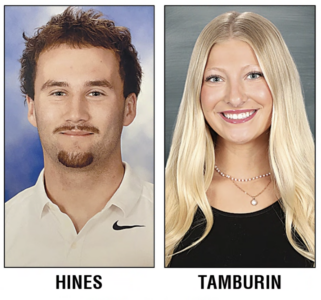
WHEELING — Grace Tamburin and Owen Dobrzynski Hines, both seniors at Wheeling Park High School, have won the Wheeling Elks Scholarships for 2025-26.
Each will receive $1,000 from Wheeling Lodge No. 28, according to Elks Youth Activities Chairman Joe Marchlenski. Both are eligible for further state and national Elks’ scholarships.
“We believe it is important to recognize outstanding leadership and scholarship qualities in the youth of our area,” said Elks Exalted Ruler Ruby Haynes. “We are proud that more than $4 million in scholarships is awarded nationally by the Elks each year.”
Tamburin currently carries a GPA of 4.32. She is the captain and four-year member of both the girls’ volleyball and softball teams, and was recently named to the OVAC All-Star Volleyball team for West Virginia.
She is a member of both the National Honor Society and the National Spanish Honor Society. In her spare time, she volunteers with A Night to Shine, assisting adults with special needs. She plans to attend Shepherd University in Shepherdstown.
Dobrzynski Hines currently carries a GPA of 4.1. He is a captain and four-year member of both the football and track and field teams.
He volunteers dozens of hours each year with multiple Ohio Valley agencies, and describes his most influential community service project as volunteering with the flood relief efforts following the devastating flooding that occurred in this area in June.
He is a member of the Drug Free Club of America, the Freshmen Mentor Program, and the National Honor Society. He plans to attend Saint Vincent College in Latrobe, Pennsylvania, and major in social work and social services.
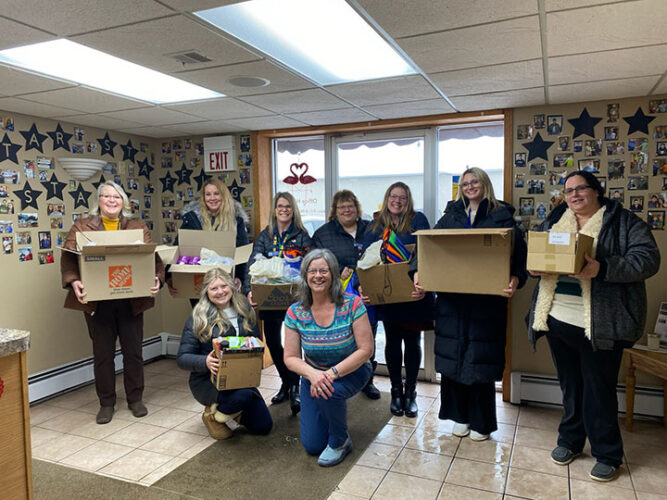
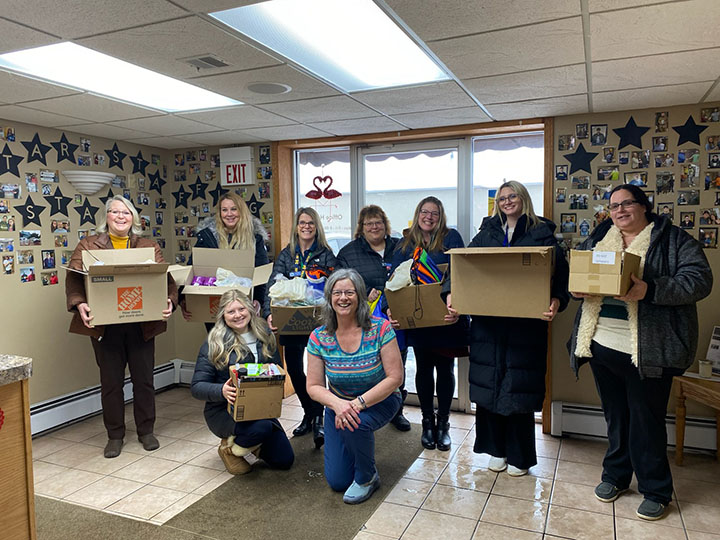
News file photo Representatives from area schools and the Foster Closet are seen picking up hygiene items for youth that were collected during the 2nd Annual Dignity Drive in 2025.
Laurel Nowak invites the community to participate in the third annual Dignity Drive from Monday to March 6.
Donations can be dropped off at Star Staffing located in Alpena from Monday to Friday from 8 a.m. to 4 p.m.
The Dignity Drive asks community members to donate personal hygiene products for the youth in Northeast Michigan. Nowak said last year, the drive collected $10,000 worth of hygiene products which were provided to the School Success Program at Thunder Bay Jr. High School and Alpena High School. Products were also donated to the Foster Care Closet of Northern Michigan.
Nowak said that all partners were “grateful for the commitment of our community to children in need.”
“We were also able to provide a box to all of the area elementary schools,” she added.
“Personal hygiene is a basic human need,” Nowak said. “Many homeless and low-income children do not have the hygiene products they need for self-care. This causes many problems such as social rejection, illnesses and missed days of school.”
Items for both boys and girls are accepted, though Nowak asks community members to avoid donations of razors.
Below are a list of accepted donations:
— Feminine hygiene products
— Deodorant
— Body spray
— String bags or ditty bags
— Body or hand lotion
— Lip balm
— Soap
— Shampoo and conditioner
— Toothpaste
— Toothbrushes
If you are looking for additional information you can contact Nowak at 989-464-5968.
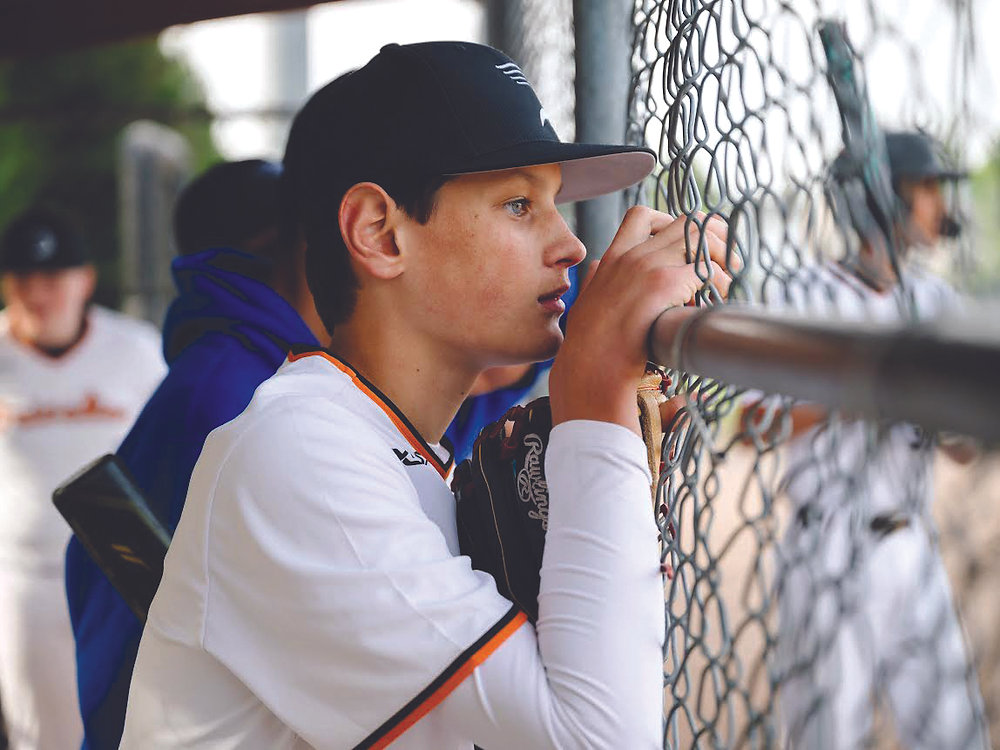
A player looks on from the dugout during a baseball game at Kentlake High School in Kent, Wash., on May 4, 2025. According to a survey by the Aspen Institute, 11.4% of parents believe their children can play professionally. (Grant Hindsley/The New York Times)
Like many mothers in Southern California, Paula Gartin put her twin son and daughter, Mikey and Maddy, into youth sports leagues as soon as they were old enough. For years, they loved playing soccer, baseball and other sports, getting exercise and making friends.
But by their early teens, the competition got stiffer, the coaches became more demanding, injuries intervened and their travel teams demanded that they focus on only one sport. Shuttling to weekend tournaments in Escondido and elsewhere turned into a chore. Sports became less enjoyable.
Maddy dropped soccer because she didn’t like the coach and took up volleyball. Mikey played club soccer and baseball as a youngster, then chose baseball before he suffered a knee injury in his first football practice during the baseball offseason. By 15, he had stopped playing team sports. Both are now in college and more focused on academics.
“I feel like there is so much judgment around youth sports. If you’re not participating in sports, you’re not doing what you’re supposed to be doing as a kid,” Gartin said. “There’s this expectation you should be involved, that it’s something you should be doing. You feel you have to push your kids. There’s pressure on them.”
Youth sports can have a positive effect on children’s self-esteem and confidence and teach them discipline and social skills. But a growing body of recent research has shown how coaches and parents can heap pressure on children, how heavy workloads can lead to burnout and fractured relationships with family members and friends, and how overuse injuries can stem from playing single sports.
A report published by the American Academy of Pediatrics in 2024 showed how overuse injuries and overtraining can lead to burnout in young athletes. The report cited pressure by parents and coaches as additional risk factors. Another study, in the Journal of Sport & Social Issues, highlighted how giving priority to a win-at-all-costs culture can stunt a young athlete’s personal development and well-being. Researchers at the University of Hawaii found that abusive and intrusive behavior by parents can add to stress on athletes.
Mental health is a vast topic, from clinical issues like depression and suicidal thoughts to anxiety and psychological abuse. There is now a broad movement to increase training for coaches so they can identify signs and symptoms of mental health conditions, said Vince Minjares, a program manager in the Aspen Institute’s Sports & Society Program. Since 2020, seven states have begun requiring coaches to receive mental health training, he said.
Domineering coaches and parents have been around for generations. But their pressure has been amplified by the professionalization of youth sports. A growing number of sports leagues are being run as profit-driven businesses to meet demand from parents who urge their children to play at earlier ages to try to improve their chances of playing college or pro sports. According to a survey by the Aspen Institute, 11.4% of parents believe that their children can play professionally.
“There’s this push to specialize earlier and earlier,” said Meredith Whitley, a professor at Adelphi University who studies youth sports. “But at what cost? For those young people, you’re seeing burnout happen earlier because of injuries, overuse and mental fatigue.”
The additional stress is one reason more children are dropping out. The share of school-age children playing sports fell to 53.8% in 2022, from 58.4% in 2017, according to the National Survey of Children’s Health. While more than 60 million adolescents play sports, up to 70% of them drop out by age 13.
While groups like the Aspen Institute focus on long-standing issues of access and cost in youth sports, combating mental health problems in young athletes is an emerging area. In recent years, professional athletes like Naomi Osaka and Michael Phelps have shined a light on the issue. But parents who want to teach their children the positive parts of playing sports are finding that some of the worst aspects of being a young athlete are hard to avoid.
That was apparent to the parents who took their sons to hear Travis Snider speak at Driveline Academy in Kent, Washington, one Sunday last spring. Snider was a baseball phenom growing up near Seattle and was taken by the Toronto Blue Jays in the first round of the 2006 MLB draft.
But he finished eight unremarkable seasons as an outfielder and played his last major league game at 27. While attempting a comeback in the minor leagues, he worked with a life coach to help him make sense of why his early promise fizzled. He unearthed childhood traumas and unrealistic expectations on the field.
In a playoff game as an 11-year-old, he had had a panic attack on the mound and was removed from the game.
Though he reached the highest level of his sport, Snider felt as if distorted priorities turned baseball into a burden, something he wanted to help others avoid.
Last year, he started a company, 3A Athletics, to help children, parents and coaches develop healthier approaches to sports that include separating professional aspirations from the reality that most young athletes just want to get some exercise and make friends.
“We as a culture really blended the two into the same experience, which is really toxic for kids as they’re going through the early stages of identity formation,” Snider said. “You have a lot of parents who are sports fans that want to watch youth sports the same way they watch pro sports without recognizing, ‘Hey, the thing I love the most is out there running around on the field.’”
He added, “We’ve got to take a step back and detach from what has become normalized and what kind of vortex we get sucked into.”
Driveline Academy, an elite training facility filled with batting cages, speed guns, sensors and framed jerseys of pro players, might be the kind of vortex Snider would want people to avoid. But Deven Morgan, director of youth baseball at Driveline, hired 3A Athletics to help parents and young athletes put their sport in context.
“It’s part of a stack of tools we can deploy to our families and kids to help them understand that there is a structural way that you can understand this stuff and relate to your kid,” he said.
“We are going to get more out of this entire endeavor if we approach this thing from a lens of positivity.”
During his one-hour seminar, Snider and his partner, Seth Taylor, told the six sets of parents and sons how to navigate the mental roadblocks that come from competitive sports. Snider showed the group a journal he kept during the 2014 season that helped him overcome some of his fears, and encouraged the ballplayers to do the same.
“It’s not just about writing the bad stuff,” he said. “The whole goal is to start to open up about this stuff.”
Taylor took the group through a series of mental exercises, including visualization and relaxation techniques, to help players confront their fears and parents to understand their role as a support system.
His message seemed to get through to Amy Worrell-Kneller, who had brought her 14-year-old son, Wyatt, to the session.
“Generally, there’s always a few parents who are the ones who seem to be hanging on too tight, and the kids take that on,” she said. “At this age, they’re social creatures, but it starts with the parents.”
Coaches play a role, too. The Catholic Youth Organization in the Diocese of Cleveland has been trying to ratchet down the pressure on young athletes. At a training session in August, about 120 football, soccer, volleyball and cross-country coaches met for three hours to learn how to create “safe spaces” for children.
“Kids start to drop out by 12, 13 because it’s not fun and parents can make it not fun,” said Drew Vilinsky, the trainer. “Kids are tired and distracted before they get to practice, and have a limited amount of time, so don’t let it get stale.”
Coaches were told, among other things, to let children lead stretches and other tasks to promote confidence. Track coaches should use whistles, not starting guns, and withhold times from young runners during races.
“We’re trying not to overwhelm a kid with anxiety,” said Lisa Ryder, a track and cross-country coach for runners through eighth grade. “CYO is not going to get your kid to be LeBron.”
Basketball players Thiago DeJesus (first photo), Riley Severson (second photo) and Talon Stockdale (third photo) compete recently in the Fuller Hall Youth Basketball 5th and 6th grade boys league at Jefferson Gym in Webster City.
As we head into 2026, the official race schedule for Karl Chevorlet Hamilton County Speedway has been …
Amid the tree decorating, shopping, gift wrapping, writing of Christmas cards, and waiting for the next snow, …
NEW YORK — Two rookies made their first career starts for the Nets and Cam Thomas provided a scoring lift off the bench with an efficient 21 points, but it wasn’t enough to overcome the absence of key starters in a 120-96 loss to the Houston Rockets on Thursday night at Barclays Center.
Brooklyn opened 2026 with a second straight loss and fell to 10-21, undone by a sluggish start, uneven offense and a Rockets team that continued to pour it on as the night wore on.
That tone was set early.
With three starters out, the Nets leaned further into their youth experiment, starting rookies Drake Powell and Danny Wolf and asking Wolf to set the table. Brooklyn’s start was anything but steady with Kevin Durant back in the building. The Rockets raced out to a 12-2 lead by the 9:14 mark as the Nets’ offense stalled and defensive breakdowns piled up, prompting an early timeout from head coach Jordi Fernández after Houston opened 6-for-6 from the field on a parade of layups.
Brooklyn steadied itself for a bit, ripping off a 16-8 run and flipping the momentum when Alperen Sengun went to the bench. But the response didn’t last long. Rockets head coach Ime Udoka quickly put Sengun back in, and he continued to be a problem. By the end of the first quarter, the Nets trailed 26-20, with Ziaire Williams scoring six points and grabbing two steals and Sengun leading all scorers with 10.
The second quarter is where it started to slip. Brooklyn hung around early, with Day’Ron Sharpe’s interior work briefly cutting the deficit to four, but the Rockets answered every push. Durant settled the game with shot-making, Reed Sheppard buried back-to-back 3s and the Nets’ offense stalled into turnovers and empty trips. Houston closed the half in control, taking a 53-42 lead into the break.
The third quarter is where Houston turned control into separation. It got ugly quickly. While Brooklyn committed just two turnovers in the period, the lack of offensive firepower showed as the Rockets shot 63.6% and saw Jabari Smith Jr., Tari Eason and Amen Thompson all reach double figures in the quarter. Thomas and Nic Claxton tried to keep the Nets within reach, but it wasn’t enough, as Brooklyn fell behind by as many as 26 and went into the fourth trailing 90-67.
It was never closer than 16 points down the stretch.
Rookies Powell, Wolf and Nolan Traore played 25, 29 and 26 minutes, respectively, shooting a combined 8-for-27 from the field. Thompson led six Rockets in double figures with 23 points, four rebounds, three assists, two steals and a block.
Sharpe finished with a career-high seven assists with eight points, eight rebounds and two steals.
The Nets return to action Friday night on the second night of a back-to-back against the Washington Wizards at Capital One Arena.