
NIL
Spring 2025 ASUCD endorsements


The Editorial Board encourages you to consider accountability, diversity and fiscal responsibility when casting your ballot
By THE EDITORIAL BOARD
From April 21 to 25, the ASUCD spring elections are open for students to cast their ballots for six senators, one executive ticket and three measures, as well as a number of other elected officials. The California Aggie’s Editorial Board encourages you to exercise your right to vote this election season, as the ASUCD directly affects your day-to-day life as well as the use of your student fees — you deserve to have a say in how your money is being spent.
The Editorial Board invited all candidates for an interview and endorsed those we believe will best represent the needs and interests of the student body. Regardless of who you choose on your ballot, we hope you vote this election season. Please consider the following:
While ASUCD elections use a ranked-choice system, the endorsed candidates below are not listed in order of preference. The Editorial Board has ranked Senate candidates alphabetically for purposes of this article.
Presidential Ticket: Aaminah Mohammad & Nanki Kaur (Unite slate)
Aaminah Mohammad, a third-year biopsychology and international relations double major, and Nanki Kaur, a third-year biomedical engineering major, are running for president and internal vice president positions of the ASUCD, respectively, as part of the Unite slate. This presidential ticket’s platforms are instating comprehensive wellness, affordability and accessibility programs, expanding healthcare outreach and equity and ensuring the student body has access to resources. Additionally, this ticket is focusing on outreach to STEM students and their representation within the administration. Mohammad and Kaur have actionable plans — such as extending free rides to off-campus students with disabilities and creating funding pathways for non-identity-based registered student organizations (RSOs). In addition to these, this presidential ticket has plans to utilize legal resources for undocumented students, expand and revamp study spaces and streamline the hiring process for ASUCD positions. With Mohammad’s experience as internal vice president and Kaur’s experience as a senator, as well as their understanding of the ASUCD’s financial outlook and potential budget cuts, the Editorial Board believes this presidential ticket to be in the best interest of ASUCD and the students of UC Davis.
External Affairs Vice President: Janani Sundaram (Bitches slate)
Janani Sundaram is a third-year political science — public service major with a minor in public health. Some of her primary campaign focuses include empowering students, creating equity in university policy and protecting the rights of students to protest. Additionally, Sundaram is a part of the Bitches slate, which prioritizes safety, transparency and equity. As an out-of-state student, Sundaram has developed a diverse and understanding perspective. She is also committed to bringing more transparency and accountability to the ASUCD. The Editorial Board believes Sundaram is earnest about her advocacy efforts and equally committed to bringing her important sense of compassion to the table. We believe Sundaram would excel in the role of external affairs vice president.
Student Advocate: Inbar Schwartz (Independent)
A third-year economics and international relations double major, Inbar Schwartz has been with the Student Advocate Office (SAO) for two years. She has served as a case advisor and head of staff and currently serves as the vice student advocate, ensuring that students receive proper guidance in their dealings with the Office of Student Support and Judicial Affairs. Her dedication to students and advocating for their fair representation and defense was clear in her interview, as was her knowledge of the role and the duties therein. Though the race for student advocate is unopposed, the Editorial Board has chosen to endorse Schwartz as a show of recognition of her hard work at SAO and her longtime commitment to student success.
International Student Representative: Robi Castaneda (Bitches slate)
Robi Castaneda, a third-year political science and music double major, is clearly passionate about protecting international students. Castaneda seeks to expand legal resources for students navigating the visa and immigration process and has called for the creation of a fund to help cover related paperwork costs. His well-rounded and thorough approach to having the Office of the International Student Representative meet international students where they are, and on the issues most pressing to them, impressed the Editorial Board. His experience within ASUCD as an external affairs commissioner and his assertion that the student government should provide all of the support it can to its international students to ensure they can focus on their academic success also helped his campaign stand out.
Transfer Student Representative: Kelly Zamudio (Empoderar slate)
Kelly Zamudio is a third-year political science — public service and sociology double major, as well as a member of the Empoderar slate. In her interview, Kelly displayed a clear understanding of struggles that transfer students often go through during their collegiate transition. She also shared unwavering support for the transfer student community and their success, readily responding to questions with confidence and resolve. Zamudio emphasized pillars of community development, professional and academic growth and personal wellness that she plans to implement into creating inclusive spaces in collaboration with RSOs for students. An element of her interview that stood out in particular was her idea to ensure that there is transfer student representation on every ASUCD commission to ensure that their perspectives are properly represented. Zamudio’s clear-cut plans for the role, knowledge of the non-traditional-student experience and plans to advocate for transfer students across the Davis campus made her a very strong candidate — one that the Editorial Board has gladly decided to endorse.
Senator: Tianneh G. Bonardi (Empoderar slate)
Tianneh G. Bonardi is a first-generation, second-year political science and sociology double major, with an emphasis in law and society. Some of her campaign priorities include transparency and accountability, professionalism and collaboration and culture. She is also a proud supporter of Senate Resolution #7, which reaffirms protections for undocumented students. Bonardi is part of the Empoderar slate whose core values overlap with Bonardi’s campaign priorities. As a former interim senator, Bonardi’s understanding of the legislative process gives her a unique headstart as a candidate running for Senate. The Editorial Board was impressed with Bonardi’s commitment to inclusivity and increased cultural representation, and we believe she will thrive as a senator.
Senator: Hilda Cabello-Garcia (Independent)
As a first-generation student, Hilda Cabello-Garcia, a first-year political science major, is focusing her campaign on student well-being: aiming to ensure that all students, including low-income and mixed-status students, are provided with access to wellness and professional development services. Additionally, part of her campaign focuses on safety for the undocumented student population on campus. She is hoping to leverage her experience and interpersonal skills to make a positive impact on the student community, as well as looking to address injustice for students facing housing insecurity and environmental justice issues. The Editorial Board was impressed by Cabello-Garcia’s professionalism and vision, and we believe she will be both influential and successful as an ASUCD Senator.
Senator: Siena Dill-Cruz (Bitches slate)
Siena Dill-Cruz, a second-year political science and cinema and digital media double major, is a strong candidate for the ASUCD Senate. Representing the Bitches slate, her main campaign priorities include women’s health and safety, basic needs and financial accessibility, career development and student-led sustainability. Dill-Cruz’s plans for the position include Arboretum cleanup walks, campuswide clothing swaps and reducing single-use plastics in on-campus food locations. With her extensive experience working for many ASUCD units, such as KDVS and the Coffee House, Dill-Cruz understands the inner workings of the ASUCD. The Editorial Board has identified Dill-Cruz as a strong candidate for this year’s election cycle with her innovative ideas and ample experience in leadership roles.
Senator: Pattarin Khajornchaikul (Unite slate)
Pattarin Khajornchaikul is a member of the Unite slate, as well as a first-year economics and theater double major. Khajornchaikul currently serves as ASUCD associate vice president for internal communications and expressed that a large priority for her is to expedite the process of onboarding for student employees. Her prior experience working as a leader and organizer, including working for local and state politics, contributed to our confidence in her readiness for the role. Khajornchaikul’s platform emphasizes the necessity of basic needs for students; She hopes to help UC Davis expand the definition of basic needs to help students thrive, not just survive. This is particularly in regard to labor, which Khajornchaikul asserted should be considered a basic need in addition to necessities like food, transportation and housing. She also expressed interest in the quantitative element of the ASUCD Senate, backed up by experience working with and understanding budgets. Khajornchaikul also hopes to secure grants for RSOs, aiming to connect ASUCD to the student body by ensuring that students have the opportunity and the space to get involved. Her comfortability and knowledge of the behind-the-scenes operations of ASUCD impressed the Editorial Board, and we are confident that Khajornchaikul would excel in this position.
Senator: Aubri Lee (Risers slate)
Aubri Lee, a second-year environmental engineering major, is running for senator as part of the Risers slate). Her campaign focuses include raising awareness about gun violence, leading environmentally conscious events and implementing professional practice exams for careers in fields like medicine, law and engineering. Lee currently is an external affairs commissioner and as a member of the rowing team, she is also a student athlete. As a STEM major, Lee recognizes the lack of STEM representation in the Senate and wants to improve upon these issues. With her candidacy, Lee wants to encourage fellow STEM students to make their voices heard and feel inspired to follow in her footsteps. The Editorial Board appreciates Lee’s assertion that ASUCD is not a for-profit entity and its primary goal should be to serve the students. We feel that her strong work ethic and thoughtful plans for the senator position will allow her to excel in this role and positively benefit the student body.
Senator: Luis Leonardo Garcia (Empoderar slate)
Luis Leonardo Garcia has already proven himself a committed and capable student leader. As an interim senator in fall quarter 2024, he was consistently one of the most productive members of the Senate table and hosted the first Senate-sponsored event of the academic year. A second-year political science and communication double major, Garcia is running on the Empoderar slate to increase Hispanic representation within the ASUCD alongside fellow endorsed candidate Tianneh G. Bonardi. His recognition of the need for greater diversity amongst student leaders, and for the student government to reflect the undergraduates it represents, remains an increasingly important issue in this political landscape. The Editorial Board wholeheartedly endorses Luis Leonardo Garcia to return to the role he has proven uniquely adept at.
Vote “Yes” on ASUCD Constitutional Amendment #94
The Editorial Board encourages the student body to vote “yes” on Constitutional Amendment #94 to ensure that when there is a need for interim senators and other officeholders, they are held to democratic standards and their appointment process is transparent.
This proposed amendment, introduced by Senator Ezra Rubin and co-sponsored by Senator Dhilena Wickramasinghe, provides much-needed reform to the appointment process for interim elected officials in the ASUCD. For those who may not know, the ASUCD Senate is composed of 12 elected senators and two elected representatives who oversee the needs of the student body and the ASUCD’s over-20-million-dollar operational budget. This responsibility necessitates that the Senate is democratically elected and held accountable by those who voted them into office.
As it stands now, when vacancies arise outside of the typical election season (a senator steps down, graduates early or leaves offices early), interim senators are appointed by the ASUCD president. This amendment would make the appointment process of interim senators more democratic and decentralize executive powers. During fall quarter, five interim senators were appointed by the ASUCD president, meaning that nearly half of the Senate last fall was not elected by the student body. Constitutional Amendment #94 would have the Senate approve the appointment of interim senators, allowing for a public interview process where students can ask questions and share their opinions.
Vote “Yes” on ASUCD Constitutional Amendment #95
ASUCD Constitutional Amendment #95 ensures there are stricter repercussions in place if the student body’s elected officials are unable to meet training and volunteer requirements. The Editorial Board encourages you to vote “yes” to ensure accountability for those in the ASUCD.
This proposed amendment, introduced by Internal Affairs Commission Chair Amanda Clark and Senator Siddharth Jasthi, would incentivize senators to volunteer with units or committees to foster a stronger connection between entities within ASUCD. The amendment will also encourage senators to attend mandatory training seminars once sworn into office. While this is already mandated by ASUCD Bylaws, there are no clear enforcement mechanisms in place to incentivize participation. If passed, this amendment ensures that if a representative fails to meet their training requirements, their threshold for impeachment decreases by two points. If a representative fails to meet two volunteer hours with units or committees, their threshold for impeachment would decrease by one point.
Overall, the Editorial Board believes this amendment to be beneficial for senator engagement and the development of institutional knowledge.
Our Thoughts on Transportation Equity Fee
The Transportation Equity Fee proposes an additional five dollars per quarter (excluding summer session) for each undergraduate student. The Editorial Board advises you to look carefully at each of the proposed outcomes that come with voting “yes” or “no” to make the decision that best serves the student body as well as yourself.
The UC Davis Transportation Services regulates parking policies as well as provides general transportation needs for the campus community. Although their main revenue comes from parking fees, the organization has been working to reduce reliance on parking — a task which the fee referendum states could lead to lack of sustained funding for the Transportation Services in the future. These changes, however, have led to raised parking rates that adversely affect people that have no choice but to commute to campus.
If approved, the Transportation Equity Fee will provide a steady revenue stream for transportation demand management, bicycle safety programs and a transportation grant toward communities that are negatively impacted by high parking rates. However, the Editorial Board has not extended a full endorsement due to lack of clarity regarding the allocation of funds to grant programs and maintenance in the fee referendum’s language. While we understand that there are financial issues facing both Transportation Services and commuting students, we are unable to offer a full endorsement or rejection at this time.
In order for this referendum to be passed, a voter turnout of at least 20% of the undergraduate student body is needed and 60% voting “yes.”
Written by: The Editorial Board










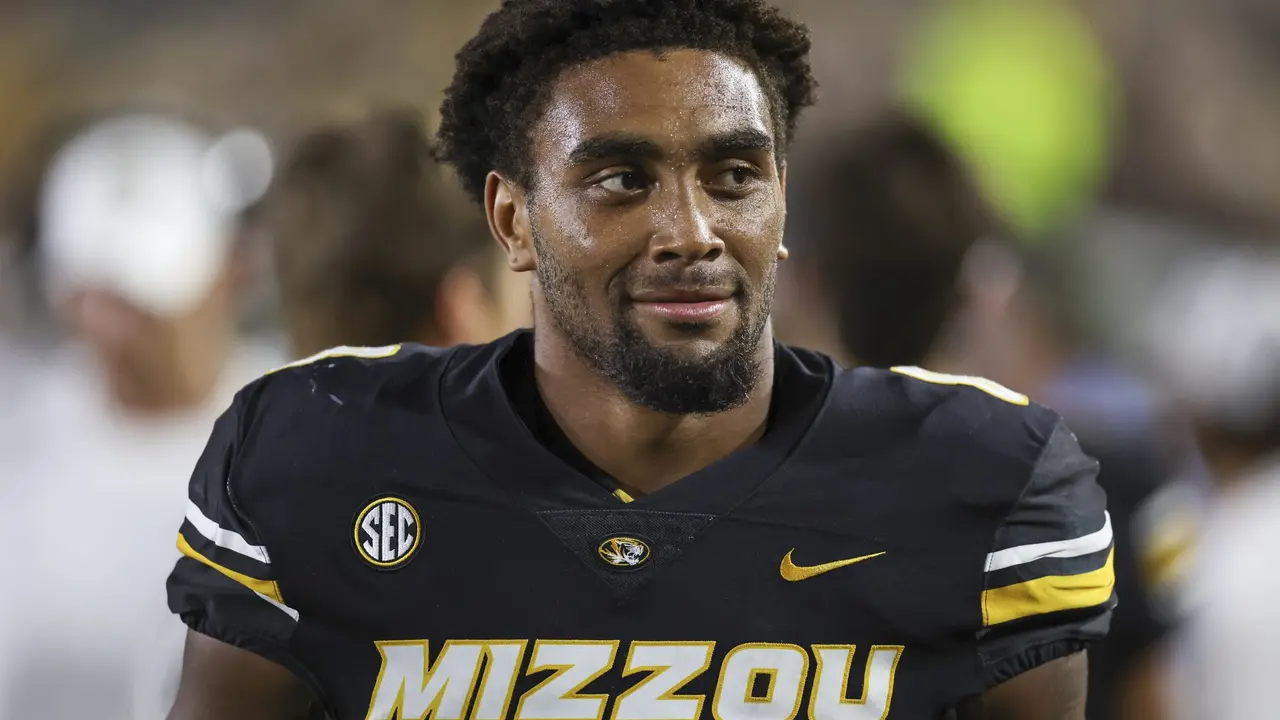
Missouri Tigers defensive end Damon Wilson II (8) on the sidelines during a college football game between the Central Arkansas Bears and Missouri Tigers on August 28, 2025 at Memorial Stadium in Columbia, MO. (Photo by Scott Winters/Icon Sportswire v
ATHENS, Ga. – Former Georgia edge rusher Damon Wilson II is facing a push from the University of Georgia Athletic Association to repay $390,000 after the school accused him of breaking a name, image and likeness agreement tied to his transfer from the Bulldogs.
What we know:
Wilson, now a rising pass rusher at Missouri, was served the lawsuit on Nov. 19 in Clarke County. Court filings say Wilson signed the licensing deal with Classic City Collective on Dec. 21, 2024. The agreement was scheduled to run through January 2026 and paid him $30,000 per month plus additional bonuses for a total contract value of $500,000.
The contract allowed the Collective to immediately terminate the deal if Wilson left the football team, failed to remain enrolled at Georgia, or notified the program of his intent to transfer. If that happened, he was required to repay “liquidated damages” equal to all remaining unpaid licensing fees.
According to the lawsuit, Wilson told Georgia on Jan. 6, 2025, that he planned to transfer. He withdrew from the university on Jan. 13 and left the team the next day. Classic City Collective terminated the agreement on Jan. 14 and demanded repayment of the remaining $390,000.
The Collective later assigned its rights to the University of Georgia Athletic Association.
What we don’t know:
On Aug. 25, 2025, UGAA sent Wilson a formal demand for arbitration under the agreement’s mandatory arbitration clause. Attorneys say Wilson did not respond and has not asked a court to intervene.
What’s next:
UGAA is now asking a judge to appoint an arbitrator and order Wilson to participate in the dispute process. The petition includes a list of proposed arbitrators from the American Arbitration Association’s sports panel and notes that the contract does not specify a method for selecting one.
The motion was filed on Oct. 17, 2025. Court records show Wilson has not submitted a response.
Why you should care:
Classic City Collective is the primary NIL organization supporting Georgia athletes. Wilson appeared in 11 games as a freshman in 2024 before entering the transfer portal and committing to Missouri.
The case carries significance because it tests how far schools and collectives can go to enforce NIL contracts when athletes transfer.
A ruling could influence how players approach the transfer portal while still under contract and may shape how future NIL agreements are written.
The dispute also underscores the limited protections college athletes have in contracting and is drawing attention because Wilson is a high-profile SEC player whose situation could affect others across the sport.
The Source: The details in this article come from Clarke County court documents and previous FOX 5 Atlanta reporting.
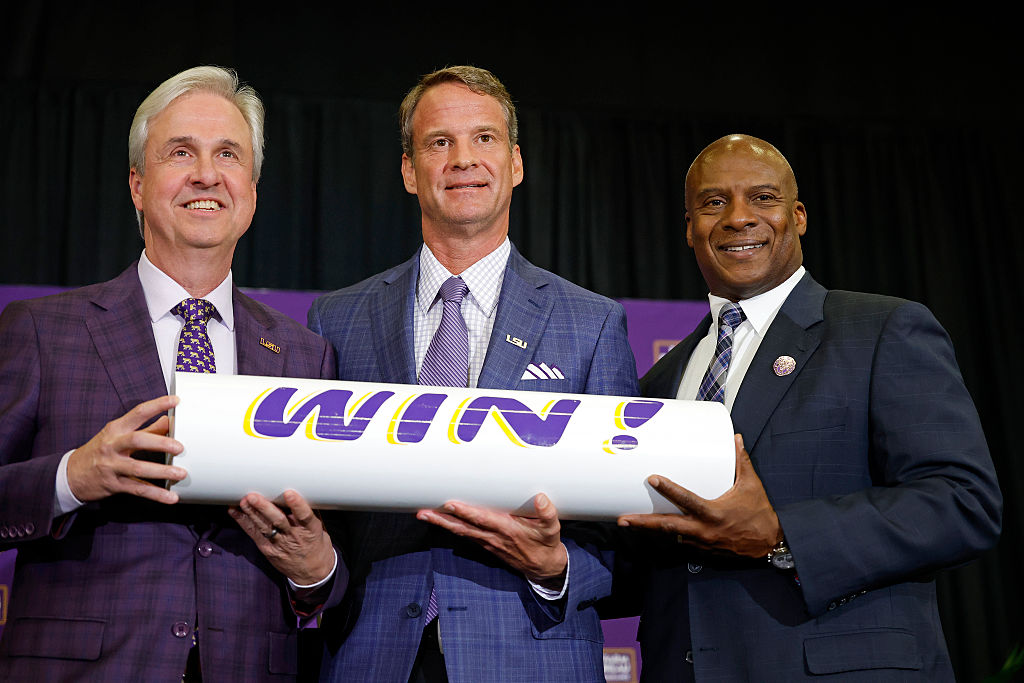
The SCORE Act collapses on Capitol Hill as NIL chaos, political infighting, and Lane Kiffin’s blockbuster LSU deal had Rep. Hakeem Jeffries all sorts of befuddled.
What was once thought to be an easy path to the Senate floor, the SCORE Act, which has been long debated over the past two years, fell apart this week before it could be voted on in the House. And, Lane Kiffin’s new contract with LSU was a main point of contention between congressional leaders, thanks to House Minority Leader Hakeem Jeffries.
Can you imagine college athletics getting any crazier than what we witnessed this week between Kiffin, Ole Miss and LSU?
Oh, think again.
House Settlement Aftermath: Lawmakers Present Two Different NIL Bills That Aim To Regulate College Athletics
I’ve said from the start that the country has better things to worry about right now than having to argue over protecting organizations like the NCAA or even the new College Sports Commission from lawsuits that would come from trying to limit what athletes could make in the future.
Don’t forget, with the House settlement passing, this opened a whole new can of worms. Schools can now directly pay athletes for their services, with a salary cap set at over $20.5 million per year to be divided up between different sports on college campuses.
This hit a boiling point on Wednesday, with new LSU head coach Lane Kiffin being a point of emphasis. No, we’re not kidding.
The ‘Lane Kiffin Protection Act’ Is One Way To Describe It
There was always going to be infighting in regard to the timing and the optics of this entire ordeal. I just didn’t expect a college football move would be a major talking point, though Lane Kiffin does draw headlines.
At the same time as congressional leaders were trying to garner the votes that would protect the NCAA, Lane Kiffin signed a deal that would pay him over $90 million to coach the LSU Tigers.
Ole Miss AD Keith Carter Debunks Lane Kiffin’s Timeline: Players Begging Him To Stay Was ‘Overstatement’
Speaker Mike Johnson from Louisiana and House Majority Leader Steve Scalise (R-La) took the brunt of criticism from House Minority Leader Hakeem Jeffries (D-NY) on Thursday during a press conference to discuss ongoing issues that should take priority over a bill that would protect the NCAA, along with others.
“Why would Mike Johnson and Steve Scalise think it was a good idea to bring the Lane Kiffin Protection Act to the floor of the House of Representatives? Legislation that would do nothing to benefit college athletes and everything to benefit coaches like Lane Kiffin, who got out of town, abandoned his players in the middle of a playoff run to go get a $100 million contract from LSU, the home state of Mike Johnson and Steve Scalise.
“People are asking the question, why did you decide to bring this bill this week with all the other issues that the country is demanding that we focus on. “
People in Johnson’s office told OutKick that they are aware of the statements made, but have no comment on the matter.
According to multiple people connected to the situation in Washington, the Lane Kiffin saga has not helped this week when it comes to public perception.
A number of representatives have received push back, with the new LSU football coach being used as a prop as to why the college athletics business is hard to take seriously when a head coach is bailing on their team during such a pivotal time.
Also, add the comments from Louisiana Governor Jeff Landry last month pertaining to LSU having to pay the massive $54 million buyout for former head coach Brian Kelly, and congressional leaders are not going to get much sympathy from those looking to prevent an organization like the NCAA from having to answer for certain aspects of potential antitrust cases down the road.
During his SEC Championship press conference on Thursday, commissioner Greg Sankey even commented on the ongoing SCORE ACT debate, mentioning he was in Washington on Wednesday.
“There was an opportunity to vote yesterday in the House. It did not happen,” Sankey noted. “We’ll continue in our educational efforts. We’re going to take the time needed to try to address the questions that are being asked by members of Congress. Again, this is on both sides of the aisle.
“The fact that there’s so much interest, I think, is an indication of the serious nature of college sports, the importance to our nation, our culture.”
Yes, this is where we are at right now in college athletics, along with the politics that come with it.
NIL
Penn State reportedly putting huge investment into football program under next head coach Matt Campbell

Penn State has landed on Iowa State’s Matt Campbell as its next head coach, ending a wild 54-day search after firing James Franklin.
In addressing the media following the choice to part with Franklin, athletic director Pat Kraft clearly laid out his idea for the next head coach in Happy Valley.
“We want someone who will attract elite talent, retain players in the NIL era and make Penn State a destination,” Kraft said on Oct. 13. “This is also about the modern era of college football. Our next coach needs to be able to maximize elite-level resources, attack the transfer portal and develop at the highest level.”
Now, we reportedly have some details on what those “elite-level resources” actually are.
Kraft and Penn State are committing about $30 million in NIL money for the football roster and $17 million for Campbell’s coaching staff, according to a report from Matt Fortuna.
That’s on top of an eight-year contract for Campbell that will place him among the top-10 coaching salaries in the country, according to ESPN and Yahoo Sports.
Under Franklin, Penn State had well-compensated rosters, but the model was not what Kraft envisioned.
Franklin preferred not to set the market on high school recruits and did not embrace the transfer portal fully, instead choosing to fill holes here and there.
Campbell will be tasked with flipping that script.
“We have invested at the highest level. With that comes high expectations,” Kraft added in October. “Ultimately, I believe a new leader can help us win a national championship.”
Listen to the Blue-White Breakdown podcast
Updated Dec. 5, 2025, 4:33 p.m. ET
The Georgia Athletic Association is seeking $390,000 from former Georgia football player Damon Wilson after he transferred to Missouri in January, weeks after agreeing to an NIL deal with the Classic City Collective.
The Classic City Collective, which shut down earlier this year, demanded that Wilson pay liquidated damages, based off the language of the contract. Wilson did not respond, according to online records in Superior Court of Athens-Clarke County.
The UGAAA then served a demand for arbitration on Wilson on Aug. 25, and he again did not respond, court records state. UGAAA holds all rights under agreements formerly held by the collective, Wilson was told in a letter sent to him by attorney Spence Johnson, representing UGAAA.
“When the University of Georgia Athletic Association enters binding agreements with student-athletes, we honor our commitments and expect student-athletes to do the same,” Georgia deputy athletic director Steven Drummond said Dec. 5 in a prepared statement given to the Athens Banner-Herald.
The application to compel arbitration was filed in court on Oct. 17. ESPN first reported about the dispute on Dec. 5.
Wilson and the Classic City Collective agreed to a contract worth $500,000, to run from Dec. 1, 2024 to Jan. 31, 2026. Wilson received the first monthly payment of $30,000 on Dec. 25, 2024, court records state.
Wilson was served a summons on Nov. 25 in Missouri and has 30 days to respond.
Wilson, a defensive end, is third in the SEC in sacks with 9 this season for the Tigers. Georgia, meanwhile, is last in the SEC this season with 17 sacks as a team.
Wilson played 26 games for Georgia in 2023 and 2024, registering 3.5 sacks and two caused fumbles. His departure was a blow for a defense that also lost eventual NFL first-rounders Mykel Williams and Jalon Walker after last season.
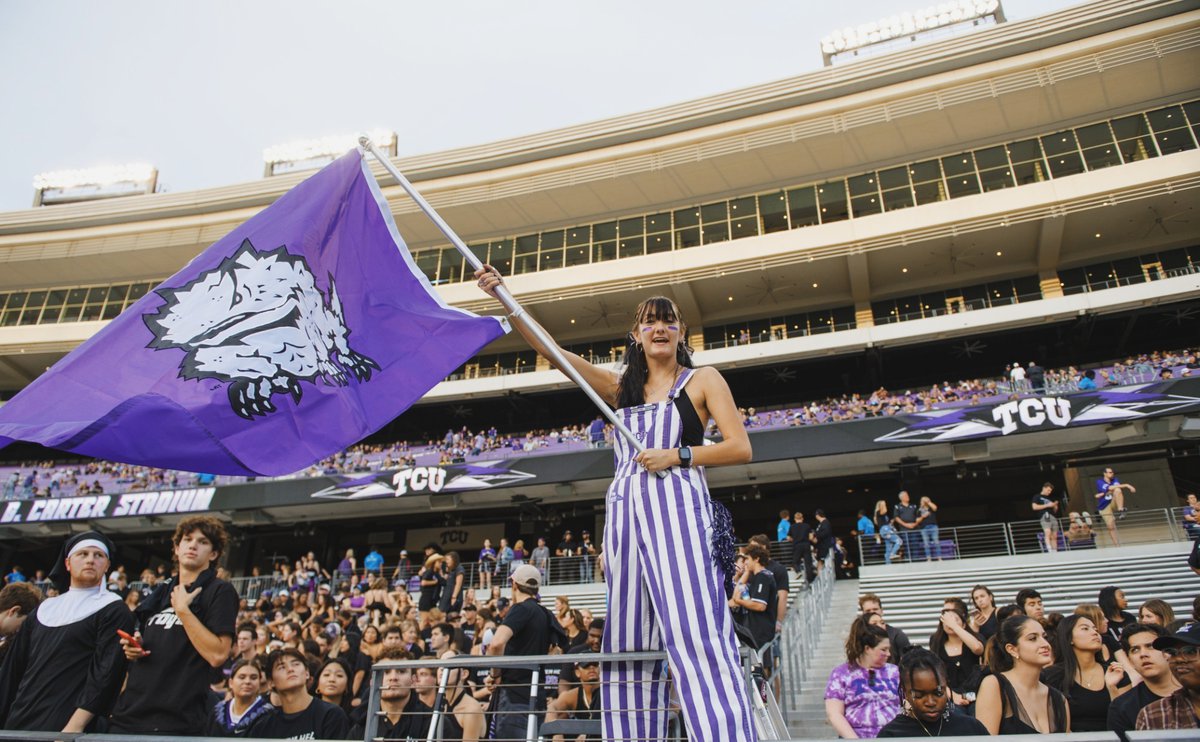
TCU’s just-passed 8-4 regular season had many in the purple people masses as angry as a tourist who just paid $40 to park, and for many others as disappointed as when Junior brought home an F in civics.
Many have expressed themselves in much the same way of our old friend, the frontier prospector Gabby Johnson of “Blazing Saddles” fame: No sidewindin’, bushwackin’, hornswagglin’ cracker croaker is gonna rouin me bishen cutter!
TCU Athletic Director Mike Buddie gets it.
“I think there were 11 teams in our league this year whose fan bases wanted their coaches fired,” Buddie said on Friday morning at the FIFA World Cup Draw party at Billy Bob’s Texas, the world’s largest honky tonk. “That’s the culture that we live in. You can win [against a] ranked opponent, [next week against] ranked opponent, [a third straight win against a] ranked opponent, and then lose — they want you gone.
“It’s a new day and age.”
Like the mood of Paris in 1793 — cheers in the morning, pitchforks and the guillotine by dusk.
TCU finished in the middle of a congested Big 12 at 5-4. To put some perspective on its season, Texas finished 9-3. Of course, many UT fans think the Longhorns should win every game, too. No. 25 Missouri, like TCU, finished 8-4. So, too, did Tennessee and Iowa, two teams receiving votes in the AP poll. In the end, after 12 regular-season games, only two teams finished undefeated — Ohio State and Indiana. One of those teams will lose this weekend; they play each other.
North Carolina — guided by renowned football genius Bill Belichick — stumbled to 4–8, taking a season-opening black eye from TCU.
Just last year, Ohio State fans wanted coach Ryan Day on the nearest interstate out of town after the Buckeyes took the worst kind of a second loss of the season — to Michigan. That was on Nov. 30. By the end of January, they wanted to elect him governor after winning the national championship.
The Horned Frogs will learn their postseason bowl destination on Sunday.
Dykes has gone 35-17 over four seasons at TCU, including 13-2 and a berth in the College Football Playoff championship game in his first season. That campaign included a victory over No. 2 Michigan in the Fiesta Bowl CFP semifinals.
TCU slipped to 5-7 in 2023 but went 9-4 last year and could do the same in 2025 with one last victory.
“We need to be better,” Buddie said. “We’re committed to getting better. I’m excited because nobody realizes that more than Sonny Dykes.
“He’s committed to addressing some needs that I think we have and more than ever before, what I do and how we strategically fundraise and approach people financially has a direct impact on your football program. I think Texas Tech showed us all that if you can build the most talented roster and develop them, really good things happen.”
Texas Tech, which is playing in the Big 12 Championship Game on Saturday against BYU, spent, according to reports and speculation, as much as $28 million on its football roster this season. The Red Raiders are No. 4 in the most recent CFP rankings.
Spending that kind of money is the result of a completely transformed landscape in college football. Colleges can now spend as much as $20.5 million on payroll for athletes in its various programs. That mostly impacts football and men’s basketball — those sports that generate the most revenue, the “revenue sports.”
Before that, each Division I school had an adjacent collective designed to allow athletes to cash in on their name, image, and likeness. That quickly evolved — devolved? — into merely paying athletes by writing checks out of the collective’s pool. Now completely legal after a U.S. Supreme Court case permitting athletes to receive compensation beyond traditional scholarships. The collectives simply became the mechanism to funnel those payments.
Most, if not all, of the collectives have now been merged with universities’ traditional athletics fundraising arm. NIL endorsement deals are now supposed to be just exactly that — an athlete endorsing a product, for example. I’m not exactly sure how all that sorts out.
“The landscape has changed, but we still have a ton of advantages in facilities and where we’re located and historical success,” said Buddie, who added that TCU also is “thoughtful and strategic in how we employ people.”
“We’re not in the business of paying $50 million buyouts for people to go away. And when you believe you’ve got the right person who’s already proven that he can win in the College Football Playoff, it’s incumbent on me to provide him every resource that he needs to be successful.”
Updated Dec. 5, 2025, 5:27 p.m. ET
- Leaked audio allegedly captures Penn State athletic director Pat Kraft criticizing the program’s recruiting and NIL strategy.
- Kraft is heard taking shots at rival programs like Oregon, Ohio State, and Michigan in the profanity-laced recording.
- The athletic director also questioned the effectiveness of NIL spending under former head coach James Franklin.
Athletics director Pat Kraft ripped Penn State football recruiting and NIL procedures under former coach James Franklin in an alleged team meeting.
“We probably need to (expletive) change the way we recruit. Because Alabama ain’t around (expletive). Oregon? Have you all been to Oregon? Ain’t (expletive) going on, it’s a bunch of (expletive) weirdos,” Kraft can be heard saying in audio that became public.
Kraft’s profanity-laced discussion with players before the regular-season finale at Rutgers was part of a purported audio recording of a team meeting that was leaked this week to the Dead Air Sports podcast. Kraft’s passionate discourse touched on a wide-range of topics — from taking shots at Big Ten opponents and his own program’s recruiting, to interim head coach Terry Smith, how NIL is allocated and the future of the program.
The recording, which features unidentified players speaking, was edited and does not feature the entire meeting, according to Dead Air Sports.
Recording and leaking the meeting without proper consent could be a felony under Pennsylvania’s wiretap laws.
Penn State officials did not immediately respond to a request for comment.

Kraft began his recruiting talk in the meeting by commenting on the 11 players in Penn State’s 2026 recruiting class who eventually flipped to Virginia Tech, where Franklin is now the head coach. The Lions, then, stunningly signed only two high school prospects during Wednesday’s early national signing day.
“All the guys that (were) on visits to Virginia Tech, they’re not even top-500 (ranked) kids that can help us win. You need help,” Kraft said, speaking to the players in the room. “You needed a wide receiver, but we couldn’t get a (expletive) dog to help open things up. Am I wrong? Would you have taken (Ohio State’s) Carnell Tate?
“Those are the things we have to get addressed if we are going to actually win a national championship, which is what we will do here. That’s what Ohio State, Michigan, as it pains me to (expletive) say, and Georgia, Bama and Oregon right now, although I think they’re frauds … think they’re not tough. That’s our edge, is the toughness.”

Kraft also made clear that he did not approve of Penn State’s NIL payment plan to players under Franklin — despite increased university investment.
“This is one of the highest-paid rosters in the country. … This roster that’s on the field right now, probably top four (in the nation). Now, how the money is spent is a different story. … it’s the strategy behind it that matters,” he said.
An unidentified player then described what believes is the NIL issue at Penn State: “The NIL with (Franklin) was kind of more like feed everyone and obviously pay the bigger guy. But I think with Terry (Smith), how he’s straight on with us … he’s going to pay who he needs to pay and not be a players’ coach and just pay everybody.”
Frank Bodani covers Penn State football for the York Daily Record and USA Today Network. Contact him at fbodani@ydr.com and follow him on X, formerly known as Twitter, @YDRPennState.

Pitt volleyball sets the tone early, sweeping UMBC to launch its NCAA tournament push

#11 Volleyball Heads to Regional Semi’s After Beating UNI

Georgia seeks $390K from ex-linebacker Damon Wilson in NIL dispute

Head Coach, Volleyball in New York, NY for Fordham University

8 Ministry Strategies for Engaging Families

Mustangs Upset 5-Seed BYU and Advance to NCAA Round 2 Versus USC

Subaru Partners with Philadelphia Union to Distribute Soccer Equipment to Five Local Youth Organizations

SCORE Act Fails After Congress Gets Distracted by Lane Kiffin’s $90M LSU Payday

NCAA Tournament Central: Colorado – Indiana University Athletics

Campbell Falls to No. 3 Texas A&M in 2025 NCAA Volleyball Championship Opening Round
Watch Wisconsin volleyball in NCAA tournament tonight; time, TV

No. 3 Volleyball sweeps Florida A&M, 3-0, to advance in NCAA Tournament

Penn State reportedly putting huge investment into football program under next head coach Matt Campbell

Volleyball sees season end in NCAA DII Second Round

Volleyball’s Season Ends In Round Of 32 to No. 3 Wisconsin

First Tee Winter Registration is open

Fargo girl, 13, dies after collapsing during school basketball game – Grand Forks Herald

CPG Brands Like Allegra Are Betting on F1 for the First Time

Volleyball Recaps – November 18

F1 Las Vegas: Verstappen win, Norris and Piastri DQ tighten 2025 title fight

Two Pro Volleyball Leagues Serve Up Plans for Minnesota Teams

Sycamores unveil 2026 track and field schedule

Utah State Announces 2025-26 Indoor Track & Field Schedule

Bowl Projections: ESPN predicts 12-team College Football Playoff bracket, full bowl slate after Week 14

Texas volleyball vs Kentucky game score: Live SEC tournament updates

Redemption Means First Pro Stock World Championship for Dallas Glenn

Pohlman admits ‘there might be some spats’ as he pushes to get Kyle Busch winning again

Indiana’s rapid ascent and its impact across college football

How this startup (and a KC sports icon) turned young players into card-carrying legends overnight

Troy Football Need to Know; Gameday at The Vet — Georgia State Game

 Why a rising mid-major power with an NCAA Tournament team opted out of revenue-sharing — and advertised it
 NBA Legend Michael Jordan to Join NBC Sports as Special Contributor
 Falcons mailbag
 Portal Update – Basketball and Gymnastics Take Hits
 has always dreamed in Mercurial. Now his initials are on the boots.
The new Kyl…
has always dreamed in Mercurial. Now his initials are on the boots.
The new Kyl…
-
 Rec Sports2 weeks ago
First Tee Winter Registration is open
-
 Rec Sports1 week ago
Fargo girl, 13, dies after collapsing during school basketball game – Grand Forks Herald
-
 Motorsports2 weeks ago
CPG Brands Like Allegra Are Betting on F1 for the First Time
-
 Sports2 weeks ago
Volleyball Recaps – November 18
-
 Motorsports2 weeks ago
F1 Las Vegas: Verstappen win, Norris and Piastri DQ tighten 2025 title fight
-
 Sports2 weeks ago
Two Pro Volleyball Leagues Serve Up Plans for Minnesota Teams
-
 Sports1 week ago
Utah State Announces 2025-26 Indoor Track & Field Schedule
-
 Sports2 weeks ago
Sycamores unveil 2026 track and field schedule
-
 NIL5 days ago
Bowl Projections: ESPN predicts 12-team College Football Playoff bracket, full bowl slate after Week 14
-
 Sports1 week ago
Texas volleyball vs Kentucky game score: Live SEC tournament updates