
NIL
Supermom



Story Links
Jasmine Williams was a rising star for Oregon’s softball team when the pandemic cut her season short. Nearly two years and one baby later, Williams picked up a bat again.
The junior had given birth four months earlier to her son, Zee Brysen. She had decided to return to the field by the next spring.
She and her husband, Zee Williams, started practicing softball at a local park. With their son in a stroller to the side, Zee began running Jasmine through drills. She realized she could barely lift her legs. She remembers falling over, hitting the grass hard.
“I don’t even feel like myself,” she told Zee. “I don’t even know if I’d be able to do it.”

Jasmine and Zee Williams pose with their newborn, Zee Brysen. The couple navigated Jasmine’s return to softball and parenthood side by side. (Photos courtesy of Jasmine Williams)
Zee urged her to give herself grace. Did she forget she literally just had a baby? “As a woman and an athlete, you’re not thinking that way. I just wanted to get into shape fast,” she reflected.
This was not the first time Jasmine had stumbled and fallen on the road to figuring out becoming a mother and a wife while returning to herself and softball.
Yet just as he had every step of the way, Zee held out his hand to lift her back up.
Before her pregnancy, Jasmine Williams was Jasmine Sievers. As a freshman at Oregon, the shortstop earned first-team All-Pac-12, Pac-12 All-Freshman and Pac-12 All-Defensive honors. She led the team in doubles, extra-base hits and slugging percentage.
She also had risen to social media stardom, posting TikTok and Instagram dances with her teammates and showcasing her student-athlete lifestyle.
While at home in Mission Viejo, California, during the COVID-19 pandemic, the 20-year-old found out she was pregnant. Her then-boyfriend, Zee, played Division I football halfway across the country at Central Michigan.
After their baby boy was born in April 2021, Jasmine moved to Lansing, Michigan, to be with Zee, who had decided to end his football career to get a full-time job in insurance. The couple got married that September, and as the newlyweds adjusted to parenthood, they also adjusted to life together in a tiny apartment. The couple began planning for their future.
“Let’s start a new journey,” Zee told Jasmine. Jasmine had stayed involved with the Oregon team throughout her pregnancy and continued her classwork virtually. Although Jasmine had doubts about her return to the field, Zee encouraged her to return to Oregon to pursue softball, continuing to post on social media to share their family’s story.
“He will give me so much credit, but if it wasn’t for my husband, I wouldn’t have come back and played at all,” Williams said. “He saw something in me that I didn’t see in myself.”
Jasmine worked back into shape. At the beginning, she could only lift weights and walk on the treadmill. Around two months later, she could go to the batting cages every day. The family of three moved to Oregon, and Jasmine established herself as one of the fastest people on the team.
Jasmine credits Zee as the catalyst for everything.
“He’s literally behind everything, just supporting me and helping me navigate through that part of life,” she said. “He’s so young, but he’s so wise beyond his years with just how he communicates. I’m just like, ‘Dude, how?'”
While Williams balanced new motherhood and her return to collegiate softball, she also had to manage online hate. Before her pregnancy, her fans showed her love and support. After she announced her pregnancy, over 30,000 people unfollowed her.
“It felt like everyone went against me. I was getting so many hate DMs,” she said. “Moms were literally coming out saying I was like the worst influence for their kids now.”
The online hate, along with the struggles of balancing being a mother, wife, student and softball player, would often bring Williams to tears. Guilt overwhelmed her as she traveled for games, Facetiming her 6-month-old son from the hotel.

Williams was a walk-off hero for the U.S. team in the U19 Women’s Softball World Cup, hitting the game-winning RBI in the bottom of the eighth inning to win gold.

The Williams family of three, Jasmine, Zee and Zee Brysen, pose for family pictures.

Williams said she made the best decision in transferring to UCF. Her coaches, teammates and community embraced her family.
For the best fit for her and her family, Williams decided to transfer. The same day she entered the NCAA Transfer Portal, University of Central Florida head coach Cindy Ball-Malone, also known as “Coach Bear,” reached out.
Coach Bear had coached Williams on the U.S. team. At first, Coach Bear admits she judged Williams. She was a pretty, blond woman who made TikTok dancing videos. Was she serious about softball?
“I didn’t know the gritty player she was until that tryout,” the coach said. Soon, Coach Bear’s feelings changed.
“You don’t have favorites, but she is. She is one of my favorites. The reason why is she can just do anything you ask her to do. She’s so athletic, she’s so confident and she loves softball. She lives for it. But at the same time, that’s not all there is to her.”
Williams committed to UCF, and Coach Bear instantly welcomed Williams and her family. Although Coach Bear is 20 years older than Williams, she said Williams became her role model.
“Truth be told, she helped me more than I could have ever helped her. Her being able to (be a student-athlete, wife and mother) at such a young age, and she always shows up to the field on time, gets a 4.0 GPA and has this contagious presence, she always made me feel better because if she could do it, I should stop pouting and get to it.”
“She feels like home to me,” Coach Bear said.
Williams has benefited from their player-coach relationship, too.
“I got to come to her, not just as her player, but mom to mom,” Williams said. “We got to have conversations so much deeper than softball, and we talked about our marriages. I felt so seen and heard.”
On Williams’ first day, her new teammates gave her son a UCF shirt and candy. Her teammates would dance and play with her son whenever they saw him. “He just felt like he was the king of the world,” Williams recalled.
The love and support at UCF led Williams to become the best version of herself on the softball field.
“I got to just be free and be Jas,” she said.
She earned a starting position for the Knights and helped her team win the 2023 All-American Athletics Conference tournament, being named to the All-AAC Second Team and All-AAC Tournament team. In UCF’s first year in the Big 12 in 2024, Williams helped lead the Knights to the conference tournament quarterfinals.

Zee and Zee Brysen watched every single game of Jasmine’s softball career.
Her teammate and friend Stormy Kotzelnick said Williams couples a high softball IQ with natural leadership and maturity.
“You could always count on her. Jasmine is a very loyal friend and is always there when you need her, just like on the field you can always count on her,” Kotzelnick said.
“After long days at practice, we would both be exhausted, and she would leave the field to go pick up her son from school, have dinner ready and still show up every day ready to commit to us on the field,” Kotzelnick added.
All of Williams’ teammates praised her, saying, “You are literally superwoman.”
“It was healing,” Williams said.
Williams continued posting on social media. Early on, she would earn $50-$200 with name, image and likeness deals, which helped with the finances of raising a child. Currently, Williams boasts 130,000 followers on Instagram and works with brands like Amazon and CVS.
Through social media, Williams wants to show her reality: a young mother who continued her career as a student-athlete. A healthy relationship where both parents are present and happy.
She said she wants her followers to know, “All the noise doesn’t even matter. If you want to go back and play sports, you can. Just because it’s not the most conventional thing doesn’t mean you can’t be the one to make a difference.”

Jasmine and Zee Brysen smile after one of her games.

Jasmine’s softball career at UCF prepared her for her future as a leader, mother and wife.

Zee and Zee Brysen support Jasmine from the stands.
Young mothers and athletes contact Williams over social media, thanking her for showing motherhood in a positive light.
“Sharing my story has helped a lot of people be less afraid or scared when they do find out they are pregnant,” she said. “Seeing the DMs of people saying I help them or inspire them makes me know that everything I went through was worth it if I’m making a difference in someone else’s life.”
But when people give Williams credit, she redirects the praise back to her husband, too.
“If you want to be inspired by someone, be inspired by him. He is truly one in a million. We’ve always been on our own and had to figure out everything for ourselves. It’s really him behind everything.”
Now, Williams has graduated from UCF with degrees in sociology and interdisciplinary studies and a distinguished softball career. The family still lives in Florida, and they recently welcomed a daughter, Nova.
Looking back to the beginning of her pregnancy with her son, Williams said she knew even then that everything was happening how it should.
“Even if you’re questioning — ‘What am I doing? Should I have even come back? Why is this happening?’ — you’re going to figure it out.
“You’re going to go on the path you’re meant to be on.”
Print Friendly Version

Continue Reading
NIL
Michael Wilbon claims Kalen DeBoer will leave Alabama for Michigan with loss in College Football Playoff opener

The College Football Playoff gets underway Friday night as Alabama heads to Norman to take on Oklahoma. But to ESPN’s Michael Wilbon, there’s even more at stake for Crimson Tide coach Kalen DeBoer.
DeBoer’s name has been the subject of rumors throughout the offseason in the coaching carousel. Most recently, he received questions about the opening at Michigan following Sherrone Moore’s firing for cause, though he made it clear he intends to be at Alabama in 2026.
However, Wilbon didn’t sound as convinced. He predicted Alabama would not only lose to Oklahoma on Friday night, but DeBoer would also be on a flight to Ann Arbor to take the Michigan job afterward.
“Let me tell you about … two schools that could be in the coaching carousel after [Friday night],” Wilbon said Thursday on Pardon The Interruption. “Because when Alabama loses to Oklahoma – let me say it again, when Alabama loses to Oklahoma – the coach of Alabama, half the people in the state will want to run him out. And he’ll be on the carousel – oh, wait, that’s a G5 being flown to Ann Arbor, Mich., where he has said, ‘Oh, no. I ain’t got no interest in that.’ He’ll have interest [Friday night].
“And then, Alabama will be in the coaching carousel because they’ll be looking for a coach. … The Alabama coach is going to have a job-on-the-line situation in 24 hours and then, headed to Michigan once he loses. And then, Alabama’s looking. Then, what are you going to say?”
During a press conference this week ahead of the College Football Playoff opener, Kalen DeBoer was directly asked if he intended to be Alabama’s head coach next season. He responded, “Yes.”
Earlier in that press conference, DeBoer received a question about the rumors surrounding him. He again spoke highly of his tenure at Alabama so far and made it clear he’s happy in Tuscaloosa.
“A lot of the same things I said before, a couple weeks ago, when asked really the same question, just feel completely supported,” DeBoer said. “My family loves living here. Just all the things that we continue to build on, love the progress. Haven’t talked with anyone, no plans of talking with anyone. So just, I think that’s a lot of what I said a couple weeks ago, and continues to be the same thing.
“Feel strong about it. And our guys, if there’s been any distraction, I haven’t seen it, haven’t felt it. I’m really proud of the way they’ve handled whatever noise is out there. And again, we probably all season long, have dealt with enough noise to where it wouldn’t surprise me on how they handle this.”

Matt Rhule sounded comfortable, confident, and in control during his interview Wednesday night with the Husker Radio Network ahead of Nebraska’s bowl matchup against Utah.
At times relaxed, “Just Matt,” as he put it when the hat turned backward, Rhule covered a wide range of topics that collectively outlined where the program stands and where it’s headed over the coming months.
From his former starting quarterback and the transfer portal to staff changes and Nebraska’s evolving financial status, Rhule touched on nearly everything Husker fans want to know during an offseason filled with uncertainty.
With that in mind, here’s what Rhule said about the state of his program heading into his fourth offseason in Lincoln.
Sources: Nebraska quarterback Dylan Raiola intends to enter the NCAA transfer portal. He’s a true sophomore who has two years of eligibility remaining. He threw for 18 touchdowns, 2000 yards and completed 72.4% of his passes this year. pic.twitter.com/Frt7QgFN57
— Pete Thamel (@PeteThamel) December 15, 2025
Dylan Raiola, the portal era, and Nebraska’s quarterback outlook
Making his first public comments on the subject since the news broke on Dec. 15, Rhule didn’t shy away from addressing Dylan Raiola’s decision to enter the transfer portal. Instead, the Huskers’ head coach framed it as a reality of modern college football.
“I think all of our fans, all of our staff, we all just have to embrace it,” Rhule said. “We’re in the portal era. The portal will giveth and the portal will taketh away. It’s just the new normal.”
Raiola’s impact on the program wasn’t dismissed. As the first five-star quarterback to commit to Nebraska, Rhule said, he helped shift national perception around the program.

“He was the first five-star to come here and signal to everybody, ‘Hey, it’s cool to come to Nebraska,’” Rhule said. “And I think you’ve seen some players follow suit.”
Since then, December of 2023 to be exact, the Huskers have been able to sign two other five-star recruits. Williams Nwaneri (No. 6 overall recruit) was ranked one spot higher in the 2024 class than Raiola and eventually joined the Huskers’ roster via the transfer portal prior to the 2025 season. And on Dec. 5 of this year, Danny Odem (No. 31 overall recruit) signed his letter of intent to join the Huskers’ roster in 2026.
While acknowledging Raiola’s desire for a fresh start, Rhule also emphasized Nebraska’s preparedness moving forward.
“If he needs a fresh start, I’m going to pray that he finds the right place and has success,” Rhule said. “With that being said, there’s a lot of great quarterbacks out there and a lot of guys want to play at Nebraska.”

Following his comments on Raiola, Rhule made it a point to publicly reinforce his belief in the quarterback currently on Nebraska’s roster, TJ Lateef.
“We have a great quarterback in Lateef,” Rhule said. “I don’t think there’s a guy on our roster that doesn’t believe TJ is a starting quarterback.”
While praising Lateef’s mindset and approach, the head coach noted that his first-year player has embraced responsibility rather than shying away.
“TJ has no confidence issues and he doesn’t make excuses,” Rhule said. “He doesn’t blame other people. He knows he can be our starting quarterback, and he’s going to do a great job against Utah. He’s going to win a lot of games for us at the University of Nebraska.”
Doubling down.
Nebraska will face Utah in the 2025 @LasVegasBowl.
🎲ℹ️ https://t.co/6KjRTnx3ms pic.twitter.com/ifFIDYHnec
— Nebraska Football (@HuskerFootball) December 7, 2025
While a vote of confidence may be exactly what his new signal-caller needs, Rhule also reiterated the importance of depth at the position, particularly in today’s college football landscape.
“We’ll have great quarterbacks in that room,” Rhule said. “You need more than one. People want to play for Dana Holgorsen. They want to play for Glenn Thomas.”
If one thing over the offseason is true, Rhule isn’t interested in keeping his program at the status quo. He wants the players on his roster to have the ability to develop into the players they want to be, and he’s putting new coaches in place to do just that.

Single portal window, financial outlook, and Nebraska’s changing staff
While the transfer portal remains a major tool, Rhule emphasized that Nebraska’s approach, now and always, will be to develop players first. And amid changes to the portal window, it has allowed the coaching staff to spend more time focused on player development.
“Historically, in December you’re on the road recruiting,” Rhule said. “But now, we’re all able to be out there and we are focused. We’re focused on getting our team better.”
With a roster like Nebraska’s, currently featuring 91 scholarship players listed as underclassmen, development is exactly what his program needs. And now, with a new-and-improved recruiting schedule in his advantage, the Huskers’ head coach is using his time to help his younger guys take the next step.

Rhule also noted that much of Nebraska’s roster is made up of players the current staff recruited but have yet to be given their opportunity.
“I believe they’re good players,” Rhule said. “We were a part of recruiting them. They’re our guys. Before we start looking to the portal, we want to make sure we get a real evaluation of our guys and what role they can fill.”
As encouraging as that should be, and is, the head coach made it clear his comment doesn’t mean Nebraska will shy away from portal additions come January.
“We’re going to do both,” Rhule said. “We want guys to burst onto the scene the way Emmett Johnson did. But we also want to go out and get players in the portal that can help us.”
He finished out the topic by saying, “Our job is to put together the most competitive team full of great players. Guys can’t be afraid of that.”

Perhaps the most interesting portion of Rhule’s interview centered on Nebraska’s financial standing entering the upcoming offseason. To this point in time, the Husker fan base has been told their favorite program is competitive, but after speaking with Rhule, the Huskers Radio Network was able to discover that 2026 will be vastly improved.
“This will be the first year that we’re at the higher end of the market,” Rhule said. “We might not be where Texas and Texas A&M are, but we’re right there. We’re right below that.”
For context, both of the aforementioned schools have been able to compete at the highest level of college football in recent years. Both programs have or will compete in the College Football Playoff, and don’t appear to be handicapped financially in any way.

Rhule credited athletic director Troy Dannen for positioning Nebraska to compete financially, both in retaining talent and adding impact players.
“For every player that leaves and goes and has four or five sacks, we don’t want to lose those guys,” Rhule said. “We want to keep the players that can help us.”
But from Rhule’s perspective, it isn’t just Dannen that helps the Huskers compete for the nation’s top talent. He also highlighted Nebraska’s fan base as a unique advantage in the NIL space, particularly through local business partnerships and “true NIL” opportunities beyond revenue sharing.
“It’s a differentiator for us,” Rhule said. “It’ll help us in the portal. But make no mistake — having money does not mean you’re going to have a good team. But if you don’t have money, it’s pretty hard to have a good team.”
The head coach finished his comments bluntly, without offering an excuse. “There is no in between,” Rhule added. “Either we do this to be successful, or we don’t, and we become a Group of Four team.”

The other aspect of having a competitive team is having competent coaches on the staff. Following changes made after the regular season, Rhule described the transition as an opportunity for fresh evaluation across his roster.
“They’re getting a fresh look at these guys,” Rhule said, plainly. After additions were made, the head coach made it known how big an opportunity securing a sixth win in 2025 gave the Huskers to further assess needs moving forward.
With the dismissal of former defensive line coach Terry Bradden, Rhule himself has taken over defensive line duties, embracing a hands-on role during bowl prep. Nebraska defensive lineman Riley Van Poppel was also rewarded with a Blackshirt ahead of the matchup with Utah after playing in every contest this season and earning two starts.

Rhule praised new defensive coordinator Rob Aurich for his ability to lead and develop players. He even suggested the new leader of the defense has taught him some new tricks.
“It doesn’t matter the scheme,” Rhule said. “It matters that your players know the scheme and can adapt.” With recent comments from interim defensive coordinator Phil Snow suggesting the Huskers struggled knowing responsibilities in 2025, Rhule’s comments offered confidence that under Aurich, that won’t be the case.
On new offensive line coach Geep Wade, Rhule emphasized physicality and confidence as key traits he wants to see moving forward. Something the Huskers’ head coach saw from Wade’s former units on tape.
“I want them playing with a level of violence and physicality that only comes from confidence,” Rhule said. With just two of Nebraska’s starting offensive linemen set to return, Wade will have the ability, either by financially obtaining the players needed or by developing them, to kickstart the mindset change.

Quick Hits
- On Nebraska continuing to work on its current roster ahead of the January transfer portal window, Rhule said the focus right now is on retention. “At this time right now, we’re doing a lot of work with our current roster in terms of re-signing guys to contracts and signing guys up for next year.”
- On young running backs Mekhi Nelson and Isaiah Mozee potentially stepping into larger roles, Rhule said the belief inside the program is already there. “If you asked every guy on our team what they think about Mekhi Nelson and Isaiah Mozee, I think they’d say it’s kind of like a ticking time bomb. They’ve been waiting for their opportunity to explode.”
- On what makes new defensive coordinator Rob Aurich a good man for the job at Nebraska, Rhule said, he’s got characteristics similar to Tony White. “Because he’s had two huge defensive turnarounds as a first-year coordinator. That to me is the ultimate- It’s what Tony White did when he got here.”
- On what being more competitive financially will do for his program, Rhule said they will not be handicapped. “We spent two and a half years trying to reestablish the foundation of the program. Make no mistake, it was rocky. And I can turn my attention now more to football.”
More From Nebraska On SI
Stay up to date on all things Huskers by bookmarking Nebraska Cornhuskers On SI, subscribing to HuskerMax on YouTube, and visiting HuskerMax.com daily.
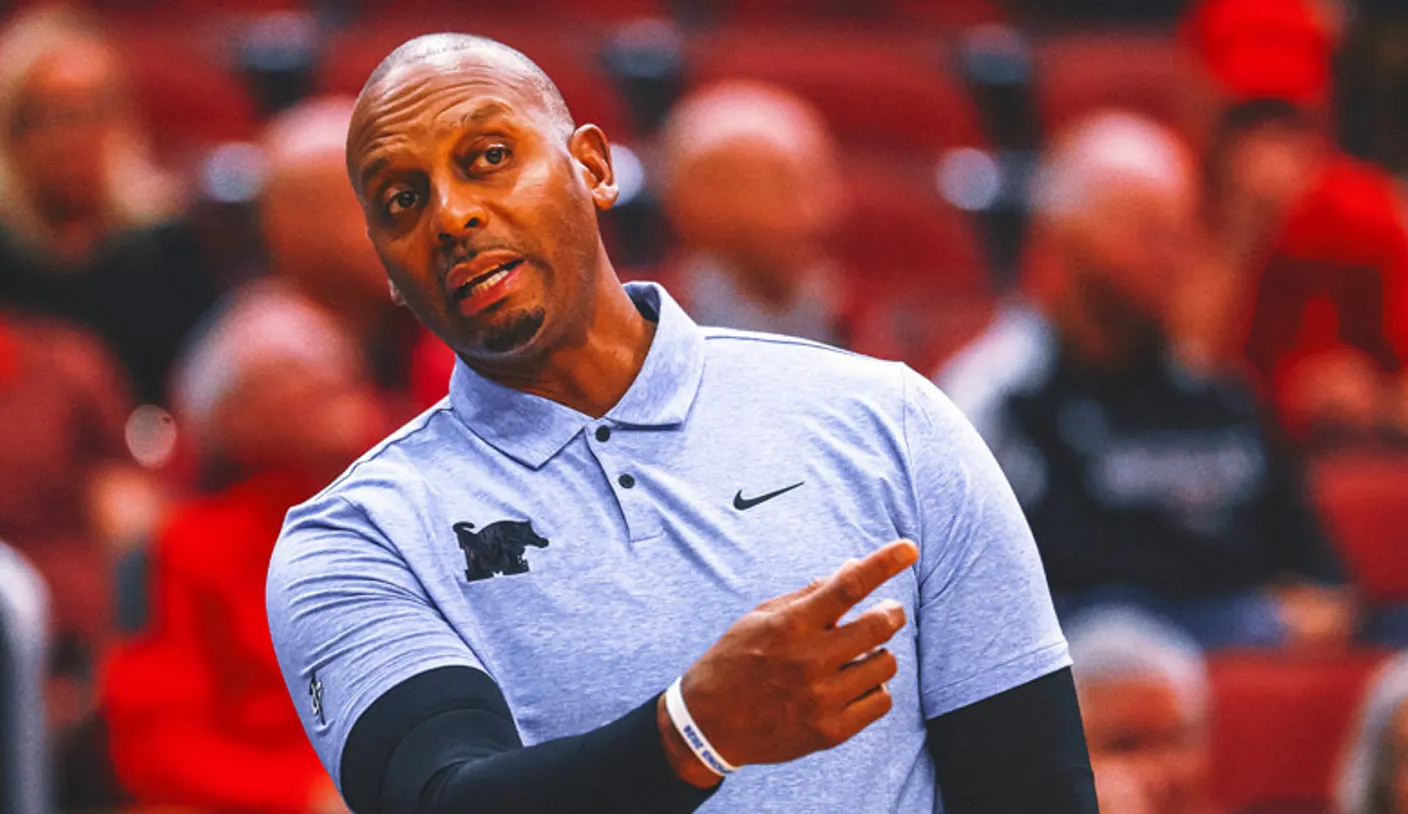
How do you get somebody’s attention? Well, one way to get a college basketball player’s attention is by taking away their NIL money, like Memphis Tigers head coach Penny Hardaway did with junior forward Aaron Bradshaw.
“Aaron Bradshaw has played for some great coaching staffs, but they haven’t figured out how to motivate him, so Penny Hardaway found a way to motivate Aaron Bradshaw. He started taking his NIL money away,” it was revealed on the broadcast of the Tigers’ Wednesday night loss to the Vanderbilt Commodores.
“He said, ‘I fined him for showing up late. I fined him for violating our dress code. Three grand here, three grand there. Guess who started to show up early? Guess who started to put the effort in?’ … He [Hardaway] takes that fine money and puts it back in the bucket and has some guys further down the roster reaping the cash benefit of those fines.”
Message received.
Memphis is the third stop for Bradshaw in his collegiate career, with the former five-star recruit spending his freshman season at Kentucky (2023-24) and sophomore season at Ohio State (2024-25). Through nine games this season, six of which he has started, Bradshaw is averaging a career-high 7.1 points and 2.9 rebounds in 15.4 minutes per game, while shooting 50.0% from the field.
Hardaway, who starred at Memphis for two seasons as a player (1991-92, 1992-93), is in his eighth season as the Tigers’ head coach, with Memphis a combined 166-74 under him since the 2018-19 season, highlighted by two American Tournament titles and three NCAA Tournament appearances. However, Memphis is off to a 4-6 start this season, with three of its six losses being against ranked opponents in Purdue, Louisville and Vanderbilt.
Maybe if Hardaway takes away the entire team’s NIL dough, Memphis will run the table in conference play?
MORE COLLEGE HOOPS: Last Night in College Basketball: No. 13 Vanderbilt Passed OT Test vs. Memphis
Want great stories delivered right to your inbox? Create or log in to your FOX Sports account, and follow leagues, teams and players to receive a personalized newsletter daily!
FOLLOW Follow your favorites to personalize your FOX Sports experience
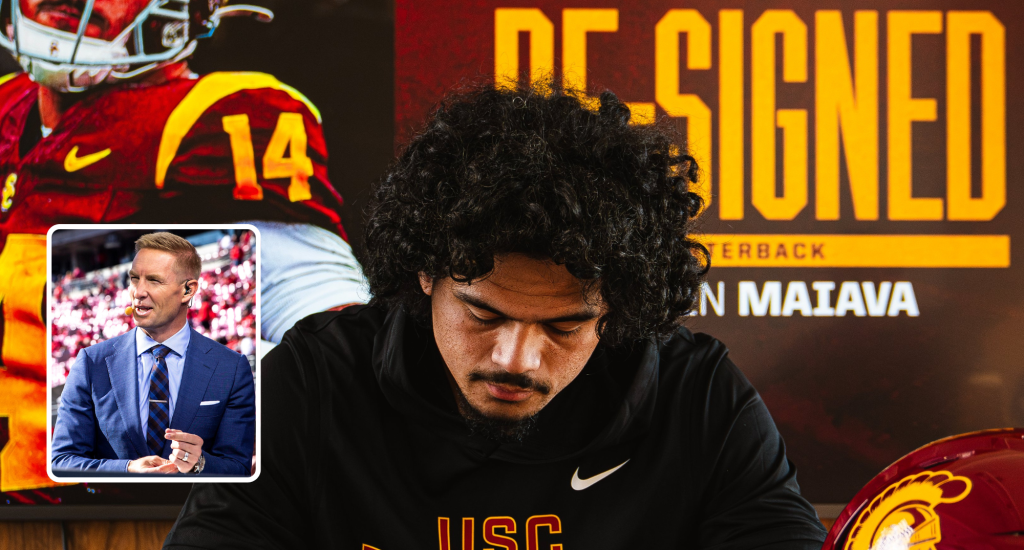
Joel Klatt has had it with college football’s latest social media phenomenon.
In the wake of USC quarterback Jayden Maiava’s re-signing announcement, racking up nearly five million impressions on X, Fox’s lead college football analyst didn’t hold back his frustration with what’s become a growing trend across the sport.
Jayden Maiava has re-signed with the USC Trojans. pic.twitter.com/jLI0S6hPKh
— USC Football ✌️ (@uscfb) December 16, 2025
“I can’t with the re-signing of players, I’m sorry,” Klatt said.
“I can’t with the re-signing of players, I’m sorry.”@joelklatt shares his thoughts on the issues in college football, specifically surrounding “re-signing” and player representation. Do you agree? pic.twitter.com/lCFw3FfMUW
— FOX College Football (@CFBONFOX) December 17, 2025
USC’s social media account posted Maiava’s re-signing announcement on Dec. 16, followed by a flurry of similar posts for other Trojans players. Tobias Raymond, Chasen Johnson, Romero Ison, Jahkeem Stewart, and Kendarius Reddick all got the graphic treatment announcing they were staying with the program.
Tobias Raymond has re-signed with the USC Trojans. pic.twitter.com/OYAWhIup4Y
— USC Football ✌️ (@uscfb) December 17, 2025
Chasen Johnson has re-signed with the USC Trojans. pic.twitter.com/J56Jb7ZpD9
— USC Football ✌️ (@uscfb) December 17, 2025
Romero Ison has re-signed with the USC Trojans. pic.twitter.com/pA11LlvOAx
— USC Football ✌️ (@uscfb) December 17, 2025
Jahkeem Stewart has re-signed with the USC Trojans. pic.twitter.com/nr76iwVxRj
— USC Football ✌️ (@uscfb) December 17, 2025
Kendarius Reddick has re-signed with the USC Trojans. pic.twitter.com/dc88qAVLsu
— USC Football ✌️ (@uscfb) December 17, 2025
But for Klatt, these announcements feel fundamentally different from how free agency works in professional sports.
“I started seeing some of these announcements on social media, guys would text me these announcements, and this is going to sound like I’m picking on guys,” Klatt said. “This is not their fault, but like Malik Washington, Waymond Jordan, LaNorris Sellers, there’s all these stories about like, ‘Oh, they’re re-signing. They’re working on a deal to stay.’ And I’m like, I don’t want to hear that. I don’t want to see it. You mean, wait, was he about to leave?”
Joel Klatt isn’t blaming the players. But in the NFL, fans know when a guy is a free agent and can walk. So when he re-signs, it makes sense. In college, a player is already on the team, already getting NIL money, and then announces he’s re-signing? It just makes fans wonder what they missed.
“This is so different than in the National Football League when your favorite team has a player that you love that you know is a free agent, and then they re-sign him, and you’re like, ‘Nice!’” Klatt contiuned. “That feels a lot different than like I’m a fan of a college team and I just think that this player who’s committed to this school, who’s at this school, who has more eligibility left, and is making a large sum of money through NIL, and then all of a sudden he’s like, ‘I’m re-signing.’ It’s like, ‘I didn’t know you thought about leaving.’”
But Klatt’s real issue isn’t the social media pageantry. It’s what’s happening behind the scenes.
“I don’t think that this is good for players, either, I really don’t. And let me tell you why: these contracts can be binding, and they can be loose, but it all depends on how they’re negotiated because there’s not a formality to the process,” Klatt explained. “So, the schools can kind of do whatever they want to do. They’re making their own rules, and then there’s some representation out there that is representing college players, and they want to play by their own rules.”
The lack of regulation in college athlete representation is a real problem. Unlike NFL players who are represented by NFLPA-certified agents, college athletes can hire essentially anyone to negotiate their NIL deals. There’s no registration requirement, no oversight, no baseline standard.
And according to Klatt, some of these representatives have no idea what they’re doing.
“And some of the representatives, by the way, are not very sophisticated. Guess why? Because they’re not representing a client that’s part of an association or a union, so they don’t have to register,” he added. “So the players can hire whomever. It can be like Uncle Eddie. We don’t know who these representatives are. That’s not to say that all of them are bad, but there are some that certainly don’t know what they’re doing. So, there are players because of that, that are signing contracts that they don’t even really know what they’re signing.”
Despite all his complaints about NIL representation and re-signing announcements, Joel Klatt still believes in college football.
“I remain very optimistic about our sport,” Klatt said. “I really do. I think college football’s in a great spot. I think that it can get better, but that doesn’t mean I’m blind to the problems.”
But his optimism won’t stop the re-signing trend. Schools will keep celebrating players who decide to stay, and fans will keep wondering if they were ever really thinking about leaving. It’s just part of college football now.
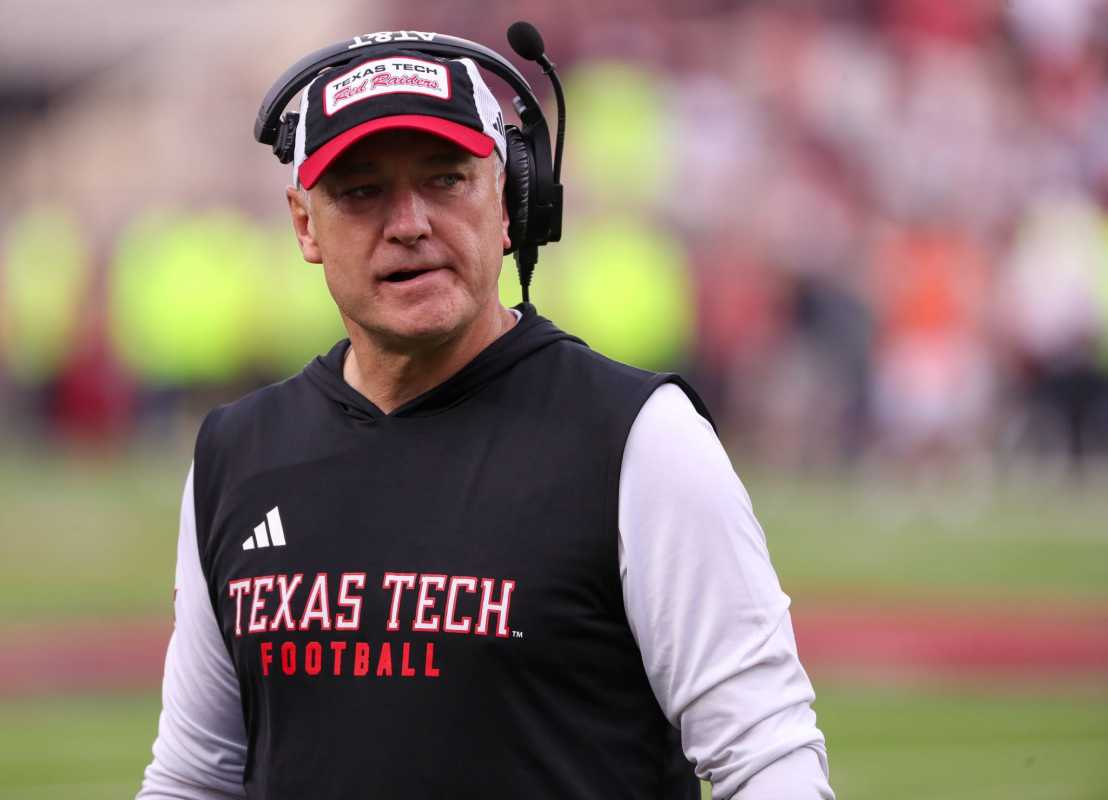
The Texas Tech Red Raiders defeated the BYU Cougars 34-7 in the Big 12 Championship Game. It secured them the No. 4 seed and a first-round bye in the College Football Playoff. They’ll play either the No. 12 seed James Madison Dukes or No. 5 seed Oregon Ducks in the Orange Bowl.
While Texas Tech strives for its first national championship in program history, it’s never too early to look into the future. The Red Raiders will face several major changes after the 2025 season, including from quarterback, Behren Morton. He’s using his final year of eligibility, while ESPN’s Matt Miller gives him a fifth-round grade in the 2026 NFL Draft.
Advertisement
The transfer portal doesn’t officially open until Jan. 2, but On3 reports that over 800 players are already set to enter. With Morton set to leave, Texas Tech could find his replacement in the portal.

Texas Tech Red Raiders head coach Joey McGuire.James Snook-Imagn Images
In an article, On3’s Pete Nakos, links the Red Raiders to Cincinnati Bearcats transfer quarterback Brendan Sorsby.
“Viewed as one of the most experienced quarterbacks in the transfer portal, Texas Tech is the school to watch early on for Brendan Sorsby,” Nakos wrote. “He’s also expected to evaluate the NFL draft, and Indiana and Tennessee are other schools to know.”
Advertisement
This season, Sorsby has completed 207 of 336 passes for 2,800 yards, 27 touchdowns, five interceptions and a 155.1 passer rating. He’s also rushed for 580 yards and nine touchdowns on 100 carries.
Sorsby is going to be highly sought after, with Rivals placing him as the third-ranked player in the transfer portal. His On3 NIL valuation of $2.4 million is tied for the 10th-highest in college football.
However, that may not be a problem for Texas Tech, which had the top-ranked transfer portal class in 2025. After bringing in 21 players, the Red Raiders had an adjusted NIL value of $7.6 million.
Advertisement
As the official transfer portal period approaches, Texas Tech’s quarterback situation will be one to watch. With Morton playing his final year of eligibility, the Red Raiders could already be exploring other options.
The Red Raiders will play in the Orange Bowl at noon ET Jan. 1 on ESPN and the ESPN app.
Related: Texas A&M QB Marcel Reed Shares NIL Update Before College Football Playoff
This story was originally published by Athlon Sports on Dec 18, 2025, where it first appeared in the College Football section. Add Athlon Sports as a Preferred Source by clicking here.
There’s always plenty of argument about who belongs and doesn’t belong in the College Football Playoff, and that was certainly the case this season, especially given the debates around that final spot coming between Notre Dame and Miami.
But looking over the 2025 bracket, it’s one of the most recognizable SEC programs that is getting the biggest criticism from those in the coaching business.
Asked to name the biggest fraud in this year’s College Football Playoff, it wasn’t one of the Group of Five teams that got the most attention, but none other than Ole Miss, which made the field on the back of a historic season.
Ole Miss, a fraud?
That’s according to one FBS coach, who doesn’t believe the Rebels have a good case.
“They’ve had so many distractions with Lane Kiffin leaving, and Oklahoma is probably their only good win this year,” an unnamed Group of Five head coach said of the Rebels heading into the College Football Playoff, according to The Athletic.
Whoever it was who said it, he apparently wasn’t alone. Far from it.
Taking a vote from more than two dozen anonymous coaches heading into the playoff, the publication found that to be, if not a consensus opinion, then something like it.
Ole Miss won out among the various playoff teams with 29 percent of respondents saying it was the most fraudulent team in the College Football Playoff this season.
A wild year for Ole Miss
Picking on the Rebels for not being playoff-worthy sounds counter-intuitive, given the unprecedentedly good season they’ve had on the field.
For the first time ever, Ole Miss completed an 11-win regular season and qualified for its first College Football Playoff berth.
Then came the drama. The head coach who brought them that success became the biggest name in what emerged as college football’s most hectic coaching carousel.
Lane Kiffin was named as the leading target for two other SEC programs and ultimately departed the Rebels for conference rival LSU after winning the Egg Bowl game.
Coach highlights Rebels’ schedule
The concern around Ole Miss’ perceived quality of schedule doesn’t seem like a concern at first glance.
It played three teams that made the College Football Playoff, beating both Oklahoma and Tulane, and losing a closely-fought matchup on the road against SEC champion Georgia.
Otherwise, the Rebels beat lesser SEC opponents like Kentucky, South Carolina, Florida, and Arkansas.
The win against then-No. 4 LSU doesn’t look as good as it did at the time, given the Tigers’ fall from grace that led to Brian Kelly’s ouster.
There was no universe in which an 11-1 Ole Miss was being left out of the College Football Playoff. Whether it truly belongs will be decided on the field, which can be said for any team in the bracket.
But the Rebels weren’t alone
Not far behind in the fraud poll were two surprising names. Big 12 champion Texas Tech and SEC runner-up Alabama were both decried as playoff frauds with 17 percent of the vote each.
Texas Tech being included is truly puzzling, given the quality of its defense, but those asked expressed concern for the offense, in particular quarterback Behren Morton.
In second place was “no answer,” as 21 percent of those asked didn’t provide any hints as to who they thought were frauds.
Group of Five selection James Madison received 8 percent of the vote as a perceived fraud, while Oregon and Oklahoma each got 4 percent.
Alabama not getting respect
One defensive coordinator from the SEC and a defensive assistant from the Big Ten took issue with the Crimson Tide being included among the dozen playoff teams this year.
“Alabama should have, like, five losses this year. They shouldn’t be there,” the SEC defensive coordinator said.
And the Big Ten coach added: “I’ve watched them. They’re not that good this year. I didn’t see enough from them to get this chance.”
(Athletic)
More college football from SI: Top 25 Rankings | Schedule | Teams
Follow College Football HQ: Bookmark | Rankings | Picks

Rec Sports9 minutes ago
Refugee-Focused Youth Sport Initiatives : Moving for Change

Rec Sports17 minutes ago
California orders Tahoe Truckee schools to leave Nevada sports over transgender athlete dispute

Rec Sports25 minutes ago
Quincy University on probation after allowing over 100 ineligible students to participate in sports

Rec Sports41 minutes ago
Rep. Kim Hicks – Rochester DFL Legislators to Take Action on Rochester Sports Complex

Rec Sports49 minutes ago
Tree collapses onto 2 young children waiting for school bus

NIL51 minutes ago
Michael Wilbon claims Kalen DeBoer will leave Alabama for Michigan with loss in College Football Playoff opener
Sports60 minutes ago
Wisconsin volleyball vs Kentucky score today: Final Four live updates

Rec Sports1 hour ago
Huskers year-end report shows concession sales up 75%, shares volleyball reseating data

Rec Sports1 hour ago
Man Facing Felony Sex Charges Served as President of Independent Youth Sports League

Sports1 hour ago
Kentucky volleyball live score updates and highlights vs Wisconsin

Rec Sports1 hour ago
Charles Sharper Gala spotlights afterschool sports and wellness program

Motorsports1 hour ago
Report: Greg Biffle among those killed in North Carolina plane crash

Rec Sports1 hour ago
i9 Sports – Hello Woodlands

Sports2 hours ago
Toledo Announces Signing of Three Transfers

Motorsports2 hours ago
Cale Phillips Returns to Nitro Motorsports for 2026 CUBE 3 Architecture TA2 Series Pro/Am Title Run After Strong 2025 Season

Rec Sports4 weeks ago
First Tee Winter Registration is open

Rec Sports3 weeks ago
Fargo girl, 13, dies after collapsing during school basketball game – Grand Forks Herald

Motorsports3 weeks ago
CPG Brands Like Allegra Are Betting on F1 for the First Time

Motorsports4 weeks ago
F1 Las Vegas: Verstappen win, Norris and Piastri DQ tighten 2025 title fight

Sports4 weeks ago
Volleyball Recaps – November 18

Sports3 weeks ago
Sycamores unveil 2026 track and field schedule

Sports3 weeks ago
Two Pro Volleyball Leagues Serve Up Plans for Minnesota Teams

Sports3 weeks ago
Utah State Announces 2025-26 Indoor Track & Field Schedule

Motorsports3 weeks ago
Redemption Means First Pro Stock World Championship for Dallas Glenn

Motorsports1 week ago
SoundGear Named Entitlement Sponsor of Spears CARS Tour Southwest Opener

Motorsports3 weeks ago
Jo Shimoda Undergoes Back Surgery

Sports3 weeks ago
Texas volleyball vs Kentucky game score: Live SEC tournament updates

NIL3 weeks ago
Bowl Projections: ESPN predicts 12-team College Football Playoff bracket, full bowl slate after Week 14

Rec Sports3 weeks ago
How this startup (and a KC sports icon) turned young players into card-carrying legends overnight

Rec Sports3 weeks ago
Robert “Bobby” Lewis Hardin, 56






-
 Motorsports1 week ago
SoundGear Named Entitlement Sponsor of Spears CARS Tour Southwest Opener
-
 Motorsports3 weeks ago
Jo Shimoda Undergoes Back Surgery
-
 NIL3 weeks ago
Bowl Projections: ESPN predicts 12-team College Football Playoff bracket, full bowl slate after Week 14
-
 Rec Sports3 weeks ago
Robert “Bobby” Lewis Hardin, 56
-
Sports3 weeks ago
Wisconsin volleyball sweeps Minnesota with ease in ranked rivalry win
-

 Motorsports1 week ago
Donny Schatz finds new home for 2026, inks full-time deal with CJB Motorsports – InForum
-

 Motorsports3 weeks ago
Increased Purses, 19 Different Tracks Highlight 2026 Great Lakes Super Sprints Schedule – Speedway Digest
-

 Rec Sports2 weeks ago
How Donald Trump became FIFA’s ‘soccer president’ long before World Cup draw
-

 Motorsports3 weeks ago
Michael Jordan’s fight against NASCAR heads to court, could shake up motorsports
-
 Sports2 weeks ago
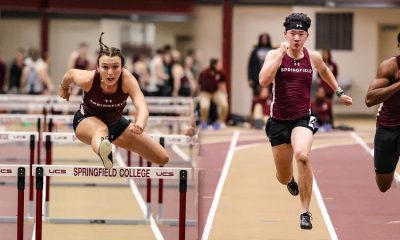
Men’s and Women’s Track and Field Release 2026 Indoor Schedule with Opener Slated for December 6 at Home