
NIL
Tata Comms Media's Tom Buffolano on How College Video Departments Can Embrace NIL …


Story Highlights
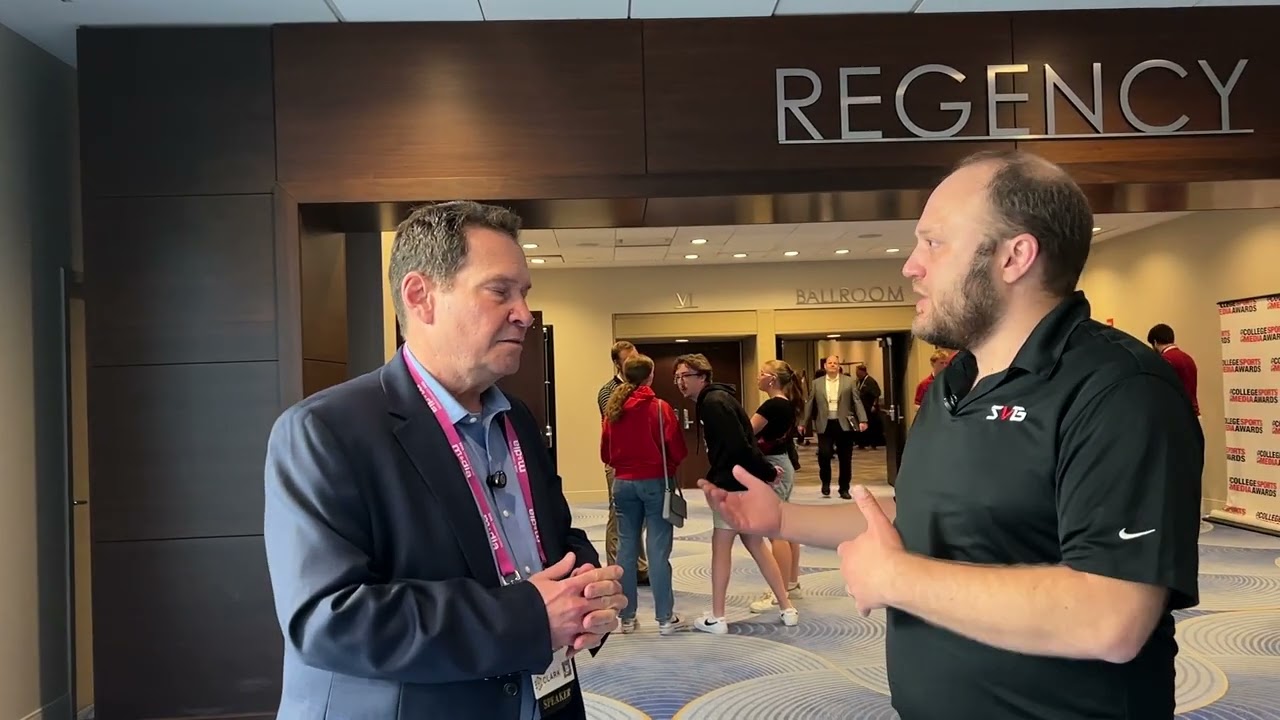
Tom Buffolano, head of business development, Tata Communications Media, took some time with SVG’s Jason Dachman at the 2025 SVG College Summit in Atlanta to highlight the dramatic and ongoing changes in the college athletics landscape. Most notably, NIL (Name, Image, Likeness) and upcoming legal rulings are reshaping college sports, and athletic departments’ video-production teams now sit at the center of branding, marketing, and storytelling.
The reality is that college video teams are often under-resourced but are expected to produce a growing volume of content — including NIL-driven content with sponsor integrations — increasing pressure and expectations. As a result, departments must “do more with less,” which means rethinking workflows, staffing efficiency, and even becoming revenue-generating units.
Buffolano shares how Tata Communications is addressing these challenges by building a global video infrastructure for college sports, linking campuses via their network to provide scalable video solutions. Tata supports a range of production models (on-site, REMI, cloud) and used the SVG College Summit as a chance to demo cloud production tools tailored for colleges. Tata’s unified cloud video platform enables live production, social media distribution, storage, and playout (e.g., to YouTube), streamlining workflow and enhancing audience engagement. The goal is to give colleges tools for efficient, scalable, revenue-driven video strategies — aligning with that same industry mantra: “do more with less.”
For more industry-related interviews and deep dives into sports productions, visit SVG’s YouTube channel and SVG PLAY.











NIL
Billy Napier back in Sun Belt at James Madison. It’s a changed world from Louisiana-Lafayette days

Billy Napier thrived in the Sun Belt Conference before. Now he’s back in taking over at James Madison. But it’s a very different landscape since he won big at…
HARRISONBURG, Va.(AP) — Four years ago, Billy Napier walked away from a Sun Belt Conference powerhouse he had built at Louisiana-Lafayette. It was, in part, because he wasn’t sure how that program would handle the financial challenges of new rules allowing college athletes to profit from their name, image and likeness.
Four years later, Napier is returning to the league with James Madison. And the Dukes’ ability to compete financially was one of the main drivers behind his decision to become the successor to UCLA-bound Bob Chesney.
“This place has what it takes to dominate the competition for sure,” Napier said of a program ranked No. 19 in the AP Top 25 and headed to the College Football Playoff.
Napier went 40-12 in four seasons at Louisiana-Lafayette, dominating Sun Belt competition. His Ragin’ Cajuns won the Western Division all four years he was there and claimed league championships in his final two seasons. He was twice named the league’s coach of the year.
But after posting a 12-1 record and his second Sun Belt title in 2021, Napier left for Florida.
“I stayed at Louisiana after Year 2 when we had opportunities, after Year 3 when we had opportunities,” Napier said. “And we probably, truth be known, would have stayed longer if it wasn’t for NIL. Because we know that was coming. We knew that roster was going to be tough to keep together.”
Changed landscape
Napier went 22-23 at Florida, starting this season 3-4 when he was fired in his fourth year leading the Gators.
As he surveyed the landscape, considering his future, he thought a lot about how college football had changed since he first took over at Louisiana-Lafayette in 2018. The NIL rules allowing college athletes to cash in on their fame went live in summer 2021, while this year marked the arrival of revenue sharing following the $2.8 billion House antitrust settlement.
“It’s very different,” Napier said. “Obviously (revenue sharing) is ultimately a huge difference maker at the Group of Six level. Now, you evaluate jobs relative to alignment, resources — which basically means building infrastructure and hiring a great staff — and then the rev share that allows you to compensate really good players.”
Napier said that, the transfer portal and roster limits following the House settlement have changed the game since he last coached in the Sun Belt.
“But ultimately, football’s football,” Napier said. “We’re going to need to evaluate well. Basically going to recruit a high school cycle each year. Then you’re going to recruit a portal cycle each year. Then start over.”
Those changes aren’t something Napier is thinking about in the abstract.
He jumps right into one of the most awkward positions in the country — seeking to retain players of a CFP-bound team while their current coach presumably is hoping to take some of the Dukes’ top talent with him west to UCLA. (No. 12 seed JMU faces No. 5 Oregon on Saturday night.)
“I’m for transparency,” Napier said. “Let’s rip the Band-Aid off. Who are you taking? And who wants to go?”
Roster management
When Curt Cignetti left JMU for Indiana, he took 13 of the program’s top players with him. That group includes the Hoosiers’ leader in rushing touchdowns (Kaelon Black), its leader in receiving scores (Elijah Sarratt), its leader in pass breakups (D’Angelo Ponds) and its second-leading tackler (Aiden Fisher).
Nine former JMU players started multiple games this season for top-ranked Indiana, which beat then-No. 2 Ohio State for the Big Ten Conference title and is the top seed in the 12-team playoff.
Chesney had to rebuild JMU almost entirely from scratch. He brought in 58 new players his first season.
Athletic director Matt Roan said he and Chesney navigated the entire season with openness and honesty, starting with UCLA’s first inquiries about Chesney after Week 3. That gives him confidence that Chesney and Napier will be able to work simultaneously and professionally toward the future of both coaches’ programs.
“We were very transparent throughout,” Roan said. “The day that UCLA announced that DeShaun Foster was being removed as the head coach, they started calling. And every program in America started calling. And we would have those open, honest conversations about where things could go. We’ve been the adults in the room.”
JMU president Jim Schmidt expressed confidence the Dukes will remain successful under Napier no matter how the fight over players turns out.
“I have no doubt that we may lose some talented players to UCLA,” Schmidt said. “We certainly lost some talented players to Indiana. I believe that we will retain the right players and I believe Coach Billy will bring some great players to round that out.”
Get poll alerts and updates on the AP Top 25 throughout the season. Sign up here and here (AP News mobile app). AP college football: https://apnews.com/hub/ap-top-25-college-football-poll and https://apnews.com/hub/college-football

So much for the whole “taking out a full-page ad in the local newspaper” move. Future-former Tulane head coach Jon Sumrall and his wife Ginny have put their money where their mouths are, as on Monday they announced a $100,000 donation to the Green Wave Talent Fund.
The donation will give new Green Wave head coach Will Hall a head start on building upon Sumrall’s success.
“Tulane University and New Orleans are special to me and my family,” said Sumrall. “Ginny and I are honored to support the Green Wave Talent Fund because we believe in the vision of Tulane Athletics and want to contribute to the continued success of its student-athletes. The future is incredibly bright, and we are excited for Will Hall and his family to be part of it.”
“Coach Hall possesses a keen understanding of Tulane University and its football program, along with a passion that greatly benefits the Green Wave. As a leader, he cares deeply about helping others reach their full potential and is dedicated to equipping them to achieve that goal in every way possible. He has our family’s full support, and we wish him nothing but success as he leads Tulane Football!”
Sumrall, of course, has accepted the head coaching position at Florida, which will officially begin at the conclusion of Tulane’s College Football Playoff run. Sumrall is 20-7 with two berths in the American Championship in his two seasons atop the program, building upon the success of Willie Fritz, who went 23-4 with two berths in the American Championship, one conference title, a Cotton Bowl win and an AP No. 9 finish in his final two seasons with the program.
Tulane is one of three programs to play in four straight conference title games (Boise State and Georgia are the others), and the Sumralls’ gift helps Hall build a team that can make it five in a row.
“We are grateful to Jon and Ginny for this incredible gift,” said AD David Harris. “Their leadership and generosity will have a direct and lasting impact on our student-athletes as we continue to grow and elevate Tulane Athletics.”
Hall was Tulane’s offensive coordinator in 2019-20 and returned to New Orleans as passing game coordinator this season. He holds a career 70-50 record as a head coach, including a 25-11 run at West Alabama from 2011-13, a 31-9 mark with two Division II semifinal trips from 2014-16 at West Georgia, and a 14-30 mark over four seasons at Southern Miss.
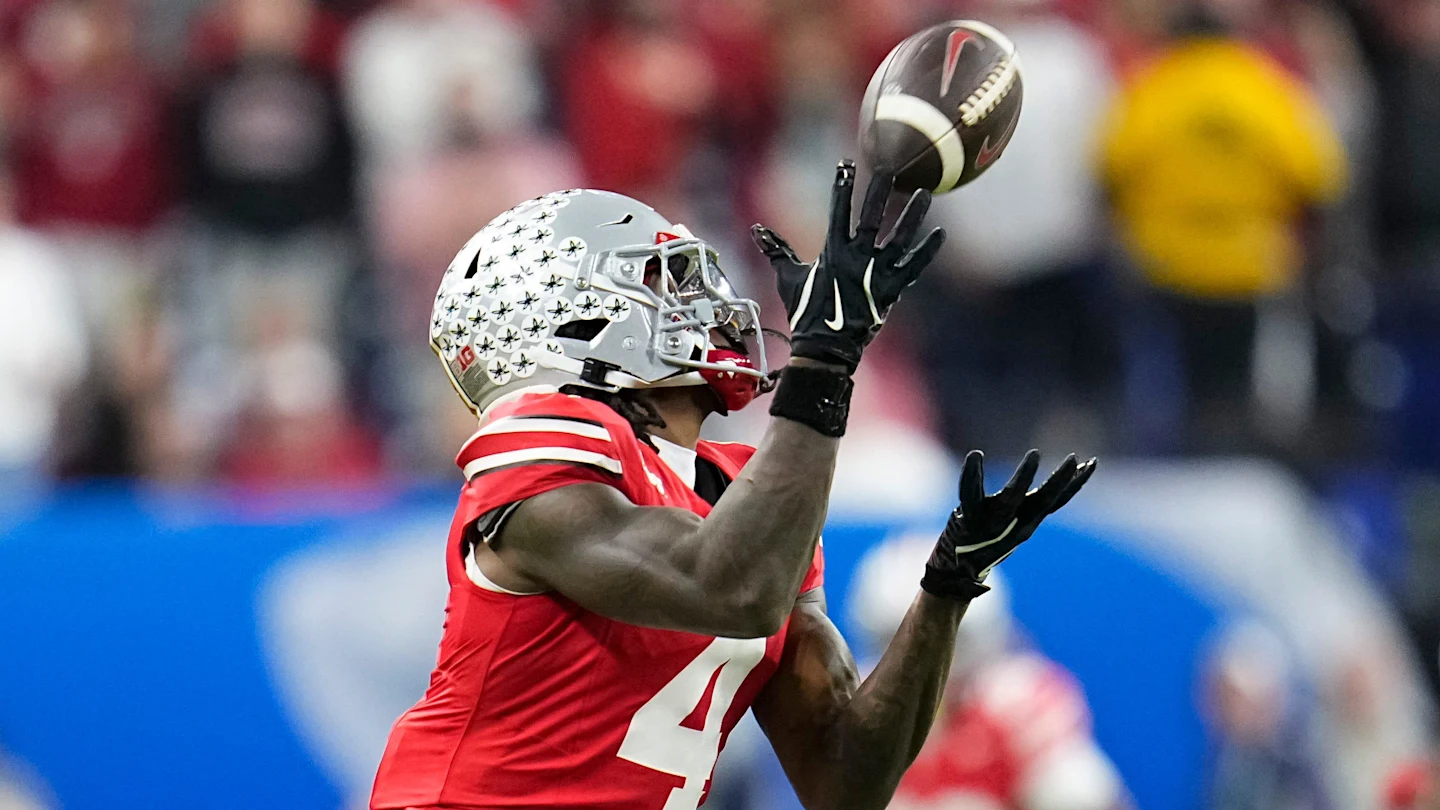
The Heisman hype is finally over, so time to move on to arguing who is actually the best player in this year’s College Football Playoff. There’s no politics, no consideration of position or age or the endless parade of hassle that can make the Heisman drag. The best news– we’ll settle it all (more or less) on the field. Here’s the eight best players in this year’s College Football Playoff.
1. Jeremiah Smith, Ohio State
Smith is the best player in college football as a true sophomore. He caught 80 passes for 1,086 yards and 11 touchdowns this season for Ohio State. Smith put up five different 100 yard receiving games and was by far the prime mover and shaker at the most dangerous big-play passing attack in the nation. Sayin gets the headlines and the Heisman support, but Smith is the most untouchable talent in his entire sport.
2. Fernando Mendoza, Indiana
So he’s not the best, but he’s pretty darn close. The best argument for Mendoza is that few if any quarterbacks could make Indiana take off with the gusto that Mendoza managed all season. Mendoza has thrown for 2,980 yards and 33 touchdowns while running for 240 yards and six more scores. He’s impressively consistent, is a natural leader, and has done things at Indiana that were previously unimaginable. He deserved the Heisman… but he’s not the best player in the CFP.
3. Jacob Rodriguez, Texas Tech LB
The best defensive player in the nation, there’s an argument to be made that Rodriguez is the best overall. He’s already racked up 117 tackles, 11 tackles for loss, four interceptions, and a pair of rushing touchdowns just for fun. He is the engine that makes the ridiculously good Texas Tech defense roll. The only reason he’s not higher than he is would be that Tech’s defense would still be formidable without him. But it probably wouldn’t be in the CFP.
4. Julian Sayin, Ohio State
Yes, it feels like anybody could succeed at QB for Ohio State. But it only feels that way because of how smooth and effortless Sayin makes his job seem. He’s completing 78.4% of his passes on the year for 3,323 yards and 31 touchdowns. If that sounds like video game numbers, it’s because Sayin makes Ohio State’s excellent feel inevitable.
5. Trinidad Chambliss, Ole Miss
No Gunner Stockton or Ty Simpson make an appearance here, but Diego Pavia aside, Chambliss was the class of the SEC. Despite starting the season as a backup, he has 3,016 passing yards and another 470 yards on the ground, with a combined 24 touchdowns. He started his career as a starter with three 300+ yard passing games and has replicated that feat in his last three games heading into the CFP.
6. Louis Moore, Indiana
Moore is one of the great weird stories of the season. A JUCO guy who came to Indiana and played well in the struggilng pre-Cignetti days, he transferred to Ole Miss for 2024. He then returned to Indiana for 2025, sued the NCAA to gain eligibility, and played like a maniac. Moore has 74 tackles and six interceptions. He’s 24 years old, he’s back at a school he originally left, and he’s a magnet for the ball at cornerback.
7. Francis Mauigoa, Miami
Offensive linemen tend to get more blame than credit. They don’t put up massive totals of stats and they get noticed mostly when they pick up a holding penalty or a false start. But Mauigoa is the real deal. He’s helped keep Carson Beck clean, with Miami allowing just 11 total sacks all season. Mauigoa was already great. He almost never gets beat in the trenches and probably is the biggest reason that Miami is even in the CFP.
8. Cashius Howell, Texas A&M
The former Bowling Green edge rusher was an absolute terror to opposing linemen. In the 2025 season, Howell has racked up 14 tackles for loss, including 11.5 sacks. He didn’t just feast off easy opponents– 8.5 of those sacks came in SEC play. Howell’s athleticism allows A&M to play aggressively and freely on defense, with no real fear of mistakes. He’s a game-changer.

The 2025 Heisman Trophy ceremony wrapped up at the Jazz at Lincoln Center’s Appel Room in New York City on Saturday night.
Indiana quarterback Fernando Mendoza was selected as the 91st recipient of the Heisman Trophy. Mendoza received the award over Vanderbilt quarterback Diego Pavia, Notre Dame running back Jeremiyah Love and Ohio State quarterback Julian Sayin.
With the 2025 Heisman Trophy race in the rearview mirror, the next question about the award is who can win it in 2026. There are many star players from the 2025 season who could find themselves in the mix next season.
Below is a look at the top five players who are most likely to win the award in 2026.
No. 5- QB Trinidad Chambliss, Ole Miss

Year: Senior
2025 stats: 3,016 passing yards, 18 pass touchdowns, three interceptions, 470 rush yards, six rush touchdowns
If Diego Pavia can successfully sue his way to another season of eligibility for his 2025 Heisman campaign, Trinidad Chambliss should be able to do the same for 2026.
Chambliss’ career at Ole Miss began with him being thrust into action in the third game of the season with the injury to Austin Simmons. The adaptability Chambliss demonstrated midseason will be critical once again as offensive controls shift from Lane Kiffin to John David Baker.
No. 4- QB Marcel Reed, Texas A&M
Year: Redshirt junior
2025 stats: 2,932 pass yards, 25 passing touchdowns, 10 interceptions, 466 rush yards, six rush touchdowns
Marcel Reed entered 2025 as an intriguing dual-threat quarterback who needed to hone his passing skills. Fast forward to the end of the 2025 season, and Reed has increased his production in the air substantially and is primed to make another jump in 2026.
The biggest challenge for Reed in 2026 will be working with a new offensive coordinator following Collin Klein’s departure. But any capable offensive mind should be able to do good work with an athlete like Reed.
No. 3- QB Arch Manning, Texas

Year: Redshirt junior
2025 stats: 2,942 pass yards, 24 passing touchdowns, seven interceptions, 244 rush yards, eight rush touchdowns
Arch Manning’s start to the 2025 season shuts down any and all preseason Heisman conversations by the end of September. But the way he ended the 2025 season has the college football landscape giving him a second look.
A faulty offensive line should be much improved in 2026 for Manning’s protection. If he can ride off the momentum of performances against quality competition like Vanderbilt and Texas A&M into 2026, watch out.
No. 2- QB Gunner Stockton, Georgia
Year- Senior
2025 stats: 2,691 passing yards, 23 touchdowns, five interceptions, 442 rush yards, eight rush touchdowns
Gunner Stockton proved a lot of doubters wrong with his heroics for the Bulldogs in 2025. His ability to make plays with his feet is a big reason why he will be in consideration for a Heisman Trophy in 2026.
Stetson Bennett IV will always receive the most attention for winning two national titles, but Stockton may be the most complete quarterback Georgia has fielded under Kirby Smart
No. 1- WR Jeremiah Smith, Ohio State

Year: Junior
2025 stats: 80 receptions, 1,086 receiving yards, 11 receiving touchdowns, 20 rush yards, one rush touchdown
Very rarely is there a wide receiver who is capable of competing with the best quarterbacks in college football for a Heisman Trophy. Jeremiah Smith is one of those wide receivers.
The run he put together as a freshman in the 2024 College Football Playoff would have the NFL considering him as the best receiver in the 2025 draft had he been eligible. Another run like that in the 2025 College Football Playoff would firmly insert him into the 2026 Heisman conversation.
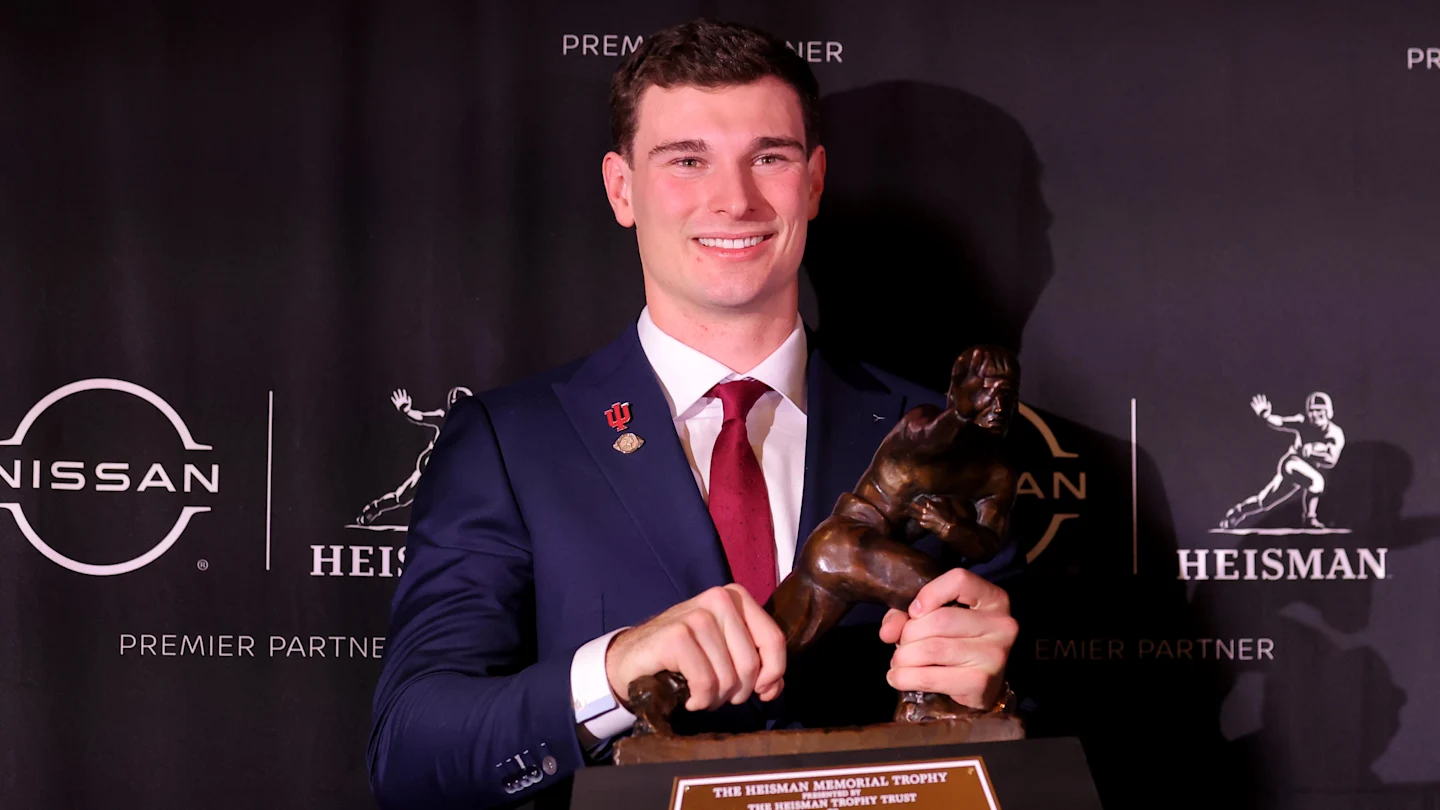
Indiana quarterback Fernando Mendoza swept to an easy Heisman Trophy victory on Saturday, but everyone wasn’t convinced of his credentials. Count long-time sports personality Skip Bayless among those who aren’t on board with the pick. Bayless, who spent years with FOX Sports and ESPN, took to social media with his take on the Heisman win.
Heisman Results
It’s worth noting that Mendoza not only easily won the award, with 643 first-place votes to 189 for the second-place finisher, Vanderbilt QB Diego Pavia. He also comfortably won the voting from all six geographic regions into which voting is divided. The fan vote for the Heisman went to neither Mendoza nor Pavia, but to Texas Tech LB Jacob Rodriguez. But Bayless’s take went a different direction.
Skip Bayless’s Take
Congrats to Fernando Mendoza… nice memorized, rehearsed speech… but Diego Pavia deserved this award for his performance on the field, even if his swagger and edge rubbed some voters and viewers the wrong way.
Skip Bayless
Pavia’s Case
Pavia put together an impressive campaign, leading Vanderilt to 10 wins for the first time in program history. He passed for 3,192 yards and 27 touchdowns while rushing for 826 yards and nine more touchdowns. A season ago, Pavia led Vanderbilt to seven wins, including an upset of then-No. 1 Alabama that spring-boarded the program to national relevance. Of course, Skip Bayless happened to graduate from Vanderbilt.
Pavia likely was hurt by a season in which he lacked a marquee win– Vandy’s best win on the season based on the current polls was over No. 25 Missouri. He also didn’t play especially well against top competition– throwing for six touchdowns and four interceptions against winning FBS teams. Of course, Vanderbilt came up just shy of the College Football Playoff.
Mendoza’s Case
Mendoza, on the other hand, led Indiana to an undefeated season and a No. 1 ranking. Mendoza has passed for 2,980 yards and 33 touchdowns and rushed for another 240 yards and six scores. He did take advantage of some big-game moments in a comeback win over Penn State and the upset of Ohio State in the Big Ten title game. Mendoza passed for 13 touchdowns and three interceptions against winning FBS teams.
Critics note that Mendoza’s big moment came against a Penn State team that fired its coach and struggled to a 6-6 season. His resume includes just two wins over currently ranked teams, although both Oregon and Ohio State are in the fop five. Mendoza threw for just two touchdowns total in those two wins (which were essentially defensive battles). But most voters clearly disagreed with Bayless’s take and were comfortable with Mendoza’s Heisman claim.


Being the head coach who replaces a legend is one of the toughest gigs in college football, but having to step into the shoes of the all-time winner of national championships is quite another task.
And despite being on the right side of most metrics, Kalen DeBoer could be facing more than embarrassment if Alabama doesn’t beat Oklahoma in the first-round College Football Playoff game this coming week.
Former Alabama running back Damien Harris thinks his place at the school is in jeopardy.
Is Kalen DeBoer’s job at risk?
“In my opinion, I think his job is on the line with this game, and I think there’s a lot of reasons why,” Harris said on CBS Sports.
“We’ve seen how hard it is to beat a team twice in college football, and if we look at this Alabama team, and say you showed no improvement from the first time you played Oklahoma to the second time, you weren’t able to make adjustments to flip the script of that game, and you can’t win that football game [after] luckily getting into the playoffs, that’s going to be a problem.”
Oklahoma has Alabama’s number
DeBoer is already 0-2 against Oklahoma during his two-year tenure at Alabama and now they return to Norman for a rematch against one of the best defenses in the country.
Dropping to 0-3 would put DeBoer’s place in some peril, Harris argues, especially given some of the talk around other schools reportedly being interested in him, talk that increased after Michigan came open suddenly last week.
That’s not good enough
“Listen, this isn’t the tradition, this isn’t the history that Alabama fans are used to. This isn’t the standard of excellence that’s used to being had in Tuscaloosa at the University of Alabama. People are still talking about that,” Harris said.
“I know it’s Year Two. I know we’re talking about needing to give coaches time, but when we’re talking about the University of Alabama and the legacy that needs to be set, Kalen DeBoer needs to put his own DNA on that.”
So far, he hasn’t.
“We’re not seeing that right now. We’re seeing a team that’s full of a lot of potential, has a lot of talent, a lot of resources, but they just haven’t lived up to the billing quite yet during the Kalen DeBoer tenure,” he said.
“All that being said, I think Kalen DeBoer’s job will be in a little bit of jeopardy going into next season if they don’t win this football game.”
But is any of this true?
Speaking frankly, no.
Alabama knew the stakes of finding the right person to replace Nick Saban, the man who defined college football in the 21st century, perhaps for all time, and took great care to find his successor.
DeBoer has been a proven winner, and even despite his relative struggles and losses in two years with the Crimson Tide, is still ahead of the game and has the program in the national title field.
More to it, all of the insider reporting around the coach suggests that he is more than happy being at Alabama, and is entirely focused on leading the school into the future.
And while Michigan is still a seductive opportunity given its prestige, the condition of the athletic department is a genuine concern, before and after the shocking dismissal of Sherrone Moore, who was fired for an alleged improper relationship and landed in jail on multiple charges.
Facing a bevy of negative headlines since the Jim Harbaugh era, whether it be around Covid-era recruiting violations, the Connor Stalions scandal and sign-stealing allegations, and the sudden shocking developments around Moore, even the school itself seems concerned, launching an investigation into itself and its culture.
That would not be an ideal landing spot for a coach who already has one of the top five positions in college football, is in the playoff, and likes where he is. Win or lose this week.
(Harris)
Read more from College Football HQ

NHRA TO KICK OFF 2026 COUNTDOWN TO CHAMPIONSHIP WITH DEBUT AT U.S. 131 MOTORSPORTS PARK

Logan Muir Selected to Preseason All-MIVA Team

PRI Featured Products Showcase Award Winners Announced
3 takeaways from Wisconsin Badgers’ Final Four-clinching win over Texas

JR Motorsports’ path to NASCAR Cup takes big hit after charter news

Billy Napier back in Sun Belt at James Madison. It’s a changed world from Louisiana-Lafayette days

Volleyball Places 78 on 2025 Academic All-MAC Team

NHRA to kick off 2026 Countdown to the Championship with debut at U.S. 131 Motorsports Park

Lionesses nominated for SPOTY team of 2025

Volleyball Paces MAC with Eight Academic All-MAC Selections

Hendrick Motorsports reveals statement after NASCAR settlement in 2025

Events and athlete quota for Dolomiti Valtellina 2028 announced

EXCLUSIVE: A New Sport Is Coming, 360 Hoops to Roll Out Its Patented Three-In-One Basketball System Nationwide in 2026

Nebraska Volleyball was “Maxed Out” in Loss to Texas A&M

Sealmaster renews with Vasser Sullivan team

First Tee Winter Registration is open

Fargo girl, 13, dies after collapsing during school basketball game – Grand Forks Herald

CPG Brands Like Allegra Are Betting on F1 for the First Time

Volleyball Recaps – November 18

F1 Las Vegas: Verstappen win, Norris and Piastri DQ tighten 2025 title fight

Two Pro Volleyball Leagues Serve Up Plans for Minnesota Teams

Sycamores unveil 2026 track and field schedule

Utah State Announces 2025-26 Indoor Track & Field Schedule

Redemption Means First Pro Stock World Championship for Dallas Glenn

Texas volleyball vs Kentucky game score: Live SEC tournament updates

Jo Shimoda Undergoes Back Surgery

Robert “Bobby” Lewis Hardin, 56

Bowl Projections: ESPN predicts 12-team College Football Playoff bracket, full bowl slate after Week 14

How this startup (and a KC sports icon) turned young players into card-carrying legends overnight

SoundGear Named Entitlement Sponsor of Spears CARS Tour Southwest Opener

 NBA Legend Michael Jordan to Join NBC Sports as Special Contributor
 Why a rising mid-major power with an NCAA Tournament team opted out of revenue-sharing — and advertised it
 Falcons mailbag
 Portal Update – Basketball and Gymnastics Take Hits
 has always dreamed in Mercurial. Now his initials are on the boots.
The new Kyl…
has always dreamed in Mercurial. Now his initials are on the boots.
The new Kyl…
-
 Rec Sports3 weeks ago
Fargo girl, 13, dies after collapsing during school basketball game – Grand Forks Herald
-
 Sports3 weeks ago
Utah State Announces 2025-26 Indoor Track & Field Schedule
-
 Motorsports3 weeks ago
Redemption Means First Pro Stock World Championship for Dallas Glenn
-
 Sports3 weeks ago
Texas volleyball vs Kentucky game score: Live SEC tournament updates
-
 Motorsports2 weeks ago
Jo Shimoda Undergoes Back Surgery
-
 Rec Sports2 weeks ago
Robert “Bobby” Lewis Hardin, 56
-
 NIL2 weeks ago
Bowl Projections: ESPN predicts 12-team College Football Playoff bracket, full bowl slate after Week 14
-
 Rec Sports2 weeks ago
How this startup (and a KC sports icon) turned young players into card-carrying legends overnight
-
 Motorsports5 days ago
SoundGear Named Entitlement Sponsor of Spears CARS Tour Southwest Opener
-
 NIL3 weeks ago
Indiana’s rapid ascent and its impact across college football