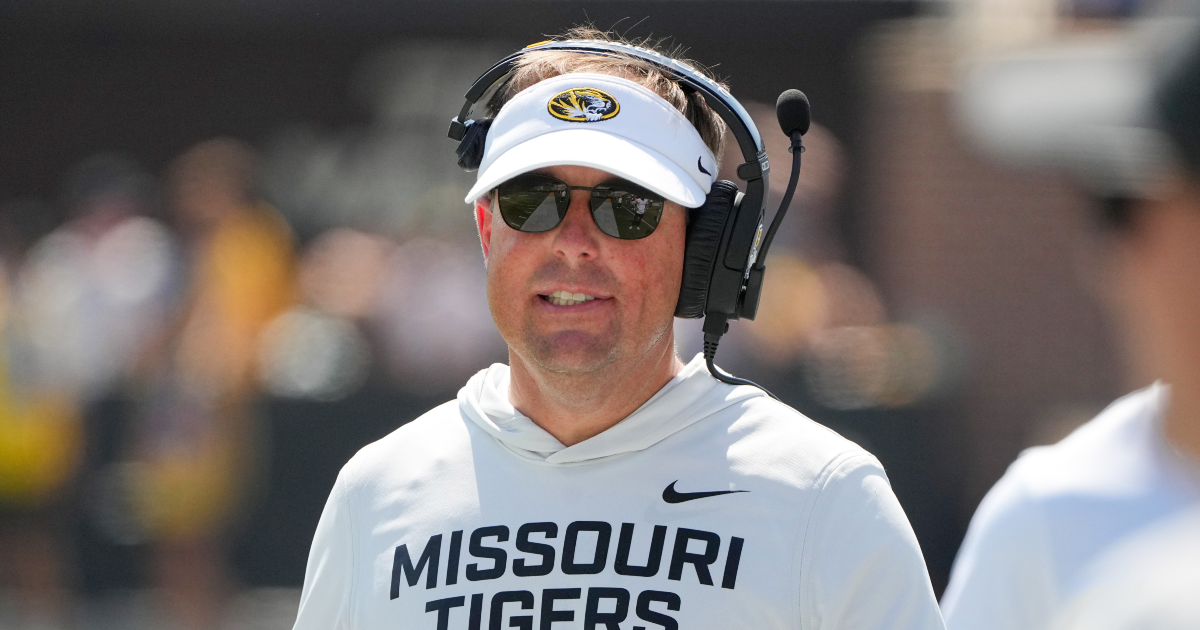
Eli Drinkwitz is frustrated with a lot of aspects of the current world of college football, and he believes other coaches share that sentiment. The Missouri head man opened up about his gripes in a recent press conference, prompted by a question about the recent College Sports Commission finalizing a participation agreement with the power conferences.
The agreement ushered in the era of revenue sharing in college sports and put NIL guidelines on schools. But Drinkwitz believes there’s still more that needs to be done to come up with a system of rules that everyone can be happy with.
SUBSCRIBE to the On3 NIL and Sports Business Newsletter
“There’s a lot of coaches discussing it and frustrated, in my opinion,” he said. “I understand the national sentiment because of the salary ranges of head coaches, it feels like we’re complaining. But we’re really not. We’re trying to sound some warning bells. …The system that we’re in is really sick right now. College football is sick and showing signs of this thing really cracking moving forward, and we need to get something under control.”
Per the agreement, a copy of which was obtained by On3’s Pete Nakos, schools are required to waive their right to sue the CSC. Additionally, schools are to agree to the rules in place following House settlement approval, including roster limits and other NIL compliance rules.
If a school violates any of the rules in place by the participation agreement, they “shall be subject to fines, penalties or other sanctions for these matters,” the 11-page document reads. While punishments are not yet finalized, schools could lose out on conference revenue or receive a limited postseason ban if they – or other associated entities – file suit against the CSC.
But that’s not the only issue Eli Drinkwitz and other coaches are watching. The Mizzou coach also pointed to an ongoing lawsuit that could potentially grant a fifth-year of eligibility to numerous players, as well as the topic of tampering, which he claimed is not punished at all.
“I think we’re all waiting with baited breath trying to wait on what’s going to happen with this fifth-year lawsuit in Nashville, where you could have a flurry of fifth-year guys now being eligibile,” Drinkwitz said. “That would just throw a completely new wrinkle in the system. Tampering is at the highest level. There is no such thing as tampering because there’s nobody that’s been punished for tampering. Everybody on my roster is being called. I had a dad call me and say — and I called the head coaches at their schools — that, ‘This school and this school and this school called offering this much money.’ You’re putting a lot of pressure on young men.
“We’re paying them, as 1099 employees, a lot of money. We’re not offering any type of retirement. We’re not offering any type of health benefits. We’ve worked around the system and then tried to create that as the system instead of creating a functioning way moving forward and making sure that it works for everybody. Whether that’s collective bargaining, whether that’s making them employees, whether that’s antitrust legislation that protects the commissioner of the SEC or the NCAA from lawsuit, something needs to be done.”
Finally, Eli Drinkwitz invoked Nick Saban with his final point. He mentioned how, during meetings, Saban would always talk about making sure that his players were prepared for life after football, especially for those that didn’t end up playing in the NFL.
Drinkwitz believes that might be getting lost a bit with the worry about revenue and all the changes being made to increase it. But he stated that he got into coaching for different reasons, and knows many other who still feel the same way.
“A lot of us got into college athletics because we wanted to help these young men grow and develop, and I think we’re still doing that mission,” he said. “But it’s getting really hard because coach (Nick) Saban used to talk about all the time, creating value for yourself. When he talked about it, he wasn’t just talking about value for the NFL. He was talking about creating value for yourself with a college degree. You’ve lost that aspect of it.
“These guys are going to create tremendous value for themselves playing the game of football, and that’s awesome. We love that these guys are getting paid. I love that last week, these guys went out with their own money and bought gifts for Coyote Hill. But also, my job is to look at them three or four years down the road. How many of them are in a better position because they played football because they transferred four times? That’s just the system that we’ve created. Not all freedom is good freedom.”