
Ten Bombers Named IRCA Scholar Athletes

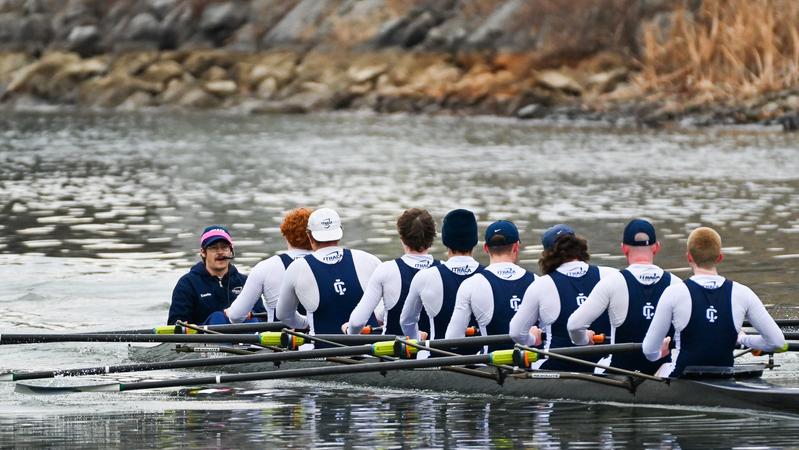
ITHACA, N.Y. – Ten members of the Ithaca College men’s rowing team have been named Empacher-IRCA Scholar Athletes, as announced by the Intercollegiate Rowing Coaches Association (IRCA) on Wednesday, June 18.
Marshall Adams, Caroline Grass, Wesley Hoglin, Cameron Strong, Ashan Anthonisz-Chandrasena, Sami Smith, Brodie Hart, Caleb Grassi, Riley Maynard and Nico Greenberg were all honored by the organization.
“I am incredibly proud of these ten Scholar-Athletes and their commitment to academic excellence alongside athletic success,” said head coach Justin Stangel. “These honors are a testament to the hard work, focus, and determination our student-athletes bring to every part of their college experience. These scholar-athletes continue to lead by example in the classroom, and their achievements are well deserved.”
In order to be named a “scholar athlete”, rowers and coxswains must have met the following criteria:
- Athletes from all IRCA Member Schools are eligible
- Athletes must be in second year or more of eligibility
- Athletes must have competed in your program’s top 3 boats during the current season or raced at the 2025 IRA Championship












It’s been a really good year to be a sports fan in Philadelphia. The Phillies saw the playoffs (again), the Union had the best record in soccer, the Sixers drafted a superstar, the Flyers are finally playing well, and the Birds won the big one (again).
Loyal sports fans know the truth. Philadelphia is the best sports city in the world. Full stop. Less known: Part of what makes Philadelphia’s sports scene so spectacular is our teams’ commitment to using their station in life to do good and give back.
Below are just some of Philadelphia’s champions both on and off the field. Whether they’re supporting local youth, standing up for mental healthcare, or spreading their wealth, our athletes, their bosses, and at least one mascot leave a lasting positive mark on Philadelphia. Here’s some of what they did in 2025.
Lane Johnson, Eagles: Mental Health Warrior
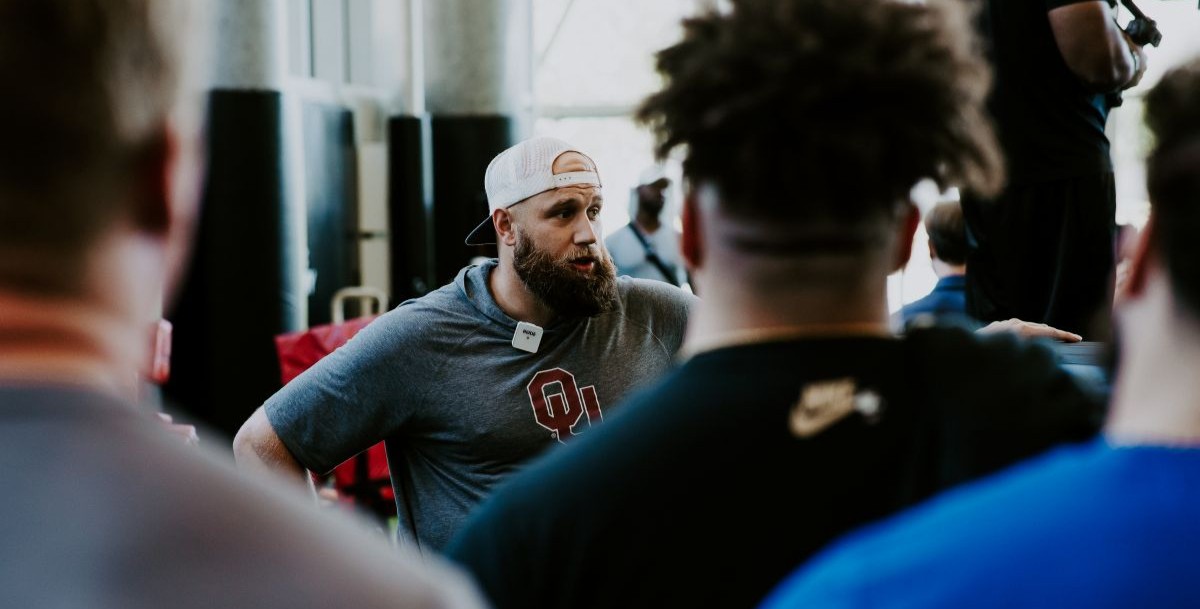
The Birds two-time Super Bowl champion, five-time All-Pro and six-time Pro Bowl O-lineman has been open for over a decade about his struggles with anxiety and depression. This season Johnson began using his voice in The Citizen to spread awareness about caring for mental health, especially in the world of sports, where an estimated 50 to 60 percent of athletes deal with some form of mental distress.
Each week, Johnson spotlights mental health champions and programs in the cities the Birds are playing that week. So far, he’s covered the friends who have helped him along his journey, youth-focused, and his personal mentors.
His motivation? We’ll let Lane take it from here:
It’s really important to me to keep talking about mental health. Other athletes coming forward helped me feel less alone, I want everyone else out there to feel less alone. To see that we’re all more alike than we are different. To understand that there are only so many things in life we can control — and that’s where we should use our energy.
Johnson is also an outspoken advocate — from his actions to his custom cleats on “My Cause My Cleats” day, for the Travis Manion Foundation, a local organization that supports veterans and the families of fallen soldiers.
Jalen Hurts, Eagles: Citizen of the Year
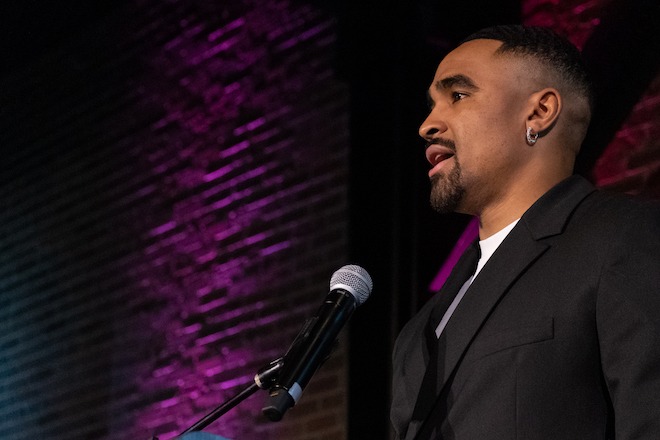
It was a no-brainer to name Jalen Hurts The Citizen’s 2025 Citizen of the Year. The Eagles quarterback gives back to Philadelphia in profound ways — and we’re not just talking about his MVP-deserving Super Bowl performance this February.
For the 2024-25 football season, Hurts through his foundation donated $5,000 for every touchdown he made to keep Philadelphia schools cool during the hot summer months. Through the “Keep It Cool” initiative, he was able to send $170,000 to Philly schools to purchase and to install air conditioners in schools around the district. That’s 34 touchdowns if you’re keeping count.
For this year’s My Cause, My Cleats, Hurts chose to champion the Children’s Hospital of Pennsylvania for the second year in a row. For help designing the cleat, Hurts visited patients at the hospital to get their suggestions. Cue wholesome content. Those very same cleats are now up for auction with all proceeds going to CHOP. The bid is currently at $5,000, with three months left of the auction. Put your bid in here.
A natural at giving a rousing sideline pep talk, the speech Hurts gave at our 2025 Citizen of the Year Awards was a thoughtful call to action for each Philadelphian to help each other out. Get inspired by watching it here.
Kyle Schwarber, Phillies: Designated Do-Gooder
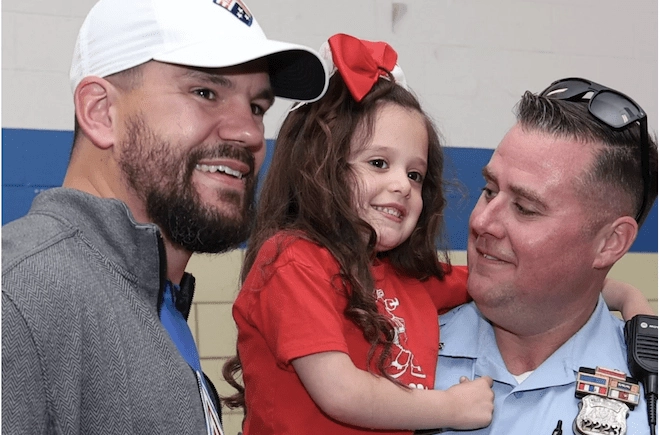
Every Phillies fan’s holiday wish came early when the Phillies announced they’ve settled on a 5-year contract with three-time All-Star Kyle Schwarber. The $150 million deal includes a rare philanthropic clause which has Schwarber donating $150,000 per year — $750,000 — in total from his salary directly to Phillies charities.
Looks like all those times Phillies’ fans chanted “Pay the man!” at Citizens Bank Park this year worked out in everyone’s favor.
Schwarber has a storied history of supporting public safety personnel. This summer, he, through Schwarber’s Neighborhood Heroes, hosted his annual block party at Yards Brewing Co. to benefit first responders and military families. Since 2017, Schwarb’s org has donated more than $770,000 in grants to public safety nonprofits.
The Philadelphia Sports Writers Association recognized Schwarber with their 2025 Ed Snider Humanitarian of the Year Award. Also this year: The Schwarbomber became the second Phillies player to ever reach 50+ home runs in a single season.
A.J. Brown, Eagles: The Giving Receiver
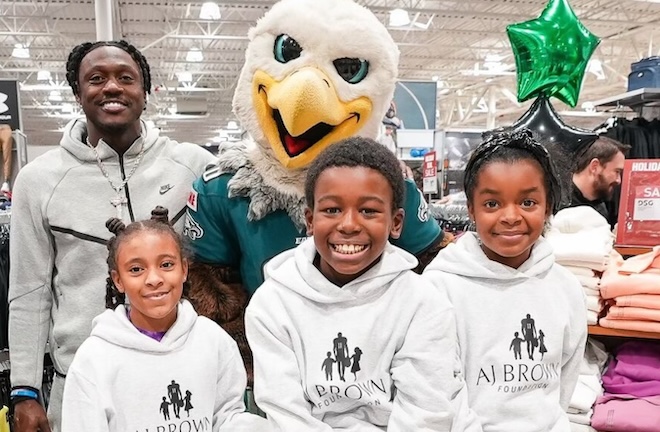
Our star wide receiver’s nickname “Always Open” might not mean to, but it applies to A.J. Brown’s willingness to help local kids.
A.J. Brown launched his foundation in 2024 “to create pathways for youth to build resilience, confidence, and a brighter future. Through programs and support focused on empowerment and opportunity, they help young people believe in themselves, push through challenges, and see success as something within reach.”
How’s he done it? By donating 100 bicycles and helmets to kids in Southwest Philadelphia. Paying for groceries trips for families in New Jersey. Visiting Boys Latin to give students backpacks, school supplies and back-to-school cuts.
Like Lane Johnson, Brown has been open about his own mental health struggles and advocated for mental health awareness. Proceeds from his “Check On Your Teammates” clothing collection go toward mental health research. This May, Mayor Cherelle Parker bestowed the first ever ‘Making a Better Philly Changemaker Award’ on our #11.
Aaron Nola, Phillies: ALS Advocate
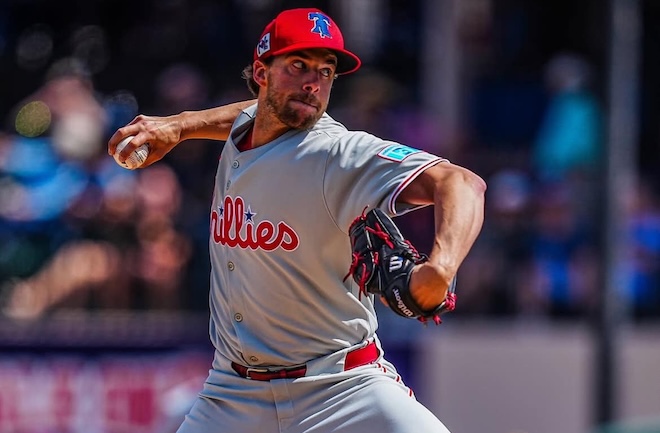
Back when this Phillies ace was a rookie, he met up with reps from the ALS Association during a team visit. The brief meeting deeply impacted Nola, whose uncle, Alan Andries, was diagnosed with ALS in 2015.
Since then, the veteran pitcher has been an advocate for people with ALS, raising $250,000 for ALS research with Strike Out ALS bowling tournaments nationwide. In 2025, the MLB’s charitable arm, Players Trust, recognized Phillies pitcher Aaron Nola as 2025’s Philanthropist of the Year for his work with ALS and his work supporting veterans with the nonprofit Team Red, White and Blue, who benefited from his $1,000-per-strikeout promise last year, to the tune of nearly $200,000.
“We’re human beings longer than we are baseball players,” he said upon receiving the honor.
Garnet Hathaway, Flyers: Hath’s Heroes
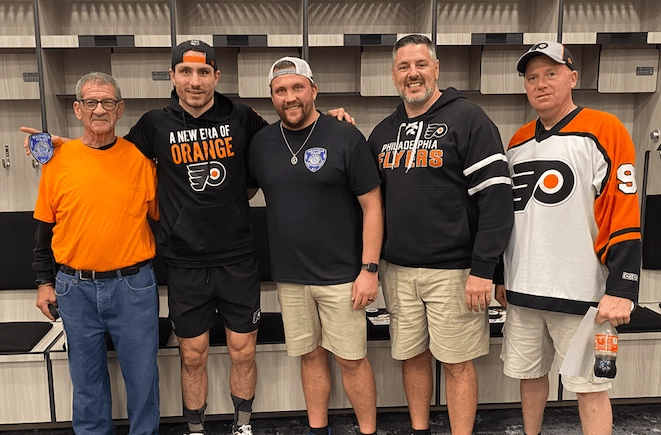
Forward Garnet Hathaway and his wife Lindsay started their nonprofit Hath’s Heroes in 2019 to benefit first responders. Last year, they teamed up with Flyers Charities on the campaign Hits for Hath’s Heroes, which raised $30,000 for Families Behind the Badge Children’s Foundation, a nonprofit that helps connect first responders with mental health resources.
This year, he partnered with Dogfish Head brewery to create a limited edition IPA, Engine 19, whose sales will go to his namesake charity. Of course, the beer is Flyers orange.
Tyrese Maxey, Sixers: Here with the Assist
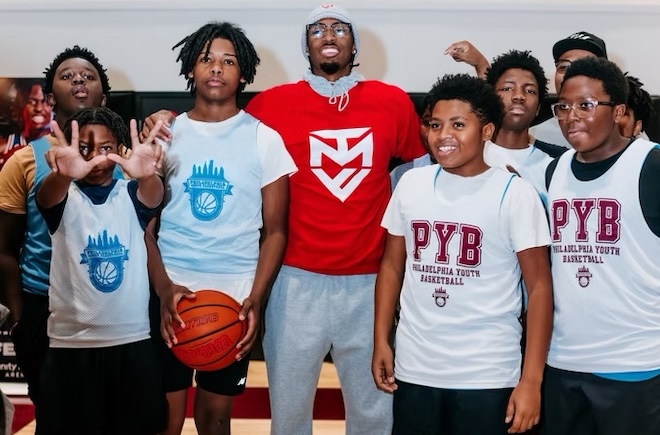
Everyone’s favorite point guard founded his namesake foundation in 2021 to support young people and their families through education, athletics and community initiatives. This year, Maxey hosted a night of giving dinner, celebrity golf tournament and basketball skills camp for 7-to-12-year-olds. No word on whether part of those skills involved using a can opener.
Maxey is also the team’s top contributor to Assists for Safe Communities, a collaboration between the Sixers and Penn Medicine, that donates $76 to grassroots violence prevention programs in Philly for every assist the team gets on the court. (He leads the team in assists.) The initiative raised $144,476 last year, contributing to: Design FC, Free All Minds Academy, Level Up Philly, Open Door Abuse Awareness Prevention, Ordinarie Heroes, and The Apologues.
Jeffrey Lurie, Eagles: A Champion for the Autism Community
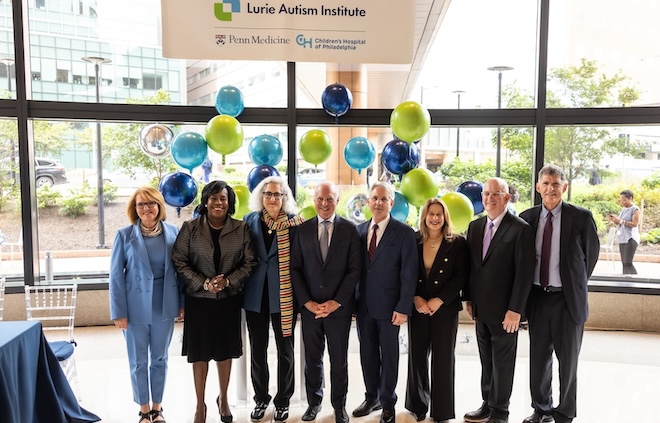
This year, the Eagles owner donated $50 million — “largest single donation to U.S. academic medical centers focused on autism research across the lifespan,” according to Penn — to Children’s Hospital of Philadelphia and Penn Medicine to develop the Lurie Autism Institute for research into and development of innovative treatments for autism spectrum disorder.
The center expands on Lurie’s commitment to supporting individuals affected by autism. He’s overseen the Eagles’ Autism Foundation since 2018 — and since donated more than $40 million to autism research and support. Under his leadership, the Birds became the NFL’s first team to have a sensory experience room in its stadium. No coincidence Eagles mascot Swoop regularly wears headphones.
John Middleton, Phillies: Art Collector Turned Art Sharer
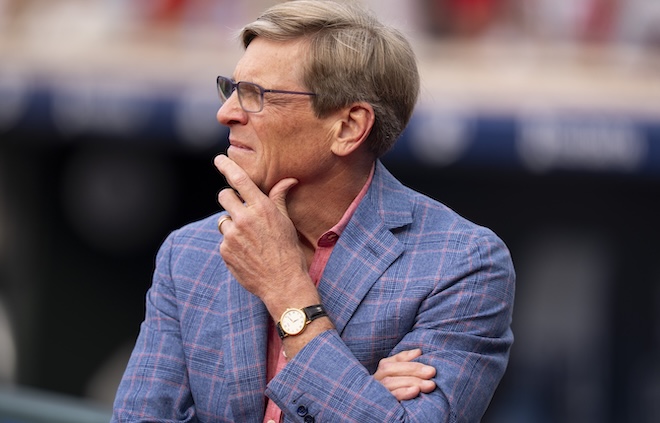
The Philadelphia Phillies owner isn’t just a collector of All-Star-worthy baseball players. For the past 50 years, the scion of a family cigar fortune has collected fine 19th and 20th century American art — and, in the process, earned status as one of the world’s top 200 art collectors.
Until now, the Middleton Family Collection has been very private. That changes April of next year, when both the Philadelphia Art Museum and the Pennsylvania Academy of Fine Art will display a groundbreakingly expansive — 1,000 works! — exhibition entitled Nation of Artists. Will Jasper Johns’ Flag, which Middleton is rumored to have purchased for $28.6 million, be there? Only one way to find out: Check out the self-funded exhibition — which opens a few days after the Phils season starts.
Honorable Mention: Gritty, Flyers — Calendar Model … For Good
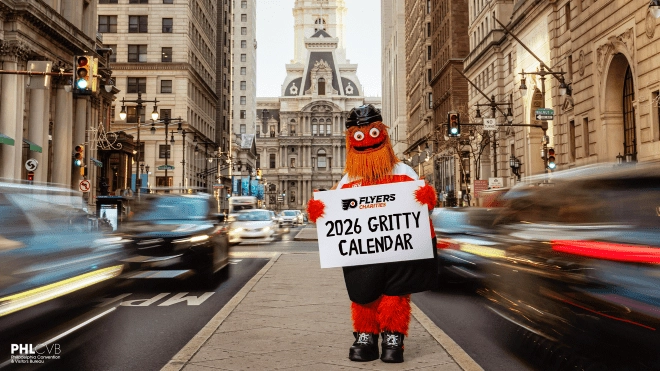
Less an athlete and more a Philly’s very own deity, the delightfully weird goggly-eyed orange fuzzball with a cult following posed for his very own calendar to be there with you every step of the way in 2026. Each month features a photo of Gritty at Philadelphia landmarks — wearing costumes to boot — alongside handwritten notes from the legend himself.
All proceeds from calendar sales go to Flyers charities, dedicated to two main causes: eliminating financial barriers to hockey, a notoriously expensive sport, and aiding local families affected by cancer.
 MORE SPORTS COVERAGE FROM THE CITIZEN
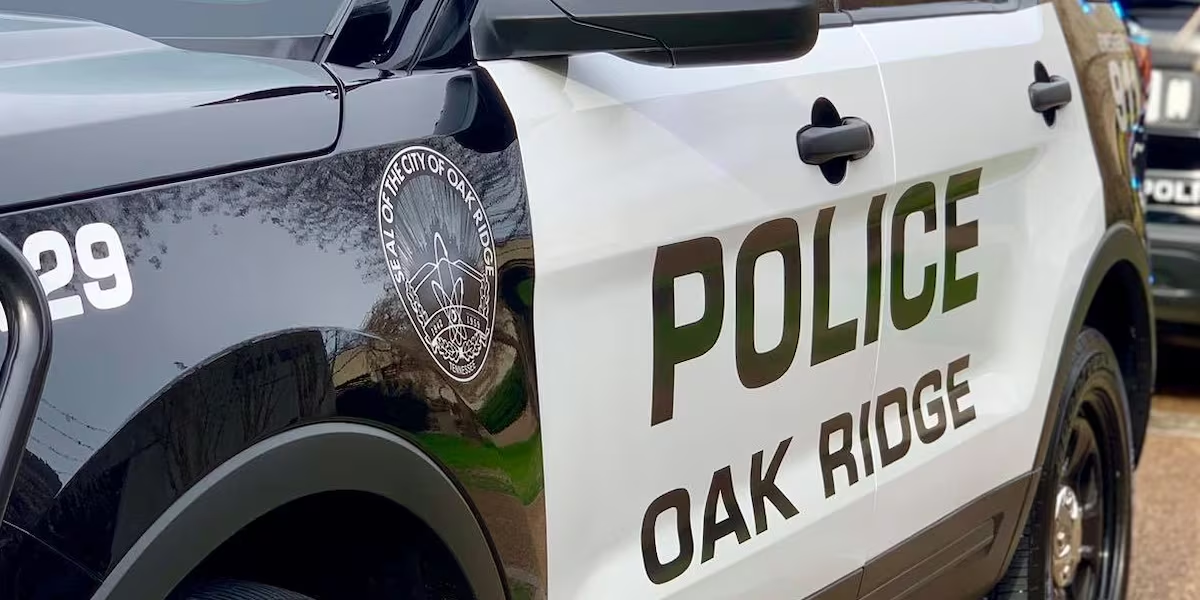
OAK RIDGE, Tenn. (WVLT) – The Oak Ridge Police Department is investigating the death of a two-year-old boy.
On Dec. 16, officers responded to a report of an unconscious child at a home in Oak Ridge, according to a city spokesperson.
The child, identified as Gabriel Adam Mitchell, was taken to Methodist Medical Center and later pronounced dead, officials said.

The investigation remains ongoing, officials said, adding that ORPD is waiting for autopsy results to determine a cause of death.
Additional information was not released.
Copyright 2025 WVLT. All rights reserved.

(WLUK) – Although the snow diminished early Monday morning across our area, Winter Storm Diego is making the morning commute a little tricky.
FOX 11’s Savannah Wood is in the FOX 11 Storm Chaser to check out road conditions amid Winter Storm Diego.
Very strong winds are expected to pickup, with blowing and drifting snow becoming a major concern.
The FOX 11 Storm Chaser is out in Winter Storm Diego, December 29, 2025. (WLUK)
Most of our area’s main roads are partially covered in snow, while some roads, especially to the north, are completely snow covered.
The FOX 11 Storm Chaser is out in Winter Storm Diego, December 29, 2025. (WLUK)
JOIN THE CONVERSATION (2)
Here’s the latest forecast from FOX 11. Watch Good Day Wisconsin and FOX 11 News at Five, Nine and Ten for continuing coverage.

MODIFIED/JAYVEE/COED LEAGUE
Chase Card’s five goals sent the Thunderbirds to a 7-6 victory over the Green Goblins.
Brody Moore and Mackenna Boozer collected a goal apiece for the winners.
For the Green Goblins, Tyson Anderson tallied a hat trick, Gabriel Guerrero added two goals and Aiden Sadjak had one.
— — —
C.J. Archer tallied three goals, and Jackson Warner, Ashton Carrington and Brody VanGuilder each had one as the Dragons downed the Golden Cougars 6-1.
A.J. Stewart collected the lone goal for the Golden Cougars.
— — —
Preston Eccles’ five goals highlighted the Cardinals’ 5-0 win over Falconer.
Laden Wojtowicz and Myles Harrison both added a goal for the winners.
— — —
Michael Montalbano scored six goals and Bentley Huber added a hat trick as U-Knighted Wolverines defeated Goalie Locks 14-2
Amare Davis added two goals, and Dominick Olmstead, Leo Olmstead and Cole Bouquin all had one.
For Goalie Locks, Terry Davis and Rhodes Haluska each had one.
— — —
The Eagles trimmed Queens 2-1 as Travis Horvath tallied both goals.
Keira Cressley had the lone goal for Queens.
— — —
Zane Getner scored four goals and Owin Reams and Hunter Vanderhoof both had three as the Kings blanked the Fireball Flyers 16-0.
Noah Caldwell and Ridgley collected two goals apiece, while Karson Fredeers and Macon Gentz each had one.
GIRLS VARSITY
Falconer/Cassadaga Valley/Maple Grove shut out Pine Valley 8-0.
Giada Schauman scored two goals, and Mackenzie Keeler, Kylie Kress, Madilyn Seastrum, Lily McPherson, Sydnee Snow and Kenley Lincoln tallied once each.
— — —
Gianna Bowles collected four goals, Serena Smith had three and Elia Monroe chipped in two to lead Randolph past Warren 9-5.
Grace Wilkins and Lani Wenzel both had two goals and Adalena Schmidt added one for Warren.
— — —
Grace Wilkins recorded a hat trick and Madalynn Sliter added one to spark Warren to a 4-1 win over Eisenhower.
Rosalie Rondeau registered the lone goal for Eisenhower.
BOYS VARSITY
Westfield defeated Pine Valley 8-1, behind two goals apiece from Parker Gambino, Mike Clark and Avery Peterson.
Jack Bralton and Dawsen Gambino both chipped in a goal to the winning effort.
Andres Morillas had the lone goal for Pine Valley.
— — —
Brady Dobek scored five goals to highlight Dunkirk’s 10-3 win over Warren.
Lucas Felt added two goals, while Jaxson Cooper, Erick Millan and Jaryel Vazquez each had one for the winners.
For Warren, Mason Warner scored twice and Tim Giger once.
— — —
Warren knocked off Chautauqua 10-8.
For the winners, Tim Giger scored four goals, Mason Warner added three, and Bill Bennett, Reilly Morgan and Logan Ristau all had one.
Travis Horvath scored four goals, and Lucas Horvath and Landon DeAnthony added two apiece.
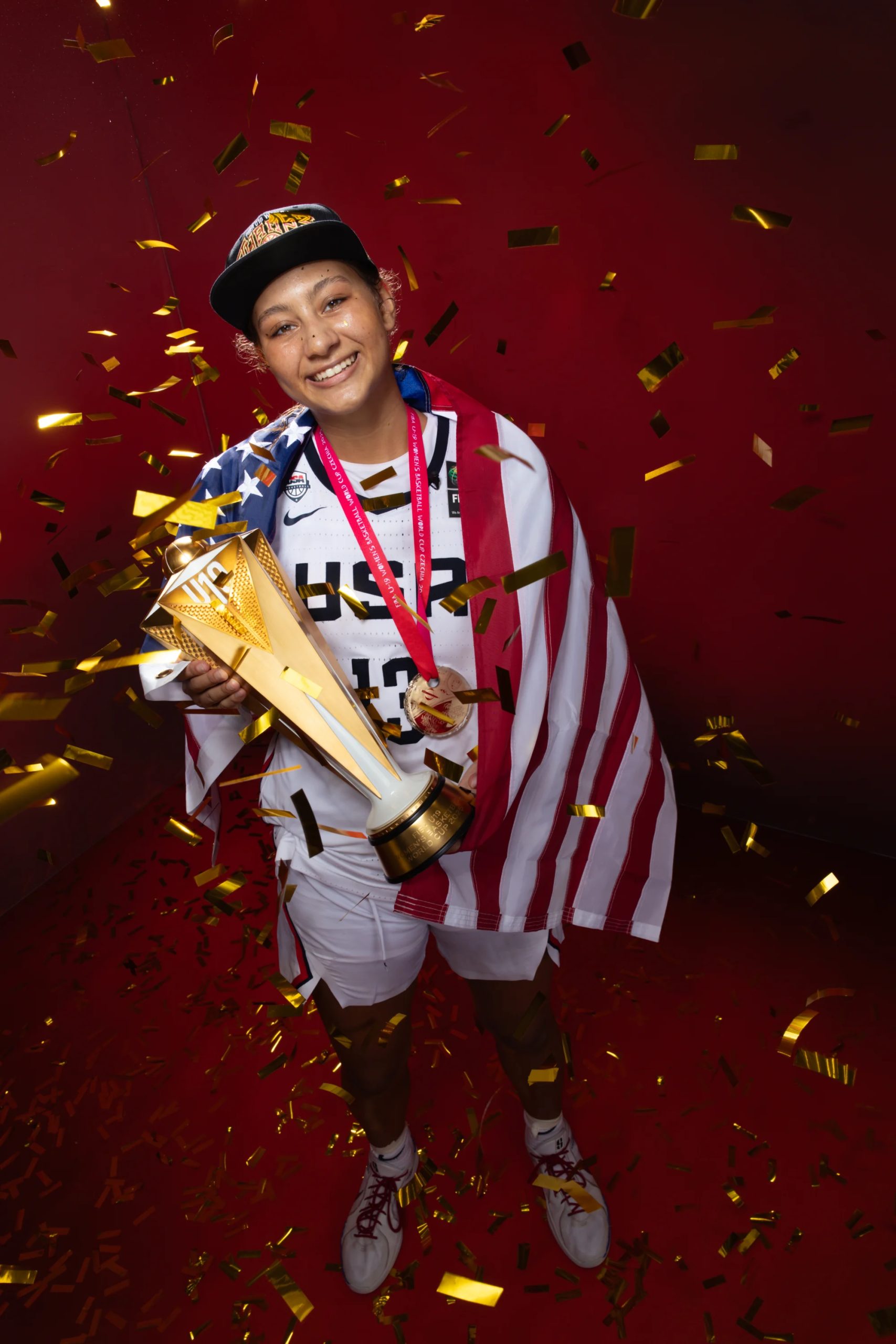
MIES (Switzerland) – Poise has become a defining trait of Sienna Betts’ rise on the international stage.
Highly rated before she ever suited up for USA at global level this year at the FIBA U19 Women’s Basketball World Cup, Betts has approached each opportunity with a calm assurance that has translated into impact well beyond the box score. Rather than chasing individual numbers, she has embraced the demands of playing within one of the deepest rosters in youth basketball.
“
I am thinking about the amazing USA players who have worn these numbers before
“It’s just amazing to be part of the USA U19 Women’s Basketball legacy,” Betts said earlier this year in Brno. “I am thinking about the amazing USA players who have worn these numbers before as we try to now add to that history.”
That sense of responsibility has been evident in how she plays. Betts has controlled the paint through efficient scoring, strong rebounding and disciplined defense, while remaining composed when defenses collapse around her.
“It is great to see how we compare against people that we don’t get to see much in competition,” she added. “You really learn a lot about yourself in these games.”
Team-first impact
In a system built on balance and depth, Betts has focused on doing what the team needs most – whether that means finishing plays inside, protecting the rim, or making the extra pass when double teams arrive.
Betts was excited to hopefully win the title and have some great memories in Brno with all of her friends and teammates. And that’s exactly what they did.
“We’re all really, really close,” she said.
That mindset has allowed her influence to extend across both ends of the floor, reinforcing why she is viewed as one of the most complete post prospects of her generation.
A family connection to the game
Basketball has always been central to Betts’ life. Her older sister, Lauren Betts, previously won gold at the same age group, while their family’s shared passion continues to shape their journeys.
Lauren won gold in Debrecen four years ago
“It’s a very common topic for us – basketball connects us all,” Betts explained. “We’re really, really lucky to have that, and to be able to talk about all our different things.”
That bond is strengthened by healthy competition.
“We’re all very competitive too, so it always ends up being about who’s best at this and who’s best at that,” she laughed. “But at the end of the day, we’re very supportive of each other.”
Looking ahead
The next chapter has seen Sienna line up alongside her sister at UCLA. After recovering from an injury, Sienna made her collegiate debut on December 17 and scored 5 points against Cal Poly. Her next game, she reached double-digits and scored 14 points against Long Beach State.
Just before the New Year, she recorded 5 points and 4 boards in an important win against Ohio State.
Her approach remains unchanged – grounded in legacy, relationships and the pursuit of collective success.
Calm under pressure and clear in purpose, Sienna Betts continues to show that she is not just built for the moment, but for what comes next in the international game.
You might like this:
Sienna Betts’ brilliance in Brno: a portrait of poise and power
FIBA
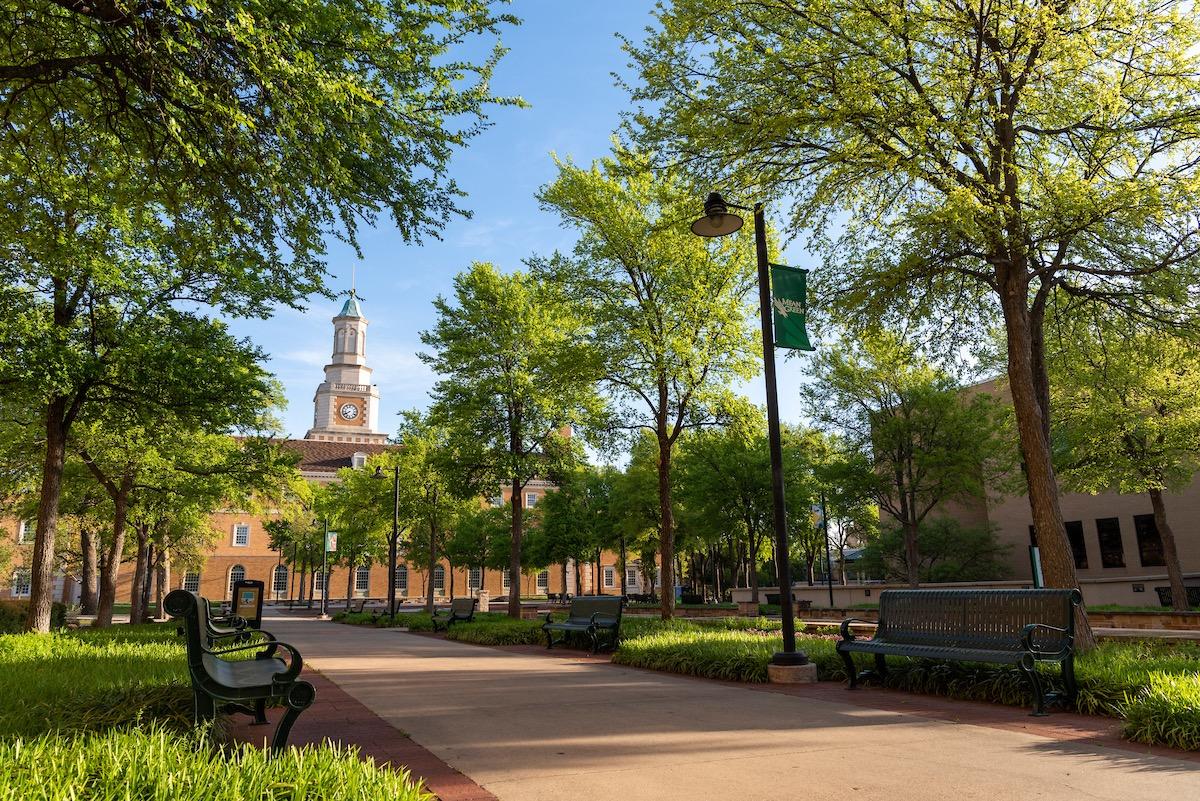
For the first time ever all 14 athletic programs earned a semester G.P.A. above a 3.150. Six teams earned their highest semester G.P.A. in their respective program’s history and four others achieved their second highest semester G.P.A. in their program’s history.
This marked the 13th consecutive semester of a 3.0 or better department wide grade point average and the seventh consecutive semester that UNT improved on the previous semester’s departmental G.P.A.
“The Fall 2025 semester was an outstanding one for Mean Green Athletics in the classroom,” said UNT VP/Director of Athletics Jared Mosley. “Our student-athletes continue to demonstrate a commitment to academic excellence, and their success is a direct reflection of the support and expectations we have in place. I want to thank our academic services team, led by Suzanne Dickenson, for their leadership and dedication in supporting our student-athletes and helping them reach their full potential both on the field and in the classroom.”
For the sixth consecutive semester the UNT women’s golf team led the way for the department as they earned a 3.907 fall semester G.P.A.
The Mean Green tennis team has now recorded a team G.P.A. of 3.0 or better for 28 consecutive semesters. The UNT soccer team and swim and dive team have both also maintained streaks of 20-plus consecutive semesters with a team G.P.A. above a 3.0.
Fifty-two UNT student-athletes this past fall earned a 4.0 grade point average. The Mean Green women’s track team led the way as they had 11 student-athletes named to the prestigious 2025 Fall President’s List. The tennis team had the highest percentage of student-athletes earning President’s List honors as 72% of its roster had a 4.0 G.P.A.
The UNT men’s basketball, men’s cross country, men’s track and field, women’s basketball, women’s cross country and women’s track and field teams all earned their highest semester G.P.A.s in program history.
Lastly, 47 UNT student-athletes earned their diplomas this past fall.

Philly Athletes That Gave Back Big in 2025

Oak Ridge police investigating death of 2-year-old boy

FOX 11 Storm Chaser checks out road conditions in Winter Storm Diego

Youth Soccer | News, Sports, Jobs

Built for the moment: Sienna Betts’ rise with USA in 2025

UNT Student-Athletes Boast Record Setting G.P.A.

College Basketball Rankings: Coaches Poll Top 25 updated after Week 8

Petrino’s Friend Found a Workaround to Pay Taylen Green That’s Now Prohibited by NCAA

Mass Exodus at LSU could be big opportunity for Kentucky

Red Raiders arrive for CFP Quarterfinal at the Orange Bowl

Marblehead sports moments of 2025

NIL’s Mercenary March of College Football Athletes

Nevada youth rank last in sports participation. Will rising costs make it worse?

Nevada youth rank last in sports participation

Victims scammed by people posing as members of youth sports team at West Town Mall: KPD

SoundGear Named Entitlement Sponsor of Spears CARS Tour Southwest Opener

Donny Schatz finds new home for 2026, inks full-time deal with CJB Motorsports – InForum

Black Bear Revises Recording Policies After Rulebook Language Surfaces via Lever

Bowl Projections: ESPN predicts 12-team College Football Playoff bracket, full bowl slate after Week 14

Men’s and Women’s Track and Field Release 2026 Indoor Schedule with Opener Slated for December 6 at Home

David Blitzer, Harris Blitzer Sports & Entertainment

How Donald Trump became FIFA’s ‘soccer president’ long before World Cup draw

Michael Jordan’s fight against NASCAR heads to court, could shake up motorsports

Rick Ware Racing switching to Chevrolet for 2026

DeSantis Talks College Football, Calls for Reforms to NIL and Transfer Portal · The Floridian
Elliot and Thuotte Highlight Men’s Indoor Track and Field Season Opener

JR Motorsports Confirms Death Of NASCAR Veteran Michael Annett At Age 39

23 عاما من الفضائح السياسية والجنسية منذ انقلاب حمد بن خليفة.. استغلال الفتيات الصغيرات في الدعارة.. ضبط ابنة رئيس وزراء قطر خلال ممارستها لجنس الجماعي.. ملامح الحكم تتخبط بين المنفي وتدخلات النساء

#11 Volleyball Practices, Then Meets Media Prior to #2 Kentucky Match

Colleges ponying up in support of football coaches, programs





-
 Motorsports3 weeks ago
SoundGear Named Entitlement Sponsor of Spears CARS Tour Southwest Opener
-
 NIL3 weeks ago
DeSantis Talks College Football, Calls for Reforms to NIL and Transfer Portal · The Floridian
-
 Sports2 weeks ago
#11 Volleyball Practices, Then Meets Media Prior to #2 Kentucky Match
-
 Motorsports2 weeks ago
Nascar legal saga ends as 23XI, Front Row secure settlement
-

 Motorsports2 weeks ago
Sunoco to sponsor No. 8 Ganassi Honda IndyCar in multi-year deal
-
 Sports2 weeks ago
Maine wraps up Fall Semester with a win in Black Bear Invitational
-
 Rec Sports2 weeks ago
WNBA’s Caitlin Clark, Angel Reese and Paige Bueckers in NC, making debut for national team at USA camp at Duke
-
Motorsports3 weeks ago
NASCAR, 23XI Racing, Front Row Motorsports announce settlement of US monopoly suit | MLex
-
 Motorsports2 weeks ago
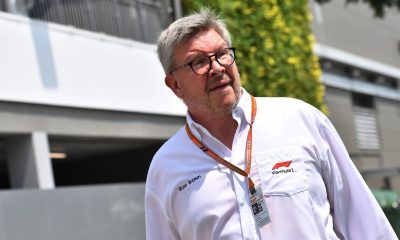
Ross Brawn to receive Autosport Gold Medal Award at 2026 Autosport Awards, Honouring a Lifetime Shaping Modern F1
-

 Sports3 weeks ago
Pinterest predicts the biggest Gen Z trends of 2026 | News