
NIL
Texas women's basketball


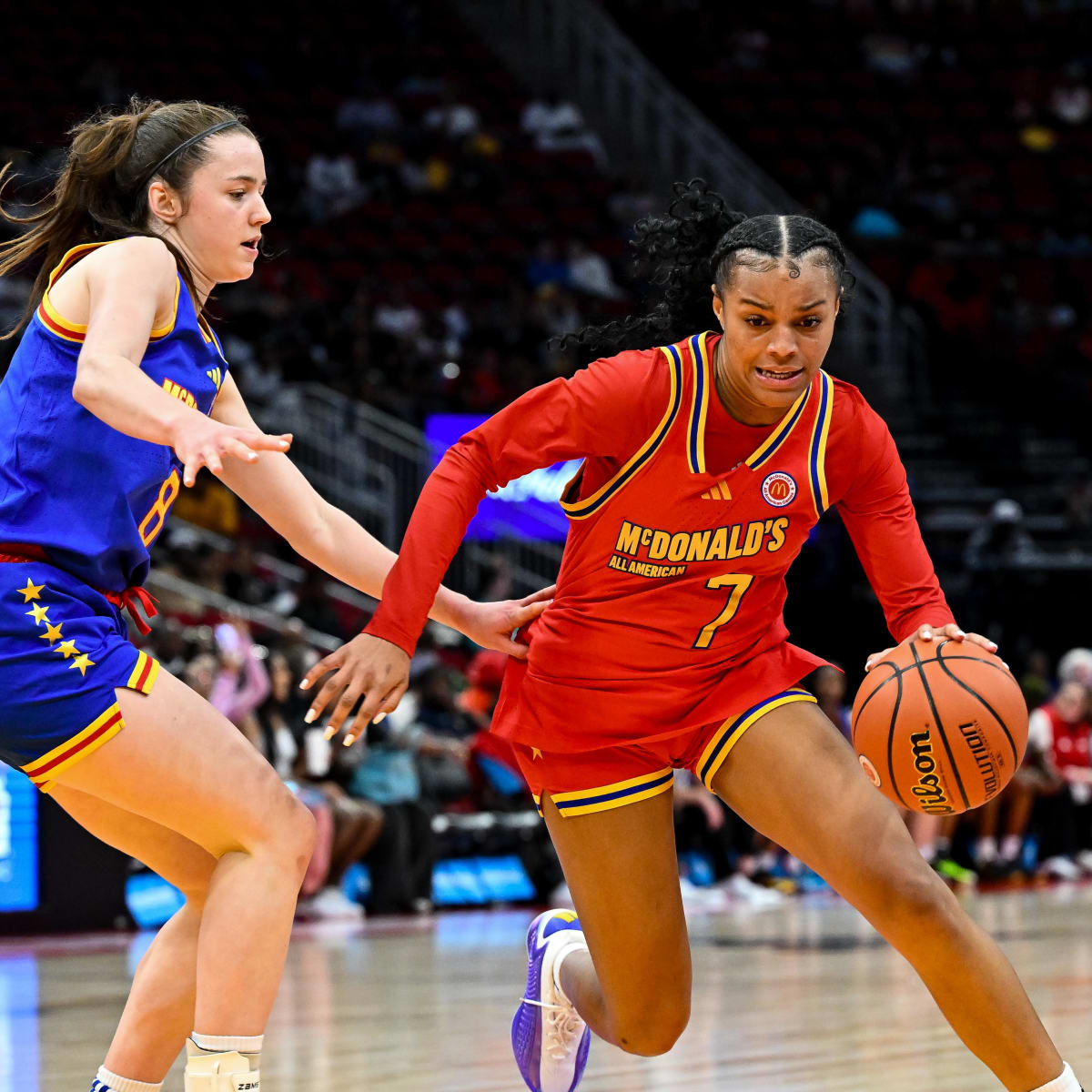
 Classes may not be in session yet for UT, but members of the women’s basketball team are already learning during summer workouts. That much is evident, based on a media availability with the team’s newest players Wednesday.
The Longhorns are coming off a historic 35-4 season in their SEC debut, being named regular season co-champions with South Carolina and making their first Final Four appearance since 2003.
Texas graduated guard Shay Holle, and forwards Taylor Jones and Aaliyah Moore. But a fair amount of players entered the transfer portal including Laila Phaelia, Jordana Codio, Ndjakalenga Mwenentanda and Abbie Boutilier.

As a result, head coach Vic Schaefer went to work in the transfer portal, adding forwards Ashton Judd from Missouri and Teya Sidberry from Boston College.
“We kind of struggled the past couple of years at Mizzou, so that was a big thing for me… I wanted to be part of that winning culture,” Judd said Wednesday morning.
Why Ashton Judd went from Tigers to Longhorns
As a Tiger, Judd did not have the chance to see any postseason action; Missouri’s best record during her time in Columbia, Mo,. was her freshman year, 2022-23, at 18-14. Missouri went 11-19 and 14-18, her sophomore and junior year, respectively.
Last season, Missouri played Texas on the road and the Tigers lost 70-61. Judd, who scored 13 and grabbed 4 rebounds in the game, witnessed the competitive culture at Texas up close and it drew her in.
“Being able to see what they were about in person was just another aspect as to why I wanted to come here,” Judd said.At Missouri, Judd averaged 11.6 points and 5.0 rebounds per game. She finished the year third on the team in points (371), second in rebounds (159) and fourth in free throw percentage (.743). 
Teya Sidberry gives Texas some grit
Judd led Missouri in defensive rebounding last season with 122 boards and the more defensive rebounds a team has, the more chances they can score on offense. But Judd will have some competition for a spot in the post.
“I love the fourth spot and kind of being able to get in and get those boards,” said Sidberry.
The Boston College transfer was ranked No. 12 in the ACC in rebounding with 231 on the season. She has 545 rebounds over three seasons at Boston College and her first stop, Utah.
“I would describe my playing style as gritty and other synonyms for gritty and energetic,” Sidberry said with a laugh.
The Utah native said she canceled planned trips to Notre Dame and North Carolina State because she loved Texas when she visited and loved the competitive environment. She saw how well they played in the NCAA Tournament, but the visit sealed the decision.
“I love the grit that I saw when they played and just going after it in the tournament and the fast pace… that’s what I loved about Texas,” she said.
Both Judd and Sidberry are adjusting well to their time on campus and starting to build chemistry with their teammates, they said. After being on teams with losing seasons that past year, they are looking forward to what comes next.
“I didn’t have the most winning season last year so I am just excited to be on a team that everybody’s goal is to win,” Sidberry said. Boston College finished 16-18 and were bounced in the first round of the WNIT.
Only time will tell to see who will be in the four spot and the answer will be seen when the season opens.
Follow the American-Statesman on Facebook and X for more. Your subscription makes work like this possible. Access all of our best content with this tremendous offer.


When NIL first became the way of the land in college athletics, it was meant to be a way for athletes to get a slice of the money that already existed. Coaches, administrators, and other executives were making big money, so why couldn’t the athletes who were the ones actually playing the sport?
In that regard, nobody is going to fault players like DJ Lagway for making millions during his time with the Florida Gators.
But it is how that money had to be raised and what fans were gaslit into believing that also highlight the folly of how the NIL Era in college football has been going.
DJ Lagway set to hit the transfer portal
Lagway’s camp wanted to make it clear that his departure from Gainsville isn’t over money. Whether or not that is actually true, there is a good chance that in the pre-NIL Era, Lagway would still be a Gator heading into next season. If all Lagway cost was a scholarship spot, Jon Sumrall would probably be more apt to keep Lagway around. After a poor 2025 season, we can also understand why Florida’s new staff would be hesitant to invest real resources in Lagway that could go toward other parts of the roster.
But this tale isn’t just about the money that will be spent going forward; it is also about the money already spent and what happens when one doesn’t get a return on investment.
There are no official NIL numbers publicly available, but it is believed Lagway made between $3 and $4 million in 2025.
Some of that came from sponsorship deals like Jordan Brand, Gatorade, Epic Games, and others. But another chunk of money came from whatever deal he signed with Florida Victorious, the NIL arm of the Gators, and this is where the college system is broken compared to the professional system.
If Lagway were an NFL QB and flamed out, it would be annoying, but it wouldn’t be the fans left feeling empty-handed. The money spent on NFL contracts is coming from the natural revenues the league collects, and fans aren’t asked to donate extra money that goes directly to contracts.
But in this first phase of the NIL Era, when teams couldn’t directly share revenue with players, it was the fans who were constantly bombarded with messages to give extra money to Florida to acquire and retain players. The underlying message was “Hey now, if you don’t give more money, some other fanbase will, and they will take DJ Lagway from Florida.”
Some fans might have signed up for the $10 a month plan. Others may have felt compelled to give more. Nobody, however, probably feels like their money was money well spent after this 2025 season.
And that really is the frustration for most fans, where they are gaslighted to believe things won’t get better without giving even more money, but aren’t given any kind of solace when that money gets covered in gasoline and burns up in flames.
So as Florida fans await the next QB to come to town on whatever NIL deal he will be on, Lagway’s journey is a reminder that there is no such thing as a sure investment in the world of college football.

Florida Gators quarterback DJ Lagway is officially set to enter the transfer portal following a tumultuous 4-8 season in Gainesville. The former five-star recruit announced his intentions on Monday, just days after the university parted ways with head coach Billy Napier. Lagway, who will likely be the top transfer portal player in the country, departs with two years of eligibility remaining and a desire to join a program that can better utilize his skill set.
The decision comes amid a significant transition for the Florida program. The Gators recently hired Tulane Green Wave head coach Jon Sumrall to lead the team, along with Georgia Tech Yellow Jackets offensive coordinator Buster Faulkner.
Despite the fresh leadership, Lagway informed the new staff of his departure before publicly announcing his move. His exit marks the end of a two-year stint where he threw for over 4,000 yards but struggled with consistency, recording 14 interceptions in his sophomore campaign.
Recruiting analysts have already begun identifying potential destinations for the talented signal-caller. On the Wiltfong Whiparound, On3 analyst Steve Wiltfong and host Josh Newberg discussed the Lagway sweepstakes.
While Lagway’s high school suitors, such as Texas A&M Aggies and USC Trojans, were once heavily involved, the landscape has shifted. The focus now turns to programs with a proven history of developing transfer quarterbacks into NFL prospects.
Steve Wiltfong Identifies LSU And Miami As Top Contenders
According to Wiltfong, the recruitment battle may center on two premier programs with offensive-minded head coaches: the LSU Tigers and Miami Hurricanes. These schools, along with the Baylor Bears, have emerged as the primary teams to watch.
“Our colleague Pete Nakos reported three schools to keep an eye on for DJ Lagway: LSU, Miami and Baylor,” Wiltfong said.
“Lagway’s father played his college football at Baylor. It’s a home-state school. But if you look at DJ Lagway’s high school recruitment, he bet on Florida, bet on himself to help turn the Gators around. I think this time around he makes a decision based on the situation that’s going to put him in the best position to blossom as a player.”

The connection to LSU is driven by head coach Lane Kiffin. Kiffin has a reputation for revitalizing quarterback careers, most notably with Jaxson Dart at the Ole Miss Rebels.
“You look at Lane Kiffin and what he was able to do at Ole Miss, developing a transfer in Jaxson Dart to a first-round draft pick out of USC,” Wiltfong said. “That is something that would be very exciting for DJ Lagway to look at.”
Miami offers a similar appeal under its current leadership. The Hurricanes have successfully integrated high-profile transfers like Cam Ward and Carson Beck, turning them into top-tier passers.

“In Miami, similar track record,” Wiltfong said. “You take a guy like Cam Ward, transferred multiple times, finished his career at Miami, plug-and-play, ultimately develops into the number one pick in the NFL Draft. Carson Beck, this year coming over from Georgia, tops the ACC in many categories, including quarterback rating. Both of those situations are advantageous to me if you’re any transfer quarterback.”
Lagway will officially be eligible to sign with a new program when the transfer portal window opens on Jan. 2.
Read more on College Football HQ

Before Kentucky tipped off against Indiana on Saturday night, Mitch Barnhart addressed the growing conversation surrounding NIL at UK Athletics, with much of the focus centered on basketball and the program’s lack of commitment in the 2026 recruiting class.
Barnhart emphasized that Kentucky’s NIL model is built around long-standing partnerships that help fund everything from travel to daily operational costs, noting that those relationships matter when opportunities are presented to student-athletes.
“We’ve got some incredibly strong Kentucky partners in our network,” Barnhart said. “We do ask that we look at that and say, hey, is there a space for them to be able to work with our partners first?”
At the same time, Barnhart pushed back on the idea that athletes are restricted. He made it clear that while UK encourages players to work with in-house partners, they are free to pursue outside opportunities if those relationships don’t fit.
“There is no one-size-fits-all,” Barnhart said. “If that doesn’t work and they want to go do some other things, they absolutely have the opportunity to do that.”
Barnhart also addressed criticism tied to JMI and Kentucky’s NIL structure, saying it provides no incentive to limit competitiveness.
“Why in the world would we do anything other than give ourselves the best chance to win?” he said, adding that many programs nationwide operate in similar ways.
Late in the interview, Barnhart acknowledged the outside noise surrounding UK basketball and admitted results matter.
“We’ve got some teams doing that incredibly well,” he said. “We’ve got a couple that are struggling, and we’ve got to get them going.”
Let’s hope they can get things going and see an uptick in basketball recruiting.

ANN ARBOR, Mich. – The Michigan Wolverines football program has been in the news lately following the recent firing and arrest of former head coach Sherrone Moore.
Moore’s incident spread nationally, giving the University of Michigan unwanted press.
For some, the best time to kick a person is when they are down, as President Donald Trump appeared to take a jab at the football program while discussing NIL.
Trump strongly criticized name, image, and likeness (NIL) deals in college sports, calling the current state a “disaster.”
He criticized the large sums paid to college athletes, particularly in football, saying colleges cannot afford to pay quarterbacks millions of dollars straight out of high school.
“You can’t pay a quarterback $14 million to come out of high school. They don’t even know if he’s going to be a very good player,” Trump said.
The high school athlete Trump was allegedly talking about was true freshman quarterback Bryce Underwood.
When Michigan landed the Belleville native, it was reported that he would garner north of $10 million to don the maize and blue.
Trump described the NIL as “horrible for the Olympics” and “actually horrible for the players,” emphasizing that the financial model is unsustainable.
“They were training grounds for the Olympics,” Trump said. “A lot of these sports that were training so well would win gold medals because of it. Those sports don’t exist because they’re putting all their money into football.”
Trump continued: “The most successful colleges are losing money,” Trump said. “It’s a disaster for sports.”
He also warned that basketball and other sports are being affected as colleges funnel money into football.
“They will not be able to stop it,” Trump said. “If we give a guard $7 million, we’re going to win the national championship. But colleges cannot afford to pay those kinds of salaries.”
Trump suggested that a strong salary cap is necessary to prevent colleges from financially wiping themselves out.
“Something ought to be done. I’m willing to put the federal government behind it,” Trump said. “If it’s not done fast, you’re going to wipe out colleges, including ones that do well in football.”
Trump concluded by emphasizing the financial danger colleges face if the NIL system continues unchecked.
“Colleges cannot afford to play this game. It’s a very bad thing that’s happening,” Trump said.
Bryce Underwood
Underwood and the men in maize are gearing up for the Cheez-It Citrus Bowl, where they will take on the Texas Longhorns in Orlando, Florida, on New Year’s Eve at 3 p.m.
Michigan finished the regular season with a 9-3 record, but Underwood, who was named the fourth true freshman in program history to start at quarterback, struggled at times.
Underwood had 2,229 passing yards, nine touchdowns, and six interceptions during his first year as the starter.
He was expected to be the day-one starter since he flopped from LSU and committed to Michigan, but it was expected to be some growing pains as he got used to the college game.
Michigan relied on the rushing attack of Justice Haynes, Jordan Marshall, and Bryson Kuzdzal throughout the season.
But Underwood, who completed 179 of 293 passes, also used his legs, carrying the ball 74 times for 323 yards and five touchdowns.
He seemed to find a top target in fellow true freshman wide receiver Andrew Marsh, who broke out this season as well.
But with the new weapons coming in, in the class of 2026, alongside some transfer portal guys, Michigan, along with their new head coach, should take the next step next season.
Copyright 2025 by WDIV ClickOnDetroit – All rights reserved.

Oregon State University and NIL consulting firm Blueprint Sports have “mutually agreed” to terminate their partnership, two-and-a-half months after a Sportico report on the deal’s terms sparked a wave of backlash from Beavers fans. The effective date of the termination was Dec. 8.
In a statement Monday, an OSU spokesperson said Blueprint would retain a $280,000 management fee the school had already paid for 2025-26, but will cease making payments going forward. The school had previously agreed to pay management fees of $287,500 and $285,225 for the next two academic years.
Blueprint Sports, in turn, has agreed to transfer to the university all net proceeds it collected in its brief tenure serving as OSU’s NIL deal-sourcing facilitator, including 100% of net revenue from memberships and subscriptions it sold. That money will now be routed to the university’s revenue-sharing account, according to the university.
In response to a follow-up question from Sportico, an OSU spokesperson said gross proceeds of NIL funds “may be subject” to a 1.25% contract administration fee provided for in the agreement.
Blueprint CEO Rob Sine did not respond to a text message seeking comment.
The termination will also effectively dismantle the OSU-affiliated Dam Nation Collective, which Blueprint had paid six-figures to acquire as part of the broader arrangement. According to OSU, Dam Nation Collective no longer has any official affiliation with the university.
Monday’s announcement brings an end to one of the more fraught partnerships of the NIL era. Blueprint Sports, which had previously served as an operator and owner of dozens of NIL collectives, has sought to pivot in the post-House v. NCAA era by positioning itself as an on-the-ground consultant.
Sine, who previously worked as an executive at IMG, is attempting to implement a business model familiar in the college multimedia rights arena—where external consultancies establish operations within athletic departments.
In return for its services, Blueprint charged a fee designed to cover the cost of dedicated staffers, along with a share of the NIL revenue it helped generate or processed. The revenue-sharing aspect, first reported by Sportico, became the central point of dispute in Corvallis.
Under the agreement, Blueprint was slated to receive a fundraising bonus equal to the 75% of the NIL revenues it generated between $750,000 and $1.15 million. The school spokesperson confirmed that because the minimum threshold of $750,000 was not reached this year, Blueprint would not receive that bonus.
In May, Blueprint signed Maryland as its first consulting client. Sine later told Sportico the firm’s financial arrangements with the Terrapins were similar to those with Oregon State, although Maryland—at Blueprint’s beckoning—has declined to publicly disclose those details, even in response to open records requests.
Oregon State, which had no previous affiliation with Blueprint, became its second consulting client in August, facilitated in part by the prior connection between OSU executive deputy athletic director Brent Blaylock and the company.
Blaylock previously worked as senior associate athletic director at Arizona, whose primary football collective, Desert Takeover, is operated by Blueprint.
At Oregon State, Blaylock served as the university’s primary point of contact for the Blueprint partnership and, ultimately, became its fall guy, resigning from his post in late October. Even after leaving, he continued to attract scrutiny and suspicion about whether he stood to personally benefit from the arrangement. Last week, the university wrapped up an internal investigation—initiated after an OSU fan podcast raised concerns—into personal LLCs owned by Blaylock and their connection to the Blueprint partnership. The school concluded there was none.
Although sports journalist John Canzano reported in late October that Blueprint and Oregon State were parting ways, neither the school nor company publicly confirmed as much until this week. Last month, Sportico sent a records request to OSU seeking any termination agreements or other documents that would modify the original Blueprint deal; the university said it anticipated providing responsive documents by Wednesday.
While Oregon State now appears set to move forward without an in-house NIL consultant, it remains to be seen whether Blueprint will continue on the same path or pivot again. Last week, the company posted job openings in Texas for a “manager/director of fan engagement & experiences” and a “client services & operations manager,” though the listings did not specify any particular university.
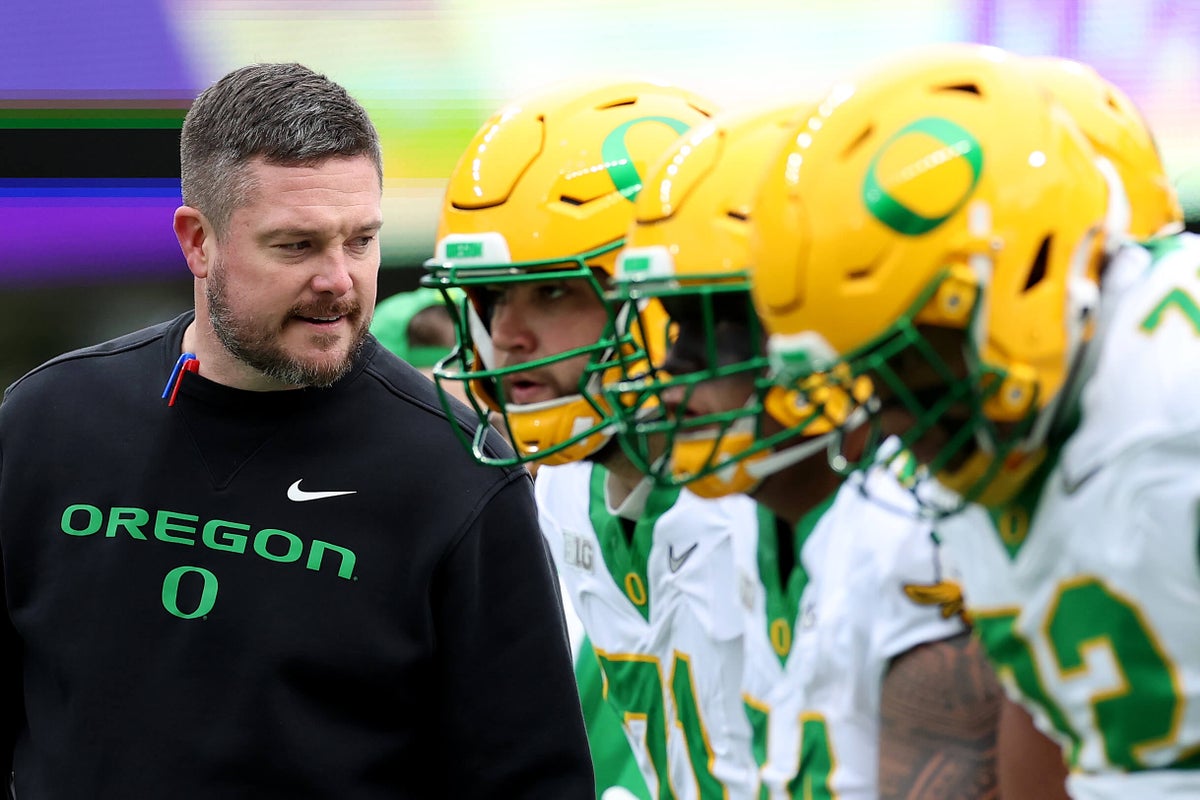
This year’s College Football Playoff reflects the adage that you get what you pay for.
The 12-team field includes the four teams with the largest football budgets, the nation’s two highest-paid coaches and three of the four highest-paid general managers. It also sets up a potential quarterfinal matchup where one head coach makes more than his competitor’s entire recent football budget.
A few standard financial disclaimers: Different programs run their numbers differently. Budgets change yearly, and some figures are murky or missing, especially regarding private schools and NIL. Even with those caveats, we can still get a broad sense of how the 12 CFP contenders stack up against one another financially.
The first-round Texas A&M-Miami game looks even bigger through this lens, doesn’t it?
Texas Tech’s figure is the lowest of the Power 4 teams here but about average in the Big 12; 11 of the conference’s members spent in the $30 million to $40 million range that year.
The gap between Alabama and Tulane is large, but maybe not this large. We’ll make our wonky explanation as brief as possible: We’re using the U.S. Department of Education database because it’s the only tool that includes every public and private school (except service academies). However, reporting lags behind, so the most complete numbers are from 2023-24. Alabama’s figures were exceptionally high that year, and Tulane’s figures were exceptionally low.
Fortunately, the Green Wave and Crimson Tide have both posted more recent federal reports. Alabama reported $78.5 million in expenses in 2024-25. Tulane reported $22.7 million, which was still behind South Florida ($33.4 million) in the American Conference.
Again, Tulane’s figure is abnormally low and ahead of only Kennesaw State ($8.3 million) nationally. But the Green Wave’s most recent report listed football revenue at $24 million. Ohio State’s football income is also much larger ($160.5 million in its latest report).
The No. 1 program was Texas at just north of $200 million. I’m sure that’ll make the Longhorns feel great knowing the Aggies are in the first round. Another rivalry aspect: Indiana ranked one spot below Purdue ($61.6 million).
Half the field ranked in the top 14 nationally in football revenue. That’s about the same as the numbers we ran last year, when six of the participants were in the top 11.
What CFP teams paid their coach
*Yes, we know Kiffin is no longer coaching the Rebels.
Source: USA Today’s coaching database for the 2025 season
Because Tulane is a private school, its coaching salaries are not public. But Jon Sumrall’s Green Wave salary is believed to be in the $3 million range. That would put him near the top of the Group of 5, somewhere between UNLV’s Dan Mullen ($3.5 million) and South Florida’s Alex Golesh ($2.5 million). Sumrall’s base salary at his new Florida job is $7.45 million.
Kiffin’s Ole Miss replacement, Pete Golding, is set to earn $6.8 million for his first year.
Of the nine coaches who earned more than $10 million this year, four made the CFP. The five who didn’t: USC’s Lincoln Riley, Clemson’s Dabo Swinney, Texas’ Steve Sarkisian, LSU’s Brian Kelly and North Carolina’s Bill Belichick. Curt Cignetti and Mike Elko will join that tier with the new contracts they landed this season. Cignetti’s salary almost doubled from last year ($4.25 million), but he still seems like a bargain.
Joey McGuire and Bob Chesney were also great deals. McGuire’s salary was 10th in the Big 12 and about half what Colorado paid Deion Sanders (just under $9 million). Chesney was second to last in the Sun Belt, ahead of only Louisiana-Monroe’s Bryant Vincent.
Apples-to-apples comparisons of general managers are trickier because of how quickly front offices are evolving, plus their different titles and strategies. But 13 programs pay their general managers at least $500,000, according to USA Today’s database. Five of them are in the Playoff: Ohio State, Oregon, Alabama, Oklahoma and Texas Tech.
What we know about how much they pay players
After schools could start legally paying players directly on July 1, The Athletic submitted public records requests for revenue-sharing budgets and payrolls to more than 70 public schools. Oklahoma and Ohio State are among those that still have not responded. Records in some places, like Georgia and Oregon, are shielded by state laws. Texas A&M’s denial also cited an exemption against releasing information that “would harm its interests by providing an advantage to a competitor … or in a particular ongoing competitive situation.”
We can, however, offer a few concrete numbers.
James Madison’s revenue-sharing budget is a little more than $1 million, according to its payroll data. That figure is split among 34 players (whose names were redacted). Two players are making $65,000, and four are making $7,500 each. Four men’s basketball players were set to make more than the highest-paid football player.
Texas Tech’s roster cost about $25 million, general manager James Blanchard told The Athletic in the preseason. About $12 million went to 21 transfers. An internal document obtained through a public records request provides more insight. From July 2024 through May 2025, the Red Raiders’ NIL budget in football was $13.5 million. That’s up from $3.4 million the year before.
The Sooners’ NIL entity, 1Oklahoma, paid players $32 million in the 2024-25 fiscal year, according to OU board of regents documents from September. That figure isn’t broken down by sport.
Our best look at Tulane is from 2023. That year, the Fear the Wave Collective Group reported almost $955,000 in revenue on its federal tax returns. Its expenses were $774,000 but not itemized much beyond that.
Because most numbers aren’t public, we asked a pair of NIL agents to rank the teams based on player compensation. Both put Texas Tech, Miami and Texas A&M in their top four. Georgia and Alabama were in the bottom half of the bracket, and the last three were the same (in order): Oklahoma, Tulane and JMU.
An underDukes story
The $93 million revenue gap between first-round foes Oregon and JMU isn’t only the largest in this field. By our math, it’s the biggest disparity of any CFP matchup so far, including the four-team era.
Here’s a stunning way to contextualize it: What JMU paid its head coach and entire roster (just under $1.9 million) is less than Oregon paid its defensive coordinator, Tosh Lupoi ($2 million). Ducks head coach Dan Lanning’s $10.4 million salary is three times the Dukes’ annual football operating expenses ($3.2 million).
James Madison’s budget is competitive in the Sun Belt, but it’s not No. 1. That was Coastal Carolina ($17.3 million in football revenue).

Four Volleyball Players Earn Academic All-District Recognition

MIAC Athletes of the Week – December 16, 2025

Haas Factory Team Confirms 2026 NASCAR O’Reilly Series Crew Chief, Car Chief Lineup

Four Niners Named to CSC Volleyball Academic All-District

Bri Tillman Named Assistant Coach for Augusta Track & Field and Cross Country

Sam Hunt Racing Adds Dead On Tools as 12-Race Sponsor for Burton; JR Motorsports Inks Multi-Year deal With Arby’s

DJ Lagway’s Florida flameout is a brutal reminder about modern NIL

Survey Shows Small but Steady Rise of Multi-Sport Participation at MHSAA High Schools
2025 NCAA volleyball Final Four preview: Matchups, starters, X-factors

Wagner Named Jason Witten Collegiate Man of the Year Finalist

Why NASCAR’s Take-It-Or-Leave-It Gamble Collapsed Against Michael Jordan

Volleyball Has Four Players Earn College Sports Communicators Academic All-District® Honors

“I’ve Gotta Bump Him”: Joey Logano Does Not Take Things Lightly Even While Racing His Son

Firefighters will host a pickleball tournament to support the community

Three Herd Volleyball Student-Athletes Named to CSC Academic All-District Team

First Tee Winter Registration is open

Fargo girl, 13, dies after collapsing during school basketball game – Grand Forks Herald

CPG Brands Like Allegra Are Betting on F1 for the First Time

Volleyball Recaps – November 18

F1 Las Vegas: Verstappen win, Norris and Piastri DQ tighten 2025 title fight

Two Pro Volleyball Leagues Serve Up Plans for Minnesota Teams

Utah State Announces 2025-26 Indoor Track & Field Schedule

Sycamores unveil 2026 track and field schedule

Redemption Means First Pro Stock World Championship for Dallas Glenn

Texas volleyball vs Kentucky game score: Live SEC tournament updates

Jo Shimoda Undergoes Back Surgery

Bowl Projections: ESPN predicts 12-team College Football Playoff bracket, full bowl slate after Week 14

How this startup (and a KC sports icon) turned young players into card-carrying legends overnight

SoundGear Named Entitlement Sponsor of Spears CARS Tour Southwest Opener

Robert “Bobby” Lewis Hardin, 56

 NBA Legend Michael Jordan to Join NBC Sports as Special Contributor
 Why a rising mid-major power with an NCAA Tournament team opted out of revenue-sharing — and advertised it
 Falcons mailbag
 Portal Update – Basketball and Gymnastics Take Hits
 has always dreamed in Mercurial. Now his initials are on the boots.
The new Kyl…
has always dreamed in Mercurial. Now his initials are on the boots.
The new Kyl…
-
 Rec Sports3 weeks ago
Fargo girl, 13, dies after collapsing during school basketball game – Grand Forks Herald
-
 Motorsports3 weeks ago
Redemption Means First Pro Stock World Championship for Dallas Glenn
-
 Motorsports2 weeks ago
Jo Shimoda Undergoes Back Surgery
-
 NIL2 weeks ago
Bowl Projections: ESPN predicts 12-team College Football Playoff bracket, full bowl slate after Week 14
-
 Rec Sports3 weeks ago
How this startup (and a KC sports icon) turned young players into card-carrying legends overnight
-
 Motorsports6 days ago
SoundGear Named Entitlement Sponsor of Spears CARS Tour Southwest Opener
-
 Rec Sports2 weeks ago
Robert “Bobby” Lewis Hardin, 56
-
 NIL3 weeks ago
Indiana’s rapid ascent and its impact across college football
-

 Motorsports3 weeks ago
Pohlman admits ‘there might be some spats’ as he pushes to get Kyle Busch winning again
-
Sports2 weeks ago
Wisconsin volleyball sweeps Minnesota with ease in ranked rivalry win