


Related


This post was contributed by a community member. The views expressed here are the author’s own.
It’s no secret most motorsports drivers began their careers in karting, and the longest running karting center is in Riverside County – Adams Motorsports Park – operated by this rising star’s parents, Troy and Kara Adams.
By Zoran J. Segina
Truly Adams is in the second decade of his international racing career.
To retain his competitive edge, Truly maintains an intense schedule—cardio exercises every morning followed by a strength training in the afternoon.
He spends hours on the racing simulator to memorize the tracks, determine the braking points, apex entries, and hone his skills.
He studies technical characteristics of the cars he is driving to help mechanics make adjustments to improve performance.
He also attends interviews and fundraising events, travels around the world, and is learning French.
Truly is 15 years old.
A Star is Rising
He does not recall the beginnings. He was only three in his father Troy’s lap while being driven around the family-owned Adams Motorsports kart track in Riverside.
Troy’s hot laps session was promptly black-flagged by his wife Kara who showed up and noticed that the kid did not wear a helmet.
Truly’s first formal outing took place at the Santa Maria karting event where Troy was a director. After having been pestered with questions why Truly doesn’t race, Kara paid what she deemed to be an outrageously high $650 entry fee and entered Truly on the grid.
He came in third. He was four.
Formula One on his Mind
Truly’s dream is to become a Formula One race car driver. It helps that Troy is a former NASCAR Southwest Section racer, and a prominent racing coach.
It also helps that a family owns the 66-year-old Adams karting facility in Riverside where Truly can run lap after lap and session after session to perfect entry into corners and develop that seat-of-the pants feeling for the race car that only comes after thousands of laps and years of practice.
All Formula One drivers started in go karts because of the power-to-weight ratio. It matters little how powerful an engine is, but how much weight that engine moves around.
A modern F1 car has power-to-weight ratio of about 0.56 lbs per horsepower—i.e, a 1000 hp engine has to move about 1,700 lbs of weight.
A professional kart because of its minuscule size has power-to-weight ratio of 0.6 making the ride dynamics close to that of an F1 car.
For comparison, a 2,995-pound Toyota Corolla would need a 1,800 horsepower engine to achieve the same ratio.
Parental Adjustment
Having spent years racing and coaching, Troy is aware of sacrifices and financial commitment and vowed that his newborn son will never get into racing.
As for Kara, watching Truly and other tykes going around the track at 20 mph is fun at first, the little racers are simply adorable. But the kids grow up, the karts get more powerful and, in time, her son is piloting a shifter kart 3 inches of the ground at speeds of 70 to 80 mph on a straightaway.
The Adams kart track record is 46 seconds for 7/10 of a mile translating to an average speed of over 55 miles per hour.
Kara has developed breathing techniques to calm her nerves and relies on her son’s exceptional driving skills that should keep him out of trouble.
Not a Piece of Cake
A trek to the pinnacle of open wheel racing is arduous and expensive.
First, Truly had to enroll in the Skip Barber Formula 4 racing school and pass written and medical exam to obtain his SCCA racing license.
Car racing is one of the most physically demanding activities, and drivers have to be in top shape. Roman Grosjean a former HAAS F1 team driver once remarked that racing karts was physically more exhausting then Formula One.
A driver’s hearth rate routinely exceeds 100 beats per minute during the race. Bracing against G forces which in karts reach 2.5 to 3.6 could crack driver’s ribs.
Kart drivers now wear corsets to protect themselves. Truly must do daily cardio exercises and weightlifting for strength. An exercise device to strengthen his neck muscles – a strap around the head weighted by several kilos on each side looks like it came from a Dracula’s torture chamber.
F1 vs NASCAR
Troy would have preferred that Truly opted for the career in NASCAR. The alumni of the Adams karting program include Colton Herta, Jeff Ward, Noah Gragson, Riley Herbst and many others. With Troy, having been in NASCAR, the support base would have been broader. But Truly prefers left and right corners and open wheel racing.
Pursuing Formula One career requires steady and constant improvement. Truly raced in Mexico and Europe.
The FEED Volant 4
While racing karts in the Champions of the Future Academy, the Adams’ met Ludovic Pezze, an owner of the driver management and development company in France. Ludo thought it would be a great way to see Truly’s potential by enrolling him in the FEED Volant 4 racing program run by a 1997 Formula One world champion Jacques Villeneuve and 2001 ELMS champion Patrick Lemarié.
The program sells out, but Ludo worked with the organizers to hold the seat for Truly.
The FEED program at Circuit de Nevers Magny-Cours in France is a five-day long racing school and a competition. The program starts with 60 drivers and is then narrowed down to 24 plus 6 wildcards.
Two weeks later there are semifinals followed by the finals another two weeks later. The last stage includes six top drivers on a full 2.74-mile Formula 1 track. The Adams family logged quite a few international frequent flyers miles last fall.
All the students drive Formula 4 spec race cars with adjustable front and rear wings weighing 580 kilograms with the driver. The powerplant is a 1.3-liter turbo engine developing between 160 and 180 horsepower with a rev limiter at about 6000 RPM. The idea is to keep the students in as identical cars as possible to eliminate mechanical advantage and discover true talent.
Making the Cut
Of the 60 drivers who started the program Truly ended up on the podium. In this Sorbonne of car racing, he graduated in the top five percent of his class. What really got everyone’s attention was Truly’s final Blanche classification (three-lap average) where he ranked P2 logging 1.52.297 and Battle 2 (3 lap average) where he topped the session with 1.47.714.
There is no grade inflation, or fake credentials in this educational program. The stopwatch is a cruel but objective taskmaster. Truly’s calling card is simple: Magny-Cours, F4 Feed Volant 2025, 1.47.714. His success is based on a hard number and not any preferential treatment.
Formula One is always on a lookout for fresh talent. Is there, among millions of kids, another Michael Schumacher, Ayrton Senna, or Lewis Hamilton? When objective results reveal a potential candidate people take notice. Jacques wrote a wonderful introduction letter, and telephone started ringing.
Challenges Remain
But challenges remain. Truly may spend the 2026 racing season in one of the European formula feeding circuits – either Spanish Formula 4 or British Formula Ford—to hone his wet driving skills. Or he could continue testing with Patrick, in France or run in the F4 series in the United States.
If successful, he will have to find a seat in the Formula 3 competition for the next two years to obtain enough points for his FIA racing license. From there he will have to figure out a way to join a Formula 2 team and show that his results are good enough for a potential contract as a reserve driver with one of the current eleven Formula One teams.
The Bottom Line
Doing all of this takes money. A Formula 4 season expenses are between $200,000 and $300,000 – if he drives in Britain the number climbs to $445,000. Truly’s competitors are already testing in Europe and joining them now would raise the number to $800.000.
A Formula 3 season requires about $700,000, climbing to $2.0 million in Formula 2. A set of F4 tires cost $1500. Truly needs four sets per race weekend or 30 sets per season.
Then there are travelling expenses, mechanics, spare parts, fuel, entry fees, and of course the race car itself.
Unless you are Lance Stroll and your father bought an Aston Martin F1 team so you can drive, fundraising will be an integral part of pursuing the dream.
Pursuing the Dream
Fortunately, Truly is good at it. He started at the age of twelve when Kara and Troy instructed their son that if he wanted to continue racing he better get some funds.
Truly has Simpson racing gear manufacturer and Alignis among his sponsors. Bnevo over last three years donated $70,000 to the goal.
Formula One is a global phenomenon and the current roster of drivers includes names from all over the world but there are no Americans, no women, and one black driver – No. 44 Lewis Hamilton – seven-time world champion.
After 18 seasons, however, a 40-year-old Lewis will eventually retire from the active competition. To expand the F1 viewership, the Aston Martin hired American Jak Crawford as the replacement driver, and the new Cadillac team did the same with Colton Herta.
The F1 organization runs F1 Academy for women drivers seeking to find another Maria de Villota, a test driver for Marussia team who could have ended up as the first woman in Formula One had she not succumb to her injuries shortly after crashing during a straight-line testing in October of 2013.
Making No. 47 the Next No. 44
As for the replacement for No. 44 Lewis Hamilton—whether that is No. 47 Truly Adams remains to be seen. There are challenges beyond his control. This six-foot-tall teenager with an infectious smile must diet so as not to exceed Formula 1 car minimum weight of 800 kilograms with a driver but without fuel.
Add an extra pound and he is uncompetitive, subtract a pound from the minimum and he is disqualified. Moreover, if he continues growing, he may be too tall for a tight cockpit of the Formula One car.
Truly seeks to excel in an incredibly competitive sport with the 10 closest finishes beyond 10th of a second. The timers now count down to 1000/th of a second. An F1 team that spends $100 to $200 million per season seeks a driver who can recoup some of these expenses.
The F1 organization remunerates the teams based on their cumulative points at the end of the 24-race season. If Truly’s results lift his team in the constructors’ championship by one place—i.e., from sixth to fifth, they will receive additional $9.0 million.
Sweat, Deprivation and Hard Work
Before every race, as the drivers are strapped in the cockpits, the camera pans around the starting grid focusing on their eyes—the only visible part before the visors come down.
Look closely and their eyes reflect years of sweat, deprivation, hard work, many disappointments and tremendous willpower it took to get these men where they are.
Each driver had to provide his coach with answers to the questions Troy asks John “John” McClennan, Hailey Deegan, and every one of his protégées: “Is this something you want, or are you here to satisfy your parents,” and “Do you want this so much that you are ready for pain and suffering it will take to lift you to the level you are not ever aware you can reach?”
In a minute or so the drivers will lower the visors, complete the warmup lap, and then hurl themselves toward the first corner, their hearts beating at 150 beats per minute.
Using the skills perfected over the years each one of them will struggle try to keep his car on the edge of adhesion battling the laws of physics that try to harm them and damage their equipment.
This intense game of millimeters will lasts for almost two hours. Or in the case of 24 hours Le Mans for two days. Michael Andretti allegedly remarked: “If you are comfortable in the race car you are too slow.”
Fast Forward to the Future
It is a warm June day on the Riviera. A young driver just left his Le Millefiori apartment on Rue Des Genets in Monte Carlo and is walking to the paddock area.
He dreamt of living on a yacht in the inner harbor, but Monte Carlo harbormaster’s regulations do not allow permanent liveaboards. From the early morning the mechanics have been working on his No. 47 machine which qualified well in the middle of the grid for the Grand Prix of Monaco 203…
The American is new to the F1, but more and more passersby recognize him. During the pre-race events the reporters will undoubtedly ask whether he is stepping into the shoes of the legendary No. 44 who recently retired.
The young driver will reply with his disarming smile, glance toward his mom and dad in the paddock, before he puts on a golden Stilo helmet with the emblazoned lettering -Truly Adams, The United States of America.
The writer is Senior Editor of LA CAR.
The views expressed in this post are the author’s own. Want to post on Patch?

Enter your e-mail address
Please check your inbox to finish the signup process. If you haven’t received an email within 10 minutes, check your spam/junk folder or contact us at support@dailymemphian.com for assistance.
This site is protected by reCAPTCHA and the Google Privacy Policy and Terms of Service apply.
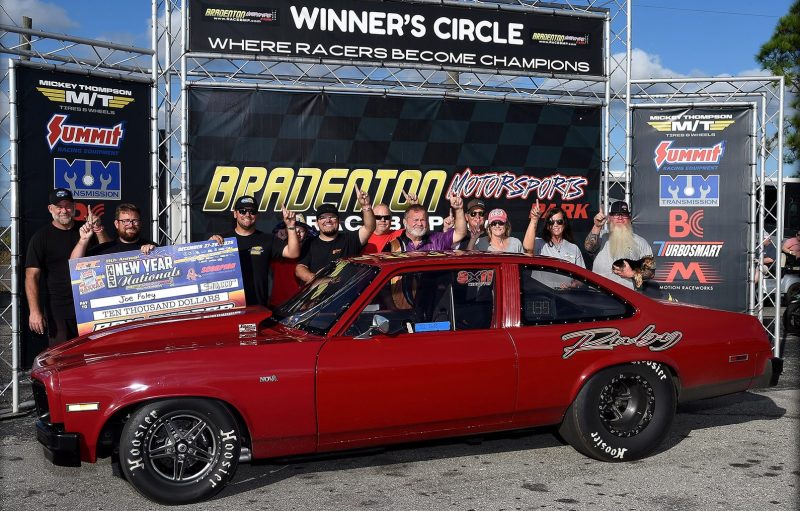
Joe Foley found the winner’s circle yet again in “Ruby” for $10K to top off RT Promotions’ 11th annual New Years Nationals at Bradenton Motorsports Park.
Winners circle photos courtesy of Chris Simmons Event Photos.
BRADENTON, FL – The RT Promotions 11th annual New Years Nationals kicked off the final race weekend of 2025 at Bradenton Motorsports Park where several winners visited the winner’s circle in sunny Florida.
The highly-anticipated event consisted of three $10k-to-win races in Box with a $1,000 No Box bonus each day, and three $2k-to-win races in Junior Dragsters. Unfortunately due to curfew and time restrictions, the last 2 races of the weekend were combined to $20k-to-win in Box and $4k-to-win in Junior Dragsters.
See full results below!


Luke Tabor made his aging out weekend in juniors a big one, taking home the Jr. Final Ride Shootout win and the big Grandfather Clock over Kade Renoll in the final round.

Joe Foley is on fire – literally! Foley picked up Saturday’s $10K win over the No-Box bonus winner, Curtis Peek, in the final round, making it his 4th win on his 5-week stretch in Florida.


Kenzie Wanamaker earned herself the Junior Dragster win on Saturday for $2K.


Robbie Troupe earned the $20K win over Jackson Earwood in the final round.

Brian Adkins II topped off the weekend in junior dragsters, claiming the big $4K win over Hannah Thompson in the final round.
Congratulations to all winners and finalists from the 11th annual New Years Nationals.
For more bracket racing news from DragChamp, click here.

An avid racer herself, Megan Strassweg, 27, sees her two worlds collide with DragChamp – journalism and drag racing. Megan resides in Evansville, IN, and she pilots a 2015 American Dragster in the NHRA North Central Division 3 Super Comp series, along with some local bracket racing on the side. Her passion for racing began early, having grown up at the racetrack, and she remains committed to the sport. When she’s not racing, you can find her working at WDRB News as a Digital Producer, playing with her two dogs – Clutch and Goose, or spending time with her friends and family.
You can reach Megan on Facebook or email at megan@dragchamp.com
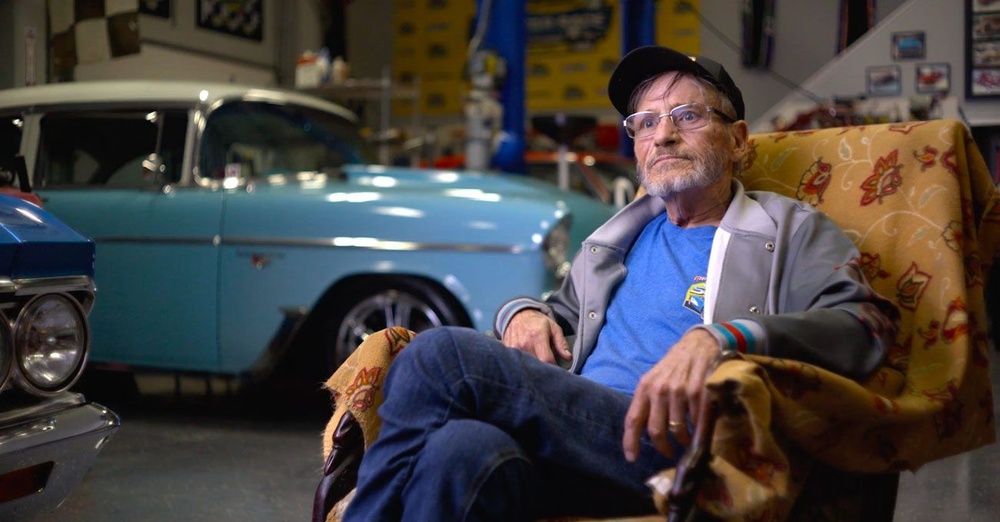
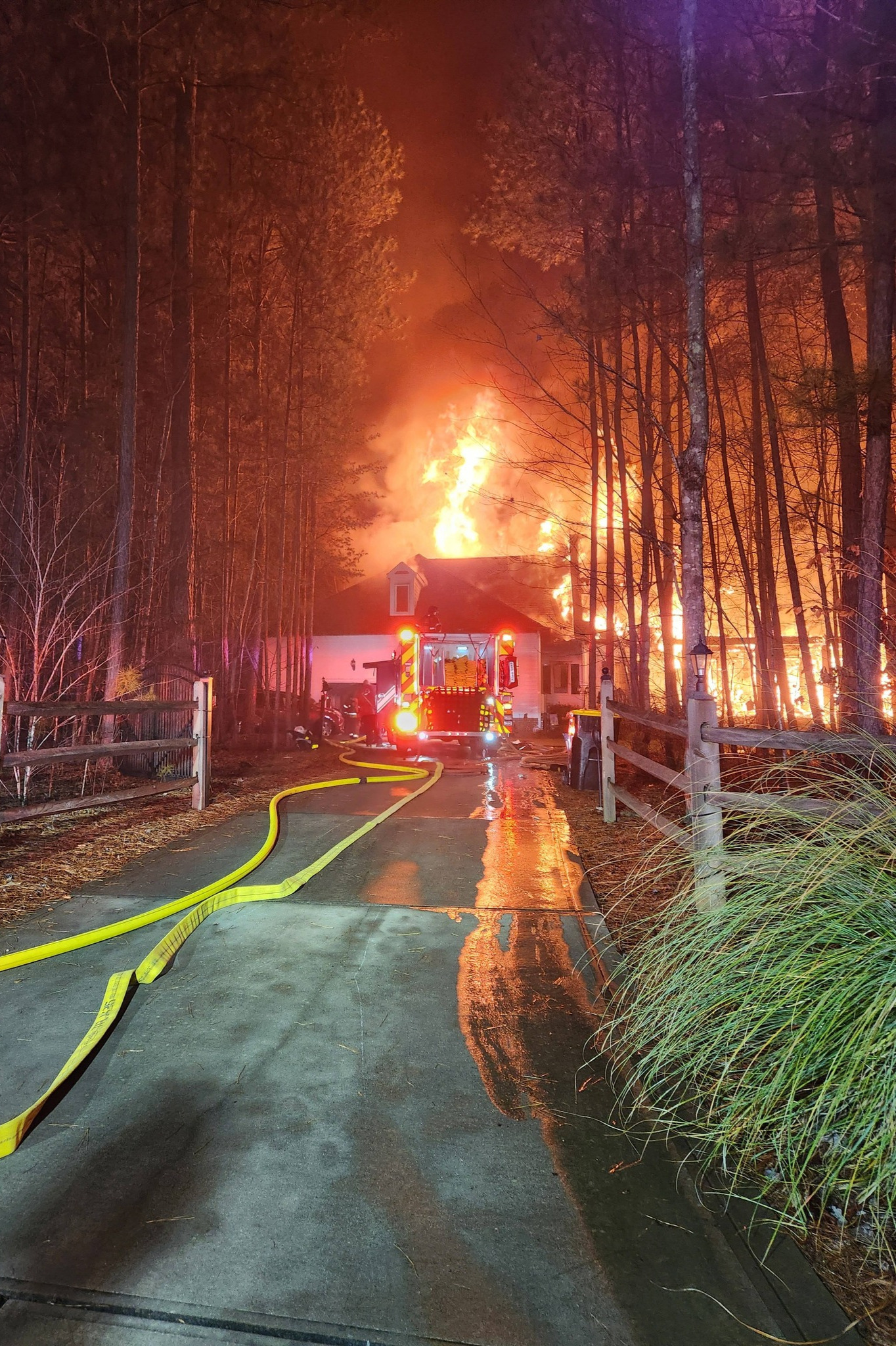
Dennis Hamlin, the father to NASCAR Cup Series veteran Denny Hamlin, died on Sunday evening when the house he shared with wife MaryLou in Stanley, North Carolina.
The elder Hamlin was 75-years-old.
Both Dennis and MaryLou were outside of their still burning home when the Lucia-Riverbend Fire Department and other safety crews arrived to extinguish the flames. At this point, roughly 45 percent of the home was already on fire.
Both Hamlins were transported to a nearby hospital.
The Gaston County EMS confirmed on Monday night that Dennis had died and that MaryLou, 69, had been transferred to Atrium Health Wake Forest Baptist Burn Center in Winston-Salem, North Carolina where she is still being ‘actively treated’ and is in critical condition.
“Both suffered catastrophic injuries while escaping the flames,” read a statement from the Gaston County EMS.
Additionally, the EMS said the investigation into the cause of the fire is still ongoing and currently undetermined due to the structural damage and collapse of the home.
The property was owned by the Cup Series star, under his Won One Real Estate entity, and the 3,724 square-foot house was built in 2015. Dennis and Denny shared a strong bond, and the son referenced his love frequently over the years, but especially this past season as it was made public that the former was facing a life-ending ailment.
Denny said, while chasing his first championship this past season, that 2025 would be the last time his father would see him race for the Jim France Cup. Ultimately, Denny dominated the championship race and was three laps away from the elusive title when a caution and ensuing pit decision cost him that distinction.
In the days that followed, Denny said he spoke to his dad shortly thereafter, who told his son he was a champion in his eyes regardless.
Denny’s racing career was entirely made possible by Dennis and MaryLou putting practically every dollar they had into the cars their son raced in the hopes it would lead to a NASCAR career. Dennis owned Chesterfield Trailer and Hitch in Virginia and it was the largest de facto early sponsor for Denny until he was hired by Joe Gibbs Racing after a chance meeting between Denny and the late JD Gibbs.
Denny recently named his son Jameson Drew after both prominent JDs in his life — Jason Dean Gibbs and James Dennis Hamlin Sr.
We want your opinion!
What would you like to see on Motorsport.com?
Take our 5 minute survey.
– The Motorsport.com Team

Electric vehicles are no longer confined to city streets and commuter use. EV motorsports now operate as high-stakes laboratories where engineers push batteries, motors, and software to absolute limits under race conditions. These competitions are changing long-held assumptions about speed, endurance, and performance in professional racing.
As the electric racing future unfolds, EV performance metrics increasingly rival or exceed traditional combustion-based race cars. Instant torque, near-total energy efficiency, and rapid innovation cycles are forcing motorsport organizations and fans alike to rethink what competitive racing looks like in the coming decade.
EV motorsports already demonstrate that electric platforms can compete at elite levels of racing. Formula E cars accelerate from 0–60 mph in approximately 2.8 seconds, delivering up to 600 kW of peak power that rivals modern Formula 1 hybrid systems. This performance advantage comes from instant torque delivery, eliminating lag and gear-shift delays inherent in internal combustion drivetrains.
The electric racing future extends beyond paved circuits. Extreme E showcases electric SUVs climbing steep 250 kW off-road sections without thermal lag or mechanical stress from traditional engines. EV performance efficiency further strengthens competitiveness, converting roughly 99% of stored electrical energy into wheel motion, compared to combustion engines that waste most energy as heat through exhaust and cooling systems.
Formula E stands at the forefront of the electric racing future by enforcing strict efficiency and sustainability standards. Gen3 cars regenerate up to 40% of race energy through braking and aerodynamic downforce, surpassing traditional kinetic energy recovery systems. This regenerative focus rewards precision driving and strategic energy management rather than raw fuel consumption.
EV motorsports regulations also mandate sustainable tire compounds and tactical features like attack mode, which adds a 50 kW power boost at the cost of altered racing lines. EV performance remains consistent across 45-minute races thanks to dual-motor AWD systems, enabling lap times comparable to high-performance combustion sports cars while operating within tight thermal limits.
Electric racing is no longer a simple comparison between electric and combustion engines. EV performance now sets new benchmarks in acceleration, efficiency, and thermal control, while also introducing fresh limitations tied to batteries and infrastructure. As the electric racing future evolves, strengths and constraints shape race strategy just as much as raw speed. Understanding both sides explains why EV motorsports are advancing rapidly but still face unique trade-offs.
Technological breakthroughs in EV motorsports rarely stay on the track. Racing environments accelerate development cycles, stress-testing hardware and software far beyond road conditions. As innovations mature, they rapidly filter into consumer vehicles, reshaping everyday driving experiences. This tight feedback loop is a defining advantage of the electric racing future.
EV motorsports prove that electric racing future concepts are not theoretical but operational today. Superior EV performance in efficiency, torque delivery, and thermal stability positions electric platforms as genuine competitors rather than experimental alternatives. Racing environments accelerate innovation in ways traditional automotive development cannot replicate.
As technologies mature, lessons from electric racing will increasingly shape mass-market vehicles. The convergence of sustainability and speed ensures that EV motorsports remain central to the future of competitive racing and everyday transportation alike.
Yes, EVs excel in acceleration due to instant torque and simplified drivetrains. They also convert energy far more efficiently than combustion engines. Over short and medium race distances, EV performance often surpasses gasoline counterparts. Endurance remains the main area where ICE still holds advantages.
Formula E serves as a controlled testing ground for batteries, motors, and energy management systems. Technologies proven in races are quickly adapted for consumer vehicles. This short feedback loop accelerates EV performance improvements. It also promotes sustainability-focused innovation.
Battery energy density and charging infrastructure remain the biggest constraints. Heavy battery packs affect vehicle weight and race length. Charging logistics add strategic complexity. However, ongoing research continues to reduce these limitations.
Racing innovations improve battery durability, software control, and thermal management. These upgrades enhance range, reliability, and safety in consumer EVs. Motorsport testing also speeds up adoption of new technologies. As a result, road cars improve faster than through conventional development alone.

A dozen girls whizzed around a karting track during a special test day in Nottingham, England, part of a pioneering drive to draw women into motorsports and maybe even race to the top in male-dominated Formula One.
Italian Lella Lombardi was the last woman to compete in a F1 Grand Prix in 1976, and the absence of women on the circuit is linked to young girls’ limited exposure to motorsports, according to gender parity organisations.
More Than Equal, a non-profit that supports women drivers, said girls start karting two years later than boys on average. Seven-time F1 champion Lewis Hamilton, for example, started karting aged just eight.
“We know that the pathway for female drivers hasn’t successfully got a woman into Formula One competitively in the last 50 years,” More Than Equal’s head of driver development, Lauren Forrow, said.
That means girls are “not thriving within” the current system, she said.
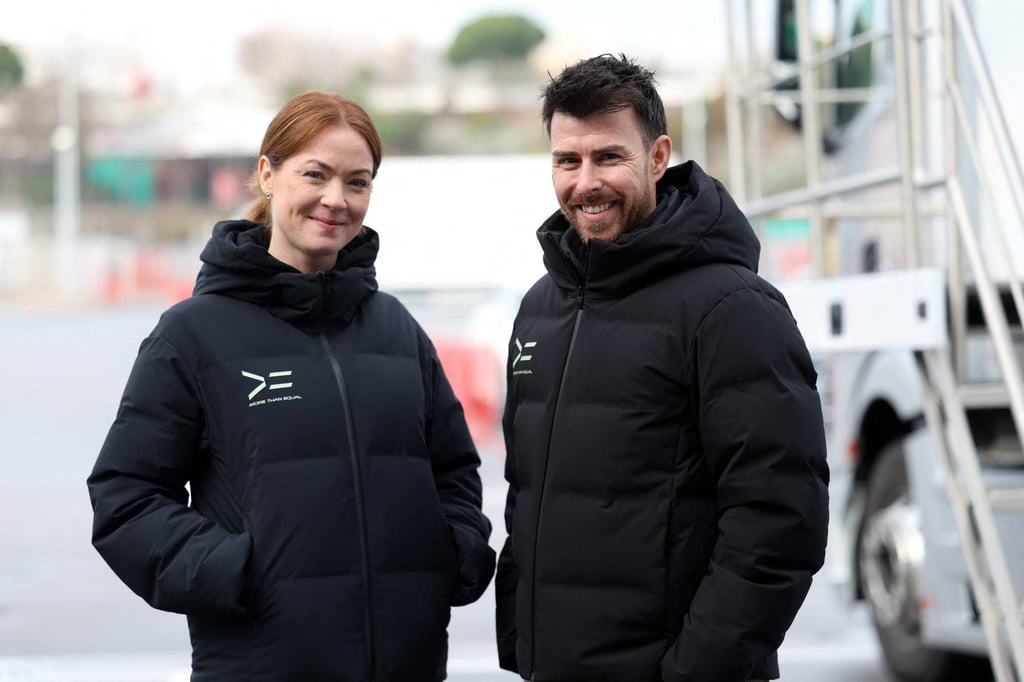
The organisation has pledged to “make history” by training a woman not just to compete but to win.



SoundGear Named Entitlement Sponsor of Spears CARS Tour Southwest Opener

DeSantis Talks College Football, Calls for Reforms to NIL and Transfer Portal · The Floridian
#11 Volleyball Practices, Then Meets Media Prior to #2 Kentucky Match

Nascar legal saga ends as 23XI, Front Row secure settlement

Sunoco to sponsor No. 8 Ganassi Honda IndyCar in multi-year deal

Maine wraps up Fall Semester with a win in Black Bear Invitational

WNBA’s Caitlin Clark, Angel Reese and Paige Bueckers in NC, making debut for national team at USA camp at Duke
NASCAR, 23XI Racing, Front Row Motorsports announce settlement of US monopoly suit | MLex

Rick Hendrick comments after the NASCAR lawsuit settlement


Hope College Tops MIAA Commissioner’s Cup Fall Update







