Rec Sports
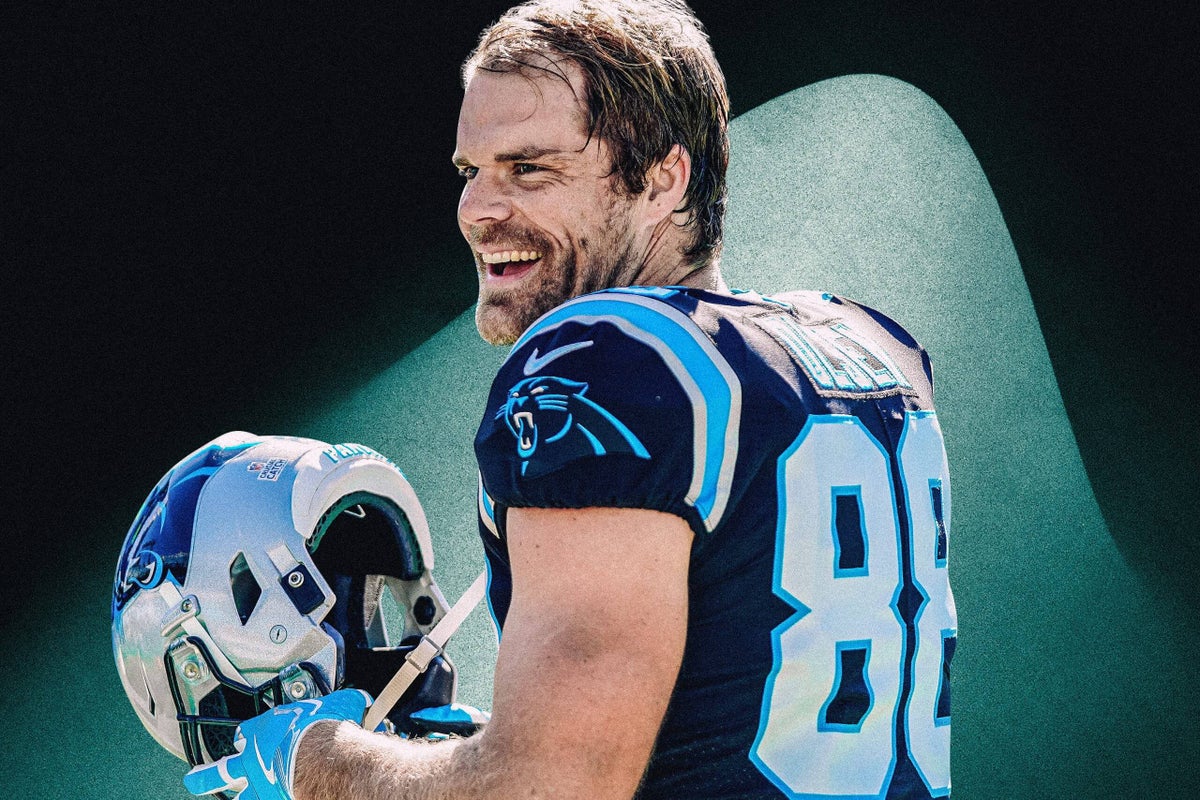
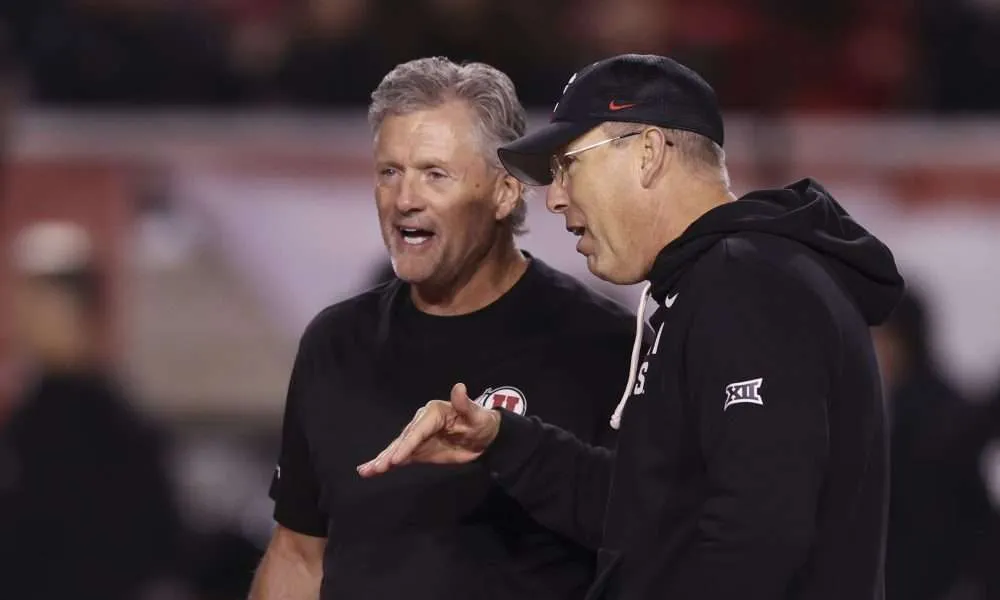
The biggest issues facing youth sports? Greg Olsen has strong opinions
Editor’s note: This story is part of Peak, The Athletic’s desk covering leadership, personal development and success through the lens of sports. Follow Peak here.
While growing up in New Jersey, Greg Olsen used to watch his father coach football at Wayne Hills High School before eventually joining the team himself. Years later, he wanted to transfer the lessons he gained from that experience to his kids. However, one day he asked himself a question:
What if the way that worked for me isn’t the way that will work for my kids?
As Olsen began noting different ways other parents were coaching and raising their kids, he surveyed everyone from experts to professional coaches to famous athletes and medical experts.
Olsen, now 40, has always lived a life consumed by sports. A former first-round pick, Olsen played 14 seasons in the NFL, mostly with the Carolina Panthers. After retiring, he became a respected NFL broadcaster for Fox and launched Youth Inc., his company tailored to young athletes, their coaches and parents. He also coaches the middle school football teams for both of his sons.
I saw something you said in an interview you did with Cal Ripken Jr. You two were talking about when the right time is to specialize your kid in just one sport. You mentioned that you didn’t think parents wanted to do that at an earlier age. Now, you think they’re almost forced to do that, and it’s a big issue. Can you explain why?
It’s probably the single greatest issue facing the world of youth sports right now.
I think kids feel, and families feel, an extreme amount of pressure that if they don’t choose a sport early, it’s hard to keep up. What the kids feel is that it’s very hard to walk into every season to a new sport and compete against kids who have only been doing that sport for the last 12 months.
That’s causing people to go, “All right, forget it. I’m only going to worry about basketball because I’m so fearful of falling behind the other kids.” When I grew up playing, when it was basketball season, and when we transitioned to baseball season, pretty much all of my friends walked out of the gym together and walked onto the baseball field. So there was no fear of what the other kids were doing while you were gone.
Because they were right alongside you. In a lot of ways, those days are over at the high school level.
What do you think playing multiple sports does for kids?
Every sport offers such a different culture, physical skill set, mental skill set. There are so many different elements that each unique sport provides that I think these kids are missing by only being in one environment for 12 months a year.
I encourage our kids to play multiple sports and challenge themselves in multiple sports. Even if you’re not the best kid at one particular sport, our plan is long-term — come high school, come when you’re older, that long-term physical and mental development we think will pay off in the long run. Even if you’re not the best 12-year-old at the moment.
So you think different sports contain different lessons?
For example, my older son goes right from football at school to basketball at school to baseball at school, and now we’re back into summer football/travel baseball. My younger son plays baseball, and now he’s going out for football. I have a daughter who does basketball, and then she runs track and field. Each one of those unique sports offers such a different environment for them to learn, for them to fail, for them to have success.
The skills you learn playing baseball: mental toughness, dealing with failure, it’s a little bit of a slower game so a little bit more focus. Versus basketball, which is very fast-paced, you’re up and down the court, you’re competing, guys are up in your face, challenging you. Can you compete in that fast environment?
And then football, it’s all summer long. It’s hot. You’re in pads, it’s training camp. You’re getting hit. You wake up sore, you don’t feel good. Can you still go to practice the next day?
I think it’s good to be exposed to different lessons, different coaching styles, different players, different teammates, as often as you can, especially at the middle school or younger level.
There’s also just more money, more time and more equipment than ever in youth sports. This can make the purpose of why everyone is there in the first place a little foggy. What do you think parents and coaches can do?
I think there are two elements, two realities to all of this.
I think the first question parents have to ask themselves is: If your goal is only immediate, short-term results, sure, the best thing to get your kid good at one particular sport at this given moment right now is to just play one sport. It is the easiest path. If you commit all of your time and energy and resources to being good at one thing, you will be good at 12, 13, 14 years old. You will be good quicker.
I think what happens to everyone is they see their kid maybe not having the same amount of success as everybody else at a lower age, and they want to rush the process. And as a result, you say, “I’m going all-in on basketball or baseball.” And you feel good because in the moment, you see your kid’s standing amongst his peers is better because he’s just spending more time on it. But the question is, is his ceiling at 17 going to be as high as a singular-sport kid than it would have been if he exposed himself to other sports along the way?
Then the second element is for coaches. There is a selfish element to coaches, to pressure families to not play other sports. If I’m a basketball coach, it is in my best interest that all summer, those kids are not at football workouts. That is in my best interest as the coach. I would argue, it is not in the kids’ best interest, and I always tell parents, “The second you have a coach tell you, you can’t play another sport, you should really think twice about whether you play for that coach.”
You’ve mentioned that you’ve pulled things from your experiences. Were there any surprising takeaways you had when you started coaching?
When I was growing up, there were no conversations about who you played for. When it was basketball season, you played for your town’s basketball team. And then when the spring came, you tried out for the baseball team. They picked the best 12 kids.
There were no decisions. Now, everything’s a decision.
What team do I play for? Who’s my batting coach? What high school? Do I go public? Do I go private? These schools are paying; kids are transferring. Some kids are going to four high schools in four years. It’s just everything has turned into a decision around youth sports, and I think it’s unfortunate.
I don’t think we’re preparing kids who are prepared to go to college and fail and have to learn to be the backup. We don’t ever let anybody work through any processes anymore. And I think we’re seeing that now play out at the older level, and we’re dealing with the consequences of it.
When you talked to these experts and the people who specialize in it, what did they say?
Yeah, I think the simplest advice from the people that I’ve talked to that parents can do is: “Expose your kids to as many different sports and activities as humanly possible for as long as possible.”
That would be general rule number one.
And then continue to keep the balance of learning how to compete and learning the value of winning and learning the value of failure. All of those values are really good.
Learning to win is a skill. Learning to lose is a skill. You need to be able to handle both of them and learn what comes good and bad from both of those elements, but you need to be exposed to that at a young age. I think there are some kids who have never experienced failure. They’ve never been on a bad team. They’ve never lost. They’ve never been anything but the three-hole hitter. They’ve never been anything but the quarterback. They’ve never experienced the other side of the coin, and I think it’s important for them to learn that.
What is the ultimate objective? Are we raising 12-year-olds to be professional baseball players? Or are we raising 12-year-olds to be professional people?
I liked what you said about failure.
Well, it’s all a balance, like anything. I don’t think we want to teach kids that losing is OK. I don’t think we want to create a loser mentality where I just show up and whatever I do, it doesn’t really matter. Wins or losses, I’m just happy. I don’t believe in that.
Now, when they are 5 or 6 years old and learning T-ball, I’m not talking about those kids. I’m talking about middle school, 12-, 13-, 14-year-old kids. They are old enough, in my opinion, to start learning about what competing looks like, what wins and losses are and connecting the hard work to wins. Connecting the easy way out and missing practices to going 0-3 this week. You didn’t work hard, so what makes you expect success?
I always say that I want my kids to start experiencing failure when they still come home to mom and dad. I don’t want failure to hit them in the face for the first time when they’re 20. I’m not even talking about sports, I’m just talking about life. Adversity in general. We want them to come home and be embarrassed and struggle and have their weakest moments at a younger age because we can develop skill sets for dealing with those emotions.
So you don’t want anyone to want to lose. And you don’t want someone to show up and not care to win. That’s not a winning approach. But I also don’t want people who never experience losing or failure or being the last kid on the bench, because at some point in your life, you are going to be the last kid on the bench in some aspect.
What are you going to do about it?
(Illustration: Dan Goldfarb / The Athletic; Jacob Kupferman / Getty Images)

Rec Sports
St. Louis CITY SC Earns Two 2025 MLS Club Awards for Accessibility and Youth Fan Engagement Efforts
Major League Soccer is recognizing St. Louis CITY SC for its commitment to inclusivity as well as its efforts to engage the next generation of soccer fans. CITY SC has won two of the thirteen Mark Abbott MLS Club Business Awards: Youth Fan Engagement Initiative of the Year for the club’s kids-first approach at St Louis CITY2 matches at Energizer Park, and Engagement & Inclusion Club of the Year for the club’s best-in-class accessibility programming.
CITY SC was one of nine clubs to win an MLS Club Business Award, and one of only three to claim multiple honors. Vancouver took home three, while St. Louis and Atlanta earned two each.
“We’re a club that was created with the ultimate goal of serving its community, so winning two awards that recognize our pursuit of excellence in engaging with our young fans and people with disabilities fills us with pride,” said Diego Gigliani, President & GM of St. Louis CITY SC. “I’m grateful to the MLS and its clubs for the recognition, and especially to our staff for constantly seeking innovative ways to bring our purpose-led vision to life”.
Youth Fan Engagement Initiative of the Year
With a re-imagined, family-first approach, the club’s CITY2 experience is designed to cultivate the next generation of CITY fans.
With most matches happening on Sunday afternoons or early evenings, CITY2 matchdays are family focused, featuring interactive experiences including kid PA announcers and anthem singers; family-friendly pricing on tickets and food and drinks; a “Supporter’s Camp” with drums, flags and tambourines for kids; face painters and interactive activities on the concourse; and post-match autographs with players on the pitch. This season, the club welcomed the first family-oriented CITY2 sponsor, the Saint Louis Zoo.
This redesign is driving significant impact, with CITY2 hosting the top five MLS NEXT Pro crowds of the 2025 season, including the MLS NEXT Pro record-breaking attendance of 12,263 achieved in May.
Engagement & Inclusion Club of the Year
In Energizer Park, CITY SC strives to be the most inclusive and accessible club for fans of all abilities. CITY was the first MLS team to debut Touch2See, an AI-powered assistive technology for blind- and visually-impaired fans. The stadium was also the first stadium in the U.S. to participate in Hidden Disabilities Sunflower program, where all Guest Services staff members are trained to help recognize and accommodate hidden disabilities like autism, diabetes, MS and PTSD.
In continued advocacy, this year CITY worked with organizations such as the Disabled Athletes Sports Association (DASA) to raise interest in accessibility in sports venues and adaptive sports, which culminated in kids from DASA serving as a Player Pals for a 2025 match and CITY SC players participating in a local power wheelchair soccer scrimmage.
Rec Sports
Vegas Golden Knights Foundation and Three Square Food Bank Will Host Holiday Drive-Thru Distribution For Families
VEGAS (December 8, 2025) – The Vegas Golden Knights and the Vegas Golden Knights Foundation have partnered with Three Square Food Bank to host a special holiday drive-thru food distribution for families as a part of the Holiday Knights of Giving initiatives.
On Wednesday, December 10, beginning at 10 a.m. PT, members of the Golden Knights organization and significant others from the team will be packing cars with food at Desert Breeze Community Center (8275 Spring Mountain Rd) to assist Three Square as they serve local families in need during this holiday season. Only one household is permitted per car, and families are asked to ensure their trunks are empty for volunteers to place food boxes safely and quickly.
ABOUT THE VEGAS GOLDEN KNIGHTS
The Vegas Golden Knights are a National Hockey League franchise owned and operated by Black Knight Sports and Entertainment LLC. Established by Owner and Chairman Bill Foley and his family, the Golden Knights were the most successful expansion franchise in North American professional sports history in 2017-18 and won the Stanley Cup in 2022-23. For the latest news and information on the Golden Knights visit vegasgoldenknights.com and follow the team on Facebook, X, Instagram and TikTok.
ABOUT THE VEGAS GOLDEN KNIGHTS FOUNDATION
The Vegas Golden Knights Foundation supports exemplary Las Vegas non-profit organizations that make a positive impact in the local community, with a focus on the following pillars: Education & Youth Sports, Military & First Responders, and Health & Wellness. The Foundation raises money through various events and in-game efforts, including a 51/49 Raffle, jersey and memorabilia auctions and other initiatives to engage fans. For the latest news and information on the Vegas Golden Knights Foundation, follow the foundation on X and Instagram.
Rec Sports
Men’s Basketball: Macalester Holds Off Knights for 85-80 Victory
ST. PAUL, Minn. – The Macalester College men’s basketball team defeated Martin Luther College in a back-and-forth non-conference game Monday night in the Leonard Center, coming out on top, 85-80. The Scots even their record at 5-5 on the season, while the Knights drop to 4-7.
Macalester opened the game with a 12-5 run, with senior forward Noah Shannon (Northfield, Ill./New Trier) scoring four points over the first 5:17. After the teams exchanged baskets, first year guard Jamal Randle (St. Paul, Minn./Great River School) hit a three-pointer for a 10-point lead, 17-7. Later in the half, a three-pointer from senior forward Ryan Brush (Bellevue, Wash./Bellevue) gave the Scots a 31-25 edge with 3:18 remaining in the half. Martin Luther used a 9-2 run to take its first lead of the game, 34-33 with 1:12 on the clock. First year guard Owen Walther (St. Louis, Mo./John Burroughs School) closed out the scoring in the first half with a three to send Macalester into halftime with a 36-34 lead.
After the Knights tied the score early in the second half, the Scots went on a 13-4 run sparked by a pair of threes from Walther and another by first year guard Noah Hamburge (Minneapolis, Minn./Minnehaha Academy) for a 52-43 advantage with 14:44 remaining. A conventional three-point play by Shannon later in the half made it a 10-point game, 59-49 at the 12:42 mark. On two occasions Martin Luther came within five points, only to have Brush and Walther each answer with a three-pointer, with Walther’s trey making the score 70-62 Macalester with 6:08 left.
Walther drained his fifth three of the game after a pair of Knights’ free throws, but Adam Loberger answered Walther with a three of his own to make the score 73-67 with 4:36 to play. Martin Luther continued to hack away at the Scots’ lead, with a basket by Thomas Balge and a conventional three-point play from Benjamin Vasold pulling the Knights to within one, 73-72 with 3:10 remaining. The lead was still down to one, 75-74 when Walther struck again from deep for a 74-78 advantage. On its next possession, Martin Luther scored again, only to have Brush nail a three-pointer to put Macalester on top, 81-76. Benjamin Pearson scored and was fouled, hitting the free throw to cut the lead to two, 81-79 with 22 seconds left, but the Scots made their free throws down the stretch to close out the win, 85-80.
Macalester made 14-of-33 (42.4 percent) from three-point range and converted 11-of-13 from the free throw line for the game. Shannon led the Scots with 21 points and six rebounds, hitting eight of his nine attempts from the charity stripe. Walther drained 6-of-9 from beyond the arc to finish with 18 points, and brush was 4-of-8 from deep en route to 16 points. Sophomore guard Joaquin Aguillon (San Rafael, Calif./The Branson School) dished out a career-high nine assists to go with eight points. Pearson led Martin Luther with 24 points.
Macalester plays a MIAC at Carleton on Wednesday, Dec. 10 in the final game of 2025. Tip-off is set for 7:00 p.m. in Northfield, Minn.
Rec Sports
New Balance Foundation Pledges $9.2M for Massachusetts Youth Sports and Development Programs
Key Takeaways
- New Balance Foundation commits $9.2 million for 2025-2026 cycle to Massachusetts nonprofits focused on youth development
- Grants support youth sports access, nutrition and food security, and education programs in communities where New Balance operates facilities
- Foundation has invested more than $90 million since 1981, with $17 million distributed to 95 nonprofits in 2025 alone
- Funding includes 11 local organizations ranging from Beyond Soccer to Special Olympics Massachusetts
- 99% of North American 12th graders in Foundation-funded programs graduated from high school

Supporting Communities Where Associates Work
The New Balance Foundation announced $9.2 million in grants for the 2025-2026 funding cycle, targeting youth development programs in Massachusetts communities where the athletic footwear manufacturer maintains operations. New Balance operates facilities in Lawrence and Methuen, including an 80,000-square-foot footwear facility in Methuen that brought more than 200 jobs to the Merrimack Valley when it opened in 2022.
The grants focus on three primary areas: youth sports access, nutrition and food security, and educational support programs. “The children and families in these communities are in our backyard, and we’re proud to invest in organizations and initiatives that play a critical role in shaping the lives of young people across the state,” said Anne Davis, managing trustee of the New Balance Foundation, in a statement to The Eagle-Tribune.
Grant Recipients and Program Focus
The 2025-2026 funding cycle supports 11 local nonprofits: Beyond Soccer, Boys & Girls Club of Lawrence, Change the Game Coalition, Community Rowing, Cradles to Crayons, Essex Art Center, Lazarus House Ministries, Play Ball Foundation, Special Olympics Massachusetts, and SquashBusters locations in Boston and Lawrence.
Beyond annual operating grants, the Foundation’s Enduring Gifts Pillar supports larger infrastructure projects. Recent contributions include the renovation of Lawrence’s O’Connell South Common Park and the development of Esperanza Academy’s new K-8 school for girls in Lawrence.
Foundation Track Record and Outcomes
Since its establishment in 1981, the New Balance Foundation has invested more than $90 million in nonprofits serving Metro Boston, Lawrence, and Methuen. The Foundation has granted over $165 million total to date, with more than $17 million distributed to 95 nonprofits in 2025 alone.
Program outcomes show measurable impact on youth participants. 99% of North American 12th graders participating in New Balance Foundation-funded programs graduated from high school, with 88% enrolled in college.
The Foundation maintains a long-term approach to grantmaking. Operating within an invitation-only framework, the Foundation focuses on year-round collaboration with portfolio grantees rather than accepting unsolicited applications.
Broader Philanthropic Footprint
The Massachusetts commitment represents one component of the Foundation’s expanding geographic reach. In 2024, New Balance and New Balance Foundation donated more than $28 million in the U.S. to charitable causes, with focus on empowering underserved populations and removing barriers to healthy lifestyles.
In April 2025, the Foundation launched Futures in Motion, a multi-year international initiative in partnership with Beyond Sport, beginning in Australia, Japan, and Poland with plans to expand to four additional countries over three years.
The Foundation’s model centers on preventing childhood obesity and promoting youth development through sports-based programming, educational support, and career readiness initiatives in communities where New Balance associates live and work.
YSBR provides this content on an “as is” basis without any warranties, express or implied. We do not assume responsibility for the accuracy, completeness, legality, reliability, or use of the information, including any images, videos, or licenses associated with this article. For any concerns, including copyright issues or complaints, please contact YSBR directly.
Sources
- The Eagle-Tribune: “New Balance pledges $9.2M in grants to non-profits” (December 4, 2025)
- New Balance Foundation: “Our Impact” (newbalance.com)
- New Balance Foundation: “Our Mission” (newbalance.com)
- WebWire: “New Balance Releases Inaugural Made in USA Economic and Social Footprint Report”
- Beyond Sport: “New Balance Foundation and Beyond Sport Launch New International Youth Development Program” (April 4, 2025)
- Inside Philanthropy: “New Balance Foundation” profile
About Youth Sports Business Report
Youth Sports Business Report is the largest and most trusted source for youth sports industry news, insights, and analysis covering the $54 billion youth sports market. Trusted by over 50,000 followers including industry executives, investors, youth sports parents and sports business professionals, we are the premier destination for comprehensive youth sports business intelligence.
Our core mission: Make Youth Sports Better. As the leading authority in youth sports business reporting, we deliver unparalleled coverage of sports business trends, youth athletics, and emerging opportunities across the youth sports ecosystem.
Our expert editorial team provides authoritative, in-depth reporting on key youth sports industry verticals including:
- Sports sponsorship and institutional capital (Private Equity, Venture Capital)
- Youth Sports events and tournament management
- NIL (Name, Image, Likeness) developments and compliance
- Youth sports coaching and sports recruitment strategies
- Sports technology and data analytics innovation
- Youth sports facilities development and management
- Sports content creation and digital media monetization
Whether you’re a sports industry executive, institutional investor, youth sports parent, coach, or sports business enthusiast, Youth Sports Business Report is your most reliable source for the actionable sports business insights you need to stay ahead of youth athletics trends and make informed decisions in the rapidly evolving youth sports landscape.
Join our growing community of 50,000+ industry leaders who depend on our trusted youth sports business analysis to drive success in the youth sports industry.
Stay connected with the pulse of the youth sports business – where industry expertise meets actionable intelligence.
Sign up for the biggest newsletter in Youth Sports – Youth Sports HQ – The best youth sports newsletter in the industry
Follow us on LinkedIn
Follow Youth Sports Business Report Founder Cameron Korab on LinkedIn
Are you a brand looking to tap into the world’s most passionate fanbase… youth sports?
Introducing Play Up Partners, a leading youth sports marketing agency connecting brands with the power of youth sports. We specialize in youth sports sponsorships, partnerships, and activations that drive measurable results.
About Play Up Partners
Play Up Partners is a leading youth sports marketing agency connecting brands with the power of youth sports. We specialize in youth sports sponsorships, partnerships, and activations that drive measurable results.
Why Sponsor Youth Sports?
Youth sports represents one of the most engaged and passionate audiences in sports marketing. With over 70 million young athletes and their families participating annually, the youth sports industry offers brands unparalleled access to motivated communities with strong purchasing power and loyalty.
What Does Play Up Partners Do?
We’ve done the heavy lifting to untangle the complex youth sports landscape so our brand partners can engage with clarity, confidence, and impact. Our vetted network of accredited youth sports organizations (from local leagues to national tournaments and operators) allows us to create flexible, scalable programs that evolve with the market.
Our Approach
Every partnership we build is rooted in authenticity and value creation. We don’t just broker deals. We craft youth sports marketing strategies that:
- Deliver measurable ROI for brand partners
- Create meaningful experiences for athletes and families
- Elevate the youth sports ecosystem
Our Vision
We’re positioning youth sports as the most desirable and effective platform in sports marketing. Our mission is simple: MAKE YOUTH SPORTS BETTER for athletes, families, organizations, and brand partners.
Common Questions About Youth Sports Marketing
Where can I sponsor youth sports? How do I activate in youth sports? What is the ROI of youth sports marketing? How much does youth sports sponsorship cost?
We have answers. Reach out to info@playuppartners.com to learn how Play Up Partners can help your brand navigate the youth sports landscape.
Youth sports organizations: Interested in partnership opportunities? Reach out to learn about our accreditation process.

Rec Sports
Youth substance abuse prevention program looks to athletes to spread the word
A youth substance misuse prevention program from the Illinois Association for Behavioral Health [IABH] has partnered with the Illinois High School Association [IHSA] and IESA to expand outreach efforts.
Courtesy
/
Illinois Association for Behavioral Health
Generation Lead is in its second year of operation. The program aims to delay initial substance use through physical and digital material made accessible to middle and high school students. This includes commercials, posters, bookmarks and other awareness-raising materials. Messaging also offers information on recovery services for those in need.
The program needed ways to reach students beyond the occasional visit to a school assembly or health class, said Ashley Webb, chief operating officer and vice president of programs at the IABH, during an interview on WGLT’s Sound Ideas.
“Our goal is to captivate an audience, to let them know that being a leader is OK, being substance-free is OK, and taking that positive message and hopefully sprinkling that through their peers,” said Webb.
“Our best leaders can be student athletes, and so it’s a way for coaches and the athletes to get involved in a community awareness event and campaign.”
The IHSA and IESA, both based in Bloomington, already have policies against substance misuse for student-athletes. The partnership with Generation Lead provides tangible resources to further share messages against such practices with students, families, teachers and social workers. Generation Lead also shares digital materials.
“We know youth are on social media, so making sure that they’re seeing those advertisements and listening,” said Webb. “We’re targeting those communities and making sure that it’s not just something that they’re hearing at school or in their meetings that you need to live substance free, but also seeing it and connecting it.”
The program is funded by a grant from the Illinois Department of Human Services, through the Regional Care Coordination Agency.
Generation Lead offers free material that can be requested on its website. Webb said there are requests each week for more material to be used in schools throughout the state.
“We have heard from many preventionist school teachers, social workers, guidance counselors, coaches, about how they’ve seen our material and how they want our campaign in their community,” said Webb.
All programs offered by the IABH have youth advocates to represent their communities and share messaging that they think works. For Generation Lead, the group helps with messaging that works statewide and can also work on differentiating messaging based on where in the state the material goes.
“Illinois is really diverse, and so from rural communities to urban and suburban, we have to make sure that we’re tweaking our messaging and our outreach in those ways,” said Webb.
We depend on your support to keep telling stories like this one. WGLT’s mental health coverage is made possible in part by Chestnut Health Systems. Please take a moment to donate now and add your financial support to fully fund this growing coverage area so we can continue to serve the community.
Rec Sports
Want To Avoid Having A Troublesome Teen? Get Boys Involved In Youth Sports, Study Says | Health and Wellness
TUESDAY, Dec. 9, 2025 (HealthDay News) — Worried your boy is going to be a difficult teen, in constant friction with parents, teachers and other authority figures?
Get him involved in sports, a new study suggests.
Boys who participated in organized sports between 6 to 10 years of age were less likely to show signs of oppositional-defiant disorder in their tweens, researchers reported Dec. 8 in the journal European Child & Adolescent Psychiatry.
“Boys who consistently participated in organized sport showed significantly fewer subsequent oppositional-defiant symptoms at both ages compared to boys with low or inconsistent participation,” said lead researcher Matteo Privitera, a doctoral student at the University of Pavia in Italy.
“Sport may serve as a natural and influential context for learning self-regulation, cooperation and respect for rules,” he added in a news release.
For the study, researchers tracked nearly 1,500 boys and girls who participated in organized sports between ages 6 and 10, and then answered questionnaires at 10 and 12 to gauge oppositional-defiant disorder.
“Symptoms of the disorder include persistent patterns of irritability, defiance and hostility toward authority figures,” Privitera said. “The disorder is over-represented by boys and often accompanies other neurodevelopmental disorders like ADHD and learning disabilities.”
Importantly, “these behaviors can interfere with learning, relationships and long-term mental health,” Privatera added. “In our study, we wanted to look into the symptoms and try to identify accessible, community-based strategies that foster more adaptive behavior in children.”
Results showed that boys who stuck with organized sports were likely to show fewer signs of defiance at 10 and 12, compared with those who participated less often.
No similar associations were found among girls, researchers said — not surprising, given that boys generally show more defiance in their tween years than girls.
“Our findings support the idea that structured extracurricular activities can promote behavioral resilience,” researcher Kianoush Harandian, a doctoral student at the University of Montreal, said in a news release. “Sport offers a supervised and socially engaging environment that may help boys internalize adaptive behavioral norms.”
Senior researcher Linda Pagani, a professor at the University of Montreal, pointed to long-term benefits.
“Encouraging sustained sport participation in middle childhood may reduce the burden of disruptive behavior disorders and support long-term well-being,” she said in a news release. “It’s a simple, actionable strategy with benefits for families, schools and communities.”
More information
The University of San Diego has more on the benefits of youth sports in child development.
SOURCE: University of Montreal, news release, Dec. 8, 2025
What This Means For You
Parents worried about having a difficult teen may want to get their boys involved in youth sports.
-
Rec Sports2 weeks agoFirst Tee Winter Registration is open
-
Rec Sports2 weeks agoFargo girl, 13, dies after collapsing during school basketball game – Grand Forks Herald
-
Motorsports2 weeks agoCPG Brands Like Allegra Are Betting on F1 for the First Time
-
Sports3 weeks agoVolleyball Recaps – November 18
-
Motorsports2 weeks agoF1 Las Vegas: Verstappen win, Norris and Piastri DQ tighten 2025 title fight
-
Sports2 weeks agoTwo Pro Volleyball Leagues Serve Up Plans for Minnesota Teams
-
Sports2 weeks agoUtah State Announces 2025-26 Indoor Track & Field Schedule
-
Sports2 weeks agoSycamores unveil 2026 track and field schedule
-
Motorsports2 weeks agoRedemption Means First Pro Stock World Championship for Dallas Glenn
-
Sports2 weeks agoTexas volleyball vs Kentucky game score: Live SEC tournament updates