A federal judge’s approval of the landmark House vs. NCAA settlement this spring signals a major shift away from the NCAA’s century-old model of amateurism and sets the stage for a complete upheaval of college sports as we’ve come to know them.
For the first time, Division I schools are now able to make direct payments to student-athletes for the use of their name, image and likeness.
In the first year, colleges will be able to distribute $20.5 million—a figure that represents 22% of a school’s average annual revenue from media rights, sponsorships and ticket sales. That total will increase by 4% each year for three years. After three years, the cap will be adjusted based on market conditions and revenue trends, potentially rising to nearly $33 million in the next decade.
The settlement’s ramifications don’t begin and end with revenue sharing, though. Some $2.8 billion in back pay will also be distributed to athletes who either fully or partially missed out on NIL payments between 2016 and 2024 because of the NCAA’s previous rules, and third-party NIL deals will be subject to far more stringent levels of scrutiny going forward.
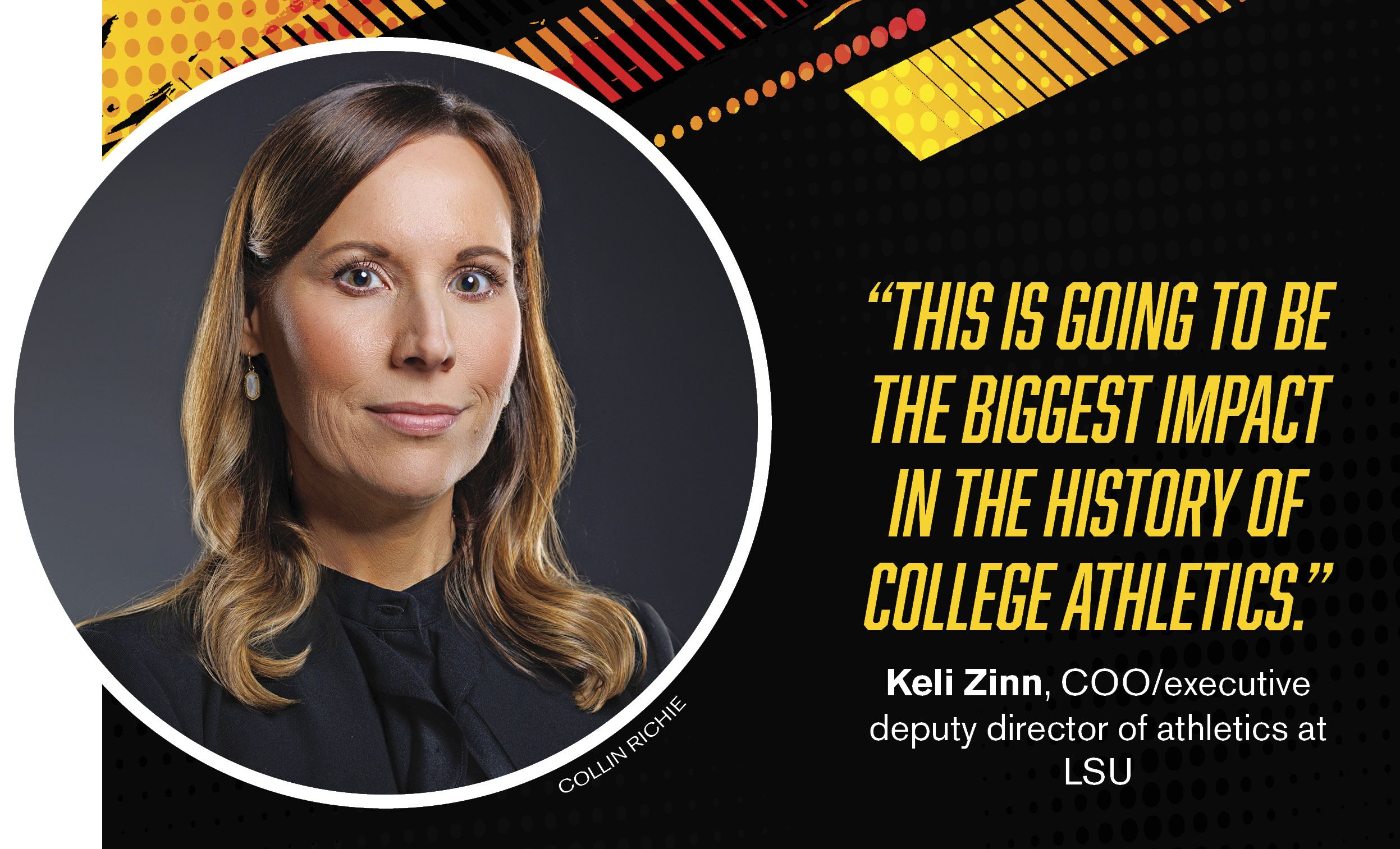
Keli Zinn, executive deputy director of athletics and COO for LSU athletics, says LSU is meeting the moment head on.
“This is going to be the biggest impact in the history of college athletics … and we’ve done a really good job of making sure we’re prepared for everything that’s changing,” Zinn says.
That preparation touches nearly every aspect of LSU athletics, from budgeting to recruiting to gender equity. Here’s a deeper dive on six areas of impact.
1. BALANCING THE BUDGET
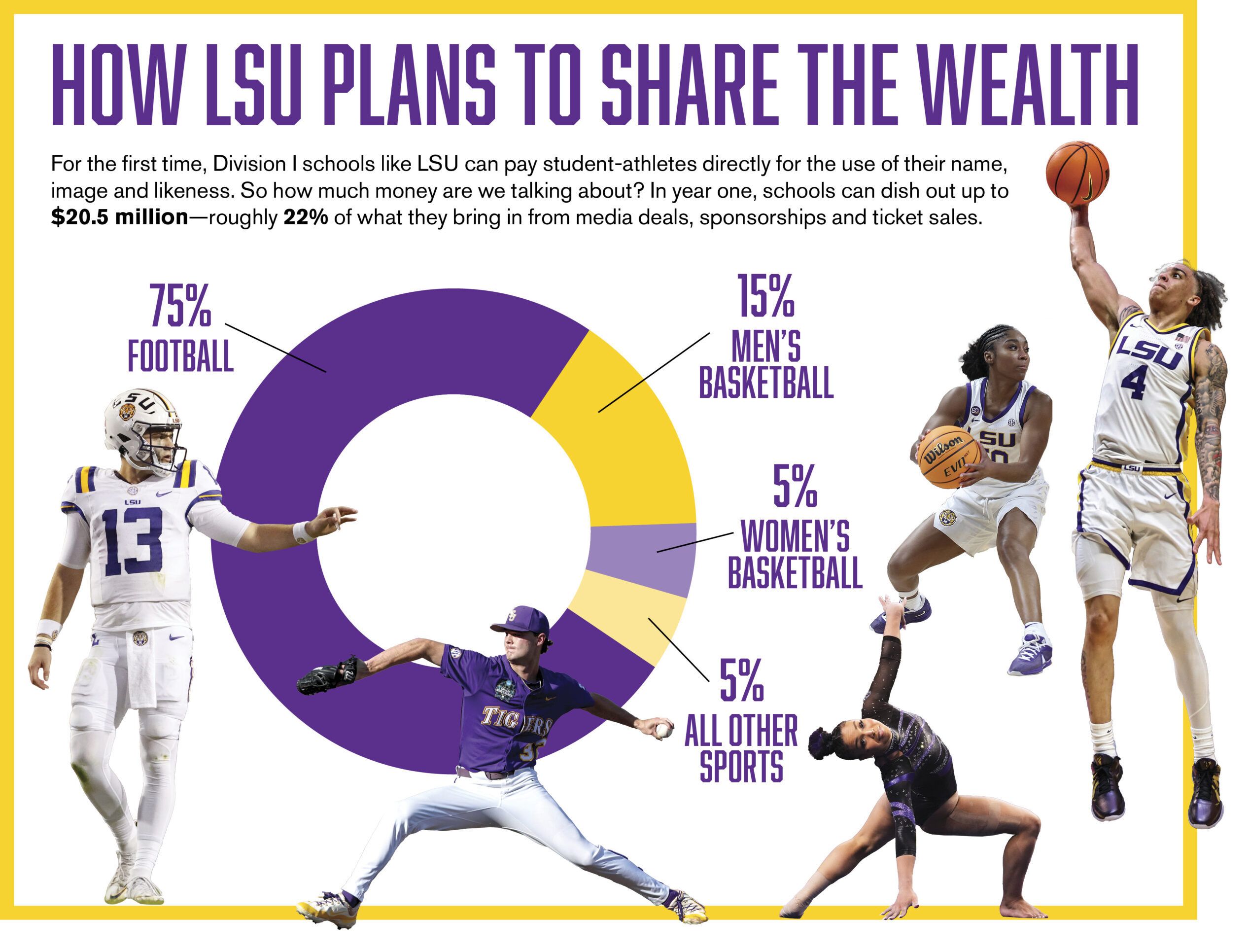
In year one, LSU’s plan is to allocate 75% of its $20.5 million to football, 15% to men’s basketball and 5% to women’s basketball. The remaining 5% will be spread across all other sports. Notably, Zinn says LSU is among a minority of schools committing to support every sport on campus under the new model—not just those that generate revenue.
“A lot of schools are choosing not to support a lot of their Olympic programs,” she says. “We’re going to do so because we have a history of winning at the highest level of those programs.”
LSU athletics operates on a roughly $200 million budget, which means $20.5 million is no small line item. So, where is that $20.5 million going to come from?
READ MORE
Capital Region executives weigh in on the past and present NIL landscape
From parlays to playbooks: Colleges can now cash in on sports betting
For starters, Zinn says LSU athletics has made efforts to reduce its expenses in light of the settlement. The department’s initial goal was to cut $3 million in costs. Those cuts came from holding off on filling openings for nonessential positions; scaling back “miscellaneous spend” on creative services like graphics production; and being more conscientious about scheduling so teams can travel by bus instead of by plane whenever possible. Though some open positions will go unfilled, no one will be laid off. Additional savings will come as certain personnel expenses and debt payments roll off the books.
“When you’re looking at a $200 million budget, you can find $3 million,” Zinn says. “While no one wants to see a cut, I would say we were able to do it in a way where people still feel good about where we’re at.”
Even with those cost-cutting measures, the upcoming academic year will bring with it some financial strain. LSU athletics is projecting an $8 million deficit for 2025-2026.
Future years, though, look more promising. Zinn says her department will find stable footing by 2026-2027 thanks to future revenue growth within the SEC as well as the progress LSU athletics is making in the realm of corporate sponsorships. There’s also a “significant amount of money to be made” if LSU’s football team has a strong season this year and makes a run in the College Football Playoff, as she expects it will.
“Once we get to 2026-2027 in particular, we’re going to find ourselves in a really, really healthy spot to balance our budget,” Zinn says, “even with that $20.5 million expense that’s coming online.”
2. NIL
In this new era, third-party NIL deals are still allowed. But the “Wild West” of the past few years has come to an end.
Now, NIL deals worth more than $600 must pass muster via the new NIL Go clearinghouse, overseen by Deloitte and regulated by the newly formed College Sports Commission. The clearinghouse evaluates whether each deal serves a “valid business purpose” and whether compensation is in line with “fair market value.” To determine fair market value, Deloitte assesses factors like an athlete’s performance and social media presence as well as a school’s market size.
Click to enlarge
Fritz Metzinger, a sports attorney with Stone Pigman, says the move is designed to crack down on inflated endorsement deals that exist solely to entice athletes to enroll at specific schools. The CSC has already begun rejecting arrangements that it says serve no valid business purpose and don’t pass its fair market value test. Officials estimate that a staggering 70% of past NIL deals would have been denied under the new rules.
“The NCAA wants to combat what’s seen as ‘pay-for-play,’” Metzinger says. “Are athletes getting paid what you would expect someone appearing in a couple commercials to get paid, or are they getting paid millions of dollars as part of a disguised ‘pay-for-play’ mechanism?”
At LSU, there are two distinct but complementary NIL entities: NILSU and NILSU MAX. NILSU is the university’s overarching NIL department, while NILSU MAX functions as the “opportunity arm” of NILSU, focusing specifically on identifying and securing third-party NIL deals.
When asked whether such deals might fade in relevancy now that schools are directly paying athletes, Taylor Jacobs, LSU’s associate athletic director of NIL and strategic initiatives, says she believes the opposite to be true.
“The third-party NIL component is arguably even more important now than it was prior to the revenue-share era,” Jacobs says. “We’re really leaning into it more so than we already were, which sounds kind of funny because NILSU was already really aggressive in that space compared to other schools across the country.”
In Jacobs’ view, what will be most important going forward is educating athletes on compliance with the new rules. If a deal is flagged by NIL Go—because a deal would overpay an athlete for minimal deliverables, for instance—the school is notified and the athlete risks losing eligibility unless the deal is dropped, revised or successfully appealed.
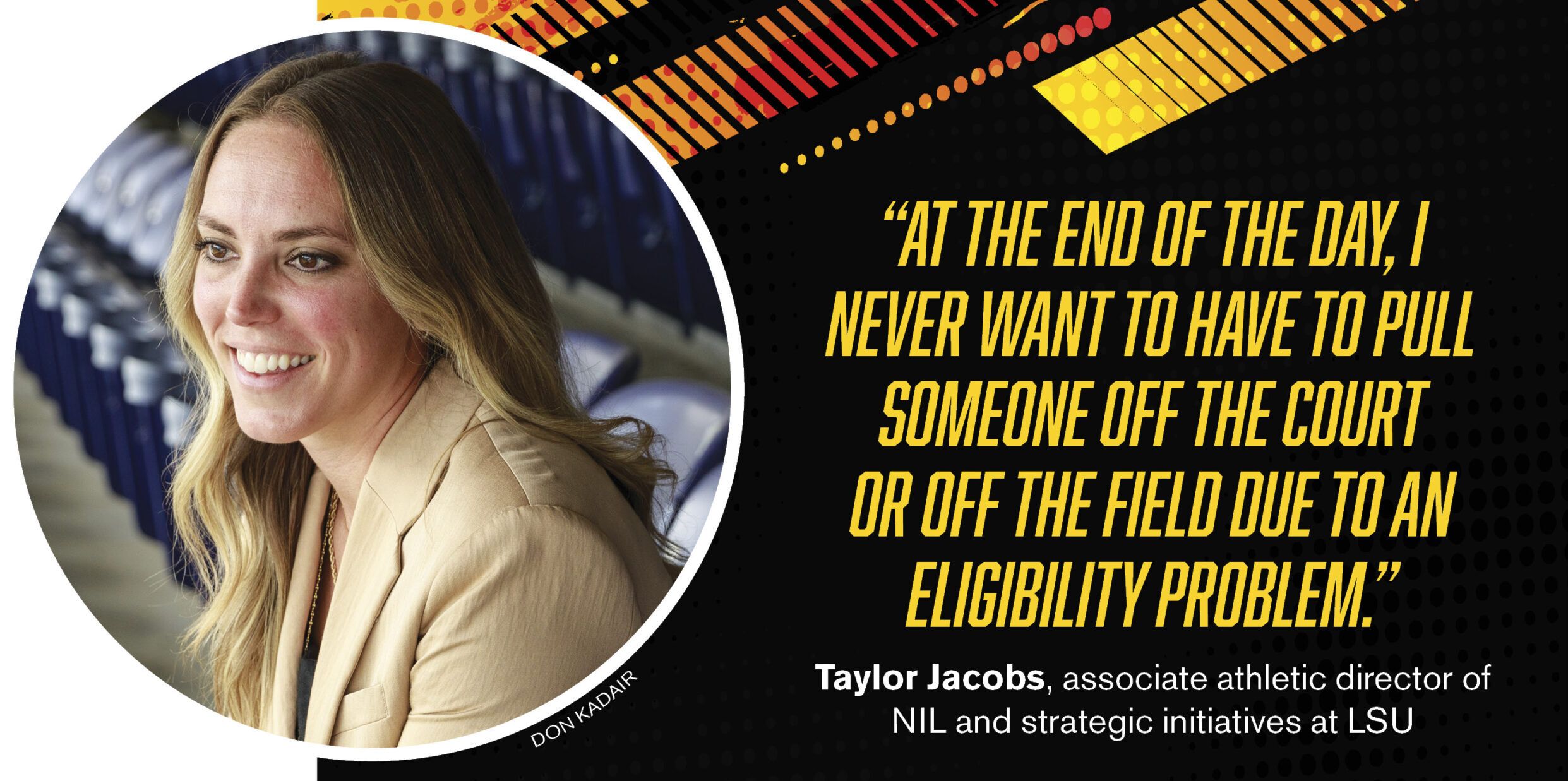
“At the end of the day, I never want to have to pull someone off the court or off the field due to an eligibility problem,” Jacobs says. “So while NILSU MAX will work with the athletes to make sure they get the contract, NILSU will come in on the back end to make sure the athletes understand, ‘OK, now you’ve got to disclose it and you’ve got to show up.’”
3. THE COLLECTIVES
What role collectives like LSU’s Bayou Traditions will play going forward remains a big, unanswered question—a “$20.5 million question,” as Metzinger puts it.
Collectives were created to fund NIL opportunities in the absence of direct compensation from schools. Their role was simple in theory: Pool donor money and funnel it into NIL deals that reward athletes for everything from endorsements to autograph signings and meet-and-greets. In practice, many collectives became the de facto payroll arms of high-profile athletic departments, offering six- and seven-figure NIL deals in an effort to attract top talent.
Since the House settlement was approved, several collectives affiliated with major universities like the University of Alabama, the University of Colorado, the University of Georgia and the University of Notre Dame have been shuttered.
For now, it seems that Bayou Traditions isn’t going anywhere. But it will have to rethink its purpose.
“You’ll probably see them start to rethink their strategy,” Jacobs says. “My best guess is that they’ll pause for a minute and kind of see what happens. Then they’ll be able to reevaluate and say, ‘OK, we’re going to shift in this direction or that direction.’”
Metzinger sees a future in which collectives like Bayou Traditions pivot from paying athletes to facilitating “true NIL deals” that don’t run afoul of the NIL Go clearinghouse’s rules, similar to what NILSU MAX is already doing.
Another possibility, according to Jacobs, is that collectives will start focusing more on high school than college.
“There’s a lot of hearsay out there right now as to whether or not there are going to be more high school NIL opportunities and whether collectives are going to get more involved with that,” she says. “But at the same time, there are also conversations about [oversight] at the high school level. It’s kind of difficult to say how they’re going to evolve at the moment.”
Bayou Traditions did not respond to requests for comment.
4. RECRUITING
With schools now able to pay athletes directly, the dynamics of luring top talent have changed—and the playing field isn’t necessarily level. Some schools will have a hard time even coming up with $20.5 million, let alone facilitating lucrative third-party NIL deals that comply with NIL Go standards.
The good news for LSU fans, Zinn says, is that LSU is “better positioned than a lot of its peers and competitors” on that front. That’s because LSU has both the financial stability and the “true NIL” track record necessary to compete for the cream of the crop.
“While institutions cannot guarantee third-party NIL deals, they are allowed to show athletes what’s possible through data and metrics,” Zinn says. “And that’s where we have an advantage, because you can look at our history with Jayden Daniels, Livvy Dunne and Angel Reese—all of those individuals who did really well in the world of NIL.”
It’s worth noting that the House settlement also rewrites the rules around scholarships and roster sizes. Sport-specific scholarship limits have been done away with, meaning schools are now allowed to offer a scholarship to every athlete on a sport’s roster.
However, new roster caps have been introduced, many of which are lower than previous average roster sizes. For example, football rosters are now capped at 105 players, down from the previous average roster size of about 124. (For the 2025-2026 season, SEC football programs will maintain their traditional scholarship limit of 85.)
Though schools must now adhere to the new roster caps, the settlement allows schools to grandfather in current athletes so no one loses a spot mid-career. In the future, schools will have fewer athletes overall, but more resources will be devoted to them.
5. TITLE IX
While many are praising the House settlement as a huge win for student-athletes across the country, not all are celebrating. A legal storm is brewing around whether Title IX, the federal law that prohibits sex-based discrimination in any education program that receives federal funding, was taken into fair consideration when the settlement was approved.
Because football and men’s basketball are the primary revenue drivers for most athletic programs, football and men’s basketball players will receive more money than athletes who compete in other sports, including women’s sports.
A group of eight female athletes in June filed an appeal in federal court challenging the settlement’s $2.8 billion back-pay plan, arguing that it violates Title IX by funneling as much as 90% of funds to football and men’s basketball players—leaving just 5% for women’s basketball and spreading the remaining 5% across all other sports.
That appeal has paused the back-pay distribution for the time being, though schools are moving forward with the revenue-sharing portion of the settlement unhindered.
“We do not believe that Title IX is going to be applicable to the revenue share,” Zinn says. “We’re one of the few schools giving revenue share dollars to each of their programs, which means each of our women’s sports will see revenue share dollars. But the large bulk is going to football and men’s basketball, and we feel confident in that distribution.”
Though revenue sharing is proceeding as planned, Metzinger cautions that this is uncharted territory. While it’s certain that Title IX requires schools that receive federal funding to provide “equal opportunities” to male and female athletes—equitable opportunities to play and equitable access to scholarships and other benefits—what’s uncertain is how the law applies to NIL payments and revenue sharing.
“It honestly remains an unsettled legal question,” Metzinger says. “We’ll have to see how things pan out, but I think the lawsuits are going to continue.”
6. THE END OF AMATEURISM AS WE KNOW IT?
The House settlement breaks new ground with regard to student-athlete compensation, but another federal court case, Johnson vs. NCAA, has the potential to reshape college athletics in an even more dramatic fashion.
The issue at the heart of the case is whether student-athletes should be flat-out considered employees under the Fair Labor Standards Act and thus be eligible for minimum wage and overtime pay. If the courts ultimately side with the plaintiff, the door would be opened to eventual unionization and collective bargaining.
Though the case is still making its way through the legal system and a resolution is unlikely to come any time soon, Jacobs says it’s something she and her team are keeping a close eye on.
“There are a lot of things to think about that come with employee status,” she says. “We’d probably have to completely reevaluate how many employees [we can have]. Like, what is the budget for that? Are you looking at making every athlete an employee, or are you looking at four sports specifically or two sports specifically?”
Zinn is also tracking the case closely, and she’s of the opinion that such a move would do more harm than good.
“The hope is that we don’t see that,” she says. “I think if you were to talk to a lot of athletes across the country who understand what that would mean for them, they actually don’t want to be employees.”
A few high-profile athletic directors and coaches—University of Tennessee Athletic Director Danny White, most prominently—have publicly suggested that collective bargaining is a potential solution to a lot of what ails college athletics. Zinn, however, believes the new model should be given some time to prove itself before even more sweeping reforms are considered.
“We think we’ve gotten this right with the House settlement,” she says, “and at a minimum there’s a very strong feeling that we should live in this space for a bit and see if this was in fact what we needed to bring some stability to college sports.”
Texas Tech quarterback Brendan Sorsby was the hottest player in the transfer portal from the outset, though the race to sign him ended up coming down to the Red Raiders and LSU.
He met with both schools, though he chose the team that was the odds-on favorite at the outset — inking a reported $5 million NIL deal with Texas Tech to be their starting quarterback for one season.
More news: Alabama Loses Five-Star Defender to Transfer Portal After Rose Bowl Loss
His new deal is one of the biggest in the NIL era thus far, rivaling some of the top earners in college football. Sorby was contemplating entering the NFL Draft, but he decided it was better to stay in college for another year, potentially raise his draft stock, and make more money than he would as a Day 2 pick.
In fact, he is making more in one year of college ball than Sanders will make through his rookie NFL deal with the Cleveland Browns.
Sanders is set to make $4.6 million across his rookie deal over the four years, paling in comparison to the college senior’s payday.
Now, the Browns QB was a fifth-round pick in the 2025 draft, meaning that Sorsby, who was graded as a Day 2, would have eclipsed that number in total, though he would not have reached the yearly sum that he is getting.
More news: Florida State Gets DJ Lagway Update As Seminoles Look For Starting QB
Texas Tech is going all-in on the upcoming season, investing millions in football’s premier position and targeting other big-money transfers.
In 2025, the Red Raiders signed multiple players in the portal for over $7 million, including defensive linemen David Bailey, Romello Height, Lee Hunter, Skyler Gill-Howard, and A.J. Holmes Jr.
The defensive front was elite all year, and it was not the reason they lost to Oregon in the Orange Bowl. Their quarterback play led to their downfall, and they are hoping Sorsby can help lead them to a National Championship.
If he does, Sorsby will be well worth the massive investment.
More news: Top Transfer QB Brendan Sorsby Signs With Texas Tech as LSU Misses Out
For more college football news, head to Newsweek Sports.
Good morning, and thanks for spending part of your day with Extra Points.
We’re in the middle of #PORTALSZN here in college football, which means we’re likely to see more headlines from coaches, athletic directors and others in the industry about chaos. The calendar doesn’t make any sense. Athlete labor costs are skyrocketing, and recent attempts to get anything passed in Congress have failed.
❝
Players and coaches are frustrated with the current system, wanting to negotiate salaries and build rosters with a clear idea of what rules will actually be enforced. [Boise State athletic director Jeramiah] Dickey says fans are frustrated as they invest energy and money into their favorite teams without understanding what the future holds. And athletic directors, who want to plan a yearly budget and help direct their employees, are frustrated too.
“It has been very difficult on campus. I can’t emphasize that enough,” [Tennessee athletic director Danny] White said. “It’s been brutal in a lot of ways. It continues to be as we try to navigate these waters without a clear-cut solution.”
The potential benefits of a CBA are clear: it would come with built-in antitrust protection, the very thing that Power 4 and NCAA leaders want from Congress. But it’s also complicated and expensive, seeing as there’s nobody for schools to negotiate with (yet) and the law doesn’t grant full antitrust exemptions to CBAs without employee status, among many other potential roadblocks.
We can talk about those until we’re blue in the face. But in December, somebody did the hard and difficult work of at least coming up with a first draft.
Athletes.org released its own potential college athlete CBA, one that explains what sorts of things could fall under the purview of a CBA, how to structure a it and comply with current law and what the end results of such an agreement could look like.
Is it a final draft? Of course not. But I’m glad an organization did the difficult work of completing the first and most challenging part of a brainstorm: getting something on paper.
I wanted to dig into this more before the holiday break, now might actually be a better time. I’d encourage all of you to give the draft a read, but here were a few things I liked (and a few I didn’t like so much) from the first effort:
What I really like
It’s very specific about what sorts of questions a CBA can address
A lot of the conversation around college sports CBAs have centered on restrictions of athlete compensation and movement — I.e., salary caps, transfer windows/limitations, etc. Those are certainly examples of issues that would probably fall under the purview of a CBA. But they aren’t anywhere close to the only issues athletes would want to negotiate over and that would probably fall under the jurisdiction of a CBA. This is a useful graphic:
As the document states a few times, it is a first draft, not a final product. But laying this out would be useful not just for an athlete who isn’t sure about whether they want to be involved with a players organization, but also for reporters and fans who want to engage with labor issues more fully.
Just about everything on this list is dictated to players, rather than meaningfully crafted with them … from gambling policies to biometric data ownership to anything resembling a standardized grievance process. Some of this stuff might be spelled out in an athlete rev-share agreement or an NIL contract, and others are the products of NCAA and conference staff meetings.
When any of us talk about CBAs, I think it’s important to think holistically about what that entails. This graphic (and first draft) do a great job of that, IMO.
There are a few concrete policy proposals worth discussing
Virginia Tech defensive end Kemari Copeland, a Kellam High graduate who earned third-team All-Atlantic Coast Conference honors in 2025, is returning to the Hokies.
Agency Grady Sports posted on X that, led by agent Nicole Kotler, it helped make Copeland, one of their NIL clients, one of the highest-paid players in college football. No details were given.
Copeland had 48 tackles (11 solo) in 2025, including 7.5 for loss. He led the Hokies with 4.5 sacks
More ex-Nittany Lions set to join Hokies
Meanwhile, Virginia Tech gained a commitment from Penn State transfer quarterback Ethan Grunkemeyer. The 6-foot-2, 212-pounder stepped in for the Nittany Lions after Drew Allar’s injury and threw for 1,339 yards in 2025, accounting for nine total touchdowns.
Another former Nittany Lion headed to play for James Franklin with Tech is Daniel Jennings, a 6-2, 257-pound edge rusher. Yet another is tight end Matt Henderson of Powhatan, who redshirted in 2025.
The Hokies also added a commitment from former Michigan State offensive tackle Justin Bell, a 6-6, 311-pounder who redshirted in 2025 as a true freshman, and one from former Louisiana Ragin’ Cajuns running back Bill Davis.
Virginia Tech also landed edge Javion Hilson, a 6-5, 250-pounder from Cocoa, Florida, with four years of eligibility. He had just one tackle in 2025.
Ex-ODU receiver Brown chooses LSU
Former Old Dominion wide receiver Tre Brown III committed to LSU after leading the Sun Belt with 20.1 yards per catch in 2025.
He became the latest contributor to the Monarchs’ 10-3 season to join a Power Four conference team, joining quarterback Colton Joseph (Wisconsin) and running back Trequan Jones (Maryland).
Ex-Nansemond River star going to Colorado
Former Nansemond River High star Immanuel Ezeogu, who played for James Madison, committed to Deion Sanders’ Colorado program, the defensive lineman revealed on X. He had 15 tackles and a sack and forced a fumble in 2025.
Former Virginia wide receiver Trell Harris committed to Oklahoma, according to On3 Sports. The 6-foot, 200-pounder had 59 receptions for 847 yards and five touchdowns in 2025.
UVA gained a commitment from Rutgers transfer defensive back Jacobie Henderson, according to the Daily Progress. He had 42 tackles (three for loss) and five pass breakups in 2025.
Defensive lineman Jason Hammond will return to Virginia, the Cavaliers announced, but cornerback Emmanuel Karnley will enter the transfer portal.
Karnley had 26 tackles, an interception and eight pass breakups for UVA in 2025.
Pittsburgh is set to hire Brent Davis as the Panthers’ tight ends coach, according to ESPN’s Pete Thamel. The former Army offensive coordinator was last at Virginia Tech as the tight ends coach.
JMU comings, goings take shape
Alonza Barnett III, the quarterback who led James Madison to the Sun Belt championship and a College Football Playoff berth, revealed his commitment to Central Florida. Meanwhile, former JMU running back Ayo Adeyi committed to Oklahoma State.
JMU defender Aiden Gobaira, who had 38 tackles and four sacks for the Dukes this season after his injury-plagued time with Notre Dame, committed to UCLA, according to On3 Sports, reuniting him with coach Bob Chesney.
Gobaira will be joined at UCLA, according to On3 Sports, by former Virginia Tech cornerback Dante Lovett, who has 36 career tackles, an interception and a forced fumble.
JMU gained a commitment from running back Seth Cromwell, a 5-10, 215-pounder who rushed for 646 yards and nine touchdowns for Northern Arizona in 2025, according to his agency. Also committing to JMU was Danny Royster, a first-team All-Great Lakes Valley Conference defensive end from the Division II University of Indianapolis. So did long snapper Mitchell Dietzel from Eastern Michigan and tight end Cole Keller from East Tennessee State.
Former East Carolina quarterback Katin Houser committed to Illinois. He was 269 for 408 for 3,300 yards, 19 touchdowns and six interceptions in 2025.
ECU hires defensive coordinator, receivers coach
Jordon Hankins was named East Carolina’s defensive coordinator, according to an announcement by head coach Blake Harrell.
Hankins comes from the University of Memphis, where he served as the defensive coordinator (2024-25), linebackers coach (2021-25) and assistant special teams coordinator (2021-23).
Also, ECU hired Juan Soto as the receivers coach. He spent the last two years as the assistant wide receivers coach for North Texas under new Pirates offensive coordinator Jordan Davis.
COLLEGE WOMEN’S LACROSSE
UVA 7th, JMU 20th in preseason poll
Virginia was ranked seventh and James Madison 20th in USA Lacrosse’s preseason poll. Defending champion North Carolina, which will open its season at noon Feb. 7 at JMU, was ranked No. 1.
PRO FOOTBALL
Commanders do deal with ex-ODU cornerback
Former Old Dominion cornerback Tre Hawkins signed a reserve/futures contract with the Commanders. He spent the second half of the season on Washington’s practice squad.
COLLEGE MEN’S BASKETBALL
NSU assistant makes prestigious list
Norfolk State assistant coach Leonard Fairley has been named to the 2025 Silver Waves Media Rising Stars Mid-Major Assistant Coaches and GMs List, recognizing top emerging talent.
Fairley has been a member of the Spartans’ men’s basketball program for eight seasons, including his time as a student manager before transitioning into a coaching role.
During his tenure on the coaching staff, NSU has compiled a 155-88 overall record and a 77-23 mark in Mid-Eastern Athletic Conference play, capturing five regular-season championships and three MEAC Tournament titles.
COLLEGE WOMEN’S BASKETBALL
Radford freshman takes Big South honor
Radford forward Georgia Simonsen was named the Big South Freshman of the Week after totaling 30 points, 13 rebounds and two assists in two games.
A dream season that propelled a Southeastern Conference football program into the national title conversation has been marred by a chaotic coaching exit, leaving an elite roster in limbo. The sudden departure of the program’s architect to a fierce conference rival during the most critical stretch of the postseason has created an unprecedented conflict of interest for the remaining staff.
These assistant coaches are currently attempting to balance their loyalty to a group of championship-bound athletes with the demands of their new employers who are already focused on the next recruiting cycle.
The tension reached a boiling point after an unexpected victory against a top-ranked opponent extended the season and complicated the logistics for everyone involved in the building. ESPN analyst Paul Finebaum recently weighed in on the situation, noting that the optics of this exit have shifted from a standard career move to a damaging public image crisis.
While the departing head coach claims there is a transparent plan for his assistants to support both programs, the reality on the ground suggests otherwise: restricted access and divided loyalties.
The decision to prioritize the transfer portal over a chance at a national title has sparked a national debate about professional integrity and the responsibility a coach has to the players who helped build a winning culture.
Finebaum suggests that one specific individual is responsible for the ongoing friction and has failed to take the necessary steps to protect the program he built from unnecessary distractions. The fallout has created a significant hurdle for a team preparing for a semifinal matchup that represents the pinnacle of their school history.
Paul Finebaum says Lane Kiffin is poorly handling LSU transition
Appearing on the McElroy and Cubelic in the Morning podcast on Monday, Finebaum offered a scathing review of how LSU Tigers head coach Lane Kiffin has handled his exit from Oxford. The veteran broadcaster did not hold back when discussing the optics of the situation as the Rebels prepare for a historic playoff game without total clarity regarding their coaching staff.
Finebaum pointed directly at the new Tigers leader as the primary source of the friction that has dominated the national conversation.
LSU Tigers head coach Lane Kiffin is not navigating the postseason well, according to ESPN college football analyst Paul Finebaum. | Matthew Hinton-Imagn Images
“I think it’s incredibly sad,” Paul Finebaum said during the broadcast. “There’s one person who can make all this easier and that’s Lane Kiffin. Lane Kiffin is badly losing the PR battle. I know he’s working hard. I’d love to look at Kiffin’s phone right now, guys, you can probably attest to this. To see how many media members he has texted, trying to spin them on how much he cares about the Ole Miss program. But it’s pretty obvious that he doesn’t.”
The analyst argued that the coach’s focus has clearly shifted to his new surroundings at the expense of his former players. “He cares about where he is now, which is understandable but it also negates a lot of what he said leading into his departure that he really wanted to stay there,” Finebaum noted.
“I think it turns out that Keith Carter and a lot of the administration at Ole Miss made a real good decision because I don’t think Ole Miss would’ve beaten Georgia if Kiffin had been going back and forth between Baton Rouge and Oxford.”
Ole Miss quarterback Trinidad Chambliss (6) threw for 362 yards and two touchdowns in the Rebels’ 39-34 win over Georgia in the Sugar Bowl. | Amber Searls-Imagn Images
As the postseason reaches its peak, the veteran journalist lamented the lack of resolution for the remaining staff and athletes. “I’m not going to try to sound like I’m a peacekeeper for the UN,” Finebaum added.
“I think it’s really tragic that more hasn’t been done by all parties, but mainly Lane Kiffin, to make this transition for Ole Miss easier as they get ready to go to the Fiesta Bowl.”
The Ole Miss Rebels will play the Miami Hurricanes in the Fiesta Bowl on Thursday at 7:30 p.m. ET on ESPN.
Florida State football leadership will meet with the media to discuss the program’s future.
Topics will include a front office restructure, NIL, and revenue sharing.
The program is undergoing a “comprehensive review” after a 7-17 record over the last two seasons.
FSU is actively recruiting from the transfer portal, including former Florida quarterback DJ Lagway.
Florida State football head coach Mike Norvell, Athletic Director Michael Alford and new Deputy AD and General Manager of Player Personnel John Garrett will meet with local media on Monday, Jan. 5.
The trio is expected to talk about the Seminoles’ front office restructure, Name, Image and Likeness (NIL) and revenue sharing, among other topics related to the FSU football program.
The Seminoles are hosting multiple transfer portal visitors, including former Florida quarterback DJ Lagway on campus as the program looks to restructure its roster following two dismal seasons that ended with a combined 7-17 record.
Norvell, whose job was under pressure during the season, will be back for a seventh season in charge of the program, and he promised a “comprehensive review” of the program that would change how the Seminoles operated. One of those changes is the hire of Garrett and Taylor Edwards as director of football and player acquisition.
Alford hired an outside consultant, Jake Rosenberg, to give a review of the program and help the Seminoles position themselves to best compete in the modern era of college athletics.
The Tallahassee Democrat will provide live updates from the discussion.
Live updates from Michael Alford, John Garrett and Mike Norvell press conference
Decision-making, leadership key to FSU’s next quarterback
Garrett said that what FSU wants in a quarterback goes beyond the intangibles they have, and they need to be mentally tough, make tough decisions and be a leader.
He said the “fun part” of recruitment is getting to know a player and finding out their fit within the program beyond their physical skill set.
Garrett said being an “accurate thrower of the ball” is the key physical trait that any quarterback needs to have.
Garrett describes new player recruitment structure
Garrett said there is constant evaluation going on with staff members assigned to certain regions of the country. Staffers will watch tape, communicate with high school coaches and talk with recruiting liaisons on a weekly basis to help evaluate and find the “best” fit for the Seminoles.
On the portal, Garrett called it a “mad dash” and something a program has to get ahead of when doing evaluations of players and who to bring in. He said the recruitment process is similar to prep evaluations, but done in a quicker timeline.
Alford describes the timeline for “review” and making changes to the FSU front office
Alford said that the decision to make these changes to the personnel staff has been something that has been discussed for a long time, and that after further analysis on what Norvell’s responsibilities were and how much he had to do, they felt it was right to make the changes now.
He said for an accurate “review,” the program had to wait for the season to end, because it’s where a “fair review” can take place.
Norvell, Garrett praise collaboration, ‘checks and balances’ critical to FSU’s success
“Everyone’s enthused,” Garrett promises that the Seminoles have the right “team” in place to build the right roster for FSU football.
Garrett said the staff is here to help Norvell make the most informed decision on the program. He said Norvell allows everyone to have a say on what is being discussed. Garrett said that collaboration allows all the different perspectives within the staff to have a say on what the program does.
Norvell said “checks and balances” is “critical” in modern-day college football.
Norvell said there won’t be a player brought into the program that everyone doesn’t agree upon.
On negotiations, Norvell said he doesn’t want to be the one negotiating with the players. He said his job is to coach and develop the players.
Norvell praised the work of Garrett and Edwards when discussing negotiations and helping bring players together.
Norvell labels college football as being in a “unique” position
On the transfer portal, Norvell said that working alongside Garrett and Edwards has been good through the first few days of the transfer portal.
He said there has been constant collaboration and that the staff has been very receptive to evaluations and decisions about who to target and what needs the program has.
Norvell called the state of college football “unique.” He said the program is going to find the “right people” to push FSU forward. He said he’s got a lot of confidence in what he and Garrett can do together when building FSU’s future.
Norvell says the new personnel department was a “necessity.”
Norvell said there was an aligned vision and constant collaboration throughout the restructuring of the program’s personnel.
“I’m excited for what this thing will mean, and how it will operate,” Norvell said.
Norvell said the willingness to allow the changes from everyone in the program will allow FSU to be taken to the “next level.”
Michael Alford opens the discussion by speaking on the program review
Alford said that FSU used both resources, both inside and outside the Seminoles program, to evaluate the operations of FSU.
John Garrett will lead recruiting efforts, retention and long-term decisions, while Norvell will have the final say on all decisions within the program. Garrett called it a “wonderful opportunity.”
FSU football players in the transfer portal
DL Darryll Desir, Jan. 5
DL Mandrell Desir, Jan. 5
DL Amaree Williams, Jan. 5
P Mac Chiumento, Jan. 1
DL KJ Sampson, Dec. 31
OL Ty Hylton, Dec. 30
OL Lucas Simmons, Dec. 29
RB Gavin Sawchuk, Dec. 28
OL Manasse Itete, Dec. 28
DB Ashlynd Barker, Dec. 28
WR Jayvan Boggs, Dec. 27
DE James Williams, Dec. 27
QB Brock Glenn, Dec. 25
WR Elijah Moore, Dec. 22
QB Jaylen King, Dec. 17
TE Randy Pittman, Dec. 16
LB Omar Graham, Dec. 16
DL Jaden Jones, Dec. 16
RB Kam Davis, Dec. 16
DB Cai Bates, Dec. 15
WR Camdon Frier, Dec. 12
DB Smoke White, Dec. 10
DB Edwin Joseph, Dec. 10
WR Willy Suarez, Dec. 10
RB Jaylin Lucas, Dec. 10
DT Jamorie Flagg, Dec. 10
TE Luke Douglas, Dec. 10
OT Mario Nash Jr., Dec. 9
DT L.A. Jessie Harrold, Dec. 6
DT Tyland Coleman, Dec. 9
LB Jayden Parrish, Dec. 5
Liam Rooney covers Florida State athletics for the Tallahassee Democrat. Contact him via email at LRooney@gannett.com or on Twitter @__liamrooney.
There are a lot of underqualified QBs making big bucks this season.
Published•Updated
NFL fans are all too familiar with the market for quarterbacks.
The demand for great signal callers in pro football FAR exceeds the supply, so teams are more than willing to pay top dollar for mediocre (at best) QBs to help deliver some wins to their franchise.
Look at some of the quarterback contracts in the NFL, and you will see several players being paid either purely on potential or because their team just didn’t have a better option.
READ: NFL Teams Not Enjoying Dividends From Big Money QB Investments
Guys like Daniel Jones and Tua Tagovailoa were given massive contract extensions just for being “good enough,” but it isn’t entirely their teams’ faults.
The market for quarterbacks is so bloated – thanks in part to more deserving signal callers like Matthew Stafford and Patrick Mahomes inking mega deals – that even mediocre quarterbacks can command a fortune, hamstringing their franchises from making other moves to help the team.
It looks like college football, in their quest to be the NFL Jr., is following down a similar path.
Trey Wallace wrote earlier about how bad the market has gotten in the transfer portal, but it’s at its absolute worst when it comes to quarterbacks.
The latest offender is a familiar one: the Texas Tech Red Raiders.
I’ve written extensively about how Texas Tech has spent their way into becoming the next college football powerhouse, and while I can’t fault them for playing within the rules (because there are no rules), it doesn’t mean I have to like it.
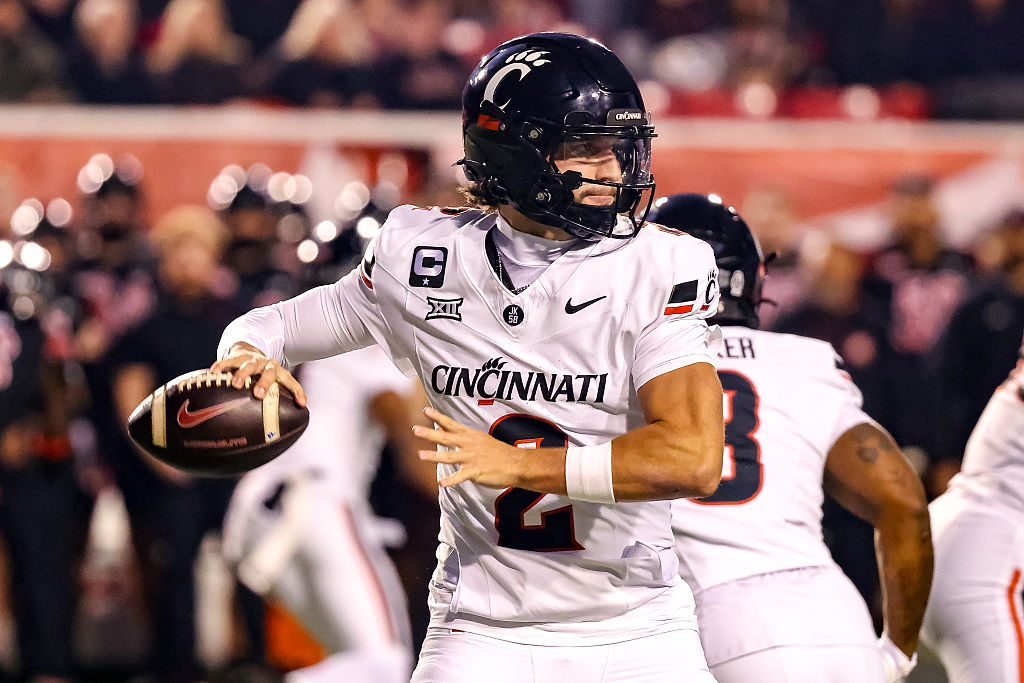
The Red Raiders are all in on Cincinnati quarterback Brendan Sorsby, inking the former Bearcat to a $5 million payday.
I mean absolutely no disrespect to Sorsby, but is he worth more money than most NFL players on rookie contracts?
The answer is actually more complicated than that, though, as there isn’t a salary cap (yet) in college sports, so Sorsby is technically worth whatever a team is willing to pay for him.
The problem is that for every Texas Tech (oil money) or Michigan (Larry Ellison), there are several other programs that won’t be able to keep up in the arms race.
I’m not even talking about the Tulanes and James Madisons of the world. Even blue-bloods like Georgia and Ohio State don’t have the booster base to keep up with any of the Texas schools.
That means teams like Tech, A&M, and even Houston can theoretically price out everyone for almost any player they want.
READ: College Footbal Is SIck – Transfer Portal, NIL, And More
Unqualified quarterbacks commanding top dollar in college football isn’t a new phenomenon, either.
Miami reportedly paid Carson Beck somewhere in the vicinity of $4 million to forgo his final season at Georgia and skip the NFL Draft to come down to Coral Gables, and while the Hurricanes are in the College Football Playoff semifinals, most of that is thanks to their dominance on the offensive and defensive lines of scrimmage.
The Canes probably could have gotten a similar result this season if they had cut that quarterback budget in half or, God forbid, actually developed a quarterback that was already on their roster for a fourth of Beck’s price tag.
Even non-traditional powers are upping the ante for quarterbacks.
A team like Duke paid their QB, Darian Mensah, $8 million over multiple years to leave Tulane after a stellar true freshman season.
Giving $8 million to a Group of 5 freshman feels risky, and while it paid off for the Blue Devils, it also robs a team like the Green Wave of the ability to develop a special talent like Mensah.
I don’t have a solution to any of this, and I doubt the NCAA does either.
They let this genie out of the bottle and have no desire nor power to put it back, so we as fans are now forced to deal with the consequences.
Regardless of what ends up happening, this is just another example of college football following in the footsteps of its older brother, the NFL, and being all the worse for it.
I’ve said it before, and I will say it again: I want my college football back.




 The settlement’s ramifications don’t begin and end with revenue sharing, though. Some $2.8 billion in back pay will also be distributed to athletes who either fully or partially missed out on NIL payments between 2016 and 2024 because of the NCAA’s previous rules, and third-party NIL deals will be subject to far more stringent levels of scrutiny going forward.