
NIL
The new college sports agency is rejecting some athlete NIL deals with donor-backed collectives

The new agency in charge of regulating name, image, likeness deals in college sports sent a letter to schools Thursday saying it had rejected deals between players and donor-backed collectives formed over the past several years to funnel money to athletes or their schools.
Those arrangements hold no “valid business purpose,” the memo said, and don’t adhere to rules that call for outside NIL deals to be between players and companies that provide goods or services to the general public for profit.
The letter to Division I athletic directors could be the next step in shuttering today’s version of the collective, groups that are closely affiliated with schools and that, in the early days of NIL after July 2021, proved the most efficient way for schools to indirectly cut deals with players.
Since then, the landscape has changed yet again with the $2.8 billion House settlement that allows schools to pay the players directly as of July 1.
Already, collectives affiliated with Colorado, Alabama, Notre Dame, Georgia and others have announced they’re shutting down. Georgia, Ohio State and Illinois are among those that have announced plans with Learfield, a media and technology company with decades of licensing and other experience across college athletics, to help arrange NIL deals.
Outside deals between athlete and sponsor are still permitted, but any worth $600 or more have to be vetted by a clearinghouse called NIL Go that was established by the new College Sports Commission and is being run by the auditing group Deloitte.
In its letter to the ADs, the CSC said more than 1,500 deals have been cleared since NIL Go launched on June 11, “ranging in value from three figures to seven figures.” More than 12,000 athletes and 1,100 institutional users have registered to use the system.

Georgia’s Olivia Smoliga swims to a first-place finish in the 100-yard freestyle at the NCAA women’s swimming and diving championships at Georgia Tech, March 19, 2016, in Atlanta. Credit: AP/David Goldman
But the bulk of the letter explained that many deals could not be cleared because they did not conform to an NCAA rule that sets a “valid business purpose” standard for deals to be approved.
The letter explained that if a collective reaches a deal with an athlete to appear on behalf of the collective, which charges an admission fee, the standard is not met because the purpose of the event is to raise money to pay athletes, not to provide goods or services available to the general public for profit.
The same would apply to a deal an athlete makes to sell merchandise to raise money to pay that player because the purpose of “selling merchandise is to raise money to pay that student-athlete and potentially other student-athletes at a particular school or schools, which is not a valid business purpose” according to the NCAA rule.
Sports attorney Darren Heitner, who deals in NIL, said the guidance “could disproportionately burden collectives that are already committed to spending money on players for multiple years to come.”

Texas State takes the field against Louisiana Monroe during an NCAA football game, Oct. 14, 2023, in San Marcos Texas. Credit: AP
“If a pattern of rejections results from collective deals submitted to Deloitte, it may invite legal scrutiny under antitrust principles,” he said.
On a separate track, some college sports leaders, including the NCAA, are seeking a limited form of antitrust protection from Congress.
The letter said a NIL deal could be approved if, for instance, the businesses paying the players had a broader purpose than simply acting as a collective. The letter uses a golf course or apparel company as examples.
“In other words, NIL collectives may act as marketing agencies that match student-athletes with businesses that have a valid business purpose and seek to use the student’s NIL to promote their businesses,” the letter said.

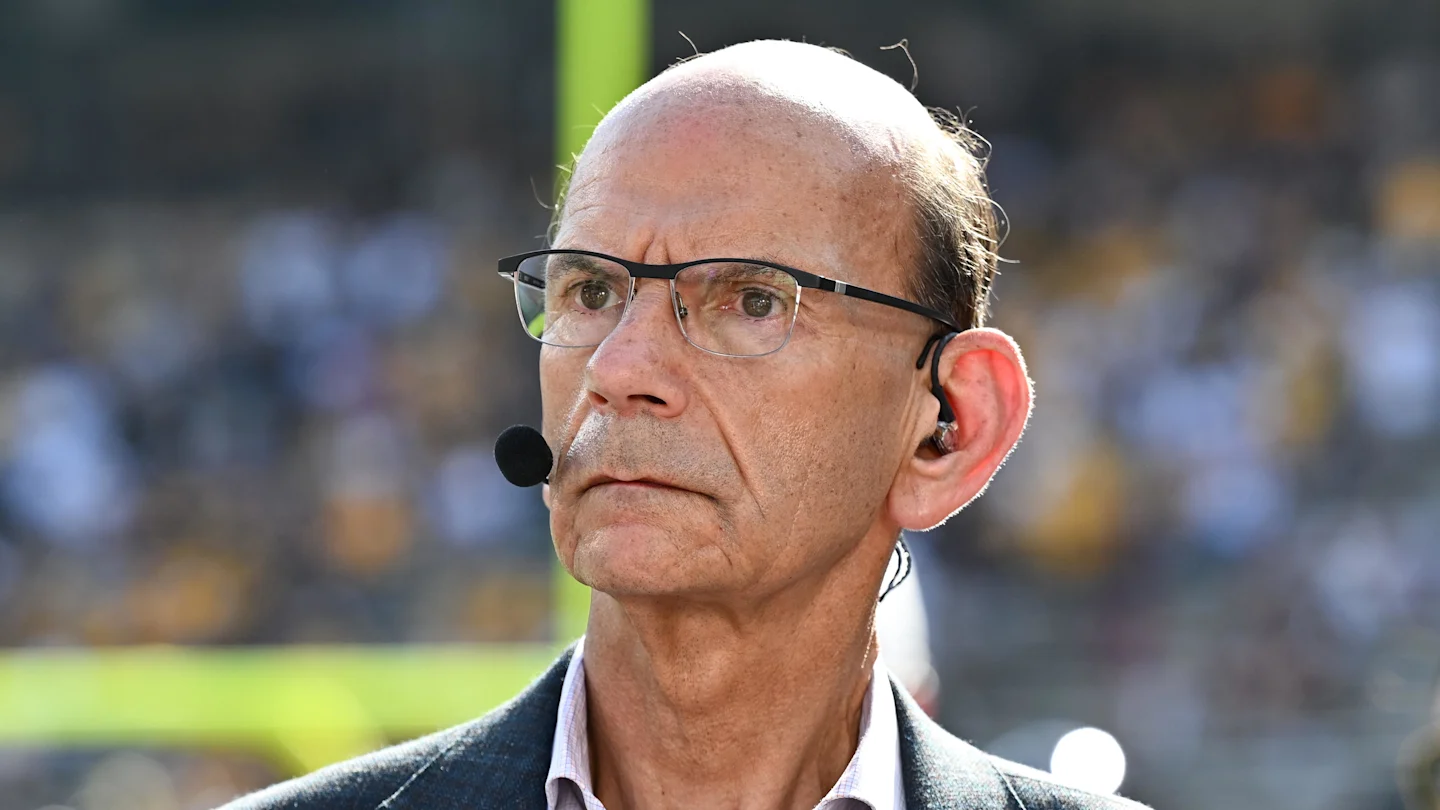
It’s no surprise that opinionated college football personality Paul Finebaum had some pointed responses when asked to describe certain college football coaches with just one word.
But his description for former LSU and Notre Dame coach Brian Kelly was particularly interesting.
“Arrogant,” Finebaum said.
We asked for one word to describe these top college football coaches, and @finebaum did not disappoint. pic.twitter.com/9KmL2oTMPJ
— Alabama Crimson Tide | AL.com (@aldotcomTide) December 16, 2025
In the spirit of the bit, he didn’t expound on the label, and many college football fans will surely nod at that description for the fired former Tigers coach. But what makes it interesting in this case is that Finebaum had Kelly as a weekly guest on Mondays during the football season and was usually very deferential to the coach for taking the time to join him.
“Coach, always appreciate you coming on, on Monday,” Finebaum said to close out Kelly’s last weekly appearance before he was fired on Oct. 26.
That said, he’s not wrong.
There’s a reason there has been almost zero buzz around Kelly’s name for any job opening this cycle, despite his status as the winningest active coach in college football with an official record of 297-109-2 across his tenures at Division II Grand Valley State, Central Michigan, Cincinnati, Notre Dame and LSU, with 21 more wins officially vacated from his Notre Dame record.
Kelly stunned the college football world when he left Notre Dame after 12 seasons and five straight double-digit-win seasons, including 11-1 in his final year there in 2021, for LSU while saying publicly that he wanted “to be in an environment where I have the resources to win a national championship.”
Never mind that Kelly had led Notre Dame to the national championship game after the 2012 season, losing to Alabama, and that, without him, the Fighting Irish reached the national championship game last year (losing to Ohio State).
He drew further ire when he said he was rooting for the Irish in that title game last year while noting that he had recruited many of the players involved.
Of course, Kelly’s LSU tenure seemed misfit almost from the start when he slipped into a fake southern accent during his introductory press conference.
1 day at LSU Brian Kelly has developed a southern accent pic.twitter.com/ct8PUpcEEE
— Pardon My Take (@PardonMyTake) December 3, 2021
Then there was the awkward video of Kelly showing off his dance moves with a recruit …
LSU coach Brian Kelly is dancing again — this time with TE target Danny Lewis.
Rate his dance moves 🕺👇
— Rivals High School (@RivalsHS) January 29, 2022
But the biggest problem was that Kelly simply didn’t win enough in Baton Rouge. He never reached a College Football Playoff with the Tigers, never finished higher than No. 12 in the final rankings, dipped to 9-4 last year and then 5-3 this season before he was fired.

Football
Elon Athletics
Five-Game Home Slate, Road Trip To Stanford Highlight Schedule
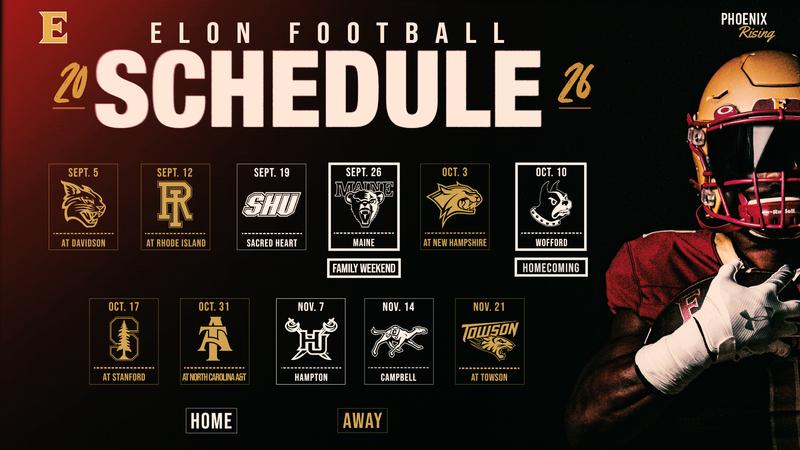
ELON – Elon football head coach Tony Trisciani and the Phoenix released their 2026 football schedule Tuesday afternoon in conjunction with an announcement from the Coastal Athletic Association. The 11-game schedule is highlighted by a mid-October trip to Stanford and an eight-game CAA slate that gets started in week two.
The Phoenix will play five home games at Rhodes Stadium, including Sept. 26 for Family Weekend against Maine and Oct. 10 for Homecoming against Wofford.
Elon opens the season with two straight road games at Davidson (Sept. 5) and CAA foe Rhode Island (Sept. 12). The Phoenix defeated the Wildcats 55-7 in its 2025 home opener. The trip to Rhode Island will be Elon’s first since 2022.
Elon plays its home opener on Sept. 19 against CAA newcomer Sacred Heart and then closes out the month of September by hosting Maine on Sept. 26 for Family Weekend.
After completing the first half of its CAA schedule by returning to the northeast to face New Hampshire on Oct. 3, the Phoenix welcomes former Southern Conference rival Wofford to Rhodes Stadium for Homecoming on Oct. 10. It’ll serve as Elon’s only home game in October.
Elon will make its first-ever West Coast trip to face Stanford on Oct. 17, marking the fourth straight season it has clashed with an ACC opponent. A bye week will then lead to another October road game at North Carolina A&T on Halloween (Oct. 31).
The Phoenix closes its home schedule against Hampton (Nov. 7) and Campbell (Nov. 14) before playing its regular-season finale at Towson (Nov. 21), a squad it defeated 17-3 on the road in 2025.
2026 ELON FOOTBALL SCHEDULE
Aug. 29 – Bye
Sept. 5 – at Davidson
Sept. 12 – at Rhode Island
Sept. 19 – vs. Sacred Heart
Sept. 26 – vs. Maine (Family Weekend)
Oct. 3 – at New Hampshire
Oct. 10 – vs. Wofford (Homecoming)
Oct. 17 – at Stanford
Oct. 24 – Bye
Oct. 31 – at North Carolina A&T
Nov. 7 – vs. Hampton
Nov. 14 – vs. Campbell
Nov. 21 – at Towson
* Game times will be announced at a later date
SUPPORT THE PHOENIX
2026 Elon Football Season tickets are available now at ElonTickets.com. Fans can support Elon Athletics through the Phoenix Club.
STAY POSTED
For further coverage of Elon Football, follow the Phoenix on X (@ElonFootball) and Instagram (@ElonFB).

In Season 2, Episode 10 of Portfolio Players presented by E*TRADE from Morgan Stanley, Brian Hoyer offers an inside look at how NIL (name, image, and likeness) collectives, and program infrastructure are transforming college football. As a longtime NFL quarterback and current partner at Legacy25, Hoyer brings a rare combination of on-field experience and operational insight into how the athlete pipeline is shifting.
He details why today’s college landscape mirrors professional sports, how donor fatigue and escalating expectations impact programs, and why collectives must prioritize financial education and long-term planning. Hoyer also explains the role of Legacy25 in supporting athletes across multiple sports and why non-revenue programs are increasingly turning to NIL as a competitive advantage.
Drawing from his years with the Patriots, Hoyer reflects on the leadership lessons, discipline, and organizational standards that now inform his post-football career. With thoughtful commentary on NIL, athlete development, and long-term sustainability, Hoyer paints a clear picture of where college athletics is heading and what it will take to succeed.
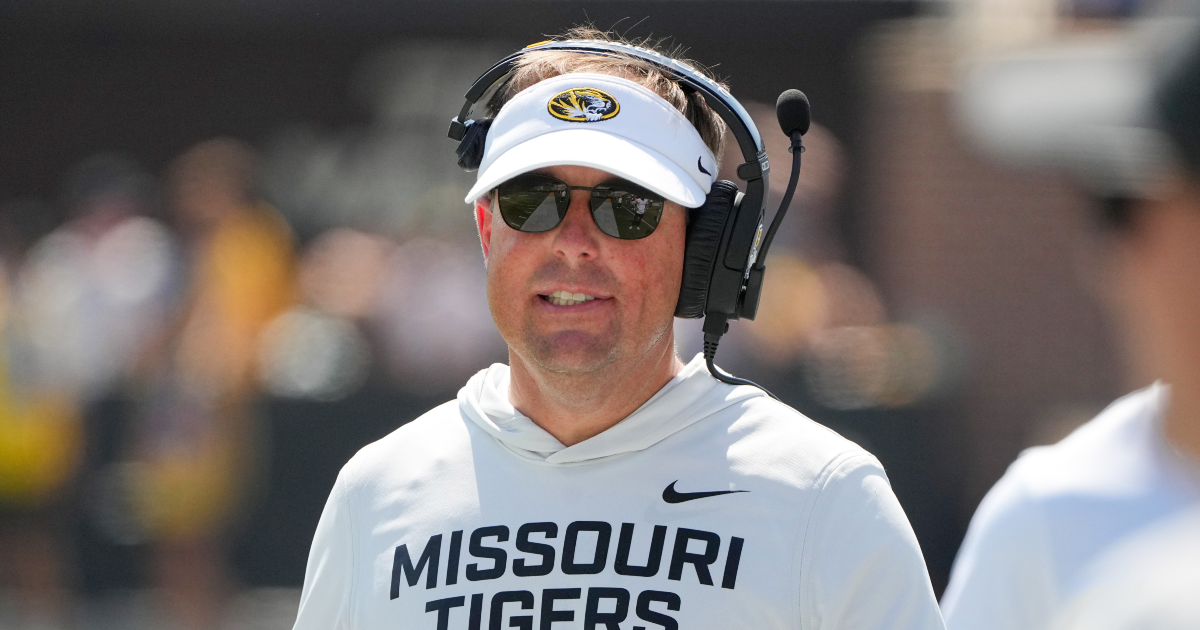
Eli Drinkwitz is frustrated with a lot of aspects of the current world of college football, and he believes other coaches share that sentiment. The Missouri head man opened up about his gripes in a recent press conference, prompted by a question about the recent College Sports Commission finalizing a participation agreement with the power conferences.
The agreement ushered in the era of revenue sharing in college sports and put NIL guidelines on schools. But Drinkwitz believes there’s still more that needs to be done to come up with a system of rules that everyone can be happy with.
SUBSCRIBE to the On3 NIL and Sports Business Newsletter
“There’s a lot of coaches discussing it and frustrated, in my opinion,” he said. “I understand the national sentiment because of the salary ranges of head coaches, it feels like we’re complaining. But we’re really not. We’re trying to sound some warning bells. …The system that we’re in is really sick right now. College football is sick and showing signs of this thing really cracking moving forward, and we need to get something under control.”
Per the agreement, a copy of which was obtained by On3’s Pete Nakos, schools are required to waive their right to sue the CSC. Additionally, schools are to agree to the rules in place following House settlement approval, including roster limits and other NIL compliance rules.
If a school violates any of the rules in place by the participation agreement, they “shall be subject to fines, penalties or other sanctions for these matters,” the 11-page document reads. While punishments are not yet finalized, schools could lose out on conference revenue or receive a limited postseason ban if they – or other associated entities – file suit against the CSC.
But that’s not the only issue Eli Drinkwitz and other coaches are watching. The Mizzou coach also pointed to an ongoing lawsuit that could potentially grant a fifth-year of eligibility to numerous players, as well as the topic of tampering, which he claimed is not punished at all.
“I think we’re all waiting with baited breath trying to wait on what’s going to happen with this fifth-year lawsuit in Nashville, where you could have a flurry of fifth-year guys now being eligibile,” Drinkwitz said. “That would just throw a completely new wrinkle in the system. Tampering is at the highest level. There is no such thing as tampering because there’s nobody that’s been punished for tampering. Everybody on my roster is being called. I had a dad call me and say — and I called the head coaches at their schools — that, ‘This school and this school and this school called offering this much money.’ You’re putting a lot of pressure on young men.
“We’re paying them, as 1099 employees, a lot of money. We’re not offering any type of retirement. We’re not offering any type of health benefits. We’ve worked around the system and then tried to create that as the system instead of creating a functioning way moving forward and making sure that it works for everybody. Whether that’s collective bargaining, whether that’s making them employees, whether that’s antitrust legislation that protects the commissioner of the SEC or the NCAA from lawsuit, something needs to be done.”
Finally, Eli Drinkwitz invoked Nick Saban with his final point. He mentioned how, during meetings, Saban would always talk about making sure that his players were prepared for life after football, especially for those that didn’t end up playing in the NFL.
Drinkwitz believes that might be getting lost a bit with the worry about revenue and all the changes being made to increase it. But he stated that he got into coaching for different reasons, and knows many other who still feel the same way.
“A lot of us got into college athletics because we wanted to help these young men grow and develop, and I think we’re still doing that mission,” he said. “But it’s getting really hard because coach (Nick) Saban used to talk about all the time, creating value for yourself. When he talked about it, he wasn’t just talking about value for the NFL. He was talking about creating value for yourself with a college degree. You’ve lost that aspect of it.
“These guys are going to create tremendous value for themselves playing the game of football, and that’s awesome. We love that these guys are getting paid. I love that last week, these guys went out with their own money and bought gifts for Coyote Hill. But also, my job is to look at them three or four years down the road. How many of them are in a better position because they played football because they transferred four times? That’s just the system that we’ve created. Not all freedom is good freedom.”
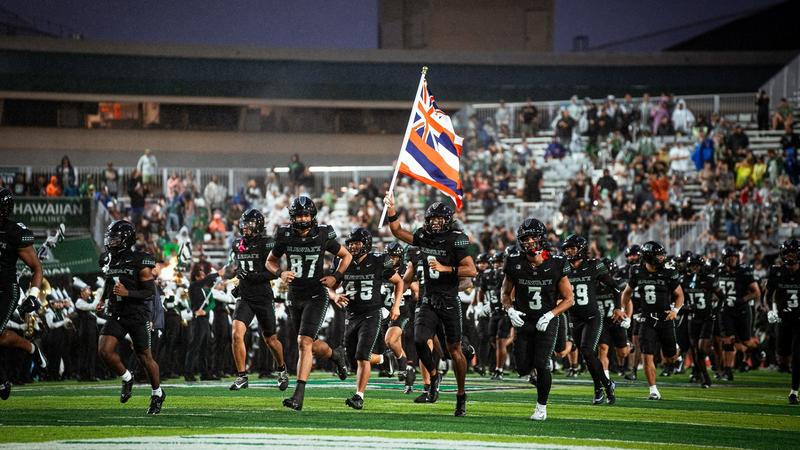
The University of Hawai’i Athletics Department has received a $300,000 gift from the Downtown Athletic Club of Hawai’i (DACH) to support the Rainbow Warrior football program through the team’s Boost the ‘Bows Fund, which is set up to support UH Athletics’ ability to recruit and retain elite student-athletes.
The contribution is a major philanthropic commitment to the Football NIL fund and marks a significant milestone for UH Athletics as it adapts to the rapidly changing landscape of college sports.
College athletics has undergone a significant transformation in recent years with the emergence of Name, Image, and Likeness (NIL) programs, which allow student-athletes to receive compensation for endorsements, appearances, and other partnerships.
“University of Hawaiʻi NIL support is essential to retaining and recruiting top student-athletes who choose to represent the State of Hawaiʻi,” said UH head coach Timmy Chang. “In today’s collegiate landscape, NIL opportunities directly impact the current and future success of our programs.
“Donations from partners like DACH play a vital role in providing our student-athletes with the resources they need to compete at the highest level. With continued support from the community and donors, University of Hawaiʻi NIL can reach its full potential. Please support the University of Hawaiʻi NIL as we continue to build excellence and proudly represent the Pacific as the region’s No. 1 university.”
Over the past few years, DACH has been involved in supporting UH student-athletes with various NIL opportunities. As the landscape has continued to evolve, and with new guidelines now allowing the University to directly manage institutional NIL agreements with student-athletes, DACH has chosen to contribute the remaining funds directly to the Boost the ‘Bows Fund. This approach allows UH Athletics to administer NIL support in a centralized and coordinated way.
“This was a collaborative effort from several leading Hawai’i organizations, including aio, American Savings Bank, Central Pacific Bank, First Hawaiian Bank, Queen’s Health Systems, Hawai’i Pacific Health, HMSA, Island Insurance, and the Waterhouse Foundation, all of whom share a commitment to strengthening the future of UH Athletics.” said Brandon Kurisu, Vice President for DACH, which was formed in 2012 by the owners and top executives of trusted downtown Hawai’i businesses. “Boost the ‘Bows is a vital tool for building a strong, competitive program, and we’re proud to support the student-athletes who inspire our community.”
The framework for college athletics recently changed once again following the House v. NCAA settlement, which allows universities, for the first time, to enter into direct, institutional NIL agreements with student-athletes across all sports. This change gives athletics departments a crucial new tool to remain competitive in recruiting and retaining top talent, especially for programs like UH football that rely on homegrown athletes and statewide support.
“The Downtown Athletic Club’s gift is an investment in the future of our football program,” said UH Athletics Director Matt Elliott. “It helps us remain competitive and is the first of what we hope will be many commitments in this new era of NIL. A big mahalo to DACH for their generosity and commitment and support of our program.”
Businesses, organizations, and individuals interested in supporting UH student-athletes can learn more about the Boost the ‘Bows Fund and how they can get involved by visiting Support Our Team, Hawai’i’s Team.


The University of Hawaiʻi at Mānoa Athletics Department has received a $300,000 gift from the Downtown Athletic Club of Hawaiʻi (DACH) to support the Rainbow Warrior football program through the team’s Boost the ’Bows Fund, which is set up to support UH Mānoa Athletics’ ability to recruit and retain elite student-athletes.
The contribution is a major philanthropic commitment to the football NIL (Name, Image, and Likeness) fund and marks a significant milestone for UH Mānoa Athletics as it adapts to the rapidly changing landscape of college sports.

College athletics has undergone a significant transformation in recent years with the emergence of NIL programs, which allow student-athletes to receive compensation for endorsements, appearances and other partnerships.
“University of Hawaiʻi NIL support is essential to retaining and recruiting top student-athletes who choose to represent the State of Hawaiʻi,” said UH head coach Timmy Chang. “In today’s collegiate landscape, NIL opportunities directly impact the current and future success of our programs.
“Donations from partners like DACH play a vital role in providing our student-athletes with the resources they need to compete at the highest level,” Chang added. “With continued support from the community and donors, University of Hawaiʻi NIL can reach its full potential. Please support the University of Hawaiʻi NIL as we continue to build excellence and proudly represent the Pacific as the region’s No. 1 university.”
Over the past few years, DACH has been involved in supporting UH student-athletes with various NIL opportunities. As the landscape has continued to evolve, and with new guidelines now allowing the university to directly manage institutional NIL agreements with student-athletes, DACH has chosen to contribute the remaining funds directly to the Boost the ’Bows Fund. This approach allows UH Mānoa Athletics to administer NIL support in a centralized and coordinated way.
“This was a collaborative effort from several leading Hawaiʻi organizations, including aio, American Savings Bank, Central Pacific Bank, First Hawaiian Bank, Queen’s Health Systems, Hawaiʻi Pacific Health, HMSA, Island Insurance, and the Waterhouse Foundation, all of whom share a commitment to strengthening the future of UH Athletics,” said Brandon Kurisu, vice president for DACH, which was formed in 2012 by the owners and top executives of trusted downtown Hawaiʻi businesses. “Boost the ’Bows is a vital tool for building a strong, competitive program, and we’re proud to support the student-athletes who inspire our community.”
The framework for college athletics recently changed once again following the House v. NCAA settlement, which allows universities, for the first time, to enter into direct, institutional NIL agreements with student-athletes across all sports. This change gives athletics departments a crucial new tool to remain competitive in recruiting and retaining top talent, especially for programs like UH football that rely on homegrown athletes and statewide support.
“The Downtown Athletic Club’s gift is an investment in the future of our football program,” said UH Mānoa Athletics Director Matt Elliott. “It helps us remain competitive and is the first of what we hope will be many commitments in this new era of NIL. A big mahalo to DACH for their generosity and support of our program.”
Businesses, organizations and individuals interested in supporting UH student-athletes can learn more about the Boost the ’Bows Fund and how they can get involved by visiting Support Our Team — Hawaiʻi’s Team.

Paul Finebaum labels newly unemployed college football coach as ‘arrogant’

INDYCAR Establishes Independent Officiating BoardPerformance Racing Industry

2025 DragChamp 10-12 Jr. Racer of the Year

Elon Announces 2026 Football Schedule

Patriots Lessons, NIL Chaos & His Post-NFL Career

Ankored and Players Health Partner to Centralize Youth Sports Compliance Management

Why Oakley is betting on girls flag football

Woodward Park City opens winter season with Play Forever Fridays
Time to vote for Rockford-area athlete of the week for Dec. 8-13

Eli Drinkwitz details conversations with other coaches about challenges facing college football

Flora Dedeaux

Packers players encourage literacy with reading events at Green Bay, Oneida schools

Affidavit reveals AI-generated plan in alleged grooming case against Mesquite pastor’s son and volleyball coach

Fort Wayne mayor reports youth violence down, discusses casino and Google data center

Authorities seek more victims as suspect in child assault linked to local sports programs

First Tee Winter Registration is open

Fargo girl, 13, dies after collapsing during school basketball game – Grand Forks Herald

CPG Brands Like Allegra Are Betting on F1 for the First Time

F1 Las Vegas: Verstappen win, Norris and Piastri DQ tighten 2025 title fight

Volleyball Recaps – November 18

Two Pro Volleyball Leagues Serve Up Plans for Minnesota Teams

Utah State Announces 2025-26 Indoor Track & Field Schedule

Sycamores unveil 2026 track and field schedule

Redemption Means First Pro Stock World Championship for Dallas Glenn

Jo Shimoda Undergoes Back Surgery

Texas volleyball vs Kentucky game score: Live SEC tournament updates

Bowl Projections: ESPN predicts 12-team College Football Playoff bracket, full bowl slate after Week 14

SoundGear Named Entitlement Sponsor of Spears CARS Tour Southwest Opener

How this startup (and a KC sports icon) turned young players into card-carrying legends overnight

Robert “Bobby” Lewis Hardin, 56

 NBA Legend Michael Jordan to Join NBC Sports as Special Contributor
 Why a rising mid-major power with an NCAA Tournament team opted out of revenue-sharing — and advertised it
 Falcons mailbag
 Portal Update – Basketball and Gymnastics Take Hits
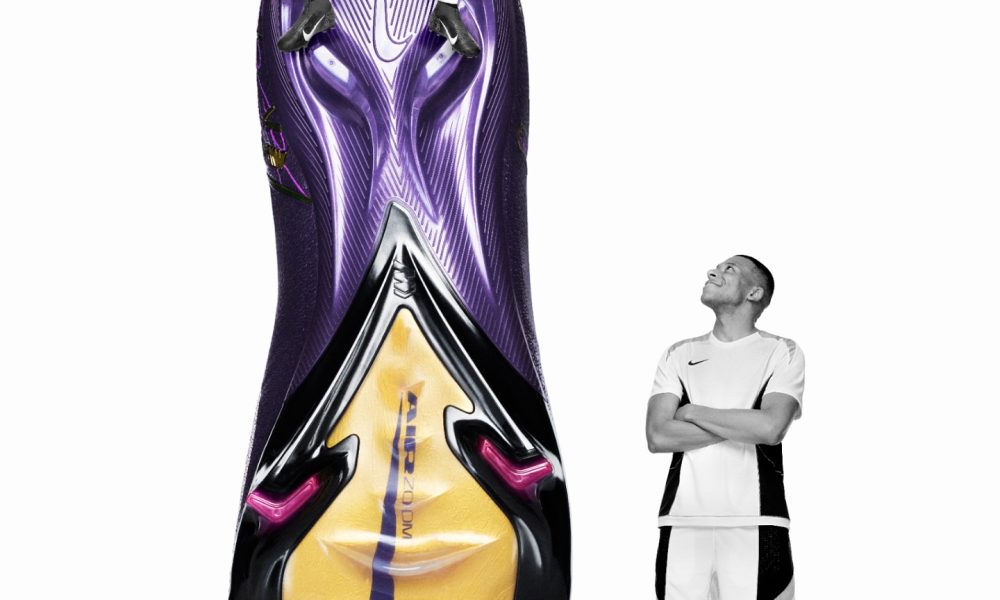 has always dreamed in Mercurial. Now his initials are on the boots.
The new Kyl…
has always dreamed in Mercurial. Now his initials are on the boots.
The new Kyl…
-
 Motorsports3 weeks ago
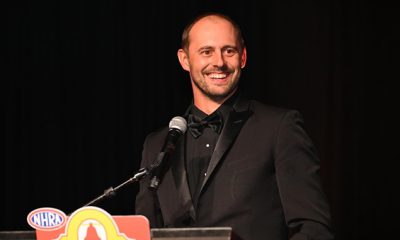
Redemption Means First Pro Stock World Championship for Dallas Glenn
-
 Motorsports3 weeks ago
Jo Shimoda Undergoes Back Surgery
-
 NIL2 weeks ago
Bowl Projections: ESPN predicts 12-team College Football Playoff bracket, full bowl slate after Week 14
-
 Motorsports6 days ago
SoundGear Named Entitlement Sponsor of Spears CARS Tour Southwest Opener
-
 Rec Sports3 weeks ago
How this startup (and a KC sports icon) turned young players into card-carrying legends overnight
-
 Rec Sports2 weeks ago
Robert “Bobby” Lewis Hardin, 56
-
 NIL3 weeks ago
Indiana’s rapid ascent and its impact across college football
-

 Motorsports3 weeks ago
Pohlman admits ‘there might be some spats’ as he pushes to get Kyle Busch winning again
-
Sports2 weeks ago
Wisconsin volleyball sweeps Minnesota with ease in ranked rivalry win
-

 Motorsports3 weeks ago
What stands behind Ford’s commitment to becoming ‘the Porsche of off-road racing’