
NIL
The New Power in the Big 12? All Signs Point to Texas Tech


College athletics isn’t just changing—it’s being overhauled. With NIL now fully embedded in the ecosystem and the House v. NCAA settlement looming, the old guard of amateurism is long gone. We’re entering a new era—one where revenue sharing, player compensation, and collective bargaining aren’t fringe hypotheticals; they’re the foundation.
For most programs, this kind of disruption feels like a tidal wave. But for a select few, it’s an opportunity.
Nowhere is that more apparent than in the Big 12. The league, freshly abandoned by Texas and Oklahoma, finds itself searching for a flagship. The SEC has a red carpet of blue bloods: Alabama, Georgia, LSU, and now the Longhorns and Sooners. The Big Ten boasts brands like Ohio State, Michigan, and Penn State—programs with institutional clout and generational staying power. But the Big 12? It’s a collection of gritty, often-overlooked contenders fighting to matter on a national scale.
That’s where Texas Tech enters the chat. The Red Raiders aren’t just reacting to the NIL era—they’re thriving in it. And as the landscape of college sports resets, the folks in Lubbock might be the league’s best shot at a new-era standard bearer. A knight in shining armor—but not in the traditional sense—built on timing, ambition, and a checkbook that remains open.
Leadership Over Dollars: Why Intent Drives Texas Tech’s NIL Strategy
What separates Texas Tech isn’t just the money—it’s the intention behind it. NIL isn’t a side hustle in Lubbock—it’s the model.
That foundation starts with The Matador Club, a well-organized, well-funded NIL collective that has operated with clarity from day one. But the muscle behind it is Cody Campbell, the former Tech lineman turned energy mogul who’s become one of the most influential figures in college athletics. His recent invitation to co-chair President Trump’s proposed “Commission on College Sports” wasn’t a surprise for those paying attention—even if the commission never came to fruition. The ask alone spoke volumes. Campbell doesn’t just write checks—he writes the playbook.
It’s why Tech led the nation in NIL-driven spending during the 2025 football transfer portal cycle, outpacing even SEC programs desperate to patch holes. Joey McGuire’s staff didn’t just land names—they landed starters. Difference-makers. Players who picked Lubbock over bigger markets and flashier brands did so because the vision was clear and the compensation was real.
Portal Power: How Texas Tech Built the Top Transfer Class in 2025
While the Red Raiders have long flirted with relevance, what they’ve built under Joey McGuire in the NIL era is something entirely different: sustainable power through the portal. No program in the country—not in the SEC, not in the Big Ten—landed a better 2025 transfer class. Not one.
Texas Tech outspent virtually everyone.
But this wasn’t a desperate arms race. It was targeted, methodical roster construction. McGuire and his staff didn’t just hunt for names—they evaluated need, character, and scheme fit. Then they closed the deals. Not with empty promises, but with structure and financial backing that actually delivers. That approach has brought top-tier talent to Lubbock across every position group, from blue-chip edge rushers to Power Five-tested offensive linemen and skill talent.
The result? A roster deeper and more complete than any Texas Tech has fielded in the modern era. There’s real buzz now—not just inside the facility, but across the league. Because when you combine elite evaluation with NIL muscle, you don’t just reload. You leapfrog.
NiJaree Canady and the NIL Blueprint for Softball Dominance
Softball might be the clearest lens through which to see just how transformative NIL can be when wielded with vision.
When NiJaree Canady entered the transfer portal, she was already the most dominant pitcher in the country—a generational talent with All-American honors, a Pac-12 title, and a reputation for rewriting stat sheets. What she didn’t have yet was a seven-figure NIL deal or a platform willing to build around her.
Texas Tech gave her both.
The Red Raiders didn’t just land Canady—they built a championship program around her. And the results? Historic.
In her first season in Lubbock, Tech tore through the Big 12, winning its first-ever regular-season title and backing it up with the program’s first conference tournament crown. They swept their regional, dominated their super regional, and this week, they’re headed to their first Women’s College World Series Championship Series after knocking off four-time defending national champion Oklahoma—a feat that, until now, bordered on unthinkable.
Canady didn’t just anchor the team; she raised its ceiling. Her presence elevated the expectations, the recruiting, and the national profile of the entire program. She’s the most valuable NIL investment in women’s college sports—not just because of what she costs, but because of what she delivers.
And the best part? She chose Texas Tech over the sport’s traditional powerhouses. Over legacy. Over location. Because in this new era, belief backed by investment wins. And nobody’s doing that better than the Red Raiders.
Basketball Buy-In: How McCasland Turned Tech Into a Big 12 Threat
Success in one sport doesn’t always translate across an athletic department. But in Lubbock, the standard Canady set in the circle has rippled far beyond the softball field.
Just ask Grant McCasland.
Texas Tech men’s basketball is now one of the most well-positioned programs in the country—not because of blue-blood cachet or NBA draft pipelines, but because of the same NIL-first strategy that brought Canady to town. McCasland’s second season was a masterclass in portal construction and program cohesion. He brought in impact transfers—including Big 12 Player of the Year JT Toppin—kept key pieces in the fold, and coached the Red Raiders to their first Elite Eight appearance since 2019.
The blueprint wasn’t complicated: recruit players who fit the culture, pay them what they’re worth, and build something they want to stick around for. In a league where programs like Kansas, Baylor, and Houston are constantly reshuffling their decks, Tech has managed to build—and retain—depth.
That kind of continuity is rare now. But at Texas Tech, it’s becoming the brand.
The Architect: Cody Campbell’s Vision Is Reshaping College Sports
Of course, none of this happens without leadership—and Texas Tech’s advantage there might be its most underrated weapon.
Cody Campbell isn’t just a donor. He’s the architect.
A former Red Raider offensive lineman turned West Texas energy magnate, Campbell has been the driving force behind Texas Tech’s NIL rise since Day 1. He co-founded The Matador Club, established sustainable NIL pipelines across multiple sports, and reimagined what athletic fundraising looks like in Lubbock.
Now, he’s doing it on the national stage.
Last month, Campbell was invited to co-chair a proposed commission on the future of college sports—a move that, despite the commission not launching, underscored his growing influence. That’s not a footnote. That’s a headline. And it speaks volumes about where Texas Tech now sits in the national conversation.
Campbell will help shape federal NIL legislation, compliance frameworks, and revenue-sharing models for the next generation of athletes. And you can bet his vision—athlete-first, donor-driven, and unapologetically aggressive—will reflect the same blueprint he’s already put to work in Lubbock.
Simply put: while other programs are bracing for change, Texas Tech is writing the change.
This is what the future of college athletics looks like—and Texas Tech isn’t just keeping up, it’s setting the pace.
In a Big 12 without its traditional anchors, someone has to lead. The league doesn’t have a built-in blue blood—no Ohio State or Alabama to lean on. What it has is a vacuum. And in this new age of NIL, the schools best positioned to fill that vacuum aren’t the ones with the prettiest history books. They’re the ones with alignment, infrastructure, and ambition.
That’s Texas Tech.
From softball dominance to basketball retention to football roster reconstruction, the Red Raiders have shown they’re willing to invest at a level few can match. And with Cody Campbell shaping the very policies that will define the next decade of college sports, Tech isn’t just ahead of the curve—they are the curve.


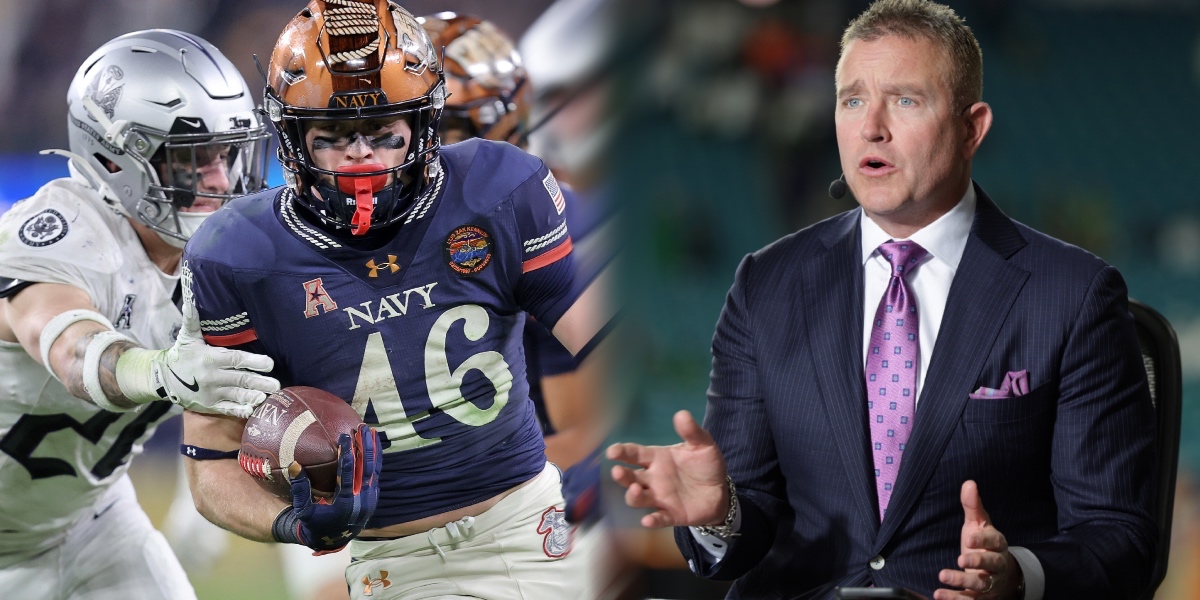
Kirk Herbstreit drew the ire of the college football world earlier this week. Now, he’s moving quickly to clear the air after a social media post sparked backlash following the Army–Navy game.
Herbstreit, who’s become the face of ESPN’s college football coverage, addressed the situation in a lengthy post on X (formerly Twitter). He apologized for what he described as a misleading caption attached to a video clip promoting his Nonstop podcast with colleague Joey Galloway.
“Just wanted to address a mistake that we made on my socials earlier this week related to last weekend’s CFB Saturday,” Herbstreit wrote. “We posted a video where Joey Galloway and I were talking about how strange it was to be home and not traveling on a CFB weekend since the end of August and how we felt like we didn’t know what to do with ourselves. We posted the video with a caption that was very misleading about ‘Weird not having any CFB this weekend.’”
Herbstreit acknowledges that the wording created a bit of confusion, appearing dismissive of games that were played, most notably the Army–Navy Game: “Some took that out of context and ran with it. That’s on me,” he wrote. “My apologies for any disrespect (albeit unintentional) to the teams that played last weekend, especially [Army] and [Navy].”
The original post, which has since been deleted, included a clip from the podcast with the caption, “Saturday not having college football threw us for a loop,” accompanied by a laughing emoji. That message quickly drew a response from Navy Athletics, which quote-tweeted the post with a photo from Saturday’s game.
More on Kirk Herbstreit, Army-Navy controversy
Alas, Navy went on to defeat Army 17–16 in one of college football’s most iconic rivalry games, a matchup that has occupied a standalone window on the Saturday following conference championship weekend for years. While it has no impact on the College Football Playoff, the game remains one of the sport’s most-watched events, averaging 7.84 million viewers on CBS.
In his apology, Herbstreit emphasized that the Army–Navy Game remains one of his favorite events on the college football calendar: “Not sure there is a game I personally look forward to more EVERY year than Army and Navy,” Herbstreit added.
“They play for the love for each other and love for the game. Anybody who has ever watched me for the last 30 years on TV knows how I feel about that game.”
Beyond Army–Navy, last weekend still featured a full slate of college football action. Bowl season opened with Washington facing Boise State, the FCS playoffs held quarterfinal games, and South Carolina State defeated Prairie View A&M in the Celebration Bowl.
Listening back to the deleted clip itself, Herbstreit and Galloway never actually stated there was no football being played. Instead, they reflected on the unfamiliar feeling of being home for the first time since August without their usual travel routine.
Still, the initial caption struck a nerve. It highlighted how easily attention can drift toward the Playoff and power conference landscape at the expense of the broader sport.
Herbstreit closed his statement by reiterating that the controversy stemmed from miscommunication, not disrespect. At the least, he felt it necessary to publicly address the situation, and let the college football world know he meant no ill-will towards Army-Navy.
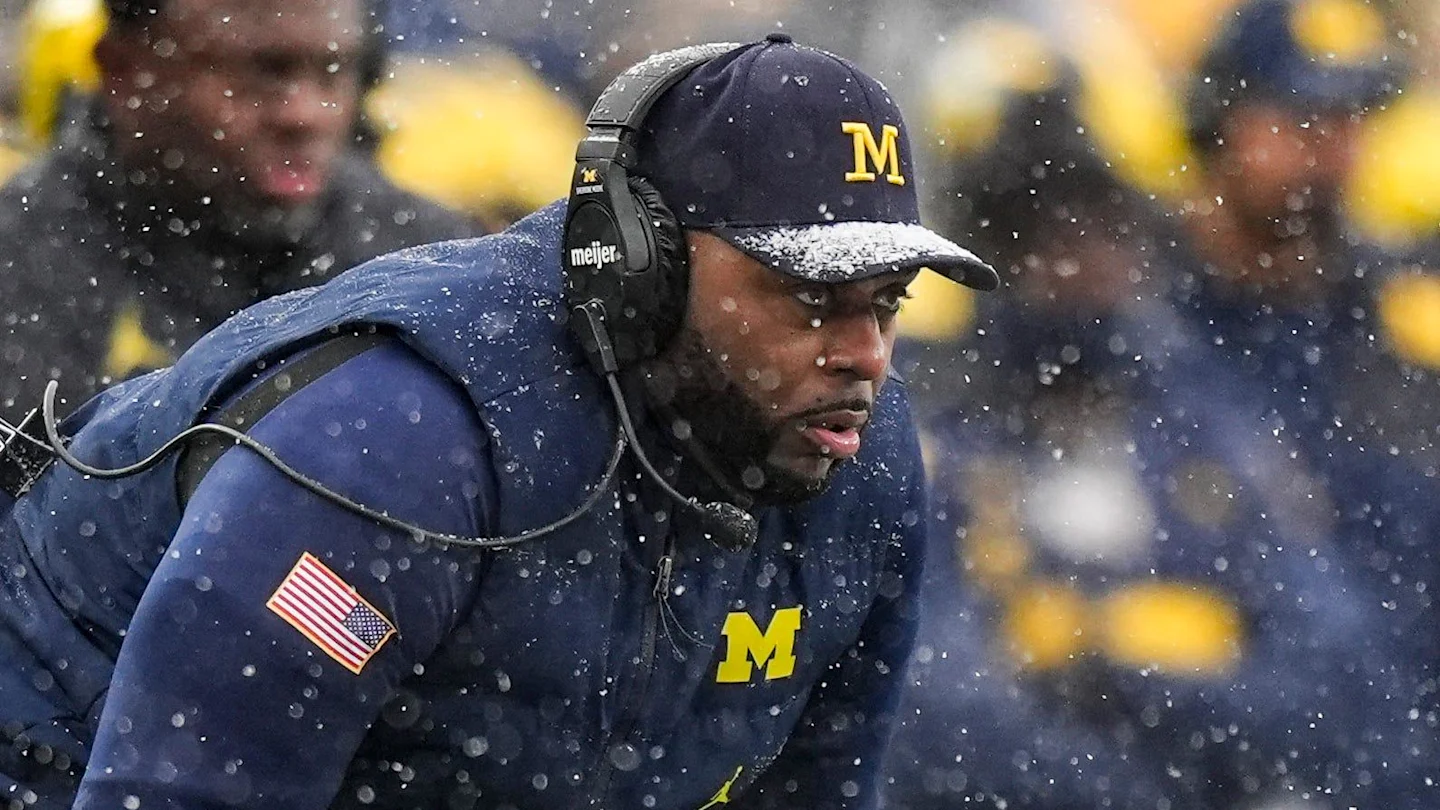
Kalen DeBoer has done his part to deny any interest in the Michigan head coaching vacancy, but that hasn’t stopped an army of vocal college football analysts from speculating that he could jump ship from Alabama and become the next head man of the Wolverines.
DeBoer signed an $87 million contract over eight years with Alabama early in 2024 as the man to replace Nick Saban, and so far the results have been up and down, but mostly positive.
However connected DeBoer may be to the Crimson Tide at this point in time, there are reportedly some serious power brokers linked to Michigan who are extending quite an invitation, according to ESPN analyst Greg McElroy.
What Michigan is offering Kalen DeBoer
“Michigan has been applying the full court press from the very beginning. Michigan has offered what I’ve been told is a blank check to try to get Kalen DeBoer out of Tuscaloosa and to Ann Arbor,” McElroy said on the Always College Football podcast.
That talk comes right as DeBoer has Alabama in the College Football Playoff, where he will seek to improve on his 0-2 record against Oklahoma in the first-round game on Friday.
“Now, the timing is unique here, because Kalen DeBoer is in the midst of preparing his team for [the playoff]. Frankly, I don’t think that Kalen DeBoer is ultimately going to take the job,” McElroy said.
“I don’t think Kalen DeBoer wants to take the job. I think Kalen DeBoer is happy at Alabama. I think the narrative that he’s unhappy, or he’s this or that or his family doesn’t like this or his family doesn’t like that, I think it’s untrue.”
Current insider reporting suggests that DeBoer’s representatives are seeking a contract extension from the school for the coach, but that remains a very fluid situation right now with no set conclusion.
But if DeBoer should lose to the Sooners again and get the Tide bounced from the playoff early?
Sure, it would raise the temperature around his tenure, but to suggest that it would be enough for him to abandon ship and try again at Michigan is unlikely.
Michigan will still pursue, however unlikely
“I think people are just grasping at straws, but it doesn’t mean that Michigan won’t continue to try to woo him,” McElroy said.
“It doesn’t mean they’re going to stop trying to go get him. They’re gonna try. Whatever they have to do, they’re gonna try, because there’s a lot of people that believe that Kalen DeBoer is one of the top coaches in America. So you go all in for that coach. And I think Michigan will continue to try to go all in on Kalen DeBoer.”
It stands to reason that Michigan, which finds itself in a coaching decision it didn’t expect to be in at this point in time, will do whatever they can to attract a big name.
But what if that big name already has a big job?
The feeling between Michigan and DeBoer is not mutual
“They can be interested. Is the interest actually reciprocated? I don’t know the answer to that, frankly. I frankly don’t think it is,” McElroy said.
“I think Kalen DeBoer, like I said, will be the head coach [at Alabama] moving forward, but he’s going to likely turn down more money at Michigan if he does end up staying in Tuscaloosa.
“At least, that’s what it sounds like right now. Because when I hear ‘blank check,’ you can interpret that how you want to interpret that.
“It sounds like, to me, Kalen DeBoer is going to be very wealthy on either side. But I do know that Kalen DeBoer is, right now, not interested in having a conversation with Michigan, and I do know this: that Michigan is not interested, yet, in accepting, the answer no.”
Read more from College Football HQ
Dec. 17, 2025, 10:04 p.m. ET
- Shilo Sanders is in a legal dispute with a bankruptcy trustee over approximately $250,000 in alleged unauthorized fund transfers.
- The core issue is whether Sanders’ NIL earnings belong to him or to the bankruptcy estate for his creditors.
- Sanders filed for Chapter 7 bankruptcy in October 2023 to discharge over $11 million in debt from a 2022 civil court judgment.
The trustee in the bankruptcy case of former Colorado football player Shilo Sanders filed a response in court Dec. 17 that supports his argument that Sanders violated bankruptcy law by making unauthorized transfers to himself of approximately $250,000.
The court filing is the latest volley in bankruptcy case of Sanders, who filed a Chapter 7 petition in October 2023 seeking to get out of more than $11 million in debt.
The trustee in the case, David Wadsworth, sued Shilo Sanders in October, seeking recovery of the money and an accounting from Sanders. Sanders’ attorney then filed a motion to dismiss that complaint in November by arguing that the trustee had it all wrong.
The latest filing from Wadsworth’s attorney rebuts that notion as litigation related to the bankruptcy case continues on multiple fronts in addition to this one. Sanders’ debt stems from a civil court judgment in Dallas in 2022.
“The Defendants are wrong,” the trustee’s attorney, Peter Cal, said in court documents.

What is at issue in Shilo Sanders’ bankruptcy case this time?
The court-appointed trustee in this case is in charge of rounding up Sanders’ non-exempt assets for the bankruptcy estate to divide among his creditors. The trustee has alleged having trouble doing that and filed a complaint against Sanders related to money he traced in Sanders’ business accounts for earnings from his name, image and likeness (NIL). Those businesses are named as defendants with Sanders in the complaint – Big 21 and Headache Gang.
The big issue is who the money in question belongs to – the bankruptcy estate or Sanders. Sanders’ earnings before he filed the bankruptcy petition generally belong to the bankruptcy estate for the benefit of creditors, while earnings that came from work after the bankruptcy filing belong to Sanders.
Sanders’ attorney, Keri Riley, stated in court documents that the money in question belonged to Sanders because they were “post-petition earnings.”
The trustee disputed that in his response Dec. 17 and said such factual disputes can’t be resolved at this stage of the litigation.
Sanders “relies on the unsupported argument that all funds in the Big 21 Bank Account were post-petition earnings of the Debtor (Sanders),” the trustee’s attorney stated. “The Court should not consider the argument because it relies upon a factual assertion that is not included in the (trustee’s) Complaint.”
The trustee’s attorney then includes a footnote.
“Because there were funds in the Big 21 Bank Account on the Petition Date, the Defendants’ argument is demonstrably wrong,” the footnote states.
Timing of Shilo Sanders’ NIL earnings in dispute
The trustee’s attorney also noted that “even if the earnings are paid to the Debtor post-petition, they are considered prepetition earnings when they arose from a prepetition contractual interest.”
He argued the trustee pleaded his case well enough for the trustee’s complaint against Sanders to move forward. A bankruptcy judge will decide on that.
“It is more than plausible that at least certain of the post-petition deposits were based on the Debtor’s prepetition NIL contracts and, therefore, are subject to turnover,” the trustee’s filing states.
The trustee said he wants Sanders to “account for the distributions” after “improperly” exercising control over property of the bankruptcy estate.
How did the Shilo Sanders bankruptcy case originate?
A security guard at Sanders’ school in Dallas sued Sanders and his parents in 2016, alleging Shilo caused him permanent and severe injuries when he tried to confiscate his phone at school in 2015, when Shilo was 15. The parents were dismissed from the case before trial, but when the case finally went to trial in 2022, Shilo didn’t show up for it and got hit with a $11.89 million default judgment as a result.
The security guard, John Darjean, then moved to collect on that judgment in 2023, leading Sanders to file for bankruptcy to try to get out of it.
Darjean is fighting that with a separate complaint that alleges the debt should not be discharged in bankruptcy court because it stems from a “willful and malicious” injury. Sanders has claimed he acted in self-defense. That complaint remains pending, as does a separate complaint from Darjean that accuses Sanders of improperly omitting or concealing assets in his bankruptcy closures, which he denied.
What is Shilo Sanders doing now?
Sanders, 25, is out of football after being waived by the Tampa Bay Buccaneers before the season. He recently said he was moving to Miami and is pursuing other interests, such as acting and rap music.
He graduated from Jackson State before transferring to play for his dad at Colorado in 2023. Earlier this year, he also earned a master’s degree at Colorado in organizational leadership.
He is the middle of Deion Sanders’ three sons. His younger brother Shedeur is quarterback of the Cleveland Browns.
Follow reporter Brent Schrotenboer @Schrotenboer. Email: bschrotenb@usatoday.com
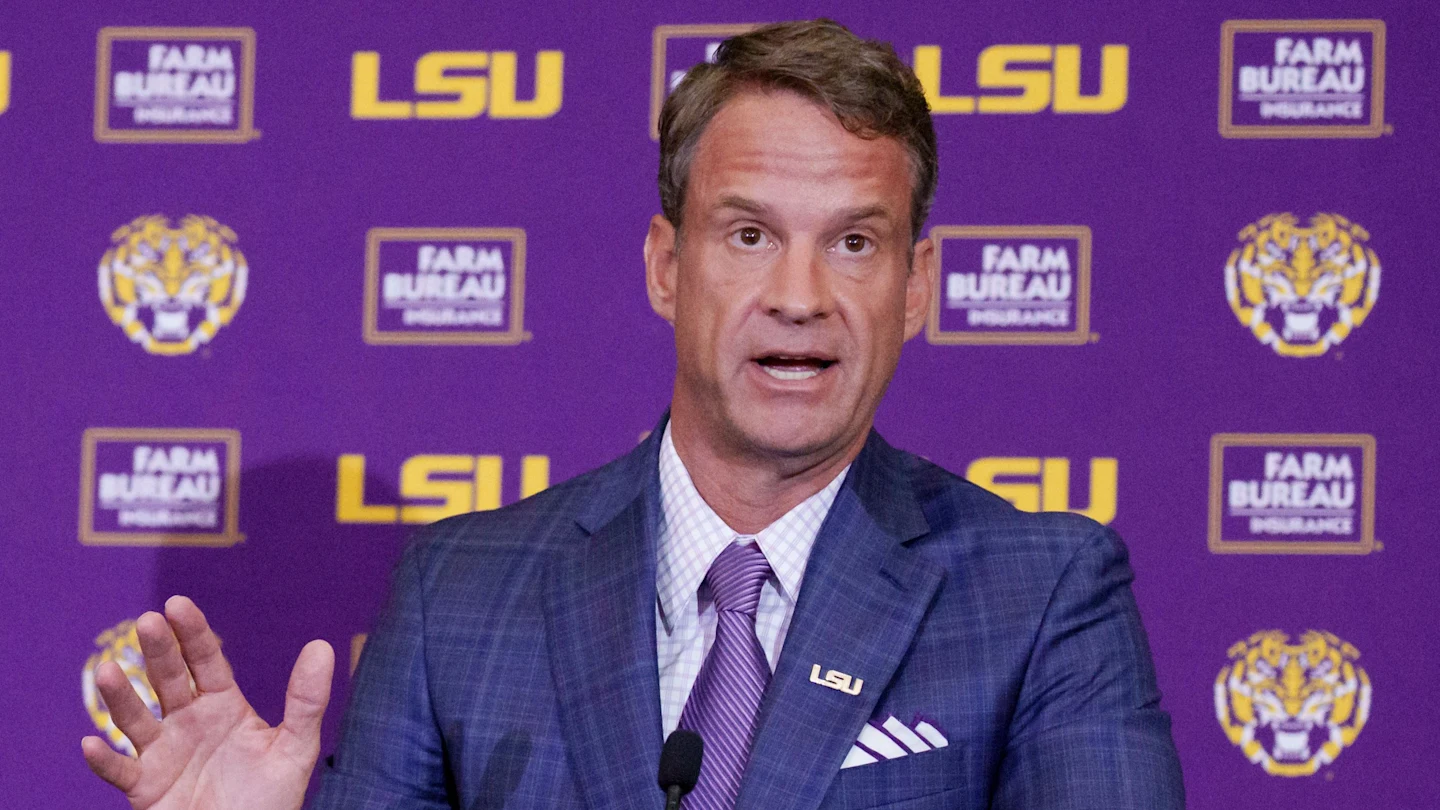
The College Football Playoff travels to Oxford on Saturday with an unusual subplot: an 11-win Ole Miss team entering the postseason without the coach who compiled that record, Lane Kiffin.
Meanwhile, Tulane, which Ole Miss faces Saturday at 3:30 p.m. ET at Vaught-Hemingway Stadium, also has an outgoing coach, as Jon Sumrall has opted to finish the season in New Orleans before taking over at Florida.
Kiffin’s 2025 Rebels closed the regular season at 11–1, securing a CFP berth behind a high-powered offense that averaged 498.1 total yards per game, the third-most in college football.
Within days of the Egg Bowl, Kiffin accepted LSU’s offer, a reported seven-year contract worth roughly $91 million, and announced he would not coach Ole Miss in the playoff.
Ole Miss promptly elevated defensive coordinator Pete Golding to lead the program into the bracket.
On Wednesday, Sumrall broke down the matchup and joked that he had offered Kiffin a spot in Tulane’s coaches’ box.
“They’ve got a lot more stability for the game than people realize. They’re going to be who they’ve been; they’re just not going to have Lane on the sideline,” Sumrall said. “I’ve reached out to Lane to see if he wants to sit in our coaches’ box for the game, but he hasn’t given me an answer yet.”

Tulane arrives after winning the American Athletic Conference and finishing 11–2.
The Green Wave boasts one of the nation’s best turnover margins (+10) and a defense that has tightened steadily since an early setback in Oxford on Sept. 20, a 45–10 loss.
Adding to the narrative, Sumrall, who signed a reported six-year, roughly $45 million deal to become Florida’s next head coach, has said he will remain with Tulane through the postseason before joining the Gators full-time.
Tulane has already designated passing-game coordinator Will Hall as Sumrall’s successor once the playoff run concludes.
This moment reflects a new normal in college football’s accelerated coaching market, with major hires unfolding as teams prepare for postseason play.
Read More at College Football HQ
- $3.7 million college football head coach named clear candidate for Michigan vacancy
- College football program signs $1.2 million deal with NFL legend
- College Football Playoff team losing all-conference player to transfer portal
- $2.1 million college football QB announces return to Big Ten program

Michigan is the last remaining Power Four college football program to find a new head coach in the 2026 cycle.
The Wolverines fired head coach Sherrone Moore on Dec. 10 with cause and are now one week into the coaching search. Alabama head coach Kalen DeBoer, Arizona State head coach Kenny Dillingham, and Missouri head coach Eli Drinkwitz are among those being floated as potential replacements.
One name that previously received attention for the vacancy was Washington head coach Jedd Fisch. On3 and ESPN college football insider Josh Pate reported Fisch’s interest in the Michigan head coaching vacancy has declined in the last few days.
“There’s been some sentiment today that maybe Jedd Fisch’s name has cooled,” Pate said. “I think that’s accurate. The critical take-home points are that I don’t know if Jedd Fisch is going to be a factor in the Michigan search moving forward… I don’t think Jedd Fisch is going to be an option for them.”

Fisch’s waning interest is a relief to Washington, as it is all too familiar with head coaches leaving for other jobs. The Huskies lost Kalen DeBoer to Alabama in the 2024 offseason when Nick Saban announced his retirement from the Crimson Tide.
The Florida alumnus spent the first 24 seasons in the coaching ranks as an assistant at a high school, in the Arena Football League, at six different NFL franchises and five different college football programs. He served as Michigan’s passing game coordinator in 2015 and 2016 under Jim Harbaugh, part of the reason he is linked to the Wolverines’ current opening.
The only head-coaching capacity Fisch had served in before he took the Arizona vacancy was as UCLA’s interim coach in the 2017 Cactus Bowl against Kansas State.
Arizona finished 1-11 in 2021, the lone win against California (10-3) in November. The Wildcats improved to 5-7 in 2022, a record that included an upset victory over a ranked UCLA team. Fisch followed up a 3-3 start in 2023 with seven consecutive wins, including an Alamo Bowl win over Oklahoma (38-24).
Fisch filled the Washington vacancy left by DeBoer in the 2024 offseason. An up-and-down first season led to a 6-7 season, capped by a Sun Bowl loss to Louisville (35-34).
The Huskies put together a stronger effort in 2025. Washington concluded the regular season at 8-4 and defeated Boise State (38-10) in the LA Bowl in SoFi Stadium.

Just two weeks away from the transfer portal opening in college football, coaches across the country are trying to maintain a roster while opposing schools look for any possible way to steal a player, no matter if it comes with paying a buyout.
On Monday, we all witnessed multiple starting quarterbacks decide to declare their intentions to enter the portal. This included DJ Lagway, Dylan Raiola, Brendan Sorsby and Sam Leavitt.
All of these guys would have had the opportunity to play next season at their current schools, with maybe Lagway being an outlier because of the new staff in Gainesville. But, we are certainly in a drastically different era of college athletics.
Transfer Portal Carousel: Quarterbacks, NIL Deals And The Rise Of A WILD College Football Free Agency Market
“There’s a warning that the system that we’re in is really sick right now, and college football is sick,” Eli Drinkwitz said. “There’s showing signs of this thing really cracking moving forward, and we need to get something under control.”
Contracts: How ‘Buyouts’ Are Handled, Or Trying To Be
At the moment, there are players deciding that entering the transfer portal is the best route to take when it comes to cashing in, with chances of making it to the NFL not guaranteed. This also means that certain players are deciding to enter the transfer portal while still under contract with a school like Missouri.
In reality, there are no rules at the moment. Some might think the new College Sports Commission is setting guidelines for future enforcement, but there is still no agreement signed that would have them running the show.
After Sherrone Moore Scandal, Michigan Board Orders Investigation Into Athletic Department
We have seen players re-signing with schools, while others are being shopped around to others. So, what happens if an athlete has signed an agreement with one school, but is looking at the opportunity of transferring?
Here’s the best way to explain what we’re seeing right now in college athletics when it comes to a player leaving one school after already being paid through a “front-loaded” deal before new rules were put into place over the summer.
Let Me Try To Summarize It
“Hey, College Player, you’re being paid $4 million. Here’s $3.8 million before the house settlement is passed. Once you hit the portal, we can terminate the deal, but if it’s terminated because you left, you owe us the money. If another collective cuts the check at the new school, the player would then have that taken out of their new school’s contract.
“And, if the player decides to balk at paying their previous school back, this is where lawsuits could continue. The athletes have already taken this money, but they still owe their previous school for the contract that has not been fulfilled. Somebody has to pay back that money, or what they agreed to under the particular contract.”
I hope that explains it, for the folks still trying to grasp all this.
As we’ve reported before, this is where certain contract language will have “buyout” clauses. But, who is enforcing this? This is what Eli Drinkwitz was trying to emphasize on Tuesday.
“I don’t know, some of the players that have entered the portal were under two-year contracts, and their anticipation is that another school will pay their buyout, or they’ll pay it back themselves,” Drinkwitz told reporters. “So, you know, contracts are contracts. I think there’s been an assumption that, not gonna go there. So we’ll see, we’ll see, you know. Right now, there are perceived rules, and then we’ll figure out what are the real rules moving forward.”
As you can tell, there is no clarity, and as much as some of these coaches would have loved the help of Congress, they might end up waiting a while before enforcement can actually take place.
It’s No Longer Tampering. College Athletes Are Being Shopped
Most coaches in this era would rather handle situations behind the scenes, rather than calling out an opposing school during a press conference setting.
Why? Because there is “tampering” going on at every school. Now, it might not be as rampant at some compared to others, but it’s happening. This could come in the form of a grad-assistant reaching out to the high school coach of a player enrolled at another school.
It happens when the player is not directly contacted, but goes through a third party. Agents are so prevalent in college athletics that they are also shopping players around to the highest bidder. And, we’re not talking about well-run companies that have made a name for themselves over the past six years.
The term “street agent” is used a lot in the industry, which is essentially a person who is working on a campus, acting as if they are running the business affairs of a particular athlete. They have zero training, besides being able to operate a social media account.
But, some of these athletes know no better, and will trust their futures with someone who acts as though they have their best interest at heart. I’m sorry, but having your buddy handle your business affairs, and most importantly life decisions, is not the smartest move.
“You know, tampering is at, I mean, the highest level. There is no such thing as tampering. It’s just, because there’s nobody that’s been punished for tampering. And so everybody on my roster is being called,” Drinkwitz said. “I had a dad call me and say that, and I called the head coaches at their schools, that this school and this school, and this school called, they are offering this much money.
“And, you know, you’re putting a lot of pressure on young men. You know, we’re paying them as 1099 employees, a lot of money, not offering any type of retirement, not offering any type of health benefits.”
I think it’s fair to say we have a long way to go, as schools are still trying to navigate this era of college athletics.

Texas Longhorns volleyball: 5 key offseason questions

Kirk Herbstreit issues an apology for misunderstood post following Army-Navy game

Householder Earns Honorable Mention All-America Status from AVCA

Rising Senior Libero Dionii Fraga Joins Alabama Volleyball
Shenandoah District girls basketball youth movement in 2025-26 season

Major William Byron Sponsor Cuts Its NASCAR Commitment in Half for 2026

Bob Asmussen | Full speed ahead for youth wheelchair-basketball program | Columns

Volleyball’s M.E. Hargan Garners All-America Honorable Mention

Fire department budgets have a private equity problem

$87 million coach reportedly offered ‘blank check’ by Michigan to replace Sherrone Moore

Youth Sports Hits Record Participation, But 46% Cost Surge and Widening Income Gap Threaten Growth

Deniz Dakak Named an AVCA All-American

Vallivue High hires Steve Myers as its next football coach

Declining participation forces Huntsville school to sideline team; coaches cite trend in youth sports

Skinner, Sheffield Set to Meet in NCAA Volleyball Semifinals – UK Athletics

First Tee Winter Registration is open

Fargo girl, 13, dies after collapsing during school basketball game – Grand Forks Herald

CPG Brands Like Allegra Are Betting on F1 for the First Time

F1 Las Vegas: Verstappen win, Norris and Piastri DQ tighten 2025 title fight

Volleyball Recaps – November 18

Sycamores unveil 2026 track and field schedule

Utah State Announces 2025-26 Indoor Track & Field Schedule

Two Pro Volleyball Leagues Serve Up Plans for Minnesota Teams

Redemption Means First Pro Stock World Championship for Dallas Glenn

Jo Shimoda Undergoes Back Surgery

Texas volleyball vs Kentucky game score: Live SEC tournament updates

Bowl Projections: ESPN predicts 12-team College Football Playoff bracket, full bowl slate after Week 14

SoundGear Named Entitlement Sponsor of Spears CARS Tour Southwest Opener

How this startup (and a KC sports icon) turned young players into card-carrying legends overnight

Robert “Bobby” Lewis Hardin, 56

 NBA Legend Michael Jordan to Join NBC Sports as Special Contributor
 Why a rising mid-major power with an NCAA Tournament team opted out of revenue-sharing — and advertised it
 Falcons mailbag
 Portal Update – Basketball and Gymnastics Take Hits
 has always dreamed in Mercurial. Now his initials are on the boots.
The new Kyl…
has always dreamed in Mercurial. Now his initials are on the boots.
The new Kyl…
-
 Motorsports3 weeks ago
Jo Shimoda Undergoes Back Surgery
-
 Motorsports1 week ago
SoundGear Named Entitlement Sponsor of Spears CARS Tour Southwest Opener
-
 NIL3 weeks ago
Bowl Projections: ESPN predicts 12-team College Football Playoff bracket, full bowl slate after Week 14
-
 Rec Sports3 weeks ago
How this startup (and a KC sports icon) turned young players into card-carrying legends overnight
-
 Rec Sports3 weeks ago
Robert “Bobby” Lewis Hardin, 56
-

 Motorsports3 weeks ago
Pohlman admits ‘there might be some spats’ as he pushes to get Kyle Busch winning again
-
Sports3 weeks ago
Wisconsin volleyball sweeps Minnesota with ease in ranked rivalry win
-

 Motorsports1 week ago
Donny Schatz finds new home for 2026, inks full-time deal with CJB Motorsports – InForum
-

 Motorsports3 weeks ago
Increased Purses, 19 Different Tracks Highlight 2026 Great Lakes Super Sprints Schedule – Speedway Digest
-

 Rec Sports2 weeks ago
How Donald Trump became FIFA’s ‘soccer president’ long before World Cup draw