Connect with us
https://yoursportsnation.com/wp-content/uploads/2025/07/call-to-1.png

Sports

The Portland Bar That Screens Only Women’s Sports

Published

on


When Jenny Nguyen was in her twenties, working as a chef in her home town of Portland, Oregon, she became a regular at pickup basketball games organized by a group of “lawyers, plumbers, women from all walks of life,” she told me recently. “The only thing we had in common was basketball.” Some of the women became her close friends, and one became a longtime girlfriend. When they weren’t playing, they got together to watch women’s games at sports bars—or tried to. Persuading a bartender or a manager to turn one on was a “constant situation,” Nguyen, who is now forty-five, recalled.

On April 1, 2018, the group got lucky when they met at a bar to watch the final of that year’s women’s N.C.A.A. tournament, in which Notre Dame defeated Mississippi State by just three points, with a player named Arike Ogunbowale—now a point guard for the Dallas Wings—hitting the game-winning jumper with 0.1 seconds left on the clock. As they were leaving, Nguyen remembered, “I hugged my friend, and I was, like, ‘That was the best game I’ve ever seen.’ And she goes, ‘Yeah, can you imagine if the sound was on?’ ” In the excitement, Nguyen had barely noticed that they’d been relegated to a small, silent TV in a corner. “I was really frustrated, not just with myself but with the whole situation,” she told me. “I said, ‘The only way we’re ever going to watch women’s sports the way it deserves is if we have our own place.’ ”

Exactly four years later, Nguyen opened the Sports Bra, a pub that exclusively screens women’s sports, in a storefront in Northeast Portland that was once occupied by a gay bar called Jocks. In the years before it opened, the concept was a running gag among Nguyen’s friends. “Whenever somebody would turn us down at the bar, we’d be, like, ‘Oh, at the Sports Bra they show volleyball,’ ” she said. Today, the Bra, as Nguyen calls it, is an institution imbued with that puckish idealism. Most of the twenty-odd beers on tap come from breweries that are owned or operated by women, and there are drinks named for the pioneering golfer Patty Berg (an Arnold Palmer with a cherry on top) and for Title IX. The homey space, panelled in dark wood, recalls a nineties coffeehouse, chockablock with sports memorabilia and flyers advertising community events: an adult L.G.B.T.Q.+ summer camp, an Asian climbers’ meetup called ElevAsian.

I planned my visit to the Bra to coincide with an Indiana Fever game, in the hope that the beloved point guard Caitlin Clark would draw a crowd. A few days before I arrived in Portland, Clark strained her left quad, an injury that would bench her for at least two weeks. Still, in the course of the day, a healthy stream of patrons showed up, some just to eat and drink: in addition to classics like burgers and fries, Nguyen offers a rack of ribs, adapted from her mother’s recipe for thit kho (pork braised in coconut soda), and wings dressed in “Aunt Tina’s Vietna-Glaze” (brown sugar and fish sauce) or a house-fermented buffalo sauce. Pretaped footage of women’s sailing, hockey, beach volleyball, and gymnastics played on the bar’s TVs until the Fever game aired live.

Jenna Dalton, an artist in her forties dressed in a tie-dyed tunic, with corkscrew curls cut in an asymmetrical bob, watched the game with her partner, George Kunz, a bespectacled, retired educator with a white ponytail. “I don’t like sports at all, and I have a rule that we don’t watch sports in my house,” Dalton told me. “But, I’ve got to tell you, I like watching the W.N.B.A.” Part of it is the pleasure of “watching women succeed in things,” she said. “But I also just like that it’s a little more scrappy. I find the N.B.A. to be very polished and boring.” Kunz added, “You feel like you’re not just watching a game—there’s a movement.”

Another couple, Katie Camarano and Brandon Fischer, on vacation from Champaign, Illinois, sat on a banquette, sharing a soft pretzel. “I’m a Fever fan,” Camarano said. “I like the pickups, I like the pace that they’re playing at. It’s just a lot more fun to watch. I mean, he can tell you”—she gestured at Fischer—“I used to not give a crap about basketball. It didn’t seem very important to me, men playing. Cool, you can dunk a ball—you’re seven feet tall, I don’t understand how that’s meant to be impressive!” Fischer winced. “I can feel myself getting under his skin a little bit,” Camarano said, then proceeded undeterred. “They miss a ton of their free throws. It’s a free point, how are you missing that? I feel like the women have to play a little bit more, physically, because no one that I’ve seen is tall enough to get in the air and dunk.”

At halftime, three young women wearing Fever gear got up and left, before the Washington Mystics won by six points. A trio of gray-haired women wandered in: a local married couple named Peggy Berroth and Sara Kirschenbaum, and their friend Lisa Hurtubise, who was visiting from Minneapolis. Kirschenbaum and Hurtubise met in 1984, in Columbus, Ohio, when they organized a women’s peace walk, trekking almost two hundred miles from Akron to Dayton in the course of ten days, protesting in front of nuclear-weapons facilities.

“I’m a sports fanatic,” Berroth, a retired labor-and-delivery nurse with a pronounced Boston accent, told me. Title IX was passed when she was in high school, in Massachusetts, but she found that female athletes were still given short shrift. “I was on the track team,” she said. “I was a miler, I ran the eight hundred for the relay, and I also threw the discus. There was no coach, there was no uniform. I went to the school board and I said, ‘How come the boys have two pairs of shoes, and we don’t have any shoes?’ They didn’t give us the time of day.” Berroth is a season-ticket holder for the Portland Thorns, the city’s pro women’s soccer team, and likes to watch away games at the Bra, when she can get a seat. “When I see twenty-six thousand people sitting in those stands, it just makes my heart sing,” she said.

As a prerecorded rock-climbing competition played on the TV nearest their table, Hurtubise, whose two daughters played hockey in Minneapolis, approached a bartender and asked whether they might consider putting on an N.B.A. game instead—the Minnesota Timberwolves were playing the Oklahoma City Thunder in the Western Conference finals. She shrugged agreeably when the bartender declined.

When Nguyen told her parents, who immigrated to the U.S. from Vietnam in the seventies, about her plan for the Bra, they were skeptical. “The very first thing my mom said was ‘Do you think right now is a good time to open a lesbian bar?’ ” Nguyen said, laughing. “At no point in the conversation did I say I was opening a lesbian bar, but Mom knew that that Venn diagram looks very much like a circle.” The moment proved to be the right one. Not only was there a dearth of places to watch women’s sports—as far as Nguyen could tell, hers would be the first bar in the U.S. devoted to screening them—there was also a lack of queer and specifically lesbian spaces, even in a city as progressive as Portland.

The Bra was met with some hostility—Nguyen said that she received death threats, and that vandals broke windows—but it was also an immediate success. Hundreds of people showed up to the opening, which was the day after Portland lifted its indoor mask mandate, and in the middle of the N.C.A.A. tournament. “It was mayhem, hugging and crying,” Nguyen said. “There was lots of exchange of fluids.” The place was buoyed, too, by a groundswell of support from “the lesbian network”: friends of friends who were eager to help with accounting, general contracting, washing dishes. The Bra stirred strong emotions among both patrons and staff. “When I was a server those first couple years, I had a bruise here,” the general manager, Katie Leedy, remembered, showing me how she would pinch the skin between her thumb and pointer fingers. “Because I would just be, like, ‘I can’t cry every time I talk to a table.’ ”

Earlier this month, Nguyen announced that the Bra was franchising and expanding into four new cities—Indianapolis, Boston, Las Vegas, and St. Louis—with the help of an investment from Alexis Ohanian, a co-founder of Reddit, better known to some as Serena Williams’s husband. In 2019, after he learned that Megan Rapinoe’s team, the Seattle Reign, sold for just three and a half million dollars, Ohanian “rage-tweeted” about women’s sports being undervalued, and vowed to buy or start a team. (He’s the founding control owner of Angel City F.C., L.A.’s pro women’s soccer team.) Some commenters called him an idiot. He felt a kinship with Nguyen when he saw people ridiculing the Bra online. “If you’re polarizing people this early with an idea, it means you’re really on to something,” he told me. “People are not going to waste their time hating unless they feel very threatened.”

By the end of the year, there will be more than two dozen women’s sports bars open across the country. Jax Diener, who opened Watch Me! Sports Bar, in Long Beach, California, last year with her wife, told me that she and Nguyen are members of a Slack chat with the owners of similar establishments, including A Bar of Their Own, in Minneapolis, and Rikki’s, in San Francisco. “The founding mothers,” Diener said, are a tight-knit group, generous with advice and emotional support.

“I think lesbians are always searching for more community spaces,” the comedian and “Daily Show” correspondent Grace Kuhlenschmidt told me recently. Kuhlenschmidt, who grew up in L.A., was not much of a sports fan until she went to her first New York Liberty game, in 2021, and found the Barclays Center filled with “almost exclusively women and older lesbians,” she said. “I was, like, ‘I’m in Heaven.’ ” Now she hosts Liberty watch parties—complete with seafoam-green Gatorade-and-Midori slushies—at Singers, a campy Bed-Stuy queer bar. When I mentioned Watch Me!, Kuhlenschmidt told me that she had family in Long Beach and spent many holidays there. “One time, my mom called me out of the blue and was, like, ‘Grace, guess what? There’s a huge lesbian community in Long Beach!’ And I was, like, ‘That is awesome. Is that the only reason you called?’ ” ♦



Link

Continue Reading
Click to comment

Leave a Reply

Your email address will not be published. Required fields are marked *

Sports

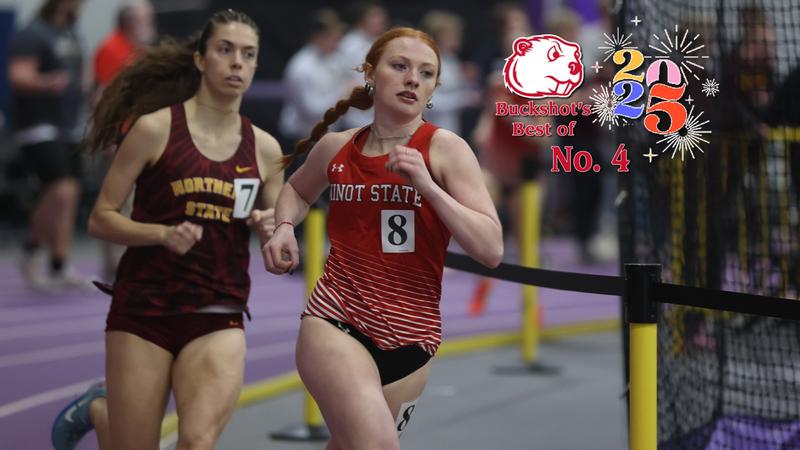
Buckshot’s Best of 2025: No. 4 – Bailey Wride races to 2nd NSIC title, wins 1,000 meters at NSIC Indoor Championships

Published

on


MINOT, N.D. – Earning a conference championship definitely deserves a place on the best moments of the year, so it is no surprise that a second individual title earns this runner a spot in the top 5 in our countdown.

No. 4 on Buckshot’s Best of 2025 is two-time NSIC champion Bailey Wride, who raced to the conference crown in the women’s 1,000 meters at the NSIC Indoor Track & Field Championships.

A standout distance runner from Kalispell, Montana, Bailey made her mark as a freshman at Minot State as she set a new all-time school record and won the women’s NSIC 600-meter title at her first NSIC Indoor Championship meet, in February of 2004, clocking a time of 1 minute, 36.76 seconds.

A reigning NSIC champion, the sophomore headed to the 2025 NSIC Indoor Championships having broken her own school record in the 600 with a time of 1:35.74 earlier in the 2024-25 indoor season, but she would not defend her title, instead stepping up to the 1,000 meters.

That change didn’t affect Wride one bit as she once again broke an all-time Minot State record and raced to a second NSIC title, winning the 1,000-meter crown in 2:55.63 to become a 2-time NSIC individual champion.


BUCKSHOT’S BEST OF 2025

No. 10: Minot State soccer finishes 4th in NSIC, hosts playoff game

No. 9: Minot State men’s hockey claims MCH Tournament title in 1st season as an MCH member

No. 8: Beaver women’s hockey goalie and freshman Jillian Ackerman earns All-American honors

No. 7: Jace Carlisle shoots school-record 7-under 65, finishes 4th at NSIC Championship to earn NSIC All-Tournament Team honors

No. 6: Jaxon Gunville sets career 3-pointer record with 316 made 3s, and ties the single-game 3-pointer record

No. 5: Haleigh Lematta earns return to NCWWC Nationals Tournament becoming 1st Beaver women’s wrestler to qualify twice for Nationals.

No. 4: Bailey Wride races to 2nd NSIC title, wins 1,000 meters at 2024-25 NSIC Indoor Track & Field Championships.

No. 3: Revealed December 30

No. 2: Revealed December 31

No. 1: Revealed January 1


Link

Continue Reading

Sports

Texas Longhorns coaching and athletics administration legend Jody Conradt completes career

Published

on


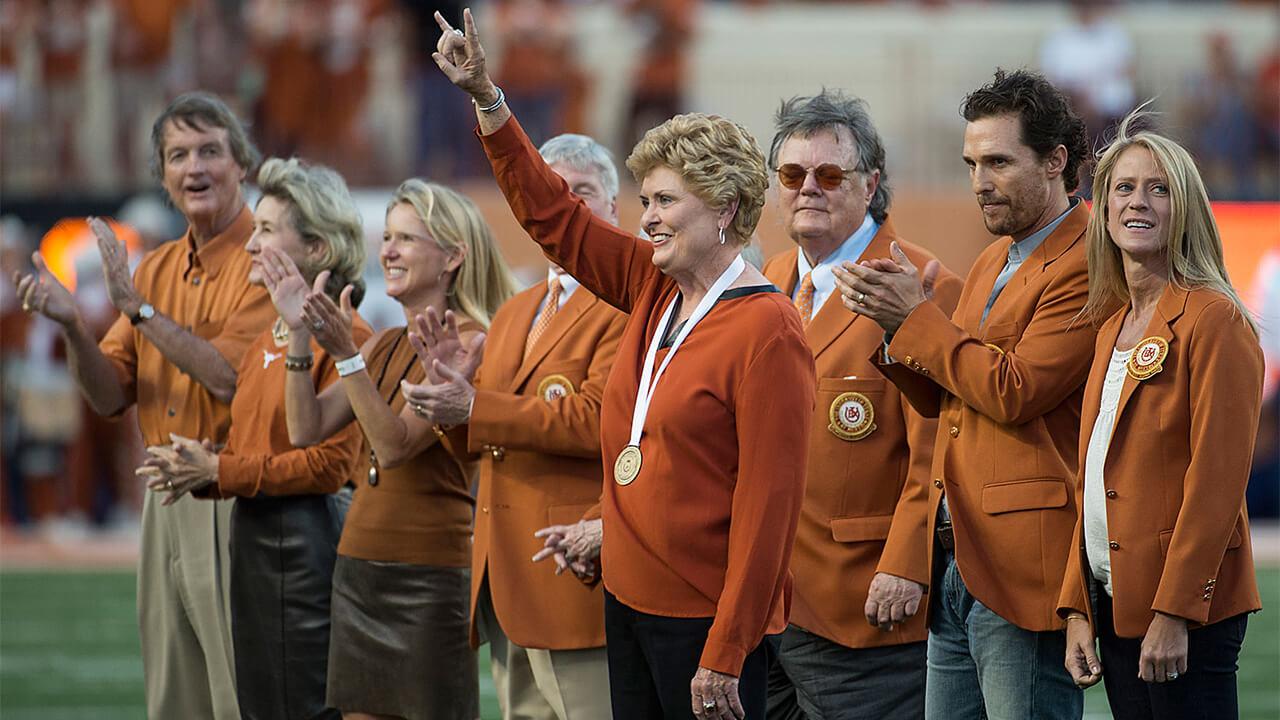
AUSTIN, TexasJody Conradt, who built University of Texas Women’s Basketball and Texas Women’s Athletics into a respected, enviable broad-based collegiate powerhouse, is retiring from fulltime appointment. She most recently served as special advisor to Longhorns Vice President and Folger Family Athletics Director Chris Del Conte.

Effective December 31, 2025, she will continue as a department volunteer, providing input and support as requested or needed. She also will complete a nine-year tenure on the NCAA Infractions Committee in August 2026.

Conradt completes 49 notable years after joining UT in spring 1976 as the first fulltime women’s head coach in two sports – basketball and volleyball. Prior to moving the Longhorns’ women’s programs into the NCAA championships structure in 1982-83, she coached in the Association for Intercollegiate Athletics for Women (AIAW) era, had teams that dominated the Southwest Conference for most of two decades and coached teams for 10 years in the Big 12 Conference. Her teams won a staggering and historic 183 consecutive games against SWC opponents from January of 1978 to February of 1990.

She retired from coaching following the 2006-07 season with 900 career victories, 10 SWC and two Big 12 Conference regular season titles, nine SWC postseason tournament championships and one Big 12 Conference postseason tournament crown, one AIAW Final Four and three NCAA Final Four appearances and the first perfect season (34-0 in 1985-86) in NCAA women’s basketball history. That 1985-86 team captured the only national basketball title at Texas.

Prior to Texas, she was an athletics administrator, coached volleyball, basketball and other sports and was a physical education instructor at Sam Houston State (1969-73) and UT Arlington (1973-76).

Conradt was the first women’s coach not required to teach collegiate classes upon joining UT. She coached volleyball for the first two years and then served former Texas women’s AD Donna Lopiano as basketball coach and associate athletics director for all women’s sports for the next 15 years. She conceptualized the academics support structure for women student-athletes, hiring fellow Baylor graduate Dr. Sheila Rice to head those services in 1977 and then Dr. Randa Ryan in the 1990s. She also insisted upon important career readiness/life skills programming and mentorship as part of academics services, along with behavioral/mental health and intervention for disordered eating.

In the late 1970s, Conradt sought the services of former NCAA shot put champion Dana LeDuc to develop her team with strength and conditioning programming as he was doing with men’s sports. She also was instrumental in recruiting first Becky Bludau Marshall and later Tina Bonci (1985) to oversee sports medicine/wellness services specifically designed for elite female student-athletes. The protocols in these units were considered best in class and eventually expanded under the direction of Conradt and legendary men’s athletics director DeLoss Dodds to provide services for all men and women student-athletes.

As conference realignment altered the college athletics landscape in the early 1990s, Conradt was named director of UT’s eight-sport separate women’s athletics department in spring 1992 when Lopiano became executive director of the Women’s Sports Foundation in New York City.  In the same month, undergraduate women on several UT club sports teams filed a Title IX lawsuit against the University, seeking more scholarship and participation opportunities for women.

Conradt and Dodds worked with UT administration and UT System Board of Regents to settle the lawsuit in May 1993, which resulted in adding three varsity sports: women’s soccer (fall 1993), softball (fall 1996) and rowing (fall 1998). Conradt hired accomplished hall of fame caliber coaches, including Chris Petrucelli in soccer, Connie Clark in softball and Carie Graves in rowing. She also performed both basketball coach and AD jobs for nine years (1992-2001) before returning to basketball coaching solely in April 2001. Her 2003 team reached the NCAA Final Four and won both Big 12 regular season and postseason tournament crowns. Texas also won the 2004 Big 12 regular season title.

To date, eight of UT’s 11 women’s sports have won national championships, and the three others (golf, soccer, beach volleyball) are well positioned to vie for one in the near future.

Texas Athletics emphasized class attendance, graduation and career readiness long before NCAA governance required “life skills” programming. Conradt’s basketball team members were media personalities, brand ambassadors, polished public speakers and ultimate representatives of the University and attracted deserved attention and fan support from UT faculty and staff, government civic leaders, politicians, artists and musicians and authors.

Texas women’s basketball attendance soared to 8,000-plus in the mid-to-late 1980s, creating a model that many other institutions and athletics departments sought to emulate. Schools sent representatives to Austin to learn about Texas Women’s Basketball frameworks for media coverage, tv and radio exposure, fundraising, sponsorships, marketing and community engagement.

Donors, keenly interested in the academic futures of Texas women student-athletes, eagerly established endowed scholarships at then UT-established levels to underscore the emphasis on the importance of student-athletes attaining a college degree to launch their career sustainability and personal success. Conradt and her fellow coaches structured mentoring programs for successful and high-profile female professionals to meet with female student-athletes and encourage them to pursue careers in areas considered ground-breaking for women.

Intuitively sensitive to her team’s burgeoning public profile after winning the national championship in 1986 and achieving the first sold-out NCAA Women’s Basketball Final Four in Austin in 1987, Conradt worked with Dodds, Lopiano and former men’s basketball coach Tom Penders to establish the Neighborhood Longhorns Program in 1989. More than 5,500 fifth-through-eighth grade students from more than 30 grade schools and middle schools from Austin Independent School District and other districts participate in NLP programming, which includes after-school tutoring by UT students and student-athletes and emphasis on class attendance and good grades, which lead to such rewards as UT campus visits for museum and college department tours, Texas Longhorns men’s and women’s sports events and a scholar award event that honors high achieving students with savings bonds for future college education.

The NLP returned to Texas Athletics’ department structure in 2025 after being administered for several decades by campus operational units. Conradt continues on the NLP Advisory Board, citing the program as one that allows the University to reach across the community and impact and incentivize youngsters to work toward attending college someday. An official credit hour course in service learning was launched in fall semester 2025 within the College of Education, with more than 30 students tutoring students in a pilot at Gus Garcia Young Men’s Leadership Academy. The course will continue under leadership of Dr. LaToya Smith, executive senior associate AD for student services in athletics and NLP advisory board longtime member and UT graduate Howard Nirken.

Conradt is in nearly every athletics hall of fame. She was just the second woman after Delta State legend Margaret Wade to be inducted to the Naismith Memorial Basketball Hall of Fame in Springfield. She is both an inductee and emeritus board of directors member of the Women’s Basketball Hall of Fame in Knoxville. She has been a trusted Women’s Basketball Coaches Association leader and led its ethics committee during her years as head coach.

In March 2026, she is being honored along with higher education notable Ruth Simmons with the History-Making Texan Award from the Bullock Texas State History Foundation as part of annual Texas Independence Day celebrations.

(UT)


Link

Continue Reading

Sports

College track and field: Parkins earns weekly award for Central College | The Hawk Eye – Burlington, Iowa

Published

on


PELLA— Recording a pair of top-10 national marks at two different competitions over the weekend yielded the American Rivers Conference Male Athlete of the Week honors for Gunner Meyer on Monday.

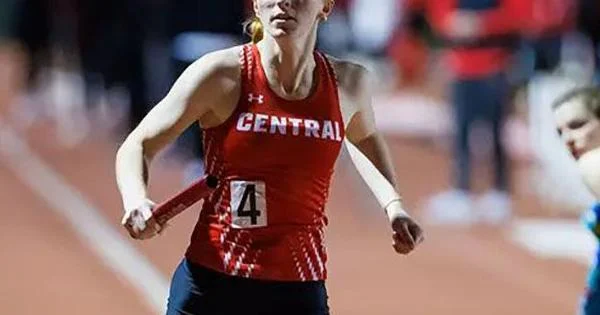
Meyer also was Men’s Track and Field Track Events Performer of the Week. Ava Parkins was tabbed as Women’s Track and Field Track Events Performer of the Week.

Meyer ran Division III’s fastest 60-meter hurdles time at the Jimmy Grant Alumni Invitational hosted by the University of Iowa at 7.92 seconds. It was also an American Rivers Conference record time. He also high jumped 6 feet, 7.5 inches at the Dutch Holiday Preview, the seventh-best mark in Division III this season.

In the women’s 60-meter prelims at the Jimmy Grant Invitational, Parkins clocked in at 7.70 seconds to share second place on the program’s all-time list. It also makes her No.8 nationally. She didn’t run the finals after qualifying in seventh. She also finished third in the 300 meters in 39.35 seconds.

Next on the Dutch track and field schedule is the Dutch Athletics Classic on January 16, 2026.


Link

Continue Reading

Sports

Meet the 2025 Central Maine All-Region volleyball team

Published

on


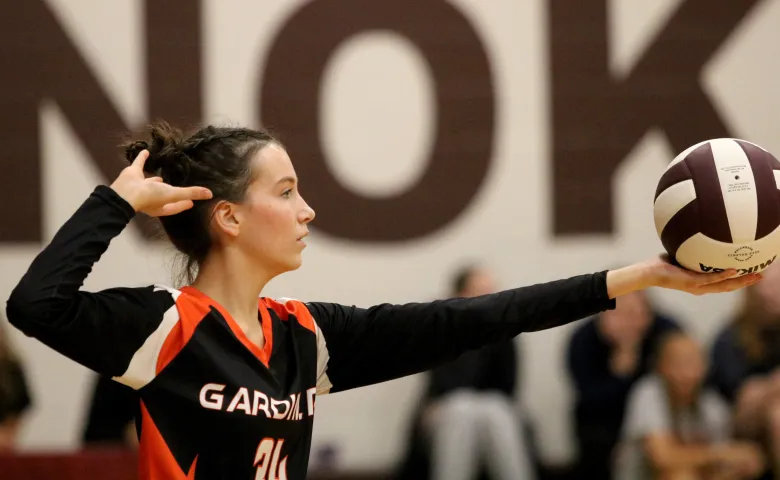
Gardiner’s Julie Folsom prepares to serve against Nokomis in Sept. 2024. (Anna Chadwick/Staff Photographer)

Leah Adams, Messalonskee sophomore middle blocker

Kaitlyn Davidson, Gardiner sophomore outside hitter

Julie Folsom, Gardiner senior right-side hitter

Ellie Gould, Cony senior libero

Kelsie Murray, Messalonskee senior outside hitter

Alanna Voter, Messalonskee junior libero

Drew Bonifant covers sports for the Press Herald, with beats in high school football, basketball and baseball. He was previously part of the Kennebec Journal and Morning Sentinel sports team. A New Hampshire…
More by Drew Bonifant


Link

Continue Reading

Sports

Three Biggest Takeaways Of 2025, Historical Year In Track And Field

Published

on


The 2025 track and field calendar was exhilarating from start to finish, fueled by the indoor and outdoor world championships, the always-exciting Diamond League circuit, the seven World Marathon Majors, and everything in between.

As it so often does, Boston University’s indoor track played host to national and world records across the distance events, laying the groundwork for an outdoor campaign defined by breakthrough performances that had been a long time coming.

As a track and field fan, there were dozens of jumps, throws, and times that could credibly stake their claim as the best of the year, but as someone who has always favored the distance side of the sport, it’s safe to say I’m a bit biased.

With an electric 2026 season on the horizon, here are three of my many favorite performances from 2025.

Jane Hedengren Re-Wrote The Record Books

After a senior cross country campaign that saw her become the fastest high school girl ever to run a 5K on grass, former Timpview (Utah) standout and current BYU phenom Jane Hedengren rapidly emerged as a household name.

Over the last 12 months, Hedengren has cemented herself as one of the greatest high school athletes of all time, and through just one collegiate semester, she has already separated herself at the NCAA level.

In March, she delivered a historic double at Nike Indoor Nationals, running 4:26.14 in the mile and 15:13.26 in the 5000 meters, lowering the previous national records by nearly two seconds and more than 15 seconds, respectively.

That momentum carried into the outdoor season, where she set new U.S. high school national records in the mile (4:23.50), 5000 meters (14:57.93), two mile (9:17.75), and 3000 meters (8:40.03).

Less than five months later, Hedengren opened her BYU career by setting three straight 6K course records, two of which resulted in Big 12 and NCAA Regional titles, before finishing runner-up at the NCAA Championships.

Her penultimate race of 2025 capped the year in historic fashion. At the BU Sharon Colyear-Danville Season Opener, Hedengren ran 14:44.79, shattering Doris Lemngole’s indoor collegiate record of 14:52.57 set in 2024 and Parker Valby’s outdoor collegiate record of 14:52.18 from the 2024 NCAA Championships.

Cooper Lutkenhaus Establishes Himself As The Next 800m Star

For nearly 30 years, Bell Gardens (Calif.) Michael Granville sat atop the high school record books in the 800, one of the few prep records that had yet to be unseated by this generation of distance talent.

Just a few years ago, the duo of Cade Flatt and Will Sumner came as close as anyone ever had, with the former finishing just three-hundredths of a second shy.

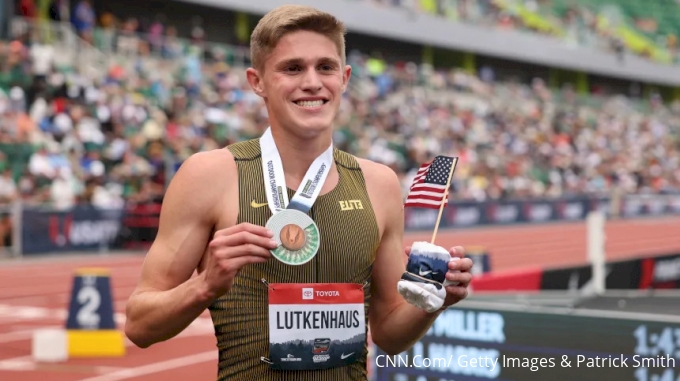
It wasn’t until this past June that Granville’s record was finally beaten, with Lutkenhaus doing so at the Brooks PR Invitational, stopping the clock at 1:46.26.

The summer of personal bests was just beginning for the Justin Northwest (Texas) sophomore, as 11 days later, he became the first high schooler to ever break 1:46, winning Nike Outdoor Nationals in 1:45.45.

Little did we know Lutkenhaus had a lot more in store for the American distance running circuit, and where else better to do it than at Hayward Field.

After running 1:47.23 and 1:45.57 to make it all the way to the U.S. Championships final, the record-breaking sophomore held his own with the sport’s elite, finishing runner-up to Donovan Brazier in 1:42.27.

The 16-year-old established a new world U18 record and now sits behind Botswana’s Nijel Amos on the world U20 all-time list.

Beatrice Chebet Becomes First Woman To Ever Break 14:00

At the 2023 Prefontaine Classic, which acted as the Diamond League final that season, Beatrice Chebet came close to history in the 5000m, battling the clock for 12.5 laps as she stopped the clock at 14:05.92, which at the time was No. 2 in world history.

Less than two years later, Chebet once again took on the 5000m distance in Eugene, Oregon, but this time left the Pacific Northwest with an accomplishment no other woman has ever matched. 

In a field that had 17 women sub-15, and 10 sub-14:30, Chebet took down compatriot Agnes Jebet Ngetich and Ethiopia’s Gudaf Tsegay, with the trio finishing in 13:58.06, 14:01.29, and 14:04.41, respectively.

The 25-year-old became the first woman to ever break 14:00 after coming close on multiple occasions, and currently owns the fourth and seventh fastest performances in world history to pair nicely with her world record.

FloTrack Is The Streaming Home For Many Track And Field Meets Each Year

Don’t miss all the track and field season action streaming on FloTrack. Check out the FloTrack schedule for more events.

FloTrack Archived Footage

Video footage from each event will be archived and stored in a video library for FloTrack subscribers to watch for the duration of their subscriptions.

Join The Track & Field Conversation On Social


Link

Continue Reading

Sports

Varsity Maine Volleyball Player of the Year: Liana Edwards, Gorham

Published

on


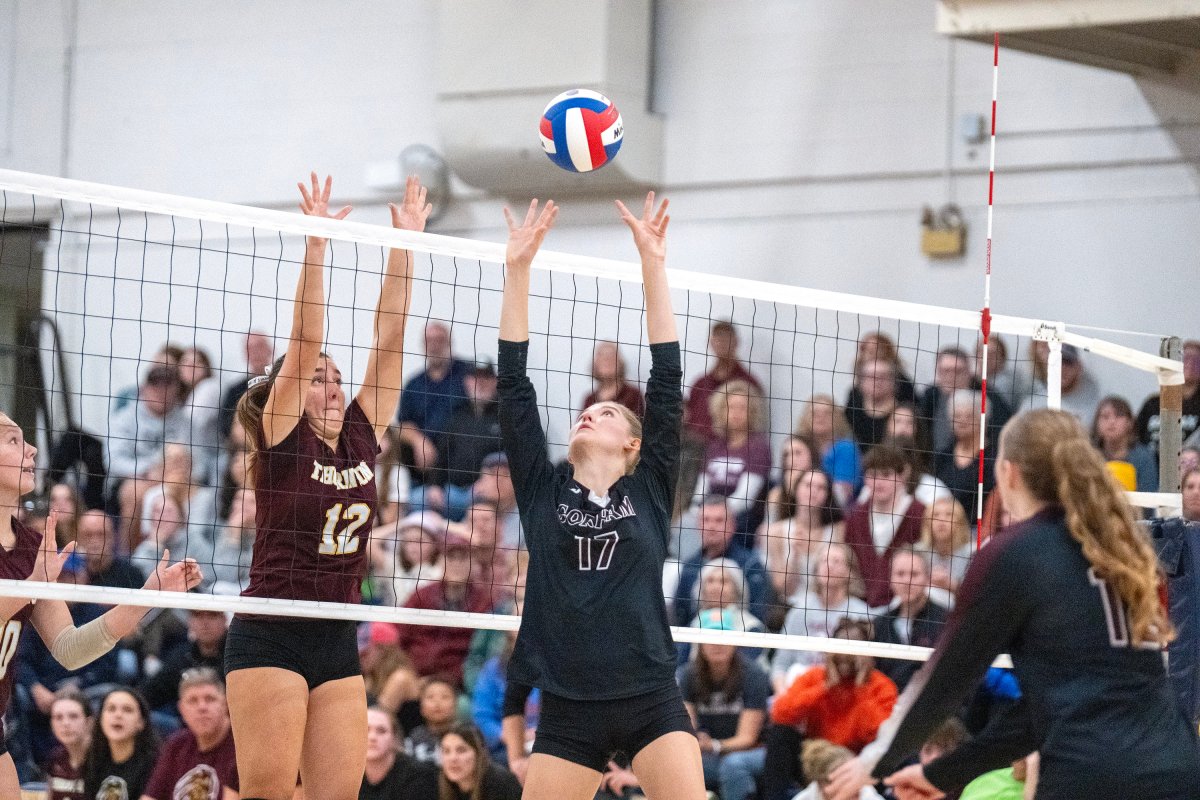
Gorham’s Liana Edwards sets the ball while Marta Semino defends during the Class A final. Gorham won, 3-1. (Daryn Slover/Staff Photographer)

A season with championship aspirations was off to a scuffling start for the Gorham volleyball team. The offense was sputtering, and it was showing up on the scoreboard. The Rams dropped two of their first four matches, and coach Emma Tirrell knew it wasn’t the time to wait for things to sort themselves out.

“Our offense and our transition from passing to scoring a point just wasn’t generating enough,” she said.

Tirrell had an idea: Move the Rams’ best player, Liana Edwards, from playing both right-side hitter and setter to a full-time setter role, and switch from running a 6-2 with two setters to a 5-1 with one setter.

“It was that Liana needs to be touching the ball as much as possible,” Tirrell said. “(We thought) ‘Let’s see what happens when she’s the only setter.’”

With Edwards in her new role, the Rams flourished, winning 12 of their last 13 games and earning their third straight Class A championship. For her performance as Gorham’s versatile linchpin, Edwards is our choice for Varsity Maine Player of the Year for the second year in a row. Kellan Schwinn, Washington Academy’s outside hitter, was also considered.

Edwards said she was proud of how the Rams responded to the early struggles, and how they capped their season in impressive fashion with a 3-1 victory over Thornton Academy.

“Comparing this year’s state game to last year’s state game — last year, looking back, we didn’t have a lot of great, hard kills. We didn’t have a lot of swings,” Edwards said. “This year, in the Thornton Academy game, we really proved ourselves and got 10 times the amount of kills and points. We earned our points.”

In the middle of it all was Edwards, who, at 6 feet tall has the height of a middle blocker, the hard hit of an outside and the defensive abilities of a libero. She showcased that versatility during the season, totaling 337 assists, 171 digs, 90 kills and 41 aces.

“She’s a really talented volleyball athlete,” Tirrell said. “It is uncommon to have that (versatility). A lot of girls work their tails off during their whole entire career, but it’s just not something that comes to them as an athlete. It’s pretty cool and pretty rare that Liana has that.”

It’s setting, however, where Edwards feels most effective.

“Previously, I played soccer and I was a goalie,” she said. “I’ve always had something, they would say, special with my hands.”

She was at home at the position this fall, providing the Gorham hitters with precise passes for their spikes.

“Being a setter is like being the quarterback on your team,” Edwards said. “I’ve definitely worked a lot, in and out of the gym, on my mental game, making sure I don’t get in my head from my mistakes or other people’s mistakes.”

That work ethic, Tirrell said, isn’t new.

“She puts a lot of effort into meticulously watching videos of herself play to get better,” Tirrell said. “She wants to be her best.”

This year, however, Edwards became a stronger voice in and out of matches. She took a prominent role in a team meeting after the 2-2 start, in which the Rams talked over what they felt they needed to do to turn things around.

“She’s grown a lot with her communication,” Tirrell said. “This was the first year she really harnessed bringing her other teammates with her too, and leading.”

Edwards said leadership this season was a “priority.”

“We all had to relearn how to communicate with each other, and how to all gain our leadership skills back after not playing with each other for a long time,” she said. “Everyone put in their all, and we all bonded together.”


Link

Continue Reading

Most Viewed Posts

Trending