
Technology
The Richest Female Sports Team Owners 2025

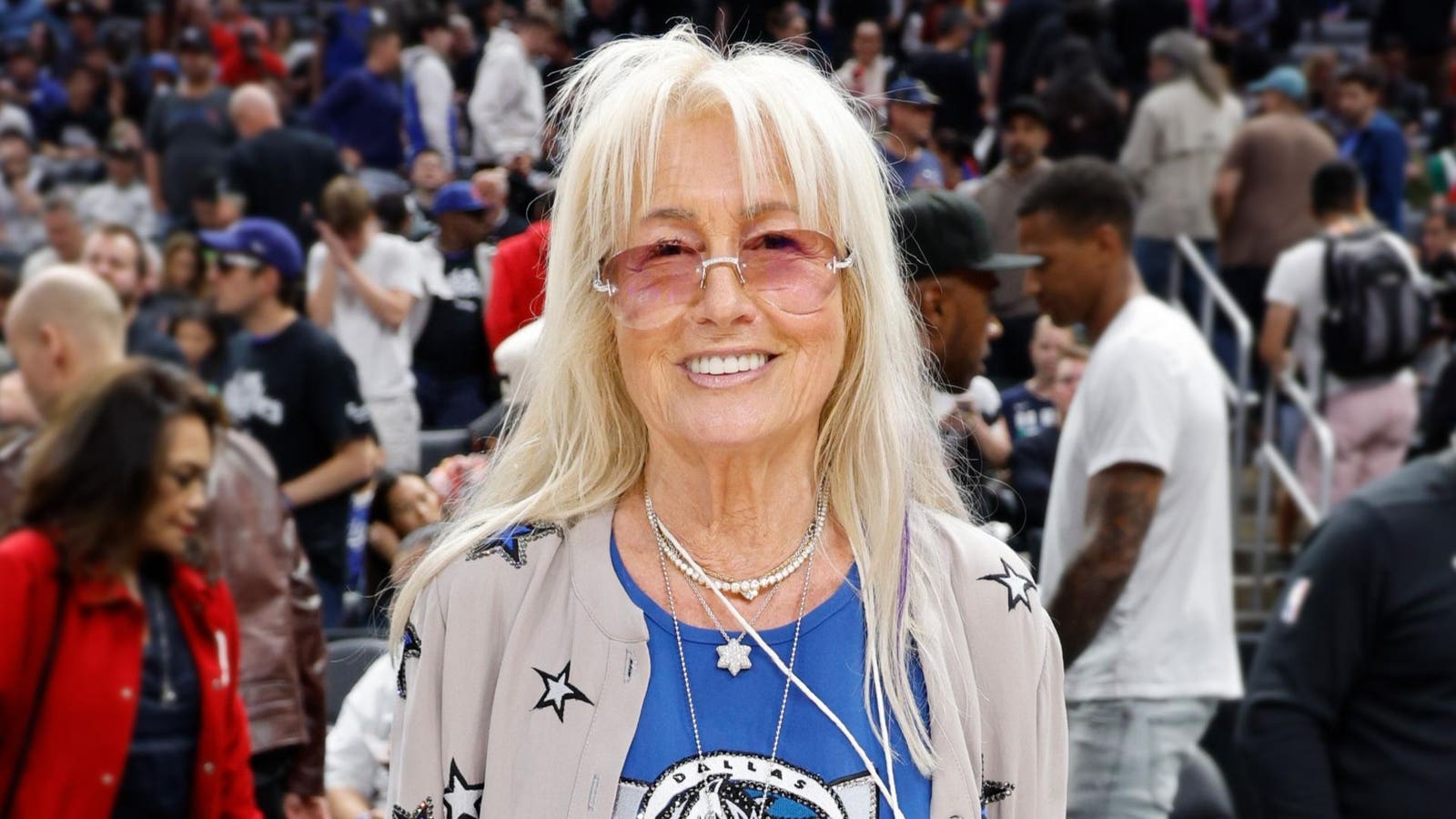
Meet the wealthiest women changing the game—11 billionaires who control major pro franchises and are collectively worth $85 billion, led by the Mavericks’ Miriam Adelson.
Chaos in the public markets over the past year has taken a bite out of Miriam Adelson’s fortune, dropping her net worth 3%. But the 79-year-old widow of former Las Vegas Sands CEO Sheldon Adelson can always count on her sports team.
The Dallas Mavericks—the NBA franchise Miriam Adelson bought for $3.5 billion in 2023—are now worth $4.7 billion, according to Forbes estimates. And even in a down year for her Sands stock, Adelson is in no danger of relinquishing her crown as the richest female team owner in sports, with her estimated net worth of $29.4 billion heading up a list of 11 women collectively worth $85 billion.
In fact, Adelson is worth more than the next three women in the ranking combined: Brooklyn Nets and New York Liberty co-owner Clara Wu Tsai, who shares an $11.4 billion fortune with her husband, Alibaba cofounder Joe Tsai; Cleveland Browns and Columbus Crew co-owner Dee Haslam, worth $8.5 billion with her husband, former Pilot Flying J CEO Jimmy Haslam; and New Orleans Saints and Pelicans owner Gayle Benson, worth $7.1 billion.
Among the more than 3,000 billionaires on Forbes’ real-time billionaire ranking, roughly 400 are women. But only 11 are the control owner of a franchise in a major professional sports league. (Minority owners were excluded from this ranking, as were billionaires who are part of a team’s ownership group but don’t actually lead the club, such as New York Yankees co-owners Jennifer Steinbrenner Swindal and Jessica Steinbrenner.)
That small pool is growing, however, as increased interest in women’s sports fuels a boom in popularity, sponsor interest and, ultimately, team values, enticing a new class of owner. Health care technology billionaire Michele Kang, No. 11 in the richest female owner ranking at $1.2 billion, says she knew nothing about soccer in 2020 when she first joined the cap table of the National Women’s Soccer League’s Washington Spirit, and now she owns three prominent women’s clubs. Private equity mogul Lauren Leichtman (No. 10, $1.3 billion) followed Kang into NWSL ownership with her purchase of the San Diego Wave last year, and former Utah Jazz owner Gail Miller (No. 8, $4.6 billion) is back in the sports world after completing a $600 million deal in April for the NWSL’s Utah Royals and MLS’s Real Salt Lake.
Of the 11 billionaire women in control of a sports team, seven can attribute their fortunes to inheritance or their spouses while four are self-made. Outside of Adelson and Tennessee Titans owner Amy Adams Strunk, who held steady, all saw their net worths increase year-over-year, with Leichtman and Kang first joining Forbes’ billionaire list this year.
The NFL is the most represented league among the female owners, with four teams. The NBA and the NWSL are close behind with three representatives each, followed by MLS and European women’s soccer with two. England’s Premier League, MLB, the NHL and the WNBA each have one.
Here are the 11 richest female sports team owners, with their net worths estimated as of May 2.
Chip Somodevilla/Getty Images
Net Worth: $29.4 billion*
One-Year Change: -3%
Team: Dallas Mavericks
Source of Wealth: Casinos
The 79-year-old Adelson’s tenure in charge of the Mavericks has gotten off to a bumpy start after the team, which is led on a day-to-day basis by her son-in-law, Patrick Dumont, traded superstar guard Luka Doncic to the Los Angeles Lakers in February. Redemption is in the air, however. Despite odds of just 1.8%, the Mavericks won this year’s NBA draft lottery and are now in a position to draft Duke University phenom Cooper Flagg.
Manny Carabel/Stringer/Getty images
Net Worth: $11.4 billion*
One-Year Change: +33%
Teams: Brooklyn Nets, New York Liberty
Source of Wealth: E-commerce
The 59-year-old Wu Tsai and her husband, Joe, took control of the NBA’s Brooklyn Nets and the Barclays Center in 2019—the same year they bought the struggling New York Liberty from the Madison Square Garden Company. With Wu Tsai serving on the WNBA’s board of governors, the Liberty have become one of the league’s crown jewels, claiming their first championship in 2024 and recently selling off a minority stake at a reported $450 million valuation.
Nick Cammett/Diamond Images/Getty Images
Net Worth: $8.5 billion*
One-Year Change: +5%
Teams: Cleveland Browns, Columbus Crew
Source of Wealth: Gas stations, retail
The 70-year-old Haslam owes her fortune to truck stop chain Pilot Flying J, which her husband’s father founded in 1958 and which was sold to Berkshire Hathaway for $13.6 billion across three deals in 2017, 2023 and 2024. In addition to control stakes in the NFL’s Cleveland Browns and MLS’s Columbus Crew that the Haslams bought in 2012 and 2019, respectively, they picked up a 25% piece of the NBA’s Milwaukee Bucks from Marc Lasry two years ago.
Kevin Mazur/Getty Images
Net Worth: $7.1 billion
One-Year Change: +16%
Teams: New Orleans Saints, New Orleans Pelicans
Source of Wealth: Sports
After New Orleans Saints and Pelicans owner Tom Benson died in 2018, his widow, Gayle Benson, inherited the teams, ultimately fending off a multiyear legal challenge from his daughter and grandchildren. With no heirs of her own, the 78-year-old Benson doesn’t plan on keeping her stakes in the family. In 2021, she announced that both franchises would be sold after her death, with the proceeds donated to charities in the New Orleans area.
Dave Reginek/Pool/Getty Images
Net Worth: $6.9 billion*
One-Year Change: +50%
Teams: Detroit Red Wings, Detroit Tigers
Source of Wealth: Restaurants
The 92-year-old Ilitch and her husband, Mike, who died in 2017, started Little Caesars Pizza in 1958 and bought the NHL’s Detroit Red Wings in 1982 for $8 million. In the years since, only the Pittsburgh Penguins and the Edmonton Oilers have won more Stanley Cups than the Red Wings’ four. Mike and Marian Ilitch added MLB’s Detroit Tigers to their empire in 1992, and their son, Chris, leads the day-to-day operations of both franchises today.
Cliff Welch/Icon Sportswire/Getty Images
Net Worth: $6.7 billion*
One-Year Change: +16%
Teams: San Francisco 49ers, Leeds United
Source of Wealth: Sports
The San Francisco 49ers have been in the 74-year-old York’s family for nearly 50 years. Her father, Edward Debartolo Sr., who died in 1994, bought the NFL franchise for $13 million in 1977. York took control from her brother in 2000, and she later tabbed her son, Jed York, as CEO. The family has also expanded its interests to English soccer, using the 49ers’ investment arm to gradually take control of Leeds United, which earned its way back to the Premier League last month.
Leslie Plaza Johnson/Icon Sportswire/Getty Images
Net Worth: $6.2 billion*
One-Year Change: +10%
Team: Houston Texans
Source of Wealth: Energy, sports
McNair’s husband, Bob, sold power generator company Cogen Technologies to Enron for $1.5 billion in 1999 and rolled those proceeds into a $700 million expansion fee that brought the NFL’s 32nd franchise to Houston for the 2002 season. When he died in 2018, Janice, now 88, inherited the Texans, and she passed operational control to her son, Cal, six years later.
Rick Bowmer/Associated Press
Net Worth: $4.6 billion*
One-Year Change: +4%
Teams: Real Salt Lake, Utah Royals
Source of Wealth: Car dealerships
With her husband, Larry, who died in 2009, Miller turned a single Toyota dealership into the eighth-biggest auto dealer group in the U.S., selling the business to Asbury Automotive for $3.2 billion in 2021. The Millers were also the longtime owners of the Utah Jazz, buying the NBA club in 1986 for $22 million and selling it to Qualtrics billionaire Ryan Smith for $1.66 billion in 2020. This year, Gail Miller, 81, completed a deal to take control of the NWSL’s Utah Royals and MLS’s Real Salt Lake, and she and her family are leading a group of investors aiming to bring an MLB team to Salt Lake City.
Wesley Hit/Getty Images
Net Worth: $2 billion
One-Year Change: 0%
Team: Tennessee Titans
Source of Wealth: Sports
Adams Strunk’s father, the legendary Bud Adams, founded the Houston Oilers in 1960 as a charter member of the American Football League, a decade before its official merger with the NFL. Adams relocated the franchise to Nashville and rebranded it as the Tennessee Titans in 1997, but his death in 2013 touched off a family legal battle. The 69-year-old Adams Strunk took control two years later and is now building the team a $2.1 billion stadium that is expected to open in 2027, with more than $1.2 billion in public funding.
Dia Dipasupil/Getty Images
Net Worth: $1.3 billion
One-Year Change: N/A
Team: San Diego Wave
Source of Wealth: Private equity
Leichtman married Arthur Levine in 1979, and five years later, they cofounded Levine Leichtman Capital Partners, a private equity firm that now has $11 billion in assets. She entered the sports business in 2024, buying the NWSL’s San Diego Wave from supermarket billionaire Ron Burkle at a weighted valuation of $113 million. Forbes estimates the Wave are now worth $165 million, and the 75-year-old Leichtman recently brought on former U.S. women’s national team and Wave superstar Alex Morgan as a minority investor in the franchise.
Levon Biss for Forbes
Net Worth: $1.2 billion
One-Year Change: N/A
Teams: Washington Spirit, OL Lyonnes, London City Lionesses
Source of Wealth: Health care technology
Kang kicked off the NWSL’s valuation boom when she bought a majority stake in the Washington Spirit in 2022 for $35 million, then considered an astronomical price for a women’s team. Now, the 65-year-old founder and former CEO of health care IT company Cognosante owns two other clubs as well: OL Lyonnes of France’s Première Ligue and the London City Lionesses, recently promoted to England’s Women’s Super League. Her empire may expand again soon, with Kang eyeing a South American club.
METHODOLOGY
For the ranking of the richest female sports owners, Forbes considered control owners of franchises from seven North American sports leagues (MLB, MLS, the NBA, the NFL, the NHL, the NWSL and the WNBA), the “big five” European men’s soccer leagues (England’s Premier League, France’s Ligue 1, Germany’s Bundesliga, Italy’s Serie A and Spain’s La Liga) and the top women’s soccer leagues in the same five European nations (England’s Women’s Super League, France’s Première Ligue, Germany’s Frauen-Bundesliga, Italy’s Serie A Femminile and Spain’s Liga F). Minority owners of teams were not included unless they qualified under a control stake with a different franchise.
Net worths are calculated as of May 2, 2025. In the cases of seven members of the list—Miriam Adelson, Clara Wu Tsai, Dee Haslam, Marian Ilitch, Denise York, Janice McNair and Gail Miller, as denoted by an asterisk—the net worth calculation includes family members’ assets. No one-year change is listed for Lauren Leichtman and Michele Kang, who first joined Forbes’ billionaire list this year.
More From Forbes


British Esports has secured government funding to launch a pilot esports education program with the English Football League, targeting young people in disadvantaged communities.
The initiative, approved under a national digital inclusion fund, signals growing interest from policymakers in esports as a structured pathway for digital skills, safeguarding, and youth engagement.
Safe to Play pilot launches across ten club communities
The new Safe to Play campaign will run across ten football club communities and aims to reach around 400 young people. Delivered through existing football club charity programs, the project uses esports as a structured environment to support digital confidence, online safety, and wellbeing.
Each participating club will deliver a six- to eight-week program combining weekly workshops with supervised esports sessions. The content is designed to sit alongside existing youth provision, positioning esports as a tool for engagement rather than a standalone activity.
The pilot has been approved for funding by the Department for Science, Innovation and Technology under its Digital Inclusion Innovation Fund.
Training, governance, and safeguarding framework
British Esports will act as a national partner for the project, with funding supporting facilitator training, content development, and accreditation. As part of the Play it Safe model, British Esports will deliver e-learning and one-day in-person training to 60 facilitators drawn from ten football club charities.
Training covers safeguarding, wellbeing, digital confidence, online safety, and positive esports delivery. Guidance for the program is informed by British Esports’ Duty to Care in Esports framework, which sets standards for safe and responsible participation.
EFL in the Community will oversee national coordination, governance, and monitoring, while Sheffield United’s Community Foundation is acting as the accountable body. Sheffield Hallam University is providing external advisory input.
Potential national rollout
Project partners say the pilot is intended to test whether esports-based delivery can scale across the wider EFL network, which includes 72 clubs. A successful outcome could lead to a broader rollout through club community programs nationwide.
Debbie Cook, director of community at the English Football League, says, “The Safe to Play campaign is an exciting and innovative way to support young people in our EFL Club communities. Using esports as a vehicle for digital inclusion, online safety, and wellbeing, we’re equipping disadvantaged young people with essential skills for the modern world.”
Chester King, president at British Esports, adds, “We’re incredibly grateful to receive the Government’s support for this new Safe to Play campaign with the EFL. This backing will allow us to work alongside Sheffield United’s Community Foundation and other partners to deliver vital digital skills and online safety training to young people through esports.”
The announcement follows wider government action on youth engagement, including the launch of a new National Youth Strategy supported by a £500 million investment. The strategy, titled Youth Matters, has been shaped by feedback from more than 14,000 young people across England and focuses on rebuilding youth services and addressing social isolation.
ETIH Innovation Awards 2026
Technology
ASUS Republic of Gamers Presents Next-Gen Gaming Innovations, Commemorates 20 Years of Gaming Excellence at CES 2026

ROG showcases world-first technologies, next-generation gaming systems, and visionary collaborations that redefine gaming experiences
KEY POINTS
-
Two decades of gaming leadership: At its Dare to Innovate virtual event, ROG celebrates 20 years of fearless experimentation and bold innovation
-
Expanding gaming horizons: High-performance gaming innovation from Zephyrus laptops, Crosshair motherboards, Swift OLED monitors and more
-
Cross-domain collaborations: ROG, Kojima Productions combine signature peripherals and the Flow Z13-KJP
-
World’s first dual 16″ screen gaming laptop: ROG raises the bar of innovation to a whole new level with the pioneering Zephyrus Duo
LAS VEGAS, Jan. 5, 2026 /PRNewswire/ — ASUS Republic of Gamers (ROG) today announced its Dare to Innovate virtual event at CES 2026, unveiling the next chapter of its vision for gaming performance, design, and culture. The showcase celebrates 20 years of fearless innovation, highlighting breakthrough technologies that empower gamers and creators, while reinforcing ROG’s commitment to redefining gameplay, creation, and competitive performance worldwide.

A wide range of next-generation technologies across ROG’s gaming ecosystem is on display, including laptops, desktops, motherboards, and peripherals ― all engineered with world-first features and advanced capabilities that elevate performance and immersion.
On this 20-year milestone, ROG reflects on a legacy defined by bold concepts, pioneering engineering, and an unwavering dedication to its global community. From the groundbreaking Crosshair motherboard in 2006 to today’s cutting-edge gaming platforms, every milestone embodies the spirit of For Those Who Dare, a commitment to challenging conventions and redefining what gaming hardware can achieve.
Continuing this legacy, the ROG Lab embodies the heart of ROG’s experimental spirit, transforming ideas into tangible breakthroughs. This year’s showcase unveiled engineering advancements from the Lab, combining performance, thermal mastery, and user-focused design to elevate how gamers play, create, and connect.
ROG also extends its influence beyond technology into culture through global co-branding partnerships that merge gaming with music, fashion, art, and entertainment. Collaborations with creators and iconic franchises, including Kojima Productions, empower players to co-create within a growing, cross-domain ecosystem, reinforcing ROG’s role in shaping gaming identity and community worldwide.
ROG remains committed to pioneering the future of gaming, transforming daring visions into experiences that inspire every player to push beyond boundaries. Attendees at CES 2026 in Las Vegas can explore the latest ROG creations firsthand at The Venetian Expo, Level 3, San Polo #3403, from January 5 to 8, 2026.

Digital gaming continues to evolve at a remarkable pace, and much of that momentum is coming from technologies that sit beneath the surface. Blockchain may not dominate headlines the way big releases or subscription shifts do, yet it increasingly shapes how players pay, own, and move digital assets across ecosystems. Developers are watching these shifts closely because the expectations forming today often become industry standards tomorrow.
Players have grown used to seamless digital transactions, whether they’re purchasing cosmetic packs or moving funds between entertainment platforms. That comfort is now extending to crypto‑enabled services, particularly in areas where fast settlement and transparent transfers matter. Some entertainment categories, including platforms such as Ethereum online casinos, illustrate how blockchain-based payments are becoming a practical alternative rather than a novelty. These examples help frame how gamers might come to expect the same kind of fluidity in mainstream titles. And as more players experiment with varied digital payment rails, studios are paying attention to how these habits could influence in‑game systems.
The Rise of Blockchain-Backed Payment Options Across Modern Gaming Platforms
 Studios exploring blockchain payments aren’t necessarily chasing hype; they’re reacting to a widening ecosystem. The Web3 gaming sector was valued at $25.63 billion last year and is projected to surge to $124.74 billion by 2032. That long‑term growth outlook signals that payment experimentation in gaming isn’t slowing down.
The appeal for developers is straightforward: blockchains can handle microtransactions, cross‑platform rewards, and user‑to‑user transfers with fewer intermediaries. For players, the value comes from speed and clarity, especially when moving funds between platforms that don’t traditionally “talk” to one another. That combination of utility and consistency adds weight to the idea that blockchain payments could soon feel as ordinary as digital wallets did a decade ago.
Developers Are Leveraging Crypto Infrastructure for In-Game Economies
Ownership has become a defining issue in modern gaming, especially as digital libraries expand and cross‑platform play becomes the norm. Some teams are experimenting with blockchain-based IDs, tokens, or asset registries to give players a stronger sense of permanence. Ubisoft’s blockchain‑integrated releases from last year hinted at how publishers might use distributed ledgers for identity systems rather than speculative assets, making the technology more functional than flashy.
Market momentum supports this approach. Data from CoinLaw places the global blockchain gaming market at $21.6 billion in 2025, reflecting how many players are engaging with tokenized assets and decentralized economies. That figure underscores how digital ownership has become more than a niche experiment.
When implemented with care, crypto infrastructure can support predictable, player‑friendly marketplaces where items maintain consistent histories and transparent value. This matters because it could reduce fraud, stabilize in‑game trading, and help teams build cohesive economies that last across sequels or updates. The challenge lies in making the tech invisible enough that players benefit without needing to think about consensus models or wallet mechanics.
Where Crypto Entertainment Fits In: From Streaming Integrations to Emerging Models Like Ethereum Casinos
 Crypto-enabled entertainment doesn’t exist in isolation; it’s increasingly brushing up against mainstream gaming habits. Streamers have already experimented with token-gated communities, blockchain reward drops, and audience‑driven item giveaways. These integrations quietly shift expectations around what digital ownership should look like, especially when viewers can carry items or achievements into other community spaces.
Platforms using crypto payments, including models similar to those found on the Ethereum casino side of the entertainment industry, show how frictionless transfers and transparent balances appeal to users who want quick access without traditional payment delays. For game studios, these behaviors serve as a test case for what players may expect from in‑game marketplaces or cross‑title inventories.
What’s more, these experiments hint at a broader trend: entertainment platforms are blending, and payment systems are blending with them. The line between playing, watching, and collecting is thinning, and blockchain often sits in the background, enabling that shift.
What These Shifts Signal for the Future of Player Experience and Industry Standards
If the current trajectory continues, the next wave of digital gaming could revolve around portability and permanence. Players increasingly expect items, progress, and identity markers to travel with them, even as they jump between devices, subscription models, or entirely different worlds. Blockchain’s role here won’t always be visible, but it will be foundational.
Studios face a balancing act. They need to incorporate emerging tech without overwhelming players with complexity or triggering backlash tied to past Web3 missteps. Yet the appetite for secure, consistent, and interoperable systems is growing. Developers who meet that demand—quietly, thoughtfully, and with a focus on player value—could set the tone for the next decade of game design.
In practice, that means treating blockchain not as a selling point but as supporting infrastructure. Successful implementations will feel intuitive, not experimental, and they’ll prioritize long‑term reliability over hype. As more publishers adopt these tools to streamline payments, protect assets, and enhance cross‑platform continuity, blockchain’s influence on gaming will likely move from occasional talking point to everyday expectation.
Related

With the gaming community set to converge on Barcelona, Voltage is addressing the industry’s most pressing payment challenges head-on.
Attendees at ICE can visit stand 4L52 for a firsthand look at how Lightning Network technology enables instant, near-zero-fee deposits and withdrawals, eliminating chargebacks and unlocking new revenue streams.
The company’s platform empowers online casinos, sports betting, and social gaming operators to move value instantly and globally, bypassing the high costs and slow settlement times of traditional financial rails.
“Our platform is built to solve the real-world challenges of high fees and slow withdrawals that directly impact player experience and operator margins,” said Graham Krizek, CEO of Voltage. “At our booth, we are demonstrating that Lightning Network transactions are not just theoretical, but are a practical, scalable tool for increasing retention and profitability, available right now.”
At ICE, the Voltage team will conduct consultations showcasing how operators can:
- Increase margins with Lightning’s minimal transaction fees.
- Eliminate chargeback risks with Bitcoin’s irreversible transactions.
- Enable instant coin packs and rewards for seamless player engagement.
- Access global markets without intermediaries or currency barriers.
Voltage’s enterprise-grade infrastructure allows iGaming companies to integrate Bitcoin and stablecoin payments without the complexity of building it themselves, providing a seamless experience for both the operator and the player.
Operators, developers, and media attending ICE Barcelona 2025 are encouraged to visit the Voltage team to get hands on and discuss how to integrate instant payments into their platforms.

Fast Track, the leading CRM technology provider for the iGaming industry, today announced that Greco, the gameplay risk management company acquired in February 2025, has now transitioned to become a core Fast Track product.
Following a successful period operating as a standalone business, Greco is now scaling fully under the Fast Track product umbrella. This marks a strategic step in expanding Fast Trackʼs platform beyond engagement execution into value-led optimisation, with a specific focus on helping operators scale bonus strategies with greater precision and control.
Founded in 2021 as a joint venture with Fast Track, Greco introduced a new approach to gameplay risk modelling through its proprietary Gameplay Risk Engine (Greco). The technology enables iGaming operators to model theoretical player value, detect behavioural anomalies and make smarter, data-driven decisions around bonus allocation and gameplay exposure.
As part of Fast Track, Greco becomes a foundational component alongside Fast Trackʼs real-time CRM, AI-driven gamification and natural language products.
“This has always been about building something bigger than the sum of its parts,” said Simon Lidzén, CEO and co-founder of Fast Track. “Greco adds a powerful new dimension to our platform.
“By bringing it fully under Fast Track, we can help operators scale their bonus strategies with the same sophistication they apply to CRM strategies – backed by real-time data, intelligence and world-class execution.”
As Greco becomes a core Fast Track product, it will be delivered with the same world-class service, reliability and pace of innovation that Fast Track customers expect. The offering will be complemented by an expanded service layer designed to help operators optimise and scale both CRM strategies and bonus strategies, working from one central system.
Grecoʼs co-founders, Ozric Vondervelden and Ed Dickerson, remain actively involved as the technology and team transition into Fast Trackʼs broader product organisation.
With this move, Fast Track continues to evolve its platform to support iGaming operators in digitalising operations, delivering true 1:1 experiences and shifting from promotion execution to scalable, value-driven player engagement.
Meet Fast Track at ICE
Fast Track will showcase the new Greco-powered product in action at ICE Barcelona, from 19-21 January. Operators are invited to visit the Fast Track stand to see how gameplay, risk, intelligence and CRM orchestration come together to scale smarter bonus strategies.

HKC Corporation’s showcase is anchored by the introduction of several flagship products. The HKC M10 Ultra is promoted as the first monitor to utilize an RGB MiniLED backlight system for enhanced color and brightness control. It would appeal to professional graphic designers, video editors, and game developers. The KOORUI S4941XO is a large-format OLED screen with a high refresh rate aimed at immersive simulation gaming. Finally, the ANTGAMER ANT275PQ Ultra stands as an LCD monitor with an exceptionally high refresh rate for competitive esports.
Collectively, HKC Corporation’s display products demonstrate the company’s technical focus on advancements in panel construction, backlight engineering, and integrated image processing software.
Image Credit: HKC Corporation
Here are the 2025 TSWA high school all-state TSSAA volleyball teams
FSU football Mike Norvell, Michael Alford addressing new structure

12 Chattanooga area volleyball standouts earn TSWA all-state honors

Quarterback Market In College Football Has Become As Bloated As The NFL

Is it too late to save college football?

‘Duels at Daytona’ receive patriotic new name ahead of US celebration – Motorsport – Sports

Rookie of the Year MLB front office selections 2026

Carson Hocevar makes announcement with $2.4B NASCAR backer – Motorsport – Sports

Meeting to focus on youth sports’ future | Archives

Registration opens for 2026 flag football season on Kauai

Carson Hocevar Signs Contract Extension With $2.2 Billion Worth Sponsor

University of Washington Launches Free Legislative Tracker for Youth Sports Policy Across All 50 States

Trinidad Chambliss agrees to new Ole Miss deal

Spurs and UT Health San Antonio bring health lessons and joy to PE class

Retired Marshalltown police chief announces campaign for Iowa House | News, Sports, Jobs

SoundGear Named Entitlement Sponsor of Spears CARS Tour Southwest Opener

Donny Schatz finds new home for 2026, inks full-time deal with CJB Motorsports – InForum

David Blitzer, Harris Blitzer Sports & Entertainment

DeSantis Talks College Football, Calls for Reforms to NIL and Transfer Portal · The Floridian
Elliot and Thuotte Highlight Men’s Indoor Track and Field Season Opener

#11 Volleyball Practices, Then Meets Media Prior to #2 Kentucky Match

Rick Ware Racing switching to Chevrolet for 2026
West Fargo volleyball coach Kelsey Titus resigns after four seasons – InForum

Maine wraps up Fall Semester with a win in Black Bear Invitational

Nascar legal saga ends as 23XI, Front Row secure settlement

Ross Brawn to receive Autosport Gold Medal Award at 2026 Autosport Awards, Honouring a Lifetime Shaping Modern F1

Stempien to seek opening for Branch County Circuit Court Judge | WTVB | 1590 AM · 95.5 FM

Sunoco to sponsor No. 8 Ganassi Honda IndyCar in multi-year deal

Women’s track and field athletes win three events at Utica Holiday Classic

North Florida Motorsports Park led by Indy 500 Champion and motorsports legend Bobby Rahal Nassau County, FL





-
 Motorsports3 weeks ago
Ross Brawn to receive Autosport Gold Medal Award at 2026 Autosport Awards, Honouring a Lifetime Shaping Modern F1
-

 Rec Sports3 weeks ago
Princeton Area Community Foundation awards more than $1.3 million to 40 local nonprofits ⋆ Princeton, NJ local news %
-

 NIL3 weeks ago
Kentucky AD explains NIL, JMI partnership and cap rules
-

 Sports3 weeks ago
Beach Volleyball Unveils 2026 Spring Schedule – University of South Carolina Athletics
-

 Sports2 weeks ago
Badgers news: Wisconsin lands 2nd commitment from transfer portal
-

 Rec Sports4 days ago
Five Youth Sports Trends We’re Watching in 2026
-

 Sports2 weeks ago
Is women’s volleyball the SEC’s next big sport? How Kentucky, Texas A&M broke through
-

 NIL3 weeks ago
College football program loses 25 players to transfer portal
-

 Rec Sports3 weeks ago
Refugee-Focused Youth Sport Initiatives : Moving for Change
-

 Rec Sports3 weeks ago
Youth Sports Business in 2025: The Year the Industry Grew Up