
Sports
The superhero

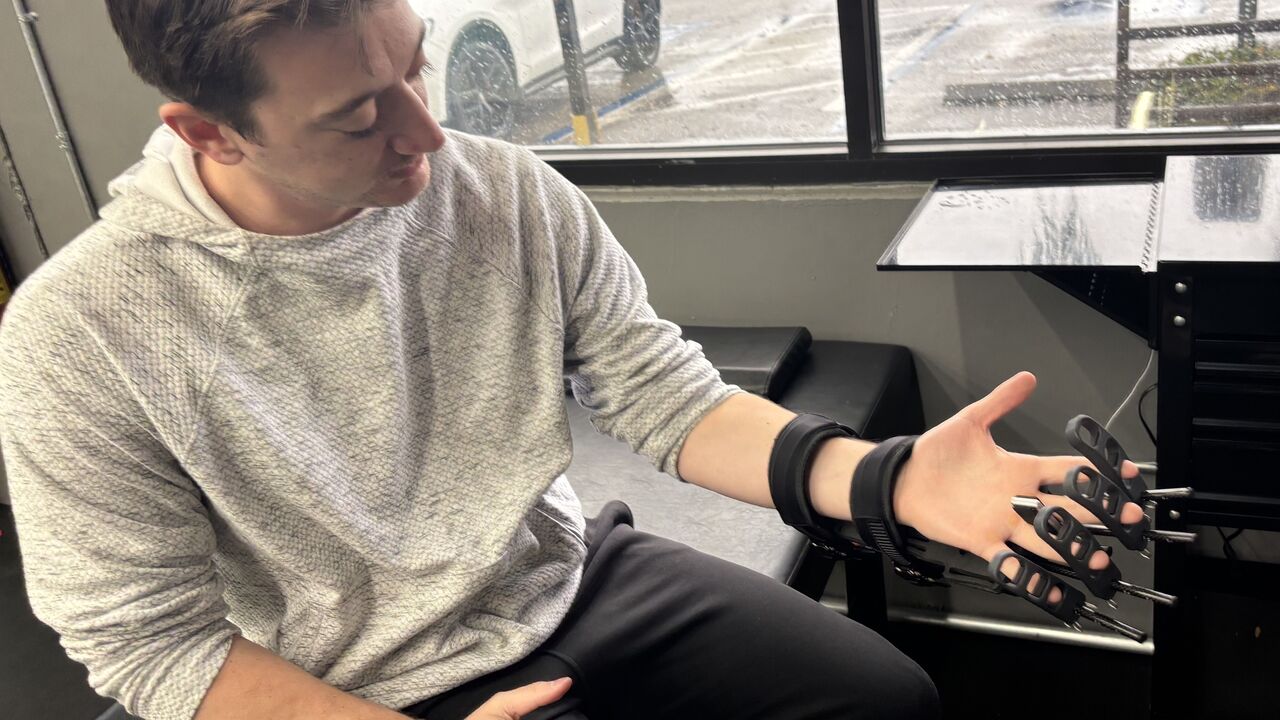
TAMPA, Fla. – The device looks like something you’d wear as part of a Wolverine costume for Halloween.
I slipped on the FlexPro Grip, which enveloped my right hand. A black box sits on the back, with five rods extending outward, complemented by adjustable straps to secure it to a pitcher’s hand and wrist, along with grips for each finger.
I visited a new Driveline Baseball training facility in March to learn about this new technology in a place that experiments with everything. Phillies minor-league pitcher Josh Hejka was my guide.
Inside this high-tech warehouse, Hejka instructed me to place each finger into separate compartments within the device. These compartments can adjust to isolate various segments and joints of the fingers: the tips, mid-finger, and proximal joints. Each grip slot is connected to the Wolverine-like rods, which are tied to sensors in the device.
Few possess the skills to pitch in professional baseball while working as a part-time researcher at Driveline, but the 28-year-old Hejka is one of them. He graduated with a degree in computer science from Johns Hopkins University, compiling skills that allow him to answer his pitching-related questions through data collection and coding.
Hejka is interested in helping tame the sport’s injury scourge, a quest that will continue whether he makes it to the majors as a submarine-style pitcher or not. He believes the device fixed to my right hand might be part of the solution.
Hejka was introduced to the new technology while rehabbing at Driveline after Tommy John surgery in 2023.
There remains something of a defeatist attitude around injury prevention. Many accept today’s high rate of pitching injuries as inevitable, a natural consequence of the stress placed on arms. But Hejka believes the industry lacks understanding – and hasn’t done nearly enough exploration or innovation – to be so certain.
He doesn’t even believe the industry is looking in the right place.
“There’s not enough of a discussion of what is actually happening in the arm,” Hejka said, “and what can be done.”
I hear this sentiment more often, most recently from the Pirates’ Paul Skenes and Atlanta’s Spencer Strider. A growing number of pitchers are no longer satisfied with the old beliefs and want to find new solutions to why arms break down.
To understand the FlexPro Grip’s aim, Hejka explained how the tendons of fingers connect to the forearm muscles. We’re testing the mid-finger since it’s “more specific to stabilizing the (elbow) joint,” he said.
Similarly, strengthening the fingertips has the potential to increase spin rate, Hejka added.
He monitored the screen of his smartphone. When the app synced to the device around my hand, he instructed me to squeeze.
The FlexPro Grip supports different training regimes: some focused on speed, some on endurance. This was a max-effort test: How hard could I squeeze?
I immediately learned how difficult it was to gauge the amount of flexion force I was generating – the force needed by muscles to contract a joint. It felt like trying to squeeze against a hydraulic press.
“You can tell other training doesn’t hit these muscles because you do it once, and you’re like … ” Hejka said.
Driveline pitching coordinator Matthew Kress said of his first experience: “I felt a burning sensation, ‘Holy … .’ It’s a muscle (contraction) you have never felt before.”
Hejka looked at my numbers on his phone. “He’s pulling more than me,” Hejka said. “He got like 170 in his mid-finger.”
“A rock climber,” an actual athlete nearby joked.
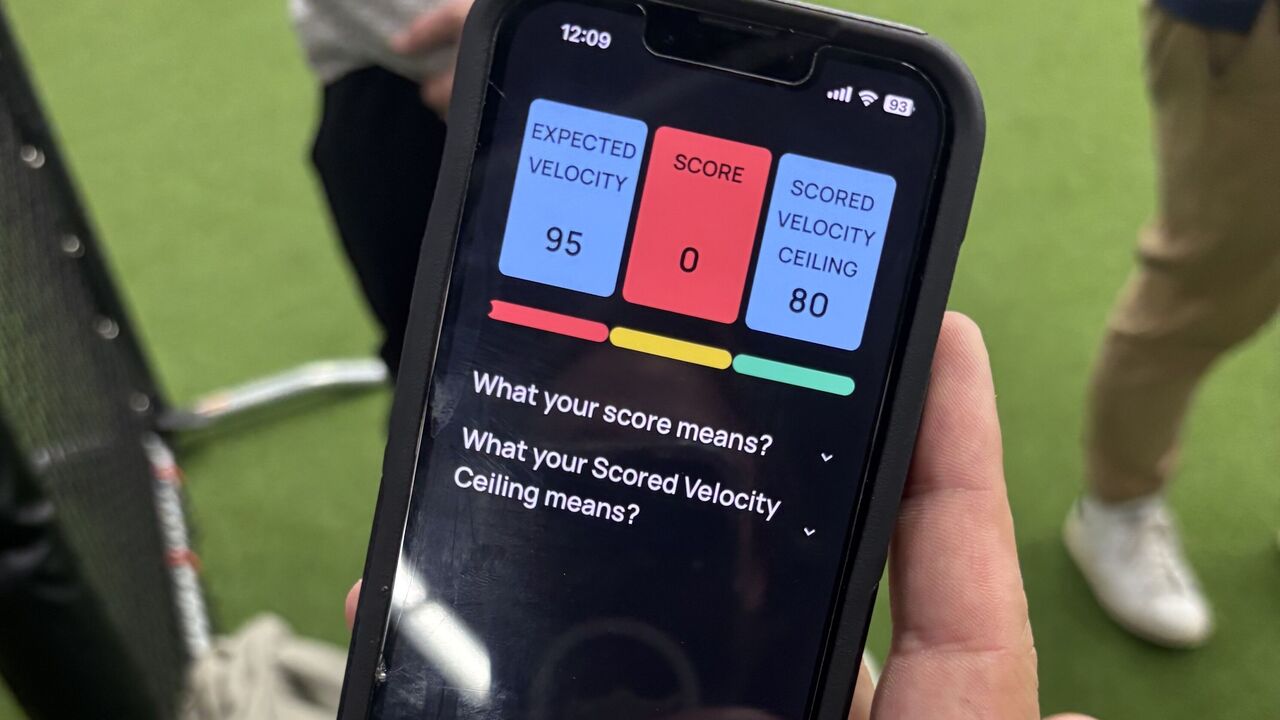
What did the FlexPro score mean? “You are prepared to throw 80 (mph),” Hejka said.
My grip strength pleasantly surprised me, especially since my top-recorded fastball was a meager 62 mph.
“Maybe the calibration was off,” I suggested.
“Too humble,” Hejka said.
The app estimates a safe velocity range for pitchers using its scoring system based on the player’s grip strength. Data collected by the FlexPro team has found that a 90th-percentile grip should result in a 90th-percentile fastball velocity. If grip strength is below throwing velocity, say 50th-percentile grip strength and 90th-percentile velocity, that suggests a pitcher is at risk for injury.
The device is telling me that I should be safe to unleash a max-effort throw.
One way of attacking a problem is to consider what cannot change.
What are the limits of physics and human biology?
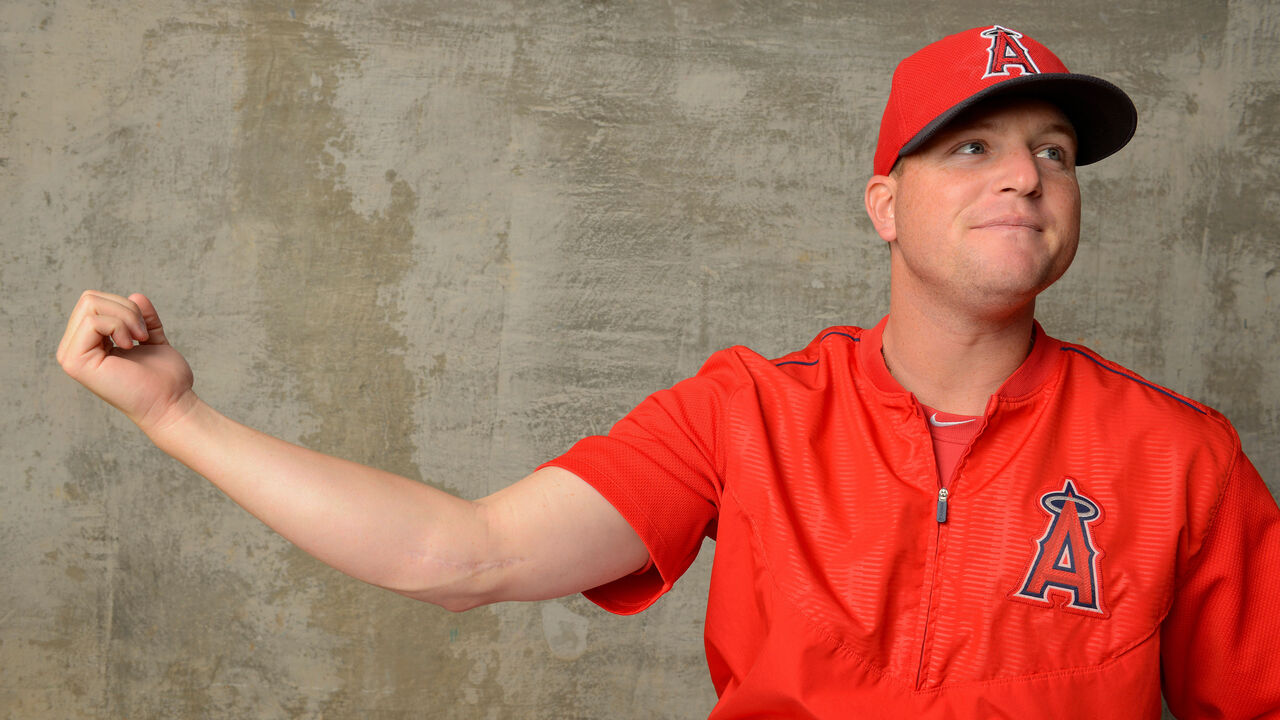
In the case of the sport’s Tommy John epidemic, there’s nothing that can be done to strengthen the ulnar collateral ligament.
The tiny triangular band of tissue measures about 25 mm in length and 5 mm in width, yet it plays a key role in stabilizing the pitching elbow.
The UCL connects to the upper and lower bones in the arm and is consistent in size across all pitchers, regardless of their height or weight.
The issue plaguing pitchers is that the ligament can’t always handle the immense stress it’s subjected to.
Dr. Christopher Ahmad, a Columbia University professor and orthopedic surgeon in New York, wrote last year that the UCL can withstand a torque force of 32 Newton-meters. The problem? Pitchers routinely produce a torque exceeding 60 Newton-meters on the ligament.
Without support from the surrounding arm structures, the ligament would fail.
The UCL is considered a passive stabilizer. It provides support and fights hyperextension, but it can’t change. It cannot strengthen, flex, or alter itself. It’s like a door hinge.
In contrast, the UCL is assisted by what are known as dynamic stabilizers: muscles. Muscles can contract, adapt, and – a key point – strengthen.
Since the UCL can’t be strengthened, the creators of FlexPro Grip, Hejka, and others at Driveline have turned their attention to what is around the ligament.
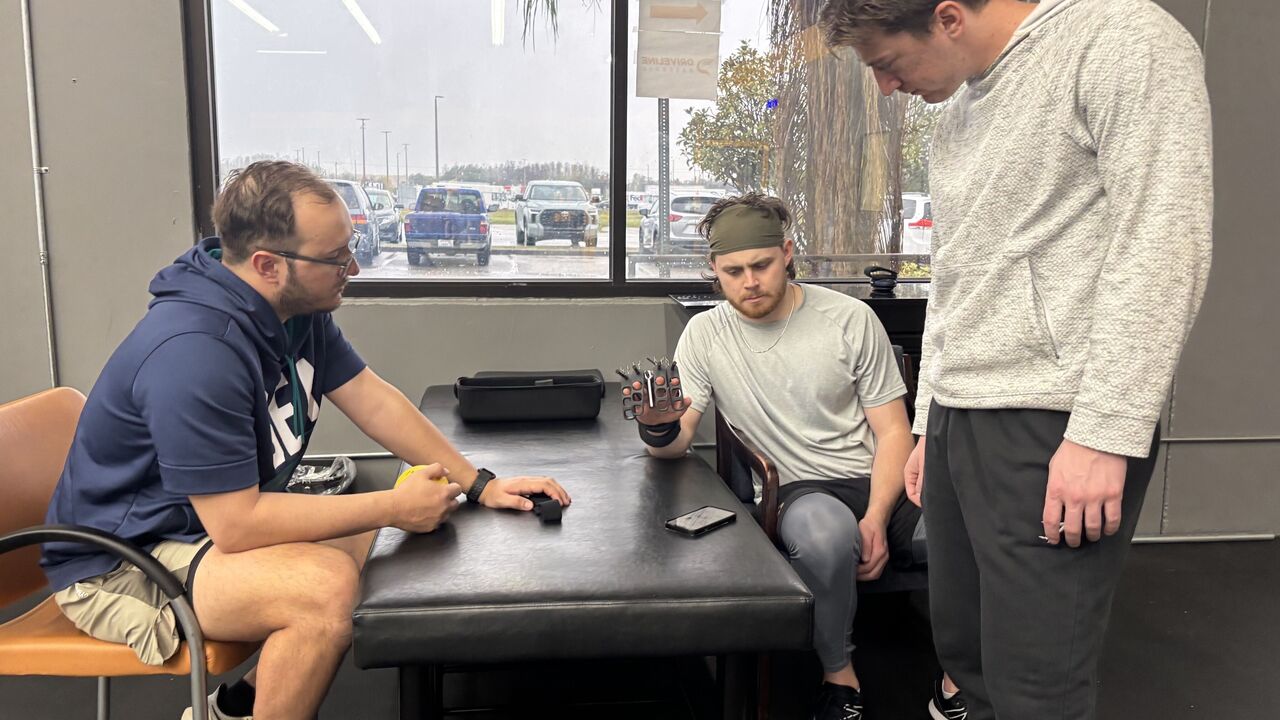
Initially, the FlexPro Grip was used as a part of Driveline’s rehab protocols after surgery, but Kress wondered if it could also serve a preventative role.
Hejka and Kress are interested in a specific group of muscles and their connective tissues. The forearm contains eight flexor muscles, and the FlexPro Grip targets three of them. One muscle of particular interest is the flexor digitorum superficialis, as it’s often tied to elbow injuries. This long muscle runs the length of the forearm and is connected to the index, middle, ring, and small fingers.
Grip exercises have been around for years, and Hejka had used them. But what had been missing was technology capable of isolating the flexor muscle groups, strengthening them in training, and quantifying progress.
That’s where FlexPro Grip comes in, a device launched in 2021 by a New Orleans-based company co-founded by CEO Daryl Moreau.
Hejka saw the magic firsthand. “The first time I did it ever, it was around 120,” Hejka said of his score. “Now, I am pulling over 210 – that’s with fingertips. With my mid-finger, I have gone from 100 to 190. So, it’s massive.”
In its December report on pitching injuries, Major League Baseball concluded that reducing injury rates may require incentives to lower pitch velocity.
But Hejka agrees with players like Skenes and Strider: pitchers will never pursue lower skill levels just to stay healthy.
“The question should not be, ‘How do we de-incentivize velocity, disincentivize performance because the individual incentives will never change,” Hejka said. “It’s always to my advantage to throw harder, to try and reach the major leagues. And if I get hurt after a month (in the majors), that’s better than me not being good enough to even make the major leagues.
“The question should be, ‘How do we incentivize proper preparation of the arm to handle stress?’ We would never tell Usain Bolt, ‘Hey, running that fast places a lot of stress on your hamstring.’ No, we would say, ‘How do we train Usain Bolt to make sure he can make his top speeds safely?’ And that’s where the track and field world is so far ahead of MLB.”
While much research has gone into identifying the causes of injuries in baseball, far less attention has been given to rethinking how to prevent them. Kress said it was frustrating that MLB’s injury study didn’t mention the role of flexor muscles.
Yet, Driveline is viewed by many as playing a role in the injury scourge because of the velocity-building programs that put it on the map.
However, Kress said injury prevention is a major priority within Driveline, hence the company’s efforts with Pulse, a wearable tracking device, and experimentation with products like FlexPro Grip.
“If you’ve read any Driveline blog, we know the harder you throw, the more stress you are going to place on your elbow,” Kress said. “That’s an inevitability you cannot change. It’s about how you prepare yourself for that stress.”
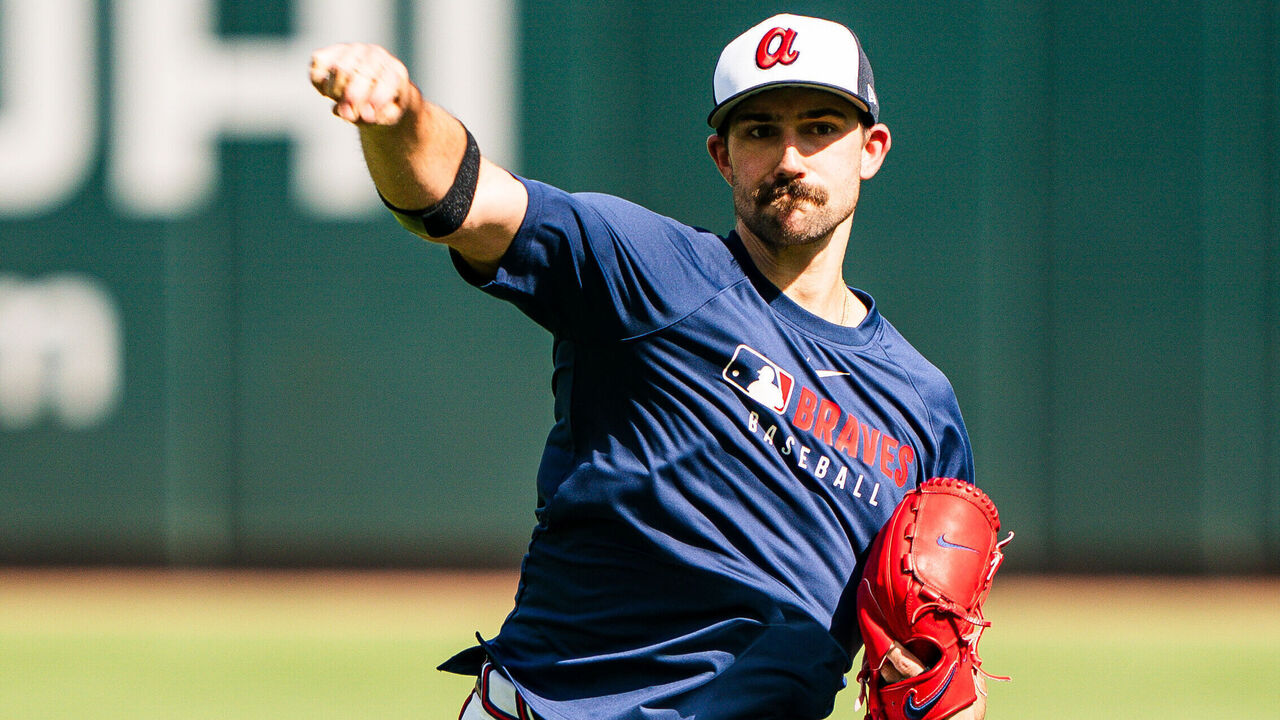
Strider is one major leaguer using Driveline’s Pulse and believes that improving player health should and will be the focus of much more attention.
“I don’t think it is the way it has to be, or is going to be, ” Strider told theScore of today’s injury rates. “I think different parts of the baseball industry have moved at different speeds and evolved at different speeds.”
The Phillies have half a dozen FlexPro units at their minor-league complex in Clearwater, though there’s no mandatory training regimen. The Padres have also experimented with the device.
Hejka believes there should be much more investment.
“I am not worried at all about injury,” Hejka said. “Who knows? Maybe it could happen. But it’s not something I can control. I can pitch with a clear mind knowing I am as prepared as I can be.”
Travis Sawchik is theScore’s senior baseball writer.

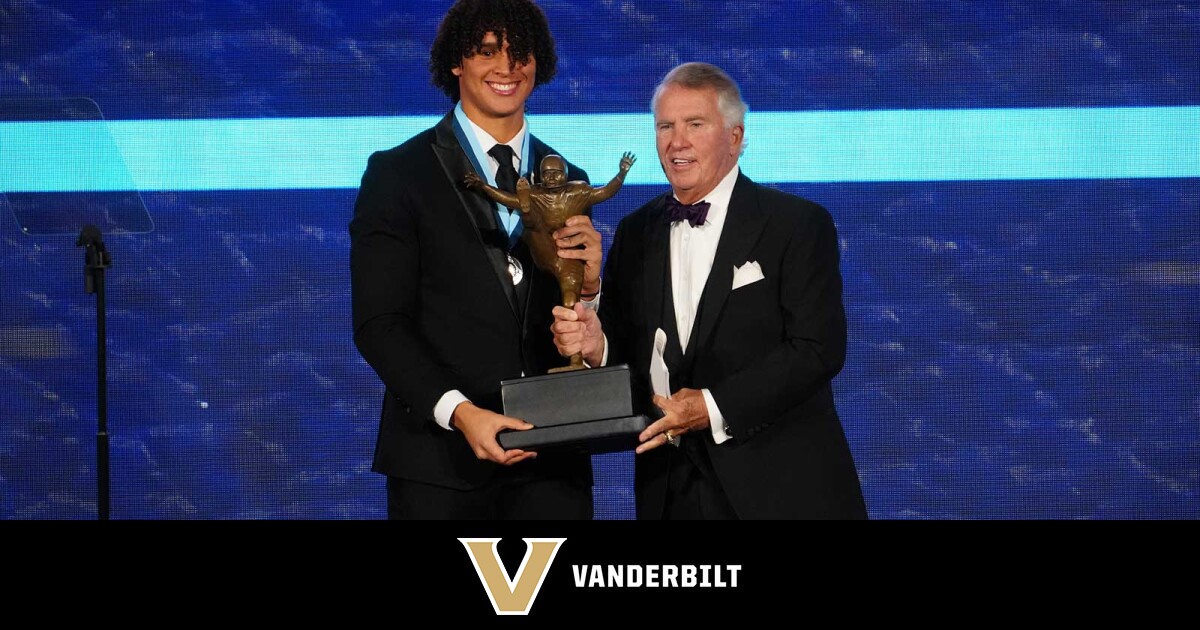
LAS VEGAS — Vanderbilt’s Eli Stowers has been named the 36th recipient of the William V. Campbell Trophy® it was announced at the National Football Foundation Annual Awards Dinner presented by Las Vegas.
The Campbell Trophy® ranks as one of college football’s most sought-after and competitive awards, recognizing an individual as the absolute best in the country for his combined academic success, football performance and exemplary leadership. Awarded since 1990, the 24-inch, 25-pound bronze trophy comes with a $25,000 postgraduate scholarship. Stowers was selected from a list of 16 members of the NFF National Scholar-Athlete Class Presented by Fidelity Investments®.
The Denton, Texas, native becomes the first Campbell Trophy® winner from Vanderbilt. He is the school’s fifth NFF National Scholar-Athlete, joining Wade Butcher (1961), Douglas Martin (1974), Andrew McCarroll (1989) and Hunter Hillenmeyer (2002).
Stowers received his undergraduate degree from New Mexico State in 2024, posting a 3.92 cumulative grade-point average, and he completed his master’s degree in finance from Vanderbilt in the spring. A member of the 2024-25 First-Year SEC Academic Honor Roll, he is currently pursuing a master’s of legal studies degree this fall.
During his time at Vanderbilt, Stowers has volunteered at the multiple events at the Monroe Carell Jr. Children’s Hospital and has supported the facility’s Dancing Dores fundraiser while also participating in Social Impact Day with the Pencil Foundation and Metro Nashville Public Schools and assisting at the department’s annual SAAC Holiday Party.
Elected a team captain prior to the start of this season, Stowers has contributed to the Commodores’ 10-2 regular season record with team highs of 62 catches for 769 yards while scoring four touchdowns. He leads all tight ends nationally in receiving yards and is second at the position in the country in receptions after hauling in multiple passes in every contest this season.
Stowers has led the Dores in catches a team-best six times and in receiving yards on four occasions, as he needs only six yards to record the most by a Vandy tight end since the 1996 campaign. He finished with a career-high 146 yards—the second most by a Power 4 tight end this season—on seven catches at No. 20/19 Texas, following up with a career-best 12 receptions for 122 yards in a Homecoming defeat of Auburn.
Stowers is a finalist for the John Mackey Award and is a semifinalist for the Jason Witten Collegiate Man of the Year Award and the Earl Campbell Tyler Rose Award too. He was a semifinalist for the 2025 Lombardi Award™ as well.
Following tonight’s NFF Annual Awards Dinner Presented by Las Vegas, Stowers will be recognized as the 2025 Campbell Trophy® recipient at several other prestigious events. On Friday, Dec. 12, he will be recognized during The Home Depot College Football Awards on ESPN. He will be featured on CBS during halftime of the Tony the Tiger Sun Bowl on Dec. 31, and will be introduced on the field during the College Football Playoff National Championship on Jan. 19 at Hard Rock Stadium in Miami Gardens, Florida.
Stowers and the Commodores will face Iowa—which was 23rd in the final College Football Playoff rankings—on Dec. 31 at 11 a.m. CT in the ReliaQuest Bowl.

FORT WAYNE, Ind. (WANE) — Purdue Fort Wayne Volleyball has lost one of their own after 2022 graduate Madi Wurster died in a car accident early Monday morning.
Wurster played volleyball at Purdue Fort Wayne from 2018 to 2022 and graduated from South Adams High School, where she played volleyball and basketball.
Steve Florio, Head Women’s Volleyball Coach at Purdue Fort Wayne, said that after receiving tragic news like this, everyone is still in shock.
“It almost didn’t seem real,” he said. “That’s the feedback I’m getting from a lot of our alumni, I’ve been talking with, obviously, very sad and heartbreaking.”
Florio says he has been talking with a lot of alumni since the accident, and says they describe her as “full of life”, a great hugger, a light to everyone, and so much more.
He says he wants to make sure that alumni and player voices were heard during a time like this, as they were some of the closest people to Madi.
“What they have to say about Madi is that she was a beautiful soul, and the world needed somebody like her,” he said. “She was always there for anybody who needed help. She loved all those around her. A lot of the alumni said she was a big light in this world, a great hugger, a great listener, too, and they’re all right about that.”
He adds that Wurster was very strong in her faith and had a tight friend group while at PFW. She had a really big laugh, and she loved to have a good time.
Florio says this has been a loss for the entire Mastodon family, and that this has brought many together to share stories about who Madi was and remember what she meant to all of them.
Her obituary can be found here.
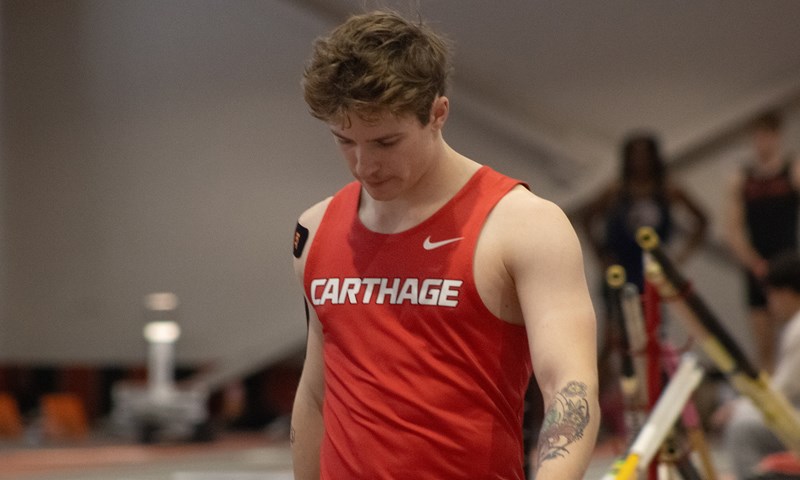
NAPERVILLE — The College Conference of Illinois and Wisconsin (CCIW) has announced its Men’s Indoor Track and Field Student-Athletes of the Week, with Illinois Wesleyan senior Evan Lowder earning track honors and Carthage freshman Hayden Rollins receiving field recognition following standout performances during the opening weekend of the indoor season.
Track: Evan Lowder, Illinois Wesleyan
Lowder opened the season with a victory in the 400 meters at the Titan Open last Friday in Bloomington. He posted a winning time of 49.34, which converts to 48.57, ranking ninth nationally on the TFRRS list during the opening week of the season. Lowder’s performance was part of a strong team showing as Illinois Wesleyan claimed 12 event victories.
Field: Hayden Rollins, Carthage
Rollins turned in an impressive collegiate debut at the Carthage Forever Red Alumni Classic on Saturday. A native of Flower Mound, Texas, Rollins won the pole vault with a mark of 4.75 meters. The effort set a new Carthage record, surpassing the previous standard of 4.70 meters established in 2014. Rollins’ mark currently ranks first in the CCIW and fourth nationally in NCAA Division III.
| CCIW on X | CCIW Instagram | CCIW Facebook |
The College Conference of Illinois & Wisconsin (CCIW) was founded in 1946 and currently services nine member institutions including Augustana College (Rock Island, Ill.), Carroll University (Waukesha, Wis.), Carthage College (Kenosha, Wis.), Elmhurst University (Elmhurst, Ill.), Illinois Wesleyan University (Bloomington, Ill.), Millikin University (Decatur, Ill.), North Central College (Naperville, Ill.), North Park University (Chicago, Ill.) and Wheaton College (Wheaton, Ill.).

The slate features three home tournaments along with a mid-week matchup against Stanford on March 25 in Fort Worth. The Horned Frogs are set for two trips in the regular season to the state of Florida, and one a piece to Arizona and California.
While official schedules for each tournament have not been set, TCU has potential opponents for each weekend. Of these potential opponents, 11 are coming off an appearance in the 16-team NCAA Championship field in 2025.
In addition, TCU could face every other National Semifinalist from last season and could have a National Championship rematch with LMU in April.
The Horned Frogs enter the 2026 campaign riding a 12-match winning streak, 60-match home winning streak and with a 42-0 record against teams from the state of Texas.
TCU is looking to continue the positive momentum from its incredible 2025 season, which saw the Horned Frogs win the program’s first ever National Championship. In addition, the Frogs claimed the inaugural Big 12 Championship, marking the third consecutive conference crown for the program.
The 2025 season was a culmination of sustained success over multiple seasons. Dating back to 2020, TCU is the second-winningest program in collegiate beach volleyball with 174 total wins. This decade, the Horned Frogs are averaging almost 33 wins per season (excluding the COVID-shortened season in 2020).
Here’s a breakdown of TCU’s weekend tournaments. Note that this does not include a March 25 home matchup with Stanford.
Canyon Classic // Phoenix, Ariz. // February 19-21
TCU opens its season in The Grand Canyon State on the campus of Grand Canyon University. This marks the Horned Frogs first trip to Phoenix since 2017, when they posted a 3-1 record at the Grand Canyon Beach Tournament.
Potential matchups for the Frogs are Big 12 foes Arizona and Arizona State, along with Colorado Mesa, UC Davis and the host institution Grand Canyon. TCU holds a combined series record of 20-12 against the five teams and has undefeated records against Colorado Mesa and UC Davis. Grand Canyon and TCU are the lone teams in the field to compete at the NCAA Championship last season.
All-Time Series Histories: Arizona (2-4), Arizona State (8-3), Colorado Mesa (2-0), Grand Canyon (4-5), UC Davis (4-0)
Seminole Beach Bash // Tallahassee, Fla. // February 26-28
The opening season road trip continues for the Horned Frogs as they head to Florida State, the newest member of the Big 12, for the Seminole Beach Bash. TCU last played in Tallahassee in 2022, when it went 4-1 in its second tournament of the season at Florida State.
Joining the Frogs and Seminoles in Tallahassee is Florida Atlantic, Florida Gulf Coast, North Florida, South Florida, Tampa and UNC Wilmington, making TCU one of just two programs from outside the state of Florida at the event.
All-Time Series Histories: Florida Atlantic (8-4), Florida Gulf Coast (5-1), Florida State (7-14), North Florida (2-1), South Florida (0-0), Tampa (3-0), UNC Wilmington (3-1)
TCU Invitational // Fort Worth, Texas // March 6-7
For the first time in 2026, TCU will return home to host the annual TCU Invitational. The Horned Frogs are 18-1 at the tournament coined the TCU Invitational, and this will mark the sixth such event.
Headed to Fort Worth for the first weekend of March will be Florida Gulf Coast, HCU and Texas A&M-Corpus Christi. TCU is 34-1 against the three opponents all-time and has never faltered to HCU or Texas A&M-Corpus Christi, or any team from the state of Texas.
All-Time Series Histories: Florida Gulf Coast (5-1), HCU (15-0), Texas A&M-Corpus Christi (14-0)
Pompano Tournament // Pompano Beach, Fla. // March 13-17
The Frogs go back on the road for a trip to South Florida to take on the Pompano Tournament hosted by Florida Atlantic. This is the second consecutive year TCU has competed at Pompano Beach, going 6-0 last year at the FAU Beach Invitational.
TCU is the lone non-Florida school in the tournament, joining Florida Atlantic, Florida State, South Florida and Tampa. All-time, the Horned Frogs are 18-18 against the field.
All-Time Series Histories: Florida Atlantic (8-4), Florida State (7-14), South Florida (0-0), Tampa (3-0)
Big 12 Preview // Fort Worth, Texas // March 27-28
After hosting Stanford in a midweek, the Horned Frogs play host to all five other members of the new look Big 12. This tournament gives the entire league an opportunity to face each other prior to the conference tournament the following month.
Joining last year’s members Arizona and Arizona State are Boise State, Florida State and South Carolina. TCU holds a 25-24 advantage over the five schools headed to Fort Worth.
All-Time Series Histories: Arizona (2-4), Arizona State (8-3), Boise State (2-0), Florida State (7-14), South Carolina (6-3)
Center of Effort Challenge // San Luis Obispo, Calif. // April 9-12
For the third straight season, TCU will compete at the Center of Effort Challenge hosted by Cal Poly. The Horned Frogs have posted a 7-5 record over the past three years at the tournament, including a 2-2 mark last season.
The loaded field includes Arizona State, Cal, Cal Poly, LMU, Stanford, UCLA and USC. Of these teams, all but one competed in the NCAA Championships last season (Arizona State). In addition, the top-six seeds will all compete at the tournament on the California coast.
All-Time Series Histories: Arizona State (8-3), Cal (4-0), Cal Poly (6-4), LMU (4-3), Stanford (5-2), UCLA (3-7), USC (2-10)
Fight in the Fort // Fort Worth, Texas // April 16-18
The Horned Frogs close out the regular season by hosting the annual Fight in the Fort. TCU is 28-6 all time at the tournament.
This season, the field features North Florida, Stephen F. Austin and Tarleton State. TCU is 5-1 all-time against the three teams, with an unblemished record against Stephen F. Austin and Tarleton State.
All-Time Series Histories: North Florida (2-1), Stephen F. Austin (2-0), Tarleton State (1-0)
Big 12 Conference Championship // Tucson, Ariz. // April 22-24
The second annual Big 12 Conference Championship will be hosted by the University of Arizona. Last season, TCU went 3-0 with wins over Utah and Arizona State twice en route to the inaugural crown. The Horned Frogs have won three consecutive conference titles in three different conferences.
The 2026 event will feature an expanded Big 12, with members joining TCU being Arizona, Arizona State, Boise State, Florida State and South Carolina. The Horned Frogs are at weekend tournaments with all five other members of the league.
NCAA Championships // Gulf Shores, Ala. // May 1-3
TCU will look to repeat as National Champions at the 2026 NCAA Championships, being hosted again in Gulf Shores, Alabama. The tournament format will feature 16 of the best teams from around the country in a three-day event.
All-time, the Frogs are 7-6 at the NCAA Championships and have made five consecutive appearances in Gulf Shores.
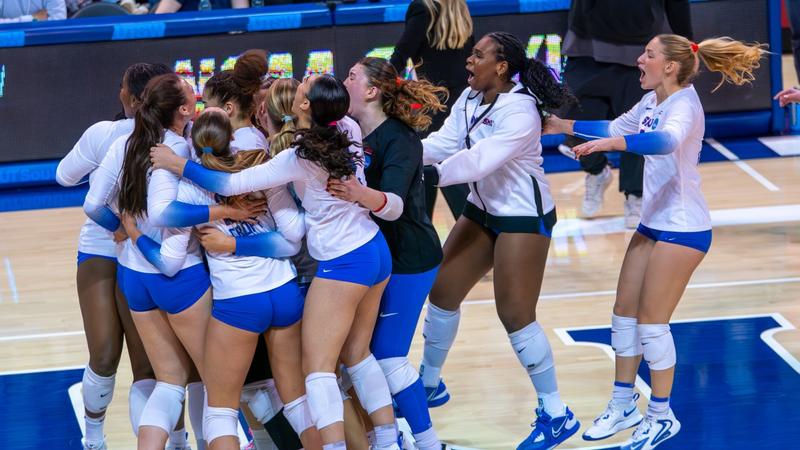
The second round had been the furthest the SMU volleyball team had ever gone in the NCAA tournament. Not anymore.
Not only did the second-seeded Mustangs win their first and second-round matchups, but they did so in emphatic and impressive fashion. SMU set a program and NCAA tournament record with a .618 hitting percentage against Central Arkansas in a first-round sweep.
Jadyn Livings led with 15 kills, with only one error on 23 swings, while Malaya Jones had her 25th double-double with 11 kills and 10 digs and Averi Carlson had 35 assists. Favor Anyanwu delivered seven blocks, and Jordyn Schilling had 11 digs to lead SMU’s defense.
“We’ve talked a lot about joy in the battle. We want to earn it,” SMU head coach Sam Erger said. “We don’t want them to give us anything. We want to earn every single point. And no one should walk away here going, ‘SMU didn’t go and make that happen.’ So we work a lot on mentality, and then when you hit so well, I think you got to talk about your setter. We have one of the best with Averi making everybody look good.”
The 25-13, 25-13, 25-13 victory got the Mustangs to the second round for the third straight year. The breakthrough came against Florida.
SMU dominated the first set for a 25-11 win, then fought for 25-21 and 26-24 wins in the second and third sets to reach the third round for the first time in program history.
“I’m just so happy and proud and excited, and we’re going to enjoy this for a moment, because this is our program’s first time to ever do this,” Erger said. “I do believe that we felt like this was something we could do, and we’re excited for the next round, but I think we should enjoy some of the history that is being made.”
It has been a season of history for the Mustangs. SMU was ranked as high as No. 7 in the country during the regular season, the program’s highest ranking ever. The victory against Florida was the team’s 27th of the season and 15th at home, both tying the program record. And it was the 100th career victory for Erger.
Individually, Jones surpassed the 500-kill mark to become just the second player in SMU history to do so. Anyanwu is within 14 blocks of the single-season record, and Carlson is third for single-season assists in the rally scoring era and sixth all-time.
No matter the challenge the Mustangs face, the new territory they enter or anything else, they feel ready to take it on together.
“I definitely had no doubt going into (the Florida) match,” Anyanwu said. “I knew whatever was thrown at us, we’ve gone through worse, so I had full-on confidence that no matter what they threw at us, we were going to be able to persevere and come through in the end. I’m just so grateful to play for a program like this, and it just means the world that we just rally behind each other and we just support each other fully. It’s amazing.”
After a dominant first set, the Mustangs trailed 16-12 in the second set. They won the next five points to take a lead. With the set tied at 19, SMU finished the set on a 6-2 run to win 25-21.
Even though it was only the second set, it was a crucial turning point in the match.
“I didn’t say this to the team, and I thought about saying this, but I really felt like if we won that second set, we would win the match,” Erger said. “That’s just where I was at.… I always think we’re going to win, but I’m like, ‘If we win the second set, this is our match’ because we’re going to come back from this adversity, and I know my team, and I know how fired up they’re going to be to close it out.”
That’s been the attitude and approach of the team all season. Erger has referred to them as fighters and having that mentality throughout the year. It now has the Mustangs in the Sweet 16 for the first time ever.
“We work a lot on our mentality,” Erger said. “Before (the Florida) match, we talked about burning the boats. Like we’re going to war and we’re on ships, and we’ve got to go to shore to fight, and we’re going to burn the boats. There’s no second option. We’re going to burn those freaking boats. There’s nothing to do but fight. There’s no cop-out, nothing.”

Burr was one of the best blockers in the country, as well as one of the most efficient attackers this past season. She ultimately finished the year with 139 blocks (1.34 blocks/set), including 25 solo blocks.
Offensively, the Goodhue, Minn., native totaled 259 kills and a .283 hitting percentage. Burr was named First Team All-Summit and made the Summit League All-Tournament team last month.
Zgonc, a native of Hartford, Wis., ranks 47th nationally in kills (451), 55th in points (4.34), and 39th in total attacks (1,233), while leading the league in kills per set (4.34) and points per set (4.77).
The junior was named the Summit League Player of the Year for the second season in a row and ended the season with 14 double-doubles for SDSU, a 23-5 overall record, and 16-0 mark in conference play.
Burr is the third Jackrabbit in the Division I era to earn an all-region honor, while Zgonc was recognized for the second straight season. Sydni Schetnan was a first-team honoree last season.
In total, there are 14 first-team All-Region members and an additional group of honorable mention selections for each of the 10 regions. A Player of the Year, Freshman of the Year, and Coach of the Year were selected for every region. The 213 student-athletes who made All-Region represent 109 different schools. Nebraska leads the way with seven All-Region selections, followed by Pittsburgh and Stanford with six apiece. Florida, Kentucky, Louisville, Minnesota, Texas A&M, and Wisconsin all have five All-Region first-team or honorable mention selections.
-GoJacks.com-
Toyota joins GM, Ford with big investments in F1, endurance racing

Vanderbilt Football | Stowers Awarded 2025 William V. Campbell Trophy®

Purdue Fort Wayne coach and alumni reflect on death of former player and friend

23XI, FRM attorney cites Kurt Busch in response to NASCAR Commissioner Steve Phelps touting Next Gen safety

CCIW Announces First Men’s Indoor Track & Field Student-Athletes of the Week

Gutierrez Unveils 2026 Beach Volleyball Schedule

Richard Childress considered selling portion of NASCAR team

SMU Volleyball Sets Records, Makes History By Reaching Sweet 16

WVU’s Slaton Officially Inducted Into The College Football Hall of Fame

Kelley Earnhardt Miller, Dale Earnhardt Jr. voice disappointment surrounding NASCAR vs. 23XI, FRM lawsuit

Michael Jordan Hired The Best Sports Lawyer In The Country To Go After NASCAR

URochester students learn, work, and research across the globe

Dylan Ferrandis on the Ducati Desmo450 MX: “The best frame in two wheels motorsports”

Youth basketball coach indicted on predatory sex assault charges

Parella Motorsports Acquires Racing America

First Tee Winter Registration is open

Fargo girl, 13, dies after collapsing during school basketball game – Grand Forks Herald

CPG Brands Like Allegra Are Betting on F1 for the First Time

Volleyball Recaps – November 18

F1 Las Vegas: Verstappen win, Norris and Piastri DQ tighten 2025 title fight

Two Pro Volleyball Leagues Serve Up Plans for Minnesota Teams

Utah State Announces 2025-26 Indoor Track & Field Schedule

Sycamores unveil 2026 track and field schedule

Redemption Means First Pro Stock World Championship for Dallas Glenn

Bowl Projections: ESPN predicts 12-team College Football Playoff bracket, full bowl slate after Week 14

Texas volleyball vs Kentucky game score: Live SEC tournament updates

How this startup (and a KC sports icon) turned young players into card-carrying legends overnight

Jo Shimoda Undergoes Back Surgery

Indiana’s rapid ascent and its impact across college football

Robert “Bobby” Lewis Hardin, 56

 Why a rising mid-major power with an NCAA Tournament team opted out of revenue-sharing — and advertised it
 NBA Legend Michael Jordan to Join NBC Sports as Special Contributor
 Falcons mailbag
 Portal Update – Basketball and Gymnastics Take Hits
 has always dreamed in Mercurial. Now his initials are on the boots.
The new Kyl…
has always dreamed in Mercurial. Now his initials are on the boots.
The new Kyl…
-
 Rec Sports2 weeks ago
First Tee Winter Registration is open
-
 Rec Sports2 weeks ago
Fargo girl, 13, dies after collapsing during school basketball game – Grand Forks Herald
-
 Motorsports2 weeks ago
CPG Brands Like Allegra Are Betting on F1 for the First Time
-
 Motorsports2 weeks ago
F1 Las Vegas: Verstappen win, Norris and Piastri DQ tighten 2025 title fight
-
 Sports2 weeks ago
Two Pro Volleyball Leagues Serve Up Plans for Minnesota Teams
-
 Sports2 weeks ago
Utah State Announces 2025-26 Indoor Track & Field Schedule
-
 Sports2 weeks ago
Sycamores unveil 2026 track and field schedule
-
 Motorsports2 weeks ago
Redemption Means First Pro Stock World Championship for Dallas Glenn
-
 NIL1 week ago
Bowl Projections: ESPN predicts 12-team College Football Playoff bracket, full bowl slate after Week 14
-
 Sports2 weeks ago
Texas volleyball vs Kentucky game score: Live SEC tournament updates