
NIL
Through the portal


By Graham Hays
Two decades before head coach Clark Lea led his alma mater’s football team to a historic win over top-ranked Alabama, a Birmingham Bowl victory over Georgia Tech and Vanderbilt’s first winning season since 2013, he was a transfer student-athlete looking for a place to grow.
After winning an NAIA baseball national championship with Birmingham-Southern in 2001, Lea came home to Nashville and Belmont. A year later, having explored two paths without finding one that felt like his, he set off down a third—coming to Vanderbilt and returning to the football field.
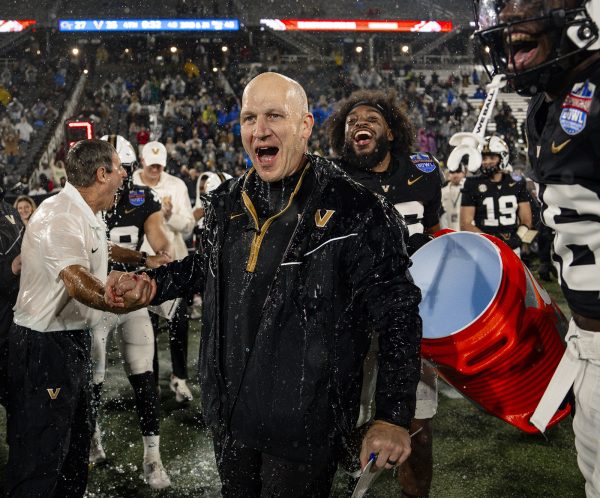
“I felt like it was a story of self-discovery and, honestly, as I processed this, early on I was a little embarrassed,” Lea once told The Hustler. “Why couldn’t I just find a place and make a decision? But I think it was more about understanding … where I wanted to be or what my vision was and what the bigger vision is.”
He wasn’t lost. He was just ahead of his time.
Lea’s path used to be lightly worn in college athletics. Transferring once, let alone multiple times, was a wilderness traversed by stubborn dreamers like Lea—and by those who risked being perceived as misfits and malcontents. Transferring was also difficult, structurally and culturally. But that changed on Oct. 15, 2018, when the NCAA launched the transfer portal. The ensuing chain reaction includes student-athletes monetizing their name, image and likeness and now potentially revenue sharing. Although it was designed as a compliance tool, the portal has become shorthand for an era of profound change.
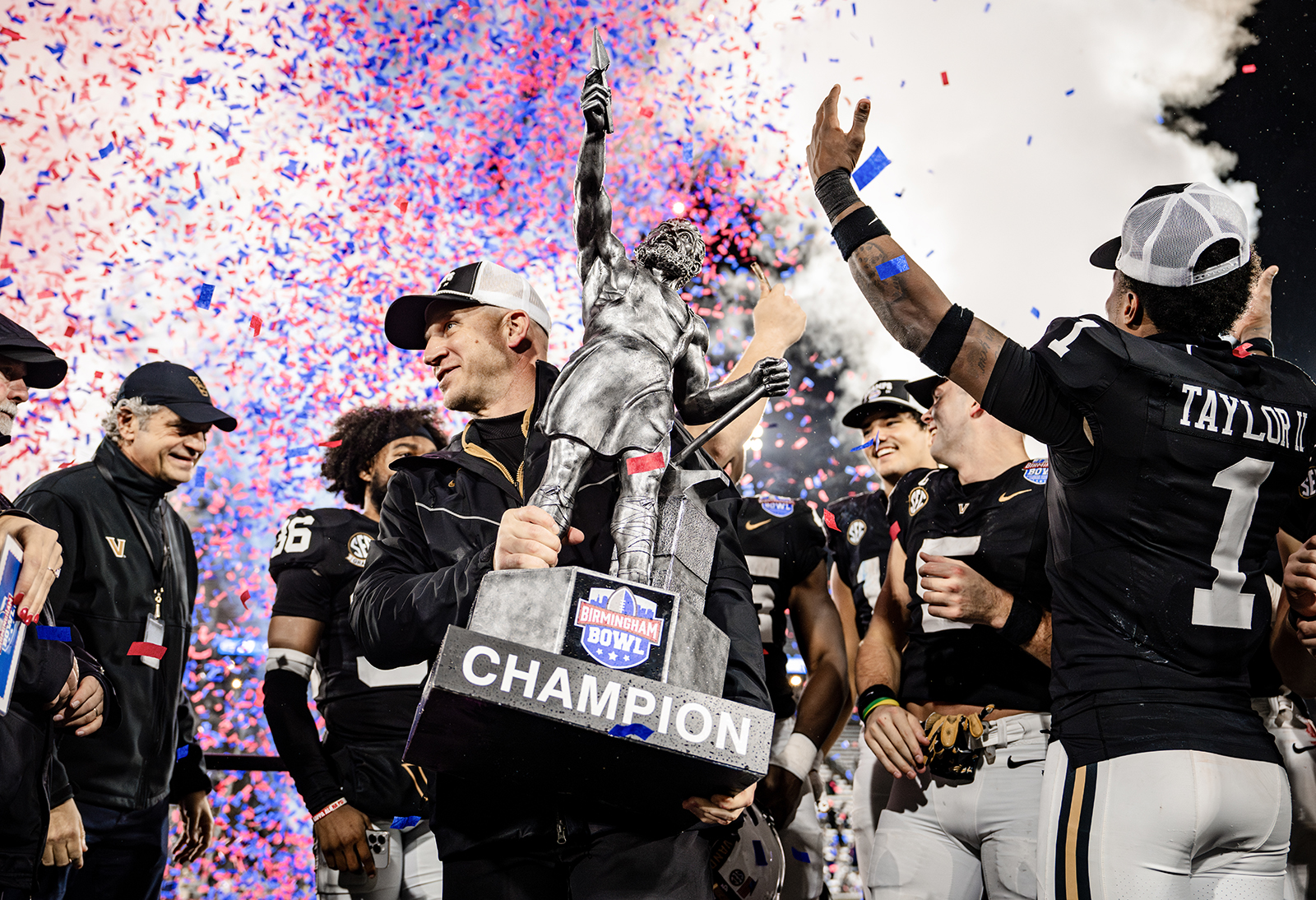
It is a portal to opportunity: Quarterback Diego Pavia, himself a two-time transfer, helped engineer a season that put Vanderbilt in the national spotlight. A year ago, graduate transfer discus thrower Veronica Fraley became the third Commodore to win an individual NCAA championship; she then competed in the 2024 Olympics. First-year men’s basketball head coach Mark Byington used the portal in reshaping his roster, and his Commodores topped the previous season’s win total before winter break.
It is a portal to challenges: Pavia, Fraley and those who began their college careers elsewhere have brought more than victories to Vanderbilt. They are the 21st-century faces of the time-tested ideals that guided Lea on his journey—the best and brightest choose Vanderbilt because it’s a community that’s committed to helping them
move forward.
“Athletically, we can shine a brighter light on the academic success and the Vanderbilt stories that don’t get told.”
“Vanderbilt already gets worldwide acclaim in academics, research and all these things,” Byington says. “There’s no reason it has to be just that. Athletically, we can shine a brighter light on the academic success and the Vanderbilt stories that don’t get told. You need national teams in football and basketball—the same way Coach Corbin and baseball have already done their thing. You need those teams to foster attention and enthusiasm.
“Whether they’re huge sports fans or not, people will love what they see and be proud that Vanderbilt is in front of the country: ‘That’s my team. That’s where I went to school.’”
PORTAL EXPLAINED
In the early 20th century, even as Vanderbilt led the way in establishing Southern football, college athletics were in flux. Vanderbilt alumnus Grantland Rice helped bring one scandal to light when he wrote about Georgia using ringers—players not enrolled at the university—in a 1907 game against Georgia Tech. The subsequent rules and attitudes that governed transfers for decades were a calcified reaction to those freewheeling early days.
For roughly six decades before the portal’s introduction, would-be transfers had to get permission from their former school and sit out a year of competition (typically more if transferring within the same conference). According to a 2020 Gallup survey, student-athletes transferred at a lower rate than undergraduates in general—even transfers between four-year institutions.
Through the portal, which is part of what the NCAA calls the notification-of-transfer model, student-athletes gained more autonomy. They need only notify a compliance administrator at their school, who then enters their name in the portal. While the name conjures sci-fi images, the portal itself is a transparent central database of student-athletes who are exploring transfers, accessible to coaches and administrators.
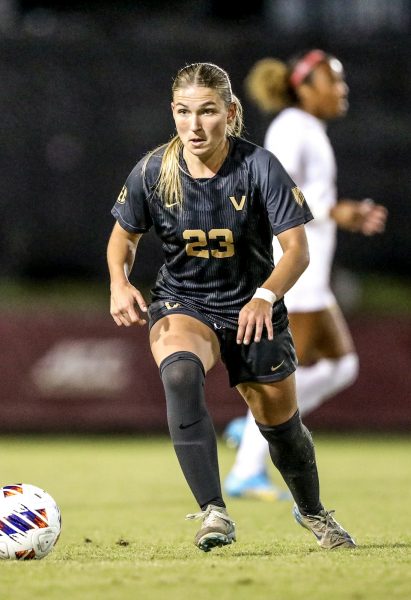
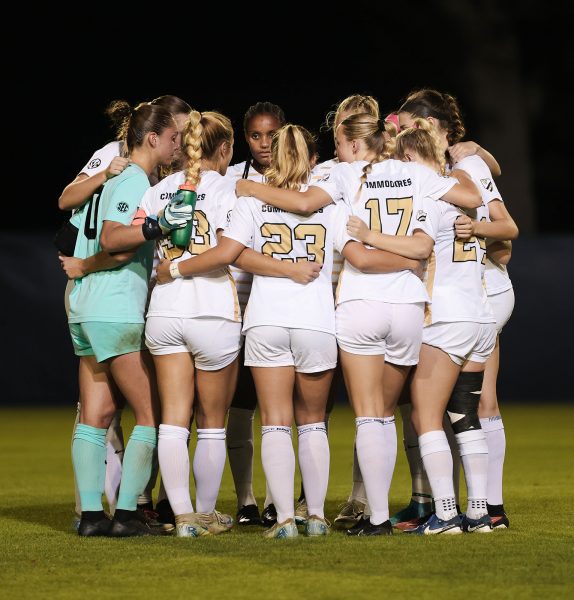
Maci Teater, part of the Vanderbilt soccer team that reached the Sweet 16 last fall, transferred to Vanderbilt from North Carolina.
“Basically, you get an email with a link and then you fill out your name, click a button and you’re in the portal,” Teater says. “I remember when I entered, I was like, ‘Is that it?’”
Once entered, student-athletes can communicate with coaches at other schools and negotiate NIL deals with collectives—third-party organizations funded by supporters. Student-athletes must still navigate scholarship and financial aid availability and academic credits and eligibility, but immediate athletic eligibility is no longer an issue. In conjunction with the portal’s introduction, the NCAA altered its rules to allow all student-athletes a one-time transfer without penalty. This was recently extended to multi-time transfers.
A portal entrant isn’t required to transfer, although their original school isn’t required to guarantee any previously established scholarship, financial aid or roster space. And while the increasing number of transfers is most pronounced in football and men’s and women’s basketball, according to NCAA data covering 2021–23, almost every Division I sport experienced a significant increase. It is part of the landscape.
“At heart, most of us got into this for teaching and helping young people,” Byington says. “That hasn’t changed, regardless of transfers, revenue sharing or NIL money. The human relationships haven’t changed. The way the business operates has changed. You’ve got to evolve and make the best of it.”
PORTAL TO COMPETITION
Byington knew he was inheriting a Vanderbilt roster that had been thinned by graduation and transfer. The Commodores began this season with 11 transfers out of 18 student-athletes. Even as he learned his way around a new city, Byington was evaluating 20 or 30 potential recruits a day from the portal.
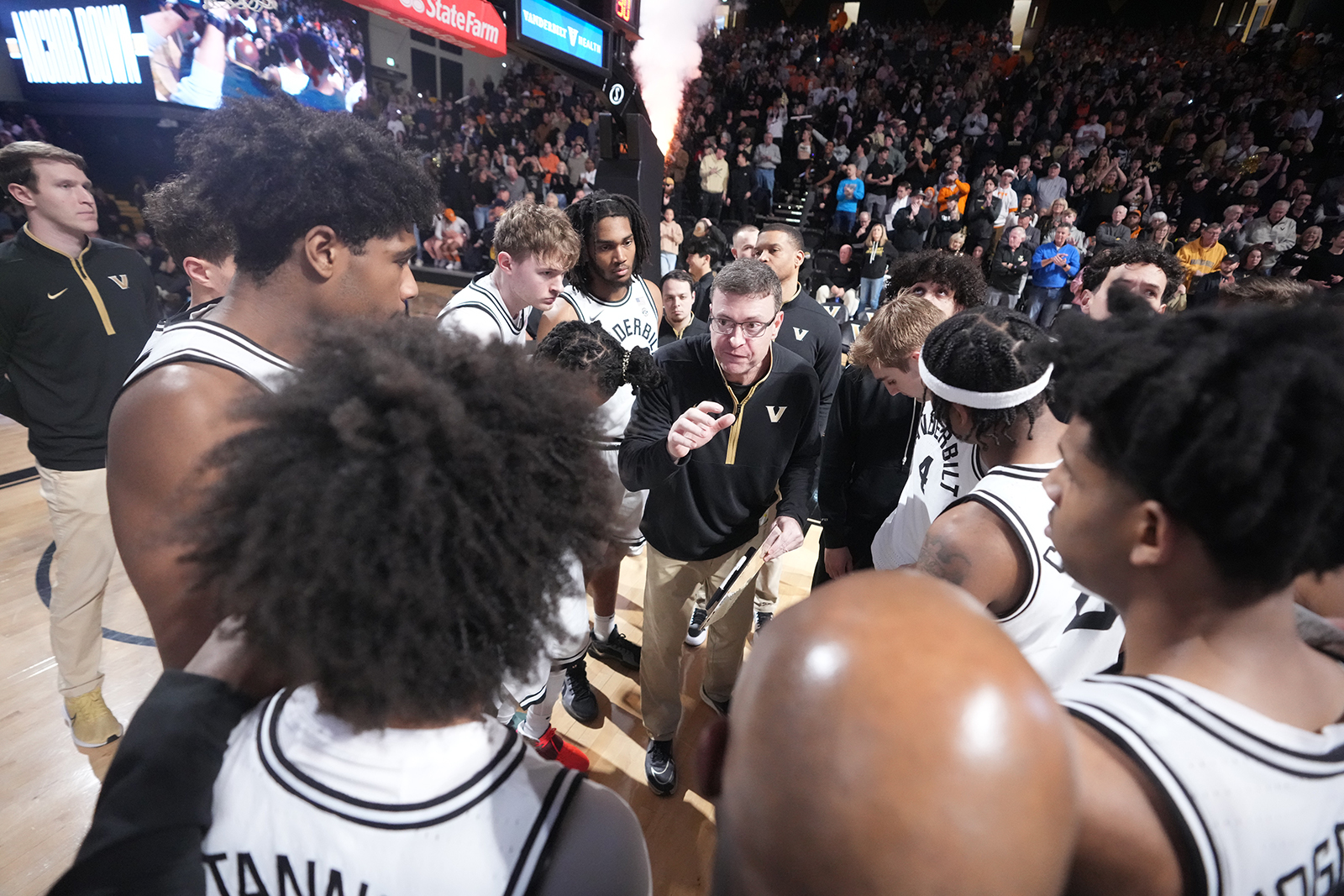
“You’ve got to figure out if someone is a good enough person, player and student,” Byington says. “If they’re lacking in any of those areas, you’ve got to eliminate them and focus on the ones who are right. From there, you’ve got to break down the basketball and make sure they’re a need positionally, athletically, fitting into our style. It’s not an exact science, and it is very difficult when you have to replace as many players as we had to replace.”
For some, Vanderbilt’s identity is a selling point. Adding a Vanderbilt graduate degree to an undergraduate degree from Cornell—while playing SEC basketball—helped convince first-team All-Ivy point guard Chris Mañon to come to Nashville.
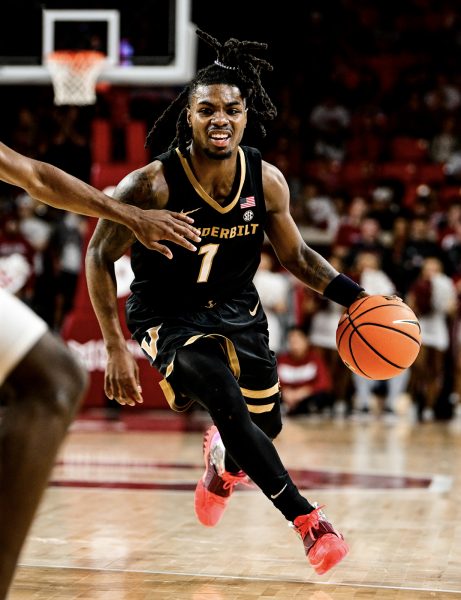
But adding Vanderbilt’s academic rigor on top of basketball development initially gave Jason Edwards pause, Byington recalled. As a person and player, the coaches believed they could build around the junior, who spent one year at Dodge City Community College and one at North Texas. They just needed him to believe Vanderbilt was the place to grow. (NOTE: Following the successful 2023–24 Vanderbilt men’s basketball season, Edwards announced in April that he was transferring to Providence College.)
“He’s an extreme worker,” Byington says. “He absolutely loves basketball. It’s a passion for him. He’s in the gym early mornings, late at night. My favorite thing about him is his energy. He’s never tired. And he plays that way. He plays the game at 100 miles an hour. You’ve got to know who somebody is and what they are and embrace the strength that they have.”
Anchor Impact, the third-party official collective of Vanderbilt Athletics, is supported by fans and empowers student-athletes to explore opportunities for monetizing their name, image and likeness with business, community and charitable organizations. The more Anchor Impact grows, the better Vanderbilt stacks up alongside other top-tier programs in its ability to recruit elite transfers like Edwards.
Anchor Impact is essential. Still, just like in the professional world that college graduates enter, potential compensation is rarely the only variable. The final decision about where to go is still more personal than transactional.
“You’ve got to know who somebody is and what they are and embrace the strength that they have.”
With Edwards, Byington and his staff focused on the holistic development available at Vanderbilt, from helping hone his on-court skills and body for professional basketball to having academic advisers and mentors to prepare him for careers on and off the court. That kind of plan won’t appeal to some. It appealed to Edwards.
Before playing a game for the Commodores, Edwards and fellow transfer AJ Hoggard (who came from Big Ten powerhouse Michigan State) spent a weekend at the NCAA Elite Student-Athlete Symposium in Indianapolis. The three-day event is hosted by NCAA leadership development and basketball enforcement staffs. Invitations are issued after NCAA staff consult with coaches, athletic administrators, professional sports officials and other experts closely linked to the draft process.
Vanderbilt was one of a handful of schools to have two participants, which is indicative of the attention Byington places on personal and professional development.
“I watch my parents go to work every day and do a shift,” Hoggard says. “Basketball is one way for me to take care of what I’ve got to take care of. So I just go out there and try and work at being perfect at it every day. You have to have that mindset.”
PORTAL TO COLLABORATION
CJ Taylor might have followed a path similar to Edwards, Hoggard, Baker or Teater. Among the top-ranked prep football recruits in Tennessee, Taylor was a first-generation college student who didn’t know what to expect out of Vanderbilt. His connection was personal. Barton Simmons, who now is Vanderbilt’s football general manager, had mentored Taylor while working as a recruiting analyst for a media company. He helped Taylor get a foot in the door in the recruiting world. Taylor’s mom taught him that people who treat you with respect when they don’t have to are people worth knowing. Taylor said Simmons treated him like family, and if Simmons believed in Clark Lea—who had yet to coach a game at his alma mater—so could Taylor.
Taylor didn’t play much in his first year. School was a lot. The SEC was a lot. An injury didn’t help. Home for Christmas, even his mom grumbled that he should have played more.
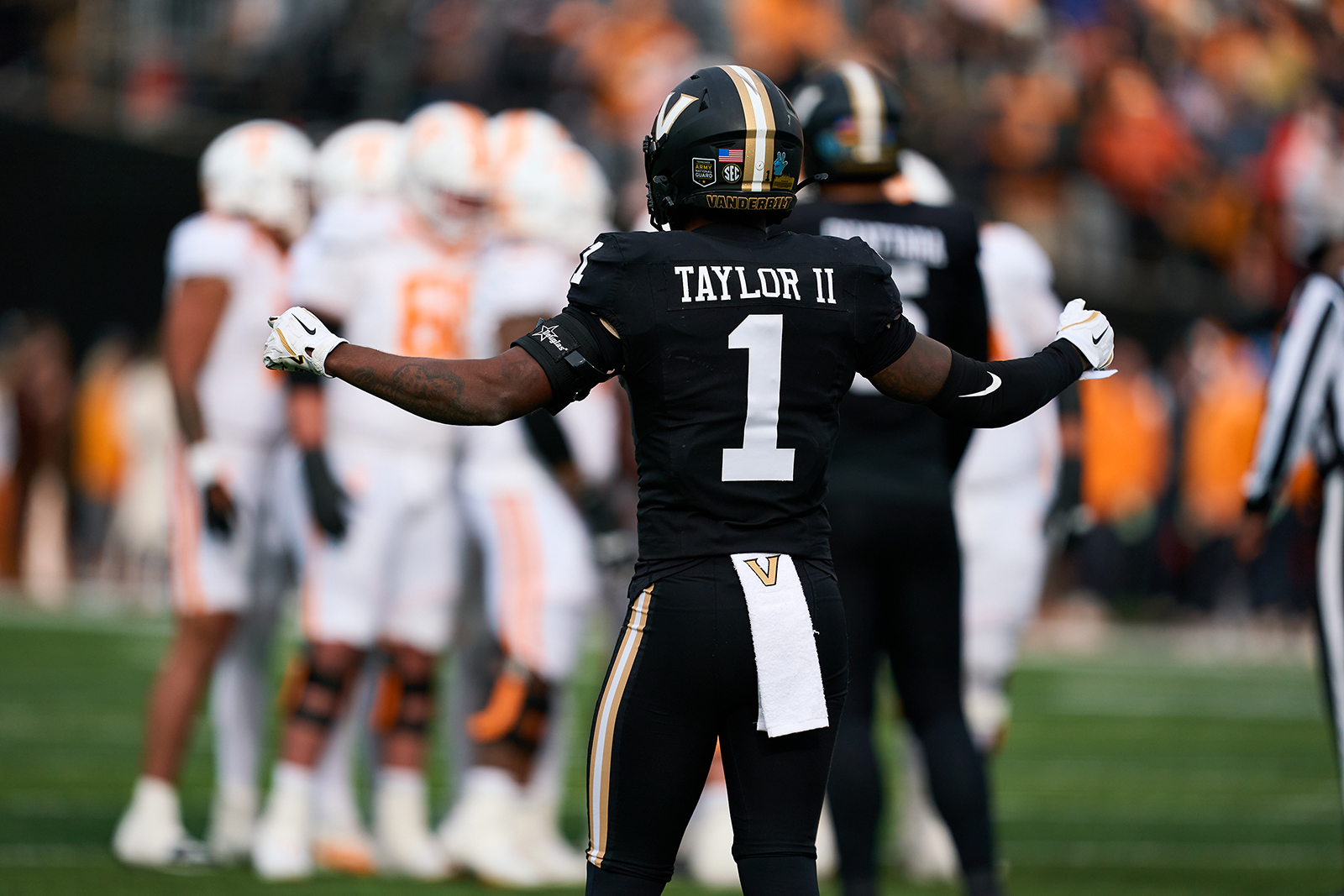
“There’s self-reflection that has to go on,” Taylor says. “You can’t be blind to your ability versus your potential. I knew I had the potential to be where I am now, but you’ve got to be patient.”
By his junior year, he earned fourth-team All-SEC honors. He was one of the nation’s emerging defensive backs. That brought him to a second crossroads with the portal—not in search of more playing time, but knowing that any number of programs would be interested and there were NIL collectives ready to reward
him handsomely.
He stayed at Vanderbilt. Through Anchor Impact, supporters made it tangibly clear that Taylor was a valued part of the community. But staying also came down to the same instincts that brought him to Vanderbilt—he trusted Lea to develop his potential on and off the field. And this past season, he captained the best Vanderbilt team in recent memory.
While being open-minded about the portal is a prerequisite for coaches, Lea, Byington and their peers also hope Vanderbilt is a place student-athletes want to stay. They want to build around people like Taylor, to supplement a solid foundation with transfers.
“There’s self-reflection that has to go on. You can’t be blind to your ability versus your potential. I knew I had the potential to be where I am now, but you’ve got to be patient.”
The final piece of the puzzle is promoting collaboration between old and new. The football team’s success isn’t just the story of a charismatic dual-threat quarterback like Pavia. It’s the story of more than 100 student-athletes coming together at different points of their college journeys and embodying the brotherhood that is one of Lea’s cornerstones.
“If you go to war with somebody that you don’t know, you can’t be confident. If you go to war with somebody that you can’t trust, you’re not confident,” Taylor says. “I think trust and brotherhood are directly correlated to the work that you put in together—the blood, sweat and tears, the times where things aren’t going well and you see people’s true colors.
“When you’re talking about transfers, obviously there are a lot of good players out there. But I think that you have to realize what kind of character they have.”
Today’s world isn’t the one in which Byington played four seasons for UNC-Wilmington. Or the one he coached in for more than 15 years before the portal’s introduction. In that world, changing schools carried a stigma, and transfers were quitters. Part of him still wonders if today’s student-athletes sometimes too readily search for greener grass. But Byington also sees teenagers who are misled or simply don’t yet know what they’re looking for. He understands why they might look around after a year or two and use their accrued wisdom to find a better fit.
In this era, he also understands that success doesn’t start with implementing offenses or running conditioning. It starts with introductions.
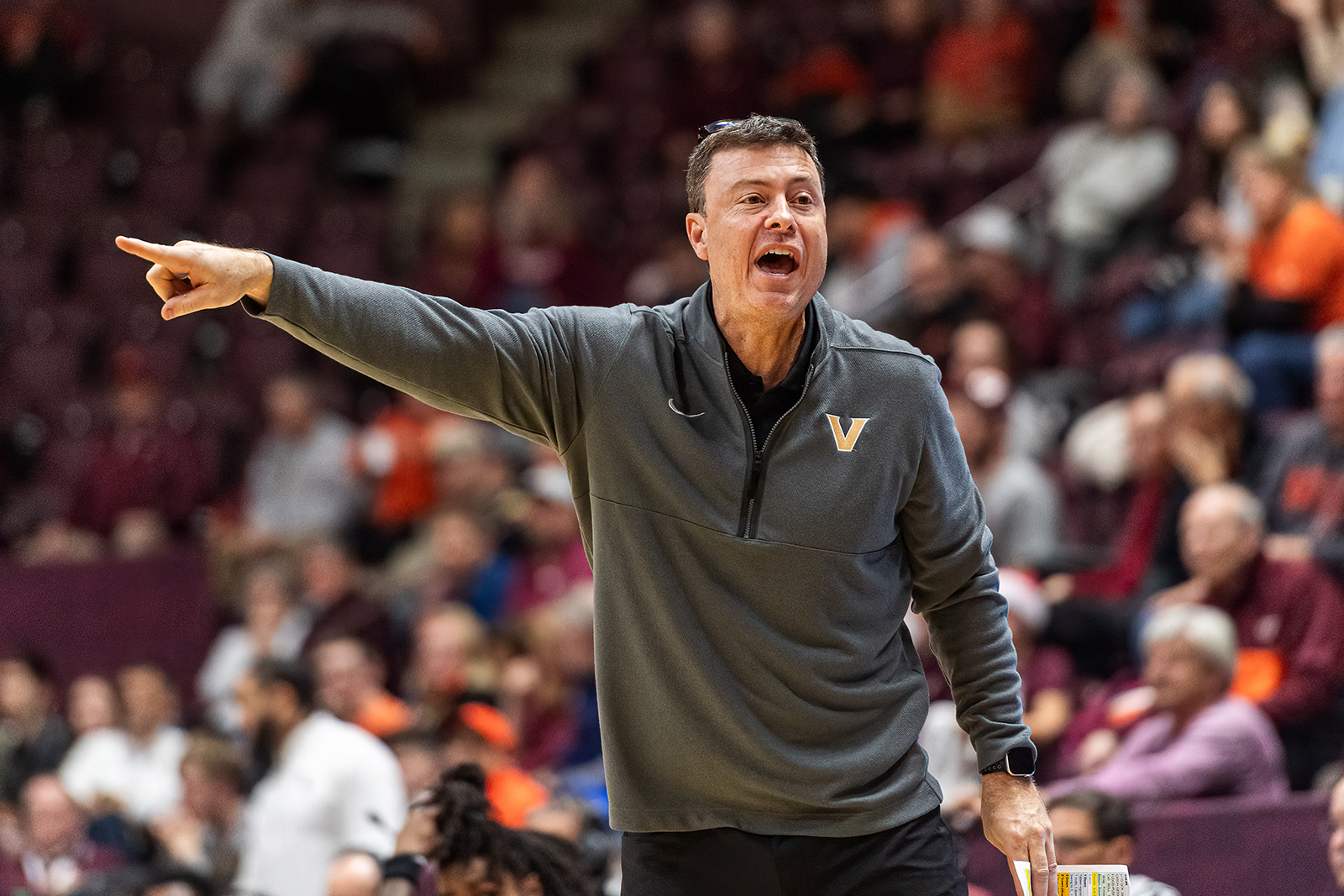
“We did so many forced chemistry things in the summer,” Byington says with a slight chuckle. “I wanted them to get to know each other and care about each other. You had to start building in that they’re willing to sacrifice for the team, for each other. That’s not easy when everybody is coming in new and they don’t know each other and they have individual goals. We had to get past the uncomfortable stage and accelerate the caring and chemistry. If you watch us now, I do think that’s a strength of ours.”
PORTAL TO THE FUTURE
According to the Bureau of Labor Statistics, in 2024 the median number of years that wage and salary workers had been with their current employer reached its lowest point in more than two decades. Vanderbilt graduates enter a working world where mobility will be a fact of life throughout their careers.
Though today’s world is more transactional, that doesn’t make a Vanderbilt experience less transformative.
The transfer portal isn’t about rentals or ringers. It’s one more way for the best and brightest—a little older and perhaps a little wiser—to find Vanderbilt, which is a place that for 150 years has been about preparing you for where you’re going.
“Coming to college, in football and with academics, I’ve had to do a lot of stuff that I did not want to do,” Taylor says. “We learn to do hard stuff. And if you keep doing it, you don’t even have to think about it. It comes naturally. Vanderbilt instills in everyone who comes here that if you want to be successful in life, you’ve got to get up and work.”



A fresh batch of questions about the University of Wisconsin football program landed in my inbox this week, and they hit right at the heart of where this team finds itself heading into a pivotal offseason.
This mailbag dives into the quarterback dilemma at the center of everything, whether Wisconsin can afford to be patient with internal development, and how much urgency should shape portal decisions moving forward. We also get into where NIL resources should be spent internally if the staff is serious about building continuity instead of constantly hitting reset, and which returning player could tell us the most about whether this staff is truly developing talent behind the scenes.
Inevitably, that leads us back to the bigger-picture question hovering over it all: why the administration is sticking with head coach Luke Fickell through all of the turbulence, and why they still believe there’s hope.
Some fair questions. Some uncomfortable ones. Let’s get into it.
Q: I know the instinct every offseason is to hit the transfer portal and go get another quarterback, but why not just roll with Carter Smith?
– Dave from Da Northwoods.
I understand the question, and honestly, it’s a fair one.
Carter Smith is absolutely a player this staff should invest in and develop. The competitiveness is evident. The mobility is real. He can move the chains with his legs and add a dimension to the run game that Wisconsin has desperately needed under center. And it’s probably not fair to make any firm declarations about what Smith is or isn’t as a passer yet.
Smith finished 26-of-46 for 201 yards with two touchdowns and an interception, and he added another 87 yards and a score on the ground, helping lead Wisconsin to late-season wins over a pair of Top 25 teams.
The Florida native was thrown into action late in the season behind a patched-together offensive line, running a limited offense, after spending most of the season with the third team or scout team. That’s not exactly a clean evaluation environment. Long term, that’s the kind of quarterback arc you want. Recruit a guy, develop him, let him grow, and eventually see the payoff. The problem is, this staff doesn’t have the luxury of time.
This is a win-now season. The 2026 schedule is a bit lighter. The administration has been very public about investing more NIL resources and private funding into the program. At some point, those words have to translate into action, or the credibility of everyone involved takes a hit. Fair or not, that’s the reality of where Wisconsin football is right now.
Because of that urgency, Fickell can’t afford to wager his entire future on Smith. You can’t go into a season like this hoping development catches up in real time at the most important position on the field. If this staff gets quarterback wrong again, or has to navigate injuries, there’s a very real chance they won’t be here in 2027 to see how Smith’s story plays out.
“We know that the QB position is gonna be really key and critical,” Fickell said. “We haven’t shied away from making sure our guys understand that.”
That’s why I still believe Wisconsin has to go out and get a major-impact quarterback in the transfer portal. Someone closer to the top of the market. Someone who can raise the floor of the entire roster immediately. Quarterback is arguably the quickest way to change the makeup of a team, mask flaws, and stabilize everything else that’s a work in progress.
The ideal scenario is spending big at quarterback and retaining Smith. Let him continue to develop without the weight of carrying the program right away. If Smith becomes the future beyond that, wonderful. That’s a win.
But you can’t stake the program’s immediate future on potential alone at this point. There were things to like from Smith, no question. There just isn’t enough margin for error anymore to wait and see if that’s enough.
Q: With so much roster turnover expected this offseason, is there one position group you’d prioritize using Wisconsin’s NIL resources to keep intact, rather than rebuilding it through the portal?
– Allen C.
In the portal era, there’s really no such thing as a position group that doesn’t need help. Even the healthiest rooms are usually forced to backfill snaps or bodies just to survive the standard offseason attrition. That said, if I’m picking one spot where I’d be intentional about using NIL resources to keep the core of current players intact, it starts with inside linebacker.
And not just because of the young talent everyone already knows about.
For me, it begins with Christian Alliegro. At 6-foot-4 and 247 pounds, he looks exactly like what you want from a Will linebacker in this system, and the production backed that up. He finished the season with 53 total tackles, nine pressures, 8.0 tackles for loss, and four sacks. He brings size, range, and versatility, and he’s a player you can deploy in a lot of different ways depending on the matchup. Plus, he’s a leader in that room.
Then there’s Mason Posa, who might already be one of the most important defensive pieces Wisconsin has moving forward. Despite arriving on campus in the summer, Posa worked his way into a significant role and finished with a team-high 61 total tackles in just 363 snaps.
He added 14 pressures, 4.0 tackles for loss, four sacks, two forced fumbles, and a fumble recovery, earning third-team All-Big Ten recognition from the coaches. His 88.3 defensive grade from Pro Football Focus tells the same story the tape does. Posa can defend the run, hold up in coverage, and get after the quarterback. That’s the complete package, and he already plays like the heartbeat of the Badgers’ defense.
Cooper Catalano rounds it out. He’s more of a throwback type, an unheralded recruit who became Wisconsin’s all-time leading tackler in high school and carried that production forward. He finished with 56 total tackles, 4.5 tackles for loss, four pressures, and two sacks. Catalano feels like a true Mike linebacker, a gritty, physical tackler, and reliable. There’s a world where all three of these guys play significant snaps together, especially if the defensive line in front of them plays as it did in 2025.
That part matters. If Wisconsin can rebuild the defensive line this offseason, it opens the door for this group to be disruptive and impactful.
Tackett Curtis entering the portal made sense given how his role changed, and the addition of Iowa Central Community College transfer Taylor Schaefer gives the room some added depth. There’s also Thomas Heiberger, who finally got healthy late in the season and showed flashes after being a highly regarded recruit as an edge-rusher. If you can retain Heiberger as a depth piece, that only helps strengthen the room.
But zooming out, this is a room where I don’t think outside additions necessarily raise the ceiling much beyond what’s already here. What you have is leadership and multiple players with legitimate all-conference upside. That’s hard to replace, especially when you factor in the culture and energy this group provides. Now you just need some continuity.
If I’m allocating resources with an eye toward 2026 and beyond, inside linebacker is the room I’m doing everything I can to keep intact.
Q: Is there one returning player whose trajectory this season could say a lot about whether this staff is actually developing talent?
– BadgerDad78
NIL
Fernando Mendoza NIL deals, explained: How much money Indiana star makes from adidas, other sponsors
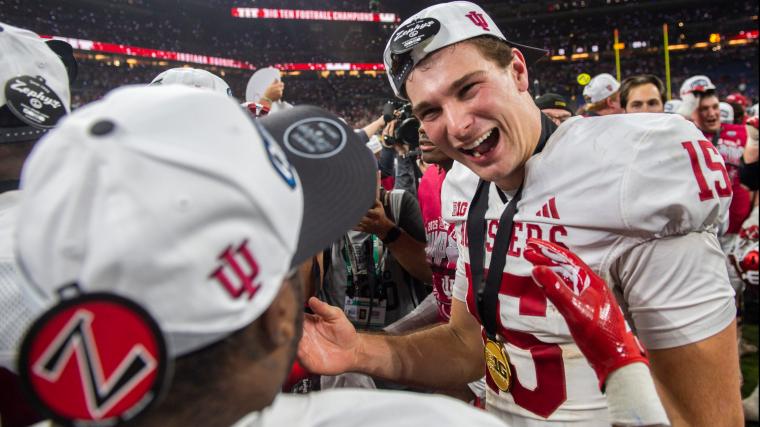
Fernando Mendoza NIL deals, explained: How much money Indiana star makes from adidas, other sponsors originally appeared on The Sporting News. Add The Sporting News as a Preferred Source by clicking here.
Fernando Mendoza has had a magical 2025 season, leading the Indiana Hoosiers to an undefeated 13-0 regular season and the program’s first outright Big Ten title since 1945. Along with breaking program records as a team, Mendoza has produced a historic season of his own.
Advertisement
The redshirt junior quarterback, a transfer from California, shattered Indiana’s single-season passing marks by completing 71.5% of his passes for 2,980 yards and a nation-leading 33 touchdown passes against just six interceptions. He also proved to be a threat with his legs, adding 240 rushing yards and six rushing touchdowns, putting him second nationally in total touchdowns accounted for (39). His remarkable campaign earned him Big Ten Offensive Player of the Year and Quarterback of the Year honors, along with the Walter Camp Player of the Year award. He also became just the second player in program history to be named a finalist for the Heisman Trophy.
As one of the top players in the nation, Mendoza’s rapid rise has made him a face of the collegiate game’s new financial era. His personal brand — which includes a recent high-profile endorsement deal with Adidas and his exclusive “Mendoza Mania” merchandise line — has soared throughout the season.
Here’s a breakdown of how much the Indiana star has brought in.
MORE: Indiana 2025 College Football Playoff tickets guide
Advertisement
Fernando Mendoza NIL money
According to the latest industry valuations, the Indiana star’s Name, Image, and Likeness (N.I.L.) portfolio is valued at an estimated $2.6 million, positioning him among the top five highest-valued college football players in the country.
On3 has the quarterback ranked fifth in college football and seventh in its N.I.L 100. He is listed below only four FBS players:
-
Arch Manning, Texas ($5.3 million)
-
Jeremiah Smith, Ohio State ($4.2 million)
-
Carson Beck, Miami ($3.1 million)
-
Bryce Underwood, Michigan ($3 million)
His valuation spiked from an estimated $1.6 million earlier in the year to $2.6 million after the Hoosiers’ perfect regular season.
MORE: Who will Indiana play next?
Fernando Mendoza NIL deals
Mendoza has two main NIL partnerships.
Advertisement
Adidas
Ahead of Indiana’s 13-10 Big Ten Championship win over No. 2 Ohio State, Mendoza inked a deal with Adidas.
“Excited to share that I’ve accepted an opportunity to join adidas!” said on LinkedIn. “I’m very grateful for everyone who has supported me along the way and excited to bring my passion for sport, leadership, and work ethic to the Three Stripes. Let’s get to work.”
He joins a star-studded adidas lineup that includes Ohio State’s Jeremiah Smith, Nebraska’s Dylan Raiola and Arizona State’s Sam Leavitt and Jordyn Tyson.
MORE: How Curt Cignetti turned Indiana into a college football powerhouse
Advertisement
Mendoza Mania
In collaboration with his brother Alberto, who is Indiana’s backup signal-caller, Mendoza launched a brand-new “Mendoza Mania” Collection on the Indiana NIL Store.
The initiative carries a deeply personal meaning for Mendoza: a portion of all proceeds from the collection will benefit the National MS Society, honoring his mother who continues her courageous fight against Multiple Sclerosis.
This compassionate focus transforms the quarterback’s commercial venture into a vehicle for impact, lending deeper purpose to every piece of “Mendoza Mania” merchandise sold.
By leveraging his national spotlight, Mendoza is driving crucial funds and awareness for the National MS Society’s mission to cure the disease and empower those affected to live their best lives.
Advertisement
MORE: Curt Cignetti’s best quotes at Indiana
Fernando Mendoza net worth 2025
Mendoza’s net worth is not publicly available. Though, sources report that his net worth is in the hundred thousands, reaching up to $1 million.
This will continue to rise as Mendoza leads Indiana through the College Football Playoff, and down the road, becomes a first round pick in the NFL Draft.
MORE: Fernando Mendoza, Curt Cignetti react to Indiana’s rise
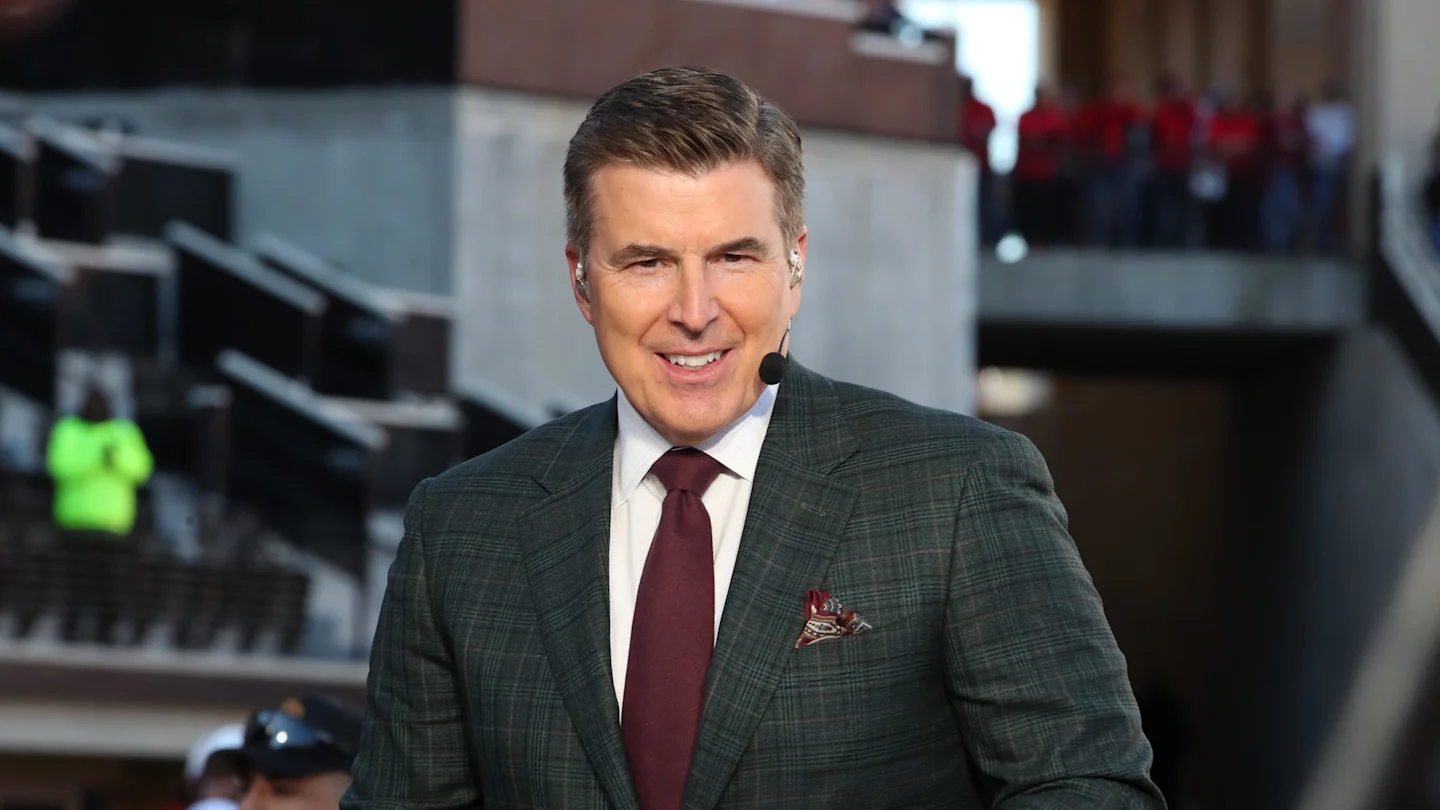
Almost every list of potential head coach candidates for Michigan has had some combination of the same names, like Kalen DeBoer, John Harbaugh, Jesse Minter, Kenny Dillingham, etc.
But ESPN’s Rece Davis had an interesting suggestion that hasn’t been mentioned much at all since the stunning development that led to Michigan firing head coach Sherrone Moore on Wednesday for having an inappropriate relationship with a staff member, and Moore was arrested and charged with stalking and home invasion.
Davis, the host of “College GameDay” and a prominent voice on college football matters, suggested that former Stanford coach David Shaw should not only be on Michigan’s list of candidates but “given the circumstances, likely atop the list,” he posted on social media.
If I were in Warde Manuel and Michigan’s position, I’d have David Shaw very high on my list. Given the circumstances, likely atop the list.
— Rece Davis (@ReceDavis) December 12, 2025
Shaw is in his first season as the Detroit Lions’ passing game coordinator and has not coached in college football since he resigned as Stanford’s head coach at the end of the 2022 season.
Shaw was 96-54 in 12 seasons at Stanford, including five seasons with double-digit wins. His 2015 Cardinal team went 12-2, won the Rose Bowl and finished No. 3 in the final AP top 25 poll. His 2011 and 2012 teams both finished No. 7 in the AP rankings, going 11-2 and 12-2, respectively.
Shaw’s Stanford tenure had two very distinct chapters, though. Through his first eight seasons, he was 82-26, winning at least eight games in every season, collecting three Pac-12 championships, four Pac-12 Coach of the Year awards and the Bobby Dodd national coach of the year award in 2017. Over his final four years, he went 14-28 with three losing seasons.
Shaw’s style would fit seamlessly at Michigan, as his best Stanford teams were known for dominant, physical rushing attacks.

Davis’ suggestion that Shaw should be atop Michigan’s list was beyond just his coaching resume, though.
The Wolverines program is in turmoil with one black eye after another now, from the NCAA investigation into and substantial penalties from the Connor Stalions sign-stealing scandal and now the ugly ending to Moore’s two-year tenure as head coach.
Shaw has his own connections to former Michigan coach Jim Harbaugh, serving as Harbaugh’s offensive coordinator at Stanford before succeeding him as head coach there, but he has a pristine reputation and record free of scandal and was among the most respected coaches in college football during his time with the Cardinal.
It’s not a crazy idea, though Michigan fans will surely prefer a splashier hire and a coach who has excelled in this new NIL/transfer portal era of college football.
NIL
Cignetti, Mendoza, Smith, Ponds earn awards, recognition during ESPN’s college football awards show – The Daily Hoosier
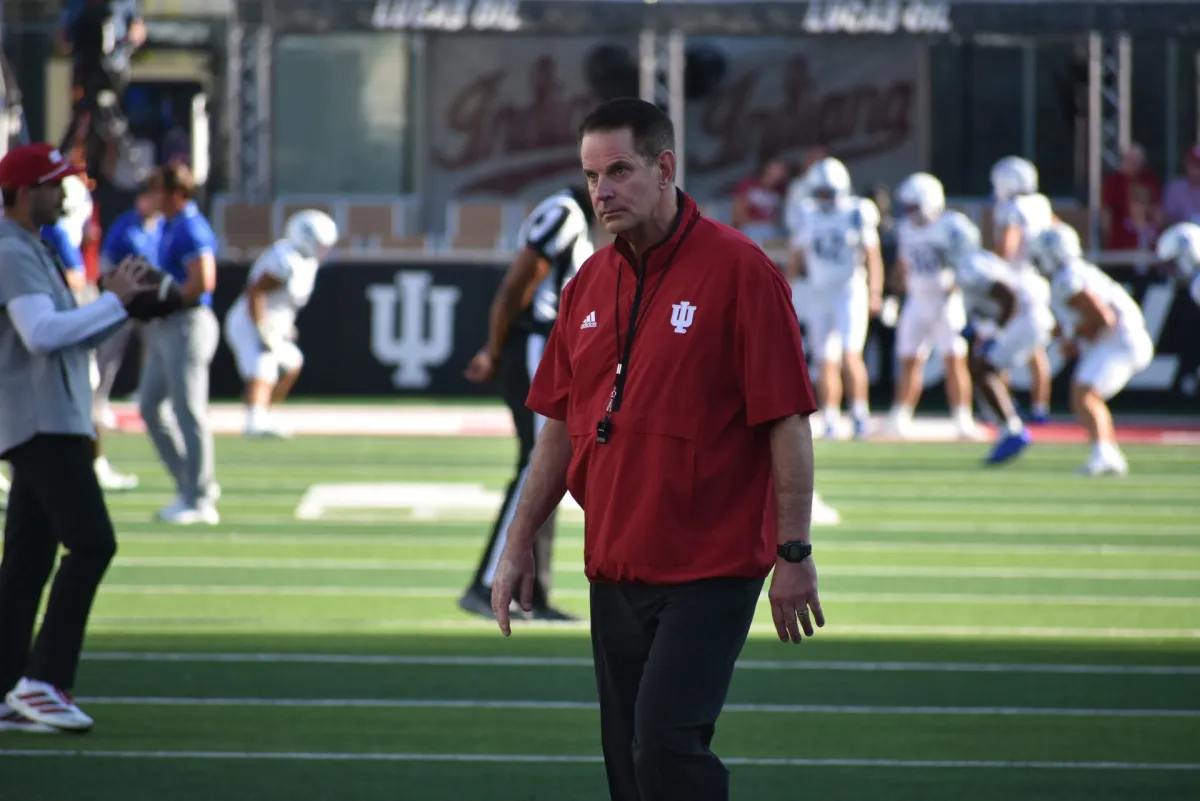
Indiana head football coach Curt Cignetti and quarterback Fernando Mendoza each earned accolades during ESPN’s 35th annual The Home Depot College Football Awards, while a trio of Hoosiers were selected for All-America honors during the telecast.
Cignetti earns his second national coach of the year award this season in the form of the Home Depot Coach of the Year honor. He previously won the Walter Camp National Coach of the Year award. He earned each award in back-to-back seasons. He the first coach to win the Home Depot Coach of the Year award in back-to-back seasons.
Mendoza was named winner of the Davey O’Brien Award and Maxwell Award to go along with his Walter Camp Award earlier in the week. He then joined teammates Carter Smith (OL, First Team) and D’Angelo Ponds (DB, Second Team) on the Walter Camp Football Foundation All-America Team.
Cignetti helped the Hoosiers to its first unblemished regular season in program history, a program-record 13 wins through its first Big Ten Championship Game victory and the No. 1 seed in the upcoming College Football Playoff. On Wednesday, he became the first coach to win consecutive Walter Camp National Coach of the Year honors in the awards 59-year history.
Mendoza is the second Hoosier to win the prestigious Maxwell Award, joining running back Anthony Thompson in 1989. He is the first Big Ten student-athlete to win the award since Penn State running back Larry Johnson in 2002 and the first Big Ten quarterback to win the award since Drew Brees in 2000.
Mendoza currently leads the nation in passing touchdowns (33) and is the Power 4 leader in touchdowns responsible for (39). He is the third Big Ten quarterback since 2000 with three-straight games of at least four passing touchdowns and zero interceptions – C.J. Stroud (Ohio State; 2021) and Kyle Orton (Purdue; 2004, four straight). The Miami, Florida, native is the only FBS quarterback since at least 1996 with multiple games of at least 90 percent completion and four touchdown passes versus Power 4 opponents.
In 2025, Mendoza is the lone FBS quarterback with five games of 4-plus touchdown passes and zero interceptions and entered Championship Week as the FBS leader in percentage of passes that result in a touchdown at 10.9%, over one point higher than the next closest passer (Sayin, Ohio State; 9.2%).
He has thrown a touchdown pass in 12-straight games entering the College Football Playoff and has five games with both a passing and rushing touchdown in 2025. He has thrown 33 touchdowns to just six interceptions, is tied for No. 2 on the team with six rushing touchdowns and has 240 yards rushing on the season.
The Hoosiers earned the No. 1 spot in the College Football Playoff and will play the winner of Alabama/Oklahoma in the Rose Bowl Game on Jan. 1, 2026. The game from Rose Bowl Stadium will kick at 4 p.m. ET
Related

On the cusp of the 45th anniversary of their defeat of the Soviet Union in the 1980 Lake Placid Winter Olympics, the United States’ “Miracle on Ice” Olympic men’s hockey team was honored at the White House on Friday, Dec. 12 with Congressional Gold Medals.
It led into a brief discussion on the current state of Name, Image and Likeness (NIL) in college sports when Team USA captain Mike Eruzione was asked about the topic by a reporter. Following a brief response from Eruzione, President Donald Trump joined the conversation and made a statement.
Advertisement
“Something ought to be done, and I’m willing to put the federal government behind it,” Trump said of overhauling NIL in college sports during a bill signing ceremony in the Oval Office. “And if it’s not done fast, you’re going to wipe out colleges.”
REQUIRED READING: ‘Miracle on Ice’ team honored with Congressional Gold Medals by President Trump
This is not the first time that Trump has spoken on the state of college athletics in a time where NIL and the transfer portal have taken over. He made similar remarks on “The Pat McAfee Show” during a phone call interview on Veterans Day.
Republicans in the U.S. House of Representatives recently pulled the scheduled final vote for the Republican-backed SCORE Act that would have allowed the NCAA and its recently formed College Sports Commission to create and enforce national rules that have been under legal dispute in recent years.
Advertisement
The SCORE Act (Student Compensation And Opportunity Through Rights and Endorsements) had sought to provide more regulation and calm the chaotic environment created by the introduction of NIL compensation, revenue sharing and the transfer portal to college sports.
The USA TODAY app gets you to the heart of the news — fast. Download for award-winning coverage, crosswords, audio storytelling, the eNewspaper and more.
This article originally appeared on USA TODAY: Trump says ‘something ought to be done’ about NIL in college sports
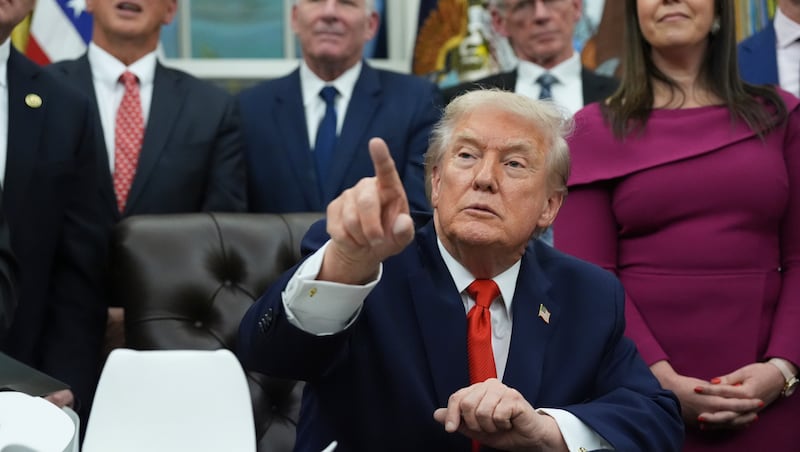
President Donald Trump isn’t a big fan of college athletes being paid for the use of their name, image and likeness.
In fact, he trashed NIL in response to a question about it Friday.
During a ceremony at the White House to honor the gold-medal winning 1980 U.S. Olympic hockey team, a reporter asked about NIL deals and the transfer portal, noting the “Miracle on Ice” players were amateurs who didn’t get paid.
Advertisement
Team captain Mike Eruzione said he didn’t like it, but that’s the state of college sports today and “we have no control over that.”
Trump, though, said maybe there is something to do about it.
“I think the NIL is a disaster for sports. It’s horrible for the Olympics, and I think it’s actually horrible for the players,” he said.
Trump said colleges are cutting “lesser” sports, those that don’t bring in revenue but help train athletes for the Olympics.
“Those sports don’t exist because they’re putting all their money into football, and by the way, they’re putting too much money into football,” Trump said.
As NIL and now revenue sharing has entered college sports, many schools across the country are having to make tough decisions about whether to maintain Olympic or nonrevenue sports.
Advertisement
The House v. NCAA settlement allows universities to pay their athletes up to $20.5 million per year, which works out to about 22% of the average athletic department revenue at Power Four schools. The vast majority of the money goes to football and men’s basketball players, the two most revenue-generating sports at most universities.
“You can’t pay a quarterback $14 million to come out of high school. They don’t even know if he’s going to be a very good player,” Trump said. “Colleges cannot afford to pay the kind of salaries you’re hearing out there.”
The highest reported NIL payments for football players have been in the $6 million to $8 million range. But Trump said schools won’t be able to stop paying more and more to get the player they believe will win them a national championship.
“You’re going to have these colleges wipe themselves out. And something ought to be done and I’m willing to put the federal government behind it. But if it’s not done fast, you’re going to wipe out colleges. They’re going to get wiped out, including ones that do well in football,” Trump said.
Advertisement
The president didn’t specify what he thinks the federal government should do. Several bills regulating NIL have been filed in Congress, but none have gained traction.
“Colleges cannot afford to play this game, and it’s a very bad thing that’s happening,” he said.

President Donald Trump answers media questions after a bill signing ceremony with members of the 1980 U.S. Men’s Olympic Hockey team, Friday, Dec. 12, 2025, in the Oval Office of the White House in Washington. | Jacquelyn Martin, Associated Press
Private equity enters college sports
Trump comments come as the University of Utah became the first school in the country to announce a deal with a private equity firm to infuse cash into its athletics program.
University administrators said the program has operated efficiently and generated a modest surplus over the years with the support of donors and student fees. But the decision to share revenues with athletes under the House settlement and the emergence of the transfer portal have added significant costs to the school.
Advertisement
The cost of supporting a nationally competitive athletics program has risen dramatically and far outpaces revenue growth, they said.
Utah intends to create a for-profit company called Utah Brands & Entertainment through its university foundation. It will partner with Otro Capital to run the commercial side of its sports program.

Spire Confirms Truck Return, Announces Promotions

Lakeview Academy unveils renovated Innovation and Technology Wing

QB questions, NIL priorities, and Luke Fickell’s future

Track News: Bobby Rahal-led North Florida Motorsports Park announced

Dunne leads the way on the final day of post-season F2 testing

Vinnie Meskelis From Dallas Confirmed for 2026 NASCAR Euro Series – Speedway Digest

Fernando Mendoza NIL deals, explained: How much money Indiana star makes from adidas, other sponsors

U.S. 131 Motorsports Park Set to Join NHRA’s North Central Division

Lando Norris gets his FIA F1 Driver Champion award
When does Wisconsin volleyball play again? NCAA tournament next match

Rece Davis names former Pac-12 coach who should be top candidate for Michigan head coaching job

Cignetti, Mendoza, Smith, Ponds earn awards, recognition during ESPN’s college football awards show – The Daily Hoosier

Trump ‘willing to put the federal government behind’ changes to NIL

UAA signs trio of Alaska prep stars

UGOLINI NAMED TO ALL-ECAC SECOND TEAM

First Tee Winter Registration is open

Fargo girl, 13, dies after collapsing during school basketball game – Grand Forks Herald

CPG Brands Like Allegra Are Betting on F1 for the First Time

Volleyball Recaps – November 18

F1 Las Vegas: Verstappen win, Norris and Piastri DQ tighten 2025 title fight

Two Pro Volleyball Leagues Serve Up Plans for Minnesota Teams

Sycamores unveil 2026 track and field schedule

Utah State Announces 2025-26 Indoor Track & Field Schedule

Jo Shimoda Undergoes Back Surgery

Redemption Means First Pro Stock World Championship for Dallas Glenn

Robert “Bobby” Lewis Hardin, 56

How this startup (and a KC sports icon) turned young players into card-carrying legends overnight

Texas volleyball vs Kentucky game score: Live SEC tournament updates

Bowl Projections: ESPN predicts 12-team College Football Playoff bracket, full bowl slate after Week 14

Indiana’s rapid ascent and its impact across college football

 NBA Legend Michael Jordan to Join NBC Sports as Special Contributor
 Why a rising mid-major power with an NCAA Tournament team opted out of revenue-sharing — and advertised it
 Falcons mailbag
 Portal Update – Basketball and Gymnastics Take Hits
 has always dreamed in Mercurial. Now his initials are on the boots.
The new Kyl…
has always dreamed in Mercurial. Now his initials are on the boots.
The new Kyl…
-
 Rec Sports3 weeks ago
First Tee Winter Registration is open
-
 Rec Sports2 weeks ago
Fargo girl, 13, dies after collapsing during school basketball game – Grand Forks Herald
-
 Motorsports3 weeks ago
CPG Brands Like Allegra Are Betting on F1 for the First Time
-
 Motorsports3 weeks ago
F1 Las Vegas: Verstappen win, Norris and Piastri DQ tighten 2025 title fight
-
 Sports3 weeks ago
Two Pro Volleyball Leagues Serve Up Plans for Minnesota Teams
-
 Sports3 weeks ago
Sycamores unveil 2026 track and field schedule
-
 Sports3 weeks ago
Utah State Announces 2025-26 Indoor Track & Field Schedule
-
 Motorsports2 weeks ago
Jo Shimoda Undergoes Back Surgery
-
 Motorsports2 weeks ago
Redemption Means First Pro Stock World Championship for Dallas Glenn
-
 Rec Sports2 weeks ago
Robert “Bobby” Lewis Hardin, 56