
NIL
Too Soon: Why Reclassifying Hurts Most Blue-Chip Football Prospects


Reclassification of blue-chip football prospects has become a growing trend in recruiting over the past decade. Close to 50 prospects have voluntarily skipped their final season of high school football to enter college, dating back to the 2016 recruiting cycle. The emergence of NIL has accelerated this trend in recent years, with double-digit prospects reclassifying in each of the 2024 and 2025 recruiting cycles.
We’re just now receiving the early returns from the first wave of reclassifications, which allow for initial conclusions after tracking the college careers.
Reclassifying lowers the chances of being a NFL Draft early entry
The easiest big-picture conclusion from this nascent reclassification trend is the impact on the odds of a player becoming an early entry NFL Draft prospect. Early entries are the three-and-out players who forgo college eligibility to enter the draft. This group often comprises a bulk of first-round picks annually.
Sixteen blue-chip prospects reclassified within the 2016-2022 recruiting cycles. The group accounts for all of draft-eligible reclassifications from the past 10 years. To this point, just one player who has reclassified has entered the NFL Draft early – former Wisconsin running back Braelon Allen (2021 cycle/4th round).
That sample includes five former five-star prospects: quarterback JT Daniels (2018 cycle/undrafted), cornerback Tony Grimes (2020 cycle/still in college, 4th program), quarterback Quinn Ewers (2021/7th round pick), linebacker Sonny Styles (2022/returned for senior season), and EDGE LT Overton (2022/returned for senior season). Former Georgia running back James Cook, Allen, and Ewers are the three draft picks from the group to date. Of the ones remaining in college from those cycles, Overton and Styles, both former Five-Star Plus+ prospects, are the only two who conservatively project as draft picks.
Most reclassifications result in a “hurry up and wait” situation for the player. Of the 34 reclassifications who have played in college football over the past ten years, nearly two-thirds saw the field for under 100 snaps as a true freshman. While a few made an early impact, the freshman year results in a huge adjustment period for most. In addition to being the only reclassification turned early entry draft pick, Braelon Allen was the first to be a true freshman All-American. It shouldn’t be a surprise that the second to be a true freshman All-American is Alabama wide receiver Ryan Williams, the only reclassification currently in college football who safely projects as an early entry draft pick.
The lack of true freshman impacts made by reclassifications directly affects the low number of early NFL Draft entries. For every Ryan Williams or Braelon Allen, ten former reclassifications worked on the scout team as a true freshman, lessening the odds of a big impact as an underclassman, and ultimately, early entry into the NFL Draft.
Reclassification is not optimal for quarterback development
Of all positions, the track record of reclassifications is particularly spotty at quarterback. Blue-chip quarterbacks who have reclassified have struggled to live up to the expectations of being a highly-touted signal caller, with the majority struggling to find a foothold at a Power 4 program.
- 8/9 quarterback reclassifications from the 2016-2023 recruiting cycles transferred at least once
- 6/9 transferred out of the Power 4 to a Group of Five or FCS program
- 1/9 has been drafted thus far (Quinn Ewers, 7th round)
Even the few reclassifications who played significant snaps as true freshmen from this group eventually ended up in the Group of Five: Jake Bentley (South Alabama), JT Daniels (Rice), and Gavin Wimsatt (Jacksonville State). The transferring trend extends to the 2024 cycle, as two of the four quarterback reclassifications from that cycle have already transferred out after a year on campus.
Much was made about Quinn Ewers‘s draft slide last month, with the former On3 Industry No. 1 overall prospect falling to the 7th round, despite leading the blueblood Texas Longhorns to back-to-back CFP semifinal appearances. Ewers’s reclassification and enrollment at Ohio State in the middle of fall camp in 2021 was a flashpoint in the NIL era. At the time, I expressed concern about how the move could affect his long-term development in addition to making for an incredibly murky evaluation, given he had played just 22 games against varsity competition.
Before Texas’s CFP semifinal game against Ohio State, Ewers talked about skipping his senior season to enroll early and the difficult transition during his four months in Columbus.
“It was definitely tough,” Ewers said. “I’ve never really been a backup in my life. Obviously, C.J. (Stroud) was very much deserving to be playing, for sure. I’m a young kid. It’s tough whenever you’re supposed to be a senior (in high school) and you see all your buddies you grew up with still playing football and I’m just sitting obviously, because I wasn’t prepared to go play a game. I had just got (to Ohio State) in the middle of fall camp.
“It was just a shock for me, going from high school level to college level.”
While it’s impossible to truly quantify how skipping his senior season of high school football affected Quinn Ewers‘s long-term development, it’s safe to say the reclassification did him no favors in that regard. At quarterback, valuable in-game reps and production are critical for building confidence and establishing a play style that translates to the game’s highest level.
Comparing Quinn Ewers to first-round pick Jaxson Dart, a fellow five-star prospect in the 2021 cycle, can prove instructive. Dart was a late riser with a fraction of Ewers’s recruiting hype. He vaulted up recruiting boards and in the rankings on the heels of a monster senior season that saw him named Gatorade National Player of the Year. Of all the quarterbacks in the 2025 NFL Draft, Dart had the high school profile most fitting of a future first-rounder. And compared to Ewers, he entered college with much more experience, attempting 326 more passes while totaling 4,898 more yards, and 47 more touchdowns.
No. 1 pick Cam Ward played in a Wing-T offense in high school. He attempted 109 passes as a senior and received zero FBS offers. Ward headed to Incarnate Word, where he benefited from nearly 900 confidence-building pass attempts at the FCS level before transferring to Washington State and later Miami. When the dust settled, Ward had thrown over twice as many passes as Ewers in college.
The lower-level experience allows quarterbacks to hone their on-field identity while developing confidence, learning from mistakes, and pushing boundaries before facing much tougher competition. Most importantly, the extensive reps allow for improvement, the true hallmark of top talents at the position. Players like Jaxson Dart, Cam Ward, and dozens of first-round quarterbacks before them showed steady growth. While Quinn Ewers had a strong career at Texas and led the Longhorns to a bunch of big wins, it’s safe to say his best individual season came nearly six years ago as a sophomore in high school.
Ryan Williams is a huge outlier
When most fans think about reclassification, Alabama phenom Ryan Williams is likely the first name that comes to mind. The former Five-Star Plus+ prospect burst on the national scene last fall. His true freshman season is probably taken for granted, as he’s in the same class as Ohio State wide receiver Jeremiah Smith, a generational talent at the position.
Blue-chip prospects (and their parents) will likely look at Williams’ success in the SEC as a 17-year-old and yearn for similar. In the same way that Travis Hunter is a unique two-way player, Ryan Williams is a massive outlier among reclassifications.
After his reclassification, Ryan Williams was still the most productive top wide receiver prospect in the 2024 recruiting cycle. In his final two years at Saraland (Ala.) High, Williams caught 160 passes while accounting for 4,660 total yards and 65 touchdowns. He was the back-to-back Mr. Football in the state of Alabama. No other prospect who has reclassified to this point comes close to his level of high school production.
Williams still has at least two years of college football left to play, but at this point, he is conservatively tracking as a 1-in-every-100 type of reclassification. He is anything but the norm when it comes to players who reclassify.
Maximizing future value starts with patience
The trend of reclassifications is still fairly young and looks to be here to stay. Five blue-chip prospects have already reclassified from the 2027 to the 2026 recruiting cycle this year.
Each prospect and most of their support systems are going through the recruiting process for the first time. The idea of beginning the earning window a year earlier is understandably enticing. That said, important context is needed to understand the dynamics of how player value is assessed and development is optimized in the current landscape.
- The best way to maximize value in college football is to play at a high level – in college.
- NIL deals for touted recruits who don’t produce as underclassmen are reworked every year.
- Making an early impact increases value and earning potential.
- Early impact is affected by how good a player is upon enrolling.
- A player’s ability upon enrolling is maximized by dominating at the high school level for an extended period, also allowing time for continued physical development.
- College football is increasingly less developmental, with teams adding experienced players via the Transfer Portal annually.
- In-game experience is most easily attained at lower levels, namely high school.
- Jumping the line, whether being held back, or reclassifying, has no discernible long-term developmental benefits for most players.
Attempting to accelerate the process unnecessarily opens the door for volatility in the developmental pace and career arc. From a developmental perspective, most blue-chip prospects are better off playing out their high school career. While every financial situation is different, the best way to optimize career earnings is to hit the ground running upon matriculating to the next level, in college football and the NFL.
Dominating high school football may not feel challenging for the best prospects, but it’s crucial for growth as a player. The game slows down, and peak confidence is established before the increased competition at the college level. Many players are still growing physically. The time also allows for multi-sport participation and breadth of skill acquisition that is harder to gain at the college level. Parents can get bored and antsy at this stage, wanting to rush the process. Despite the muddied evaluation, some college coaches and personnel staffers view reclassifications as a chance to get a prospect in their program earlier with less of a recruiting fight.
In reality, the odds of a prospect being unaffected by the leap, like Ryan Williams, while possible, are low. Unfortunately, development, which is the number one driver of long-term success and earning potential, doesn’t work that way for most prospects.
Here is the list of reclassifications to enter college football, beginning in the 2016 recruiting cycle:
2016 cycle
QB Jake Bentley – South Carolina, Utah, South Alabama (undrafted)
2018 cycle
QB JT Daniels (5-star) – USC, Georgia, Rice (undrafted)
RB James Cook – Georgia (2nd round)
2019 cycle
CB Sheridan Jones – Clemson (undrafted)
2020 cycle
CB Tony Grimes (5-star) – North Carolina, Texas A&M, UNLV, Purdue (still in college)
EDGE Donell Harris – Texas A&M, Louisiana-Monroe
WR Malcolm Johnson – Auburn, Bowling Green (undrafted)
S Kamar Wilcoxson – Florida, Temple
2021 cycle
QB Quinn Ewers (5-star) – Ohio State, Texas (7th round)
RB Braelon Allen – Wisconsin (4th round)
QB Ari Patu – Stanford, North Alabama
2022 cycle
LB Sonny Styles (5-star) – Ohio State (returned for senior season)
EDGE LT Overton (5-star) – Texas A&M, Alabama (returned for senior season)
QB Gavin Wimsatt – Rutgers, Kentucky, Jacksonville State
WR Kyler Kasper – Oregon
CB Marcus Washington – Georgia, Louisville, Syracuse
QB Cameron Edge – Maryland, Eastern Michigan
2023 cycle
CB Dezz Ricks (5-star) – Alabama, Texas A&M
QB Austin Mack – Washington, Alabama
QB Austin Simmons – Ole Miss
CB Antione Jackson – East Carolina, UCF
QB Myles Jackson – Stanford, Tulsa
2024 cycle
WR Ryan Williams (5-star) – Alabama
DL Armondo Blount (5-star) – Miami
TE Davon Mitchell – Oklahoma, Louisville
QB Cutter Boley – Kentucky
EDGE Max Granville – Penn State
CB Tarrion Grant – Purdue, Texas Tech
DL Steve Mboumoua – Alabama
QB Colin Hurley – LSU
QB EJ Colson – UCF, Purdue
OT Enoch Wangoy – Florida
RB Antwan Raymond – Rutgers
QB Davi Belfort – Virginia Tech, UCF
2025 cycle
DL Jahkeem Stewart – USC
QB Julian Lewis – Colorado
CB RJ Sermons – USC
CB J’Vari Flowers – Florida
WR Donovan Murph – South Carolina
S Demetres Samuel – Syracuse
QB Brady Hart – Texas A&M
WR Jordon Gidron – South Carolina
S Zelus Hicks – Texas
CB Dominick Kelly – Georgia
LB Zach Weeks – LSU
WR Malachi Toney – Miami
RB Raycine Guillory – Utah
IOL Kail Ellis – Auburn

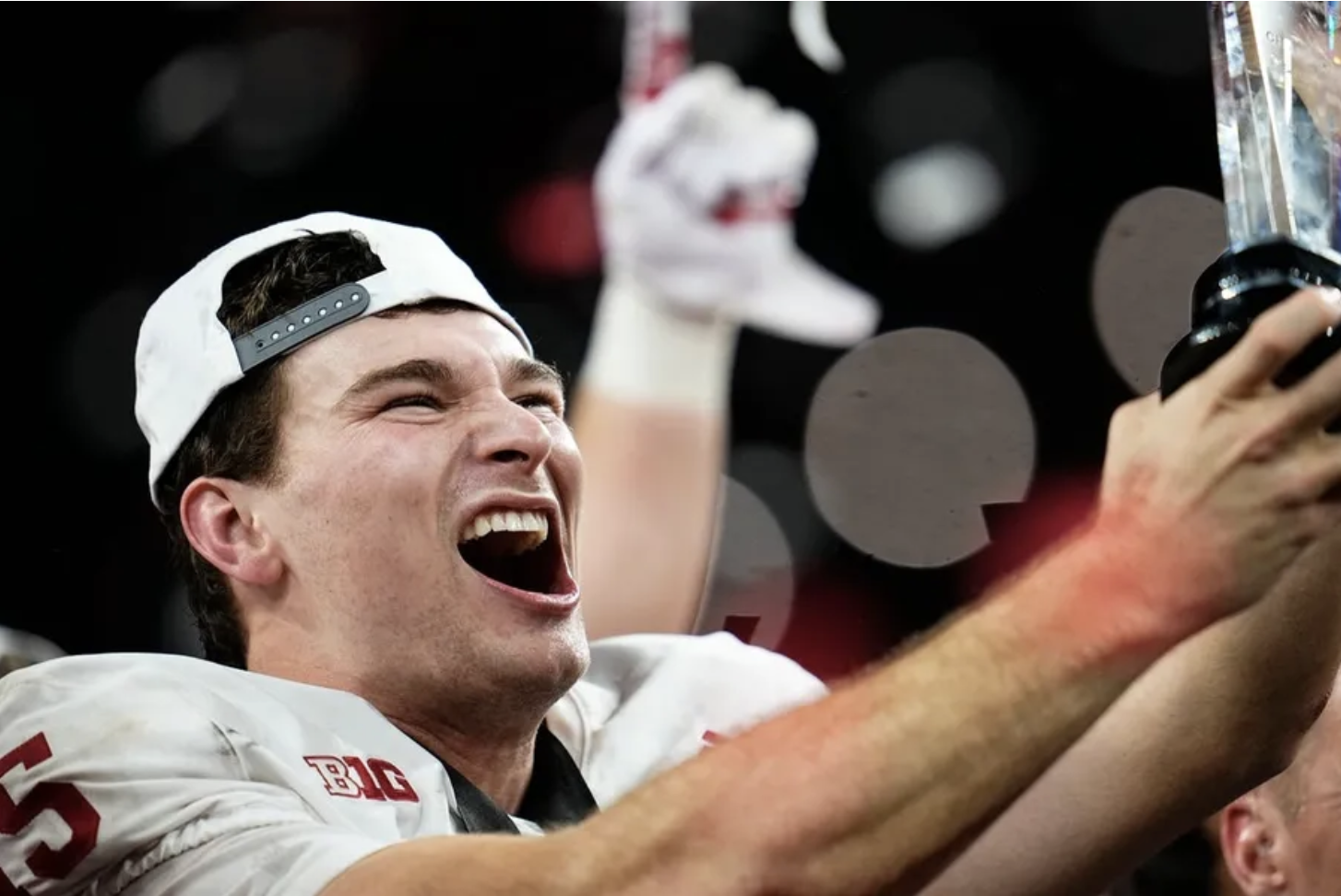
The winter holidays mark a time of joy and celebration for some, but are more defined by anxiety for others. Amid college football’s annual holiday-season tradition of bowls games, the sport’s shift from the long-held postseason customs to an expanded playoff heightens anxiety.
Regardless if one falls in the category of joyful reveler or cantankerous Scrooge, consumerism plays a critical role in the season. College football is no different, with the recent advent of NIL becoming a foundational element of the game evident in the remaining Playoff field.
As the bracket whittled down from 12 to eight with last weekend’s opening-round games, the College Football Playoff demonstrated an exercise comparable to Eddie Murphy’s monologue about Christmastime spending in the seasonal classic Trading Places: “I ain’t gonna have money to buy my son the G.I. Joe with the kung-fu grip, and my wife ain’t going to make love to me ‘cause I got no money.”
Well, reaching the Playoff and advancing are similar. The eight quarterfinalists stand as testament to spending power — though it’s difficult to pinpoint exactly how much, which contributes to rising anxieties.
A CBS Sports article ahead of the 1st Round broke down the tournament into NIL-spending tiers, with five of the 12 labeled “elite spenders.” Four of those play on in the round of eight: reigning national champion Ohio State, Oregon, Texas Tech and Miami, which outlasted fellow elite spender Texas A&M in what was perhaps uncoincidentally the most competitive of the four opening-round games.
James Madison and Tulane were both routed against deep-pocketed opponents in Oregon and Ole Miss, which isn’t necessarily a data point worth applying to any NIL discussion. Athletic departments with more funds through television revenue, merchandising, etc. have long had advantages against their counterparts from conferences with fewer resources, and that disparity is a defining trait of the underdog stories fans love.
In the case of this year’s Playoff other historical underdogs, however, NIL spending is an undeniably crucial factor in Indiana and Texas Tech pursuing the national championship.
The top-seeded, undefeated Hoosiers head into their first Rose Bowl Game in almost six decades behind the Heisman Trophy winner Fernando Mendoza. The Indiana quarterback has an NIL valuation of $2.6 million per On3.com estimates, up from the $1.6 million estimate shortly after Mendoza’s transfer from Cal.
And while less dramatic in a historical context than Indiana’s rise to prominence, Texas Tech competing for the national championship is a significant jump for a program previously destined to also-ran status. The Red Raiders are underdogs in the sense that they were rarely competitive on a national level previously, but Texas Tech reportedly spends on NIL with a fervor comparable to top-tier soccer clubs.
The soccer parallel works in part because, like a once-middling Manchester City became an English Premier League powerhouse coinciding with an infusion of cash, Texas Tech owes much of its rise to oil money.
On3 reported Texas Tech spent a whopping $28 million on its 2025 roster, making it one of the highest-priced lineups in college football. The public face of Tech’s NIL collective, former Red Raiders lineman Cody Campbell, sold his energy company Double Eagle for a reported $4.1 billion earlier this year.
So does this year’s Playoff foreshadow all our football holiday seasons to come? Does a program need its own version of Landman to strike it rich in order to compete?
Looking at the other closely contested 1st-Round matchup — Alabama’s comeback win at Oklahoma — offers fascinating perspective. It pit against one another two historically outstanding programs that CBS Sports designated as “good, but not as elite as you think” spenders.
That’s an interesting description, as it aligns particularly with Alabama’s drop-off from the most dominant program in the sport in the years just before the Supreme Court allowed NIL payments in 2021, to the Crimson Tide’s current positioning as a consistent winner but hardly a world-beater.
Now, it’s overly simplistic to credit Alabama’s marginal slide to NIL spending and discredits just how remarkable Nick Saban was as the Tide’s head coach. But it is noteworthy that Saban has been an outspoken critic not of NIL, but its lack of structure.
“I’m all for the players making money,” [but] I don’t think we have a sustainable system right now,” Saban said last spring. I think a lot of people would agree with that. In terms of the future of college athletics period, not just football, how do we sustain 20 other non-revenue sports that create lots of other opportunities for people in the future?”
In its parallel with the holiday season, Saban’s comments about the long-term health of college athletics during this present-day era of unregulated spending might bring to mind nightmares of credit-card bills coming due after a gift-buying spree.
You have perhaps noticed much of the information on NIL spending is presented in estimates. The lack of concrete oversight or regulation makes evaluating the landscape difficult, and only adds to the anxiety surrounding NIL.
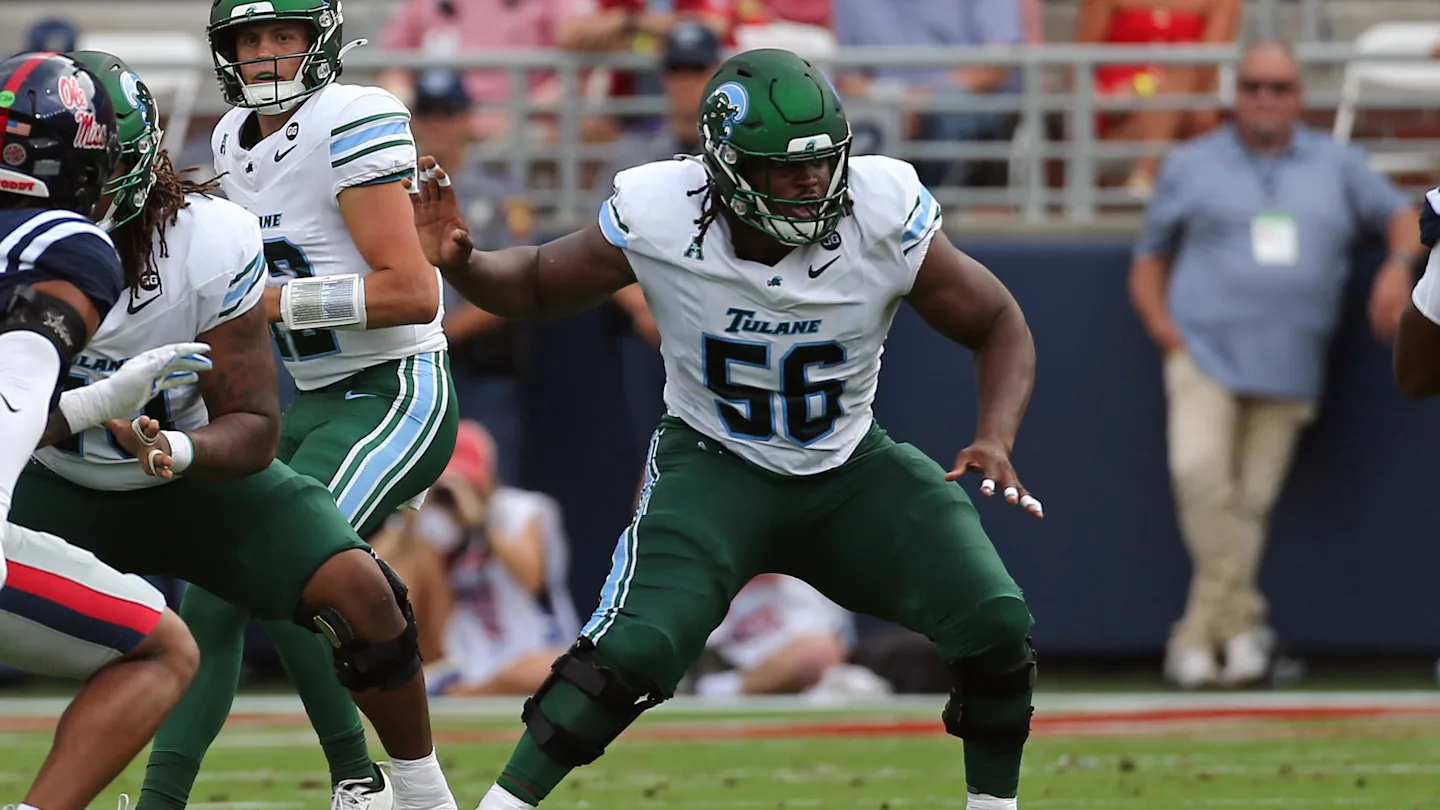
Tulane finished the regular season as American Athletic Conference champion and secured the AAC’s automatic berth into the expanded 12-team College Football Playoff, closing the year with a 12–1 record.
Unfortunately, the Green Wave’s historic season ended with a 41–10 loss to Ole Miss in the first round, as the Rebels dominated from the opening kickoff and advanced to face No. 3 Georgia in the Allstate Sugar Bowl.
Jon Sumrall, Tulane’s head coach since December 2023, guided the program to consecutive conference-title contention and the 2025 AAC crown before taking the open Florida job on November 30, agreeing to a six-year deal worth nearly $7.5 million annually.
Now, one of the Green Wave’s cornerstone players is set to leave alongside him.
On Wednesday, Rivals’ Hayes Fawcett reported that Tulane All-American interior offensive lineman Shadre Hurst is entering the NCAA transfer portal.
Hurst is a redshirt junior interior lineman who has started 36 career games for the Green Wave, earning First-Team All-AAC honors and All-American recognition in both 2024 and 2025.
Tulane’s athletic department also placed Hurst on multiple preseason national watch lists in 2025, including the Outland Trophy Preseason Watch List.
Pro Football Focus graded Hurst with a 90.5 pass-blocking mark, placing him among the nation’s highest-rated pass protectors at his position.

Before arriving at Tulane, Hurst was a Cartersville (Georgia) high-school product who earned First Team All-State honors from the AJC and First Team All-Region 7-AAAAA recognition.
He also emerged as one of the Southeast’s top heavyweight wrestlers, finishing state runner-up as a junior before winning a state championship as a senior.
Despite those accolades, Hurst was an unranked prospect who held just five offers—Tulane, UMass, Washington State, Chattanooga, and Southeast Missouri State.
Now, he is widely viewed as both an NFL prospect (projected third- to fourth-round pick) and a highly attractive Power Four transfer target in need of experienced interior offensive line help.
Read More at College Football HQ
- $1.6 million QB linked to College Football Playoff program
- SEC head coach named as ‘surprising’ candidate to replace Sherrone Moore at Michigan
- Unexpected college football program among favorites for $2 million transfer QB
- Major college football QB expected to ‘command’ up to $5 million in transfer portal
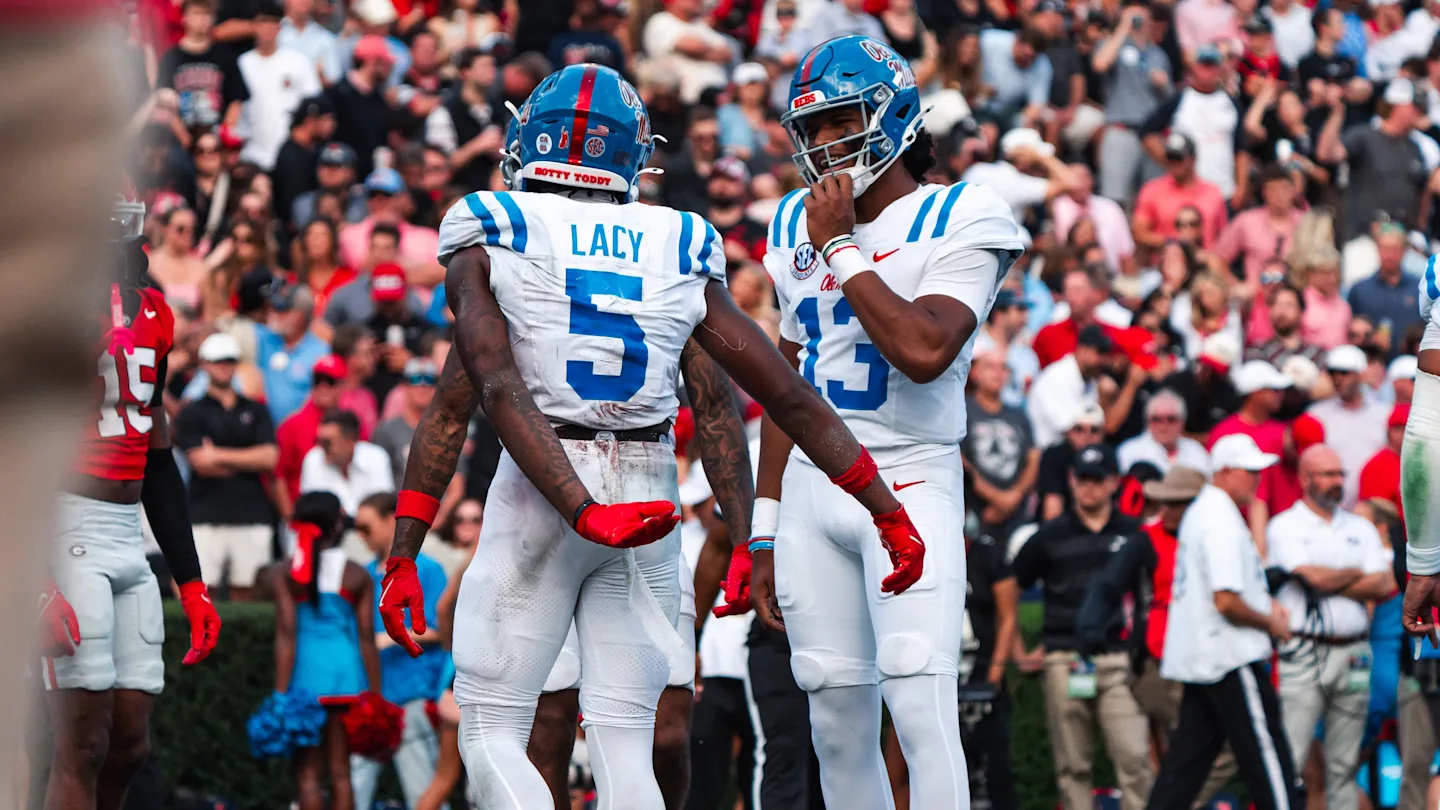
Ole Miss Rebels running back Kewan Lacy is in the midst of a historic 2025 season after joining the program in Oxford last offseason.
The Missouri Tigers transfer has taken on a significant workload for the Rebels where his meteoric rise catapulted his status to a Doak Award finalist – annually given to America’s top running back.
Lacy was named a first team All-American by the Football Writers Association of America last week after a historic 2025 campaign.
It became the sixth All-America honor for Lacy, who was also the first Doak Walker Award finalist in Ole Miss history.
Lacy has been a second-team honoree on other All-America teams released by the Associated Press, AFCA, The Sporting News, Walter Camp and Sports Info Solutions. Lacy has also been a first-team All-SEC running back for both the AP and the league coaches.

The Ole Miss star running back has been one of the best rushers in the nation all season long for the 12-1 Rebels, currently holding a season line of 258 attempts for 1,279 yards and 21 touchdowns.
But there remains buzz surrounding Lacy’s future in Oxford amid Lane Kiffin’s move from Ole Miss to LSU this fall.
Once Kiffin accepted the LSU Tigers head coaching job, the rumor mill started swirling surrounding where he would play during the 2026 season: Could Ole Miss retain him or would he enter the portal?
Fast forward to Monday and Ole Miss running backs coach Kevin Smith was formally introduced as the next running backs coach/associate head coach of the LSU Tigers – joining offensive coordinator Charlie Weis Jr. and others in Baton Rouge.
Now, with Lacy’s former head coach, offensive coordinator, and position coach on staff with the LSU program, there is concern surrounding his future in Oxford.

But the Ole Miss Rebels aren’t going down without a fight, according to multiple reports, with the program offering a significant NIL package in hopes of having him back for the 2026 season.
According to LouisianaSports.net, the Ole Miss Rebels are offering a $1.8 million deal to get him back next fall:
“Lacy has not declared his intention to enter the portal, however, a video surfaced of a phone conversation where Kiffin suggested Smith and Lacy would be joining him at LSU.
“LouisianaSports.net previously reported Ole Miss has offered Lacy $1.8 million to return to the Rebels in 2026.”
Now, as Lacy’s future with Ole Miss remains in questions, it’s no secret that Rebels officials are rolling out the red carpet in hopes of having him back with the program for next season with a strong offer presented.
More Ole Miss News:
Lane Kiffin Reacts to New Offensive Coordinator Being Hired By Ole Miss Football
Ole Miss Football QB Trinidad Chambliss Wins Major Award Amid Breakout Season
ESPN Predicts Outcome of Ole Miss Football vs. Tulane Green Wave in CFP Showdown
Join the Community:
Follow Zack Nagy on Twitter: @znagy20 and Ole Miss Rebels On SI: @OleMissOnSI for all coverage surrounding the Ole Miss program.

The USC Trojans have one of the bigger NIL funds in the entire country. Here are the Trojans’ top five highest NIL valuations according to On3.
1. Jayden Maiava, Quarterback ($2.1 million)

It’s common for the quarterback to be the most valued player on a team, so Maiava being where he is makes sense. Maiava just wrapped up his third collegiate season and first as the full time starter for coach Lincoln Riley and the Trojans.
Maiava threw for 3,431 yards, 23 touchdowns, and eight interceptions in the regular season. He added another 150 yards and six touchdowns on the ground. With Maiava taking this far of a step forward, it was interesting to see if he would decide to return to USC for another year or declare for the NFL Draft.
Maiava ended up re-signing with the Trojans, bringing back the engine of the USC offense for 2026.
2. Makai Lemon, Wide Receiver ($1.1 million)
Makai Lemon is coming off an incredible 2025 season in which he won the Biletnikoff Award for being the best wide receiver in college football. Lemon was top ten in the country in receiving yards with 1,156, receptions with 79, and receiving touchdowns with 11. Lemon declared for the 2026 NFL Draft.
3. Husan Longstreet, Quarterback ($753 thousand)

Husan Longstreet was the highest rated USC recruit in the class of 2025. He didn’t see much of the field as a true freshman as he was the backup to Maiava, but the hopes are high for Longstreet’s future with the Trojans once Maiava does leave.
In his limited action on the field in 2025, Longstreet threw for 103 yards, one touchdown, and zero interceptions while rushing for 76 yards and two touchdowns.
MORE: USC Trojans Battling Recruiting Powerhouses for Five-Star Safety
MORE: What Ethan “Boobie” Feaster’s State Championship Heroics Mean For USC Recruiting
MORE: What USC’s Betting Odds vs. TCU Says About Trojans Amid Opt Outs
SIGN UP FOR OUR NEWSLETTER HERE!
4. Bishop Fitzgerald, Safety ($552 thousand)

Bishop Fitzgerald transferred from NC State to USC prior to the 2025 season. Fitzgerald was a good edition, and recorded 51 total tackles, five interceptions, three passes defended, one sack, and a touchdown. He was named an All-American for his play.
5. Devan Thompkins, Defensive Lineman ($508 thousand)
Devan Thompkins finished his third season with the Trojans in 2025. He had 56 total tackles, 4.5 sacks, five passes defended, and one forced fumble. The Trojans will be without Thompkins next season as he entered his name in the transfer portal.
Trojans Prepare For Alamo Bowl

The 2025 USC Trojans still have one more game this season before they will fully move on to 2026. They will take on the TCU Horned Frogs on Dec. 30 in the Alamo Bowl. According to DraftKings Sportsbook, USC is a 6.5-point favorite.
A win would result in a 10-3 finish, the best season for the program since 2022.
- Game odds refresh periodically and are subject to change.
- If you or someone you know has a gambling problem and wants help, call 1-800-GAMBLER.
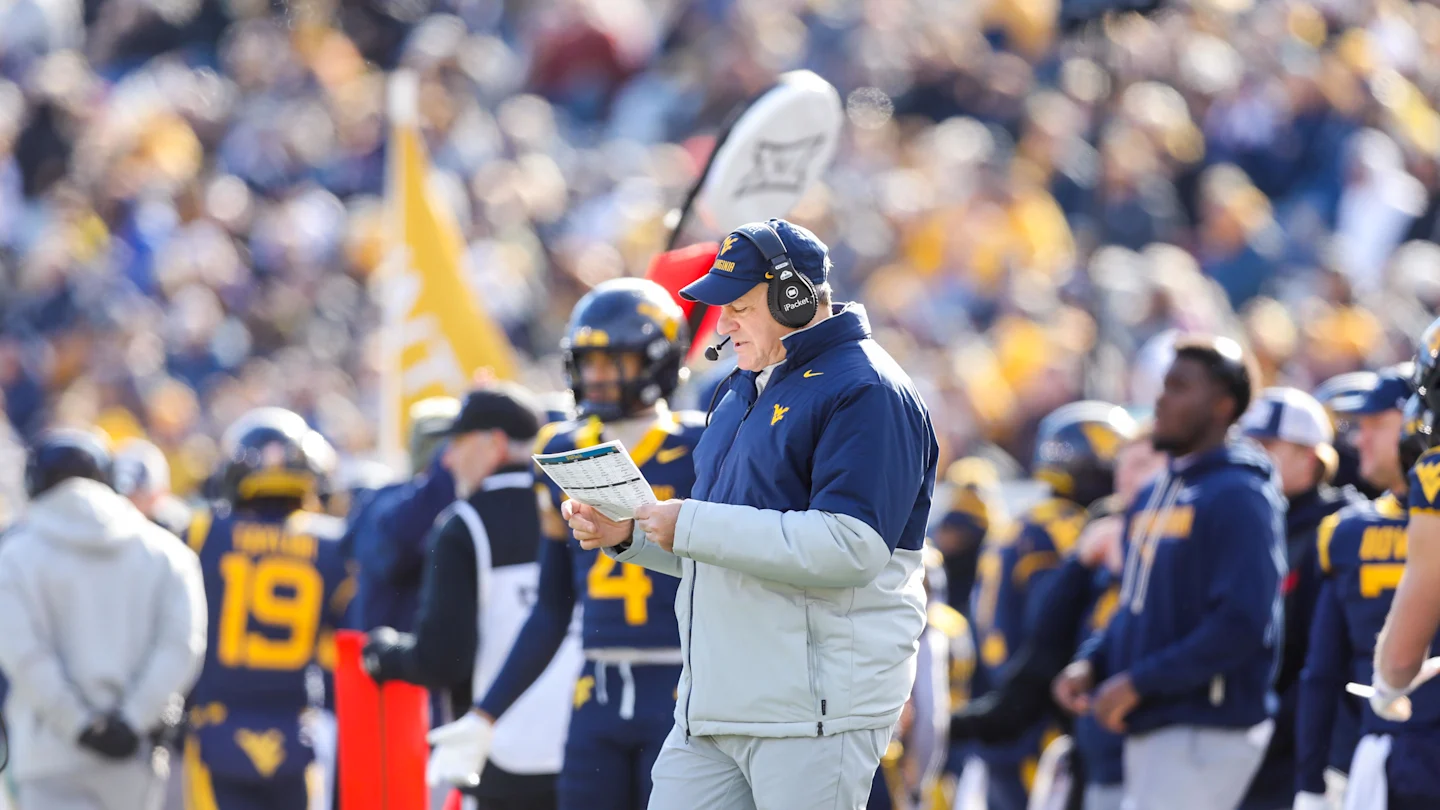
The NCAA transfer portal will open for all college football players looking for a new school to play for in the 2026 season.
The transfer portal can be an exciting prospect for successful programs looking to reload their talent pool ahead of the following season. For struggling programs, the idea of roster retention can feel like an uphill battle against potential suitors in the transfer portal.
One program that is fighting the aforementioned uphill battle with roster retention is West Virginia. A multitude of players on the 2025 roster for the Mountaineers have already decided to look for greener grass in the transfer portal.

Among the more notable departures for the Mountaineers in the 2026 offseason will be quarterback Khalil Wilkins and running backs Jahiem White and Diore Hubbard.
Wilkins was given snaps as a backup in games against Robert Morris, Kansas, Utah, BYU, UCF and Texas Tech. He tallied 185 passing yards, a touchdown pass and two interceptions while rushing for another 243 yards and two interceptions.
While his 2025 season was far less productive due to injury, White had been given a lot of run with the Mountaineers in his prior two seasons in the program. He accumulated 1,820 yards and 14 touchdowns on the ground while catching 27 passes for 262 yards and three touchdowns in three seasons.
Hubbard finished 2025 as West Virginia’s most productive running back. He ran for 335 yards and four touchdowns and caught 16 passes for 156 yards.

So far, 247Sports has reported 19 other players will transfer out of West Virginia.
Offensively, running backs Tyler Jacklich, Kannon Katzer and Clay Ash, wide receivers Tyshawn Dues and Oran Singleton Jr, and offensive linemen Robby Martin, Cooper Young, Jude Edwards and Ethan Chill are heading for the portal.
On defense, linemen Adam Tomczyk and Jackson Biser, linebacker Mike Hastie, and defensive backs Zae Jennings, William Davis, Dawayne Galloway Jr., Devonte Golden-Nelson, Kaleb Gray, and Matthias Squire are all exiting. Punter Aidan Stire is also entering the transfer portal.
The Mountaineers rehired Rich Rodriguez to be their head coach after parting with Neal Brown at the conclusion of the 2024 season. Rodriguez coached at West Virginia from 2001-2007 and had held head coaching jobs at Michigan, Arizona and Jacksonville State after leaving.
West Virginia finished 14th in the Big 12 standings with its 4-8 overall record. The Mountaineers’ 2025 wins were against Robert Morris (45-3), Pittsburgh (31-24), Houston (45-35) and Colorado (29-22).

The landscape is evolving fast, and more teams saw the success of Miami, Texas Tech, Oregon, and Indiana in the portal, and will become more
competitive. Texas Tech is doubling down, and we can expect more competition even inside the ACC with Clemson and VaTech. Point here, is what was good and competitive in 2025, wont be enough in 2026. Solid HS recruiting helps, but just look at the impact of our portal class this season. January 2nd through the 10th is going to be crucial, and hope we have our ducks in a row right now. The financial commitment needs to grow to be on par with Texas Tech and Oregon.

The College Football Playoff Is Mostly About Who Spent the Most

College Football Playoff team loses two-time All-American to transfer portal

IHRA has officially purchased Memphis International Raceway and Memphis Motorsports Park — The Capital Sports Report

Penn State women’s volleyball earns commitment from Texas transfer outside hitter Whitney Lauenstein | Penn State Volleyball News

Ole Miss Reportedly Offers Historic NIL Package to Bring Back Elite Offensive Weapon

Moorhead Spuds win against Sartell Sabres – The Rink Live

Surprising List Of USC Trojans’ Biggest NIL Valuations

Aleia Fenburg wins again as local wrestlers compete in Warrior Classic

Child care funding methods ‘unsustainable’ for YSS | News, Sports, Jobs

College football program loses 22 players to transfer portal

Valley Boys: The U12 team redefining the “win” for a 4-year-old fighter | News

Monroe residents help throw a Christmas bash for children in Bridgeport’s East End

3 young kids killed in house fire; 4-year-old, parents and grandmother seriously injured

Ocean View’s Maury Young made mark by breaking 39-year-old record

Miami NIL financial commitment in 2026

Fargo girl, 13, dies after collapsing during school basketball game – Grand Forks Herald

CPG Brands Like Allegra Are Betting on F1 for the First Time

Sycamores unveil 2026 track and field schedule

Two Pro Volleyball Leagues Serve Up Plans for Minnesota Teams

Utah State Announces 2025-26 Indoor Track & Field Schedule

SoundGear Named Entitlement Sponsor of Spears CARS Tour Southwest Opener

Jo Shimoda Undergoes Back Surgery

Redemption Means First Pro Stock World Championship for Dallas Glenn

Texas volleyball vs Kentucky game score: Live SEC tournament updates

Bowl Projections: ESPN predicts 12-team College Football Playoff bracket, full bowl slate after Week 14

Black Bear Revises Recording Policies After Rulebook Language Surfaces via Lever

Robert “Bobby” Lewis Hardin, 56

Donny Schatz finds new home for 2026, inks full-time deal with CJB Motorsports – InForum

How this startup (and a KC sports icon) turned young players into card-carrying legends overnight

How Donald Trump became FIFA’s ‘soccer president’ long before World Cup draw





-
 Motorsports2 weeks ago
SoundGear Named Entitlement Sponsor of Spears CARS Tour Southwest Opener
-
 Motorsports2 weeks ago
Donny Schatz finds new home for 2026, inks full-time deal with CJB Motorsports – InForum
-
 Rec Sports3 weeks ago
How Donald Trump became FIFA’s ‘soccer president’ long before World Cup draw
-
 Rec Sports2 weeks ago
David Blitzer, Harris Blitzer Sports & Entertainment
-

 Motorsports3 weeks ago
JR Motorsports Confirms Death Of NASCAR Veteran Michael Annett At Age 39
-
Sports3 weeks ago
Elliot and Thuotte Highlight Men’s Indoor Track and Field Season Opener
-
Sports3 weeks ago
West Fargo volleyball coach Kelsey Titus resigns after four seasons – InForum
-
 Motorsports2 weeks ago
Rick Ware Racing switching to Chevrolet for 2026
-

 NIL2 weeks ago
DeSantis Talks College Football, Calls for Reforms to NIL and Transfer Portal · The Floridian
-
 Sports3 weeks ago
Temple Begins Indoor Track & Field Season at UPenn This Weekend