
NIL
Top 10 Sophomore Breakout Candidates for the 2025-26 Men’s Hoops Season


The impact of NIL reached its peak this offseason, with more than 2,000 players hitting the transfer portal and several NBA prospects opting to return to school. As a result, college basketball is loaded with talent for the 2025-26 campaign, including a sophomore class that is filled with possible breakout stars.
We highlight 10 candidates to make significant leaps in their second seasons.
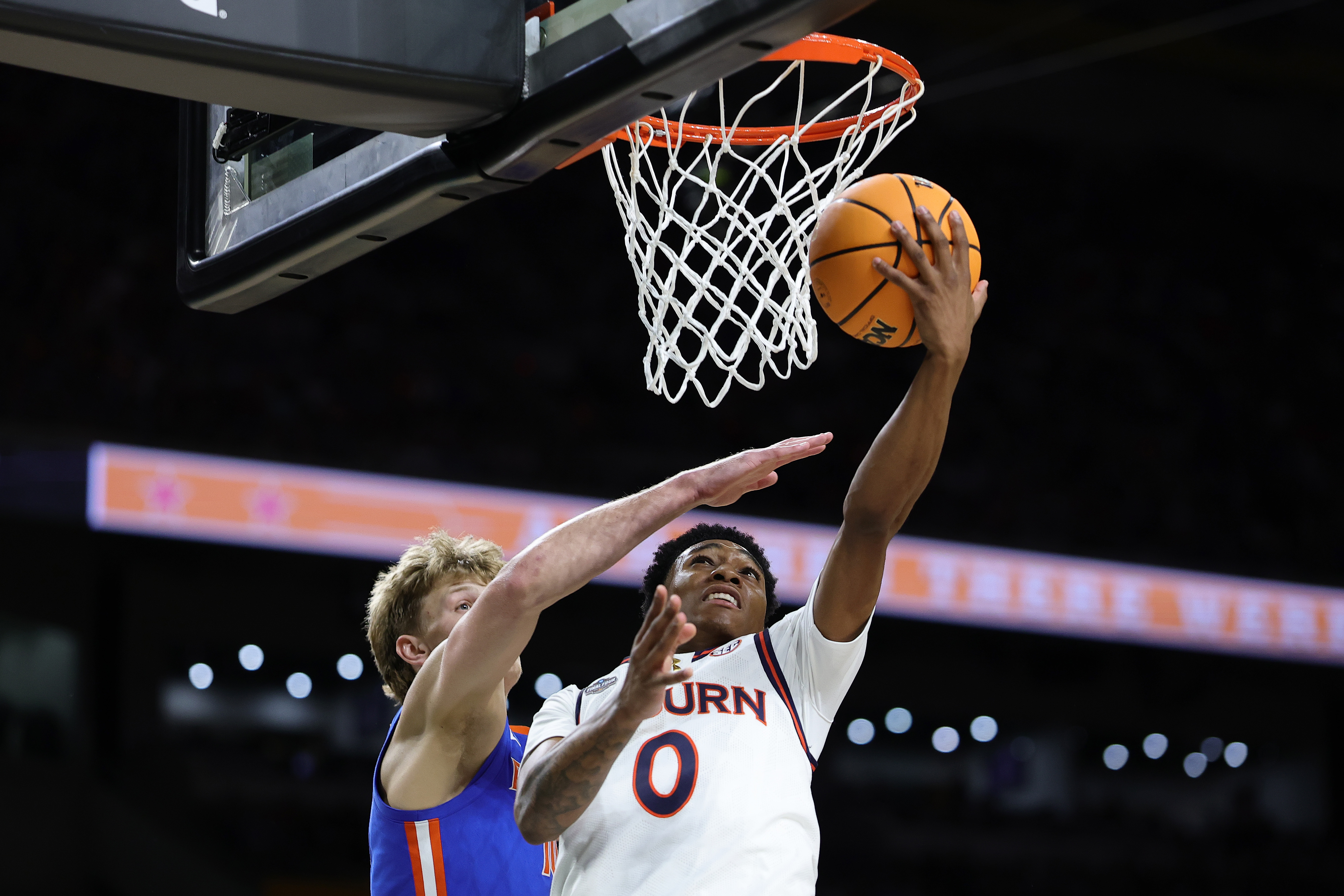
After testing the NBA Draft waters, Tahaad Pettiford is set to thrive with an increased role at Auburn
Getty
A lightning-quick guard with elite shotmaking ability, Pettiford thrived in the sixth man role last season. Bruce Pearl gave him the ultimate green light and Pettiford took full advantage, averaging 11.6 points in just 22.9 minutes per game. He earned SEC All-Freshman honors and helped the Tigers win the conference regular-season title and advance to the Final Four.
Pettiford tested the NBA Draft waters but ultimately decided to return to Auburn and try to improve his stock for 2026. As the program’s top returnee, he’ll transition from sixth man to centerpiece. With as much talent as any guard in the country and ample opportunity to shine, Pettiford has All-American potential.
Quaintance is still rehabbing from a torn ACL, but when he returns, the 18-year-old will be a focal point of Kentucky’s stacked roster. An athletic, two-way forward who was the youngest player in college basketball last season, Quaintance averaged 9.4 points, 7.9 rebounds and 2.6 blocks in 24 games for Arizona State before suffering his injury in February.
The former five-star recruit is expected to be back on the court before the start of the year. When healthy, he has as high a ceiling as any big man in the country. He will have a better supporting cast at Kentucky, which should lead to more easy opportunities. All signs point toward Quaintance putting up All-American numbers for Mark Pope next season.
The former McDonald’s All-American and two-time Indiana Gatorade Player of the Year came off the bench for a majority of the 2024-25 season, logging just 16.3 minutes per game behind seniors Hunter Dickinson and KJ Adams Jr. But Bidunga still led the Jayhawks in total blocks, and he averaged 8.7 points, 6.7 rebounds and 2.0 rejections in six starts. He showed flashes of brilliance, including a 19-point, 7-rebound performance against Houston and a double-double (10 points, 11 rebounds) with 5 blocks against UCF.
This season, Bidunga will step into the starting lineup and should thrive alongside highly touted freshman Darryn Peterson, a 6-foot-6 guard who is projected to be the No. 1 pick in the 2026 NBA Draft. That one-two punch has the ability to turn things around in Lawrence following a discouraging 21-13 season that ended with a loss to Arkansas in the first round of the NCAA Tournament.
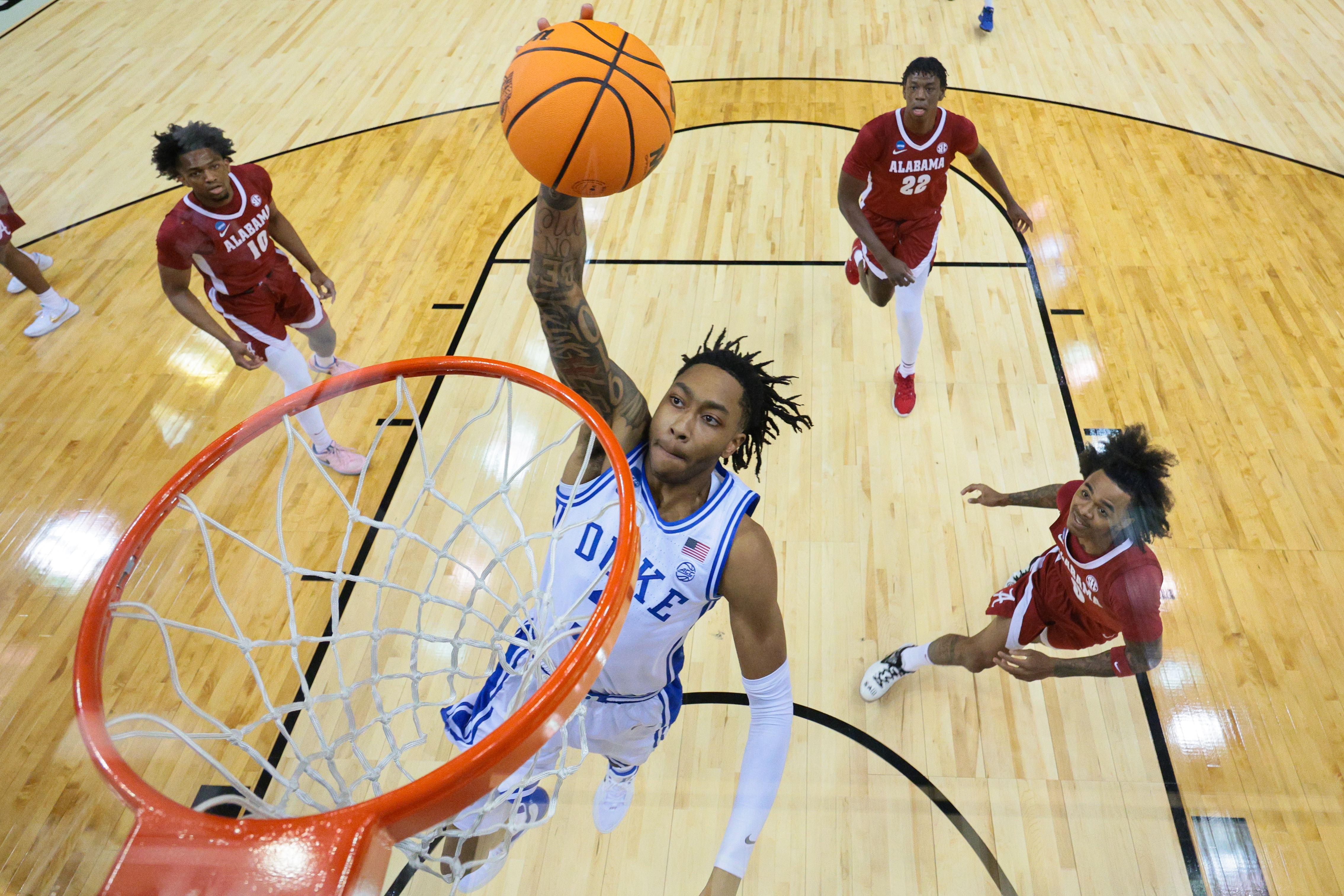
Known for his long-range shooting, Isaiah Evans could be a more well-rounded scorer in year 2
Getty
A knockdown shooter with unwavering confidence, Evans provided a huge spark off the bench for last year’s Blue Devils. The 2023-24 Gatorade North Carolina Player of the Year averaged 6.8 points in just 13.7 minutes and connected on 41.6 percent of his attempts from behind the arc. Evans hit at least four threes in nine games and buried 6-of-8 in a win over Auburn in December.
With top scorers Cooper Flagg, Kon Knueppel and Tyrese Proctor leaving for the NBA, Evans will slide into a starting role and carry a much heavier offensive burden. Fortunately, a few more stellar freshmen are on the way, including a dominant interior force in Cameron Boozer, who should create plenty of open looks for Evans. His three-point efficiency might dip slightly with higher volume, but Evans is poised to put a lot of points on the board next season.
Rick Pitino is trusting Ian Jackson to take over as the Red Storm’s starting point guard. The former five-star prospect is a proven scorer — he averaged 11.9 points on 45.6 percent shooting from the field and 39.5 percent from three for North Carolina last season — and certainly has the potential to evolve into an elite floor general as well.
He’ll be running the show for a loaded St. John’s team that should open the season ranked in the top 10. At UNC, he had eight 20-plus point performances and was voted to the ACC’s All-Freshman Team. Jackson’s numbers should rise across the board given his new role. And if all goes well, he could be the leader of a national championship contender.
After a solid freshman year at BYU, Catchings transferred to Georgia this offseason. The 19-year-old is known for his versatility, athleticism and perimeter shooting. He averaged 7.2 points and sank 35 percent of his threes for the Cougars.
Catchings should have an expanded role with the Bulldogs, especially since coach Mike White plans to utilize more four-out lineups. White knows that the four-star recruit has barely scratched the surface of what he’s capable of. “He’s got to continue to round out his game offensively to compliment his ability to shoot the three,” White told Hoops HQ. “And then defensively, his ceiling is very high too, with his length, speed, quickness and switch-ability.”
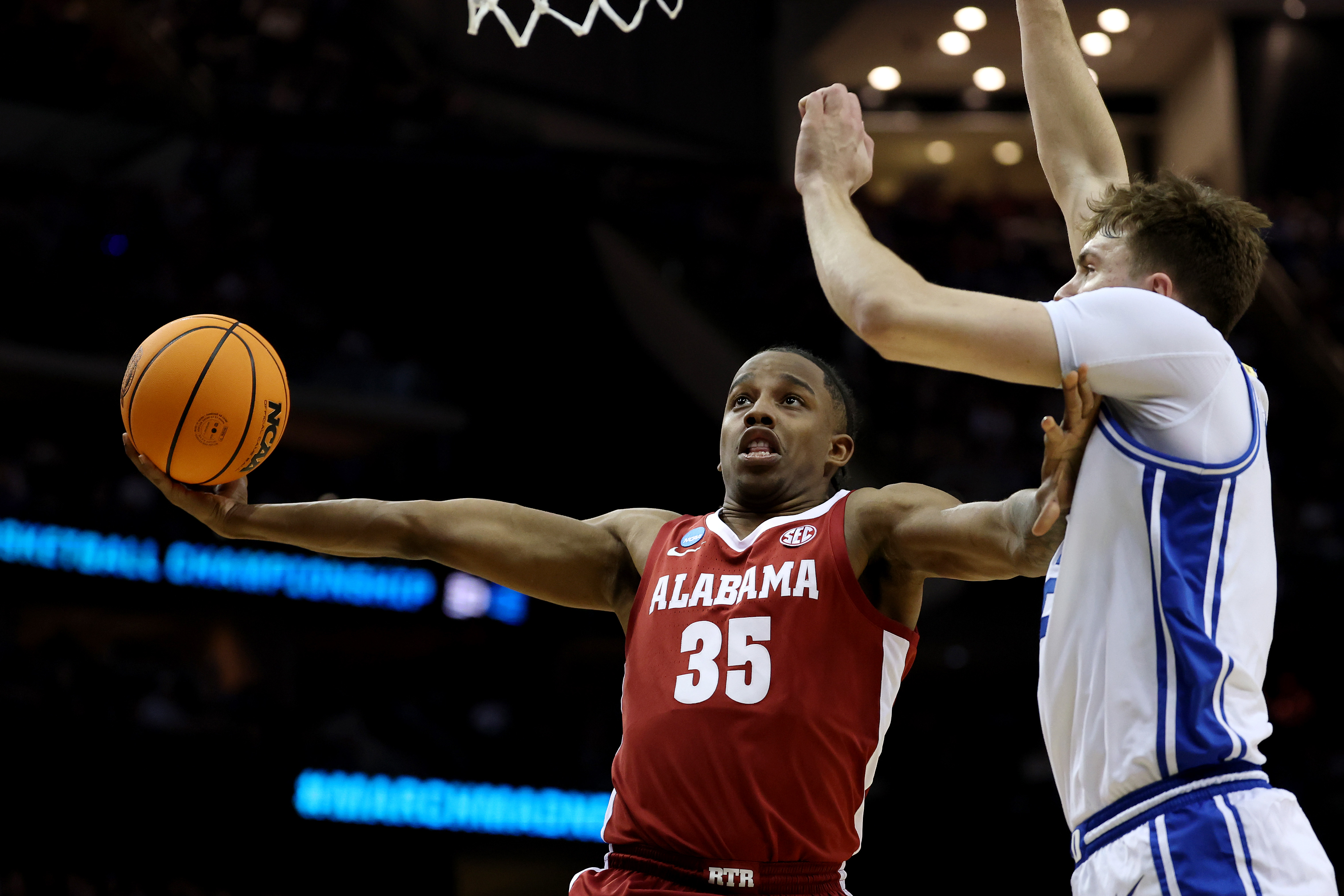
Derrion Reid left Alabama for Oklahoma, looking to increase his scoring output as a sophomore
Getty
Reid, who was the fourth-highest rated recruit in Alabama men’s basketball history, dealt with a recurring hamstring injury last season. Plus, he had to battle for playing time with an abundance of talented wings and forwards. In 24 games, he averaged 6.0 points and 2.8 rebounds while shooting 45 percent from the field.
Expect the former McDonald’s All-American — known for his versatility on both ends — to blossom next year at Oklahoma, where he should have a bigger, more consistent role. It certainly helps that Reid is already familiar with the level of competition in the SEC.
Thiam had a very productive freshman campaign at UCF, starting all 34 games and averaging 10.4 points, 6.4 rebounds and 2.6 blocks (seventh in the nation, first in the Big 12). His 88 total rejections were the second most in a single season in program history.
With his size, athleticism and mobility, the former five-star prospect is already a defensive stud and continues to expand his offensive skill set. After signing a solid transfer class, Cincinnati is aiming to end a six-year NCAA Tournament drought. Thiam’s development will be a crucial factor in whether or not that happens.
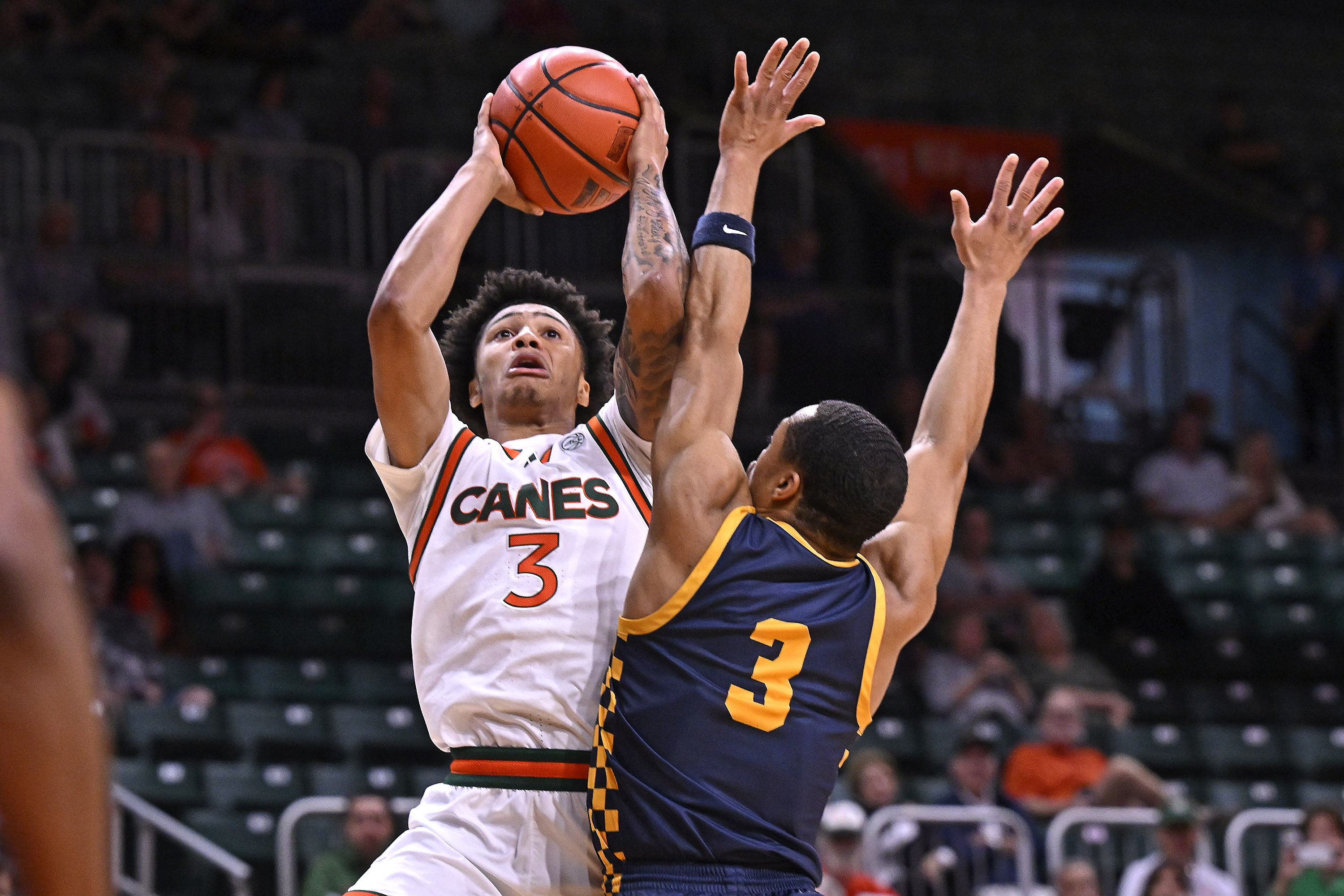
After a rough year at Miami, Jalil Bethea hopes Alabama’s offense unlocks his scoring potential
Getty
Expectations were sky high for Bethea coming out of Archbishop Wood High School, where he was a McDonald’s All-American and the 2023-24 Pennsylvania Gatorade Player of the Year. But the Hurricanes had a disastrous 2024-25 season, going 7-24 and finishing last in the ACC after coach Jim Larranaga’s resignation in December. Bethea averaged 7.1 points on just 36.8 percent shooting.
Alabama is an ideal fit for the former five-star recruit. With his athleticism and impressive scoring ability, Bethea has the tools to thrive in Nate Oats’ system. The Tide are returning guards Labaron Philon, Latrell Wrightsell Jr. and Aden Holloway, but Bethea should still play a significant role with Mark Sears and Chris Youngblood gone.
USC had to rebuild most of his roster this offseason. Cofie was one of the major additions to the frontcourt. As a freshman at Virginia, the 2023-24 Washington Gatorade Player of the Year started 16 of 32 games, averaging 7.2 points, 4.6 rebounds and 1.1 steals.
The signings of Rodney Rice and Chad Baker-Mazara grabbed the headlines, but Cofie could be the X-factor for the Trojans. The 19-year-old has great mobility for his size and can operate both inside and out. He’ll slot into the starting lineup and should fill the stat sheet for coach Eric Musselman.

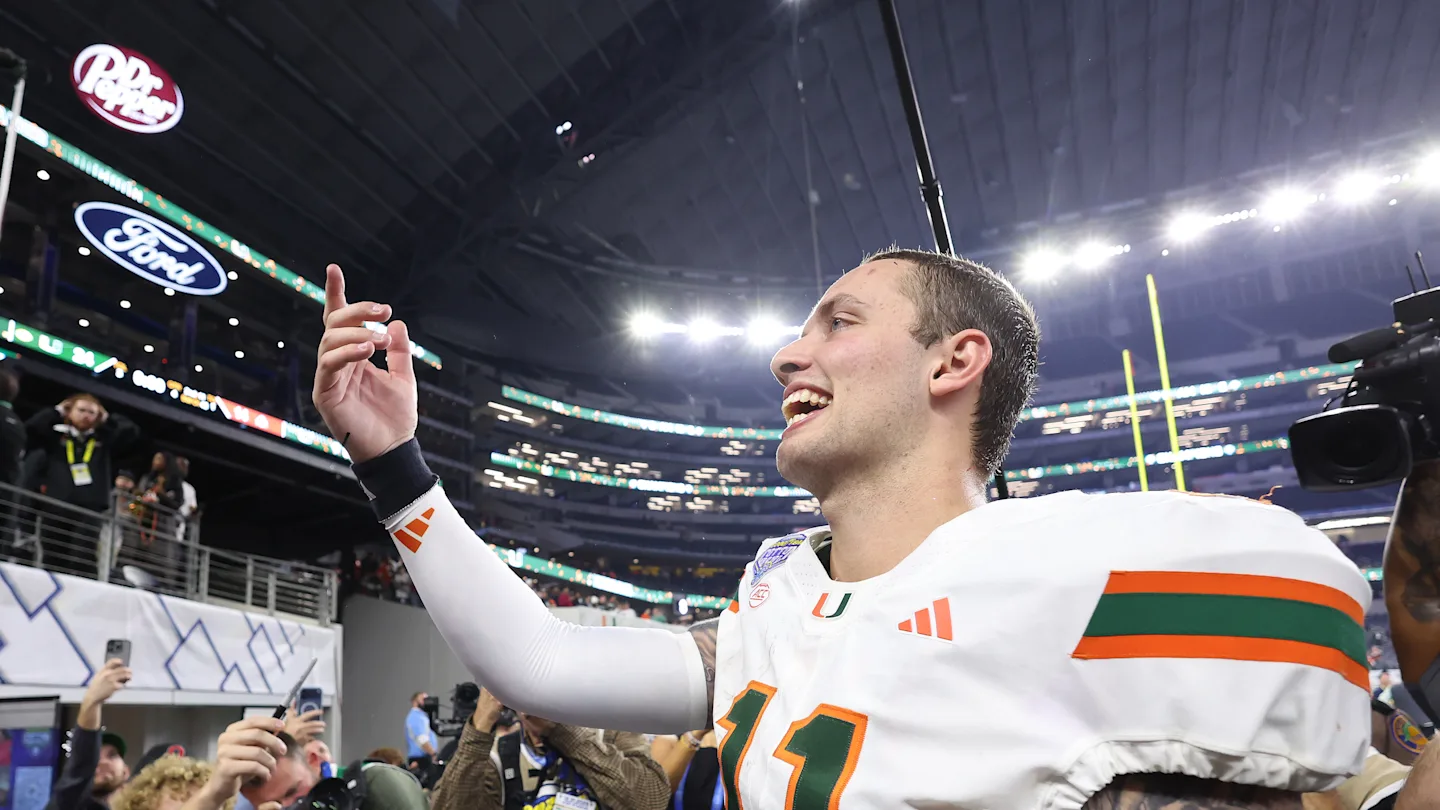
As the transfer portal and NIL continue to lead the way in daily college football news and fan conversation, I will raise the unpopular opinion that both have elevated the game we love to a new level. There is a certain excitement every day since the portal officially opened, with big names jumping into the portal and finding new opportunities.
The days of only non-starters jumping to other schools are a thing of the past, and the financial opportunities offered by schools have given star players reason to leave schools they normally never would have ever left. You see, starting quarterbacks finding new opportunities when they clearly would be the starter at the school they left had they stayed.
We are way past the days of boosters handing out bags of cash to possible recruits or transfers under the table, and it has made the game better for all. I am still not sure why players making legal money is looked upon in a worse light by so many than players getting cash in brown paper sacks that could lead to long bowl bans.
For those who say players getting paid and being able to transfer freely has ruined the game, I will just point to the final four teams left in the college football playoff. Three of the four teams left are looking to win their first national championship in school history, and the fourth is becoming relevant again for the first time in nearly two decades.
The transfer portal and money being able to be spent on a more even basis have allowed the rise of Indiana and Ole Miss. It allowed Texas Tech to win its first conference championship in school history and a bye in this year’s playoff. Honestly, without the new systems in place, none of these schools would realistically have a chance to sniff a football national championship.
The Hurricanes have started making noise again on the gridiron after falling on hard times, and their return to being within two games of their sixth national championship is due to NIL and the portal. And honestly, even Oregon has been a contender for a while; they are in a better position than they ever have been.
Yes, there are some issues that need to be looked at, especially with the portal dates or maybe how many times a player can transfer, but right now, college football seems to have gained more of a national appeal. As teams that have never been good before, like the Hoosiers, it gives more programs hope if they can get some financial backing. Sure, the normal blue bloods will still have a leg up, like Alabama or Ohio State, but the gap between them and others has decreased greatly.
NIL and the portal have made it harder for blue-blood programs to stockpile players for multiple seasons before they see the field. Today’s players seem to care less about the name on the jersey and pick schools more based on possible financial gain and playing immediately. Also, certain star players being able to make big money in college, like Cam Ward last year or his successor Carson Beck, have the ability to stay in college for another year instead of for sure going to the NFL before being out of eligibility. It is a much different world compared to when many of us became college football fans, but the sport is in a good place, no matter what some will say.
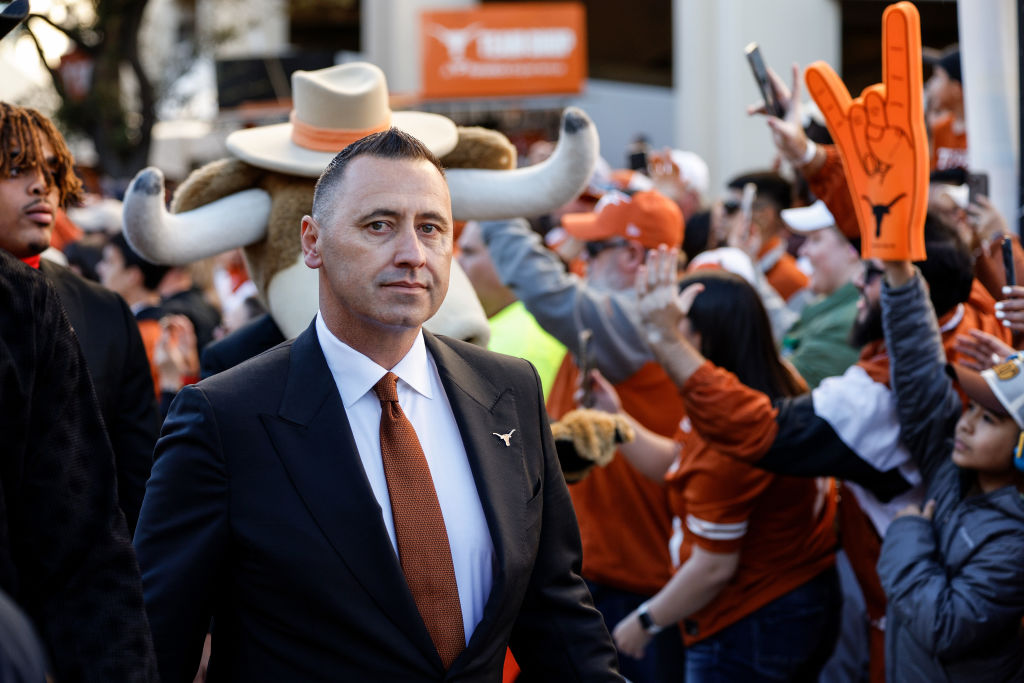
Ain’t no fun when the rabbit’s got the gun.
Mark the date down on your calendars, ladies and gentlemen: January 8, 2026. Also known as the day Hell froze over.
No, it has nothing to do with the Rapture or dogs and cats living together. It’s actually something far more unlikely.
It seems that Texas Longhorns fans (yes, THOSE Texas Longhorns) are not down with the NIL “pay for play” era of college football.
READ: Washington, Demond Williams Saga Set To Get Ugly
And honestly, in a vacuum, I would say I can’t blame them.
I haven’t exactly minced words when it comes to how I feel about the modern era of my favorite sport, but the fact that Texas fans are now NIL haters is laughable.
Oh, man! It ain’t no fun when the rabbit’s got the gun now, is it?
Of all the schools in this great country and this great sport, Texas being the one to cry poor and want a change to the rules is hysterical.
This is the same program that started the season number one in the AP Poll and had one of the most expensive rosters in the country… and bragged about it, too.
This is the same team that just a few years ago was flexing its armada of Lamborghinis on recruiting trips, basically thumbing their nose at anyone who didn’t have six-figure sports cars sitting in their stadiums for high school prospects to sit in.
You can’t hide money, that’s for sure.
Oil money is a different kind of rich, as many college fans are learning thanks to Texas Tech’s recent run of dominance on the field and in the transfer portal.
Hell, even Houston is starting to make a run at some high-priced prospects in the portal.
Texas has unlimited funds, so they shouldn’t be hating the game nor the player.
As one of the Texas fans posted on X, this might be a GM or even a Sarkisian problem.
I don’t think the money at The University of Texas all of a sudden dried up. This definitely reeks of something different.
Whatever the problem is, the Longhorns better get it figured out fast, because they are getting lapped by teams in their conference and in their state.
And no amount of changes to the current landscape of college football will help with whatever they have going on in Austin.

It’s easy to take shots at the leaders of college athletics for letting their industry spiral to the point of all-consuming dysfunction, but give them credit for one thing.
They have managed to come up with arguably the worst business model on earth.
Advertisement
Here’s how it works:
• Have an open bidding system for coaches and athletes, regulated by no one, that allows them to change jobs at will regardless of the length of their contracts and in fact encourages them to exert their leverage to obtain better deals every year.
• Do not pay the players for their ability to play football because that would make them employees. Rather, pay for their “marketing rights,” which avoids the employment conversation but complicates legal recourse in contractual disputes and ultimately leaves schools more vulnerable to chicanery and broken promises.
• Create a system that supposedly regulates payroll costs and ensures competitive balance by requiring a third-party clearinghouse to approve deals that don’t conform to their rules, only to then instruct said clearinghouse to ignore most of the rules they wrote because they’d probably lose a lawsuit.
Advertisement
• Ask your most successful and loyal customers, the donors, to continue shoveling money at those players for no real benefit other than the fleeting enjoyment of watching them play, not knowing if they’ll be worth watching play in the first place. Then, after those players decide to play the leverage game again, ask your richest fans to deliver an even bigger pile of money for a new set of players who will be gone in a year.
Take a bow, college sports. This is true brilliance at work.
While the College Football Playoff and March Madness always provide compelling theater, including a highly anticipated set of semifinals Thursday and Friday, the inner workings of college sports have never looked more unpleasant, disorganized and utterly doomed to be an anvil of failure hanging around the neck of those in charge.
We have roughly one-third of college football players in the transfer portal.
Advertisement
We have quarterbacks commanding $4 million and $5 million deals — essentially the equivalent of an NFL rookie salary for the No. 11 overall pick — that aren’t even guaranteed stars.
We have schools who begged for rules and guardrails to bring sanity and structure to the ecosystem using marketing companies to create financial packages for players, allowing them to exceed the revenue-share cap they negotiated just last year in the House v. NCAA settlement.
We have a situation at Washington where quarterback Demond Williams signed a revenue-sharing agreement to stay at the school, then turned around and announced he wanted to go into the transfer portal because he likely got a whiff of even bigger money somewhere else (cough, LSU, cough). Stay tuned to see how that one gets sorted out!

Demond Williams Jr.’s fight with Washington is just one of many problems with the current state of affairs in college sports. (Kevin Terrell/Getty Images)
(Kevin Terrell via Getty Images)
We have a college basketball product that is wide open for players who were professional athletes playing in the NBA G League or Europe, including former NBA draft picks. Good luck to the NCAA’s attorneys when someone who has signed an NBA contract in the past inevitably wants to come back to college for a big payday and gets denied eligibility because that’s an arbitrary bridge too far.
Advertisement
We have the NCAA throwing its hands up in the air on most of this stuff, waiting for Congress to pass legislation that gives it legal protection to enforce its rules. Given that the congressional lobbying effort hasn’t borne fruit since former NCAA president Mark Emmert started it more than six years ago, good luck getting that to the finish line now that we’re in another midterm election year and there are various domestic and international crises that will likely command most of their time.
Oh, and as bad as it looks based on stuff that’s public, the environment is so much more chaotic and distrustful behind the scenes.
Here’s an example.
A power conference administrator passed along a document signed on Dec. 3 — national signing day for high school recruits — that looked like an NIL deal between Tennessee’s Volunteer Club and a recruit that had flipped to the Vols that day.
Advertisement
But the reason the contract had been floating around among outraged administrative types was that the contract offering $85,000 worth of stipends, a paid apartment in Knoxville and $25,000 to pay the agent’s fees — while requiring nothing in return — was allegedly signed by the athlete’s grandmother.
Tennessee’s competitors felt it was a blatant attempt to circumvent the revenue-sharing cap. The document was sent to the NCAA, the SEC and the College Sports Commission, which is now the responsible party for policing this stuff. Nobody knew quite what to make of it.
Sources connected to the deal told Yahoo Sports the document was written in error by an inexperienced agent who didn’t know if a minor was allowed to sign a contract in that state and terminated it later in the day. Yahoo Sports has reviewed copies of the termination letter and a more standard NIL agreement with the player dated Dec. 5.
The point here is not that anybody did anything wrong. But it does provide a look into the inner workings of a business that is so unregulated that it would allow for such a mistake to happen in the first place while at the same time being such a believable story of potential cheating that other schools were actively trying to sic the CSC enforcement staff on Tennessee.
Advertisement
And, again, it’s worth emphasizing that the entire point of the House settlement and the creation of the CSC was to put entities like the Volunteer Club out of business and prevent these kinds of deals, or at the very least, construct a solid wall between recruiting activity and money flowing through booster-funded collectives.
After millions in legal fees, the power conferences couldn’t even get that part right once the lawyers started pushing back and accusing them of colluding to restrict earnings.
So what do you have now? A system of talent procurement where some people are abiding by the rules, some are finding loopholes to do what they believe they can defend in court and others are completely ignoring the rules while daring a weakened NCAA/CSC to come get them.
And because it’s so vague who’s paying players through revenue share and who’s promising payments through third parties that may or may not entirely be within the rules, coaches and administrators at a lot of schools feel that their only choices are to use the flimsiness of the system to their advantage or be taken advantage of.
Advertisement
Nobody should want this.
But it is the product of many choices over many years made by university presidents, athletic administrators and NCAA leadership to avoid confronting the reality that they need to tear the amateurism model down to its studs and start over.
It’s now clear they would rather have this chaos than the thorny work of building a system that pays players fairly, treats them as professionals and makes everyone accountable to the contracts they sign through collective bargaining.
It’s just one more choice, and both paths are hard. There would be real challenges trying to build that system for college sports, but as we can plainly see now, there are no magic solutions as things stand.
Advertisement
Every time they try to fix a leak, six more spring up from the bottom of the boat. So each year they just accept sinking a little deeper into the abyss, hoping for a bottom that never seems within sight.

-

Dan Wetzel
Before the Rose Bowl, Indiana coach Curt Cignetti was asked about preparing his players to face Alabama and its considerable “mystique.”
“Our guys just know what they see on tape,” Cignetti said.
Translation: This Alabama team just isn’t that good.
Indiana would go on to dominate the Tide 38-3. The win not only propelled the Hoosiers to the national semifinals to play Oregon but also left college football to wonder what had happened not merely to the once-mighty Crimson Tide but to the SEC as a whole.
After decades of clearly establishing itself as the nation’s best conference, both the top-end excellence and the depth of the league have fallen. The SEC’s hopes now rest with Ole Miss, which is still going through coaching shake-ups and distractions heading into its semifinal matchup with Miami.
It’s not that the SEC isn’t still “good” or even capable of winning a national championship — Ole Miss might very well do it. Top to bottom, it might still be the best league, with the majority of schools all-in on football.
That said, the days of complete domination, all-SEC national title games or deep, juggernaut teams are clearly gone, perhaps forever. This isn’t the same.
The SEC ruled the old era of college football, when rosters were built through high school recruiting that favored proximity first, followed by opulent facilities and rabid fan bases.
It was perfect for the SEC since the Southeast was rich with talent and league schools invested heavily in infrastructure while playing in front of massive crowds (some of whom might have been willing to offer some under-the-table sweeteners).
The new era of direct revenue sharing, the transfer portal and NIL possibilities, has caused talent to disperse, weakening depth as athletes seek playing time, opportunity and out-in-the-open money.
Suddenly the great teams aren’t as great, and the rest of the teams are better.
“This is the most fun I’ve ever had in coaching because you know you’re on a more equal playing field,” Illinois coach Bret Bielema told ESPN on Tuesday. “The introduction of the portal, NIL and revenue sharing, is the most game-changing development in my 32 years of coaching.”
Bielema took over at Illinois in 2021 after previous stops at Arkansas (2013-17) in the SEC and Wisconsin (2006-12) in the Big Ten. He has won 19 games during the past two seasons.
“It’s hard when you would do what you have to do as long as you possibly could and in the end, sometimes it just didn’t matter,” Bielema said of trying to recruit back in the day. “Now you just come to work every day knowing that blue blood, red blood, orange blood, whatever, everybody’s got a chance, man.”
That’s why Bielema says that while he understands why so much focus is on the SEC stepping back of late, this really applies to everyone.
He notes that he just signed the best recruiting class of his entire career, including when he led Wisconsin to three league titles. He even flipped a running back away from Alabama on signing day. “I’ve never been able to do that,” he said.
Where power programs — and the SEC had more than any other league — could once hoard talent, both improving their roster and starving others, now the gap is smaller. Almost anyone can pick off a high school recruit or two. Then the transfer portal steps in. The days of Alabama having four eventual first-round wide receivers, as it did in 2019, are over. Kirby Smart and Georgia can’t have a two-deep defense full of future NFL stars like the one during the Bulldogs’ back-to-back titles.
“The second[-string] guard at a university doesn’t want to be the No. 2 anymore,” Bielema said. “He wants to be a starter, so he’ll leave. That is unprecedented.”
During the BCS era (1998-2013), the SEC won nine of the 16 championships, including seven in a row 2006-12. In the 10 years of the four-team playoff, the SEC went 16-6, with two of those losses coming in SEC vs. SEC title games. Alabama, Georgia and LSU combined to win six championships.
The past two national champions (Michigan and Ohio State), however, hail from the Big Ten. With Oregon and Indiana matching up in one semifinal, that league is guaranteed a spot in a third consecutive title game. Penn State, meanwhile, reached the semis last season.
The SEC is just 4-9 this postseason (other bowls included) and just 2-7 against teams from other conferences. The Big Ten is 9-4. The ACC is 8-4. While bowl results carry only so much meaning these days, the starkness of the numbers is notable.
After all, the SEC has built much of its brand on being superior to all others — commissioner Greg Sankey was lobbying for seven SEC schools to appear in this year’s playoff (five got in). Postseason losses suggest perception wasn’t reality — middle-of-the-pack SEC teams such as Vanderbilt, Missouri and Tennessee all went down.
The SEC has benefited from circular reasoning (when top SEC teams win league games, it’s a sign of strength at the top; when they lose league games, it is a sign of the conference’s unmatched depth). But the most undervalued segment of the sport might have been the middle of the Big Ten and ACC, notably Big Ten teams Iowa (which defeated Vanderbilt) and Illinois (which beat Tennessee).
No one would dare suggest that the SEC is doomed. If anything, it is just doubling down, even in unlikely places.
Former also-ran Vanderbilt is fully committed to winning now, for example. Kentucky, which once saw football as a way to pass the time before basketball, just spent $37 million to fire its coach and is investing heavily in the portal, including flipping Notre Dame quarterback Kenny Minchey from Nebraska.
The SEC remains the most popular league and the most watched on television. The passion is there. The investment is there.
It’s just that the new rules provide more opportunity at more places. Competition is fiercer, inside the league and out, which means the days of domination are likely over.
“Anybody can beat anybody these days,” Bielema said.
Even the SEC.
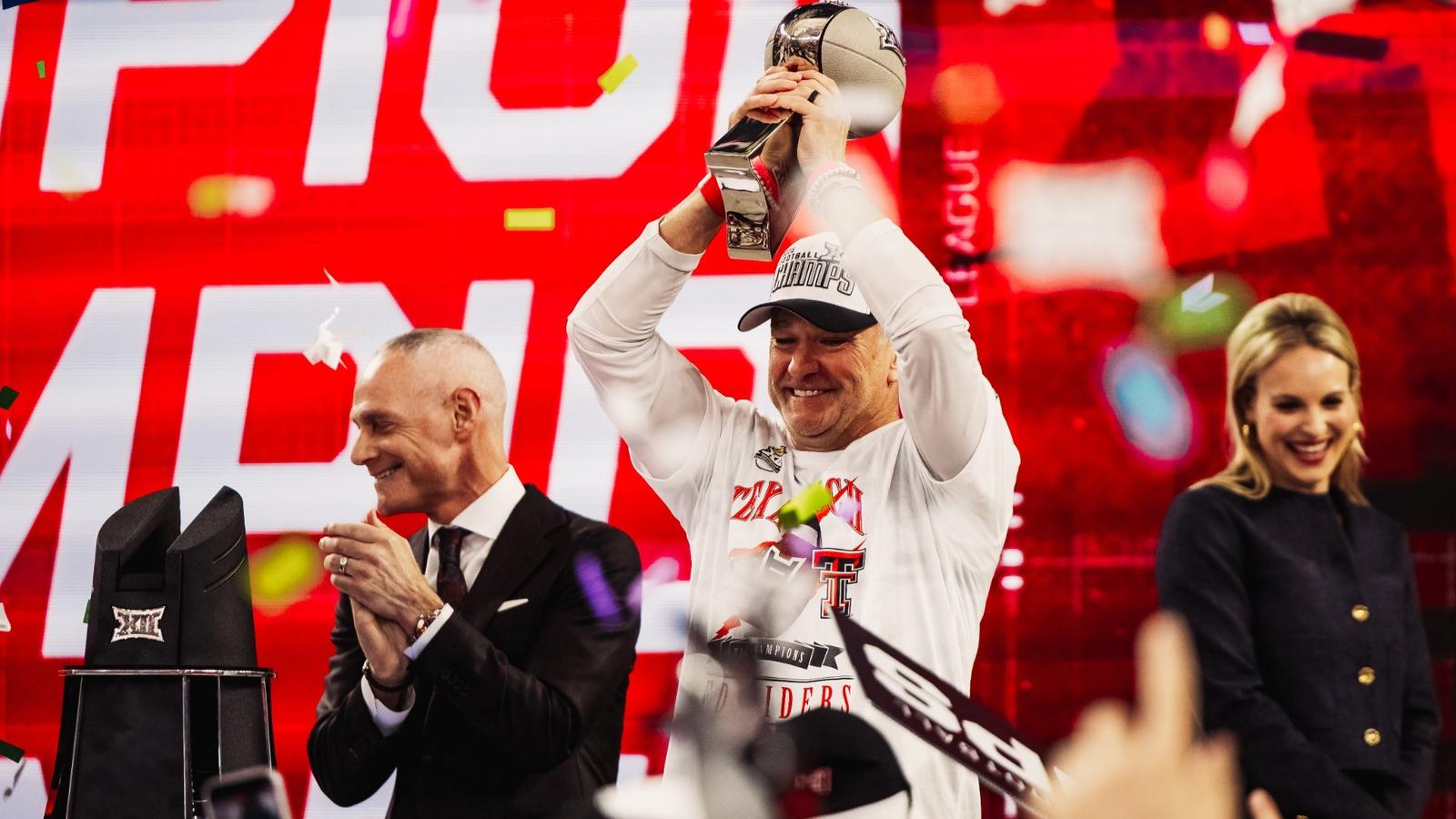
LUBBOCK, Texas – Texas Tech head coach Joey McGuire was named one of eight finalists Wednesday for the Paul “Bear” Bryant Coach of the Year Award after leading the Red Raiders to their first Big 12 Conference title and an appearance in the College Football Playoff.
The award, now in its 40th year, is given annually to the college football coach for contributions that make the sport better for athletes and fans alike by demonstrating grit, integrity and a winning approach to coaching and life – both on and off the field. McGuire was joined as a finalist by Indiana’s Curt Cignetti, James Madison’s Bob Chesney, Miami’s Mario Cristobal, Texas A&M’s Mike Elko, Virginia’s Tony Elliott, Oregon’s Dan Lanning and Vanderbilt’s Clark Lea.
The Bear Bryant Award is the only college football coaching honor given after the National Champion has been determined. It will be presented Jan. 21 during an awards ceremony hosted at the Post Oak Hotel in Houston. The event will be broadcast by CBS Sports Network on a tape-delayed basis beginning at 12:30 a.m. on Jan. 22.
In addition to being named a finalist for the Bear Bryant National Coach of the Year Award, McGuire was also named Wednesday the Big 12 Conference Coach of the Year by the organization. The finalists and Coach of the Year recipient are voted on by members of the National Sports Media Association, the Bryant Awards’ executive leadership team and the Bryant family.
This is the fourth national coaching award to name McGuire as a finalist this season as he was previously one of the final candidates for the George Munger College Coach of the Year Award, the Eddie Robinson Award and the Dodd Trophy. It is the first time in his career McGuire has been a finalist for any of the national coaching awards.
The Red Raiders reached new heights this past season under McGuire, who pushed Texas Tech to a school-record 12 wins and its first Big 12 title. McGuire led the Red Raiders to their first College Football Playoff appearance at the Capital One Orange Bowl after downing BYU, 34-7, in the Edward Jones Big 12 Championship, securing Texas Tech’s first outright conference crown since 1955.
Texas Tech proved to be one of the most-dominant teams in recent history on its way to a 12-2 record, with all 12 wins coming by at least 20 points. The Red Raiders are joined by Alabama in 2018 as the only teams in the Associated Press era (since 1936) to record 12 or more wins by 20-plus points prior to a bowl game. Texas Tech is just the fifth FBS team with 12 wins by 20-plus points in a season period during that span.
Despite a loss to No. 5 Oregon in the Orange Bowl, Texas Tech will likely end its season ranked in the top 10 of both the Associated Press and USA Today Coaches’ polls for the first time in history behind one of the most-balanced rosters in college football. Texas Tech currently ranks in the top-11 of several statistical categories, namely rushing defense (1st), scoring defense (3rd), total defense (4th), scoring offense (7th) and total offense (11th).
The Red Raiders have been the winningest Big 12 program under McGuire as Texas Tech has won 25 conference games in his four seasons, the most for any league school during that span. The Red Raiders are 35-18 overall under McGuire, which is the most wins by a Texas Tech head coach through 53 games since Jim Carlen was 35-17-1 midway through his final season of his five-year tenure from 1970-74.
NIL
NIL a factor in Arch Manning losing Texas roommate, WR Parker Livingstone to rival Oklahoma in transfer portal
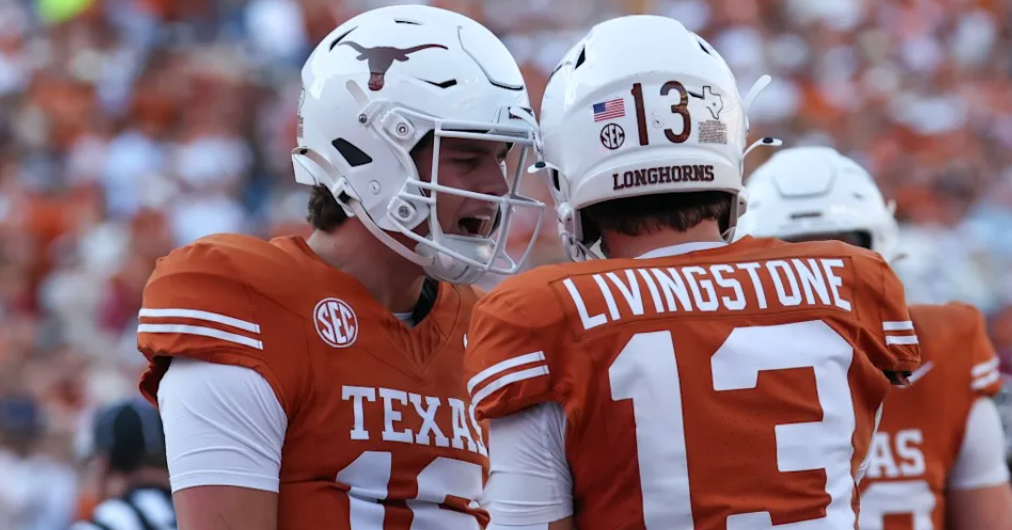
Former Texas wide receiver Parker Livingstone crossed a Red River Rivalry line this week, committing to Oklahoma via the 2026 college football transfer portal. Livingstone, who roomed with quarterback Arch Manning and became one of his favorite targets during the 2025 season, ranked No. 3 on the Longhorns with 516 receiving yards and No. 2 with six touchdown receptions.
247Sports college football and transfer portal analysts Chris Hummer and Cooper Petagna provided insights into the breakup between Manning and Livingstone, detailing how NIL money and agent involvement played a significant role in the decision.
“It’s a surprising situation,” Hummer said Wednesday on CBSSports HQ.

[Latest] Online Gaming Market Size, Innovation Trends, Smart
One Last Hurrah – Bridgewater St.

UH men’s volleyball will see step up in competition

Driven to the MAX: DuraMAX Named Primary Entitlement Sponsor for March 1 NASCAR Cup Series Race at COTA

The transfer portal and NIL have taken college football to a different level

Western’s Dixon signs to play volleyball at Hannibal-LaGrange University

Autaugaville Pavilion Anchors Weekend Equestrian, Motorsports, Community Events
Ferris State Bulldogs to celebrate football, volleyball teams

Daren Lucas Named President of Motorsports Hall of Fame | WNDB

Arizona Wildcats volleyball gets commitments OH Woods, setter Siapani

Huskies volleyball signs six freshmen for 2026 season | News, Sports, Jobs

Texas Longhorns Fans HATE NIL All Of A Sudden

Youth basketball starts Jan. 10, schedule • SSentinel.com

Hornets Indoor Track & Field Prepares to Host Burg Open

Cal Poly beach volleyball to premiere at local movie theater

SoundGear Named Entitlement Sponsor of Spears CARS Tour Southwest Opener

DeSantis Talks College Football, Calls for Reforms to NIL and Transfer Portal · The Floridian

#11 Volleyball Practices, Then Meets Media Prior to #2 Kentucky Match

Stempien to seek opening for Branch County Circuit Court Judge | WTVB | 1590 AM · 95.5 FM

Nascar legal saga ends as 23XI, Front Row secure settlement

Maine wraps up Fall Semester with a win in Black Bear Invitational

Ross Brawn to receive Autosport Gold Medal Award at 2026 Autosport Awards, Honouring a Lifetime Shaping Modern F1

Princeton Area Community Foundation awards more than $1.3 million to 40 local nonprofits ⋆ Princeton, NJ local news %

Downtown Athletic Club of Hawaiʻi gives $300K to Boost the ’Bows NIL fund

Sunoco to sponsor No. 8 Ganassi Honda IndyCar in multi-year deal

WNBA’s Caitlin Clark, Angel Reese and Paige Bueckers in NC, making debut for national team at USA camp at Duke

North Florida Motorsports Park led by Indy 500 Champion and motorsports legend Bobby Rahal Nassau County, FL
NASCAR, 23XI Racing, Front Row Motorsports announce settlement of US monopoly suit | MLex

Hope College Tops MIAA Commissioner’s Cup Fall Update

Woods, Ogunribido Named CCIW Women’s Indoor Track & Field Student-Athletes of the Week





-
 Rec Sports3 weeks ago
Princeton Area Community Foundation awards more than $1.3 million to 40 local nonprofits ⋆ Princeton, NJ local news %
-

 Sports2 weeks ago
Badgers news: Wisconsin lands 2nd commitment from transfer portal
-

 Rec Sports6 days ago
Five Youth Sports Trends We’re Watching in 2026
-

 Sports3 weeks ago
Is women’s volleyball the SEC’s next big sport? How Kentucky, Texas A&M broke through
-

 Rec Sports3 weeks ago
NBA, Global Basketball Community Unite for World Basketball Day Celebration
-
Rec Sports3 weeks ago
Inside the NWSL’s first combine: Can the league create a more robust pathway for American talent development?
-
 Sports2 weeks ago
Kentucky VB adds an All-American honorable mention, loses Brooke Bultema to portal
-
 NIL3 weeks ago
$2.1 million transfer portal QB predicted to join College Football Playoff team
-

 Motorsports2 weeks ago
Dr. Patrick Staropoli Lands Full-Time O’Reilly Ride with Big Machine Racing
-

 Motorsports2 weeks ago
BangShift.com IHRA Acquires Historic Memphis Motorsports Park In Millington Tennessee. Big Race Weekend’s Planned For 2026!