

Cougars on the air
Pop-Tarts Bowl
No. 12 BYU (11-2) vs. No. 22 Georgia Tech (9-3)
- Saturday, Dec. 27, 1:30 p.m. MST
- Orlando, Florida
- TV: ABC
- Radio: 102.7 FM/1160 AM


Top 2026 recruit Chikae Desdunes has narrowed to six finalists, she told Rivals. The 5-10 combo guard from Daytona Beach (FL) DME Academy will decide between Purdue, West Virginia, Penn State, Michigan State, Auburn and Baylor.
“It has to feel right,” Desdunes said of what she’ll be looking for on her official visits. “Once you go to a school, you know the feeling of ‘I definitely feel like I’m going to go here.’ I’m just really excited to get on these campuses, get to know these coaching staffs, see the players and all that stuff. The most important thing is just feeling comfortable, feeling like a real family atmosphere.”

Defensive tackle Keanu Tanuvasa and offensive tackle Andrew Gentry made the biggest splashes in the offseason when they transferred to BYU from Utah and Michigan, respectively, but perhaps the greatest contribution from a transfer not named Bear Bachmeier was made by tight end Carsen Ryan in 2025.
The former American Fork and Timpview star, who began his college career at UCLA before transferring to Utah in 2024 and then BYU in 2025, filled a huge hole at the tight end position and was a big reason why the Cougars’ offense performed so well against all of its opponents except Texas Tech this season.
“Carsen has been everything we expected him to be,” offensive coordinator Aaron Roderick said a few weeks ago. “He’s been great.”
Of course, the 6-foot-4, 250-pound Ryan will get at least one more chance to do his thing when the No. 12 Cougars (11-2) meet No. 22 Georgia Tech (9-3) in the Pop-Tarts Bowl on Dec. 27 at Camping World Stadium in Orlando, Florida. While some seniors and juniors seemingly headed to the NFL are opting out of bowl games, Ryan said the thought has never crossed his mind.
“I am not in the position to do that, but even if I was, I feel like I would still want to play in this game,” he told the Deseret News on Wednesday. “You never know. Any game could be your last game playing football.
“You are never going to experience playing college football again, most likely. … It’s been such a special time for me in my life. I would be upset with myself if I didn’t play in this game and give myself one more chance to have one more game with my brothers and have fun.”
— BYU tight end Carsen Ryan
“You are never going to experience playing college football again, most likely,” he continued. “I’m never gonna experience that again. It’s been such a special time for me in my life. I would be upset with myself if I didn’t play in this game and give myself one more chance to have one more game with my brothers and have fun.”
Ryan is listed as a redshirt senior on BYU’s roster, but the truth is he is just a senior and has played only four years of college football. Because he played in only five games at UCLA his freshman year (2022) before sustaining a season-ending injury, he has applied for a waiver with the NCAA to get that year of eligibility back.
But he’s not holding his breath, having heard through various channels that the waiver is not likely to be granted.
“I have applied, but I am treating this season like I am training to go full-go to the (NFL) right now.
“That’s the goal right now,” he said. “I don’t know what the outcome of that’s going to be. I haven’t heard a lot of good news about it. I am treating everything like I am going to the league next year.”
Ryan has selected agent Carter Chow — Norm Chow’s son — of Red Envelope Sports to represent him in NIL and NFL draft negotiations and would like nothing more than to put up another outstanding game in Orlando next week.
While some college players have language in their NIL contracts with schools that stipulate they must play in bowl games, Ryan said his contract does not include that. Not that it would matter.
“I have been at places where that is in the (NIL) contract,” he said. “I haven’t heard about that being a thing here at BYU. However, I don’t have any negative thoughts about playing in the bowl game, either. I’m really looking forward to it.”
Ryan said that sentiment applies to all of his teammates; as of Friday, it appeared that BYU would have no bowl game opt-outs, aside from the handful of backups who have announced their intentions to enter the transfer portal when it opens on Jan. 2.
“Everyone is excited, still. We still bring the same energy, same intensity to practice,” he said. “It is not a vacation or a week off for us. It is another serious game that we want to go out there and win.”
Ryan said getting a victory against the ACC foe won’t be easy. Georgia Tech is coming off a close loss — 16-9 — to No. 3 Georgia in Atlanta and has the ACC’s Quarterback of the Year, Haynes King.
“They are a good team. They are good defensively. They have a lot of really good players on that team. They all work together. Everyone does their job. So it’s gonna be a tough game,” he said. “They only lost three games this year, and those losses were to really good teams (North Carolina State, Pitt and Georgia).”
Meanwhile, Ryan turned out to be just what the doctor ordered for BYU, after tight ends Keanu Hill (12), Mata’ava Ta’ase (9) and Ryner Swanson (10) combined for just 31 catches in 2024, for 290 yards.
Ryan is BYU’s third-leading pass-catcher, with 37 receptions for 500 yards and three touchdowns. He’s often wondered what might have been if he had considered BYU two years ago when he was leaving UCLA.
“I have loved it here. Every second I have been here has been fun,” he said. “There have been ups and downs. With football, it has been a good year for me, and the relationships I’ve made with the coaches and players will last forever.
“I wish I could have had more time at this place. I wish I got here sooner,” he continued. “But everything happened for a reason, and I’m grateful for my journey and how I’ve gotten here, and that Kalani and his staff found a place for me here.”
Part of that journey included meeting his fiancee, Jayne Basso, at UCLA. She is finishing up her degree at UCLA this winter. The couple plans to wed in June.
“We are excited to start this whole new chapter of our lives together,” Ryan said.

Updated Dec. 19, 2025, 6:24 p.m. CT
The Texas Tech football team will once again try to load up on talent through the transfer portal after the Red Raiders’ highly successful run through the 2025 college football season.
Last year saw the Red Raiders go hard at top-tier players in the portal, which brought in the likes of David Bailey, Lee Hunter, Terrance Carter Jr. and Brice Pollock. The moves made by head coach Joey McGuire and the NIL funds provided by Cody Campbell pushed Texas Tech to the Big 12 Conference championship and an appearance in the College Football Playoff for the first time in program history.
This year’s transfer portal is down to just one window for players to join new teams or leave their current squads. It opens on Jan. 2 and closes again Jan. 16. Players have until Jan. 16 to enter the portal and can pick their new teams at any time after submitting their names.
Keep tabs on all of Texas Tech’s transfer portal activity right here.
This section will be updated when player commitments are announced on social media, by Tech athletics or reported elsewhere.
The final addition of last year’s winter transfer portal cycle was the first to announce his departure on Dec. 11. Upton Bellenfant joined Texas Tech out of Buffalo last year but lost the starting kicker job to Stone Harrington midway through the year. Bellenfant was 6-for-6 on field goals and 14-of-16 on point-after kicks.
On3 reported on Dec. 19 that Dylan Spencer will enter the transfer portal. He is no longer on the Texas Tech roster for the 2025 season after he appeared in just three games, registering a pair of tackles. Showed potential as a true freshman in the 2023 season before he suffered a season-ending knee injury in the first preseason practice ahead of the 2024 season.

Alabama and Oklahoma are about to kick off the College Football Playoff on Friday evening and ahead of the big match-up, one notable player shared some NIL news. With Tide coach Kalen DeBoer facing a particularly big game, stakes are high for Friday’s battle. But at least one player has already had a productive Friday.
Alabama wide receiver Ryan Williams announced an NIL endorsement deal on social media on Friday afternoon. Williams, who has been tagged with a $1.6 million NIL value by On3, added another corporate endorsement to his already crowded NIL roster. With the eyes of college football heading to Alabama’s battle with Oklahoma, Williams had a timely component in his statement.
Williams’ new NIL deal is with Eat Just, Inc. which develops and markets plant-based alternatives to eggs and meats. Williams’ Instagram post depicts the talented wide receiver apparently chowing down on what appears to be a chicken alternative from Eat Just.
Among Williams’ other NIL deals include EA Sports (for whom he was a cover athlete for EA’s College Football 26 game), Uber Eats, Beats by Dre, New Era, and clothier Hollister.
On the field, the 6′ wide receiver continues to show flashes of the massive talent that earned him a starting spot as a 17-year old for the Tide in 2024. But he has struggled with consistency. Last season, Williams finished with 48 receptions for 865 yards and eight receiving scores, with two more rushing touchdowns. In 2025, he has 42 catches for 631 yards and four touchdowns.
Wiliams will not be eligible for the 2026 NFL Draft, but figures to be a significant Draft prospect based on his speed and ball skills.
Alabama is facing a fourth loss in consecutive seasons. During Nick Saban’s nearly two decades, he did not have a four-loss season after his initial 2006 campaign. With rumors of Kalen DeBoer being a strong candidate for the Michigan coaching job, there’s plenty on the line during Friday’s game.
Alabama is a slight underdog in Friday’s College Football Playoff first-round battle. WIlliams could provide a key to the game. In Alabama’s three losses this year, Williams has not exceeded 45 yards receiving or caught a touchdown. So it’s safe to say that Tide fans, as well as Eat Just, hope that Williams eats well on Friday evening.

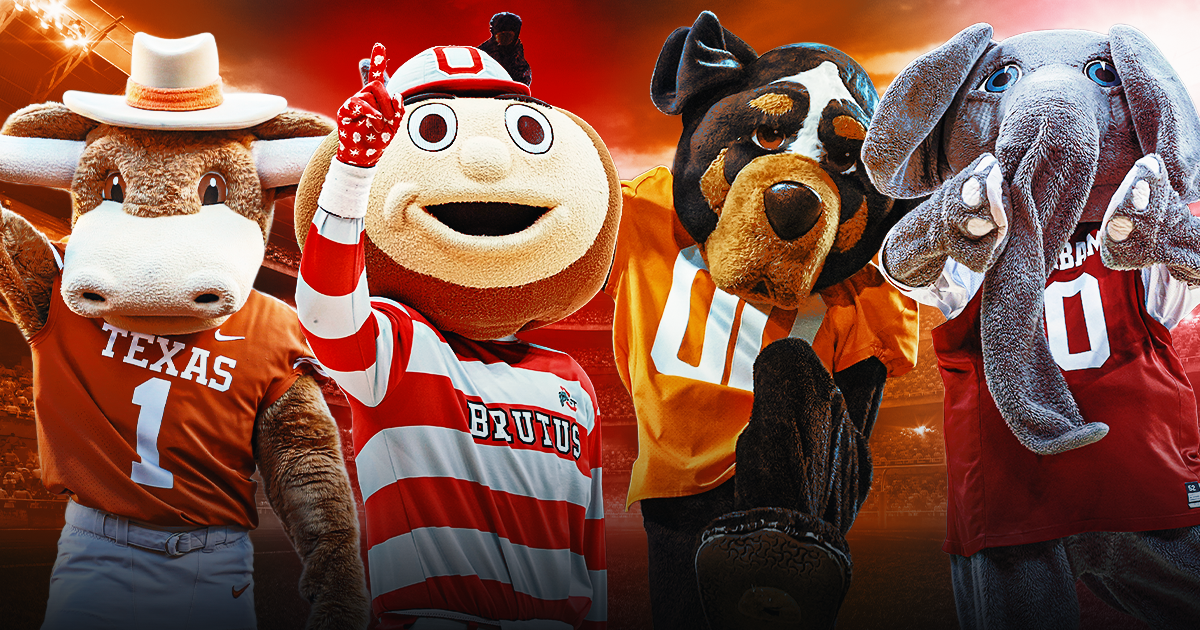
As the 2025 calendar year rounds out, CNBC has ranked the top-25 college athletic programs by valuation. Texas has skyrocketed to the No. 1 spot, worth $1.48 billion. This number is 16% more than it was last year ($1.28 billion). Ohio State‘s valuation grew by 2%, but it still fell from No. 1 to No. 2.
Per CNBC, “the 75 most valuable athletic programs for 2025 are worth a combined $51.22 billion, 13% more than the value of the top 75 in last year’s rankings”. With more money poured into programs by the day with an emphasis on NIL, this isn’t quite a surprise.
SUBSCRIBE to the On3 NIL and Sports Business Newsletter
The entire list is below. Of note, it includes five programs from the SEC, including two valued at more than $1.3 billion, per CNBC.
The University of Texas comes in at No. 1 in the rankings, worth $1.48 billion. The athletic program brought in $332 million worth of revenue in 2024, helping usher in a 16% YOY (year-over-year) value change. Last year, the program was ranked No. 2 (+1).
It shouldn’t be a surprise that Texas sits atop all programs, as starting quarterback Arch Manning ranks No. 1 in On3’s NIL Valuations ($5.3 million). Manning, in his first season as the Longhorns’ starting quarterback, passed for 2,942 yards and 24 touchdowns with seven interceptions this season. Manning is one of two Texas athletes ranked inside the Top-100, alongside EDGE Colin Simmons.
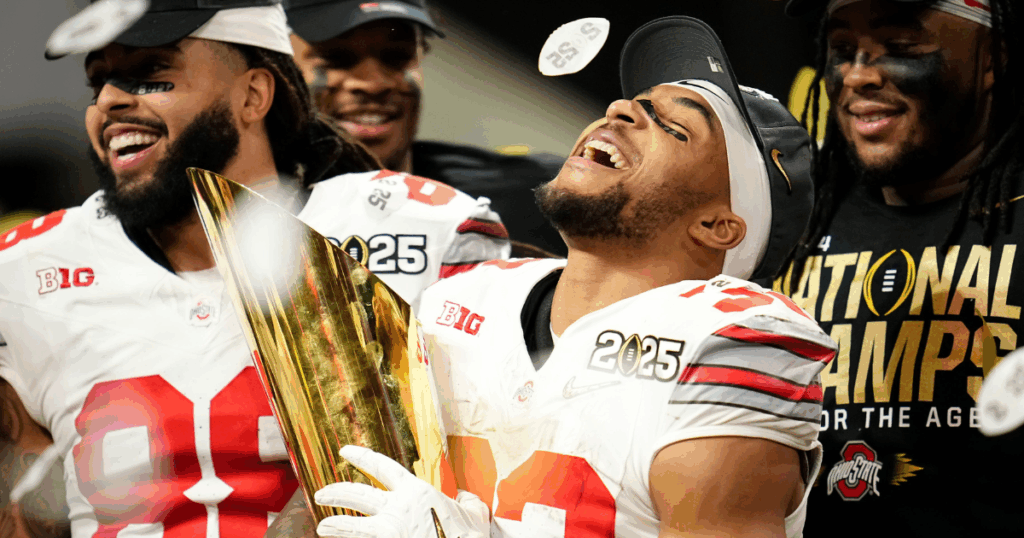
THE Ohio State University comes in at No. 2 in the rankings, worth $1.35 billion. The athletic program brought in $255 million worth of revenue in 2024, helping usher in a 2% YOY value change. Last year, the program was ranked No. 1 (-1).
Although the program slipped one spot, Ohio State is still a juggernaut. Star wide receiver Jeremiah Smith ranks No. 3 in On3’s NIL Valuations ($4.2 million) and is one of three Ohio State football players ranked inside the top-13. Quarterback Julian Sayin sits at No. 10 ($2.5 million) and defensive back Caleb Downs sits at No. 13 ($2.4 million).
Texas A&M University comes in at No. 3 in the rankings, worth $1.32 billion. The athletic program brought in $266 million worth of revenue in 2024, helping usher in a 5% YOY value change. Last year, the program was also ranked No. 3.
With the football program heading to the College Football Playoff for the first time ever, Texas A&M remained the third most profitable athletics program in the country. Quarterback Marcel Reed ranks No. 19 on On3’s NIL Valuations ($2.1 million) and Paul Hornung Award winning receiver K.C. Conepcion ranks No. 52.
The University of Georgia comes in at No. 4 in the rankings, worth $1.16 billion. The athletic program brought in $242 million worth of revenue in 2024, helping usher in a 22% YOY value change. Last year, the program was also ranked No. 7 (+3).
Georgia jumped three spots after bringing in $242 million worth of revenue in 2024. This was massive in hauling in USC transfer receiver Zachariah Branch, who has been a massive contributor for the Bulldogs’ College Football Playoff team. Branch, who ranks No. 85 On3’s NIL Valuations, hauled in 73 catches for 744 yards and five scores this year.
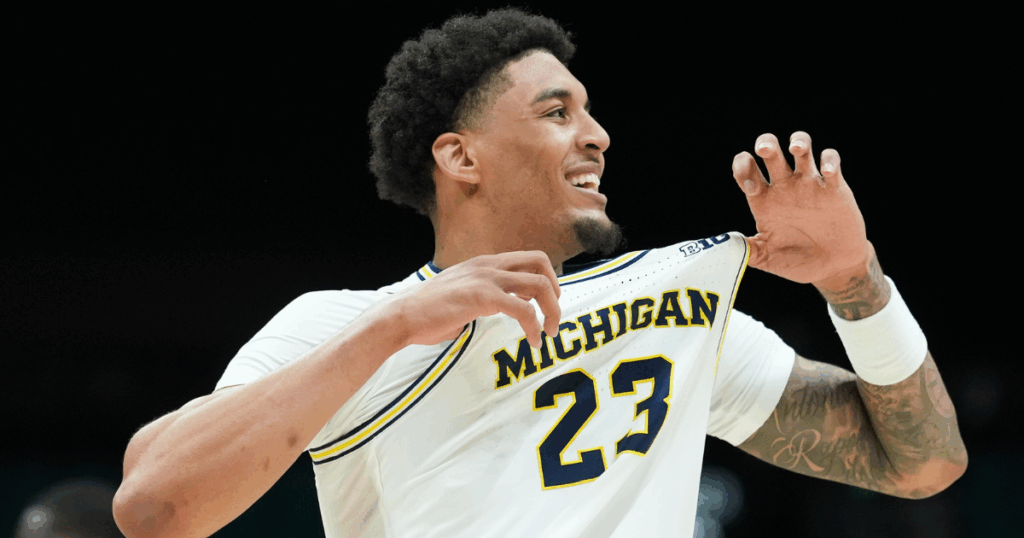
The University of Michigan comes in at No. 5 in the rankings, worth $1.16 billion. The athletic program brought in $239 million worth of revenue in 2024, helping usher in a 9% YOY value change. Last year, the program was ranked No. 4 (-1).
Although Michigan fell one spot from last year’s valuation, it still ranks second among Big Ten programs. Star forward Yaxel Lendeborg, who ranks No. 17 On3’s NIL Valuations ($2.3 million), has been a superstar for the Wolverines on the basketball court. Lendeborg is averaging 16.4 points and 7.2 rebounds for an undefeated squad under head coach Dusty May.
The University of Notre Dame comes in at No. 6 in the rankings, worth $1.13 billion. The athletic program brought in $235 million worth of revenue in 2024, helping usher in a 17% YOY value change. Last year, the program was ranked No. 6.
Feelings are still hurt around the Notre Dame football program after being snubbed from the College Football Playoff, but that’s nothing a little cash can’t fix. The ND athletics program hauled in $235 million worth of revenue last season, but it remained at No. 6. Heisman Trophy finalist running back Jeremiyah Love was Notre Dame‘s highest ranked player in On3’s NIL Valuations ($1.6 million).
The University of Tennessee comes in at No. 7 in the rankings, worth $1.12 billion. The athletic program brought in $234 million worth of revenue in 2024, helping usher in a 19% YOY value change. Last year, the program was ranked No. 9 (+2).
Tennessee‘s athletics program is evaluated at $1.12 billion, good for fourth most in the Southeastern Conference. Freshman forward Nate Ament is the highest earning player in the athletics program, ranking No. 64 in On3’s NIL Valuations.

The University of Southern California comes in at No. 8 in the rankings, worth $1.10 billion. The athletic program brought in $242 million worth of revenue in 2024, helping usher in a 19% YOY value change. Last year, the program was ranked No. 12 (+4).
USC jumped four spots after a massive 2024 calendar year, which brought in $242 million worth of revenue. This ushered in a 19% YOY value change, one of the biggest of all the teams in the rankings. Quarterback Jayden Maiava was the program’s highest earning player, ranking No. 21 in On3’s NIL Valuations ($2.1 million)
The University of Alabama comes in at No. 9 in the rankings, worth $1.09 billion. The athletic program brought in $235 million worth of revenue in 2024, helping usher in a 11% YOY value change. Last year, the program was ranked No. 5 (-4).
In what could maybe be called the Nick Saban effect, Alabama dropped four spots in this year’s rankings. Quarterback Ty Simpson, who passed for 3,268 yards and 26 touchdowns this season, ranks No. 14 in On3’s NIL Valuations ($2.3 million).
The University of Nebraska comes in at No. 10 in the rankings, worth $1.06 billion. The athletic program brought in $221 million worth of revenue in 2024, helping usher in a 12% YOY value change. Last year, the program was ranked No. 8 (-2).
Finally, the Cornhuskers come in ranked No. 10 with a $1.06 billion valuation. Although it ushered in $221 million, they fell two spots to No. 8. Former quarterback Dylan Raiola, who just entered the Transfer Portal, was the program’s highest-earning player this season. He ranked No. 9 in On3’s NIL Valuations ($2.5 million).
11. Penn State University ($1.06 billion)
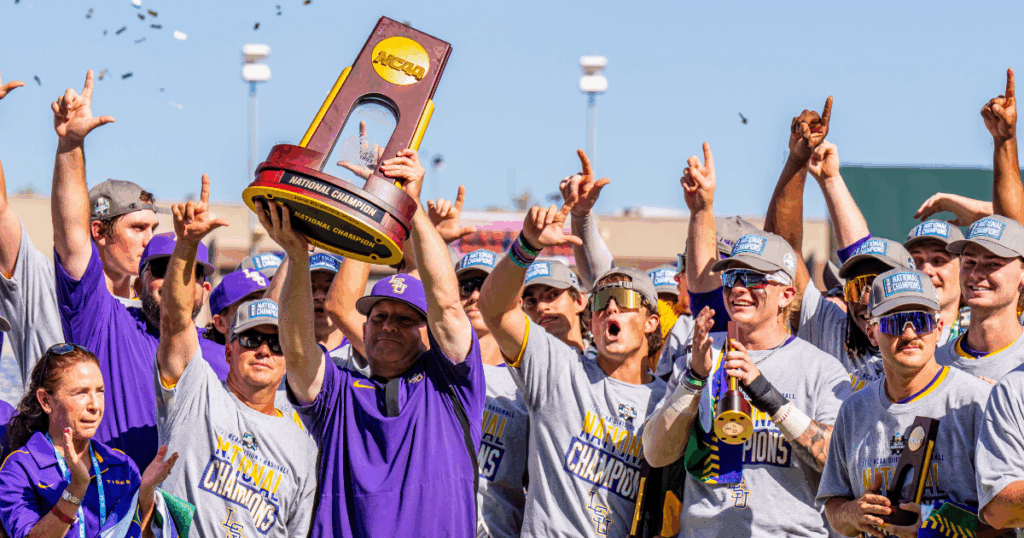
12. Louisiana State University ($1.05 billion)
13. University of Oklahoma ($1.01 billion)
14. University of Florida ($975 million)
15. University of Kentucky ($910 million)
16. University of Oregon ($880 million)
17. University of Wisconsin ($875 million)
18. Clemson University ($860 million)
19. University of Iowa ($835 million)
20. University of Illinois ($815 million)
21. University of South Carolina ($812 million)
22. Auburn University ($810 million)
23. Stanford University ($805 million)
24. University of Arkansas ($800 million)
25. University of Washington ($795 million)
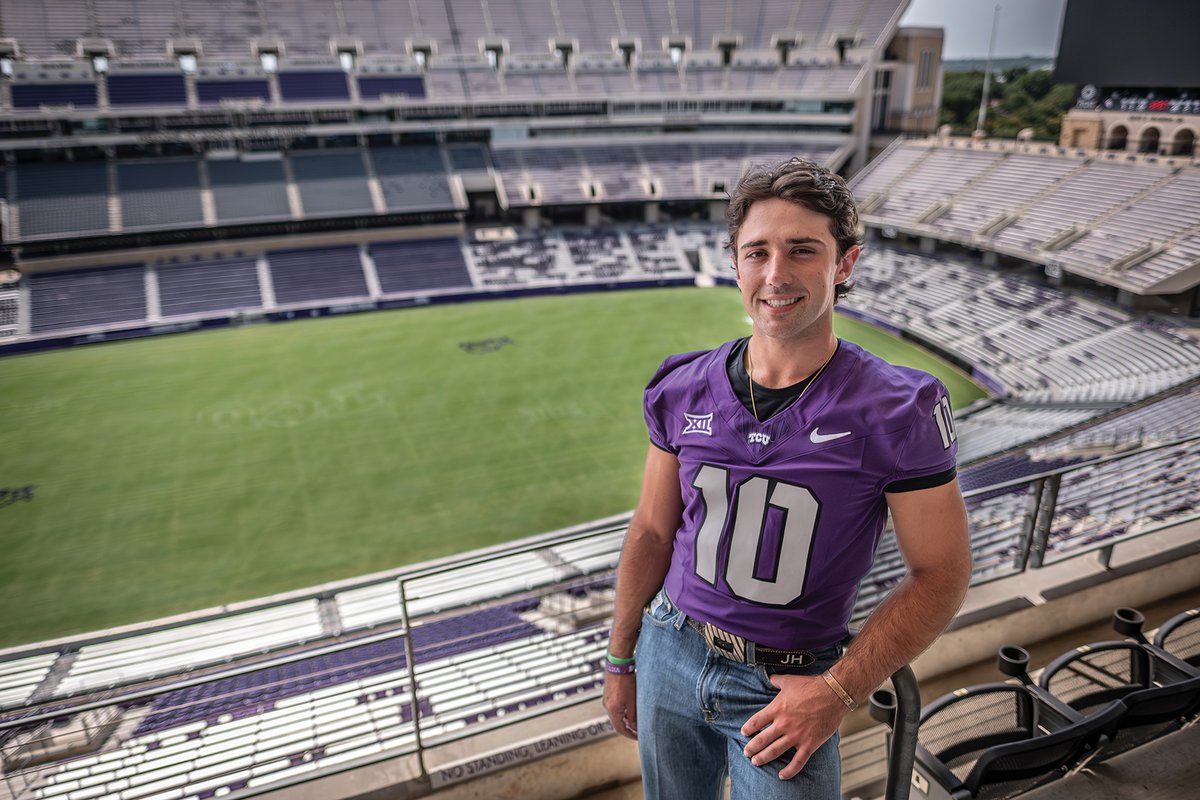
Well, the Dear John letter on Instagram we’ve all been dreading dropped on Thursday.
“First, I want to thank God for the opportunities that he has blessed me with to play this game. I’m so thankful to have had the opportunity to represent TCU for an incredible 4 years. It has been a dream to be able to play and graduate from this university and I will forever be grateful for that.”
But — there’s always a “but” — TCU quarterback Josh Hoover continued, “I will be entering the transfer portal.”
So, there it is. Well, hell. This one hurts because Hoover represented stability in a volatile era of name, image, and likeness, and the specter of the transfer portal. He was “our guy” in a sports culture where “our guy” barely exists anymore.
But alas … .
Josh Hoover is a fantastic person. We wish him the best.
Our man Ken Seals of Azle and then Weatherford High, who traveled back here by way of Vanderbilt, is presumably the starter for TCU’s Alamo Bowl game against Southern Cal. (Everybody remembers the last time TCU lost its starting quarterback right before the Alamo Bowl. It was epic.)
Thankfully, Kansas — the band, that is — taught us all about transience in 1977. Nothing lasts forever, especially in today’s college athletics’ revenue sports. Once upon a time, our guys stayed with us until the eligibility ran out. Today, our college athletes more resemble Mickey Rooney or Jennifer Lopez. (Can you believe that Mickey Rooney found eight wives?)
It’s TCU one day. Indiana the next?
The clickbaiting stations got on this immediately: Where will Josh Hoover land?
Miami, Oregon, Texas Tech. No, Lord, no … not Texas Tech!
The leader in the clubhouse appears to be Indiana, once a hotbed of college basketball. Bob Knight is somewhere beside himself — that is, red-faced and expressing his emotions, shall we say, with the harshest language ever known to man — that the Indiana football program is, one, No. 1 in the country; and, two, that the football coach there is making something like $93 million over eight years.
However, Curt Cignetti has made the Hoosier State a destination for football transfers.
Indiana is also the school Hoover initially committed to as a senior at Rockwall Heath. He had been lightly recruited with only two major suitors — SMU and Indiana. At the helm at SMU at the time was, of course, Sonny Dykes. When Dykes took the TCU job he reached back out to Hoover, who jumped at the chance to come to Fort Worth. He recalled to us in September that on his recruiting visit he “loved it here.”
Things are different at Indiana since Hoover’s change of direction. Different coach and drastically different direction.
Just last year, Hoover turned down a lucrative offer to go to Tennessee. He declined it, he said, because he had already committed to returning to TCU. And the pull of money isn’t the only reason he’s leaving. With one year of eligibility remaining, he likely wants to polish his NFL prospects by playing in bigger games.
That’s not to say that can’t or won’t happen here. But a place like Indiana — whose quarterback this season just won the Heisman Trophy — is likely to open the year in the top 10, playing in the media-darling Big Ten Conference.
Suffice to say, Hoover will be an attractive option for a lot of programs.
His 9,629 passing yards and 71 touchdown passes will likely be the most of any QB in the portal. In 2024, he set a school record with 3,949 passing yards. Hoover also has 17 wins over the past two seasons.
“I want to Thank Coach Dykes for giving me the opportunity to play at TCU. I want to thank Coach Briles and the rest of the coaching staff for pushing me to be my best on and off the field.
“Lastly, I want to thank my teammates for all of the memories that we’ve shared together. This place has allowed me to meet some of my best friends, and I will always be grateful for that. I’ve prayed about this and decided that I will be entering the transfer portal.
“God Bless & Thank you TCU”
We’ll shed a tear, take a sip, and move on. It’s the only option.
So long, farewell, Josh Hoover.
Auf Wiedersehen, goodbye.
Updated Dec. 19, 2025, 4:05 p.m. ET
Darian Mensah finally pulled off what eventually had to happen, further underscoring a booming college football economy that isn’t slowing down.
An elite quarterback chose college football over the NFL. And will make more money because of it.
Mensah, who led Duke to its first outright ACC championship since 1962 in his first season after transferring from Tulane, will make — at the very least — the back half of a two-year, $8 million deal he signed prior to this season.
If Mensah were to leave for the NFL, he’d make half that or less for one season — depending on where he was selected in the 2026 NFL Draft.

Stay or go is no longer a professional decision. It’s now, in most cases, a monetary move.
Just when you think paradigm change over the past four years of college football couldn’t be more dramatic, we now have quarterbacks staying in college for more money than they’d earn in the NFL.
College football isn’t the NFL’s minor league. It’s now the NFL’s competition.
The last quarterback selected in the first round of the 2025 NFL Draft was Jaxson Dart, who was the 25th overall pick and signed a four-year deal with the Giants averaging $4.2 million annually.
The first quarterback selected outside the first round was Tyler Shough, who was the 40th overall pick by the Saints and signed a four-year deal averaging $2.7 annually. The next selected was Jalen Milroe, 92nd overall by the Seahawks with a deal averaging $1.56 million annually.
Mensah, who more than likely would’ve been selected somewhere outside the first 50 picks, will earn $4 million by returning to Duke.
But that’s not the point of this exercise. The reality that Mensah will earn more in college football than the NFL, that he is choosing to delay playing at the highest level of football with a multi-year contract to stay in college, should tell you all you need to know about the flourishing private NIL economy.
The one area of unthinkable college football change the NCAA has no control over. And by no, I mean none.
Not with some special clearinghouse, or contrived czar, or play-nice agreement schools are refusing to sign. Private NIL is the heart of the college football economy, the only way to separate the haves from the have-nots.
You don’t really think the haves are going to sit there and take it, do you? They’re not going to nod their heads and spend 75% of their NCAA-mandated $20-23 million annual salary pool on football, and go along their merry way.
Because the elite of the elite players want more, and are they’re getting it through private NIL. It’s basic economics: supply and demand.
Ohio State overpaid for Quinshon Judkins and Will Howard and Caleb Downs, and won a national title because of it. Indiana outbid Georgia and Miami for Fernando Mendoza, and just polished off the first unbeaten regular season in school history.
Duke, meanwhile, won its first outright ACC title in more than six decades after overpaying Mensah. That’s return on investment, everyone.
A similar or marginally better revenue sharing deal isn’t convincing elite players to change schools. Private NIL deals are.
Players don’t have to stay at programs if they feel (take your pick) they’re not being developed properly, don’t have a chance to play for a championship, or just don’t like their situation.
Now they aren’t forced to leave college for the NFL, where the ability to earn was always the greatest draw — no matter what you read from players about taking their talents to (insert team here). Thanks, LeBron.
With that being said, of course.
Imagine the sheer power of telling the NFL no, and then picking up a larger paycheck because of it. And, bonus: Mensah, who has only played two seasons of college football — with at TD/INT ratio of 52/11 — can play another season and strengthen his draft stock.
Go bet on yourself, kid. Have another big season, make twice what you’d earn in the NFL, and then improve your draft stock for 2027. The next thing you know, you’ve moved into a first round projection and your rookie deal goes from seven figures to eight.
Quinn Ewers should’ve done it last season, and there will be more outside of Mensah who will do it this season. Brendan Sorsby and Sam Leavitt could leave for the NFL, and be selected in the first two days.
So could Ty Simpson and John Mateer and Nico Iamaleava. They’ll all make more — per season — in college football with private NIL deals. And that’s just at the quarterback position.
It’s a bear market for the elite of college football, and nothing is stopping it. Not contrived NCAA guidelines with no teeth, and not some document with no legal standing.
And no longer, as crazy as it sounds, the big, bad NFL.
Matt Hayes is the senior national college football writer for USA TODAY Sports Network. Follow him on X at @MattHayesCFB.



SoundGear Named Entitlement Sponsor of Spears CARS Tour Southwest Opener

Bowl Projections: ESPN predicts 12-team College Football Playoff bracket, full bowl slate after Week 14

Robert “Bobby” Lewis Hardin, 56
Wisconsin volleyball sweeps Minnesota with ease in ranked rivalry win


Donny Schatz finds new home for 2026, inks full-time deal with CJB Motorsports – InForum


How Donald Trump became FIFA’s ‘soccer president’ long before World Cup draw

Men’s and Women’s Track and Field Release 2026 Indoor Schedule with Opener Slated for December 6 at Home


Michael Jordan’s fight against NASCAR heads to court, could shake up motorsports


Black Bear Revises Recording Policies After Rulebook Language Surfaces via Lever

David Blitzer, Harris Blitzer Sports & Entertainment





