
NIL
Trademark attorney breaks down Arkansas NIL clash with Madden Iamaleava

The dispute between Arkansas EDGE and Madden Iamaleava captured the attention of the college sports world when Arkansas’ athletic director, Hunter Yurachek, announced on X that the collective would enforce the buyout clause of Iamaleava’s NIL deal. Possibly groundbreaking, the potential lawsuit could change how NIL is handled by every athletic program in the country.
But the interest doesn’t lie only with sports fans. The legal community is just as intrigued by the situation brewing in Fayetteville. One of those attorneys is Philip T. Sheng with Venable LLP. Sheng is a trial lawyer specializing in intellectual property disputes both nationally and in international forums. He also serves as an advisor on trademark, brand, and NIL protection issues.
Sheng co-authored an article for Venable LLP that argues the impact of the dispute, if it makes it to trial, could set a legal precedent for these types of cases in the future. Fortunately, we had the chance to speak with Sheng about the Arkansas EDGE’s situation involving Iamaleava. He explained some of the specific challenges Arkansas may encounter as it attempts to recover its funds and shared his thoughts on the future of NIL in college sports.
Arkansas EDGE v. Madden Iamaleava Q&A with Philip T. Sheng
Q: I want to start off with a fun question before we get into the nitty-gritty of the dispute between Arkansas EDGE and Madden Iamaleava. Are you a big sports fan? If so, tell me a little about your fandom and what teams you follow.
I’m a huge sports fan. I grew up in Southern California watching the Showtime Lakers and remain a dedicated fan to this day. They’re my favorite pro sports team, but I do follow many others and not just in basketball. For college sports, I’m a diehard BYU fan. It’s an exciting time to be a BYU fan, and I’m not just talking about football and men’s basketball. Go Cougs!
Q: Many fans are not overly familiar with contract law, but it seems strange to them that when a party signs a contract—and acknowledges breaching it—but nothing is done about it. When I did some digging, it seems that if the buyout clause is framed as damages rather than penalties, the non-breaching party is more likely to be awarded compensation. Can you explain the differences between damages and penalties?
That’s what makes the dispute between Arkansas EDGE and Madden Iamaleava so interesting. Contracts get broken all the time, not just in sports, and the legal remedy isn’t to punish the breaching party, but to make the non-breaching party whole. In other words, damages are supposed to put the non-breaching party in the same financial position it would’ve been in if the contract had been honored.
So when a court looks at a buyout clause, it asks: Does this reflect a reasonable estimate of the losses suffered? If the answer is yes, it’s more likely to be enforced. But if the damages seem out of proportion to the actual harm, or if they would leave the non-breaching party better off than if the contract had been honored, then it starts to look more like a penalty—and courts generally don’t enforce penalties.
Q: Mr. Sheng, you specialize in intellectual property disputes, and in my layman’s mind, NIL deals are similar to trademark licensing. Both market another’s “image” for one reason or another. Can you explain a few of the similarities and differences?
NIL deals and trademark licensing do share some similarity. Both fall under the umbrella of intellectual property and reflect a brand or image. And both can be licensed to others for commercial gain. There are some important distinctions, however. Trademarks are usually owned by companies and the primary purpose of a trademark is to identify the source of goods or services.
For example, the Nike swoosh on a pair of shoes identifies the source of goods and reflects a particular brand that may influence consumer decisions. NIL, on the other hand, is owned by an individual, where the individual’s name, image, or likeness is what is intended to influence consumer decisions. For example, a shoe company might pay an athlete to wear its latest shoe at an event in hopes that the athlete’s fame will drive more sales. Ultimately, the core idea between NIL deals and trademark licensing is the same: brand power is being used to drive commercial value.
Q: In college football, head coach contracts often have buyout language as well. Why are those buyouts more enforceable than NIL deals? When breaking coaching contracts, what kind of liquidated damage do they create that NIL deals, on average, don’t?
One reason is that coaches are employees of their universities. They’ll have employment contracts that are heavily negotiated between lawyers and agents and approved by university boards to ensure compliance with state contract and employment laws. A court is less likely to strike down a buyout clause if it is shown that it was negotiated between sophisticated parties represented by lawyers on both sides.
Also, it is easier for a school to demonstrate significant harm when a coach leaves early to join another school, such as having to hire a replacement coach, losing players to the portal, losing donor support, and diminished ticket sales. These aren’t hypothetical losses, and while it may be difficult to assign an exact dollar figure to them, a court will generally view a buyout clause as much more reasonable when the overall harm is significant. Another factor that comes to mind is that there has been a lot of prior cases involving coaches leaving early that have set some precedent as to what a court might find reasonable.
The dispute between Arkansas EDGE and Iamaleava is one of the first I’ve seen where a collective has said it will go to the mat on enforcing a buyout clause against a player. So we’re in some uncharted territory here, and the case has the potential to set some precedent for future cases.
Q: No matter the outcome, it feels like the dispute between Iamaleava and Arkansas EDGE is a turning point in college athletics. Where do you see the future of NIL headed in either scenario?
Especially if the House v. NCAA settlement is approved and NIL deals are entered into directly between schools and athletes, I suspect we’ll see more standardization and stronger legal vetting of NIL agreements. In general, such agreements need clearer terms and compliance mechanisms. But that evolution won’t happen on its own. It will require schools and collectives to actually go to the mat and attempt to enforce NIL agreements against players who breach them in order to shape and develop the law in this area.


Are top-drawer college football teams and their name, image and likeness collectives simply trying to protect themselves from willy-nilly transfers or are they bullying players to stay put with threats of lawsuits?
Adding liquidated damage fee clauses to NIL contracts became all the rage in 2025, a year that will be remembered as the first time players have been paid directly by schools. But some experts say such fees cannot be used as a cudgel to punish players that break a contract and transfer.
It’s no surprise that the issue has resulted in a lawsuit — make that two lawsuits — before the calendar flipped to 2026.
Less than a month after Georgia filed a lawsuit against defensive end Damon Wilson II to obtain $390,000 in damages because he transferred to Missouri, Wilson went to court himself, claiming Georgia is misusing the liquidated damages clause to “punish Wilson for entering the portal.”
Wilson’s countersuit in Boone County, Mo., says he was among a small group of Bulldog stars pressured into signing the contract Dec. 21, 2024. The lawsuit also claims that Wilson was misused as an elite pass rusher, that the Georgia defensive scheme called for him to drop back into pass coverage. Wilson, who will be a senior next fall, led Missouri with nine sacks this season.
Georgia paid Wilson $30,000, the first monthly installment of his $500,000 NIL deal, before he entered the transfer portal on Jan. 6, four days after Georgia lost to Notre Dame in a College Football Playoffs quarterfinal.
Bulldogs brass was not pleased. Wilson alleges in his lawsuit that Georgia dragged its feet in putting his name in the portal and spread misinformation to other schools about him and his contractual obligations.
“When the University of Georgia Athletic Association enters binding agreements with student-athletes, we honor our commitments and expect student-athletes to do the same,” Georgia spokesperson Steven Drummond said in a statement after the school filed the lawsuit.
Wilson’s countersuit turned that comment on its head, claiming it injured his reputation because it implies he was dishonest. He is seeking unspecified damages in addition to not owing the Bulldogs anything. Georgia’s lawsuit asked that the dispute be resolved through arbitration.
A liquidated damage fee is a predetermined amount of money written into a contract that one party pays the other for specific breaches. The fee is intended to provide a fair estimate of anticipated losses when actual damages are difficult to calculate, and cannot be used to punish one party for breaking the contract.
Wilson’s case could have far-reaching implications because it is the first that could determine whether schools can enforce liquidated damage clauses. While it could be understandable that schools want to protect themselves from players transferring soon after receiving NIL money, legal experts say liquidated damage fees might not be the proper way to do so.
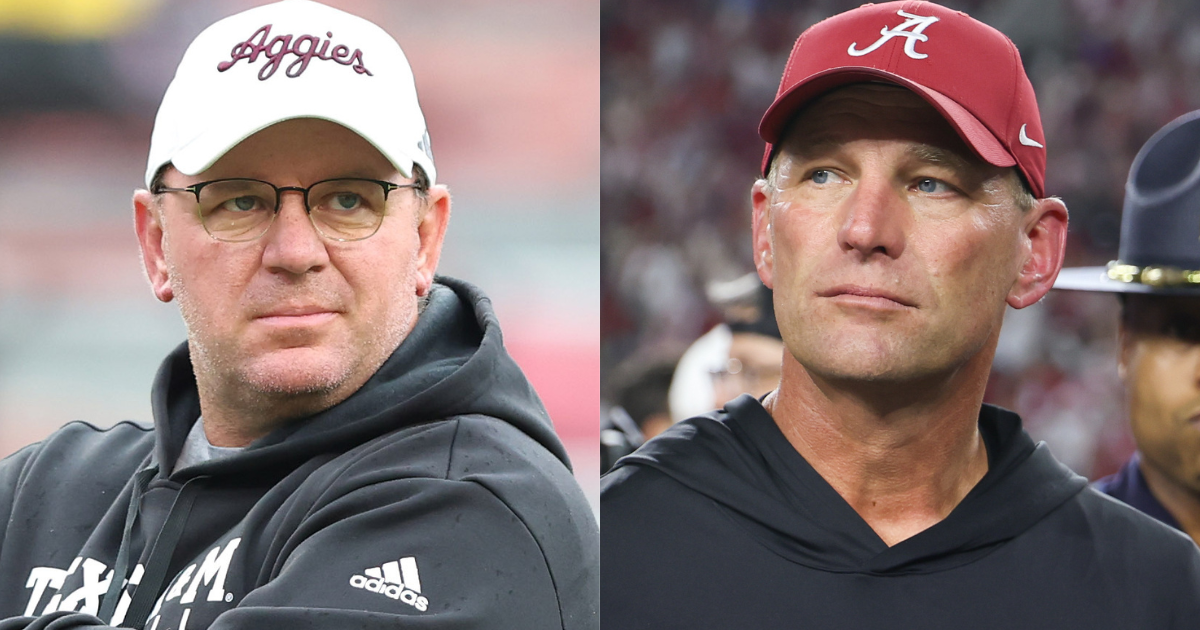
Penn State‘s head coaching search may have taken longer than expected, but the Nittany Lions ultimately landed their guy — Matt Campbell from Iowa State. According to a recent report from ESPN, however, the search apparently featured a number of big-name college football candidates to replace James Franklin.
These names included Alabama‘s Kalen DeBoer, Notre Dame‘s Marcus Freeman and Texas A&M‘s Mike Elko. All surfaced as “potential candidates,” with Elko looked at as “the most realistic,” given his ties to the region.
“The whole time, we thought Elko was going to be the guy,” one SEC coach told ESPN. “Then he came off the board.”
Elko just finished an 11-2 season at Texas A&M, leading the Aggies to its first-ever College Football Playoff. His Aggies were undefeated for the first 13 weeks of the season while Penn State continued it’s head coaching search. Texas A&M went on to extend his on Nov. 15.
For DeBoer, he denied having interest in the Nittany Lions’ job. Freeman was in the middle of leading Notre Dame to a 10-game win streak to lose the season. According to another ESPN source, Penn State “never spent a ton of time on those guys knowing their current situations.”
It wasn’t until early December that Penn State announced the hire of former Iowa State head coach Matt Campbell. The hire appears to have been well-received on social media and recruits alike.
He’s bringing to Happy Valley a resume that includes a 107–70 overall as a head coach. He built the Iowa State program from the ground up after a successful stint as Toledo’s head coach. Starting with a 3-9 finish in his first year with the program, Campbell led the Cyclones to a program record five-straight bowl games.
In 2024, Iowa State had its best season yet under Campbell. Leading the Cyclones to an 11-3 record, they came up just short of the College Football Playoff after losing to Arizona State in the Big 12 Championship game. They were ranked as high as No. 9 in the AP Poll last season.
He is expected to mirror that success and then some as the Nittany Lions’ new head coach, all while competing alongside the DeBoer’s, Freeman’s and Elko’s at the forefront of college football. Campbell’s effort is already underway in Happy Valley, and the product of it will be seen next fall.
The first step — the NCAA transfer portal. Penn State was left with two signees in its 2025 recruiting class, so he’ll be focused on bolstering his roster once it opens on Jan. 2.
South Carolina freshman EDGE rusher Taeshawn Alston plans to enter the NCAA Transfer Portal, On3’s Pete Nakos reports. Alston did not see any game action this season and redshirted.
The news of Alston’s transfer comes one day after it was revealed that All-SEC EDGE rusher Dylan Stewart would be returning to Columbia next season. The projected future top-ten NFL Draft pick signed a new rev share/NIL agreement with the school and announced his return on Instagram Tuesday.
Prior to enrolling at South Carolina, Alston was ranked as a three-star prospect and the No. 674 overall player in the 2025 class, according to the On3 Consensus. He was the No. 65-ranked EDGE rusher in his class and the No. 16 overall player from the state of North Carolina, hailing from Vance County.
Alston chose South Carolina over programs such as Colorado, West Virginia, Georgia Tech, Virginia Tech, and North Carolina coming out of high school. Alston’s secondary recruiter, defensive line coach Sterling Lucas, was poached by Lane Kiffin and LSU this offseason.
This past season was extremely disappointing for South Carolina, which opened the season ranked No. 13 in the Preseason AP Poll. The Gamecocks kicked off their season with back-to-back wins, but went just 2-8 over their remaining 10 games to finish with a 4-8 record.
To keep up with the latest players on the move, check out On3’s Transfer Portal wire.
The On3 Transfer Portal Instagram account and Twitter account are excellent resources to stay up to date with the latest moves.
Part 1:
Part 2:
Nixa’s Jackson Cantwell made the transition from tight end to the offensive tackle and quickly realized that his talents would take him far. He racked up accolades like Gatorade’s National Player of the Year and No. 1 college football recruit in the 2026 class.
As a high school junior, he came to realize that his top-tier college recruiting brings NIL into the picture.
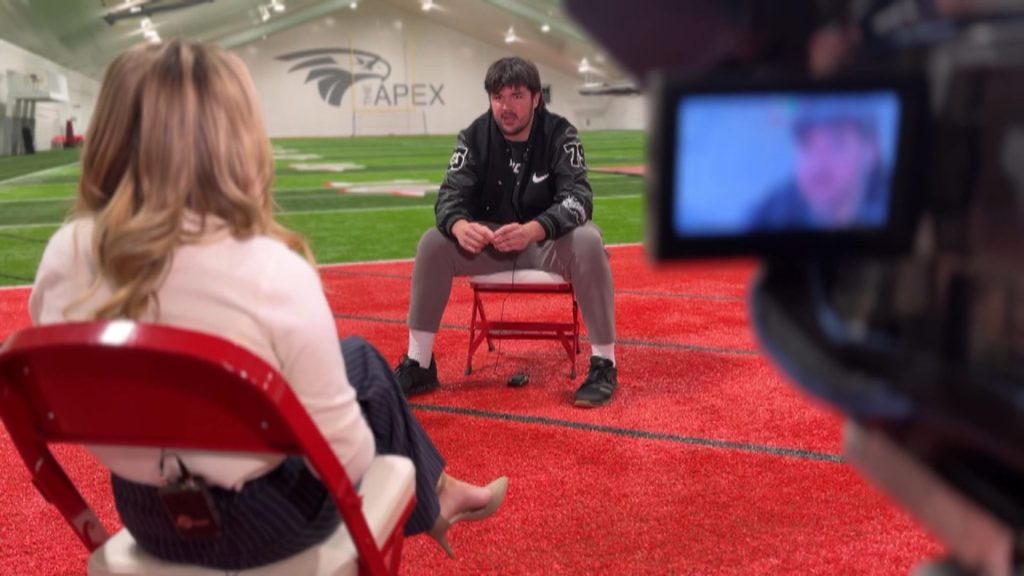
Cantwell and KY3’s Danielle King sat one-on-one to discuss how he navigated NIL, from hiring sports agent Drew Rosenhaus to enjoying the food that comes with brand deals.
Rosenhaus, one of the leading NFL representatives, also chatted with King about representing Cantwell, the young NIL landscape and more.

The college football transfer portal is only ten days away from officially opening for business. That hasn’t stopped players around the country from getting a head start on the action, as nearly 1,100 names are expected to transfer.
That number will continue to rise over the next few weeks. The movement could be unprecedented this offseason, as the spring window has been eliminated, meaning there will be only 15 days for players to appear in the portal.
The quarterback market is packed. Though the group might not be as top-heavy as the last few seasons, there will still be plenty of talented signal-callers available.
Former Freshman Of The Year Transferring From Arkansas State
On Tuesday evening, Arkansas State junior quarterback Jaylen Raynor revealed his intentions to transfer, per 247Sports’ Matt Zenitz.
Raynor spent the last three seasons as the starter for the Red Wolves. In 2025, he completed 333/501 passes for 3,361 yards with 19 touchdowns to 11 interceptions. He added 154 rushes for 423 yards and 7 more scores.
Raynor led the Sun Belt Conference in completions, attempts, yards, and interceptions.
Arkansas State finished 7-6, defeating Missouri State, 34-28, in the Xbox Bowl.
Raynor signed with the Red Wolves as a two-star prospect in the 2023 class. He leaped into the starting role early in his true freshman season, taking the reins for the final 10 games of the year.
Raynor was named the Sun Belt’s Freshman of the Year after completing 166/285 passes for 2,550 yards with 17 touchdowns to 7 interceptions. He rushed for 5 more scores.
The North Carolina native tied Arkansas State’s program record with six touchdown passes against UMass on September 30, 2023.
Raynor continued to lead the Red Wolves as a sophomore. In 2024, Arkansas State went 8-5 and defeated Bowling Green in the 68 Ventures Bowl.
Overall, Raynor is 20-16 as a starting quarterback and he’s 2-1 in bowl games.
During his college career, he’s completed 758 of 1,206 passes for 8,694 yards with 52 touchdowns and 28 interceptions. Raynor has rushed 414 times for 1,183 yards and 15 more scores.
The 6-foot-0, 202-pound quarterback has two years to play one at the college level.
Out of high school, Raynor held offers from programs such as UMass, Miami (OH), Army, Air Force, and Navy.
Read more on College Football HQ
• $45 million college football head coach reportedly offers Lane Kiffin unexpected role
• Paul Finebaum believes one SEC school is sticking by an ‘average’ head coach
• SEC football coach predicts major change after missing College Football Playoff
• Predicting landing spots for the Top 5 college football transfers (Dec. 17)

1. The latest actual numbers I can find…per 247 sports, U of L was 20th in NIL monies in college sports at about 450 million. Now we are approaching 2026 and things obviously have changed, but we were at least trying to play the NIL game.
2. Jeff did not leave Purdue the first time because the timing wasn’t right or he still had a job to do with the Boilermakers. I respected Jeff for that and quite frankly made me feel more proud of who he was as a person .
I could be naive and stupid but:
A. This crazy money by rich people to pay athletes is just that, crazy and not sustainable long term.
B. U of L is probably doing the best it can but can not compete against oil monies etc.
C. Love him or not, (I love Jeff as our coach) he is the best we could have and feel safe he wants to stay. (Is this a dumb statement given the leaving fears?)
D. Let’s keep winning at Jeff’s level or better

Georgia case could determine if schools can get damages from transfers

Public Defender Melanie Sellers announces 2026 candidacy for Public Defender

Mite 1 and Mite 2 Jamboree at the Ruk | North Shore Journal

Metro Nashville Public School students’ artwork to be featured on new salt trucks

Bonners Ferry runner Colton Cohen commits to Missouri Valley College

Report shares why Penn State did not spend ‘a ton of time’ pursuing Kalen DeBoer, Mike Elko

Best Stories of 2025: “Record-setter Ethan Strand now ‘future of U.S. distance running’”

VUU coach honored with Triad of Excellence Award | Richmond Free Press

Pitt Middle Blocker Ryla Jones Transfers To Penn State Women’s Volleyball

South Carolina EDGE Taeshawn Alston plans to enter NCAA Transfer Portal

ALL-STATE VOLLEYBALL: Storro named honorable mention

Regional Youth Assessment Center corporal hopes to provide familiarity, positivity during Christmas shift – Grand Forks Herald
Newark Catholic honors state champion volleyball at boys basketball

West Virginia First Foundation announces grant recipients | News, Sports, Jobs

Tomlin says he supports Metcalf | News, Sports, Jobs

Fargo girl, 13, dies after collapsing during school basketball game – Grand Forks Herald

CPG Brands Like Allegra Are Betting on F1 for the First Time

Sycamores unveil 2026 track and field schedule

Two Pro Volleyball Leagues Serve Up Plans for Minnesota Teams

Utah State Announces 2025-26 Indoor Track & Field Schedule

SoundGear Named Entitlement Sponsor of Spears CARS Tour Southwest Opener

Jo Shimoda Undergoes Back Surgery

Redemption Means First Pro Stock World Championship for Dallas Glenn

Black Bear Revises Recording Policies After Rulebook Language Surfaces via Lever

Texas volleyball vs Kentucky game score: Live SEC tournament updates

Bowl Projections: ESPN predicts 12-team College Football Playoff bracket, full bowl slate after Week 14

Robert “Bobby” Lewis Hardin, 56

How this startup (and a KC sports icon) turned young players into card-carrying legends overnight

Donny Schatz finds new home for 2026, inks full-time deal with CJB Motorsports – InForum

How Donald Trump became FIFA’s ‘soccer president’ long before World Cup draw





-
 Motorsports2 weeks ago
SoundGear Named Entitlement Sponsor of Spears CARS Tour Southwest Opener
-
 Motorsports2 weeks ago
Donny Schatz finds new home for 2026, inks full-time deal with CJB Motorsports – InForum
-
 Rec Sports3 weeks ago
How Donald Trump became FIFA’s ‘soccer president’ long before World Cup draw
-
 Rec Sports2 weeks ago
David Blitzer, Harris Blitzer Sports & Entertainment
-

 Motorsports3 weeks ago
JR Motorsports Confirms Death Of NASCAR Veteran Michael Annett At Age 39
-
Sports3 weeks ago
Elliot and Thuotte Highlight Men’s Indoor Track and Field Season Opener
-
Sports3 weeks ago
West Fargo volleyball coach Kelsey Titus resigns after four seasons – InForum
-
 Motorsports2 weeks ago
Rick Ware Racing switching to Chevrolet for 2026
-
 Sports3 weeks ago
Temple Begins Indoor Track & Field Season at UPenn This Weekend
-
 Sports2 weeks ago
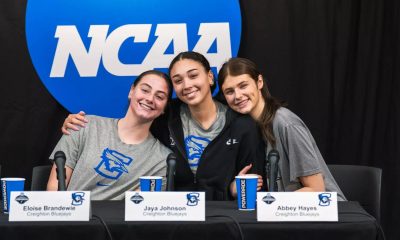
#11 Volleyball Practices, Then Meets Media Prior to #2 Kentucky Match