Rec Sports
Trauma-informed adventures for kids in foster care

Children in foster care often carry invisible scars — layers of trauma that shape how they view the world and their place within it.
A study from Texas Christian University found that youth in foster care experience post-traumatic stress disorder (PTSD) at more than twice the rate of combat veterans. That stark reality is what fuels our work at Raise the Future, a nonprofit committed to connecting youth in foster care with the lasting relationships and communities they need to thrive.
Raise the Future is a national nonprofit organization that partners with child welfare systems to help youth in foster care find permanent families. It also provides trauma-informed mental health support to ensure young people feel safe, supported, and prepared for the future.
[Related: Seize the foster care insurance “crisis” as an opportunity — to curb foster care]
But healing doesn’t always take place in a therapy session or clinical setting. Sometimes, healing sounds like laughter echoing through a forest. Sometimes, it looks like kids linking arms during a trust-building challenge or a camper exhaling deeply as they watch the sun rise over a quiet mountain lake.
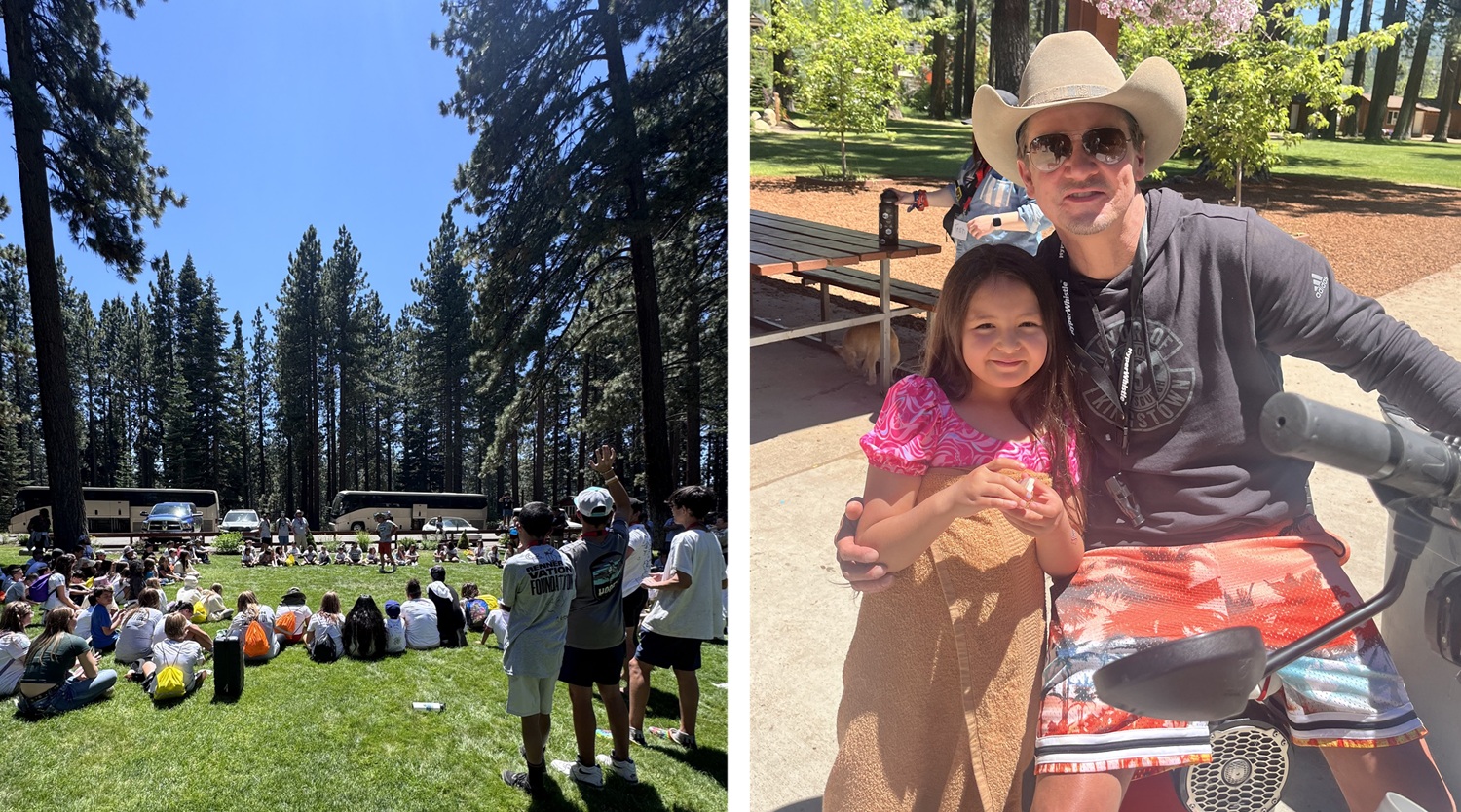
That’s why this summer, Raise the Future partnered with RennerVation Foundation — founded by actor and philanthropist Jeremy Renner — to support two trauma-informed summer camps designed specifically for youth in foster care. These camps aren’t just about outdoor fun; they are about community, connection and creating space for young people to feel seen, safe and celebrated. Research from the University of Groningen highlights how youth in foster care often struggle with feeling like they belong, and that’s something we witness daily.

RennerVation Foundation
Left: Foster children and camp staff gather on grass for camp orientation. Right: Actor Jeremy Renner and young female camper posing for picture.
At Camp RennerVation, belonging isn’t just a goal — it is the atmosphere. Many campers experienced safe peer relationships, sibling connection and the trust of caring adults for the very first time. And it showed. You could see it in their posture, their smiles and their laughter.
Camp RennerVation brings bold adventure and leadership opportunities led by a passionate group of outdoor educators and volunteers. Every adult present brought with them something unique: lived experience, expertise, joy, deep compassion and a fierce commitment to showing up for kids who need to know they matter.
RENNERVATION FOUNDATION
Each of these caring adults was supported with real-time coaching and relational support from the Raise the Future team and tools grounded in Trust-Based Relational Intervention® (TBRI®). This trauma-responsive framework helps adults meet youth with curiosity and compassion. It shifts the lens: What looks like defiance might actually be fear. What seems like resistance might be a survival strategy. Together, we created rhythms of safety, reinforced the importance of predictability and encouraged joyful interactions that reminded kids (and adults) that healing can feel good.
And that’s what camp was full of:


Courtesy of Tayler Wiese
Tayler Wiese
Joy.
Safety.
Laughter echoing across the lake.
New friendships blooming over shared meals.
Tears met with patience.
Moments when a young person lets their guard down, perhaps for the first time in a long while.
Camp RennerVation was about belonging. About being seen. About reclaiming pieces of childhood and hope.
The partnership that led to this impact represents a bigger shift we need to see across youth-serving systems. Nonprofits often step in where public services fall short — but it’s not enough to offer programs. We must create environments that recognize trauma and foster healing. That takes collaboration, humility and a willingness to work across disciplines.
We hope to see models that leverage trauma-informed practices and center emotional safety replicated far and wide. Too often, youth in foster care — especially teens — are left out of enriching, growth-centered opportunities. And even when they’re included, the environments aren’t always set up for their success. Camp RennerVation proved what’s possible when we do things differently.
[Related: Transformative summer programs focus on learning love, not learning loss]
Youth-serving organizations must explore ways to integrate trauma-informed practices into their work.
- Partner with others. Collaborate with schools, agencies and nonprofits to strengthen the support system around youth.
- Center emotional safety. Ensure that young people feel safe, not just physically but emotionally as well. They should feel like they can show up as themselves without fear of judgment.
- Create spaces where young people feel valued. Make sure young people are heard and included in shaping the programs designed for them.
Together, we can build communities where every child has the chance to heal, belong and thrive.
***
Tayler Wiese is a dedicated Trust-Based Relational Intervention (TBRI) Practitioner at Raise the Future, where she empowers youth and families to heal from trauma. With over five years of experience, she is passionate about fostering strong connections and training others in TBRI principles.