Connect with us
https://yoursportsnation.com/wp-content/uploads/2025/07/call-to-1.png

NIL

Trump Executive Order, SCORE Act signal renewed federal policy focus on college sports industry

Published

on

Trump Executive Order, SCORE Act signal renewed federal policy focus on college sports industry

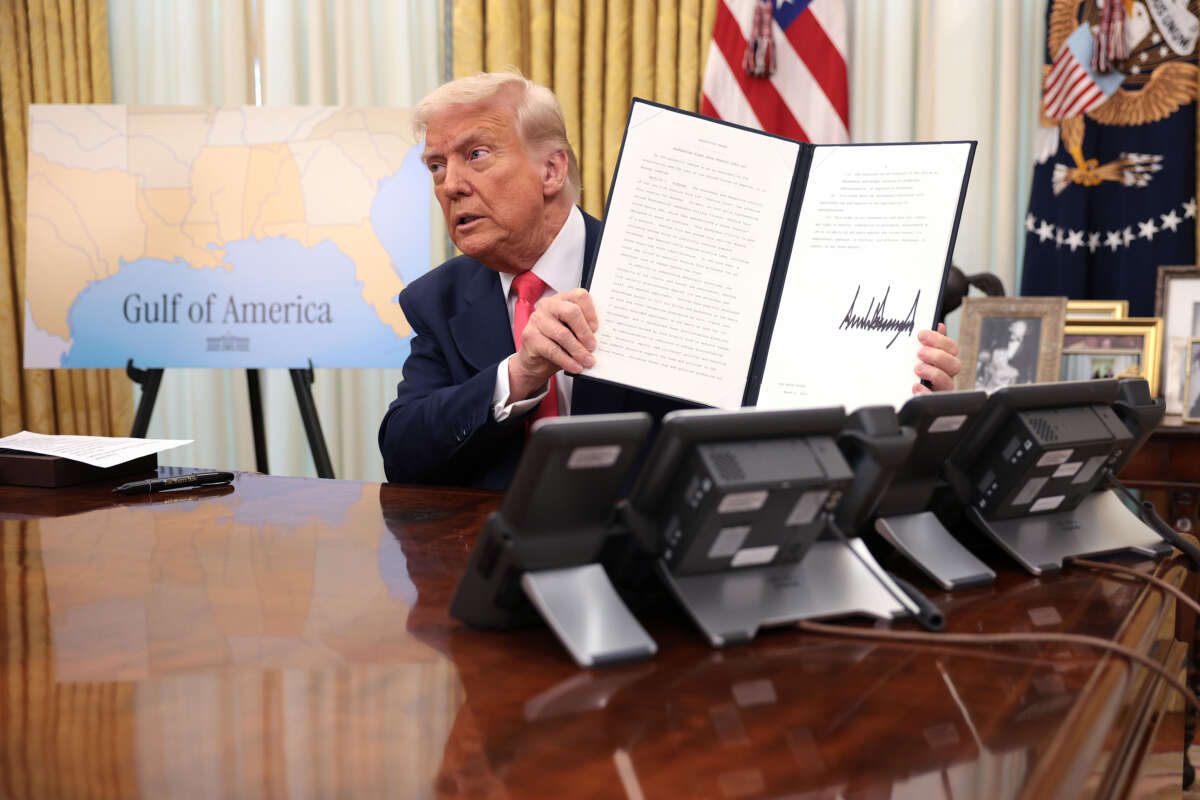
In late July, two significant federal policy developments emerged from Washington, D.C. in the ongoing overhaul of college sports. On July 24, 2025, President Trump issued an Executive Order entitled “Saving College Sports” (the “EO”).1 The EO was issued a day after two House committees approved the SCORE Act, a comprehensive federal college sports bill, making it the first college sports legislation to emerge from committee in either the House or the Senate in the post-Alston NIL era.2 Taken together, these actions indicate that federal policymakers are placing an increased focus on the regulation of college sports. The EO and the SCORE Act also provide additional insight into the two political parties’ positions with respect to codification of the House Settlement, federal antitrust protection for the NCAA and conferences, pre-emption of state NIL laws, and the classification of student-athletes as employees.

Saving College Sports Executive Order

Describing the college sports industry as an “out of control, rudderless system” whose future is under “unprecedented threat,” the Trump EO states that a national solution is needed “to protect non-revenue sports, including many women’s sports, that comprise the backbone of intercollegiate athletics, drive American superiority at the Olympics and other international competitions, and catalyze hundreds of thousands of student-athletes to fuel American success in myriad ways.”3 The EO declares it is the policy of the administration to “provide the stability, fairness, and balance necessary to protect student-athletes, collegiate athletic scholarships and opportunities, and the special American institution of college sports.”4

The EO lays out several directives to accomplish these policy priorities. First, the EO directs institutions to take steps to preserve and expand opportunities for scholarships and competition in women’s and non-revenue sports, and states that any revenue sharing arrangements between institutions and student-athletes should be implemented in a manner that furthers these goals.5 Notably, the EO encourages institutions to take the following specific measures with respect to scholarships and roster spots for non-revenue sports in the upcoming academic year:

  1. Institutions with greater than $125 million in athletic revenues should increase scholarship opportunities and maximize roster spots in non-revenue sports during the 2025-2026 academic year.
  2. Institutions with greater than $50 million in athletic revenues should at a minimum maintain the number of non-revenue scholarships and maximize roster spots for the 2025-2026 academic year.
  3. Institutions with less than $50 million in athletic revenues should not disproportionately reduce scholarship opportunities or roster spots based on the amount of revenue the sport generates for the institution.6

The EO also directs the Secretary of Education, the Attorney General, the Secretary of Health and Human Services, the Secretary of Education, and the Chairman of the Federal Trade Commission to develop a plan within 30 days of the date of the EO to advance these policies through federal funding decisions, administrative rulemaking, regulatory enforcement, and litigation.7 The deadline for the plan is August 23, 2025 and we are monitoring for any specific policy that emerges.

In addition to the guidance related to non-revenue sports, the EO also contains more general directives related to “pay-for-play” prohibitions, student-athlete employment status, and antitrust protections for the college athletics industry. Specifically, the EO declares that third-party, pay-for-play arrangements with student-athletes are improper and should not be allowed (but notes that this policy does not apply to compensation provided to an athlete for the fair market value that the athlete provides to a third party, such as an endorsement deals), and directs executive agencies to develop plans to enforce this prohibition through funding decisions, litigation, and legislative efforts.8 The EO also directs the Secretary of Labor and the NLRB to “clarify the status of collegiate athletes” through guidance and actions to “maximize the educational benefits and opportunities provided by higher education institutions through athletics.”9 Finally, the EO directs the Attorney General and the Chairman of the FTC to “stabilize and preserve college athletics through litigation, guidelines, policies, or other actions” when the “rights and interests of student-athletes and the long-term availability of college athletic scholarships and opportunities” are challenged on antitrust or other legal grounds.10

The Trump EO is important for at least two key reasons. First, it clarifies the policy priorities of the administration with respect to college sports and directs executive agencies to take action to implement such priorities through administrative guidance, regulatory enforcement, and litigation. It suggests institutions that cut scholarships and roster spots in non-revenue sports may face regulatory scrutiny, which underscores the need for institutions to think boldly and strategically about how to fund payments to student-athletes under the House settlement. Second, the EO provides additional momentum for federal policymaking related to college sports generally (especially when combined with the progress of the SCORE Act, discussed below), as it lays out the preferred positions of President Trump, who holds significant sway over a Republican party that controls both houses of congress.

That said, the EO ultimately leaves many key questions unanswered. It does not provide affirmative guidance on the application of Title IX to institutional revenue sharing, nor does it provide clarity as to whether the Trump administration considers student-athletes to be employees (although the administration has already rescinded Biden-era guidance stating that Title IX applies to revenue sharing and that student-athletes should be classified as employees for purposes of the National Labor Relations Act).11 Additionally, although the EO can direct the Department of Justice and Federal Trade Commission to take positions in litigation that might aid antitrust protection for the NCAA and conferences, it cannot unilaterally provide such protection, which would require an act of Congress (and, as described below, is one key feature of the SCORE Act). Ultimately, given that the EO does not carry the force of law, its actual effect, especially in the immediate term, may be limited. Indeed, NCAA President Charlie Baker recently acknowledged, “You can’t fix this stuff from executive order,” and noted that the NCAA’s focus “really needs to be trying to get stuff dealt with through the legislative process.”12

SCORE Act

On July 23, 2025, the Student Compensation and Opportunity through Rights and Endorsements (“SCORE”) Act was approved by the House Energy and Commerce Committee and the House Committee on Education and the Workforce.13 Both committees approved the bill with only Republican votes, although the legislation was co-sponsored by two Democrats.14

Overall, the proposed legislation contains many of the policy items pushed by the NCAA and certain conferences through their lobbying efforts in the post-Alston era. Specifically, the legislation largely codifies the powers extended to the NCAA and College Sports Commission under the House Settlement. The Act permits “Interstate Athletic Associations” (e.g., the NCAA) to establish and enforce rules 1) requiring student-athletes to disclose NIL agreements (i.e., the NIL Go framework); 2) prohibiting certain forms of NIL compensation from associated entities and individuals; 3) setting rules for the recruitment of student-athletes, the eligibility of student-athletes to participate in intercollegiate athletics, and the ability of student-athletes to transfer between institutions; and 4) providing for a revenue sharing model mirroring the pool limits set forth in House.15

Additionally, the bill provides broad antitrust protections for the NCAA and its member institutions to enforce and comply with the terms of the Act, provides that student-athletes shall not be considered employees of institutions based on their participation in intercollegiate athletics, and explicitly preempts state laws with respect to the regulation of student-athlete compensation, NIL rights related to broadcasting, employment, and eligibility for participation in intercollegiate athletics.16

The SCORE Act is the first major piece of college sports legislation to emerge from committee in recent years, reflecting an increased sense of urgency on Capitol Hill to address the uncertainty surrounding intercollegiate athletics. Additionally, the Act’s passage out of committee places a marker down for support among House Republicans for many of the NCAA and conferences’ policy priorities. That said, even if the bill were to pass the Republican-controlled House later this year, it faces challenges in the current Senate, given that it would need 60 votes, including seven Democrats, to overcome a filibuster. Indeed, critics of the legislation, including many Democrats in the House and Senate, as well as state attorneys general and the players’ associations of several professional sports leagues, contend that the Act vests too much power with the NCAA and the power conferences, fails to adequately address concerns over compliance with Title IX, and does not go far enough in addressing the concerns of student-athletes.17 Ultimately, congressional approval of a comprehensive college athletics bill will likely require a negotiated compromise in the Senate, where Republican Senator Ted Cruz, chairman of the Senate Commerce Committee, has been engaged in negotiations with Democratic Senators Cory Booker and Richard Blumenthal.

Takeaways for institutions

While the EO does not carry the force of law, NCAA institutions, particularly those in Division I and that have opted into the House Settlement, should proactively consider how to comply with the terms of the EO pending additional regulatory guidance issued by executive agencies. This is particularly true for the provisions of the EO addressing scholarships and roster spots for non-revenue sports. Additionally, institutions should continue to carefully monitor new administrative guidance issued by agencies to ensure compliance in an evolving regulatory environment. Furthermore, given the policy positions staked out by President Trump and House Republicans, institutions should give thought to their own policy preferences and whether increased advocacy on Capitol Hill makes sense to help advance the best interests of their athletic departments and student-athletes.

References

1 The White House, Executive Order “Saving College Sports,” July 24, 2025, available at https://www.whitehouse.gov/presidential-actions/2025/07/saving-college-sports/.

2 Ralph D. Russo and Chris Vannini, SCORE Act advances through committee, moving college sports reform closer to House floor, New York Times (July 23, 2025), available at https://www.nytimes.com/athletic/6511289/2025/07/23/score-act-congress-college-sports/ https://www.usatoday.com/story/sports/college/2025/07/23/college-sports-bill-passes-house-committees/85333821007/; Ralph D. Russo and Chris Vannini, SCORE Act advances through committee, moving college sports reform closer to House floor, New York Times (July 23, 2025), available at https://www.nytimes.com/athletic/6511289/2025/07/23/score-act-congress-college-sports/.

3 EO, Section 1.

4Id.

5 EO, Section 2(a); 2(b).

6 EO, Section 2(a)(i)-(iii).

7 EO, Section 2(d).

8 EO, Section 2(c).

9 EO, Section 3.

10 EO, Section 4.

11 Paula Lavigne, Dept. of Education Revoked Guidance on Title IX and Athlete Pay, ESPN (February 12, 2025), available at https://www.espn.com/college-sports/story/_/id/43809645/dept-education-revokes-guidance-title-ix-athlete-pay; Eli Henderson, Memorandum Viewing College Athletes As Employees Rescinded by Trump Administration, Sports Illustrated (February 15, 2025), available at https://www.si.com/college/nil/nil-news/memorandum-viewing-college-athletes-employees-rescinded-trump-administration.

12 Ross Dellenger, President Trump’s executive order on college sports: Here’s what it actually means, Yahoo Sports (July 24, 2025), available at https://sports.yahoo.com/college-football/breaking-news/article/president-trumps-executive-order-on-college-sports-heres-what-it-actually-means-001007183.html?guccounter=1.

13 Ralph D. Russo and Chris Vannini, SCORE Act advances through committee, moving college sports reform closer to House floor, New York Times (July 23, 2025), available at https://www.nytimes.com/athletic/6511289/2025/07/23/score-act-congress-college-sports/.

14Id.

15 SCORE Act, Section 6.

16 SCORE Act, Section 7, 8, 10.

17 Steve Berkowitz, Tom Schad, College sports bill moving to House floor in Congress after passing committee votes, USA Today (July 23, 2025), available at https://www.usatoday.com/story/sports/college/2025/07/23/college-sports-bill-passes-house-committees/85333821007/; Ralph D. Russo and Chris Vannini, SCORE Act advances through committee, moving college sports reform closer to House floor, New York Times (July 23, 2025), available at https://www.nytimes.com/athletic/6511289/2025/07/23/score-act-congress-college-sports/.

[View source.]

Continue Reading
Click to comment

Leave a Reply

Your email address will not be published. Required fields are marked *

NIL

McGuire one of eight finalists for Bear Bryant Award

Published

on


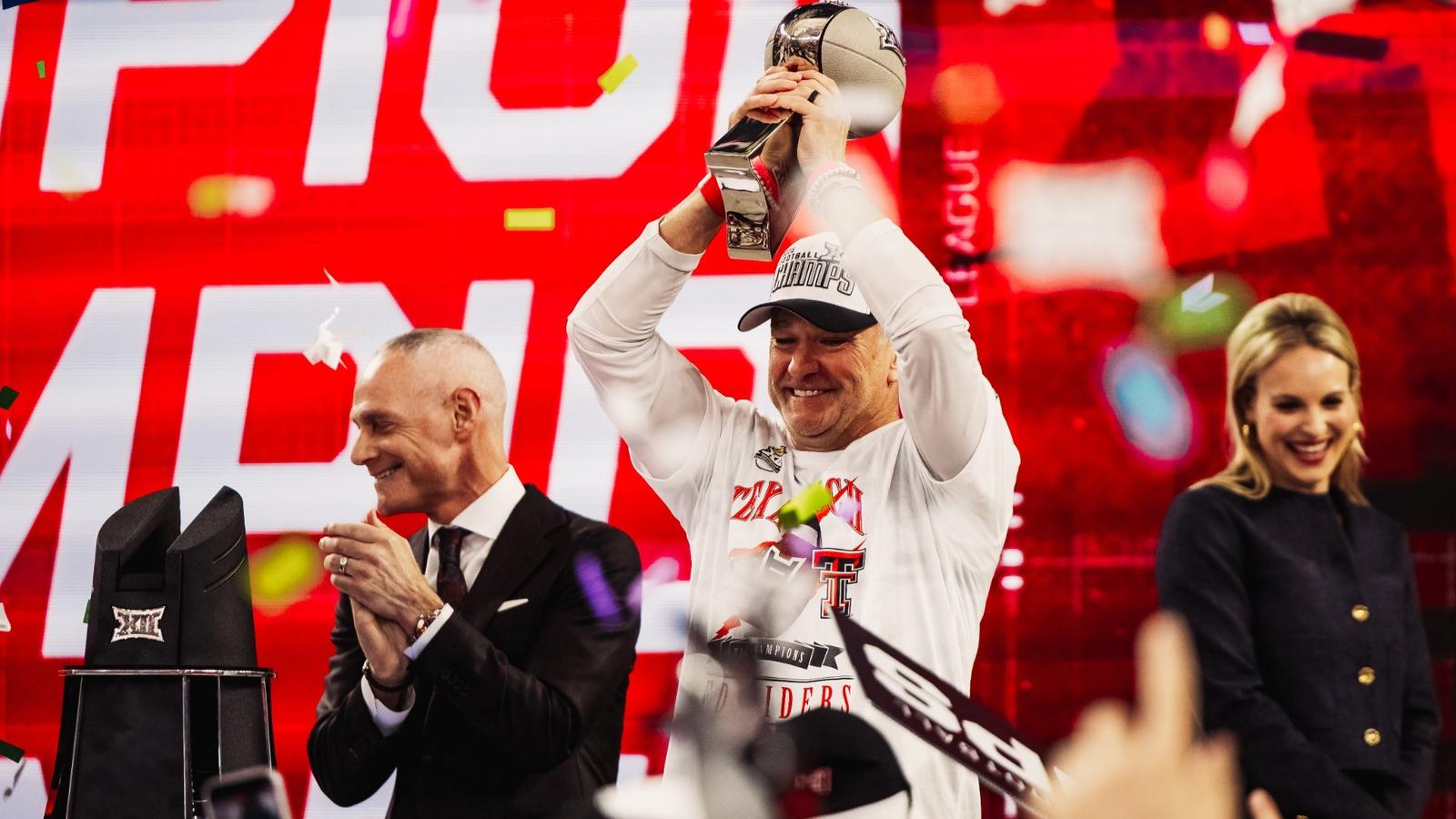
LUBBOCK, Texas – Texas Tech head coach Joey McGuire was named one of eight finalists Wednesday for the Paul “Bear” Bryant Coach of the Year Award after leading the Red Raiders to their first Big 12 Conference title and an appearance in the College Football Playoff.

The award, now in its 40th year, is given annually to the college football coach for contributions that make the sport better for athletes and fans alike by demonstrating grit, integrity and a winning approach to coaching and life – both on and off the field. McGuire was joined as a finalist by Indiana’s Curt Cignetti, James Madison’s Bob Chesney, Miami’s Mario Cristobal, Texas A&M’s Mike Elko, Virginia’s Tony Elliott, Oregon’s Dan Lanning and Vanderbilt’s Clark Lea.

The Bear Bryant Award is the only college football coaching honor given after the National Champion has been determined. It will be presented Jan. 21 during an awards ceremony hosted at the Post Oak Hotel in Houston. The event will be broadcast by CBS Sports Network on a tape-delayed basis beginning at 12:30 a.m. on Jan. 22.

In addition to being named a finalist for the Bear Bryant National Coach of the Year Award, McGuire was also named Wednesday the Big 12 Conference Coach of the Year by the organization. The finalists and Coach of the Year recipient are voted on by members of the National Sports Media Association, the Bryant Awards’ executive leadership team and the Bryant family.

This is the fourth national coaching award to name McGuire as a finalist this season as he was previously one of the final candidates for the George Munger College Coach of the Year Award, the Eddie Robinson Award and the Dodd Trophy. It is the first time in his career McGuire has been a finalist for any of the national coaching awards.

The Red Raiders reached new heights this past season under McGuire, who pushed Texas Tech to a school-record 12 wins and its first Big 12 title. McGuire led the Red Raiders to their first College Football Playoff appearance at the Capital One Orange Bowl after downing BYU, 34-7, in the Edward Jones Big 12 Championship, securing Texas Tech’s first outright conference crown since 1955.

Texas Tech proved to be one of the most-dominant teams in recent history on its way to a 12-2 record, with all 12 wins coming by at least 20 points. The Red Raiders are joined by Alabama in 2018 as the only teams in the Associated Press era (since 1936) to record 12 or more wins by 20-plus points prior to a bowl game. Texas Tech is just the fifth FBS team with 12 wins by 20-plus points in a season period during that span.

Despite a loss to No. 5 Oregon in the Orange Bowl, Texas Tech will likely end its season ranked in the top 10 of both the Associated Press and USA Today Coaches’ polls for the first time in history behind one of the most-balanced rosters in college football. Texas Tech currently ranks in the top-11 of several statistical categories, namely rushing defense (1st), scoring defense (3rd), total defense (4th), scoring offense (7th) and total offense (11th).

The Red Raiders have been the winningest Big 12 program under McGuire as Texas Tech has won 25 conference games in his four seasons, the most for any league school during that span. The Red Raiders are 35-18 overall under McGuire, which is the most wins by a Texas Tech head coach through 53 games since Jim Carlen was 35-17-1 midway through his final season of his five-year tenure from 1970-74.


Link

Continue Reading

NIL

NIL a factor in Arch Manning losing Texas roommate, WR Parker Livingstone to rival Oklahoma in transfer portal

Published

on


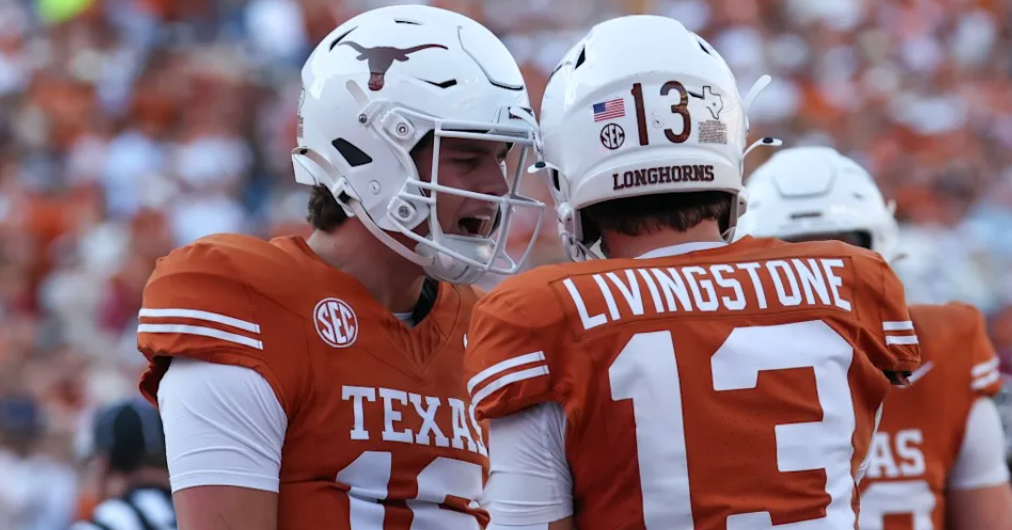
Former Texas wide receiver Parker Livingstone crossed a Red River Rivalry line this week, committing to Oklahoma via the 2026 college football transfer portal. Livingstone, who roomed with quarterback Arch Manning and became one of his favorite targets during the 2025 season, ranked No. 3 on the Longhorns with 516 receiving yards and No. 2 with six touchdown receptions.

247Sports college football and transfer portal analysts Chris Hummer and Cooper Petagna provided insights into the breakup between Manning and Livingstone, detailing how NIL money and agent involvement played a significant role in the decision.

“It’s a surprising situation,” Hummer said Wednesday on CBSSports HQ.


Link

Continue Reading

NIL

Mark Cuban makes donation to Indiana for 2026 transfer portal cycle, claims Hoosiers are ‘happier this year’

Published

on


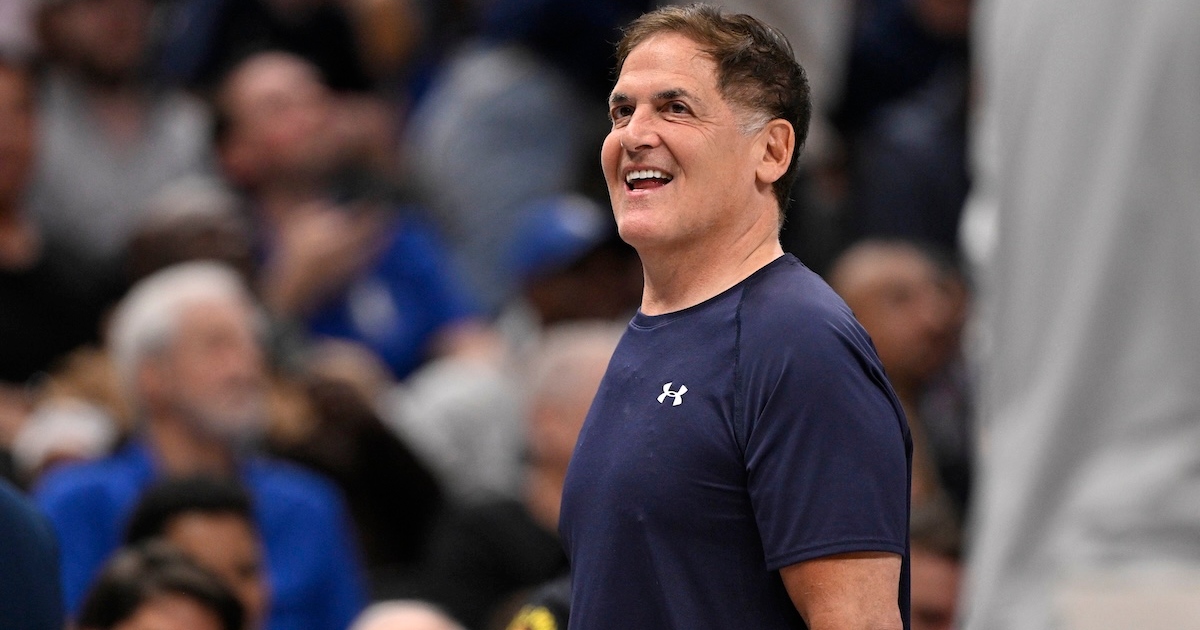
Mark Cuban reportedly made a donation to Indiana football for the 2026 transfer portal cycle, according to Alex Schiffer of Front Office Sports. The billionaire most known for his time as the majority owner of the Dallas Mavericks is a 1981 graduate of the school.

“Already committed for this portal,” Cuban wrote to FOS in an email. “Let’s just say they are happier this year than last year.”

SUBSCRIBE to the On3 NIL and Sports Business Newsletter

Indiana already made splashes in the transfer portal, such as TCU QB Josh Hoover committing for the 2026 season. They also landed Michigan State WR Nick Marsh and Boston College RB Turbo Richard. That’s only the tip of the iceberg and Indiana is still playing in the College Football Playoff!

Cuban reportedly gave a “big number” to the Indiana athletic department in the past, as he told CBS Sports in October. He cited his connection with head coach Curt Cignetti as the biggest factor.

Cuban is also no stranger to donating to his alma mater. In 2015, he gave the school around $5 million for a sports media center and gave $6 million to fund Indiana’s rugby club.

But first thing’s first, Cuban will be watching Indiana play Oregon in the Peach Bowl in the CFP semifinals. It’s all about what’s in front of them and nothing’s changed for Cignetti and IU.

“Yeah, excited to be a part of the Peach Bowl,” Cignetti said. “Playing a great opponent in Oregon, Coach Lanning. Like I said so before we played earlier in the year, one of the young superstars you know in the coaching profession. I think they’re 26-2 the last two years.

“And, you know, really an excellent football team, offense, defense, and special teams. Do a great job of coaching. Be a big challenge. We were fortunate, you know, to win the game out in Eugene. It’s hard to beat a great team twice. You know, very difficult. So, edge to Oregon there. But tough to be a great team twice. Looking forward to the challenge.”

Indiana and Oregon are set to square off Friday night in the Peach Bowl. Kickoff is set for 7:30 p.m. ET and the winner will play for the College Football Playoff National Championship.


Link

Continue Reading

NIL

ESPN predicts outcomes of both College Football Playoff Semifinal games

Published

on


ESPN predicted the outcomes of both College Football Playoff semifinal games coming Thursday and Friday. Now down to the final four teams, we are that much closer to crowning this year’s national champion.

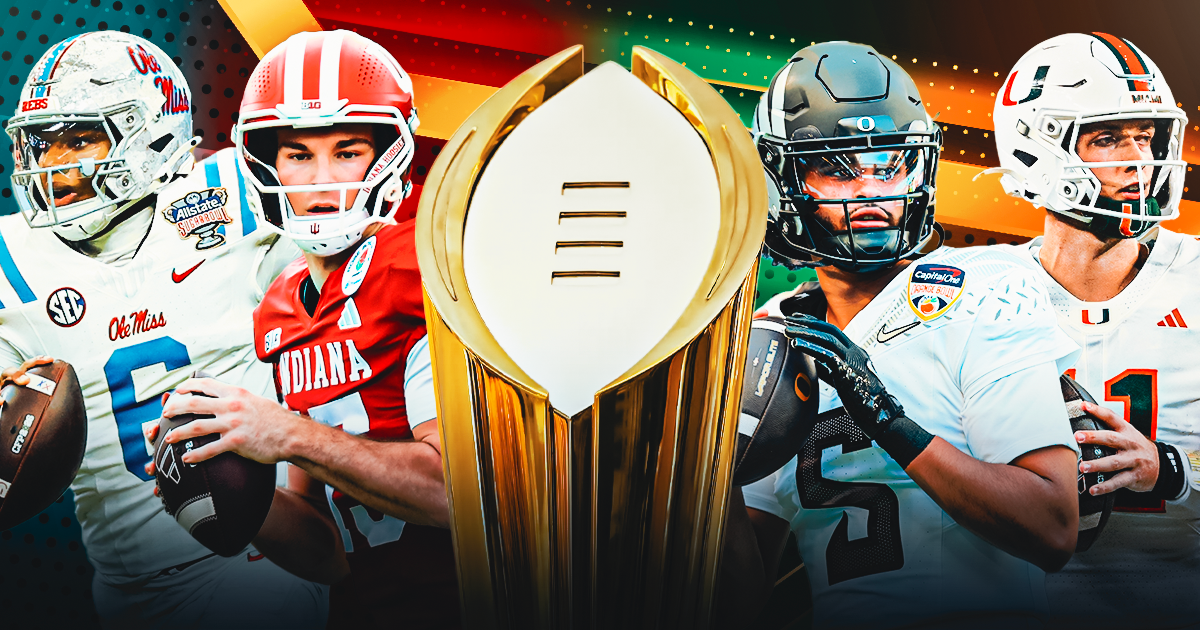
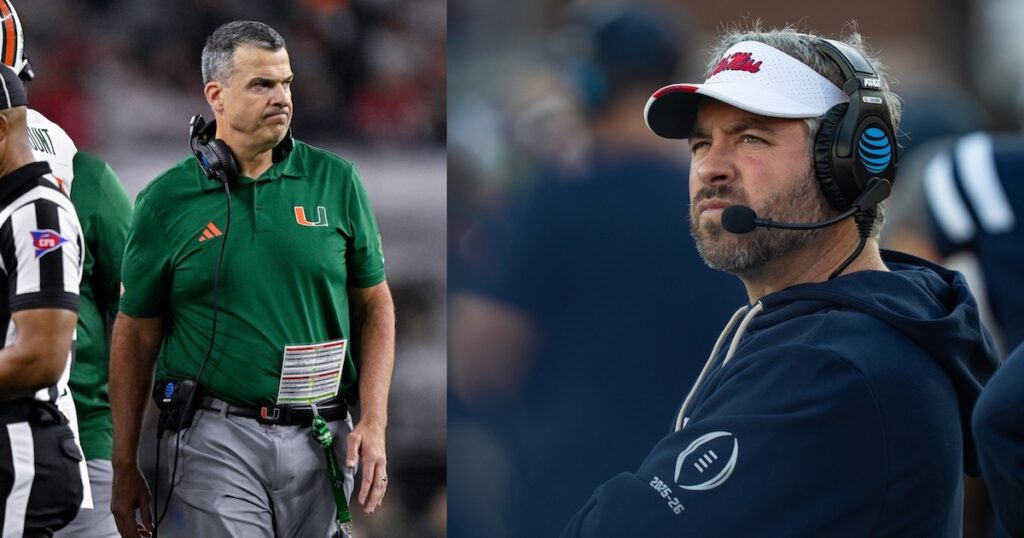
Miami, Ole Miss, Indiana and Oregon are the last teams standing following two rounds of competitive and dominant football. But what do ESPN’s metrics say, specifically their SP+ projections?

Putting player rankings, strength of schedule, game projection and everything else under the sun together, ESPN put out its College Football Playoff predictions for the semifinals. Let’s start at the Fiesta Bowl.

No. 6 Ole Miss vs. No. 10 Miami (Fiesta Bowl)

Jerome Miron-Imagn Images/Lauren Witte/Clarion Ledger / USA TODAY NETWORK via Imagn Images

SP+ Projection: Ole Miss 28.1, Miami 25.2

Ole Miss seemingly has the quarterback advantage with Trinidad Chambliss over Carson Beck in this one. He’s played at a different level over the last two weeks and found a new gear in the upset over Georgia. With Kewan Lacy helping the cause at running back, Ole Miss has a dynamic offense to deal with.

But defense wins championships, right? At least that is what Miami hopes for in this College Football Playoff. They stifled explosive offenses in Texas A&M and Ohio State to get to this point. Mario Cristobal will look for his team to grind it out. But ESPN projects Pete Golding and crew to get to the national title game.

No. 1 Indiana vs. No. 5 Oregon (Peach Bowl)

Ben Lonergan/The Register-Guard / USA TODAY NETWORK via Imagn Images

SP+ Projection: Indiana 26.7, Oregon 23.7

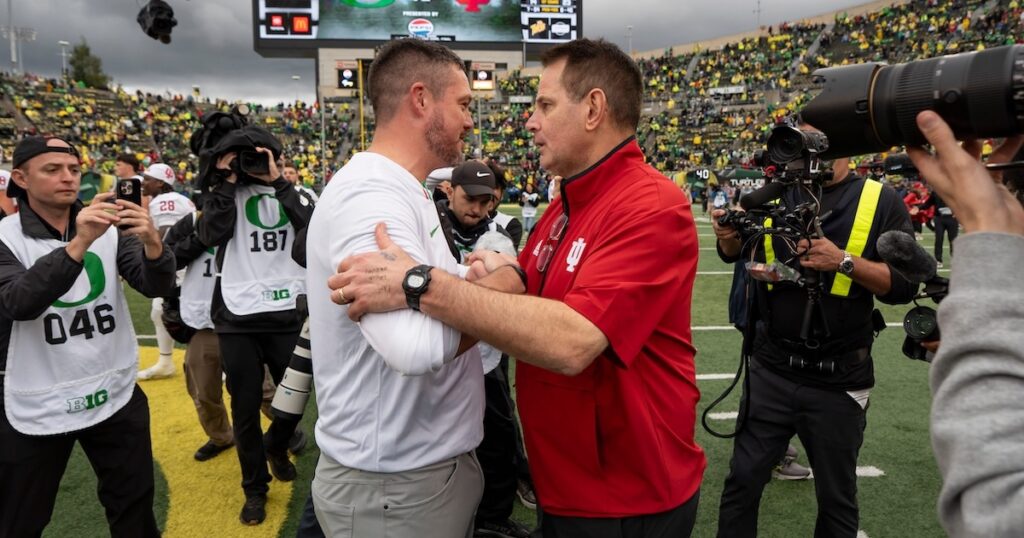
Indiana keeps winning, make sure you Google it. Curt Cignetti and crew learned from last year’s College Football Playoff mistakes and dominated Alabama in the Rose Bowl, 38-3. The Hoosiers are two wins away from the program’s first national title and have a Heisman QB in Fernando Mendoza to boot. On paper, especially with a win over the Ducks already, Indiana is rightly favored.

But Oregon is coming in guns blazing. Dan Lanning, like Cignetti, preaches toughness and grittiness. That’s exactly what Oregon is going to do and it has a pretty darn good quarterback, too, in Dante Moore. Which Nick Saban disciple is going to end up on top? The metrics say Indiana, again, by a hair.

Based on ESPN’s SP+ projections, No. 1 Indiana and No. 6 Ole Miss will square off for the College Football Playoff national championship. The game is scheduled for January 19th in Miami.


Link

Continue Reading

NIL

NHL Winter Classic 2027 game will be held in Utah at Rice-Eccles Stadium

Published

on


The annual NHL Winter Classic game is a favorite of hockey fans.

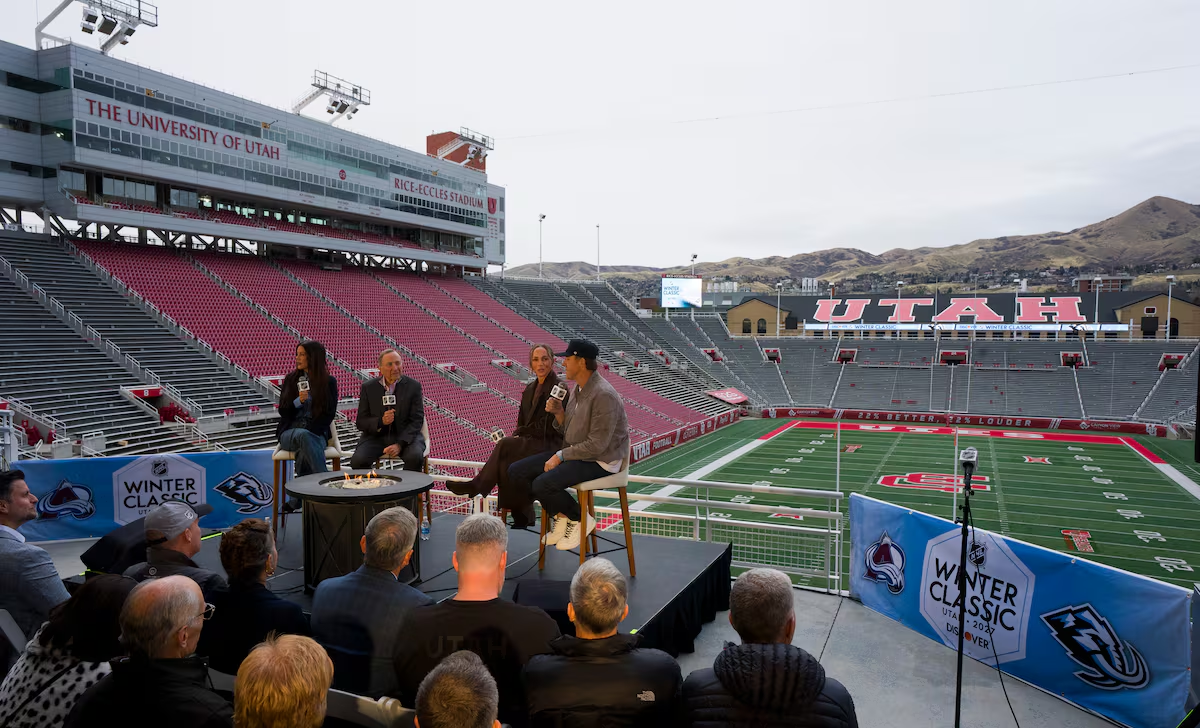
(Bethany Baker | The Salt Lake Tribune) From left, reporter Jackie Redmond, Gary Bettman, the NHL Commissioner, and Ashley and Ryan Smith, both co-founders of Smith Entertainment Group and owners of Utah Mammoth, hold a news conference to announce the location of the 2027 NHL Winter Classic as Rice-Eccles Stadium at the University of Utah in Salt Lake City, seen here on Wednesday, Jan. 7, 2026.

The marquee game of the NHL’s regular season is coming to Salt Lake City next year.

NHL commissioner Gary Bettman joined Utah Mammoth owners Ryan and Ashley Smith on Wednesday in announcing that the 2027 Winter Classic will be held outdoors at Rice-Eccles Stadium. The Mammoth will play the current NHL leaders, the Colorado Avalanche. The game will take place at the beginning of next January.

“I think this venue is going to be incredible,” Ryan Smith said. “This is a dream.”

The NHL selected Rice-Eccles Stadium as the venue over competition from BYU’s Lavell Edwards Stadium in Provo and several other markets around the NHL that wanted to host the event.

“I wanted it here in Salt Lake. This is right,” Smith, a BYU alum, said. “I mean, I do enough down there. This is my NIL donation here. It’s a good one.”

And unlike at University of Utah football games, the stadium will sell alcohol for the event, university director of auxiliary services Collin Simmons told reporters. “We’re able to sell beer and seltzer for all private events,” he explained. “This is a private event.”

(Bethany Baker | The Salt Lake Tribune) Ryan Smith, right, and Ashley Smith, both co-founders of Smith Entertainment Group and owners of Utah Mammoth, answer questions during a news conference to announce the location of the 2027 NHL Winter Classic as Rice-Eccles Stadium at the University of Utah in Salt Lake City, seen here on Wednesday, Jan. 7, 2026.

The exact date for the event has yet to be selected, as the NHL experiments with different dates at the beginning of January that conflict least with the NFL and college football. The game has traditionally taken place on either Jan. 1 or Jan 2.

The Winter Classic began in 2008, as the NHL sought to bring new fans to its games by returning to its roots in outdoor pond hockey. Since then, Winter Classic games have occurred annually with limited exceptions and have proven to be extremely popular with fans and players alike. Fans also enjoy that teams typically wear special-edition uniforms for the event, which Bettman said have not yet been designed.

The 2025 edition of the game took place at Wrigley Field between the Chicago Blackhawks and the St. Louis Blues. This year, the game moved to sunny Miami, Florida, as the Panthers played the Rangers in a matchup that drew significant criticism from hockey fans. Choosing Salt Lake City as the 2027 hosts reflects a league return to a cold-weather site.

League officials toured Rice-Eccles Stadium in recent months to determine its suitability for the game. It will be the fourth time the Winter Classic has been held at a college football stadium, with Michigan Stadium (2014), Notre Dame Stadium (2019), and the Cotton Bowl (2020) the previous three hosts.

(Bethany Baker | The Salt Lake Tribune) Ryan Smith, right, and Ashley Smith, both co-founders of Smith Entertainment Group and owners of Utah Mammoth, sit on stage during a news conference to announce the location of the 2027 NHL Winter Classic as Rice-Eccles Stadium at the University of Utah in Salt Lake City, seen here on Wednesday, Jan. 7, 2026.

“This stadium sets up very well. From a sightline perspective, there’s an intimacy here. We expect to have 50,000 plus here. We’re not anticipating any problems,” NHL commissioner Bettman said. “And the Governor” — Spencer Cox, who attended Wednesday’s announcement — “has promised me that the weather will be perfect.”

The Avalanche should prove formidable opposition to the Mammoth; through 42 games this season, they have suffered just four regulation losses against 31 wins. Team stars Nathan MacKinnon and Cale Makar have pushed the Avs to one of the greatest starts to a regular season in NHL history this season, and should provide additional juice to the matchup.

The Mammoth, meanwhile, are led by team captain Clayton Keller and newly-extended Logan Cooley, who provided a player’s perspective at the announcement.

“Being outside, it’s a whole different experience,” Cooley said, while noting the last time he played outdoors was when he was 4 or 5 years old. “That whole experience will be a challenge. And as players, as competitors, we like those.”

“Just being outside, you see the mountains in the background. As a player, I hope it’s pretty cold and there’s a lot of snow,” he said.


Link

Continue Reading

NIL

Is NIL and the transfer portal good for college football?

Published

on


Updated Jan. 7, 2026, 4:44 p.m. CT


Link

Continue Reading
Motorsports4 weeks ago

SoundGear Named Entitlement Sponsor of Spears CARS Tour Southwest Opener

NIL4 weeks ago

DeSantis Talks College Football, Calls for Reforms to NIL and Transfer Portal · The Floridian

Sports4 weeks ago

#11 Volleyball Practices, Then Meets Media Prior to #2 Kentucky Match

Rec Sports3 weeks ago

Stempien to seek opening for Branch County Circuit Court Judge | WTVB | 1590 AM · 95.5 FM

Sports4 weeks ago

Maine wraps up Fall Semester with a win in Black Bear Invitational

Motorsports3 weeks ago

Ross Brawn to receive Autosport Gold Medal Award at 2026 Autosport Awards, Honouring a Lifetime Shaping Modern F1

Motorsports4 weeks ago

Nascar legal saga ends as 23XI, Front Row secure settlement

Rec Sports3 weeks ago

Princeton Area Community Foundation awards more than $1.3 million to 40 local nonprofits ⋆ Princeton, NJ local news %

Motorsports4 weeks ago

Sunoco to sponsor No. 8 Ganassi Honda IndyCar in multi-year deal

NIL3 weeks ago

Downtown Athletic Club of Hawaiʻi gives $300K to Boost the ’Bows NIL fund

Rec Sports4 weeks ago

WNBA’s Caitlin Clark, Angel Reese and Paige Bueckers in NC, making debut for national team at USA camp at Duke

Motorsports4 weeks ago

North Florida Motorsports Park led by Indy 500 Champion and motorsports legend Bobby Rahal Nassau County, FL

Motorsports4 weeks ago

NASCAR, 23XI Racing, Front Row Motorsports announce settlement of US monopoly suit | MLex

Sports4 weeks ago

Woods, Ogunribido Named CCIW Women’s Indoor Track & Field Student-Athletes of the Week

Sports4 weeks ago

Hope College Tops MIAA Commissioner’s Cup Fall Update

Most Viewed Posts

Trending