WE’RE TRACKING BREAKING NEWS TONIGHT. TWO STUDENTS, A SCHOOL STAFF MEMBER AND A YOUTH SPORTS COACH FROM TULSA WERE AMONG EIGHT KILLED IN A DEADLY HEAD ON CRASH IN KANSAS LAST NIGHT. THE CRASH HAPPENED WHEN TWO VEHICLES COLLIDED HEAD-ON ON U.S. HWY. 169 NEAR GREELEY, KANSAS. WHEN FIRST RESPONDERS ARRIVED, BOTH VEHICL
Tulsa students, coach among 8 killed in fiery Kansas crash on Highway 169
Updated: 5:23 PM CDT May 5, 2025
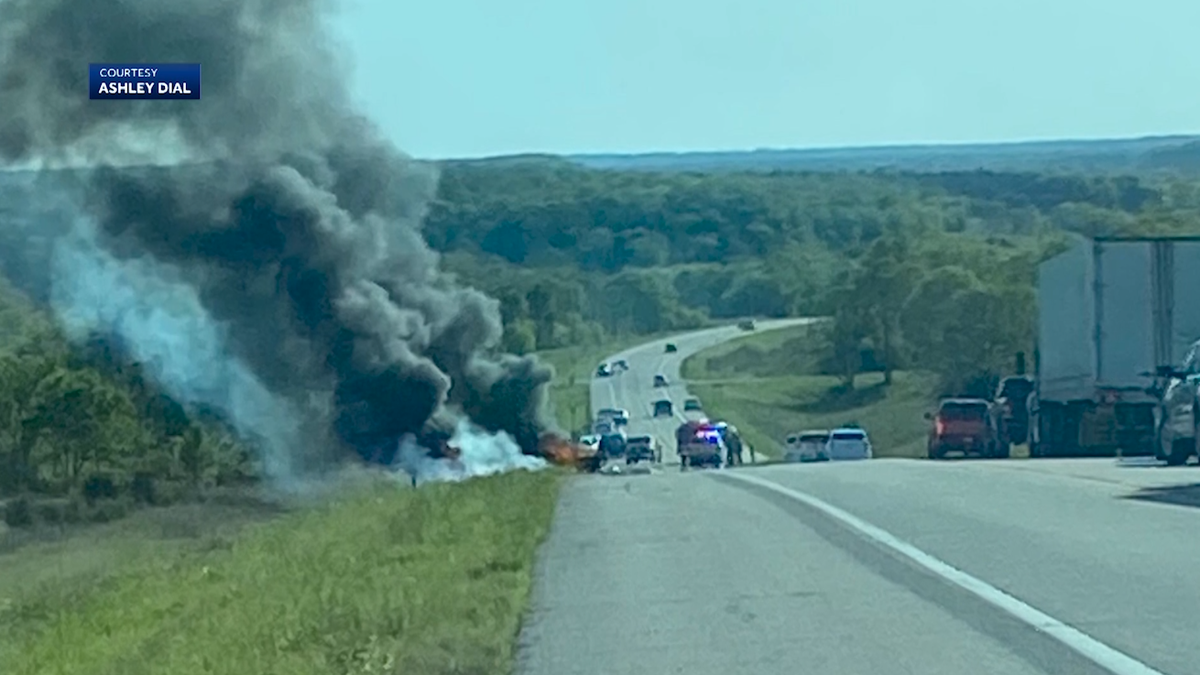
Two students, a school staff member, and a youth sports coach from the Tulsa area were among eight people killed in a wreck in Kansas on Sunday, according to KTUL, the ABC affiliate in Tulsa.They were identified as: Kyrin Shumpert, a ninth-grader at Union Public Schools’ Freshman Academy.Jaimon Gilstrap, Kyrin’s dad and a Tulsa Public Schools transportation workerDonald Laster, a student at Booker T. Washington High School in TulsaWayne Walls, a youth basketball coachWalls’s son was the only person to survive the crash.The crash happened when two vehicles collided head-on on U.S. Hwy. 169 near Greeley, Kansas, at about 5:30 p.m. Sunday. Both vehicles caught fire.
GREELEY, Kan. —
Two students, a school staff member, and a youth sports coach from the Tulsa area were among eight people killed in a wreck in Kansas on Sunday, according to KTUL, the ABC affiliate in Tulsa.
They were identified as:
Walls’s son was the only person to survive the crash.
The crash happened when two vehicles collided head-on on U.S. Hwy. 169 near Greeley, Kansas, at about 5:30 p.m. Sunday.
Families seeking winter break activities can attend a free diving event Dec. 30 at the Goodyear YMCA, where a dive show and youth clinic will be offered at no cost.
The event is scheduled to begin at 3 p.m. with a dive show featuring junior-level divers. The show is open to the public, and spectators may attend without participating in the clinic.
After the performance, a youth dive clinic will run until 5 p.m. The clinic is open to children ages 7 to 17 and is intended to introduce participants to the sport of diving. Instruction will include basic techniques and supervised practice on 1-meter and 3-meter springboards, as well as a diving trampoline, according to organizers.
The clinic will be hosted by the YMCA Silver Fins Dive Team and sponsored by USA Diving. Organizers said the sponsorship allows the clinic, which is typically offered for a fee, to be provided free of charge.
The clinic will be held at is 2919 N Litchfield Rd, in Goodyear. All community members are invited to attend.
Central Valley Empowerment Alliance founder and co-executive director Arturo Rodriguez said the fact the state of California has reinvested in what they’re doing when it comes to preventing youth substance abuse by renewing their grant shows the stewardship his organization has provided for its program.
The Poplar-based CVEA was among 57 community-based and tribal organizations to be awarded $47 million in grants to prevent youth substance abuse through leadership engagement programs. The grants were awarded as part of Governor Gavin Newsom’s Path & Purpose initiative. The program also has a strong emphasis on reaching struggling young men and boys.
“It speaks more volumes than anything that anybody can say,” said Rodriguez about CVEA’s $900,000 grant being renewed in the program. CVEA will be reimbursed $300,000 a year over the next three years, 2026-2027-2028, for its costs in implementing the program.
The state said the $900,000 CVEA grant is “To engage Asian and Latinx youth in Kern and Tulare counties through culturally relevant mentorship, civic engagement, and peer-led storytelling to foster resilience, prevent substance use and improve health outcomes.”
Two other organizations received $1 million grants to serve Tulare County. The California Health Collaborative received a grant to serve Two-Spirit Indigenous/LGBTQIA+ youth of color in the county “through healing-centered activities, peer-led talking circles, and youth advocacy to strengthen cultural protective factors, reduce stigma surrounding substance use disorder prevention and improve health.”
In addition the Latino Commission on Alcohol and Drug Abuse Services has received a grant “to empower Latinx youth in Tulare County through peer-led support, leadership development, and family engagement to strengthen protective factors against substance use and improve health.”
The program is designed to build leadership and community-building skills among youth and Rodriguez said that’s what their program is all about. He said it’s about more than just substance abuse.
He noted the development of Nagi Daifallah Park has led to a number of youth sports teams being formed in Poplar. As a result parents are taking more responsibility, serving as coaches and traveling with their youth to games.
Rodriguez noted as part of the program youth have been able to travel to Sacramento and have even met the Governor.
He said he and CVEA’s other co-founder and executive director Mari Perez-Ruiz are dedicated to serving the community.
“We pay ourselves just above minimum wage,” he said. “We make sure to put as much as we can back into the community and our young people.”
About the state renewing the grant Rodriguez said, “They’re really excited about what we’ve managed to do for young people. It speaks volumes to the work that we do and the trust that we have.”
Programs funded by the grants are designed to deal with isolation, trauma, and lack of access to supportive services which can be especially challenging for young men and boys. The funding is designed to help youth foster mentorship, leadership, and civic engagement skills.
“As a parent, I am committed to investing in healing and empowering our youth to be changemakers within their communities. These investments focus on mentorship, connection, and purpose — especially for young men and boys who are too often struggling in silence,” Newsom said.
The funding is being provided through the California Department of Health Care Services to strengthen the state’s substance use disorder prevention programs. The grants are awarded through Elevate Youth California, EYC, a statewide program that prioritizes youth leadership.
The state provides funding to youth-serving organizations that demonstrate community-driven approaches to support young people. “Programs funded are healing-centered, trauma-informed, and culturally and linguistically responsive, while prioritizing harm reduction and public health strategies that build resilience and prevent substance abuse,” the state said.
“This funding empowers youth to lead change in their communities,”said DHCS Director Michelle Baass. “By supporting culturally responsive, peer-led programs, we’re investing in the resilience and long-term wellness of California’s young people.”
The state added the investment builds on Newsom’s executive orderto improve mental health and wellness among young men and boys, and empower them through service and leadership.
Recently, California launched the Men’s Service Challengewhich calls upon 10,000 young men to step up as mentors, coaches and tutors to address the mental health crisis facing young men and invest in communities across the state.
Since this program launched in 2019, DHCS has awarded more than $370 million through 517 grants. EYC is funded by Proposition 64, passed by voters in November 2016, which legalized adult non-medical marijuana use in California. The program uses taxes from cannabis sales.
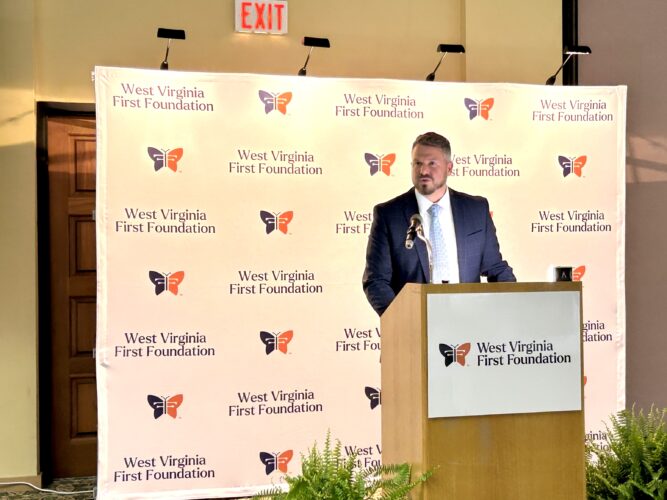
West Virginia First Foundation Executive Director Jonathan Board announces grant recipients in May. The foundation recently awarded another round of grants from the state’s pool of funding from settlements with opioid makers. (File Photo)
CHARLESTON — The West Virginia First Foundation has announced the latest recipients of funding through its Momentum Initiative Grant program, awarding nearly $18 million to support programs aimed at addressing substance use disorder, prevention, recovery and related workforce programs in the state.
“The Momentum Initiative Grant reflects a new way of responding to the substance use crisis; one grounded in evidence, shaped by local expertise and guided by accountability,” said Jonathan Board, WVFF executive director. “We traveled the state, listened to those holding the line in their communities, and answered the call to honor the lives lost by putting these resources into the hands of those ready to create real, lasting impact for West Virginia.”
Funding for 76 projects was approved by the West Virginia First Foundation board of directors earlier this month, with an eye toward supporting programs which include foster care, non-parental caregiver initiatives, youth prevention, recovery housing, behavioral health and workforce development and re-entry and diversion programs.
Eight grants were awarded to programs in Region 1, which includes Hancock, Brooke, Ohio, Marshall and Wetzel counties.
Those grants include $125,000 to Youth Services System for its Afterschool Youth Prevention Program; $249,397 to West Liberty University for its Hilltopper Pathways: Out-of-School Re-entry and Support Program; $216,065 to Northwood Health Systems for its Workforce for Wellness program; $125,000 for HoH-Share Inc. for the Mother Jones Center for Resilient Community Youth Prevention Program; and $250,000 to the Greater Wheeling Coalition for the Homeless for its Recovery First Re-entry Initiative Program.
The Young Women’s Christian Association of Wheeling received three grants, including $124,744 for YWCA Wheeling — Youth Prevention; $380,000 for YWCA Wheeling — Cathy’s Haven; and $186,450 for its Women Inspired in New Directions program.
“We were intentional in building a structure that reflects both feedback and best practices,” said Greg Duckworth, WVFF board chairman. “What emerged is a landmark opioid abatement model, distinct from any other foundation of its kind, made possible by volunteer Board Members and Expert Panelists dedicated to serving West Virginia.”
Statewide awards include $954,469.45 for National Youth Advocate Program for its Foster RISE project; $974,751 to Pressley Ridge for its Pressley Ridge Treatment Kinship Care Statewide Services; $975,000 to West Virginia CASA Association Inc. for its Continuum of Care for Children and Families Impacted by the Opioid Crisis; and $947,916 to West Virginia Wesleyan College for its WVWC and WV CASA Capacity Building Initiative.
With the start of 2026 comes New Year’s resolutions, and for many, that means looking for a new gym or personal trainer. At Better Bodies Inc., new members can get personal training, state-of-the-art exercise equipment, and a personalized plan to help them meet their goals.
“As far as the fountain of youth, this is the closest you’re going to come,” says owner and physical therapist Mitch Schroder.
Better Bodies Inc. offers a wide variety of memberships and programs to suit each client’s individual needs, from golf enhancement programs in the offseason to personal training for longevity or specialized coaching for youth sports. One of the staff members is a former special forces officer who will soon be teaching self-defense classes.
The gym has recently gone through renovations and major enhancements, including upgrading to shock-absorbent biometric floors and adding more Keiser equipment.
“You can adjust it by a fraction of a pound to get the right resistance for a client. I don’t know of any other place in Indy that has it,” Schroder says. “We’ve put a half-million-dollar investment into this place.”
He’s been in the business for more than three decades, and his passion for it has only increased with time.
“I wake up at four in the morning and can’t wait to get to work,” he says. “There’s a positive energy here, and we love being together.”
Schroder is proud of the staff he’s assembled and says it’s the most cohesive team he’s had in 30 years.
“I have really good people,” he adds. “They’ve taken ownership. I’m comfortable taking trips and traveling all over the world because I have people here who do a fantastic job, so I’m not worried when I leave that we’re going to lose clients. They’re asking themselves, ‘How do we get better every day?’ and we do get better every day.”
It’s important to him that his team is educated and stays up to date on their certifications so they can offer the best training and support to clients and remain well-informed.
“We do assessments and reassessments,” he says. “We get a baseline for our clients. It’s not safe if you don’t know their medical history. You can injure someone with an inept trainer. With the tools we have, we can show how people have improved in strength, muscular endurance, body fat and flexibility. We can rate them compared to others of the same age and sex. We’ve had people go from the 5th percentile to the 99th percentile with objective measurements.”
Better Bodies Inc. uses a holistic approach, monitoring clients’ nutrition, exercise, sleep and water intake.
“If they do the things we ask, we have a 100% success rate. Some people want to just say they have a personal trainer. This isn’t the place for someone who doesn’t want to change their life,” Schroder says.
Better Bodies Inc. has membership plans for individuals, couples, families and college students, as well as corporate-level options.
“Businesses benefit from corporate training and membership. It’s the very best benefit you can give your employees, and it’s very affordable,” Schroder says. “It causes them to be three times more efficient: they’re sick less, they’re more motivated, they notice it directly and appreciate that benefit. There have been studies showing whatever you invest in health and wellness for your employees, you get a three-dollar return. As people are healthier, their risk for heart attack goes down, and that’s the whole reason I started this.”
For Schroder, helping people improve their health is a personal mission and one close to his heart.
“I was going to go to medical school. I didn’t know much about physical therapy before, but then my grandfather had a stroke,” he says. “I saw what they did to give him back his quality of life, and I thought there’s got to be nothing better on this Earth than being able to do that.
“But at some point, I had an epiphany. I asked myself, if we’re trying to help people, why do we let them have heart attacks? I kept seeing the same group of people, men and women who worked their entire lives, get to their 50s and 60s, then have a stroke and are limited for the rest of their lives.”
That’s how Schroder got the idea for Better Bodies 30 years ago, and it’s still what drives him and his business today.
“This is preventative, and it’s about quality of life,” he says. “What you can do is determined by how well you take care of yourself.”
Better Bodies Inc. is located at 12775 Horseferry Road in Carmle. They are open 24 hours a day. To find out more, email betrbodiz@aol.com, visit betterbodiesinc.com or call 317-508-0839.
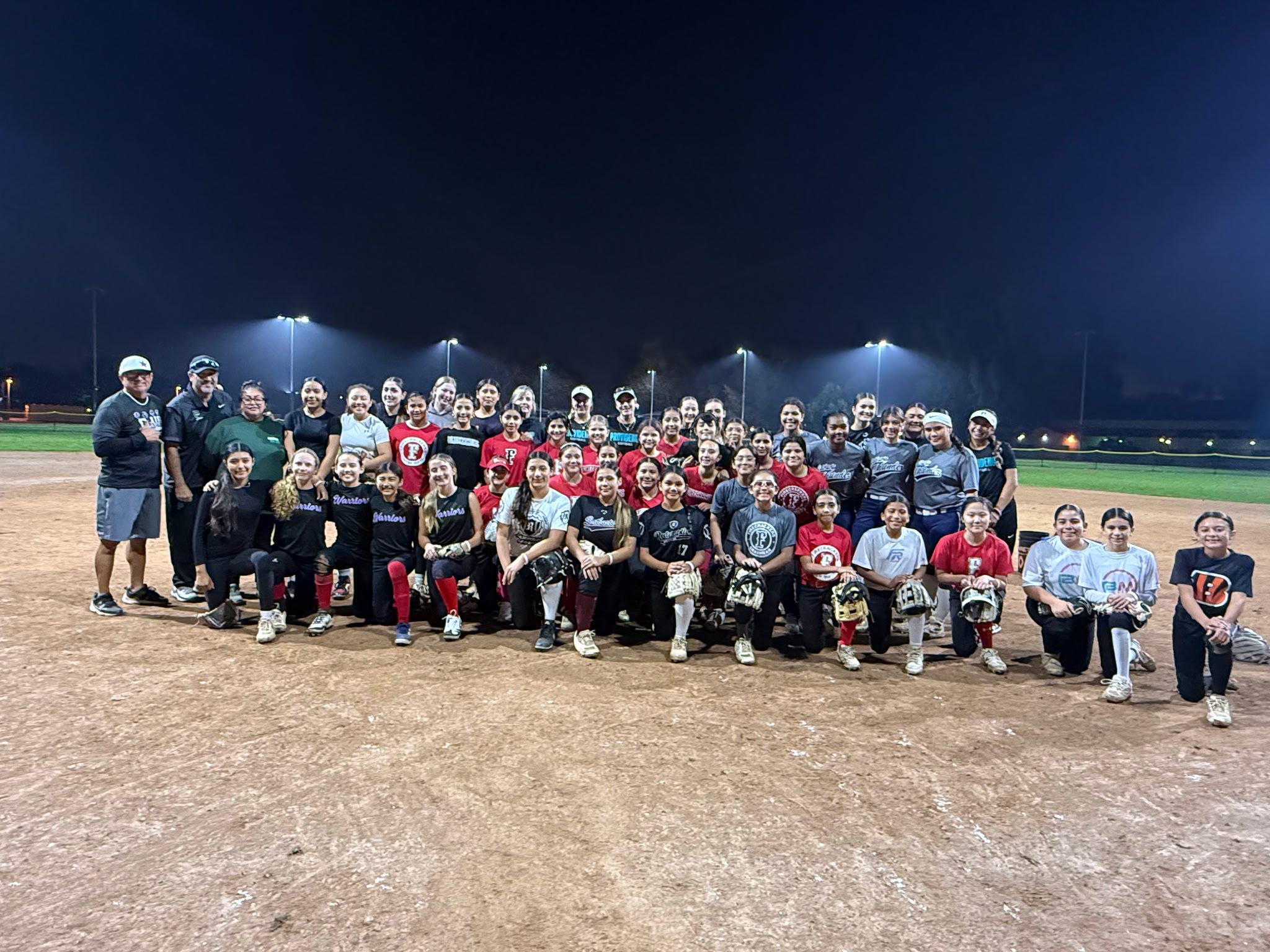
Fifty girls attended the Providence High Diamond Clinic Softball Camp and learned the fundamentals and also had tons of fun. (Photo courtesy Manny Travieso)
By Rick Assad
Fifty girls in the sixth, seventh and eighth grades recently gathered at Olive Park for the Fifth Annual Providence High Diamond Clinic Softball Camp in collaboration with the ELLA (Empowering Leadership In Latina Athletes) Sports Foundation.
The three-hour event was overseen by Manny Travieso, the Providence head coach and also featured Tony Medina as the guest speaker. Additionally, several current and former players assisted.
After stretching, the youngsters were taught the fundamentals of softball such as turning the double play, playing catch, fielding and hitting as everyone seemed to be enjoying themselves as expressed by so many high fives.
Travieso has led the Pioneers to the Prep League championships over the last three straight seasons and has also coached international players.
“Our unique Providence Softball Camps play a vital role in our community by providing accessible training opportunities for young athletes. They offered players and their families a chance to participate in high-quality instruction without the financial burden often associated with sports camps,” he said. “During these challenging economic times, such initiatives ensure that every aspiring athlete can benefit from top-tier coaching and skill development.”
Travieso, who is an assistant coach at Vermont State University, feels these gatherings help in a variety of ways.
Manny Travieso and a few campers at the Providence High Diamond Clinic Softball Camp for girls in the sixth, seventh and eighth grades. (Photo by Rick Assad)
“The camps serve as an excellent platform for players to connect with experienced and trained coaches, fellow athletes who have competed at the highest levels, including college,” he said. “This exposure can be incredibly inspiring for young athletes, helping them dream big while gaining valuable insights into what it takes to succeed in the sport.”
Travieso outlined six points that camps help youngsters hoping to play softball.
They include: 1) High-level training: “Participants receive collegiate-level training from skilled coaches, including current and former college players,” he said. “This experience enhances their understanding of game strategies, techniques, and mental aspects of playing at a competitive level.”
2) Skill Development: “Through focused drills and practice sessions, campers develop their softball skills, from the offense and defense sides,” he noted. “This hands-on training prepares them for the next level of competition.”
3) Networking Opportunities: “Campers and their families have the chance to meet and interact with coaches and players who have vast experience in the sport,” he said. “This leads to empowering the families to keep learning to help their student-athletes succeed in the future.”
4) Exposure to Different Training Styles: “By experiencing a variety of coaching methods and philosophies, campers can better understand what training techniques resonate with them and which areas they need to develop further,” he stated. “Often we tell players what to do, but not why we want them to do it or the benefit behind it. By understanding the reasoning and not just going through the motions because “coach said so,” they can learn to get better.”
5) Confidence Building: “Engaging with peers who share a passion for the game fosters camaraderie and healthy competition, boosting the campers’ self-esteem and motivation to improve,” he said.
Tony Medina, a longtime softball coach and instructor, works with some campers on how to get in the proper position to make the force out and throw the ball to first base. (Photo by Rick Assad)
6) Setting Goals: “This camp environment encourages players and their families to think about their future, especially if they aspire to play at the college level,” he stated. “Exposure to discussions about college athletics can help them set realistic goals for their softball careers.”
Travieso then summarized why these camps are important.
“In essence, these camps provide not just skill development but holistic growth for young softball players, helping them to pursue their aspirations with confidence and determination,” he said.
Medina has been a softball coach for more than four decades and is the founder of Medina Softball Clinics.
“Campers benefit from the clinic in so many ways. One being able to train with Coach Manny, myself and all the college players on the same field,” he said. “There are many different travel ball teams and organizations that attend. It’s a way to come out and learn from all of us.”
Because there is a difference in age for many of the campers, the skill level is also different, but the individual will still receive helpful instruction and attention according to Medina, who has taken his camps to more than two dozen states as well as Canada, Alaska, Hawaii and American Samoa.
“There is no judging at these camps. We have all different skill levels that attend and we cater to them all,” he said.
This camp was intended for everyone and it designs on inspiring girls to continue to play softball.
“From this free clinic campers go home feeling good about being able to be around all these different players and coaches knowing they just got better and had a lot of fun in a sport they really love,” Medina said.
Youth sports camps are essential according to Medina.
“It is important to have these camps because in today’s competitive softball world there is not enough fun and Manny has created a space where players and parents know they will learn a lot and enjoy the experience of ELLA and Medina Softball Clinics,” he added.
A young softball camper fields ground balls, which is an important fundamental of the game. (Photo by Rick Assad)
Lilly Travieso played softball at Alemany High and Cornell University, is the founder of ELLA and offered her opinion of why these camps are helpful for the youngsters.
“Campers benefit by gaining high-quality sport instruction in an inclusive environment that pushes them to grow and hone in their athletic skills – regardless of financial barriers,” she said. “Through ELLA’s free three-hour camp, girls in the sixth through eighth grade were able to learn fundamentals from quality coaches in the area.”
Travieso, who graduated from George Washington University with a master’s degree in Interdisciplinary Business Studies with concentrations in Sport Management and Marketing, added: “Our toy drive reinforced the importance of giving back to our community and supporting one another during the holiday season.” she said.
There is great value in camps such as this one according to Travieso.
“These camps are important because they remove barriers to youth sports and ensure that all girls have access to safe, high quality, empowering athletic skills clinics,” she noted “This further reflects our mission to use sport as a catalyst for equity and positive impact on and off the field.”
Patti Workman is Providence’s assistant coach and its pitching coach.
“Giving back to the community has always been a priority for Providence High School. Together with ELLA Sports Foundation, our softball program was able to give back to our community offering a free softball camp,” she explained. “Our players really enjoyed spending time mentoring and teaching the younger players.”
Workman, who was a pitcher at Oregon State University, was pleased at the turnout.
“What an amazing opportunity for young softball players to attend camp where they are able to gain valuable insight and knowledge through hands-on drills,” she noted. “It was a team effort! The camp was led by the Providence softball coaches, players, alumni, who are playing in college. Also special guests, Lilly Travieso and Tony Medina. It was a great evening for all.”
Grace Workman played softball at Providence and is currently on the Fullerton College women’s softball team.
“I believe it is very important to give back to our Providence softball camps which is a great way to reach out to our community,” said the English major. “I enjoy teaching and coaching the younger generation of softball players.”
Workman, who spent one season on Burbank’s softball team, continued her thought.
“I love the game of softball. I have made lifelong friendships and have traveled to many states for tournaments,” she added. “I have so many wonderful memories and I want the next generation to experience all that softball has to offer.”
Good Ol’ Saint Nick, when I was seven, came through with a purple stingray with a banana seat that I wished for, my first bicycle that was not a hand-me-down from my two older brothers. As magical as that morning was, however, my favorite Christmas is a tie between the last 25 or so thanks to you generous readers making “Woody’s Holiday Ball Drive” an annual success.
“Life is hard enough,” noted Lauren Siegel, who donated 15 smiles this year, “without a kid having to worry if he or she has a ball to play sports with.” Others making life easier for local kids include…
Steve Askay donated five balls “in memory of my granddaughter Mabel” who tragically died in an accident at age 6, and Rebecca Fox gave three balls “in memory of our dear friend Doris Cowart who lived an amazing 101 years!”
Shelly and Steve Brown gave one ball for each of their “six spectacular grands” who excitedly made the selections and Linda and Jerry Mendelsohn, with the shopping help of grandchildren Blakely, Asher, Garrick, Dannika, Parker and Joy, gave 28 balls.
Local coaching legends Joe Vaughan and Mickey Perry assisted with 10 basketballs; Kym King, “in memory of my beloved puppers Scarlett,” also donated 10; as did Mary and Rick Whiting; Lynne and Don Steensma likewise; and also Susan Hall.
Leslie and Mike De Los Santos donated 10 balls in memory of Leslie’s father, Arthur Seifert, “who enjoyed playing basketball on courts throughout the area until he was 80 years old.”
David Hilty, on behalf of The Bench Warmer, donated nine balls, as did Patricia and Paul Schuster “in honor of the coaches at Buena High School.”
Cathy and Gary Metelak “cheerfully” gave 11 balls; Bobbie and Dave Williams donated “with great pleasure” half a dozen; and Bobbin and Steve Yarbrough “happily” gave four, as did Sandie and Jim Arthur.
Brenda and Doug Terzian gave a dozen balls in honor of their daughters; Laura McAvoy and Sol Chooljian donated ten more; Kent Brinkmeyer added four; Colleen Scott gave three; and Chris Huseth added two.
Erin and Mike Powers donated five balls “in memory of Lance Eaton for his leadership of the Arc Foundation of Ventura County as well as his lifelong, unwavering support of people with intellectual and developmental disabilities.”
Ruth Vomund and Gary Tuttle donated two basketballs “in honor of Bob Tuttle and retired Nordhoff High coach Ted Cotti,” and Susan and Tom Doria donated half a dozen balls “in memory of Ventura College Hall-of-Fame coach and mentor Larry Baratte.”
Ann Cowan gave 10 basketballs in honor of her late husband Jim Cowan, and an anonymous donor gave a dozen “in memory of Jim Cowan and Dr. Jim Woodburn III: two wonderful men who are very much missed.”
Another anonymous donor gave 10 basketballs in memory of John Wooden, and Daniel Eggertsen, inspired partly by Coach Wooden’s “Pyramid of Success,” also donated 10, noting: “In an age of AI, gadgetry, and obesity, what better way to try and help keep our youth grounded to things that really matter — like the camaraderie and life lessons borne from sport.”
The Pleasant Valley-Somis-Camarillo Lions Club collectively gave 45 balls; Patrons of The Goebel Adult Community Center in Thousand Oaks gave 73; and in another group effort, a whopping 307 balls were donated by the “A Team” of family members and friends who wished to be acknowledged by first names only: “Mom” Alma, Allen and Alast, Michael and Reina, Rick and Nancy, Andy and Connie, Lou and Carmen, Alma and Tomas, Shaun and Ruth, John and Kellie, Phil and Charlene, Mike and Claudia, Steve and Mary Kay, Dave, Pamela, Dawn and Jim, Stan, Ron and Anita, Will and Heidi, Tina, Melissa and Todd, Michelle and Michael, Deborah, Achilles and Caren, Jesus, Lane, Kelly and Lisa, Rose and Jace, Ricky and Brenda, Garny, Maddie, Carlos and Cathy, Mike and Cathy, Eric, Paulina and Peter, and Juan.
Julie and Nick Sarris donated 40 balls “in memory of Sienna’s eternal spirit.”
Tennis Hall of Famers Mike and Bob Bryan, who have also been hall-of-fame supporters of this endeavor every single year since its inception, served up an array of 50 balls.
My oldest granddaughter Maya McAuley, 7, with great deliberation picked out a green soccer ball while her sister Auden, 3, carefully chose to give an orange one. Meanwhile, my two-year-old granddaughter Amara Woodburn selected four basketballs on behalf of herself and her five-month-old brother Jayden.
And now — drumroll, please — the final gift tally for 2025, surpassing last year’s previous record by 147, is 1,491 brand new sports balls joyous young smiles!
Woody Woodburn writes a weekly column for The Star and can be contacted at WoodyWriter@gmail.com. His books are available at www.WoodyWoodburn.com.






 “
“ “
“