


Sports
Twins’ newest team Hall of Famer: Corey Koskie, the volleyball-playing ‘no shot’ from Canada

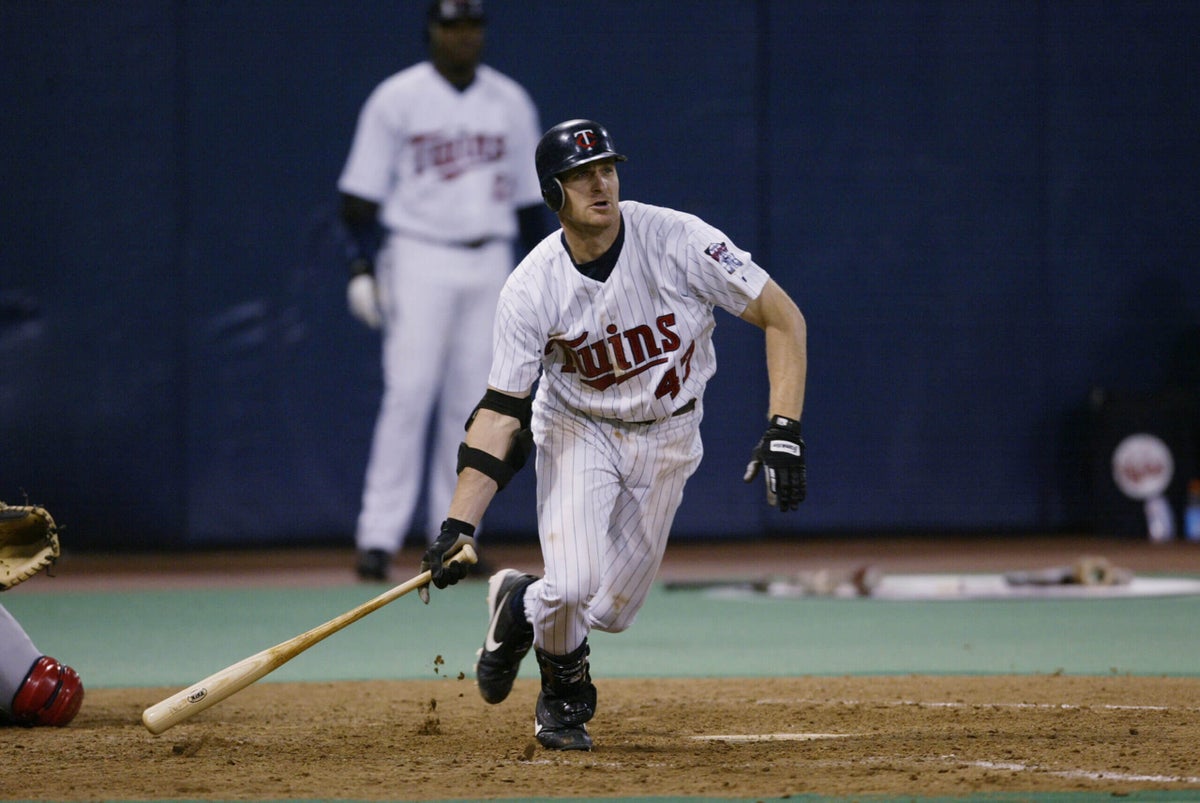
Editor’s note: This article was originally published on Feb. 11, 2022, as part of a series about the most underrated players in Minnesota Twins history. It’s being republished now, in honor of Corey Koskie’s induction into the Twins’ team Hall of Fame on Sunday at Target Field.
Corey Koskie grew up on a farm in Canada, in a community called Anola with a population of 200 or so. He barely played baseball but starred in hockey and volleyball. Koskie was recruited to play goalie for the University of Minnesota-Duluth but opted for a volleyball scholarship from the University of Manitoba. And that was almost the end of his baseball career.
After redshirting as a freshman, he was playing baseball for a summer townball team when John Smith, the head coach for Des Moines Area Community College, persuaded Koskie to switch sports and come to Boone, Iowa. “For some reason I decided to go there and play baseball,” Koskie said years later. “I wasn’t a long shot. I view it as being a no shot.”
After one successful season there, Koskie moved back home to Canada to play for Kwantlen University and the National Baseball Institute in British Columbia, where a Twins scout spotted him. Picked by the Twins in the 26th round of the 1994 draft, Koskie moved methodically up the minor-league ladder, spending a full season at each of four levels despite promotion-worthy performances.
He finally reached Triple A in 1998, at age 25, and hit .301/.368/.539 with 26 homers in 135 games to earn his first career in-season promotion in the form of a September call-up to Minnesota. Despite batting just .138 with 10 strikeouts in his 11-game MLB debut, Koskie broke camp with the Twins the next spring and hit .333/.395/.564 in April to solidify his status as a big leaguer.
However, manager Tom Kelly played Koskie sparingly, opting for veterans Ron Coomer, Brent Gates and Denny Hocking at third base. Koskie’s fielding was a problem. He started just five of the Twins’ first 54 games at third base, his only position throughout five seasons in the minor leagues, with his sporadic playing time coming mostly at designated hitter and even right field.
“I knew there was a reason I wasn’t playing,” Koskie said at the time. “I didn’t want to sit and pout about it.”
With the message received, Koskie worked tirelessly with third-base coach Ron Gardenhire to improve his hands and reaction time. It paid off, as Kelly noticed the strides Koskie was making and gradually gave him more starts at third base. He started 54 of the final 81 games, all of them at third base, and his left-handed bat was in the lineup nearly every day versus right-handed pitchers.
“He has worked his butt off,” Gardenhire said in 2002. “You can’t wish anything but the best for a guy who works like he does. … I had no choice. I was the guy (Kelly) would yell at every time Corey didn’t make a play.”
Hard work leading to improvement isn’t uncommon, but the remarkable aspect of Koskie’s story was how rapidly he progressed and how much room he had to grow from a non-baseball background. He was an average-ish third baseman by his second season, and by 2001 — Kelly’s last year before Gardenhire took over as manager — Koskie was one of the league’s better-fielding third basemen.
Corey Koskie going all out in Game 1 of the 2002 ALCS…a 2-1 Twins win. #MNTwins pic.twitter.com/abPgwhoad2
— Jeff (@MNTwinsZealot) October 16, 2019
Koskie required no such improvement at the plate, hitting .310/.387/.468 as a rookie and topping an .800 OPS in each of his six seasons with the Twins. His offensive profile changed, as Koskie traded some batting average for power, but his production was consistent. In those six seasons, only Chipper Jones, Scott Rolen, Troy Glaus and Eric Chávez had a higher OPS among third basemen.
Koskie led Twins position players in Wins Above Replacement in three of his six seasons and was never worse than third on the team. At his best in 2001 as the Twins returned to relevance, he batted .276/.362/.488 with 26 homers, 65 total extra-base hits, 103 RBIs and Gold Glove-caliber defense. He even stole 27 bases despite a gait that could be charitably described as slow-moving.
He was similarly productive in 2002, 2003 and 2004, playing for Gardenhire as one of the veterans on a squad that broke through with three straight division titles, but Koskie missed time with injuries in each of those seasons. And really, health was the main thing separating a good Koskie season from a great Koskie season, because he always had an .800-something OPS with good defense.
Even when he was young and healthy, Koskie moved at his own leisurely pace, shuffling out to his position in the field each inning and regularly causing false injury alarms for anyone watching what was the baseball-playing equivalent of a grandpa gently getting up from a couch. He’d snap into action, swiping a base or snagging a line drive, then resume his sedate way around the diamond.
Because of his long journey through the minors, Koskie was already 30 in 2003, his fifth full season, and he dealt with nagging back and hamstring injuries that further gave him the look of someone for whom everything was a chore. But he kept producing. Koskie led the division-winning 2003 and 2004 teams in OPS while playing 131 and 118 games.
Koskie slugged .607 with 11 homers and 11 doubles across 37 games in August and September 2004 as the Twins ran away from Chicago and Cleveland for their third straight AL Central title. He kept rolling in the ALDS, hitting .308 with a .474 on-base percentage versus the Yankees, and if not for a bad bounce Koskie would have one of the biggest clutch hits in Twins history.
After winning Game 1 in New York behind seven shutout innings from Johan Santana, the Twins trailed 5-3 in the eighth inning of Game 2. They rallied off Hall of Fame closer Mariano Rivera, cutting the lead to 5-4 as Koskie stepped to the plate with runners on the corners and one out. Luis Rivas pinch-ran for Justin Morneau at first base, putting good speed on as the go-ahead run.
Koskie slashed a Rivera cutter into the left-field corner as Torii Hunter jogged home with the tying run. Rivas was set to claim a lead that could have put the Twins up 2-0 in the series heading back to Minnesota and maybe even forever alter the now-lopsided postseason history between the two teams. Except the ball hopped over the wall for a ground-rule double, halting Rivas.
“They would have scored two (runs), no doubt about it,” Yankees catcher Jorge Posada said afterward.
Instead, Jason Kubel and Cristian Guzmán stranded Rivas at third base and two hours later, in the bottom of the 12th inning, the Yankees evened the series with a walk-off victory. It took Minnesota two decades to win another playoff game, including going 0-13 against the Yankees. Perhaps one bounce could have changed everything, for Koskie and for the Twins.
Koskie’s double off Rivera proved to be the final big hit of his Twins career. He became a free agent after the season and the Twins made little effort to re-sign the 32-year-old, who went home to Canada on a three-year, $16.5 million deal with Toronto. Koskie bought a full-page ad in both local newspapers to thank Twins fans, calling it “the hardest decision our family has ever had to make.”
He had a down season for Toronto in 2005, missing two months with a broken thumb, and that winter the Blue Jays traded Koskie to the Brewers. He got off to a nice start with Milwaukee in 2006, hitting .261/.343/.490 with 12 homers in 76 games, but Koskie fell hard while chasing a pop-up on July 5 and suffered a concussion that ultimately ended his career at age 33. He never played again.
“It was 2 1/2 years of just dealing with this hell,” Koskie said in 2018 of the post-concussion symptoms and numerous setbacks. “It sucked. Everything I (once) could do, I couldn’t do anymore and you didn’t know if you were OK. Everyone would say ‘you look OK,’ but you don’t feel OK. It was a personal hell, and I wouldn’t wish that on my worst enemy.”
Twins gift David Ortiz peanut butter in homage to epic prank. https://t.co/aYe8UXO9ZO pic.twitter.com/a9AQAytPxe
— theScore (@theScore) June 11, 2016
In addition to his strong defense at third base and consistently good production at the plate, Koskie was also known as a clubhouse prankster who pulled off his most famous trick on David Ortiz during spring training in 2002. As the story goes, Koskie was upset over some minor offense, so he went into the clubhouse during a game and filled Ortiz’s underwear with peanut butter. Chunky, too.
Later, a freshly showered Ortiz somehow got fully dressed — underwear, jeans, shirt, jacket, shoes — before noticing, at which point it was way too late. Years later, the Twins honored a retiring Ortiz during his farewell stop in Minnesota by having Koskie, Hunter, Gardenhire, LaTroy Hawkins and Eddie Guardado present him with a new jar of chunky peanut butter.
It wasn’t just pranks that made Koskie a popular teammate. Morneau, who later became a Twins leader himself, credits Koskie for taking him under his wing as a wide-eyed kid drafted out of Canada in 1999. They quickly bonded and years later, when Morneau was a top prospect invited to his first major-league spring training, Koskie was there to mentor him. They still play hockey together.
“He looked out for me and checked up on me in the minor leagues,” Morneau told The Athletic last year. “My first big-league camp, I made plenty of mistakes. And he was there just saying, hey, you can’t do this, you can’t do that. There are certain ways you’ve got to conduct yourself. That’s the way the game works. Everyone who’s been there understands. They remember what it’s like to be a rookie.”
Koskie probably remembered that rookie feeling more than most, since his path to the majors was anything but standard and his first manager wasn’t shy about letting him know his fielding wasn’t good enough. In response, he improved his defense as much as anyone in Twins history and emerged as one of the biggest driving forces for the team’s return to prominence in the early 2000s.
Gary Gaetti is almost universally regarded as the greatest Twins third baseman of all time. And for good reason. He spent 10 seasons in Minnesota, starred on the 1987 championship team, won four Gold Glove awards and has the eighth-most homers in Twins history. Gaetti is unquestionably an all-time Twins great and deservedly was inducted into the team Hall of Fame in 2007.
Koskie is, at worst, the No. 2 third baseman in Twins history and has more of a case for the No. 1 spot than most fans would be willing to even consider. Gaetti played four more years and 67 percent more games in Minnesota, yet the career WAR in a Twins uniform is relatively close (27.1 to 22.1) because Koskie was far more consistently an all-around asset.
Gaetti’s production varied wildly from year to year, and he was a notorious free-swinger prone to terrible on-base percentages. He’s most remembered for being a middle-of-the-order slugger on a World Series-winning team, but Gaetti was an above-average hitter relative to the league average in just three of 10 seasons with the Twins, whereas Koskie cleared that bar easily in all six seasons.
| TWINS CAREER | AVG | OBP | SLG | OPS+ | WAR/150 |
|---|---|---|---|---|---|
|
Corey Koskie |
.280 |
.373 |
.463 |
116 |
4.1 |
|
Gary Gaetti |
.256 |
.307 |
.437 |
100 |
3.0 |
Gaetti had a .744 OPS for the Twins at a time when the league as a whole had a .728 OPS. He was great from 1986 to 1988 but almost exactly average overall. By comparison, Koskie posted an .836 OPS for the Twins at a time when the league OPS was .771, and he topped the league-wide OPS by at least 40 points in every season. Koskie was a better hitter than Gaetti, often by quite a bit.
In fact, Koskie was a better hitter than most everyone in Twins history. Among all players with at least 1,500 plate appearances for the Twins, he ranks seventh in OPS (.836), sandwiched between Kirby Puckett (.837) and Morneau (.832). Koskie’s raw numbers are inflated by playing in a high-scoring era, but even his OPS+ — which accounts for that context — ranks 15th in Twins history.
Gaetti is one of the elite defensive third basemen of all time in reputation and numbers, so he has a considerable advantage there even though Koskie was a quality fielder himself. And yet WAR, which factors in batting, fielding and baserunning, gives Koskie a sizable all-around edge over Gaetti per 150 games with the Twins — 4.1 to 3.0. Koskie was worth roughly an extra win per year.
Gaetti’s far lengthier Twins career and superior durability shouldn’t be brushed aside, and it’s absolutely justified to consider “The Rat” as the Twins’ best third baseman. But there’s also a reasonable argument to be made for Koskie, and the fact that would come as a shock to so many fans is evidence for his being vastly underrated. And now Koskie is deservedly joining Gaetti in the Twins Hall of Fame this weekend.
(Photo: Brian Bahr /Getty Images)
Continue Reading
Sports
Titans Are Champions: Women’s Volleyball Completes First Flawless NCAA Championship Run Since 2004
Oshkosh did not drop a set across their six matches in the national tournament on its way to the first national title in program history.
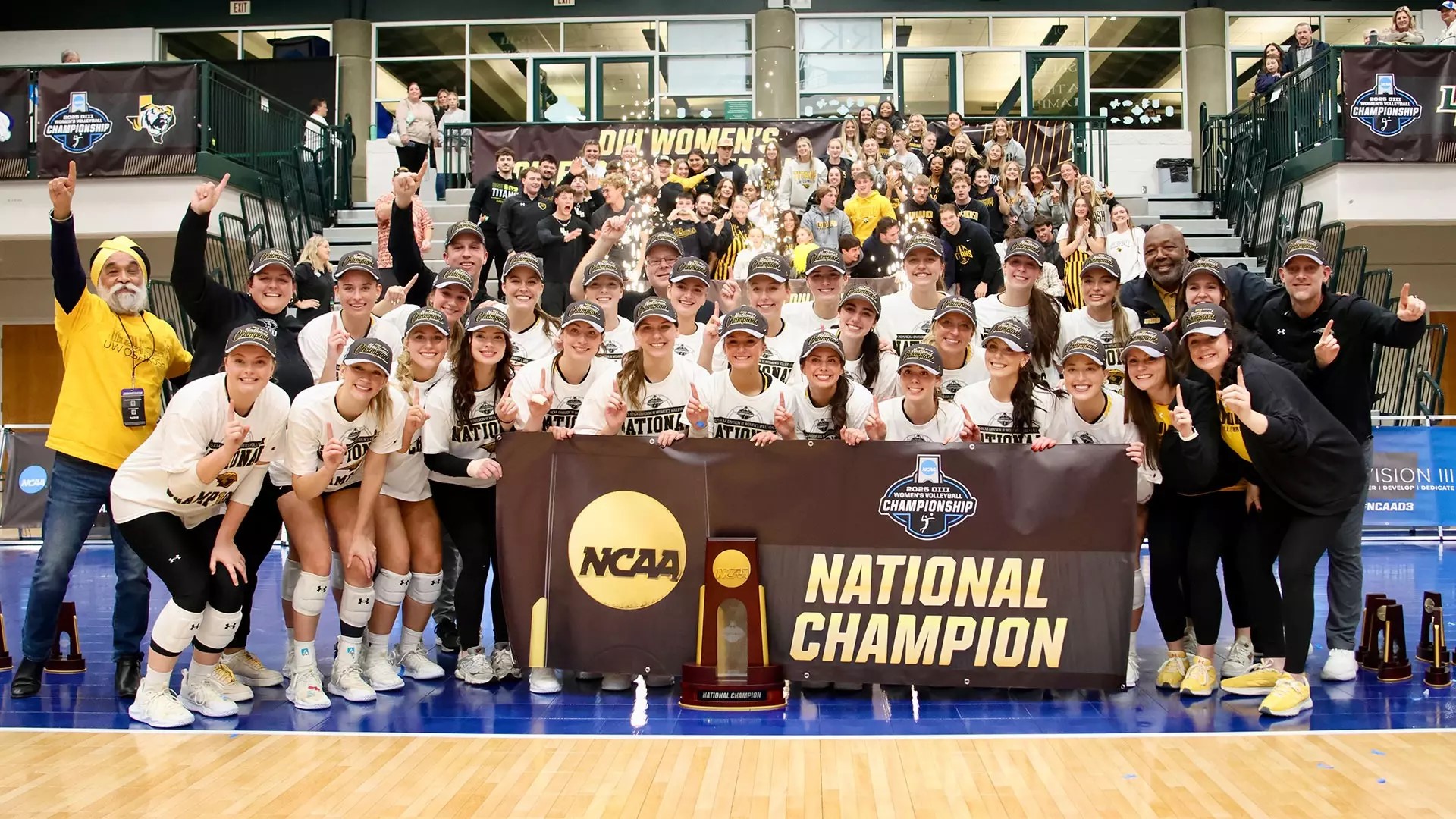
BLOOMINGTON, Ill.- UW-Oshkosh women’s volleyball is the 2025 NCAA Division III national champion!
The Titans (34-3) completed their perfect national tournament with a 3-0 win over the University of La Verne (Calif.) at the Shirk Center on the campus of Illinois Wesleyan University on Saturday (Dec. 6). They won by set scores of 25-17, 25-22, 25-21. The neutral site match had a home court feeling as friends, family, fellow student-athletes, and coaches packed the arena and cheered on the Titans all through the historic match.
While being the first national championship in program history, it is also the 51st in UW-Oshkosh history, the first Division III title since men’s basketball won the 2019 championship and the first women’s Division III title since women’s track & field won the 2014 indoor championship. Since 2020, UW-Oshkosh has claimed four national championships; the remaining three were won by women’s gymnastics at the National Collegiate Gymnastics Association Championship.
The championship match appearance was Oshkosh’s second in program history and the first since falling to Washington University in St. Louis (Mo.) in the 1994 title match.
Exceptional
The Titans entered Saturday on an 18-set winning streak dating back to the WIAC Tournament championship match against UW-Eau Claire at Kolf Sport Center on Nov. 15 and a 37-22 all-time record in the national championship. After the win in Saturday’s championship match, they became the first program since 2004 to not drop a set in the national tournament.
Oshkosh hit .195 in the three-set match and held the Leopards (30-3) to a .140 attack percentage. While La Verne led 9-7 in team blocks and 62-57 in digs, the Titans held advantages of 54-44 in points, 43-33 in kills, 4-2 in service aces, and 37-32 in assists.
Riley Borrowman (Oswego, Ill./Oswego) got the first set going with a light tap over the net and into a large gap between defenders. The Titans then used a pair of three-point runs to create an early 9-3 lead and force a La Verne timeout. They recorded two more points out of the timeout before La Verne went on a 4-0 run to make the score 11-7. The Leopards got within three points; however, Oshkosh responded with a 5-1 run that included three kills by Samantha Perlberg (Chippewa Falls/Chippewa Falls). The deficit hovered around six points until a service error by the Leopards gave Oshkosh the serve and Borrowman bookended the set with her third kill.
La Verne scored on the first two serves of the second set and retained the lead, fighting off 4-4, 9-9 and 10-10 ties before reclaiming the edge following a Perlberg and Lauren Grier (Fond du Lac/Fond du Lac) combination block to make the score 11-10. Continuing the back-and-fourth set, Oshkosh and La Verne got knotted up 10 more times at each point as neither team could score more than twice in a row. Perlberg broke the streak of ties with an ace and after La Verne called its first timeout, Grace Juergens (Lockport, Ill./Lockport Community) and Grier tallied kills of their own to make the score 23-20. Grier and Juergens each followed a Leopard point with the 24th and 25th points of the match. Both were kills.
Oshkosh and La Verne traded service errors to begin the third set before the trended of tied scores continued five more times until the Leopards put together a three-point spurt to make the score 11-8. They led by 15-11 headed into the timeout, however the Titans flipped a switch out of the break and went 7-1 to lead 18-16. Maren Motz (Hartland/Arrowhead Union) and Perlberg added two kills in a 3-0 spurt that brought the Titans past the 20-point mark of the set.
By the numbers
Perlberg registered her 22nd double-double in 36 matches, notching 16 kills on 41 attacks with seven errors and dug 13 attacks while adding a service ace and four blocks. Perlberg, who had reset the Oshkosh single-season total attacks record in the semifinal, extended her record past Jean Harmsen’s 1997 mark of 1,429 with 41 in the championship match for a total of 1,472 on the season.
Juergens also reached double-digit kills for the 19th time with 10. She scored twice from the service line, had four digs, and blocked a shot.
In their final match in yellow and gold, Izzy Coon (Fond du Lac/St. Mary’s Springs Academy) and Jaclyn Dutkiewicz (Franklin/Franklin) registered 17 and 13 assists, respectively. Dutkiewicz added 13 digs and Coon had eight.
Lauren Grier (Fond du Lac/Fond du Lac) joined Perlberg with four block assists and Borrowman tallied three total (one solo).
Callie Panasuk (Oak Creek/Oak Creek) was the third Titan with double-digit digs with 10 to cap off her fantastic freshman campaign.
After the championship concluded, Coon, Grier, Panasuk, and Perlberg were all named to the all-tournament team Perlberg was selected as the championship’s most outstanding player.
Read more:
UW-Oshkosh athletics
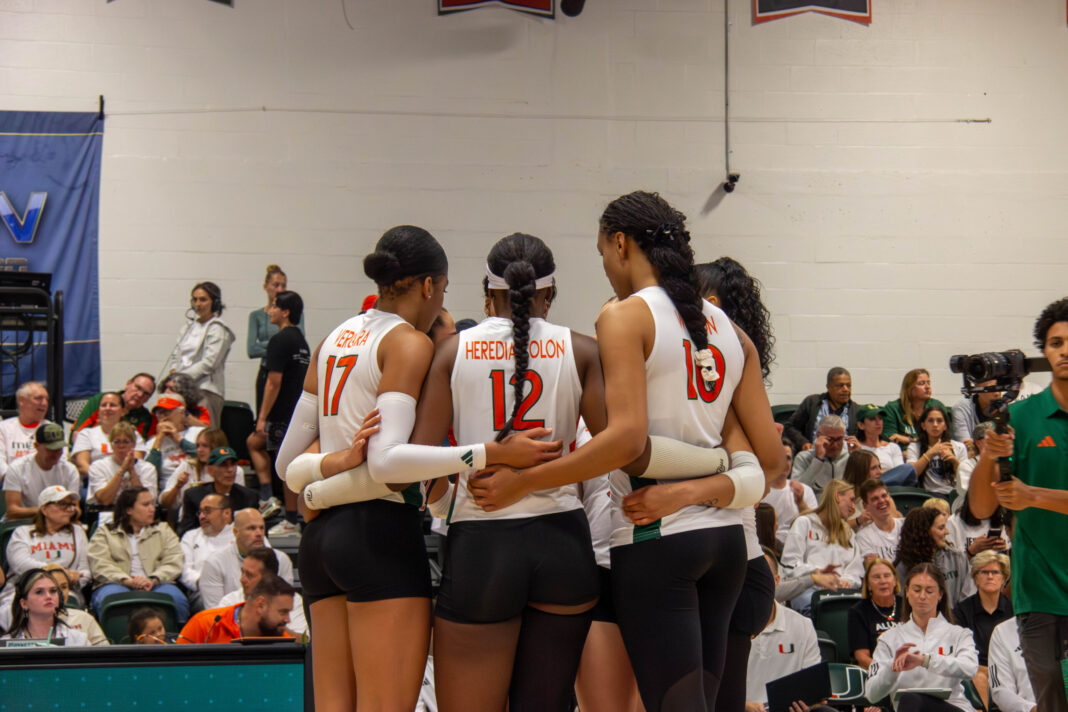

The No. 5 seed Miami Hurricanes had their record season come to an end on Friday night, falling to the No. 4 seeded Kansas Jayhawks, 3-1, in the second round of the NCAA tournament.
Even in defeat, UM’s star was in top-form. Senior Flormarie Heredia Colon notched 14 digs and 27 kills, ending her college career with 1,896 kills, more than any other Hurricane in program history. Senior Naylani Feliciano also surpassed 1,000 career digs with 14.
The first set started off neck-and neck with Heredia Colon notching a kill to tie the set at five apiece.
But right after, Kansas pulled away by going on a 5-0 run to make the score 10-5. During the run, Kansas senior Rhian Swanson had back-to-back kills.
The ’Canes never closed the gap for the remainder of the set as the closest they would come after would be when senior Dalia Wilson tallied a kill to bring the Kansas lead down to 16-13. The Jayhawks went on to win the set 25-17, closing with a kill by freshman Selena Leban, taking a 1-0 match lead.
Like set one, the second set started out with a battle with an ace by Wilson giving Miami a slight edge for a 9-8 lead. However, the Jayhawks, trying to replicate the first set, once again went on a 5-0 run, this time to bring their lead to 13-9.
Unlike the first set however, the Hurricanes responded to the run well. Their response was simple: they went on a run of their own. The ’Canes went on a 4-0 run, finishing off with a Heredia Colon kill to tie the match at 13-all. The remainder of the set was a back-and-forth battle with the score being tied late at 21 apiece.

Unfortunately for the Hurricanes, it would be the Jayhawks who would make the finishing blow as they won four out of the final five points. Kansas would win the set, 25-22, bringing them one set from the round of 16, leading 2-0.
Miami started the third set off well, leading 3-2 after a kill by Heredia Colon. In need of a set victory to keep the match and its season alive, Miami controlled the rest of the set, winning three of the last four points, two coming off kills by junior Ava Carney and one by way of an ace from Feliciano. UM would win the set, 25-22, cutting the match score to 2-1.
The fourth and final set began in Miami’s favor with two kills by Heredia Colon and an ace by Wilson gave them an early 4-1 lead. The lead would not last long as a Leban kill tied it up at 5-5.
A 7-1 Kansas run gave them a 14-9 lead, but the ’Canes battled back for the rest of the set with UM even coming within a point of tying the match when they led the set 24-23. However, a kill by Kansas freshman Jovana Zelenovic tied the match and the Jayhawks then won three of the next four points to win the set 27-25 as well as the match, 3-1, sending themselves to the round of 16.
After the loss, Miami’s season comes to a close. They finished with a 27-6 (16-4 ACC) record, tying the 2002 team’s record for wins in a season for the program. This would also be the last time starters Feliciano, Heredia Colon and Wilson as well as other players, Jazmin Vergara and Lilou Stegeman, will wear the Miami uniform as they all will be graduating.
Heredia Colon will continue her volleyball career in Major League Volleyball as she was selected in the second round, No. 10 overall, of the 2025 MLV draft to the Columbus Fury.
Miami will have big shoes to fill next season.


Looking back, things couldn’t have gone any better for Texas volleyball during the opening weekend of the NCAA Tournament.
The top-seeded Longhorns (24-3) flash a poised and precise offense befitting one of the top attacks in the country: They hit better than .400 in both matches while sweeping unseeded Florida A&M and No. 8 Penn State in the first- and second-round matches, respectively. They also flashed a relentless defense with an imposing block and impenetrable back row: On Friday, Florida A&M had more hitting errors than kills, and defending champion Penn State hit just .124 Saturday against Texas.
And in order to reach their ultimate goal of an NCAA championship, said All-American candidate Torrey Stafford, the Longhorns need to maintain that kind of balance entering the round of 16 this weekend at Gregory Gymnasium.
“I feel like it’s easy to put a big emphasis on either offense or defense, but we try to do both,” Stafford said after Saturday’s 25-16, 25-9, 25-19 sweep over Penn State. “And in order to be a great offensive team, we need to be great defensive team, too.”
Stafford and her teammates certainly looked great against the Nittany Lions while reaching the Sweet 16 for a 20th consecutive season. Stafford fired 21 kills with just one hitting error while fellow attackers Cari Spears and Abby Vander Wal combined for 19 more kills with just three hitting errors.
“I just felt like everyone was on the same page tonight,” said setter Ella Swindle, who dished out 21 assists. “I think we just had a really clear picture of what we were trying to do, and I think all of our hitters did a really good job of just being ready in any situation and also just going after the shots that they wanted.”
Now, Texas will take the best shot from surprising Indiana (25-7), which reached the round of 16 for just the second time in program history by sweeping Colorado. The Hoosiers boast a balanced squad steeled by playing in arguably the country’s deepest conference, the Big Ten. They ranked fifth in the Big Ten this season with a .283 hitting percentage, and they boast a veteran attacker in Candela Alonso-Corcelles, a 6-foot-2 senior from Spain who averages 3.54 kills a set.
But the key to the Hoosiers could be setter Teodora Kričković, said UT coach Jerritt Elliott. The 6-foot-2 freshman from Serbia emerged as one of the top young setters in the nation this season while averaging 10.67 assists per set. Her size also gives Indiana a presence at the net, much like Texas has with the 6-2 Swindle; Kričković has 52 kills as well as 50 blocks.
Elliott said he caught “about 15 minutes” of Indiana on TV earlier this season, but is looking forward to diving into the film study.
“I think they’re a fast team, I think they’ve got good setting, (and) I think they’re pretty efficient,” he said. “They’ll be a good challenge.”
Texas will face No. 4 Indiana Friday at noon at Gregory Gymnasium. With a win, the Longhorns will play a final home game this season Sunday against either No. 2 Stanford or No. 3 Wisconsin. The winner of that match qualifies for the Final Four Dec. 18-21 in Kansas City, Mo.

Courtesy of Rob Anderson, Creighton Athletics
OMAHA, Neb. — The NCAA has announced that the No. 11 Creighton Volleyball team will meet No. 8 Arizona State on Thursday, Dec., 11 in Lexington, Ky. The teams will square off at 12 p.m. Central inside Memorial Coliseum.
Winners of 22 straight matches, Creighton is 27-5 this fall. The Bluejays are making their fifth Sweet 16 appearance, and third consecutive. Arizona State is 28-3 this fall and making their second Sweet 16 in the past three seasons. The only previous meeting between the programs came in 2002.
Thursday’s match will be broadcast on ESPN2.
Second-ranked Kentucky (27-2) will host Cal Poly (27-7) at 2:30 p.m. Central on Thursday.
The Regional Final featuring Thursday’s winners is scheduled for Saturday, with a time and broadcast plans to be announced following Thursday’s results.
For those fans interested in acquiring tickets to the NCAA Lexington Regional, all-session tickets will be on sale Monday at 9 a.m. Central with single-session tickets on sale Tuesday at 9 a.m. CT on UKathletics.com.
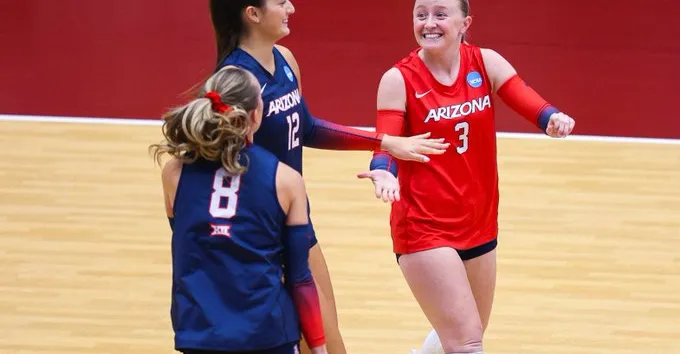
The Stanford Cardinal didn’t have their starting setter against Arizona on Saturday evening, but they did have a powerful serve. The Wildcats couldn’t handle or match it in a 3-1 (25-16, 25-27, 25-17, 25-20) loss in the second round of the 2025 NCAA Volleyball Tournament.
It wasn’t a disappointment for Arizona head coach Rita Stubbs, who was making her first appearance in the tournament as a head coach and leading the program to its first since 2018. The Wildcats won a match, giving them their first win in the tourney since 2016. They just couldn’t make it to the Sweet 16 for the first time since the same year.
“We took each day and the challenge that was before us, and we just gave it everything we had, which is exactly what you want,” Stubbs said. “You know, you want to battle and compete the entire time. And I like to think we exposed some issues that Stanford has, so that’s exciting.”
But that serve and pass game wasn’t one of them. Stanford had eight aces against nine service errors. The Wildcats committed 10 errors without serving a single ace.
“Before I went in, I was like, it’s all about the serve and pass,” Stubbs said. “And we were missing too many balls to the libero when we did serve it in, and then the serves just weren’t tough enough. And so I told them in the fourth set before we started, I was like, I don’t care if we miss a serve, we just got to be aggressive. And we missed the serve and wasn’t aggressive.”
The Wildcats still fought through it despite starting just one senior and one junior. The starting group of four sophomores and a freshman, along with the three seniors and one junior who subbed in, never let go of a set even when they looked to be buried by the Cardinal.
“It wasn’t for lack of effort,” Stubbs said. “It was just you got to be used to it,and then what I shared with them is that we have to go through things like this to get to our next. So much of this is still new for us with this group. The difference is your seniors are finished, and so now it’s about competing and doing better than we did this year next year to honor the seniors. That’s the direction we’re going.”
Stanford led wire-to-wire in the first set. The Cardinal never went on a big run. The biggest run was four points, but by that time they had put enough small runs together to build a nine-point lead at 22-13. It was the largest of the set and ended as the final margin.
Arizona didn’t fold despite Stanford running out to a 4-0 lead in the second set. The Wildcats used their own 4-1 run to tie the set at five points each. It stayed tight throughout, but Arizona got to set point at 24-23.
The Cardinal wiped away two set points, but they couldn’t string two points together to earn one of their own. The Wildcats put their third one away to even the match with a 27-25 second set.
Arizona never really bothered Stanford in the third. The Cardinal were able to put together larger runs and eventually led by 10 at 22-12. The Wildcats cut into the lead a bit, but they still dropped the set by eight and were one set from ending their season.
Things were tight early in the fourth set, but a critical call went against Arizona and seemed to turn the tide. At 7-5, Stanford’s Elia Rubin hit an attack that was called out. The television replay didn’t appear to show a touch by Arizona. It certainly didn’t appear to show anything definitive enough to overturn the call on the floor.
Stanford challenged and won the challenge. The call was overturned and the point went to the Cardinal. A one-point gap became three points. From there, they went on an 8-2 run to take a 16-7 lead.
The Wildcats knew it was their last chance. They continued to fight. The teams traded points for a while, then Arizona started to string a few together. A 5-1 run cut the lead to four points at 23-19.
The service errors raised their ugly head again. Giorgia Mandotti’s error gave Stanford several match points. Jordan Wilson’s final kill of her college career saved one, but that’s as far as it went. Jordyn Harvey put the next point away to win it for the home team.
Wilson finished her college career with a match-high 17 kills, seven digs, and two total blocks (one solo). That gave her 499 kills, 269 digs, 26 aces, 10 assists, and 44.0 total blocks in 108 sets this season. The outside hitter took over 9th place in total kills in a season, surpassing Kendra Dahlke’s 496 in 2016, the last year Arizona won an NCAA Tournament match. She also grabbed 10th in kills per set in a season with 4.62, knocking out Barb Bell’s 1994 season (4.51 k/s).
In her three years as a Wildcat, Wilson had 1,191 kills, 593 digs, 55 aces, 27 assists, and 127 total blocks in 310 sets over 86 matches. Her 3.84 kills per set (minimum of 200 sets played) over her Arizona career place her fifth in Wildcat history, surpassing the 3.82 of Tiffany Owens (2007-10).
Carlie Cisneros had 12 kills on .275 hitting, committing just one hitting error in four sets. Her nine digs kept her just shy of a double-double. It was the third straight match with 10 or more kills for Cisneros and the eighth in the last nine matches.
The development of Cisneros as a regular scoring threat was huge for the Wildcats in the tournament and down the stretch of the regular season. It also gives Stubbs hope for next season when Wilson is gone.
“That happened at Kansas, as well,” Stubbs said. “When Jordan struggled, she stepped up. It happened against Texas Tech when Jordan didn’t play. So, you know, she definitely wants to be the go-to player, and has shown that she’s capable of doing it.”
As has so often bee the case this season, it was a true team effort. Twelve members of Arizona’s 17-player roster made an appearance in the match, including all four seniors. Six players had at least two kills. Seven had at least one block. Eight had at least one dig.
“I was pleased with us and how we competed and how people that went in tried to make a difference and did a good job,” Stubbs said.
Journey Tucker once again showed that she can be a dominant force in the middle. The junior had four kills on .400 hitting and led the team with five total blocks.
Fellow junior MB Sydnie Vanek didn’t start, but she also made an impact when she came in. Vanek also had four kills. She tied for second on the team with three total blocks.
The match may have ended the season and the college careers of Wilson, Haven Wray, and Ana Heath; Mandotti still has a year of eligibility left either at Arizona or elsewhere. There were still a lot of positives to walk away with.
“I’m just grateful,” Stubbs said. “I’m grateful for the fact that Haven did it five times, and that Jordan transferred in, and that Ana stuck with it through the ups and downs of not having a position, per se. After her setting years, made the commitment to say, ‘Hey, I’m going to do this and commit to it.‘ It just says a lot about who they are as people, and you just always want the best for them, which is why I told them not to hang their heads. The best thing we can do to honor them is to be good from here on out, so that this was not for naught.”

Sports8 minutes ago
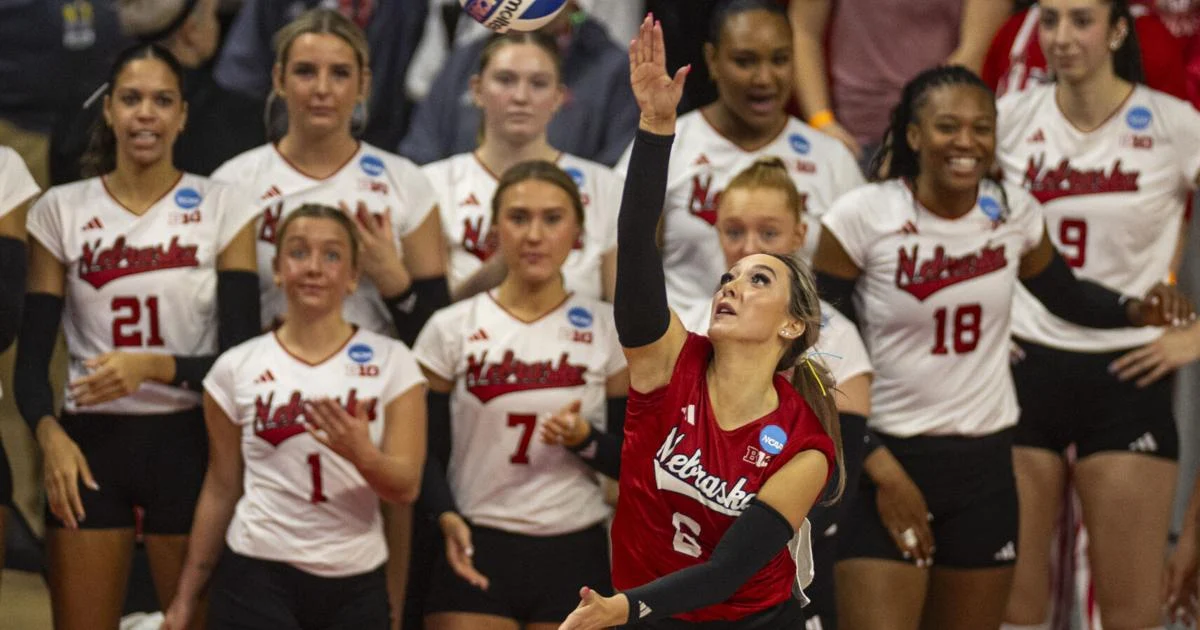
Titans Are Champions: Women’s Volleyball Completes First Flawless NCAA Championship Run Since 2004

Rec Sports11 minutes ago
EXCLUSIVE: Sierra Canyon Basketball Adopts AI-Powered Instant Highlight System From KlutchShots

Rec Sports19 minutes ago
Rocket City Mom Events – Family Fun in Huntsville & North Alabama

Sports25 minutes ago
Miami volleyball season ends, falling to Kansas in the second round 3-1

Rec Sports27 minutes ago
Betty Wold Johnson Foundation, Jets help launch flag football league | Philanthropy news

Sports41 minutes ago
Texas vs Indiana in Sweet 16

NIL47 minutes ago
Urban Meyer firmly believes three-loss team should make College Football Playoff

Sports57 minutes ago
#11 Creighton Volleyball to Meet #8 Arizona State in Sweet 16 in Lexington

Sports1 hour ago
Serve receive dooms Arizona Wildcats volleyball 2nd rd NCAA Tournament

Sports1 hour ago
How to watch Nebraska volleyball’s Sweet 16 match vs. Kansas

NIL2 hours ago
College Football Playoff Rankings Just Shook the National Championship Odds

NIL3 hours ago
Steady Droppin Dimes – NIL on National Signing Day: Is it all about the highest bidder now?

NIL3 hours ago
Robert Griffin III blasts College Football Playoff committee for not punishing Alabama, references BYU

Sports4 hours ago
NCAA Volleyball Regional Schedule Set

Motorsports4 hours ago
Lando Norris wins F1 world championship by just two points – Motorsport – Sports

Rec Sports2 weeks ago
First Tee Winter Registration is open

Rec Sports2 weeks ago
Fargo girl, 13, dies after collapsing during school basketball game – Grand Forks Herald

Motorsports2 weeks ago
CPG Brands Like Allegra Are Betting on F1 for the First Time

Sports3 weeks ago
Volleyball Recaps – November 18

Motorsports2 weeks ago
F1 Las Vegas: Verstappen win, Norris and Piastri DQ tighten 2025 title fight

Sports2 weeks ago
Two Pro Volleyball Leagues Serve Up Plans for Minnesota Teams

Sports2 weeks ago
Sycamores unveil 2026 track and field schedule

Sports2 weeks ago
Utah State Announces 2025-26 Indoor Track & Field Schedule

Motorsports2 weeks ago
Redemption Means First Pro Stock World Championship for Dallas Glenn

NIL1 week ago
Bowl Projections: ESPN predicts 12-team College Football Playoff bracket, full bowl slate after Week 14

Sports2 weeks ago
Texas volleyball vs Kentucky game score: Live SEC tournament updates

NIL1 week ago
Indiana’s rapid ascent and its impact across college football

Rec Sports1 week ago
How this startup (and a KC sports icon) turned young players into card-carrying legends overnight

Motorsports1 week ago
Pohlman admits ‘there might be some spats’ as he pushes to get Kyle Busch winning again

Rec Sports1 week ago
Robert “Bobby” Lewis Hardin, 56

 Why a rising mid-major power with an NCAA Tournament team opted out of revenue-sharing — and advertised it
 NBA Legend Michael Jordan to Join NBC Sports as Special Contributor
 Falcons mailbag
 Portal Update – Basketball and Gymnastics Take Hits
 has always dreamed in Mercurial. Now his initials are on the boots.
The new Kyl…
has always dreamed in Mercurial. Now his initials are on the boots.
The new Kyl…
-
 Rec Sports2 weeks ago
First Tee Winter Registration is open
-
 Rec Sports2 weeks ago
Fargo girl, 13, dies after collapsing during school basketball game – Grand Forks Herald
-
 Motorsports2 weeks ago
CPG Brands Like Allegra Are Betting on F1 for the First Time
-
 Sports3 weeks ago
Volleyball Recaps – November 18
-
 Motorsports2 weeks ago
F1 Las Vegas: Verstappen win, Norris and Piastri DQ tighten 2025 title fight
-
 Sports2 weeks ago
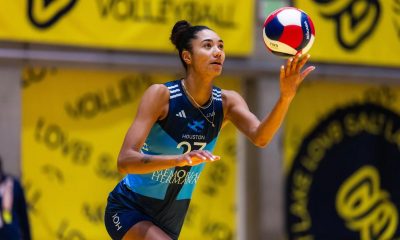
Two Pro Volleyball Leagues Serve Up Plans for Minnesota Teams
-
 Sports2 weeks ago
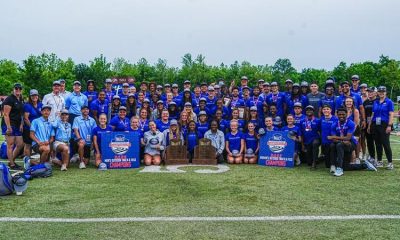
Sycamores unveil 2026 track and field schedule
-
 Sports2 weeks ago
Utah State Announces 2025-26 Indoor Track & Field Schedule
-
 Motorsports2 weeks ago
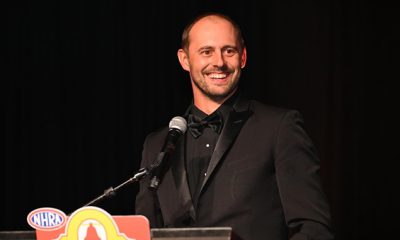
Redemption Means First Pro Stock World Championship for Dallas Glenn
-
 NIL1 week ago
Bowl Projections: ESPN predicts 12-team College Football Playoff bracket, full bowl slate after Week 14