
NIL
Updating the playbook




This is part 2 of a 2-part series examining the rapidly changing landscape of college sports. Read Part 1, The New Playbook here.
Mackenzie Yoakum’s college volleyball story has many layers.
The former Homewood High School standout took an unconventional journey, beginning at Seton Hall University and later transferring to the University of West Georgia, where she found both stability and meaning in the sport she loves.
She was recruited during a time when athletes were being granted extra years of eligibility due to COVID. Her commitment to Seton Hall nearly fell through, and she later entered the transfer portal.
Her experience is one of dealing with continuous adversity.
“I have had to learn how to stick up for myself and fight my internal battle of thinking I am not good enough,” she said. “It is much more than [volleyball],” she said. “It’s about how you respond when life knocks you down at 17, and what person you’ll come out of it by 21.”
Things didn’t go as planned at Seton Hall, and she decided to enter the transfer portal after her sophomore season. She landed at West Georgia last year and took a redshirt season.
“I love my teammates, I am an hour and a half from home, I travel to some of the best cities in the South, and I’m part of the athletic media team,” she said.
Yoakum’s path reflects the resilience today’s college athletes need in an era of NIL, transfers and uncertain futures.
THE GAME JUST CHANGED
If you played Division I college sports in the last decade — or your kid did — this summer, money’s coming.
Not from boosters. Not from collectives. From the university itself.
On June 14, a federal judge finalized House v. NCAA, a $2.8 billion antitrust settlement that shatters the 119-year model of amateurism. For the first time, schools can pay their athletes directly — not for appearances, not through shell groups — but straight from university revenue.
If you are a fan of college sports, the games are now unlike anything you’ve known.
And it starts now.
WHO GETS PAID – AND HOW
The House settlement triggers two historic changes:
Backpay: Any Division I athlete who competed between 2016 and 2024 can file for compensation. Payouts will depend on sport, tenure and school revenue — with football and men’s basketball expected to receive the largest shares.
Revenue sharing: Starting this fall, schools can pay current athletes up to $20.5 million annually. The cap will rise each year over the 10-year agreement. Most schools are expected to split it like this:
- 75% to football
- 15% to men’s basketball
- 5% to women’s basketball
- 5% to all other sports
This is not NIL 2.0. This is something else entirely.
NIL was always about outside money — sponsors, side hustles, booster funds. The House settlement puts the money on campus. Schools will now pay athletes from the same pool used for coach salaries, facilities and scholarships.
That makes it bigger. And messier.
Only the Power 4 conferences — SEC, Big Ten, ACC, Big 12 — were named in the suit. But all Division I schools must contribute to the backpay fund, even if they’ve never had a single NIL deal. Many smaller schools are already trimming rosters, adjusting scholarships and revisiting budgets. Some athletes will get paid. Others may get cut.
‘TRANSFORMATIVE LEGISLATION’
Birmingham entrepreneur and athlete advocate Jim Cavale has been tracking this shift from the beginning.
“In just the first year — from July 2021 to July 2022 — we tracked $350 million in NIL activity,” Cavale said. “And 90% of that was donor-driven funds funneled through collectives to pay athletes to play.”
Now, he says, things are even murkier.
“The biggest issue athletes face is confusing and misleading contracts,” Cavale said. “These so-called NIL deals are often performance-based agreements in disguise.”
ESPN national analyst Tom Luginbill sees the same storm building.
“This is the most transformative legislation in college sports in the last 15 years — and it dropped with no guardrails,” he said. “(Resource-rich) programs like Alabama, Ohio State, Georgia can do whatever they want. Most others can’t.”
And he’s worried.
“What’s coming is this: players getting paid big money, surrounded by bad actors. Agents want 20–30%. A kid enters the portal, takes bad advice, spends the money — and doesn’t go pro. That’s the reality.”
NEXT: CONGRESS AND COURTS
Just days after the House ruling, a bipartisan group in Congress introduced the SCORE Act — a bill that would:
- Cap revenue sharing and standardize disclosures
- Pre-empt state NIL laws
- Create a federal enforcement commission
- Affirm that college athletes are not employees
That last point might be the whole game.
The NCAA’s biggest fear isn’t payment — it’s employment. If athletes are ruled to be employees, everything changes: benefits, unions, workers’ comp, labor law. The House deal opened the door to paychecks. Congress is now trying to close it before anyone says the E-word.
But Cavale says the conversation still leaves out the people it claims to protect.
“These are being structured as NIL, not employment — and there’s still no agent regulation, no contract standards,” he said. “The athlete’s voice is missing. What’s really needed is collective bargaining.”
Meanwhile, legal uncertainty continues. The House settlement is not the final word — and may not withstand future challenges.
In June, eight current and former female athletes filed a Title IX lawsuit challenging the revenue-sharing model, arguing that its disproportionate distribution to men’s sports violates federal gender equity laws. More suits are likely. Title IX, employment law and due process could all play a role in shaping — or unraveling — the current plan.
NCAA leaders say that’s why congressional intervention is critical. The proposed SCORE Act would codify House into law, protect it from further litigation and preempt conflicting state-level NIL rules. But despite years of lobbying, no federal college sports law has ever passed. For now, the policy landscape remains a moving target.
WELCOME TO NIL GO
On June 17, a new layer of regulation arrived: NIL Go — a clearinghouse overseen by the Collegiate Sports Commission and run by Deloitte.
Athletes must now report any deal over $600. Each gets reviewed for “fair market value.” If Deloitte flags it as inflated, it can be denied or sent to arbitration. There is no legal standard for that value. No consistent appeal process. Just a new filter between athletes and the opportunities they chase.
And that’s happening as university-issued paychecks are set to hit.
The result? Confusion, whiplash — and change.
Athletes like Yoakum have already weathered NIL, the transfer portal and scholarship uncertainty. Now they face something even stranger: a paycheck from the school they play for.
What that means — and how long it lasts — is still in question.
The checks start July 1.
The system? Still up for grabs.
It’s not slowing down any time soon.
“With NIL expanding and the transfer portal becoming a more disposable route, I think that the use of the portal is being warped to fit what these athletes initially want out of their college experience: money and a good time,” Yoakum said.
House vs. NCAA Settlement Explained
WHAT IS IT?
The House v. NCAA antitrust settlement marks the official end of amateurism in college sports. Starting July 1, schools can pay athletes directly for the first time in NCAA history. The new model applies to current and future Division I athletes — not just those already on campus.
KEY TERMS
- $2.8 billion in back payments (2016-2024) to former D-I athletes
- The annual cap grows by at least 4% per year
- 10-year agreement: runs through 2035
- Roster limits: schools must reduce rosters to meet compensation caps
- Revenue sharing begins: schools can share up to $20.5M per year with athletes
WHY IT MATTERS
This formalizes athlete compensation, bringing college sports closer than ever to a pro model — and away from the 119-year “student-athlete” model.

Continue Reading
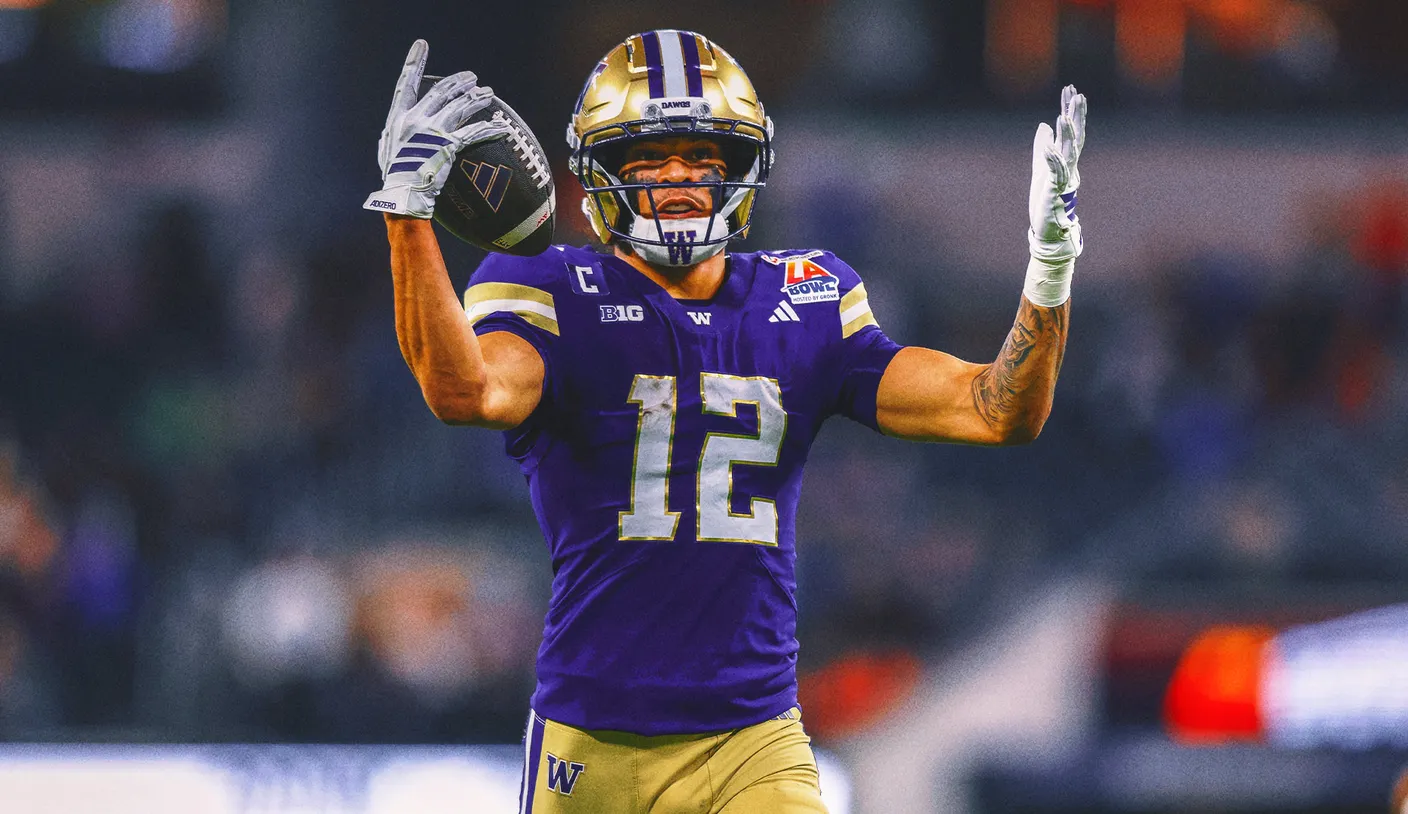
Washington wide receiver Denzel Boston plans to enter the 2026 NFL Draft, he announced on Wednesday on social media.
The 6-foot-4, 210-pound Boston had 62 receptions for 881 yards and 11 touchdowns this season as a junior, earning third-team All-Big Ten honors. Last year, he had 63 catches for 834 yards and nine touchdowns.
In Washington’s 38-10 win over Boise State in the LA Bowl on Dec. 13, Boston caught six passes for 126 yards, including a 78-yard touchdown.
The 22-year-old is from South Hill, Washington, 45 miles south of Husky Stadium.
“Every time I stepped on that field,” Boston said, “it was for the city that raised me and the people who supported me from day one.”
FOX Sports NFL Draft expert Rob Rang had the Los Angeles Rams selecting Boston with the 31st overall pick in his most recent mock draft. Rang also ranked Boston as the fifth-best wide receiver in the 2026 draft class in October.
The Associated Press contributed to this report.
Want great stories delivered right to your inbox? Create or log in to your FOX Sports account, and follow leagues, teams and players to receive a personalized newsletter daily!
FOLLOW Follow your favorites to personalize your FOX Sports experience
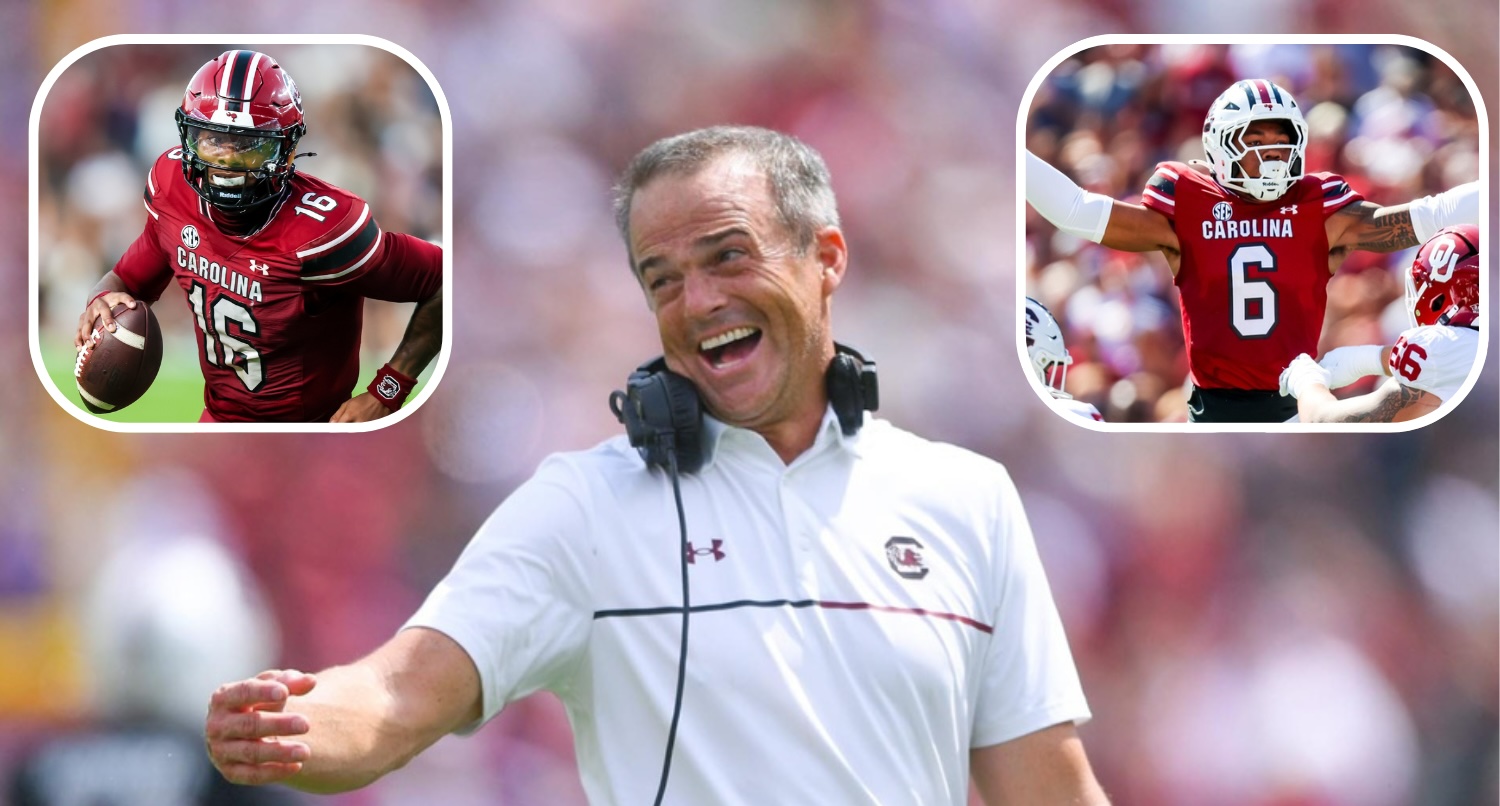
The South Carolina Gamecocks are coming off a disappointing college football season, but next year already seems promising with the return of quarterback LaNorris Sellers and edge defender Dylan Stewart.
As for what went into keeping both players in Columbia, there have been reports of millions of dollars in NIL payments.
Head coach Shane Beamer went directly to social media to refute one such report on Wednesday.
SportsTalk Media Network, a long-running South Carolina sports talk show, reported on Tuesday that the deals Sellers and Stewart signed will total around $5 million.
“A source confirmed for us Tuesday night that the two deals signed by South Carolina quarterback LaNorris Sellers and defensive end Dylan Stewart combined will cost in the neighborhood of $5 million from the school’s rev share total,” they posted on X.
That report made the rounds and eventually got back to Beamer, who quoted that post with a message of his own.
Sounds to me like you need some much better sources
This isn’t even remotely close to being true #AnythingForClicks #MerryChristmas https://t.co/ZTw4nKSLKr
— Shane Beamer (@CoachSBeamer) December 24, 2025
“Sounds to me like you need some much better sources,” he wrote. “This isn’t even remotely close to being true.”
Beamer also added two hashtags, #AnythingForClicks and #MerryChristmas.
The media company pushed back on Beamer as well, quoting his post with a response defending their reporting and challenging the head coach to disprove it.
First of all, we don’t do anything for clicks. Secondly, if that information is incorrect, prove me wrong. Be transparent. Tell the public how much. I think they’d like to know. And happy holidays to you. https://t.co/Sc8Rufuifj
— SportsTalk Media Network (@SCSportsNow) December 24, 2025
“First of all, we don’t do anything for clicks,” they wrote. “Secondly, if that information is incorrect, prove me wrong. Be transparent. Tell the public how much. I think they’d like to know. And happy holidays to you.”
Sellers amassed 5,915 total yards and 43 touchdowns as South Carolina’s starting quarterback this past season. Stewart, meanwhile, has six forced fumbles, 11 sacks, 22.5 tackles for loss, and 56 total tackles in 24 games across two seasons. Whatever it took, Beamer and South Carolina are probably pretty happy to have both of them back next year.

Congress ‘fumbles’ NIL college sports bill
Fox News chief congressional correspondent Chad Pergram reports on House Minority Leader Hakeem Jeffries questioning an NIL bill’s link to an LSU coaching controversy and more on ‘Special Report.’
NEWYou can now listen to Fox News articles!
Congress has done nil to fix NIL in college sports.
Lawmakers get another chance to tackle NIL in early 2026.
Let’s start with terms.
“NIL” refers to “name, image, likeness.” College athletes have made bank over the past few years, marketing themselves as their own product. They skip from school to school for more playing time. A bigger spotlight. And that leads to a better NIL deal.
Translation: You’ll probably make more from your NIL contract if you play for Ohio State and not North Dakota State.
TRUMP RIPS NIL ‘DISASTER’ IN OVAL OFFICE, WARNS IT’S KILLING COLLEGE SPORTS
As everyone watches bowl games and the College Football Playoff this holiday season, fans inevitably crow about the lack of parity for schools from the Big 10 and SEC compared to the Mid-American Conference and Sunbelt Conference.
James Madison, we’re looking at you.
The NCAA appears incapacitated to act to rein in NIL and issue nationwide rules. So, they’ve turned to Congress for a fix.
Good luck with that.
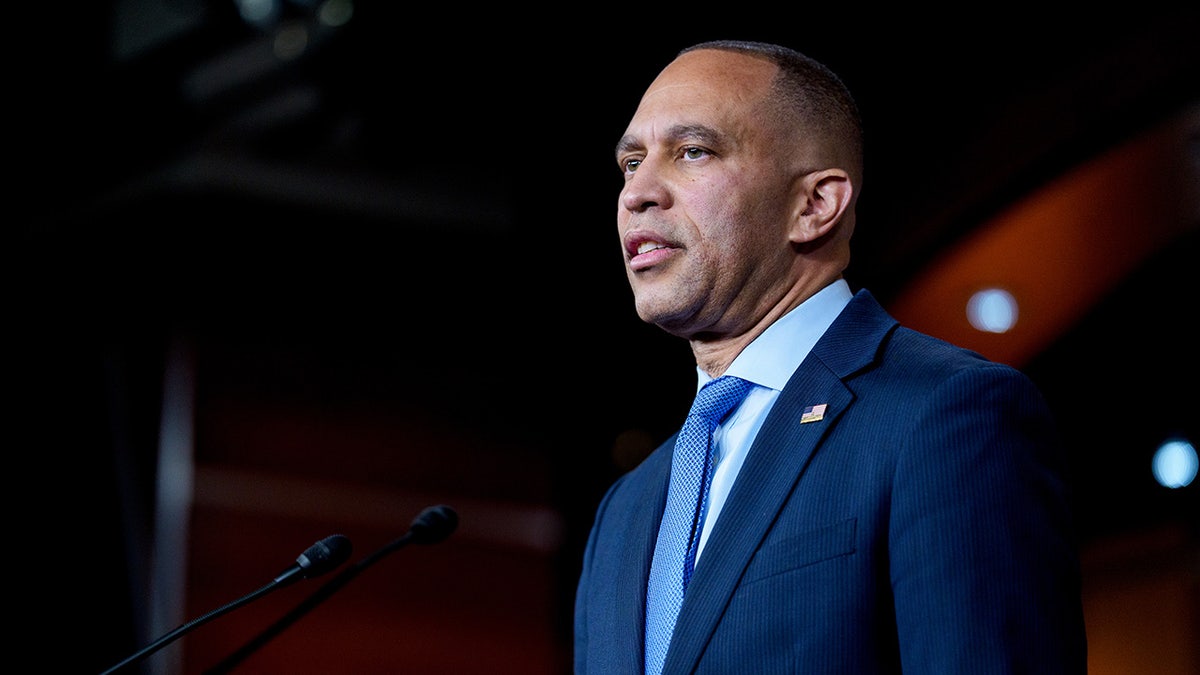
U.S. House minority leader Hakeem Jeffries (D-N.Y.) during a news conference at the US Capitol in Washington, D.C., on Monday, Nov. 10, 2025. (Aaron Schwartz/Bloomberg via Getty Images)
The House tried to advance a bill in early December. But that legislation plunged into a toxic political scrum. First of all, many Democrats opposed the bill. The legislation then lacked the votes, thanks to some GOP defections. The timing of the legislation was in question, too. The House wasn’t addressing annual spending bills or health care, but college sports. Some Republicans thought this was a bad optic.
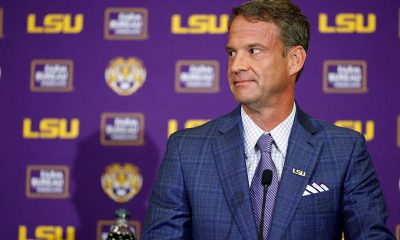
This commotion came just as former Ole Miss head football coach Lane Kiffin defected to SEC rival Louisiana State University (LSU) for a king’s ransom. House Minority Leader Hakeem Jeffries, D-N.Y., wasted no time noting that House Speaker Mike Johnson, R-La., and House Majority Leader Steve Scalise, R-La., are both LSU graduates and superfans of the school’s athletic programs. Jeffries questioned whether well-moneyed alumni connected to the school advocated for Johnson and Scalise to push the NIL bill at that time. Jeffries then anointed the legislation the “Lane Kiffin Protection Act.”
“People are asking the question, ‘Why did you decide to bring this bill this week?’ with all the other issues that the country is demanding that we focus on, led by the affordability crisis that they claim is a scam and a hoax,” posited Jeffries.
The controversy created a maelstrom too challenging for the House to handle. So the GOP brass yanked the legislation off the floor.
NATIONAL CHAMPION COACH WANTS TRUMP ‘MORE INVOLVED’ IN NIL REGULATION: ‘OUR SPORT IS GETTING KILLED’
House leaders hope to try again to regulate NIL and manage money in college sports in 2026.
“I think we need to do it sooner rather than later,” said House Budget Committee Chairman Jodey Arrington, R-Texas.
“We need a national framework,” said Rep. Debbie Dingell, D-Mich., at a House session to prepare a NIL bill over the summer. “One with clarity and real enforcement to bring fairness, transparency, and equity to the new NIL era.”
Lawmakers are now revising the NIL bill to set national standards — and coax enough lawmakers to support it. It’s possible Congress could vote around the same time the nation crowns the next college football champion.
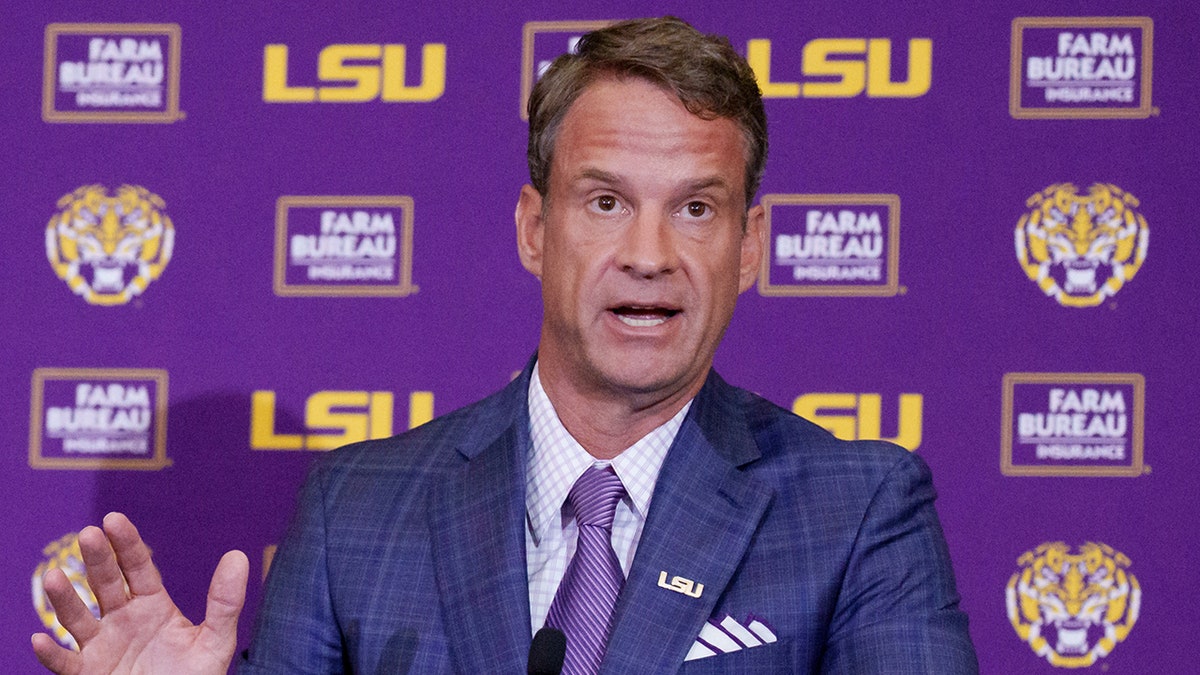
LSU football head coach Lane Kiffin speaks at South Stadium Club at Tiger Stadium on Dec. 1, 2025, in Baton Rouge, Louisiana. (Matthew Hinton/Imagn Images)
“We want to get it right to really do what we can to save college sports,” said Rep. Gus Bilirakis, R-Fla., the main author of the legislation.
The measure in question is known as the Student Compensation and Opportunity through Rights and Endorsements (SCORE) Act.
The bill would cap money schools can use from athletic revenue to pay athletes at 22 percent. Most Republicans support the measure. But Democrats believe the plan favors schools. Not athletes. Especially when it comes to labor rights – and treating athletes as university workers.
“Passing the SCORE Act as it stands would only eliminate students’ abilities to collectively bargain,” said Rep. Emilia Sykes, D-Ohio.
HOUSE VOTE ON NIL REGULATION ACT CANCELED DESPITE TRUMP’S BACKING AS SOME REPUBLICANS STILL NOT ON BOARD
From a labor perspective, is a running back the same as a physics professor?
“I do not think they should be granted employee status,” said Sen. Cynthia Lummis, R-Wyo., of student-athletes.
Some lawmakers aren’t sure whether Congress should even mettle in intercollegiate athletics. Rep. Frank Pallone, D-N.J., the top Democrat on the Commerce Committee, questioned the wisdom of addressing this issue in higher education compared to more pressing topics.
“You have to have a college to have college sports,” said Pallone as that panel prepped the bill over the summer. “And the way we’re going with this administration, I don’t even know if there’s going to be any colleges or universities left fighting for.”
Pallone says lawmakers should focus instead on “very real threats to our nation’s colleges and universities.”
Opponents of the legislation contend that the bill bends over backwards for major conferences. Rep. Chip Roy, R-Texas, has problems with that. He demands overall better governance of college athletics.
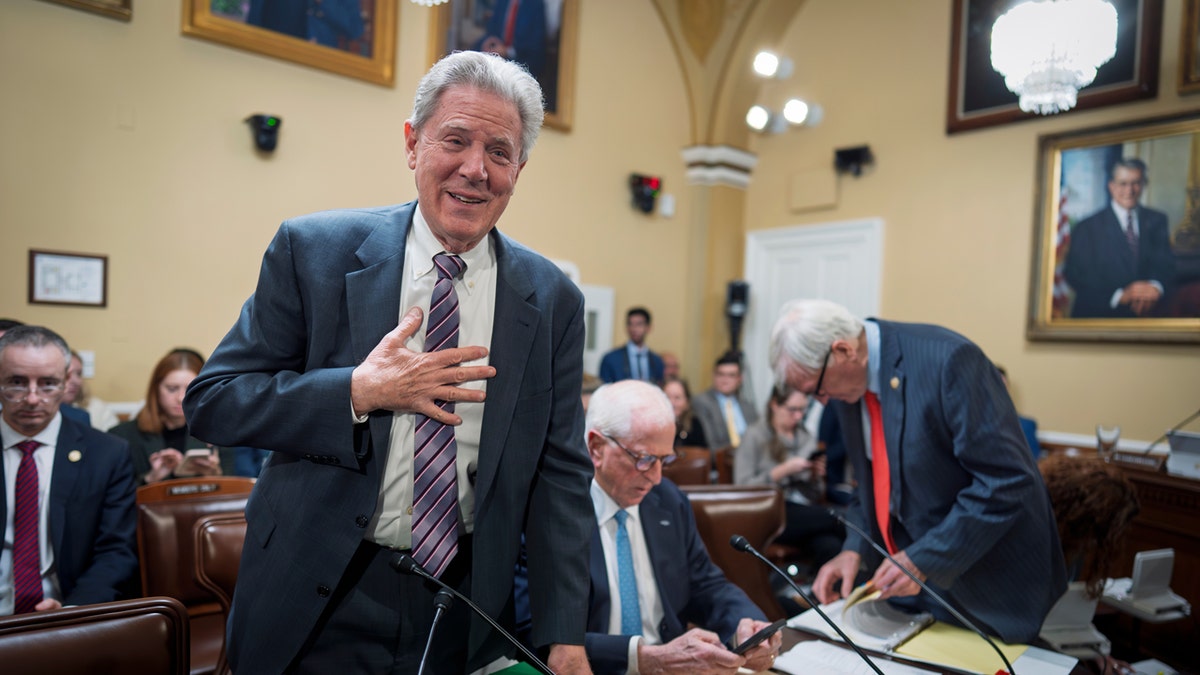
Rep. Frank Pallone, D-N.J., the ranking member of the House Energy and Commerce Committee, joined at right by Rep. Mike Thompson, D-Calif., ranking member of the House Ways and Means Committee, seated, and Rep. Mark DeSaulnier, D-Calif., on Tuesday, Dec. 16, 2025. (AP Photo/J. Scott Applewhite)
“We need to have a better structure around what is currently in NCAA. I think we need to have some reforms and some of the guardrails in what we’re doing. These coaches are getting these massive buyouts,” said Roy.
Sen. Josh Hawley, R-Mo., is pushing NIL regulation. But with a completely different approach. Hawley wants something which stretches far beyond the lines of the athletic fields and basketball arenas. He advocates universal NIL rules — because of Big Tech and AI.
“We ought to give name, image and likeness rights to every single American. You should be able to control your image online. Control your data. Control your kids data,” said Hawley. “[It would be a] great thing to do for parents.”
So, expect the House to try again on NIL in a few weeks. But consider the legislative agenda. A coalition of Democrats and four Republicans are deploying a gambit to go around the Speaker and force a vote to renew health care subsidies. That vote likely ripens around January 8 or 9. Obamacare subsidies expired. So that issue isn’t going away. And we haven’t even talked about trying to avoid a partial government shutdown in late January. The House and Senate have approved precisely zero additional spending plans after they ended the government shutdown in mid-November. Oh, there are the Epstein files and potential bipartisan action on accountability for Attorney General Pam Bondi.
CLICK HERE TO GET THE FOX NEWS APP
You think they’re going to deal with college sports? An issue that has simmered on the Congressional backburner for years? And frankly, one which is just as complex and divisive as health care?
If lawmakers fail, they can say they gave it the old college try.
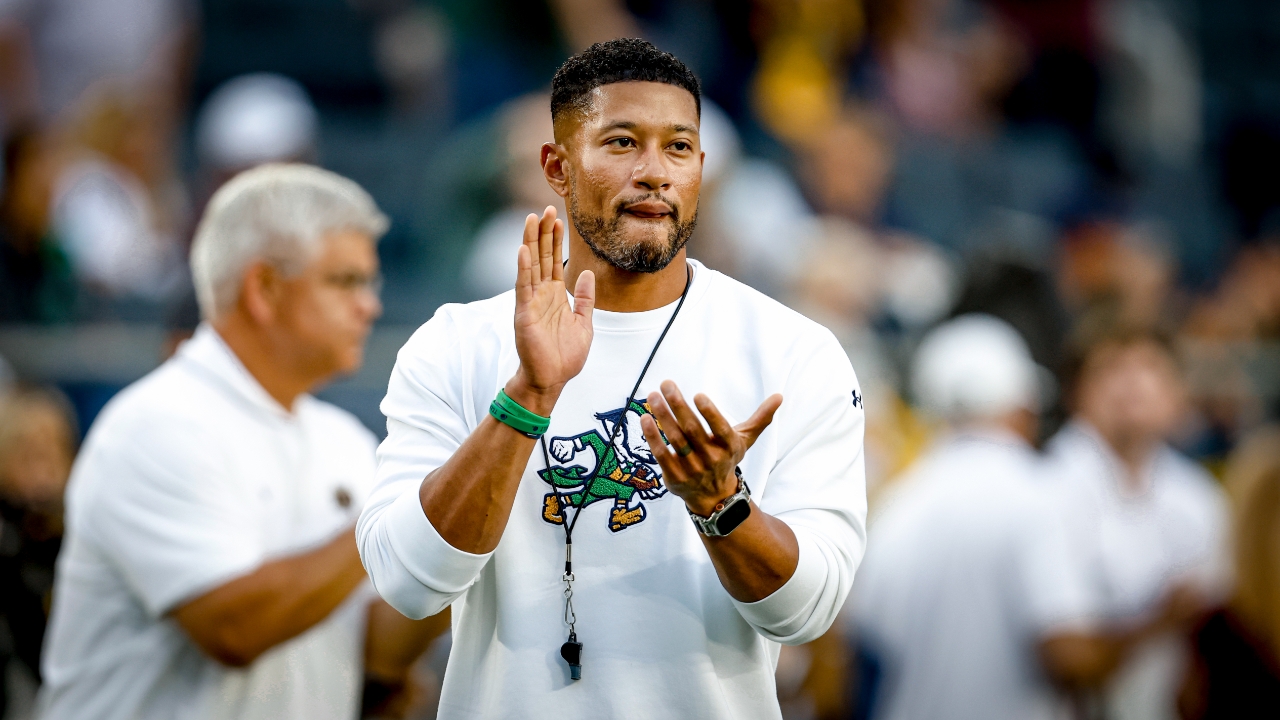
At this point, Notre Dame isn’t wishing for progress. The Irish are wishing for the final pieces.
Notre Dame’s program is close enough to a national title that every missing detail matters, from NIL support to depth at quarterback and the trenches.
If Christmas wishes came true in college football, here’s what each Notre Dame assistant and Marcus Freeman would be hoping to unwrap.
Marcus Freeman
Notre Dame’s head man might be the most coveted coach in college football, so what does he want for Christmas? One obvious answer: support. Specifically, donations to Rally over the Rockne Fund so Notre Dame football can fully flex its NIL muscle.
Is that a little selfish? Probably. But that’s the price of chasing national championships, and every great Notre Dame head coach is ultimately judged by titles. Freeman is no different.
Gino Guidugli
What more could Guidugli want as he has CJ Carr returning and two incoming freshman quarterbacks? Well, how about a backup quarterback with experience? It’s not easy to find a quarterback with experience who wants to play behind Carr, but programs do it every year. It’s vital for Notre Dame’s success as Carr didn’t miss a game in 2024 and that’s a rarity in college football.
Ja’Juan Seider
Seider’s gift may have come last winter when he decided to take the Notre Dame job. He missed the wild ending of the James Franklin era at Penn State and a disaster of a season in Happy Valley. Seider would love to make another splash on the recruiting trail, and that would be 2027 McKeesport (Pa.) five-star running back Kemon Spell.
Mike Brown
Notre Dame is close to having a championship-level receiver room. Several key pieces return, but Brown could still use an experienced boundary receiver. Michigan State transfer Nick Marsh is one intriguing option. Marsh shares an agent with CJ Carr, but the real Christmas miracle would be getting him into Notre Dame as a true sophomore.
If it’s not Marsh, the conversation starts with freshman Kaydon Finley showing he’s ready after spring ball. The Texas native will battle Micah Gilbert and Cam Williams, but Brown would feel far more comfortable if two proven options emerge at that spot.
Mike Denbrock
There are a few gifts Denbrock could desire, but the most important is a short-yardage fix. Notre Dame struggled at times in goal-to-go situations and in 2026, Denbrock won’t have Jeremiyah Love or Jadarian Price. Now, Denbrock should have plenty of talent at the running back position, but he’ll need to find a way for Notre Dame to be a little more successful in those situations in 2026 if the Irish want to achieve the big goal.
Joe Rudolph
This one is easy, especially with Aamil Wagner’s departure to the NFL. The ultimate gift for Rudolph is health and specifically for Charles Jagusah to remain healthy. A freak ATV accident cost Jagusah his season and the Irish need him more than ever with Rudolph looking to fill out his offensive line.
Chris Ash
The secondary has a chance to be the best in the country. If Notre Dame can generate more edge pressure in 2026, this defense could be overwhelming.
Boubacar Traore is one answer, but Ash needs a couple more players to step up over the next eight months to unlock this Ash defense.
Al Washington
Along the same lines, Washington would love to see a few defensive tackles under the tree. The interior line is losing key contributors, and Jason Onye’s petition for another year remains uncertain.
Defensive tackle recruiting is never easy, but a couple of big bodies who can eat space would make life much easier for Washington.
Mike Mickens
The man has everything. Mickens will have the nation’s top cornerback returning in Leonard Moore and one of the most experienced corners in the country on the opposite side in Christian Gray. Mickens also has young depth behind them. At safety, Tae Johnson and Adon Shuler make up one of the best safety groups in the country. Luke Talich is a jack of all trades and then there is incoming freshman Joey O’Brien.
Mickens needs the gift of a raise. He’s proven he can coach, develop and recruit at a high level. Notre Dame needs to make sure he knows he’s the defensive back coach in the country and that’s filling his pockets with love.
Marty Biagi
There are two gifts Biagi has asked for this Christmas. One would be a graduate transfer kicker with no injury history. The other would be another Aussie punter, as James Rendell worked out to perfection. Erik Schmidt’s development would be icing on the cake as he can kick and punt.
Want the latest scoop on the Fighting Irish? Sign up for our newsletter and become an ISD Premium Subscriber: Sign Up for ISD
Notre Dame Fighting Irish Under Armour Metallic Tri-Blend Unstoppable Fleece

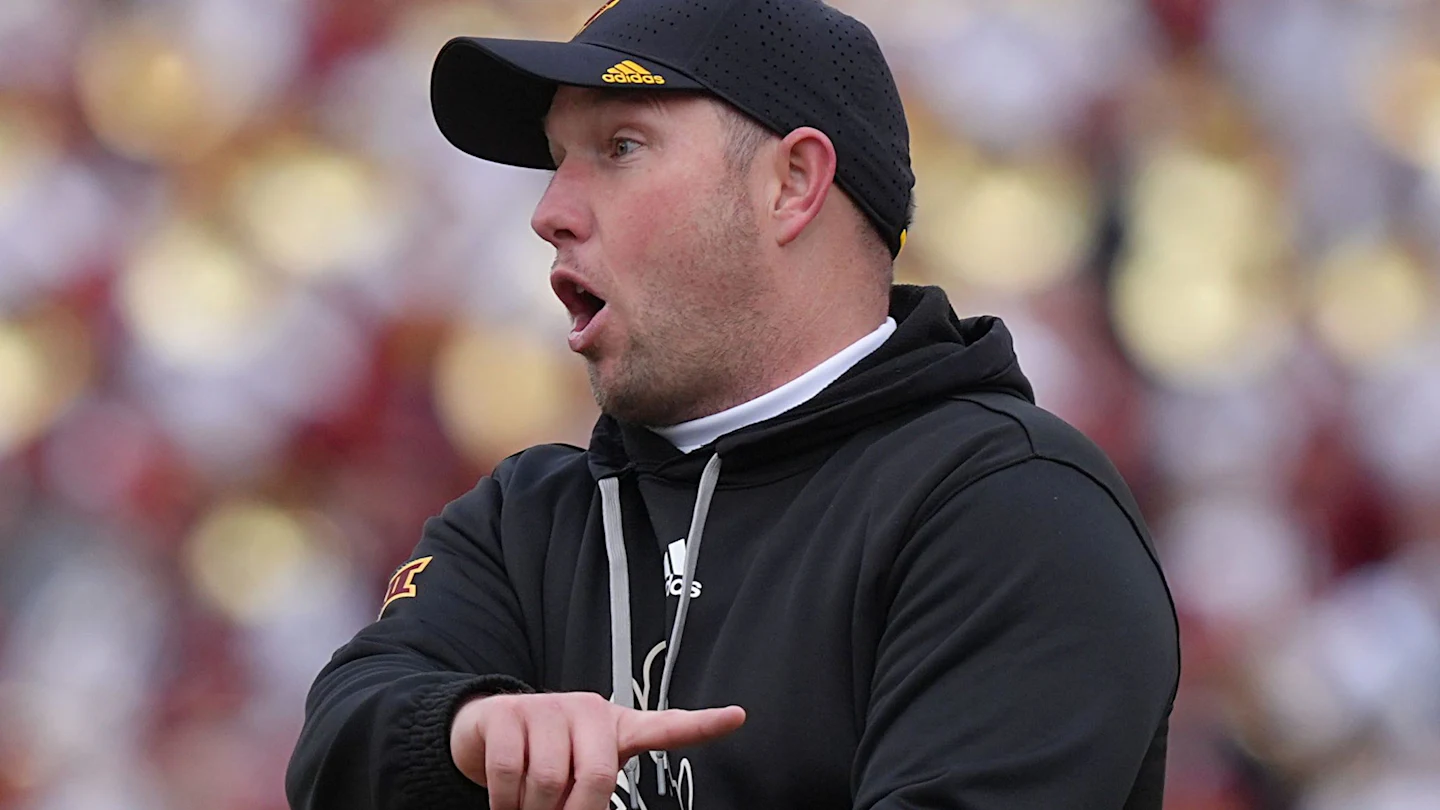
TEMPE — Fan support. Improving facilities. Competent head coaches. Nearly all of the factors that the Arizona State Sun Devils need to maintain quality athletic programs are in place.
Kenny Dillingham, Bobby Hurley, Molly Miller, volleyball coach JJ Van Niel, and many others have displayed marked moments of success during their respective tenures. Baseball, swim and dive, and volleyball have broken attendance records in the last year. The indoor practice facility for the football program appears to be well on the way to being constructed.
One thing that is missing is consistent support from within the sphere of NIL.
Arizona State was late in entering the “arms race” that name image and likeness has created – it has shown in recent years as well.
While the Sun Devils were able to accomplish things such as winning Big 12 titles in football (2024) and volleyball (2025), there are still limitations at the moment – this season of giving opens the door for individuals to make a difference that can shape the future of Arizona State athletics.
Dillingham Gets Honest About NIL Efforts
Dillingham was candid when speaking about the program’s NIL efforts last Saturday when interacting with media following reports that he had agreed to an amended contract with the university.
“Can we get people who aren’t involved, who maybe didn’t go to Arizona State who did go to Arizona State and are far away? Can we get the Phil (Mickelson) involved, like, get these guys involved in our program, the Jon (Rahm), can we get people back involved in this program, that and get them involved in a level that everybody knows, man, these guys love Arizona state.”
While the efforts the program has made since Graham Rossini took over as AD in May of 2024, they are still behind in many ways and surely could use a donor in a similar vein of Mickelson or Rahm.
This is a plan of attack that has proved to work in the past – as a high six-figure donation by program alum James Harden in 2024 likely funded the basketball program handsomely and was a big part in being able to keep stars such as Jayden Quaintance happy.
The effort didn’t work out long-term, but it shows that when the infrastructure is supported by passionate and influential fans – there are avenues any given program can take to reach the state of consistent contention
Read more on why the Arizona State men’s basketball team will exceed expectations in the 2025-26 season here, and on why the bright future of the football program isn’t dimmed by the loss to Arizona here.
Please let us know your thoughts when you like our Facebook page when you click right here.
Please follow us on X when you click right here, as well as @khicks_21 for nonstop Arizona State coverage!
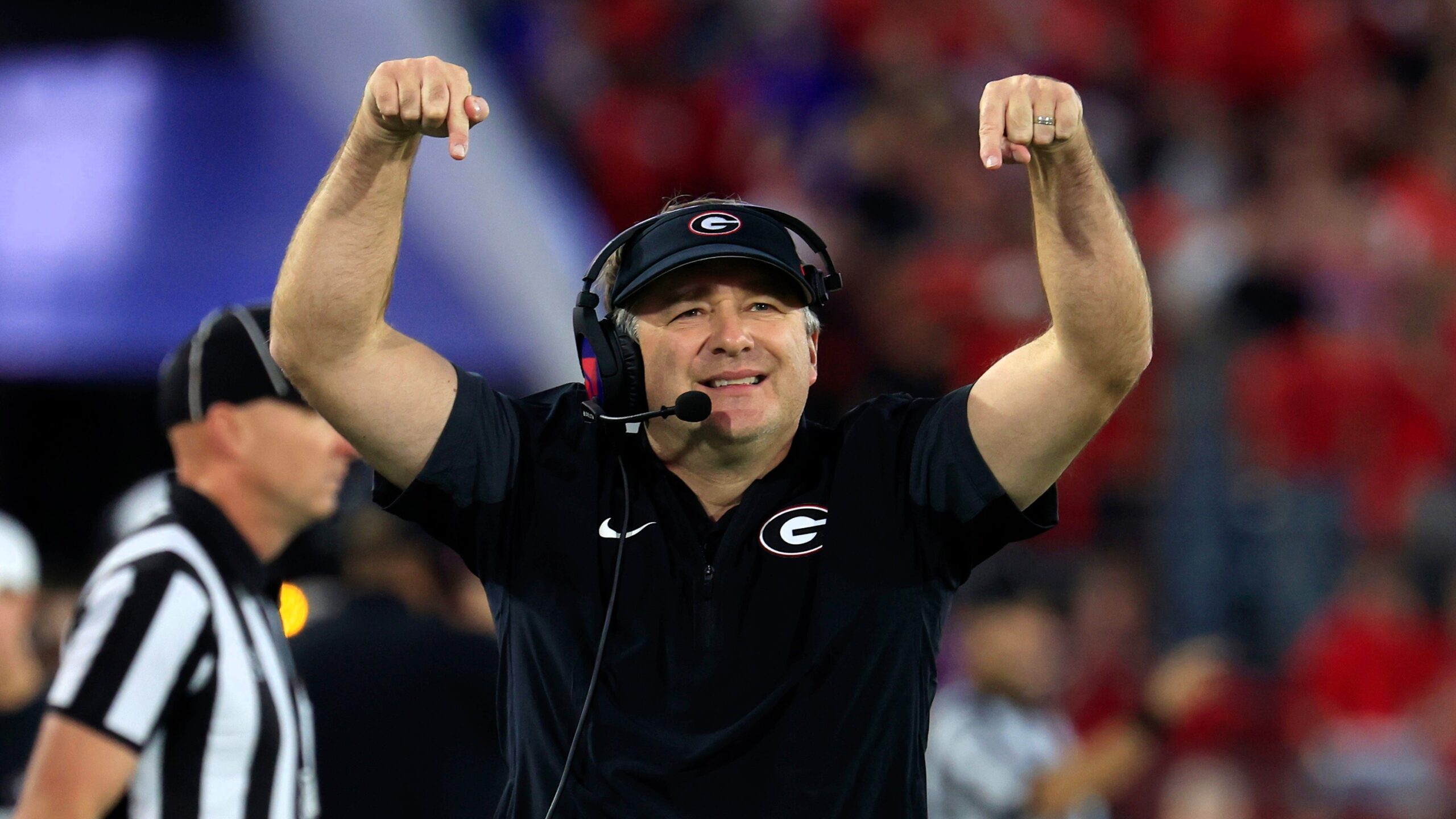
Throughout the month of December, college football players everywhere are making life-altering decisions about their future. Many are even releasing well-crafted announcements over social media regarding whether they intend to remain with their current program to seek greener pastures elsewhere.
Some upper classmen are even declaring their intention to enter next April’s NFL Draft or announcing postseason all-star game invites. And let’s not forget about National Signing Day on the first Wednesday of the month.
SUBSCRIBE to the On3 NIL and Sports Business Newsletter
At the same time, college football coaches are having often difficult and frank conversations with their current roster, while at the same time formulating a plan of attack ahead of Jan. 2nd, when the NCAA Transfer Portal opens for two full weeks.
It’s happening all over, … well, except in Athens apparently, where No. 3 Georgia (12-1) is busy preparing for a return to New Orleans for the College Football Playoff‘s Sugar Bowl national quarterfinal against No. 6 Ole Miss (12-1). Kickoff is set for 8 pm ET, New Year’s Day inside the Caesars Superdome. When asked about how he’s splitting his time between bowl prep and roster management at a recent press conference, UGA head coach Kirby Smart flipped the script regarding what he’s telling Bulldogs players that might approach him with concerns about their future.
“We’re focused on this team. I think it’d be remiss to say we’re focused on roster management. We’re not focused on it. We’re focused on prep and getting better,” Smart said Monday. “And for a while it’s been intrinsically looking at ourselves and asking each player: ‘Did you come here to develop? Did you truly come here to develop?’ Because if you did, all your buddies are out there right now, everybody’s announcing what they’re doing, announcing that I’m going into the portal, announcing that I’m re-signing. How about you announce that you’re getting better and you’re going to practice and actually do what (for the prior) 20 and 30 years college football players did before you, which was practice in December – when they’re on good teams – and get better.
“Because if you’re going to play somewhere else, you know what you need to do? You need to get better. If you’re going to play here, you know what you need to do? You need to get better,” Smart continued. “If you want to go to the National Football League and play, this is your last chance to get better. Because they’re not going to give you much opportunity, they’re going to cut you or keep you based on how you do, and they don’t get to practice in pads so many days. So development occurs in December for us, and that’s what we’ve been focused on.”

Rec Sports54 seconds ago
Maryland Youth Ballet takes center stage performing holiday classic

Rec Sports9 minutes ago
End of year means time to deliver some gifts | Andy Baskin

NIL12 minutes ago
Washington Huskies Star WR Denzel Boston Declares for 2026 NFL Draft

Rec Sports17 minutes ago
‘Athletics for the Mind’ Bennington Free Library to host chess tournament | Local News

NIL1 hour ago
Shane Beamer refutes LaNorris Sellers and Dylan Stewart NIL report

Sports2 hours ago
2025 Volleyball All-Area Team | Nvdaily

NIL2 hours ago
Congress fails NIL bill after LSU coach controversy, plans 2026 retry

Sports2 hours ago
Ballenas Whalers senior girls volleyball side shines at B.C. event

Sports3 hours ago
2025 Volleyball Player of the Year: Witherow makes big impact on Central program | Nvdaily

NIL3 hours ago
Notre Dame’s 2025 Christmas Wish List

Sports3 hours ago
Seven Volleyball Student Athletes Named NEWMAC Academic All-Conference

Rec Sports3 hours ago
FELONY CHARGES FILED AGAINST THREE IN EDWARDS COUNTY CIRCUIT COURT

Sports3 hours ago
Colorado volleyball poised to repeat success

Rec Sports3 hours ago
Myrtle Beach Corvette Club donates to local charities | News

Sports3 hours ago
Badgers news: Wisconsin adds top setter in 2026 freshman class

Rec Sports4 weeks ago
Fargo girl, 13, dies after collapsing during school basketball game – Grand Forks Herald

Sports4 weeks ago
Utah State Announces 2025-26 Indoor Track & Field Schedule

Motorsports2 weeks ago
SoundGear Named Entitlement Sponsor of Spears CARS Tour Southwest Opener

Motorsports4 weeks ago
Jo Shimoda Undergoes Back Surgery

Motorsports4 weeks ago
Redemption Means First Pro Stock World Championship for Dallas Glenn

Sports4 weeks ago
Texas volleyball vs Kentucky game score: Live SEC tournament updates

NIL4 weeks ago
Bowl Projections: ESPN predicts 12-team College Football Playoff bracket, full bowl slate after Week 14

Rec Sports3 weeks ago
Black Bear Revises Recording Policies After Rulebook Language Surfaces via Lever

Rec Sports4 weeks ago
Robert “Bobby” Lewis Hardin, 56

Motorsports2 weeks ago
Donny Schatz finds new home for 2026, inks full-time deal with CJB Motorsports – InForum

Rec Sports4 weeks ago
How this startup (and a KC sports icon) turned young players into card-carrying legends overnight

Sports3 weeks ago
Men’s and Women’s Track and Field Release 2026 Indoor Schedule with Opener Slated for December 6 at Home

Rec Sports3 weeks ago
How Donald Trump became FIFA’s ‘soccer president’ long before World Cup draw

NIL4 weeks ago
Indiana’s rapid ascent and its impact across college football

Rec Sports2 weeks ago
David Blitzer, Harris Blitzer Sports & Entertainment






-
 Motorsports2 weeks ago
SoundGear Named Entitlement Sponsor of Spears CARS Tour Southwest Opener
-
 Motorsports2 weeks ago
Donny Schatz finds new home for 2026, inks full-time deal with CJB Motorsports – InForum
-
 Rec Sports2 weeks ago
David Blitzer, Harris Blitzer Sports & Entertainment
-
 Motorsports3 weeks ago
JR Motorsports Confirms Death Of NASCAR Veteran Michael Annett At Age 39
-
Sports3 weeks ago
Elliot and Thuotte Highlight Men’s Indoor Track and Field Season Opener
-
Sports3 weeks ago
West Fargo volleyball coach Kelsey Titus resigns after four seasons – InForum
-
 Motorsports2 weeks ago
Rick Ware Racing switching to Chevrolet for 2026
-

 NIL2 weeks ago
DeSantis Talks College Football, Calls for Reforms to NIL and Transfer Portal · The Floridian
-
 Sports3 weeks ago
Temple Begins Indoor Track & Field Season at UPenn This Weekend
-
 NIL3 weeks ago
Colleges ponying up in support of football coaches, programs