
NIL
Updating the playbook: Paying the athletes

This is part 2 of a 2-part series examining the rapidly changing landscape of college sports. Read Part 1, The New Playbook here.
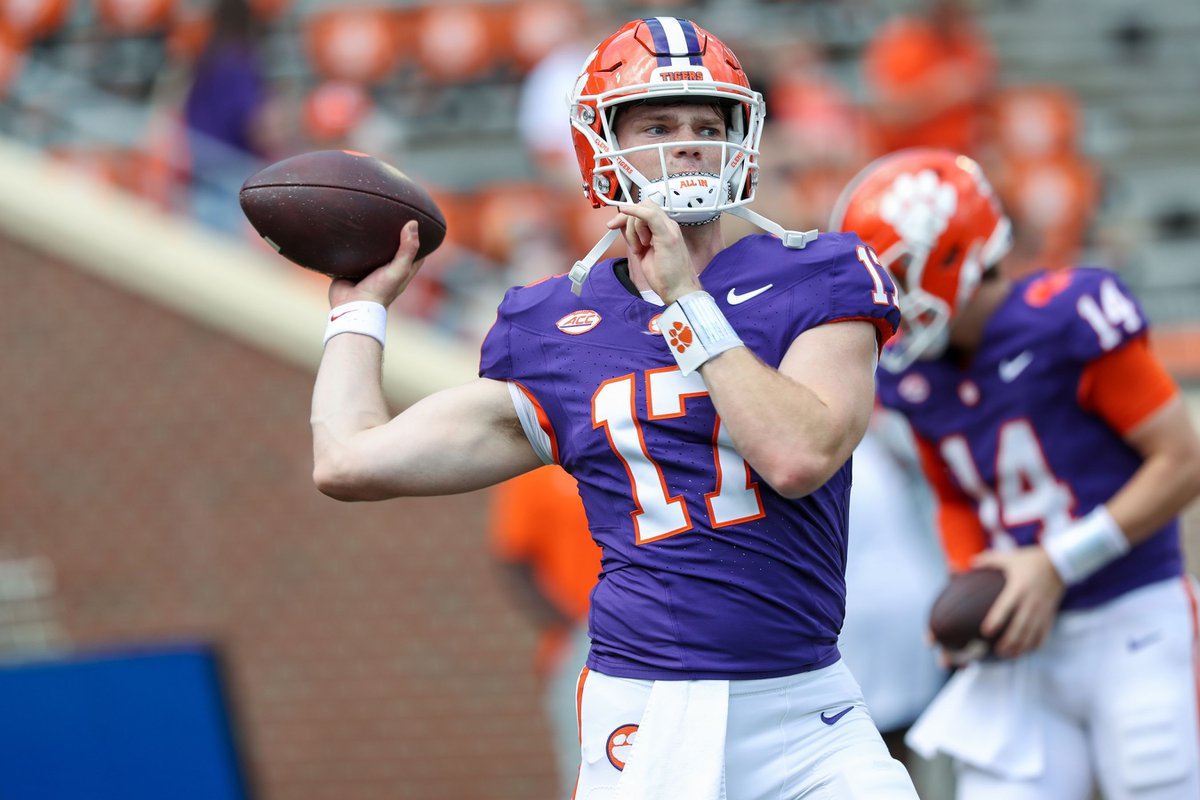
For Christopher Vizzina, the college football dream started early — and required an early maturity to match.
The former Briarwood Christian School quarterback was a nationally sought-after recruit with more than 30 offers, making cross-country visits to some of the nation’s top programs. He ultimately chose Clemson, a decision rooted not just in prestige, but in identity.
“I committed to Clemson because it fit who I was as a person and as a player,” Vizzina said. “Coach [Dabo] Swinney is an elite recruiter as well as an elite coach. He recruited me very hard.”
Those are quotes not commonly heard in today’s college landscape, which has become overshadowed by free-flowing transfers and NIL payments. Players like Vizzina are a breath of fresh air, not the norm.
He also bucks the trend when it comes to embracing progress and stability. He’s happy at Clemson and is biding his time, improving each day and staying focused on long-term growth in a college sports world where instant results are often the norm.
“My story is going to be different than some people,” he said. “I’ve decided to develop. But I’m very excited for the future. I think that it will pay off very soon.”
Vizzina has experienced the highs of national rankings and major offers — and the pressure that comes with them. He’s navigated the rise of NIL and seen the transfer portal reshape his sport. Through it all, he’s stayed grounded in his values and the big picture.
THE GAME JUST CHANGED
If you played Division I college sports in the last decade — or your kid did — this summer, money’s coming.
Not from boosters. Not from collectives. From the university itself.
On June 14, a federal judge finalized House v. NCAA, a $2.8 billion antitrust settlement that shatters the 119-year model of amateurism. For the first time, schools can pay their athletes directly — not for appearances, not through shell groups — but straight from university revenue.
If you are a fan of college sports, the games are now unlike anything you’ve known.
And it starts now.
WHO GETS PAID – AND HOW
SIDEBAR: House vs. NCAA Settlement Explained
The House settlement triggers two historic changes:
Backpay: Any Division I athlete who competed between 2016 and 2024 can file for compensation. Payouts will depend on sport, tenure and school revenue — with football and men’s basketball expected to receive the largest shares.
Revenue sharing: Starting this fall, schools can pay current athletes up to $20.5 million annually. The cap will rise each year over the 10-year agreement. Most schools are expected to split it like this:
- 75% to football
- 15% to men’s basketball
- 5% to women’s basketball
- 5% to all other sports
This is not NIL 2.0. This is something else entirely.
NIL was always about outside money — sponsors, side hustles, booster funds. The House settlement puts the money on campus. Schools will now pay athletes from the same pool used for coach salaries, facilities and scholarships.
That makes it bigger. And messier.
Only the Power 4 conferences — SEC, Big Ten, ACC, Big 12 — were named in the suit. But all Division I schools must contribute to the backpay fund, even if they’ve never had a single NIL deal. Many smaller schools are already trimming rosters, adjusting scholarships and revisiting budgets. Some athletes will get paid. Others may get cut.
‘TRANSFORMATIVE LEGISLATION’
Birmingham entrepreneur and athlete advocate Jim Cavale has been tracking this shift from the beginning.
“In just the first year — from July 2021 to July 2022 — we tracked $350 million in NIL activity,” Cavale said. “And 90% of that was donor-driven funds funneled through collectives to pay athletes to play.”
Now, he says, things are even murkier.
“The biggest issue athletes face is confusing and misleading contracts,” Cavale said. “These so-called NIL deals are often performance-based agreements in disguise.”
ESPN national analyst Tom Luginbill sees the same storm building.
“This is the most transformative legislation in college sports in the last 15 years, and it dropped with no guardrails,” he said. “(Resource-rich) programs like Alabama, Ohio State, Georgia can do whatever they want. Most others can’t.”
And he’s worried.
“What’s coming is this: players getting paid big money, surrounded by bad actors. Agents want 20–30%. A kid enters the portal, takes bad advice, spends the money — and doesn’t go pro. That’s the reality.”
NEXT: CONGRESS AND COURTS
Just days after the House ruling, a bipartisan group in Congress introduced the SCORE Act — a bill that would:
- Cap revenue sharing and standardize disclosures
- Pre-empt state NIL laws
- Create a federal enforcement commission
- Affirm that college athletes are not employees
That last point might be the whole game.
The NCAA’s biggest fear isn’t payment; it’s employment. If athletes are ruled to be employees, everything changes: benefits, unions, workers’ comp, labor law. The House deal opened the door to paychecks. Congress is now trying to close it before anyone says the E-word.
But Cavale says the conversation still leaves out the people it claims to protect.
“These are being structured as NIL, not employment — and there’s still no agent regulation, no contract standards,” he said. “The athlete’s voice is missing. What’s really needed is collective bargaining.”
Meanwhile, legal uncertainty continues. The House settlement is not the final word — and may not withstand future challenges.
In June, eight current and former female athletes filed a Title IX lawsuit challenging the revenue-sharing model, arguing that its disproportionate distribution to men’s sports violates federal gender equity laws. More suits are likely. Title IX, employment law and due process could all play a role in shaping — or unraveling — the current plan.
NCAA leaders say that’s why congressional intervention is critical. The proposed SCORE Act would codify House into law, protect it from further litigation and preempt conflicting state-level NIL rules. But despite years of lobbying, no federal college sports law has ever passed. For now, the policy landscape remains a moving target.
WELCOME TO NIL GO
On June 17, a new layer of regulation arrived: NIL Go — a clearinghouse overseen by the Collegiate Sports Commission and run by Deloitte.
Athletes must now report any deal over $600. Each gets reviewed for “fair market value.” If Deloitte flags it as inflated, it can be denied or sent to arbitration. There is no legal standard for that value. No consistent appeal process. Just a new filter between athletes and the opportunities they chase.
And that’s happening as university-issued paychecks are set to hit.
The result? Confusion, whiplash — and change.
Athletes like Vizzina are currently weathering NIL, the transfer portal and scholarship uncertainty. Now they face something even stranger: a paycheck from the school they play for.
What that means — and how long it lasts — is still in question.
The checks start July 1.
The system? Still up for grabs.
But Vizzina hopes other athletes keep the bigger picture in mind, and not just the instant gratification that comes with payments and transfers.
“I would say just stay true to who you are and go somewhere that values the type of person you are and player,” he said. “Don’t go somewhere where they tell you everything you want to hear. Go somewhere where you can become a man and become the football player you want to be.”

Continue Reading
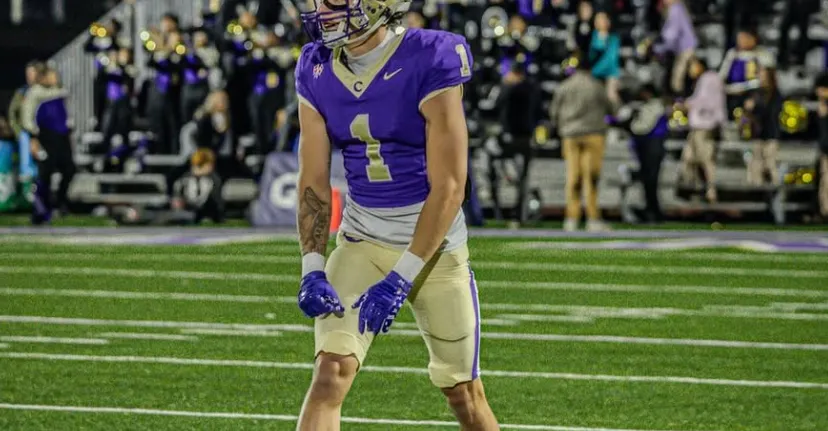
As first reported by On3’s Hayes Fawcett on Friday afternoon, 2026 four-star wide receiver signee Brady Marchese has requested a release from his national letter of intent with the Michigan Wolverines.
The Georgia native flipped from the hometown Georgia Bulldogs to Michigan during the early signing period earlier this month. Marchese is the third 2026 class member to do so following the firing of head coach Sherrone Moore, as he joins four-star tight end Matt Ludwig and three-star offensive lineman Bear McWhorter to ask out of their letter of intent.
The Wolverines now have just two wide receivers left in the incoming freshman class — four-star Travis Johnson and three-star Jaylen Pile.
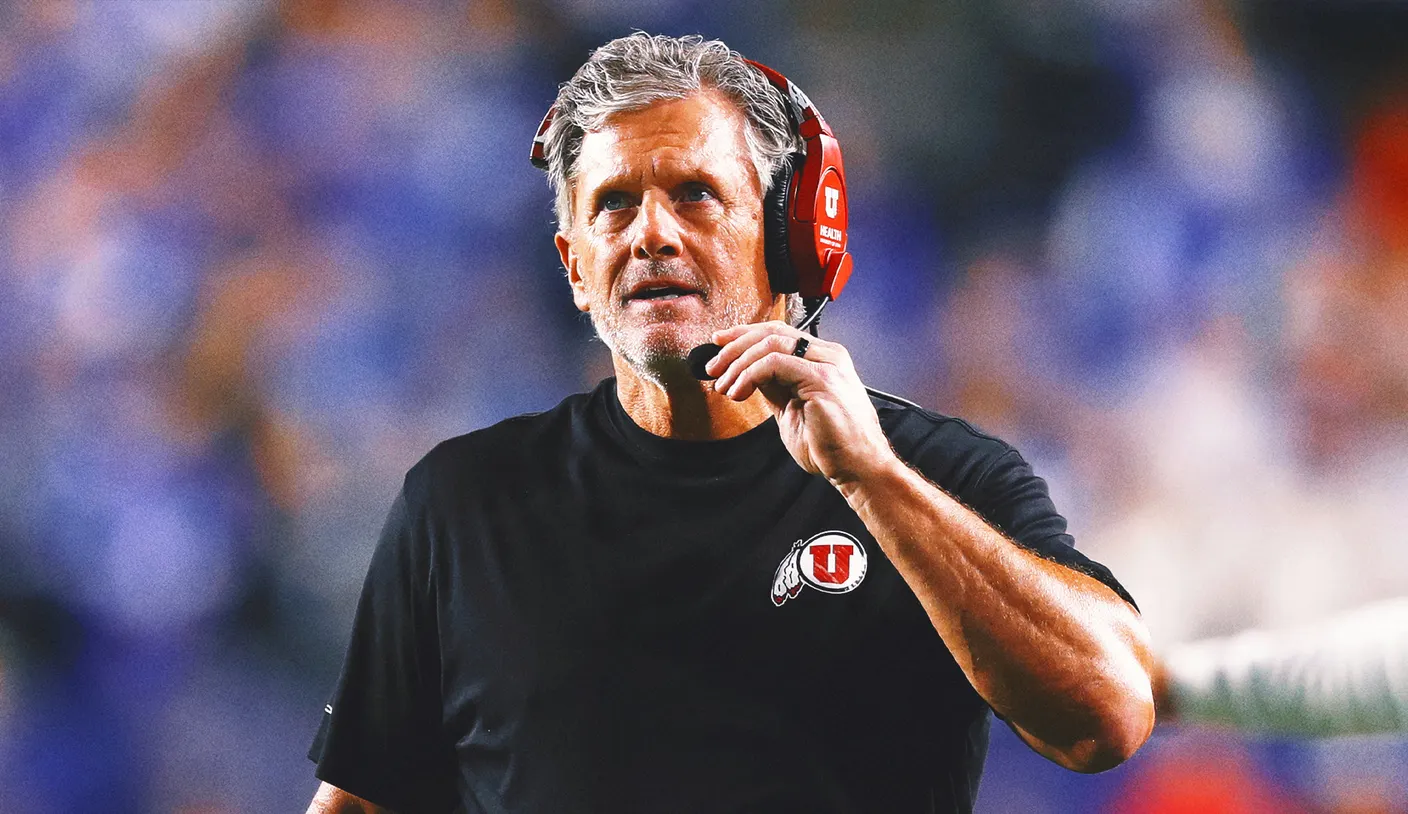
Michigan has found its next head coach, as the Wolverines are hiring former Utah Utes coach Kyle Whittingham to a five-year deal, per Yahoo Sports and ESPN.
Michigan athletic director Warde Manuel later confirmed the move in a statement announcing the hire of Whittingham as the school’s 22nd head football coach.
“Kyle Whittingham is a well-respected and highly successful head coach who is widely recognized as a leader of exceptional character and principled leadership,” Manuel said Friday. “Throughout our search, he consistently demonstrated the qualities we value at Michigan: vision, resilience, and the ability to build and sustain championship-caliber teams. Kyle brings not only a proven track record of success, but also a commitment to creating a program rooted in toughness, physicality, discipline and respect — where student-athletes and coaches represent the university with distinction both on and off the field. We are excited to welcome Kyle to the University of Michigan family as he takes the helm of our football program.”
The new pact is 75% guaranteed and includes an average of $8.2 million per year, with Whittingham expected to make an $8 million salary in 2026, according to ESPN.
Whittingham announced earlier this month his plans to step down after Utah’s bow game vs. Nebraska – the Las Vegas Bowl is set for Dec. 31 – following his multi-decade tenure with the program. But he joked at the time that he wasn’t retiring and instead merely entering the transfer portal. With the actual transfer portal opening up on Jan. 2 and Michigan still without a head coach, the timing of the hiring worked out for both parties.
Whittingham will be leaving Utah to be at the Citrus Bowl, where Michigan will play against Texas, according to FOX Sports’ Bruce Feldman.
[What’s Next: 3 Priorities for Kyle Whittingham, Reportedly Michigan’s New Coach]
“I am grateful to our administration, staff, players, and coaches for their commitment, trust, and hard work throughout the years,” he wrote in a statement. “This university and football program mean a great deal to me, and I am proud of what we have built together. I appreciate the support from the University of Utah allowing me to step away at this time.
I also want to thank our fans. Your loyalty, passion, and support have been second to none. Whether at Rice-Eccles Stadium or representing Utah across the country, you have made this time special and created memories that will last a lifetime.
Utah will always hold a special place in my heart, and I wish Coach [Morgan] Scalley and the program a smooth transition and continued success moving forward. Thank you for everything.”
The 66-year-old Whittingham began his coaching career as a graduate assistant at BYU in 1985 after playing as a linebacker in college for BYU before a brief stop in the NFL with the Los Angeles Rams in 1987. He also played in the United States Football League and Canadian Football League before devoting himself entirely to coaching. He served as the defensive coordinator for Eastern Utah, the special teams and linebackers coach for Idaho State before becoming the defensive coordinator in 1992. He then joined Utah’s coaching staff as the defensive line coach in 1994 and moved on to defensive coordinator before becoming the head coach in 2005.
Whittingham has a 177-88 lifetime record in the NCAA, and the Utes were 11-6 in bowl games during his time leading them. He brought Utah the Mountain West Conference championship in 2008, back-to-back Pac-12 championships in 2021 and 2022 and four Pac-12 division championships in 2015, 2018, 2019 and 2021. Whittingham received Coach of the Year honors in both the Mountain West and the Pac-12 and is the all-time leader in wins for Utah.
Utah’s athletic director Mark Harlan later praised Whittingham’s run and acknowledged the program is “fully prepared” to transition to Morgan Scalley, who was promoted on Dec. 13 after 10 seasons as defensive coordinator.
“The University of Utah is grateful for Coach Whittingham’s incredible contributions over his long tenure at the university, and we wish him and his family all the best with this next step in his career. After discussions with Coach Whittingham, his representatives and the University of Michigan, we have granted their request to allow him to join the Michigan program immediately.
Morgan Scalley is fully prepared to take over leadership of the Utah football program, and we join him in keeping our focus on our team, and supporting our student-athletes through this final game of the 2025 season at the Las Vegas Bowl on Dec. 31.”
“Kyle Whittingham is exactly what Michigan needs as a program right now,” FOX Sports College Football Analyst Robert Griffin III posted to X in reponse to the news. “Runs a disciplined program with an edge to it. Is a defense first coach who will play complimentary football. Eager to prove he isn’t done winning. Sounds like what Michigan itself needs.”
The Wolverines – who have had nine different head coaches, including interim coaches during Whittingham’s tenure with Utah – had been targeting Whittingham surely because of his continued success with Utah, whether in the Mountain West, Pac-12 or Big 12. There’s also his ability to build Utah into a strong program, despite a lack of relative resources compared with bigger football schools, like the one he’s now taking over.
Michigan’s previous coach, Sherrone Moore, was fired for cause on Dec. 10 following an investigation about an inappropriate relationship with a staff member. Following his firing, Moore was charged with three crimes, including home invasion.
“U-M head football coach Sherrone Moore has been terminated, with cause, effective immediately,” Manuel said in a statement. “Following a University investigation, credible evidence was found that Coach Moore engaged in an inappropriate relationship with a staff member. This conduct constitutes a clear violation of University policy, and U-M maintains zero tolerance for such behavior.”
Moore, who was in his second season with Michigan, was suspended for two games in 2025 as part of self-imposed sanctions for NCAA violations related to an advanced scouting scandal. The NCAA added a third game to the suspension, which was to keep Moore off the sideline for next year’s opener against Western Michigan. Moore previously deleted his entire 52-message text thread on his personal phone with former staffer Connor Stallions, who led the team’s sign-stealing operation for the program. The texts were later recovered and shared with the NCAA.
The Associated Press contributed to this report.
Want great stories delivered right to your inbox? Create or log in to your FOX Sports account, and follow leagues, teams and players to receive a personalized newsletter daily!
FOLLOW Follow your favorites to personalize your FOX Sports experience
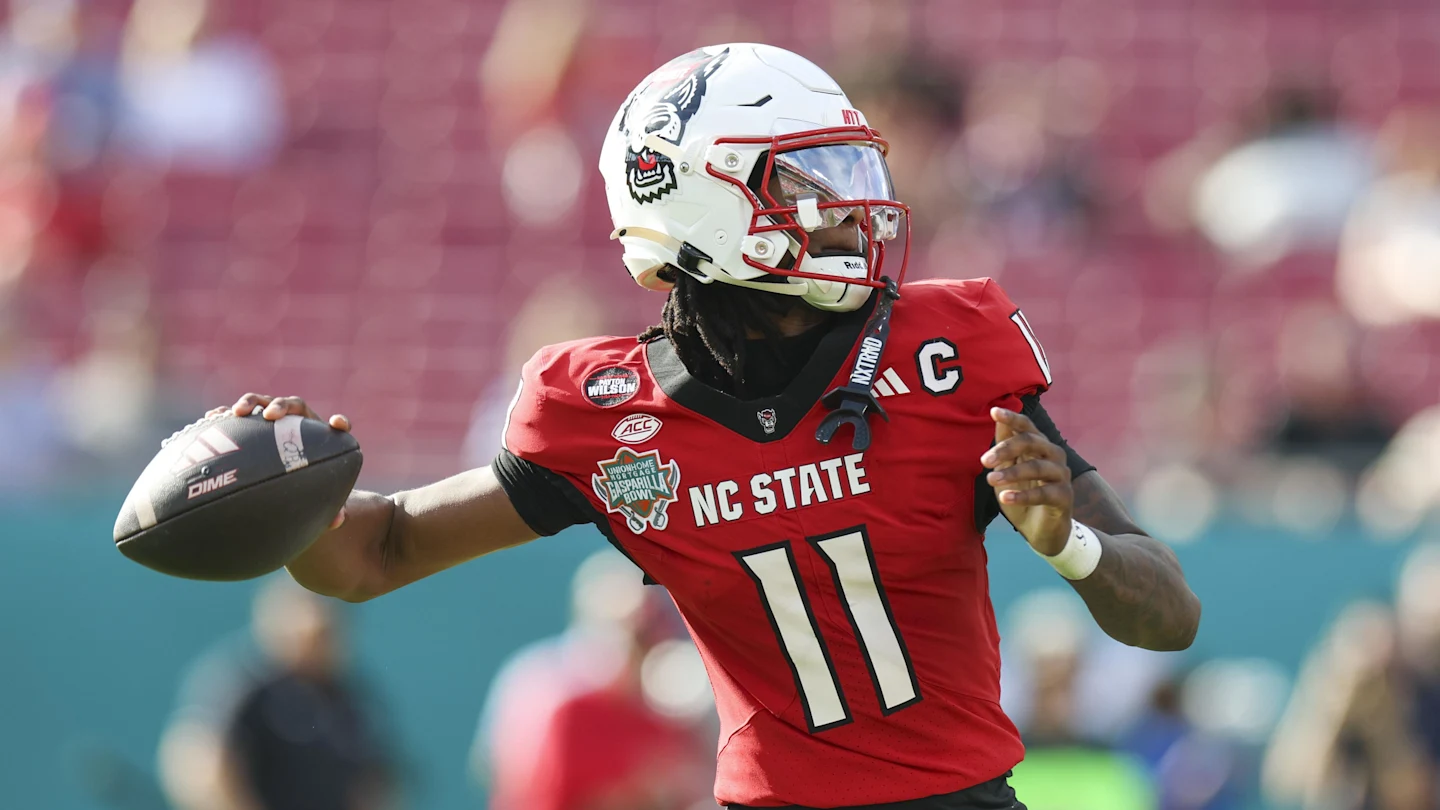
The NIL era of college athletes is constantly changing and evolving. Sometimes, the terms of NIL situations change based on new understandings, and sometimes, they change because existing terms simply aren’t sustainable.
One critic of the NIL contracts at North Carolina State has raised a substantial issue. Attorney Darren Heitner, as shared by Sports Business Journal. raised a substantial NIL issue about the Wolfpack in a recent social media post.
Heitner noted that in reviewing NC State’s NIL agreement, he was concerned by a provision under which “athletes are liability for confidentiality breaches by the own reps” including parents, agents, and attorneys. More specifically, under the provision, athletes could lose up to 50% of payment if terms are disclosed. This provision exists despite, as Heitner notes, athletes having “no control over third parties.”
Heitner concluded his analysis by noting, “Universities shouldn’t be drafting one-sided provisions that penalize students for others’ actions.”‘
Noticed a troubling provision in NC State #NIL agreement. Athletes are liable for confidentiality breaches by their own reps (parents, agents, attorneys). Athlete can lose 50% of payment if terms are disclosed despite having no control over third parties. Universities shouldn’t…
— Darren Heitner (@heitner) December 25, 2025
The veil of secrecy around NIL is very clear and obvious. It is perhaps unsuprising that the players themselves are contractually barred from discussing terms of NIL arrangements. After all, student-athletes have not broadly been allowed to unionize and there’s doubtlessly some concern among schools that if moe information is freely available, athletes will play schools off of each other on the respective deals.
But the potential to hold athletes fiscally responsible for disclosures by third parties is an unusual provision. Given the two-way relationship between athletes and agents, that particularly issue might even be plausible. Buf saying that if an athlete’s parents reveal some aspects of an NIL deal, the athlete might forfeit half of the slated pay is indeed a confusingly draconian proposal.
This is particularly interesting in light of the House requirement that athletes are required to disclose NIL deals that have a value exceeding $600. Based on the House case, athletes are required to disclose deals even if the deals otherwise would be subject to non-disclosure language. Accordingly, the mandated legal requirements on athletes could already run afoul of non-disclosure provisions, which would seem to further make NC State’s penalty for disclosure even more questionable.
Advocates of NIL revision consistently suggest that a single binding framework will help overcome inconsistent issues across various states and schools. Apparently, one of the issues that might be legislated is this potential responsibility against an athlete for third-party disclosure.
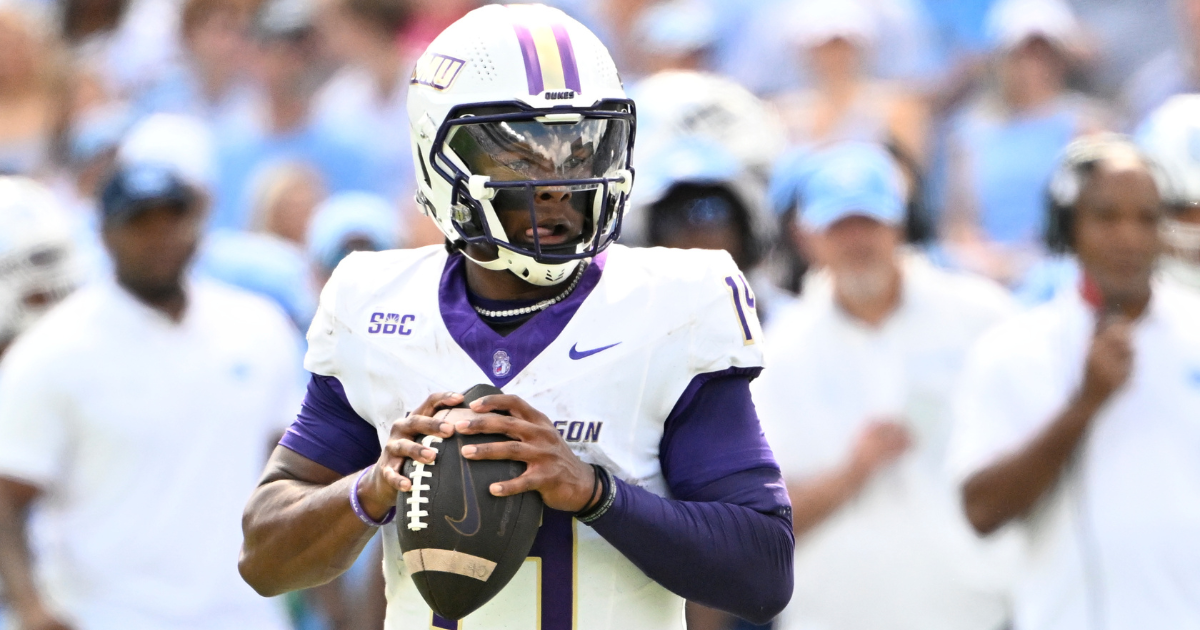
James Madison QB Alonza Barnett III plans to enter the NCAA transfer portal, On3 has learned. Barnett helped led the Dukes to the College Football Playoff in 2025.
Barnett was QB1 all season for James Madison’s 12-2 finish to the season, which came to an end after losing to Oregon 51-34 in the College Football Playoff. He led the Dukes to a Sun Belt Championship after going undefeated in conference play as well.
Statistically, Barnett completed 216-370 (58.4%) of his passing attempts for 2,806 yards. 23 touchdowns and eight interceptions. He added 127 carries for 589 yards and 15 additional touchdowns on the ground as JMU’s second-leading rusher.
Barnett’s former head coach at JMU, Bob Chesney, is heading to UCLA as the Bruins’ next head coach. Nico Iamaleava, UCLA’s starting quarterback in 2025, has re-signed with the Bruins for next year, making it unclear what’s next for Barnett’s college football journey.
Before college, Barnett was a part of the 2022 recruiting class and was a three-star recruit. He clocked in as the No. 1,786 overall recruit, per the Rivals Industry Rankings, which is a proprietary algorithm that compiles ratings and rankings from all four primary recruiting media services. Barnett was the No. 116 QB in his class and No. 45 player from his home state of North Carolina.
Once the NCAA transfer portal opens on Jan. 2, players can officially enter their names in the NCAA transfer portal and go on to initiate contact with their preferred schools. The portal will be open for 15 days and close on Jan. 16.
Notably, players who are on teams competing in the national championship game are allowed five extra days to make their portal decision. The College Football Playoff championship game will be played on Jan. 19, so the players on those teams will be allowed until Jan. 24 to enter the portal and choose their next school.
To keep up with the latest players on the move, check out On3’s Transfer Portal wire. The On3 Transfer Portal Instagram account and Twitter account are excellent resources to stay up to date with the latest moves.
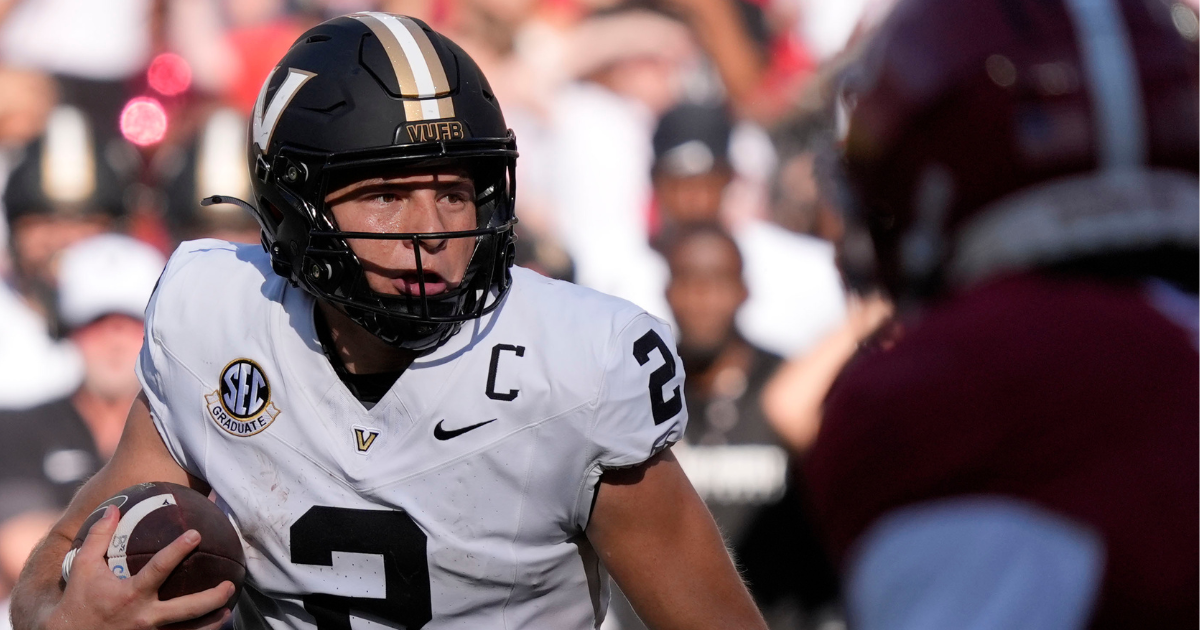
Attorneys in the Diego Pavia eligibility lawsuit criticized the NCAA’s decision on former NBA draftee James Nnaji in a new filing. The “memorandum in support of a preliminary injunction” also included a poem.
The filing took inspiration from The Night Before Christmas before criticizing Nnaji’s eligibility decision. He was the No. 31 overall pick in the 2023 NBA Draft, but committed to Baylor on Christmas Eve after the NCAA awarded him four years of eligibility. Nnaji never played in an NBA game or signed a standard NBA contract, and he played professionally in Europe.
SUBSCRIBE to the On3 NIL and Sports Business Newsletter
In Friday’s filing, attorneys representing Pavia and the other plaintiffs in the suit ripped the NCAA’s handling of the situation. As the former junior college players seek an additional year of eligibility, the lawyers argued for a preliminary injunction in light of the Nnaji decision. Pavia previously said 2025 would be his final season.
“When what to my wandering eyes should appear, but… the hypocrisy of the NCAA granting four years of eligibility to a 21-year-old European professional basketball player with four years of professional experience who was drafted by an NBA team two years ago,” the filing reads.
“He will be 25 before he runs out of eligibility. Meanwhile, the NCAA argues to this Court that high school seniors are harmed if a 22- or 23-year-old former junior college player gets one more year of college football.”
In addition, Pavia’s lawyers are seeking to file another amended complaint while adding more plaintiffs. The suit still does not have class-action status, meaning it would only impact plaintiffs listed. Tennessee quarterback Joey Aguilar is one of the plaintiffs after his addition last month.
More on the Diego Pavia eligibility lawsuit
Diego Pavia received a sixth season of eligibility following a preliminary injunction late last year as a result of his suit against the NCAA. He argued his time at New Mexico Military Institute should not count against his eligibility. As his attorneys worked to make it a class-action case, though, the Vanderbilt quarterback said he does not intend on playing another year at Vanderbilt.
In September, a hearing took place in the U.S. Court of Appeals for the Sixth Circuit in which Diego Pavia’s attorneys threatened to stack a challenge to the redshirt rule. They also said they would ask for another injunction that would allow Pavia to play again in 2026, according to sports law professor Sam Ehrlich. Pavia took to social media to make it clear 2025 would be his final season.
“A big part of the hearing was about whether the NCAA’s appeal was moot, meaning that the appellate opinion wouldn’t actually affect anything and thus doesn’t really matter, because Pavia would still be able to play for 2025 based on the waiver, and the appeal is on an injunction based on that waiver,” Ehrlich previously told On3’s Pete Nakos. “Pavia’s attorney argued that the appellate decision is still relevant because if the court finds that the rules are commercial and thus subject to antitrust law, he’ll be filing for a new injunction or an expedited trial schedule at the district court seeking to play 2026 as well.
“It makes sense given that his attorney is also involved in the new class action lawsuit challenging the four seasons rule overall, and Pavia would be seeking — if you take the JUCO year out of the picture — his fifth season in five years.”

Michigan hired a winner — literally and figuratively in Kyle Whittingham, with whom the Wolverines reportedly finalized a five-year deal on Friday.
Most importantly, he’s a clean name, with no ties to the Jim Harbaugh regime, who can stabilize the program at a moment of great tumult.
“Someone better tell [Ohio State coach] Ryan Day there’s a real ball coach at Michigan now,” an SEC assistant coach told me.
Whittingham brings more than two decades of coaching experience to one of the biggest brands and best-known programs in the sport. After succeeding Urban Meyer — who is widely regarded as one of the best college football coaches of all-time — at Utah, Whittingham put together an impressive 21-year run as the program’s head coach.
While Whittingham was traveling Friday with the Utes to the Las Vegas Bowl, where Utah plays against Nebraska on Dec. 31., he is expected to join Michigan at the Citrus Bowl, where the Wolverines will take on Texas, also on New Year’s Eve.
[Let’s Debate: 9 Best College Football Players Entering the Transfer Portal]
Last season, Whittingham capped off a 177-88 record in Salt Lake City with a 10-win season and a No. 15 ranking. He’s shown he can win on the biggest stages the sport can offer, too. Alongside two Pac-12 Conference titles and one Mountain West Conference title, he led the Utes to a 2005 Fiesta Bowl win and, in the 2009 Sugar Bowl, a dominant 31-17 win against Nick Saban’s Alabama to cap an undefeated 2008-09 season.
Whittingham is one of the most highly-regarded head coaches in the sport and more than ready for the opportunities and challenges the Wolverines face.
“They fell into a perfect hire for their situation,” an industry source told me.
Now, at 66, Whittingham will bring that experience to a Michigan program in turmoil following the surprising but necessary decision to fire former Wolverines head coach Sherrone Moore. What’s next are the three most important action items on a list of to-dos for the Wolverines and their new head coach.
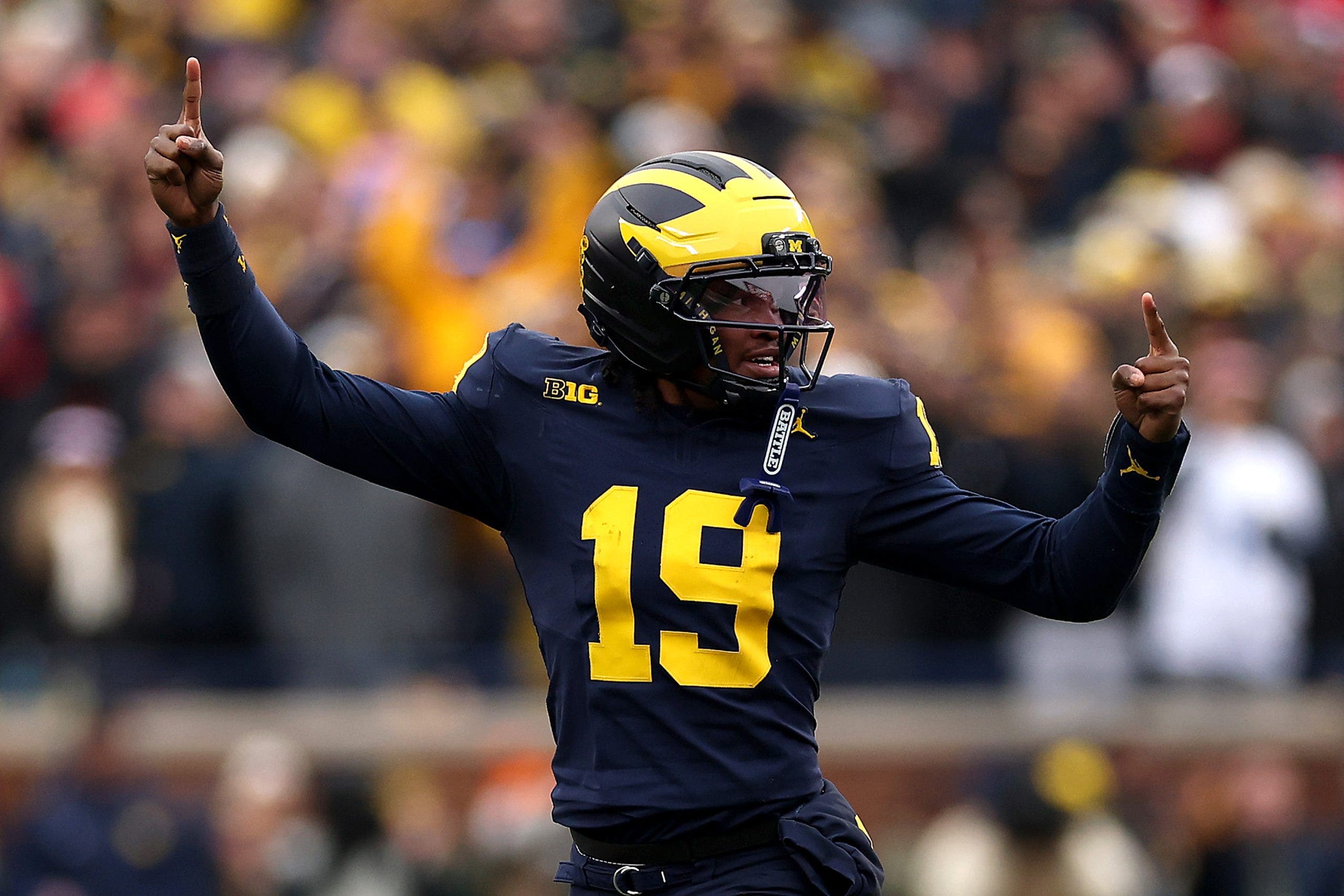
1. Retain Michigan QB Bryce Underwood
(Photo by Luke Hales/Getty Images)
This one hasn’t changed since I wrote about Michigan’s to-do list back on Dec. 11. Since Moore’s firing for cause, Underwood is the most important person to retain in the entire Michigan program.
“If he enters the portal, that could put them back further than losing the head coach,” a Big Ten assistant coach told me.
As a true freshman, Underwood accounted for more than 2,500 total yards, 14 touchdowns and eight giveaways through this season. Retaining QB1 in Ann Arbor, regardless of who the next head coach is, gives the Wolverines the best chance to compete for conference and national championships in 2026.
Along with Underwood, running back Jordan Marshall, wide receiver Andrew Marsh, cornerback Jyaire Hill and offensive tackle Andrew Sprague enjoyed breakout years for the Wolverines and, as core players, are expected to be integral to their success in 2026.
[2025 CFP Odds: Lines, Spreads for Each Quarterfinal Game]
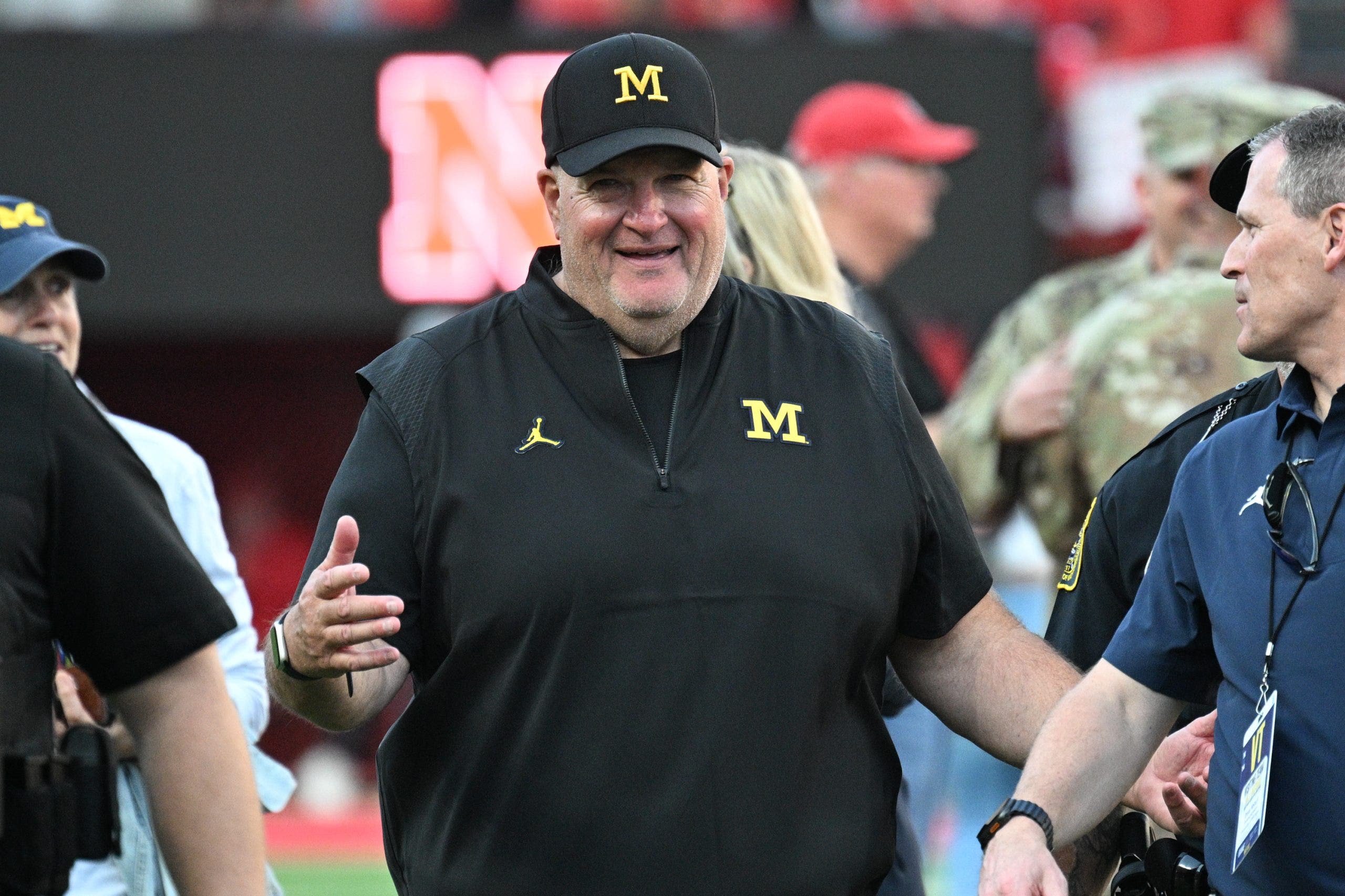
2. Hire a staff that improves the roster immediately
(Photo by Steven Branscombe/Getty Images)
Michigan is in the midst of a trying time for itself, its fans and its alumni.
Michigan athletic director Warde Manuel moved swiftly to install Biff Poggi as interim head coach, and one reason was to give the team the best chance to stay intact while it identified its next permanent head coach. Amid the coaching search, the No. 18 Wolverines are also trying to finish this season with 10 wins and a victory against No. 13 Texas in the Citrus Bowl.
“If they get through the bowl game, beat Texas and hire the right guy, it’s the best save they can hope for,” a Big Ten assistant coach recently told me.
Since then, Poggi has been candid about the dire situation the Wolverines are in just days before the program’s game against the Longhorns.
“We sent them home for Christmas [Monday], and I think there’s a really good chance that we’re going to have many more opt-outs for the game unfortunately,” Poggi told a recent episode of The Stampede, a Texas Longhorns podcast.
“Because we’re in such a state of flux, and when they get to this business of it, they think, ‘We don’t have a coach, we’ve had this situation with our former coach, there’s investigations, all these things. I don’t know who’s going to coach me. Why do I want to play in that game?’ I can see some of that happening.”
Poggi revealed no Michigan players currently are in ongoing negotiations for agreements for the upcoming season.
“We’re not able to give anybody a financial agreement because we don’t have a permanent coach,” he said on The Stampede.
That moratorium will need to come to an end — fast. The Wolverines need to not only hire a general manager to retain the current roster but also to hit the portal hard when it opens from Jan. 2 to 16.
3. Layer your winning traits over the top of the Wolverines
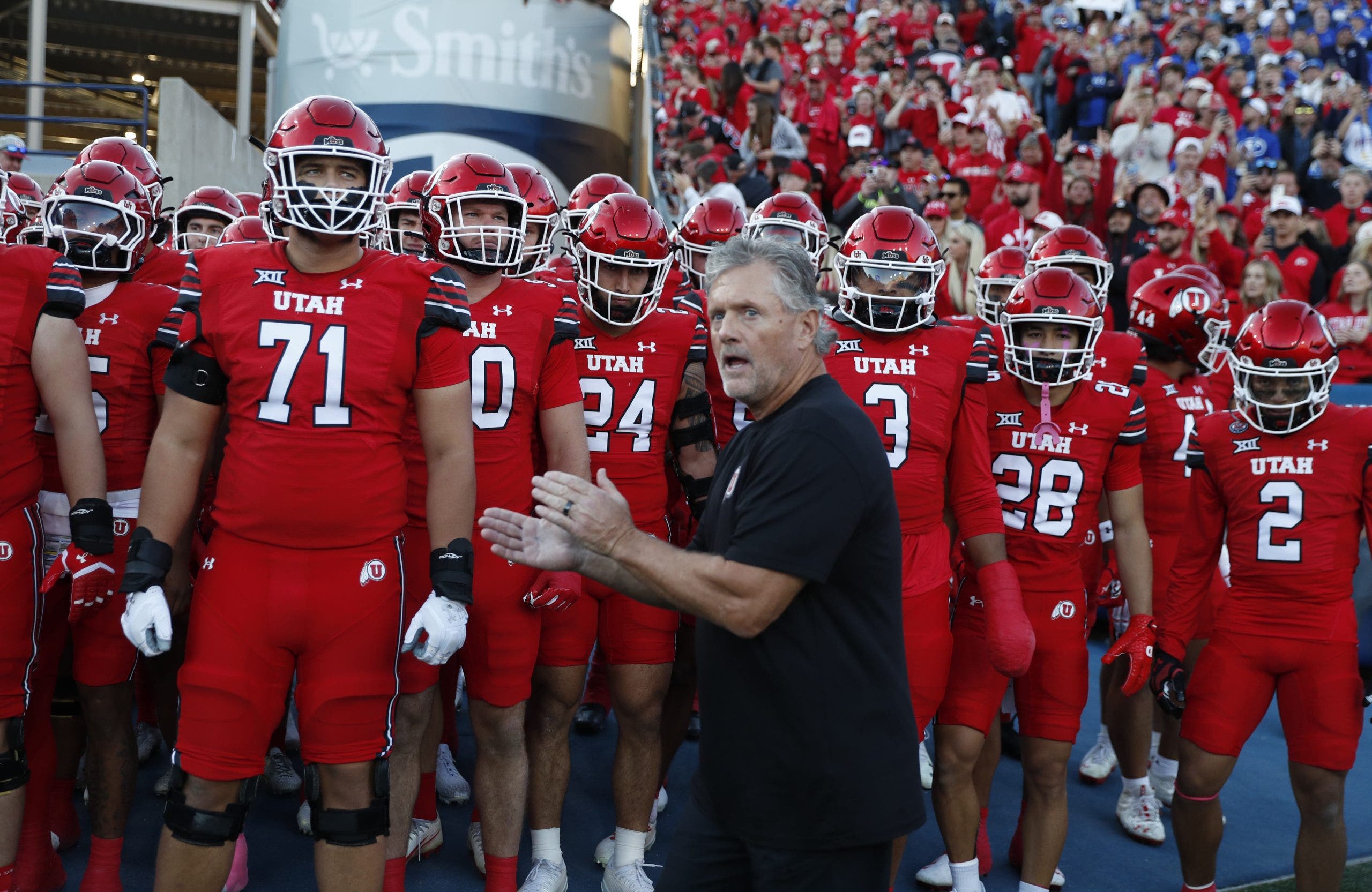
(Photo by Chris Gardner/Getty Images)
The Wolverines rank No. 12 in the 2026 recruiting cycle in the On3 Industry Comparison, a composite of the three major recruiting services. Players like five-star Savion Hiter, a two-time MaxPreps All-American tail back, are signed to the program.
Moving to hire offensive coordinator at Utah Jason Beck will help with that. Beck, who joined Utah last year, vastly improved the Utes offense. Utah averaged the second-most points (41.1) and yards per game (478.6) in 2025, and quarterback Devon Dampier threw for 2,867 total yards, 29 total touchdowns and three just five interceptions last season.
With Underwood at quarterback, Beck would have a passer in Ann Arbor with a comparable skillset to Dampier but who is younger and, arguably, more talented.
The offense, though, won’t be built around the quarterback’s ability to throw the ball, but rather the offense’s ability to run it. Whittingham’s teams have, like Michigan, prided themselves on being dominant in the trenches.
“I can say with confidence we should be the best offensive line since I’ve been at the University of Utah, which has been forever,” Whittingham said last July at Big 12 Media Days.
In 2025, Utah produced the Outland Trophy winner, awarded to the nation’s best interior lineman, in offensive tackle Spencer Fano, who expects to be a first-round selection in the 2026 NFL Draft. Given the resources that will be provided to him at Michigan, there’s no reason to believe he cannot outdo his 2025 offensive line and produce the kind of unit upfront that is capable of winning the national title.
RJ Young is a national college football writer and analyst for FOX Sports. Follow him @RJ_Young.
Want great stories delivered right to your inbox? Create or log in to your FOX Sports account, follow leagues, teams and players to receive a personalized newsletter daily!

Sports10 minutes ago
Texas A&M’s Emily Hellmuth will join the LSU Beach Volleyball team

Sports26 minutes ago
All Northeast Indiana Volleyball 2025 | High Schools

NIL32 minutes ago
Four-star WR Brady Marchese requests release from Michigan Football

NIL1 hour ago
Michigan Announces Hiring of Utah Legend Kyle Whittingham As New Head Coach

NIL2 hours ago
ACC team’s NIL provision could punish athletes for others’ disclosure of deals

Motorsports3 hours ago
Speedway Motorsports Announces Promoter of the Year – Drag Bike News

Motorsports3 hours ago
Suzuki Announces 2026 Supercross Team – Drag Bike News

NIL3 hours ago
James Madison QB Alonza Barnett III plans to enter NCAA transfer portal

NIL4 hours ago
Attorneys in Diego Pavia eligibility lawsuit vs. NCAA cite James Nnaji decision in new filing

Rec Sports4 hours ago
Alpine skater enjoying SDSU hockey
Rec Sports5 hours ago
Inside the $21.8M plan for a safer, modern Irondequoit fire station

Rec Sports5 hours ago
20 Under 40: Eric C. Peterson

NIL5 hours ago
What’s Next: 3 Priorities for Kyle Whittingham, Reportedly Michigan’s New Coach

Rec Sports6 hours ago
Local park district’s Junior NBA winter basketball leagues to start in January | Positive Local News

Rec Sports6 hours ago
Public official and Little League coach

Motorsports2 weeks ago
SoundGear Named Entitlement Sponsor of Spears CARS Tour Southwest Opener

Motorsports4 weeks ago
Jo Shimoda Undergoes Back Surgery

Motorsports4 weeks ago
Redemption Means First Pro Stock World Championship for Dallas Glenn

Rec Sports3 weeks ago
Black Bear Revises Recording Policies After Rulebook Language Surfaces via Lever

NIL4 weeks ago
Bowl Projections: ESPN predicts 12-team College Football Playoff bracket, full bowl slate after Week 14

Motorsports3 weeks ago
Donny Schatz finds new home for 2026, inks full-time deal with CJB Motorsports – InForum

Rec Sports4 weeks ago
Robert “Bobby” Lewis Hardin, 56

Rec Sports4 weeks ago
How this startup (and a KC sports icon) turned young players into card-carrying legends overnight

Rec Sports3 weeks ago
How Donald Trump became FIFA’s ‘soccer president’ long before World Cup draw

Sports4 weeks ago
Men’s and Women’s Track and Field Release 2026 Indoor Schedule with Opener Slated for December 6 at Home

Rec Sports3 weeks ago
David Blitzer, Harris Blitzer Sports & Entertainment

NIL4 weeks ago
Indiana’s rapid ascent and its impact across college football

Motorsports4 weeks ago
Michael Jordan’s fight against NASCAR heads to court, could shake up motorsports
Sports4 weeks ago
Wisconsin volleyball sweeps Minnesota with ease in ranked rivalry win

Motorsports4 weeks ago
Pohlman admits ‘there might be some spats’ as he pushes to get Kyle Busch winning again






-
 Motorsports2 weeks ago
SoundGear Named Entitlement Sponsor of Spears CARS Tour Southwest Opener
-
 Motorsports3 weeks ago
Donny Schatz finds new home for 2026, inks full-time deal with CJB Motorsports – InForum
-
 Rec Sports3 weeks ago
David Blitzer, Harris Blitzer Sports & Entertainment
-
Sports3 weeks ago
Elliot and Thuotte Highlight Men’s Indoor Track and Field Season Opener
-
 Motorsports3 weeks ago
Rick Ware Racing switching to Chevrolet for 2026
-
 NIL3 weeks ago
Colleges ponying up in support of football coaches, programs
-
Sports3 weeks ago
West Fargo volleyball coach Kelsey Titus resigns after four seasons – InForum
-
 Sports2 weeks ago
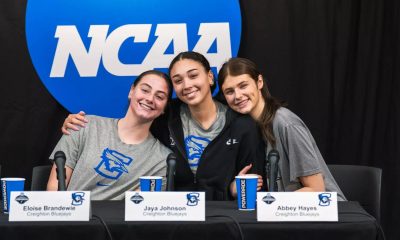
#11 Volleyball Practices, Then Meets Media Prior to #2 Kentucky Match
-

 NIL2 weeks ago
DeSantis Talks College Football, Calls for Reforms to NIL and Transfer Portal · The Floridian
-

 Technology3 weeks ago
Wearable Gaming Accessories Market Growth Outlook