
(Rick Egan | The Salt Lake Tribune) The Salt Lake Bees play the Oklahoma City Dodgers, at Smith’s Ballpark on Tuesday, Sept. 17, 2024.
Sports
Utah baseball, Salt Lake City bid farewell to Smith's Ballpark after 30 years


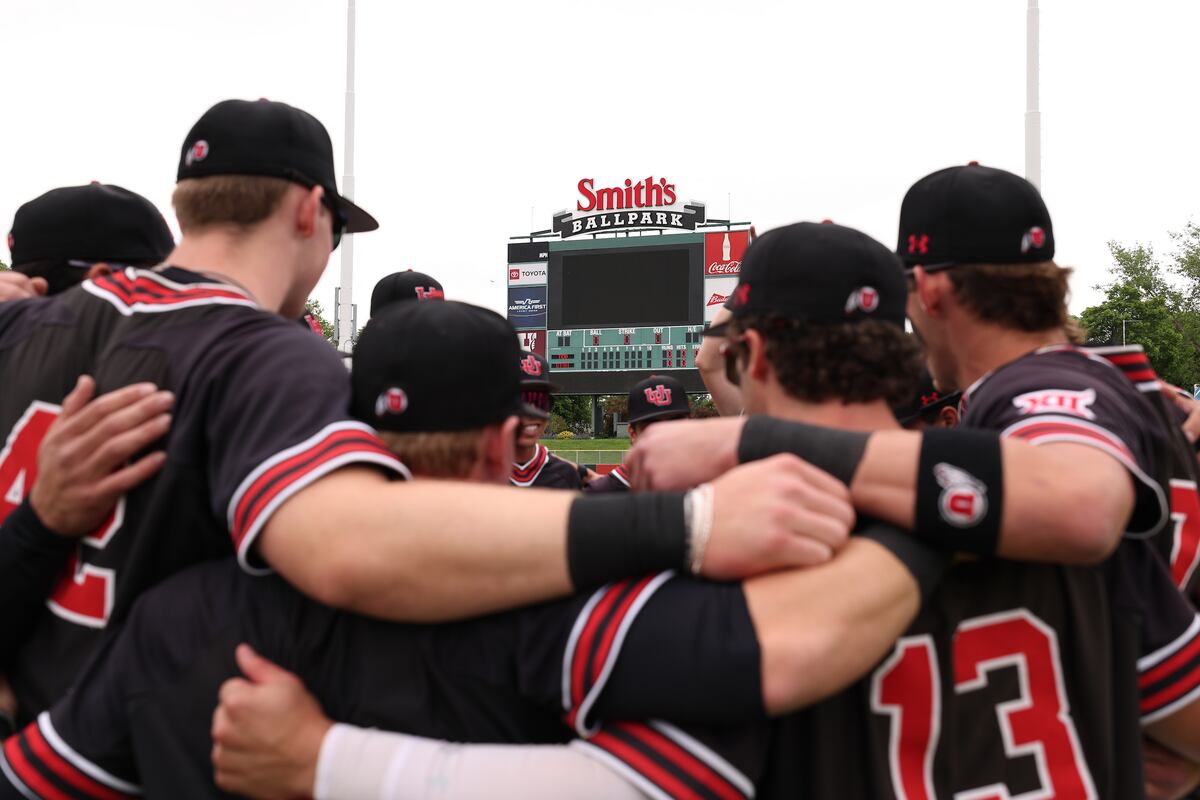
Kaden Carpenter crouched at home plate and peered out at the snow-covered peaks of the Wasatch Front and the gray rain clouds hovering overhead. Then the junior Ute outfielder moved his eyes from the sky to the dirt, where baseball legends like Babe Ruth and Hank Aaron trekked on this corner of Salt Lake City decades ago.
Smith’s Ballpark was empty, outside of a few stadium workers cleaning up the stale popcorn and trash left behind by Utah’s fans.
There will be no more strike calls. There will be no more moonshot homers cascading into the berm. “Take Me Out to the Ball Game” will no longer play on the stadium’s speakers during seventh-inning stretches.
On Saturday, Carpenter and the Utes closed the final chapter of baseball at the beloved Salt Lake ballpark.
“It‘s brought a lot of joy to a lot of families and people’s lives, including mine,” Carpenter said following Utah’s season-ending loss to TCU on Saturday.
“I think it means a lot to the city, and I really hope they do something productive with this area and this space.”
Previously the home of the Triple-A Salt Lake Bees, Smith’s Ballpark has served as the city’s baseball tabernacle since 1994. But baseball, in one form or another, had been played on the corner of West Temple and 1300 South since the 1920s.
Not anymore.
The Bees now reside in The Ballpark at America First Square in South Jordan. The University of Utah’s baseball team, which has called the stadium home since 1996, will move into a new on-campus venue, Charlie Monfort Field at America First Ballpark, in 2026.
Saying goodbye to the ballpark that has been the heart, soul and home for Ute baseball for three decades was bittersweet.
“I thought it was a pretty special time because, I mean, as a little kid, you dream of playing in a park like that,” said former Utah pitcher Shawn Andreasen, who played in Utah’s first contest at Smith’s Ballpark.
‘So many memories’
Perched in the stands, several rows behind third base, Chad Mortenson wore a gray Bees’ hoodie and a vintage Oakland A’s baseball cap on his head, while waiting for Saturday’s first pitch.
The Salt Lake native considers himself a “sentimental” baseball fan. He attended the minor league team’s final contest at Smith’s Ballpark in 2024. He was also in attendance for the opening Bees’ contest at the stadium in 1994.
On Saturday, he rummaged through his closet and old cardboard boxes in search of a T-shirt he bought 30 years prior. Sadly, he couldn’t find it, but nothing was going to stop him from missing the last game in the old Salt Lake ballpark.
(Anna Fuder | Utah Athletics) Smith’s Ballpark became the full-time home of Ute baseball in 1996. The program will play at a new 1,200-seat stadium on campus starting in 2026.
“If I had to estimate, I’ve been to a game at least every season since it started,” Mortenson said.
When Smith’s was first being built, Mortenson was taking driver’s ed classes. During test runs with an instructor, he’d purposely drive on 1300 South and West Temple to see how construction was coming along.
“There was lot of hype when it first opened,” Mortenson said. “I was really excited about it.”
Once it was finished, Mortenson regularly attended games with his family, friends and — admittedly — had several awkward dates.
“There was one date I had where we didn’t talk at all the whole time,” he said, laughing. ”I was way too shy back then. We sat in the upper deck and said two words to each other.”
Bridger Nesbit has been attending games for three years at Smith’s Ballpark. He sat alone in the right outfield on Saturday, cheering on several of his roommates, who are on the U.’s baseball team.
He’ll often switch seats between innings to take in different sight lines and sounds during matchups. The view of Mount Olympus is what he’ll miss most about the stadium.
“I’m probably more sad than anything,” Nesbit said. “The natural beauty, I think, is the big draw. The backdrop of the mountains, you can’t beat it. Plus, you’re only minutes away from downtown, which kind of makes it pretty special.”
Mortenson concurs.
In fact, he’d put the view up against any Major League Baseball park in the country.
“You can’t beat this view,” Mortenson said. “I’ve been to the new ballpark. The mountains are about three times as far away as the new one.”
Salt Lake City leaders hope to turn the old stadium into a mixed-use development in the future with housing, entertainment, parks and other amenities. The current plan involves preserving a portion of the old stadium.
But to some fans, like Mortenson and Nesbit, nothing will ever beat a baseball game in Smith’s Ballpark.
“This ballpark, in particular, just has so many memories,” Mortenson said. “It‘s a shame to see it go.”
‘It was a special time’
(Sophia Kuder | Utah Athletics) Ute infielder Core Jackson, 10, plays during the team’s final game at Smith’s Ballpark on May 17, 2025.
The Utes played their first contest at the ballpark in 1994 in an extra-innings win over BYU. They played their in-state rival at Smith’s again in 1995 before moving into the stadium full-time a season later.
Before the 1996 season, the program had to spend its time at Ute Field, a baseball park located between the U.’s medical center and Fort Douglas.
Dan Poulton, a former Ute pitcher who played with the program during the ′90s, can remember how nice it was to play at Smith’s against BYU in 1994 and 1995. He also remembers some of the struggles the baseball team had in its previous home.
“It wasn’t great,” Poulton said. “I came from a college in southern Idaho, and their baseball field was immaculate. It was a nice location to play. How it was taken care of rivaled a lot of the big league parks and some of the Division I parks. Ours was a little bit of an afterthought.”
Beyond center field, Poulton recounts, there was a dump where the university would unload all of its grass clippings from days and weeks of mowing around the campus.
“It was a big pile of grass pile in the back, out past center field,“ Poulton said. ”It would pile up after time. It was interesting.”
The field’s conditions weren’t the greatest, either. Andreasen can remember being jealous of other programs’ neatly manicured fields in comparison to Utah’s home field that reminded him of unruly “cow pastures.”
“You go to Arizona State, you play on those fields, and then you have ours. It‘s like, it‘s like, ‘wow, we’re like the dumping grounds of everything,’” Poulton said.
“It was kind of embarrassing, in a way, but it was still our home field.”
Their experiences at Ute Field made playing at Smith’s Ballpark that much more special.
“It was surreal for me,” Andreasen said. “I always dreamed of doing as a little kid. To be playing in a big ballpark with a bunch of fans watching with the big scoreboard, it was a special time.”
It continued for nearly 30 years until last Saturday. Now, with the final game played in the historic stadium, Utah will soon begin its new journey at Charlie Monfort Field at American First Ballpark.
Fans, students and alumni will no longer have to travel off campus to catch a game. The field will be artificial turf, meaning the winter upkeep needed at Smith’s will be eliminated.
In the past, the baseball program would drive four hours to St. George for several days of the week to practice in warmer conditions while Salt Lake City was blanketed in snow.
“Having everything in one place changes your daily routine,” Utah head coach Gary Henderson said. “It‘s been great to be a part of Smith’s over the last three decades. But this is a game changer. This will help in preparation and help in recruiting.”
Last Friday, the baseball program hosted the topping out ceremony, a celebration of the final steel beam being placed for its new, 1,200-seat stadium.
Players, coaches, and members of Utah’s athletic administration were all able to sign the steel beam with red markers.
It was a reminder of what is to come, but also what the Utes are leaving behind.
“I know a lot of people will miss it,” Poulton said of Smith’s Ballpark. “I think it‘s great they’re expanding into their own stadium. But, it‘s also sad that they’re moving away.”
On Saturday, Carpenter continued to sit alone on the field of Smith’s Ballpark after the team’s final game. Rain drizzled on his grass-stained uniform, while he took in the view from home plate.
This was a second home for him, where he’s spent grueling hours swinging his bat and diving for fly balls in the outfield.
Carpenter ultimately decided it was time to head inside as the rain picked up. He took a few more moments to say his final goodbye to Smith’s Ballpark before heading into the clubhouse.
Behind him, he left behind decades of baseball memories, an empty grass field, green stands that once hosted thousands of fans and — most of all — the home of baseball in Salt Lake City.

Continue Reading


USAF ACADEMY, Colo. – Ryan Cole, Air Force’s director of track & field and cross country, announced several additions to the 2026 coaching staff this morning (Jan. 8), with the hiring of assistant coach Dan Stoll and the return of several familiar faces to the Falcons’ program.
Stoll, who will oversee the Falcons’ sprint, hurdle and relay squads, joins the Academy program following a successful athletic and coaching career at the NCAA DIII level. A three-time All-American and 11-time all-conference athlete at Heidelberg University, Stoll coached six All-Americans and 33 all-conference performers during stops at North Park University (assistant coach, 2023-25) and North Central College (graduate assistant, 2022-23).
In addition to Stoll, Air Force’s 2026 staff will include two Academy graduates and one former assistant coach. 1Lt Michelle Roca, a 2022 USAFA graduate and the program record-holder in the 400-meter hurdles, will assist with the Falcons’ hurdle squad, while serving at nearby Schriever SFB. 1Lt AJ Kedge (Class of 2023) will continue to serve as the program’s recruiting coordinator and assist with the distance squad. Currently stationed at Hanscom AFB, Kedge will be returning to USAFA this spring. Scott Irving, who oversaw the Falcons’ throwing program for 14 years (1999-2013) and was the coach behind Air Force’s two NCAA titles in the javelin, will rejoin the staff to assist the squad’s current lineup of javelin throwers.
The remainder of the Falcons’ track and field staff includes Cole (men’s middle distance, distance), head coach Scott Steffan (jumps, combined events), assistant coach Laura Bowerman (women’s middle distance, distance), and assistant coach Kyle Lillie (rotational throws), while former cross country coach Mark Stanforth will continue to assist with the distance program.
Stoll, who will oversee the Falcons’ sprint, hurdle and relay squads, joins the Academy program following a successful athletic and coaching career at the NCAA DIII level. A three-time All-American and 11-time all-conference athlete at Heidelberg University, Stoll coached six All-Americans and 33 all-conference performers during stops at North Park University (assistant coach, 2023-25) and North Central College (graduate assistant, 2022-23).
In addition to Stoll, Air Force’s 2026 staff will include two Academy graduates and one former assistant coach. 1Lt Michelle Roca, a 2022 USAFA graduate and the program record-holder in the 400-meter hurdles, will assist with the Falcons’ hurdle squad, while serving at nearby Schriever SFB. 1Lt AJ Kedge (Class of 2023) will continue to serve as the program’s recruiting coordinator and assist with the distance squad. Currently stationed at Hanscom AFB, Kedge will be returning to USAFA this spring. Scott Irving, who oversaw the Falcons’ throwing program for 14 years (1999-2013) and was the coach behind Air Force’s two NCAA titles in the javelin, will rejoin the staff to assist the squad’s current lineup of javelin throwers.
The remainder of the Falcons’ track and field staff includes Cole (men’s middle distance, distance), head coach Scott Steffan (jumps, combined events), assistant coach Laura Bowerman (women’s middle distance, distance), and assistant coach Kyle Lillie (rotational throws), while former cross country coach Mark Stanforth will continue to assist with the distance program.
Back in athletics
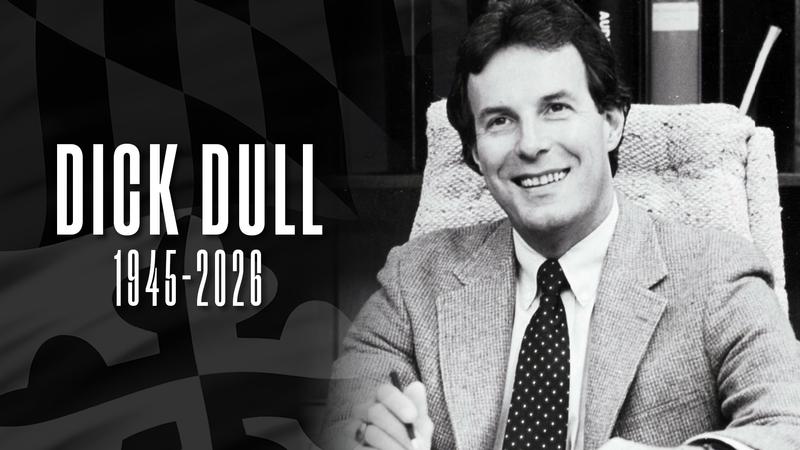
Dull’s professional fortunes turned around in 1995 when he became athletic director at the University of Nebraska Kearney, a Division II school. In 1998 he took the same position at Moravian College, a Division III school in Bethlehem, Pennsylvania. He returned to Division I sports when he became athletic director at Cal State Northridge in May 1999.
Dull worked at Northridge until 2007, when he moved back east to take the athletic director’s job at Belmont Abbey College, a Division III school near Charlotte, North Carolina. He held the job through the summer of 2008.
Dull never returned to College Park to attend a Maryland basketball game after he resigned as athletic director. But he did see the team play in the NCAA Elite Eight at Stanford University in 2001. Then-Maryland Athletic Director Debbie Yow gave Dull tickets to the game. He said he enjoyed seeing old friends, such as broadcaster Johnny Holliday and former Sports Information Director Jack Zane. “You reach a point where you hold resentment and you hurt yourself,” he explained. “I’m a stronger person now because of it. I look at the horizon, and say ‘It can’t get any worse than that.’ ”
Dull tried to return to Maryland as an athletics administrator in 2008 when he interviewed for the position of executive director of the M Club. Nelligan, the long-time women’s gymnastics coach, served on the search committee. “Everybody loved his presentation,” says Nelligan. “And I thought he would have been a very strong candidate to unite that part of the department. But I also felt that he would always have to answer questions about Lenny. His legacy will always be tied to that.”
Dull was not selected. After giving his presentation, Dull stopped by Nelligan’s office and the two old friends talked for about an hour. Dull wanted to know how Nelligan was doing personally and asked for updates on mutual friends. A short time later, Dull sent a letter to Nelligan, thanking him for a tour of Comcast Center and making sure his buddy was OK with the fact that he didn’t get the job. “He’s had to live with this Bias thing for a long time,” Nelligan says. “He does deserve to live with some closure.”
In late 2009, during a phone conversation I had with Dull, he asked when I would write his book, saying that his story has never been told. In 2010, when I decided to write my book about the legacy of Bias–the first person I called was Dull.
When he said he would cooperate I felt invigorated about the project. He had not talked at length about how the death of Bias had impacted him. I trusted his perspective and wisdom and felt he would talk with intelligent, measured introspection about how the Bias death affected his life, and provide insight into how the athletic department dealt with the tragedy. “It’s about time the real story was told,” he told me.
But after we had several discussions on how to proceed, Dull surprised me with an email in May 2010, saying he would not participate, that he needed to continue to put “this saga behind [me].” I was disappointed, but I understood his decision. I knew from brief discussions I had with Dull during the late 1980s and into the 1990s how difficult the transition was for him after Bias died. Dull and I did have a lengthy, but incomplete discussion about the Bias death in 2003 for my first book about Maryland athletics, Tales from the Maryland Terrapins, and those comments are used in the book and in this story.
In August 2010, Dull accepted a position as a project manager in the athletic department at Hood College in Frederick, Maryland, about 45 minutes from College Park. He helped raise funds for new athletic facilities at the school. The man who hired him, Hood athletic director Gib Romaine, was the defensive coordinator for Ross at Maryland and was later a fundraiser there.
In April 2011, Dull attended a reunion of former Maryland athletic department employees, some of whom had worked with him in the 1980s, at a Ledo Restaurant in College Park. It marked the first time I had seen Dull in about a quarter of a century. Typically, he mingled mostly in the background, quietly chatting with friends. And typically, he offered comfort when I asked him if he was okay with me moving forward with the book. He encouraged me to complete the project. We talked little else about it, preferring to focus instead on positive memories we both shared from our days at Maryland.
Costello also attended that reunion. This week he recalled fond memories of Dull. “I’m a very type “A’ person, but Dick was always very calm,” he said. As an example, Costello told of how the two approached a conflict differently during a track team practice when Costello was head coach. “We had signs all over the track saying it was closed during our practice,” said Costello. “A guy was jogging in lane 1 and I told him the track was closed. He kept going. I’m getting a little pissed. I said, listen buddy, it’s your last lap. Dick walked up to me and said, ‘calm down, it looks like he’s not going to be running much longer.” Soon after the runner left the track.
Dull enjoyed photography, often traveling long distances to attend Formula 1 auto races, documenting the trip with his camera. For a time Dull traveled alone annually to Reykjavik, Iceland. He told me once that the city was his favorite place to visit.
Costello recalled he never once saw Dull wear a pair of jeans. “Even when we went fishing, he’d wear Izod shirts,” he said, with a laugh. Dull worked as a proctor when he lived with other athletes in Ritchie Coliseum. And Costello recalled the time Dull turned him in to coach Kehoe for violating a team rule. “He wasn’t rowdy at all,” said Costello. “And he coached the way he lived. Very technical and smooth.”
The job at Hood College was Dull’s last. Shortly before his wife Sally passed away in 2016, Dull moved back to Charlotte to live near his stepson, Erik, and his family.
Sports
#SVLeague 🇯🇵: ONE TO WATCH FOR WOLFDOGS 🐺 In his first season with Wolfdogs Nagoya 🐺, Aymen Bouguerra 🇹🇳 adds flexibility to the Wolfdogs’ system, with impact at the net and from the back row 💥. One to keep an eye on as they face Tokyo Greatbears 🐻 this weekend. 🗓️ Jan 10 & 11 📺 LIVE on VBTV: https://bit.ly/3Bjc3Ui 🏐 #Volleyball

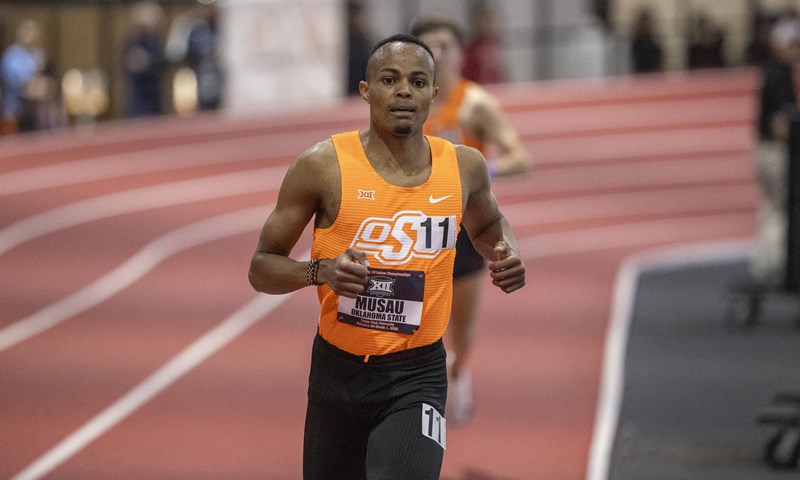
BYU’s Jane Hedengren and James Corrigan, Oklahoma State’s Brian Musau and Texas Tech’s Jonathan Seremes were named to The Bowerman preseason watch list by the U.S. Track & Field Cross Country Coaches Association (USTFCCCA), ahead of the start of the indoor track and field season.
BYU’s Hedengren became the first freshman named to the men’s or women’s preseason watch list since LSU’s Mondo Duplantis in 2019. The Provo native debuts on the list after running 14:44.79 in the indoor 5,000m, breaking the women’s indoor collegiate record of 14:52.57 set by Alabama’s Doris Lemngole in 2024. Hedengren is the fourth BYU women to make the list.
Corrigan, a semifinalist last season, returns after winning the NCAA outdoor 3,000m steeplechase title. He also earned 2025 USTFCCCA Mountain Region Men’s Track Athlete of the Year.
Musau, a semifinalist from last year, returns to The Bowerman Watch list after winning the NCAA indoor 3,000m and 5,000m titles and the NCAA outdoor 5,000m title. He was also named the 2025 Outdoor USTFCCCA Midwest Region Athlete of the Year.
Texas Tech’s Seremes debuts on The Bowerman Watch list after winning the NCAA indoor triple jump title. He capped his season by representing France at the World Athletics Championships. Seremes becomes the eighth Red Raider man named to the list.
TCU’s Indya Mayberry received votes on the women’s side.

Major League Volleyball (MLV) kicks off its 2026 regular season on Thursday, Jan. 8 with six former Gators on a roster across the nine teams.
Carli Snyder and Rhamat Alhassan, both of whom appeared in Florida’s 2017 national championship match, reunite on the Grand Rapids Rise. Former Gator teammates Anna Dixon and Elli McKissock join the Atlanta Vibe, while Marlie Monserez, who led the Vibe’s offense for the past two seasons, signed with the San Diego Mojo for the 2026 season. After making her professional debut with Indy Ignite last season, Isabel Martin will join the Dallas Pulse in its inaugural campaign.
Dixon, McKissock and the Atlanta Vibe host both of their opening-weekend matches, welcoming the Columbus Fury on Thursday before facing Snyder and Alhassan on Sunday, Jan. 10. Snyder and Alhassan will first return to their college state for the Rise’s 2026 debut against the Orlando Valkyries on Friday, Jan. 9.
Monserez makes her Mojo debut on Thursday in Omaha against the Supernovas before returning to her home state on Sunday, Jan. 11 to face the Orlando Valkyries.
Martin faces her former team on Saturday, Jan. 10 in the Pulse’s first-ever match.
MLV’s 2026 schedule can be found here.
Major League Volleyball, entering its third season, is the longest-running formal professional volleyball league for women in the United States. Designed to elevate the sport through world class competition, commercial innovation, and cultural relevance, MLV brings together elite athletes, visionary leadership and global ambition. With alignment to USA Volleyball and a commitment to Olympic development, MLV serves as the premier pathway from professional play to the world stage. For more information, visit ProVolleyball.com.
FOLLOW FLORIDA VOLLEYBALL
FloridaGators.com
Instagram | Facebook | X

NIL3 minutes ago
Transfer portal drama is overshadowing the actual College Football Playoff

Sports31 minutes ago
Samuel, Kosgei Named to Bowerman Preseason Watch List – New Mexico Lobos

Sports47 minutes ago
Air Force Track & Field Announces 2026 Coaching Staff

NIL57 minutes ago
Miami vs. Ole Miss score, live updates: Trinidad Chambliss puts Rebels ahead with TD pass

Sports1 hour ago
Former Maryland AD Dick Dull Passes Away

Sports1 hour ago
#SVLeague 🇯🇵: ONE TO WATCH FOR WOLFDOGS 🐺 In his first season with Wolfdogs Nagoya 🐺, Aymen Bouguerra 🇹🇳 adds flexibility to the Wolfdogs’ system, with impact at the net and from the back row 💥. One to keep an eye on as they face Tokyo Greatbears 🐻 this weekend. 🗓️ Jan 10 & 11 📺 LIVE on VBTV: https://bit.ly/3Bjc3Ui 🏐 #Volleyball

Sports1 hour ago
Four Big 12 Track and Field Athletes Named to The Bowerman Preseason Watch List

NIL2 hours ago
Troy Aikman convinced Joe Buck not to fund Indiana football

Sports2 hours ago
Six Gators Featured on MLV Rosters for the 2026 Season

Sports2 hours ago
Men’s Volleyball Opens 2026 Season Against Spartans

NIL3 hours ago
Demond Williams announces he’ll return to Washington for junior season

Sports3 hours ago
No. 3 Beach Begin 2026 Campaign with Home Matches Against Lindenwood, No. 15 McKendree

Rec Sports3 hours ago
Panther alums show up against varsity

Rec Sports3 hours ago
A Look Inside: Canton Citizen’s January 8 edition

Sports3 hours ago
UA beach volleyball to host 3 regular season home tourneys

Motorsports4 weeks ago
SoundGear Named Entitlement Sponsor of Spears CARS Tour Southwest Opener

NIL4 weeks ago
DeSantis Talks College Football, Calls for Reforms to NIL and Transfer Portal · The Floridian

Sports4 weeks ago
#11 Volleyball Practices, Then Meets Media Prior to #2 Kentucky Match

Rec Sports3 weeks ago
Stempien to seek opening for Branch County Circuit Court Judge | WTVB | 1590 AM · 95.5 FM

Sports4 weeks ago
Maine wraps up Fall Semester with a win in Black Bear Invitational

Motorsports3 weeks ago
Ross Brawn to receive Autosport Gold Medal Award at 2026 Autosport Awards, Honouring a Lifetime Shaping Modern F1

Motorsports4 weeks ago
Nascar legal saga ends as 23XI, Front Row secure settlement

Rec Sports3 weeks ago
Princeton Area Community Foundation awards more than $1.3 million to 40 local nonprofits ⋆ Princeton, NJ local news %

Motorsports4 weeks ago
Sunoco to sponsor No. 8 Ganassi Honda IndyCar in multi-year deal

NIL3 weeks ago
Downtown Athletic Club of Hawaiʻi gives $300K to Boost the ’Bows NIL fund

Rec Sports4 weeks ago
WNBA’s Caitlin Clark, Angel Reese and Paige Bueckers in NC, making debut for national team at USA camp at Duke
Motorsports4 weeks ago
NASCAR, 23XI Racing, Front Row Motorsports announce settlement of US monopoly suit | MLex

Sports4 weeks ago
Woods, Ogunribido Named CCIW Women’s Indoor Track & Field Student-Athletes of the Week

NIL4 weeks ago
Nike Signs 10 LSU Athletes to NIL deals

Sports3 weeks ago
Beach Volleyball Unveils 2026 Spring Schedule – University of South Carolina Athletics





-

 Sports2 weeks ago
Badgers news: Wisconsin lands 2nd commitment from transfer portal
-

 Rec Sports6 days ago
Five Youth Sports Trends We’re Watching in 2026
-

 Sports3 weeks ago
Is women’s volleyball the SEC’s next big sport? How Kentucky, Texas A&M broke through
-

 Rec Sports3 weeks ago
NBA, Global Basketball Community Unite for World Basketball Day Celebration
-
 Sports2 weeks ago
Kentucky VB adds an All-American honorable mention, loses Brooke Bultema to portal
-
 NIL3 weeks ago
$2.1 million transfer portal QB predicted to join College Football Playoff team
-

 Motorsports2 weeks ago
BangShift.com IHRA Acquires Historic Memphis Motorsports Park In Millington Tennessee. Big Race Weekend’s Planned For 2026!
-

 Motorsports3 weeks ago
NASCAR, IndyCar, and F1 Share These Race Days in 2026
-

 Motorsports2 weeks ago
Dr. Patrick Staropoli Lands Full-Time O’Reilly Ride with Big Machine Racing
-
 Sports1 week ago
H.S. INDOOR TRACK & FIELD: GLOW region athletes face off at Nazareth University | Sports