
(Trent Nelson | The Salt Lake Tribune) Kyle Whittingham as Utah hosts BYU, NCAA football in Salt Lake City on Saturday, Nov. 9, 2024.
NIL
Utah football's Kyle Whittingham embraces transfer portal, NIL in his 21st season



It was a quiet afternoon in a Kansas City diner. As customers talked over plates of comfort food, Alex Whittingham sat across from his parents, Kyle and Jamie, idly scrolling on his phone.
Then, something caught the eye of the Chiefs’ special teams coach.
“We’re back in 2025,” read the post from the University of Utah football account.
Alex looked up from his phone, locking eyes with his father.
“Oh, so you’re coming back next year?” he asked, sarcastically.
“They finally announced that?” Kyle Whittingham said coolly from across the table.
The casual delivery of the news was fitting in a lot of ways. Those closest to the Utes’ longtime coach wanted him to return for his 21st season in charge. They expected it. They were “adamant that he keep going,” Alex said.
The coach felt that way, too.
“I couldn’t stomach going out on that, with that season, as frustrating as it was, and as discouraging as it was,” Whittingham said. “That’s not going to be the final act of my deal. I have to come back and try to get the ship right and get back on track.”
To do that, some things had to change.
The Utes would need to retool their roster — and they’d need more money than ever before to do that.
Whittingham, too, would have to embrace change, evolving from the coach who made a career of turning 3-star recruits into NFL prospects into someone who can turn roster turnover into an advantage.
And unlike former legacy coaches — Alabama’s Nick Saban or North Carolina’s Mack Brown — who have left the game in part because of its changes, Whittingham keeps coming back for more.
“It’s been an embrace or die kind of environment,” Whittingham told The Salt Lake Tribune.
‘The CEO of the program’
Isaac Asiata was wrapping up exit interviews in 2011 and was given an honest assessment of his future with Utah from his offensive coaches.
“They told me I’d never play a down in Division I football,” Asiata said. “And they told me once I got back from my mission, I should transfer and maybe go to JUCO or Division II.”
The Utes’ head coach then shared his own thoughts.
“You need to prove them wrong,” Whittingham said, according to Asiata. “You need to prove that you’re right.”
Over the next two years, while Asiata was abroad, Whittingham’s words stuck with him. When he returned to Salt Lake City, they were the driving force behind becoming an All-Pac 12 offensive lineman and a future NFL player.
“He never lowered his bar or standard,” Asiata said of Whittingham. “He was never OK with mediocrity.”
Finding gems in recruiting and developing them over a course of several years is how the head coach has built his program. In his career, the Ute coach has sent 123 players to the NFL.
But Whittingham will be the first to tell you the current landscape of collegiate athletics is different — more than it has been at any point in his career.
“It is a challenge, especially when you’re used to a developmental program,” Whittingham said. “It’s not completely out the window, but that has definitely taken a backseat to NIL and the play-now mentality.”
Former Ute coach and two-time national champion Urban Meyer took a visit to his former program last spring. He sat in on a few meetings at the Spence and Cleone Eccles Football Center.
There, even Whittingham — and his assistant coaching staff — discussed the constraints of the portal and NIL. It reminded him of 2004, when the Utes struggled to gather funds for a new indoor practice facility, which was eventually built later that year.
“You can make more money in college than you will as a mid-round draft pick,” Meyer said. “I still think you [can coach] culture to a degree, but maybe not as hard as in the past.
“I think now, Kyle, he’s at that kind of place right now where he’s certainly the CEO of the program.”
The new age is nothing Whittingham hasn’t seen coming. He’s had bold predictions since college football started shifting.
The real challenge, now, is finding a way to win in the new world.
“He’s elevated the place so high that last year is considered not a good year,” Meyer said. “All great coaches, the greatest ones I’ve been around, they’re just competitive maniacs, and that’s what he is.”
‘Doesn’t want to lose’
Inside Kyle Whittingham’s office sits a picture of Utah’s head coach skiing down a mountain, with powdery snow flying around him.
He showed the picture to Guy Holliday, Utah’s former wide receivers coach, one day. Whittingham then beckoned him to look at the metric on his watch. It read “78 mph.”
“He told me nobody would beat him,” Holliday recounted the moment. “That’s just who he is. You can always tell the grit he wears right on his face. The man doesn’t want to lose at anything.”
From skiing the slopes to golfing on the green and coaching on the sidelines, Whittingham wants to win at everything. He’s done it as Utah’s head coach for two decades. But the last few seasons have been below his standard.
Utah head coach Kyle Whittingham looks on against Colorado during the first half of an NCAA college football game Saturday, Nov. 25, 2023, in Salt Lake City. (AP Photo/Rob Gray)
After the season — one Whittingham called “a debacle” — the coach gave signs of his impending return in the way he stayed focused on recruiting, in the phone calls he made to colleagues.
Whittingham called Holliday multiple times to discuss the Utes’ options at the OC spot to replace Andy Ludwig.
“He was very focused on finding him an offensive staff,” Holliday said. “People were saying that they thought that he would retire. I never got that really from our conversations.”
In conversations with former Utes offensive coordinator Norm Chow, Whittingham weighed the thought of retirement but was aggressively surveying multiple offensive coordinators before the end of the season. He was also thinking about what prospects to go after in the transfer portal, according to Chow.
“As long as that door was open,” Chow said of his realization, “I thought he was gonna go back.
“There are only so many golf balls and tennis balls he can hit. He’s a competitive guy. … He just wasn’t ready to retire.”
‘Still going at it’
In the weeks after Utah’s season finale — a road win over UCF — Whittingham watched from his TV at home, as teams played in their conference championships and bowl games.
If he made the decision to hang it up, this is what his life would look like. No more meetings with agents. No more year-round recruiting and retention. No more worrying about NIL funds.
But Brady Whittingham sensed his brother had unfinished business.
“The luxury — and it sounds crazy, and this is just me — of being able to sit at home while other teams are out preparing … made him realize he couldn’t be done,” Brady said.
(Francisco Kjolseth | The Salt Lake Tribune) Utah football head coach Kyle Whittingham listens to his defensive coordinator and safeties coach Morgan Scalley answer questions during a news conference at the University of Utah on Tuesday, Jan. 14. 2025.
Meanwhile, the transfer portal gave Whittingham hope.
The constant churn of the portal and ever-growing NIL have certainly driven numerous coaches out of the business. “There are so many more different dynamics to the job than the ones five years ago,” Whittingham said. But he was also motivated by the opportunity to reload through the transfer portal.
Utah had $8 million in its NIL bank last season, according to Ute Athletic Director Mark Harlan. But the Utes had a “significant increase” in their funding pool with revenue sharing coming into play this season.
Still, they’ll be underdogs when compared to some of college football’s biggest spenders — the Texases and Alabamas and Georgias.
(Trent Nelson | The Salt Lake Tribune)
Kyle Whittingham as Utah hosts BYU, NCAA football in Salt Lake City on Saturday, Nov. 9, 2024.
“I think that the teams that made the finals were upwards of $30 million. There’s quite a disparity there,” Whittingham said. “… That’s what everything hinges upon, your resources in that space to assemble a roster. It’s a constant challenge for us to try to keep up and keep pace.”
But it’s a problem Whittingham might have come to enjoy.
“This is my speculation, but I think the challenge of the transfer portal gives him the juice to prove that an underdog can also succeed,” Brady said.
Whittingham wasn’t ready to let a losing season be the final chapter. Still, he wouldn’t have come back if he didn’t believe he could climb the mountain one more time.
“If I didn’t enjoy it, I wouldn’t have come back,” Whittingham said this week.
He said he wouldn’t have returned if he didn’t have the “passion for the game and the energy. … Because you’d better have a lot of energy for this job.”
“So no second thoughts whatsoever,” he said.
With the offseason now behind him — and his retirement decision delayed for yet another year — Whittingham is back at Utah’s facilities focused on another season, one some believe will be his last.
His hopes for a storybook sendoff would then rely on transfer quarterback Devon Dampier and new offensive coordinator Jason Beck.
Whether he wins big or not, another decision looms at the end of 2025 — one only he can make.
And Alex Whittingham won’t be surprised either way, whatever the headline reads next winter.
“If they have a good year and he feels satisfied, I don’t know,” said Alex. “Two or three years ago, I thought that might be it for him. But he’s still going at it.
“I’ve learned not to guess what he’ll do next.”
Note to readers • This story is available to Salt Lake Tribune subscribers only. Thank you for supporting local journalism.

Continue Reading
Dec. 17, 2025, 10:04 p.m. ET
- Shilo Sanders is in a legal dispute with a bankruptcy trustee over approximately $250,000 in alleged unauthorized fund transfers.
- The core issue is whether Sanders’ NIL earnings belong to him or to the bankruptcy estate for his creditors.
- Sanders filed for Chapter 7 bankruptcy in October 2023 to discharge over $11 million in debt from a 2022 civil court judgment.
The trustee in the bankruptcy case of former Colorado football player Shilo Sanders filed a response in court Dec. 17 that supports his argument that Sanders violated bankruptcy law by making unauthorized transfers to himself of approximately $250,000.
The court filing is the latest volley in bankruptcy case of Sanders, who filed a Chapter 7 petition in October 2023 seeking to get out of more than $11 million in debt.
The trustee in the case, David Wadsworth, sued Shilo Sanders in October, seeking recovery of the money and an accounting from Sanders. Sanders’ attorney then filed a motion to dismiss that complaint in November by arguing that the trustee had it all wrong.
The latest filing from Wadsworth’s attorney rebuts that notion as litigation related to the bankruptcy case continues on multiple fronts in addition to this one. Sanders’ debt stems from a civil court judgment in Dallas in 2022.
“The Defendants are wrong,” the trustee’s attorney, Peter Cal, said in court documents.

What is at issue in Shilo Sanders’ bankruptcy case this time?
The court-appointed trustee in this case is in charge of rounding up Sanders’ non-exempt assets for the bankruptcy estate to divide among his creditors. The trustee has alleged having trouble doing that and filed a complaint against Sanders related to money he traced in Sanders’ business accounts for earnings from his name, image and likeness (NIL). Those businesses are named as defendants with Sanders in the complaint – Big 21 and Headache Gang.
The big issue is who the money in question belongs to – the bankruptcy estate or Sanders. Sanders’ earnings before he filed the bankruptcy petition generally belong to the bankruptcy estate for the benefit of creditors, while earnings that came from work after the bankruptcy filing belong to Sanders.
Sanders’ attorney, Keri Riley, stated in court documents that the money in question belonged to Sanders because they were “post-petition earnings.”
The trustee disputed that in his response Dec. 17 and said such factual disputes can’t be resolved at this stage of the litigation.
Sanders “relies on the unsupported argument that all funds in the Big 21 Bank Account were post-petition earnings of the Debtor (Sanders),” the trustee’s attorney stated. “The Court should not consider the argument because it relies upon a factual assertion that is not included in the (trustee’s) Complaint.”
The trustee’s attorney then includes a footnote.
“Because there were funds in the Big 21 Bank Account on the Petition Date, the Defendants’ argument is demonstrably wrong,” the footnote states.
Timing of Shilo Sanders’ NIL earnings in dispute
The trustee’s attorney also noted that “even if the earnings are paid to the Debtor post-petition, they are considered prepetition earnings when they arose from a prepetition contractual interest.”
He argued the trustee pleaded his case well enough for the trustee’s complaint against Sanders to move forward. A bankruptcy judge will decide on that.
“It is more than plausible that at least certain of the post-petition deposits were based on the Debtor’s prepetition NIL contracts and, therefore, are subject to turnover,” the trustee’s filing states.
The trustee said he wants Sanders to “account for the distributions” after “improperly” exercising control over property of the bankruptcy estate.
How did the Shilo Sanders bankruptcy case originate?
A security guard at Sanders’ school in Dallas sued Sanders and his parents in 2016, alleging Shilo caused him permanent and severe injuries when he tried to confiscate his phone at school in 2015, when Shilo was 15. The parents were dismissed from the case before trial, but when the case finally went to trial in 2022, Shilo didn’t show up for it and got hit with a $11.89 million default judgment as a result.
The security guard, John Darjean, then moved to collect on that judgment in 2023, leading Sanders to file for bankruptcy to try to get out of it.
Darjean is fighting that with a separate complaint that alleges the debt should not be discharged in bankruptcy court because it stems from a “willful and malicious” injury. Sanders has claimed he acted in self-defense. That complaint remains pending, as does a separate complaint from Darjean that accuses Sanders of improperly omitting or concealing assets in his bankruptcy closures, which he denied.
What is Shilo Sanders doing now?
Sanders, 25, is out of football after being waived by the Tampa Bay Buccaneers before the season. He recently said he was moving to Miami and is pursuing other interests, such as acting and rap music.
He graduated from Jackson State before transferring to play for his dad at Colorado in 2023. Earlier this year, he also earned a master’s degree at Colorado in organizational leadership.
He is the middle of Deion Sanders’ three sons. His younger brother Shedeur is quarterback of the Cleveland Browns.
Follow reporter Brent Schrotenboer @Schrotenboer. Email: bschrotenb@usatoday.com
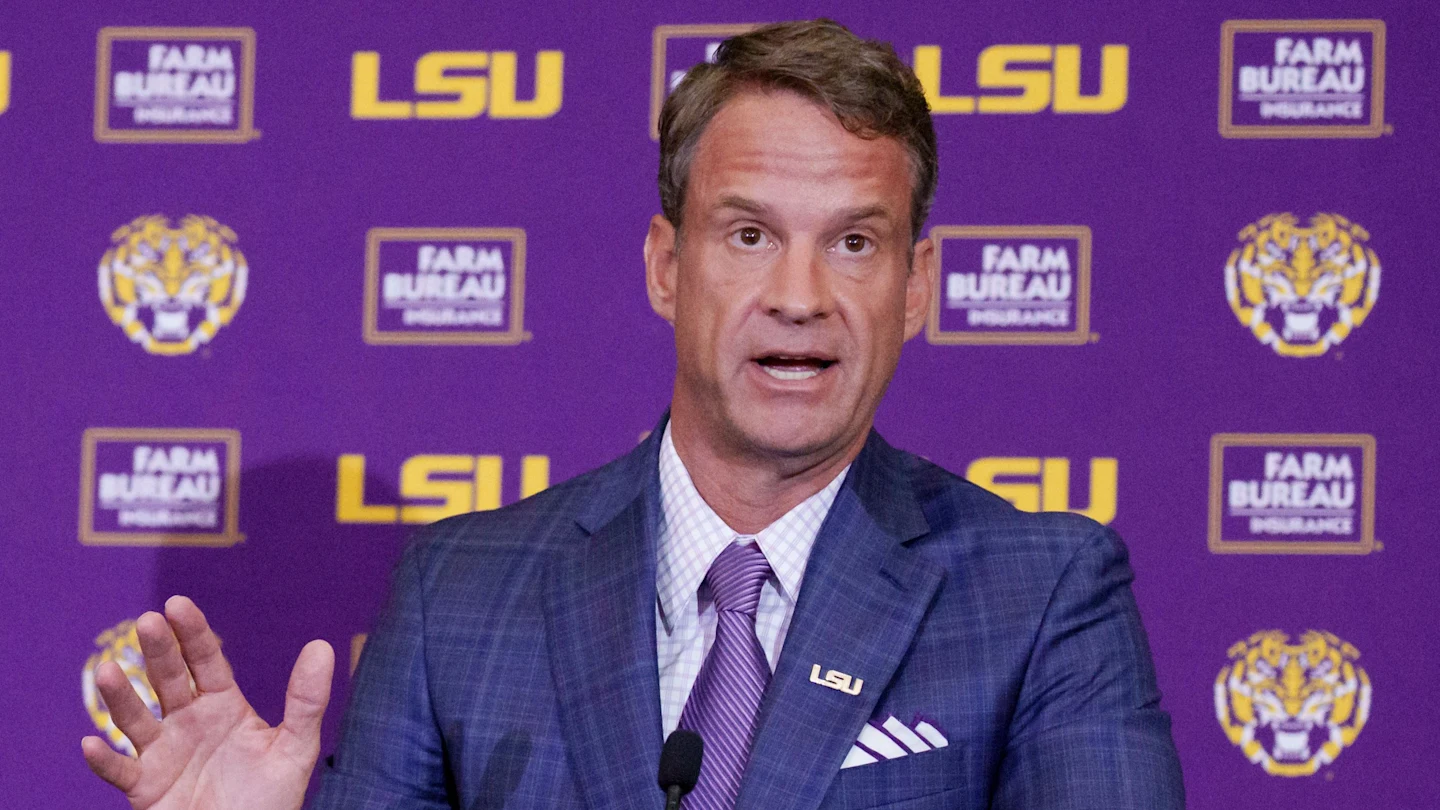
The College Football Playoff travels to Oxford on Saturday with an unusual subplot: an 11-win Ole Miss team entering the postseason without the coach who compiled that record, Lane Kiffin.
Meanwhile, Tulane, which Ole Miss faces Saturday at 3:30 p.m. ET at Vaught-Hemingway Stadium, also has an outgoing coach, as Jon Sumrall has opted to finish the season in New Orleans before taking over at Florida.
Kiffin’s 2025 Rebels closed the regular season at 11–1, securing a CFP berth behind a high-powered offense that averaged 498.1 total yards per game, the third-most in college football.
Within days of the Egg Bowl, Kiffin accepted LSU’s offer, a reported seven-year contract worth roughly $91 million, and announced he would not coach Ole Miss in the playoff.
Ole Miss promptly elevated defensive coordinator Pete Golding to lead the program into the bracket.
On Wednesday, Sumrall broke down the matchup and joked that he had offered Kiffin a spot in Tulane’s coaches’ box.
“They’ve got a lot more stability for the game than people realize. They’re going to be who they’ve been; they’re just not going to have Lane on the sideline,” Sumrall said. “I’ve reached out to Lane to see if he wants to sit in our coaches’ box for the game, but he hasn’t given me an answer yet.”

Tulane arrives after winning the American Athletic Conference and finishing 11–2.
The Green Wave boasts one of the nation’s best turnover margins (+10) and a defense that has tightened steadily since an early setback in Oxford on Sept. 20, a 45–10 loss.
Adding to the narrative, Sumrall, who signed a reported six-year, roughly $45 million deal to become Florida’s next head coach, has said he will remain with Tulane through the postseason before joining the Gators full-time.
Tulane has already designated passing-game coordinator Will Hall as Sumrall’s successor once the playoff run concludes.
This moment reflects a new normal in college football’s accelerated coaching market, with major hires unfolding as teams prepare for postseason play.
Read More at College Football HQ
- $3.7 million college football head coach named clear candidate for Michigan vacancy
- College football program signs $1.2 million deal with NFL legend
- College Football Playoff team losing all-conference player to transfer portal
- $2.1 million college football QB announces return to Big Ten program

Michigan is the last remaining Power Four college football program to find a new head coach in the 2026 cycle.
The Wolverines fired head coach Sherrone Moore on Dec. 10 with cause and are now one week into the coaching search. Alabama head coach Kalen DeBoer, Arizona State head coach Kenny Dillingham, and Missouri head coach Eli Drinkwitz are among those being floated as potential replacements.
One name that previously received attention for the vacancy was Washington head coach Jedd Fisch. On3 and ESPN college football insider Josh Pate reported Fisch’s interest in the Michigan head coaching vacancy has declined in the last few days.
“There’s been some sentiment today that maybe Jedd Fisch’s name has cooled,” Pate said. “I think that’s accurate. The critical take-home points are that I don’t know if Jedd Fisch is going to be a factor in the Michigan search moving forward… I don’t think Jedd Fisch is going to be an option for them.”

Fisch’s waning interest is a relief to Washington, as it is all too familiar with head coaches leaving for other jobs. The Huskies lost Kalen DeBoer to Alabama in the 2024 offseason when Nick Saban announced his retirement from the Crimson Tide.
The Florida alumnus spent the first 24 seasons in the coaching ranks as an assistant at a high school, in the Arena Football League, at six different NFL franchises and five different college football programs. He served as Michigan’s passing game coordinator in 2015 and 2016 under Jim Harbaugh, part of the reason he is linked to the Wolverines’ current opening.
The only head-coaching capacity Fisch had served in before he took the Arizona vacancy was as UCLA’s interim coach in the 2017 Cactus Bowl against Kansas State.
Arizona finished 1-11 in 2021, the lone win against California (10-3) in November. The Wildcats improved to 5-7 in 2022, a record that included an upset victory over a ranked UCLA team. Fisch followed up a 3-3 start in 2023 with seven consecutive wins, including an Alamo Bowl win over Oklahoma (38-24).
Fisch filled the Washington vacancy left by DeBoer in the 2024 offseason. An up-and-down first season led to a 6-7 season, capped by a Sun Bowl loss to Louisville (35-34).
The Huskies put together a stronger effort in 2025. Washington concluded the regular season at 8-4 and defeated Boise State (38-10) in the LA Bowl in SoFi Stadium.

Just two weeks away from the transfer portal opening in college football, coaches across the country are trying to maintain a roster while opposing schools look for any possible way to steal a player, no matter if it comes with paying a buyout.
On Monday, we all witnessed multiple starting quarterbacks decide to declare their intentions to enter the portal. This included DJ Lagway, Dylan Raiola, Brendan Sorsby and Sam Leavitt.
All of these guys would have had the opportunity to play next season at their current schools, with maybe Lagway being an outlier because of the new staff in Gainesville. But, we are certainly in a drastically different era of college athletics.
Transfer Portal Carousel: Quarterbacks, NIL Deals And The Rise Of A WILD College Football Free Agency Market
“There’s a warning that the system that we’re in is really sick right now, and college football is sick,” Eli Drinkwitz said. “There’s showing signs of this thing really cracking moving forward, and we need to get something under control.”
Contracts: How ‘Buyouts’ Are Handled, Or Trying To Be
At the moment, there are players deciding that entering the transfer portal is the best route to take when it comes to cashing in, with chances of making it to the NFL not guaranteed. This also means that certain players are deciding to enter the transfer portal while still under contract with a school like Missouri.
In reality, there are no rules at the moment. Some might think the new College Sports Commission is setting guidelines for future enforcement, but there is still no agreement signed that would have them running the show.
After Sherrone Moore Scandal, Michigan Board Orders Investigation Into Athletic Department
We have seen players re-signing with schools, while others are being shopped around to others. So, what happens if an athlete has signed an agreement with one school, but is looking at the opportunity of transferring?
Here’s the best way to explain what we’re seeing right now in college athletics when it comes to a player leaving one school after already being paid through a “front-loaded” deal before new rules were put into place over the summer.
Let Me Try To Summarize It
“Hey, College Player, you’re being paid $4 million. Here’s $3.8 million before the house settlement is passed. Once you hit the portal, we can terminate the deal, but if it’s terminated because you left, you owe us the money. If another collective cuts the check at the new school, the player would then have that taken out of their new school’s contract.
“And, if the player decides to balk at paying their previous school back, this is where lawsuits could continue. The athletes have already taken this money, but they still owe their previous school for the contract that has not been fulfilled. Somebody has to pay back that money, or what they agreed to under the particular contract.”
I hope that explains it, for the folks still trying to grasp all this.
As we’ve reported before, this is where certain contract language will have “buyout” clauses. But, who is enforcing this? This is what Eli Drinkwitz was trying to emphasize on Tuesday.
“I don’t know, some of the players that have entered the portal were under two-year contracts, and their anticipation is that another school will pay their buyout, or they’ll pay it back themselves,” Drinkwitz told reporters. “So, you know, contracts are contracts. I think there’s been an assumption that, not gonna go there. So we’ll see, we’ll see, you know. Right now, there are perceived rules, and then we’ll figure out what are the real rules moving forward.”
As you can tell, there is no clarity, and as much as some of these coaches would have loved the help of Congress, they might end up waiting a while before enforcement can actually take place.
It’s No Longer Tampering. College Athletes Are Being Shopped
Most coaches in this era would rather handle situations behind the scenes, rather than calling out an opposing school during a press conference setting.
Why? Because there is “tampering” going on at every school. Now, it might not be as rampant at some compared to others, but it’s happening. This could come in the form of a grad-assistant reaching out to the high school coach of a player enrolled at another school.
It happens when the player is not directly contacted, but goes through a third party. Agents are so prevalent in college athletics that they are also shopping players around to the highest bidder. And, we’re not talking about well-run companies that have made a name for themselves over the past six years.
The term “street agent” is used a lot in the industry, which is essentially a person who is working on a campus, acting as if they are running the business affairs of a particular athlete. They have zero training, besides being able to operate a social media account.
But, some of these athletes know no better, and will trust their futures with someone who acts as though they have their best interest at heart. I’m sorry, but having your buddy handle your business affairs, and most importantly life decisions, is not the smartest move.
“You know, tampering is at, I mean, the highest level. There is no such thing as tampering. It’s just, because there’s nobody that’s been punished for tampering. And so everybody on my roster is being called,” Drinkwitz said. “I had a dad call me and say that, and I called the head coaches at their schools, that this school and this school, and this school called, they are offering this much money.
“And, you know, you’re putting a lot of pressure on young men. You know, we’re paying them as 1099 employees, a lot of money, not offering any type of retirement, not offering any type of health benefits.”
I think it’s fair to say we have a long way to go, as schools are still trying to navigate this era of college athletics.
Fighting Irish choose to forgo postseason play after being left out of College Football Playoff, as LA Bowl attendance drops
Remember the good old days of college football bowl season?
Almost every day throughout December, there were good, fun bowl games pitting quality teams against each other. There was no debate over whether star players would be involved, no “opt outs,” no teams turning down invitations. Lesser games still had big attendance figures, as fans built winter vacations around warmer destinations. It built up throughout the month, culminating in the key bowl games around New Year’s Day. The Rose Bowl served as a de facto end of the season, with the biggest and most historic stage.
Now? That’s all a distant relic of a difficult-to-remember past. And it’s only going to get worse.
The start to the 2025 bowl season has been a strong reminder that the old days of college football are never coming back. In some respects, that’s for the better. In some, it’s for the worse. For example, in the days after the end of the conference championship games, discussion focused primarily on the Notre Dame Fighting Irish.
The Irish were left out of the College Football Playoff in favor of the Alabama Crimson Tide and Miami Hurricanes. The committee, as it so often does, simply made up its criteria on the fly, engaged in its usual lack of logical consistency, and predetermined the outcomes it wanted. In short, Notre Dame was treated unfairly. Instead of accepting that, however, the Irish took their ball and went home.
RELATED: Would This Proposal Fix College Football And Broken Playoff Committee?
They announced on social media they would decline any bowl invitation, choosing to forgo important postgame practices and more development time as a team. And while it’s easy to criticize, that type of decision is only going to become more common. Because there’s simply no point to most bowls anymore.
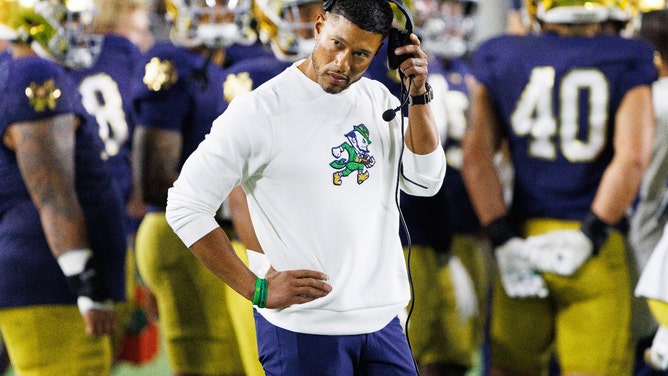
Notre Dame head football coach Marcus Freeman. MICHAEL CLUBB/SOUTH BEND TRIBUNE / USA TODAY NETWORK via Imagn Images
College Football Playoff, NIL, NFL, Ending Bowl Season For Good
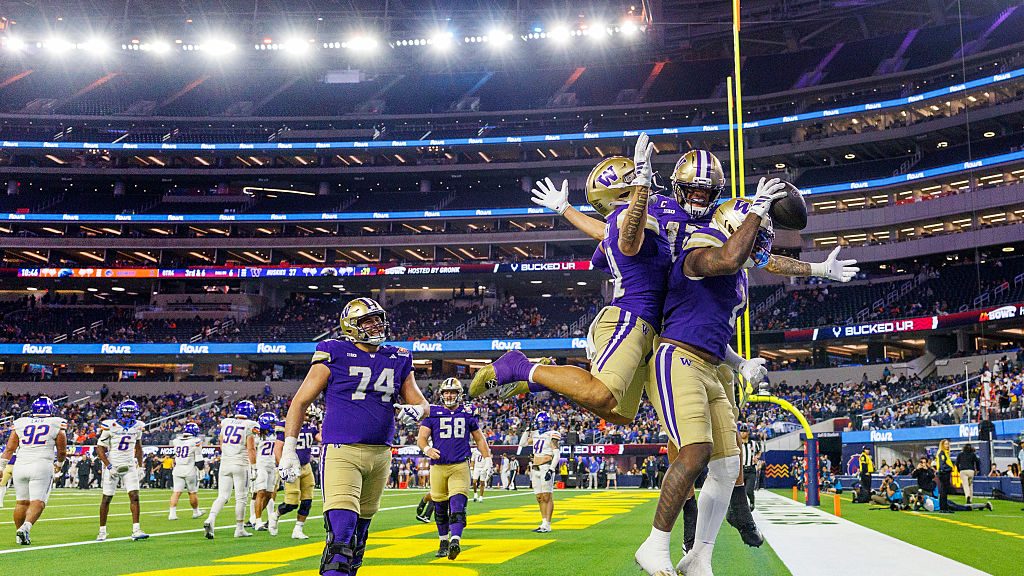
It wasn’t just Notre Dame. One of the first higher-profile bowl games of the season was the LA Bowl pitting the Washington Huskies against the Boise State Broncos at SoFi Stadium. Warm weather destination, two schools with large, dedicated fan bases, a gigantic brand-new state-of-the-art venue, and…nobody showed up.
The official announced attendance was just more than 23,000, but it sure seemed like less than that. Crowd shots before kickoff showed dozens of fans sprinkled around the lower bowl, with the middle and upper sections virtually empty.
It filled in more as the game started, but just barely.
Then there’s the Alamo Bowl, with 9-3 USC taking on 8-4 TCU in San Antonio. In prior decades, it wouldn’t be a point of discussion how many big-name players for SC would be available. Yet sure enough, head coach Lincoln Riley announced over the weekend that several starters would not be participating.
Safety Kamari Ramsey is out after declaring for the NFL Draft. So is Biletnikoff Award winner Makai Lemon. And circus catch specialist Ja’kobi Lane. Starting tight end Lake McRee won’t play, neither will starting linebacker Eric Gentry. This isn’t an outlier, it’s become common practice across the sport. Starting players heading for the NFL sitting out instead of playing in a relatively decent bowl game. And the reasons make sense; why jeopardize your health for an exhibition game that isn’t the College Football Playoff?
It’s the same for fans too. Why buy tickets for an exhibition bowl game where half the starters from the regular season aren’t playing? These are valid questions, and it raises the more important overarching one: what is the future of bowl games?
Notre Dame, one of the game’s biggest brand names isn’t going to play in a bowl game at all. Star players left and right won’t be playing. Nobody’s buying tickets to half these games anymore to see backups taking on backups. NIL and the transfer portal makes it so that many players will avoid bowls, since they’re halfway out the door already anyway.
It’s just not sustainable, and with the game trending in the direction it’s going, there’s little to suggest it’s ever going to go back to the way it was.
Expanding the College Football Playoff isn’t a popular choice, for good reason. But it might be the only path forward to allow more teams, players and fanbases to continue after the regular season. Home playoff games in a 16-team or 20-team or whatever it is field would sell out stadiums and keep players engaged. Bowls could be revived in importance. Ratings would be huge. And most importantly, more money would get infused into the sport.
Like it or not, that’s what college football runs on these days. And the current bowl system isn’t printing enough of it.
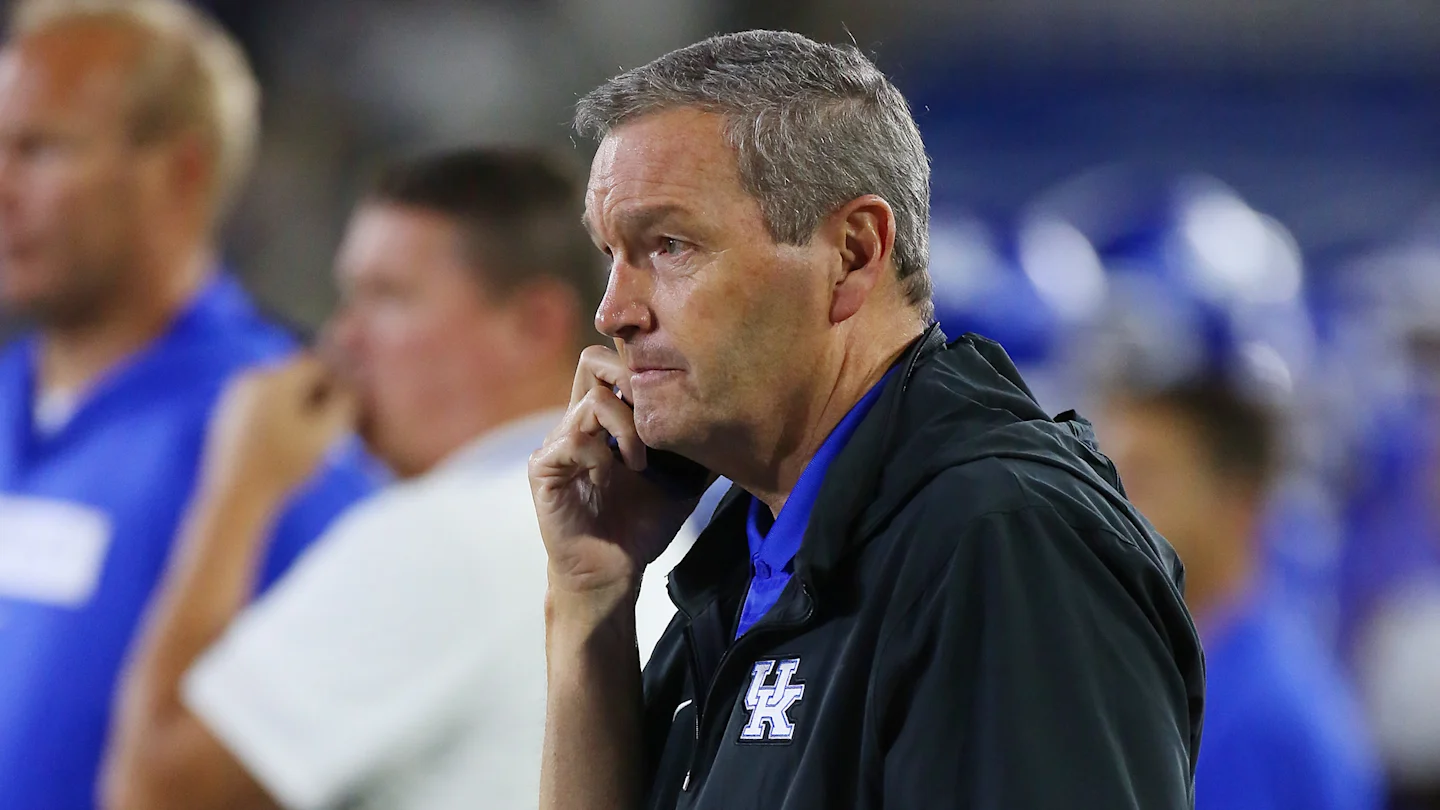
If you’re a Kentucky fan trying to make sense of NIL, revenue sharing and JMI, you’re not alone. The athletic director running the whole thing admits it’s “clunky” right now.
From losing ground with high school basketball recruits like Tyran Stokes and Christian Collins, BBN is at all-time high in recruiting anxiety.
In a long sit-down with the Lexington Herald-Leader, Mitch Barnhart tried to explain how Kentucky is operating in this new College Sports Commission / NILGo world. The message was basically this: yes, it’s confusing; no, Kentucky isn’t freelancing; and he believes the structure he’s put in place is actually a strength, not a handicap.
Convincing the fanbase of that isn’t going to be easy without recruits showing up.
‘Clunky’ rules, moving caps and a promise to stay in the guardrails at Kentucky
Barnhart said the current landscape is really two different eras smashed together: what was done before July 1, and everything that’s been built since the House settlement, the College Sports Commission and NILGo went live.
Different schools had different pre-July 1 spending patterns. That history impacts how much cap space they have now. Some have more room. Some have less. That’s part of why it looks like schools are operating under different rulebooks.
Barnhart’s word for the rollout was “clunky.” There are participation agreements that not every school has signed yet, rules that have to go through courts and attorneys general, and separate 30-day windows for both the House plaintiffs and state AGs before some policies can even be implemented. Some rules are in effect. Others are still in line.
In the middle of all that, Barnhart keeps coming back to the same idea: Kentucky is trying to be “steady,” stay within the “guardrails,” and trust that “progress is being made” as the national framework catches up.
That might not satisfy fans who look around and see other schools clearly pushing those guardrails, but it’s the lane he’s chosen. Pope backed that up by saying they will always “err” on the side of caution when it comes to NIL.
NILGo, averages and a ‘hot market’ in Lexington
On the actual NIL payouts, Barnhart said all deals now flow through NILGo, and Kentucky has already had “several hundred” go through the system. At the Champions Blue meeting in October, he pegged the average deal around $3,000, with the biggest near $50,000. He said those numbers are still “trending in the same way.”
He pointed to Kentucky volleyball as a prime example of what a “hot market” looks like. A Final Four run has made that roster more visible in Lexington, and as their “notoriety” has grown, so has their NIL value. Barnhart sounded genuinely excited talking about watching those opportunities grow for non-revenue athletes.
For fans who worry Kentucky isn’t doing anything, that’s the counter: NIL deals are happening, they’re in seven figures across the department, and not just in football and men’s basketball.
The question, of course, is whether that level of activity is enough to land and keep the kind of top-end basketball talent BBN expects. So far, the answer to that question seems to be no.
Why Mitch Barnhart is all-in on JMI
A huge chunk of the interview was essentially a defense of the JMI model that fans hate.
Barnhart’s pitch goes like this: JMI arrives with more than 200 corporate partners already on board and a seasoned sales force generating $35–40 million a year in advertising and sponsorships. That group is now tasked with not just selling Kentucky athletics, but also matching student-athletes with those brands.
From his perspective, that’s an enormous head start. You’ve got a big, experienced sales staff already embedded on campus, already working with companies that “are very, very interested in your program,” and now they can turn that machine toward NIL.
He also made a key point that’s been blurry for fans: JMI isn’t skimming a cut off those NILGo deals. “There’s no fee,” Barnhart said. “We’re fee-free.”
So what’s the trade-off? Marks and flexibility.
If a student-athlete wants to use Kentucky logos and IP in their deals, that path runs through JMI. If they sign with a company that competes with an existing UK sponsor, Barnhart said they’re “certainly” encouraged to give Kentucky partners first crack, but athletes can still go ahead with outside deals they just can’t use the marks.
That is a huge deal. Being able to use the UK brand, and the notoriety that comes with Kentucky basketball is a huge draw for NIL-minded athletes. Not being able to use those can be a deal breaker.
He pointed to cases like Trent Noah, who has hometown relationships he wants to honor, and players who arrive with pre-existing high school NIL deals. The message there was, “We work through it,” even if it’s messy. Noah decided to not opt-in with JMI and has deals all through the commonwealth, you just won’t see the UK logo anywhere.
The flip side is obvious: if you don’t like or trust JMI, you’re going to see this entire structure as restrictive, even if the AD keeps calling it a “really cool” family.
Barnhart speaks on conflicts of interest and long relationships
Barnhart didn’t dodge the question about perceived conflicts between UK staff and JMI personnel. He just doesn’t see a problem.
To him, the long-standing ties that span from the Jim Host era to IMG to now 11 years with JMI and a new extension through year 25, are a feature, not a bug. He framed it as a tight-knit group of people who love Kentucky and know the market, not as an insider network that needs to be broken up.
A lot of fan angst comes from the Rachel Newman Baker-Brandon Baker relationship. Rachel is an assistant AD at UK while Brandon is Vice President Partnerships at JMI with the title UK Sports & Campus Marketing. According to JMI, “Brandon’s role is focused on aligning key partners’ marketing objectives with the goals and vision of the university. He directs the team that oversees all key partnerships and renewal business, as well as gameday activations, partner hospitality, and stadium/arena signage.”
“If it was a conflict,” Barnhart essentially argued, why have revenues and rights deals grown so aggressively?
That answer is unlikely to quiet any critics of the relationship between UK and JMI. Some fans hear “family” and “long-term relationships” and immediately think of a closed ecosystem that’s hard to challenge. But Barnhart is clearly not backing away from that model. If anything, he’s doubling down on it as a competitive advantage.
Why Barnhart won’t show his revenue-sharing cards at Kentucky
Maybe the most interesting part of the interview was his insistence on keeping revenue-sharing numbers private.
Barnhart pushed back on the idea that it’s about secrecy. He called it “flexibility.”
In his view, there are two separate buckets: revenue sharing and NIL. He thinks fans and some schools have blurred those lines by bragging about a big “NIL” number that’s really a mix of both.
He wants the freedom to slide resources between those buckets depending on the sport, the year and the player. Maybe a high-profile recruit is better served taking more in rev share and less in NIL, or vice versa. Maybe football needs a bigger push one offseason to address a critical position, while basketball doesn’t. Maybe in another year it’s the opposite.
If he puts hard public numbers on what each program gets, he worries he’ll lock himself into boxes that hurt Kentucky competitively and create a circus of fans comparing individual payouts.
He also says there’s a protective piece: he doesn’t want each athlete “pegged” publicly by a dollar figure or constantly compared to teammates.
You can debate whether that explanation is satisfying, or whether transparency would actually help calm the waters, but it’s at least a clear window into his thinking.
For fans it is just Mitch Barnhart saying they have the money, but won’t show a receipt.
Balancing Kentucky football, Kentucky basketball and the rest of the athletics department
Kentucky’s situation is unusual. Both football and men’s basketball are profitable. Most schools can’t say that.
Barnhart admitted that balancing those two in this new world is tricky. Pre-July 1, he says everyone loved the rosters. Post-July 1, the math is just harder across the board, not only at Kentucky.
His bigger picture vision is to use the power of the Kentucky basketball brand to lift everything. If NIL and rev-share decisions are made wisely, he believes success in men’s hoops and football can raise the tide for baseball, women’s basketball, volleyball and everyone else.
That’s the optimistic version. The pessimistic version is what some fans are already feeling: if basketball misses on elite recruits and football falls behind the SEC arms race, nobody gets lifted and everything falls apart.
On general managers, Mark Pope and ‘talent evaluation’
Barnhart also weighed in on the “general manager” debate that’s hovered over Kentucky basketball.
Will Stein came in and immediately wanted a GM for football. Barnhart was fine with that. For a first-time head coach juggling a new staff, a playoff run and a roster rebuild, he called it “probably a pretty smart decision.”
With Mark Pope, he’s not forcing the issue. Barnhart said he’s going to “lean into” Pope’s preference and give him the flexibility to decide whether he wants that role or not down the line.
Then he slipped in a line that will jump out to fans: “Our talent assessment was fine until we lost a couple games, and then everybody started wondering about our talent assessment, correct?” Well, Mitch that is usually how it works.
In other words: he doesn’t think one rough stretch means the eval process is broken, and he doesn’t believe a GM is some magic fix. But he did leave the door open to adjustments later if Pope decides he wants to structure things differently.
Will Mitch Barnhart still be the one steering this or will he retire?
Finally, the obvious question: how much longer does he want to do this?
Barnhart acknowledged the ambassador clause in his contract that would allow him to step aside after December 31 and shift roles. He didn’t commit one way or the other.
He talked instead about loving competition, loving Kentucky and the fact that he and his family came planning to stay 6–8 years and never left. He admitted the job has changed, where it used to be 75% competition and 25% “other stuff,” he thinks those numbers have flipped. Now it’s more about sustaining the enterprise of college sports than just trying to win Saturday.
He also admitted the personal connection piece is harder in an era where 35–40% of the roster turns over every year. Meeting every recruit, knowing every family? That’s tougher now.
But the thrill of competition is still there for him. “The day that changes,” he said, is probably the day someone else should take over.
That’s the backdrop to everything he just laid out: a clunky system, a controversial partnership model, a fanbase demanding top-tier results, and an athletic director who insists Kentucky has “a good plan” for all of it, and says he still wants to be the one fighting to make it work.

Rec Sports3 minutes ago
LOCAL SPORTS: North Alabama Elite Wrestling shows out at Arab Youth Invitational; Jackson earns top honors

Rec Sports11 minutes ago
Kids Club Day to Take Center Stage as Wolverines Host La Salle

Sports14 minutes ago
Colyer, Booth earn AVCA All-American honors

Rec Sports19 minutes ago
Congress Explores Youth Sports ‘Crisis’ Amid Rising Costs and Declining Participation
Sports29 minutes ago
Pitt volleyball reaches Final Four again but can it win championship?
NIL31 minutes ago
Bankruptcy trustee presses case against Deion Sanders’ son Shilo

Motorsports48 minutes ago
Jeff Gordon 1 of 1 trading card inserted into Panini America’s National Treasures Racing production

Motorsports1 hour ago
Which Truck Series Rides are Still Open for 2026?

NIL1 hour ago
$45 million college football head coach reportedly offers Lane Kiffin unexpected role

NIL2 hours ago
$36 million college football coach reportedly out of race for Michigan vacancy

Rec Sports3 hours ago
John Ammerman – Bakken Young Funeral Home

NIL3 hours ago
Eli Drinkwitz: NIL Buyouts And Tampering Are Making ‘College Football Sick’

Rec Sports3 hours ago
Men’s Basketball Hosts Holy Cross Saturday for Youth Day

NIL4 hours ago
Bowl Season Attendance Plummets As Star Players Opt Out, Teams Decline Invites

Motorsports4 hours ago
Patrick Emerling Announces GOAT Power Bikes as First Partner for 2025 Season

Rec Sports3 weeks ago
First Tee Winter Registration is open

Rec Sports3 weeks ago
Fargo girl, 13, dies after collapsing during school basketball game – Grand Forks Herald

Motorsports3 weeks ago
CPG Brands Like Allegra Are Betting on F1 for the First Time

Motorsports3 weeks ago
F1 Las Vegas: Verstappen win, Norris and Piastri DQ tighten 2025 title fight

Sports4 weeks ago
Volleyball Recaps – November 18

Sports3 weeks ago
Sycamores unveil 2026 track and field schedule

Sports3 weeks ago
Utah State Announces 2025-26 Indoor Track & Field Schedule

Sports3 weeks ago
Two Pro Volleyball Leagues Serve Up Plans for Minnesota Teams

Motorsports3 weeks ago
Redemption Means First Pro Stock World Championship for Dallas Glenn

Motorsports3 weeks ago
Jo Shimoda Undergoes Back Surgery

Sports3 weeks ago
Texas volleyball vs Kentucky game score: Live SEC tournament updates

NIL2 weeks ago
Bowl Projections: ESPN predicts 12-team College Football Playoff bracket, full bowl slate after Week 14

Motorsports1 week ago
SoundGear Named Entitlement Sponsor of Spears CARS Tour Southwest Opener

Rec Sports3 weeks ago
How this startup (and a KC sports icon) turned young players into card-carrying legends overnight

Rec Sports3 weeks ago
Robert “Bobby” Lewis Hardin, 56

 NBA Legend Michael Jordan to Join NBC Sports as Special Contributor
 Why a rising mid-major power with an NCAA Tournament team opted out of revenue-sharing — and advertised it
 Falcons mailbag
 Portal Update – Basketball and Gymnastics Take Hits
 has always dreamed in Mercurial. Now his initials are on the boots.
The new Kyl…
has always dreamed in Mercurial. Now his initials are on the boots.
The new Kyl…
-
 Motorsports3 weeks ago
Jo Shimoda Undergoes Back Surgery
-
 Motorsports1 week ago
SoundGear Named Entitlement Sponsor of Spears CARS Tour Southwest Opener
-
 NIL2 weeks ago
Bowl Projections: ESPN predicts 12-team College Football Playoff bracket, full bowl slate after Week 14
-
 Rec Sports3 weeks ago
How this startup (and a KC sports icon) turned young players into card-carrying legends overnight
-
 Rec Sports3 weeks ago
Robert “Bobby” Lewis Hardin, 56
-
Sports3 weeks ago
Wisconsin volleyball sweeps Minnesota with ease in ranked rivalry win
-

 Motorsports3 weeks ago
Pohlman admits ‘there might be some spats’ as he pushes to get Kyle Busch winning again
-

 Motorsports1 week ago
Donny Schatz finds new home for 2026, inks full-time deal with CJB Motorsports – InForum
-

 Motorsports3 weeks ago
Increased Purses, 19 Different Tracks Highlight 2026 Great Lakes Super Sprints Schedule – Speedway Digest
-

 Rec Sports2 weeks ago
How Donald Trump became FIFA’s ‘soccer president’ long before World Cup draw