
NIL
Vanderbilt, Notre Dame and 2007-like chaos lead Week 8 takeaways

There’s no more unpredictable thing than a college football Saturday.
This week brought a pair of overtime games in the SEC, a few coaches whose seats only get warmer and even a Division III running back, Curry College’s Montie Quinn, who made NCAA history with 522 rushing yards and seven touchdowns on just 20 carries. I can’t even do that on “EA Sports College Football 26.”
But really, Week 8 was about the upsets in what’s becoming one of the century’s craziest college football seasons.
Week 8 is over and you know how this works: Let’s run through College Football Overtime, highlighting everything you need to know from the week that was in college football.
ONE BIG THING: A SEASON OF PARITY
No season represents chaos more than 2007 in modern college football terms. No FBS team finished unbeaten for only the second time in BCS history. The Nos. 1 and 2 teams lost during the same weekend on three different occasions.
But check this out. Here’s the win percentage for top 10 teams through Week 8 of 2007 compared to through Week 8 of 2025:
– 2007: 75%
– 2025: 72.7%
Yeah, 2025 is out-crazy-ing 2007.
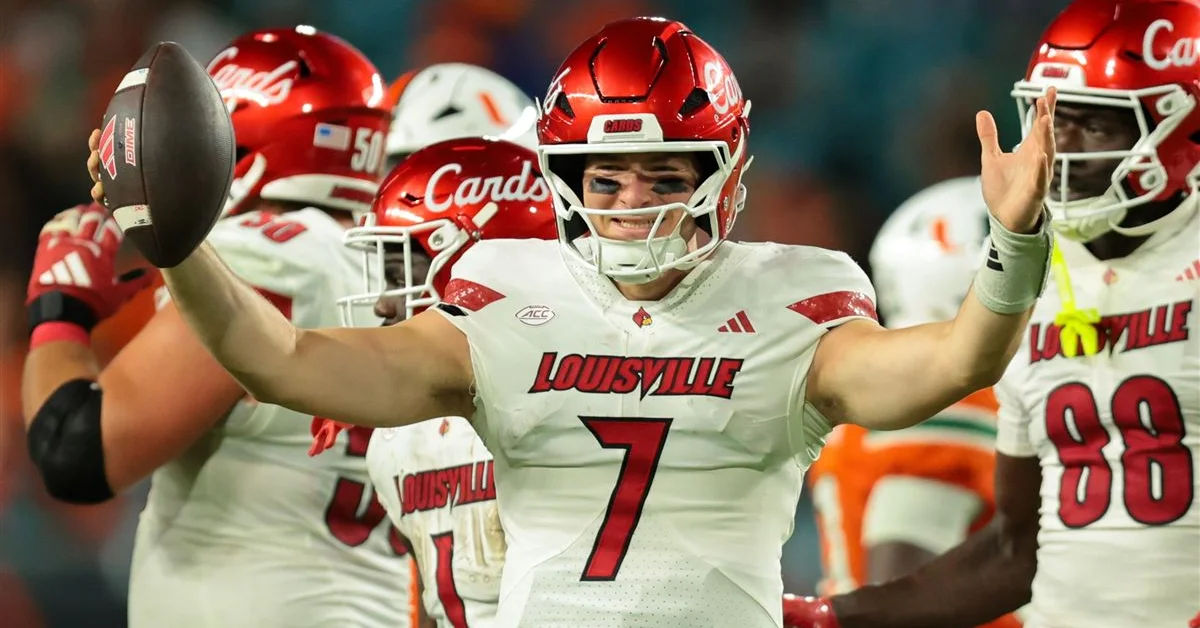
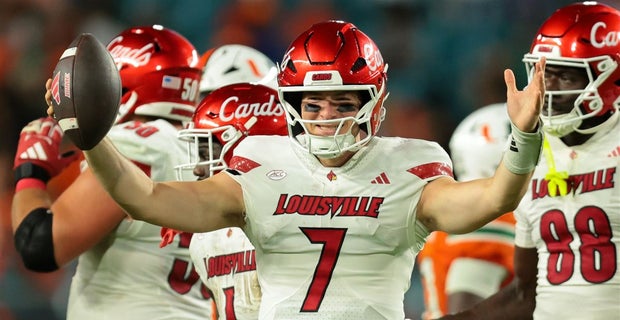
It happened again Saturday when top 10 teams finished 5-4. One of those losses came when No. 9 Georgia beat No. 5 Ole Miss, 43-35, knocking the Rebels out from the unbeaten ranks. But, at least in the rankings, the others were all upsets. Louisville went into Hard Rock Stadium for Friday’s 24-21 upset of No. 2 Miami, Arizona State upended double-digit favorite and seventh-ranked Texas Tech for a 26-22 win and No. 17 Vanderbilt beat No. 10 LSU.
Pull the lens out to the weekend as a whole, and four of the 11 remaining unbeaten teams — UAB upended Memphis and Boise State knocked off UNLV — lost this weekend.
It’s easy to label those upsets as chaos, and it is in a way. But I’d argue that it’s much more about parity. There’s a real shift in college football because of the transfer portal, NIL and revenue sharing. The best teams have less depth, the middle of the Power Four is more equipped to compete than ever before and the top 25% or so of FBS teams raid the Group of Six and FCS for their best players.
The result of that is the most even top 40 or so teams we’ve seen atop the sport in a long time. It’s something I explored in-depth for CBS Sports earlier this past week, but I think the average scoring margin in SEC games through Week 7 over the last decade illustrates it well:
– 2025: 10.7
– 2024: 11.1
– 2023: 14.4
– 2022: 16.5
– 2021: 17.6
– 2020: 15.6
– 2019: 17.3
– 2018: 17.6
– 2017: 20.9
Alabama and Georgia used to run through the SEC without much issue. That’s not happening this year. We saw it Saturday. Kentucky pushed Texas into overtime. Auburn and Missouri went to OT, too. No. 4 Texas A&M escaped Arkansas with a 45-42 win. Florida beat Mississippi State by two.
The margins are so small — perhaps outside of Ohio State — because the so-called “light heavyweights” of the sport have the money to keep up and a reason to in the 12-team playoff era.
So expect the chaos to continue. Parity is the new reality of college football in 2025.
REPORT CARD
A. VANDERBILT
Ever attempt to patch a leaky hose with duct tape? That’s what it feels like to defend Vanderbilt. It seems like things are under control for a time, but eventually the pressure mounts and you lose contain.
Then water does what it always does — it keeps coming.
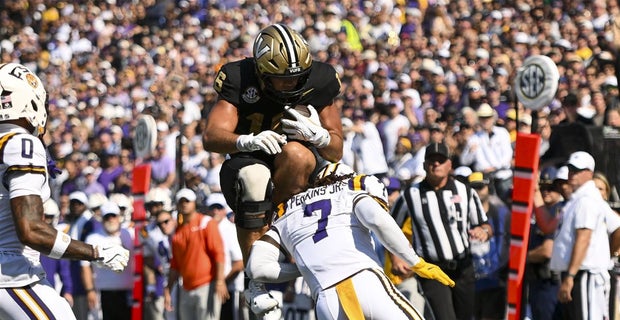
That’s what the No. 17 Commodores did in a 31-24 win over No. 10 LSU. Vanderbilt held the ball for 35 minutes, scored touchdowns on four of its first five drives and, when it needed to, squeezed the life out of LSU’s defense in the final minutes to end the game.
Vanderbilt is relentless offensive pressure because of its hype efficiency. The Commodores entered the week ranked first in rushing success rate and eighth in passing success rate. They stay ahead of the chains, convert third downs (50% against LSU) and then get you on fourth down (2-for-3 against LSU) if they have to.
Diego Pavia might as well be a fish in the backfield for how slippery he is and how many plays he extends. I don’t know if there was a more inspired hire by a head coach at coordinator this decade than Clark Lea hiring Tim Beck as his offensive coordinator following the 2023 season. It transformed Vanderbilt, which is 6-1 for the first time since 1950.
Rank Vanderbilt in the top 10 this week. The Commodores deserve it.

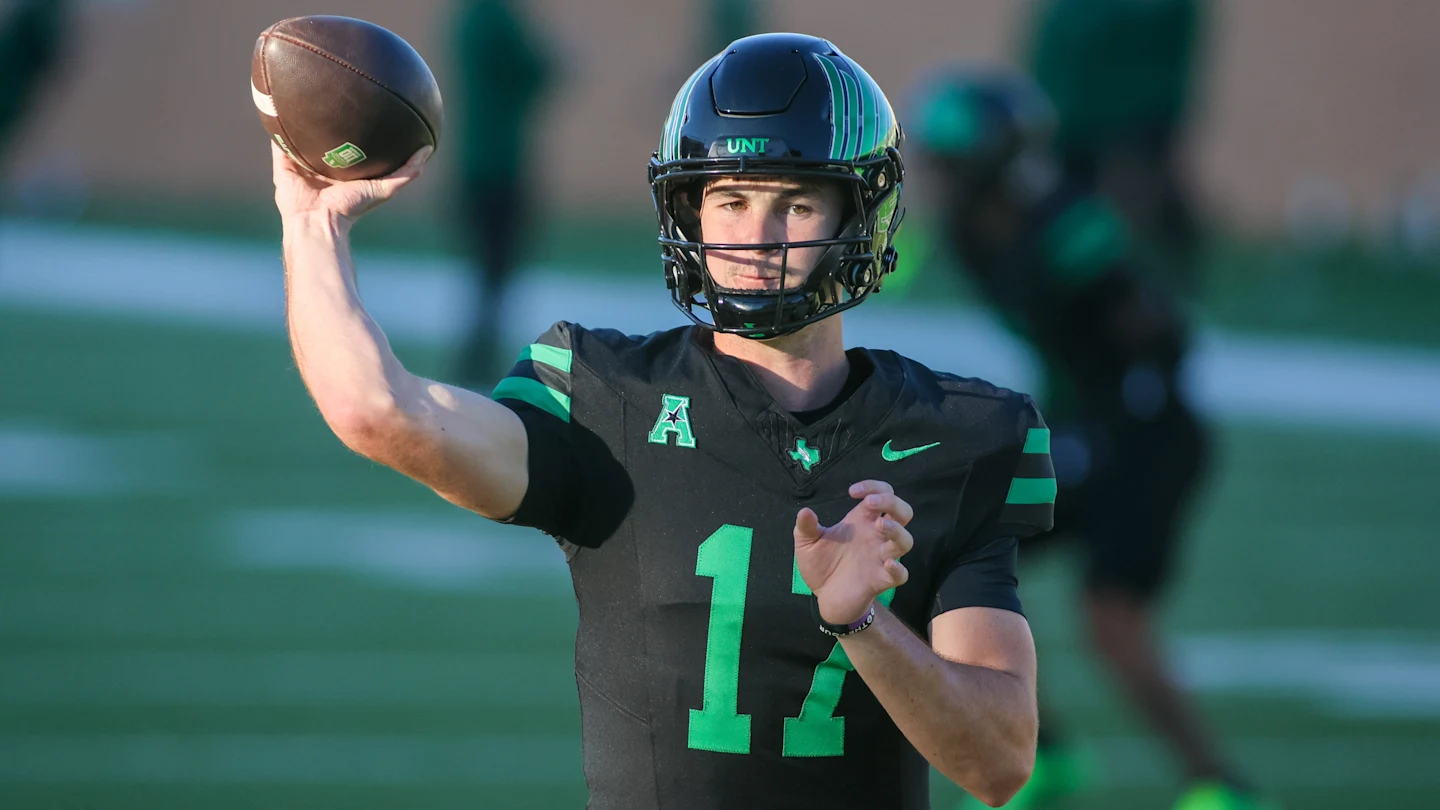
Drew Mestemaker finished this season as the most-productive single passer in college football, and now the former North Texas quarterback is poised to enter the transfer portal, setting off a bonanza to secure one of the nation’s most consequential players.
What college football programs are expected to be involved in the bidding? When considering an ideal matchup pairing, one major SEC program currently sticks out.
On3 Sports analyst Kaiden Smith outlined what he thinks is the best destination for both parties.
Mestemaker to Rocky Top?
“If you’re Tennessee, you have this excellent track record with this offense, with transfer quarterbacks. Why not get a guy who you can get a couple years out of, as well?” Smith said.
“Parlay your offense and your transfer success with a guy who apparently is very early on his football journey in general,” he added.
What Mestemaker has done
Mestemaker led the FBS with 4,129 passing yards and was third in passer rating, placing behind just Heisman winner Fernando Mendoza and finalist Julian Sayin.
He completed 70 percent of his pass attempts with 31 touchdowns and only 7 interceptions, being named the American Conference Offensive Player of the Year, leading North Texas to an appearance in the league title game.
But head coach Eric Morris left the school and took the same position at Oklahoma State, so that program could emerge as a contender for the quarterback.
Tennessee’s recent success
Recruiting transfer quarterbacks is something Tennessee has done well over the last several seasons, bringing on Hendon Hooker and then Joey Aguilar to lead productive offenses.
But both those players didn’t get to suit up for the Vols for too long. Bringing on Mestemaker would represent a longer-term investment in a very promising player.
“I think this is a guy that not only would fit perfectly with the scheme, with how quickly players have been able to understand the scheme,” Smith said.
He added: “You get a full offseason with him. But he can maybe build on that and build on that for years to come as just a redshirt freshman.”
Where the Vols are at QB
Aguilar is about to exhaust his NCAA eligibility and with precious little experience remaining on its quarterback depth chart, Tennessee is very much in the market for a signal caller with proven experience as a starter.
Aguilar is likely on the way out and redshirt freshman Jake Merlinger is planning to enter the transfer portal.
That leaves George MacIntyre and Faizon Brandon on the Volunteers’ expected quarterback depth chart heading into 2026.
MacIntyre has played in just two games, going 7 of 9 passing with 69 yards, and Brandon was a five-star commitment in the 2026 class, but with no NCAA experience.
Tennessee could look at Mestemaker as a proven commodity worth going after now rather than waiting for their prospects to develop.
Mestemaker is only a redshirt freshman with three seasons of NCAA eligibility remaining. Tennessee going after him could potentially inspire both MacIntyre and ultimately Brandon to leave the program.
So the question for the Vols would be if he’s worth that risk.
How the college football transfer portal works
College football’s transfer portal officially opens on Jan. 2, but that hasn’t stopped a flurry of players from entering their names for consideration at a new school right now.
The new 15-day transfer portal window from Jan. 2-16 and the elimination of the spring transfer period has condensed the timeline for players and programs to make their moves.
The NCAA Transfer Portal is a private database that includes the names of student-athletes in every sport at the Division I, II, and III levels. The full list of names is not available to the public.
A player can enter their name into the transfer portal through their school’s compliance office.
Once a player gives written notification of their intent to transfer, the office puts the player’s name into the database, and they officially become a transfer.
The compliance office has 48 hours to comply with the player’s request and NCAA rules forbid anyone from refusing that request.
The database includes the player’s name, contact information, info on whether the player was on scholarship, and if he is a graduate student.
Once a player’s name appears in the transfer portal database, other schools are free to contact the player, who can change his mind at any point in the process and withdraw from the transfer portal.
Notably, once a player enters the portal, his school no longer has to honor the athletic scholarship it gave him.
And if that player decides to leave the portal and return to his original school, the school doesn’t have to give him another scholarship.
(On3)
More college football from SI: Top 25 Rankings | Schedule | Teams
Follow College Football HQ: Bookmark | Rankings | Picks

TEMPE — The NIL sphere has created a seismic shift in the world of college athletics – the ways in which Arizona State has been impacted are very real in the midst of the changes to the structure of athletics.
ASU football head coach Kenny Dillingham has been quite vocal in finding avenues for the football program to improve in that sphere – most recently making a plea for a mega-donor to make a program-changing contribution – much in the same way that Texas Tech’s fortunes were changed nearly overnight.
Arizona State on SI selects four power brokers who are affiliated with the school and have the potential to become folk heroes in Tempe.
Phil Mickelson

Mickelson – an Arizona State graduate in 1992 – is considered one of the best golfers of all time, ranking 8th in PGA Tour victories (45) and earning six major victories.
The legendary golfer has frequently shouted out the football program in social media posts over the last two seasons as well, confirming that he still associates with the university.
Mickelson is also reportedly boasting a net worth of $350 million, making the golfer one of, if not the prime candidates, to commit a hefty check to not only improve the football infrastructure, but university athletics as a whole.
Jon Rahm
Rahm, 31, is a native of Spain who played at Arizona State from 2012-2016, becoming one of the top amateurs in golf during those four years.
Rahm continues to maintain a residence in the Phoenix area and has seemingly stayed connected with the university over the years – he has the potential to be another heavy-hitting contributor alongside Mickelson.
Jimmy Kimmel
Kimmel, 58, is an outside-the-box addition to the equation here, as he attended, but didn’t graduate from Arizona State.
Still, it’s fascinating to bring up the possibility of a late-night show host contributing to the program and becoming immortalized amongst the fanbase despite not holding a diploma from the school.
James Harden
Harden is another clear option that is out there for a mega-donor.
The 36-year-old NBA star has built up multi-generational wealth over his career, and has never shied away from continuing to proudly display his affiliation with the program – even openly donating in the high-six figure totals to the basketball program’s NIL efforts, as well as returning to interact/practice with Sun Devil teams that are incoming each summer.
Regardless of what happens in NIL efforts of the university moving forward, there are options that could surely fulfill Dillingham’s desires.

Read more on why the Arizona State men’s basketball team will exceed expectations in the 2025-26 season here, and on why the bright future of the football program isn’t dimmed by the loss to Arizona here.
Please let us know your thoughts when you like our Facebook page when you click right here.
Please follow us on X when you click right here, as well as @khicks_21 for nonstop Arizona State coverage!


Duke’s Peyton Jones runs the ball during the second half of the Blue Devils’ 45-17 win over Elon on Thursday, Aug. 28, 2025, at Wallace Wade Stadium in Durham, N.C.
The News & Observer
With roster management and player retention a big part of coaches’ jobs, Duke’s Manny Diaz had some good news to share at Christmastime: Quarterback Darian Mensah and wide receiver Cooper Barkate are both returning for the 2026 football season.
Mensah, a redshirt sophomore this season and the ACC’s leading passer, had talked with Diaz and others about his NFL possibilities. But the former Tulane transfer decided to come back for a second year with the Blue Devils, where he again is expected to receive one of the top NIL packages in college football.
Barkate, who transferred to Duke from Harvard before last season, had 68 catches for 1,069 yards for the 2025 ACC champions, averaging 15.7 yards a grab, and scored six touchdowns.
The Blue Devils, who face Arizona State in the Dec. 31 Sun Bowl in El Paso, Texas, had just three players miss bowl practices, according to Diaz. One was offensive tackle Brian Parker II, who announced he would leave Duke early to enter the NFL Draft. Cornerback Chandler Rivers and defensive end Vincent Anthony Jr., also are preparing for the 2026 draft.
Duke also has another departure: running backs coach Chris Foster, who has joined the Florida staff after one year on the Diaz staff.
“The situation is always fluid, but I expect our retention rate to be very good, again,” Diaz said. Here’s a look at who the Devils will have leaving when the NCAA transfer portal opens Jan. 2:
Entering the portal
RB Peyton Jones: Became something of a forgotten man in the offense in 2025 with the emergence of Nate Sheppard and power running of transfer Anderson Castle. Played in four games after being Star Thomas’ backup in 2024 and rushing for 317 yards.
TE Vance Bolyard: The redshirt sophomore from Greensboro was used primarily on special teams in 2025. Played in 10 games in 2024.
OL Jack Small: A redshirt freshman this year, the 6-6, 300-pounder was used in just two games.
S Kenzy Paul: Redshirt junior saw little action in the secondary this season, playing in one game, the win over Clemson.
S Maliki Wright: Did not play as a freshman this past season.
CB Kyren Condoll: The California native played in one game in 2024 and again saw little action this season.
CB Vontae Floyd: Limited to three games because of injury in 2025, the sophomore played in 11 games in 2024 and was one of four true freshmen to letter for Devils.
DT Terry Simmons Jr.: The redshirt sophomore, a 6-2, 305-pounder, played nine games in 2025 as a backup defensive tackle and was at Duke for three seasons.

Chip Alexander
The News & Observer
In more than 40 years at The N&O, Chip Alexander has covered the N.C. State, UNC, Duke and East Carolina beats, and now is in his 15th season on the Carolina Hurricanes beat. Alexander, who has won numerous writing awards at the state and national level, covered the Hurricanes’ move to North Carolina in 1997 and was a part of The N&O’s coverage of the Canes’ 2006 Stanley Cup run.
Dec. 26, 2025, 5:40 a.m. CT
NORMAN – For University of Oklahoma defensive lineman Danny Okoye, his current spot – as the face of a social media campaign seeking to spread awareness of a life-saving drug for those who have overdosed on opioids – was a case of fortuitous timing.
Okoye is the first of a series of OU student-athletes who will participate in an NIL (name, image and likeness) deal with the nonprofit HarborPath of Charlotte, North Carolina, to promote Narcan, the brand name under which the generic drug naloxone is distributed.
Dec. 26, 2025, 5:03 a.m. ET
- Tennessee Sen. Marsha Blackburn has proposed the HUSTLE Act to create tax-deferred savings accounts for college athletes’ NIL income.
- The need for congressional intervention is questionable, given that other wealthy groups, like NFL players, do not receive similar legislative protection.
If the hollowness of the bowl season or the irrationality of the playoff system has you saddened by the state of college football, it could always be worse. Congress could get involved.
It’s already bad enough that NCAA apologists want Congress to grant college athletics an antitrust exemption. Now Tennessee Senator (and gubernatorial candidate) Marsha Blackburn, in a timely act of pandering, wants to give college athletes special tax-advantaged savings accounts – “for their own protection.”
Blackburn’s comically named “Helping Undergraduate Students Thrive with Long Term Earnings (HUSTLE Act) would allow certain college athletes to create tax-deferred accounts for their Name Image and Likeness (NIL) income.
Don’t get me wrong; I’m a big fan of saving and investing, especially in a tax-deferred vehicle. But the aim of this act ‒ somehow protecting young people from squandering their NIL riches ‒ raises an obvious question: Where exactly is the constitutional mandate (or even suggestion) for Congress to pass laws discouraging 19-year-old millionaires from buying expensive cars and jewelry?
If Blackburn is genuinely concerned about young, wealthy athletes squandering their money, why didn’t she start with the NFL? A widely cited 2009 Sports Illustrated article claimed that 78% of NFL players “face financial stress or bankruptcy” within two years of retirement. This figure was likely exaggerated, but a statistically sound study by the National Bureau of Economic Research found that 15.7% of NFL players file for bankruptcy within 12 years of retiring. Yet this hasn’t prompted any urgent Congressional push to save professional athletes from themselves.
If age is really the determining factor in financial responsibility, why is the fastest growing demographic of bankruptcy filers over 65? Why is the median age of someone filing for bankruptcy 49 and not 29?

Blackburn could, of course, propose legislation allowing college athletes to participate in the existing tax-deferred retirement accounts at their respective universities, but that would concede that the players are employees ‒ something universities want to avoid at practically all costs.
Not to be outdone by the Senate, the House of Representatives proposed the SCORE Act, which would grant NCAA institutions exemptions from antitrust laws – essentially codifying the illegal wage collusion the schools practiced for decades ‒ while also legally declaring that players are not employees of the universities that pay for their athletic services. Too many old timers simply can’t accept the end of decades of illegal (and in my opinion, immoral) athletic department business practices, so they are begging Congress to protect them.
Even if you concede the premise that 20-year-olds are incapable of making wise financial decisions and require assistance, why would Congress be the entity to turn to for financial wisdom?

David Moon, president of Moon Capital Management, may be reached atdavid@mooncap.com.


College football’s leading passer seen as match for SEC program in transfer portal

Wyoming Valley Sanitary Authority uses new technology to restore interceptor beneath levee

G-R to host open volleyball camp featuring UNI players | News, Sports, Jobs

Southern implementing “YOU Matter Here” campaign | News, Sports, Jobs

Samsung to showcase world’s first 1,040Hz gaming monitor at CES 2026

Selecting ASU Alum That Can Change NIL Outlook

Real Madrid are convinced former youth team defender will come back ‘sooner rather than later’

Pahrump Valley Junior Athletics will help kids develop athletic skills and confidence

BangShift.com IHRA Acquires Historic Memphis Motorsports Park In Millington Tennessee. Big Race Weekend’s Planned For 2026!

Remembering Those the NASCAR Community Lost in 2025

Celebrating 100 Division One Basketball games at the Sanford Pentagon

Brennan’s Pub to Close Permanently After Decades, Hosts Final Turtle Race on Saturday

Maserati Sets Its Sights On A Bigger 2026 Racing Season

Presidents Bowl Basketball Classic returns to Sanford Pentagon – Sioux Falls Live

Who’s leaving Duke football as transfer portal opens Jan. 2

Fargo girl, 13, dies after collapsing during school basketball game – Grand Forks Herald

SoundGear Named Entitlement Sponsor of Spears CARS Tour Southwest Opener

Jo Shimoda Undergoes Back Surgery

Redemption Means First Pro Stock World Championship for Dallas Glenn

Black Bear Revises Recording Policies After Rulebook Language Surfaces via Lever

Bowl Projections: ESPN predicts 12-team College Football Playoff bracket, full bowl slate after Week 14

Donny Schatz finds new home for 2026, inks full-time deal with CJB Motorsports – InForum

Robert “Bobby” Lewis Hardin, 56

How this startup (and a KC sports icon) turned young players into card-carrying legends overnight

How Donald Trump became FIFA’s ‘soccer president’ long before World Cup draw

Men’s and Women’s Track and Field Release 2026 Indoor Schedule with Opener Slated for December 6 at Home

David Blitzer, Harris Blitzer Sports & Entertainment

Indiana’s rapid ascent and its impact across college football
Wisconsin volleyball sweeps Minnesota with ease in ranked rivalry win

Michael Jordan’s fight against NASCAR heads to court, could shake up motorsports





-
 Motorsports2 weeks ago
SoundGear Named Entitlement Sponsor of Spears CARS Tour Southwest Opener
-
 Motorsports3 weeks ago
Donny Schatz finds new home for 2026, inks full-time deal with CJB Motorsports – InForum
-
 Rec Sports3 weeks ago
David Blitzer, Harris Blitzer Sports & Entertainment
-
 Motorsports3 weeks ago
JR Motorsports Confirms Death Of NASCAR Veteran Michael Annett At Age 39
-
Sports3 weeks ago
Elliot and Thuotte Highlight Men’s Indoor Track and Field Season Opener
-
Sports3 weeks ago
West Fargo volleyball coach Kelsey Titus resigns after four seasons – InForum
-
 NIL3 weeks ago
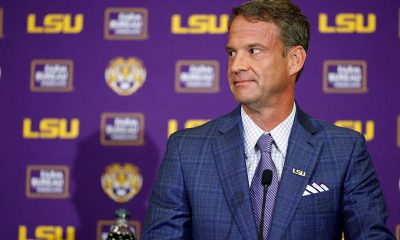
Colleges ponying up in support of football coaches, programs
-
 Motorsports2 weeks ago
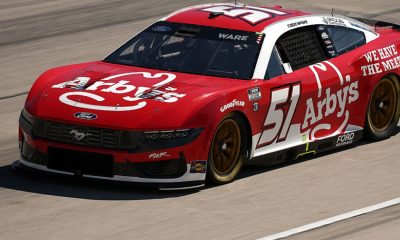
Rick Ware Racing switching to Chevrolet for 2026
-

 NIL2 weeks ago
DeSantis Talks College Football, Calls for Reforms to NIL and Transfer Portal · The Floridian
-
 Sports2 weeks ago
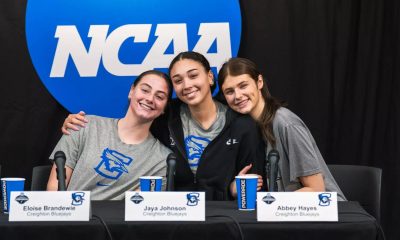
#11 Volleyball Practices, Then Meets Media Prior to #2 Kentucky Match