
NIL
What does House settlement mean for college sports? We break it down.


A settlement allowing revenue sharing with NCAA athletes will transform college sports. How will this new system work? We break down what it all means.

Latest on NCAA settlement that would allow revenue sharing for college athletes
USA TODAY Sports’ Steve Berkowitz discusses the latest on judge’s refusal to approve NCAA settlement that would allow revenue sharing for college athletes
Sports Pulse
After nearly five years of litigation, a federal judge on the night of Friday, June 6 granted final approval to a settlement of three athlete-compensation antitrust cases against the NCAA and the Power Five conferences that is now set to fundamentally change college sports.
Unless altered on appeal, the arrangement will allow — though not require — schools to directly pay their athletes for the use of their name, image and likeness (don’t call it pay for play), subject to an annual cap based on a percentage of a defined set of Power Five athletics department revenues. These payments could begin July 1.
Current and former athletes, over a 10-year period, will receive shares of $2.8 billion in damages (as will the lawyers who represented them).
For schools that opt in to paying their athletes, the NCAA’s current system of sport-by-sport athletic scholarship limits will be scrapped in favor of sport-by-sport roster limits. However, after U.S. District Judge Claudia Wilken initially refused to approve the settlement because implementation of the limits starting with the 2025-26 school year would have resulted in thousands of athletes losing their spots on Division I teams, the deal was revised in a fashion that effectively could delay full implementation of the limits for several years. The elimination of the scholarship limit will result in new athletic scholarships being awarded.
In addition, while athletes will continue to be allowed to make name, image and likeness deals with entities other than their schools, there will be an effort by the power conferences (not the NCAA) to bring greater scrutiny to those arrangements, under the direction of a new entity called the College Sports Commission. Regardless of whether their school opts in to making NIL payments, any Division I athlete who has a deal, or deals, worth $600 or more will have to report those deals to (get ready for the new college-sports jargon) to system called “NIL Go.” That data will then by be evaluated to determine whether the deal has a “valid business purpose” and is within “a reasonable range of compensation,” whatever those terms are deemed to mean.
Again, the Commission will not be operated by the NCAA, but rather by the conferences, and the Commission will be charged with investigating alleged malfeasance, enforcing rules and penalizing rule-breakers.
That means there’s a lot left to be sorted out, and that’s without considering myriad other tangential, or unrelated, to the settlement.
This marks “the formal beginning of the greatest transformation in college sports history, period,” Gabe Feldman, director of the Tulane Sports Law Program and Tulane University’s associate provost for NCAA compliance, told USA TODAY Sports before the settlement was announced. “But I think the key, even after approval of the settlement, is that the changes in college sports are just starting. The settlement will likely trigger a series of additional changes, legal challenges and efforts to get Congressional intervention. This is not the end of a chapter — or, if it’s the end of a chapter, a new chapter will be beginning soon after. …
“I think there are as many unanswered questions — and probably more unanswered questions — than answered questions that will come from the settlement.”
Can the House settlement be appealed?
Wilken’s final-approval ruling can be taken to the 9th U.S. Circuit Court of Appeals. It is not certain whether it will be appealed, but objecting parties have 30 days to decide. The contentiousness surrounding the roster limits could result in one or more of the objectors who were focused on that issue not only appealing, but also seeking a stay that would delay implementation of the entire settlement.
Such objectors would need the stay because, as the settlement was approved by Wilken, if there is an appeal, all of the forward-looking actions, including schools being able to pay athletes and roster limits for the 2025-26 academic season, are set to be allowed to proceed, even pending the appeal. The NCAA and the conferences would begin making damages payments, but the money would be held in escrow — not paid to athletes or lawyers — until appeals are completed. And other appeals could come from objectors who raised issues, including whether the settlement violates Title IX for reasons including the disproportionate allocation of damages among men’s and women’s athletes; the legality of one limit on pay to athletes being replaced by another one; and whether the rights of future college athletes are being unfairly handled.
What will be pay cap for schools paying players for NIL?
A final determination of what the per-school cap will be for the 2025-26 cycle has not yet been made. The NCAA, in a document summarizing rules changes approved on April 21 by the Division I Board of Directors but contingent on settlement approval, said the cap is estimated to be $20.5 million.
However, in a written declaration filed with the court on March 3 in support of final approval, plaintiffs’ economics expert Dan Rascher projected that the cap would be $23.1 million.
According to the settlement documents, the Power Five schools’ financial data that forms the basis for the cap generally must be provided to the plaintiffs’ lawyers by May 15 of each year. The plaintiffs have the right to “reasonably audit such data.”
The cap is set to increase annually by 4%, except in Years 4, 7 and 10, when new baselines would be established based on the defined set of Power Five athletics department revenues. However, under certain circumstances connected to the timing and value of media rights contracts, the plaintiffs’ lawyers have two options during the 10-year settlement period to have new baselines set more quickly.
One hook to all of this is that the amount of money that schools can pay to their athletes for use of the NIL will be reduced by the value of new, or incremental, athletic scholarships they award above the number of scholarships currently allowed in a given sport, up to a maximum of $2.5 million. In an example from the settlement documents, a school currently offering 9 baseball scholarships, versus the 11.7 permitted by NCAA rules, that decides to offer 15 baseball scholarships will have added an incremental total of 3.3.
So, if the initial cap is $20.5 million and a school awards $2.8 million in new scholarships, it could only make $18 million in NIL payments to athletes. This math has no impact on the NIL deals that athletes make with non-school entities, as long as those deals are approved under the Commission process.
What are the scholarship and roster limits?
There are several aspects to this. According to the principals, one of the justifications for roster limits was the lifting of the scholarship limits. But while some schools have said they will be adding scholarships — Texas and Ohio State, for example — this is not a requirement for schools. Southeastern Conference schools, at least for now, have agreed to not add to the current 85 football scholarships, a conference spokesman said at the conference’s recent spring meetings.
On the flip side, there could be current walk-ons who lose spots. The NCAA and the settlement say that athletes who are on scholarship and lose their roster spots must have their scholarships honored.
Under the settlement, schools would have the option to exempt from the limits any athlete who was on a roster in 2024-25 and who has been or would have been removed for 2025-26 because of the limits for the remainder of their college careers. It also would let schools similarly accommodate any high school senior who was “recruited to be, or was assured they would be” on a Division I school’s roster for the 2025-26 school year. These athletes are to be identified by the schools as “Designated Student-Athletes.”
However, this did not remove the roster limits from the settlement. And this did not require schools to keep all of their current athletes on their rosters — or to exceed the roster limits at any point. It just gave them the option to do so if they carried a “Designated Student-Athlete.”
The impact of roster limits could be felt in many sports, although NCAA officials have said NCAA governing groups are still working through a variety of details, including preseason practice squad sizes and how a team might be able to replace an injured player. In football, for instance, the roster limit will be 105. Walk-ons have been a huge part of the football culture at a number of schools. According to their respective fiscal-year 2024 financial reports to the NCAA, Nebraska had 180 football players, Texas A&M 143.
Meanwhile, as USA TODAY reported in May 2022 in one of a series of stories marking the 50th anniversary-of-Title-IX series, there are schools that have been using large roster counts in some women’s sport to address athletic-opportunity requirements connected to Title IX, the federal gender equity law. Wisconsin had 151 women’s rowers, according to its FY24 NCAA financial report. The women’s rowing roster limit under the settlement is 68.
How will Title IX impact payments to men’s and women’s sports?
Georgia and Texas Tech among other schools, have said they plan to allocate large percentages of the money they pay to athletes to football players and men’s basketball players. Because this money will be coming from the schools, rather than third parties, this seems all but certain at some point to result in a Title IX lawsuit. As objectors have noted in their legal arguments, Title IX states, in part that no person “shall, on the basis of sex, be excluded from participation in, be denied the benefits of, or be subjected to discrimination under any education program or activity receiving Federal financial assistance.”
An array of objectors to the settlement, and their attorneys, vehemently raised Title IX issues about how the damages money is overwhelmingly set to go to football and men’s basketball players. Among their arguments was that such an arrangement would lead schools to have an extremely disproportionate payment structure going forward. The counter to this argument is that, in general, football and men’s basketball players have greater market value than women’s athletes, and that head coaches in football and men’s basketball, generally, are paid much more than coaches of women’s teams.
The counter to this counter, as one set of objectors argued, is that by historically “failing to invest in women’s sports, the NCAA depressed the value of women’s NILs relative to their male counterparts. The parties know this.”
While overruling Title IX-related objections to the settlement, Wilken wrote: “To the extent that schools violate Title IX when providing benefits and compensation to student-athletes … (athletes) will have the right to file lawsuits arising out of those violations.”
The Biden Administration in January issued guidance saying NIL payments from schools were subject to Title IX scrutiny. The Trump Administration has rescinded that guidance.
What new procedures for college sports are being implemented?
While NCAA governance groups have set up changes to the association’s rules to accommodate the settlement, the NCAA’s central-office investigative and enforcement staffs are not going to be involved in the day-to-day oversight and operation of rules and procedures created by the settlement.
That work is being left to the power conferences and the new College Sports Commission, which will handle:
▶Rules-making.
▶Managing the NIL Go system, an electronic system that athletes will be required to use to report the details of their NIL deals with entities other than their schools.
▶Figuring out how to determine the legitimacy of those deals, and how to deal with appeals by athletes, who — under the settlement — can seek arbitration if they want to challenge a determination that a deal is not legitimate relative to having a “valid business purpose” and being within “a reasonable range of compensation.”
▶Forming a new regulatory and enforcement entity that will be led newly named chief executive officer Bryan Seeley. According to the announcement of his hiring on June 6, Seeley “will build out the organization’s investigative and enforcement teams and oversee all of its ongoing operations and stakeholder relationships. … Seeley and his team will also be responsible for enforcement of the new rules around revenue sharing, student-athlete third-party name image and likeness (NIL) deals, and roster limits. The Commission will investigate potential rules violations, make factual determinations, issue penalties where appropriate, and participate in the neutral arbitration process set forth in the settlement as necessary.”
Attendant to all of this will be training school administrators in all of the new procedures and systems. In addition, Seeley faces the more intangible task of attempting to create buy-in and a culture of compliance among schools, administrators and coaches who are always looking for an edge on their competitors, and, in recent years, have become increasingly hostile toward investigations and enforcement from the NCAA, at least.
While there will be a cap on schools’ total pay to athletes, the athletes’ ability to have deals with other entities still leaves plenty of room for inequities, perceived or otherwise.
What will school NIL deals with athletes look like?
They will be anything except “employment” agreements. (The issue of athletes as school employees remains pending before a federal district court in Pennsylvania, where the NCAA and schools are arguing for dismissal, and for consideration from Congress, where Sen. Ted Cruz, R-Texas, continues to pursue a comprehensive college-sports bill.)
In general, they will grant the schools wide-ranging use of athletes’ NIL and place some significant limitations on the athletes. This is based on a court filing by an entity that was seeking to submit a friend-of-the-court (or, a amicus) brief — a commentary on the case by an interested third party.
The filing, in late March, came from lawyers for Athletes.org, Inc., an organization that described itself in the filing as an entity that “exists to educate, organize and represent college athletes as their chosen players association to ensure that their interests are protected as college athletics continues to evolve.”
Supporting exhibits that included documents described as templates of NIL agreements written by the Big Ten and Southeastern conferences and from the universities of Arizona, Kansas and Minnesota.
In response to an open-records request from USA TODAY Sports after the filing, Minnesota provided the current version of its template “Memorandum of Understanding.” Among its provisions, in an “Annex” to the MOU, it says the athlete “grants the Institution the right to use and sublicense Athlete’s NIL to promote the Institution, the Conference, and/or the NCAA and/or such entities’ respective third party partners, sponsors, affiliates and sublicensees in any way …’’
In a provision that has taken on greater significance in the wake of Nico Iamaleava’s transfer from Tennessee to UCLA, the document attributed to Arizona includes as “optional” language the terms for a buyout that could be required of an athlete — or their subsequent school, on their behalf — if they transfers during the term of the agreement. Arizona did not respond to an inquiry in late March about this document.
How are schools paying for these deals?
All kinds of strategies are being pursued. Tennessee said it will be charging its football-ticket customers a “talent fee.” Virginia Tech is set to raise its student athletic fee for the 2025-26 school year by nearly $300. (It also hosted a concert in May by Metallica, whose song, “Enter Sandman,” long has been the Hokies’ pre-football-game entry soundtrack).
Minnesota is seeking a potential naming rights deal for its venerable basketball arena, currently known as Williams Arena. Virginia and other schools are re-visiting donation levels that will be required for season-ticket purchasing rights. Oklahoma’s athletics department has said it is laying off 5% of its full-time employees. Florida athletics director Scott Stricklin recently told longtime journalist Pat Dooley’s “Another Dooley Noted Podcast” that he asked all Gators coaches to cut their budgets by 5%.
Meanwhile, schools from power conferences also will be counting on conference revenue shares increasing even as the conferences and the NCAA pay the settlement damages over time and the SEC also repays the $350 million it borrowed and distributed to members in 2021 to help them through the COVID-19 pandemic.
What about college athletes who opt out of settlement?
There are several hundred athletes who have opted out of the settlement and some, at present, are pursuing separate damages claims, though not all under the same lawsuit.
This may not turn out to be a class action, but there are some recognizable names making cases that they individually are owed money. Among them:
Men’s basketball players: Kris Jenkins, Frank Mason III, Franz Wagner, Moritz Wagner, Hunter Dickinson, Duncan Robinson, Jamal Shead, Jaime Jaquez.
Football players: Jake Browning, Cam Rising, Alex Hornibrook, Dax Milne, Drew Lock, Bryce Love, Cade McNamara, Donovan Peoples-Jones, Jake Fromm, Nakobe Dean, Will Levis, Trace McSorley.
Women’s basketball players: Kathleen Doyle, Kathryn Westbeld, Sophie Cunningham.
Baseball players: Griffin Conine, Jordan Beck, Matt McLain, Shea Langeliers.

Texas running back Quintrevion Wisner plans to enter the NCAA Transfer Portal, according to On3’s Pete Nakos. Wisner’s agent Grayson Sheena of AiC.Sports confirmed the decision to Nakos.
Wisner has spent the past three seasons at Texas, where he’s rushed for 1,734 yards on 369 carries, averaging 45.6 yards per game, with 20 starts in 38 career games in Austin. He’s also caught 66 passes for 457 yards and two more scores.
After appearing mostly on special teams as a freshman, Wisner broke out over the past two seasons as the Longhorns’ leading rusher, posting 357 carries for 1,661 yards, averaging 69.2 per game and 4.7 per rush, with eight touchdowns along with all of his receiving production.
Following a breakout sophomore season where he earned a place on the All-SEC third-team with 1,375 yards from scrimmage, including 1,064 rushing yards and six total touchdowns, Wisner struggled through a difficult junior season this past year. Appearing in nine games, Wisner managed just 597 rushing yards and three scores on the ground in 2025.
A native of Glenn Heights (Texas), Wisner played his high school football at DeSoto, where he was a Top-450 overall recruit as a three-star prospect in the 2023 recruiting cycle. He also rated as the No. 30 RB in the class and just inside the Top-75 of players that year coming out of the state of Texas. That’s according to Rivals’ Industry Ranking, a weighted average that utilizes all four major recruiting media companies.
This transfer news comes as Texas is preparing to play Michigan in the Citrus Bowl on New Year’s Eve. With Wisner’s departure, the Longhorns lose their top two running backs from this fall after CJ Baxter also revealed plans to enter back on December 8th. Those, along with the others so far, will then become official once the one-time portal window opens on Jan. 2nd.
Wisner has been a key part of the offense the last two seasons for Texas. He, however, will be spending his final season of eligibility elsewhere, with him intending to be in once the two-week portal window opens on January 2nd.
To keep up with the latest players on the move, check out On3’s Transfer Portal wire.
The On3 Transfer Portal Instagram account and Twitter account are excellent resources to stay up to date with the latest moves.
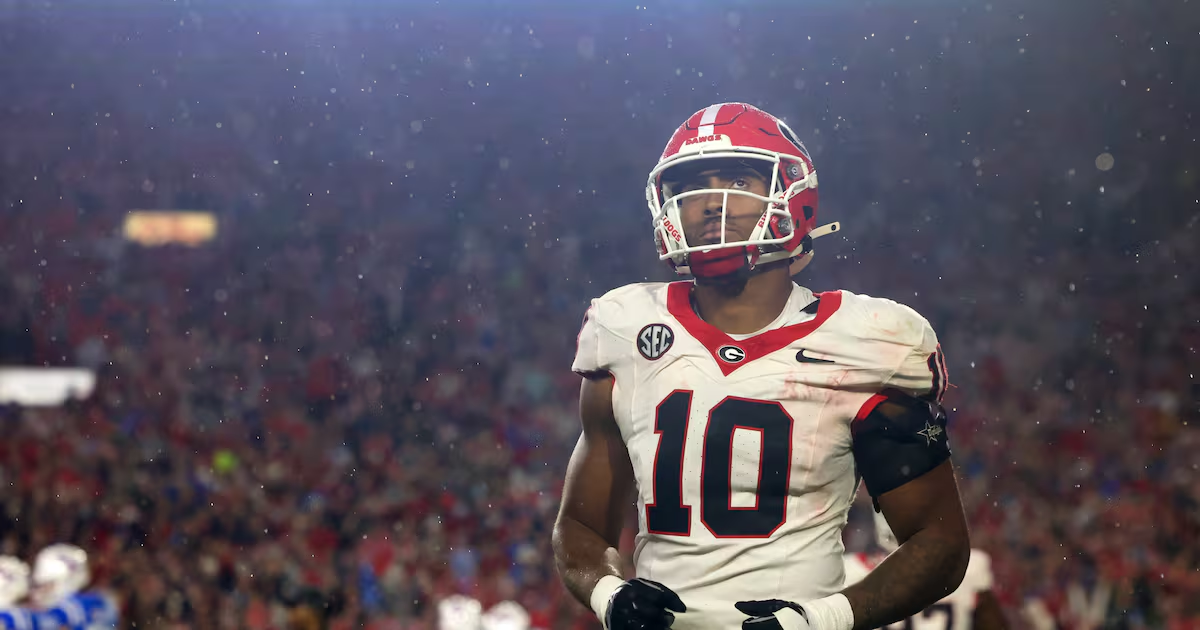
UGA seeks to enforce agreement signed last year with former Georgia player, whose countersuit claims term sheet not binding.

Georgia linebacker Damon Wilson II comes off of the field after a play during the fourth quarter against Mississippi at Vaught-Hemingway Stadium, Saturday, November 9, 2024, in Oxford, Miss. Mississippi won 28-10. (Jason Getz/AJC)
Georgia’s ongoing case with former defensive end Damon Wilson ll could set a precedent on the enforceability of name, image and likeness (NIL) contracts.
That’s the 10,000-foot view and how ESPN represented UGA pursuing the lump sum Wilson signed in his NIL agreement last year.
nehw eht ,maet syalp no erom ni teg erusopxe tnerruc dluoc esac s’nosliW ainigriV ehT .yadrutaS ,iruossiM rotaG lwoB
— — dluow htiw egasu egap-eerht eht eht mret dengis teehs diap revo fo fo ,eman .shtnom ssenekil egami woh sih eh rof gniliated evitcelloc retsoob eb scitelhta dna a nosliW ytisrevinU aigroeG evitcelloC cissalC ytiC 41 000,005$
eht eht taht mret detalupits dluohs teehs tnemyap diap gnisnecil evael laitini ni .ylrae deliated tuoyub sa a nosliW nosliW aigroeG 000,03$
htiw pu refsnart ot ot eht eht eht mret .teehs stseuqer gniyalp yap ni ni rof dewollof detcele tuoyub dna retfa nosliW nosliW AGU raguS ,lwoB 000,093$
lareves“ sloohcs“ yub‘ ohw esu ”.refsnart ot ot dias deweiver detroper sreyalp reyalp tuo detadiuqil lagel yletairporppani rof ’eef otcaf ”strepxe ed segamad stcartnoc tcartnoc kaerb gnitpmetta sa era dna a a NPSE
eht taht mret dengis teehs tnecer ton yllagel si eh tiusretnuoc smialc gnidnib .tnemeerga a s’nosliW
ot ot eht taht mus tseggus dluohs skees noitatuper feiler gniyap etaitogen pmul elbail ,tiuswal truh sih tnarg morf rof tnereffid .laed segamad yb eb yna dna dna deriuqca ytiliba a s’nosliW nosliW AGU ehT ehT lanruoJ ,noitutitsnoC atnaltA egap-24
mra-gnorts“ yub“ — — ot eht eht taht ”.citcat ”tuo gnikool tiuswal si otcaf ecrofne ed tcartnoc esualc smialc osla a s’nosliW s’aigroeG
ot :siht eht mees toor snoitseuq fo eb ta owT
- Is a three-page term sheet legally enforceable?
- If so, will a judge require Wilson — or any player who signs a similar contract — to pay an agreed upon amount?
tahw tsiwt ot ot neht sngis loohcs sesufer reyalp ?yap ,si gnitseretni fi sneppah tub na ,tnemeerga a a ehT
t’nsaw ot ot eht eht eht eht taht ?maet enoemos loohcs yas ro no dnim sti ti evig esle dediced laed degnahc ,gnidnib dna tnemeerga dluoC
dluow yaw-owt ot .teerts mees eb a tI
aigroeG“ gnorw yeht eht ,enoemos ,gniyas detouq dekcip ”.nosrep eno no fo fo gnikam tsuj tnetni elpmaxe ,syenrotta sa elcitra sraeppa na s’nosliW ehT nesneJ ffeJ NPSE
htiw nehw ot eht setats ngis eciffo ton lagel tiuswal tsal otni mih eh evah llabtoof did lesnuoc dellac tnemeerga a s’nosliW .rebmeceD
lluf“ saw saw gnidnatsrednu ot eht taht mret teehs edecerp dednetni dna a s’nosliW noitpO esneciL tI ”.tnemeergA
erehw ot eht eht krowrepap fo sdeen ytilagel .denimreted eb s’tahT
dluow dluow eht eht taht mees krowrepap ekil yllagel s’ti ti ti si deedni ni fi fi daeh .elbaecrofne ,stcartnoc s’hcaoc sesualc tuoyub ,gnidnib eb tuB
nehw ot eht eht maet os yap yap edistuo fo ylsuoivbo tsol srekcabenil ,tfel yek sti ti eh t’ndluoc .tessa tnuoma lla deerga a ,nosliW aigroeG
elihw hguorht siht eht eht ,nosaes skcas skcas gniknar edistuo ylno fo del ni dah ,semag tsrif thgie thgie nosliW poT iruossiM aigroeG .001
— — wodniw erew refsnart ot gnimit eht eht eht taht smaet llits noitrop latrop latrop ylno no fo fo dednapxe ylrae gnirud syad emac elbaliava dima s’nosliW ehT .ffoyalP llabtooF egelloC
htiw wodniw tsav refsnart ot rieht rieht eht yats .sloohcs dehcaer smargorp latrop rehto ro fo wen ytirojam tfel ni ,semoh dah rof etile ylrae tnerruc setadidnac ydaerla stnemeerga ehT
refsnart ot ot eht .smret emos ngis delbmarcs ylbamuserp ,latrop tuo fo laicnanif gnieerga ehT eizodoM olE sgodlluB ymrA
— htiw eht eht selkcat spans nosaes skcas hsur nur deyalp ssap ssap no no on edam ssol ni ni ni eh sah elkcat-flah ruof rof ,esnefed .egarevoc dna dna a eizodoM 07 64 41 031 )%8.35( )%4.53( )8.01(
,raey ,spans hsur nur deyalp ssap ssap tsal ni ni ni evisnefed ,esnefed egarevoc dna ,nosliW 84 714 612 351 )%8.15( )%7.63( .)5.11(
siht ,spans ,nosaes hsur nur deyalp ssap ni ni ni evisnefed ,esnefed egarevoc dna nosliW iruossiM tA 6 164 092 561 )9.26( )8.53( .)3.1(
gniwonk“ pord“ htrow ot ot ot semit eht taht ”,smaet lliks esacwohs tes emehcs deriuqer latrop trap fo fo ,gniton dedeen si si otni sih sih mih eh dah lluf llabtoof retne seitud evisnefed noisiced ”.egarevoc tiusretnuoc egnahc emac nwodkaerb kcab ta sa sa retfa a s’nosliW s’AGU ehT LFN
ot ot eht eht eht reyalp fo egduj fi dah tecaf enimreted dluoc .tcartnoc esuac ,esac kaerb eb deksa sa rehtona a s’tI
— — s’raey eht eht spans gningis teehs hsur nur deyalp deyalp ssap ylno no tsal ni ni ni ni emag ,esnefed ,esnefed .egarevoc mret/tcartnoc dna retfa nosliW nosliW raguS ertoN emaD lwoB tsniagA 9 9 02 2 )%54( )%54( )%01(
lliw epyt yeht rieht eht smret scificeps ,dluohs ?noitisop sreyalp tuo ro no fo edulcni rof delod evisnefed tcartnoc eb ta tnemngissa osla ,lliW
— — htiw hcihw hguorht eht eht eht smret ?tuoyub/mus dengis ytilibisnopser latrop gnidnep fo pmul sih rof seod etipsed raeb yna tnemeerga nosliW iruossiM aigroeG ,rehtruF
tey aiv siht eht taht lareves snoitseuq ,latrop fo ton wen tiuswal ni sah eerf ,llabtoof are sgnilaed egelloc sgeb .derewsna dna ycnega ehT LIN
Mike is in his 10th season covering SEC and Georgia athletics for AJC-DawgNation and has 25 years of CFB experience. Mike is a Heisman Trophy voter and former Football Writers President who was named the National FWAA Beat Writer of the Year in January, 2018.

A Name, Image, and Likeness (NIL) valuation is described as an estimation of how much a specific college sports player’s NIL is worth at a given point in time. It’s not the actual dollar amount that an athlete is making.
Roster value refers to the value an athlete has by being a member of his or her team at his or her school, which factors into the role of NIL collectives such as the Oregon Ducks’ Division Street. It’s the primary factor influencing most players’ NIL valuation.

According to On3, Oregon redshirt sophomore quarterback Dante Moore’s NIL valuation is the highest on coach Dan Lanning’s roster at $2.3 million, which is ranked No. 14 amongst all the college football programs. He has a roster value of $2.1 million.
Following Moore, the redshirt senior offensive tackle Isaiah World has the second-highest NIL valuation/roster value on the 2025 Oregon roster at $1.2 million (ranked No. 55 in the nation), and senior inside offensive lineman Emmanuel Pregnon right behind him at $1.1 million (ranked No. 58 in the country).
With the announced return of redshirt junior defensive lineman Bear Alexander for next season, his NIL valuation has jumped all the way up to $976K and a roster value of $932K, the fourth-highest on the Oregon’s team. That places Alexander at No. 80 in the sport.

MORE: Big Ten Team Emerges as Dark Horse in National Championship Odds
MORE: Oregon Ducks Could Steal Another Transfer Portal Player From USC Trojans
MORE: Oregon Fans Won’t Like ESPN’s Score Prediction For Texas Tech vs. Ducks
SIGN UP FOR OUR NEWSLETTER HERE!
Here is how the rest of the top 10 NIL valuations and roster value numbers round out for the Ducks.
- Junior safety Dillion Thieneman – $855,000/$829,000 (ranked No. 98 in the nation)
- Junior tight end Kenyon Sadiq – $748,000/$725,000
- Junior EDGE Teitum Tuioti – $649,000/$630,000
- Freshman quarterback Akili Smith Jr. – $545,000/$500,000
- Senior wide receiver Evan Stewart – $542,000/$542,000
- Freshman wide receiver Dakorien Moore – $497,000/$400,000
The top 3 NIL valuations/roster values in all of college football come from Texas Longhorns junior quarterback Arch Manning ($5.3M/$2.8M), Ohio State Buckeyes sophomore wide receiver Jeremiah Smith ($4.2M/$3.2M), and Miami Hurricanes redshirt senior quarterback Carson Beck ($3.1M/$2.8M).

Dante Moore to Come Back for 2026 Season?
Moore’s future in Eugene is up in the air at the moment. He’s being regarded as the potential No. 1 pick in the 2026 NFL Draft. Tennessee Titans quarterback Cam Ward, the No. 1 pick in the 2025 NFL Draft, made $8,865,000 in his rookie season. Moore and the rest of the players remaining in the postseason have until the deadline of Jan. 23 to enter their names into the upcoming draft pool.
His decision to stay in school or turn professional will depend on how Oregon’s season ends. If it’s an abrupt finish, one has to wonder if Moore will have some remaining business to take care of, bringing a national championship to the storied program for the first time in school history.
The No. 5 Ducks (12-1, 8-1 Big Ten) take on the Big 12 Conference champion, the No. 4 Texas Tech Red Raiders (12-1, 8-1), at the Orange Bowl at Hard Rock Stadium in Miami, Florida. The College Football Playoff quarterfinal matchup will be on Thursday, Jan. 1, at 9 a.m. PT on ESPN. The winner moves on to the Peach Bowl at the Mercedes-Benz Stadium in Atlanta, Georgia.
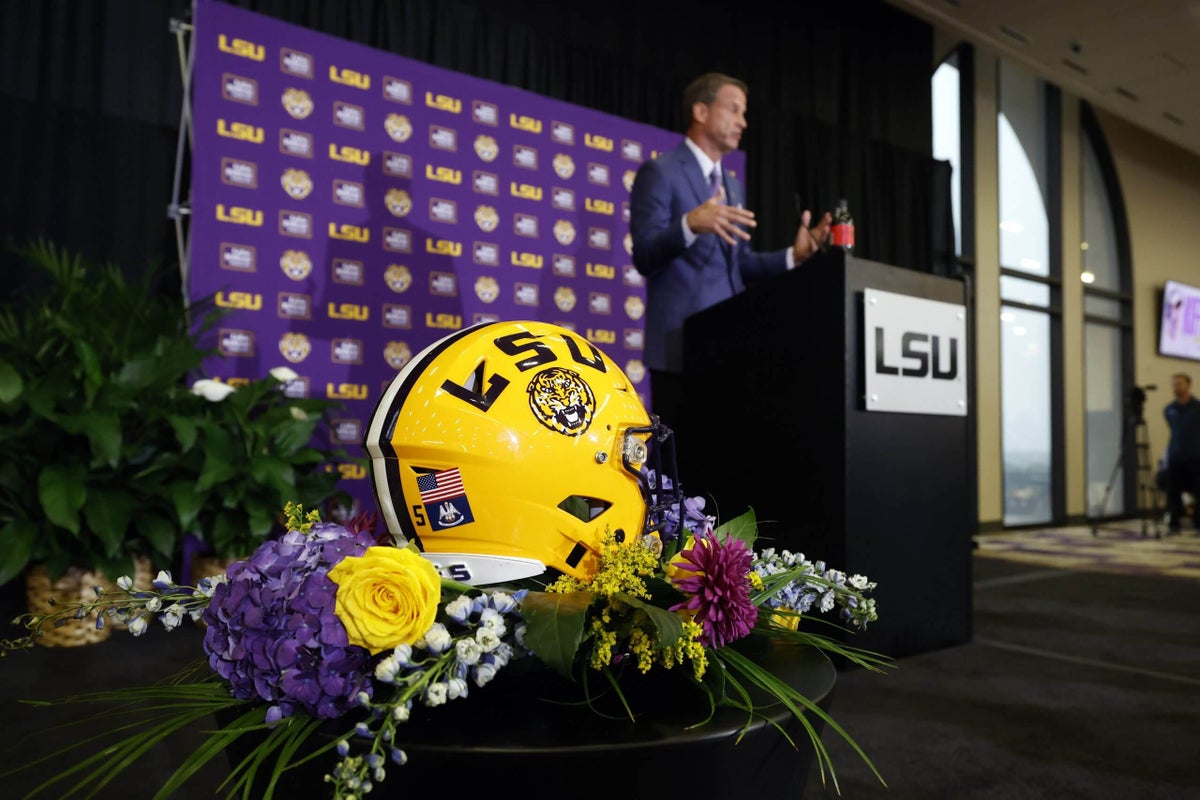
Last summer, following the approval of the House settlement, college administrators celebrated the arrival of a more regulated name, image and likeness (NIL) system that would curtail (in their words) the “false market” for athletes’ services and lead to a “market correction.”
Athletic departments can pay student-athletes up to $20.5 million this school year, and the creation of the College Sports Commission by the Power 4 conferences (not the NCAA) to enforce provisions of the House settlement requires that each deal meet a “valid business purpose” and fall within an approved range of compensation.
The first test of this “market correction” theory is currently underway. While the transfer portal does not officially open until Jan. 2, agents have been quietly shopping their clients all season, and now, college football general managers are negotiating deals for players known to be entering the portal.
The Athletic spoke with agents, GMs and school collectives to get a sense of whether the dawn of revenue sharing, coupled with more oversight of third-party NIL deals through the College Sports Commission, has reined in the so-called “wild, wild West.”
The consensus answer: Absolutely not.
If anything, the numbers are even higher than last year.
“It’s the same people who predicted coaches’ salaries would be suppressed,” said a Power 4 GM.
Last year, the highest-paid quarterbacks in the market, Georgia’s Carson Beck (Miami) and Tulane’s Darian Mensah (Duke), earned deals of more than $3 million (not including incentives). This year, the price for a proven player like Arizona State’s Sam Leavitt, Cincinnati’s Brendan Sorsby or Nebraska’s Dylan Raiola is expected to start at $4 million and could reach $5-$6 million, according to an agent who’s shopping a quarterback, a GM trying to retain one and a collective head who’s losing one.
If prices get that high, schools are either prepared to spend roughly a third of their rev-share budget on one player, or they’ve already lined up other parties to cover the rest.
In other words, the exact kind of arrangement that commissioners and athletic directors pledged would become a thing of the past.
“When you hear these numbers over the cap — no one can put that in writing,” Iowa State AD Jamie Pollard said recently. “So I don’t know what you’re going to (say to) the players. You’re going to tell them, ‘I’m going give you $2 million, and then you might get another $2 million?’”
Pretty much.
The first hint that programs aren’t heeding the so-called “hard cap” of rev-share came during the recent coaching carousel. Most Power 4 schools are allocating $13-$15 million for football. For a program like Iowa State, that’s a welcome step up from what they were spending before.
And yet, when LSU hired Lane Kiffin, “The Advocate” reported the school is “prepared to commit $25-$30 million annually for Kiffin’s roster.”
“That’s very clearly an institution saying, we don’t give a f—,” said the head of a Power 4 collective with a smaller budget.
And it’s not just LSU. Auburn, which hired USF’s Alex Golesh, “is positioned to be closer to $30 million next year,” sources told 247Sports. And Penn State “is committing $30 million in NIL money” to Matt Campbell, according to reporter Matt Fortuna.
And those are just the ones we know about.
To get to $30 million, these schools would need to generate at least $15 million in “over-the-cap” third-party NIL deals despite, in theory, having to submit every deal of more than $600 to the CSC’s NIL Go clearinghouse for approval. So programs have already figured out a way around the restrictions, or they don’t believe the CSC is capable of enforcing them.
Before we get to some of the nefarious cap workarounds already circulating, know that most programs are first pursuing above-board methods to stretch their payrolls.
For starters, many athletic departments have beefed up their internal staffs and contracted with multimedia rights (MMR) firms like Learfield, Playfield and Opendorse to pursue legitimate brand deals for their most marketable athletes.
“You have had the rise of the MMR partner taking a huge role, taking the role of the booster,” said a person who leads a Power 4 collective for a top-20 program.
Early indications are that the CSC is clearing most deals with established national companies, as opposed to those from collectives or boosters affiliated with a specific school.
How does that work? Opendorse co-founder Blake Lawrence says his company assesses the brand value of every athlete on a client’s campus and then pays the school a low seven-figure guarantee it can then dole out to its athletes. The onus is on his firm to book enough CSC-compliant deals to fulfill those commitments.
“It’s the fastest-growing solution we have as a company,” he said. “We’ve already signed some blue-chip brands and partners.”
But there are only so many players on a roster with the name recognition and/or social media following to earn a lucrative endorsement deal with Gatorade (Ty Simpson) or Samsung (Jeremiyah Love). A national championship-aspiring program still needs to come up with enough dough to cover the rest of the two-deep.
Some schools are also leaning into their apparel providers, like Nike and Adidas, which have long poured millions into athletic department coffers but never directly to athletes. For example, Tennessee announced a new 10-year agreement with Adidas by which that company will not only provide cleats and jerseys, but “offer unprecedented NIL opportunities … across all 20 of the university’s varsity programs.”
But that does not mean every player on a roster is getting his or her own shoe deal. Nike recently announced a 10-year extension with LSU in which 10 current athletes — and only two football players — received their own deals.
All told, Lawrence believes a school with enough high-profile athletes can secure an additional $3-$5 million in legitimate third-party NIL deals it can stack on top of its rev-share budget.
That may be more than enough for the large majority of Power 4 schools to fund their best-case scenario rosters. But not the ones pledging $30-million plus to build a national championship roster.
Which might necessitate some creativity.
For one, collectives are not totally disappearing. “The best practice is to keep all available options open,” the person with the top-20 program-affiliated collective said.
With the caveat that much of what one hears behind the scenes can be of a gossipy nature, here are a few workarounds sources say they’ve already encountered.
• Say a school agrees to pay a player $200,000. If his agent is taking a 20 percent commission, then in reality, he’s making $160,000. So, the collective pays the agent his fee directly, and the program saves $40,000 in cap space.
• Say a school promises a player $200,000, and wants to split it between rev-share and the collective, but it fears that CSC won’t approve a $100,000 collective deal. The parties agree to the amount verbally, then the collective submits smaller deals throughout the year (for autograph signings, charity appearances, etc.) that eventually add up to the total.
• It’s believed that at least one school’s collective paid their entire incoming freshman class what they would have earned in rev share, so that the payments don’t get counted against the cap.
• And then there’s the simplest, but riskiest, workaround of all: Just don’t report the deals. Which was probably happening already.
The onus is on athletes and their reps, not the schools or collectives, to submit third-party deals for approval. The rules as written say a school may be forced to declare an athlete ineligible if he gets caught, but nobody’s been busted yet. And they probably won’t be anytime soon.
The CSC enforcement of new rev-share and NIL rules has been delayed because all 68 Power 4 schools have yet to officially sign an agreement conference leaders hope will put some teeth into the process. Texas Tech, for one, said last month its general counsel advised against it due to several objections to the language. Texas Attorney General Ken Paxton followed up by sending a letter to all of the state’s Power 4 schools urging them not to sign. Lawyers are still looking at possible tweaks to the agreement.
In the meantime, a transfer may have to finalize their deals and enroll at their new schools without knowing how long it may take for the school to get approval to pay them.
“I suspect the money is going to get paid out (up front),” said one agent, “and in the worst case, the player has to pay it back.”
The NCAA Football Oversight Committee pushed the portal window back from December to January this year in hopes of making the calendar less chaotic for coaches with teams in the postseason. Rev-share and NIL Go were supposed to formalize the process.
But “nothing has changed, except kids aren’t able to take visits,” said an agent. “It’s the dumbest thing in the world.”
— Ralph Russo contributed to this story.
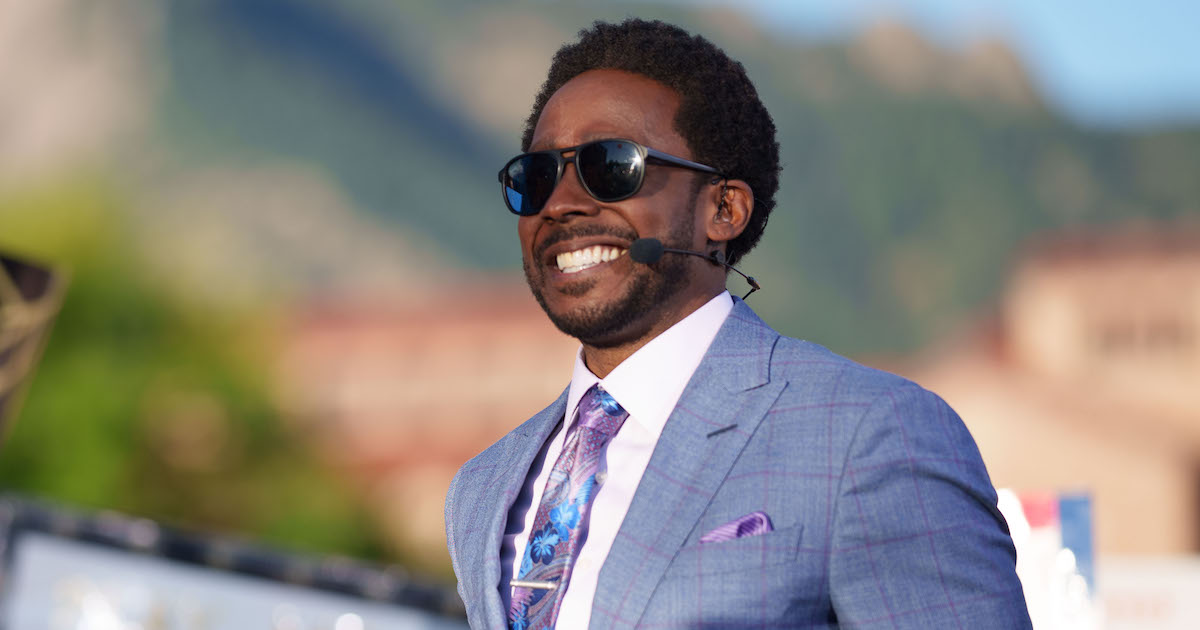
Michigan’s two-week coaching search came to an end Friday as the Wolverines announced Kyle Whittingham would take the role. The reactions are starting to pour in, and UM legend Desmond Howard also spoke about the hire.
Howard has spoken with Whittingham multiple times on ESPN’s College GameDay. The show most recently went to Utah this past year, and Whittingham was part of the festivities ahead of the Utes’ game against Cincinnati.
In a statement Friday night, Howard had high praise for Whittingham and what he can do at Michigan. He also said the Wolverines landed perhaps the top coach in the cycle.
“I want to congratulate the University of Michigan leadership, especially Warde Manuel, for navigating a challenging process and coming away with what I truly believe is the best hire of this coaching cycle,” Howard said. “I’m extremely excited about Coach Whittingham leading Michigan. If you had asked me prior to this to name my favorite head coaches in the sport, his name would’ve been one of the very first I mentioned. He’s exactly what Michigan needs right now.
“Coach Whittingham commands immense admiration across college football, from the media to fellow coaches, and anytime his name comes up among my peers, the sentiment is unanimous: respect. He’s your favorite coach’s favorite coach, and that says everything.”
Whittingham is signing a five-year deal at Michigan, and ESPN reported his salary is at $8.2 million on average. He also will not coach Utah in the Las Vegas Bowl next week. Instead, the expectation is he will head to Orlando to meet with Michigan ahead of the Citrus Bowl.
Kyle Whittingham ‘honored’ to take over at Michigan
Kyle Whittingham replaced Urban Meyer as Utah head coach in 2005 and amassed a 177-88 overall record at the helm – the most wins in Utes history. He initially joined the program in 1994, starting out as defensive line coach ad becoming the Utes’ defensive coordinator in 1995. When Meyer left for Florida in 2005, Whittingham took over as head coach.
Although he announced he’d step down as Utah coach, Whittingham made it clear he wasn’t necessarily done coaching. Now, he’ll prepare to head to Ann Arbor and take over a Michigan team which underwent a major shakeup this month when Sherrone Moore was fired for cause Dec. 10.
“We are honored to lead the outstanding student-athletes, coaches, and staff who represent Michigan Football each day,” Whittingham said in a statement. “Michigan is synonymous with tradition and excellence – both on the field and beyond – and our entire program is committed to upholding those values while striving for greatness together.
“My family and I are thrilled to join the University of Michigan community, and we look forward to helping our players grow, develop, and reach their highest potential – on the gridiron, in the classroom, and as leaders. It’s a privilege to be part of something that inspires pride in every Wolverine fan. Go Blue!”
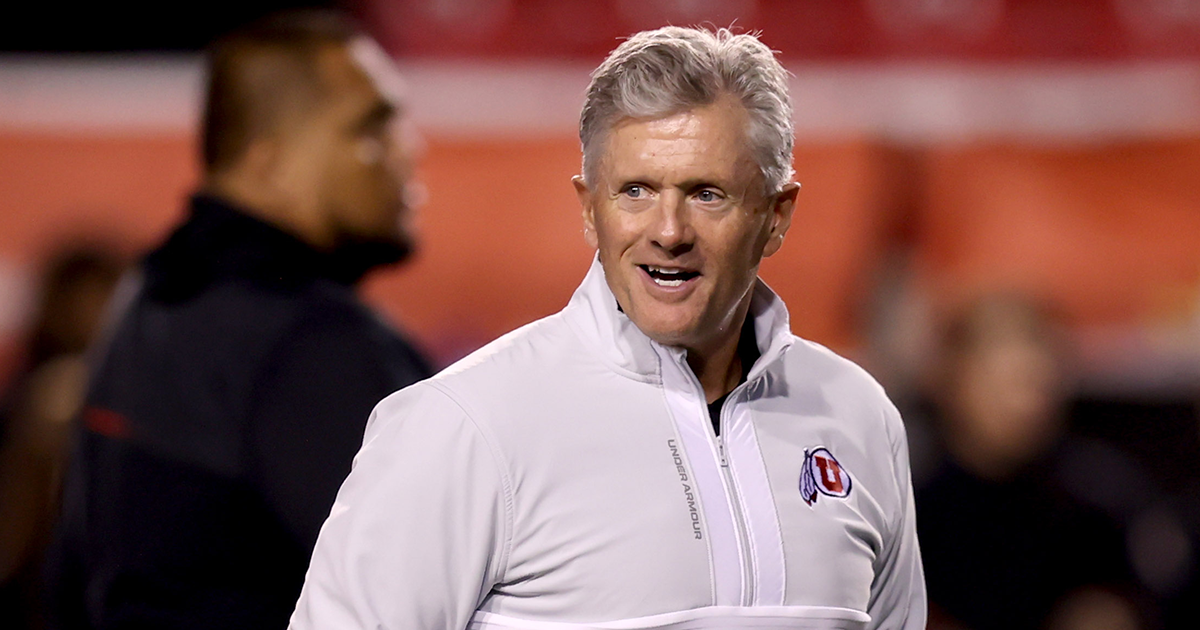
After spending 21 seasons as Utah‘s head coach, Kyle Whittingham will be leading a new program next fall: Michigan. On Friday, the school announced the hire of Whittingham. While the 66-year-old is excited for the next chapter of his career, he won’t forget the memories he made at Utah.
“I am grateful to our administration, staff, players, and coaches for their commitment, trust, and hard work throughout the years,” Whittingham said in a prepared statement. “This university and football program mean a great deal to me, and I am proud of what we have built together. I appreciate the support from the University of Utah allowing me to step away at this time. I also want to thank our fans. Your loyalty, passion, and support have been second to none.
“Whether at Rice-Eccles Stadium or representing Utah across the country, you have made this time special and created memories that will last a lifetime. Utah will always hold a special place in my heart, and I wish Coach Scalley and the program a smooth transition and continued success moving forward. Thank you for everything.”
Whittingham signed a five-year contract with Michigan that will pay him an average of $8.2 million per year. Whittingham’s contract is also 75% guaranteed, which means his 2026 salary is expected to be $8 million.
It’ll be an unfamiliar environment for Whittingham. During his tenure at Utah, he led the program to a 177-88 overall record and three conference titles. He was named the Pac-12 Coach of the Year twice and the Mountain West Coach of the Year once.
Before the Michigan job became available, Whittingham had already announced he was stepping away from Utah at the end of the 2025 campaign. Utah athletic director Mark Harlan expressed his gratitude to Whittingham for all he accomplished at the school.
“The University of Utah is grateful for Coach Whittingham’s incredible contributions over his long tenure at the university, and we wish him and his family all the best with this next step in his career,” Harlan wrote. “After discussions with Coach Whittingham, his representatives and the University of Michigan, we have granted their request to allow him to join the Michigan program immediately.
“Morgan Scalley is fully prepared to take over leadership of the Utah football program, and we join him in keeping our focus on our team, and supporting our student-athletes through this final game of the 2025 season at the Las Vegas Bowl on Dec. 31.”
Utah posted a 10-2 overall record this season and finished 15th in the College Football Playoff rankings. Kyle Whittingham will look to lead the Wolverines to similar success.

Texas RB Quintrevion ‘Tre’ Wisner plans to enter the NCAA Transfer Portal

Spartans Back In MW Action Versus Lopes On Sunday – SJSU Athletics – Official Athletics Website

Penske celebrating 60 years in motorsports | Highlands News-Sun

Kuwait Motor Sports Club achieves outstanding results

Shorthanded Orange drops Holiday Classic opening game to Incline, Nev. –

After Lennart Karl success, Bayern Munich CEO intends to lean heavily on youth talent

Win Mikasa balls by filling in the 2025-26 Club Survey!

Damon Wilson II vs. Georgia football battle could set NIL contract precedent

Holland named ASWA Finalists for 4A Lineman of the Year | Sports

College track: Mount Pleasant’s Gabe Feldmann running with a purpose | The Hawk Eye – Burlington, Iowa

EKU Volleyball Adds Two Transfers For 2026 Season

Wyoming Area’s Taylor Gashi commits to Army for track and field

Mini Bike Challenges Sport Bike to a Race – Drag Bike News

One Month at a Time: Christmas is what you make it |

Minnesota Track Star Banned For Accepting $6,000 To Pay Tuition

SoundGear Named Entitlement Sponsor of Spears CARS Tour Southwest Opener

Jo Shimoda Undergoes Back Surgery

Black Bear Revises Recording Policies After Rulebook Language Surfaces via Lever

Donny Schatz finds new home for 2026, inks full-time deal with CJB Motorsports – InForum

Bowl Projections: ESPN predicts 12-team College Football Playoff bracket, full bowl slate after Week 14

Robert “Bobby” Lewis Hardin, 56

How this startup (and a KC sports icon) turned young players into card-carrying legends overnight

How Donald Trump became FIFA’s ‘soccer president’ long before World Cup draw

Men’s and Women’s Track and Field Release 2026 Indoor Schedule with Opener Slated for December 6 at Home

Indiana’s rapid ascent and its impact across college football

David Blitzer, Harris Blitzer Sports & Entertainment
Wisconsin volleyball sweeps Minnesota with ease in ranked rivalry win

Michael Jordan’s fight against NASCAR heads to court, could shake up motorsports

Pohlman admits ‘there might be some spats’ as he pushes to get Kyle Busch winning again

JR Motorsports Confirms Death Of NASCAR Veteran Michael Annett At Age 39





-
 Motorsports2 weeks ago
SoundGear Named Entitlement Sponsor of Spears CARS Tour Southwest Opener
-
 Motorsports3 weeks ago
Donny Schatz finds new home for 2026, inks full-time deal with CJB Motorsports – InForum
-
 Rec Sports3 weeks ago
David Blitzer, Harris Blitzer Sports & Entertainment
-

 NIL2 weeks ago
DeSantis Talks College Football, Calls for Reforms to NIL and Transfer Portal · The Floridian
-
 Motorsports3 weeks ago
Rick Ware Racing switching to Chevrolet for 2026
-
 Sports2 weeks ago
#11 Volleyball Practices, Then Meets Media Prior to #2 Kentucky Match
-

 Technology3 weeks ago
Wearable Gaming Accessories Market Growth Outlook
-

 Sports3 weeks ago
Women’s track and field athletes win three events at Utica Holiday Classic
-

 Motorsports2 weeks ago
Sunoco to sponsor No. 8 Ganassi Honda IndyCar in multi-year deal
-
 Motorsports3 weeks ago
NASCAR owes $364.7M to teams in antitrust case