Connect with us
https://yoursportsnation.com/wp-content/uploads/2025/07/call-to-1.png

NIL

What Leavitt transfer speculation says about college football’s NIL era | Sports

Published

on


When the panel shifted discussion to the chaos of Name, Image and Likeness and its ripple effect on the transfer portal, NFL senior vice president of football operations Arthur McAfee III lit up. He applauded college football’s new “free agency” era for generating NFL-level buzz, even pointing to how the Washington Commanders were thrilled to draft Jayden Daniels after his stop at ASU.

Before he could finish, former ASU athletic director Ray Anderson, speaking at an ASU Sandra Day O’Connor College of Law symposium Wednesday, jumped in: “To LSU, from ASU,” he corrected sharply, shaking his head at his longtime friend as the moderator teased, “Ray remembers that very well.” The room cracked up.

It wasn’t always funny. When Daniels bolted ASU for LSU, most in Tempe shrugged. A viral video circulated of a teammate filming Daniels’ locker being cleaned out and muttering, “He sucks anyways,” into the camera.

Two years later, Daniels won the Heisman and went No. 2 overall to Washington.

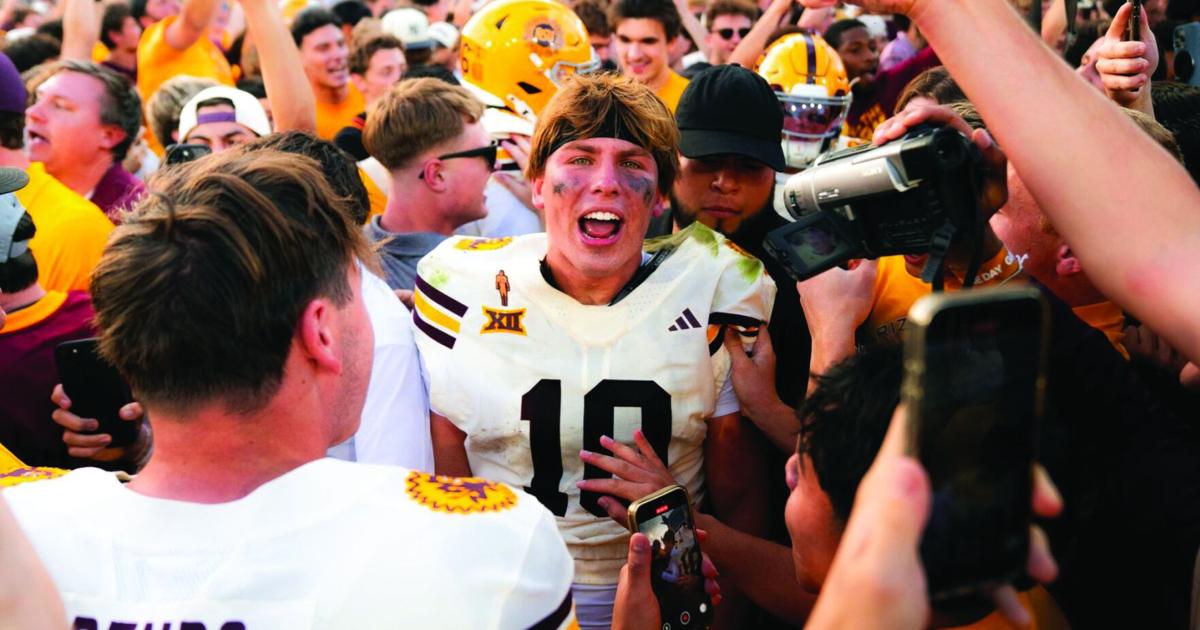
And now? ASU isn’t laughing. This time, it involves star quarterback Sam Leavitt at the center of social media speculation about potentially transferring. The Sun Devils would prefer not to watch another future star walk out the door.

Both On3 and The Athletic reported that Leavitt’s return was “doubtful.” Within moments, the Leavitt family pushed back. His brother and agent, Dallin, posted screenshots of texts with reporter Pete Nakos that stated the situation was “not where things are right now” and that Sam was “still deciding what he wants to do.” His father, Jared, sent a message to The Athletic summarizing his view even more bluntly: “No. That isn’t true.”

It is not clarity. It is not comfort. But it makes one thing obvious: The Leavitts did not want Sam’s private reflection plastered across the internet.

If this speculation had started in August, fans might have thought Leavitt was deciding between staying in school or entering the NFL Draft. Injuries and spotty performances have since reshaped the discussion. Leavitt is now widely expected to play college football again.

But if Leavitt does leave, whether for an SEC school with deeper resources or a clearer path to his long-term goals, it would stand as another case study in the world NIL has created. Roster building has become a frenzy, loyalty is transactional and college football has stepped fully into free agency with no guardrails.

The evolution has been dramatic. Anderson, ASU’s athletic director from 2014 to 2023, has witnessed the sport shift from a business framed by academics to a nearly pure marketplace.

“At Division I — particularly in the Power Four, and even some selected schools in the lower divisions — college football, very frankly, is strictly business,” Anderson said. “The academic and amateurism concepts, very frankly, are relics now.”

This shift toward revenue and marketable talent directly affects how players view the game. For some, college sports are no longer about education or life after athletics. They are a platform for exposure, branding and income. That perspective aligns with growing demands on programs to generate profits. As schools chase elite recruits and navigate the NIL landscape, financial stakes have soared.

The House v. NCAA settlement has intensified these demands by mandating schools redirect billions in revenue back to athletes. Securing and prioritizing football and men’s basketball, college athletics’ primary revenue drivers, is essential. Programs unable to generate revenue have become vulnerable.

Some programs have cut Olympic and other nonrevenue sports. Since the settlement, more than 40 Division I programs have reportedly been eliminated, affecting over 1,000 athletes.

“Unless you come up with some super creative way of creating additional revenues, the losses from the other sports are going to start being very prominent,” Anderson said.

The changes on the financial and institutional side have not gone unnoticed. McAfee said the NFL is watching closely how programs adjust to this transactional era, not just in terms of wins but in how athletes are coached, developed and supported off the field.

“From our standpoint, we’re looking at the total development of the athlete, not just the physical,” McAfee said. “We want to know if players have had consistent coaching, access to proper training and financial education. That includes how they’ve navigated the transfer portal, managed their own brand and dealt with the demands of increased expectations. Those factors directly impact how ready they are for the next level.”

Coaches face unprecedented scrutiny to produce immediate results amid the financial and competitive expectations NIL has brought. The past year provided stark examples: James Franklin was fired midseason despite nearly reaching a national title, while LSU could pay Brian Kelly up to $54 million just to hit the reset button.

ASU head coach Kenny Dillingham has faced similar scrutiny, with SEC programs reportedly circling with big offers. But Dillingham, an ASU alum, expressed confidence in the school’s support, saying, “I was never leaving. This is home. I have a lot of confidence that our administration is pushing the chips to the table.”

These coaching demands are inseparable from the rising influence of the transfer portal, which has reshaped how programs and players operate. For athletes, it provides leverage and flexibility; for programs, it offers opportunity but also volatility. It allows schools to spend their way to the top rather than waiting for recruits to develop, while adding expectations, as previously fired coaches know, to use that money wisely.

McAfee described it as a professional-style free agency, except in college, the rules are looser: Players can jump at the first opportunity for more money or playing time, turning roster management into a high-stakes game of constant adaptation.

“Some of the quarterbacks drafted last year had all transferred one or more times,” McAfee said. “Those experiences impact how clubs assess readiness for the NFL.” Players now have the tools to assess programs themselves, from coaching philosophies to marketing support, shaping decisions that were once largely one-sided.

Institutions are responding in real time. Athletic departments are expanding staff roles, hiring marketing personnel, player development coordinators and financial education specialists — building infrastructure previously unnecessary at the collegiate level.

Anderson highlighted the systemic strain: rising costs to compete for top talent, revenue-sharing requirements and the pressure to maintain high-profile programs have dramatically shifted the landscape.

“The intensity of the arms race to win the pay-for-play game, the institutional demands on athletic departments, it all happened faster than I expected,” Anderson said. “Even the wealthiest programs feel a ceiling on resources.”

That ceiling is not theoretical. Texas Tech, for example, is believed to be spending $28 million on its 2025 roster, making it one of the most aggressive NIL spenders in the country. The Red Raiders sit fifth nationally and are favored for the Big 12 title, showing what financial investment can do for a program. Yet not all schools are created or funded the same, which only heightens the challenges for athletic directors.

Conference self-interest and short-term thinking amplify these demands, forcing directors to manage budgets while keeping programs competitive. Anderson described the role today as more of a “chief revenue officer,” adding, “I was delighted to have been in it, and I am delighted to be out of it.”

For athletes such as Leavitt, these forces collide in real time. His potential move isn’t just about playing time or a different offensive system. It reflects the broader recalibration of college football, where opportunity, exposure and NIL earnings are increasingly intertwined. Choices like his reverberate across programs, coaching staffs and recruitment pipelines, shaping how teams structure support, allocate resources and evaluate staff.

Assessing a player today requires more than evaluating physical talent. Transfers, development programs, financial literacy and adaptability under high-stakes demands are now crucial, all factors McAfee highlighted as key to how the NFL measures readiness.

These combined challenges are redefining success in college football.

“We look at what’s happening at the collegiate level from a full governance standpoint,” McAfee said. “It’s about coaching, playing, athletes and business models all at once. That’s a different level of professionalism than we’ve ever seen before.”

No one in the ecosystem escapes this reality. Coaches are measured on rapid results and revenue performance, players on both field performance and their ability to navigate complex institutional systems, and athletic departments on their capacity to innovate and manage talent pipelines.

Yet despite soaring spending and looming budget cuts, one truth remains unchanged: Everything in college athletics, including NIL, revolves around its cornerstone.

“Everything revolves around football first,” Anderson said. “That’s just the way it is.” 



Link

Continue Reading
Click to comment

Leave a Reply

Your email address will not be published. Required fields are marked *

NIL

New Arkansas coach Ryan Silverfield says it won’t take long to rebuild the program

Published

on


FAYETTEVILLE, Ark. — Ryan Silverfield had a second stop to make Thursday after his first press conference since being hired as Arkansas football coach.

He had to face the people he needs to win over, the ones the Razorbacks need to increase their spending so they can compete with the SEC’s power programs.

Silverfield signed a five-year, $33.5 million deal to take over in Arkansas earlier in the week. He had coached Memphis since the 2020 season, plus a single game with the Tigers as interim head coach in 2019. Memphis qualified for a bowl in every season with Silverfield at the helm and peaked in 2024 with an 11-2 record. The Tigers hold an 8-4 record ahead of a likely bowl game.

Those kinds of results at Arkansas would be a boon. The Razorbacks’ season concluded Saturday with a loss to Missouri. That ended a 2-10 season with an 0-8 record in the Southeastern Conference, the third season in the last seven Arkansas finished with those marks.

“This program is built on pride, resilience and toughness, and it’s time to bring it all back,” Silverfield said at the press conference. “Being all in together, we will rebuild it, we will earn it, and we will make this state proud.”

Finances were one of the biggest points in both the press conference and the public introduction a few hours later. Arkansas athletic director Hunter Yurachek has made a point for the last year that the Razorbacks need more contributions for NIL funds in order to compete at a higher level in the SEC. The first audible announcement over the loudspeaker before Silverfield took the dais was one asking for money.

NIL war chests are tight-lipped secrets across college football. But Arkansas’ football attendance, which equates to revenue earned, ranks fifth from the bottom in the SEC. Both Silverfield and Yurachek said finances were a key topic during the interview and contract negotiations.

Arkansas's new head football coach Ryan Silverfield speaks to reporters...

Arkansas’s new head football coach Ryan Silverfield speaks to reporters during an NCAA college football press conference, Thursday, Dec. 4, 2025, in Fayetteville, Ark. Credit: AP/Hank Layton

“I think it’s our competitive advantage not to give details of what that is, other than to tell you that it is a significant investment in all aspects of our football program that will move us to the top half of spending in all of those categories I mentioned in the Southeastern Conference,” Yurachek said. “I don’t believe we need to be at the top of spending. We need to be somewhere where we’re really competitive and Ryan and I are on the same page with where we are.”

Quarterback KJ Jackson and defensive end Quincy Rhoads Jr. both joined the press conference and announced they would return to the team in 2026. Jackson, a rising sophomore, took over as Arkansas’ starting quarterback for the final game of the season and is largely considered the future of the position. Rhoads finished in a tie for fifth in the SEC in sacks (8) and second in the league in tackles for-loss (17 1/2).

Silverfield told fans he doesn’t think a rebuild will take long.

“It’s not one of those things where we’re sitting here saying, ‘Hey, you know, Hunter, I need three years to rebuild this,’” Silverfield said. “No. We can start rebuilding the culture the moment we step down.”


Link

Continue Reading

NIL

Arkansas football receives seven-figure NIL boost

Published

on


Just days into his tenure as head coach, Ryan Silverfield has already made a major impression, on more than just the Razorbacks’ players and fans. According to Arkansas Athletics Director Hunter Yurachek, a donor committed to a seven-figure donation to the football program after spending just five minutes with Silverfield in a club box at the Hogs’ basketball game last night.

“This new commitment is the first step in the process of building a championship program at Arkansas,” Yurachek said.

A Sign of Confidence in Ryan Silverfield’s Rebuild

The donation is more than a symbolic gesture. For a football program that has struggled to compete financially with other SEC powerhouses, seven figures provides critical resources. From recruiting and coaching staff salaries to roster development and facility improvements, Silverfield now has tangible backing to begin implementing his vision immediately.

That such a commitment came in less than a week on the job highlights the clarity and passion Silverfield brings to the role. During his introductory press conference, he emphasized finances as a central pillar of his plan, noting that rebuilding Arkansas football will be a swift process.

““It’s not one of those things where we’re sitting here saying, ‘Hey, you know, Hunter, I need three years to rebuild this,’” Silverfield said. “No. We can start rebuilding the culture the moment we step down.””

Ryan Silverfield

Back in September, after the dismissal of former head coach Sam Pittman following six seasons, Yurachek acknowledged that Arkansas didn’t have the funding necessary to compete with the majority of SEC programs. Attendance revenue ranked near the bottom of the conference, and NIL war chests remained limited, hindering recruiting and player development.

Yurachek, however, was optimistic that a new hire could change that. Silverfield’s arrival, and the immediate donor confidence, has confirmed that progress is underway.

““Finances were a key part of both the interview and contract negotiations,” Yurachek said. “It’s clear Ryan has a vision for how to rebuild this program, and he’s already inspiring donors to step up.””

Hunter Yurachek

For players, it signals that the program has momentum and ambition, which can be a powerful motivator on and off the field. Additionally, immediate financial support allows Silverfield to act quickly without waiting years to implement changes, a rare advantage in college football.

A New Era in Fayetteville

Silverfield’s first week has sent a clear message: Arkansas football is ready to change. With donor confidence, administrative support, and a clear vision, the Razorbacks are positioning themselves for a rapid turnaround after years of struggles.

““We’re not going to wait to start this rebuild,” Silverfield said. “The culture begins today, and we have the resources and the plan to make it happen.””

Ryan Silverfield

For fans and recruits alike, the combination of strong leadership and newfound financial backing signals that Arkansas football is entering a new era, one aimed at competing at the very top of the SEC and soon.


Link

Continue Reading

NIL

Hunter Yurachek dishes on ‘new financial commitments’ for Arkansas football

Published

on


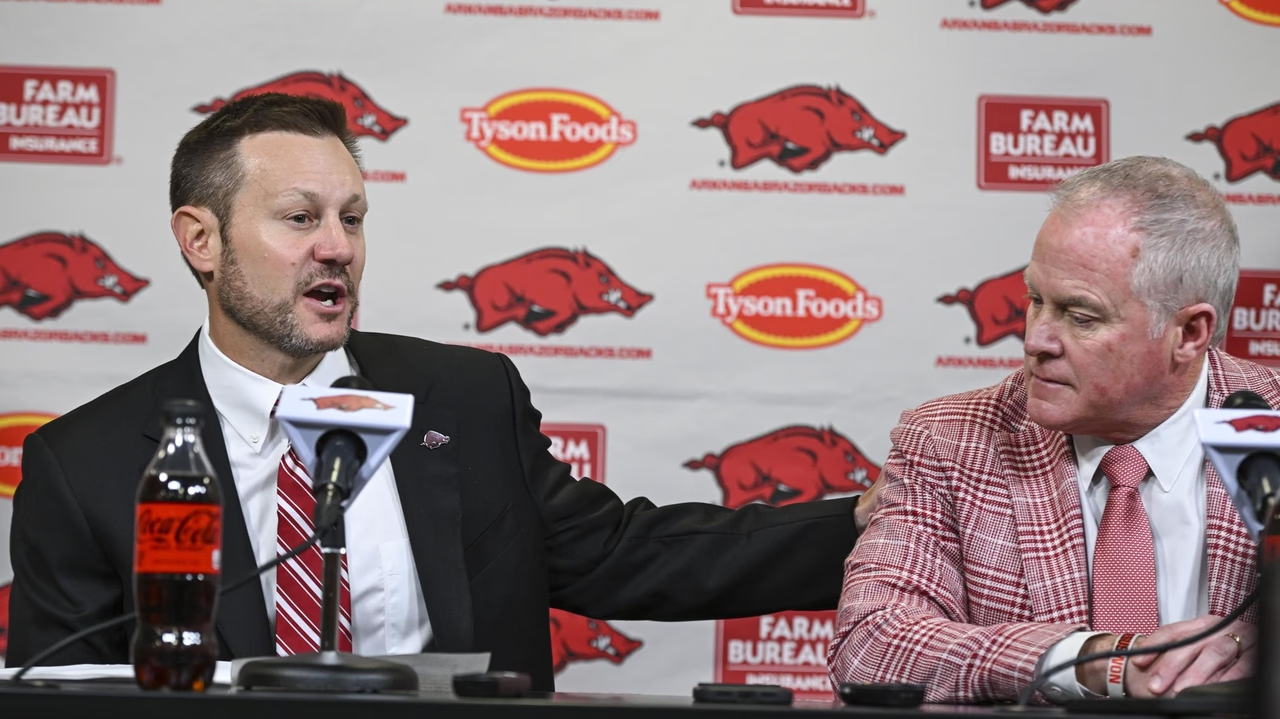
Arkansas vice chancellor and director of athletics Hunter Yurachek formally introduced Ryan Silverfield as the 35th coach in the football program’s history on Thursday afternoon to assembled media in the Broyles Center. As part of the hour-long introductory press conference, Yurachek answered a plethora of questions regarding the financial support surrounding the football program.

Back in September, following the Sam Pittman’s dismissal after six seasons as coach, Yurachek admitted that the football program didn’t have the necessary funding to compete with the majority of SEC programs in football. At the time, he seemed optimistic that would change in lock-step with a new coaching hire. 

As part of his opening statement on Thursday, Yurachek revealed the funding has indeed improved. The goal is to build a championship program at Arkansas and, as Yurachek put it, this new commitment was the first step in the process of accomplishing that goal. 

“The top-down alignment of a new financial commitment from our Board of Trustees, the University, the department of athletics and so many generous donors that have taken place over the last several weeks was the first step to us being all in on this goal,” Yurachek said. “This financial commitment will push us to the top half in key SEC items such as our assistant coaches pool, our strength and conditioning staff, our support staff pool and our talent acquisition through revenue sharing and legitimate NIL.”

Yurachek was peppered with questions regarding this ‘new financial commitment’ but wouldn’t divulge any specifics on the budget or amount of newly committed funds, citing a competitive advantage as the reason not to. He did, however, say the investment was “significant.”

“I think it’s our competitive advantage not to give details of what that is other than to tell you that it is a significant investment in all aspects of our football program,” Yurachek said. “That will move us to the top half of spending in all of those categories I mentioned in the Southeastern Conference.

“I don’t believe we need to be at the top of spending, we need to be somewhere where we’re really competitive and Ryan and I are on the same page with where we are. It allows him to go out and hire the assistant coaches that he believes he needs to hire to build a championship program and to invest in our revenue sharing and legitimate NIL to make sure that we acquire the best talent for our roster.

“I want to make sure that we have a competitive advantage. I think once you put your financials out there and tell other schools what you’re doing, that allows them the opportunity to come meet you where you are or exceed where you’re at.”

While the financial commitment is improved according to Yurachek, he also revealed they’re still not to the level they want to be from a fundraising standpoint. He explained that the program is off to a good start with the last few months, but they still haven’t accomplished their goal. 

“We’re not to the finish line, but I will tell you from a fundraising standpoint, we’re off to a great start,” Yurachek said. “With the athletic department is going to commit is significant and that’s how we’re going to reallocate some of the dollars that we have. The board is going to make a commitment to our football program as well, and all of that is significant. I don’t want to tie down a specific dollar amount to any of that, because I don’t want to limit what we can do

a couple of different revenue sources that we’re looking through, both through our foundation and through the athletic department, and then just how we reallocate money that we’re currently spending within our department, whether that’s from a salary standpoint, an operational standpoint, but we feel like we can do some things differently to be more efficient, that we can reallocate more dollars to our football program.

Yurachek explained that some of the financial commitment from the athletic department will come from reallocation of what they’re currently spending. He mentioned salaries, operations and that there are other ways they can be more efficient which helps push more money toward football. 

When asked how fans will be able to notice the new financial commitment behind the football program, Yurachek pointed to Silverfield’s recruiting and staff additions among other things. 

“It will come when he announces some of the people on his staff, that will be the first piece,” Yurachek said. “Then when you see how our roster comes together after the transfer portal officially opens in January, you see we’ve got a couple of young men in here (Quincy Rhodes and KJ Jackson) that are coming back. That’s a part of the financial commitment that we’ve made into our football program, to be able to retain those high-caliber, very talented young men.”

It’s not just Yurachek and his staff helping get Arkansas football in better financial shape. Silverfield himself has hit the ground running in that department and has made a difference in just a matter of days. Yurachek shared a story of the new Razorbacks head coach leaving quite the impression on one donor at Thursday’s basketball game. 

“Let me touch on his fundraising prowess,” Yurachek said of Silverfield. “He doesn’t even know this yet. He was in the courtside club last night, and he was doing what he does in building relationships with donors. Right off the bat, he walked away from one donor, the donor came up to me and committed to a seven figure gift to a football program, just with a brief five minute encounter.”


Link

Continue Reading

NIL

New Arkansas coach Ryan Silverfield says it won’t take long to rebuild the program

Published

on


FAYETTEVILLE, Ark. (AP) — Ryan Silverfield had a second stop to make Thursday after his first press conference since being hired as Arkansas football coach.

He had to face the people he needs to win over, the ones the Razorbacks need to increase their spending so they can compete with the SEC’s power programs.

Silverfield signed a five-year, $33.5 million deal to take over in Arkansas earlier in the week. He had coached Memphis since the 2020 season, plus a single game with the Tigers as interim head coach in 2019. Memphis qualified for a bowl in every season with Silverfield at the helm and peaked in 2024 with an 11-2 record. The Tigers hold an 8-4 record ahead of a likely bowl game.

Those kinds of results at Arkansas would be a boon. The Razorbacks’ season concluded Saturday with a loss to Missouri. That ended a 2-10 season with an 0-8 record in the Southeastern Conference, the third season in the last seven Arkansas finished with those marks.

“This program is built on pride, resilience and toughness, and it’s time to bring it all back,” Silverfield said at the press conference. “Being all in together, we will rebuild it, we will earn it, and we will make this state proud.”

Finances were one of the biggest points in both the press conference and the public introduction a few hours later. Arkansas athletic director Hunter Yurachek has made a point for the last year that the Razorbacks need more contributions for NIL funds in order to compete at a higher level in the SEC. The first audible announcement over the loudspeaker before Silverfield took the dais was one asking for money.

NIL war chests are tight-lipped secrets across college football. But Arkansas’ football attendance, which equates to revenue earned, ranks fifth from the bottom in the SEC. Both Silverfield and Yurachek said finances were a key topic during the interview and contract negotiations.

“I think it’s our competitive advantage not to give details of what that is, other than to tell you that it is a significant investment in all aspects of our football program that will move us to the top half of spending in all of those categories I mentioned in the Southeastern Conference,” Yurachek said. “I don’t believe we need to be at the top of spending. We need to be somewhere where we’re really competitive and Ryan and I are on the same page with where we are.”

Quarterback KJ Jackson and defensive end Quincy Rhoads Jr. both joined the press conference and announced they would return to the team in 2026. Jackson, a rising sophomore, took over as Arkansas’ starting quarterback for the final game of the season and is largely considered the future of the position. Rhoads finished in a tie for fifth in the SEC in sacks (8) and second in the league in tackles for-loss (17 1/2).

Silverfield told fans he doesn’t think a rebuild will take long.

“It’s not one of those things where we’re sitting here saying, ‘Hey, you know, Hunter, I need three years to rebuild this,’” Silverfield said. “No. We can start rebuilding the culture the moment we step down.”

___

Get poll alerts and updates on the AP Top 25 throughout the season. Sign up here and here (AP News mobile app). AP college football: https://apnews.com/hub/ap-top-25-college-football-poll and https://apnews.com/hub/college-football


Link

Continue Reading

NIL

Mitch Barnhart emphatically affirms Kentucky football’s NIL status – Kentucky Kernel

Published

on


A new era of Kentucky football was celebrated yesterday as Will Stein was introduced as head coach and spoke to fans along with media for the first time.

As expected, NIL came up in this conference as it is the talking point of college sports all around the country.

The new head coach was the first to confirm that Kentucky is where it needs to be to compete for the players it wants under the new leadership.

“Yeah, of course, of course,” Stein said. “Mitch [Barnhart], Mark [Hill] laid out a great plan. Feel like we’re right there to be successful right away.”

To help navigate this process, it is believed that Pat Biondo will be joining the staff as a general manager.

The role has started to become more integrated into the sport in this rising world of NIL in order to have experts at the forefront of this process for recruiting and roster-building purposes.

Barnhart spoke with media after the introductory press conference and doubled-down on Stein’s take about NIL for the program in a fired response.

“We’re confident in what we’re doing and people ask that question 19 different ways, from all the stuff that’s been going on, and it’s exhausting. You know, enough, enough about have we got enough? We’ve got enough, and we’re working at it just like everyone else is working at it We’re no different,” Barnhart exclaimed. “They’ve got Learfield, we’ve got JMI, they’ve got Learfield, they’ve got playflight. So this notion that we don’t have enough is ridiculous. We’ve got enough.”

Another avenue that has caused several debates on NIL is the salary cap that limited the amount schools could directly share to athletes at $20.5 million.

This was meant to limit the amount schools could give players and sounds good in principle, but like most things when it comes to NIL, did not work that way.

A lot of schools have used deals outside the school that has inflated the money within college football programs well above the limit.

Some schools have even incorporated and expanded athletic departments into agency to secure the deals for these players that bend the rules just a bit.

Another major issue is that schools are making NIL promises part of recruitment for high schools players and transfers.

Within the given timeframe, there is nothing wrong with this, but since NIL, teams have been known to reach out to players when they are not allowed to.

This tampering expedited the process for getting Stein to Lexington to become the Wildcats next head coach.

“Make no mistake about it, we can talk about tampering, we can talk about no doing this, no doing that, they’re flat calling players all over the place, and there’s player movement everywhere,” Barnhart said. “So let’s not kid ourselves, so, yeah, to protect our roster, to protect our program, to protect recruiting, we had to move fast.”

However, while others might be not playing the rules and finding workarounds, that is not going to happen at Kentucky.

“We’ve got to resource it the right way. We got to assess talent the right way. We got to acquire it the right way. We’ve got to make sure we’re within the boundaries and the rules,” Barnhart said. “We’re not going to break the rules. That’s flat out. We’re not doing that alright, we will do it the right way. We don’t need to, we don’t need to do that. We’re good enough at what we do. We’ve got good people.”

With National Signing Day over and the transfer portal opening in January, it will not take long to see just how well Stein and Kentucky can compete with the rest of the SEC to recruit talent in this NIL era.


Link

Continue Reading

NIL

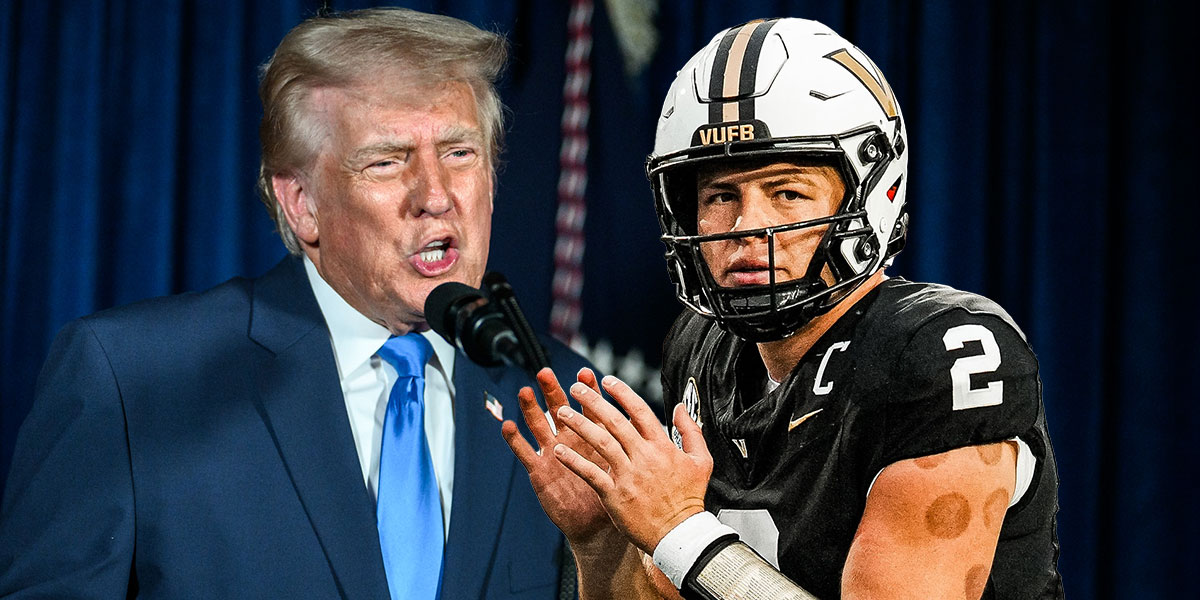
Vanderbilt QB Diego Pavia pleads to Trump for College Football Playoff executive order

Published

on


College football has had incredible developments over the last several years, from NIL deals, to the expanded college football playoff and everything in between, so much so that it’s led to more government involvement in the sport than ever before.

Not to mention, the transfer portal process became such an issue that President Donald J. Trump tried several methods to help the greater good of the game, including signing executive orders and encouraging Congress to come up with solutions.

Though, the latest request of the President comes from one of college football’s biggest stars.

Upon the release of the latest College Football Playoff rankings just days before the final reveal of the field, the Vanderbilt Commodores — who are 10-2 with losses to Alabama and Texas — came in at No. 14 with no real path to move into the 12-team field.

Commodores’ quarterback Diego Pavia — who will likely be a Heisman Trophy finalist — has pleaded with Trump to sign an executive order that would expand the field to 16 teams, allowing four from the SEC to be guaranteed, along with four at-large bids.

Needless to say, Pavia’s request is not going to get approved, but it does reflect the current chaos college football finds itself in when star players are openly begging the President to do something about a flawed system.

Whether Pavia’s in the playoffs or not, he and Vanderbilt have been one of the best stories in the nation this year, and he has made huge contributions to college football.

Michael Brauner is a Senior Sports Analyst and Contributing Writer for Yellowhammer News. You can follow him on Twitter @MBraunerWNSP and hear him every weekday morning from 6 to 9 a.m. on “The Opening Kickoff” on WNSP-FM 105.5, available free online.


Link

Continue Reading

Most Viewed Posts

Trending