

By Hayley Fowler ( December 22, 2025, 3:36 PM EST) — A trio of nonprofits that advocate against gambling are fighting betting company Kalshi’s efforts to curb Maryland gaming regulators’ oversight, telling the Fourth Circuit that health consequences and threats to elections and youth sports would be significant if Kalshi succeeds….
Rec Sports
What Ryan Smith’s building in Utah is much bigger than the Mammoth and Jazz: ‘This is a movement’


SALT LAKE CITY — As Ryan Smith, in his typical attire of a white hoodie, backwards cap, jeans and sneakers, gives a gathering of Utah Mammoth players a sneak peek of their new home on a day in early September, the reaction he receives can only be described as shock and awe.
Smith, the 47-year-old owner of the NBA’s Utah Jazz and NHL’s Utah Mammoth, is leading a tour of the new 146,000 square-foot practice facility in Sandy, a suburb south of Salt Lake City. Drills and hammers echo in the background, with renovation continuing on the 120-acre mall as Smith takes the players around a massive gym, four-pool recovery room and state-of-the-art kitchen.
“Incredible,” 21-year-old Logan Cooley says.
“You’re like ‘Wow,’” veteran Lawson Crouse says.
“Everything that he promised has been done,” captain Clayton Keller says. “And in crazy time, too.”
It was only 17 months ago that Smith first introduced himself to the then-Arizona Coyotes during a fireside chat and a round of golf in Scottsdale.
Smith, who was taking on a Herculean task of relocating the team to Salt Lake in a matter of months, asked players and staff what they needed. The response included everything from better travel and nutrition to, yes, a facility for training.
He shakes his head at how far they’ve come.
“We didn’t get into sports to be like, ‘Hey, we want to conquer the world,’” Smith tells The Athletic. “It was very much community-based. We really had to keep asking, ‘What are we doing?’ In a world that’s completely divided, (sports) bring everyone together. That’s our ‘why’ and what keeps us going.”
No, Smith isn’t intending to build an “empire” here in Salt Lake. It just feels that way.
Ryan and Ashley Smith’s company, Smith Entertainment Group, is gutting the 34-year-old Delta Center to make it more fan-friendly for both basketball and hockey. Plans are underway for a $3 billion-plus downtown overhaul by the arena, connecting the sports teams to the cultural and convention centers, with construction expected to be mostly complete before the 2034 Olympics. The Mammoth already boast a season-ticket base of 10,000 full-season equivalents for what will be a 12,266-seat capacity this season and around 17,000 after the upper bowl is renovated by the start of the 2027-28 season. They did not disclose the breakdown of this year’s season-ticket equivalents, but last year, they capped full-season packages at 8,000 and also sold partial-season packages that added up to another 2,500 full seasons.
Smith’s summer project was a pledge to help build 20 local rinks, offering $500,000 each to get them started. According to SEG, five municipalities are now in different stages of development. Smith wants the Junior Mammoth program to mirror the Junior Jazz, which according to SEG is the largest youth basketball organization in the NBA with 70,000 participants.
The goal is to be a picture of stability as an NHL organization. And to win the Stanley Cup — multiple times.
But mostly, Smith says, “This is a movement.” He sees a greater purpose for it: to elevate his home state.
“I don’t think we’ve thought much about, ‘Hey, this is the legacy. This is the empire,’” Smith says. “Nobody is going to remember Ryan Smith 100 years from now. This isn’t my legacy. It’s really not about the Smith family. We’re pretty normal people, trying to raise kids, and we all share a common theme.
“It’s Utah.”
And to think hockey wasn’t even on Smith’s radar until a few years ago.
First look at the new digs 🤯 pic.twitter.com/ufScI60P3x
— Utah Mammoth (@utahmammoth) September 9, 2025
Smith was on a weeklong trip to the Bahamas in December of 2022 when this hockey brainstorm was unexpectedly sparked.
Smith and Ashley were with Danny Ainge, recruiting him to run the Jazz. Chris Armstrong, a former long-time sports agent, was there, too, along with Tony Finau, one of his one-time PGA Tour clients.
The group was in a shared condo watching a Jazz game one night, and Armstrong asked if they could flip it over to a hockey game at halftime: the Toronto Maple Leafs against the Boston Bruins.
“Hockey?” Smith chirped at him. “Really?”
Then Ainge shared some of his experiences in Boston running the Celtics, and how much he learned about the Bruins and hockey culture. Over the course of the weekend, the group started having “what-if” conversations. By the end, they decided they should try to meet with NHL commissioner Gary Bettman to see how they could get involved.
Armstrong’s passion for hockey was one thing, but Smith also felt emboldened about the sport because of his connection with some high-profile neighbors at his vacation home in Coeur d’Alene, Idaho, including Tampa Bay Lightning coach Jon Cooper and retired players Wayne Gretzky, Brenden Morrow and Ray Whitney.
“It’s the hockey capital,” Smith says. “It’s interesting. There’s no way we would have a hockey team if I didn’t get to know those guys up there. I remember the first year, I had never really been around hockey culture, and I was like, ‘There’s something different about these stars. These guys are humble.’ I started playing golf with these guys, and the more I got to know the vibe, the way they operate, the way they talk, I’m like, ‘That would work in Utah.’”
A few months after the Bahamas trip, in the spring of 2023, Smith and Armstrong were in Bettman’s New York NHL offices along with deputy commissioner Bill Daly. Armstrong had a relationship with Daly and helped set it up. Armstrong could tell that Smith’s dynamism and passion for Utah struck an impression.

Gary Bettman found a fast partner for the NHL in Ryan Smith. (Photo courtesy of SEG)
“This wasn’t just about getting a hockey team,” Armstrong says. “This was about getting another driver for the state of Utah to reach its full potential.”
They didn’t put on a full-court press at the meeting, telling the NHL brass that they’d love to be involved, whether that meant hosting a game at some point or being in the mix if the league ever considered expansion.
“I’m like, ‘It doesn’t make sense not to be here,’” Smith says. “Every other Olympic sport trains here. All the skiers, the ice skating, speed, track. Shaun White is here all the time. Why aren’t we doing this?
“One thing led to another, and we were kind of in the right place at the right time.”
The lengthy saga in Arizona, the struggles of the Alex Meruelo ownership era, has been well-documented.
When the situation reached its breaking point, with a new arena plan going nowhere, Bettman met again with Smith and asked him if he thought he could pull off buying and relocating the team.
“It was like, you don’t ask questions,” Smith says. “You just say, ‘Yes.’”
Smith laughs, thinking about it now. The $1.2 billion deal between SEG, the NHL and the Coyotes was one thing. The execution after was another. Smith remembers sitting down with his wife and Mike Maughan, a long-time right-hand man since their days at Smith’s software company Qualtrics.
“We know Day 1 is going to be good,” Smith remembers saying. “But what does Day 2 look like? (How do we) make Day 2 and Day 3 better?”
Asked for his favorite day as an owner so far, Smith has a few. There was the introduction of the team to the fan base. Smith flew to Scottsdale for that round of golf and fireside chat, then called Delta and booked a plane to fly the entire Coyotes team and their families to Salt Lake City for a rally at the Delta Center. About 12,000 fans attended, and several thousand more gathered outside.
“It was the greatest sporting event I’ve ever been to where no sports were played,” Smith says. “It’s like we were out fishing and caught this massive fish, and we were bringing it back to Utah. We hoped people were as excited about the fish as we were. They grabbed the fish and ran it through town.
“Every player left going, ‘OK, we trust this.’ Then they were validated opening night.”
Utah’s first game, a 5-2 home win over the Chicago Blackhawks on Oct. 9, set the tone. Shaboozey played a pregame concert. Dwyane Wade, a minority owner, was in the house with his wife, Gabrielle Union, telling Smith, “I don’t know how you made me a hockey fan.”
Dylan Guenther, the No. 9 draft pick in 2021, opened the scoring for Utah five minutes into the game. The Delta Center erupted. Players say it was the loudest they had ever heard a hockey rink. Smith remembers Bettman turning to him and saying, “You do not know how big that was.”
DYLAN GUENTHER SCORES THE FIRST REGULAR SEASON GOAL IN UTAH HC HISTORY 🚨 pic.twitter.com/1jz2TRK0fF
— B/R Open Ice (@BR_OpenIce) October 9, 2024
“That was a moment where players got the confidence like, ‘Hey, it’s going to be OK,’” Smith says.
There have been plenty of challenges, too. Smith admits they underestimated just how “broken” the Delta Center was, from a hockey perspective. It’s a basketball-first facility that had poor sightlines for a good chunk of seats. The gutting of the arena includes raising the floor by two feet and installing first-of-their-kind risers to solve this. They also didn’t realize how much adding 41 nights of events at the Delta Center would impact downtown.
“Everyone wants their own world, but the way we’ve been able to bring it together has been awesome,” Smith says. “They were meant to be together.”
𓊍 We’re reinventing arena seating at #DeltaCenter.
Our revolutionary riser technology and raised arena floor will ensure fans can see the action from every angle. @OklandConst | @StageRightCorp pic.twitter.com/0Lo1aeKqx8
— Delta Center (@deltacenter) September 4, 2025
Smith, who has five kids, aged 9 to 17, can’t wait to take his youngest skating.
The first place they plan to go is the Mammoth’s practice facility, which they believe will not only be the hub for their team but also for youth hockey in Utah. There will be 4,000 square feet of community space, ice times for youth hockey teams and watch parties for Mammoth games here.
“This has to be the home and the bat signal of it,” Smith says. “This is exactly what every community needs.”
Smith’s pledge to help get 20 rinks built feels ambitious, but the club feels it has built a sort of “model home” in this rink that can be copied on a smaller scale. If a municipality comes forward with interest, Smith says, the Mammoth and SEG will help in any way they can.

The Mammoth are hoping their new practice facility can be a “model home” of sorts for future rinks built in the area. (Photo courtesy of SEG)
Kristen Bowness, who has previously worked for the Lightning and the Nashville Predators in their youth and community programs, is spearheading the Mammoth’s youth hockey efforts. The Junior Mammoth are trying to mirror the Junior Jazz, from partnerships with local parks and recreation departments to the jerseys they hand out to kids, which include a ticket to a game. The Jazz set aside 1,800 seats for each game for the Junior Jazz — heavily-reduced-priced tickets that are included in the registration fee for those youth program members. There’s a similar ticket arrangement for the Junior Mammoth.
Bowness says they had 3,875 kids participate in the street hockey program in Year 1. The goal is to match the Junior Jazz’s 70,000 league members by Year 5.
“We really feel like we can get there,” she says.
Smith and SEG are betting on youth. As of 2024, Utah had the youngest demographic in the United States, with a median age of 32.4 years, according to U.S. Census Bureau data. The organization is tapping into that to grow its fanbase. Bowness says the Mammoth will do four to five youth events per week during the season, from hosting street hockey to coaching and referee clinics. Starting in January or February, the Sandy practice facility will be used for “Learn to Skate,” adult leagues, AAA youth hockey and other community-building activities.
Bowness says there are currently six rinks in the greater Salt Lake City area and 12 in the state. The practice facility will be the 13th. There are 60 high school hockey programs throughout the state. Six NHL players have come from Utah. The goal is for those numbers to grow, as well. The more interest in hockey, at all levels, the better, long term.
“That’s what we want,” Bowness says.

Ryan Smith plans on the new Mammoth practice facility being the center of the hockey world in Utah. (Photo courtesy of SEG)
Smith played a role in pushing for the Olympics’ return to Salt Lake in 2034, which will put the region’s hockey fandom in an international spotlight. Smith has said the plan is for the Delta Center to be involved in Olympic hockey for those games.
And will he get involved in helping local colleges like his alma mater, BYU, to move to Division I in hockey? Chris Armstrong says that’s not on their immediate radar — but the hope is that “rising tides lift all boats” and momentum is built on its own over time.
As for the fans of today, synergy with the Jazz has been critical in getting them in the door.
Having the infrastructure, software and staff already on board allowed them to secure 34,000 seat deposits right away, according to Chris Barney, president of revenue and commercial strategy for SEG — those deposits for a mix of full-, half- and partial-season packages. And many are left on that waitlist. The teams were able to share partners and sponsors, as well.
The Mammoth also followed the Jazz’s lead regarding their television broadcasts. Barney says that SEG learned a couple of years ago that the Jazz were distributing their games to only 39 percent of the market on cable. So when their regional sports network deal was up, they struck a deal with a local Sinclair station and are now entering their third year having over-the-air broadcasts on KJZZ. They’re doing something similar with the Mammoth on Utah 16, which will air all 71 of the team’s non-nationally-broadcast games this season for free this season.
“So 100 percent of the market can see the games,” Barney says.
There’s also a paid subscription service that streams games and behind-the-scenes content. According to SEG, there were more than 18,000 subscribers last season to Mammoth+ and SEG+, the latter of which also streams Jazz games.
Smith and SEG have received strong collaboration and support from the city of Salt Lake and the county, especially when it comes to the downtown district overhaul. The idea is to have a walkway connect blocks that feature the Delta Center, convention center, symphony and museums. SEG’s investment in the area is $3 billion, which includes partnering with Live Nation on a 6,000-seat indoor concert venue. A 0.5 percent citywide sales tax will help fund the project.
Salt Lake City mayor Erin Mendenhall says they’ve already seen the annual financial impact from activity in the district increase from $326 million to a projected $600 million after the addition of the Mammoth.
“The whole proposal has been forged through imagining together,” she says. “It’s about our identity as a capital city for the next 50 to 100 years.”
For Smith, it all comes back to investing in pro sports to help grow Utah.
“We want to build an extremely stable organization, to where if you look at Utah, you think stability — just a model franchise in sports,” Smith says. “We want the community to feel like they’re really part of it. For us to be part of bringing an NHL team, it’s not lost on anyone here — the second they walk into that area and they see that NHL shield. It’s like, we have this forever.”
Is Smith more of a Mark Cuban or a Jerry Jones?
Smith laughs at the question.
He looks and dresses like a player. Mikhail Sergachev, the Mammoth’s No. 1 defenseman, jokes that he acts like one of the guys, too, sometimes “dabbing” players as they walk by.
Players see “genuine” there — a new-age type of owner.
And how does Smith see himself?

Is Ryan Smith more Mark Cuban or Jerry Jones as an owner? (Photo courtesy of SEG)
He says he likes to manage down to an inch. He wants to be in on all the details. But he also doesn’t want to do everything. He trusts his people: Maughan with the downtown district, Jazz president Jim Olson with the Delta Center gutting, Chris Armstrong and general manager Bill Armstrong with the hockey operations.
“Am I Jerry Jones where I’m playing GM? Absolutely not,” Smith says. “But am I hiring people and getting out of the way? Absolutely not. … I don’t want to coach the team. I don’t want to play GM. However, I want to know absolutely everything that’s going on at every level. Part of that is also to back our people.”
Bill Armstrong says that what makes his job different now than when he was the GM of the Coyotes is that there are “no excuses.” The team has been given everything it needs from a resources and support perspective. Now it’s on management, coaches and players to deliver.
“We freaking want to win a championship, right?” Maughan says. “We’re going to win a Stanley Cup. We’re building to win. We’re not here because we want to dilly-dally or just own a team. There’s no ego in that. We want to give a gift of a championship to the people of Utah. We want to give the gift of downtown to people of Utah. It’s about that, not any personal thing. Life is too short to have small dreams. The dream wasn’t to own a hockey team. The dream was to win a Stanley Cup and create something amazing for the community.”
Smith already knows where the championship parade route will be. And it won’t just be in Salt Lake or Sandy.
“I think it’ll start here in Northern Utah,” he says, smiling. “And go all the way down to Las Vegas.”
(Illustration: Will Tullos / The Athletic, with photos from Kamil Krzaczynski, Alex Goodlett, Tyler Tate and Joe Sohm / Getty Images, and courtesy of SEG)
Continue Reading
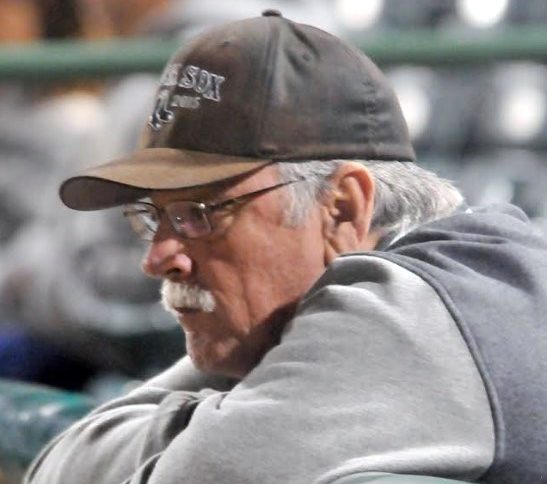
William J. Castner, Sr., a legendary community leader in Toms River, where he helped lead a nationally recognized youth baseball powerhouse that produced several major and league players, died on December 19 after an illness. He was 73.
Castner spent nearly three decades coaching baseball and served on the board of trustees of the onetime international championship Toms River East Little League. He played an integral role in the founding of a fall baseball program and the Toms River Black Sox that extended baseball into the summer.
The senior league field at the Toms River East Little League Complex was named “Castner Field” in 2009 to honor Castner and his wife of over fifty years, Diane, a longtime volunteer. Ten future major league players played on Castner Field.
He served on the governing board of the Atlantic Baseball Conference Collegiate League, the Youth Sports Safety Advisory Board, and the Play for James Foundation board.
“The only thing Bill would ask for Christmas each year were Wawa gift cards for gas money so he and Diane could drive tens of thousands of miles each year watching games all throughout the Garden State in their lawn chairs – often followed by a family meal at a Jersey diner or restaurant,” his family said in a statement.
In addition to coaching for over forty years, Castner was an executive for a global aluminum manufacturing and distribution company.
He is survived by his wife, three children, including Rutgers University Executive Vice President and General Counsel William J. Castner, Jr., and seven grandchildren.
A memorial visitation will be held on Saturday, December 27, from noon to 4 PM at the Quinn Hopping Funeral Home in Toms River. A celebration of life service will be held from 3:15 to 4 PM. Donations can be made to the Play for James Foundation.

FORT WAYNE, Ind. (WPTA) – A free Christmas tree recycling program is returning to Allen County on Friday.
The Allen County Department of Environmental Management program works together with local organizations for drop-off locations throughout the county. Those locations include:
- Fort Wayne City Utilities Biosolids Handling Facility
- 6202 Lake Avenue, Fort Wayne
- Open Monday-Friday, 7 a.m. to 3 p.m. (Closed Jan. 1)
- North Highway Department Building
- 2234 Carroll Road, Fort Wayne
- Open daily from dawn to dusk
- Metea County Park
- 8401 Union Chapel Road, Fort Wayne
- Open 9 a.m. to 6 p.m. daily
- South Lot (near Fort Wayne International Airport)
- 10100 Smith Road, Fort Wayne
- Open daily from dawn to dusk
- New Haven Utility Shop
- 2201 Summit Street, New Haven
- Open daily from dawn to dusk
- Monroeville Water Works Department
- 200 Utility Drive, Monroeville
- Open daily from dawn to dusk
The program runs from Dec. 26 through Jan. 16.
Before dropping off a tree, residents must remove all ornaments, tinsel and plastic bags. Wreaths, garlands and artificial trees are not accepted.
Trees will not be collected as part of regular trash pickup.
To be the first to get the latest breaking news alerts, download the 21Alive News App here.
You can also catch the latest news from 21Alive anytime on Roku, Amazon Fire TV, and Apple TV. Just search “21Alive” in the app store and download the app to your device.
Copyright 2025 WPTA. All rights reserved.

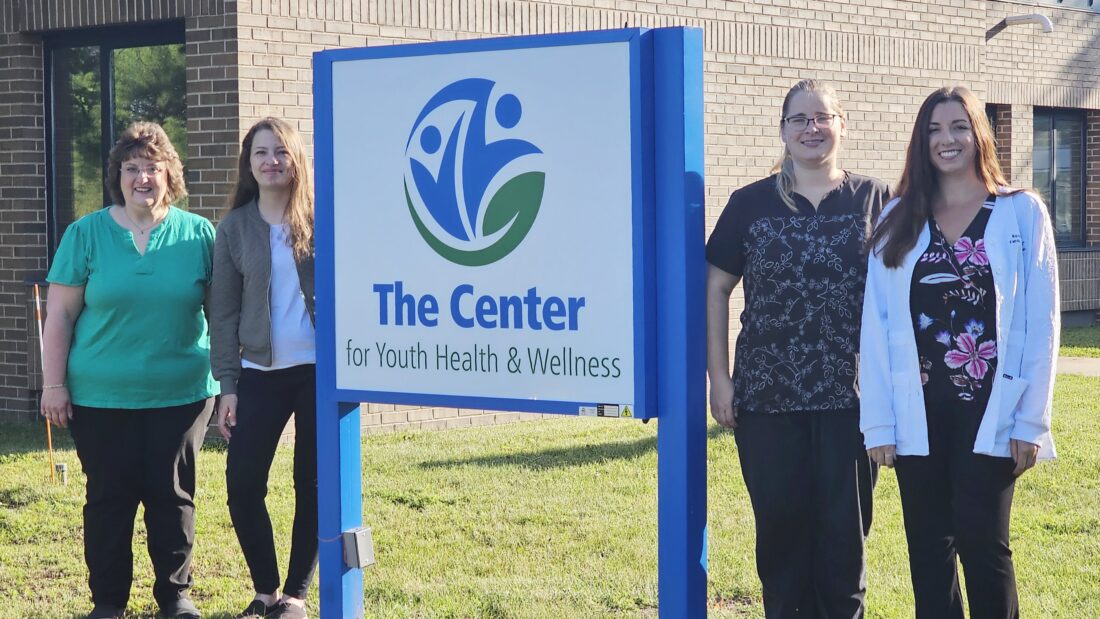
Photo courtesy Bay College
The Center for Youth Health & Wellness staff outside the new Center on the Escanaba campus in 2024.
ESCANABA – The Center for Youth Health and Wellness opened its doors on the Bay College Escanaba Campus in Fall 2024. The Center has quickly become a vital resource for students and local youth ages 10-21, providing accessible, high-quality medical and mental health services in a welcoming, youth-focused environment.
The Center has demonstrated strong community engagement and meaningful impact. Since opening in 2024, The Center has served 1,045 unduplicated clients. These individuals visited The Center for a wide range of health and wellness needs, including medical visits, mental health visits, and annual wellness exams.
“We are thrilled by the positive response and the number of young people who are choosing to access care right here on campus through The Center,” said Cindy Gallagher, Bay College Vice President of Workforce Innovation and Strategic Partnerships. “This partnership with Public Health Delta & Menominee Counties ensures that students and community youth have the support they need to thrive academically, personally, and socially.”
Since the start of the new fiscal year on October 1, 2025, The Center’s momentum has remained strong. In the first quarter alone, The Center has provided 99 medical visits and 147 mental health visits.
Since its opening, The Center has become a critical provider for the required high school sports physicals that allow youth to participate in high school sports. Kayla Coltson, Family Nurse Practitioner at The Center, shared that they have provided 755 sports physicals to area youth since August 2024.
These numbers reflect the continued and growing demand for accessible youth-focused health services in the region. The Center’s integrated approach–combining medical care, mental health support, prevention services, and wellness education–helps empower young people to make informed decisions and build healthier futures.
“It’s clear that this collaboration is filling a critical gap in our community,” said Michael Snyder, Health Officer at Public Health Delta & Menominee Counties. “We are committed to providing quality services, reducing barriers, and meeting the evolving needs of youth across Delta and Menominee counties.”
The Center for Youth Health and Wellness remains open to individuals ages 10-21, offering walk-in and scheduled appointments. Services include primary medical care, behavioral health counseling, vaccines, wellness visits, and health education–all provided in a confidential, inclusive, and supportive setting.
The Center employs four staff, including a receptionist, a licensed mental health counselor, a registered nurse, and a nurse practitioner. The Center also has an active Advisory Board consisting of representatives from local K-12 partners, Delta-Schoolcraft ISD, Public Health, Bay College, and local parents.
Funding for The Center is provided through a grant awarded to Public Health Delta & Menominee Counties from the Michigan Department of Health and Human Services, along with reimbursement from billing public and private insurance plans. No client between the ages of 10-21 will be denied care due to an inability to pay.
Bay College and Public Health Delta & Menominee Counties look forward to building on this strong foundation for years to come as we continue to serve the youth of our community.
For more information, visit the Center’s page at baycollege.edu, contact The Center for Youth Health and Wellness at 906-786-1672 or visit The Center’s Facebook page.

Law360 is on it, so you are, too.
A Law360 subscription puts you at the center of fast-moving legal issues, trends and developments so you can act with speed and confidence. Over 200 articles are published daily across more than 60 topics, industries, practice areas and jurisdictions.
A Law360 subscription includes features such as
- Daily newsletters
- Expert analysis
- Mobile app
- Advanced search
- Judge information
- Real-time alerts
- 450K+ searchable archived articles
And more!
Experience Law360 today with a free 7-day trial.

Letter: Sports complex at Pendleton would mean higher taxes
Published 4:58 pm Monday, December 22, 2025
Pendleton city officials announced that replacement of condemned stairway on Southwest 13th Street was a top priority, submitting a grant request for funding through the Safe Pathways To Schools Program sponsored by the Oregon Department of Transportation as adequate city funding was unavailable. The request was denied perhaps because the plan was not compliant with the federal American with Disabilities Act, according to the program administrator.
In 2011 the city purchased 40 acres adjacent to Barnhart Road, affectionately known as the “road to nowhere” for $500,000. The current city’s mayor and the economic development director have approved a proposal giving that property to Round-up City Development Corp., an agency masquerading as economic power house for the city, to construct a youth athletic complex. This sounds like a great idea until you consider the city, the school district, Babe Ruth and Little League associations have already established a good foundation of facilities that could be improved for considerably less. For the complex to be completed, a bond would be needed and approved by the voters, meaning property tax hike.
A common excuse from city officials when asked about improving streets is there is no funding. I wonder why.
Rick Rohde
Pendleton
Submit Letter to the Editor
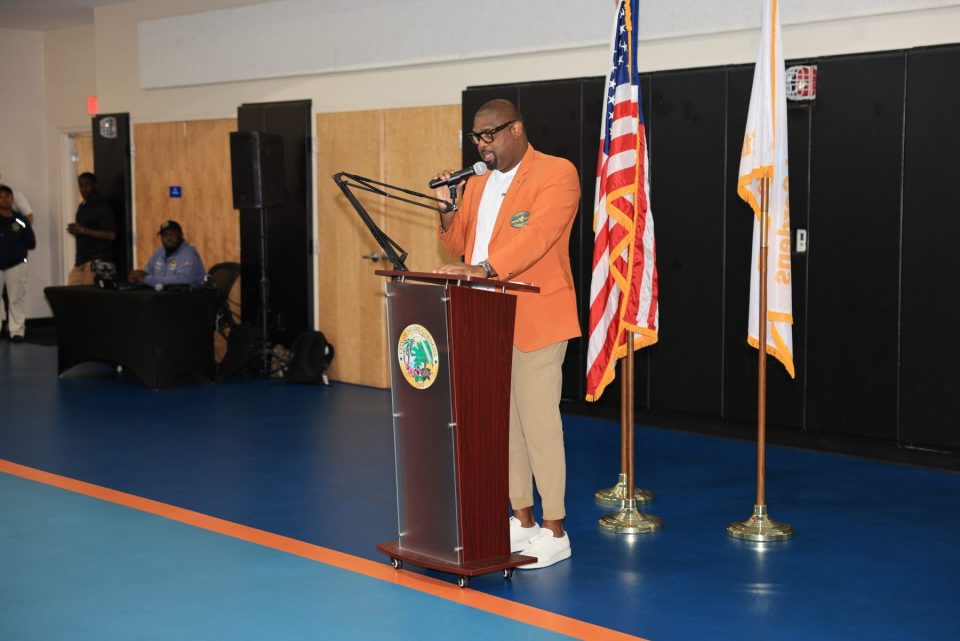
Today, the Orange Bowl Committee, in partnership with Miami-Dade County, the City of Miami Gardens, and AutoNation, officially opened the doors to the new Orange Bowl STEAM Center presented by AutoNation at Bunche Park West Recreation.
The $600,000 legacy project provides local students with a state-of-the-art environment designed to foster innovation, creativity, and technical skill-building. The center features a dedicated workspace equipped with robotics, engineering kits, and maker materials, alongside a high-tech Multimedia Room. This digital hub offers green-screen capabilities, audio-visual tools, and editing stations, allowing students to master digital storytelling and graphic design.
“This center represents a major investment in the future of our youth,” said Henri Crockett, President & Chair of the Orange Bowl Committee. “By providing these resources, we are ensuring that the next generation of leaders in Miami Gardens has the tools they need to excel in a rapidly evolving digital world.”
The unveiling featured remarks from several community leaders, including Miami-Dade County Commissioner Oliver Gilbert, Miami Gardens Mayor Rodney Harris, and representatives from AutoNation and School Specialty.
A Legacy of Community Impact
The STEAM Center is a cornerstone of the Orange Bowl Cares initiative, specifically falling under its Legacy Programs pillar. These investments are made possible through the Orange Bowl Committee’s leadership of the both the Capital One Orange Bowl and the 2026 Miami Host Committee, which is preparing to host the 2026 College Football Playoff National Championship at Hard Rock Stadium.
For over 90 years, the Orange Bowl has served as a primary civic engine for South Florida, using premier sporting events to fund year-round community engagement, education, and youth sports programs.
Key Features of the New Facility:
- STEAM Lab: Hands-on learning with robotics, 3D modeling, and engineering kits.
- Multimedia Room: A professional-grade digital production suite for video and graphic creation.
- Collaborative Spaces: Intentionally designed areas to encourage group problem-solving and creative thinking.
Connect To Your Customers & Grow Your Business
Click Here


Rec Sports4 minutes ago
Bill Castner, Sr., fabled Toms River baseball leader, dies at 73

Rec Sports12 minutes ago
Free Christmas tree recycling begins in Allen County Friday

NIL32 minutes ago
University of Alabama football player uses NIL money to spread Christmas cheer

Sports1 hour ago
Tomashek named GLIAC Offensive Player of the Week

NIL1 hour ago
$1.4 million QB predicted to follow departing coach to college football powerhouse
Sports1 hour ago
SCAC Announces 2025 Fall All-Sportsmanship Teams

Sports2 hours ago
RICHARDSON NAMED TO ACADEMIC ALL-LEAGUE TEAM

Sports2 hours ago
Una Vajagic becomes first Badger Volleyball starter to transfer after national semifinal run | Sports

Sports2 hours ago
Tigers Picked Fourth in EIVA Preseason Poll

NIL2 hours ago
Only one college football coaching hire earned an A+ grade

Sports3 hours ago
Barth Named to Summit League Volleyball All-Academic Team

Sports3 hours ago
Men’s Volleyball Ranked Third in EIVA Preseason Coaches Poll

Sports3 hours ago
Flathead Bravettes Volleyball Coach to Step Down after Six Years

NIL3 hours ago
USC-Notre Dame Rivalry The Latest Casualty Of Modern College Football

Sports3 hours ago
Texas A&M University wins first-ever volleyball championship after beating Kentucky Wildcats in NCAA Division I Championship game

Rec Sports4 weeks ago
First Tee Winter Registration is open

Rec Sports4 weeks ago
Fargo girl, 13, dies after collapsing during school basketball game – Grand Forks Herald

Motorsports4 weeks ago
CPG Brands Like Allegra Are Betting on F1 for the First Time

Motorsports4 weeks ago
F1 Las Vegas: Verstappen win, Norris and Piastri DQ tighten 2025 title fight

Sports4 weeks ago
Sycamores unveil 2026 track and field schedule

Sports4 weeks ago
Utah State Announces 2025-26 Indoor Track & Field Schedule

Sports4 weeks ago
Two Pro Volleyball Leagues Serve Up Plans for Minnesota Teams

Motorsports2 weeks ago
SoundGear Named Entitlement Sponsor of Spears CARS Tour Southwest Opener

Motorsports3 weeks ago
Jo Shimoda Undergoes Back Surgery

NIL3 weeks ago
Bowl Projections: ESPN predicts 12-team College Football Playoff bracket, full bowl slate after Week 14

Motorsports4 weeks ago
Redemption Means First Pro Stock World Championship for Dallas Glenn

Sports4 weeks ago
Texas volleyball vs Kentucky game score: Live SEC tournament updates

Rec Sports3 weeks ago
Robert “Bobby” Lewis Hardin, 56

Rec Sports3 weeks ago
Black Bear Revises Recording Policies After Rulebook Language Surfaces via Lever

Rec Sports3 weeks ago
How this startup (and a KC sports icon) turned young players into card-carrying legends overnight






-
 Motorsports2 weeks ago
SoundGear Named Entitlement Sponsor of Spears CARS Tour Southwest Opener
-
 Rec Sports3 weeks ago
Black Bear Revises Recording Policies After Rulebook Language Surfaces via Lever
-

 Motorsports2 weeks ago
Donny Schatz finds new home for 2026, inks full-time deal with CJB Motorsports – InForum
-

 Rec Sports2 weeks ago
How Donald Trump became FIFA’s ‘soccer president’ long before World Cup draw
-
 Rec Sports2 weeks ago
David Blitzer, Harris Blitzer Sports & Entertainment
-

 Motorsports2 weeks ago
JR Motorsports Confirms Death Of NASCAR Veteran Michael Annett At Age 39
-
Sports2 weeks ago
Elliot and Thuotte Highlight Men’s Indoor Track and Field Season Opener
-
Sports2 weeks ago
West Fargo volleyball coach Kelsey Titus resigns after four seasons – InForum
-

 Motorsports2 weeks ago
Rick Ware Racing switching to Chevrolet for 2026
-

 Sports2 weeks ago
Temple Begins Indoor Track & Field Season at UPenn This Weekend