
NIL
What we’re hearing about college basketball budgets in revenue-sharing era: ‘Money-dump year’


NORTH AUGUSTA, S.C. — Have we maybe, finally, reached the peak of college basketball spending?
It depends who you ask … but it’s certainly possible. Why? Because this offseason, college sports’ old and new funding models — established name, image, and likeness (NIL) norms, plus the introduction of revenue-sharing — overlapped, giving programs a one-year window to blow the bank.
“This year is the money-dump year because of everything that’s happening,” said one assistant coach at a mid-major-plus school. “We will never see these numbers again. Now, what does that mean moving forward? We don’t know.”
That uncertainty was a near-consensus sentiment among the 35 coaches The Athletic polled at Peach Jam last weekend. Much of that stems from the unknown ramifications of the long-anticipated House vs. NCAA settlement, which took effect July 1 and allows schools — for the first time — to pay athletes directly through revenue sharing, with a $20.5 million cap per school for all sports combined.
Athletes are still allowed to reach third-party NIL deals that don’t count against the cap, but those agreements could come under more scrutiny in a post-House world, with a new clearinghouse — NIL Go — set to review them. Will NIL Go approve the sorts of million-dollar deals that have become the industry standard over the last four seasons? This early into the revenue-sharing era, coaches don’t know.
But if one thing is clear, it’s that budgets for this season are eye-popping. To understand just how swollen budgets have become this offseason, we asked all 35 coaches: On average, what would you estimate teams in your conference spent on their rosters for the upcoming 2025-26 season?
Average estimated roster costs
| League | 2025-26 season (estimated) |
|---|---|
|
ACC |
$8.2 million |
|
Big East |
$8 million |
|
Big Ten |
$8.5 million |
|
Big 12 |
$8.6 million |
|
SEC |
$9.7 million |
|
Mid-major plus |
$2.3 million |
|
Low- to mid-major |
$525,000 |
Coaches were granted anonymity in exchange for their candor. The answers are telling — even considering the wide range of budgets within each league. (In the 18-team ACC, for example, the difference between the highest- and lowest-spending schools is eight figures.) But for as sexy as those numbers are, it’s crucial to remember why basketball budgets have grown, especially for next season.
Prior to the House settlement, most college players were paid by school collectives, who funneled money directly from donors to athletes under the guise of NIL. Now, in a revenue-sharing world, schools can distribute up to $20.5 million annually to players. Men’s basketball isn’t getting that entire pie — Opendorse, an NIL marketplace company, estimates most high-major programs will receive 20.3 percent of that on average — but still: that’s a few extra million teams can dole out.
So, when you combine old collective money — most of which schools intentionally spent before July 1 — with new revenue-sharing funds?
Voila: You get a basketball bubble, and budgets reaching never-before-seen heights.
“There is a realization for most,” said one Big Ten assistant, “that the money will not be the same.”
Revenue sharing vs. the ‘free market’
In many ways, one byproduct of the House settlement led to this offseason’s spending boon.
That would be the College Sports Commission (CSC), the new enforcement agency responsible for regulating revenue-sharing and cutting down on the pay-for-play deals that have become the industry standard. To regulate “fair” market deals, the CSC created a clearinghouse, NIL Go, which is run by Deloitte and which vets any third-party NIL deals worth over $600.
Considering schools have regularly been paying top talents hundreds of thousands — if not millions — of dollars annually, coaches were understandably apprehensive about the clearinghouse review process. Most who The Athletic spoke to admitted that they “front-loaded” contracts this offseason, spending as much collective money as possible in case NIL Go made it effectively unusable.
“With the collectives being in question, and all the details that are coming out about the settlement,” said one SEC head coach, “I don’t know what it’s gonna look like.”
And that uncertainty is still palpable. The CSC announced earlier this month that it wouldn’t clear any collective deals, seemingly validating coaches’ front-loading … only to reverse course on Tuesday after substantial backlash; the enforcement body now says it will consider collectives “valid businesses,” but will still hold them to the fair “range of compensation” rules that traditional third parties are subject to.
What does that mean for future spending?
Simply, if high-major programs are to sustain their current roster budgets, then supplemental collective money is a necessity. Consider: The average expected revenue sharing allotment for high-major teams — about 20.3 percent of $20.5 million — comes out to about $4.2 million … or half of what programs are estimated to be spending this upcoming year.
Is the college basketball economy really going to nosedive to that extent?
“You can’t put the toothpaste back in the tube,” an ACC head coach said. “The free market has (borne) what these numbers are, so now you can’t come back and correct the free market, and say, ‘Well, actually, this isn’t the free market. What we determine is the free market is the free market.’ If you were able to do that, we wouldn’t be running to Congress asking for help, because that would be legal. What we’re doing now isn’t legal.”
‘It’s just going to bring back cheating’
It’s easy to talk about college basketball spending in a macro sense. But what does that look like at the one-on-one level with players?
“You’re going to have a kid making 400 (thousand), and you’re gonna go, ‘Well, next year I only have 200 for you,’” an ACC assistant said. “That doesn’t usually sit real well.”
As a Big 12 assistant put it: “That’s going to be a hard conversation to kids you’re already loyal to.”
The ramifications could be landscape-shifting. With players having more freedom of movement than ever, coaches worry that a stark drop in spending — especially in the span of one offseason — will lead to the most frantic offseason of the NIL era yet.
Another roster construction concern: How much should coaches allocate for freshmen, especially those who rarely impact winning their first college season?
“A lot of these ‘26 kids have friends who were in the ‘25 class and got a lot of money — and now you’re offering them a quarter of that?” said an SEC assistant. “We’re gonna struggle initially, trying to explain the difference.”
Which is why only three top-25 recruits in the 2026 class have committed so far.
Other uncertainties abound, too. For all the talk about “average” allotments to high-major programs, for instance, what about the blue bloods set to receive an outsized percentage of their school’s revenue-sharing funds? What Duke and Kentucky receive, for instance, will be drastically different from what teams residing alongside powerhouse football programs — like Alabama, Ohio State, and Clemson — will ultimately get.
“If you’re talking true rev share,” one blue blood assistant admitted, “then we’ve been given an opportunity to be competitive.”
There’s also the looming threat of non-football leagues, namely the Big East and Atlantic 10. On one hand, not having football means most Big East schools won’t come close to paying out the overall $20.5 million cap permitted by the House settlement. But on the other hand? Those same schools can give their men’s basketball programs the largest cut of the revenue sharing pie, rather than the 20 percent that most of their high-major colleagues should receive.
“The Big East would be able to likely — with the commitment and the resources — double and triple some of these SEC and Big Ten schools,” said one Atlantic 10 head coach. “I don’t know what the next set of rules are going to be, but I guarantee you it’s not going to be that.”
Added the SEC head coach: “We talk as a staff that we might be competing against Atlantic 10 schools for kids, if it’s based on just money.”
We won’t know for a while whether or not the CSC truly has the teeth to stem the flood of collective money into college sports. But if it does, and revenue-sharing funds are something of a legitimate cap?
Expect teams to get, uh, creative when it comes to navigating the clearinghouse’s restrictions.
“There’s probably some guys out there,” one Big 12 head coach said, “that are going to figure out a way to do some things that are within the letter of the law — (but) maybe not the spirit of the law.”
Or, more succinctly, in the words of one WCC head coach: “It’s just going to bring back cheating. I don’t want to be naive about that.”
After surveying coaches at just under 10 percent of Division I schools, the only thing that’s become clear is how divided the college basketball universe is on what to make of revenue sharing.
Will it curtail massive donor influence in college basketball? Will it curb overall spending and level the financial playing field? Or is it just a slight impediment to the free market and the hefty prices that have emerged in the NIL era? Is it enforceable? Destined to get sued into oblivion? A precursor to collective bargaining?
There’s no clear answer to any of it.
“We continually ask for help and guardrails — and then when we get them, we complain about them, find ways around them, and then we sue the NCAA,” another ACC head coach said. “Sooner or later, coaches are going to have to decide what they want this ultimately to look like. And if we’re going to continue to find ways around stuff, or sue, then it’s just going to be chaos.”
(Photo: Kevin C. Cox / Getty Images)


The coaching carousel and NCAA transfer portal; where worlds collide.
A record number of coaching changes across the FBS has impacted the number of players searching for new homes this offseason. The portal was going to fill up regardless, but firings and hirings around the country have sped up the process, creating some surprises along the way.
The Big Ten has been at the forefront of some major coaching decisions. Four programs in the conference (Michigan, Michigan State, Penn State, UCLA) fired their head coaches. Another job opened after Iowa State’s Matt Campbell jumped into the opening at Penn State.
In the case of the Michigan State Spartans, the program has struggled to find stability since Mark Dantonio retired following the 2019 campaign.
The Spartans are onto their third head coach in the last five years, bringing in former Northwestern head coach Pat Fitzgerald to replace the struggling Jonathan Smith.
Since moving on from Smith in late November, 12 players have announced plans to transfer from the program, including a few key names. Check out the full list below, per On3’s transfer tracker.
12 Players (And Counting) From Michigan State To Enter Transfer Portal
|
Name |
Position |
Class |
|---|---|---|
|
Aidan Chiles |
QB |
Junior |
|
Makhi Frazier |
RB |
Sophomore |
|
Nick Marsh |
WR |
Sophomore |
|
Gavin Broscious |
OL |
RS Junior |
|
Tyler Gillison |
EDGE |
RS Junior |
|
Marcellius Pulliam |
LB |
Junior |
|
Darius Snow |
LB |
Sixth-Year Senior |
|
Semaj Bridgeman |
LB |
RS Sophomore |
|
Ade Willie |
CB |
Senior |
|
Jeremiah Hughes |
CB |
Junior |
|
Justin Denson Jr. |
S |
Sophomore |
|
Tracy Revels |
S |
RS Sophomore |
There are a few big losses to note for Michigan State, especially on the offensive side of the ball.
On Monday, junior quarterback Aidan Chiles became one of the latest players to depart from Michigan State. Chiles followed Smith from Oregon State and started for the majority of the last two seasons before losing his job late in 2025.
A two-time team captain, Chiles completed 192-of-323 passes for 2,415 yards with 13 touchdowns to 11 interceptions this season. He added 225 yards and 3 more scores on the ground.
Running back Makhi Frazier and wide receiver Nick Marsh are two other Spartans searching for a fresh start.
Frazier led the team in rushing this fall, accumulating 116 times for 520 yards and 2 touchdowns.
Marsh was the top pass-catcher on the Spartans, recording 59 catches for 662 yards and 6 touchdowns, earning honorable mention All-Big 10 honors. He’s totaled 1,311 yards and 9 scores in 23 games, meaning he should be a coveted option in the portal.
Fitzgerald will have his work cut out for him to rebuild Michigan State into a conference championship contender.
The Spartans have compiled a 31-37 overall record since 2020. 11 of those victories came in 2021, the only season in which Michigan State has finished with a winning record in that stretch.
Read more on College Football HQ
• College football OL with no sacks allowed enters NCAA transfer portal
• All-conference EDGE with 18 career sacks to enter college football transfer portal
• Paul Finebaum urges to cut specific programs from College Football Playoff
• Major college football program loses 15 players to transfer portal after 2025 season

Dec. 15, 2025, 3:59 p.m. ET
It seems you can leave a program bound for the College Football Playoff without burning bridges.
Tulane head coach Jon Sumrall is set to join the SEC as the coach of the Florida Gators following the Green Wave’s CFP run, which begins with a road game against Ole Miss, but he seems to be handling the exit in a way that hasn’t created bad blood with his former school.
Sumrall and his family further solidified that on Monday as Tulane announced a $100,000 donation from Sumrall to the Green Wave Talent Fund, an institutional organization that raises money for NIL for Tulane athletics. Sumrall is “paying it forward” to the next head coach, Will Hall, a former head coach at Southern Miss who was a member of Sumrall’s staff this season.
“Tulane University and New Orleans are special to me and my family,” Sumrall said in a release. “Ginny and I are honored to support the Green Wave Talent Fund because we believe in the vision of Tulane Athletics and want to contribute to the continued success of its student-athletes. The future is incredibly bright, and we are excited for Will Hall and his family to be part of it.”
“Coach Hall possesses a keen understanding of Tulane University and its football program, along with a passion that greatly benefits the Green Wave. As a leader, he cares deeply about helping others reach their full potential and is dedicated to equipping them to achieve that goal in every way possible. He has our family’s full support, and we wish him nothing but success as he leads Tulane Football!”
Sumrall spent two seasons at Tulane, playing for an American Conference title in his first season and winning it in his second. He leaves the Green Wave with a 20-7 record, pending their results in the CFP.
Contact/Follow@College_Wire on X and@College_Wires on Threads. Like our page on Facebook to follow ongoing coverage of college sports news, notes, and opinions.
NIL
Miami DE coach Jason Taylor takes shot at Peyton Manning, Tennessee over missing College Football Playoff

With the Miami Dolphins playing on Monday Night Football, the Manning Cast brought out special guest Jason Taylor. Naturally, the conversation of college football came up since Taylor is preparing for a College Football Playoff game with Miami. Eli Manning is set to watch his alma mater participate. But Peyton?
“Peyton, I’m sorry you can’t participate this year,” Taylor said. “But the games are televised. If you don’t know what channels it’s on, I’ll make sure I send it to you.”
Here is an easy way to help out the elder Manning. Miami is set to take on Texas A&M on Saturday afternoon, getting the noon ET kickoff from Kyle Field. ESPN will have the broadcast, being one of two first-round games between power conference opponents.
Miami got into the 12-team field this year on Selection Sunday, sending shockwaves through the sport. Notre Dame was left out, seeing the results of the Week 1 head-to-head matchup.
The Hurricanes will be relying on Taylor’s unit to perform well against the Texas A&M offensive line. Certainly a key area to watch, possibly deciding who heads to Arlington for a quarterfinal showdown vs. Ohio State. Taylor made sure to let Manning and other Tennessee fans out there of that.
Eli Manning asks Jason Taylor to take it easy on Ole Miss in hypothetical national championship
The discussion around college football began with a hilarious question from Eli Manning. If there was going to be a matchup between Ole Miss and Miami, it would have to take place in the national championship. On different sides of the bracket, Manning and Taylor would be over the moon to make it to Jan. 18.
And if they do, Manning wants to make sure Ole Miss is getting some kind of advantage. He asked Taylor to take it easy on them and not get after quarterback Trinidad Chambliss too hard.
“Do you think, if we go on a little run here and Ole Miss meets Miami in the national championship game, will you go easy on Ole Miss?” Manning asked. “Kind of tell the defensive line to not rush so hard.”
“That is such a loaded question that you know I can’t answer truthfully,” Taylor said. “So, I will say good luck to everybody. But it is all about the U.”
For now, all attention is on the upcoming matchups. As mentioned, Miami is set to travel to the Lone Star State to face Texas A&M. Ole Miss gets a rematch inside its own stadium, welcoming Tulane to Oxford once again.

The University of Georgia Athletic Association (UGAA)’s NIL lawsuit against former linebacker Damon Wilson II, who transferred to Missouri earlier this year, could become a standard type of litigation as more and more athletes sign NIL deals with one school and then transfer to another.
The specific legal dispute is straightforward: UGAA claims that Wilson, 20, breached his NIL contract with Classic City Collective (CCC)—a Georgia-aligned former NIL collective—and failed to pay a liquidated damages provision that was triggered upon breach.
Advertisement
More from Sportico.com
A four-star recruit from Venice High School (Fla.), Wilson played for the Bulldogs in the 2023 and 2024 seasons and, while on the Tigers in 2025, earned second-team All-SEC recognition as he amassed nine sacks—tied for third-best in the SEC.
According to litigation records at Athens-Clarke County (Ga.) Superior Court, Wilson signed a 13-month, $500,000 NIL deal with CCC on Dec. 21, 2024. The deal runs from Dec. 1, 2024, to Jan. 31, 2026 and was contingent on Wilson being enrolled as a student at Georgia and part of the football team. He was paid $30,000, his first monthly licensing fee payment, on Dec. 25, 2024. UGAA emphasizes that Wilson accepted this payment, meaning the contract went into effect. On Jan. 6, 2025, Wilson announced he was entering the transfer portal, a move that Georgia says constituted a breach of the NIL deal. About a week later Wilson withdrew from Georgia and began the process of transferring to Missouri. It’s unknown how much money Wilson received to transfer to Missouri.
Georgia moved to close CCC over the summer, when U.S. District Judge Claudia Wilken granted final approval of the House settlement, and has partnered with Learfield on NIL matters. Relevant to the school’s dispute with Wilson, CCC assigned its Wilson contract to UGAA, meaning the athletic association has the legal right to enforce the contract.
Advertisement
UGAA argues that under the NIL deal’s liquidated damages clause, Wilson, as the licensor, must pay all remaining license fees that would have been payable. The remaining value, according to court filings, is $390,000.
In May, attorney Spence Johnson wrote a demand letter to Wilson on behalf of CCC. The letter told Wilson that while CCC “does not want to unnecessarily undermine your financial future,” CCC also “insists that its student athletes be accountable for promises they make.” Wilson was told he had 14 days to pay or else CCC would “pursue legal action against you based on your breaches” of the NIL deal.
In August, Johnson wrote another letter to Wilson. Johnson said that UGAA had been assigned Wilson’s NIL deal with CCC. The letter indicated Wilson didn’t pay as demanded and that the NIL deal calls for arbitration to resolve disputes. In October, UGAA, through Johnson, filed a lawsuit to compel arbitration, with the complaint stating that Wilson hasn’t responded to demand for arbitration. There is no attorney listed for Wilson and it does not appear from the court docket he has responded to the litigation.
The actual legal controversy—alleged breach of contract—is ordinary, but the circumstances are extraordinary. A university, through its athletic association, is suing a former student athlete who transferred for reneging on his NIL deal.
Advertisement
A lawsuit like UGAA v. Wilson would have been inconceivable five years ago, but in the new college sports world, it’s the kind of case that could become more common.
Through antitrust litigation and accompanying settlements, college athletes can now transfer without sitting out of sports for a period of time. That approach is consistent with college students in general as they can transfer schools, but typical college students aren’t signing NIL deals.
There’s plenty of money to be made, too, for power conference football players to switch schools. University-aligned NIL collectives can pay athletes, some of whom also stand to benefit from the injunctive relief portion of the House settlement. Participating colleges can directly pay athletes a share of up to 22% of the average power conference athletic media, ticket and sponsorship revenue, with $20.5 million pegged as the initial annual cap. There are thus three buckets of money for some college athletes: revenue share, NIL deals and athletic scholarships.
And playing in college could become something of a career depending on the ultimate trajectory of antitrust litigation brought by Vanderbilt quarterback and former JUCO transfer Diego Pavia—the runner-up for the 2025 Heisman Trophy—and other seasoned college athletes. They wish to continue playing college football past the NCAA eligibility clock, which limits eligibility to four seasons of intercollegiate competition, including JUCO and D-II play, within a five-year period.
Advertisement
College sports, at least football at power conference schools, resembles professional sports—except without free agency restrictions and similar player restraints found in the NFL. Those restraints are lawful because the NFL collectively bargains them with the NFL players association. They are thus protected by the non-statutory labor exemption, which reflects U.S. Supreme Court decisions that provide antitrust immunity for bargained rules relating to wages, hours and other working conditions. The non-statutory labor exemption can’t apply in college football because the athletes are, for now at least, not recognized as employees and under labor law only employees can unionize.
Unless and until college football players are recognized as employees who in turn unionize, cases like UGAA v. Wilson could happen again and again. That’s not necessarily a bad thing, it’s just a reflection of the chaotic blend of pro and amateur sports known as modern day power conference football.
Best of Sportico.com
Sign up for Sportico’s Newsletter. For the latest news, follow us on Facebook, Twitter, and Instagram.

In a flurry of movement Monday morning, five different high-level quarterbacks announced their intention to go in the college football transfer portal.
Former five-stars Dylan Raiola and DJ Lagway left Nebraska and Florida, respectively, after two seasons. Aidan Chiles, a former top 60 recruit, opted to depart Michigan State. East Carolina QB Katin Houser decided to make a run back to the Power Four following a breakout season.
All the while, the portal has new No. 1 player according to Cooper Petagna’s big board at 247Sports: Cincinnati’s Brendan Sorsby, who hopped back into the portal ahead of his final season of college football.
It was all a bit dizzying.
The portal doesn’t open for another three weeks, and there are still many high-profile moves expected to occur both within in the quarterback market and apart from it. With that in mind, let’s reset the quarterback landscape, highlighting some of the big names, schools to watch and names we still have on the radar ahead of Jan. 2.
The names atop the QB market
No. 1 Brendan Sorsby, Cincinnati: Sorsby finished the year ranked 10th in ESPN’s QBR metric, emerging as one of the truly elite passers in the sport. The two early schools to watch with Sorsby are Indiana and Texas Tech. The Hoosiers are a bit ironic given that’s where Sorsby started his career, exiting Bloomington shortly after Curt Cignetti arrived. The Red Raiders are the local school to have on the radar — if you consider 300 miles of West Texas driving local — and seem to be a strong on-paper fit for the junior passer. Of note with Sorsby: Sources have indicated he still plans to consider the NFL Draft. But those are two schools to know if he does opt to stay in school.
No. 2 Dylan Raiola, Nebraska: It probably is unsurprising to see Raiola’s name listed here given the lead up the last few weeks. His brother decommitted from Nebraska. The school fired his uncle Donovan, the offensive line coach. CBS Sports reported the split was likely. But the end of the Raiola and Nebraska partnership is still interesting given how much the two sides had invested in each other, including a $3.5 million rev share/NIL package for Raiola. As for what’s next, an early school to keep an eye on is Oregon. The Raiola camp has interest in the Ducks, per sources, and there is a growing industry thought that Oregon QB Dante Moore will end up testing the NFL Draft waters.
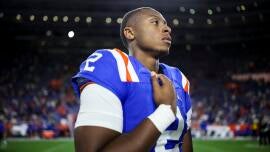
No. 3 DJ Lagway, Florida: Unlike the above two situations that had been trending toward a breakup for weeks, the divorce between Lagway and Florida came as somewhat of a surprise Monday. Lagway only decided in recent days he’d move on after his initial meetings with the new Florida staff went poorly, per sources. As for what’s next for the former No. 1 QB prospect in the 2024 class, schools like Baylor, Florida State and Duke (depending on what happens with Darian Mensah) have been brought up per sources along with those like Clemson, LSU and Miami. Of note, Lagway’s dad played at Baylor.
Where will DJ Lagway transfer? Departing Florida QB’s possible destinations include LSU, Miami, Clemson
Cody Nagel
Others we’re watching
Sam Leavitt, QB, Arizona State: Industry sources have pointed at Leavitt for months as someone who could enter the transfer portal. That seems like a formality at this point after he didn’t attend Arizona State’s year-end banquet and head coach Kenny Dillingham wished him well “in whatever his future may hold,” per 247Sports’ Chris Karpman.
CJ Bailey, QB, NC State: A star sophomore with the Wolfpack, Bailey is a popular rumor for other teams in terms of potential portal candidates. Dave Doeren coming back aids NC State’s chances of keeping Bailey around, but he remains a very hot name in terms of other programs looking at the quarterback market.
Byrum Brown, QB, South Florida: It raised some eyebrows in the industry when Brown opted out of the Cure Bowl. Brown is a senior, but he’s pursing a waiver that is expected to go through. If it does … several schools in the industry are watching Brown and his status. There would be a natural fit at Auburn, where his former South Florida head coach Alex Golseh resides.
Drew Mestemaker, QB, North Texas: A breakout star as a redshirt freshman this season, Mestemaker led the FBS with 4,129 passing yards to go along with 31 touchdowns on 70.2% passing. He’s been a name other schools have eyed for months. It’s natural to assume that he’ll follow Eric Morris to Oklahoma State. But Mestemaker is expected to have robust options.
There are several other QBs worth watching over the coming month. Some notable backups like Ohio State’s Lincoln Kienholz and Oregon’s Austin Novasad have decisions to make. There are other very productive Group of Five QBs like Arkansas State’s Jaylen Raynor or Parker Navarro from Ohio worth keeping track of. There are also a few more established starters who could shake if things become further unsettled at their current situations.
The news keeps coming with three weeks to go. Don’t expect it to stop anytime soon.
Getty Images
Teams in need
Miami: The Hurricanes are likely to dip into the portal for a third straight offseason in pursuit of a quarterback with Carson Beck’s impending graduation. Though, there is some internal optimism about the development of Emory Williams.
Texas Tech: The Red Raiders love backup quarterback Will Hammond, but he tore his ACL in late October. Given that there’s no guarantee of him being ready for next season, Texas Tech is expected to go after a starter-quality passer in the portal. Money tends to be no object in Lubbock.
Indiana: Indiana’s made the playoff in back-to-back years with a transfer quarterback, and it will try to do so a third time in 2026. Expect Indiana to go and get a guy to replace Fernando Mendoza.
LSU: Could it just end up being Trinidad Chambliss? That’s certainly possible if he can secure a waiver. Either way, the Tigers are expected to be in the portal market for a high-level starter, and Lane Kiffin makes the Tigers a super attractive option.
Florida State: There had been some thought that Tommy Castellanos could qualify for an additional season of college football via a waiver. It could still happen, but there’s a good chance of Florida State hopping into the high-end portal quarterback market either way.
That top of the market could grow, too, depending on a few big quarterback decisions. Oregon quarterback Dante Moore could end up going to the draft which would mean Oregon jumping into the fray. The tenor around his situation has shifted in recent weeks with industry sources now considering the NFL a more likely option for Moore.
Auburn will have a decision to make about its 2026 signal-caller. Deuce Knight is a potential superstar and seems to be an ideal on-paper fit for Golesh’s system. Knight has also started just one game. I would expect the Tigers to pursue an experienced option.
Clemson, believe it or not, is also a team to watch in the quarterback market. The Tigers have indicated to agents that quarterback is a potential need this cycle as they replace Cade Klubnik. Whether that’s a high-end starter or someone to compete with Christopher Vizzina remains to be seen.
There are also a lot of other teams expected to go get a guy. Illinois, Virginia Tech, Louisville and Baylor will all likely need starting arms, and that’s just the tip of the iceberg.

LUBBOCK, Texas – Texas Tech had three members of its football staff recognized by the website FootballScoop.com Monday as Zarnell Fitch was named the publication’s Defensive Line Coach of the Year, while Shiel Wood and C.J. Ah You shared top honors for linebackers.
In total, Texas Tech has claimed three of FootballScoop’s annual coaching awards as Kenny Perry was previously named the Special Teams Coordinator of the Year last week. Wood was also a finalist for the top defensive coordinator in the country for his role in leading one of the top defensive turnarounds in recent history. He is also a finalist this season for the prestigious Broyles Award, which is presented to the nation’s top assistant coach. Fitch was previously a finalist for National Defensive Line Coach of the Year by FootballScoop while at TCU in 2017.
Texas Tech enters the College Football Playoff Quarterfinal at the Capital One Orange Bowl as one of the nation’s top defenses, ranking third in the FBS for scoring at 10.9 points allowed per game and fifth for total defense after giving up only 254.4 yards a contest to this point. The Red Raiders are on pace to record the largest year-to-year improvement in both categories for an FBS team since 2000 after cutting their scoring average by 23.9 points a game from 2024 as well their yards surrendered by an average of 207.1 yards a contest.
Texas Tech is also the FBS leader with 31 takeaways this season thanks in part to one of Wood’s mainstays at linebacker in Jacob Rodriguez. The winner of multiple national awards already, Rodriguez finished fifth in the Heisman Trophy voting after becoming the first player since 2005 to record at least five forced fumbles, two fumble recoveries and four interceptions in the same season. He contributed to nine takeaways during Big 12 play alone to lead a Red Raider defense that is also the FBS leader at only 68.5 rushing yards allowed per game.
In addition, Texas Tech’s defensive line under Fitch and outside linebacker room under Ah You have been able to get to the quarterback at near record numbers this season to rank among the top defensive fronts in college football. The Red Raiders enter bowl season with 39.0 sacks and 96.0 tackles for loss on the season, ranking fourth in the FBS for both categories.
David Bailey currently ranks second in the FBS with 13.5 sacks this season, earning him first team All-America honors alongside Rodriguez by the Walter Camp Foundation and Associated Press. Defensive linemen A.J. Holmes Jr. and Lee Hunter were also recognized as second and third team All-America selections, respectively, by the Associated Press after helping lead a Red Raider defense that is the highest-graded unit in college football by Pro Football Focus (96.9). Texas Tech is also the publication’s highest-rated defense against the run (96.4) and in pass-rush opportunities (92.1).
Texas Tech have held five of its last six opponents to at least single digits for points en route to a 12-1 record and its first Big 12 title, snapping the single-season school record for wins in the process. The Red Raiders will make their College Football Playoff debut on New Year’s Day against either No. 5 Oregon or No. 12 seed James Madision in the Capital One Orange Bowl.

College football program loses 12 players to transfer portal after coaching change

Slekis Announces 2026 T&F Slates & Staff Updates

Osage Beach Responds To Outcry Over Baseball Field Demolition | Lake Of The Ozarks Politics & Government

Stempien to seek opening for Branch County Circuit Court Judge | WTVB | 1590 AM · 95.5 FM

Parks and Recreation Programs for Teens

Bellingham players reignite adult co-ed flag football action with monthly games

First responders help kids with Christmas shopping | News, Sports, Jobs

Jon Sumrall makes big donation to Tulane NIL fund

Miami DE coach Jason Taylor takes shot at Peyton Manning, Tennessee over missing College Football Playoff

Wisconsin volleyball beats Texas in four to reach Final Four

Four Zips Named to the 2025 Academic All-MAC Volleyball Team

Five Rockets Receive Academic All-MAC Honors

Georgia’s NIL Lawsuit Against Ex-LB Sign of Times in Modern NCAA Sports

ESPN serves up NCAA Division I Women’s Volleyball Semifinals and Championship, Dec. 18 & 21

Reilly Named AVCA Player of the Year Finalist – University of Nebraska

First Tee Winter Registration is open

Fargo girl, 13, dies after collapsing during school basketball game – Grand Forks Herald

CPG Brands Like Allegra Are Betting on F1 for the First Time

Volleyball Recaps – November 18

F1 Las Vegas: Verstappen win, Norris and Piastri DQ tighten 2025 title fight

Utah State Announces 2025-26 Indoor Track & Field Schedule

Two Pro Volleyball Leagues Serve Up Plans for Minnesota Teams

Sycamores unveil 2026 track and field schedule

Redemption Means First Pro Stock World Championship for Dallas Glenn

Texas volleyball vs Kentucky game score: Live SEC tournament updates

Jo Shimoda Undergoes Back Surgery

Bowl Projections: ESPN predicts 12-team College Football Playoff bracket, full bowl slate after Week 14

How this startup (and a KC sports icon) turned young players into card-carrying legends overnight

SoundGear Named Entitlement Sponsor of Spears CARS Tour Southwest Opener

Robert “Bobby” Lewis Hardin, 56

 NBA Legend Michael Jordan to Join NBC Sports as Special Contributor
 Why a rising mid-major power with an NCAA Tournament team opted out of revenue-sharing — and advertised it
 Falcons mailbag
 Portal Update – Basketball and Gymnastics Take Hits
 has always dreamed in Mercurial. Now his initials are on the boots.
The new Kyl…
has always dreamed in Mercurial. Now his initials are on the boots.
The new Kyl…
-
 Rec Sports3 weeks ago
Fargo girl, 13, dies after collapsing during school basketball game – Grand Forks Herald
-
 Motorsports3 weeks ago
Redemption Means First Pro Stock World Championship for Dallas Glenn
-
 Motorsports2 weeks ago
Jo Shimoda Undergoes Back Surgery
-
 NIL2 weeks ago
Bowl Projections: ESPN predicts 12-team College Football Playoff bracket, full bowl slate after Week 14
-
 Motorsports6 days ago
SoundGear Named Entitlement Sponsor of Spears CARS Tour Southwest Opener
-
 Rec Sports2 weeks ago
How this startup (and a KC sports icon) turned young players into card-carrying legends overnight
-
 Rec Sports2 weeks ago
Robert “Bobby” Lewis Hardin, 56
-
 NIL3 weeks ago
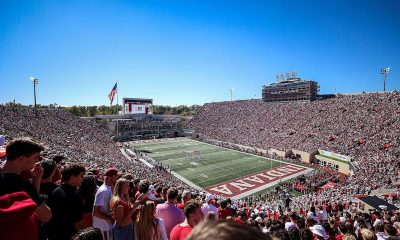
Indiana’s rapid ascent and its impact across college football
-

 Motorsports2 weeks ago
Pohlman admits ‘there might be some spats’ as he pushes to get Kyle Busch winning again
-
Sports2 weeks ago
Wisconsin volleyball sweeps Minnesota with ease in ranked rivalry win