

Michigan will play in one final football game in 2025, as the Wolverines will take on the Texas Longhorns in the Citrus Bowl on New Year’s Eve (3 p.m., ABC).
NIL
What’s up with Larry Johnson, Ohio State’s defensive line recruiting?

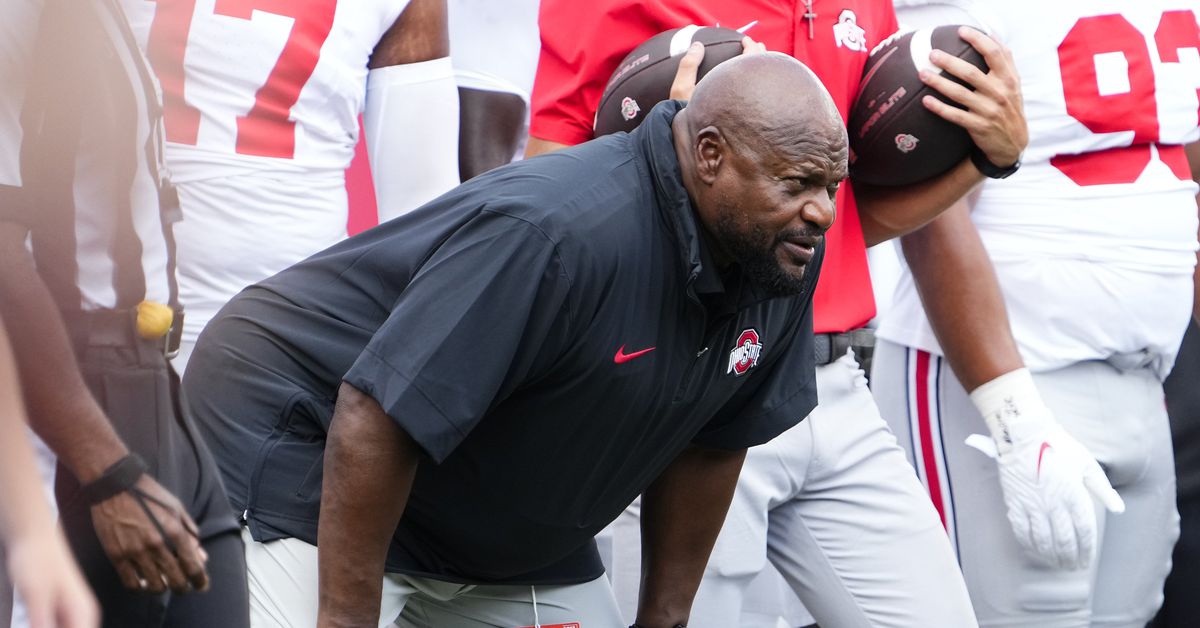
From now until preseason camp starts in August, Land-Grant Holy Land will be writing articles around a different theme every week. This week is all about the most important questions yet unanswered for the season. You can catch up on all of the Theme Week content and our ”Burning Questions” articles here.
Whether you are judging by recruiting rankings, on-field success, the eye-test, or NFL Draft results, there is no denying that Ohio State is routinely one of the most talented teams in all of college football. Currently, the Buckeyes sit at No. 5 in the 247Sports recruiting rankings. As of publication, the Buckeyes have 21 recruits committed to the class, including two five-star prospects and 14 four-stars.
But, despite that success, the 2026 class continues a trend that we have witnessed in recent cycles; the Buckeyes seem to be struggling in recruiting top-tier defensive line talent.
The highest-ranked DL prospect in the class is Damari Simeon, who is an interesting case. The New Jersey nstive is currently the No. 201 player in the class and the No. 26 defensive lineman according to the 247Sports Composite Ranking. However, 247Sports itself does not have an individual rank for him, and has him as the No. 44 DL.
With all due respect to Rivals, ESPN, and all of the other recruiting services, I always look a little side-eyed when a player is ranked far better elsewhere than they are by 247, who I think we all agree is the benchmark of recruiting.
The next highest rated recruit is Khary Wilder, the No. 241 player in the country and No. 23 edge rusher. Although many analysts believe that the 6-foot-4, 260-pound prospect is more likely to end up on the inside, rather than on the end, where he plays in high school.
From there, the other defensive linemen in the class are Cameron Brickle, and Jamir Perez. Brickle is the No. 538 player in the country and No. 62 defensive lineman, while Perez is No. 679 and No. 74, respectively, and flipped his commitment from Florida yesterday.
That means that the average defensive line ranking so far in the 2026 class is 414.75. Now, I don’t mind a proven player developer like Larry Johnson taking some projects; we have seen him work magic with diamonds in the rough countless times during his decade-plus tenure at Ohio State. But, missing on top-end talent again and again has become a pattern for LJ in recent years, and as NIL and paying players potentially brings some level of parity to the sport, OSU simply cannot continually see the vast majority of high-value DL targets that it invests ungodly amounts of time and money on go somewhere else.
Now, it’s not like Johnson and the Buckeyes don’t still hit on big-time defensive linemen. Obviously in 2021, they landed J.T. Tuimoloau and Jack Sawyer the nation’s No. 4 and 5 players. However, since then, Omari Abor (No. 63 in 2022), Kenyatta Jackson (No. 60 in 2022), Jason Moore (No. 66 in 2023), Eddrick Houston (No. 26 in 2024), and Zion Grady (No. 86 in 2025) are the only top-100 defensive linemen to sign with OSU; Abor is now playing for SMU, Moore has recorded one tackle as a Buckeye, and Grady is yet to officially start his collegiate career.
In fairness, Houston and Jackson played clean-up roles for last year’s championship team — the former a true freshman and the latter as a redshirt sophomore — and likely both will start this fall. However, combined, they have accumulated only 20 tackles in their careers (five for Houston and 15 for Jackson).
So that means that in the four recruiting cycles since LJ landed Jack and J.T., he has only signed five top-100 players, none of whom have yet to make a significant impact for the Buckeyes. If we expand that to top-200 prospects (according to the 247Sports Composite rankings), Ohio State has also signed Caden Curry (No. 123 in 2022), Hero Kanu (No. 129 in 2022, now playing for Texas), Joshua Mickens (No. 119 in 2023), Dominic Kirks (No. 163 in 2024), and Jarquez Carter (No. 198 in 2025).
So, that’s 10 top-200 defensive linemen in the past four years; two have transferred, and the eight who remain have compiled 49 tackles between them. Granted, because Sawyer, Tuimoloua, Ty Hamilton, and Tyleik Williams played for so long, there weren’t a ton of snaps or tackles to go around, so it is a bit unfair to judge them but their tackle totals alone. But the fact remains that Johnson’s ability to close has been less than stellar in the past four years.
As has been the case in recent cycles, in 2026, we have routinely seen top-tier defensive linemen have the Buckeyes in their group of finalists, only to opt to commit somewhere else: Luke Wafle (No. 55) went with USC over Ohio State, Pierre Dean (No. 66) chose Georgia over Ohio State, Earnest Rankings (No. 117) picked Florida State over Ohio State, Landon Barnes (No. 139) picked Ole Miss over Ohio State, and K.J. Ford (No. 116) is expected to pick Florida over Ohio State on Friday, July 11.
So my question is, why? A lot of Buckeye onlookers and insiders are discussing the program and athletic department’s philosophy of focusing NIL money on proven players already on the roster rather than recruits who have yet to play a down of collegiate football. Ryan Day has discussed that plan in the past, and athletic director Ross Bjork has preached that type of hesitancy following the House settlement, potentially scarred by his time as AD at Ole Miss and Texas A&M.
While not a defensive lineman, on Friday, five-star offensive tackle Felix Ojo (No. 7 nationally) committed to Texas Tech 24, just hours after confirming that his top four were Florida, Texas, Michigan, and Ohio State. So, what changed?
Who knows? But, his agent did say after his client’s commitment that the Red Raiders offered Ojo a fully guaranteed, three-year, $5.1 million deal. So maybe that had something to do with it ¯\_(ツ)_/¯.
I don’t know how those kinds of contracts work with college students, who, presumably, can transfer whenever they want, but that’s clearly not something Ohio State fans (and bloggers) have to worry about, because the Buckeyes seem to have no interest in going anywhere near those types of deals.
Despite the NIL stinginess, Johnson has clearly been incredibly close to landing plenty of players who would have changed the tenor of this conversation. So, is OSU’s refusal to pay a ton of money for young, unproven talent to blame? Some beat reporters think so, and they might be right. But then, why does it not seem to be impacting other positions nearly as much?
Brian Hartline’s wide receiver room currently includes the Nos. 15 and 108 players in the country. The defensive back haul includes Nos. 26, 106, 173, and 176. Tyler Bowen’s first OSU offensive line class currently includes the Nos. 109 and 127 players. And even though James Laurinaitis only has two linebackers currently in his class, one of them is the No. 71 player in the country, and Carlos Locklyn has the No. 167 player in his running back class.
In total, there are currently 10 OSU commits ranked ahead of Wilder, the top defensive line recruit in the Buckeyes’ 2026 class.
Obviously, OSU’s WR pedigree gives Hartline an advantage that practically no position coach in the country has, and I would venture to guess that when it comes to NIL, other than quarterback and wide receiver, defensive linemen (especially edge rushers) command the most money. So perhaps OSU’s frugality hurts LJ a little more than anyone else, buuuuuuuut, he is 72 years old, and I have to imagine that has an impact as well.
We have long heard about schools negatively recruiting against Johnson, telling players that the beloved, grandfatherly position coach was inevitably going to retire during their college career. And while that seems to have quieted down over the past few years, I have to imagine that being 30 to 40 years older than many of the guys you’re recruiting against does put a seed of insecurity into the back of prospects’ minds. Understandably, no one wants to sign with a school only to have the coach who recruited them retire a quarter, or even half, way through their collegiate career.
I don’t doubt that Larry Johnson can still cultivate meaningful relationships with recruits and their families as well as anyone; if he couldn’t, we wouldn’t routinely see OSU as a finalist for the top players in the country. But clearly something is not connecting with the defensive line recruits like it is with players at other positions.
Ohio State’s apprehension to shell out big bucks for high school players is admirable. Saving that money to invest in keeping the best, most-proven players on campus clearly worked for the Buckeyes last season, but a lot of those guys came to Columbus before the advent of NIL. So you have to wonder how many would have even been on the team in the first place had Ryan Day had to pony up cash to get their commitment initially.
Again, I think the philosophy is laudable, and in a perfect world, that would probably be the way I’d want things to happen. But if you don’t get high-quality talent on campus to begin with, you’re not going to have anyone worth paying to keep in school when the time comes. I’m fine with not getting into an arms race that gives a rising high school senior $5.1 million fully guaranteed, but I do wonder how different things would be if the Buckeyes loosened the purse strings a bit more for the most explosive position on the defensive side of the ball.
The Buckeyes seem to be playing by NIL and revenue-sharing rules that not only is no one else following, but that don’t even really exist to begin with. Of course, we don’t want to see our beloved, saintly program devolve into the depths of moral and ethical degradation as has happened in that cesspool of depravity and licentiousness known as Ann Arbor, but this is Ohio State.
The program has literally every weapon imaginable at its disposal, and while we know that they aren’t going to land every five-star prospect that they get to visit, it would be unfathomable and unforgivable if the administration inside the football program, or the athletic department at large, was handcuffing the coaches by not letting them play (and pay) on equal footing with the other programs around the country.
While I think that Larry Johnson can still go out there and give you a solid six innings, it seems pretty clear to me that he has lost a bit on his fastball, at least from a recruiting perspective. It is unfair to arguably the greatest defensive line coach in the history of college football if Day and/or Bjork aren’t giving him every tool possible to be successful.
LJ has clearly needed a little help in sealing some of his more high-profile deals in recent years, so I hope that the powers that be let him open up the checkbook a little bit more in the most impactful situations.
Continue Reading
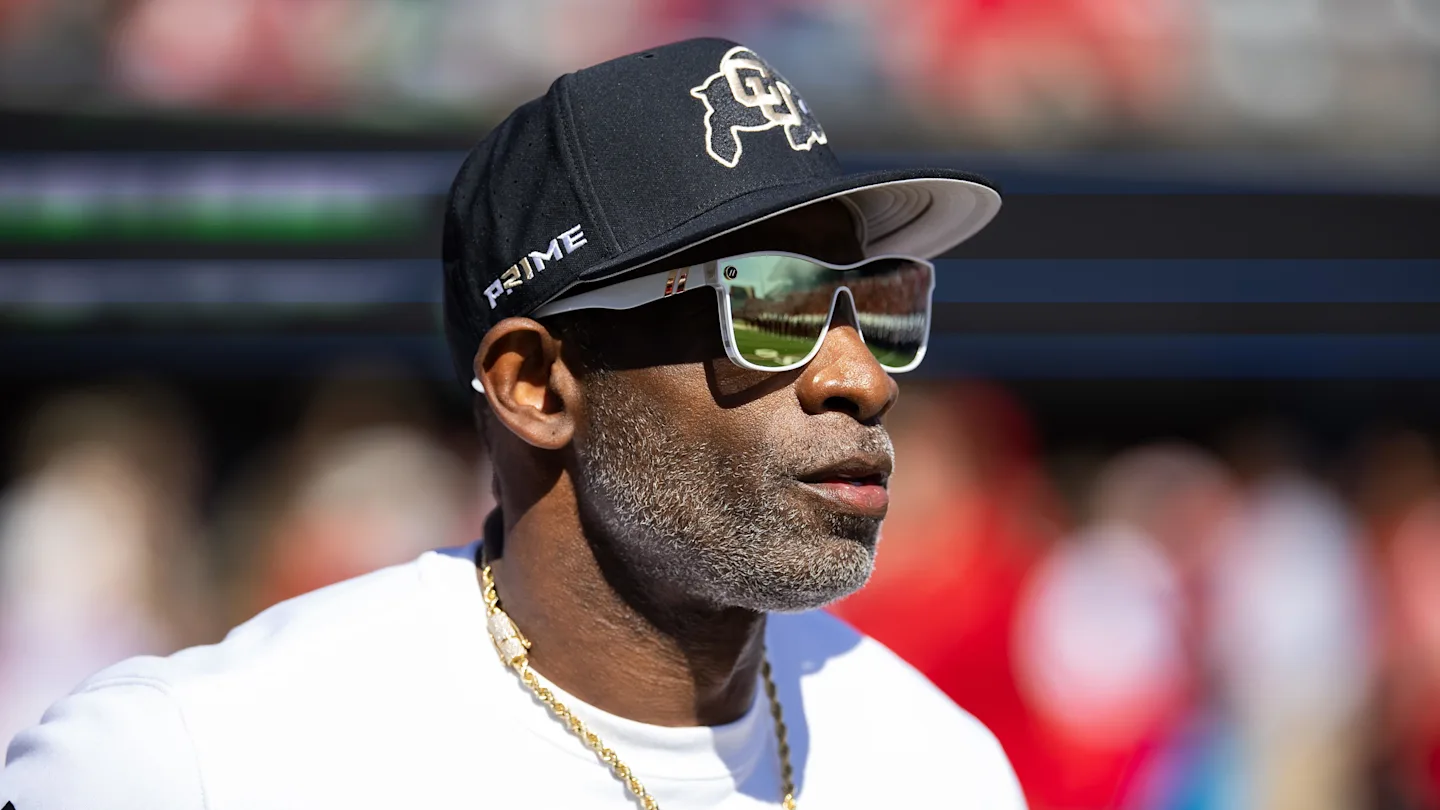
The Colorado Buffaloes are facing a mass exodus through the NCAA Transfer Portal. One reason that players enter the portal in the current college football landscape is due to Name, Image, and Likeness (NIL) deals.
The current Colorado Buffaloes players with the highest NIL Valuation according to On3 are notable when evaluating who will be on the team next season.

Colorado Players With Highest NIL Valuation
- Jordan Seaton: $1.7M
- Julian Lewis: $1.1M
- Omarion Miller: $570K
- Jehiem Oatis: $390K
- Tawfiq Byard: $358K
- Dre’lon Miller: $321K
- Noah King: $315K
- Christian Hudson: $312K
- Carde Smith: $311K
- Zarian McGill: $119K
NIL valuations are not how much players are earning, but On3’s way of measuring a player’s projected annual value. It combines roster value and NIL value.

One of the most significant aspects of the top 10 Colorado players is that only two are set to return to the team in 2026: offensive tackle Jordan Seaton and quarterback Julian Lewis. Offensive lineman Zarian McGill is also in the top 10, but is headed to the NFL in 2026.
The remainder of the top 10 in NIL valuation have announced their intention to enter the portal. With the number of players set to leave the team, the Buffaloes will lose several highly valued players.
MORE: Deion Sanders Reportedly Hires Familiar Name As Colorado Running Backs Coach
MORE: Why Shedeur Sanders Will Bounce Back From Late-Season Struggles
MORE: Insider Reveals Biggest Reason Behind Colorado’s Transfer Portal Mass Exodus
SIGN UP FOR OUR NEWSLETTER HERE
Jordan Seaton Highest NIL Valuation On Colorado
Seaton has the highest NIL valuation and is one of the most critical players on the Buffaloes. Seaton has been with the program for two years, both of which have been dominant. He missed three games due to a foot injury, but allowed just two sacks and five quarterback hurries over 328 pass protection snaps.
Seaton will be entering his third year with the program, which will likely be his last, as he could declare for the NFL draft after the 2026 season.

After a 3-9 season, it was possible Seaton would enter the portal, but he is expected to return to the Buffaloes in 2026. Seaton will play a prominent role in Colorado’s offense next season, with Lewis set to be the team’s week 1 starter. As Colorado looks to take a step forward, having an elite player on the offensive line who is also a veteran on the team will be crucial.
Julian Lewis Ready To Lead The Buffaloes
Lewis is preparing for a big year with the Buffaloes after developing throughout the 2025 season. He was a big pickup in the 2025 recruiting class, initially committed to the USC Trojans before flipping to Colorado.
Lewis started in three games this season, his first being against the West Virginia Mountaineers on Nov. 8. Colorado coach Deion Sanders decided to redshirt Lewis, which meant the quarterback did not play in the final game of the season.

“I’ve made a decision that JuJu is going to redshirt,” Sanders told the media when announcing the decision. “That’s my decision. I want what’s best for the kid, what’s best for his family, what’s best for this wonderful university that has given me the tremendous opportunity and given him the opportunity. I think for the program, it’s best for everyone, but mainly it’s great for him.”
Lewis passed for 589 yards, four touchdowns, and no interceptions. The Buffaloes hired offensive coordinator Brennan Marion, who helped turn programs around by fixing the offense. With Marion and Seaton’s return, Lewis is set up for success in 2026 and beyond.
Though four games are a small sample size, the young quarterback has a high ceiling. He made some big throws, and with Marion, Lewis has the chance to take off in 2026.
RECOMMENDED ARTICLES
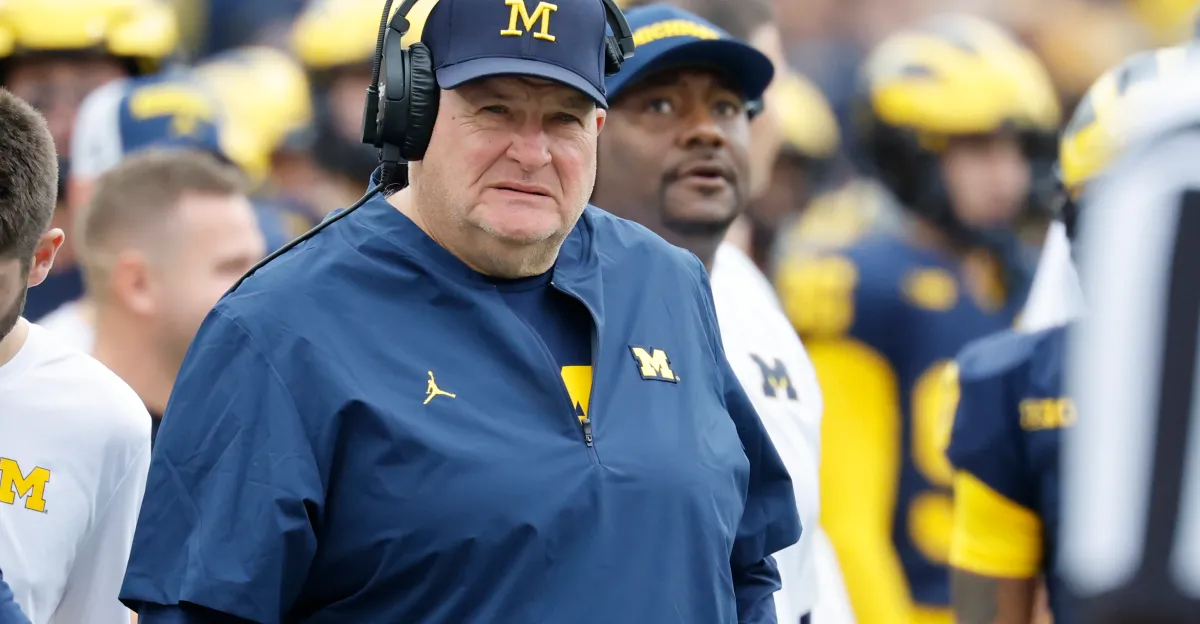
The team will be without at least three players, as Derrick Moore, Jaishawn Barham and Giovanni El-Hadi are all skipping the game to prepare for the NFL Draft. Speaking to the media on Monday, interim head coach Biff Poggi didn’t think anyone else on the team would opt out of the game. However, his tune changed quite a bit just two days later, as he speculated on a Texas-based podcast called “The Stampede” that he may be down even more guys than that.
Players on the team were sent home to be with family for Christmas earlier this week, but Poggi doesn’t know how many of those players will come back on Friday when the team is slated to leave for Orlando.
“I think there’s a really good chance that we’re going to have many more opt outs for the game, unfortunately, because we’re in such a stat of flux,” Poggi said. “And when they get to the business side of it, they think, ‘Well, we don’t have a coach,’ or, ‘We’ve had this situation with our former coach, there’s investigations and all these things, I don’t know who’s going to coach me. Why do I want to play in that game?’ So I can see some of that happening, too. And I would tell you on (December) 26th, we’re probably going to have a significantly different roster than we had yesterday when we sent them home.”
Poggi also mentioned how he thinks “most of the guys opting out need to play … they need the film, and they need to play well,” and that “team the way you and I knew it is gone now. And now it is strictly a financial and a business decision, and the head coach and the position coaches really are not players in that discussion.”
In other words, the decisions the players are making are based on what their families and agent are telling them, and they are not consulting with their coaches one bit. And in other words — players are doing what’s in their best interest.
As a former hedge fund manager, Poggi should understand risk management and trying to generate the best returns possible. That’s why Poggi said he doesn’t want to “be the guy that talks them into (playing a bowl game), and then something happens.” So while he understands why the players are doing what they are doing, he isn’t exactly onboard with how the decisions are being made.
There’s a lot to digest in this podcast, and I think the main takeaway for me is that Poggi is not made to be a head coach in college football. And that’s fine — he’s been very successful and has made a lot of money doing other things. And if he wants to continue making an impact in the lives of young adults, he can still do that, but he should by no means be doing that in the position of head coach at the University of Michigan.
And if you need one more quote as far as why Poggi should not be considered any longer for this position — and this is a real quote, by the way — here you go:
“I would ask one thing, and I’m being very serious — you need to pray for us,” Poggi said. “Because we are going through things that no young kid should have to go through … just when you hit your knees tonight, you don’t have to pray that we win, I know that ain’t gonna happen, just pray that the good lord will give me the right wisdom to do this the way it needs to be done.”
Update: Some people are interpreting this as Biff saying he knows the Texas podcasters wouldn’t pray for Michigan since they’re playing in the bowl game, while others are interpreting it as Biff saying they won’t win the game. If he meant the former, I do sincerely apologize, but the way I initially interpreted it while listening to the podcast, it sounded like he was saying the latter, especially given other comments he’s made about how he was hoping to not play against Texas because they’re a good team.
With it being the holiday season, Coach Poggi, I will give you what you are requesting and I will pray for you and the players to get through this. You’re right — no young person should have to endure the things that they have endured over the last couple weeks. I can’t imagine being in college and having all that happen at once.
However, to go on an opponent’s podcast and air Michigan’s dirty laundry publicly is not something an interim head coach should be doing. Whether you realize it or not, you have given the players that are on the fence a reason to not come back for the bowl game (and beyond that).
If this podcast appearance didn’t eliminate Biff from consideration, I don’t know what will. But under no circumstances should he be legitimately be considered for this job any longer.
Merry Christmas, and thank God for Dusty May, Kim Barnes Arico and Brandon Naurato.
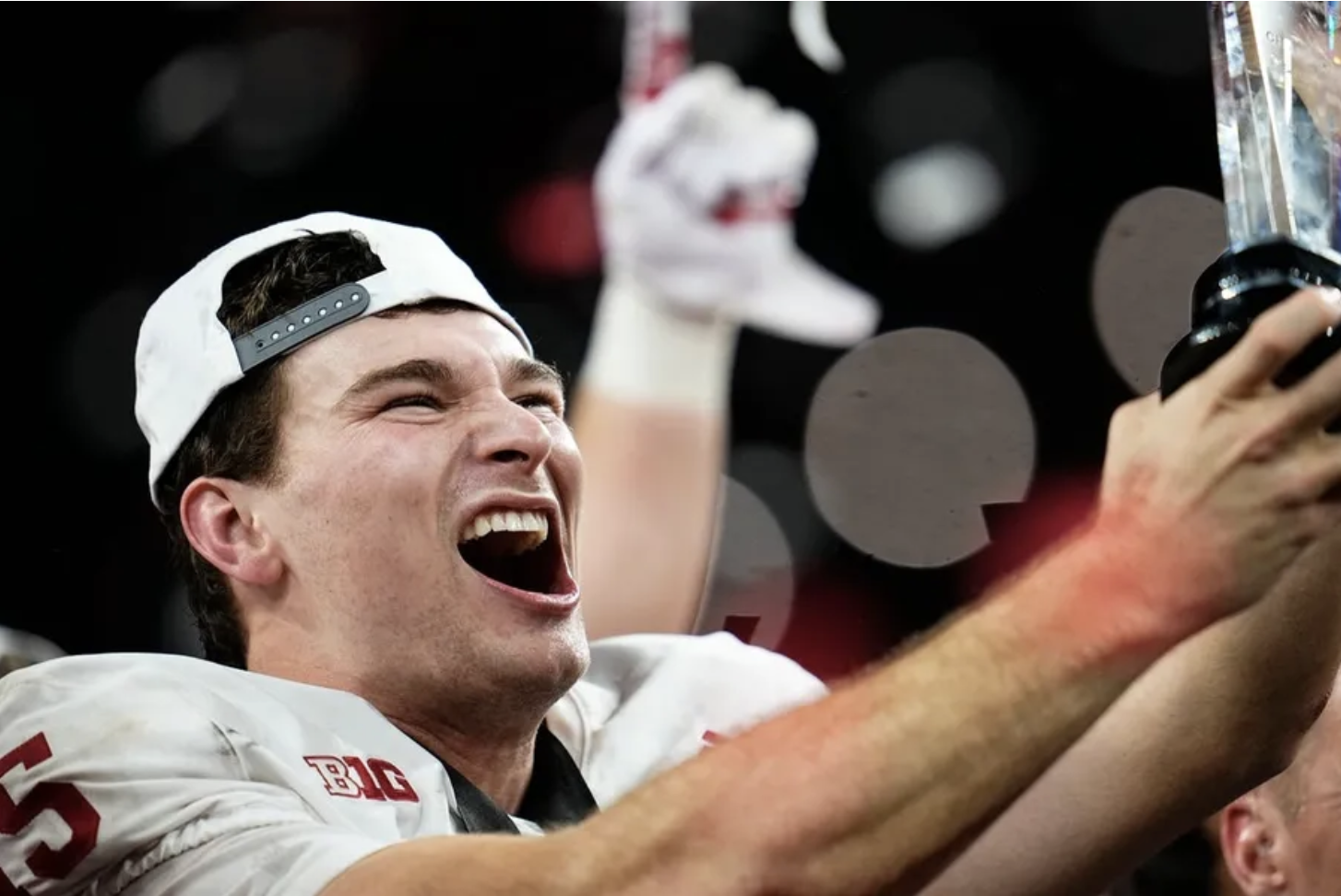
The winter holidays mark a time of joy and celebration for some, but are more defined by anxiety for others. Amid college football’s annual holiday-season tradition of bowls games, the sport’s shift from the long-held postseason customs to an expanded playoff heightens anxiety.
Regardless if one falls in the category of joyful reveler or cantankerous Scrooge, consumerism plays a critical role in the season. College football is no different, with the recent advent of NIL becoming a foundational element of the game evident in the remaining Playoff field.
As the bracket whittled down from 12 to eight with last weekend’s opening-round games, the College Football Playoff demonstrated an exercise comparable to Eddie Murphy’s monologue about Christmastime spending in the seasonal classic Trading Places: “I ain’t gonna have money to buy my son the G.I. Joe with the kung-fu grip, and my wife ain’t going to make love to me ‘cause I got no money.”
Well, reaching the Playoff and advancing are similar. The eight quarterfinalists stand as testament to spending power — though it’s difficult to pinpoint exactly how much, which contributes to rising anxieties.
A CBS Sports article ahead of the 1st Round broke down the tournament into NIL-spending tiers, with five of the 12 labeled “elite spenders.” Four of those play on in the round of eight: reigning national champion Ohio State, Oregon, Texas Tech and Miami, which outlasted fellow elite spender Texas A&M in what was perhaps uncoincidentally the most competitive of the four opening-round games.
James Madison and Tulane were both routed against deep-pocketed opponents in Oregon and Ole Miss, which isn’t necessarily a data point worth applying to any NIL discussion. Athletic departments with more funds through television revenue, merchandising, etc. have long had advantages against their counterparts from conferences with fewer resources, and that disparity is a defining trait of the underdog stories fans love.
In the case of this year’s Playoff other historical underdogs, however, NIL spending is an undeniably crucial factor in Indiana and Texas Tech pursuing the national championship.
The top-seeded, undefeated Hoosiers head into their first Rose Bowl Game in almost six decades behind the Heisman Trophy winner Fernando Mendoza. The Indiana quarterback has an NIL valuation of $2.6 million per On3.com estimates, up from the $1.6 million estimate shortly after Mendoza’s transfer from Cal.
And while less dramatic in a historical context than Indiana’s rise to prominence, Texas Tech competing for the national championship is a significant jump for a program previously destined to also-ran status. The Red Raiders are underdogs in the sense that they were rarely competitive on a national level previously, but Texas Tech reportedly spends on NIL with a fervor comparable to top-tier soccer clubs.
The soccer parallel works in part because, like a once-middling Manchester City became an English Premier League powerhouse coinciding with an infusion of cash, Texas Tech owes much of its rise to oil money.
On3 reported Texas Tech spent a whopping $28 million on its 2025 roster, making it one of the highest-priced lineups in college football. The public face of Tech’s NIL collective, former Red Raiders lineman Cody Campbell, sold his energy company Double Eagle for a reported $4.1 billion earlier this year.
So does this year’s Playoff foreshadow all our football holiday seasons to come? Does a program need its own version of Landman to strike it rich in order to compete?
Looking at the other closely contested 1st-Round matchup — Alabama’s comeback win at Oklahoma — offers fascinating perspective. It pit against one another two historically outstanding programs that CBS Sports designated as “good, but not as elite as you think” spenders.
That’s an interesting description, as it aligns particularly with Alabama’s drop-off from the most dominant program in the sport in the years just before the Supreme Court allowed NIL payments in 2021, to the Crimson Tide’s current positioning as a consistent winner but hardly a world-beater.
Now, it’s overly simplistic to credit Alabama’s marginal slide to NIL spending and discredits just how remarkable Nick Saban was as the Tide’s head coach. But it is noteworthy that Saban has been an outspoken critic not of NIL, but its lack of structure.
“I’m all for the players making money,” [but] I don’t think we have a sustainable system right now,” Saban said last spring. I think a lot of people would agree with that. In terms of the future of college athletics period, not just football, how do we sustain 20 other non-revenue sports that create lots of other opportunities for people in the future?”
In its parallel with the holiday season, Saban’s comments about the long-term health of college athletics during this present-day era of unregulated spending might bring to mind nightmares of credit-card bills coming due after a gift-buying spree.
You have perhaps noticed much of the information on NIL spending is presented in estimates. The lack of concrete oversight or regulation makes evaluating the landscape difficult, and only adds to the anxiety surrounding NIL.
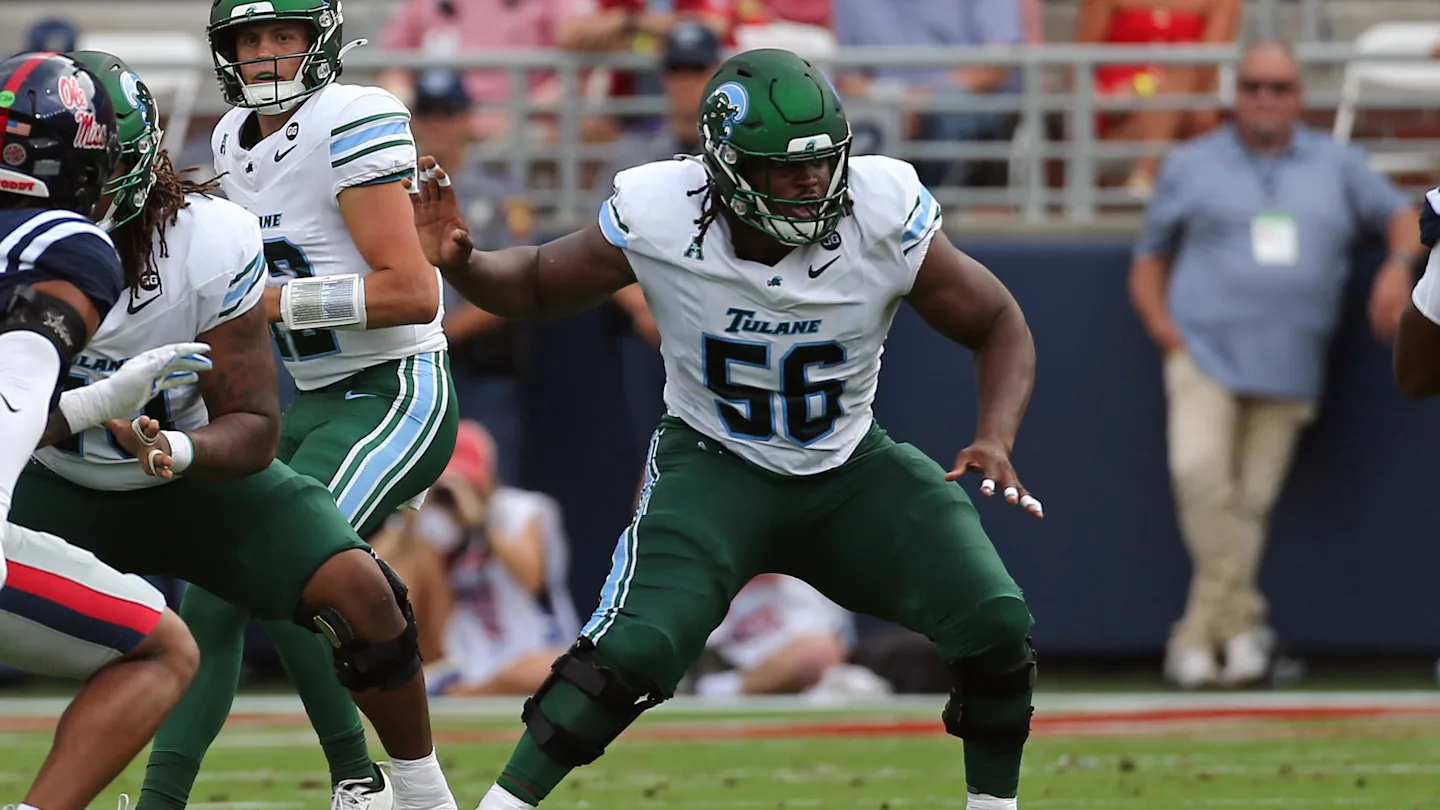
Tulane finished the regular season as American Athletic Conference champion and secured the AAC’s automatic berth into the expanded 12-team College Football Playoff, closing the year with a 12–1 record.
Unfortunately, the Green Wave’s historic season ended with a 41–10 loss to Ole Miss in the first round, as the Rebels dominated from the opening kickoff and advanced to face No. 3 Georgia in the Allstate Sugar Bowl.
Jon Sumrall, Tulane’s head coach since December 2023, guided the program to consecutive conference-title contention and the 2025 AAC crown before taking the open Florida job on November 30, agreeing to a six-year deal worth nearly $7.5 million annually.
Now, one of the Green Wave’s cornerstone players is set to leave alongside him.
On Wednesday, Rivals’ Hayes Fawcett reported that Tulane All-American interior offensive lineman Shadre Hurst is entering the NCAA transfer portal.
Hurst is a redshirt junior interior lineman who has started 36 career games for the Green Wave, earning First-Team All-AAC honors and All-American recognition in both 2024 and 2025.
Tulane’s athletic department also placed Hurst on multiple preseason national watch lists in 2025, including the Outland Trophy Preseason Watch List.
Pro Football Focus graded Hurst with a 90.5 pass-blocking mark, placing him among the nation’s highest-rated pass protectors at his position.

Before arriving at Tulane, Hurst was a Cartersville (Georgia) high-school product who earned First Team All-State honors from the AJC and First Team All-Region 7-AAAAA recognition.
He also emerged as one of the Southeast’s top heavyweight wrestlers, finishing state runner-up as a junior before winning a state championship as a senior.
Despite those accolades, Hurst was an unranked prospect who held just five offers—Tulane, UMass, Washington State, Chattanooga, and Southeast Missouri State.
Now, he is widely viewed as both an NFL prospect (projected third- to fourth-round pick) and a highly attractive Power Four transfer target in need of experienced interior offensive line help.
Read More at College Football HQ
- $1.6 million QB linked to College Football Playoff program
- SEC head coach named as ‘surprising’ candidate to replace Sherrone Moore at Michigan
- Unexpected college football program among favorites for $2 million transfer QB
- Major college football QB expected to ‘command’ up to $5 million in transfer portal
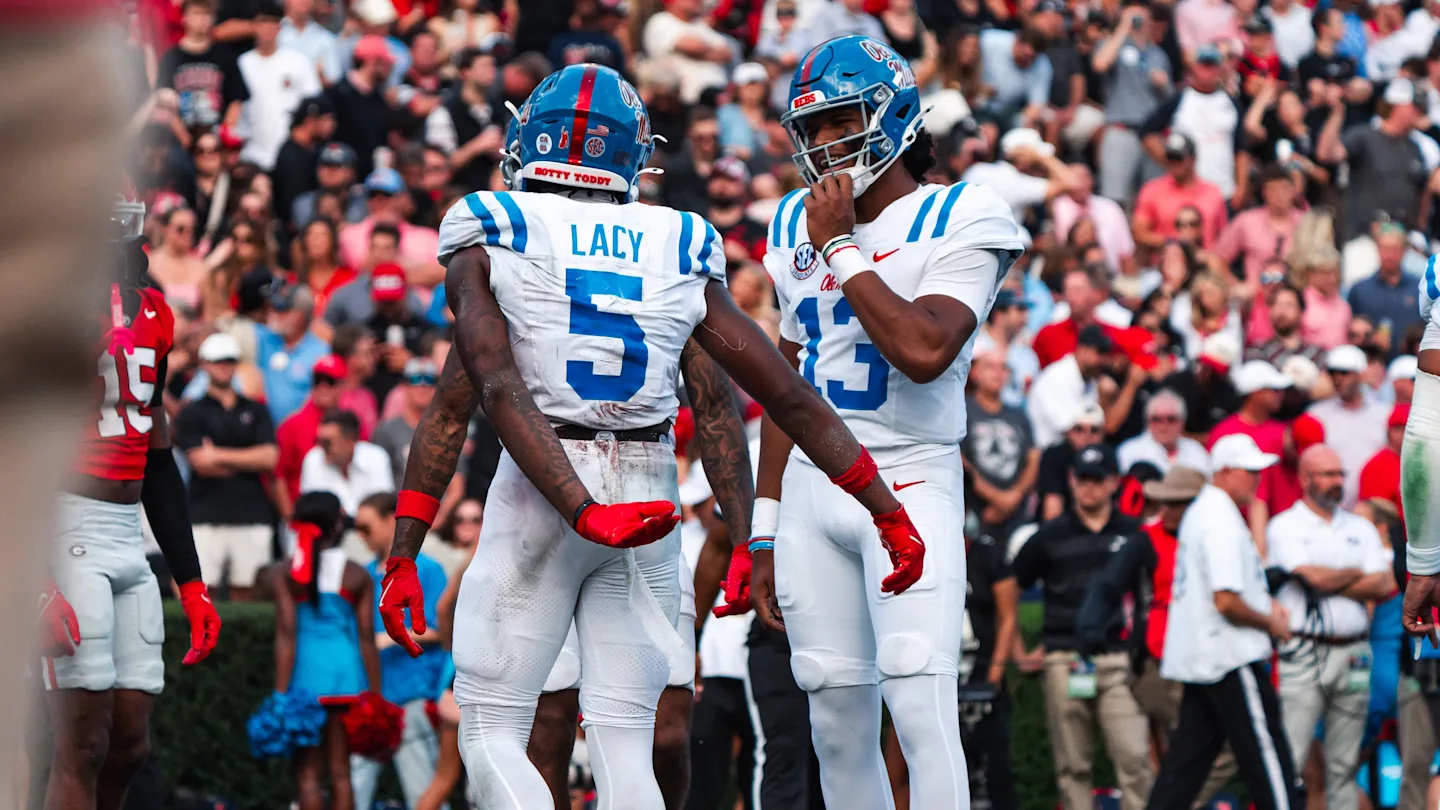
Ole Miss Rebels running back Kewan Lacy is in the midst of a historic 2025 season after joining the program in Oxford last offseason.
The Missouri Tigers transfer has taken on a significant workload for the Rebels where his meteoric rise catapulted his status to a Doak Award finalist – annually given to America’s top running back.
Lacy was named a first team All-American by the Football Writers Association of America last week after a historic 2025 campaign.
It became the sixth All-America honor for Lacy, who was also the first Doak Walker Award finalist in Ole Miss history.
Lacy has been a second-team honoree on other All-America teams released by the Associated Press, AFCA, The Sporting News, Walter Camp and Sports Info Solutions. Lacy has also been a first-team All-SEC running back for both the AP and the league coaches.

The Ole Miss star running back has been one of the best rushers in the nation all season long for the 12-1 Rebels, currently holding a season line of 258 attempts for 1,279 yards and 21 touchdowns.
But there remains buzz surrounding Lacy’s future in Oxford amid Lane Kiffin’s move from Ole Miss to LSU this fall.
Once Kiffin accepted the LSU Tigers head coaching job, the rumor mill started swirling surrounding where he would play during the 2026 season: Could Ole Miss retain him or would he enter the portal?
Fast forward to Monday and Ole Miss running backs coach Kevin Smith was formally introduced as the next running backs coach/associate head coach of the LSU Tigers – joining offensive coordinator Charlie Weis Jr. and others in Baton Rouge.
Now, with Lacy’s former head coach, offensive coordinator, and position coach on staff with the LSU program, there is concern surrounding his future in Oxford.

But the Ole Miss Rebels aren’t going down without a fight, according to multiple reports, with the program offering a significant NIL package in hopes of having him back for the 2026 season.
According to LouisianaSports.net, the Ole Miss Rebels are offering a $1.8 million deal to get him back next fall:
“Lacy has not declared his intention to enter the portal, however, a video surfaced of a phone conversation where Kiffin suggested Smith and Lacy would be joining him at LSU.
“LouisianaSports.net previously reported Ole Miss has offered Lacy $1.8 million to return to the Rebels in 2026.”
Now, as Lacy’s future with Ole Miss remains in questions, it’s no secret that Rebels officials are rolling out the red carpet in hopes of having him back with the program for next season with a strong offer presented.
More Ole Miss News:
Lane Kiffin Reacts to New Offensive Coordinator Being Hired By Ole Miss Football
Ole Miss Football QB Trinidad Chambliss Wins Major Award Amid Breakout Season
ESPN Predicts Outcome of Ole Miss Football vs. Tulane Green Wave in CFP Showdown
Join the Community:
Follow Zack Nagy on Twitter: @znagy20 and Ole Miss Rebels On SI: @OleMissOnSI for all coverage surrounding the Ole Miss program.

The USC Trojans have one of the bigger NIL funds in the entire country. Here are the Trojans’ top five highest NIL valuations according to On3.
1. Jayden Maiava, Quarterback ($2.1 million)

It’s common for the quarterback to be the most valued player on a team, so Maiava being where he is makes sense. Maiava just wrapped up his third collegiate season and first as the full time starter for coach Lincoln Riley and the Trojans.
Maiava threw for 3,431 yards, 23 touchdowns, and eight interceptions in the regular season. He added another 150 yards and six touchdowns on the ground. With Maiava taking this far of a step forward, it was interesting to see if he would decide to return to USC for another year or declare for the NFL Draft.
Maiava ended up re-signing with the Trojans, bringing back the engine of the USC offense for 2026.
2. Makai Lemon, Wide Receiver ($1.1 million)
Makai Lemon is coming off an incredible 2025 season in which he won the Biletnikoff Award for being the best wide receiver in college football. Lemon was top ten in the country in receiving yards with 1,156, receptions with 79, and receiving touchdowns with 11. Lemon declared for the 2026 NFL Draft.
3. Husan Longstreet, Quarterback ($753 thousand)

Husan Longstreet was the highest rated USC recruit in the class of 2025. He didn’t see much of the field as a true freshman as he was the backup to Maiava, but the hopes are high for Longstreet’s future with the Trojans once Maiava does leave.
In his limited action on the field in 2025, Longstreet threw for 103 yards, one touchdown, and zero interceptions while rushing for 76 yards and two touchdowns.
MORE: USC Trojans Battling Recruiting Powerhouses for Five-Star Safety
MORE: What Ethan “Boobie” Feaster’s State Championship Heroics Mean For USC Recruiting
MORE: What USC’s Betting Odds vs. TCU Says About Trojans Amid Opt Outs
SIGN UP FOR OUR NEWSLETTER HERE!
4. Bishop Fitzgerald, Safety ($552 thousand)

Bishop Fitzgerald transferred from NC State to USC prior to the 2025 season. Fitzgerald was a good edition, and recorded 51 total tackles, five interceptions, three passes defended, one sack, and a touchdown. He was named an All-American for his play.
5. Devan Thompkins, Defensive Lineman ($508 thousand)
Devan Thompkins finished his third season with the Trojans in 2025. He had 56 total tackles, 4.5 sacks, five passes defended, and one forced fumble. The Trojans will be without Thompkins next season as he entered his name in the transfer portal.
Trojans Prepare For Alamo Bowl

The 2025 USC Trojans still have one more game this season before they will fully move on to 2026. They will take on the TCU Horned Frogs on Dec. 30 in the Alamo Bowl. According to DraftKings Sportsbook, USC is a 6.5-point favorite.
A win would result in a 10-3 finish, the best season for the program since 2022.
- Game odds refresh periodically and are subject to change.
- If you or someone you know has a gambling problem and wants help, call 1-800-GAMBLER.

Rec Sports4 minutes ago
Young Trojans Blank Estero | Sports

Sports7 minutes ago
St. Mary’s College Volleyball Quartet Garner Academic All-District Honors

Rec Sports12 minutes ago
Patterson Little League Registration Underway | Patterson Irrigator

Rec Sports20 minutes ago
A Season for David: Mount Si Freshmen Finish Undefeated While Honoring a Beloved Coach

Sports23 minutes ago
Cruttenden named to PVCA All-State volleyball team | Free Press-Courier

NIL37 minutes ago
Surprising List Of Colorado Buffaloes’ Biggest NIL Valuations

Sports39 minutes ago
All-RRV Volleyball 2025: A golden finish: Trinity Christian Academy’s Pyeatt walks off as state champion and All-RRV Volleyball Co-Offensive Player of the Year | Free

Motorsports40 minutes ago
Kenny Brightbill Tribute To Be Part Of 39th Annual Pioneer Pole Buildings Motorsports Show – Speedway Digest
Sports54 minutes ago
118th Millrose Games Welcomes Doris Lemngole And Jane Hedengren Rivalry Over 3000m

Sports55 minutes ago
B-CU Softball Releases 2026 Schedule

Motorsports1 hour ago
Kyle Larson opens door to 24 Hours of Daytona comeback – Motorsport – Sports

Motorsports1 hour ago
5 possible additions to the Daytona 500 lineup (to guarantee disappointment)

NIL2 hours ago
Biff Poggi should no longer be considered for Michigan’s HC job

Motorsports3 hours ago
K1 Speed champions get new route into Porsche series

Motorsports3 hours ago
The Longest NASCAR Team Losing Streaks Entering the 2026 Season

Rec Sports4 weeks ago
Fargo girl, 13, dies after collapsing during school basketball game – Grand Forks Herald

Sports4 weeks ago
Sycamores unveil 2026 track and field schedule

Sports4 weeks ago
Two Pro Volleyball Leagues Serve Up Plans for Minnesota Teams

Sports4 weeks ago
Utah State Announces 2025-26 Indoor Track & Field Schedule

Motorsports2 weeks ago
SoundGear Named Entitlement Sponsor of Spears CARS Tour Southwest Opener

Motorsports4 weeks ago
Jo Shimoda Undergoes Back Surgery

Motorsports4 weeks ago
Redemption Means First Pro Stock World Championship for Dallas Glenn

Sports4 weeks ago
Texas volleyball vs Kentucky game score: Live SEC tournament updates

NIL4 weeks ago
Bowl Projections: ESPN predicts 12-team College Football Playoff bracket, full bowl slate after Week 14

Rec Sports3 weeks ago
Black Bear Revises Recording Policies After Rulebook Language Surfaces via Lever

Rec Sports4 weeks ago
Robert “Bobby” Lewis Hardin, 56

Motorsports2 weeks ago
Donny Schatz finds new home for 2026, inks full-time deal with CJB Motorsports – InForum

Rec Sports4 weeks ago
How this startup (and a KC sports icon) turned young players into card-carrying legends overnight

Rec Sports3 weeks ago
How Donald Trump became FIFA’s ‘soccer president’ long before World Cup draw

NIL4 weeks ago
Indiana’s rapid ascent and its impact across college football





-
 Motorsports2 weeks ago
SoundGear Named Entitlement Sponsor of Spears CARS Tour Southwest Opener
-
 Motorsports2 weeks ago
Donny Schatz finds new home for 2026, inks full-time deal with CJB Motorsports – InForum
-
 Rec Sports3 weeks ago
How Donald Trump became FIFA’s ‘soccer president’ long before World Cup draw
-
 Rec Sports2 weeks ago
David Blitzer, Harris Blitzer Sports & Entertainment
-
 Motorsports3 weeks ago
JR Motorsports Confirms Death Of NASCAR Veteran Michael Annett At Age 39
-
Sports3 weeks ago
Elliot and Thuotte Highlight Men’s Indoor Track and Field Season Opener
-
Sports3 weeks ago
West Fargo volleyball coach Kelsey Titus resigns after four seasons – InForum
-
 Motorsports2 weeks ago
Rick Ware Racing switching to Chevrolet for 2026
-

 NIL2 weeks ago
DeSantis Talks College Football, Calls for Reforms to NIL and Transfer Portal · The Floridian
-
 Sports3 weeks ago
Temple Begins Indoor Track & Field Season at UPenn This Weekend