
Rec Sports
When a box becomes a blessing | News, Sports, Jobs

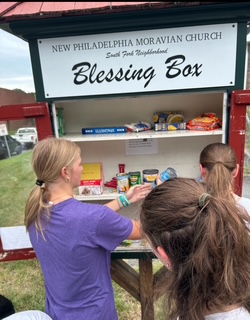
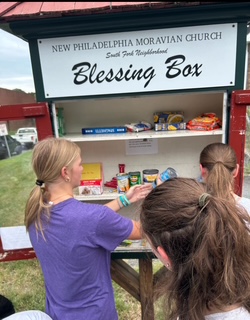
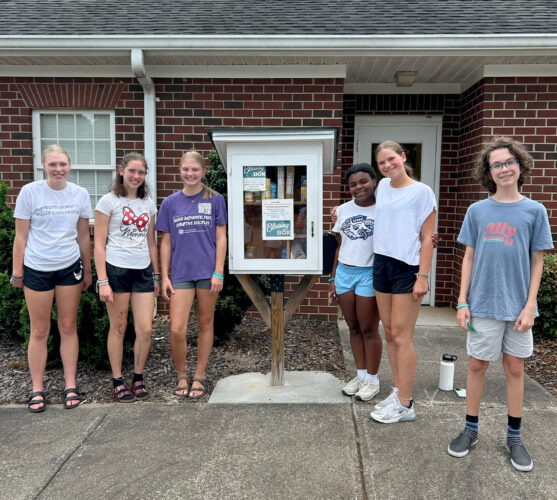
Emma Wiese, far left, and Kylee Fortune, third from left, were among Webster City students who helped build and stock blessing boxes in Winston-Salem, North Carolina, last summer. They were hosted by The Dwelling, a Lutheran church headed by Emily Harkins, lead pastor and mission developer, whose mother is from Webster City.
An estimated 12% of Iowans, including 16% of Iowa children, are food insecure.
These are people who, through a combination of factors — unemployment, stagnant wages, lack of health insurance, and the worst inflation since the 1970s — don’t know where their next meal is coming from.
With demand for food assistance at a historical high, it’s a grim reality that funding for the Supplemental Nutrition Assistance Program — SNAP, commonly known as food stamps — has been seriously eroded by the federal government.
Food stamps as they are known today were first distributed in 1964.
Sarah Anderson, Faith Formation director at Trinity Lutheran Church, Webster City, is mobilizing the church’s youth group to start a new project in 2026 that has the potential to expand and improve distribution of free food in Webster City.
The idea for the project, called “blessing boxes,” began three years ago when Anderson took her students on a summer trip to Winston-Salem, North Carolina. Hosted there by a local Evangelical Lutheran Church in America church called The Dwelling, Anderson’s youth group “did the hard work to help those not living a comfortable life,” as Anderson puts it.
Most of the families aided by the work there are, or have previously been, homeless.
The six-day program includes normal church youth group of activities: prayer, worship and group meals. Most days also include five hours at a “service site,” where students help provide for the many needs of those in need, including housing, food and transportation.
“We rebuild and refinish furniture, we repair bicycles, we even buy tents for the homeless,” Anderson said.
Just as important, Anderson added, is what the kids don’t do.
“We don’t eat in restaurants and we sleep on a church floor, so our kids can’t miss the message: This is uncomfortable, this is a struggle. This is life for many people across our country every day.”
Anderson and her middle and high school youth have returned to Winston-Salem to help with the local blessing box program for each of the last three summers.
A blessing box resembles one of the little free libraries seen in Webster City neighborhoods, only larger. Instead of books, they hold and dispense nonperishable food.
In 2026, Anderson and Trinity Lutheran will build blessing boxes to put up across Webster City.
“We’ll fundraise to buy the materials, we’ll build and place the blessing boxes, and we’ll ask local people, businesses and other organizations to sponsor them,” Anderson said.
Sponsorship is as easy as pledging to keep the box filled with food for a prescribed period of time.
“Participants in our trips to Winston-Salem, whether our youth group kids or their parents or chaperones who go along, come home hungry to help people here,” Anderson said. “We have homeless people here; we have food-insecure people here with nowhere to turn. This can be part of the solution.”

Rec Sports
Penguins to Auction Off Green Jerseys on Saturday to Support The DICK’S Sporting Goods Foundation Sports Matter Program

The Pittsburgh Penguins Foundation will auction off green Sports Matter Penguins jerseys on Saturday, January 10 when they take on the Calgary Flames at PPG Paints Arena in support of The DICK’S Sporting Goods Foundation Sports Matter program.
The jerseys up for auction feature current Pittsburgh Penguins and other athletes, including former NFL players Brett Keisel & Ben Roethlisberger, Snoop Dogg, and Pittsburgh’s own Donnie Iris and The Clarks. The jerseys, as well as other memorabilia and experiences, will be available for auction for one week beginning on January 10 at 3:30 PM at http://sportsmatter.givesmart.com/with all proceeds going to The DICK’S Sporting Goods Foundation Sports Matter program.
Other Sports Matter initiatives on Saturday include:
- The first 7,500 fans to enter the building will receive a Sports Matter rally towel.
- Penguins coaches and front office staff will wear special green lace pins.
- Sports Matter cheer cards with personal stories from local youth hockey participants will line the players’ walkway, enabling players to read why sports are important to Penguins fans on their way to the locker room.
- The Ice Crew will be using green shovels.
The DICK’S Sporting Goods Foundation believes that sports have the power to change lives, which is why the Sports Matter program was created in 2014 to provide more opportunities for youth to play sports. Since then, Sports Matter has helped keep over three million kids in the game and committed over $100 million to deserving teams and organizations.
The Pittsburgh Penguins Foundation and The DICK’S Sporting Goods Foundation continue to support youth hockey initiatives through their partnering programs such as the Willie O’Ree Academy, DICK’S Sporting Goods Pittsburgh Penguins Elite and the Little Penguins Learn to Play program.
$10 from each ticket purchased through this special Sports Matter ticket offer will benefit The DICK’S Sporting Goods Foundation and Sports Matter initiatives. Tickets can be purchased here.
For more information on The DICK’S Foundation Sports Matter program, or to make a donation, please visit www.sportsmatter.org
About The DICK’S Sporting Goods Foundation
The DICK’S Sporting Goods Foundation is a tax exempt 501(c)(3) nonprofit corporation with a mission to inspire and enable sports participation. It was created by DICK’S Sporting Goods as a private corporate foundation to support DICK’S charitable and philanthropic activities. Driven by its belief that sports have the power to change lives, The DICK’S Foundation champions youth sports and provides grants and support to under-resourced teams and athletes through its Sports Matter program and other community-based initiatives. Additional information about The DICK’S Foundation can be found on sportsmatter.org and on Instagram, Facebook and TikTok.


Photo provided by Lori Kremsreiter
Gunner Bartreau, age 12, is seen with the buck he shot in Hubbard Lake during the 2025 youth hunt.
Jan. 10, 2026, 7:03 a.m. ET
“The Goal of the Game.”
It’s a statement but also a question we can ask ourselves as sports parents.
It’s driven into our kids very early, often by us.
Is it to win?
Is it to be the “best?”
Or is it to just enjoy the experience?
“Dad, according to Mom, asked the parents in our group not to worry about how good we were, or weren’t,” writes author Harvey Araton, through the eyes of a kid named “Z,” in a new middle-grade novel.
Z’s dad was the coach of the boy’s first soccer team. It’s a neighborhood collection of grade school buddies. Dad didn’t just roll out the ball, though. He orchestrated drills that mimicked game situations that gave everyone a shot at the action.
“You scrimmage too much, and the same kids, the stronger players, will dominate the ball, and then how do the other kids get better?” Z overhears his dad telling his mom early in the book.
Everyone notices, in fiction and reality, when others don’t have this growth mentality.
Z and his teammates hear opposing parents scream for blood, or at least a foul, when his team, once a doormat, incrementally starts to get better and begins to dominate.
The kids of manic youth sports parents, one of whom Araton admits to once being himself, is whom he wants to reach. The veteran sportswriter, most recently with The New York Times for 25 years, covered the Danny Almonte age scandal at the 2001 Little League World Series, and the ensuing escalation of Little League World Series coverage into American living rooms.
He has pondered or written about (or both) kids choosing between club and high school soccer and early sports specialization.
He also played the role of sports dad to two now-grown sons (36 and 32).
“Kids learn playing sports,” Araton tells USA TODAY Sports. “I think there’s a joy in that. I just feel, especially at these early years, it’s becoming infected with this ambition that there could be a pot of gold at the end of the rainbow and I think too many parents become obsessed with turning their children into potential cash machines.”
Araton launched the book last week with a signing at his local bookstore in Montclair, New Jersey. He made sure to also include a panel discussion about youth sports. He spoke with us about how his novel imitates the raucous life America lives within it, and the lessons he has gleaned from it.
YOUTH SPORTS SURVIVAL GUIDE: Pre-order Coach Steve’s upcoming book for young athletes and their parents
Is it your child’s ambition or your ambition? Ask them
Araton is from Staten Island, which he describes as New York City’s last developed borough. It still has large swaths of parks and fields, where his story is set.
He had grown up on the basketball courts near his public housing development. The free play felt natural as it took him to the local Jewish community center and high school. He eventually played at a health club in Brooklyn as an adult and even worked in Madison Square Garden, where he covered the Knicks, the team he had idolized as a kid.
His competitive juices carried him into fatherhood when his older son, Alex, was in first grade and had the option of going out for a travel team. It’s a decision many of us have faced.
“I remember asking him if he wanted to try out,” Araton says. “And he was kind of a naturally cautious kid and said, ‘Not really,’ and I remember being disappointed, a little deflated. Maybe I already was thinking, ‘If he doesn’t go into this next level, he’ll fall behind and never catch up, (and) there will go any chance of playing in high school.’ I mean, I could look at my kids, look at their size even at that age and know that they weren’t likely to be D1 college athletes.
“But I remember being disappointed and over the next couple of weeks, I came up with five or six different ways to pose the same question. Well, Nick’s trying out, you sure you don’t want (to)? And he kept saying no. And then the last time that I asked, he said, ‘No, dad.’ And then he looked at me and said, ‘But if I don’t play travel, can I still play in the town league?’
“And I remember feeling this sensation of shame because I realized in that moment that I was projecting my own ambitions and my own sports values onto this 6-year-old kid. And all he wanted to do at that point in his life was just run around and play with a bunch of kids he knew and maybe take one or two things out of any game and feel good about himself and look forward to the snacks.”
It’s all Z wanted to do, too.
Consider if your youth sports world is ‘completely out of control’
The book’s central character, who tells the story in the first person, is a combination of Araton’s two sons. Charly, Alex’s younger brother, was 4-foot-11 when he entered high school but played on the basketball team for four years.
Z is left-footed with really good field vision like Alex and he’s small and feisty like Charly was. It doesn’t seem to bother Z when his young team is losing because he knows he will celebrate the things they all did well, or at least enjoyed, at Big Mitch’s restaurant afterward.
Big Mitch is the father of his friend and teammate, Lloyd.
“You only let in, like, seven or eight goals on an undefeated travel team,” he tells Lloyd, the team’s goalie, in the book. “Do you think a kid who was out of shape could do that?”

Z becomes less comfortable when sports becomes more and more competitive. His father has a horrific accident and the team eventually gets a coach from England, who adopts a similar skills-first mindset with the kids. Kevin, the coach, who has also had a traumatic experience with his father, takes Z under his wing.
As the boys and girls on the team continue to rise in competition level, and travel further and further away from Staten Island, Z gets a much more transactional coach.
He feels himself immersed in a world over which he has less and less control, similar to the experiences Araton observed and felt as a soccer dad.
“The reason why I chose soccer is because I probably was most closely involved with that, whether it was as coaching them in the early grades or just being at the games and kind of like, living for it a little bit,” he says. “I understand why parents are so heavily involved. After a week of work you really look forward to the experience of the games. It’s like an adrenaline rush but also I think, it created a whole social network with the parents of their teammates and friends and everything. So I get the temptation, and the seductiveness, of it all, but (it) all got completely out of control, as well.”
Youth sports ‘crisis’: Congress addresses big business in youth sports. Can we fix it?
‘Children are not investments. They’re developing human beings.’
While Araton was growing up on Staten Island, the borough’s Mid-Island Little League won it all in Williamsport. Years later, as a sportswriter, Araton caught up with Danny Yaccarino, who came within one strike of a perfect game during that 1964 Little League World Series against Monterrey, Mexico.
He wrote a column, (‘After Perfection at the Age of 12, What’s Next?’) detailing how Yaccarino became a very good high school pitcher and reached the Baltimore Orioles organization and yet, he was always haunted by the feeling of coming so close to near-perfection as a Little Leaguer and not getting it.
“Not only did he get a lot of bench jockeying and all that stuff throughout his career, but he also put incredible pressure on himself,” Araton says. “He turned out to be a minor league pitcher and he never went very far. But he told me that he finished his career feeling like an abject failure.”
Z feels an emptiness, too, at the climax of the book. It’s a feeling that can be induced by us.
“Parents, being vulnerable, and easily manipulated into spending vast sums of money, (wind) up treating their children like they are speculating on a stock, an investment,” Araton says. “They’re not stocks that will pay off at 8 or 9 or 10 years; they’re developing human beings.”
Avoid the ‘temptation’ that you have a sports genius
“Z, we’re running behind,” his mother yells upstairs, trying to get him moving for his U-13 fall season-opening game. She’s now the team’s driven parent-manager.
“Are you all dressed?”
It’s a red flag for all of us.
“The construction of this story is really about Z coming to an understanding of what role sports should play in his life,” Araton says. “And when I say that, I mean, at that particular time, kids are always subject to change. He’s at a point in his life where he’s experienced family trauma, and, when he looks around, he doesn’t see the friends who he loves, the kids that he grew up playing with. He sees a lot of strange kids. And that’s not what he wants. More than playing at an elite level, he wants to play with kids who know him, who know what he’s gone through.
“He realizes that he still loves the game, but will only play it under his terms.”
Isn’t that what we all want? What about our kids, too?
“You could offer them the higher-level stuff,” Araton says, “but if it’s being forced upon them, and if you’re calling up to their bedroom every time there’s practice, then it’s clear that they don’t really want to do it.
“I wouldn’t deny an exceptional child that kind of pathway any more than you would, say, if you had a child who (was) a mathematical genius or a classical violinist, you would want them to have the best teachers to best capitalize on their special talent. But the temptation is so great because sports is the most visible thing in the community. …
“It’ll become pretty obvious to a parent if they have someone special. But this whole notion that they can create one by spending significant sums of money, I think it’s really overstated.”
‘Chill’ and let your kid truly experience sports
Araton points to another interview he did, with Yael Averbuch, the general manager of the New Jersey/New York Gotham FC of the National Women’s Soccer League (NWSL). She played for an exclusive club team in high school, won two national championships playing for the University of North Carolina and was drafted professionally.
Her mother said she never had to yell upstairs for practice. Yael was the one yelling to them.
Araton’s sons, like Z, had to figure out where sports fit into their lives. It worked out for them, too.
Alex, who played high school soccer, is a special education teacher and Charly, the high school basketball player (who has grown to about 5-foot-9 today), works in marketing strategies for a fashion brand. He still plays in men’s leagues.
Araton says those middle-grade age groups – 8 to 12, give or take – are the ages where people know the least amount about who their children are as athletes.
“Don’t be disappointed if at the age of 8, they are not willing to do all this stuff and make all that sacrifice,” he says. “They might be ready when they’re 11. Kids do things on their own time schedules. So just accept who they are and let them experience sports in the way they want to. They’ll enjoy it more and get more out of it.
“If they’re not playing for the idea of feeling good about themselves, about learning to be a coachable kid, and be a good teammate, to play with kids from all different backgrounds and develop their skills at the fundamental level at the age of 7, 8, 9, 10,” Araton says, “then they’re playing for the wrong reasons.
“Each shall develop at their own rate. I just think that parents have to chill and let the kids experience it for themselves.”
Borelli, aka Coach Steve, has been an editor and writer with USA TODAY since 1999. He spent 10 years coaching his two sons’ baseball and basketball teams. He and his wife, Colleen, are now sports parents for two high schoolers. His Coach Steve column is posted weekly. For his past columns, click here.
Got a question for Coach Steve you want answered in a column? Email him at sborelli@usatoday.com

GROVE LEAGUE
ORANGE 60, ESTANCIA 59 (2 OTs): Orange won at the buzzer when Vic Ceja hit a three-pointer. He finished with 14 points. Sophomore Anthony Randle had 15 points and senior Sebastian Nunez 14 points for the host Panthers (6-14, 10).
WESTERN 68, SAVANNA 54: Kalani Tran had 17 points, four assists and four rebounds; Shadyn Rodriguez 15 points, seven rebounds and three steals; Shaan Rana had 12 points and Tywon Nesby 12 points and 10 rebounds to lead Western (6-13, 2-0).
PACIFIC COAST LEAGUE
LAGUNA BEACH 69, UNIVERSITY 48: Laguna Beach went on a 13-0 run to end the first half to cruise at home with a PCL win over Uni Friday night.
Senior power forward Brody Azadian led the Breakers (6-14, 1-1) with 29 points, 21 rebounds and six assists. A trio of seniors also scored in double figures for Laguna Beach: point guard Kiyan Ashadi with 12 points, small forward Owen Fouhy with 11 points and guard Mason Tate with 10 points.
The top scorer for University (5-13, 1-1) was sophomore guard Yousuf Chalan with 12 points and five rebounds. His brother, junior guard Nader Chalan had eight points and four steals. Junior center Abdallah Shami had seven points, seven rebounds, three assists and four blocks. Senior reserve center Kaden Moss also had four blocks.
—Courtesy Daryl Bogard, For OC Sports Zone
WOODBRIDGE 66, ST. MARGARET’S 50: Jahan Adloo had 22 points, Garrett DiContazo 20 points and Zacc Saleh 11 points to lead Woodbridge (13-7, 1-1).
“It was a great senior night,” said Woodbridge Coach Steve Scoggin. “All seniors played. Highlight of the night, senior Kameron Townsend hit a big three in the corner.”
PORTOLA 69, IRVINE 44: Portola notched a league win Friday at Irvine. Steve Yang scored 28 points, Lucas Ip had 10 points and Max Paulsen nine points to lead Portola (14-5, 2-0). Irvine (10-10, 1-1) was led by Francisco Martinez with 13 points and Sina Saferzadeh with eight points.
FREEWAY LEAGUE
EL DORADO 69, SONORA 60: The Golden Hawks were led by Elias Rodarte who had 21 points and three 3-pointers. Noah Barker scored 19 points and made three 3-pointers and Evan Nam had 16 points for league-leading El Dorado (18-2, 4-0).
SOUTH COAST LEAGUE
SAN CLEMENTE 78, DANA HILLS 44: Bryan Blake scored 18 points, Desi Gutierrez had 14 points and Deeter Hansen nine points to lead San Clemente (11-9, 1-0).
SAN JUAN HILLS 59, CAPO VALLEY 53: The Stallions (12-8, 2-0) were led by Rocco Jensen, who had 34 points and Garrett Brehmer who scored 11 points.
TRINITY LEAGUE
ST. JOHN BOSCO 74, SANTA MARGARITA 73 (2 OTs): Kaiden Bailey scored 29 points, had nine assists and five rebounds to lead the Eagles (19-3, 0-1). Drew Anderson had 20 points, six rebounds and two blocks, Brayden Kyman 16 points and Rodney Westmoreland eight points and five rebounds.
JSERRA 80, ORANGE LUTHERAN 68: The Lions (14-8, 1-0) were led by Jaden Bailes, who scored 16 points and Earl Bryson with 14 points. Orange Lutheran is 14-6.
Mater Dei 95, Servite 76
CRESTVIEW LEAGUE
La Habra 69, Crean Lutheran 56 (Check out OC Sports Zone coverage).
Canyon 75, Foothill 52
SUNSET LEAGUE
Los Alamitos 83, Marina 57
Edison 75, Newport Harbor 70
SEA VIEW LEAGUE
Aliso Niguel 39, Beckman 37 (OT)
Send basketball scores to timburt@ocsportszone.com
Rec Sports
Oregon’s Kenyon Sadiq thrives during challenging journey from small-town Idaho to tight end stardom

EUGENE – Oregon Ducks tight end Kenyon Sadiq has a big decision to make.
NFL Draft? Or one more year at Oregon?
“I really haven’t decided yet,” the junior said. “There are some things that I’d like to accomplish.”
One is winning a national championship, and Sadiq and the No. 5 Ducks are two wins away from that goal. They face No. 1 Indiana in the Peach Bowl on Friday night in Atlanta.
Shining on such a stage has driven Sadiq to this point. He began focusing on college football when his late grandfather first put a ball in his hands as a child.
Sadiq’s will to succeed was forged by a sometimes-tough upbringing as one of three children raised by a single mother in Idaho, where he encountered racism.
Living in three different cities, even more homes, and watching his mother struggle, while creating an environment where he and his two siblings could thrive, has inspired him.
“The adversity that my family kind of faced just in different phases of life, there’s definitely pieces my sister and my brother, we all take from our mom and use in our lives,” he said.
Music and laughter
Sadiq is one of three children born to Heather Pledger, a former track & field athlete at Pocatello High School. She dabbled in modeling and acting before becoming a mother, which changed her career path.
The relationship with Pledger’s children’s father ended, leaving her to raise three kids alone while in her early 20s.
“I’ve never really talked to him or nothing,” Sadiq, 20, said.
The family, which includes older sister Daisha, now 22, and younger brother Mikhi, 19, spent most of their childhood living in Pledger’s hometown of McCammon. The town of fewer than 1,000 people is located in Eastern Idaho.

They also spent time living in Pocatello, 20 minutes north, and in Idaho Falls, another 40 minutes north. Where they lived usually depended on where Pledger could find work.
Money was tight. Pledger sometimes worked three jobs and long shifts to make ends meet without financial help from her children’s father. Pledger was determined to create a happy home where her children could flourish.
“She always wanted us to do what made us happy,” Sadiq said.
Pledger’s work ethic inspired her children.
“I knew because she was working so hard, I had to work so hard,” Daisha said. “And I think Kenyon did the same thing.”
Sadiq was a cut-up, often making people laugh. Daisha recalls her brother being “super-outdoorsy.”
“He’d always drag me outside and make me dig in the dirt,” she said with a laugh.
Their homes were filled with music and laughter to mask the struggle.
“I did my best to try to protect them from our situation,” Pledger said.
A video on Pledger’s Instagram page shows Sadiq, still in his football pants following a middle school practice, turning on the kitchen faucet only to receive a surprise.
“I rigged it so it would shoot him in the face,” Pledger said. “They used to do that stuff to me all of the time.”
A grandfather’s influence
While living in McCammon, the group often stayed with Pledger’s parents. Her father, Terry Pledger, is responsible for first placing a football in his grandson’s hands.
A law enforcement officer with a large presence in the community, Terry Pledger played a significant role in Sadiq’s life. He taught his grandson how to fish, enjoy outdoor activities and other important lessons that helped shape Sadiq.

“He was kind of just like a father figure in my life,” Sadiq said. “Having a single-parent household, he kind of showed me how to really do everything. And he taught me the core morals of a man. What it means to help your community out.”
Terry Pledger, a three-sport athlete at Pocatello High, won a basketball state championship in 1969. He was an offensive tackle, and may have played college football if not for injuries. Instead, Pledger entered the workforce.
Football became the go-to activity between Sadiq and his grandfather. Pledger’s love for football was evident to Sadiq.
Pledger emphasized toughness.
“He’d say, ‘Be the hammer, not the nail,’ and things like that,” Sadiq said with a smile.
Grandfather would pay his grandson money for each touchdown he scored until it became too expensive. Sadiq was that good.
Heather Pledger was grateful for the role her father played in Sadiq’s life and for all the work he did with him on his football skills.
“It was their thing because his dad wasn’t involved,” Pledger said. “So, my dad was the role model to him. He coached him up a lot.”
Terry Pledger’s law enforcement background helped keep Sadiq in line.
“Kenyon was too scared to get into trouble,” Heather said with a laugh.
Sadiq excelled in any sport he tried. But football came naturally to him. He hit a growth spurt in middle school. Suddenly, Sadiq was even bigger and faster than those around him.
“I started thinking, ‘Wow, I’m pretty good at this,’” he said.
He soon realized that football could take him places.
Extreme focus
Skyline High School football coach Scott Berger first had his eye on Sadiq’s talents while he played in the Idaho Falls youth sports system. Sadiq’s family returned to McCammon in fifth grade when his grandmother, Alaina Pledger, was diagnosed with breast cancer.

In the years that followed, Berger heard from assistant coaches about how much Sadiq was growing and improving as a player across all sports.
When his grandmother’s cancer went into remission, Heather moved her family back to Idaho Falls. It was a better fit. She believed attending Skyline High would help her children’s dreams; Daisha had dreams of attending an elite college and Kenyon wanted to play football at a bigger program.
Pledger also believed her mixed-race children would be more accepted in Idaho Falls.
“They had to grow up fast out here,” Pledger said. “He dealt with a lot of racism out here, to be honest.”
Pledger recalled a freshman basketball game at Marsh Valley High School where the opposing crowd began chanting: “Go back to the cotton fields.”
“And they didn’t stop the game,” Pledger said.
But Sadiq persevered. He was 6-foot-2 as a sophomore, and his athletic skills had blossomed.
“When he showed up, it was a good day,” Berger said with a laugh.
The pandemic was part of Sadiq’s high school experience, but he was undeterred. After the pandemic, Sadiq continued homeschooling to have more time for workouts.
“He was so determined to get a scholarship,” Pledger said.
Sadiq got up early, made himself breakfast and did schoolwork through ISucceed Virtual Schools, an online program based in Boise. He then went to the gym where he worked out with adults. Then he’d return home, have a protein shake and lunch, do schoolwork then head to football practice.
“He was very dedicated,” Pledger said. “More so than most kids.”
Sadiq dived deeply into exercise science and nutrition. He would instruct his mom on what foods, supplements and vitamins he needed. He studied workout plans and exercises that were best for him.
Sadiq reached the point where he would design workout plans for guys at the gym and his high school friends.
“He was self-guided, the way that he built his body,” Pledger said.
Impressing recruiters
Berger, a Skyline coach for 36 years, said Sadiq is “by far” the best football player he has ever coached.
Skyline has won five state titles in 10 years, three with Sadiq, who also played defensive end.
On offense, Sadiq dominated.
“There’s times these DBs would turn and run away from him,” Berger said.

As a junior, Sadiq was named 4A All-Idaho Player of the Year after catching 78 passes for 1,162 yards and 19 touchdowns in 2021.
But few college offers came his way. Sadiq began working out with RARE Academy in Boise. It helped get his name out.
After Sadiq performed well at a track meet, football recruiters from Iowa State and Washington State called Berger to ask about the uber-athletic tight end.
Sadiq began participating in camps in the region against high-end competition. It became clear Sadiq belonged.
Soon, offers came in from Michigan, Vanderbilt, Kansas, BYU and Oregon.
“Oregon had always been a school that I loved,” Sadiq said.
Later, Texas, Washington and Colorado made offers.
Outside influences were strong. But his mother encouraged Sadiq to stifle the noise and settle on the best place for him in all aspects of his life.
The next day, Sadiq walked down the stairs of their home with a big smile on his face.
“Mom, I want to go to Oregon,” he said.
“I cried because I knew that’s what he truly wanted,” Pledger said.
After making the decision, Sadiq made a declaration to Berger.
“He told me, ‘Coach, I’m going to get you another state championship,’” Berger said with a laugh.
Sadiq delivered. He was again named 4A player of the year after catching 62 catches for 1,303 yards and 18 touchdowns. He graduated early and enrolled at Oregon in winter 2023.
“You’d like to have a whole team of Kenyon Sadiqs,” Berger said.
Oregon bound
Sadiq caught five passes for 24 yards as an Oregon freshman and scored his only touchdown in a Fiesta Bowl victory over Liberty.
Watching from Idaho was his excited grandfather.
A few weeks later, Terry Pledger unexpectedly died at age 74 without having watched Sadiq play in person at Oregon.
“It was a tragic situation,” Heather Pledger said.

Sadiq was a backup again last season, but opened eyes across the country by scoring two touchdowns in UO’s win over Penn State in the Big Ten Championship game.
Statistically, Sadiq hasn’t had quite the production this season that many projected in August. He enters the Peach Bowl with 46 receptions for 531 yards and eight touchdowns, the latter is a Ducks record for tight ends.
“You can’t be mad at the end of the day when your team is doing well,” Sadiq said.
Sadiq has one year of college eligibility remaining, though he is projected by many mock NFL draft pundits as a first-round selection.
Whenever his football career ends, Sadiq plans to be involved in real estate. He’s already made investments in properties.
“I’ve taken a big interest in real estate,” he said.
He is on schedule to earn his degree in General Social Sciences this summer. But that could be delayed should he enter the 2026 NFL draft.
After his football career, Sadiq sees himself continuing to spend a lot of time outdoors. Fishing. Hiking. Doing things he did with his grandfather.
“Just getting out and clearing your mind,” Sadiq said.
Heather Pledger is nearing the finish line of raising three children.
Kenyon is a step away from the NFL. Daisha will graduate this spring from New York University, where she attended on an academic scholarship, and plans to pursue a Ph.D. in criminology.
Mikhi recently graduated from ISucceed.
“He’s my tech guy,” Pledger said. “He can fix and build computers.”
The journey for the quartet was challenging, but rewarding.
“I have no regrets about my life and the beings that I brought into this world because I know they are going to make it better in whatever they do,” Pledger said.
No. 1 Indiana (14-0) vs. No. 5 Oregon (13-1)
- When: Friday, January 9
- Time: 4:30 p.m. PT
- Where: Mercedes-Benz Stadium, Atlanta
- TV: ESPN and ABC
- Stream: You can watch this game on DIRECTV (free trial) or with Sling (a Sling day pass to watch this game and more is just $4.99). Streaming broadcasts for this game will be available on these streaming services locally in Oregon and Washington, but may not be available outside of the Pacific Northwest, depending on your location.

House Bill 103, known as the Youth Athlete Protection Act, proposes new statewide requirements for youth sports organizations and local governments in Alabama. The bill mandates that all coaches, including volunteers, undergo criminal background checks and complete annual mandatory reporter training. Additionally, organizations must adopt a youth athlete protection policy outlining clear rules for coach behavior, one-on-one interactions, communication with athletes, and reporting suspected abuse.
Rep. Leigh Hulsey, the bill’s sponsor, explained the motivation behind the legislation. “This bill came about after several families in my district reached out to me with concerns about youth athletics and the need for stronger safeguards. There have been situations involving families that raised serious concerns. At the end of the day, I believe we will never be wrong when we take steps to protect children,” Hulsey said.
The bill requires youth sports organizations and local governments to certify compliance with the state annually or face prohibition from offering youth sports programs. Hulsey emphasized the bill’s preventative nature, stating, “I believe this bill can be very effective, especially in preventing individuals with a criminal history involving inappropriate behavior with minors from being placed in positions of trust with our children. It’s a common sense step that prioritizes safety while supporting youth sports in our communities.”
The legislation, which takes effect Oct. 1, 2026, does not apply to K-12 schools or informal pick-up sports but covers most organized youth leagues across the state. The Department of Human Resources (DHR) will oversee compliance, develop a model Youth Athlete Protection Policy by Jan. 1, 2027, and provide mandatory reporter training for coaches. Noncompliant organizations must suspend operations until compliance is verified.
This bill would authorize DHR to rely on national resources, such as the U.S. Center for SafeSport, when developing the model policy.
Below is Rep. Hulsey’s full statement in response to questions from ABC 33/40:
This bill came about after several families in my district reached out to me with concerns about youth athletics and the need for stronger safeguards. While I can’t speak to whether athletic abuse is a widespread issue across the entire state, I do know there have been situations involving families that raised serious concerns. At the end of the day, I believe we will never be wrong when we take steps to protect children.
This legislation wasn’t prompted by any organization or group, but as a result of conversations with parents and a belief that reasonable protections should be in place everywhere. The bill simply ensures that adults who are coaching children in youth athletic programs are able to pass a background check. I am sure many municipalities already do this, so in many cases it likely won’t change current practices, but it helps create consistency across the state.
BE THE FIRST TO COMMENT
I believe this bill can be very effective, especially in preventing individuals with a criminal history involving inappropriate behavior with minors from being placed in positions of trust with our children. It’s a common sense step that prioritizes safety while supporting youth sports in our communities.

Byron and Phorm Energy Boosts NASCAR Sponsorship

Transfer portal era, pursuit of NIL money is messy. Are there solutions?

Penguins to Auction Off Green Jerseys on Saturday to Support The DICK’S Sporting Goods Foundation Sports Matter Program

Success during youth hunt | News, Sports, Jobs
‘The goal of the game?’ It’s a question sports parents can ask

Orange County boys basketball highlights, final scores for Friday, Jan 9 –

NCAA makes eligibility ruling on Ole Miss QB Trinidad Chambliss

Several Hornets Make Season Debuts at Burg Open

As college becomes game of musical chairs, BYU bucking the trend – Deseret News

CSUN Improves to 2-0 After Holding Off Harvard in Four Sets

2026 Season Opens in a Five-Set Thriller

NCAA Denies Ole Miss QB Trinidad Chambliss a 6th Year of Eligibility

Men’s Volleyball Sweeps St. Thomas Aquinas to Begin 2026 Campaign

Men’s Volleyball Falls In Season Opener At #3 Long Beach State

Men’s Volleyball Drops Rematch With Loyola Chicago In Four Sets

#11 Volleyball Practices, Then Meets Media Prior to #2 Kentucky Match

Ross Brawn to receive Autosport Gold Medal Award at 2026 Autosport Awards, Honouring a Lifetime Shaping Modern F1

Stempien to seek opening for Branch County Circuit Court Judge | WTVB | 1590 AM · 95.5 FM

Maine wraps up Fall Semester with a win in Black Bear Invitational

Nascar legal saga ends as 23XI, Front Row secure settlement

Princeton Area Community Foundation awards more than $1.3 million to 40 local nonprofits ⋆ Princeton, NJ local news %

Downtown Athletic Club of Hawaiʻi gives $300K to Boost the ’Bows NIL fund

Sunoco to sponsor No. 8 Ganassi Honda IndyCar in multi-year deal

WNBA’s Caitlin Clark, Angel Reese and Paige Bueckers in NC, making debut for national team at USA camp at Duke
NASCAR, 23XI Racing, Front Row Motorsports announce settlement of US monopoly suit | MLex

Hope College Tops MIAA Commissioner’s Cup Fall Update

Badgers news: Wisconsin lands 2nd commitment from transfer portal

Nike Signs 10 LSU Athletes to NIL deals

Rock sending small group to Akron Friday night

Three Clarkson Volleyball Players Named to CSC Academic All-District List





-
 Sports3 weeks ago
Badgers news: Wisconsin lands 2nd commitment from transfer portal
-

 Rec Sports1 week ago
Five Youth Sports Trends We’re Watching in 2026
-

 Sports3 weeks ago
Is women’s volleyball the SEC’s next big sport? How Kentucky, Texas A&M broke through
-
 Sports2 weeks ago
Kentucky VB adds an All-American honorable mention, loses Brooke Bultema to portal
-

 Rec Sports3 weeks ago
NBA, Global Basketball Community Unite for World Basketball Day Celebration
-

 Motorsports3 weeks ago
Dr. Patrick Staropoli Lands Full-Time O’Reilly Ride with Big Machine Racing
-

 Motorsports3 weeks ago
NASCAR, IndyCar, and F1 Share These Race Days in 2026
-

 Motorsports3 weeks ago
BigRock Motorsports Retains Its Championship Title At ISRL Season 2 Grand Finale In Calicut
-
 Sports2 weeks ago
Colorado volleyball poised to repeat success
-

 NIL3 weeks ago
Insider Reveals Biggest Reason Behind Colorado’s Transfer Portal Mass Exodus