


Sports
Where the bar keeps rising: How Derek Miles turned Olympic lessons into a national pole vault power at USD – Sioux Falls Live

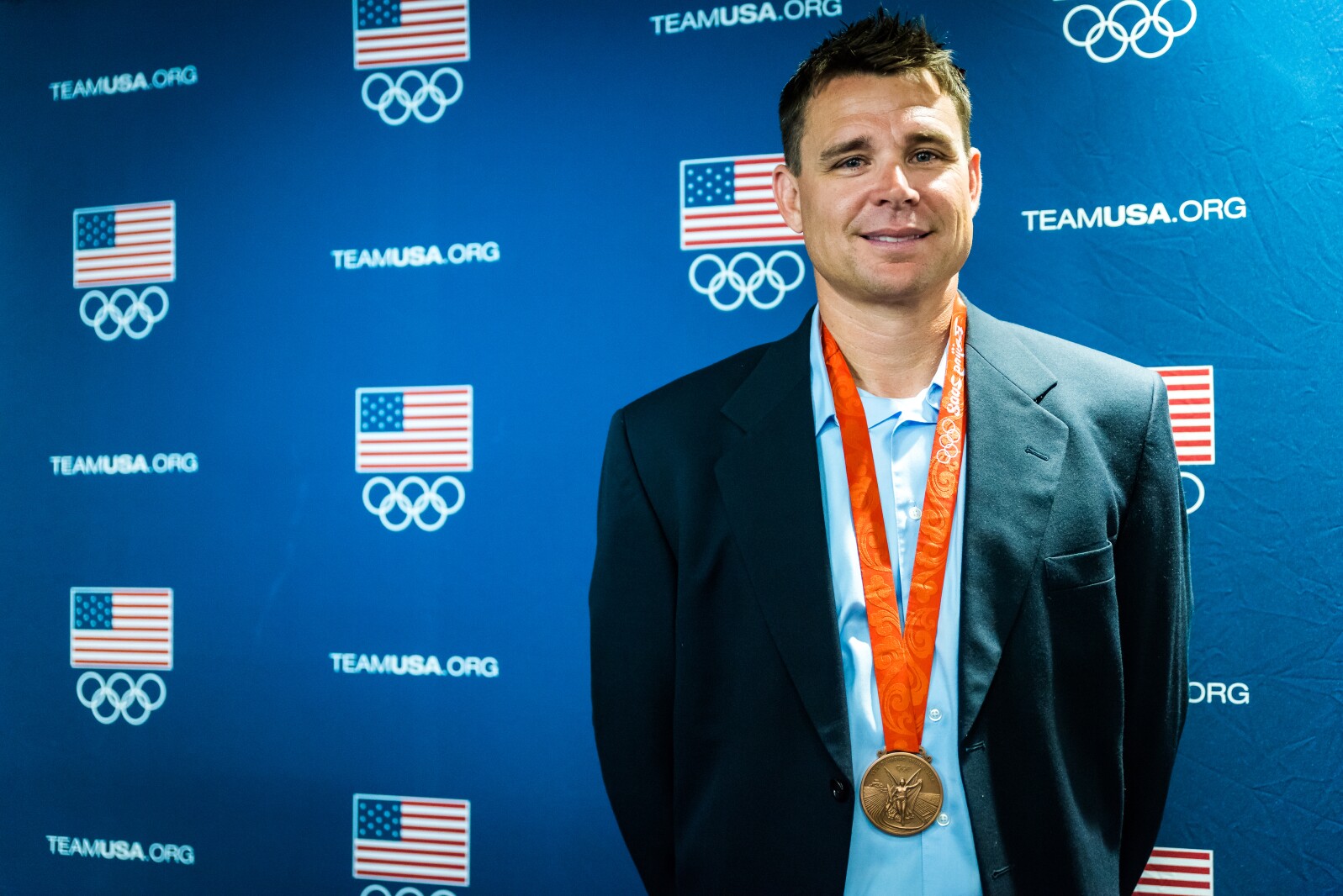
VERMILLION — Derek Miles hasn’t spent much time sifting through the parallels between his pole vaulting career and the program he’s spent the last 20-plus years building at the University of South Dakota, but they are impossible to overlook.
Miles was by no means the flashiest, most talented vaulter during his decade-long foray as an international competitor. Instead, he paved his way through hard work, establishing a level of consistency that continues to accompany him as a teacher of his craft.
On the heels of his 23rd season as a coach, Miles now holds the title of associate director of track and field/jumps at his alma mater, and during that time, USD has emerged as one of the premier vault programs in the country.
Since transitioning to Division I in 2011, the Coyotes have sent more than 60 pole vaulters to the NCAA preliminary round. Meanwhile, four national titles and 40 All-America honors have been achieved during that span.
It’s a model of consistency that mirrors its leader in Miles, whose 10 years as an international vaulter resulted in three trips to the Olympic Games and six world championship teams.
For Miles, consistency is rooted in his own foundation as a vaulter. As a competitor, he trained under the legendary Earl Bell, a three-time Olympian and bronze medalist at the 1984 Olympic Games, in Jonesboro, Arkansas, while working alongside some of the best pole vaulters in the country.
All these years later, that same knowledge and approach has enabled Miles to build a powerhouse vault program in Vermillion.
“I think the same foundation probably exists in our program, where we start with fundamentals in the first year of understanding how to run down the runway correctly and the importance of having consistency while you’re running down the runway and hitting the same marks so that you know what’s going to happen at the take-off,” Miles said. “And then it’s about having the foundational knowledge that Earl gave me in terms of the right pole, right grip, right standards, all these things that keep vaulters safe when they jump but also give them lots of reps down the runway. It allows them to learn a lot throughout the process.
“The more they learn, the more consistently they’re able to stay healthy, and the chances are they’re going to be able to achieve repeatable things.”
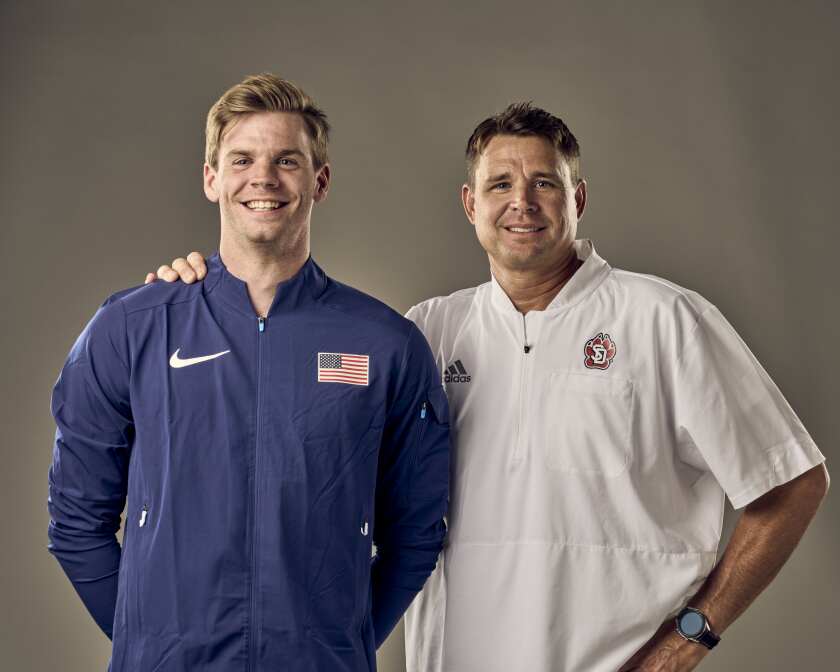
A native of Citrus Heights, California, Miles was a five-time All-American pole vaulter at the Division II level for USD. He claimed a bronze medal for his performance in the pole vault at the 2008 Beijing Olympics, and 13 years later, he was the guiding hand behind former USD star Chris Nilsen’s silver-medal vault at the 2020 Tokyo Olympics.
Miles was inducted into the Henry Heider Memorial Coyote Sports Hall of Fame in the fall of 2006, and in 2013, he was inducted into the U.S. Track & Field and Cross Country Coaches Association DII Hall of Fame.
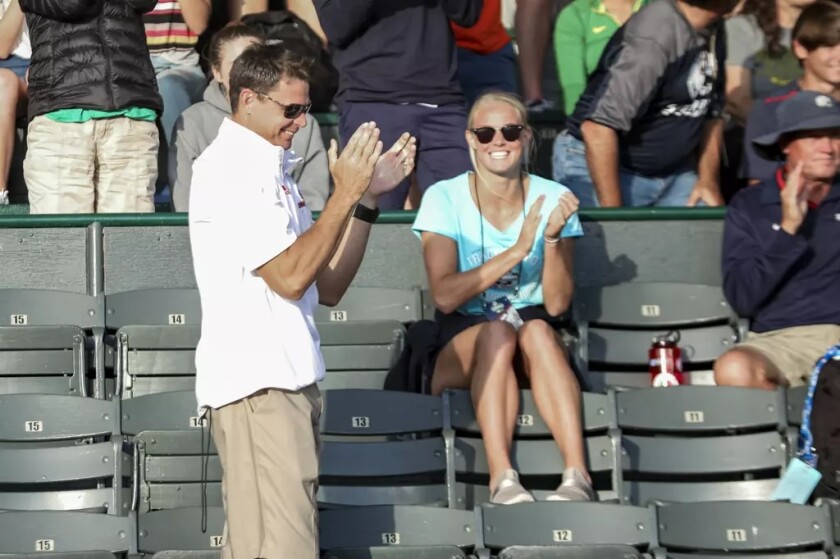
“I think he’s one of the best pole vault coaches in the world,” said Lucky Huber, who has been at the helm of the Yotes’ track and cross country programs for the past 17 years. “I just think he does an amazing job, and part of that, as you look at great athletes, not every great athlete can go on to become a great coach. But Derek wasn’t necessarily a great athlete. He was someone who had to work really hard and be very consistent and pay the price.
“By going through that process of really developing, he’s been able to transition that into his great coaching.”
USD Athletics
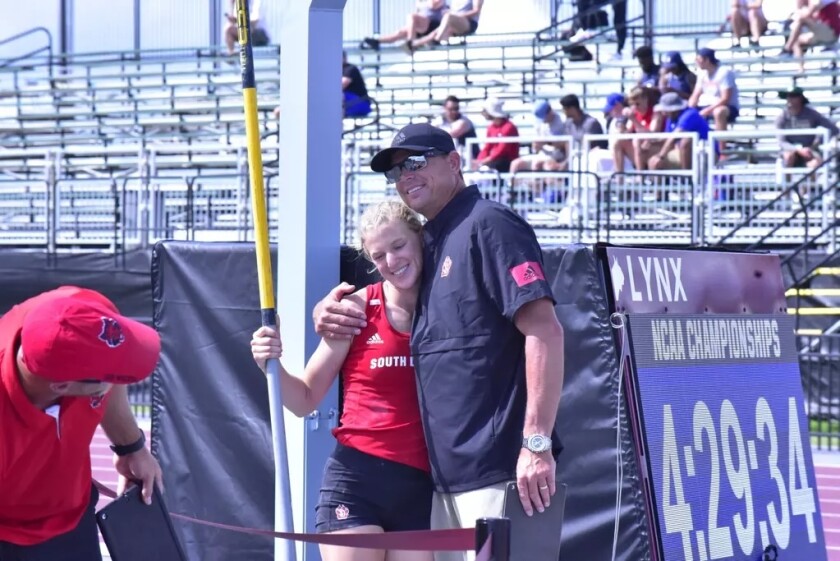
Beyond his knowledge as a coach, Miles is revered by his students for his benevolence as a human being. Many of them view him as a father figure who refuses to allow the sting of failure to affect their confidence on the runway.
“I think that falls into place for a lot of things in life. If something doesn’t go quite right, he doesn’t get rattled,” said Emily Grove, a former six-time All-American vaulter at USD who has gone on to compete internationally. “He just thinks of a way to go around it and knows everything is going to be OK if you just keep working hard.”
Today, Miles lives in Tea, where his wife, Tori, has been the head coach of the Titans’ girls track and field team for the last 17 years. Their son, Ariston, is now 11 years old, and while the dynamic of their family has certainly changed, so has Miles’ approach to the sport he loves.
The 52-year-old coach no longer feels as if he has something to prove, removing the weight of personal expectations in order to allow his wealth of knowledge to flourish.
“He had guidance as he was progressing through his career,” said Jesse Haines, a former multi-eventer at USD who now serves as manager of Sanford Sports Performance. “He went down to Arkansas for a while, which was a world-class facility that really elevated his vault technique.
“He has Olympic medals in his pocket. It’s just things he’s been through. He’s seen it, and he does a great job of passing on that knowledge to the next generation.”
USD Athletics
Foundation of a powerhouse
USD pole vaulting’s rise mirrors the steady career of its humble architect
Despite growing up in California, Miles’ journey to South Dakota was perhaps inevitable.
His parents, John and Vicki, were originally from South Dakota. John grew up in Watertown before attending the South Dakota School of Mines, while Vicki was raised in Lennox before eventually enrolling at USD.
After college, John and Vicki settled in California, where John worked at California State University, Sacramento, overseeing a number of computer programs in the state-based higher education system.
While attending Bella Vista High School in the suburbs of Sacramento, Derek competed in the pole vault but was never able to qualify for the state meet, so his options after high school were essentially non-existent.
His father had always kept close ties to his home state and had long admired the blue-collar lifestyle, persuading Derek to pursue opportunities outside of California and going so far as to make a phone call to Dave Gottsleben, who oversaw the USD men’s track and field team at the time, to see if he’d be willing to recruit his son or allow him to be a part of the team in some capacity.
“Coach Gottsleben was the only one who really talked to me or called me. He was really my only option if I really wanted to pole vault,” Miles said. “My dad really didn’t want me to go to Cal State, Sacramento. He wanted me to go out and have a different experience and have an athletic experience, so I think that’s kind of how it originated to go to school there.”
At the time, Huber, a former pole vaulter himself, was working as a graduate assistant under Gottsleben and was looking for students to mentor.
Miles’ arrival signaled the start of something special. Thirty-four years later, the two coaches have become best friends.
“The two of us have kind of challenged each other throughout our whole career together in order to get better and push and look toward the next great thing we can do,” Huber said. “I don’t think he or I have ever let the University of South Dakota or Vermillion seem like it’s a spot where we can’t be successful, and I think that’s part of what makes our program so special.
“It’s the people who do it, and he’s a big part of that.”
Along with vaulting, Miles also competed in the long jump, triple jump and decathlon during his time at USD. By the time he graduated, he had added about six inches and 45 pounds to his body, culminating in a 6-foot-3, 194-pound frame.
“There was definitely a lot of physical maturity and development that took place in college,” Miles said, “but having Lucky invest the time and the effort into working with me and helping me to try and get a little bit better every year was key.”
I don’t think he or I have ever let the University of South Dakota or Vermillion seem like it’s a spot where we can’t be successful, and I think that’s part of what makes our program so special.
USD track coach Lucky Huber
The development process was arduous for Miles. As a freshman, he was unable to jump his high school PR, but after a big sophomore leap, Miles continued to make strides in the pole vault.
As a senior, Miles was consistently clearing 17 feet in the vault when he began mulling what was next. He knew graduate school was on the horizon but wasn’t sure whether or not his undergraduate degree in history was going to lead him down the teaching path. Then, at the last minute, he opted for an athletic-minded graduate degree, pursuing a master’s in athletic administration that opened the door for him to become a graduate assistant for the track team.
By 1997, Miles had jumped 18 feet, and somehow, he managed to sneak his way into the USA championships alongside Chad Harting, another collegiate vaulter who trained at an elite-level facility in Arkansas known as Bell Athletics.
“That’s where I was introduced for the first time to Earl Bell,” Miles said. “At the time, he was training Olympians and world record-holders and just had a whole stable of guys and gals who were jumping really well and making Olympic teams. It was just a really cool spot.
“Meeting this guy named Chad really opened the door of communication with Earl and being a part of that group.”
Nate Barrett Photography
A career-changing environment
Miles finds the blueprint for high-level training in Arkansas
After receiving his grad degree, Miles worked for several years as an academic advisor at USD, but during that time, he drove to Arkansas once a month to train at Bell Athletics for several days. Within the first year of doing that, he managed to qualify for the 2000 U.S. Olympic Trials.
Then, around 2001, Miles jumped 19 feet for the first time in his career, prompting him to make the decision to move to Jonesboro and train with Bell on a full-time basis.
Learning from Bell offered Miles a unique self-exploration project in which he sought out ways to improve in all aspects of his life.
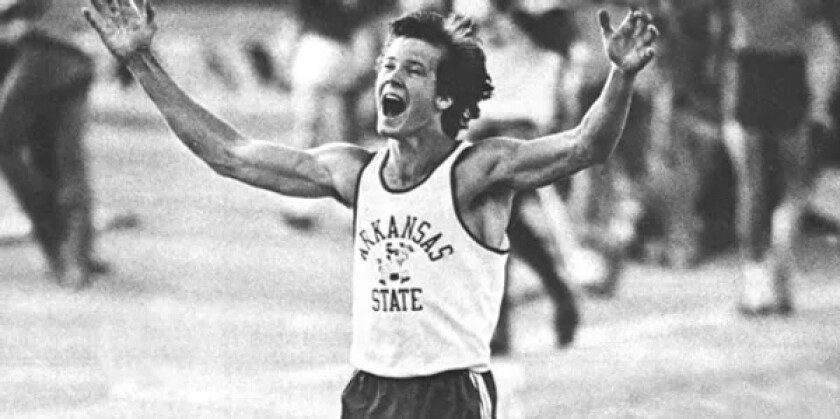
Bell Athletics
For Miles, it was a pole vaulting laboratory unlike anything he’d ever experienced. He was exposed to the daily regimen of Olympians like Jeff Hartwig, the American record-holder at the time who operated much like “a self-employed business.”
“He was so specific and committed and detailed,” Miles said about Hartwig. “Even everything down to how he traveled and why he used a roller bag instead of a backpack, they were these little things that, over time, I learned as I tried to figure out what I could apply to myself and what I couldn’t.”
For about five years, Miles worked in academic advising at Arkansas State while training under Bell. He admits it took some time to learn why the legendary coach would train him differently than other elite vaulters like Hartwig, Harting or Tye Harvey, all of whom excelled on the world stage, but the understanding of those differences — the strengths and weaknesses of each individual athlete — ended up becoming a foundational piece of his coaching endeavors.
“Over those 10 years of working with Earl and being on the circuit, I think it’s given me a lot of information on why things work for certain athletes and why they don’t with others,” Miles said. “Those experiences are what I think I’ve leaned into the most with my coaching.”
In 2004, Miles placed seventh in the pole vault at the Olympic Games in Athens, Greece, after clearing a height of 18 feet, 10 1/2 inches (5.75 meters). He placed third in the vault later that year at the World Athletics Final in Monte Carlo, Monaco, before taking fifth in the same event a year later, but in 2008, Miles’ career reached its high mark, beginning with a first-place jump of 19-0 1/4 (5.80 meters) at the U.S. Olympic Trials in Eugene, Oregon.
That set the stage for the 2008 Beijing Olympics, where Miles took fourth in the vault with a clearance of 18-8 1/4 (5.70 meters). He was later awarded the bronze medal in 2017 after the original third-place finisher, Denys Yurchenko of Ukraine, was disqualified due to a doping violation.
Miles then added to his stellar season in September 2008 in Germany, where he set a personal best in the vault (19-2 1/2) at an exhibition event in Berlin and earned a gold medal (19-0 1/4) at the World Athletics Final in Stuttgart.
“I jumped higher in Athens and got seventh. I jumped lower in Beijing and got fourth, but that’s the thing — you have to be consistent enough in all the meets you go to in order to give yourself chances,” Miles said. “That’s kind of the strength that maybe I learned at Earl’s.”

Nate Barrett Photography
Pushing too hard, learning even more
Gradually, coaching takes over as Miles transitions from athlete to mentor
After taking seventh at the 2004 Olympics, Miles began to notice that fellow Americans Tim Mack and Toby Stevenson — both of whom claimed gold and silver, respectively, in the pole vault — had achieved their success through an all-in approach to their training.
At the time, Miles was still working full-time at ASU while training on the side, so in 2006, he had quit his job as an advisor and “went nuts on training.”
“I just trained because I could, and I ended up with a stress fracture in my tibia that I just couldn’t shake,” Miles said. “I spent all of 2006 trying to jump and compete through a stress fracture that really just came about because of over-training, and at the end of ‘06, I struggled.
“I took a bunch of time off and then decided it just wasn’t healing.”
After consulting with a number of reputable doctors, Miles eventually went with a doctor in Alabama who installed a rod in his leg, allowing his stress fracture to properly heal. His road to recovery was long, but in August 2007, he was cleared to return to vaulting.
Miles, who was in his mid-30s at the time, knew his physical ability was going to be the key to prolonging his athletic career, so he opted to return to South Dakota, where he trained with Huber to get his body back up to speed.
“Lucky had always done my physical training, and Earl had always done the technical stuff,” Miles said. “I felt like I had a good understanding of the technical stuff, but I really needed to work on the physical stuff.”
While training with Huber, Miles helped out as an assistant coach for the Yotes, working with the long jumpers and triple jumpers. Sam Pribyl was coaching the pole vaulters at the time and was excelling in his role, but over the next few years, Miles’ role continued to expand.
Then, in 2012, Miles officially retired as a pole vaulter and went on to become a full-time assistant for the Coyotes.
“It was just this gradual thing where I was involved and then coaching a little bit more. Then, by 2009 or 2012, I started recruiting a little bit,” Miles said. “I recruited Bethany Buell during that time … and even Emily Grove. I was still part-time coaching, but I recruited them to be a part of the program, knowing that at some point I was going to probably retire and become a full-time coach.
“It just kind of gradually became pretty heavy vaulting and very little coaching, and then, over four or five years, it slowly teetered to the opposite side, where I was doing mostly coaching and winding down my career.”
When Miles returned to Vermillion, USD was beginning to transition to the Division I level, during which Gottsleben and Huber were diligently committed to finding something within their program that could put the university on the map.
“Coach Gottsleben and I convinced coach Miles it was time to go into his coaching career, and he then just kind of ran with it and built it. But it was very purposeful that we wanted to be this great,” Huber said. “We committed the resources to being great, and then he brought in the athletes.
“We’ve tried to do everything we can to support him and all of our athletes so that they can compete at such a high level.”
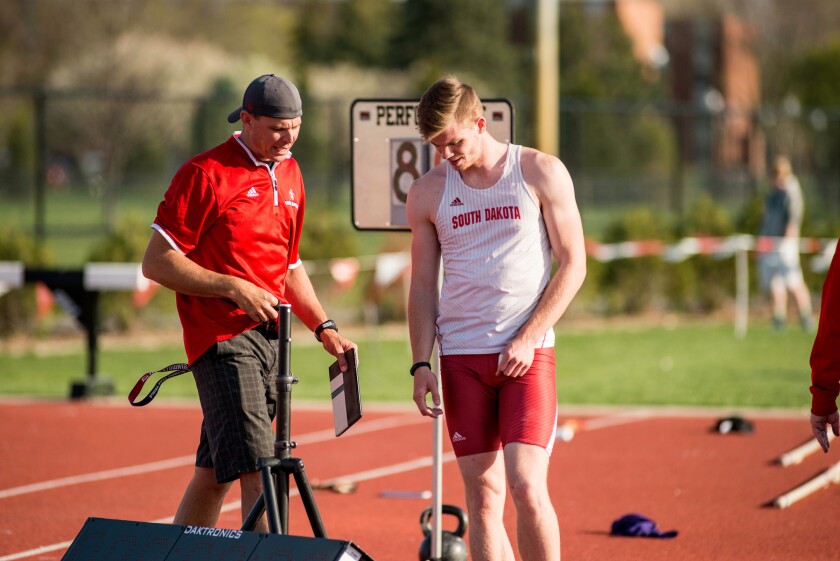
Aaron Packard / USD Athletics
Recruiting the right people
Miles values character, growth potential and fit above all else
While pole vaulting is widely considered the most high-risk event in track and field, it is also one of the more puzzling events to project whether or not athletes will be able to succeed in their transition from high school to college. In fact, Miles’ own journey to the Olympic stage is perhaps the perfect example of that unpredictability.
Recruiting has become an annual chore for the longtime vault coach, but over the years, Miles has undoubtedly instituted a winning method.
“I think what I look at, first and foremost, is the kid I’m recruiting,” Miles said. “Who are they as a person? Are they someone who’s going to come into the program and make the program better despite what they jump? I think that’s where I start.”
From there, talent comes into play. Among potential recruits with high character, Miles then identifies those who were successful enough in high school that they are able to regularly travel with the team and enjoy a true college experience.
“Somewhere in there, there are some performances in high school that matter a little bit,” Miles said, “but it’s secondary in relation to the type of person they are.”
The final recruiting element Miles focuses on is finding individuals who he believes can grow in the sport. These are vaulters who show promise and room to improve or are clearing high marks but haven’t quite grasped exactly how they’re doing it.
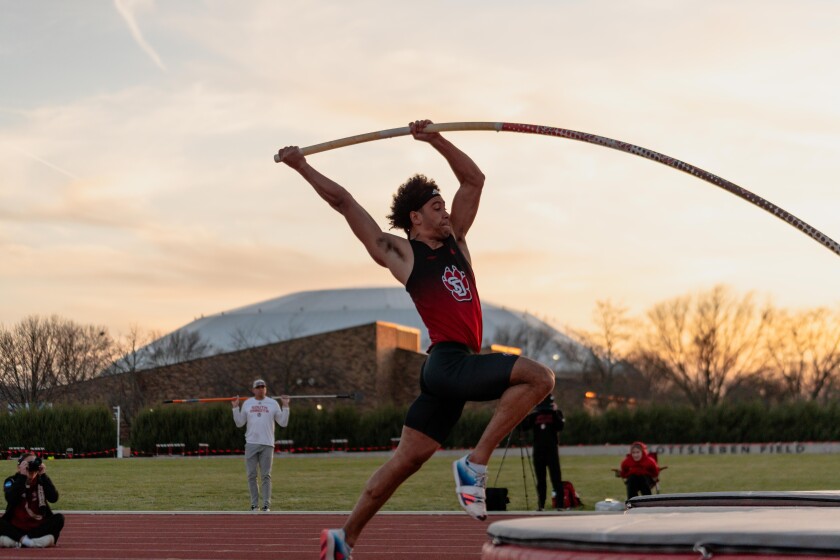
Adam Pearson / USD Athletics
A prime example of this type of recruit is Tre Young, who was recognized as the 2025 Summit League Field Athlete of the Year following a stellar senior season.
Miles recalls a home visit with Young’s family on the recruiting trail in which he observed a family structure that led him to believe he would fit in well with his program.
“Tre was a really interesting case, too, because he was one of about 22 or 23 in his family,” Miles said about Young, who was also recently named the 2025 Sioux Falls Live Men’s Track/Cross Country College Athlete of the Year. “I did a home visit with him, and I think 19 of the kids in the family were adopted. So here’s the really interesting dynamic of a family that’s helping people, and about six or seven of them were special needs kids.
“To me, that was intriguing. This was a family that was willing to take in these kids and provide a home, and Tre was a pretty athletic dude but just needed something of similar support. I thought he could be good. When it connects, it connects, and you kind of know.”
Grove recalls the first time she met Miles at the 2010 Gill Factory Vault in Champaign, Illinois. The native of Pontiac, Illinois, was a junior in high school at the time and had watched Miles compete in the elite competition. Not long after, Miles approached the young vaulter during her jump, instructing her to grasp the inch of grip near the top of the pole.
“I’m like, ‘Are you sure I can do that?’ He’s like, ‘Yeah, it’s fine,’” said Grove, who was a two-time state champion and former state record-holder in the pole vault at Pontiac Township High School. “Then I made the bar, and it was super mind-blowing to me.
“He got my contact information for recruiting stuff, and it kind of took off from there.”
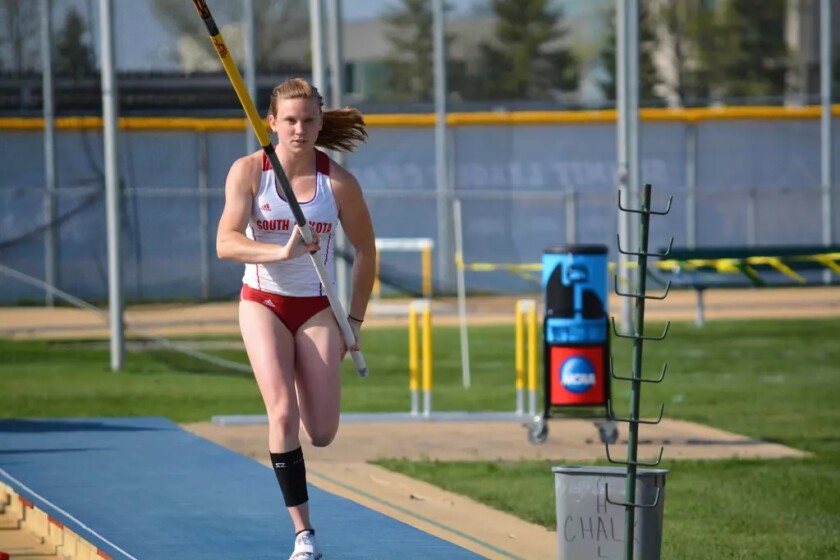
Dan Musilek / Summit League
Despite being a bit undersized, Grove was an intuitive pole vaulter, and her desire to get better outweighed any physical disadvantages. She made an immediate impact as a freshman, placing seventh at the NCAA Championships with a vault of 13-11. In total, she earned four top-10 finishes at the NCAA Championships during her collegiate career.
Since graduating from USD in 2017, Grove continues to shine on the international stage, with Miles by her side every step of the way.
“Derek has truly been the key to my success,” Grove said. “He’s a great mentor at life and on the track. He’s just super down to earth, calm. I can’t say enough good things about the guy. He’s kind of like my second dad at this point.
“We have a fantastic relationship. I respect him because if I don’t look good, he’s not going to tell me I look good, so then I can work on what I can do to make myself become a better athlete or a better person. … It doesn’t matter what you jump, that guy will be there for you.”
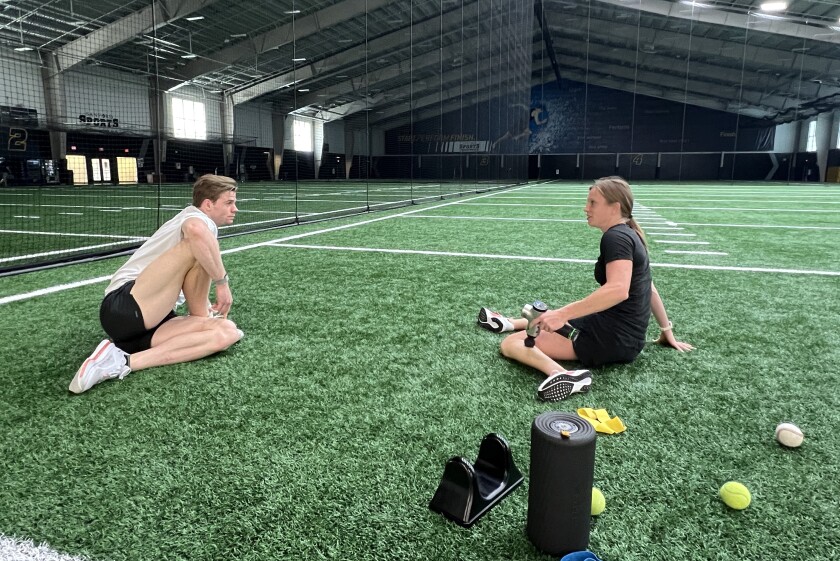
Trent Singer / Sioux Falls Live
Of course, no athlete in the history of the program — or perhaps the university at large — has gone on to elevate the Coyotes’ brand more than Nilsen, who set a national high school record in the vault with a clearance of 18-4 3/4 (5.61 meters) before he ever stepped foot on campus.
Nilsen was introduced to Miles after winning his first of two state championships in the vault as a junior at Park Hill High School (Kansas City, Missouri). Then, later that summer, when the recruiting window officially opened for the rising senior, Nilsen received a call from Miles, who was eager to show him what USD had to offer.
While being recruited, Nilsen talked to coaches from a number of established Power Five programs, but Miles’ messaging differed greatly in the sense that he was more invested in the individual rather than how many points he could potentially provide on the national stage.
“I was like, ‘Done,’” Nilsen said. “That’s all I’ve really wanted in a coach is someone who I can relate to and who can help me out in both life and in pole vaulting.
“I came here to South Dakota, and that’s kind of been the rest of it. I met my wife my senior year of college, and now we’re just living life.”

Kai Pfaffenbach / Reuters
During his four years at South Dakota, Nilsen was a six-time All-American and a three-time NCAA champion in the vault. He was a silver medalist in the pole vault at the 2020 Olympics in Tokyo and has claimed three medals at the World Championships.
“I think that’s what we have become is if you’re kind of psycho about pole vaulting and are willing to move to South Dakota to explore how good you can be, then I know you’re going all in,” Miles said. “I think that’s why the program has experienced some success is because these kids are willing to give up some things and move to this place to do this. When you have that type of work ethic and commitment, you’re bound to be successful even if I screw up or don’t know what I’m doing. The odds are pretty good.
“I think you take a little bit of Earl Bell’s mentoring and years in the sport and combine that with the work ethic and commitment that these kids have, and I think that’s kind of the magic of our program or at least my conceptual idea for the program.”
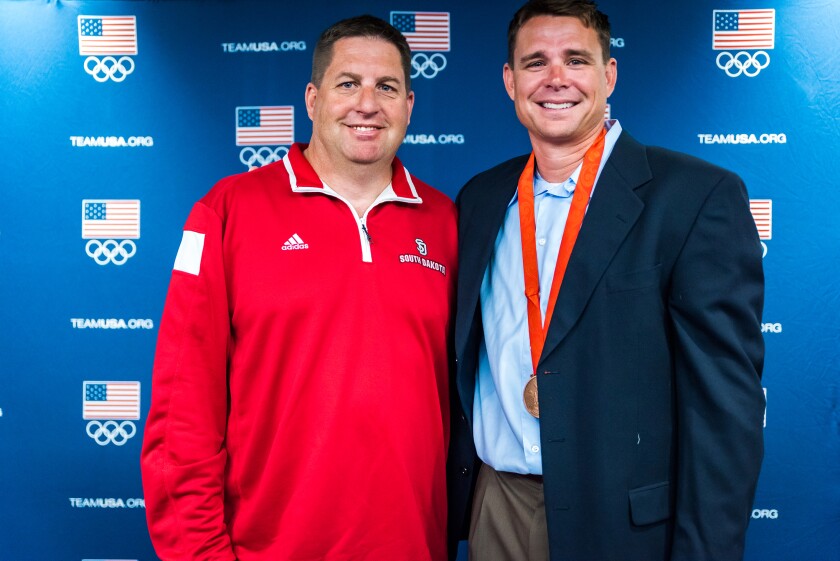
Thomas Hatzenbuhler / USD Athletics
Culture, commitment, consistency
A vaulting vision built on patience and purpose
Buell was a junior in 2013 when she became the Yotes’ first Division I national champion in the pole vault, and since then, the program has continued to ascend.
Just last season, freshman Anna Willis and senior Gen Hirata each earned All-America honors in the vault, finishing fourth and seventh, respectively, at the NCAA Outdoor Championships. A week later, Willis, who was recently tabbed as the 2025 Sioux Falls Live Women’s Track/Cross Country College Athlete of the Year, earned another national honor when she took first at the USA Track & Field Under 20 Championship.
But Miles isn’t only fixated on the successes of his top vaulters. He wants all of his athletes to be successful regardless of where they stack up among the group.
“It’s that passion to not necessarily see someone jump high but to see someone jump higher than they did before and keep improving and keep getting better,” Huber said. “His passion is part of it.
“He’s very intelligent. He’s had a lot of opportunities to bring together a lot of different pole vault experiences and to develop his own type of pole vaulting style that he feels really comfortable teaching.”
Both Grove and Nilsen continue to help coach the pole vaulters at USD when needed, and throughout the years, their relationship with Miles has evolved dramatically.
“It used to be kind of like a father figure, and then it turned into a fun uncle. And then it turned into big brother who’s kind of annoying sometimes,” Nilsen said with a laugh. “But hey, that’s what happens when you spend almost a decade with the guy.
“For us, it’s a professional relationship that is kept very lively and light, and it’s really worked out so far.”
Miles recognizes the responsibility thrust on him as a coach who’s responsible for his athletes’ development as young adults. Whether it’s on the track or in the classroom, there’s a certain level of accountability that’s required of him to ensure that attention is being given to all aspects of their lives.
For Miles, it all stems back to his time at Bell Athletics, where excellence became an entrenched expectation in his own journey through life.
“I think you have to have those kinds of life-teaching moments or mentoring or whatever you want to call it throughout college with every kid,” Miles said. “They’re always different, and I think that’s maybe where the father-figure thing comes into play. It’s just part of the job as a college coach to not only coach but to also get you through college, to get a degree, become a creative thinker and problem-solver and a contributor to society.
“I think that’s what I’m trying to do in these kids’ experiences is to move them through these parts of life.”
As the Yotes’ track program continues to elevate itself, the athletics administration has held up its end of the bargain as well.
Renovations to the east side of the DakotaDome, which includes the creation of a new indoor track facility, are sure to be a game-changer for the program. More detailed plans are expected to be unveiled this summer.
“I think when our administration, whether it’s President [Sheila] Gestring or President [James] Abbott, look at our track program, they know that there’s a group of coaches that are hardworking and are going to get the most out of their kids, love coaching and love recruiting kids to come to USD to have that experience of being able to be great, whether that’s in pole vaulting or running or jumping or throwing,” Huber said. “Derek’s the one who kind of sets that standard for all of us.”
For years now, Miles says he’s received offers to leave USD for other opportunities, but strong support from administrators and the chance to coach alongside his best friend mean too much to him.
“You cannot find a more supportive university to be able to do this stuff,” Miles said. “To get my Olympic medal, Senator [John] Thune got involved and tracked it down and got the medal for me. These things don’t happen outside the state of South Dakota and outside the University of South Dakota.
“For me, it’s a no-brainer. Now, I can go in and recruit who I want to recruit. I can get all the support I need. If it’s raining at the conference meet, we’ll set up the pole vault inside and have a meet where like eight of my kids PR at. It’s just a phenomenal experience, and I think the more I get excited about it, the more desire I have to stay and be a part of it.”
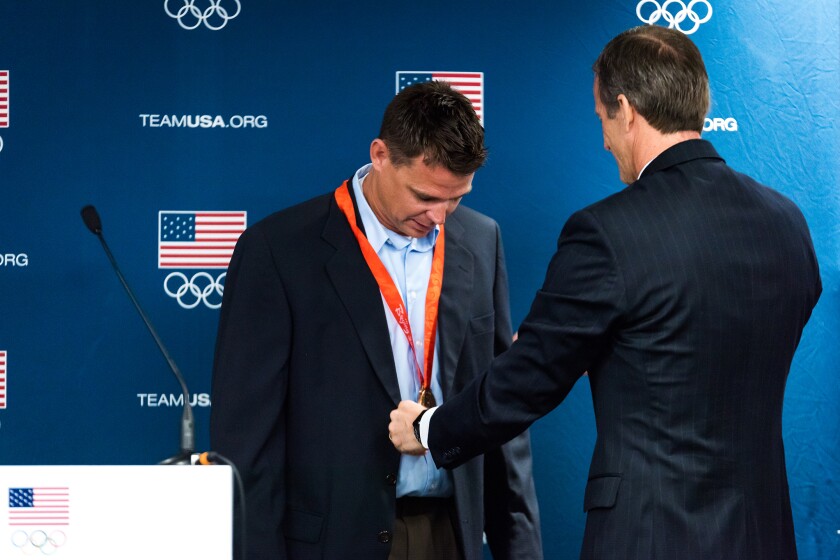
Thomas Hatzenbuhler / USD Athletics
In a sport often defined by flashes of brilliance and record-breaking moments, Miles has built his legacy on something less glamorous but more enduring: consistency.
Miles points to athletes like Grove, Hirata and Marleen Mülla as examples of his philosophy in action. They may not have been national champions, but they consistently reached national meets and performed at an All-American level. His coaching focus has always been on long-term development rather than short-term results.
The outcomes have been staggering. USD’s pole vault program keeps climbing — bar by bar, jump by jump.
“It’s really kind of an unshakeable process that he’s built in making a good culture at USD,” Nilsen said. “He knows what he’s doing, and he knows how to do it. He knows how to relate to every single kid. He cares about every single kid. I feel like that’s kind of the X-factor he’s had that not every coach has because you can learn how to write training, learn how to teach pole vaulting, watch as many videos and teach as many kids as you want, but if you don’t have that X-factor that he has, which is building a culture both around himself and around USD as a pole vault entity, then it’s not going to work as well as Derek has.
“He very much has been an X-factor in that realm.”
Continue Reading
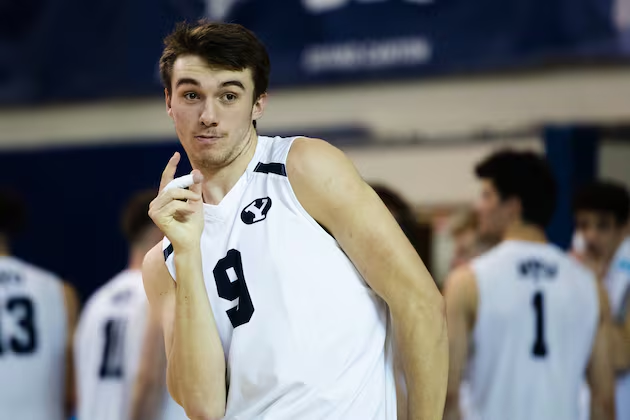
Trent Moser walked off the court at Global Credit Union Arena in Phoenix on March 22 feeling pretty good. With help from his seven kills, the 6-foot-8 BYU transfer and his new team at Grand Canyon had just blanked the No. 6 Cougars, 3-0.
One month later, Moser and the Lopes were left with nothing but a blank stare after GCU abruptly cut its men’s volleyball program. Despite reaching the Final Four the previous season, everybody was out.
As a result, Moser is back at BYU and he brought three of his GCU teammates with him.
“Credit to him and his family,” BYU men’s volleyball coach Shawn Olmstead told the “Y’s Guys” livestream show this week. “It will be fun for him to finish this out and that’s a cool part to his story that I think the fans are excited about too.”
Moser, a 2023 member of the MPSF’s All-Freshman Team at BYU and a 2025 honorable mention All-American at GCU, will introduce his three colleagues to Smith Fieldhouse volleyball on Friday when the Cougars open the season against Saint Francis (7 p.m., BYUtv app).
“They have no idea what’s coming,” Olmstead said of the raucous environment that awaits 6-6 Kyle Zediker, 6-5 Connor Oldani and 6-6 Max Phillipe. “Trent tells them and it’s fun to see that interaction, but it will be a first.”
Another AJ?
The Marriott Center is home to freshman sensation AJ Dybantsa. At 6-8 with a 7-foot wingspan, the projected top pick in June’s NBA draft has men’s basketball flying high. Down the road at the Smith Fieldhouse, AJ Cottle, also 6-8 with a wide reach, is ready to make his freshman debut.
“We joke every day, he’s the ‘real AJ,” laughed Olmstead. “That’s our joke — with our humor.”
Just as Dybantsa plays above the rim, Cottle can occupy the air space up to 12 feet, which is 4 feet above the net.
“Mark my words, he’s going to be a standout,” Olmstead said. “He’s going to be one of the guys people are going to pay to come watch play in our gym.”
Olmstead first spotted Cottle after his Timpview graduation. Needing time to mature and grow into his body, and with some prodding by Olmstead, Cottle attended Utah Valley University before serving a two-year church mission to Rosario, Argentina.
“Mark my words, he’s going to be a standout. He’s going to be one of the guys people are going to pay to come watch play in our gym.”
— BYU coach Shawn Olmstead of Cougar freshman AJ Cottle
In a head-to-head dunk contest between both AJ’s, Olmstead believes his guy would make it interesting.
“Our AJ is probably a little raw. Nothing against AJ (Dybantsa), I’m not questioning his personality, but this kid (our AJ) is unbelievable,” Olmstead said. “This kid would take it on and say, ‘Heck yeah! Let’s go!’ He’d try something dumb probably, but he’s so long and athletic he’d probably make it. It would be fun.”
Opening night
As a player, Olmstead won a pair of national championships at BYU in 2001 and 2004. His coaching run on campus started in 2008 with the women’s program. He moved over to coach the men in 2016. All those seasons have seasoned Olmstead with a grateful heart for the fans that will pack the fieldhouse again on Friday.
“I leave those games or I’m sitting there before they start, and I’m seeing people I’ve seen for the last 20 years, back to when I was a player — the same husband and wife and maybe their kids are now a little older and they are bringing their kids. That means so much to me, more than people know,” he said. “I walk in there and there is a sense of gratitude that people on a Friday and Saturday night will put everything aside to come support and watch and partake and be around our team.”

Olmstead’s Cougars are ranked No. 8 in the preseason coaches poll and projected to finish fifth in the highly competitive Mountain Pacific States Federation. BYU will host the MPSF Tournament at the end of the regular season.
“What a time to be at BYU. It’s wild. It’s a crazy, exciting time to be part of BYU with what’s going on in every sport,” Olmstead said. “The movement, the excitement, the wins. It’s just crazy.”
Heather Olmstead
When Olmstead shifted to men’s volleyball after the 2015 season, it opened the door for his assistant coach and sister, Heather, to lead the women’s program for the next 11 years. After 279 victories and a trip to the Final Four, Heather Olmstead and BYU agreed to part ways on Dec. 11.
“I love her. She has done a phenomenal job. It was an unbelievable opportunity for us to be together and be around each other,” he said. “Heather is unbelievably driven, unbelievably successful. She is going to go do whatever she wants right now and I’m excited for her. I’ll be her biggest fan forever.”
BYU hired Rob Neilson on Dec. 23 to succeed Olmstead as women’s head coach. Neilson is a former assistant for the Cougars and was one of Shawn Olmstead’s teammates on the 2004 national title squad.
Dave McCann is a sportswriter and columnist for the Deseret News and is a play-by-play announcer and show host for BYUtv/ESPN+. He co-hosts “Y’s Guys” at ysguys.com and is the author of the children’s book “C is for Cougar,” available at deseretbook.com
Jan. 8, 2026, 4:00 a.m. ET
LAFAYETTE ― McCutcheon volleyball senior setter Lexi Shondell embraced the challenge of expanding her role in 2025.
More kills, more blocks and greater ways of impacting the game. While the bid to win the IHSAA sectional title fell short, Shondell succeeded in each of these roles.
For her efforts, Shondell has been named the Journal & Courier Big Schools Player of the Year for the second consecutive season.

SUMNER, Neb — SEM Senior Taryn Arbuthnot committed to UNK for Volleyball on Wednesday at Sumner High School.
Arbuthnot who returned from tearing an ACL injury during her junior season to lead the Mustangs to a third place finish at the NSAA state volleyball tournament this past season.
She led the Mustangs with over 560 kills and 120 blocks.
The senior who shines on the hardwood and the track is averaging 24 points per game this season.

COLUMBUS, Ohio — Capital athletes and students can expect a revamped track and field facility just in time for the fall semester.
The track will be resurfaced with state-of-the-art materials, BSS 2000 RE surface, which are used at The Ohio State University and the University of Oregon’s tracks.
“This project extends beyond indoor track — sports like tennis, pickleball, basketball and volleyball will benefit from this state-of-the-art training surface,” said Darrell Bailey, director of Athletics. “In addition to supporting our student-athletes year-round, the facility will serve as a versatile venue for major campus-wide events, including commencement, the Undergraduate Research Symposium, and other programs that bring our entire community together.”
Besides aesthetic benefits, the resurfaced track will allow for better safety, performance and competitive opportunity. Shock absorbtion and greater durability would be just some of the most important upgrades.
“This new surface elevates the standard of our training environment and enhances our capacity to compete and train at a high level. It’s a significant step forward for our program, and it reflects the commitment our institution and alumni have made to supporting Capital track and field,” said Ian Kellogg, director of Cross Country/Track and Field.
The upgrades will also position the university to host championship events in the future, which would not have been a possibility before.
“From updated courts and a better practice facility for all sports that utilize it, to a significant facelift for the Cap Center overall, this investment positions Capital to provide one of the finest training environments in Division III,” said April Novotny, vice president for Advancement and chief development officer. “[Donors] support not only strengthens the student-athlete experience but also ensures our athletes train on an elite surface and positions Capital to welcome more competitive opportunities in the years ahead.”
Construction should be completed before the 2026-2027 athletic season.
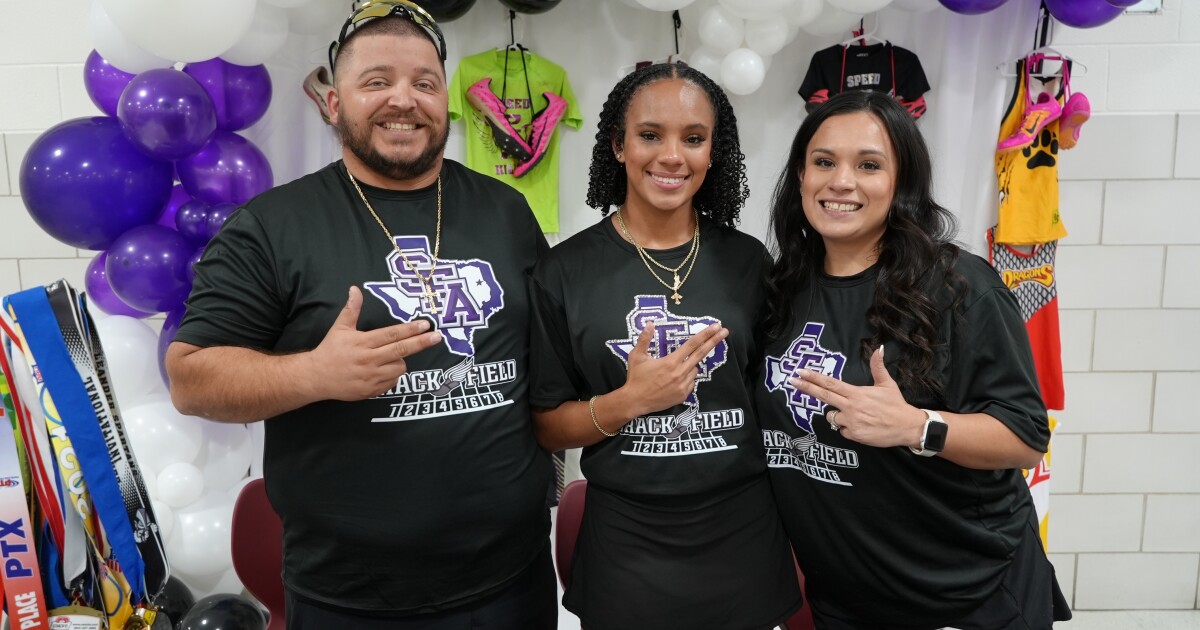
CORPUS CHRISTI, Texas — It was college signing day for one Calallen senior. Aubrey Navarro inked her commitment to run sprints for Stephen F. Austin University track and field.
She holds Calallen high school records in the 100, 200 and long jump according to MaxPreps. Navarro made it to Regionals her freshman season. Her journey was not easy, battling injuries the last two seasons. So to make it this far is a huge accomplishment.
“It means a lot because it’s just like so many things have happened lately, and to making it to go D1 and competing at a collegiate level is just a dream that I’ve always wanted since I was little,” Navarro.
Her 100 meter dash personal best time is 11.72 seconds, which she ran at the 97th Clyde Littlefield Texas Relays on March 26, 2025.

Larissa Liska
Navarro began running track when she was 5-years-old at Pure Speed Performance with Coach Rueben Flowers. She’s excited to represent Corpus Christi at the Division 1 level.
“It means a lot because not a lot of people in the Coastal Bend go for track, or do track or really are into track like I am,” Navarro. “It just means a lot to know that I can be a role model for others that really want to do it.”
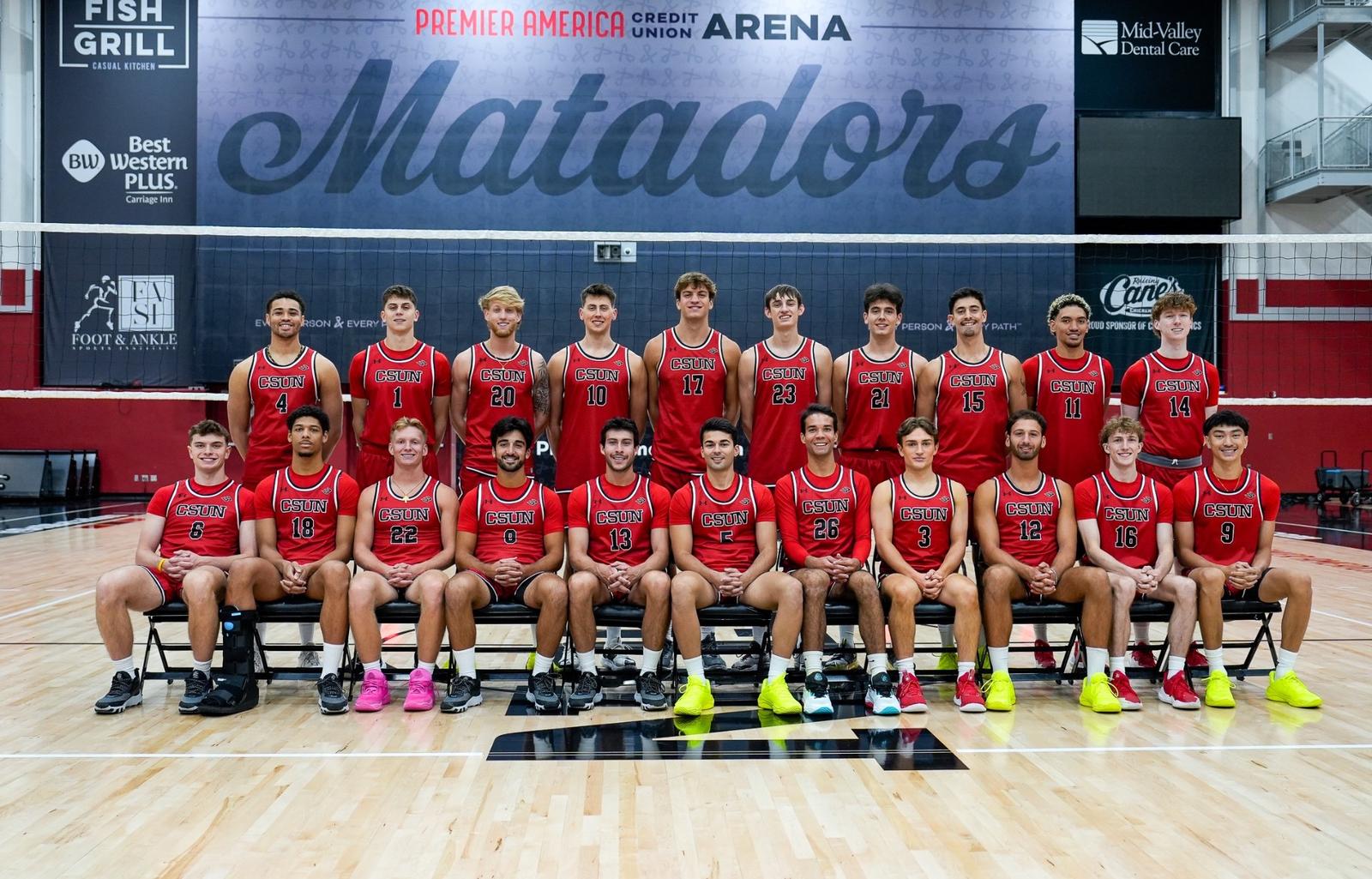
CSUN THIS WEEK:
UCSB ASICS INVITATIONAL
MATCH #1
CSUN Matadors (0-0) vs. Maryville Saints (0-0)
Thursday, Jan. 8, 2026 – 7:00 p.m. PT
Rob Gym – Santa Barbara, Calif.
ESPN+
Live Stats
MATCH #2
CSUN Matadors vs. Harvard Crimson
Friday, Jan. 9, 2026 – 2:00 p.m. PT
Rob Gym – Santa Barbara, Calif
ESPN+
Live Stats
MATCH #3
CSUN Matadors vs. Kentucky State Thorobreds
Saturday, Jan. 10, 2026 – 4:30 p.m. PT
Rob Gym – Santa Barbara, Calif
ESPN+
Live Stats
In-game X updates: @CSUNMensVB
CSUN Men’s Volleyball Media Notes
FOR STARTERS
The preseason 11th-ranked CSUN Men’s Volleyball team (0-0, 0-0 Big West) opens the 2026 season, its 50th season of men’s volleyball, against Maryville on Thursday at the UCSB Asics Invitational in Santa Barbara. The match is the first of three for the Matadors at the annual tournament held at Rob Gym on the UCSB campus. CSUN opens the tournament Thursday against Maryville at 7 p.m., before taking on Harvard on Friday at 2 p.m. The Matadors conclude the three-day event on Saturday, taking on Kentucky State at 4:30 p.m. Fellow Big West teams UC Irvine and host UC Santa Barbara round out the six-team field this weekend.
FOLLOW YOUR MATADORS ONLINE
All nine matches of UCSB’s Asics Invitational will stream live on ESPN+ and will have live stats available (links at GoMatadors.com). CSUN home matches this season will also stream live on the ESPN+ platform, with Darren Preston handling a majority of the play-by-play this season.
Fans can also follow CSUN Matador men’s volleyball online at the official home of CSUN athletics, www. GoMatadors.com for related links to the match, including any live stats, audio, and video. Fans are also encouraged to check the CSUN Athletics Department’s official X feed (@ GoMatadors) and the volleyball-specific feed (@CSUNMensVB) for news and notes throughout the week, as well as updates of matches in progress.
CSUN RANKED 11TH IN 2026 AVCA PRESEASON MEN’S VOLLEYBALL POLL
After finishing the 2025 season ranked ninth in the final AVCA National Collegiate Poll, CSUN opens the 2026 season ranked 11th in the national preseason poll (Dec. 23). The Matadors, who finished 18-11 in 2025, finished in the top 10 in the final poll for the first time since 2018 and the second time in the last seven seasons. After being ranked in all 18 polls last season, CSUN received 238 points in the preseason poll to rank ninth.
Since reclaiming a spot in the AVCA national poll in 2023, the Matadors have been ranked in the top 20 in 36 consecutive polls and 46 of the last 49 AVCA national polls since the 2023 season. CSUN has been a fixture in the national polls historically, having previously been ranked in the AVCA Top-15 for 62 consecutive weeks and 262 of the last 289 weekly polls dating back to the 2002 season.
UCLA opens the 2026 season ranked first in the preseason poll, collecting 12 of 24 first-place votes and 481 total points. Hawai’i is second after receiving seven first-place votes and 473 points, followed by defending national champions Long Beach State, which received five first-place votes and 460 points. The remainder of the preseason top five includes Pepperdine and USC with UC Irvine, Loyola Chicago, BYU, Stanford, and UC San Diego rounding out the preseason top 10. The second half of the preseason top-20 poll includes the Matadors, Lewis, Penn State, Ohio State, McKendree, Ball State, UC Santa Barbara, Princeton, George Mason, and Lincoln Memorial.
SCOUTING THE ASICS INVITATIONAL FIELD
Maryville (0-0) opens its fifth season of men’s volleyball on Thursday in Santa Barbara. The Saints were picked to finish second in their inaugural season as members of the Great Lakes Valley Conference. Maryville earned four first-place votes and 43 total points to finish second to Rockhurst in the polling. Junior OH Makai Scott returns after leading the Saints with 307 kills (3.37 kps) and 211 digs last season. After finishing 19-9 in 2025, the Saints return 13 players while adding six newcomers in 2026. All-time series: Thursday’s match marks the first-ever meeting between the Matadors and Saints in men’s volleyball.
Harvard (0-0) opens the 2026 season on Thursday against UC Irvine. The Crimson, who finished 9-15 in 2025, were picked to tie for fifth in the EIVA Coaches’ Preseason Poll. Seniors Zach Berty and Brian Thomas were named as Players to Watch by the conference’s seven head coaches. Berty averaged 2.22 kills per set in 2025, while Thomas averaged 0.94 blocks per set to lead the team. All-time series: Friday’s match is the seventh meeting all-time between CSUN and Harvard, with the Matadors holding a 5-1 edge in the series. The two teams also met at the UCSB Invitational in 2019, with CSUN pulling out a five-set win.
Kentucky State (0-0) also opens its 2026 season in Santa Barbara. The Thorobreds, who were picked to finish sixth in the SIAC (Southern Intercollegiate Athletic Conference) Preseason Poll, will open against UC Santa Barbara on Thursday, before taking on UC Irvine and the Matadors to conclude the weekend. All-time series: Saturday’s match marks the first-ever meeting between the Matadors and Thorobreds in men’s volleyball.
CSUN AT THE UCSB ASICS INVITATIONAL
Thursday’s match against Maryville marks CSUN’s 25th appearance in UC Santa Barbara’s annual tournament in the last 29 years. The Matadors are 56-37 (.602) all-time in the tournament dating back to 2001. Last season, the Matadors finished 3-0 in the tournament with wins over Tusculum (3-0), Missouri S&T (3-0), and Menlo (3-1).
Since 2019, the Matadors are 8-7 in UCSB’s annual event, finishing 1-2 three times (2019, 2023, 2024) and 2-1 in 2019. After the 2021 tournament was canceled due to the COVID pandemic, CSUN was scheduled to open the 2022 season in Santa Barbara but due to COVID protocols within the program, the Matadors were forced to withdraw, snapping a streak of 16 consecutive appearances. In 2019, CSUN dropped a five-set decision to Grand Canyon, which snapped a streak of 11 straight Matador wins in the tournament dating back to a loss to Princeton in 2015. CSUN won its first-ever UCSB Invitational championship in 2009 after upsetting No. 2 UCLA (3-1) and defeating No. 14 UCSB (3-1) and No. 8 Stanford (3-1). The Matadors then won their second straight crown in 2010, topping UCSB (3-1), California Baptist (3-1), and BYU (3-1).
THREE MATADORS NAMED AVCA ALL-AMERICAN, ALL-BIG WEST IN 2025
For the first time since 2018, CSUN had three student-athletes named to the All-Big West First Team in 2025. The Matadors had three first-team selections as senior Donovan Constable, redshirt sophomore Jalen Phillips, and freshman Stilian Delibosov were all named to the top team. The last time CSUN had three players named first team was 2018, when Eric Chance, Arvis Greene, Jr., and Dimitar Kalchev earned top honors. All three players went on to earn AVCA All-America honors as Phillips was named to the First Team and Constable and Delibosov earned honorable mention accolades.
NEW FACES IN 2026
In addition to returning 10 letterwinners and five starters from the 2025 season, CSUN welcomes an impressive list of newcomers in 2026. The group includes a trio of 2025 redshirts, including sophomore Owen Douphner, who steps in for departed All-American Donovan Constable at setter. Transfer Jordan Lucas (Grand Canyon) and redshirt freshman Grayson Albers (Sacramento) each open their first season on the active roster in 2026. CSUN also welcomes a trio of true freshmen in 2026 that includes Kingston Jerome, Joel Eanes, and Noah Douphner. Jerome comes to CSUN from Shadow Ridge High School in Las Vegas, Nev., while Eanes is a 6-9 opposite from Kellam High School in Virginia Beach, Va. Douphner is a local product from nearby Stevenson Ranch and the younger brother of the CSUN setter.
MATADORS IN THE BIG WEST
The 2026 season marks CSUN’s ninth as a member of the Big West in men’s volleyball. With a 3-7 regular season record in 2025, the Matadors are 18-52 (.257) in 70 Big West matches over eight seasons since the conference’s inaugural campaign in 2018. CSUN finished 5-5 in the first Big West season in 2018 before finishing 3-7 in 2019, 2024, and 2025, 2-8 in 2021 and 1-9 in both 2022 and 2023. Prior to 2018, the Matadors played 25 seasons as a member of the Mountain Pacific Sports Federation (MPSF) from 1993-2017 and 16 seasons in the Western Intercollegiate Volleyball Association (WIVA) from 1977-92.
EDWARDS IN FOURTH SEASON AS CSUN HEAD COACH
Theo Edwards is in his fourth season as CSUN’s head coach in 2026 after leading the Matadors back into the AVCA national rankings in his first three seasons. Now in his 16th season at CSUN, Edwards was named the successor to Jeff Campbell on Dec. 9, 2022. CSUN finished 12-16 in Edwards’ first season (1-9 in the Big West) in 2023 and the Matadors have steadily improved in each of Edwards’ three seasons. CSUN finished 13-16 in 2024 and 18-11 in 2025. Under Edwards’ leadership, CSUN earned a No. 7 national ranking on Mar. 10 of the 2025 season, its highest national ranking in seven seasons. The Matadors finished the 2025 season with a No. 9 national ranking, also its best since 2018.
LOOKING AHEAD
Following three matches at the UCSB Asics Invitational, the Matadors will remain on the road for two more matches next week. CSUN will travel to the Midwest for the 2026 Under Armour Invitational at Lindenwood in St. Charles, Mo. The Matadors will take on the host Lions on Jan. 16 before meeting Purdue Fort Wayne on Jan. 17 at 2:00 p.m. PT.
#GoMatadors

NIL1 hour ago
McGuire one of eight finalists for Bear Bryant Award

Sports1 hour ago
Former BYU standout returns to Provo to finish what he started – Deseret News

Rec Sports1 hour ago
PERFECT GAME AND FIRST COMMUNITY CREDIT UNION ANNOUNCE CHESTERFIELD ATHLETIC COMPLEX
Sports2 hours ago
Lexi Shondell wins J&C Big Schools Volleyball Player of the Year

Rec Sports2 hours ago
FORECAST 2026: 407Basketball built the training hub for young athletes

Technology2 hours ago
ASUS Republic of Gamers presents next-gen gaming innovations, commemorates 20 years of gaming excellence at CES 2026

Rec Sports2 hours ago
The Good Game connects young athletes with on-demand sports experts

Sports2 hours ago
SEM Senior Taryn Arbuthnot commits to UNK for Volleyball

NIL2 hours ago
NIL a factor in Arch Manning losing Texas roommate, WR Parker Livingstone to rival Oklahoma in transfer portal
Motorsports2 hours ago
Steve Phelps exit no NASCAR shocker. Also, CFP semifinal picks

Motorsports3 hours ago
NASCAR insider reveals seven expected cars vying for remaining Daytona 500 open spots

NIL3 hours ago
Mark Cuban makes donation to Indiana for 2026 transfer portal cycle, claims Hoosiers are ‘happier this year’

NIL4 hours ago
ESPN predicts outcomes of both College Football Playoff Semifinal games

NIL5 hours ago
NHL Winter Classic 2027 game will be held in Utah at Rice-Eccles Stadium

Sports5 hours ago
Capital University to upgrade its fieldhouse for fall

Motorsports4 weeks ago
SoundGear Named Entitlement Sponsor of Spears CARS Tour Southwest Opener

NIL4 weeks ago
DeSantis Talks College Football, Calls for Reforms to NIL and Transfer Portal · The Floridian

Sports4 weeks ago
#11 Volleyball Practices, Then Meets Media Prior to #2 Kentucky Match

Rec Sports3 weeks ago
Stempien to seek opening for Branch County Circuit Court Judge | WTVB | 1590 AM · 95.5 FM

Sports4 weeks ago
Maine wraps up Fall Semester with a win in Black Bear Invitational

Motorsports3 weeks ago
Ross Brawn to receive Autosport Gold Medal Award at 2026 Autosport Awards, Honouring a Lifetime Shaping Modern F1

Motorsports4 weeks ago
Nascar legal saga ends as 23XI, Front Row secure settlement

Rec Sports3 weeks ago
Princeton Area Community Foundation awards more than $1.3 million to 40 local nonprofits ⋆ Princeton, NJ local news %

Motorsports4 weeks ago
Sunoco to sponsor No. 8 Ganassi Honda IndyCar in multi-year deal

NIL3 weeks ago
Downtown Athletic Club of Hawaiʻi gives $300K to Boost the ’Bows NIL fund

Rec Sports4 weeks ago
WNBA’s Caitlin Clark, Angel Reese and Paige Bueckers in NC, making debut for national team at USA camp at Duke

Motorsports4 weeks ago
North Florida Motorsports Park led by Indy 500 Champion and motorsports legend Bobby Rahal Nassau County, FL
Motorsports4 weeks ago
NASCAR, 23XI Racing, Front Row Motorsports announce settlement of US monopoly suit | MLex

Sports4 weeks ago
Woods, Ogunribido Named CCIW Women’s Indoor Track & Field Student-Athletes of the Week

Sports4 weeks ago
Hope College Tops MIAA Commissioner’s Cup Fall Update





-
 Rec Sports3 weeks ago
Princeton Area Community Foundation awards more than $1.3 million to 40 local nonprofits ⋆ Princeton, NJ local news %
-

 Sports2 weeks ago
Badgers news: Wisconsin lands 2nd commitment from transfer portal
-

 Rec Sports6 days ago
Five Youth Sports Trends We’re Watching in 2026
-

 Sports3 weeks ago
Is women’s volleyball the SEC’s next big sport? How Kentucky, Texas A&M broke through
-

 Rec Sports2 weeks ago
NBA, Global Basketball Community Unite for World Basketball Day Celebration
-

 Rec Sports3 weeks ago
Youth Sports Business in 2025: The Year the Industry Grew Up
-
Rec Sports3 weeks ago
Inside the NWSL’s first combine: Can the league create a more robust pathway for American talent development?
-
 Sports2 weeks ago
Kentucky VB adds an All-American honorable mention, loses Brooke Bultema to portal
-
 NIL3 weeks ago
$2.1 million transfer portal QB predicted to join College Football Playoff team
-

 Motorsports2 weeks ago
Dr. Patrick Staropoli Lands Full-Time O’Reilly Ride with Big Machine Racing